









Stories

FAA Proposes Fine for Southwest Over Alleged Drug Testing Violations

The airline has 30 days to respond.

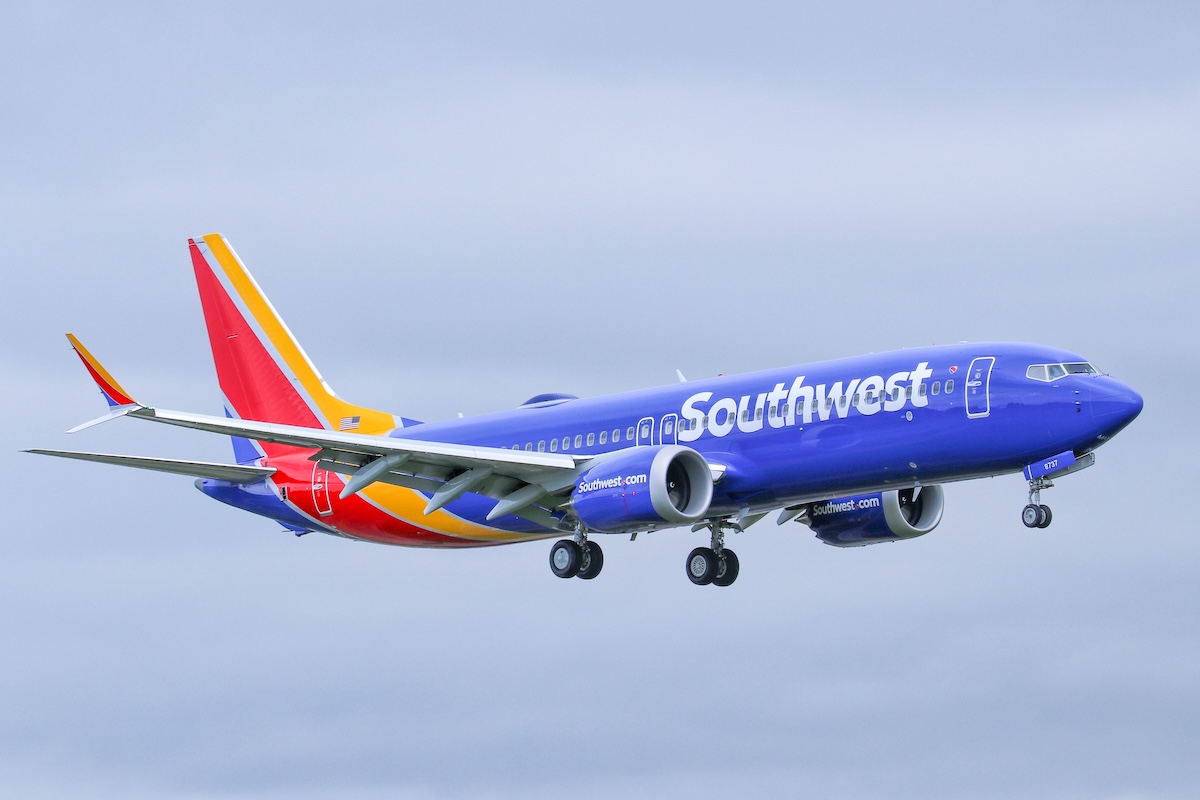
Southwest aircaft
Southwest Airlines Boeing 737 airplanes at Dallas Love Field. (Photo: Shutterstock | Markus Mainka)

The FAA has proposed a civil penalty for Southwest over allegations it failed to properly retest employees who previously tested positive for alcohol or drugs.

According to the agency, Southwest failed to conduct all of the required follow-up testing for 11 employees, including pilots, flight attendants, and aircraft mechanics. The employees had previously tested positive for alcohol or drugs such as marijuana, cocaine, and amphetamines.

The 11 individuals performed “safety-sensitive functions” for periods of time between August 2021 and July 2024, and should have completed the follow-up testing, officials said.

Regulators plan to impose a fine of $304,272.

Southwest has 30 days after receiving the FAA’s enforcement letter to respond.

Zach Vasile

Zach Vasile is a writer and editor covering news in all aspects of commercial aviation. He has reported for and contributed to the Manchester Journal Inquirer, the Hartford Business Journal, the Charlotte Observer, and the Washington Examiner, with his area of focus being the intersection of business and government policy.

Malaysia Airlines Extends Suspension of Doha Service

Flights will not resume until mid-June, at the earliest.

A Malaysia Airlines aircraft. (Photo: Shutterstock | hkhtt hj)

Malaysia Airlines has halted service to Doha until the middle of the year.

The carrier cited the ongoing conflict in the region, which has closed certain airspace and affected consumer demand.

Malaysia Airlines extended the temporary suspension of its Doha service until June 14. This comes after a risk assessment which indicates that the security situation in the region remains unchanged.

The airline initially suspended its Doha service from Feb. 28. Its flights to other destinations including Jeddah, Madinah, London, and Paris continue to operate as planned. It operates its flights on carefully planned alternative routes which avoid the affected regions.

The carrier also increased capacity between Asia and Europe from March 12, in an effort to support stranded passengers.

Lorne Philipot

Lorne is a South Africa-based aviation journalist. He was captivated and fascinated by flying from the day he took his first airline flight. With a passion for aviation in his blood, he has flown to destinations in all corners of the globe. Lorne has traveled extensively and lived in various countries. Drawing on his travels and passion for aviation, Lorne enjoys writing about airlines, routes, networks, and new developments.

Proposed Flight Attendant Contract Would Let United Own a Regional Airline

The carrier currently relies on partners such as Republic and SkyWest.

A United Express Embraer E175 operated by Republic Airways
A United Express Embraer E175 operated by Republic Airways. (Photo: Shutterstock | oasisamuel)

Details of a tentative labor agreement released on Friday show United’s flight attendants are on their way to securing a substantial boost in pay. But also included in the 425-page document is a provision that could shake up the entire U.S. air transportation industry – permission for United to own a regional airline.

The agreement’s “scope” section allows United to launch or acquire a regional carrier that would not have to use mainline flight attendants unless United pilots are operating the flight.

“The company may create or acquire a controlling interest in and control of a regional carrier conducting United Express flying…” the text reads. “As an exception to Paragraph 1, above, flights of such United Express carrier may be staffed by flight attendants of such carrier unless the flights are operated by United pilots covered by the United pilot agreement, in which case they will be staffed by United flight attendants covered by this agreement.”

Currently, United offers regional service under its United Express brand through capacity agreements with carriers such as Republic, CommuteAir, Mesa, and SkyWest. United owns a piece of CommuteAir and the now-combined Republic and Mesa, but it does not outright own any of its regional partners.

This approach differs from the airline’s main competitors, Delta and American, which offer regional flights through wholly-owned subsidiaries as well as partner carriers. Delta owns Endeavor Air, while American owns Envoy Air, PSA Airlines, and Piedmont Airlines.

While the Association of Flight Attendants-CWA consented to the new provision, it could raise concerns among rank-and-file members. Flight attendants at any future subsidiary would almost certainly be paid less than mainline flight attendants, opening the door to in-network competition and a possible loss of hours for higher-paid crew members if more flights are transferred to the subsidiary’s operations.

United has not announced any plans for a wholly-owned subsidiary airline.

Pay Boost

The proposed contract would raise base pay rates through July 2030. By that date, United’s most experienced flight attendants would be earning just over $100 per hour.

The deal would also boost incentive pay rates, institute boarding pay, increase 401(k) matching, and provide a signing bonus for every flight attendant.

United’s flight attendants have not had a contractual pay increase in almost six years. 

The airline and the AFA announced the tentative contract late last month after lengthy negotiations. The agreement must pass a ratification vote from union members before it can take effect.

Voting is set to begin on April 23, the AFA said.

Zach Vasile

Zach Vasile is a writer and editor covering news in all aspects of commercial aviation. He has reported for and contributed to the Manchester Journal Inquirer, the Hartford Business Journal, the Charlotte Observer, and the Washington Examiner, with his area of focus being the intersection of business and government policy.

United Rolls Out Stripped-Down ‘Base’ Fares for Premium Cabins

The new pricing structure will make it cheaper to book a Polaris or Premium Plus seat.

Polaris seating on an A321XLR. (Photo: United Airlines)

United on Friday announced a new tiered fare structure for its premium cabins, creating a more affordable, no-frills version of Polaris and Premium Plus.

The carrier said it will offer three fare options for premium cabins on long-haul international, transcontinental, and select Hawaii flights – “base,” “standard,” and “flexible.” The lineup mirrors the three fare options available in United Economy, known as “basic,” “standard,” and “flexible.”

The lowest tier comes with fewer amenities and benefits. In Polaris, for example, base fares require an extra fee for seat selection (included in standard and flexible) and do not provide access to Polaris airport lounges.

For both Polaris and Premium Plus, base fares do not include flight changes, upgrades, or refunds, and cover only one checked bag, while standard and flexible cover two.

Exact pricing details for the new tier system were not immediately available.

United said it has redesigned the shopping pages on its website and app to reflect the changes, and will launch the new fare categories in select markets later this month.

“These new tiered options give customers more choice and make it easier to find a fare that includes the benefits they want most – whether that’s a great value, added perks, or maximum flexibility,” United Chief Commercial Officer Andrew Nocella said in a news release.

There will be no changes to the existing tiers in Economy, officials added, though the options will be displayed on shopping pages in a “new, clearer way.”

Zach Vasile

Zach Vasile is a writer and editor covering news in all aspects of commercial aviation. He has reported for and contributed to the Manchester Journal Inquirer, the Hartford Business Journal, the Charlotte Observer, and the Washington Examiner, with his area of focus being the intersection of business and government policy.

Royal Air Maroc to Gain Full Control of Catering Subsidiary

The airline is continuing to grow in Casablanca.

Royal Air Maroc Boeing 787 Dreamliner
Royal Air Maroc Boeing 787 Dreamliner. (Photo: AirlineGeeks | William Derrickson)

Morocco’s national carrier, Royal Air Maroc, plans to buy the remaining 40% stake in its in-flight catering subsidiary, Atlas Servair SA, and take complete ownership, the country’s Competition Council said on March 12.

Royal Air Maroc already holds 60% of Atlas Servair and is seeking exclusive control through the purchase of the outstanding shares and voting rights, according to the council’s public notice. The transaction was filed under Morocco’s competition law, and third parties have until March 23 to submit observations.

Atlas Servair, based in the industrial zone at Casablanca’s Mohammed V Airport, provides airline catering and in-flight passenger services. It began as a joint venture with France’s Servair in 2013 before the minority stake passed to Switzerland-based Gategroup after it acquired Servair.

The deal would end roughly a decade of partnership with international catering groups and bring Atlas Servair fully under Royal Air Maroc’s control. Financial terms were not disclosed. A non-confidential summary filed with the council describes the affected sectors as in-flight catering and passenger air transport.

The council noted that the information came from the parties involved and does not prejudge its review of the transaction. Once completed, Atlas Servair would join Royal Air Maroc’s roster of wholly owned service companies, including RAM Handling for ground operations, Atlas Multiservices for recruitment and staffing, and RAM Academy for pilot and technical training.

The move fits Royal Air Maroc’s strategy of tightening operational control over support activities while maintaining joint ventures for technical work. Those partnerships include Aerotechnic Industries, a 50-50 heavy-maintenance venture with Air France-KLM, and Safran Aircraft Engine Services Morocco for engine repairs. The airline also works with Amadeus Maroc on reservations, Casa Aero on flight simulation, and STTS on aircraft painting.

Separately, Royal Air Maroc is pushing aggressive growth. It intends to launch about 20 new routes between March and July and is expanding its fleet. The airline currently operates nearly 63 aircraft and aims to reach 73 by year-end and 200 by 2037. Delivery of its 12th Boeing 787, registered CN-RHU, is imminent.

The carrier also announced in March a lease for 13 additional Boeing 737 MAX 8 aircraft from Dubai Aerospace Enterprise, with deliveries starting in 2027. That deal builds on earlier leases from Dubai Aerospace Enterprise, Air Lease Corp., and Avolon and supports growth while the airline awaits deliveries under a long-term tender for nearly 200 aircraft.

Royal Air Maroc expects to receive up to 15 new planes annually beginning in 2028. The Competition Council has not indicated a timeline for its final decision on the Atlas Servair transaction.

Victor Shalton

Victor Shalton's love for aviation can be traced to when he was 11-years-old. As a seasoned aviation writer, he takes pride in providing the best aviation coverage around the globe and is passionate about advancing his skills in the aviation space. In addition, he loves travelling, writing, arts and while his speaking engagements have taken him around the world, he is proud to call Nairobi home.

White House Budget Would Push Privatization of TSA

Small airports would be required to join the Screening Partnership Program.

TSA checkpoint
A TSA checkpoint. (Photo: Shutterstock | David Tran Photo)

The Trump administration is looking to privatize some elements of the TSA’s airport security screening operations.

In a budget proposal for fiscal year 2027 released on Friday, the White House said it wants to require small airports to enroll in the Screening Partnership Program, which allows qualified private companies to carry out passenger screening instead of TSA officers. Those employees must still adhere to TSA rules and use TSA-approved equipment.

“The airports that already use this program have demonstrated savings compared to federal screening operations,” the proposal stated. “The move would yield cost savings compared to federal screening and begin reform of a troubled federal agency.”

The text did not elaborate on how TSA is allegedly “troubled.”

Airport security has been in the national spotlight over the last several weeks due to the partial government shutdown. TSA officers have been working without pay, and a growing number were calling out of work or quitting the agency to find other jobs before President Donald Trump signed an executive order authorizing backpay. The situation has somewhat stabilized, with call-outs down and security lines moving more quickly, though wait times remain higher than usual at some major airports.

Airports that use private firms for security have not been affected by the partial shutdown, and their screening operations have continued as normal.

According to the TSA, airports currently enrolled in the Screening Partnership Program include San Francisco, Kansas City, Orlando Sanford in Florida, and Atlantic City in New Jersey, among others.

The administration could see partial privatization as a way to lessen the impact of future government shutdowns on commercial air transport.

Inclusion in a White House budget is no guarantee that a policy will become law. Spending plans must be passed by both houses of Congress, then signed by the president.

Passenger screening in the U.S. was handled entirely by private companies up until the terrorist attacks of Sept. 11, 2001. The TSA was created later that year. The Screening Partnership Program restored a small measure of private screening when it was introduced in 2004.

The partial government shutdown has not been resolved, and with Congress on a break, a final settlement may be weeks or even months away. Trump’s order provides backpay for TSA employees, but it is not clear if they will continue to be paid going forward as the partial shutdown continues.

Zach Vasile

Zach Vasile is a writer and editor covering news in all aspects of commercial aviation. He has reported for and contributed to the Manchester Journal Inquirer, the Hartford Business Journal, the Charlotte Observer, and the Washington Examiner, with his area of focus being the intersection of business and government policy.

Trump Targets Essential Air Service Again

The administration’s FY2027 budget would trim $372 million from the program while calling its spending “out of control.”

A United Express CRJ-700 in Denver
A United Express CRJ-700 in Denver (Photo: Shutterstock)

The Trump administration is again proposing to reduce federal support for the Essential Air Service program, this time targeting $372 million in discretionary funding as part of its fiscal year 2027 budget request.

Published on Friday, the budget says EAS “funnels taxpayer dollars to airlines to subsidize half-empty flights from airports that are within easy commuting distance from each other, while also failing to effectively provide assistance to most rural air travelers.” It adds that spending on the program is “out of control, more than doubling between 2021 and 2025.”

The administration said it would “rein in EAS subsidies” through what it described as a mix of reforms to eligibility rules and subsidy rates, while still maintaining the program. The budget does not outline those proposed changes in detail.

Repeated Attempts

The latest push follows a similar attempt in the administration’s FY2026 request. Congress ultimately rejected that proposal and provided $514 million for Essential Air Service in the enacted transportation funding bill, with Senate appropriators saying the measure rejected the White House’s earlier bid to cut the program by half and also prevented the Department of Transportation from “haphazardly terminating” EAS contracts.

Trump aircraft
Trump gets off an aircraft (Photo: Shutterstock |
Ringo Chiu)

The Department of Transportation says the program is meant to preserve access to the national air transportation system for smaller communities that otherwise may not receive scheduled air service. As of 2024, DOT said EAS supported 177 communities, including 65 in Alaska and 112 in the contiguous U.S., Hawaii, and Puerto Rico.

Essential Air Service has long drawn scrutiny in Washington, but it has also repeatedly survived proposed reductions. The FY2027 budget marks the second straight year the Trump administration has sought a major cut to the program.

Ryan Ewing

Ryan founded AirlineGeeks.com back in February 2013 and has amassed considerable experience in the aviation sector. His work has been featured in several publications and news outlets, including CNN, WJLA, CNET, and Business Insider. During his time in the industry, he's worked in roles pertaining to airport/airline operations while holding a B.S. in Air Transportation Management from Arizona State University along with an MBA. Ryan has experience in several facets of the industry from behind the yoke of a Cessna 172 to interviewing airline industry executives. Ryan works for AirlineGeeks' owner FLYING Media, spearheading coverage in the commercial aviation space.

Lufthansa to Fly Inaugural Routes from Exactly 100 Years Ago

The carrier has special flights to and from Berlin planned for Monday.

A Lufthansa aircraft with the 100th anniversary livery. (Photo: Lufthansa)

Lufthansa on Monday plans to retrace the original routes flown by its predecessor airline exactly 100 years ago.

As part of its centennial celebrations, the carrier will operate special flights from Berlin to Cologne and Zurich, mirroring service offered by Deutsche Luft Hansa on its first official day in business – April 6, 1926. Lufthansa dates its founding to Deutsche Luft Hansa’s formation that same year, though there is no legal connection between the two.

The festivities will start Monday morning when two long-haul aircraft, a Boeing 787-9 and an Airbus A350-900, depart for Berlin from Frankfurt and Munich, respectively. On board will be hundreds of Lufthansa Group employees and their partners, along with aviation journalists and influencers.

Both jets sport Lufthansa’s 100th anniversary livery, an oversized white crane against dark blue, which the carrier has been applying to several different aircraft types over the last few months.

A celebration will take place after both airplanes land at Berlin Brandenburg Airport, with around 600 people expected to attend. Then, at 3 p.m., they will depart again, the A350 for Cologne and the 787 for Zurich.

In 1926, Deutsche Luft Hansa operated from the now-closed Berlin Tempelhof Airport, and flew much smaller aircraft. A Fokker Grulich F II was used for the inaugural flight to Zurich and a Dorner Komet III D-580 operated the first connection to Cologne.

According to Lufthansa, a newlywed couple took the trip to Zurich, and only one passenger flew to Cologne.

Lufthansa will also give a nod to the cities and towns where the original flights made stopovers. The flight to Zurich will pass over Halle, Erfurt, and Stuttgart while en route, and the flight to Cologne will pass over Magdeburg.

Zach Vasile

Zach Vasile is a writer and editor covering news in all aspects of commercial aviation. He has reported for and contributed to the Manchester Journal Inquirer, the Hartford Business Journal, the Charlotte Observer, and the Washington Examiner, with his area of focus being the intersection of business and government policy.

Livery of the Week: JetBlue’s BluePrint 

A technical, diagram-inspired design brings a new visual concept to the airline’s growing A220 fleet.

JetBlue's BluePrint livery on an A220
JetBlue's BluePrint livery on an A220 (Photo: JetBlue)

Editor’s Note: AirlineGeeks is proud to present our ‘Livery of the Week’ series. Every Friday, a team member will share an airline livery, which can be from the past, present, or even a special scheme. Some airline liveries are works of art. The complexity associated with painting around critical flight components and the added weight requires outside-the-box thinking from designers. The average airliner can cost upwards of $200,000 to repaint, creating a separate aircraft repainting industry as a result. 

Have an idea for a livery that we should highlight? Drop us a line

JetBlue’s “BluePrint” special livery is one of the airline’s more unique designs, drawing inspiration from aircraft schematics and technical drawings. Originally introduced on a now-retired Embraer E190, the livery is set to make a return — this time on one of JetBlue’s Airbus A220 aircraft.

The design features a white fuselage overlaid with thin blue lines, measurements, and aircraft outlines, mimicking the look of engineering blueprints used in aircraft design. The graphics extend across the full length of the aircraft, creating a layered and detailed appearance while maintaining a clean overall presentation.

A JetBlue Embraer ERJ-190 in the airline's Blueprint livery.
A JetBlue Embraer ERJ-190 in the airline’s Blueprint livery.
(Photo: AirlineGeeks | William Derrickson)

Unlike JetBlue’s more familiar tail-focused liveries, which typically use bold geometric patterns, the BluePrint scheme distributes its visual elements across the entire fuselage. The tail is comparatively understated, allowing the blueprint-style artwork to remain the focal point of the design.

“jetBlue” titles are positioned along the forward fuselage in dark blue, consistent with the airline’s standard branding. The engines and winglets are finished in complementary tones, tying the design together without detracting from the intricate linework across the aircraft body.

Looking for a new airplane model? Head over to our friends at the Midwest Model Store for a wide selection of airlines and liveries.

Ryan Ewing

Ryan founded AirlineGeeks.com back in February 2013 and has amassed considerable experience in the aviation sector. His work has been featured in several publications and news outlets, including CNN, WJLA, CNET, and Business Insider. During his time in the industry, he's worked in roles pertaining to airport/airline operations while holding a B.S. in Air Transportation Management from Arizona State University along with an MBA. Ryan has experience in several facets of the industry from behind the yoke of a Cessna 172 to interviewing airline industry executives. Ryan works for AirlineGeeks' owner FLYING Media, spearheading coverage in the commercial aviation space.

United Increases Checked Bag Fees

The price change applies to tickets purchased from Friday onward.

United Airbus A321neo. (Photo: AirlineGeeks | Andrew Chen)

United is increasing its fees for checked bags, becoming the second U.S. airline to do so in less than a week as jet fuel prices continue to climb.

The carrier said it is raising fees by $10 for most flights, which would bring the cost of a single bag to $50 without the prepay discount.

“United is raising first and second checked bag fees by $10 for customers traveling in the U.S., Mexico and Canada, and Latin America beginning with tickets purchased Friday, April 3,” the airline said in a statement.

In a separate note on its website, United said the fee for a third bag is going up by $50 in most markets.

United Chase credit card holders, Mileage Plus Premier members, active members of the military, and premium passengers can still check bags for free, United said, and in most markets customers will still get a $5 discount if they prepay for their bags online at least 24 hours before their flight.

“This is the first time in two years the airline has raised bag fees,” officials added.

United did not provide a reason for the fee increase, but skyrocketing fuel prices are likely a contributing factor. Energy prices have shot up globally since the start of the conflict in Iran in late February.

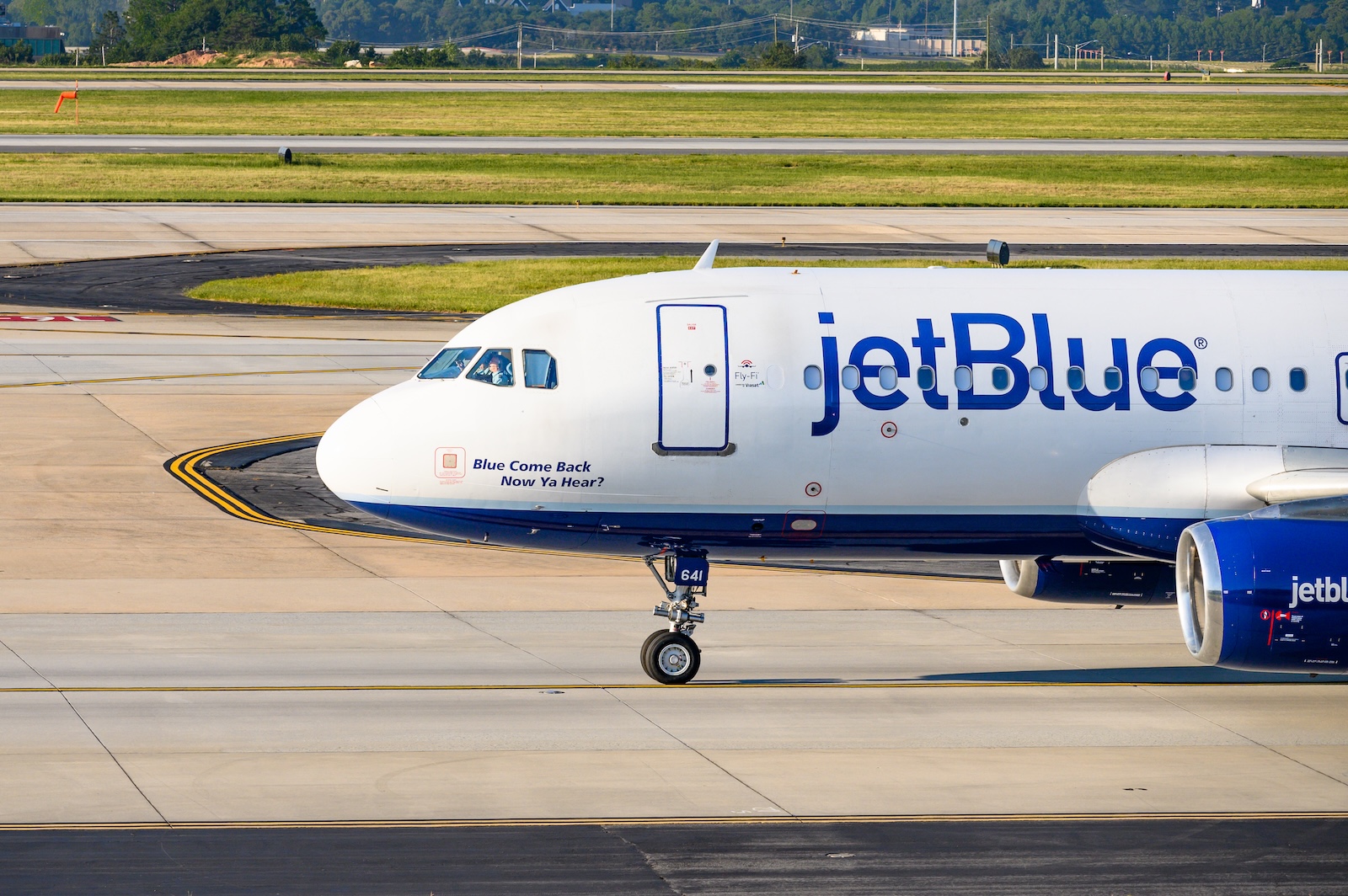
Earlier this week, JetBlue also hiked its fees for checked bags. It is increasing prices by between $4 and $9.

Zach Vasile

Zach Vasile is a writer and editor covering news in all aspects of commercial aviation. He has reported for and contributed to the Manchester Journal Inquirer, the Hartford Business Journal, the Charlotte Observer, and the Washington Examiner, with his area of focus being the intersection of business and government policy.
Sign-up for newsletters & special offers!

Get the latest stories & special offers delivered directly to your inbox

SUBSCRIBE

Uh-oh! It looks like you're using an ad blocker.

Our website relies on ads to provide free content and sustain our operations. By turning off your ad blocker, you help support us and ensure we can continue offering valuable content without any cost to you.

We truly appreciate your understanding and support. Thank you for considering disabling your ad blocker for this website