A Republic Airways Embraer 170 in New York. (Photo: AirlineGeeks | William Derrickson)
The International Brotherhood of Teamsters has filed a lawsuit against Republic Airways and Cape Air over a new pilot contract released by Republic earlier this year. The Teamsters say Republic’s contract unlawfully imposes non-compete clauses and fines on pilots who violate it.
Details of Republic’s New Pilot Contract
The contract in question, which is part of the Republic Airways New First Officer Career Advancement Program, was released last month. In short, pilots who sign it are required to “aggressively pursue the path to Captain upgrade,” mainly by picking up extra flights in addition to their monthly schedule, and they are bound to at least 2 years of service as a Republic captain after that.
Republic promised $60,000 to pilots who met these performance criteria. Paid out in four installments, the bonus would be completely received by the end of the pilot’s first year as a captain. However, Republic stipulated that, should a pilot resign or be demoted back to a first officer before their service term is up, they would be required to repay the previous $15,000 bonus installment and forfeit their rights to any remaining installments. Any pilot who voluntarily leaves the airline in under 3 years (roughly the time to upgrade to captain plus serve the two-year Captain requirement) would be fined $100,000 by the airline to recoup costs the airline incurred training them. In addition, pilots who resign before the three-year mark would be barred from working for any other competing airline for a year.
An overview of aircraft movements at New York LaGuardia Airport. (Photo: AirlineGeeks | William Derrickson)
The contract faced immediate backlash from industry professionals, who claimed it was unnecessarily overbearing. Teamsters filed a grievance against Republic soon after the contract was released, saying it violated the Collective Bargaining Agreement (CBA) that the union has with the airline.
“Forced upgrades and mandatory overtime have been rejected by Negotiating Committees over several negotiation cycles,” the union explained at the time. “That the Company would impose them as a condition of employment is a circumvention of our CBA we will vigorously challenge.”
Teamster’s Lawsuit
Now, over a month after the contract was first released, Teamsters is taking the next step by filing a lawsuit against Republic and Cape Air, per a press release.
“The lawsuit asserts the employment contracts are an attempt by the airlines to change pilots’ working conditions unilaterally, in violation of federal labor law under the Railway Labor Act,” Teamsters said in a press release on their lawsuit.
“The contracts that pilots at these two companies are forced to sign as a condition of employment are unlawful and we fully expect to win in court,” said Josh LeBlanc, President of Teamsters Local 357 and a Republic Airways pilot. “These punishing non-compete agreements are not a solution for the labor supply problem that these employers created of their own accord.”
“If these companies are having a hard time recruiting pilots, then they should do what nearly every other airline has done in a competitive job market – increase wages and benefits,” said Joe Muckle, President of Teamsters Local 1224. “Trying to retain professional pilots by handcuffing them with bogus contracts is illegal and bad business, which is why no other airline is doing this. The Teamsters will fight this with the full force of our union.”
Republic’s union says they worry that, instead of retaining more pilots to boost its operation, the company’s contract will drive new hires, turned off by the steep price of leaving the company, away to other regionals, thus diminishing Republic’s safety and reputation.
“We believe this Agreement, even before we get into haggling over its enforceability, will have a chilling effect on the quantity and quality of the Pilots willing to choose Republic to begin their career,” the Teamsters union mentioned last month when the new pilot contract was initially released.
Alternative Pilot Recruitment Methods
The fight between Republic and Teamsters comes as airlines, especially regional carriers, are suffering from a significant shortage of captains. As many of their most experienced pilots leave to fly for mainline legacy airlines, low-cost carriers, and cargo companies, regionals have seen a significant imbalance in how many first officers vs captains they have; many flights canceled for crew issues are because of a lack of qualified captains, not due to a general pilot shortage.
Thus, Republic’s new contract seems like a method of solving that problem. By retaining captains for a set period of time, they will have a steady stream of pilots whose hiring and training they can intentionally plan to keep planes in the air.
An American Eagle Embraer 175 operated by Envoy. (Photo: AirlineGeeks | Greg Linton)
Teamsters say, though, that Republic should focus on other methods to attract and retain pilots. They say that boosting pay and benefits are a more desirable method to attract the most experienced and qualified pilots. Republic was among the last regional carriers to give its pilots raises during the COVID-19 rebound; they had neglected to do so until after the Federal Aviation Administration rejected a proposal that would have allowed the airline to hire pilots trained by its in-house flight school at 750 hours instead of the standard 1,500.
This contract came six months after Teamsters and Republic ratified the aforementioned CBA. The union had focused on goals specifically aimed at attracting pilots at the beginning of their careers, theoretically making the company a more desirable place to work. Updates at that time include 70%-90% pay raises for first officers and 54% raises for captains, as well as improved retirement benefits, increases in compensation for Check Airmen, pay increases for deadhead transportation, and increased flexibility and transparency for Reserve Pilots.
It has yet to be seen how Teamsters’ lawsuit, or Republic’s contract, will fare. Whether Republic will keep getting new pilots with this contract is also to be seen. Perhaps the ways Republic advertises the benefits of the contract will play a role in getting new hires to continue signing the contract. And, if the Union’s lawsuit fails and Republic keeps hiring the pilots it needs, is this something other regional airlines would pick up to meet their demand for captains?
John McDermott is a commercial pilot pursuing a career in professional flight. His passion for aviation began in an Ann Arbor bookstore with a tale of enemy pilots during World War 2, and he hasn't looked back. Besides flying and writing for AirlineGeeks, John volunteers with Professional Pilots of Tomorrow and travels whenever he gets the chance.
Emirates and Kenya Airways Announce Interline Agreement
An Emirates 777-300ER. (Photo: AirlineGeeks | Katie Zera)
Emirates and Kenya Airways have joined forces in an interline partnership, unveiling a collaboration that will provide customers of both airlines with enhanced travel opportunities across their combined networks. The agreement not only offers connectivity between Africa and the Middle East but also ensures a straightforward baggage check-in process throughout the journey.
Under this partnership, Emirates passengers will gain access to 28 destinations in the Kenya Airways network, with Nairobi serving as a pivotal gateway to various African cities. Travelers can now embark on journeys to destinations such as Nampula, Bangui, Bujumbara, Kigali, Dzaoudzi, Lubumbashi, Kinshasa, Kilimanjaro, Juba, Zanzibar, and many other regional points across the African continent. Furthermore, customers flying via Dubai will also have the convenience of booking a single ticket for their travel to or from Mombasa, a highly sought-after leisure destination in Kenya, thanks to the bilateral interline arrangement.
Likewise, Kenya Airways passengers departing from Nairobi and Mombasa will gain access to Emirates’ extensive network, allowing connections through Dubai to 23 destinations in West and South Asia, the Far East, the Indian Ocean, and the Middle East.
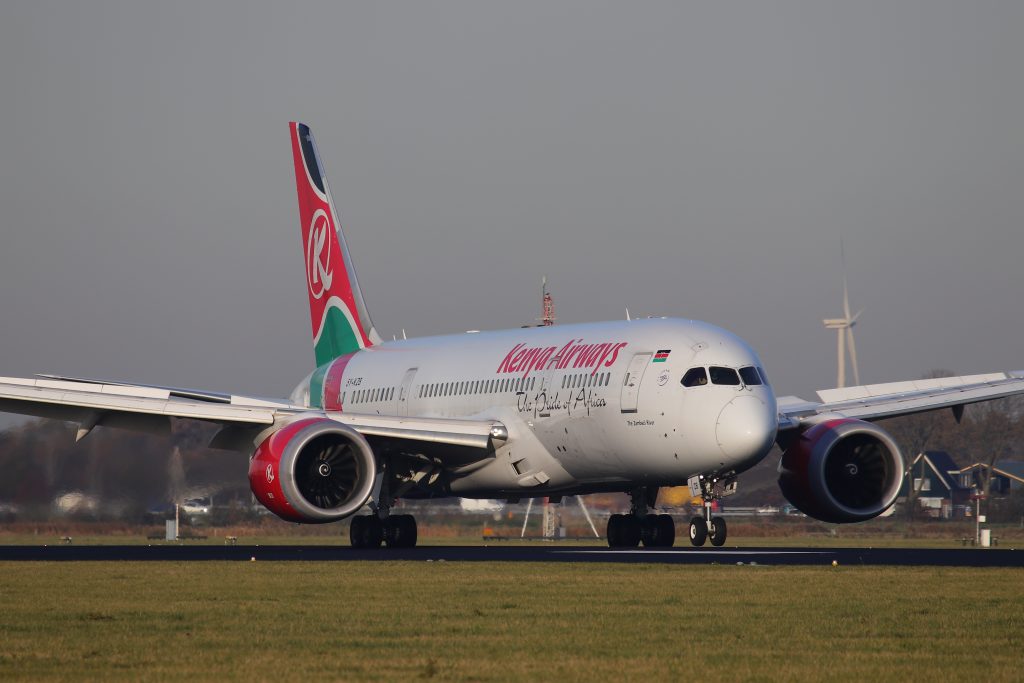
A Kenya Airways Boeing 787-8 at Schiphol Airport. (Photo: AirlineGeeks | James Dinsdale)
Expressing enthusiasm about the partnership, Adnan Kazim, Chief Commercial Officer of Emirates, said in a press release: “We are pleased to ink our first partnership with Kenya’s flag carrier. Kenya is a strategic gateway in our Africa network, and this new interline agreement will enhance connectivity for Emirates’ customers and provide them more travel choices across the continent. We look forward to deepening our relationship with Kenya Airways, offering greater network opportunities and improving connections for both of our customers.”
Julius Thairu, Chief Commercial and Customer Officer of Kenya Airways, highlighted the importance of partnerships in the aviation industry, leveraging shared scale and efficiencies to deliver seamless travel options, “Partnerships like these are key in aviation as they take advantage of mutual scale and efficiencies to provide customers with more seamless travel options,” he said.
Emirates has been serving Kenya since 1995 when it launched flights between Nairobi and Dubai. Over the years, the airline has gradually expanded its operations on this route and currently operates 14 weekly flights, having transported over 5 million passengers.
Kenya Airways recently introduced nonstop flights between Mombasa and Dubai, with four weekly flights catering to the increasing demand for travel between the two destinations. In addition to Jomo Kenyatta International Airport, Mombasa has become the carrier’s second hub connecting passengers directly to the UAE. Kenya Airways currently operates ten weekly flights to Dubai from Nairobi, utilizing a mix of 737-800 and 787-8 aircraft.
Victor Shalton's love for aviation can be traced to when he was 11-years-old. As a seasoned aviation writer, he takes pride in providing the best aviation coverage around the globe and is passionate about advancing his skills in the aviation space. In addition, he loves travelling, writing, arts and while his speaking engagements have taken him around the world, he is proud to call Nairobi home.
After only five years of operation, Canadian ultra-low-cost carrier (ULCC) Swoop is being integrated into its parent company. Swoop will operate its last flight on October 28, 2023 before being merged into WestJet’s mainline operations.
A New Pilot Agreement
The WestJet Group announced the end of the subsidiary in a press release about the ratification of its new collective bargaining agreement with its pilots. The airline had recently come to an agreement in principle with the Air Line Pilots Association (ALPA) just ahead of a holiday long weekend in Canada. Hundreds of flights had been preemptively canceled due to an impending pilot’s strike. The strike was narrowly averted, and the four-year agreement has now been ratified.
ALPA, the union representing WestJet and Swoop pilots, describes the agreement as one that includes better job protections and pay increases, as well as improved scheduling and quality of life. While Swoop pilots are currently paid less than their WestJet counterparts, the new agreement brings their pay to a similar level.
The new agreement appears to be the main trigger for the discontinuation of Swoop. As a result of the agreement, the cost-saving benefits of operating Swoop as a separate entity have likely decreased for WestJet due to the pilot pay increase. Furthermore, the agreement negotiations included the integration of Swoop into the main WestJet brand. The company has stated that Swoop employees will move to WestJet.
Swoop: A Short-Lived ULCC
Swoop began operations in June of 2018 and has since grown its network to cover over 20 destinations across North America and the Caribbean. The airline operates a fleet of 16 Boeing 737-800 and Boeing 737 MAX 8 aircraft and the jets are expected to join mainline WestJet operations alongside its employees. WestJet currently has a fleet of over 110 aircraft, consisting of Boeing 737-700s, Boeing 737-800s, Boeing 737 MAX 8s, Boeing 787-9s and Boeing 737-800BCF freighters. Its regional subsidiaries, WestJet Encore and WestJet Link, operate De Havilland Canada Dash 8-Q400 and Saab 340 turboprops.
Swoop currently competes in a crowded ultra-low-cost market in Canada, alongside airlines such as Flair Airlines, Lynx Air and Canada Jetlines. Swoop’s integration also comes shortly after WestJet announced the completion of its acquisition of fellow Canadian carrier Sunwing Airlines. Sunwing operates a fleet of Boeing 737 aircraft and offers flights and vacation packages to leisure destinations. WestJet has stated that it intends to keep the Sunwing brand separate in the near future.
After its last day of operations on October 28, Swoop will join a long list of defunct Canadian low-cost carriers. WestJet’s rival Air Canada has previously attempted to operate its own low-cost subsidiaries, Zip and Air Canada Tango. Other former Canadian low-cost carriers include Jetsgo, Zoom Airlines and Harmony Airways.
Andrew is a lifelong lover of aviation and travel. He has flown all over the world and is fascinated by the workings of the air travel industry. As a private pilot and glider pilot who has worked with airlines, airports and other industry stakeholders, he is always excited to share his passion for aviation with others. In addition to being a writer, he also hosts Flying Smarter, an educational travel podcast that explores the complex world of air travel to help listeners become better-informed and savvier travelers.
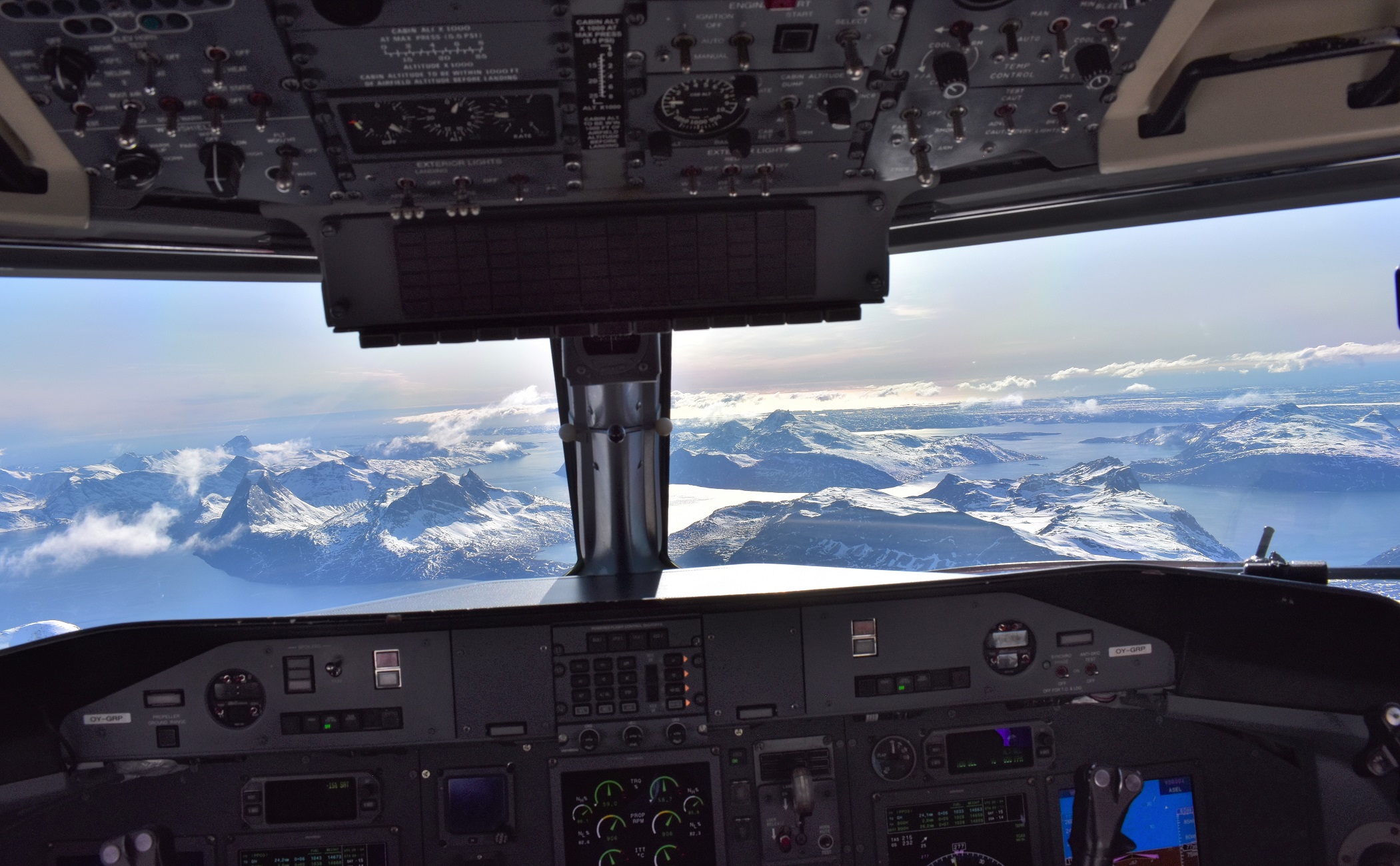
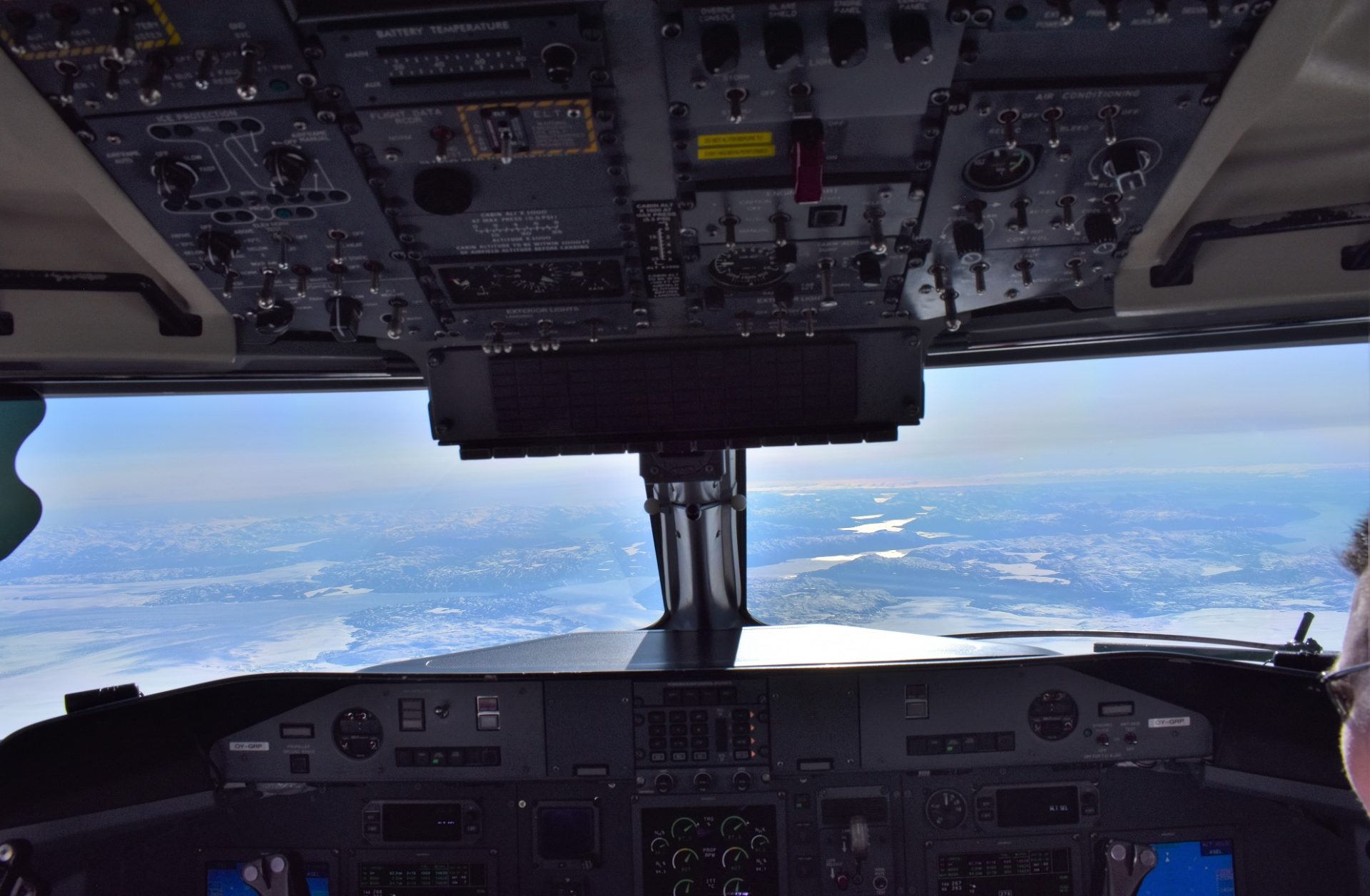
Admiring the scenery as we descended into Nuuk (Photo: AirlineGeeks | Joey Gerardi)
The Dash 8 variant has a lot of versatility from the smallest Dash 8-100 to the Dash 8-400, which is more commonly known as the Q400. The -200 variant was the least popular of the series with only around 100 being built and delivered, among the over 1,300 Dash-8 family aircraft built so far with the Q400 still being in production.
The Dash 8-100 and -200 variants have almost identical features, with the only differences being the -200 offers a higher max takeoff weight (MTOW), a higher power (2,150hp compared to 1,800hp in the -100), higher cruise speed (289 knots versus 270 knots in the -100), and a slightly longer range of 1,295 miles versus 1,174 miles in the -100.
The Q400 is found on longer routes such as Porter’s former Ottawa to Melbourne, Fla. route, which sits at roughly 1,220 miles and the flight was around three hours. The Q400 is also a lot larger with roughly 78 passengers on most of them, the Dash 8-200 is a lot smaller with around 35-38 passenger seats. It is not found on many long routes.
The Dash 8-200 is still widely used by agencies and governments around the world including the United States and Canada alike, but most only have a few of the type with Air Greenland having the most Dash 8-200s of any commercial airline, just taking possession of their eighth Dash 8-200.
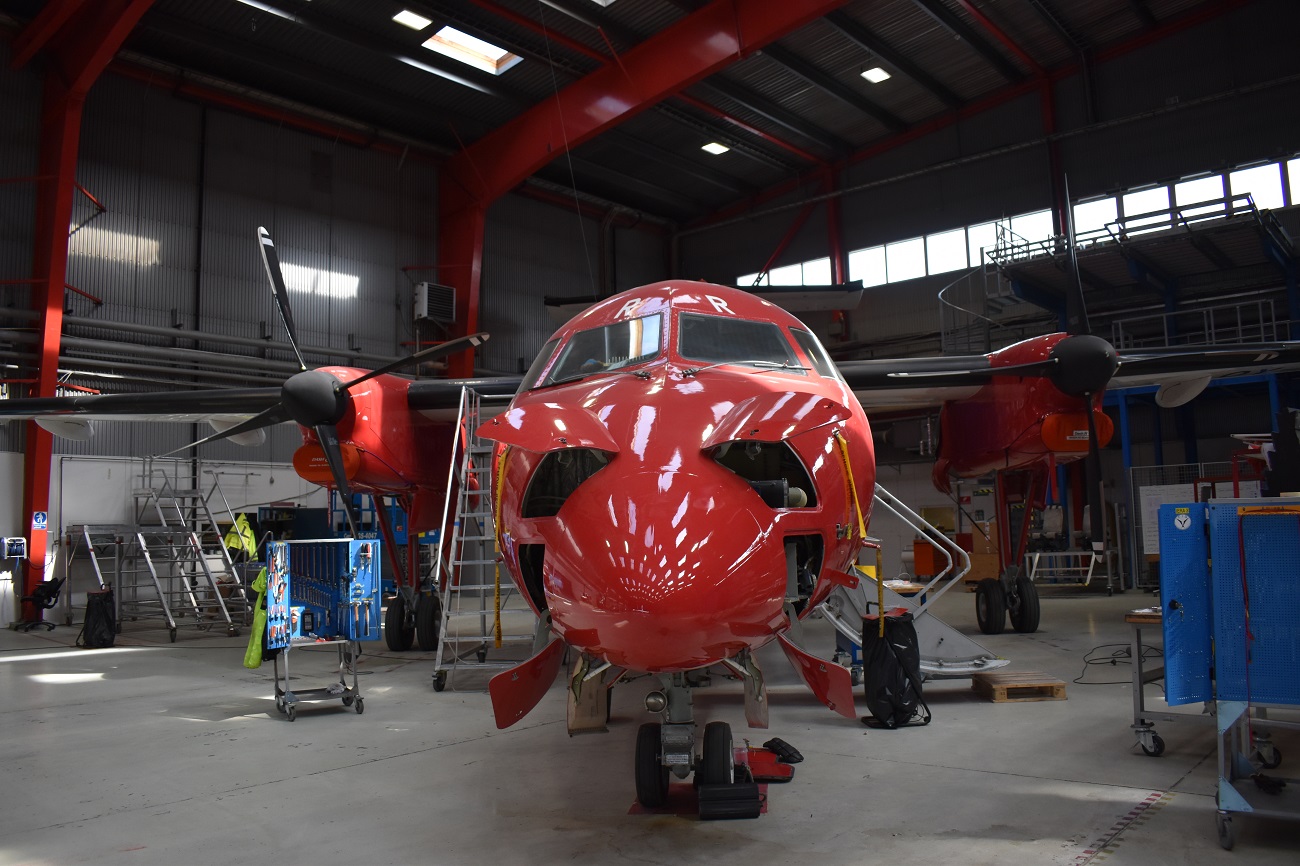
Air Greenland’s newest Dash-8 OY-GRR (Photo: AirlineGeeks | Joey Gerardi)
Greenland’s national carrier, Air Greenland, operates very few international flights leaving Greenland with most of them leaving from Kangerlussuaq as that is the only commercial runway in the country long enough for the airline’s sole Airbus A330-800neo, but some do leave from Narsarsuaq on a summer seasonal basis but don’t operate on the carriers own metal and instead operate on lease Boeing 737-700s from JetTime.
Currently, the only other nearly year-round international flight on the carrier’s own metal is a twice-weekly flight from the nation’s capital of Nuuk to Reykjavík/Keflavík in Iceland. The flight runs on Sundays and Wednesdays for most of the year, with a hiatus in service between mid-June and late August, and spans roughly 874 miles.
There are many trip reports and articles out there about the “longest flight in the world” between New York City and Singapore, and the “shortest flight in the world” between Westray and Papa Westray in Scotland. But the longest flight on a particular aircraft isn’t talked about that often, and even less so a long flight on a small prop plane such as the DeHavilland Dash-8. That is what this trip report is about.
Day of the Flight
The flight left Iceland’s main international airport in the late afternoon/early evening, but seeing as the airport is so far from the capital I decided to make my way there earlier than one would need to, arriving around four hours prior to the flight.
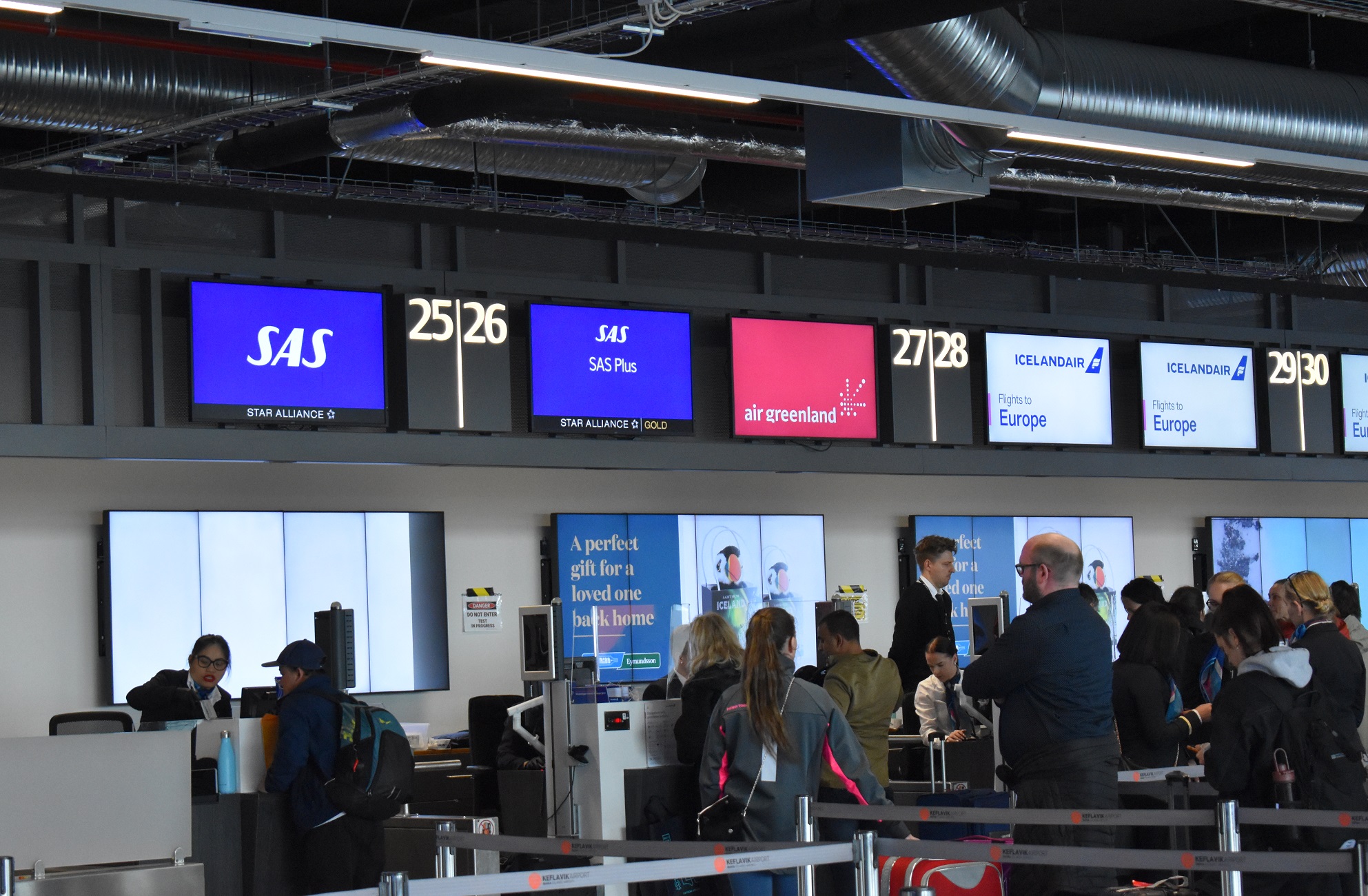
The departure time of the flight was at 4:55 p.m. local time, but the ticket counter doesn’t open until around 2.5 hours before the flight, so I did have some time to wait before it opened. Air Greenland’s ticket counter at Reykjavík/Keflavík is located between SAS and Icelandair’s Europe desk.
Air Greenland’s check-in desk in Iceland (Photo: AirlineGeeks | Joey Gerardi)
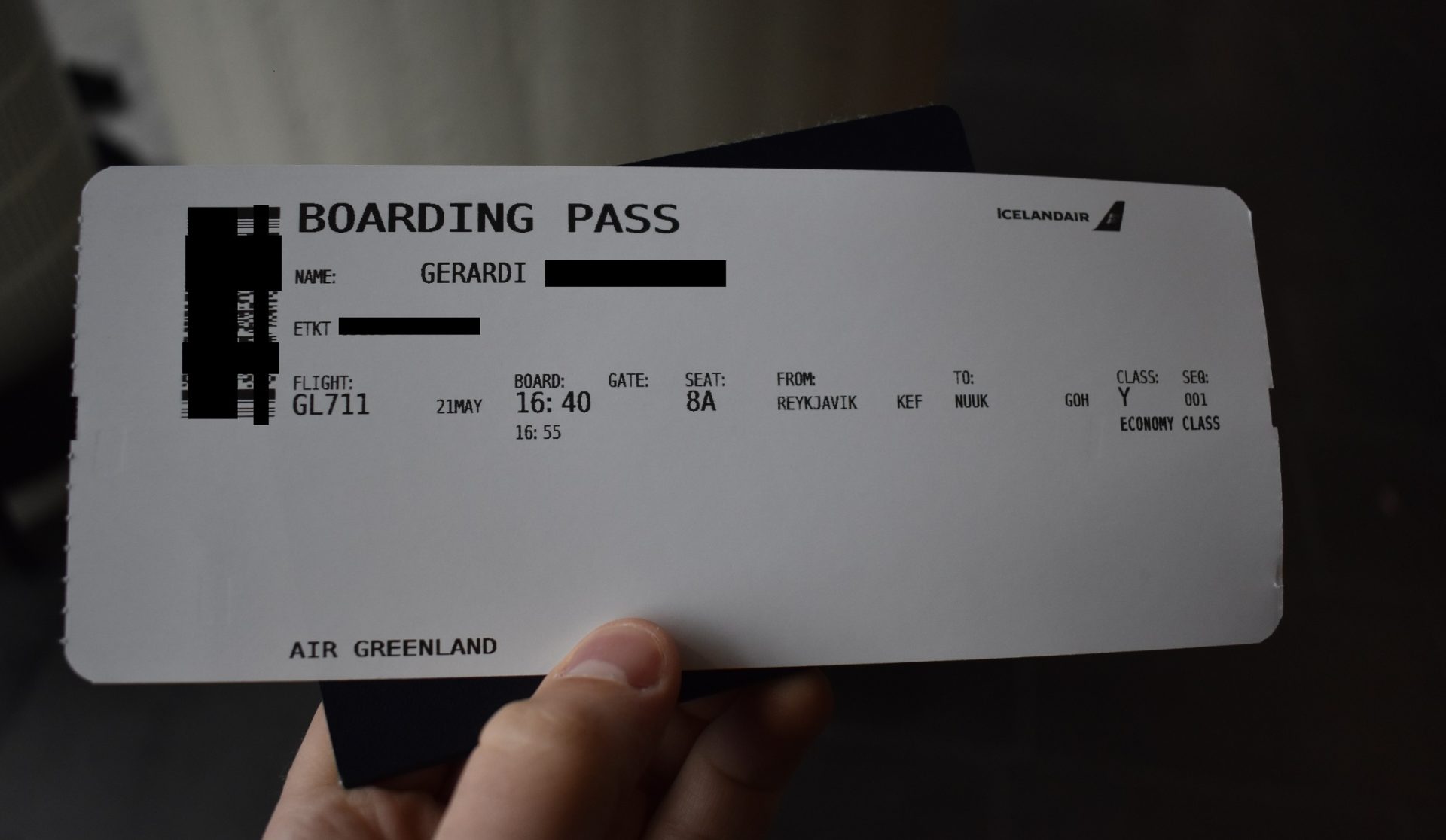
It was apparent that they are Icelandair agents checking us in at a makeshift desk, as the boarding pass does show an “Icelandair” logo along with the words “Air Greenland” on the bottom. This makes total sense and it’s not just Air Greenland that does this, some airlines do use other airlines’ materials on occasion especially when they serve an airport with a lower frequency like on this city pair, and don’t want to spend the money for a low-frequency airport.
My boarding pass for the flight to Nuuk (Photo: AirlineGeeks | Joey Gerardi)
Greenland is a very unique destination, geographically it’s in North America but it feels more like Europe than anything else. They use the Europe type C plug, and Greenland is part of the Kingdom of Denmark, which means Greenland is technically in the European Union. Denmark and Iceland are also part of the Schengen Zone, meaning citizens of a Schengen country can travel between them without a passport or border checkpoints. Greenland and Iceland are a little bit difficult to do this, as they are both islands and require flights or boats to get to them, but this does mean traveling between them doesn’t get you another stamp on your passport.
The gate we used was also a bus boarding gate. The airport has a lot of these gates since it is a large international hub but doesn’t have much physical gate space. Most Icelandair and PLAY departures/arrivals happen simultaneously, the airport does not have enough jetways connected to the buildings to house all the flights and that doesn’t even scratch the surface of other airlines that serve Iceland like Air Greenland. Despite how busy the airport was, it was very well laid out and it didn’t feel crowded in the slightest.
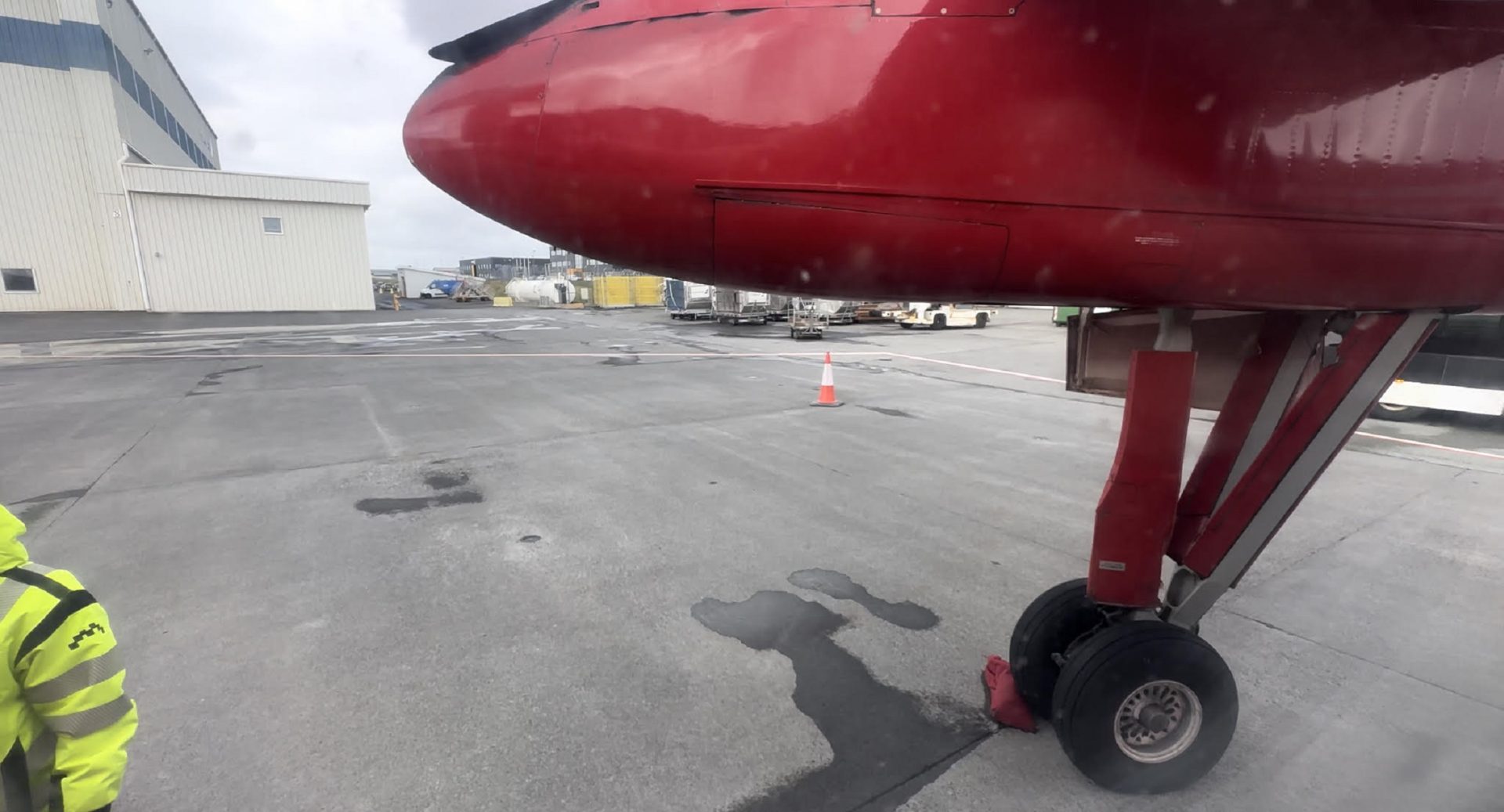
Even though Air Greenland is still trying to acquire more Dash 8s, the -200 program ended years ago so none of the airplanes that the airline is getting are straight from the factory. The aircraft I flew on OY-GRP was built in 1997 but Air Greenland didn’t take possession of it until 2015, and flew for many different operators before coming to the airline.
Air Greenland’s Dash 8 200 is laid out in a 2-2 configuration with the last row having five seats across the back, making 37 seats total.
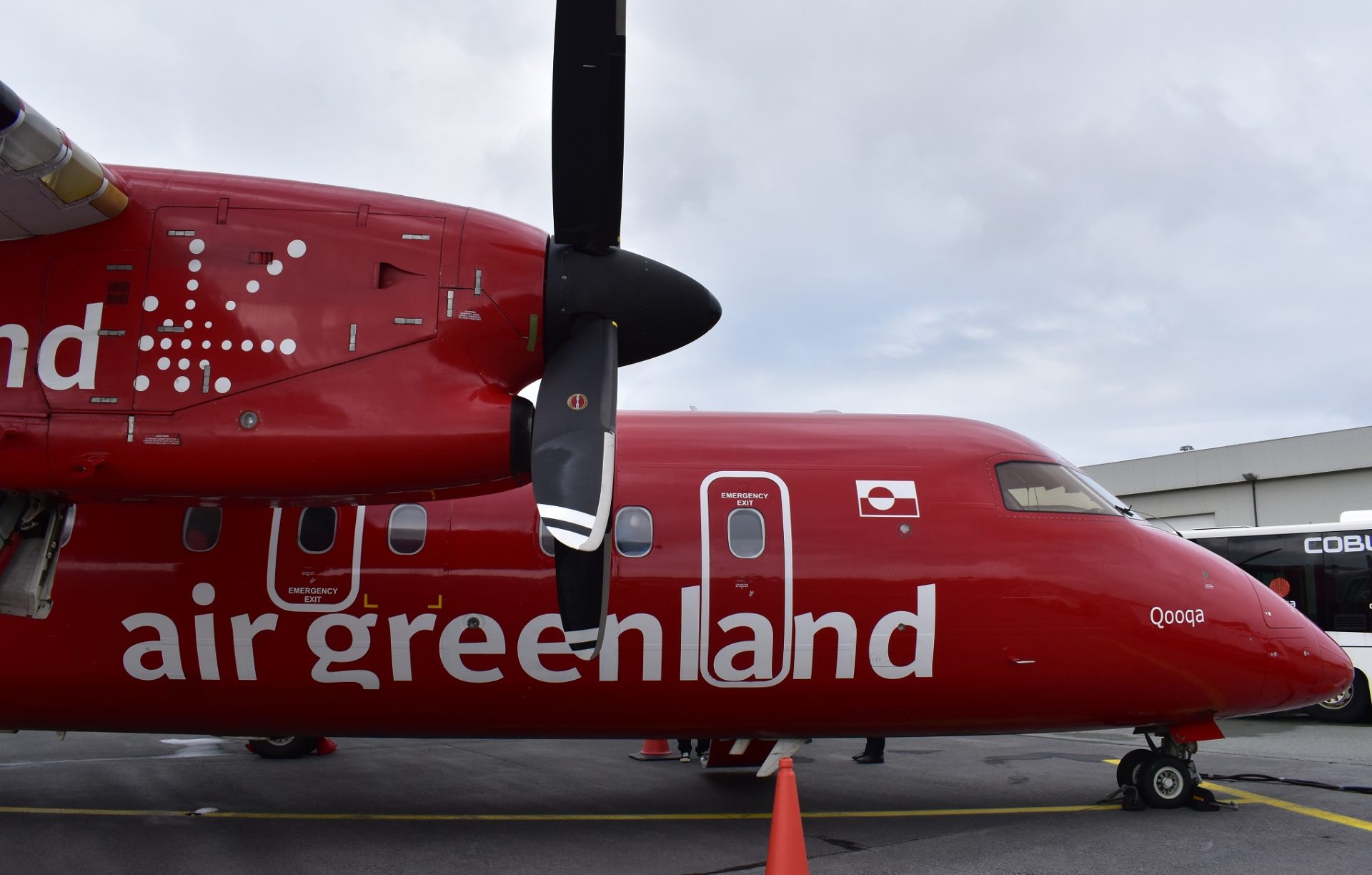
The aircraft was named ” Qooqa ” which is a legendary hero of epic stories of the Inuit people in the Arctic regions of Alaska, Canada, and Greenland, and could also be known as Qayaq in Alaska.
My aircraft over to Greenland, OY-GRP, which is named ‘Qooqa’ (Photo: AirlineGeeks | Joey Gerardi)
The seat I had originally selected for this flight was 8A, a left-side window seat just behind the wing. The left side is best for flights from Iceland to Nuuk as they tend to make a left bank around the city when arriving, giving you a great view of the Greenlandic capital just before landing.
My original seat, 8A, on the flight to Greenland (Photo: AirlineGeeks | Joey Gerardi)
A True ‘First Class’ Experience
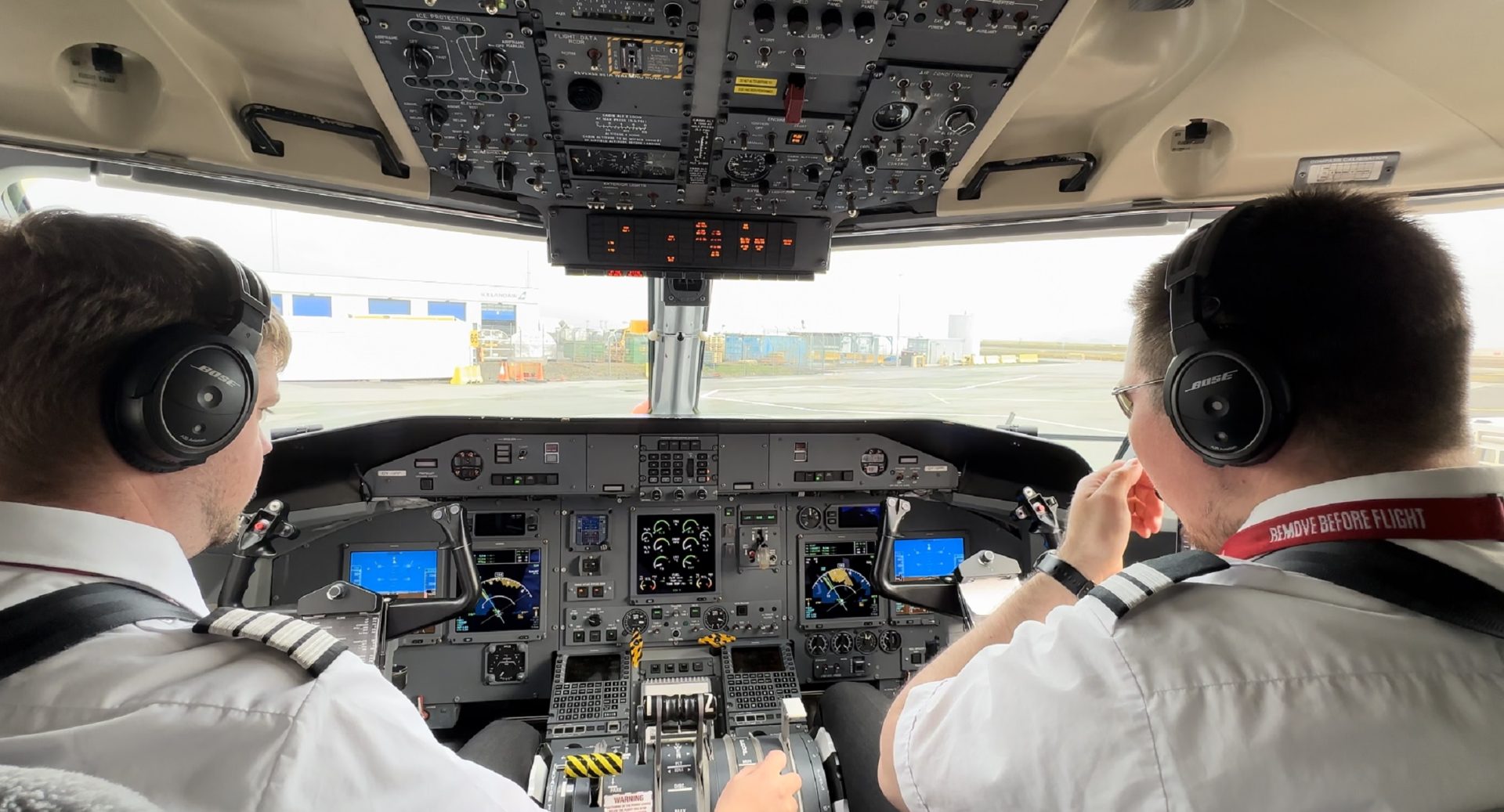
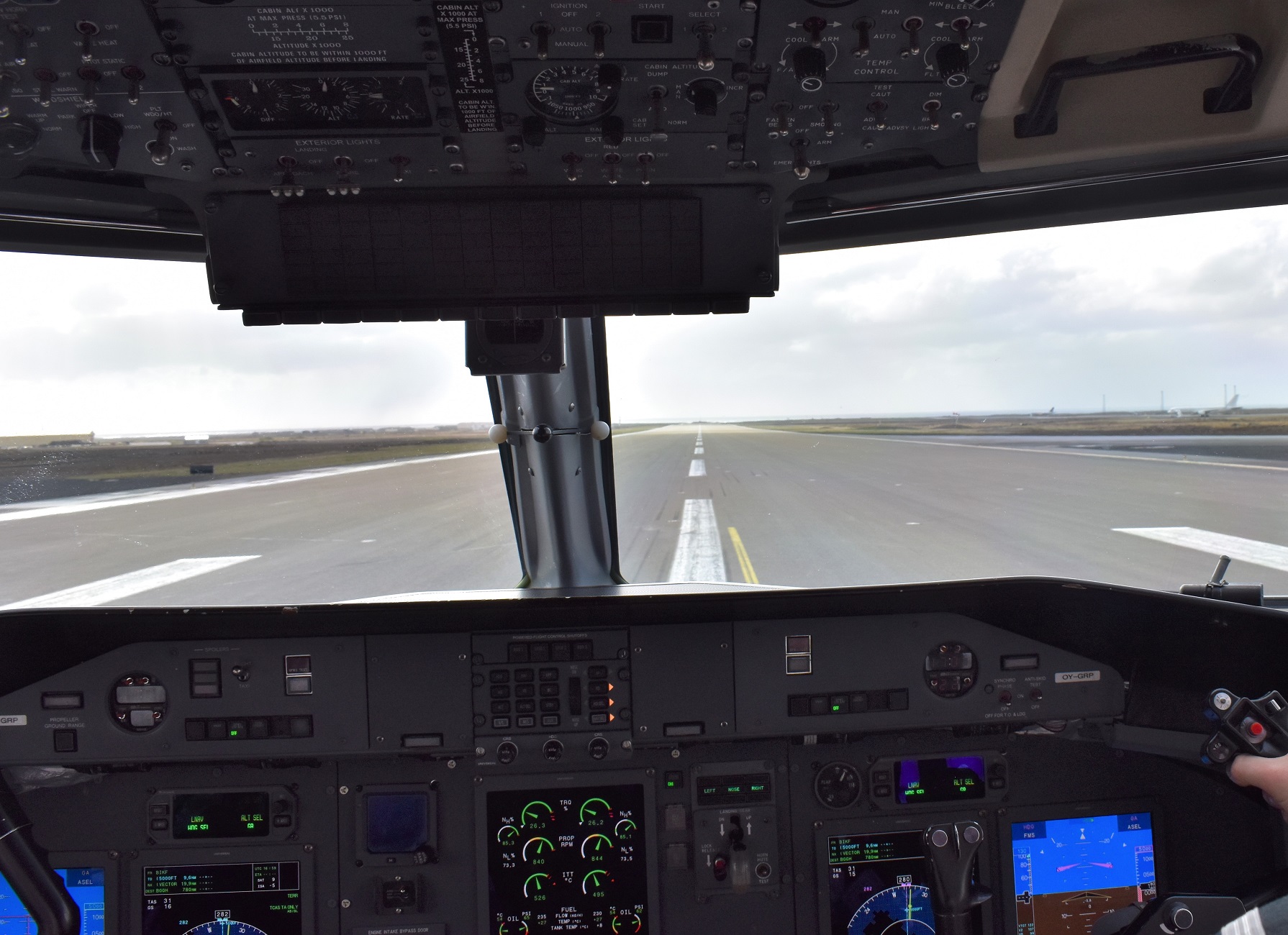
But, I got invited into the cockpit by the crew and they even asked if I would like to sit in the jumpseat located in the cockpit. I would have to be crazy to turn down that opportunity, so I took my seat in the cockpit for the over three-hour journey to Greenland. Some would consider this even better than first class.
My seat in the cockpit on the flight to Greenland (Photo: AirlineGeeks | Joey Gerardi)
The engine was started up and I watched the crew do their pre-flight checklist in person, something I have never been fortunate to see before on a commercial flight. The crew was also nice enough to show me a map of our route to Greenland on their iPad.
We then taxied out to the runway and rocketed westward toward Greenland, on board the longest Dash 8-200 flight in the world. A video of the takeoff is located at the end of this article.
Rolling down the runway for takeoff (Photo: AirlineGeeks | Joey Gerardi)
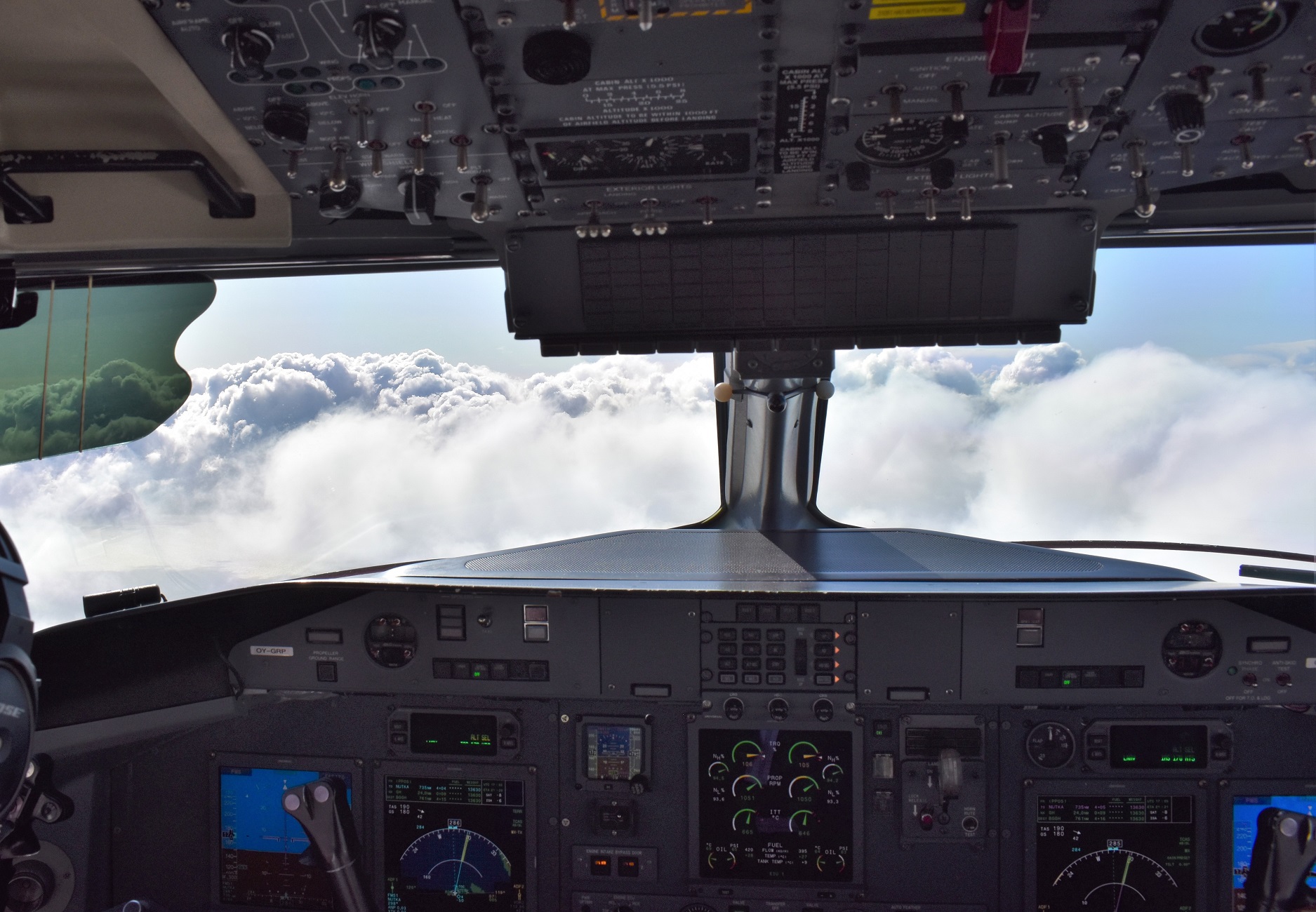
As we gained more altitude I looked out the right side of the aircraft and I could see Iceland disappearing into the distance before finally going behind my line of sight.
It was so fun watching the takeoff from this perspective, seeing the clouds in front of you during the climb as they slowly came towards the plane, versus in the cabin seats you can only really see straight out the sides and not much ahead or behind the aircraft.
Flying through clouds (Photo: AirlineGeeks | Joey Gerardi)
About 20 minutes after takeoff, all passengers were given a meal. Even though this is a small aircraft and doesn’t have intricate systems to prepare meals, this technically was a long-ish international flight. I was given potato salad with meatballs, which I translated from the label on the packaging that was in Danish so I apologize if the translation is not 100% correct.
My meal on the Iceland-Greenland flight (Photo: AirlineGeeks | Joey Gerardi)
About 40 minutes after the main meal, we were given dessert which consisted of an apple crumble cake thing. Not large, but it was still good and better than anything you get on a U.S.-based carrier.
The dessert that was given to us on the flight (Photo: AirlineGeeks | Joey Gerardi)
It wasn’t long after that we began to see the first glimpse of Greenland, meaning we were nearing the halfway point of the journey. This was actually my first time seeing Greenland in person, even with a couple of transatlantic crossings I’ve flown in the past, the flights have either been at night or Greenland was completely covered by clouds.
A fun fact about Air Greenland’s Dash 8s; even though the airline has eight of them currently, only two of them are able to make this journey from Nuuk to Iceland. OY-GRP, the aircraft I was currently flying on, and the other is OY-GRO. This is because these two planes are equipped with auxiliary fuel tanks so they can make the longer journey.
Despite these longer fuel tanks, they still can’t take a full load of passengers. They are only allowed to have 35 of the 37 passenger seats filled for these longer flights to Iceland, which wasn’t a problem on this flight as there were only 26 onboard.
Diversion points are also very limited on this route between Iceland and Nuuk. With no communities or runways in the center of the country, options include the following; turning back to Iceland if that is closest, Kulusuk, Greenland which is located roughly at the halfway point of the flight on the east coast of Greenland, and then Nuuk on the west coast of Greenland. Kangerlussuaq, which is located north of Nuuk, does serve as the diversion point if the weather is bad in Nuuk.
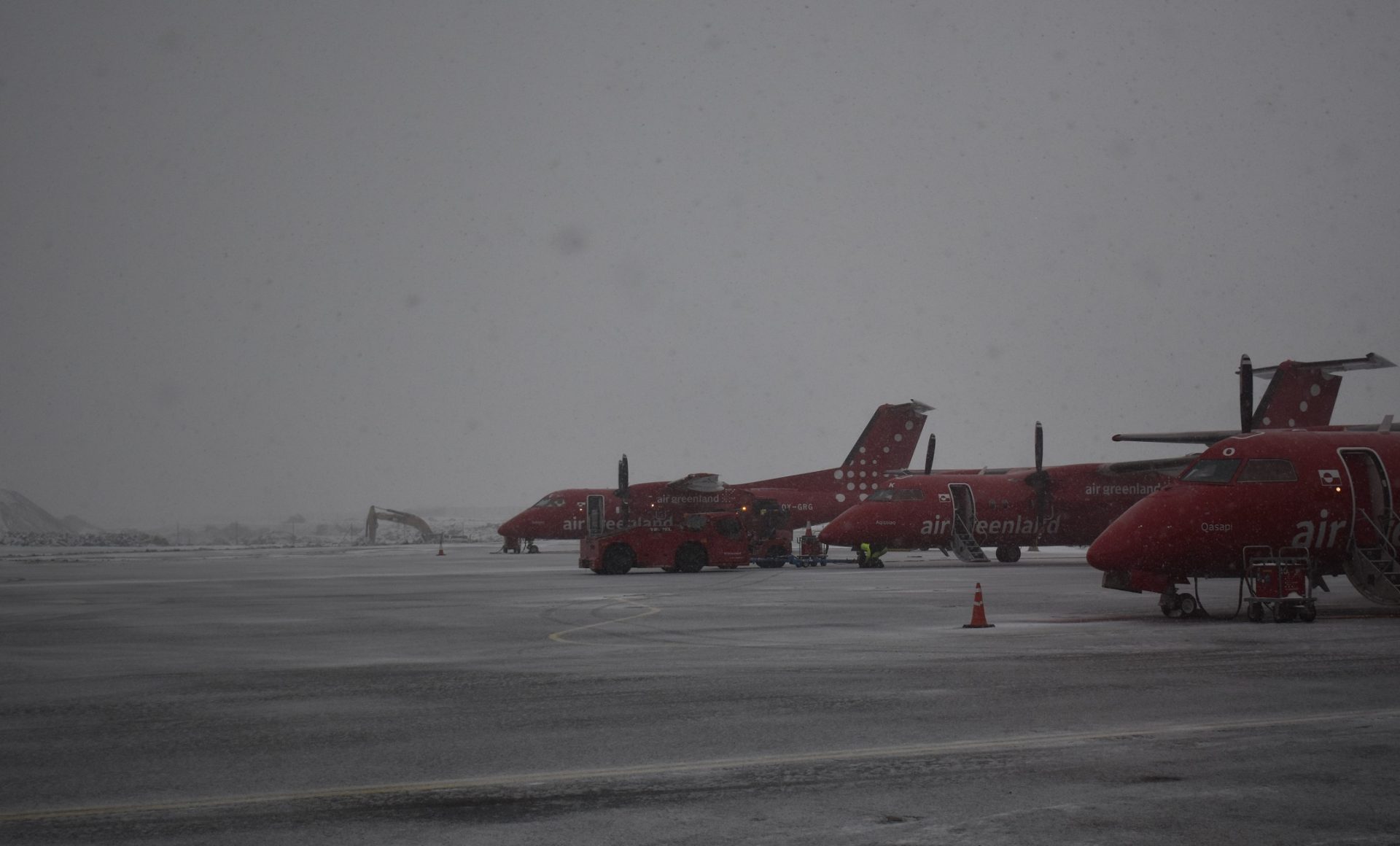
Snowy weather in Nuuk (Photo: AirlineGeeks | Joey Gerardi)
At the time of writing this article, there isn’t a single precision approach at any commercial airport in Greenland. So when weather like snow, fog, or even high winds affect Nuuk, aircraft do sometimes get diverted to Kangerlussuaq for safety.
We began flying over the inner east coast of Greenland and the mountains, and just starting to see the Greenland ice sheet.
Flying over mountains in eastern Greenland (Photo: AirlineGeeks | Joey Gerardi)
With meal service over, what was left to do is enjoy the view. Our cruising altitude was 24,000 feet or 7,315.20 meters, lower than most aircraft around this part of the world, meaning that our route to Nuuk was pretty direct from Iceland. It was almost a straight shot over 7oo miles from Iceland to just outside of Nuuk before we hit the next waypoint.
This means there wasn’t much turning either and you could enjoy the beauty that is Greenland, as most of this flight offers spectacular views of the ground below.
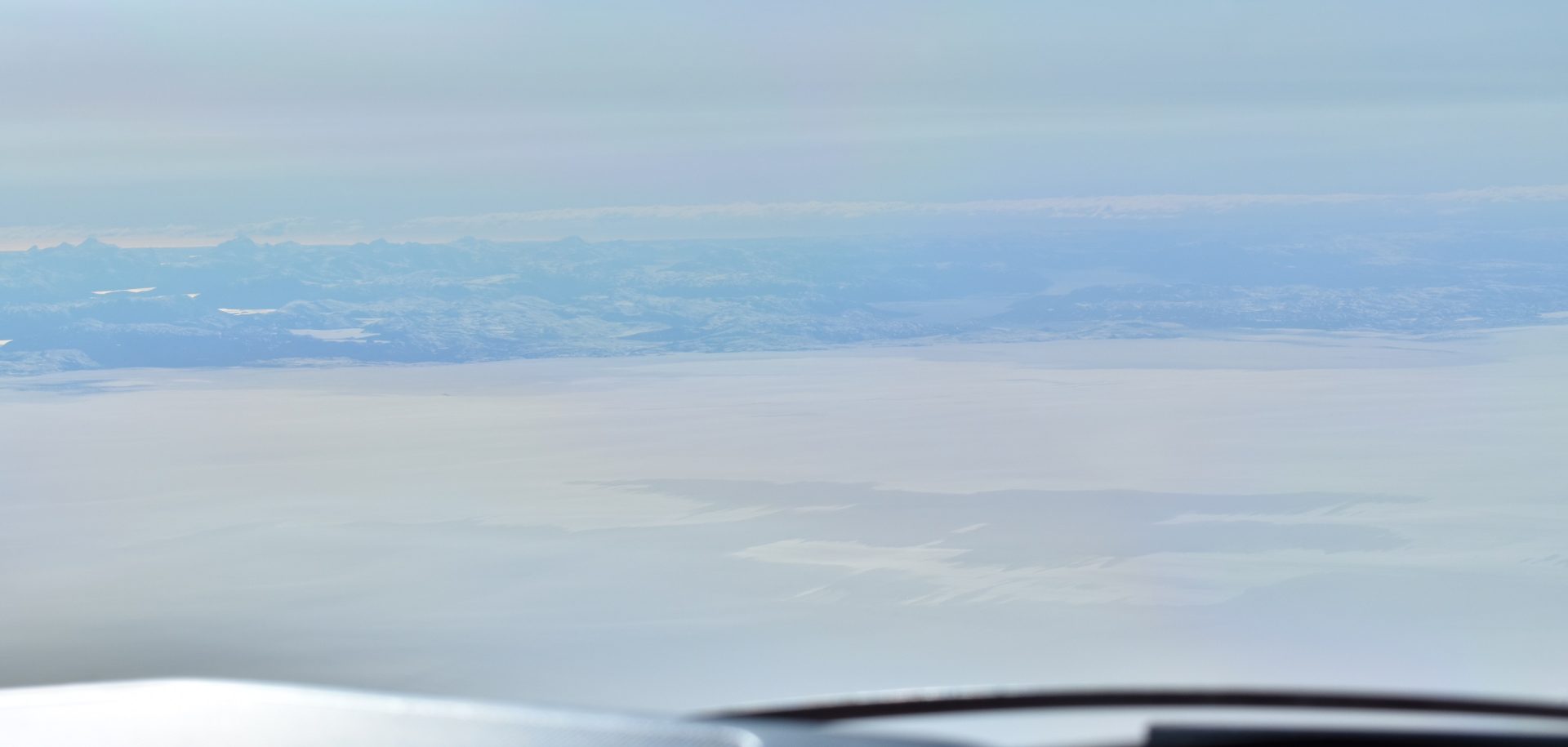
Over the Greenland Ice Sheet (Photo: AirlineGeeks | Joey Gerardi)
We flew over the ice sheet for around 50 minutes, and towards the end of that time, we started to see the western shores of the world’s largest island.
Starting to see the western shores of Greenland (Photo: AirlineGeeks | Joey Gerardi)
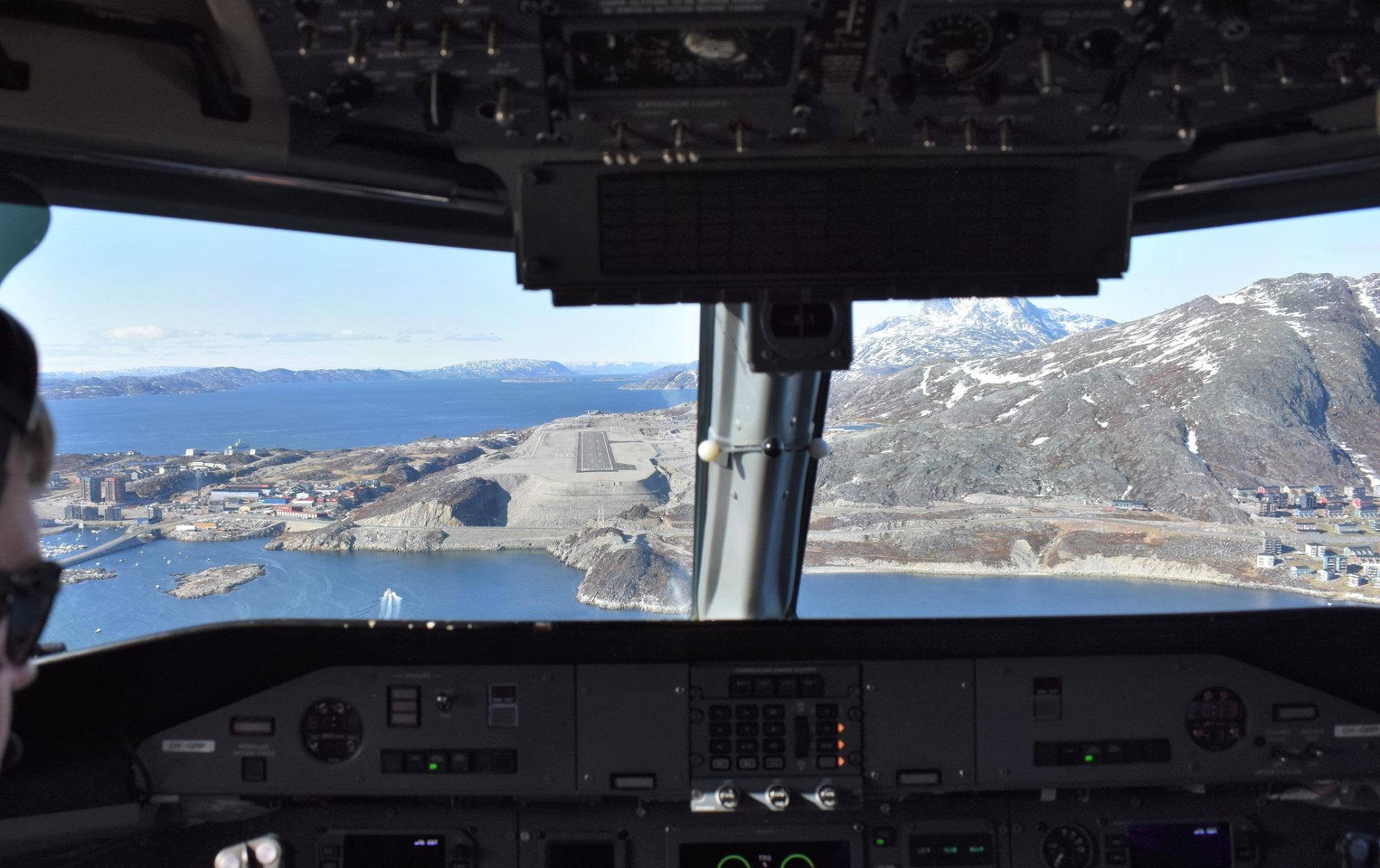
Shortly before reaching the edge of the ice sheet, we began to make our slow descent into Nuuk.
We then passed over the edge of the Greenland ice sheet, making way for the mountainous terrain leading to the western shores.
The western edge of the Greenland Ice Sheet (Photo: AirlineGeeks | Joey Gerardi)
Despite the snowy weather in the days leading up to my trip, the weather on this day was absolutely stunning with few clouds in the skies leading to amazing sightseeing as we made the approach into Nuuk.
Nuuk is only about 150 miles south of the Arctic Circle, meaning that they do get snow during most months of the year.
Passing over Kapisillit (Photo: AirlineGeeks | Joey Gerardi)
We also passed over the settlement of Kapisillit, which translates to ‘Salmon’ in Greenlandic and refers to the belief that the only spawning ground for salmon in all of Greenland is a river near the settlement. The population of the community is only around 50 residents.
I spent the rest of the flight sightseeing, as there was no weather and hardly any clouds, the scenery was absolutely breathtaking going into Nuuk. Even with a seat in the main cabin, the views are stunning no matter which side you are seated on.
Approaching Nuuk (Photo: AirlineGeeks | Joey Gerardi)Continuing to descent into Nuuk (Photo: AirlineGeeks | Joey Gerardi)
The entire way in – between flight tasks of course – the pilots were pointing out landmarks and explaining facts to me along the way into Nuuk.
Then I saw it, the capital of Greenland, Nuuk, was jutting out of the mountains on a low-lying point pinpointed by the pilots.
The first views of Nuuk (Photo: AirlineGeeks | Joey Gerardi)
As I predicted from the past paths this flight has taken, we approached the city and went around the north side of it, banking left, giving those on the left side a wonderful view of the smallest country capital in the world by population.
Nuuk, the smallest capital in the world (Photo: AirlineGeeks | Joey Gerardi)
When flying over I could also see the runway project. Currently, the largest plane that can land in Nuuk is the Dash 8-200 as the runway is only 3,117 feet/950 meters. But, with the new runway that is planned to open hopefully at the end of 2023, it will more than double the runway to a new length of 7,200 feet/2,200 meters, making it possible for narrowbody aircraft and even the airline’s flagship Airbus A330-800neo to land here in Nuuk. The width of the runway will also nearly double as well, making it possible for the larger aircraft to land here and also increase the max crosswind landing limit.
The runway construction in Nuuk (Photo: AirlineGeeks | Joey Gerardi)
They are using part of the old runway as the taxiway during the runway project. They are also building a new terminal that will be able to handle the extra passengers that come with the A330-800neo serving the airport, meaning once the construction is complete the current terminal will be decommissioned.
We banked around the city, giving us a great view of the capital, then, after 3 hours and 13 minutes of flight time, we touched down in Nuuk, bringing to an end to my trip on the longest Dash-8~200 flight in the world.
On final approach to Nuuk, Greenland (Photo: AirlineGeeks | Joey Gerardi)
The approach to the airport was fantastic with all of the mountains and snow-capped peaks as well as the Greenland ice sheet. I also got really lucky with the weather having nearly clear skies with no clouds, as the day before this was super snowy, and the day following this flight was completely overcast.
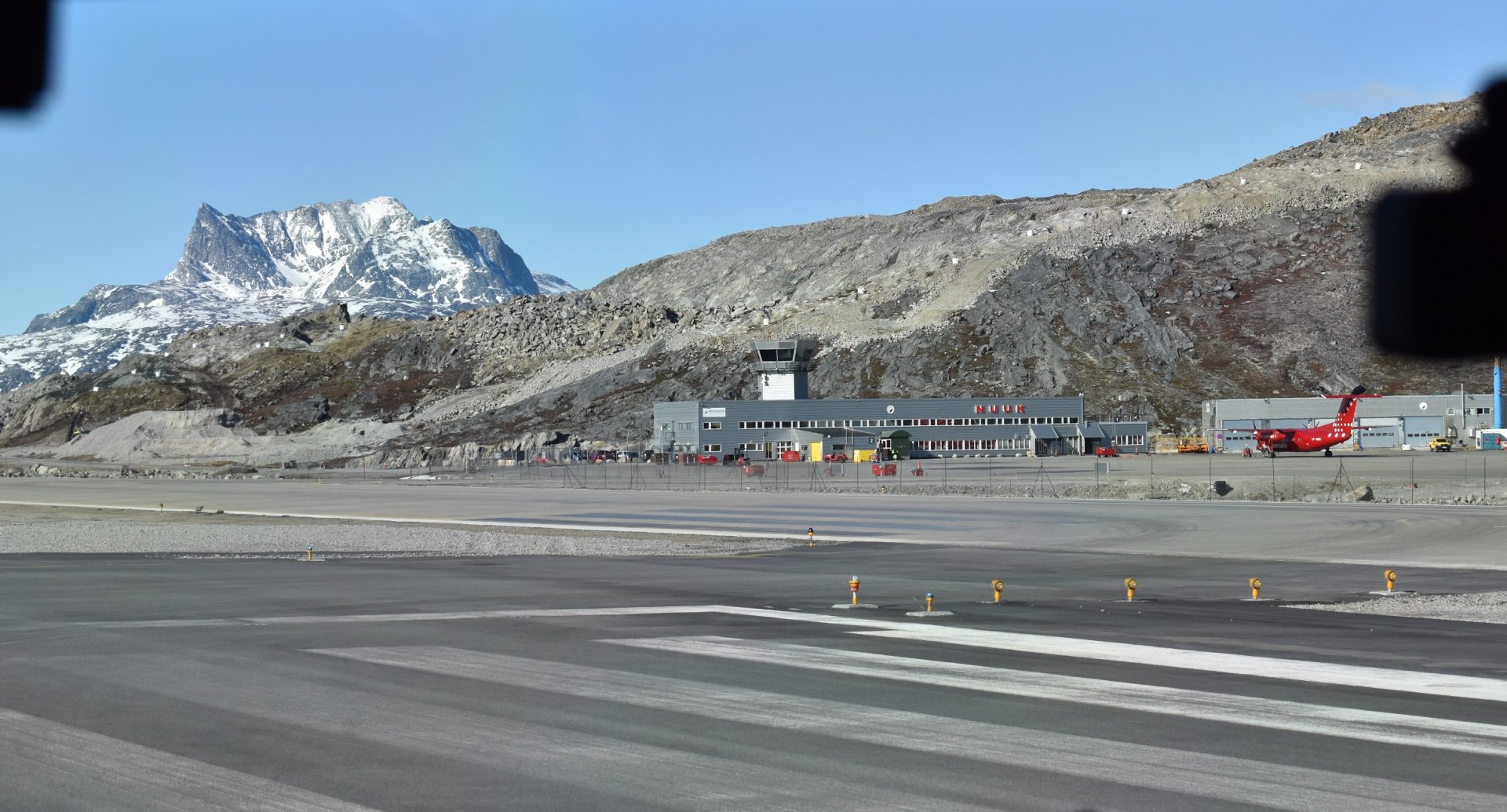
The current terminal in Nuuk (Photo: AirlineGeeks | Joey Gerardi)
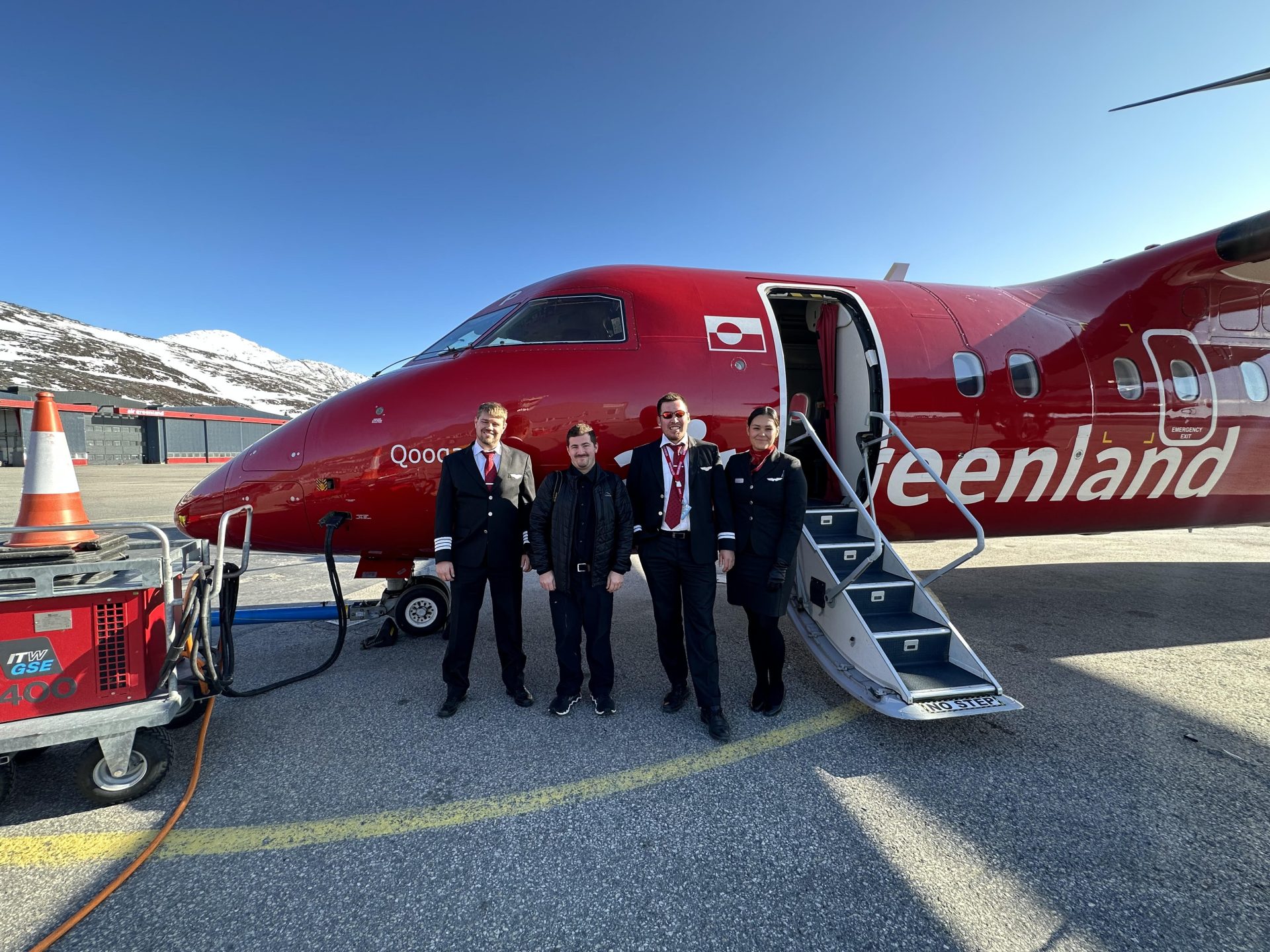
The terminal was small and will someday soon be phased out when the new larger terminal opens just south of the old one. Right after getting off the aircraft, I asked the crew if I could take a picture with them, and they were happy to do so which wrapped up this flight very nicely.
The crew and I from the flight (Photo: AirlineGeeks | Joey Gerardi)
Conclusion
There aren’t many longer routes left on the small version of the Dash 8, and with the new runway opening in Nuuk later in 2023 or early 2024, there is a chance this route could be upgraded to a narrowbody on a leased aircraft similar to the route into Narsarsuaq or even on the carrier’s own A330-800neo on a seasonal basis.
But, for now, the route continues to live on year-round except for a brief hiatus for two months from June 18, 2023, until the end of August 2023 when it will once again resume with the same schedule, as they use the aircraft for flying within Greenland during the heavy tourist months in the summer. This is a must-try AvGeek bucket list route for those that like small aircraft like I do, and are looking for a unique experience of flying them on such a long route for its type, and I am glad I could cross it off my list.
A video account of the Longest Dash 8-200 flight in the world can be found below:
Editor’s Note: Air Greenland provided AirlineGeeks with the seat on this flight, but this trip report is an objective portrayal of the events and is in no way swayed by that aspect.
Joey has always been interested in planes for as long as he can remember. He grew up in Central New York during the early 2000s when US Airways Express turboprops ruled the skies. Being from a non-aviation family made it harder for him to be around planes and would only spend about three hours a month at the airport. He was so excited when he could drive by himself, the first thing he did with his driver's license was get ice cream and go plane spotting for the entire day. He graduated from Western Michigan University in 2022 with a B.S. in Aviation Management & Operations and a Minor in Business, and currently works for a major airline in his hometown.
Icelandair Reports Increased Passengers in May, Announces New Route to Faroe Islands
An Icelandair 737 MAX 9 landing at Paine Field after a test flight. (Photo: AirlineGeeks | Katie Bailey)
Icelandair, Iceland flag carrier, carried 366,000 passengers in May, compared to 316,000 in May last year, an increase of 16%. Capacity in May was 11% higher than last year.
The number of passengers on international flights in May was around 340,000, compared to 291,000 in May 2012, an increase of 18%. The load factor on international flights was almost 81%, an increase on the previous year.
Passengers on domestic flights totaled 23,000, compared to 26,000 in the same month last year. The load factor on domestic flights was 76.6% and punctuality was 85%, a significant improvement from the previous year.
New route to the Faroe Islands
Partly as a result of these encouraging results, the Icelandic airline has decided to expand its network and from next year, from May to October 2024, will operate between five and six weekly flights to the Faroe Islands, an autonomous region of the Kingdom of Denmark, halfway between Iceland and Scotland.
Flights will be operated between Keflavík Airport, 50 km from the capital Reykjavík, and Vágar Airport, the only airport in the Faroe Islands.
A few days ago, Icelandair inaugurated the start of its service to Prague, the capital of the Czech Republic, at Reykjavík Airport. The new seasonal service will operate four times a week on Tuesdays, Thursdays, Fridays and Sundays until October 2023.
New partnerships
In addition to the new route to the Faroe Islands, the Faroese airline Atlantic Airways and Icelandair signed a Memorandum of Understanding. Icelandair announced the expansion of its network with this new destination and confirmed that flights will operate in the mornings from Keflavík Airport to ensure convenient connections to the Icelandic airline’s other destinations in Europe and North America.
Commenting on the new route, Bogi Nils Bogason, CEO of Icelandair, said that the islands are a popular destination for its passengers and noted the strong interest in the destination from its customers around the world.
“The bond between the people of the Faroe Islands and Iceland has always been strong, and we hope that with increased flight frequencies, the connection and cooperation will grow even stronger. It is in this spirit that we will now begin to expand our successful, long-standing cooperation with Atlantic Airways.
In fact, this is the second agreement the Icelandic national airline has signed within a week. At the annual meeting of the International Air Transport Association (IATA) in Istanbul, Icelandair and Turkish Airlines signed a codeshare agreement that will offer passengers connections through their respective hubs. Passengers traveling from Turkey to Keflavik will now be able to use Icelandair’s hub to continue their journey to North America. Similarly, Icelandair passengers to the Turkish capital will be able to continue their journey with Turkish Airlines to the Middle East and Asia.
Vincenzo graduated in 2019 in Mechanical Engineering with an aeronautical curriculum, focusing his thesis on Human Factors in aircraft maintenance. In 2022 he pursued his master's degree in Aerospace Engineering at the University of Palermo, Italy. He combines his journalistic activities with his work as a Reliability Engineer at Zetalab.
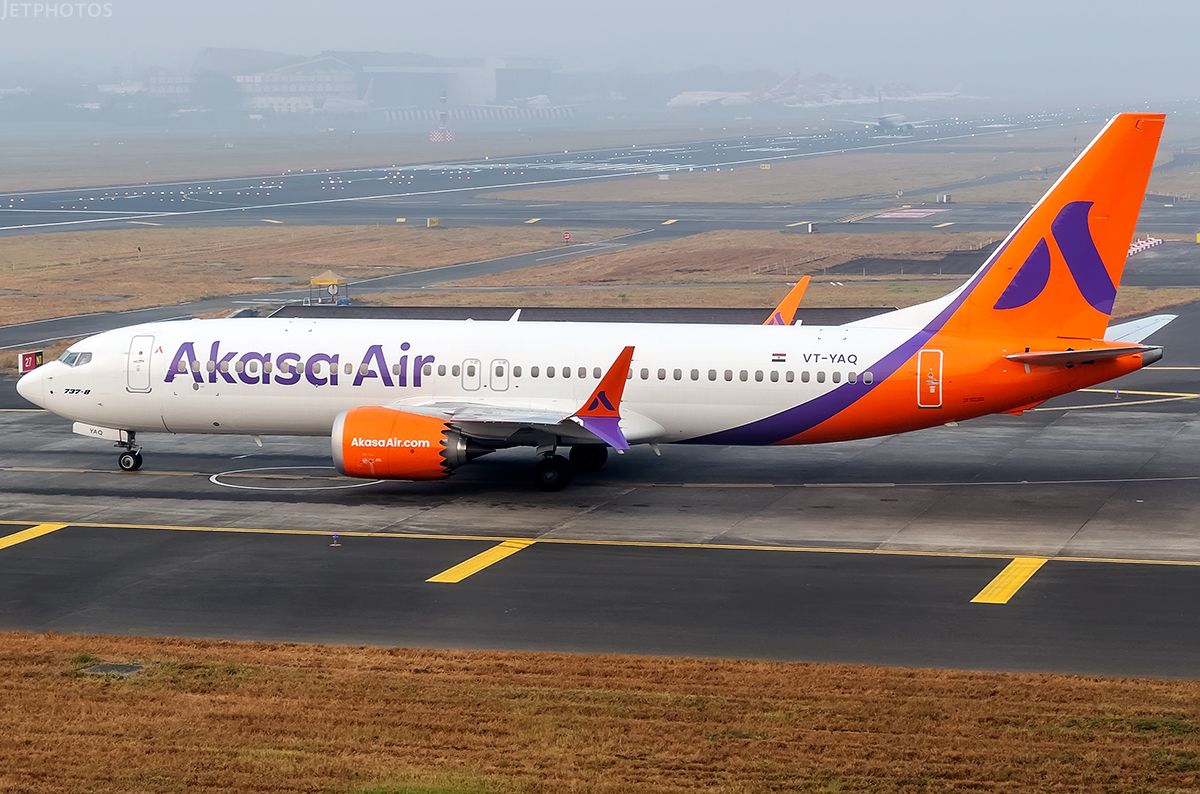
Akasa Air Boeing 737MAX holding short of the runway.
Photo Credits: Sanskar Nawani (Instagram: indian_aviation_)
Akasa Air, one of India’s leading airlines, recently announced its expansion plans with the addition of two new destinations to its flight network. The airline will now operate daily flights to Bengaluru and Guwahati from Kolkata, marking a significant milestone for Akasa Air as Kolkata becomes its 17th destination. This strategic move aims to cater to the growing demand for air travel and provide convenient connectivity options for passengers traveling between these major cities
With Kolkata added to its route, Akasa Air now has a presence in the 4 major metro cities of India, namely New Delhi, Mumbai, Kolkata, and Chennai.
The airline offers daily flights to Bengaluru and Guwahati from Kolkata.
By introducing daily flights to Bengaluru and Guwahati, Akasa Air is set to enhance connectivity between these important business and cultural hubs. Passengers traveling from Kolkata can now enjoy convenient and reliable air travel options to reach Bengaluru, the bustling IT capital of India, and Guwahati, the gateway to the enchanting northeastern region. This move not only benefits travelers but also boosts economic and tourism opportunities for all three cities involved.
The route to Bengaluru offers an ever-present demand to the center of India’s high-tech industry. The South Indian city is a melting pot of diversity and attracts people from around the country, especially the younger demographic of people, owing to the job opportunities and career-advancing environment. As an added bonus, the city boasts a very active and famous nightlife. The introduction of Akasa Air’s daily flights provides a significant advantage for business travelers, entrepreneurs, and tourists looking to explore the city’s rich offerings.
The route to Guwahati, the hub of activity in the northeastern part of the country, adds credibility to the growing and present traffic between the two cities.
This expansion highlights the airline’s commitment to expanding its operations and providing enhanced travel options for passengers across the country. Kolkata, known for its rich history, artistic heritage, and delectable cuisine, has now become an integral part of Akasa Air’s growing network. Additionally, this presence in the Eastern part of the country could prove more beneficial if the airline opts to commence operations to South-East Asian destinations like Malaysia, Singapore, Bali, Vietnam, etc.
Akasa Air operates an all Boeing 737 MAX fleet with 19 planes crisscrossing the skies of the Indian subcontinent donning the eye-catching orange and purple livery.
The ULCC had and has been the topic of immense attention in the country’s aviation industry and general public owing to its star-studded and immensely experienced management. Notable among them are Vinay Dube, Co-Founder and CEO, he has valuable experience and insight into the Indian and global aviation industry having held leadership positions at American Airlines, Delta Air Lines, Jet Airways, and GoAir (now Go First).
Another notable leadership figure of Akasa Air is Aditya Ghosh, who co-founded Akasa Air along with Vinay Dube. Ghosh has extensive insight and experience in the Indian aviation sector owing to his prior experience as President and whole-time Director at IndiGo, India’s largest airline.
The airline commenced operations with the financial backing of one of India’s most revered and successful stock traders and investors, the Late Mr. Rakesh Jhunjhunwala. The billionaire investor initially held a 40% stake in the airline by investing US$ 400 million. Before his demise in August 2022, he increased his stake in the airline to 46%.
By expanding its network and enhancing connectivity, Akasa Air aims to provide seamless travel experiences for business and leisure travelers alike. With Kolkata becoming its 17th destination, the airline continues to strengthen its position in the Indian aviation industry and contribute to the growth and development of air travel in the country.
An Alaska Airlines 737 MAX 9. (Photo: AirlineGeeks | Katie Zera)
Alaska Airlines has announced that starting November 17th they will offer year round flights to Honolulu from Seattle/Everett Paine Field. For a limited time fares will start at $149 each way as well as redemptions through Alaska’s mileage plan starting at 12,500. In the press release, Alaska said “This is our first new route to Honolulu in more than a decade and it will be the longest flight we will operate from Paine Field.”
Paine Field is a smaller airport to the north of Seattle and this route allows Alaska to offer more convient services to the community on the northern side of the city. The release also said that “ [Alaska] launched [their] regularly scheduled service there in March 2019 when the new facility opened. Many of our guests enjoy the smaller terminal’s location and upscale lounge atmosphere instead of spending time and money driving to Seattle’s main airport. The airport recently welcomed its one-millionth passenger on a departing flight from Seattle/Everett.”
If there’s one place our guests told us again and again that they wanted to fly to from Seattle’s northern airport, it’s beautiful Hawaii. We’ve been eager to make it happen,” said Kirsten Amrine, vice president of revenue management and network planning for Alaska Airlines. “We’ve proudly served the Hawaiian Islands for more than 15 years. This new route adds Seattle/Everett to our list of West Coast gateways to Honolulu. We’ll be ready to say aloha to our guests on this new flight this fall.” After the launch of this flight, Alaska will serve nonstop flights to Hawaii from 8 different west coast locations. Currently Alaska flies from Anchorage, Los Angeles, San Francisco, Seattle-Tacoma, Portland, San Jose and San Diego.
The winter schedule starting on November 17, 2023 will be once daily leaving Paine Field at 9:25am and returning at 2:40 pm. They will be operated by Alaska’s fleet of 737 aircraft. Tickets start at $149 one way and Mileage Plan redemptions are available from the first flight.
Alaska’s 737 fleet offers a three-class configuration with outlets at every seat and movies and television programs to stream on passengers’ personal devices. They are also equipped with Wi-Fi that Alaska calls “streaming-fast”, wi-fi is, as expected, available for a fee.
Alaska has Flown to Honolulu from Washington State since 2007 with Lihue and Kauai later that year. It remains to be seen if the Everett to Honolulu flight will be successful in the long run as Seattle-Tacoma is not too far to the south and it is the main hub for the airline. Alaska’s high service standard will undoubtedly make this a tantalizing option for anyone not wanting to make the trek to SeaTac.
An All Nippon Airways 777 in Los Angeles.
(Photo: AirlineGeeks | William Derrickson)
Recently, All Nippon Airways (ANA) has entered into a codeshare agreement with EL AL Israel Airlines. Under the new agreement, both airlines’ travelers could enjoy a seamless travel experience between Japan and Israel.
Subject to government approval, ANA could start codesharing on EL AL’s flights between Tel Aviv and Tokyo’s Narita International Airport in spring 2024, which was launched in March. In the meantime, EL AL is going to codeshare on select All Nippon Airways’ domestic flights.
Meanwhile, the pair is a step closer to signing a frequent flyer program agreement, bolstering benefits for mileage members travelling between the two countries.
“ANA is excited to begin this partnership with EL AL, and we hope that it will provide safe and convenient travel with greater opportunities for both business and leisure passengers between Israel and Japan.” Shinichi Inoue, President and CEO of ANA said.
“With the launch of the EL AL flights between Tel Aviv and Tokyo Narita, we have seen a great deal of interest of travellers between the two countries. The cooperation between EL AL and ANA is an important element in ensuring the success of this route.” Dina Ben Tal Ganancia, CEO of EL AL said.
In the meantime, Japan’s largest carrier expects to expand its fleet by boosting Boeing 787 Dreamliners for the short and medium-haul by 2030.
“It is important for us to increase fuel efficient aircraft such as the 787 in the future,” Inoue revealed ANA’s strategy for developing its fleet.
The airline has experienced a slow start for the international outbound travel after the pandemic. The intention of traveling overseas for the citizen is “still weak” in response to the weakened Japanese yen.
Inbound Travel Demand
However, the inbound international is a different kettle of fish, the travel demand from North America, Oceania and Asia has skyrocketed after easing the travel restrictions. The country has seen a significant recovery for domestic travel as well. Japan reopened its border in October.
Meanwhile, as a result of the limited flight between U.S. and China, ANA has benefited from the additional travel demand.
ANA is still not operating its full capacity, expecting to reach pre-covid levels by 2025 and exceeding that figure by 2030. The airline expects the domestic market, the inbound international travel to Japan and the business travel will continue to rise in this fiscal year. Earlier, the airline announced its first profit since the fiscal year ended March, 31, 2020.
Meanwhile, Inoue said Air Japan, its brand-new carrier, is expected to launch by spring 2024. The new carrier will focus on the Southern Asian market, but the new route is still up in the air. Earlier, the carrier unveiled its seats with a 32-inch seat pitch and crew uniform.
In a press release this past Wednesday, Icelandic carrier PLAY announced record passenger numbers and a high load factor to complement during its May operation. The four-year-old carrier was founded in 2019 and flew its first flight two years ago. After surviving the pandemic, the airline is now in a strong position, surpassing double the number of passengers compared to May 2022.
May Load Factor
The Reykjavik-based carrier announced in the release that the load factor for May was a whopping 85%. This was a significant positive change from the previous year as the airline’s load factor was only 69.6%. Load factor is a term used in the airline industry to measure the effectiveness of operations by comparing the available seats to how many were sold. A load factor of 85% is high for airlines, meaning that the company profits during that period.
In an article published by Forbes in 2020, the load factor required for a United States carrier to break even ranged between 72.5% and 78.9%. Even though PLAY is a European carrier and break-even points do vary between airlines, a load factor of 85% across the operation is a highly positive metric for the young airline. While the load factor isn’t the sole determining factor on if an airline is profitable or not, it is a very important one.
The high load factor from May correlates with other positive news that the airline released. May was also a record month in terms of passengers carried for the Icelandic airline. Carrying 128,894 passengers, PLAY flew more than double the number of people compared to May of 2022, 56,601.
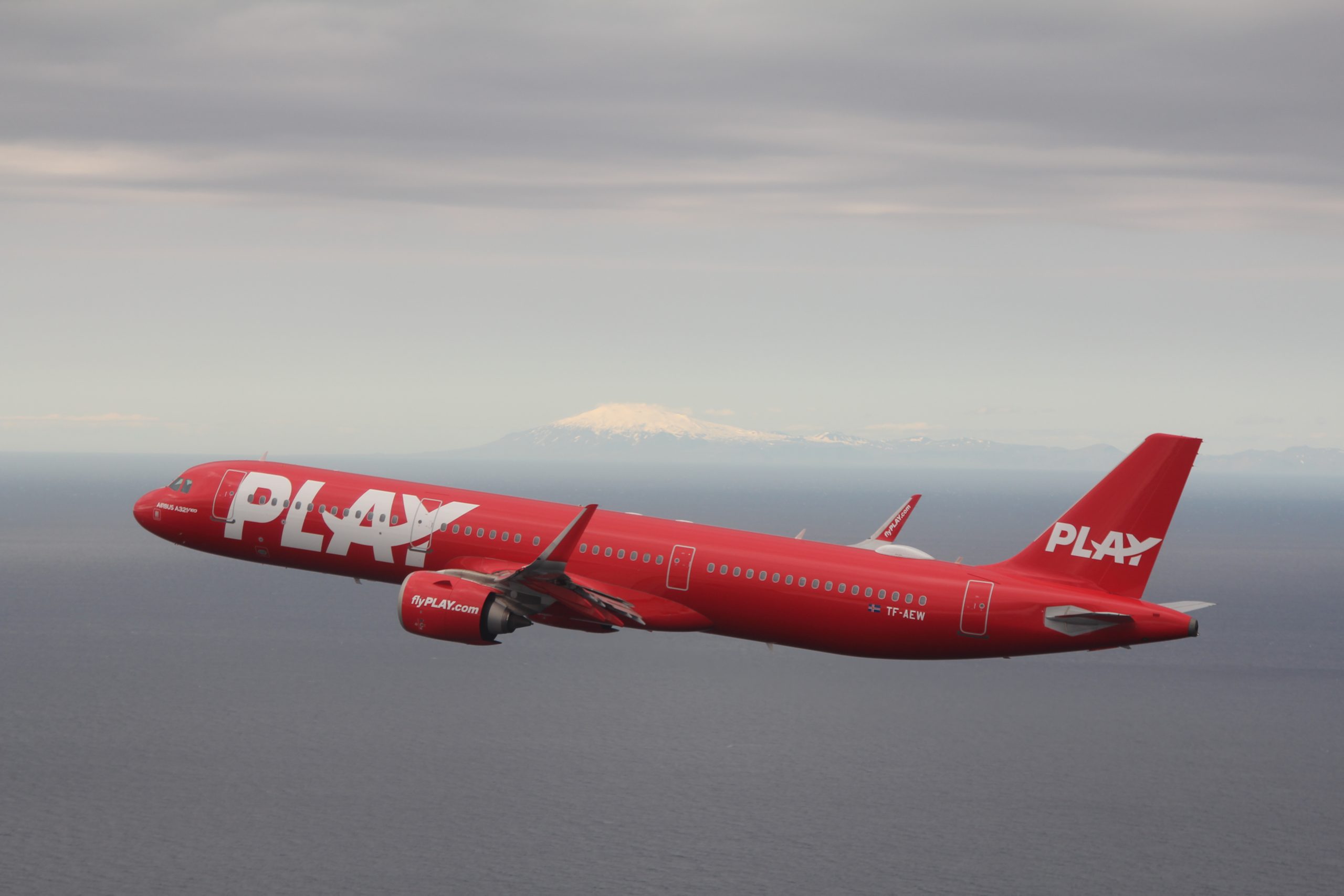
This significant increase contributed to the higher load factor, however, there were also a higher number of seats available for sale. Since May of last year, the carrier has added four Airbus A320neos and one Airbus A321neo. These new aircraft have doubled the carrier’s fleet from five aircraft to ten. The increase in aircraft has allowed the carrier to expand the number of destinations served from 17 in May of last year to 26 the past May.
Marketing to the budget conscience customer, the low-cost carrier has fit well into the transatlantic market, also bringing increased tourism to Iceland. The airline reported that in May, 52% of passengers either began or ended their journey in Iceland, with the remaining 48% of passengers connecting through Reykjavik to either North America or Europe.
Ancillary Revenue
As PLAY is a low-cost carrier, the airline charges for extras such as seat assignments and bags. With the significant increase in load factor, the airline also announced a substantial increase in ancillary revenue. Ancillary revenue is revenue that is obtained by PLAY outside of the air transportation service which they provide. Essentially, this is revenue that the airline has made by charging for seat assignments and baggage fees. The ancillary revenue for the Icelandic carrier increased by 28% in May from last May, which is significant for the profitability of the airline.
Birgir Jonsson, PLAY’s CEO, is very optimistic for the young carrier’s future stating “The second quarter is looking promising with April’s financial results being better than anticipated. The strong demand and revenue growth we are experiencing bode well for the upcoming summer season and the year in general.” At the time of writing, PLAY anticipates operating its June schedule with a load factor 15% higher than last June, a promising statistic for the Reykjavik-based carrier during the busy summer travel season.
Zach’s love for aviation began when he was in elementary school with a flight sim and model planes. This passion for being in the air only intensified throughout high school when he earned his Private Pilot Certificate. He then attended Embry-Riddle Aeronautical University, earning his certificates and ratings to later flight instruct and share his passion for aviation with others. He now resides in the North East living out his dream as an airline pilot.
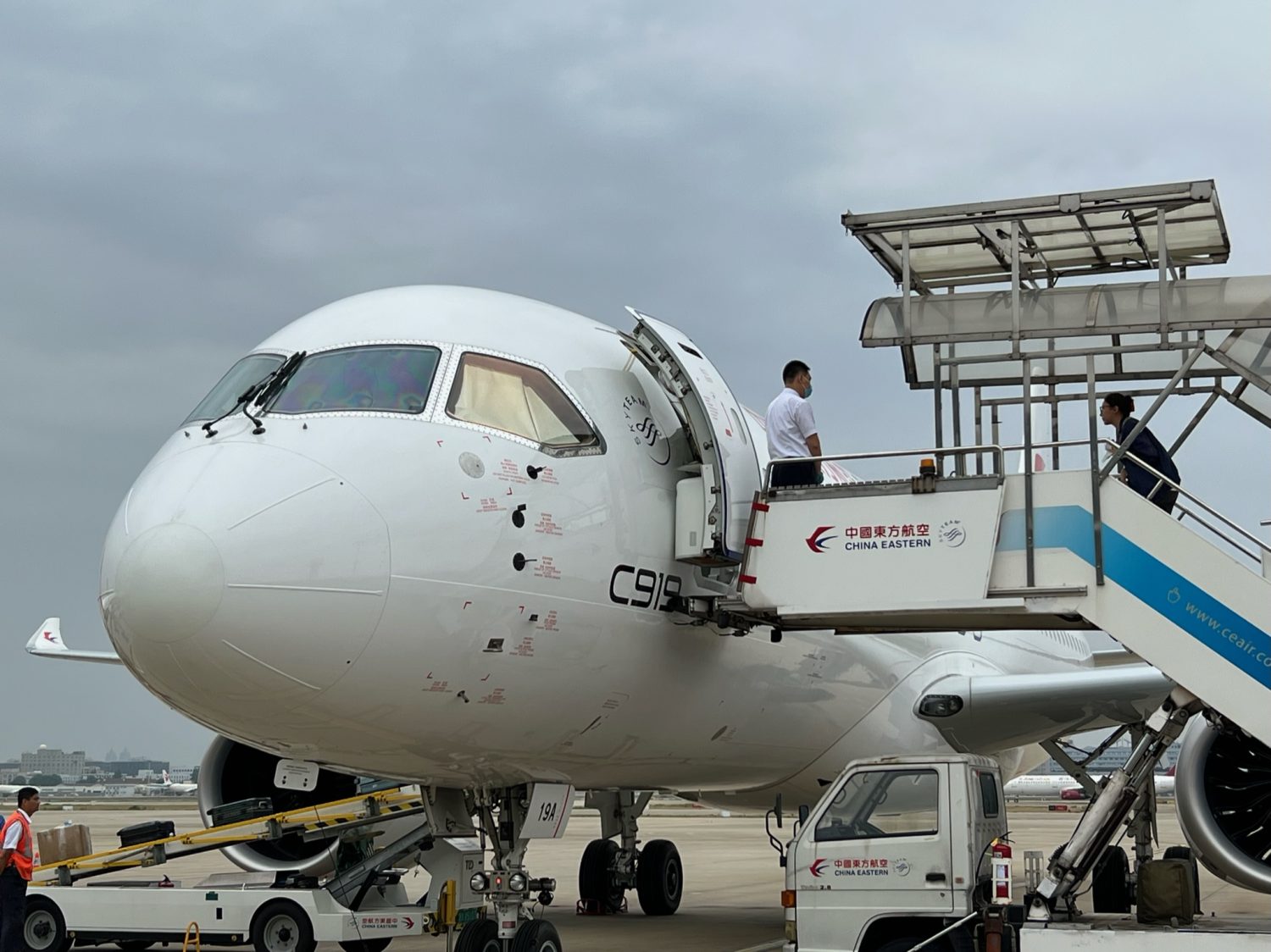
Boarding a COMAC C919 (Photo: AirlineGeeks | Lei Yan)
On May 28, a China Eastern COMAC C919 took to the sky and began the first commercial flight of the Chinese-manufactured jet. Since then, COMAC’s C919 was placed on the route between Shanghai’s Hongqiao International Airport and Chengdu’s Tianfu International Airport. This aircraft has attracted a lot of aviation enthusiasts, both from home and abroad, to experience it. Recently, I had the opportunity to fly onboard the world’s only COMAC C919 in service, and I would like to bring you with me on this trip.
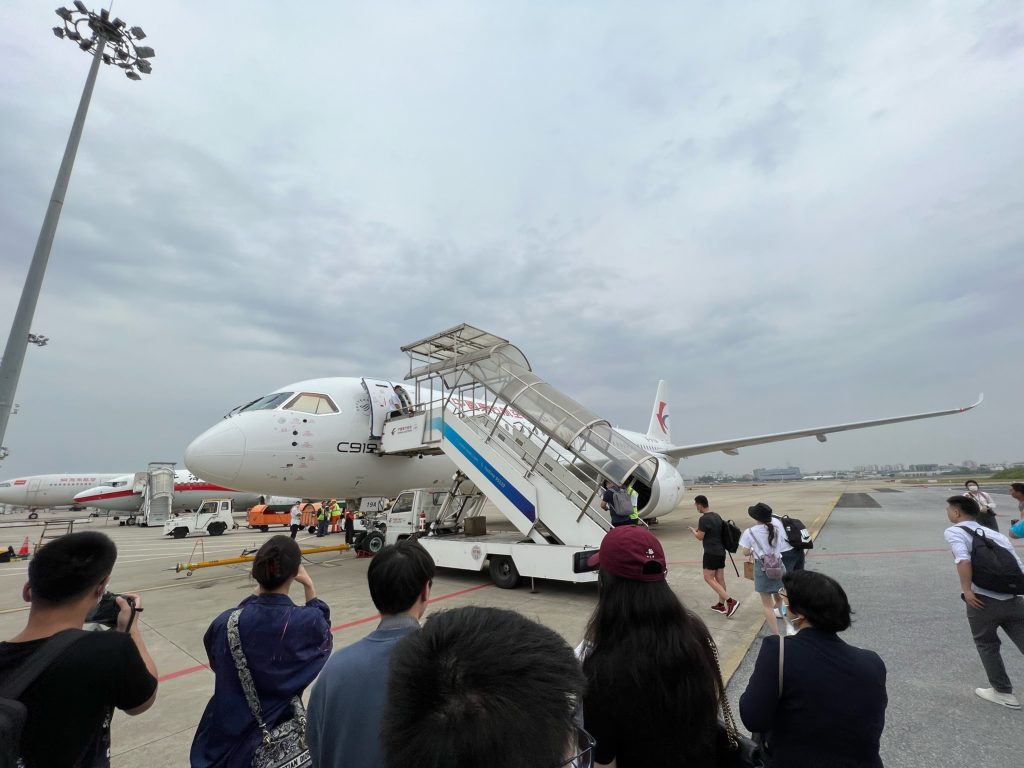
Avgeeks taking pictures of COMAC C919 before boarding (Photo: AirlineGeeks | Lei Yan)
Boarding
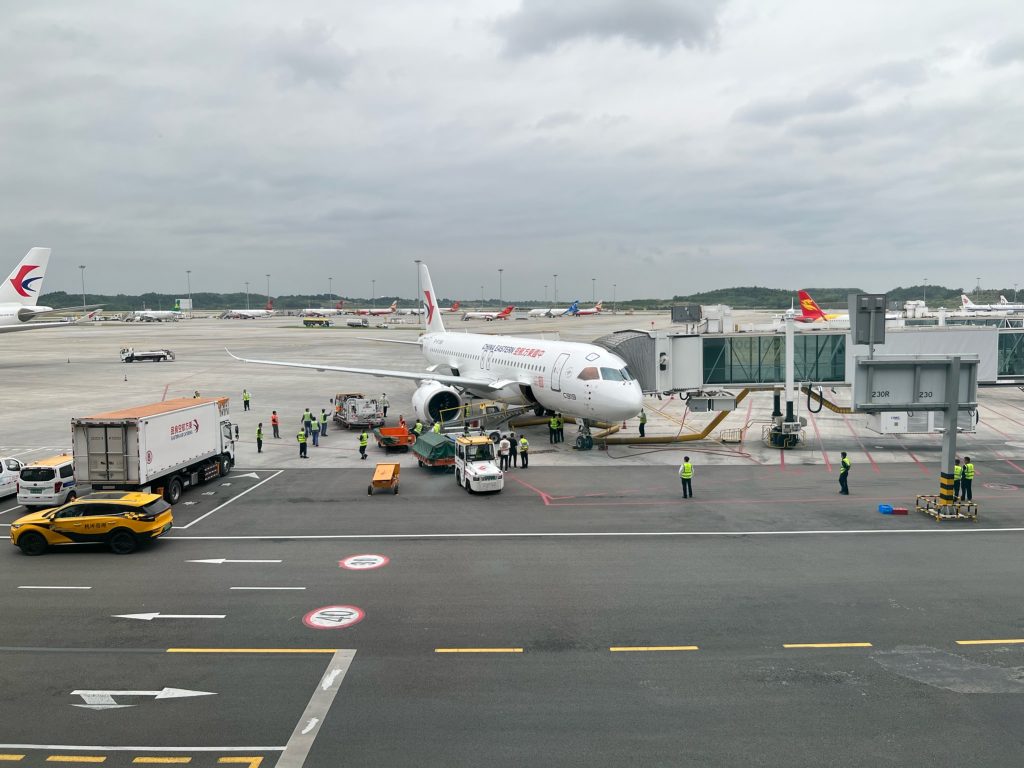
The flight, China Eastern MU9197, was scheduled to take off at 8:10 a.m. and land at 11:20 a.m. local time. The aircraft was parked at a remote stand, which allowed me to take some shots of the aircraft before stepping onto it. The aircraft, registration B-919A, was labeled with “The world’s first C919” logo.
The nose of the aircraft was very smooth, with gigantic cockpit windows. The wing of the aircraft was also unique, and very identifiable. The engine of this aircraft was the LEAP-1C, very similar to those of Boeing’s 737 MAX and Airbus A320neos’ LEAP engines. Overall, the appearance of the aircraft was quite aesthetic.
‘World’s First C919 Logo’ on China Eastern C919 (Photo: AirlineGeeks | Lei Yan)
Onboard the Flight
The flight was almost fully packed with passengers. China Eastern designed its COMAC C919 to be in a 164-seat configuration, with eight business class seats and 156 economy class seats. Only 10 seats were empty onboard the flight, and, among the passengers, a third of them were aviation enthusiasts who flew to Shanghai from all over the country to experience the C919.
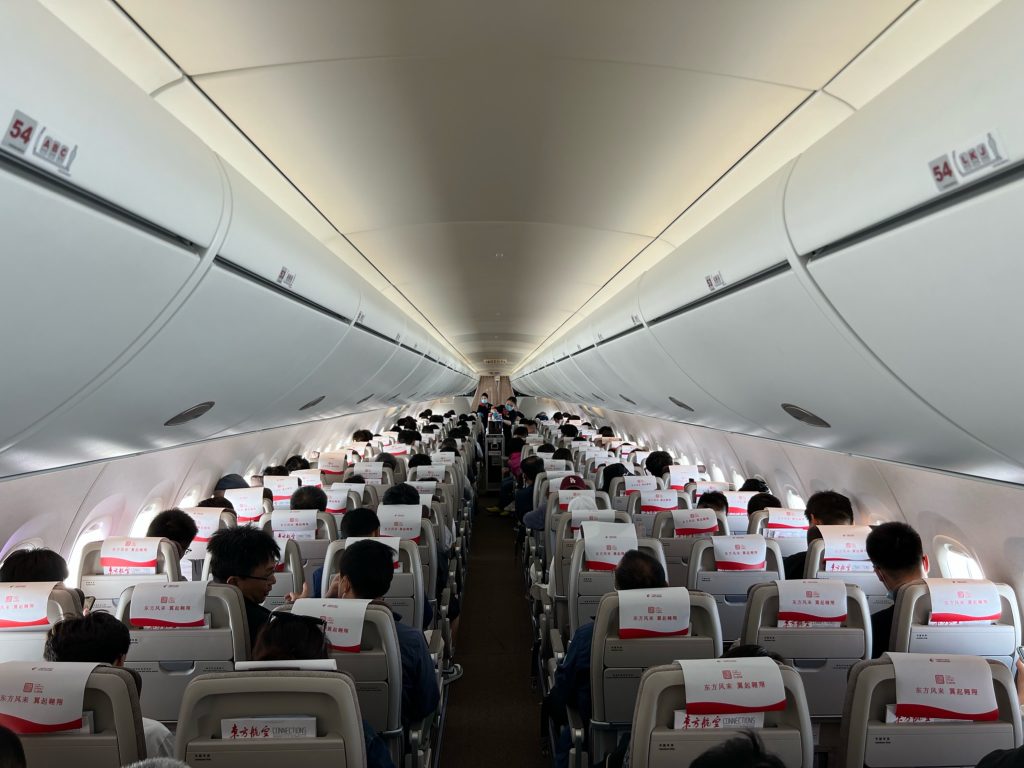
The adjustable ceiling lights and earth-colored seats and carpet formed a harmonic appearance. The economy class legroom was regular, with about a fist to spear between my legs and the seat in front of me (I am about six feet tall).
The cabin of the C919 (Photo: AirlineGeeks | Lei Yan)
The noise level was another surprise for this flight. The noise was noticeably low throughout the trip, and it hovered around 72 dB to 78 dB during different stages of the flight. The LEAP engine was a huge contributor to this wonderful performance, and a fine aerodynamic design also helped C919 to reduce the noise during flight.
The flight from Shanghai to Chengdu was about 2 hours and 30 minutes. During the flight, breakfast was served, with a Chow Main and specially designed ‘World’s first C919’ logo on the desert.
The meal with ‘World’s First C919’ logo served on C919 flights (Photo: AirlineGeeks | Lei Yan)
China Eastern put a considerable amount of thoughts into the C919 services. The ‘World’s first C919’ was planted at every corner of the aircraft, from paper cups to food pallets; a new safety demonstration video was made with new storylines and beautiful shots; the cabin crews were specially trained to help enthusiasts onboard to take pictures and filling out their flight logs.
Arrival
We arrived at Chengdu’s Tianfu International Airport at 11 a.m. local time, 20 minutes ahead of schedule. After a smooth taxi to the gate, we arrived at the terminal and concluded our trip on this new jet.
The C919 parked at Chengdu’s Tianfu International Airport (Photo: AirlineGeeks | Lei Yan)
Overall, COMAC C919 was an excellent product that delights passengers with a high-quality flight experience. China Eastern has also put a considerable amount of thought into making the C919 experience unique. This jet still has a long way to go in competing with Airbus’ A320 or Boeing’s 737 in the international market, but over time, I am confident that more and more passengers will be able to hop onboard a C919.
Lei is from Inner Mongolia, China, and now lives in Guangzhou. He grew up in an aviation family, where his passion began. During his time at Penn State University, he studied Industrial Engineering specializing in operations research, and he graduated with an honor’s thesis on airport gate assignment optimization. Now, he is a Purchasing Manager with Procter & Gamble. In his free time, he enjoys flying, reading, and wandering around the city.
Sign-up for newsletters & special offers!
Get the latest stories & special offers delivered directly to your inbox