Indian airlines became the center of attention at the Paris Air Show after two Indian carriers had signed mega deals with two aircraft manufacturers.
Indigo
Indigo has inked a historic deal with Airbus for 500 A320 family aircraft. After being rumored for several weeks, the new aircraft are expected to be delivered between 2030 and 2035 and the contract is worth roughly $55 billion.
“An order book now of almost 1,000 aircraft well into the next decade, enables Indigo to fulfil its mission to continue to boost economic growth, social cohesion and mobility in India,” Pieter Elbers, CEO of Indigo said in a press release
“This landmark order marks a new chapter in Airbus and Indigo’s relationship that is democratising affordable air travel for millions of people in the world’s fastest growing aviation market,” Christian Scherer, Chief Commercial Official and Head of International at Airbus, said.
The low-cost carrier has a long history of partnering with Airbus. Back in 2005, Indigo inked its first order of 100 A320. In 2011, the carrier placed an order for 180 A320 including the NEO. In 2015, the carrier finalized a 250 A320neo family order. In 2019, the airline acquired 300 A320neos.
Air India
Meanwhile, Air India has finalized deals with Boeing and Airbus. The flag carrier will acquire 220 aircraft from Boeing, including 190 737 MAXs, 20 787 Dreamliners and 10 777X jets. In addition, the flag carrier has the option for an additional 50 737 MAX and 20 787 Dreamliners. Also, Air India has firmed up its order for 250 Airbus jets, including 140 A320neos, 70 A321neos, six A350-900s and 34 A350-1000s.
An Upward Trend in Demand
Indian aviation is best known for its upward spiral in recent years as the country is set to become the most populous nation. India is estimated under 5% of its citizens have ever taken a flight as there is plenty of room for growth.
India is expected to be an excellent potential for increasing sales in the future. Willie Walsh, the Director General of IATA, mentioned India is a fantastic and developing market, and the economy has continued to perform very strongly. The government expects that Indian airlines could add 2,000 aircraft in the next five to seven years.
According to Boeing’s projection through 2042, South Asia’s fleet will be at the fastest pace of growth with more than 7% every year, with India accounting for more than 90% of the region’s passenger traffic.
Meanwhile, Akasa Air has gotten into gear, looking forward to operating international routes by the end of the year. The start-up budget carrier is forecasting an order for narrow-body aircraft this year to meet the travel boom.
Other Mega Aircraft Orders
Airlines around the world struggled to stay afloat during the pandemic in the past three years. However, mega aircraft orders of over 100 aircraft have occasionally happened.
An Air Mauritius Airbus A330-900 at the Paris Airshow 2019 (Photo: Airbus)
The Paris Air Show 2023 kicked off with exciting developments from African airlines. Air Mauritius announced the purchase of three additional Airbus A350-900 aircraft, bolstering its long-haul fleet for expanded operations in Europe and South Asia. Meanwhile, TAAG Angola Airlines entered into a lease agreement with Aviation Capital Group for four Airbus A220-300 aircraft, a significant step in the airline’s fleet modernization plan.
Air Mauritius’ Continued Partnership with Airbus
Air Mauritius expressed pride in renewing its decades-long partnership with Airbus and showed confidence in its products. Mr. Kresimir Kucko, CEO of Air Mauritius, highlighted the significance of the additional A350-900s, stating that they would strengthen the airline’s European network and support growth in other markets. The airline already operates four Airbus A350s and four Airbus A330s, and the introduction of these three new A350s will further enhance their long-haul fleet.
“Air Mauritius is proud to renew its confidence in Airbus and its products, continuing a partnership of more than three decades. The additional A350-900 aircraft will help us strengthen our European network and ensure further growth in other markets. We look forward to achieving our ambitious goals together with Airbus,” said Mr. Kresimir Kucko, CEO of Air Mauritius in a press release.
Christian Scherer, Airbus Commercial Director and Head of International, congratulated Air Mauritius for placing the A350 at the core of its fleet modernization program. He emphasized the A350’s exceptional range, improved fuel efficiency, increased capacity, and enhanced passenger comfort. With a range of up to 9,700 nautical miles non-stop, the A350 family offers the longest range capability among commercial aircraft currently in production.
TAAG Angola Airlines Enhances Fleet with Airbus A220-300s
In another significant announcement at the Paris Air Show, TAAG Angola Airlines revealed a long-term lease agreement with Aviation Capital Group LLC (ACG) for four new Airbus A220-300 aircraft. These aircraft, scheduled for delivery in 2025, will contribute to the modernization and expansion of TAAG’s fleet. CEO of TAAG Angola Airlines, Eduardo Fairen, expressed his commitment to growing the company and improving connectivity options for passengers.
“Incorporating four new A220 aircraft under this agreement is a clear sign of our international credibility and a major milestone in renewing the TAAG fleet. We are deeply committed to growing the company, leveraging our market share and destination portfolio. Our passengers will benefit from higher connectivity options while planning their trips and a greater flight experience overall, as the Airbus A220 is a smart, tech-advanced equipment suitable for nowadays gadgets,” said Eduardo Fairen, CEO of TAAG Angola Airlines in a statement.
ACG’s Role in TAAG’s Growth
Tom Baker, CEO and President of ACG, expressed pride in partnering with TAAG Angola Airlines and supporting its growth plans with the technologically advanced and environmentally friendly A220-300. The aircraft’s fuel efficiency, low noise levels, and generous baggage and cargo capacity make it an ideal choice for TAAG as it expands its reach across Africa and beyond. Mikail Houari, President of Airbus Africa and Middle East, also praised the A220’s suitability for the African market and its potential to elevate TAAG’s service capabilities.
Continued Fleet Renewal for TAAG Angola Airlines
This recent agreement follows TAAG’s commitment made last year in June to lease six new Airbus A220-300s from Air Lease Corporation (ALC). The A220-300s, scheduled for delivery between 2023 and 2024, are part of TAAG’s strategy to replace its aging Boeing 737-700 fleet. The fuel efficiency, extended range, and improved operating economics of the A220-300s will enable TAAG to optimize its flight schedule and expand its destination network.
Victor Shalton's love for aviation can be traced to when he was 11-years-old. As a seasoned aviation writer, he takes pride in providing the best aviation coverage around the globe and is passionate about advancing his skills in the aviation space. In addition, he loves travelling, writing, arts and while his speaking engagements have taken him around the world, he is proud to call Nairobi home.
United Airlines CRJ-200 operated by SkyWest at Muskegon-County Airport (Photo: AirlineGeeks | Joey Gerardi)
Regional carrier SkyWest Airlines has unveiled a new $70,100 training bond for foreign-based pilots hired at the company, Aero Crew News reports. The bond, which applies only to foreign pilots hired through a yet-unnamed firm, will require each new hire to commit to employment at SkyWest until they have completed 2,000 Pilot-In-Command (PIC) hours at the airline, equivalent to roughly 3-6 years at the airline.
The bond is similar to a contract unveiled by fellow regional carrier Republic Airways last month. Republic’s contract requires pilots to upgrade to captain as quickly as possible then spend two years as a captain at the company, or else pay back $100,000 in training costs, lose up to $60,000 in bonuses, and refrain from working for a competing airline for a year.
Republic’s pilot union is currently challenging the company’s contract in court, arguing it does not comply with the airline’s Collective Bargaining Agreement. SkyWest, however, does not have a pilot union to challenge this decision.
Public response to SkyWest’s announcement is generally poor, though it is not as stark as the response to Republic’s announcement. Some say that practices similar to this will likely become standard at regional airlines, while older crewmembers say that these sorts of contracts are historically common, even among major airlines.
While not all airlines have contracts such as these for new First Officers, some regional airlines have cadet programs that offer loans to student pilots to help offset the costs of their initial training. These programs then lock the pilots into multi-year commitments flying for the company and require them to pay back the loans they received should they leave the company before the term is over.
SkyWest’s move comes as regional airlines, including SkyWest, struggle to fill Captain vacancies. While SkyWest’s bond may not require affected pilots to rapidly upgrade, requiring them to stay for 2,000 PIC hours roughly equates to the same commitment, calendar-year-wise, as new Republic captains.
Alaska continues expansion with Skywest-operated Embraer E175s (Photo: AirlineGeeks | Ian McMurtry)
Differences between Republic and Skywest
The major difference between SkyWest’s bond and Republic’s is that, while Republic is imposing its contract on all new hires, SkyWest is only doing so for a limited portion of foreign pilots hired at the company. Sponsoring foreign workers for a green card in the United States is a notoriously complicated and expensive process for companies, who need to proactively file paperwork and pay fees to the federal government. Foreign pilots who do not hold green cards have additional requirements to be able to fly in the United States.
At the time of writing, it seems that pilots who are American citizens or permanent residents will not be affected by SkyWest’s bond, allowing them to upgrade and move on to other airlines without concern for repaying training costs.
After Republic’s contract was announced, there were concerns that the airline would not be able to hire enough new pilots to staff flights down the road due to concerns over their contract. While this could certainly change, Aero Crew News reports that each class at Republic has been full since the new contract was unveiled. It could follow, therefore, that SkyWest will not see any change in the number of foreign pilots it hires.
“We are simply seeking fairness in approving a clearly fit operator,” SkyWest Chief Commercial Officer Wade Steel said about the subsidiary. The filing, however, drew ire from pilot unions, who claimed that approving SkyWest Charter would “make flying less safe” in the U.S. and start a “race to the bottom” in how airlines serve small cities.
John McDermott is a commercial pilot pursuing a career in professional flight. His passion for aviation began in an Ann Arbor bookstore with a tale of enemy pilots during World War 2, and he hasn't looked back. Besides flying and writing for AirlineGeeks, John volunteers with Professional Pilots of Tomorrow and travels whenever he gets the chance.
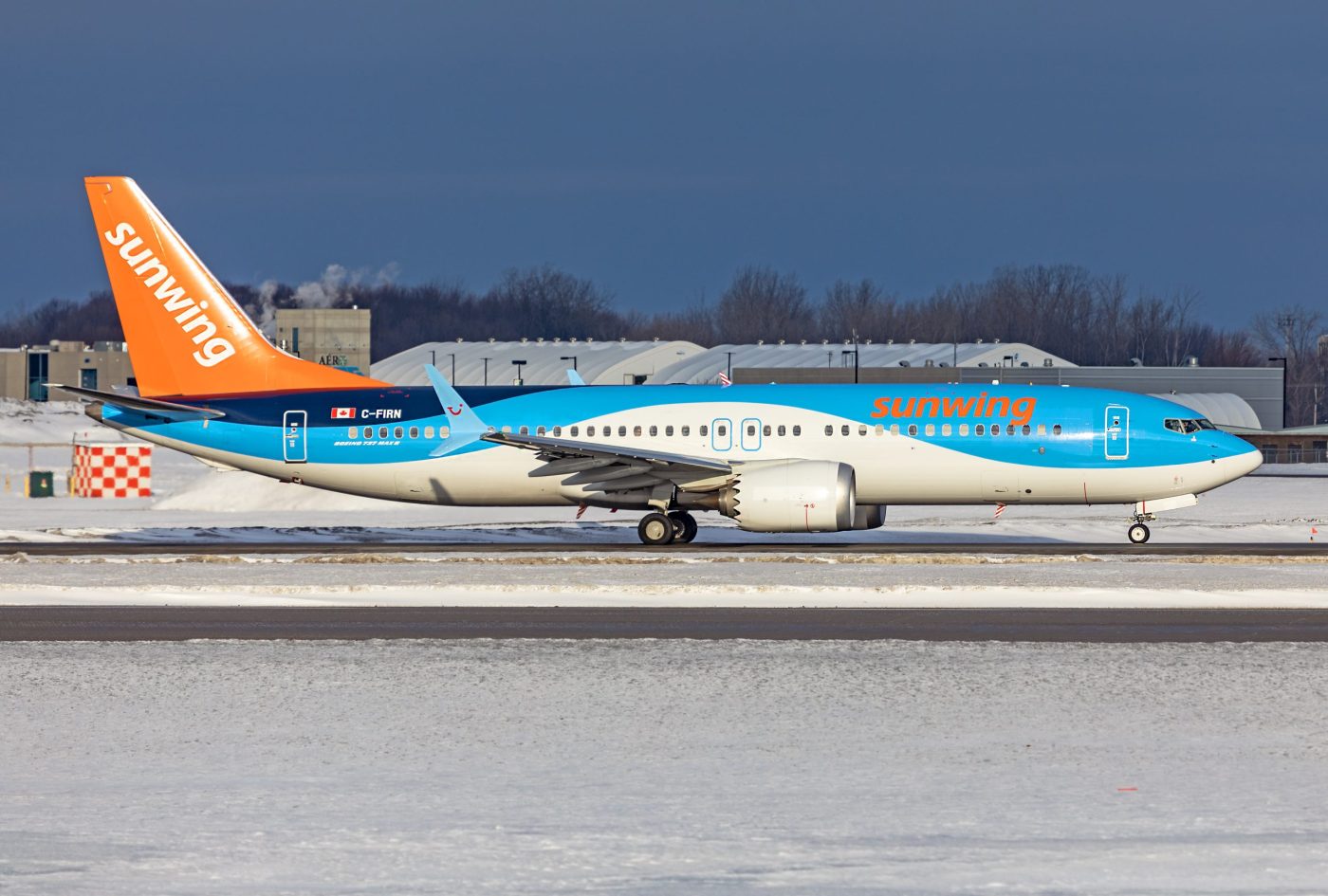
A TUI Boeing 737 MAX 8 operating for Sunwing Airlines in February of 2023 (Photo: AirlineGeeks | William Derrickson)
WestJet will be integrating Sunwing Airlines into its mainline operations, removing another low-cost carrier from the Canadian aviation landscape. As reported by The Canadian Press, the move was announced in an internal Sunwing company memo.
The announcement comes approximately one week after it was revealed that WestJet would be shuttering its ultra-low-cost subsidiary Swoop and less than two months after WestJet completed its acquisition of Sunwing Airlines and Sunwing Vacations.
Sunwing Airlines: An Overview
Sunwing Airlines began operations in November of 2005 as a subsidiary of Sunwing Travel Group. Sunwing Travel Group has a variety of subsidiaries in the travel space, including a vacation club, a retail chain, and multiple tour operators. Sunwing Airlines passengers can purchase tickets individually or as part of Sunwing’s vacation package offerings.
Many of Sunwing Airlines’ flights are seasonal winter routes. These flights connect Canadian cities to warmer sun destinations in Central America and the Caribbean during the winter months. However, the airline also operates year-round service on its most popular routes, as well as a number of domestic flights in Canada. In the past, Sunwing has also operated flights to sun destinations from cities in the United States as part of vacation packages offered by Sunwing Travel Group subsidiary Vacation Express.
Sunwing’s fleet consists of 18 Boeing 737-800 and Boeing 737 MAX 8 aircraft. To boost its operations during its winter, the carrier leases aircraft from European carriers such as TUI Airways and Smartwings under. In the 2022-2023 winter season, there were a total of 30 Boeing 737s operating for Sunwing Airlines. For this reason, it is not uncommon to see a blue and white TUI Boeing 737 with an orange Sunwing tail at Canadian airports in the winter. During the summer months, Sunwing in turn leases its aircraft to European carriers for the busy European holiday season.
A Sunwing 737-800 (Photo: Ian McMurtry)
The Loss of a Canadian Low-C0st Carrier
Less than two weeks ago, WestJet announced that it would be winding down its ultra-low-cost subsidiary Swoop and integrating it into its mainline business. The latest announcement that Sunwing Airlines is also being shut down marks the departure of another player in Canada’s ever-changing low-cost air travel market.
One of the most unique aspects of Sunwing’s network is its seasonal service to many smaller Canadian airports. During the most recent winter season, Sunwing was the only airline offering non-stop service to sun vacation destinations from airports like Windsor International Airport and Sault Ste. Marie Airport in Ontario and Fredericton International Airport in New Brunswick. Sunwing connected these airports to popular vacation destinations for Canadians such as Cancun in Mexico, Punta Cana in the Dominican Republic and Varadero in Cuba.
The acquisition of key Sunwing companies by WestJet and the recent announcement that Sunwing Airlines would be shuttered raises a number of questions about the future of the Canadian aviation landscape. It follows a broader trend of consolidation in the North American airline industry and is paralleled by the acquisition of Spirit Airlines by JetBlue in the United States.
A key question is whether Sunwing’s point-to-point vacation flights from smaller Canadian airports will have a place in WestJet’s broader company strategy. There are also concerns about a reduction in competition and its associated effects. In a report delivered to Canada’s Minister of Transport, the government’s Competition Bureau noted that the acquisition would likely result in higher prices and less choice, as well as a reduction of service on overlapping routes. The Competition Bureau pointed to over 20 routes where the acquisition would likely result in a substantial lessening or prevention of competition.
Despite the Competition Bureau’s findings, the acquisition was approved by the Government of Canada in March of 2023 following a public interest assessment. The public interest assessment covered areas beyond competition and the government ended up placing a series of conditions on the purchase. These included maintaining capacity on routes most affected by the merger and ending Sunwing’s seasonal leasing practice to protect Canadian jobs.
The departure of Sunwing from the Canadian aviation landscape may provide room for growth for Canada’s newer low-cost and ultra-low-cost carriers. The market has become increasingly crowded in recent years, with new players like Flair Airlines, Lynx Air and Canada Jetlines. However, the Canadian low-cost market has also historically proven to be unforgiving for many defunct airlines and subsidiaries, including Jetsgo, Zoom Airlines, Zip and Air Canada Tango.
The Planned Integration
While WestJet has previously stated that Sunwing will initially operate as a separate entity, an integration into mainline operations has always been likely. The latest announcement now sets a timeline of approximately two years for the process. WestJet’s acquisition includes Sunwing Airlines and tour operator Sunwing Vacations but does not cover other Sunwing Travel Group subsidiaries such as travel agency SelloffVacations and tour operator Vacation Express.
WestJet operates a fleet of over 100 Boeing 737s, including this Boeing 737-800 (Photo: AirlineGeeks | William Derrickson)
Sunwing’s Boeing 737-800s and Boeing 737 MAX 8s will join WestJet’s all-Boeing mainline fleet, which already includes both aircraft types. The integration will also involve approximately 2,000 Sunwing employees joining WestJet. WestJet has announced that it will be combining the WestJet and Sunwing tour operator businesses but maintaining separate WestJet Vacations and Sunwing Vacations brands. As per a condition set by the government, the vacations business will be headquartered in Toronto and a regional office will be maintained in the Montreal area for a minimum of five years. WestJet is headquartered in Calgary, Alberta, while the company’s owner, Onex Corporation, is based in Toronto.
Andrew is a lifelong lover of aviation and travel. He has flown all over the world and is fascinated by the workings of the air travel industry. As a private pilot and glider pilot who has worked with airlines, airports and other industry stakeholders, he is always excited to share his passion for aviation with others. In addition to being a writer, he also hosts Flying Smarter, an educational travel podcast that explores the complex world of air travel to help listeners become better-informed and savvier travelers.
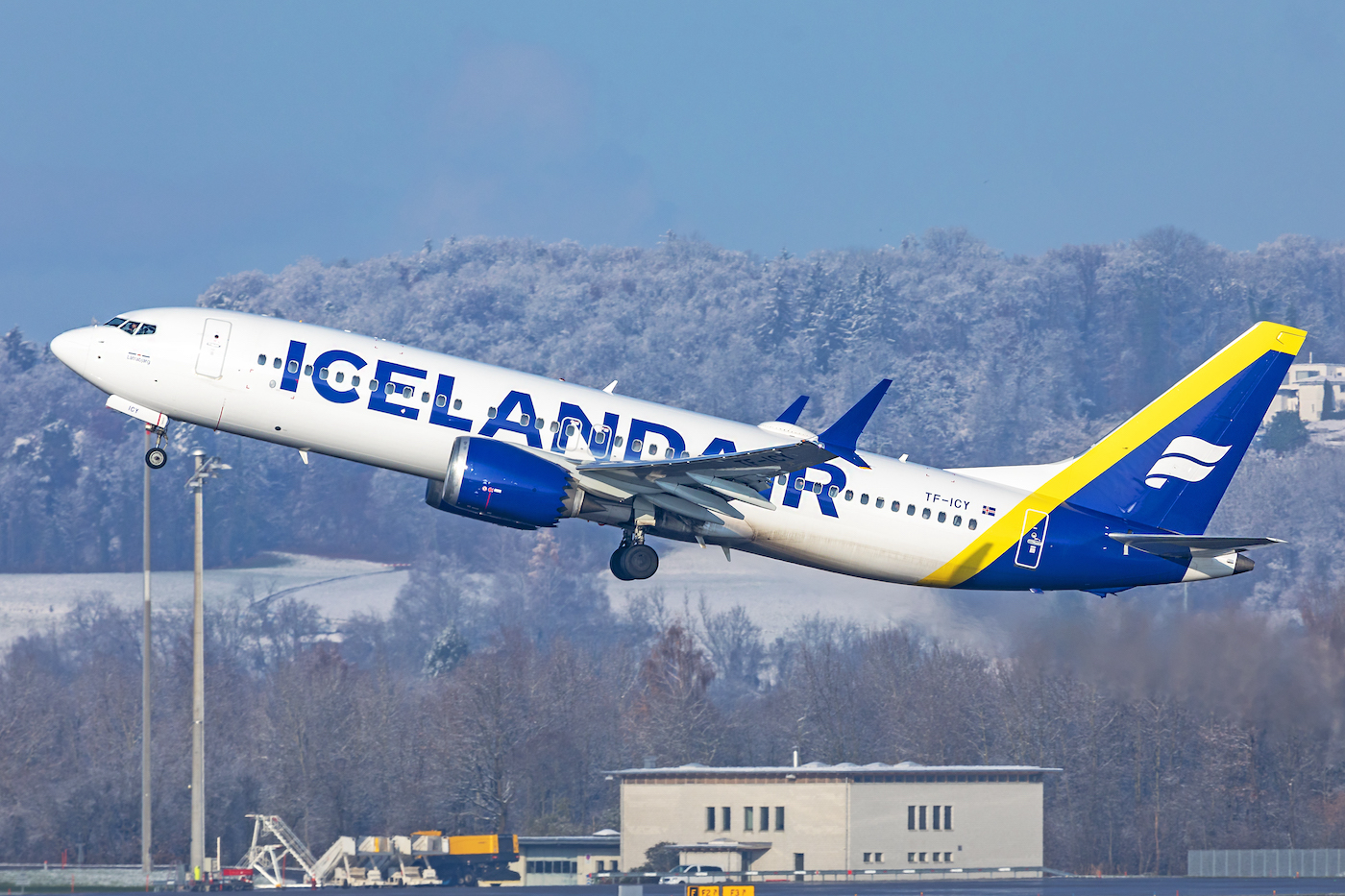
An Icelandair 737 MAX (Photo: AirlineGeeks | William Derrickson)
First reported by IshrionAviation on Twitter, Icelandair has decided to add additional capacity to the United States for 2024, some of which to cities that the airline hasn’t even been operating for a full month.
Two northeast airports, Newark, and JFK Airport in New York City will both be seeing some significant increases in capacity. Newark will be switching from a Boeing 757-300 to a Boeing 767-300, going from a capacity of 216 per flight to nearly 260 passengers per flight between the airline’s Economy and Saga Premium class.
Service to JFK will go from 17 to 21 weekly flights, making an even three daily flights, versus only one currently on some days. These flights will be on a mix of 737 MAX, 757, and 767 aircraft.
Icelandair 757-200 “Grábrók” (TF-FIY) at Akureyri International Airport, Iceland. (Photo: AirlineGeeks | John Flett)
Raleigh, N.C., one of the airline’s newer destinations, will also be getting a capacity increase from five to six weekly flights. This brings the weekly capacity of the route up by roughly 160 passengers.
Adding capacity in the Midwest
The final capacity increase is to Detroit, a route that hasn’t even been operating for a full month yet as it began on May 18, 2023. It will be seeing the same capacity increase as Raleigh going from five to six weekly flights.
An Icelandair 737 MAX pulling into the gate in Detroit (Photo: AirlineGeeks | Joey Gerardi)
All of these changes will be put into effect in the Spring of 2024.
Joey has always been interested in planes for as long as he can remember. He grew up in Central New York during the early 2000s when US Airways Express turboprops ruled the skies. Being from a non-aviation family made it harder for him to be around planes and would only spend about three hours a month at the airport. He was so excited when he could drive by himself, the first thing he did with his driver's license was get ice cream and go plane spotting for the entire day. He graduated from Western Michigan University in 2022 with a B.S. in Aviation Management & Operations and a Minor in Business, and currently works for a major airline in his hometown.
Airlines Begin Leveling the Playing Field on Airport Slots
A British Airways 747-400 at London's Heathrow Airport (Photo: AirlineGeeks | James Dinsdale)
A few days ago, airline associations from Africa, the Americas, Europe, the Middle East and Asia issued a joint statement calling on governments around the world to ensure global alignment of airport slot rules and promote a fair and transparent allocation of airport slots.
Airport slot management is necessary at some airports where the available airport infrastructure is insufficient to meet the demand of airlines and other aviation operators.
The African Airlines Association (AFRAA), Airlines for America (A4A), Airlines International Representation in Europe (AIRE), Arab Air Carriers Organisation (AACO), Association of Asia Pacific Airlines (AAPA), European Express Association, European Regions Airline Association (ERAA), Latin American and Caribbean Air Transport Association (ALTA) and the International Air Transport Association (IATA) have urged governments to follow the Worldwide Airport Slot Guidelines (WASG).
Published jointly by Airports Council International (ACI), the International Air Transport Association (IATA) and the Worldwide Airport Coordinators Group (WWACG), these guidelines provide the global aviation community with a single set of standards for the management of airport slots at coordinated airports and are recognized by many regulatory authorities for the management and allocation of airport capacity. Although the policies, principles and procedures set out in the WASG are intended as best practices to be applied worldwide, in some cases these guidelines have not been incorporated into local regulations and national laws.
The reasons behind the joint statement
Airport capacity utilization is constantly increasing due to the growing complexity of the global aviation network and the increasing number of coordinated airports around the world.
Over time, many governments have begun to unilaterally deviate from the WASG, modifying and fragmenting slot regulation, thereby disrupting airline schedules and jeopardizing the progress in global connectivity and efficiency that has been made over many years.
Therefore, the airline and airport associations call on governments to recognize the importance of harmonizing rules and adhering to the WASG. These guidelines have provided the aviation industry with decades of stability and consistency in the application of slot management worldwide, leading to steady growth in connectivity, greater route diversity and continued expansion into new markets.
It is therefore vital that governments recognize the role of the Worldwide Airport Slot Board (WASB), a body including airports, airlines and slot coordinators, to guide and advise on policy changes in the slot process as experts and technically competent users of the process. If governments align themselves with the WASB, once policies are adopted locally, improvements will be immediately reflected in national or regional economies, reaping the benefits of an increasingly connected, sustainable and efficient air transport network.
Vincenzo graduated in 2019 in Mechanical Engineering with an aeronautical curriculum, focusing his thesis on Human Factors in aircraft maintenance. In 2022 he pursued his master's degree in Aerospace Engineering at the University of Palermo, Italy. He combines his journalistic activities with his work as a Reliability Engineer at Zetalab.
Business class seating on Qatar's A350-1000 (Photo: AirlineGeeks | Parker Davis)
Recently, I was on a quick trip to India with my wife. It was our first international trip since COVID so we went out of our way to make sure it was enjoyable. I’ve flown business class on Emirates and Etihad before so I was hoping to try out QSuites on Qatar Airways that everyone raves about after experiencing it.
The initial plan was to fly out of Washington where Qatar Airways regularly flies their Boeing 777 aircraft. I redeemed 70,000 American Airlines miles each and was all set, until I noticed that this route doesn’t always have QSuites. Qatar Airways, like just about every other airline out there, is dealing with capacity constraints. This was further exacerbated at the time by numerous Airbus aircraft grounded due to quality issues.
We weren’t entirely concerned about the old business class configuration, since we were traveling together and the 2x2x2 seating configuration is made a lot less awkward by sitting next to someone you know.
However, since this was our first international trip in a while, I consistently checked for availability on other routes. The goal was to find a route Qatar Airways operated their Airbus A350-1000 aircraft consistently. That entire fleet of aircraft all have QSuites so we shouldn’t face any surprises.
After some searching, I found availability out of Houston that also had the double suite available. We were all set to depart.
At the Airport
When we got to Houston we went all the way to the far end of Terminal D where the check-in counters are. There was no line for business class, but the economy line was packed, it’s definitely a good idea to arrive early if you’re flying economy.
Check-in was quick and painless. We were informed our bags were checked all the way to Delhi and we could use the Air France lounge at the airport in Houston. Security was quick with pre-check, and we were off the lounge which was nothing to write about. There is also a British Airways lounge in the same terminal and flying Qatar Airways in business class should grant access, however, that lounge isn’t that exciting either.
I’ve reached a point in my travels that there is very rarely a lounge that I’d leave home earlier for. I’d rather spend the extra hour or two at home instead of elbowing people to get at the cheese cubes.
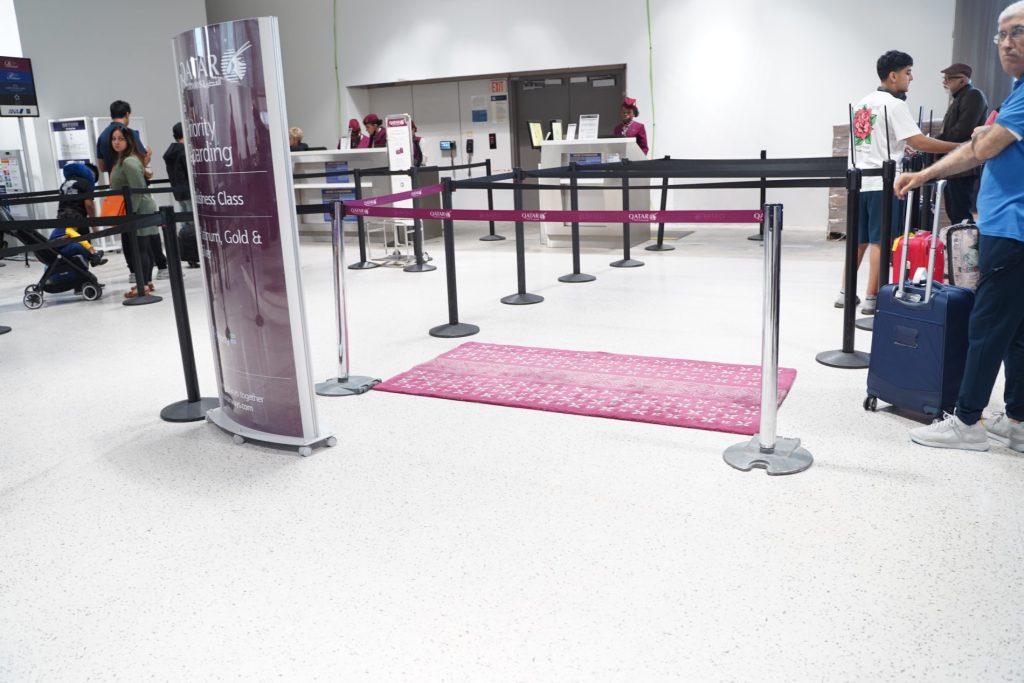
The boarding gate was hectic with a lot of families and people milling about. A separate business class lane was roped off and staff were continuously checking the boarding passes of people near the business class boarding lane to ensure they were in business class.
Boarding in Houston (Photo: AirlineGeeks | Hemal Gosai)
Boarding started a few minutes past schedule with family boarded which seemed to be about half the plane. Business class boarding started afterwards, upon entering the aircraft we were shown our seats. I was unable to take any pictures of the cabin or any decent pictures of the seat since half the cabin had already boarded and flight attendants were constantly going back and forth in the aisles attending to passengers.
On the Plane
Qatar Airways has a nifty 360-degree interactive view of the cabin so here’s a link to that instead, just imagine me sitting in 1E. At the seat was a pillow, blanket, and amenity kit filled with Diptyque products. Pajamas from The White Company were handed out as well.
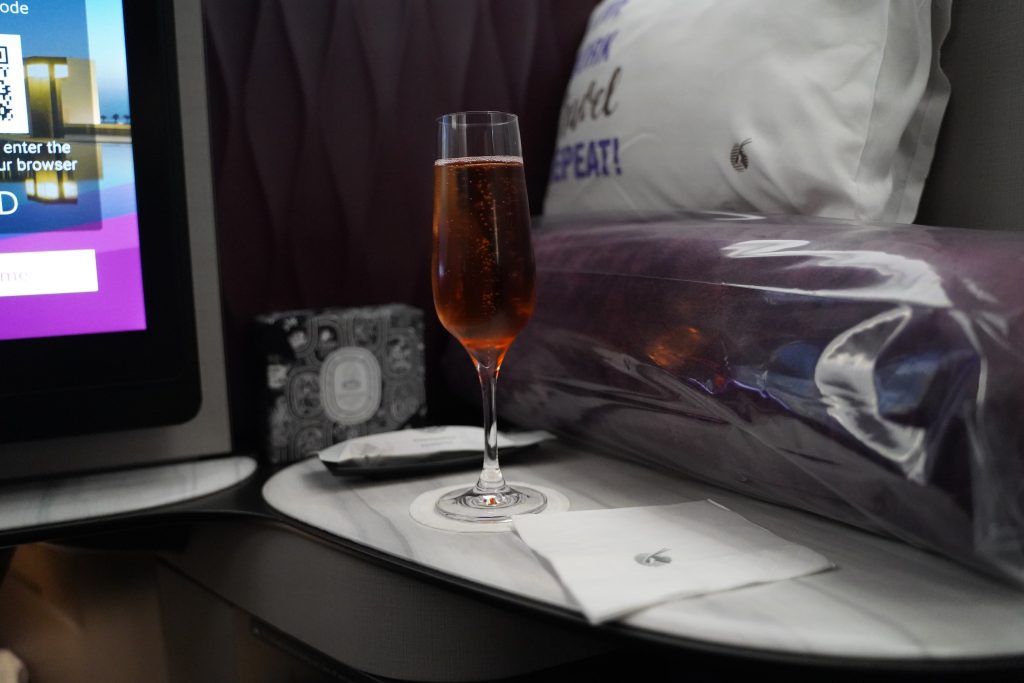
Shortly after getting to my seat I was asked if I’d like anything to drink and was provided a through explanation of the QSuites offering. At the time Qatar Airways was serving Laurent-Perrier Alexandra Rosé 2006, so I went with that. It turned out to be sublime.
Oftentimes airlines overlook their wines or source for Château Turpentine, this was not the case. They have a dedicated wine menu that is separate from the dining menu.
Here are a couple of the offerings, you’ll notice a some pricey bottles for business class:
Charles Heidsieck Brut Champagne
Laurent-Perrier Alexandra Rosé 2006
Oro de Castilla Sauvignon Blanc de Rueda 2021
Château Batailley Grand Cru Classé Pauillac 2015
Château de Rayne Vigneau Premier Grand Cru Sauternes 2005
I was then asked for my meal choices and when I’d like to eat since dining is on demand in QSuites, I went with dinner right after takeoff and breakfast before landing.
Meal Service
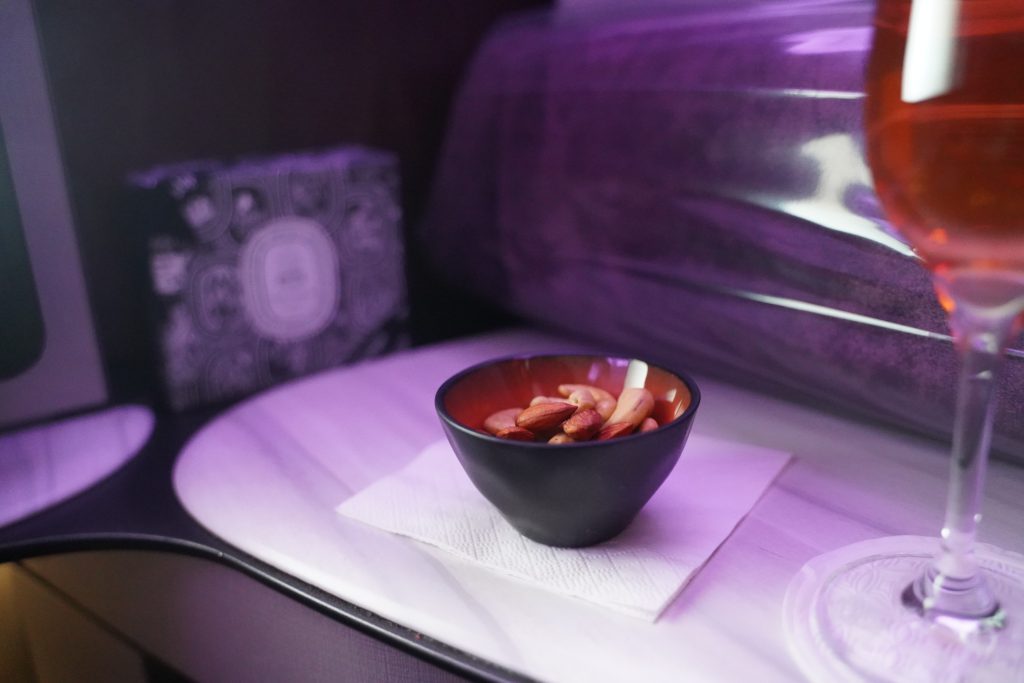
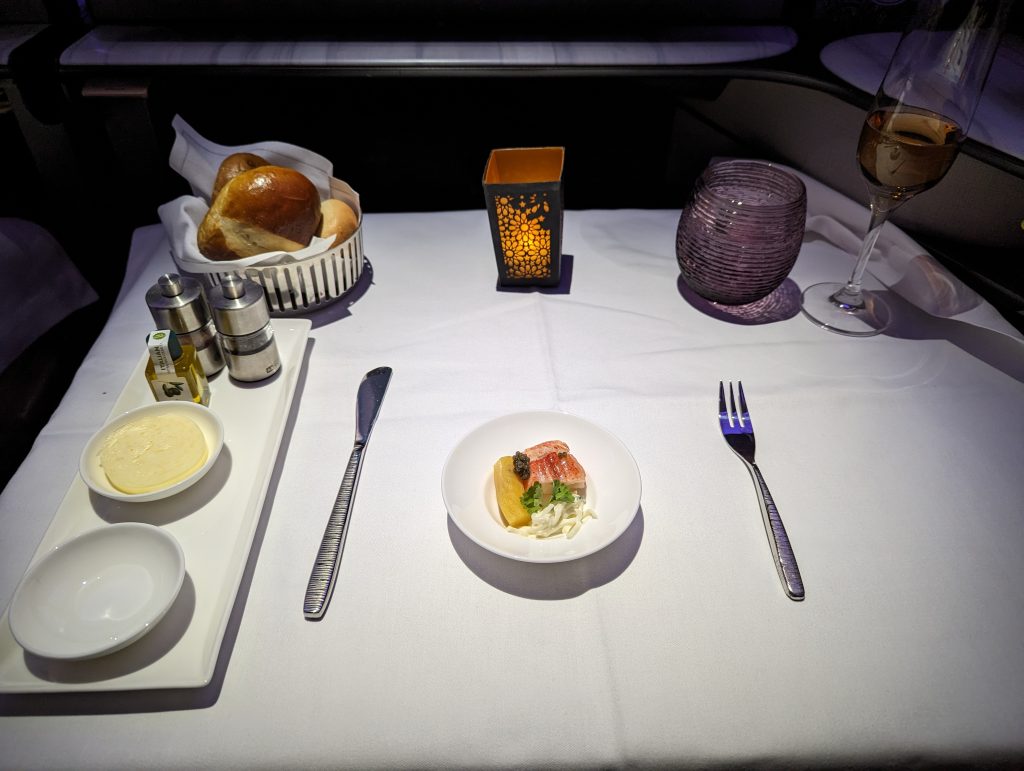
Shortly after takeoff meal service began with some nuts. Oftentimes business class meals are served on a tray, but it wasn’t the case here. Linens were placed on the tray tables along with silverware and a LED candle.
There were several bottled olive oil options, I had gone with the standard but I found out afterwards that the tomato chili one is fantastic. My one regret of the flight was not asking for a couple mini bottles of it.
Nuts served after takeoff (Photo: AirlineGeeks | Hemal Gosai)
Table setting (Photo: AirlineGeeks | Hemal Gosai)
The meal started off with a lobster and caviar amuse bouche followed by balik salmon and a beetroot puree as the appetizer. I’m not a fan of salmon since it often has a fishy taste, but I found this to be very good and fresh to the point that I’d want to eat it again. A soup was available, but I skipped it.
Amuse bouche (Photo: AirlineGeeks | Hemal Gosai)
Balik salmon appetizer (Photo: AirlineGeeks | Hemal Gosai)
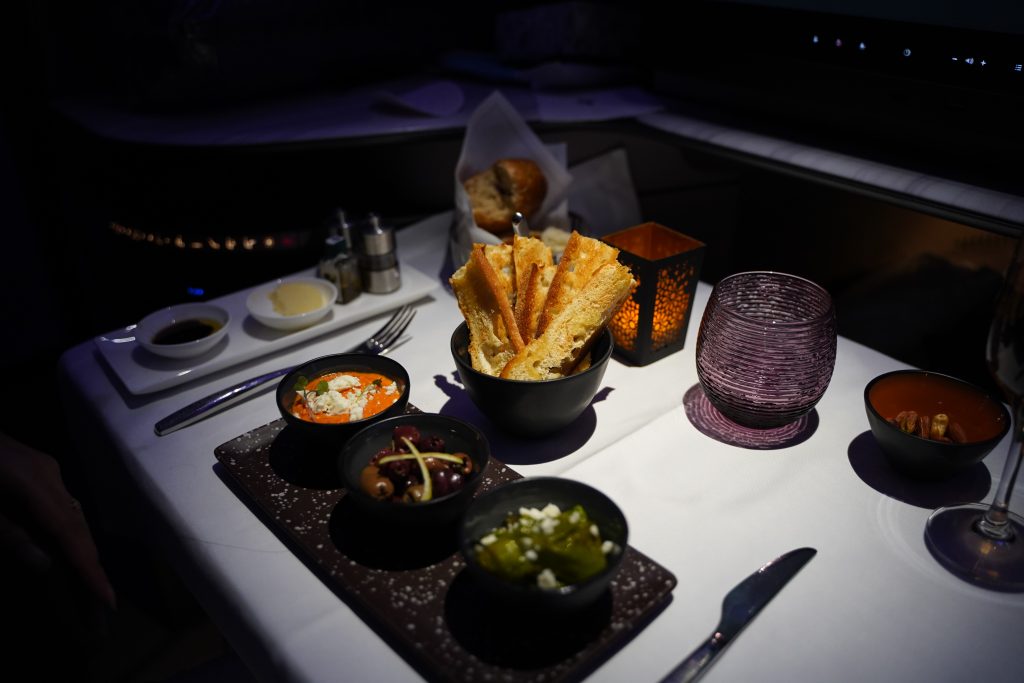
My wife went with the tapas and was a good sport letting me take a couple pictures of everything before she dug in.
Tapas (Photo: AirlineGeeks | Hemal Gosai)
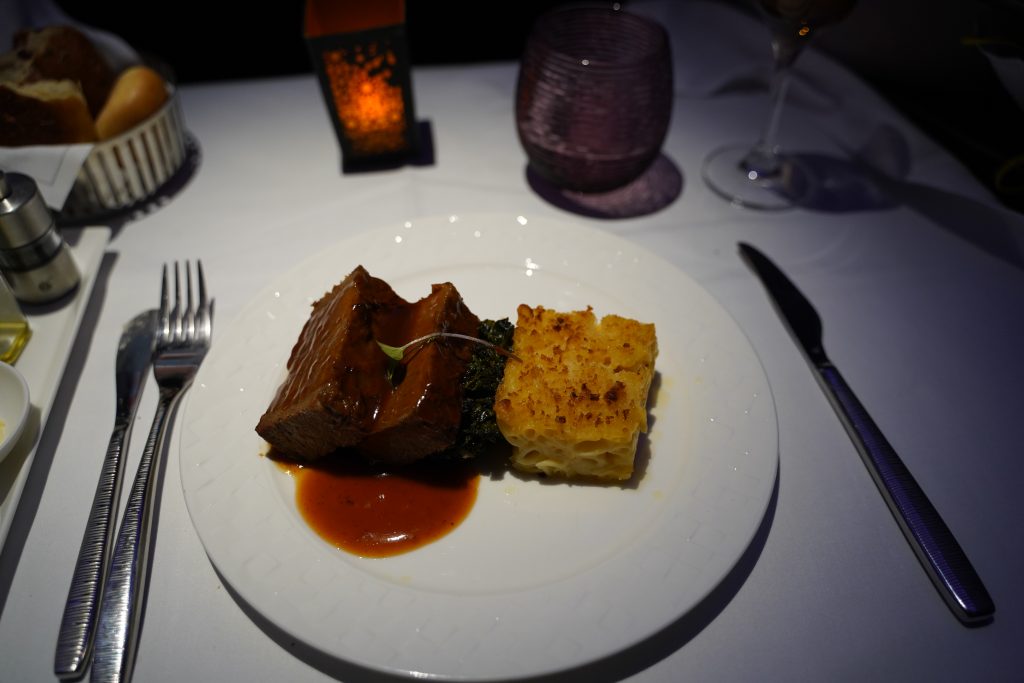
There several main course options that consisted of different proteins and vegetarian options. I went with the brisket since it was an attempt to provide a regional offering, it was accompanied by sautéed greens and mac and cheese. This was no Franklin’s brisket nor was I expecting it to be. I’ve never had brisket on a plane and it very good braised brisket that was slightly smoky with the accompanying barbeque sauce
Brisket with mac and cheese (Photo: AirlineGeeks | Hemal Gosai)
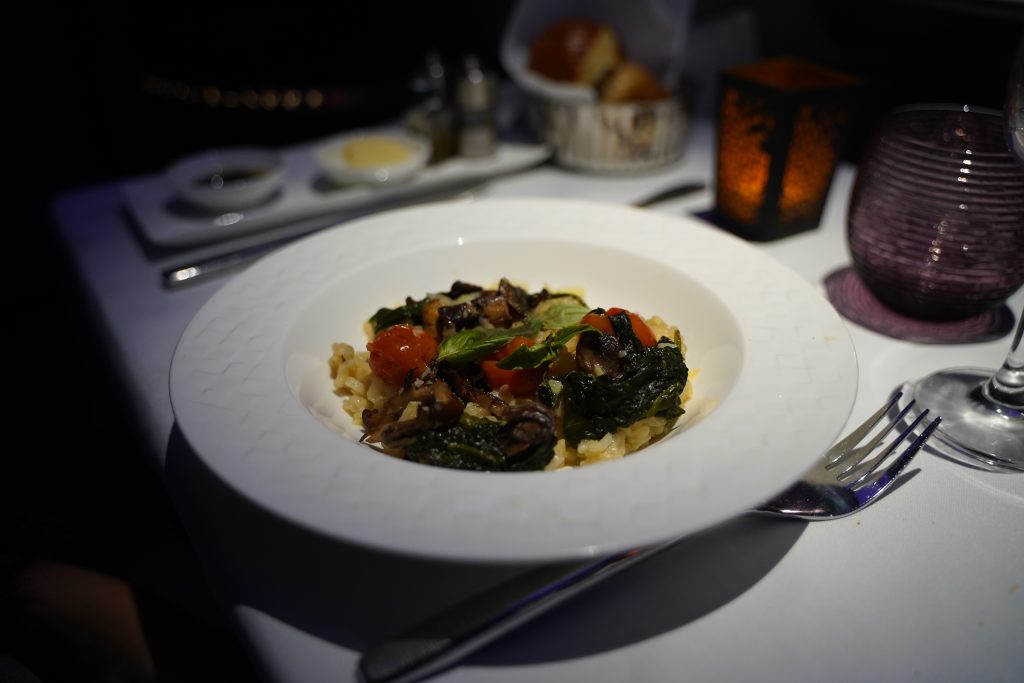
My wife went with the vegetarian option, the mushroom risotto.
Dessert was simple but had well-executed options ranging from healthy to indulgent. I went with the ice cream sundae. It was a base of vanilla ice cream topped with hot fudge, brownies, strawberries, shaved white chocolate, and a chocolate praline. I also grabbed a bite of cheesecake
Sundae (Photo: AirlineGeeks | Hemal Gosai)
Cheesecake (Photo: AirlineGeeks | Hemal Gosai)
This was the best meal I’ve had in business class and could even be passed off as first class catering on some airlines. I found there to be enough of a variety that someone would always find something worth eating.
My wife normally orders a vegetarian special meal but decided to chance it this time at my insistence, it turned out to be a great decision as she enjoyed all the vegetarian offerings. It’s often the case that vegetarian options on flights are after thoughts, but it felt that this time there was an equal amount of effort put into providing vegetarian and vegan choices as the other choices.
It’s always appreciated to not have someone’s dietary choices not feel like an afterthought.
After dinner, I watched another movie on the IFE which was surprisingly responsive and full of movies and tv shows people would actually want to watch.
Double Suite
When it was time for bed, I rang the call button off the control panel and a flight attendant showed up immediately. I asked for turndown service, while I went and changed into my pajamas and brushed my teeth.
The pajamas were very comfortable and I still use them every so often at home. I’m a bit of a sucker for airline branding so would’ve like a Qatar Airways logo somewhere on the chest, but many do appreciate the more subtle approach by stitching a tag with the logo on the hem. Here’s how the seat looks with the mattress pad
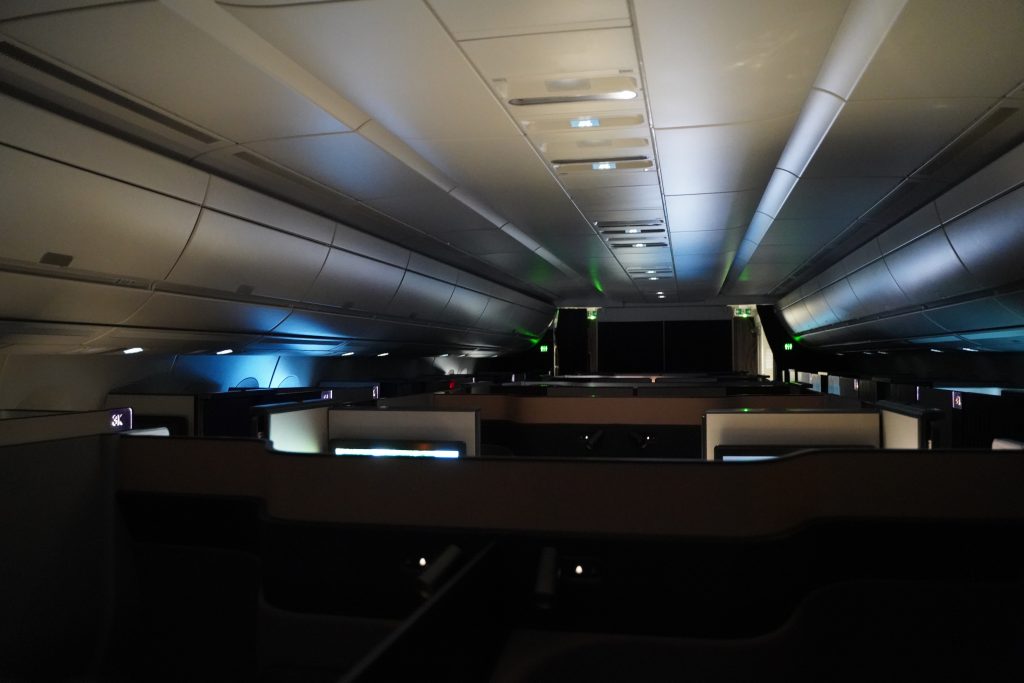
The double suite in QSuites really is a fantastic experience if you’re traveling with a partner, with the divider down and doors closed it felt like we had our own reasonably sized personal space on the flight.
There are also no overhead bins in the middle which add to the feeling of space in the cabin.
Cabin after meal service (Photo: AirlineGeeks | Hemal Gosai)
Breakfast
I woke up about two hours before landing and had breakfast. I asked for the bedding materials to be taken away while I changed out my pajamas and brushed my teeth again. I asked for a latte as well which was delicious.
Again, the table was set with as much effort as dinner service. I was not particularly hungry but decided to have breakfast, for you the readers. The omelet was fine for a plane omelet.
The spinach was tasty as were the potatoes. The beef bacon was fine, not great and not terrible. Qatar Airways catering is entirely halal so don’t expect to find pork bacon. I also grabbed a couple bites of the buckwheat waffle for science.
Latte after waking up (Photo: AirlineGeeks | Hemal Gosai)
Shortly after breakfast was cleared we began our approach into Doha. We landed in Doha on time, and it was an end to a spectacular flight.
I appreciated that the flight attendants held back the economy passengers until all of business class got off the plane. It’s always frustrating to get off the plane when it’s a free for all.
We quickly made our way through transit security and paid a visit to the Al Safwa First Lounge, more on that in the next post.
Overall, the flight was very pleasant and exceeded my expectations for business class. I’ve found a good marker for how much I liked a flight to be if I’d be willing to pay cash to book the flight instead of miles, for QSuites I’d generally say yes if the fare is right.
It would be nice to have better lounges at outstations but overall there really wasn’t anything to not like about the experience.
If I had to nitpick, I would say that when sitting in the middle with a partner you may find the service speeds to vary since a different flight attendant is working each aisle.
My wife got her pre-departure beverage and appetizer a couple of minutes before I got mine. However, that’s an insignificant gripe, 10/10 would fly again.
Hemal took his first flight at four years old and has been an avgeek since then. When he isn't working as an analyst he's frequently found outside watching planes fly overhead or flying in them. His favorite plane is the 747-8i which Lufthansa thankfully flies to EWR allowing for some great spotting. He firmly believes that the best way to fly between JFK and BOS is via DFW and is always willing to go for that extra elite qualifying mile. Hemal's opinions are his own and do not reflect those of his employer.
How the Airbus A380 Superjumbo is Recovering Post-Pandemic
A Qantas A380 rests in storage (Photo: AirlineGeeks | William Derrickson)
Since its first flight in 2005, the global Airbus A380 fleet has flown millions of miles across the globe, becoming an instantly recognizable aircraft to all. Designed to lower operating costs and increase fuel savings compared to the Boeing 747, the largest commercial aircraft in the world did just that and found a home with carriers across the globe.
Currently, Emirates operates the largest fleet, with a margin of over 100 more of the type than the next closest operator, Singapore Airlines. However, during the pandemic, the A380 showed how vulnerable a superjumbo jet is in the world with all operators of the flight parking most or all of their fleet.
When the Pandemic took full effect in 2020, the aviation industry saw an unprecedented decline in travel demand across the globe. Most airlines parked aircraft or operated them on an extremely reduced frequency. The most fuel-efficient aircraft were the ones to stay in service, operating flights with low load factors or cargo-only flights. This in turn saw airlines rapidly taking out less efficient, four-engine aircraft, parking them, and in some cases, retiring fleets altogether. British Airways and Virgin Atlantic, for instance, retired both of their 747 fleets. The A380 was not immune to this effect either.
According to Aviation Values (AV), in 2020, 214 A380s across the globe went into inactive service, meaning parked or stored. In the first quarter of the year alone, 177 out of the 214 aircraft were stored. The vulnerability of the four-engine aircraft was seen immediately in a drastic fashion.
Qantas A380s parked in storage at ComAv’s facility. (Photo: AirlineGeeks | William Derrickson)
Post-Pandemic Operations
Three years later, the beloved superjumbo has made its return, but not to the level of prominence it once had. Currently, according to AV, 45% of the world’s fleet is still parked or in long-term storage. According to airfleets.net, Emirates has 23 aircraft still in storage, parked or scrapped but also operating the most worldwide with 100 examples currently active. Korean Air has half of its fleet stored or parked, Etihad is operating one out of the carrier’s nine examples and Thai Airways has all six of its A380s in storage.
Up until recently, Lufthansa had its entire fleet parked. However, the carrier has returned three to service, relaunching the aircraft to Boston on June 1. This reactivation shows promise for the aircraft, as the industry is continuing to see an incline in travel.
A Lufthansa A380 departs from San Francisco International Airport (Photo: AirlineGeeks | Ben Suskind)
Another example is Etihad which currently has only one of the super jumbos active. The carrier announced that the A380 would make its debut back into service in July of this year, and two additional examples will be re-activated to operate from Abu Dhabi to London.
While other carriers are just now reintroducing the A380 back into service, Emirates returned the type to service in July 2020. Being the driving force in the market for the double-decker jet, Emirates’ hub and spoke route structure is what allows the A380 to continually serve the market. Having a singular super hub in Dubai, the A380 can operationally thrive as that was the intended use of its design.
Future of the A380
With operating significantly more of the type than the next closest competitor, Emirates is the driving factor for the value and long-term outlook of the aircraft. According to AV, the carrier’s current market value of the fleet is $6.3 billion. In 2022, the airline purchased one 13-year-old A380 upon the lease expiring for $29.99 million. AV valued the aircraft at $26.45 million, meaning Emirates paid more for the aircraft than what AV’s algorithm believed it was worth.
This is promising for the type’s future as the purchase denotes there is still significant use for the double-decker aircraft in Emirates’ business model. The carrier has made it public that the aircraft will operate into the 2030s, showing promise for the type’s future.
Zach’s love for aviation began when he was in elementary school with a flight sim and model planes. This passion for being in the air only intensified throughout high school when he earned his Private Pilot Certificate. He then attended Embry-Riddle Aeronautical University, earning his certificates and ratings to later flight instruct and share his passion for aviation with others. He now resides in the North East living out his dream as an airline pilot.
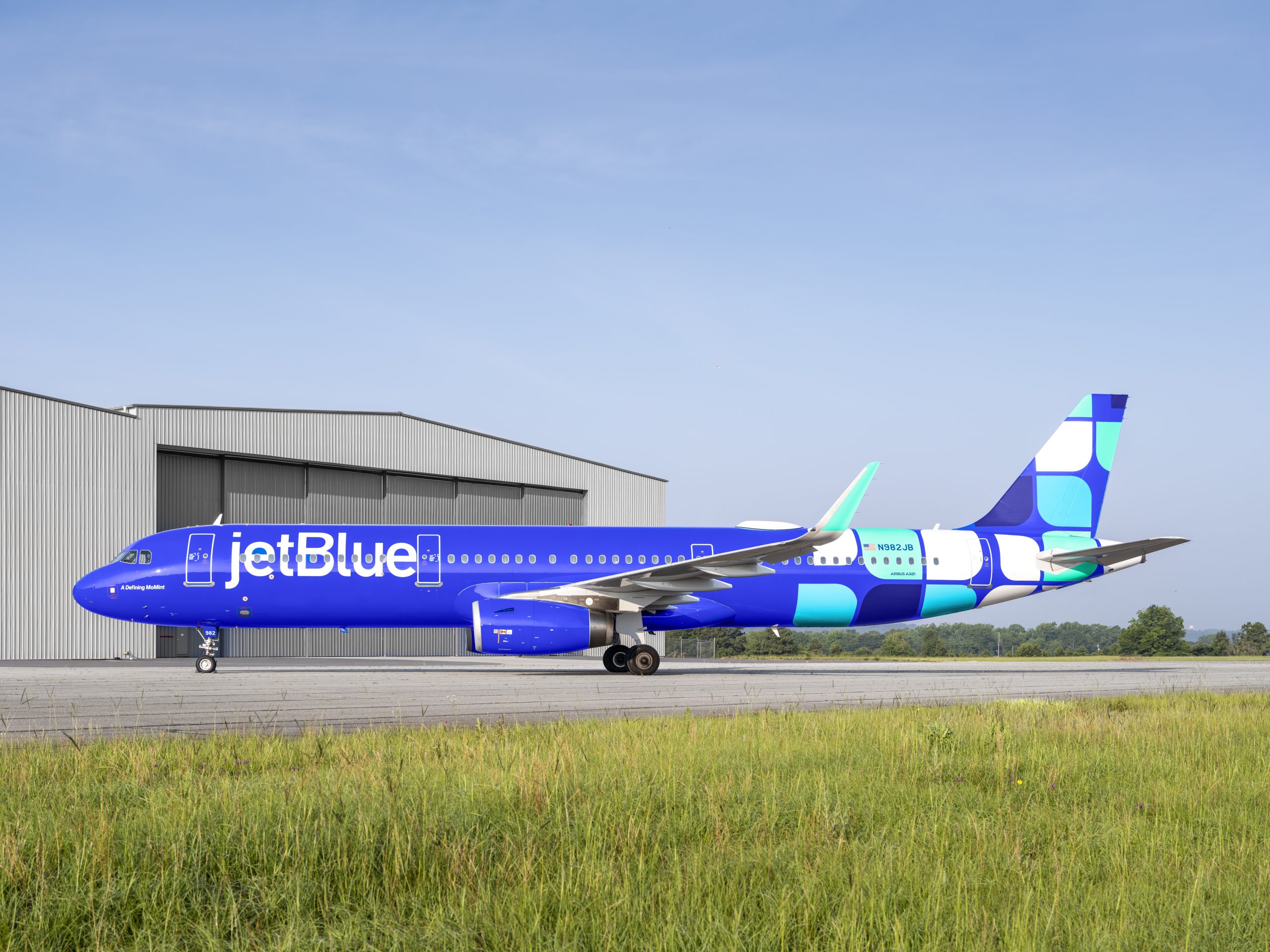
A JetBlue Airbus A321 with a Mint-themed livery. (Photo: JetBlue)
Over the years, JetBlue has made some tweaks to their livery, but it has fundamentally stayed the same, with aircraft belonging to the airline recognizable by the distinctive tail colors and the words JetBlue emblazed on the side.
We’ve seen a lot of changes primarily to the tail design, one of my favorites was the change made when Mint was introduced. A close second favorite was the “retro” livery the airline shocked everyone with back in 2016. The irony here was that JetBlue did not have a retro livery but had taken some creative liberties to design a livery based on the styles used a couple decades ago.
There haven’t been any significant change to the livery until now. The airline showed off its first complete livery refresh on a brand new Airbus A321 aptly named “A Defining MoMint,” a reference to the signature Mint cabin found on this aircraft and select other JetBlue aircraft. The plane is expected to go into service immediately with its first passenger flight on June 15.
The new livery, to put it simply, lives up to the name JetBlue. It’s very blue with anew pattern across the rear of the aircraft extending to the tail. The airline calls this their new minty-fresh pattern and will be present on all aircraft that have the Mint cabin.
This pattern is identical to branding found within the Mint cabin and across other customer touchpoints. JetBlue’s logo and plane pattern will also be painted onto the belly of the plane making for easy spotting when in the skies. Core aircraft that do not have Mint cabins will also have a new livery with new patterns and colors.
Airline’s Steady Growth
This news comes at a pivotal time for the airline as it expands its route network. The airline now flies to London, Paris and Amsterdam from the east coast, with the expectation that more international, long-haul destinations will be added in the near future.
JetBlue has also entered into a partnership called the Northeast alliance with American Airlines to increase competitiveness in the northeastern United States. It has faced significant scrutiny by the U.S. Department of Justice (DOJ), which as recently struck down the partnership that was initially formed in 2021. The airlines are expected to appeal this decision.
Regardless of that outcome, JetBlue is on a path to keep growing however it can and the new livery is a part of that growth. A lot of which will likely be transatlantic flights.
The airline has several, narrowbody Airbus A321LR and Airbus A321XLR aircraft on order, which will primarily be used for growth in existing European markets and new destinations.
Hemal took his first flight at four years old and has been an avgeek since then. When he isn't working as an analyst he's frequently found outside watching planes fly overhead or flying in them. His favorite plane is the 747-8i which Lufthansa thankfully flies to EWR allowing for some great spotting. He firmly believes that the best way to fly between JFK and BOS is via DFW and is always willing to go for that extra elite qualifying mile. Hemal's opinions are his own and do not reflect those of his employer.
A SpiceJet 737 (Photo: Jane Mejdahl [CC BY-SA 2.0 (https://creativecommons.org/licenses/by-sa/2.0)])
India’s SpiceJet has announced that the service will be bolstered by adding 10 Boeing 737 aircraft between September and October. The enhancement is paving the way for recovery and meeting the travel demand during the winter.
The new aircraft will include five Boeing 737 MAXs. However, the airline hasn’t revealed the price tag of the new aircraft.
“We will be inducting 10 B737 aircraft between September – October. The induction of these planes, which coincides with the peak travel season in India, will help us launch new routes and strength out presence on existing one.” Ajay Singh, chairman and managing director of SpiceJet, said.
According to SpiceJet, the low-cost carrier operates a fleet of Boeing 737s and Bombardier Q-400s.
The deal came a day after the announcement of partnering FTAI Aviation. FTAI will lease up to 20 CFM56 engines to the carrier, part of the engines would use to reactivate some of its grounded fleet in the next two to three months. It is expected the agreement will ensure the airline’s performance, and “without worrying about engines or their maintenance.”
Earlier, as a result of the surging travel demand in the country, the aircraft revival scheme is under the auspices of the government’s Emergency Credit Line Guarantee Scheme (ECLGS) and its cash accruals. Indian government rolled out ECLGS in response to Covid-19 in 2020, setting up financial support to the company which has suffered from the Covid-19 pandemic. SpiceJet has secured a fund of $50 million from the government.
“The airline is meticulously working towards returning the grounded fleet to the air as soon as possible,” Singh added.
The airline reported a profit for the quarter ending in December 2022, with a domestic load factor of 91% and operating revenue increased by 19%. SpiceJet had touted its highest passenger load factor amongst all airlines in the country.
However, the latest financial report couldn’t stop the potential bankruptcy. Wilmington, the aircraft lessor, has approached the National Company Law Tribunal (NCLT) to begin insolvency proceeding against SpiceJet. Earlier, the Directorate General of Civil Aviation has deregistered three SpiceJet’s aircraft. Wilmington is the company that owns one of the aircraft. But the airline said two of three aircraft were non-operational and there’s no impact on flight operations.
In the meantime, the struggling airline is facing another setback. Aircastle, an Irish aircraft lessor, also seeks the initiation of insolvency in the wake of the airline having failed to pay its outstanding due.
Earlier, SpiceJet refused to follow in Go First’s footsteps to declare bankruptcy, filing a request with the NCLT to explore options for safeguarding the airline’s assets.
“There is absolutely no question of filing for insolvency. Any rumor regarding the same is completely baseless,” Singh said.