








Stories

Trip Report: The Two Flights Of Glacier Bay National Park

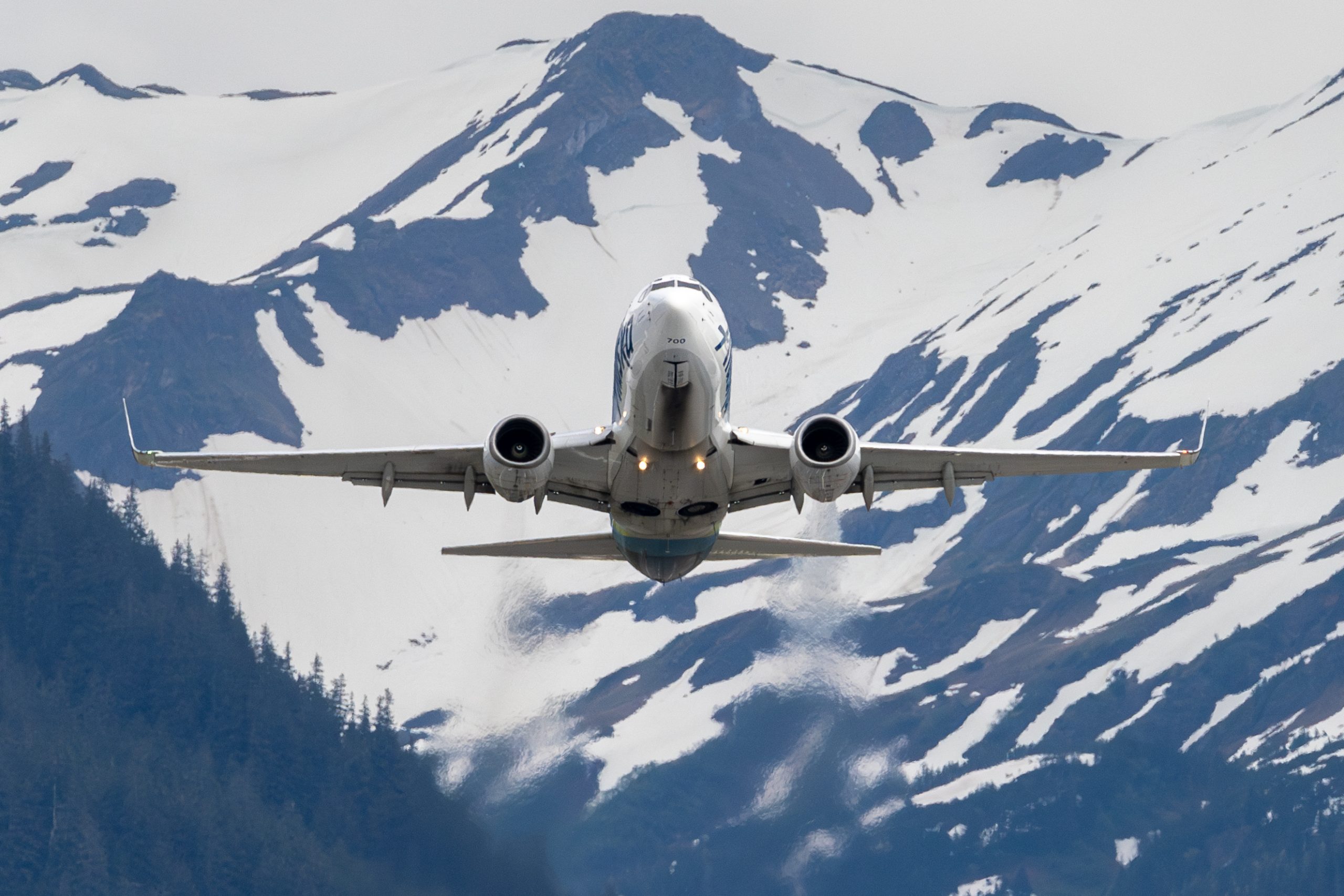
A Boeing 737-700 taking off from Juneau International Airport for Gustavus Airport. (Photo: AirlineGeeks | Fangzhong Guo)

Alaska— known as the last frontier and its vast wilderness — created some of the most difficult-to-reach locations in the United States. On my way to Glacier Bay National Park, I had the chance to travel on both a commuter and a traditional airline to a part of Alaska that can’t be reached by road. 

Gustavus, Alaska is ideally situated on Icy Strait and serves as the gateway to Glacier Bay National Park. While the park draws over half a million visitors yearly, more than ninety percent arrive on a cruise ship and never set foot in the tiny town. There are two ways to reach the remote city: on a ferry that runs twice a week during the summer or by flying in. I’ve chosen the latter naturally as an AvGeek.

Two airlines are serving the town, Alaska Seaplanes, a Juneau, Alaska-based commuter airline that offers year-round service with up to six daily round trips in the summer, and Alaska Airlines offering one daily round trip between late May and September on an Essential Air Service (EAS) contract. Both airlines offer a single destination from the city of Juneau.

I opted for the Alaska Seaplanes flight into Gustavus due to the limited schedule that Alaska Offers and flew the Seattle-based airline out. Here’s my experience flying in and out of the remote town of Gustavus, Alaska.

 Alaska Seaplanes

You can book directly on the commuter airline’s website or via tour operators, but they won’t show up on search engines such as Google Flight.

Check-In
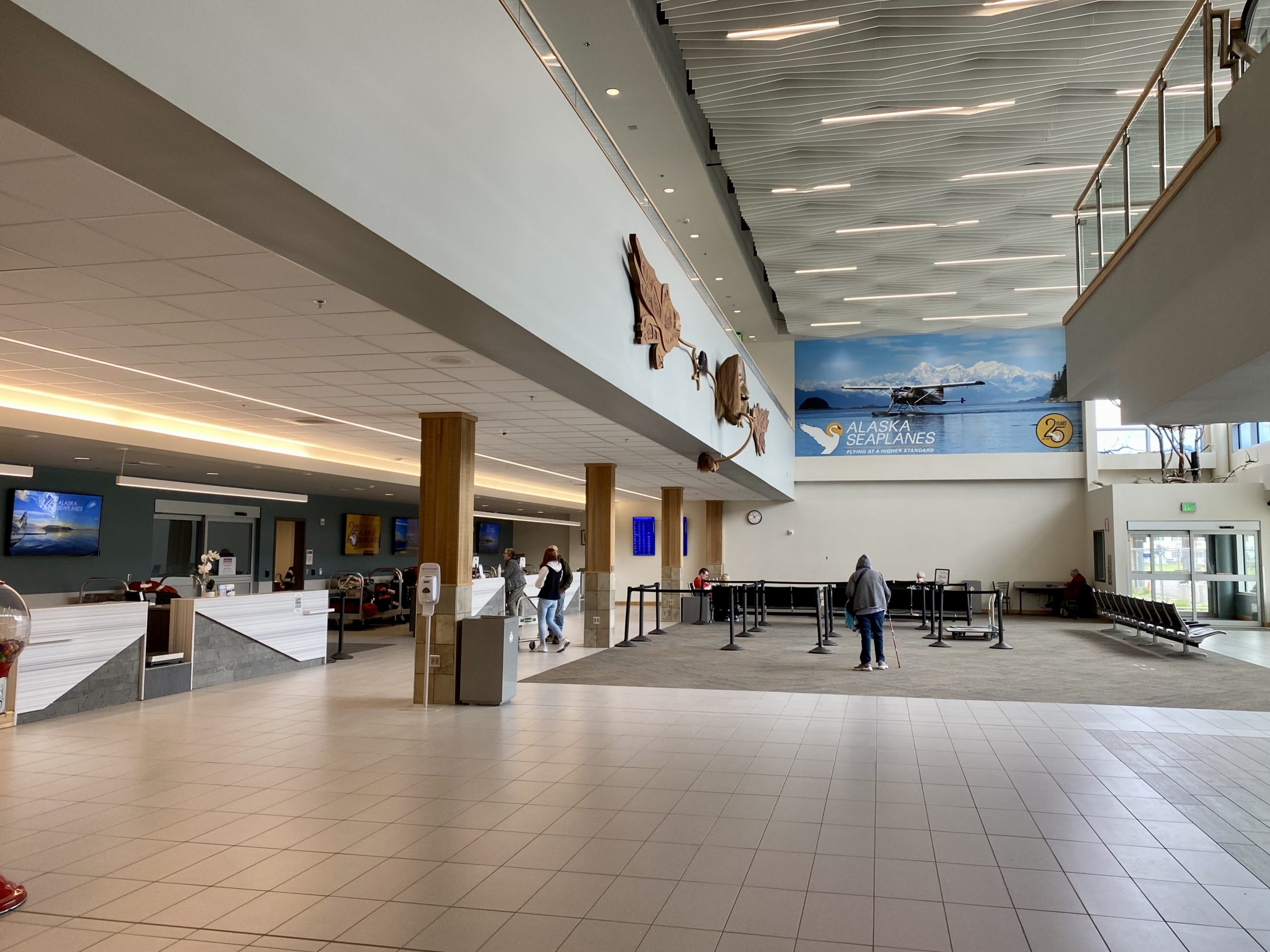
The commuter airlines uses a separate check-in hall at Juneau International Airport. (Photo: AirlineGeeks | Fangzhong Guo)

All commuter airlines’ check-in counters are in an individual hall away from the traditional airlines, since they do not use TSA security. There are several small waiting areas, and some of them offer great views of the ramp for pristine planespotting opportunities. If you arrive at the airport too early, you can even go out to see all the sightseeing helicopters buzzing in and out every twenty minutes.
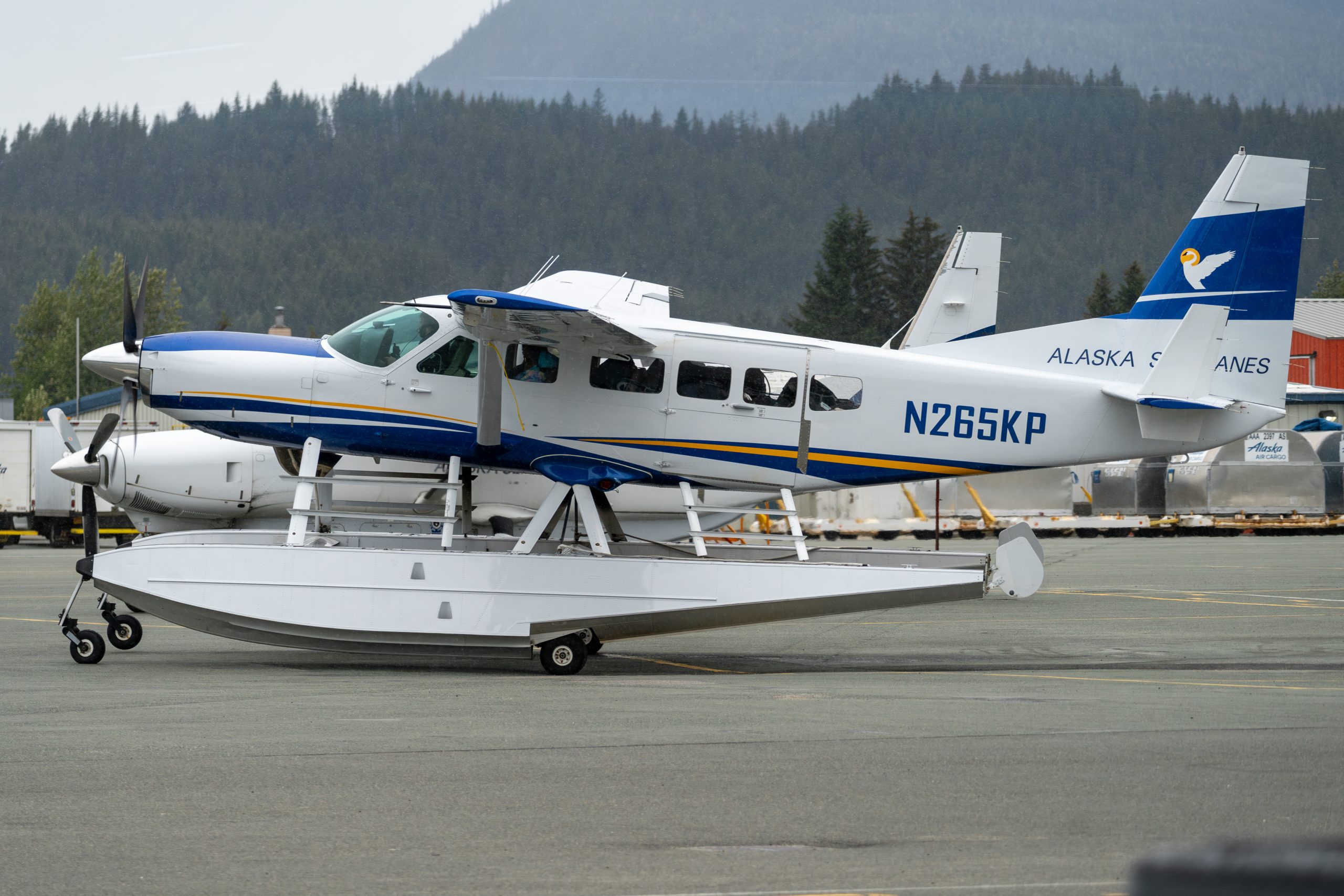
Juneau offers some interesting spotting opportunities such as this Alaska Seaplane’s amphibious Cessna 208. (Photo: AirlineGeeks | Fangzhong Guo)

As you will be flying on a Cessna 208 airplane, there’s no room for carry-ons, not even your backpack, so the agent will ask you to check everything. The flight comes with a 50lbs (23kg) check-in baggage allowance. The airline charges a fee for heavy single items over 50 lbs.

However, since there’s no explicit limit on how many pieces are allowed, you can take out smaller things and check them individually. I checked in my 5-lb bear canister to avoid paying the overage fee.

The Flight

Views of glacier-carved valleys on departure from Juneau International Airport. (Photo: AirlineGeeks | Fangzhong Guo)

The flight boards just a few minutes before its scheduled departure time, since only nine passengers are on it. The pilot will walk you through the ramp to the plane. The process is akin to any commuter flights you’d find in other parts of the world. 

As we take off from the airport, you’ll realize the beauty of traveling in Alaska. Despite the gloomy weather, there are grand views of glaciers and glacier-carved valleys on one side of the plane and beautiful views of Auke Bay on the other. Since the prop plane flies much lower and slower than a jet airplane, passengers on my flight also got to spot a breaching whale from the aircraft. 

The flight was 20 minutes long. While there were some bumpy sections, views from the Icy Straits certainly helped distract my attention. 

Arrival

Inside of Alaska Seaplane’s terminal at Gustavus Airport. (Photo: AirlineGeeks | Fangzhong Guo)

The Juneau-based commuter liner runs its own terminal at Gustavus. Upon arrival, you’ll see the small check-in counter passengers use when they depart the town. One will find a small cafe and a local car-rental company along with the check-in counter. Since there is no cell service at the airport, the company even offers free wifi for its visitors. The terminal looked cozy and sweet, like a bed and breakfast.

Alaska Airlines

Alaska Airlines offers a single flight departing Gustavus around 5:30 pm every day. The Department of Transportation subsidizes this flight. However, you can sometimes fly the leg for ‘free’ if you book an award ticket that connects via Juneau. My flight back to Seattle cost the same, whether I depart from Gustavus or Juneau.

Check-In

Alaska Airline’s Terminal at Gustavus is small and features an outdoor baggage claim area. (Photo: AirlineGeeks | Fangzhong Guo)

The Seattle-based airline also has a terminal to itself in the remote town. There are two check-in counters and a security checkpoint so you can connect to the rest of Alaska’s network. The space was tiny for the 120-plus passengers on the Boeing 737-700 aircraft. 
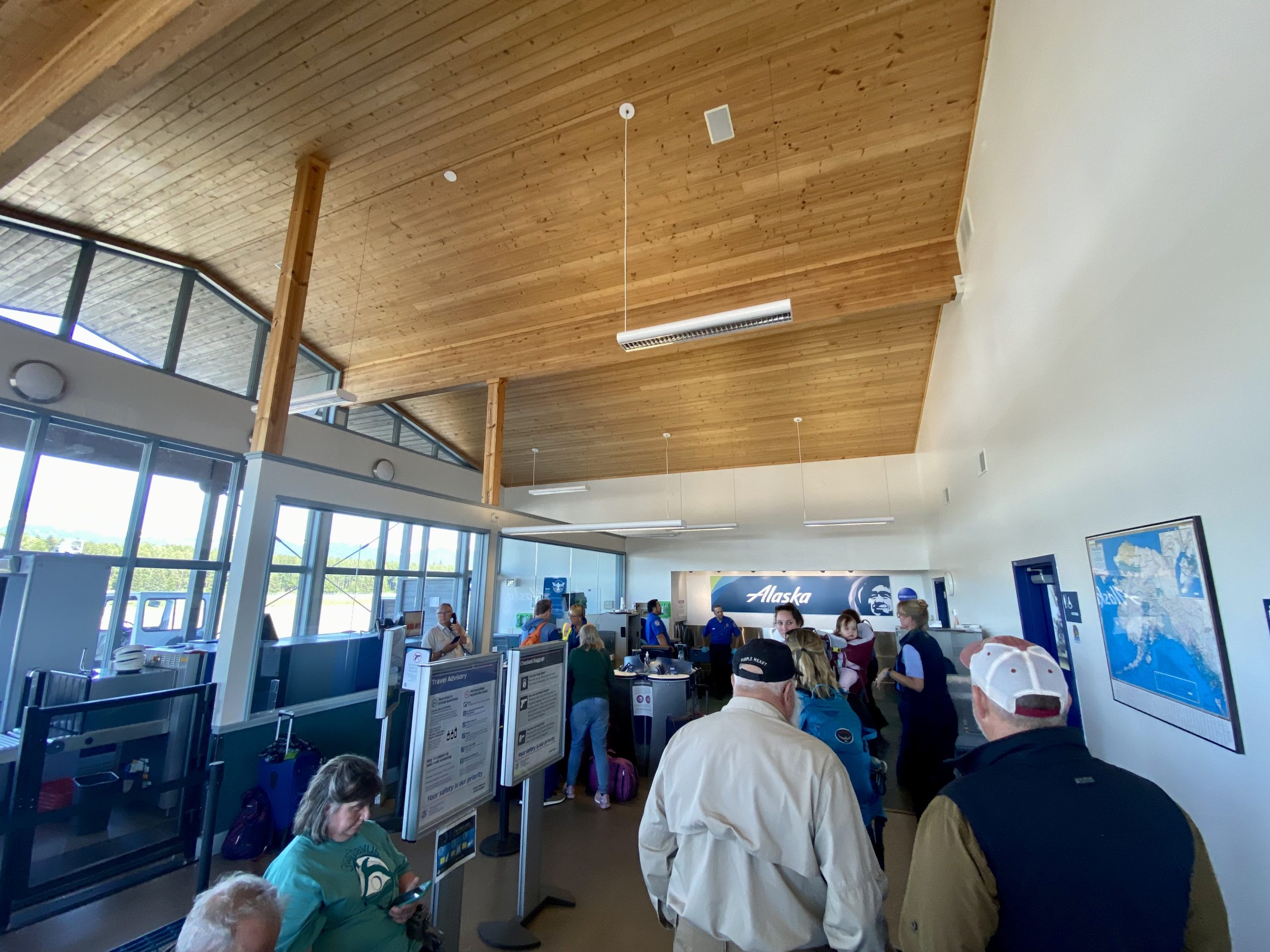
Inside of Alaska Airline’s terminal at Gustavus Airport. (Photo: AirlineGeeks | Fangzhong Guo)

Since the bulk of the passengers were arriving on the shuttle from the national park, the influx of passengers made the check-in space feel more crowded than it otherwise would’ve been. Due to the lack of X-ray machines, all luggage is checked by TSA agents by hand. However, exceptions exist, such as frozen fish in a tethered box. They will get hand carried by an agent to the X-ray machine at the security checkpoint, which generally causes some delay at the check-in counter.

There’s not much space for waiting passengers either. Most passengers waited under the blazing sun on the day of my flight, while the rest waited alongside the check-in line in the terminal without air conditioning. Either option was comfortable.

The flight

Security opened about 50 minutes before our scheduled departure time. Like many other small airports, TSA agents needed to juggle between duties letting only a few passengers through each time. They did an incredible job getting everyone through security and allowing the flight to depart on time. 
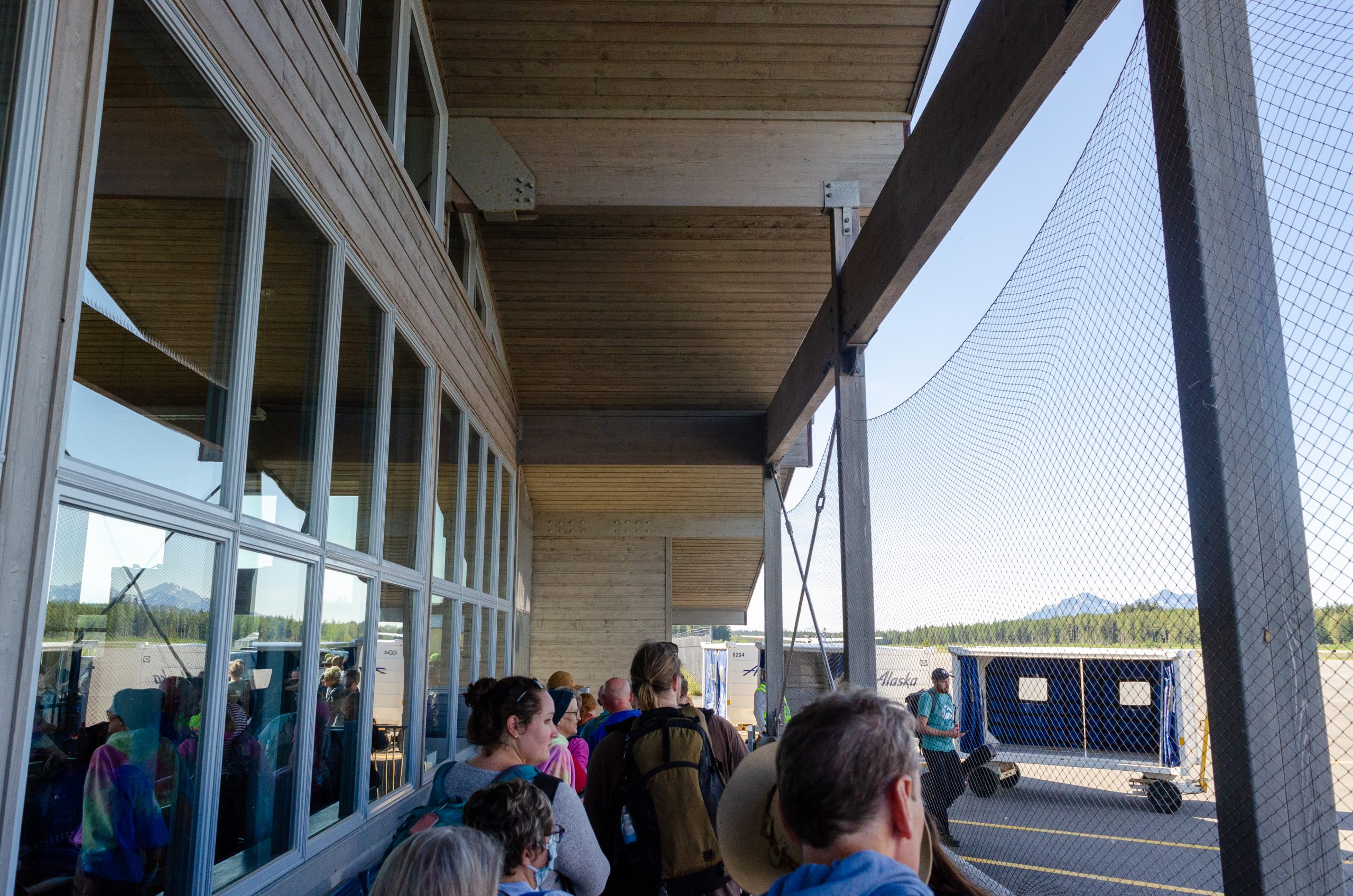
The passenger holding area in Gustavus Airport is roughly the size of a batting cage. (Photo: AirlineGeeks | Fangzhong Guo)

There is another small holding area after security, roughly the size of a batting cage. The place probably holds less than half of the passengers that can fit on the 737, so we started boarding once it filled up. Despite being crowded, it’s outdoors and shaded, so it felt nice on a 70-degree day. As you can imagine, the boarding was a first come, first served affair since passengers didn’t go through security by boarding groups. 

After leaving the batting cage, there’s another short walk until you reach the airplane. This first breeze of cool, conditioned air from the vents was very refreshing after waiting at Gustavus airport for hours.

The flight itself was uneventful. Captain notified the passengers there were no services in flight and that the seatbelt sign would be on the entire flight during its short duration. The mountain views were good. However, you are limited to mainly seeing along the horizon since you are on a jet. The flight was just a few minutes shorter than my Cessna flight. 
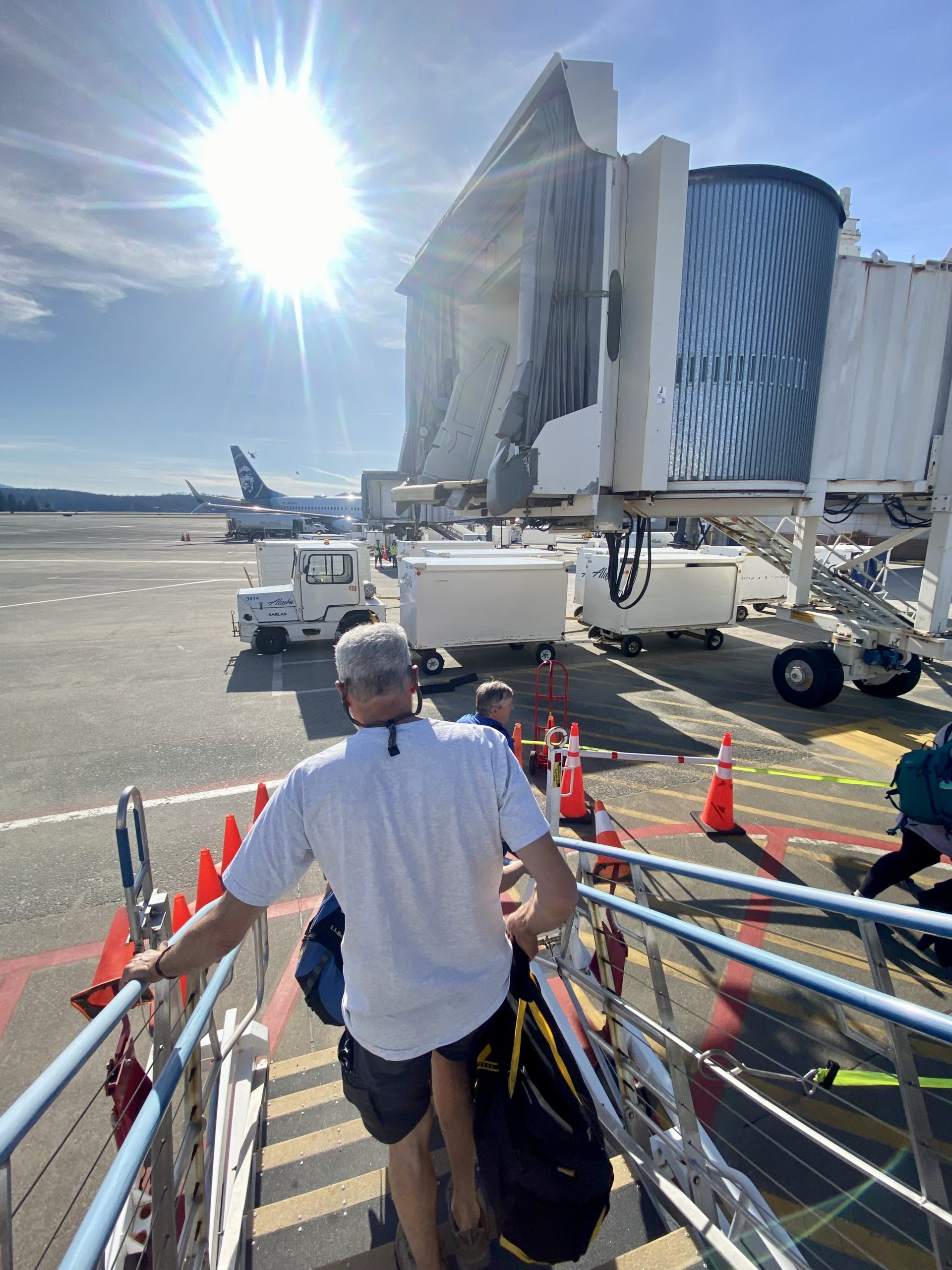
Deplaning via air stairs at Juneau International Airport while parked next to a jet bridge. (Photo: AirlineGeeks | Fangzhong Guo)

Final Thoughts

Alaska’s vast wilderness made it difficult for local communities to travel. It also created some of the most breathtaking views, even when traveling between towns. I highly recommend traveling on a smaller plane to cut down your travel time and savor the best views Alaska has to offer.


Fangzhong Guo

Fangzhong grew up near an OEM airport in northeastern China, where he developed his enthusiasm for aviation. Taking upon his passion, he's now working as an aircraft interior design engineer. Besides working in the aerospace industry, Fangzhong enjoys trying out different types of airplanes and seeing how airplane interiors have evolved. So far, he's flown on over 80 types of aircraft. He also planespots in his spare time. His rarest catches included the 747 Shuttle Carrier Aircraft and AN-225.

Korean Air Decreases Flight Frequencies To China

A Korean Air 747-8i in Seoul (Photo: AirlineGeeks | Ben Suskind)

While the airlines across the globe are seeing an upward trajectory, South Korean airlines will scale down its flight operations to China in response to the weakened demand. It came after three months of signing agreement to increase the flight frequencies between two countries.

According to the travel figures from the Ministry of Land, Infrastructure and Transport, the number of Chinese passengers was less than expected and only recorded 16.7% to the same period in 2019. Before the pandemic, South Korea was one of Chinese travelers’ favorite travel hotspots as it ticks all the boxes. In the meantime, the number of South Korean traveling to China also recorded an unexpected drop from 15% to 5% over the past three years.

South Korea’s  aviation and travel industries were left behind, as China didn’t approve the group sightseeing tour to South Korea. Since China reopened its border, some countries have rolled out their red carpet for the Chinese group tours, such as Thailand and Malaysia. South Korea carriers couldn’t make a fortune as a result.

Korean Air will suspend Seoul’s Gimpo International Airport to Beijing between Aug. 1 and Oct.28, Seoul’s Incheon Airport to Xiamen from Aug. 9. to Oct. 28. Asiana Airlines will also temporarily suspend the flight operation from Gimpo to Beijing from Jul. 6 and Incheon – Shenzhen on Jul. 8. Asiana already suspended Incheon to Xian since Jun. 20.

However, Korean Air will resume the flight between Incheon and the Chinese cities of Changsha and Weihai on Jul. 19 and Sept. 27 respectively. Earlier, the flag carrier has launched to cargo services to Zhengzhou, China.

The airline is recovering from Covid-19, recording an operating profit of $318.3 million for the first quarter of 2023. The travel demand on international routes was rebounded to more than 80% of the pre-pandemic levels at the end of May. But the travel figures were excluded China and Russia. However, Asiana Airlines recorded a loss for the first quarter of the year due to a weak Korean won.

Looking Forward To The Merger

“Travel demand is expected to fully recover to the pre-pandemic levels in the first half of 2024 if domestic and foreign airlines’ planned addition of new planes to their fleets and personnel recruitment go smoothly as planned.” Cho Won-tae, the CEO of Korean Air said.

The airline is currently making every effort to acquire Asiana Airlines. According to Cho, it can make concessions to overseas regulators to ink the deal. Korean Air got 11 approvals from the competitors’ authorities, looking forward to the green light from the U.S., the E.U and Japan.

In addition, Korean Development Bank, the creditor of the airline, expressed confidence over the acquisition of Asiana Airlines and mentioned the plan b is not existed.

“We expect the merger to be concluded during the third quarter of the year,” the chairman of the bank said.

ANA Debuts New Pokémon Livery

An All Nippon Airways 777 in Los Angeles. (Photo: AirlineGeeks | William Derrickson)

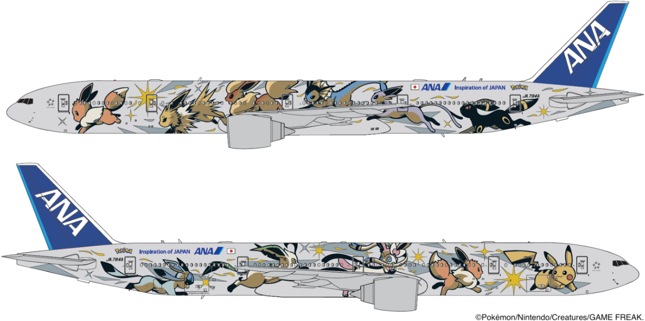
Japan’s ANA recently announced a Pikachu-branded Boeing 787 Dreamliner a couple of weeks ago as part of the Pokémon Air Adventures, a partnership with The Pokémon Company. This week, ANA announced yet another Pokémon livery: the Eevee jet. This will be featured on one of the airline’s Boeing 777-300ER jets.

Pokémon Air Adventures is an initiative aimed to bring people closer to each other and explore the world after the COVID-19 pandemic.

While Pikachu is the most recognizable and prominent Pokémon on the jet, the livery features a variety of Pokémon such as Charizard, Latios, and Vivillon.

The Eevee jet also features Pikachu on it while showcasing Eevee and all of its evolutions, including Vaporeon, Jolteon, and Flareon.

ANA Eevee Livery (Photo: ANA)

Interior Branding

It’s not just the livery that will be Pokémon themed, ANA is taking steps to ensure the flight experience is on brand as well.

Flight attendants will have Pokémon branded aprons for service along with a variety of branded service items such as paper cups and napkins. Headrest covers will also be changed from the generic ANA covers to special Pokémon branded covers.

Passengers on flights operated by the branded aircraft will receive special souvenirs. These consist of a Japanese wooden tag featuring a Pokémon, a commemorative sticker, and a souvenir boarding certificate. Merchandise will also be available for sale.

In-flight entertainment systems will be loaded with Pokémon Kids TVZ and Pokétoon as well.

The airline is keeping some parts of the partnership vague, though. There is a promise of themed background music for flights along with additional boarding certificate designs and merchandise which haven’t been announced yet.

The airline has announced what markets the aircraft will serve. There, unfortunately, is no guarantee that the flights below will be operated by the branded jets but ANA states that these routes and flight numbers are where the Pikachu or Eevee Jets may be in service from August 31, 2023 until October 28, 2023.

Pikachu Jet Routes and Flight Numbers:

  • Haneda – Bangkok: NH847/NH850/NH849/NH848
  • Haneda – Singapore: NH841/NH844/NH843/NH842
  • Haneda – Jakarta: NH855/NH856
  • Haneda – Manila: NH869/NH870
  • Haneda – Ho Chi Minh: NH891/NH892
  • Haneda – Delhi: NH837/NH838
  • Haneda – Sydney: NH879/NH880/NH889/NH890
  • Haneda – Vancouver: NH116/NH115
  • Haneda – Honolulu: NH186/NH185

Eevee Jet Routes and Flight Numbers:

  • Haneda – London: NH211/NH212
  • Haneda – New York: NH110/NH109/NH160/NH159
  • Haneda – San Francisco: NH108/NH107

Hemal Gosai

Hemal took his first flight at four years old and has been an avgeek since then. When he isn't working as an analyst he's frequently found outside watching planes fly overhead or flying in them. His favorite plane is the 747-8i which Lufthansa thankfully flies to EWR allowing for some great spotting. He firmly believes that the best way to fly between JFK and BOS is via DFW and is always willing to go for that extra elite qualifying mile. Hemal's opinions are his own and do not reflect those of his employer.

Porter Continues Its Coast-to-Coast Expansion

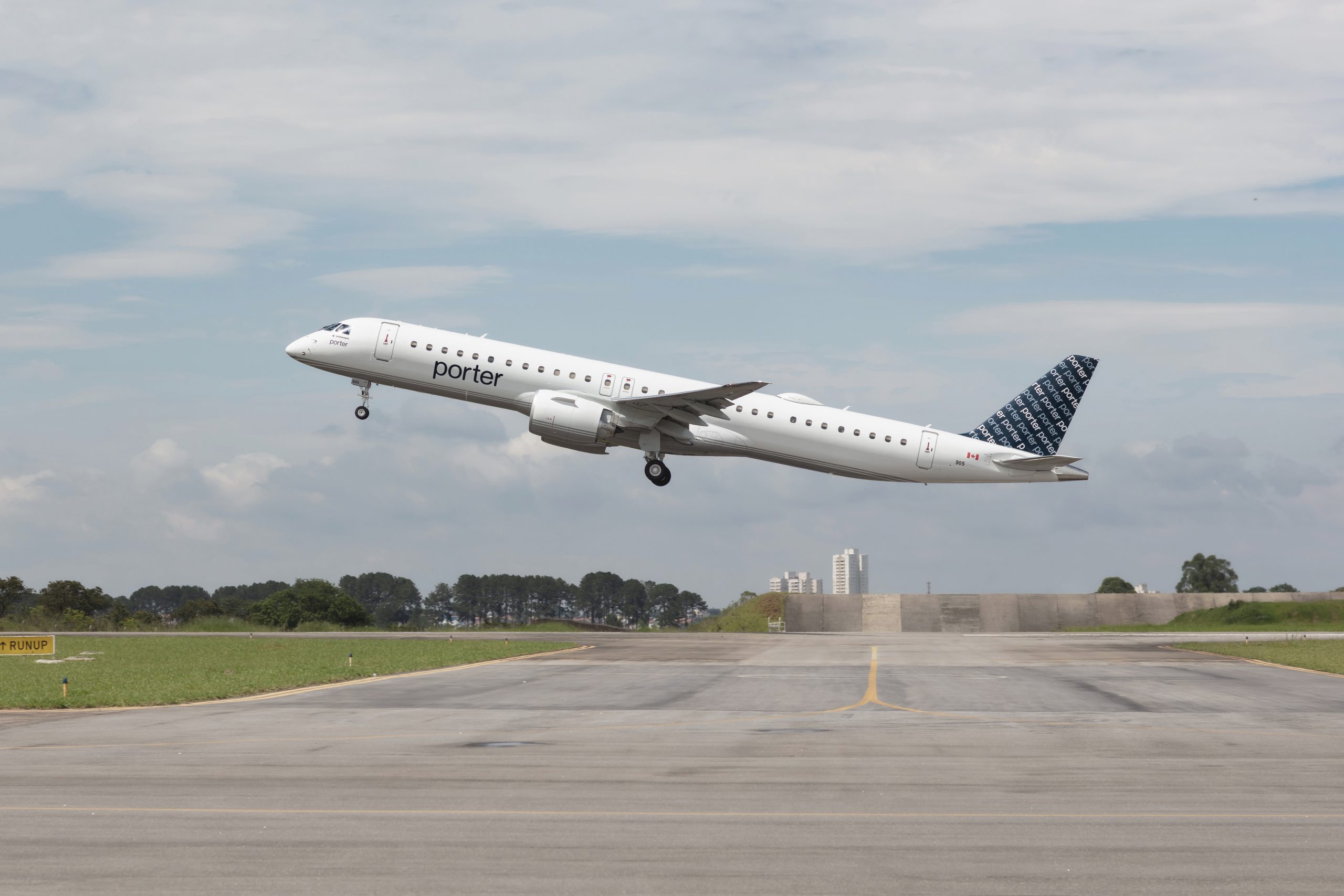
Porter Airlines' Embraer 195-E2. (Photo: Embraer)
A Porter Airlines Embraer 195-E2. (Photo: Embraer)

Porter Airlines is continuing its jet expansion with a series of new route announcements. The three latest additions to the airline’s network are a part of its Toronto Pearson International Airport operations and span from coast-to-coast.

Expanding Westwards and Eastwards

Porter has recently announced new routes from Toronto Pearson International Airport to Victoria International Airport in British Columbia, Winnipeg James Armstrong Richardson International Airport in Manitoba and St. John’s International Airport in Newfoundland and Labrador. All three routes will be operated by Porter’s Embraer E195-E2 jets.

The latest announcement came on June 27, 2023, when Porter announced a new service between Toronto and Victoria. The route will operate once daily commencing on Sept. 20, 2023. Victoria is located in the westernmost Canadian province of British Columbia on the southern tip of Vancouver Island.

“We are truly pleased to see Porter add new Victoria-Toronto service,” said Geoff Dickson, President and CEO of the Victoria Airport Authority in a press release.  “The new E195-E2 aircraft and Porter’s exceptional service offering is a welcome addition to the Victoria market. We appreciate the new service and look forward to working with them to ensure the route’s success.”

The week prior to Porter’s Victoria announcement, the Toronto-based carrier also announced new routes to Winnipeg and St. John’s. Winnipeg is centrally located in Canada in the province of Manitoba. In a June 20, 2023 press release, Porter unveiled a twice-daily service connecting Winnipeg with Toronto Pearson. The route is scheduled to start on Sept. 7, 2023.

St. John’s is located in the easternmost Canadian province of Newfound and Labrador. While Victoria and Winnipeg are new destinations for Porter, the carrier already operates service to St. John’s from Halifax Stanfield International Airport in the nearby Atlantic province of Nova Scotia. Porter’s new route was announced on June 22, 2023, and will be offered once daily with a start date of September 6, 2023. The new route will also introduce the Embraer E195-E2 jet to St. John’s International Airport, as Porter’s existing flights to the airport are operated by its De Havilland Canada Dash 8 Q400 turboprop fleet.

Growing Porter’s Toronto Pearson Operations

For the first decade and a half of its history, Porter exclusively operated a fleet of Dash 8 Q400 turboprops serving a network based out of Toronto Billy Bishop City Airport in downtown Toronto. Porter built a name for itself in Eastern Canada over the years, offering a convenient travel experience and a premium brand of service with complimentary beer, wine and snacks on board. However, the airline was limited in its expansion options due to the range of the Dash 8 Q400 as well as Billy Bishop Airport’s size and prohibition on jet aircraft.

In 2021, Porter placed an order for 30 Embraer E195-E2 jets. This marked a major change for the airline, as it meant an entry into its hometown’s larger airport, Toronto Pearson International Airport. In early 2023, Porter began its E195-E2 operations from Toronto Pearson. The airline now serves six destinations across the country and has 11 E195-E2s with another 39 jets on order.

The ongoing expansion in Toronto Pearson marks an ambitious growth plan for Porter. While competition at Billy Bishop Airport was limited to a few regional Air Canada flights, Porter is now going head-to-head with Canadian giants Air Canada and WestJet at Toronto Pearson. As the airline continues executing its plan to add routes from Toronto Pearson to other Canadian destinations and airports in the United States, Central America and the Caribbean, it will face additional competition from foreign carriers and smaller Canadian airlines.

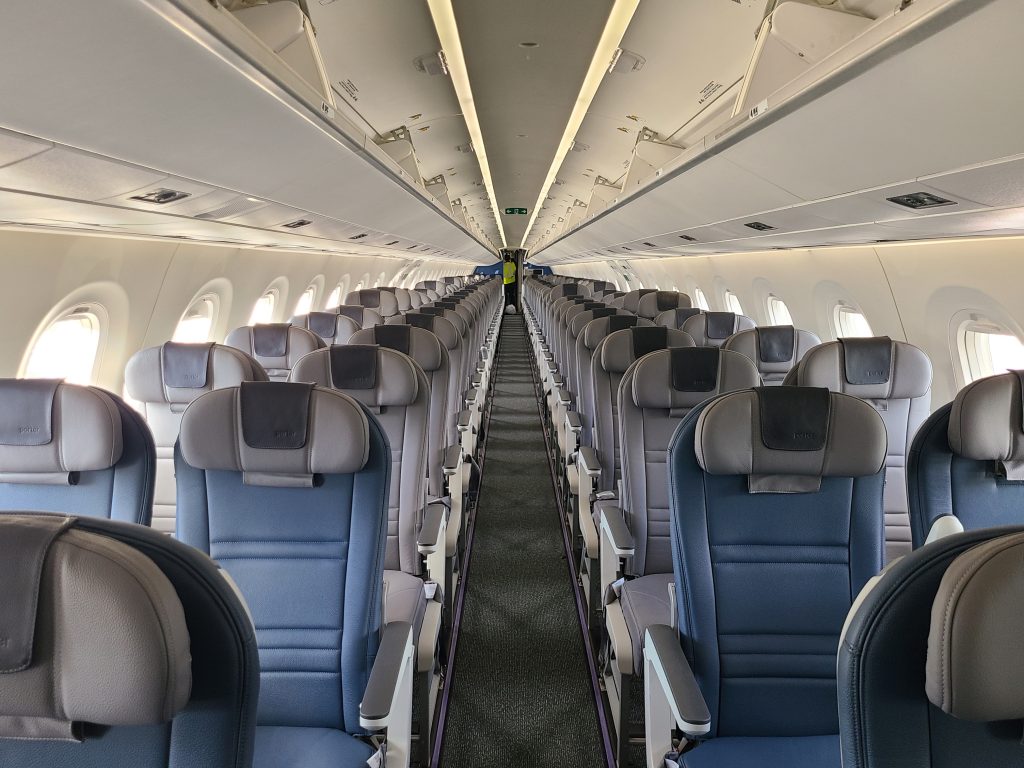
Porter Airlines E195-E2 cabin (Photo: AirlineGeeks | Andrew Chen)

Porter’s expansion is no doubt a positive change for Canadian consumers. With the domestic air travel market long dominated by Air Canada and WestJet, the growth of Porter and other Canadian carriers like Flair Airlines is creating a more competitive landscape in the country. With the introduction of its E195-E2 jets, Porter also introduced a revamped economy class product, and its onboard passenger experience has proven to be very competitive.

Where Porter is less competitive is its network at Toronto Pearson. Air Canada, and to a lesser extent WestJet, carry a significant amount of connecting traffic to and from the airport. Porter is starting to build its connecting network at the airport and the airline noted that its new routes will offer connecting options to other Canadian destinations. Until it can further develop its network through new routes and partnerships though, Porter will continue to face an uphill battle at Toronto Pearson.

Andrew Chen

Andrew is a lifelong lover of aviation and travel. He has flown all over the world and is fascinated by the workings of the air travel industry. As a private pilot and glider pilot who has worked with airlines, airports and other industry stakeholders, he is always excited to share his passion for aviation with others. In addition to being a writer, he also hosts Flying Smarter, an educational travel podcast that explores the complex world of air travel to help listeners become better-informed and savvier travelers.

African Airlines Battle Affordability Barrier in Embracing Sustainable Aviation Fuel (SAF)

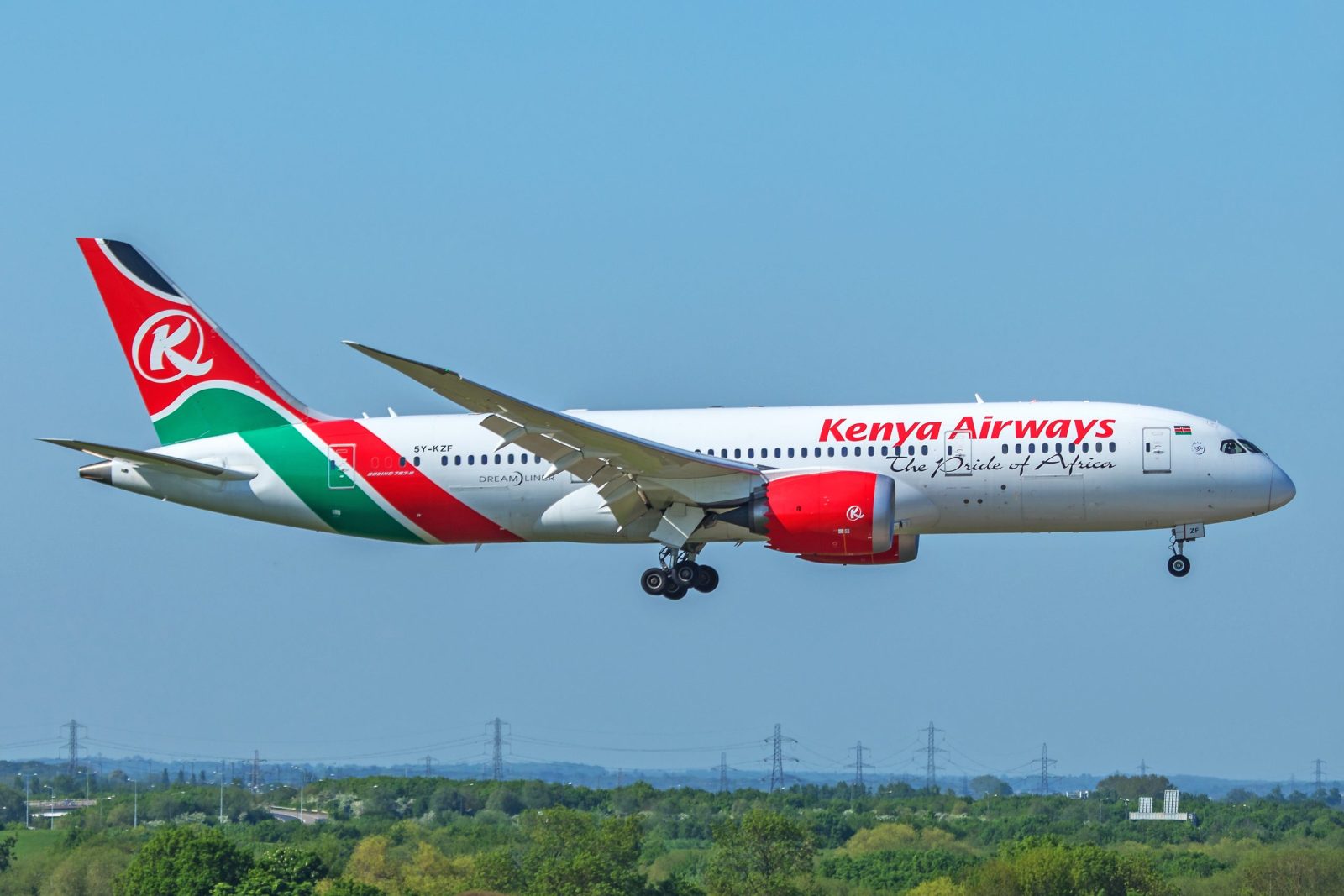
Kenya Airways B787-8 LHR William Derrickson
A Kenya Airways Boeing 787 landing in London. (Photo: AirlineGeeks | William Derrickson)

The African aviation industry is facing a critical challenge in its pursuit of sustainability: the affordability of Sustainable Aviation Fuel (SAF). During a dynamic panel discussion at the recent AviaDev Africa event in Nairobi, industry leaders highlighted the hurdles faced by African airlines in adopting SAF.

The consensus among the panelists was that, while environmental sustainability is a top priority, the high cost of SAF poses significant financial obstacles that must be overcome collectively.

The Cost Factor: A Barrier to Sustainability

Jennifer Bamuturaki, CEO of Uganda Airlines, candidly expressed the concerns of many African airlines, stating, “Most of these African airlines are looking for survival. We can’t afford it [SAF] it’s three times the cost of Jet A1 fuel.”  Her sentiment highlighted the stark reality and the financial limitations faced by African airlines in their pursuit of sustainable practices. Striking a balance between economic viability and environmental responsibility remains a pressing challenge for the industry in Africa.

Eduardo Fairen, CEO of TAAG Angola Airlines, shed light on another obstacle faced by African airlines — the limited availability of new aircraft. Fairen highlighted, “If we need 1000 aircraft here [Africa], I wonder where they will be coming from, probably secondhand aircraft with old engines burning fuel and polluting,” he said alluding to the scarcity of new, fuel-efficient aircraft which is forcing African airlines to rely on older planes that contribute to increased fuel consumption and emissions.

Panel discussions with African airline leaders (Photo: AirlineGeeks | Victor Shalton)

Linden Birns, head of communications at Airlink, stressed the importance of collaboration and shared responsibility. He emphasized the need for “better thinking” – regarding the commercial sustainability challenges facing most African carriers – and closer cooperation among industry stakeholders to drive advancements in sustainable aviation.

“We need to be focusing on those areas where the solutions are already available but require better thinking.” He also noted that a collaborative approach can facilitate knowledge sharing, technological advancements, and more cost-effective solutions in SAF production and distribution.

Policy Support and Incentives

Allan Kilavuka, CEO of Kenya Airways, called for policy support and financial incentives to aid the African aviation industry in its sustainability endeavors. Kilavuka emphasized, “We need subsidies. We don’t have scale, and that’s a fact… Bigger emitters should be penalized at our expense.”

He urged the policymakers to level the playing field by implementing measures that support African airlines’ transition to SAF and reward their commitment to sustainability. The Kenya Airways boss also noted with concern that Africa is the least emitters of carbon emissions.

The AviaDev Africa panel discussion shed light on the financial barriers African airlines face in adopting Sustainable Aviation Fuel. While environmental sustainability remains a top priority, the affordability of SAF posed a significant challenge for the African carriers and called for the industry to collaborate to overcome these barriers, leveraging existing solutions, and advocating for policy support and incentives. The panelists voiced in unison the need to be actively involved in the entire SAF value chain to exert influence, explore alternative strategies, and advocate for financial incentives.

Victor Shalton

Victor Shalton's love for aviation can be traced to when he was 11-years-old. As a seasoned aviation writer, he takes pride in providing the best aviation coverage around the globe and is passionate about advancing his skills in the aviation space. In addition, he loves travelling, writing, arts and while his speaking engagements have taken him around the world, he is proud to call Nairobi home.

The Pros and Cons of the Two Paths to Becoming a U.S. Airline Pilot

Boeing 787 flight deck
Inside the cockpit of a WestJet 787-9. (Photo: AirlineGeeks | Mateen Kontoravdis)

Any flight student or instructor is acutely aware of the two types of flight schools: Part 61 schools and Part 141. Though they get you to the same final destination – pilot certification – each has its own distinct qualities, and each is (usually) used either by pilots looking to fly recreationally or professionally. Let’s take a look at the distinctions between these two types of flight schools.

It’s important to note that this article is based on generalities. We do not have the space here to hit every point in the Federal Aviation Regulations nor to consider every opportunity that student pilots find themselves in. However, this should provide a good overview of the two major types of flight training in the United States and the roles they play in feeding the aviation industry newly-minted pilots.

Understanding Each Type of Flight School

The terms “Part 61” and “Part 141” refer to the regulations that define each school. The Federal Aviation Regulations (FARs), which are under Title 14 of the Code of Federal Regulations (14 CFR), use Part 61 to outline the certification requirements for pilots, flight instructors, and ground instructors. It includes sections such as the applicability of the Part; required training, aeronautical experience, and endorsement and flight review requirements; as well as whether and when certificates expire. Essentially, Part 61 is the place you look if you want to know what you’ll need to do to become a pilot. It includes the necessary training you’ll need to accomplish and proficiency training you need after getting your pilot certificate.

14 CFR Part 141 governs Pilot Schools. It includes, among others, things such as facility requirements, course curriculum requirements, examining authority, and operating rules. This Part governs schools whose training is officially approved by the Federal Aviation Administration.

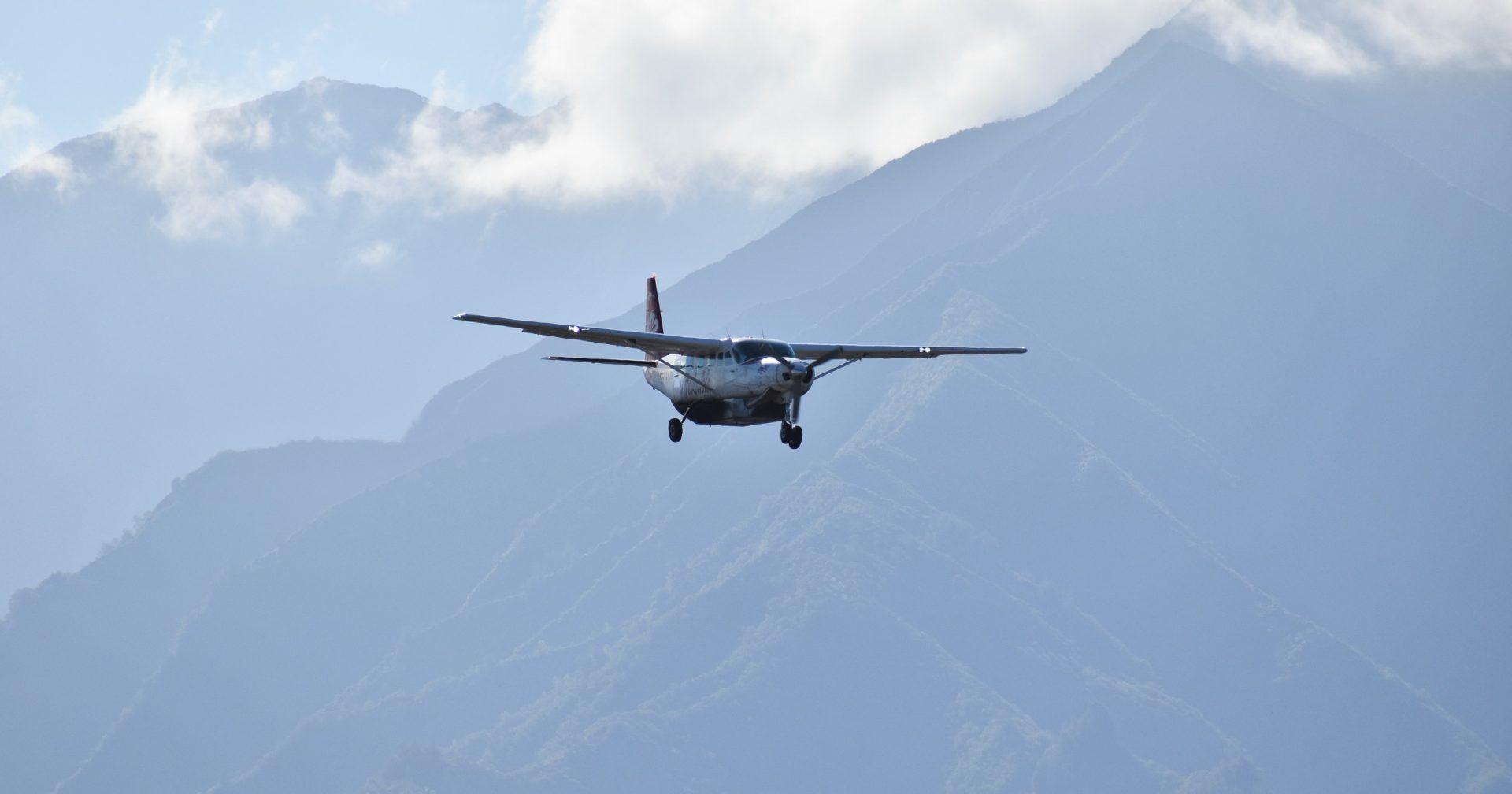
A Mokulele Cessna 208 on approach to Kahului International. (Photo: AirlineGeeks | Joey Gerardi)

If Part 61 governs general requirements for training and Part 141 governs Pilot Schools, why the initial differentiation between Part 61 schools and Part 141 schools? Simply put, not every flight school is governed under Part 141.

Think of it as the difference between hiring a private tutor by yourself (Part 61) to learn college material and going to an accredited college or university (Part 141). A tutor just needs to advertise their services or be found by a friend, and they can either advertise themselves locally, like in a coffee shop, or on an established tutoring website or app. Universities, meanwhile, need to develop standardized curriculums for their professors to use, they need an established method of testing student knowledge, and they need to go through the tedious process of actually being approved by a board, getting funding, and receiving government signoffs.

Flight schools are much the same way. Many students will learn to fly by hiring a flight instructor at their local airport and simply following the requirements set out in Part 61. As long as they have followed these steps and their instructor is satisfied the student is proficient in the required testing areas, the student will pass the test to get their pilot certificate. Flight schools that are governed under Part 61 generally use this same method: they hire instructors and the students are paired with an instructor through the school, but the instructors still simply follow the regulations laid out in Part 61 and ensure their student is proficient before signing them off for their practical test.

Practical Differences Between Part 141 & Part 61 Schools

Part 141 schools are a bit more intense. The major difference, though, is that schools operating under Part 141 use an FAA-approved syllabus that they must follow to train pilots. Instead of simply training a pilot with the minimum required items in mind, schools certified under Part 141 must, per 14 CFR 141.53, “obtain the Administrator’s approval of the outline of each training course for which certification and rating is sought.” The school must follow that syllabus and receive approval before using it to train pilots.

Flight schools that are part of Universities, such as those at Purdue University or the University of North Dakota, are usually operated under Part 141. Other independent schools might also be under Part 141. Many schools, though, are not; mom-and-pop schools at small airports, many schools at small reliever airports, and independent instructors all usually use Part 61, avoiding the process of dealing with the FAA for certification and simply going straight to flying.

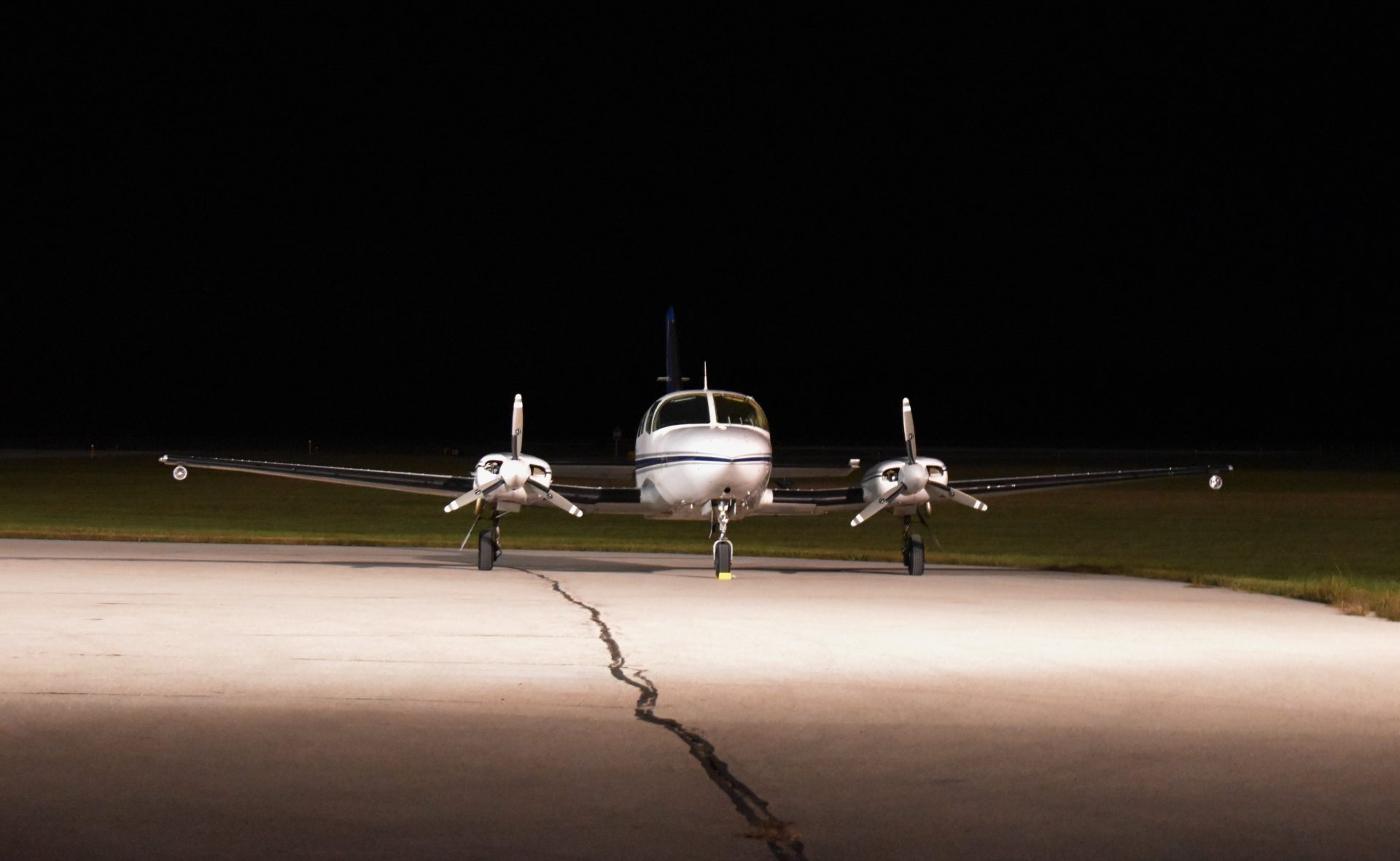
One of Cape Air’s Cessna 402s in Manistee (Photo: AirlineGeeks | Joey Gerardi)

Part 141 schools are much more rigid than Part 61. Since they have an approved syllabus they must follow, students are on an exact track toward their pilot certificates and often must schedule any additional lessons they need to become proficient in maneuvers around that approved syllabus. Meanwhile, students training under Part 61 need only meet the requirements for the checkride and do not need to uphold a strict schedule. It is much easier for students under Part 61 to go at their own pace; they can schedule lessons when their schedule allows and take as few or as many hours as they’d like to finish their training.

However, Part 141 schools do have benefits for pilots. Since their syllabi, training structure, and examination plans are approved by the FAA, it is assumed that their training is of higher quality due to the additional oversight. Private Pilot and Instrument Rating candidates need only 35 flight hours to apply for the checkride (vs 40 for Private at Part 161), and IFR candidates under Part 141 do not need to meet the 50 hours of Cross Country PIC requirement that their counterparts under Part 161 do. Commercial Pilots under Part 141 only need 190 flight hours (vs 250) to be qualified for the checkride, and students under Part 141 can receive a restricted Airline Transport Pilot (ATP) license to fly for major airlines at 1,000 hours instead of 1,500 as long as they did at least their Instrument Ratings and Commercial Certificates under Part 141.

Flight Schools’ Hiring Flows

Due to these reduced flight time requirements, people who want to become professional pilots tend to gravitate toward Part 141 schools, while people who are flying for personal reasons tend to train Part 61. This is, of course, a generalization. Many pilots complete all their pilot training requirements under Part 61 and find a way to do their additional 500 hours by working as a pilot or either renting or buying a plane. And, since ATP applicants can take advantage of reduced hours after only their Instrument Rating and Commercial Certificates are completed, many students planning on attending such a school will get their Private Pilot Certificate on an accelerated course under Part 61, then go on to a Part 141 school for the remainder of their training.

Additionally, Part 141 schools tend to have strong relationships with commercial operators that guarantee graduates of these schools interview, jobs or even pathway programs direct to major mainline airlines, sweetening the deal for students contemplating multiple schools. These schools often see their students transition to an instructor role at the school to build hours quickly en route to a major airline, while others flow to commuter airlines, small cargo carriers, or others to build time.

A Cessna 185 Skywagon. By Oscar Elvir Vasquez [GFDL 1.2 (http://www.gnu.org/licenses/old-licenses/fdl-1.2.html) or GFDL 1.2 (http://www.gnu.org/licenses/old-licenses/fdl-1.2.html)], via Wikimedia Commons
While Part 141 is a popular option for pilots who want a career as an airline pilot, some of the United States’ most famous flight schools still use Part 61. ATP Flight School, which is the largest flight training company in the United States with 83 locations at the time of writing, operates under Part 61. The school says that Part 141 would not provide the flexibility it needs to complete its syllabus as quickly as Part 61 can. Students cannot take advantage of the reduced flight hours found under Part 141, but they can still take advantage of the countless airline partnerships ATP has with airlines and commercial operators to become a career pilot.

Which School Should I Choose?

As previously mentioned, flight schools operating under both Part 61 and Part 141 will get pilots to their final goal: pilot certification. At the end of the day, a pilot certificate is a pilot certificate, and pilots can exercise the same privileges regardless of which type of school they attended. Part 141 schools can, at least theoretically, get students to their goal of being a professional pilot more quickly if only for the reduced flight hours their students need for each license. However, Part 61 allows students to train on their own schedule, good for pilots flying for fun and career-oriented pilots who are students or have jobs on the side or cannot follow an exact schedule for some reason or another.

Pilots who went through either track can give benefits and drawbacks of whichever method they used. Ultimately, all are still pilots, and new students looking to become a pilot should choose the model, and the school, that best fits their needs and their approach to flying.

John McDermott

John McDermott is a commercial pilot pursuing a career in professional flight. His passion for aviation began in an Ann Arbor bookstore with a tale of enemy pilots during World War 2, and he hasn't looked back. Besides flying and writing for AirlineGeeks, John volunteers with Professional Pilots of Tomorrow and travels whenever he gets the chance.

Avelo Air Continues to Bridge the Coasts

Avelo's 737-800 aircraft in Burbank (Photo: AirlineGeeks | Ryan Ewing)

Houston, Texas-based Avelo Air has unveiled four new routes out of Las Vegas, including two of which will continue to bridge the carrier’s network between coasts.

New routes out of Las Vegas include Redmond/Bend, Ore., which starts on Sept. 7, 2023; Eureka/Arcata, Calif. and Brownsville/South Padre Island, Texas which both begin on Sept. 8, 2023; and Dubuque, Iowa which begins on Sept. 13, 2023.

None of these are new destinations for Avelo but are instead new routes. This will be the second westward destination for Brownsville with Avelo as they already fly to Burbank, Calif. This will be Dubuque’s first westward destination with Avelo and in general as they are the only airline that operates to the airport.

Going West (and East)

For the most part, Avelo’s East and West Coast networks remain separate and operate independently. But, that is becoming less and less the case. In May, the carrier started flights from Brownsville, Texas to both Burbank and Orlando marking the first city that touches its networks on both coasts. Dubuque will become the second destination like this as the carrier already offers flights to Orlando.

Flights to Redmond/Bend will operate on Sundays and Thursdays, Brownsville/South Padre will operate on Mondays and Fridays, Dubuque will operate on Wednesdays and Saturdays, and Eureka/Arcata will also operate on Mondays and Fridays.

All flights newer flights announced will operate on different days with the exception of Brownsville/South Padre and Eureka/Arcata, but those flights still happen at different times and don’t overlap in terms of the time of the day.

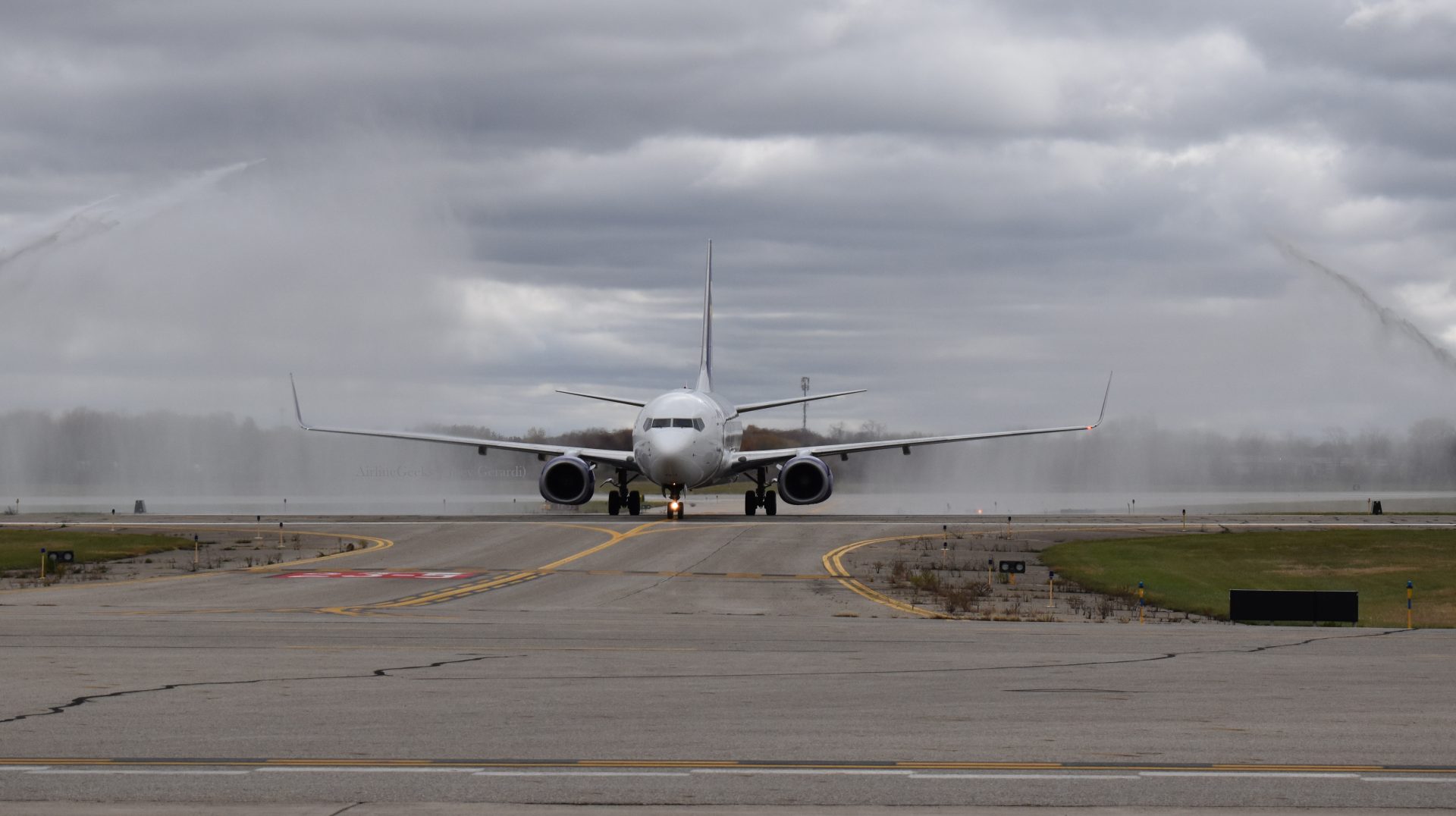
Avelo Air’s first flight to Kalamazoo, Mich. taxiing in (Photo: AirlineGeeks | Joey Gerardi)

Given that none of these flights overlap at all, they could end up using the same aircraft tail number to do all of these routes.

Joey Gerardi

Joey has always been interested in planes for as long as he can remember. He grew up in Central New York during the early 2000s when US Airways Express turboprops ruled the skies. Being from a non-aviation family made it harder for him to be around planes and would only spend about three hours a month at the airport. He was so excited when he could drive by himself, the first thing he did with his driver's license was get ice cream and go plane spotting for the entire day. He graduated from Western Michigan University in 2022 with a B.S. in Aviation Management & Operations and a Minor in Business, and currently works for a major airline in his hometown.

Airbus Focuses On Mixed Reality To Innovate The Process Of Customizing Aircraft Interiors

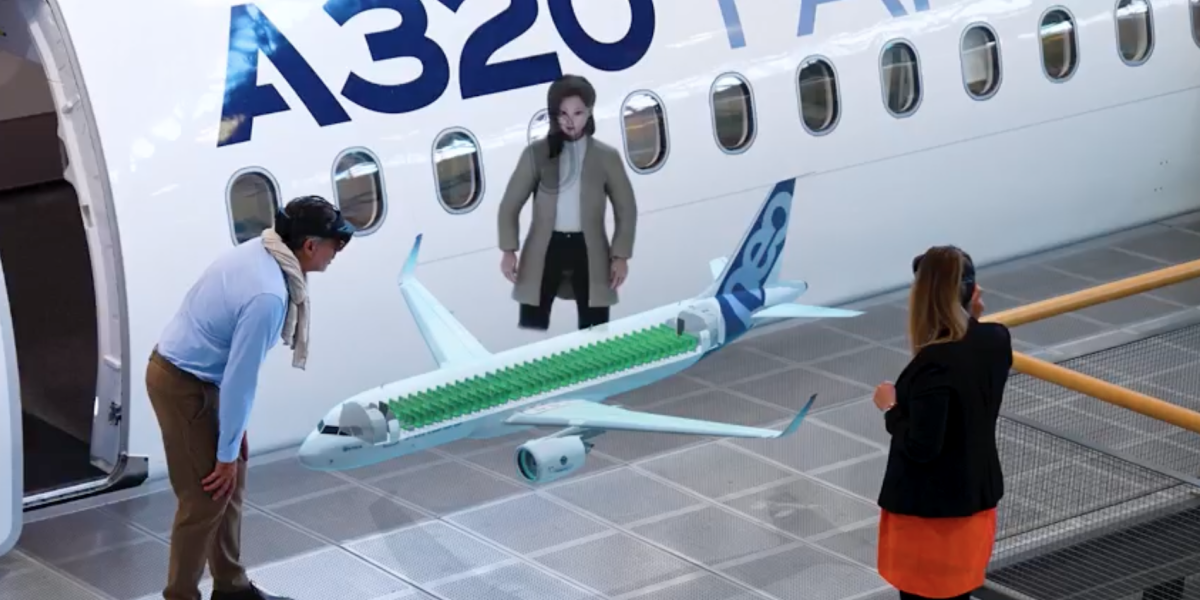
Airbus Immersive Remote Collaboration Concept. (Photo: Airbus)

Airbus announced at the Paris Air Show 2023 that it will take digital collaboration to a new dimension by developing new mixed reality technologies to customize aircraft interiors, transforming the way aircraft cabins are defined and enabling live and remote interactions with customers in an immersive virtual world.

Catherine Jestin, Executive Vice President Digital and Information Management at Airbus, said:

“We are harnessing the power of data and cutting-edge technologies to create engaging, interactive and realistic virtual experiences for our customers, accessible anytime, anywhere in the world.”

Using holograms in a 3D environment, users will be able to see and test cabin equipment choices in real time, wherever they are. This new solution, called Airbus Immersive Remote Collaboration, is expected to be industrialized on the A320 Family by 2025.

Airbus is working with the most advanced players in the industry, such as Unity Technologies, developer of the Unity graphics engine, which enables the development of architectural visualizations or 3D animations in real time.

What is Mixed Reality and what are the benefits?

Mixed Reality is the blending of physical and virtual reality to produce new environments and visualizations in which virtual and physical objects coexist and interact with each other in real time. Famous examples of other companies that have developed visors for Mixed Reality are Microsoft with HoloLens and Meta with MetaQuest. However, some smartphone applications have also already been using this technology for a few years such as IKEA Place and Pokemon GO.

Microsoft’s Hololens 2 has been validated for industrial use at Airbus, and through the semi-transparent screen operators can see a holographic representation of the task at hand. They can also document their activities directly through the installed software; by virtually pressing a button, the system recognizes that a work step has been completed.

One of the main benefits of using Mixed Reality for both end users and businesses is precisely the immersive experience it provides, in which virtual objects appear to interact with the physical world around them. This creates a sense of presence that can be very immersive and realistic. Also the ability they have for users to interact with virtual objects in a natural way, using gestures and body movements.

Mixed Reality also offers great savings in time and money since remote collaboration between work teams is possible, allowing people in different locations to work together on complex projects in real time.

Virtual reality is already being used by Airbus, mainly in the design phase and during product assembly, such as at the Airbus plant in Getafe, Spain, where A330s are converted to MRTT (Multi Role Tanker Transport). At this plant, Mixed Reality has been used to complete 70 percent of work orders since 2019, mainly for electrical and hydraulic installations.

Mixed Reality has entered the aerospace industry, paving the way for an increasingly digital and advanced future. In this context, the entire industry will have to adapt to the frenetic pace of technology, as digitalization does not wait for anyone. As the digital revolution continues, the adoption of advanced tools such as Mixed Reality will be essential to remain competitive in an ever-changing marketplace.

Vincenzo Claudio Piscopo

Vincenzo graduated in 2019 in Mechanical Engineering with an aeronautical curriculum, focusing his thesis on Human Factors in aircraft maintenance. In 2022 he pursued his master's degree in Aerospace Engineering at the University of Palermo, Italy. He combines his journalistic activities with his work as a Reliability Engineer at Zetalab.

How United is Leading the Tech Pack

A United 777-300ER at Paine Field. (Photo: AirlineGeeks | Katie Bailey)

United Airlines has been leading the pack in the United States when it comes to harnessing technology. Over the past several years, the airline has methodically improved the functionality of its consumer app and website to allow for greater self-service across the board. This is something that many other airline apps lack. This becomes a major issue during flight delays and cancellations when customer service lines at the airport are long and wait times to talk to customer service on the phone are often hours long.

United has taken some steps to make this process easier for travelers. The latest app update includes a slew of advancements that are focused on helping travelers cope with flight delays or cancellations.

If a flight experiences a delay of more than 60 minutes or is canceled, then customers will automatically see alternate options right on the home screen of the United app. Passengers will be able to see if they’ve been rebooked and, if they aren’t satisfied with the automatic rebooking, they would be able to explore alternate options that are available to them. They would also be able to receive hotel, meal, and/or rideshare vouchers directly within the app if they qualify.

If it is necessary to speak to a customer service agent, the app can help connect passengers via call, text, or video call to agents who have the same capabilities as customer service agents at the airport. This removes the frustration of calling an airline and being told you need to speak to someone at the airport for assistance with things like vouchers or a hotel due to a delay.

Innovating Under Scrutiny

All of this is being rolled out at a time when air travel is facing increased scrutiny. The Biden administration has made dealing with airline fees and compensation for passengers in case of irregular operations a priority.

United has played very close with the government in recent years so it is no surprise United is jumping on this to get ahead of the curve. United and its CEO Scott Kirby are no strangers to the current Biden administration.

First, United’s CEO Scott Kirby was part of an advisory board reporting directly to the President. Then United made its Covid-19 vaccine requirement announcement nearly in tandem with the Biden administration. Additionally, the airline was given public commendations for flying in baby formula during the shortage recently. Last year around this time, Kirby was yet again at the White House making a number of announcements about environmental protection enhancements at a White House event.

It certainly helps that United’s Chief Communications Officer, Josh Earnest, was the Obama administration’s press secretary. It’s quite evident that United is playing the long game in aligning with the current administration and these new features in the app are yet another example of the airline aligning itself with this administration’s agenda.

Agenda or not, these enhancements to the app undoubtedly help the consumer. United has a proven track record of building stellar technology that improves the flying experience. The crown jewel of that in my opinion is ConnectionSaver. This tool was first released in 2019 and aims to reduce the number of passengers who misconnect by strategically delaying flights just long enough for connecting passengers to arrive while still maintaining an on-time or relatively on-time departure.

Hemal Gosai

Hemal took his first flight at four years old and has been an avgeek since then. When he isn't working as an analyst he's frequently found outside watching planes fly overhead or flying in them. His favorite plane is the 747-8i which Lufthansa thankfully flies to EWR allowing for some great spotting. He firmly believes that the best way to fly between JFK and BOS is via DFW and is always willing to go for that extra elite qualifying mile. Hemal's opinions are his own and do not reflect those of his employer.

American Airlines, Qatar Airways Strategic Alliance: A Year Later

Qatar Airways 787-9
A Qatar Airways-painted Boeing 787-9 Dreamliner on a test flight. (Photo: AirlineGeeks | Katie Bailey)

Last June, Qatar Airways and American Airlines announced a strategic partnership that allowed the latter’s passengers to book Qatar Airways flights from Doha to 16 new countries across Asia and Africa.

This was then shortly followed by a new route announcement from American Airlines: the airline would commence daily service to Doha’s Hamad International Airport, the hub of Qatar Airways. A year has passed since all of this and recently Qatar Airways shared a few details about the alliance in a press statement:

Codeshare Agreement

Qatar Airways and American Airlines claim to now have the largest codeshare relationship in the industry. Nearly 20 percent of Qatar Airways passengers arriving in the Americas have onward connections on American Airlines.

The American Airlines flight to Doha is also carrying a large number of passengers who are connecting onward on Qatar Airways at Doha. Over 175,000 passengers that flew on the American Airlines flight to Doha from June 2022 to April 2023 have connected on Qatar Airways to destinations such as Lahore, Dhaka, Kathmandu, and Islamabad.

An American Boeing 777-200 in Dallas/Fort Worth.
(Photo: AirlineGeeks | William Derrickson)

IT Enhancements

This alliance has also seen some IT improvements, too. As of last month, passengers can find and book American Airlines flights online using Avios on the Qatar Airways site.

Overall, the alliance makes sense for both airlines given the complementary nature of their networks. American Airlines likely cannot make flights to secondary cities across Asia work while Qatar Airways can through their hub in Doha. Similarly, Qatar Airways can’t fly to every secondary city in the U.S. Passengers who fly on Qatar Airways into hubs for American Airlines are able to easily connect to a multitude of domestic destinations that wouldn’t be feasible for a foreign carrier.

Qatar Airways already flies to most major airports in the United States. The airline is a key partner in the upcoming Formula 1 races that will be happening in the U.S. this fall. Given the codeshare agreement, Qatar Airways passengers are able to travel onward to several destinations on American Airlines aircraft that aren’t served directly by Qatar Airways.

Hemal Gosai

Hemal took his first flight at four years old and has been an avgeek since then. When he isn't working as an analyst he's frequently found outside watching planes fly overhead or flying in them. His favorite plane is the 747-8i which Lufthansa thankfully flies to EWR allowing for some great spotting. He firmly believes that the best way to fly between JFK and BOS is via DFW and is always willing to go for that extra elite qualifying mile. Hemal's opinions are his own and do not reflect those of his employer.
Sign-up for newsletters & special offers!

Get the latest stories & special offers delivered directly to your inbox

SUBSCRIBE

Uh-oh! It looks like you're using an ad blocker.

Our website relies on ads to provide free content and sustain our operations. By turning off your ad blocker, you help support us and ensure we can continue offering valuable content without any cost to you.

We truly appreciate your understanding and support. Thank you for considering disabling your ad blocker for this website