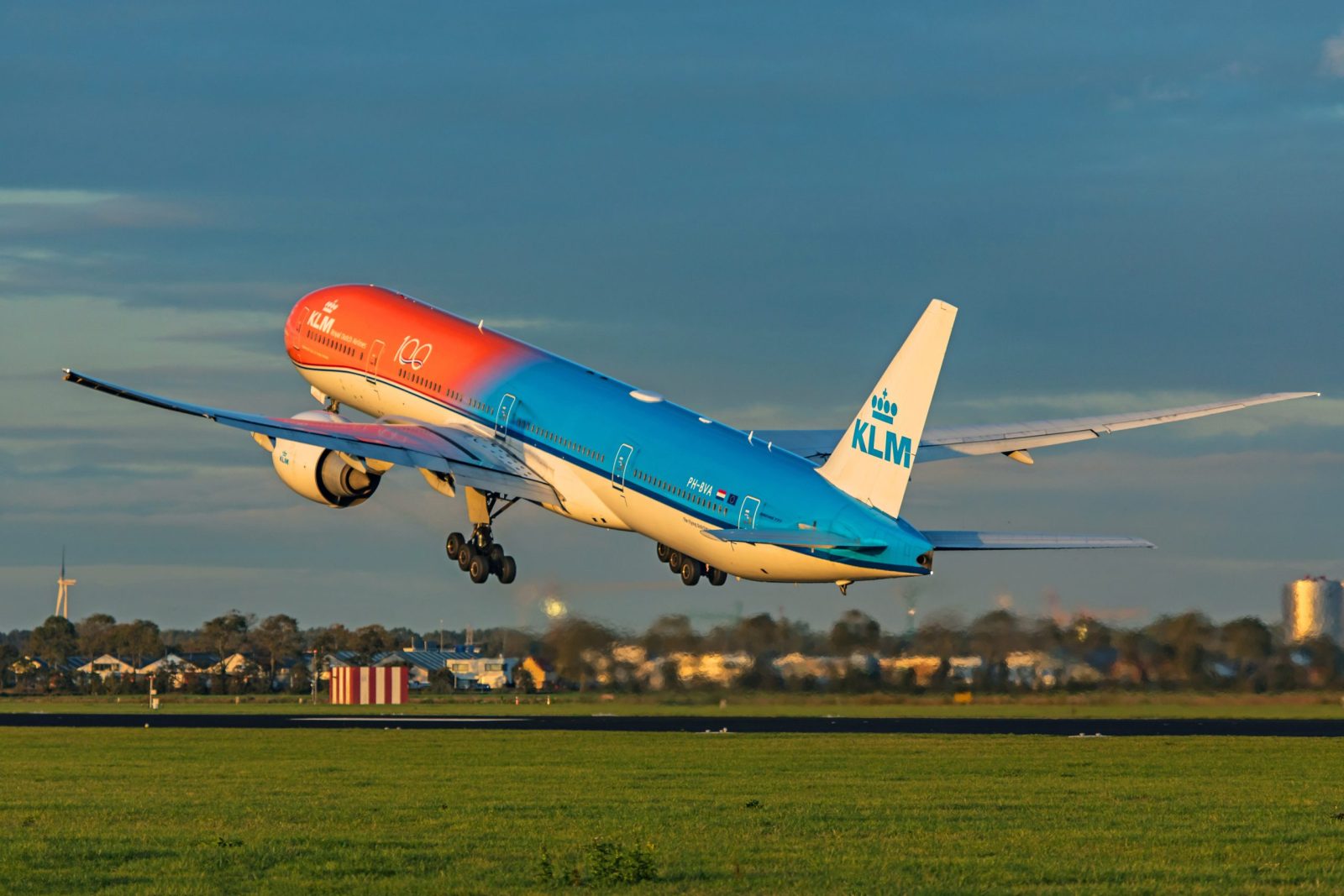
A KLM Boeing 777 aircraft (Photo: AirlineGeeks | William Derrickson)
In what will be a blow to KLM and a number of other airlines, the Amsterdam Court of Appeal has ruled that the Dutch government is allowed to reduce the number of flights at Schiphol airport. The ruling comes after a lower court had earlier pronounced a decision against the government’s plans to limit movements at one of Europe’s main hub airports.
The government had announced its intention to lower flight numbers from 500,000 to 460,000 with the intention to cap flights at 440,000 by 2024. Bloomberg News reported that the plan would equate to a 12 percent reduction in capacity at Schiphol and had been fought by airlines including Air France-KLM, Delta Air Lines, easyJet and airline industry organization IATA (International Air Transport Association).
According to the Amsterdam Court of Appeal’s ruling, the capacity limits at Schiphol can commence at the end of the year and be in place by October 2024. KLM is seeking clarification on how this will be achieved and the impact on its hub operation as the airline will soon be selling tickets for its Summer 2024 schedule.
KLM Responds
KLM responded with the following statement: “The court has ruled on appeal that a temporary experimental scheme would not violate the Aviation Act, provided a number of conditions are met. We are disappointed about the ruling and are studying it. The court does not specify in concrete terms how an experimental regulation can be applied. As a result, it is currently unclear when, how and in what way the ruling will be implemented and what it means for the number of aircraft movements at Schiphol…”
‘KLM will continue to engage with other stakeholders in seeking the best way to reduce the number of people affected by aircraft noise. To this end, we have submitted a plan for cleaner, quieter, more fuel-efficient flight operations on 15 June. We are convinced that these measures will enable us to reduce noise impact and CO2 emissions, while retaining our network. We would very much like to achieve this in cooperation with government and airport authorities, Air Traffic Control the Netherlands (LVNL) and other stakeholders, within the framework of the balanced approach required by the EU in the context of the noise reduction targets the ministry has set,” the statement adds.
The initial ruling by a local court three months ago determined that the Dutch government had not followed ‘correct procedures’ in its attempts to lower noise around Schiphol by reducing capacity. However, the appeals court overturned the initial ruling with Reuters stating that the court found that ‘any fear by airlines of suffering serious damage as a result of the proposed measures was no reason to arrive at a different outcome.’
John has always had a passion for aviation and through a career with Air New Zealand has gained a strong understanding of aviation operations and the strategic nature of the industry. During his career with the airline, John held multiple leadership roles and was involved in projects such as the introduction of both the 777-200 and -300 type aircraft and the development of the IFE for the 777-300. He was also part of a small team who created and published the internal communications magazines for Air New Zealand’s pilots, cabin crew and ground staff balancing a mix of corporate and social content.
John is educated to postgraduate level achieving a masters degree with Distinction in Airline and Airport Management. John has held the positions of course director of an undergraduate commercial pilot training programme at a leading London university. In addition he is contracted as an external instructor for IATA (International Air Transport Association) and has been a member of the Heathrow Community Fund’s ‘Communities for Tomorrow’ panel.
Icelandair Set to Phase Out 757 Fleet with A321XLR Order
The Keflavik, Iceland-based carrier will build on its 39-strong fleet with this order in the coming years.
Rendering of A321 in the Icelandair livery
[Photo: Icelandair]
This past Thursday, Icelandic carrier Icelandair announced a firm order of 13 new Airbus A321XLRs and the leasing of four additional A321LRs. This order has the carrier expanding its fleet from predominantly Boeing to include Airbus, as soon as 2025.
The Keflavik, Iceland-based carrier will build on its 39-strong fleet with this order in the coming years. The airline placed a firm order for 13 A321XLRs which Airbus will deliver in 2029. In addition to the firm order, Icelandair also announced the company will be leasing four additional A321LRs to be delivered to the carrier by the summer of 2025, according to a statement released by Airbus.
Bogi Nils Bogason, CEO of Icelandair is enthusiastic about the order and the future of the company’s fleet stating “we are very pleased to announce that we have now finalized the purchase agreement with Airbus. The efficient A321XLR aircraft will further strengthen our business model, increase our flexibility and provide opportunities for future growth, as well as further support our sustainability efforts.”
A Quest for Range
While this announcement confirms the firm order of the A321s for the Keflavik-based carrier, Icelandair had announced previously Airbus aircraft would join the fleet in the future. AirlineGeeks interviewed Icelandair’s Communication Manager for North America, Michael Raucheisen, during the festivities for the airline’s inaugural flight from Detriot. In the interview, Raucheisen touched on the A321 becoming a part of the carrier’s fleet in the coming years. The carrier opted for the A321LR and XLRs for the range of 4,000nm and 4,700nm respectively. The Airbus aircraft will then be able to fly around 500nm and 1,200nm further than the 737 MAX.
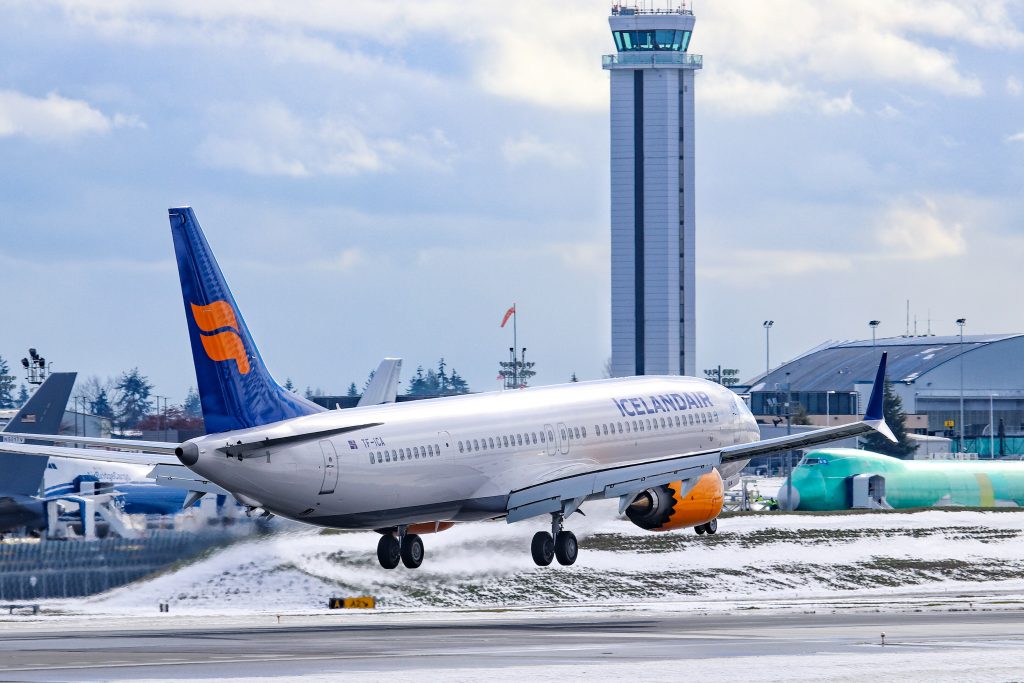
An Icelandair 737 MAX 9 landing at Paine Field after a test flight. (Photo: AirlineGeeks | Katie Bailey)
The LR and XLR ranges are similar to what the Boeing 757 currently offers Icelandair, with the XLR having a slightly greater range. Thus, the A321 will be the 757 replacement for Icelandair. Raucheisen stated that the new Airbus jets will allow the carrier to “broaden [their] destinations.”
The Boeing 757
However, Raucheisen did state that the 757 will be dearly missed when the fleet is eventually retired. Raucheisen was asked what he would do with unlimited funds which included expansion across the globe but highlighted the importance of the 757 and what it has done for the carrier stating “[it] was our dreamchild, it was the perfect plane for our network and if they still made them we would still be buying them, and our friends over at Boeing know that.”
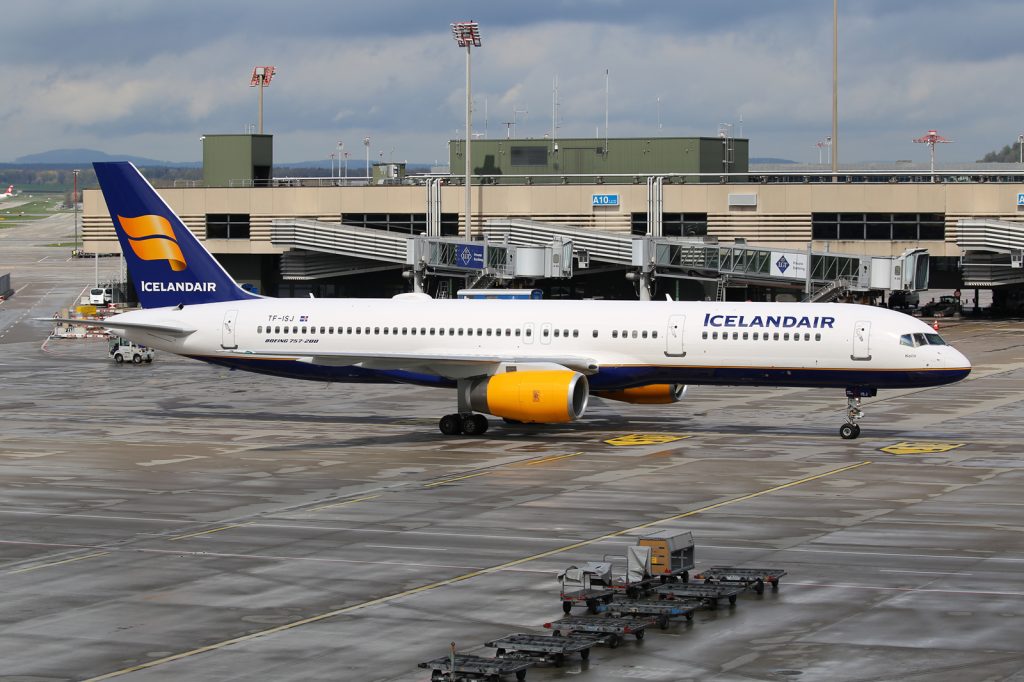
An Icelandair 757-200 (Photo: Kambui (Icelandair Boeing 757-256 TF-ISJ “Keilir”) [CC BY 2.0 (https://creativecommons.org/licenses/by/2.0)], via Wikimedia Commons(The longest route the carrier currently offers is from their Keflavik hub to Portland, Ore. The flight covers 3,248nm according to gcmap.com and takes just over eight hours according to Icelandair’s schedule. The implementation of the A321LR and XLR into the carrier’s fleet will enable Icelandair to serve new destinations previously unattainable without a tech stop, such as Los Angeles or Dubai, both of which are a further distance than the carrier’s current Portland route.
While not having disclosed any new destinations, the future is bright for the Keflavik-based carrier, which will be bringing more of the world to and through Iceland.
Zach’s love for aviation began when he was in elementary school with a flight sim and model planes. This passion for being in the air only intensified throughout high school when he earned his Private Pilot Certificate. He then attended Embry-Riddle Aeronautical University, earning his certificates and ratings to later flight instruct and share his passion for aviation with others. He now resides in the North East living out his dream as an airline pilot.
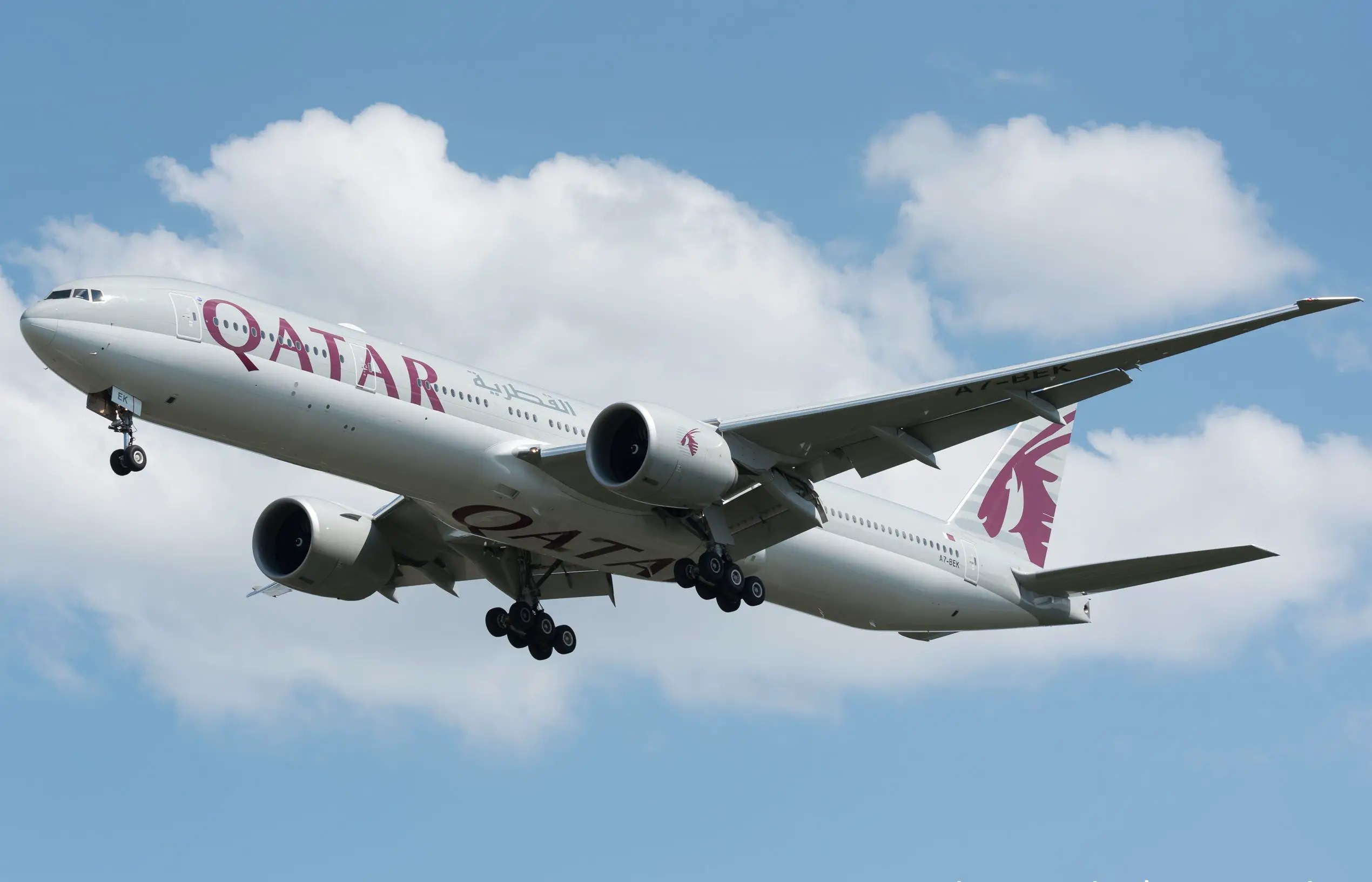
A Qatar Airways Boeing 777-300ER at Washington Dulles International Airport. (Photo: AirlineGeeks | Ben Suskind)
Qatar Airways has reported record revenue for the 2022-2023 fiscal year after ferrying fans to and from the 2022 FIFA World Cup. The airline also saw significant increases in capacity, yields and market share, as part of their expansion.
Recently, the Qatar Airways Group reported overall revenue of 76.3 billion Qatari Riyals ($21.0 billion) for 2022-2023 fiscal year, which marked a year-over-year increase of 45 percent. The portion of that revenue derived from passenger operations increased by 100 percent, with the airline stating that it carried 31.7 million passengers throughout the fiscal year with a record load factor of 80 percent.
In addition, the company reported a net profit of 4.4 billion Qatari Riyals for the year. The Doha, Qatar-based carrier also saw an increase in its capacity of 31 percent and an increase in its yield – the average amount of revenue earned for each passenger mile or kilometer – of nine percent.
“This year’s strong financial results are attributed to the strong passenger demand recovery and the team’s ability to cater to this demand, aided by our continuing network growth, market leadership, and the operational efficiencies delivered by our world beating team,” said Qatar Airways Group Chief Executive Akbar Al Baker in a press release. “As the global travel recovery from the COVID-19 pandemic continues, we have managed to retain the high levels of trust, reliability and confidence with our customers.”
Turbulent Few Years
The past few years have undoubtedly been a turbulent time for airline performance and financials. The COVID-19 pandemic and subsequent recovery have had significant impacts on the industry and each airline’s revenue and profits.
While Qatar Airways reported record revenue for the most recent fiscal year, profits actually decreased from the previous year. For the 2021-2022 fiscal year, the airline saw a net profit of 5.6 billion Qatari Riyals, higher than the 4.4 billion Qatari Riyals subsequently seen in 2022-2023. In the year before, it saw record profits. The company reported a record net loss in the 2020-2021 fiscal year.
The company cited numerous factors behind its recent success. The airline stated that it saw significant growth in its loyalty program, Privilege Club, as well as strong performance from its cargo division, Qatar Airways Cargo. Qatar Executive, the private charter jet division of the company, also saw significant increases in revenue and flying hours.
Perhaps most notably, Qatar hosted the 2022 FIFA World Cup. As the country’s flag carrier, Qatar Airways transported 1.4 million passengers to the popular event from all six continents on board approximately 14,000 flights. Given the one-time nature of this event and the post-pandemic recovery, whether or not Qatar Airways can continue breaking its profit and revenue records remains to be seen.
Andrew is a lifelong lover of aviation and travel. He has flown all over the world and is fascinated by the workings of the air travel industry. As a private pilot and glider pilot who has worked with airlines, airports and other industry stakeholders, he is always excited to share his passion for aviation with others. In addition to being a writer, he also hosts Flying Smarter, an educational travel podcast that explores the complex world of air travel to help listeners become better-informed and savvier travelers.
EasyJet's operations at London Gatwick Airport (Photo: Tim Anderson)
After five years of planning its expansion, London’s Gatwick Airport is forecast to submit the application for its project soon, looking forward to starting the expansion in 2025.
The second busiest airport in England reached its capacities before the pandemic. In 2018, Gatwick announced its current northern runway, used only for emergencies, could become the airport’s regular runway by adding 12 meters to match the standard of a runway. The Northern Runway would be used for smaller departing aircraft in the future.
Gatwick said that the expansion is a sustainable approach which maximize the use of its existing infrastructure. The second runway could add up to 15 additional aircraft per hour. Gatwick expands its infrastructure with the aim of reaching 75 million passengers a year by 2038, compared to 46 million in 2019. The airport believes the expansion is a low-impact way to unlock new capacity.
The Gatwick Airport Layout (Photo: Lido Flight Charts)
“It’s a huge step for the airport and a huge step for the local area, particularly bearing in mind what we’ve been through during Covid,” Andy Sinclair, the airport’s Head of Airspace strategy, said.
Earlier, the airport estimated around 630 new jobs will be created if the new runway is given the green light by the government.
Gatwick said that regular use of the Northern Runway could reduce delays, improve resilience, and boost the economy nationwide. According to Civil Aviation Authority, U.K is experiencing a remarkable rebound, as Gatwick handled 3.2 million passengers in the month of April, which was 85% of the same time in 2019.
Looking Forward To The Green Light
But the second runway is not for everyone. The local residents and the environmental activities are going to challenge the expansion.
“We’re prepared to go to the courts. You’ve got people that live under flight paths that live 15 miles away,” Peter Barclay, the spokesman of Gatwick Area Conservation Campaign, said.
The environment commitments could put a strain on Gatwick. Earlier, the Climate Change Committee, the government’s climate adviser, said there could be no more airport expansion, in response to its net zero goals.
In the meantime, the airport will spend £10 million modernizing the North Terminal. This is the first major overhaul of the departure lounge since 1988 and is expected to be completed in early 2024. The North Terminal ceased flight operation for weeks during the pandemic.
The new runway could be the holy grail of the airport. Gatwick is not the only airport demanding a new runway. Heathrow Airport, the busiest airport in the U.K., fell short of building its proposed third runway in 2020, as a court ruled that the expansion was unlawful as it didn’t take climate commitments into account. Last week, Heathrow named Thomas Woldbye as its new CEO. It is believed the third runway is one of Woldbye’s formidable tasks, especially as the court blockage of the third runway was eventually overturned.
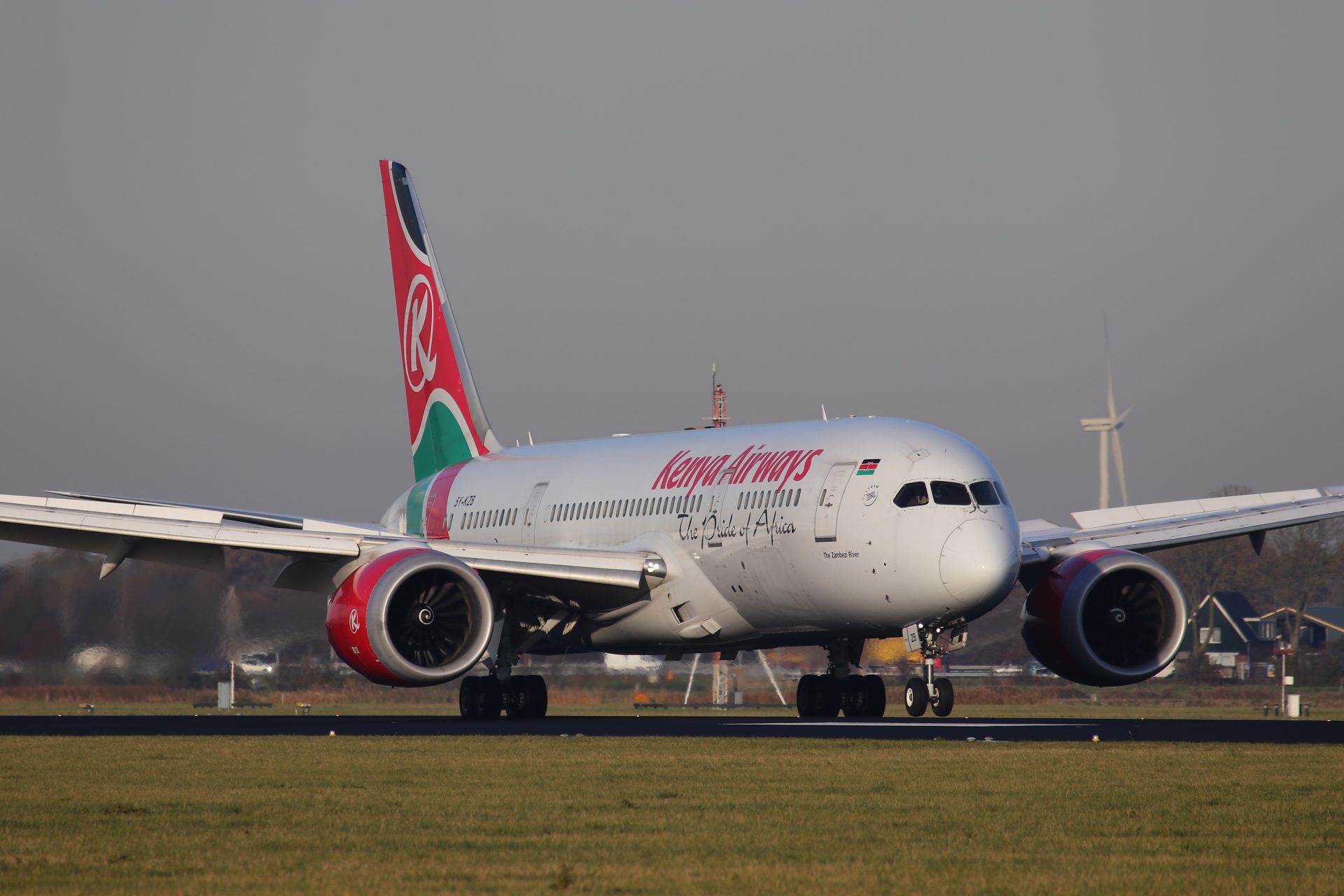
A Kenya Airways Boeing 787 in London (Photo: AirlineGeeks | William Derrickson)
Kenya Airways (KQ) has taken a significant step in optimizing its fleet and network plan by embracing a cost-cutting measure known as mono fleeting. The decision, which was made during the 47th Annual General Meeting, will see KQ gradually phase out its Embraer and Bombardier aircraft and shift its focus to Boeing planes, reports Business daily. The move comes as the airline aims to streamline its operations and achieve long-term sustainability amid challenges in the aviation industry.
Mono fleeting, a strategy favored by low-cost airlines, involves operating a single type of aircraft to reduce costs related to maintenance, training, and spare parts. By choosing to standardize its fleet around Boeing planes, Kenya Airways aims to benefit from increased commonality and operational efficiency. CEO Allan Kilavuka emphasized that the transition would be gradual to avoid operational disruptions and ensure a smooth and successful implementation.
“The board has approved that we move towards the Boeing aircraft. This is, however, going to happen progressively and not in one shot because we don’t want to overheat,” said Kilavuka said last week.
The decision to ditch Embraer and Bombardier jets is expected to yield various advantages for Kenya Airways. Firstly, it allows the carrier to operate larger aircraft, which can cater to growing passenger demand more effectively. In 2022, Kenya Airways recorded a remarkable 68% increase in passenger numbers, reaching 3.7 million passengers. By opting for Boeing aircraft, the airline can accommodate more travelers and capitalize on the upsurge in travel demand.
A Kenya Airways Boeing 787-8 at Schiphol Airport. (Photo: AirlineGeeks | James Dinsdale)
Additionally, the move towards mono fleeting aligns with KQ’s previous restructuring efforts. In 2022, the airline experienced a remarkable 66% increase in revenue, reaching KES 117 billion (US $831 million). Despite facing headwinds such as a 160% year-on-year increase in fuel costs and the impact of the depreciation of the dollar on operating expenses, Kenya Airways remained resilient. These positive indicators have bolstered the airline’s confidence in its turnaround plan, with the target of achieving profitability by 2024.
Furthermore, the transition to Boeing planes is expected to positively impact Kenya Airways’ fleet ownership costs. The airline has already achieved an average lease reduction of 22% across its fleet by restructuring lease rentals with several lessors. Moreover, the carrier’s current fleet, with an average age of 10, is fuel-efficient, contributing to operational cost savings.
Project Kifaru, as the initiative is called, marks an essential step for Kenya Airways in its journey towards sustainability. However, the airline’s debt load, estimated at Sh189.3 billion ($1.347 billion), remains a challenge. To ensure long-term success, attracting a strategic investor is crucial for comprehensive debt and capital restructuring.
In 2022, KQ operated 39 aircraft, both owned and leased, including nine Boeing 787 wide-body jets. Additionally, the carrier operated 13 Embraer regional jets and eight Boeing 737 narrow-body jets plus two Boeing 737 freighters. Its wholly-owned subsidiary, Jambojet, operated seven Bombardier Dash 8-400 aircraft.
Victor Shalton's love for aviation can be traced to when he was 11-years-old. As a seasoned aviation writer, he takes pride in providing the best aviation coverage around the globe and is passionate about advancing his skills in the aviation space. In addition, he loves travelling, writing, arts and while his speaking engagements have taken him around the world, he is proud to call Nairobi home.
Interviewing Michael Raucheisen during the inaugural party in Detorit (Photo: AirlineGeeks | Joey Gerardi)
AirlineGeeks (AG): Is Icelandair actively looking for replacements for your Boeing 767 fleet?
Michael Raucheisen (MR): Ultimately, our fleet is kind of in transition right now, and we will eventually transition to newer aircraft, the MAX, 8, and 900 series are still on order, and of course our new order for the Airbus which is coming. We will gradually filter out the older aircraft and bring in the new fleet.
(AG): When are the A321s expected to be delivered to Icelandair?
(MR): Those are, I believe, five years away, so not tomorrow but we are starting to plan around them. It will still be a while before the 757s are completely gone.
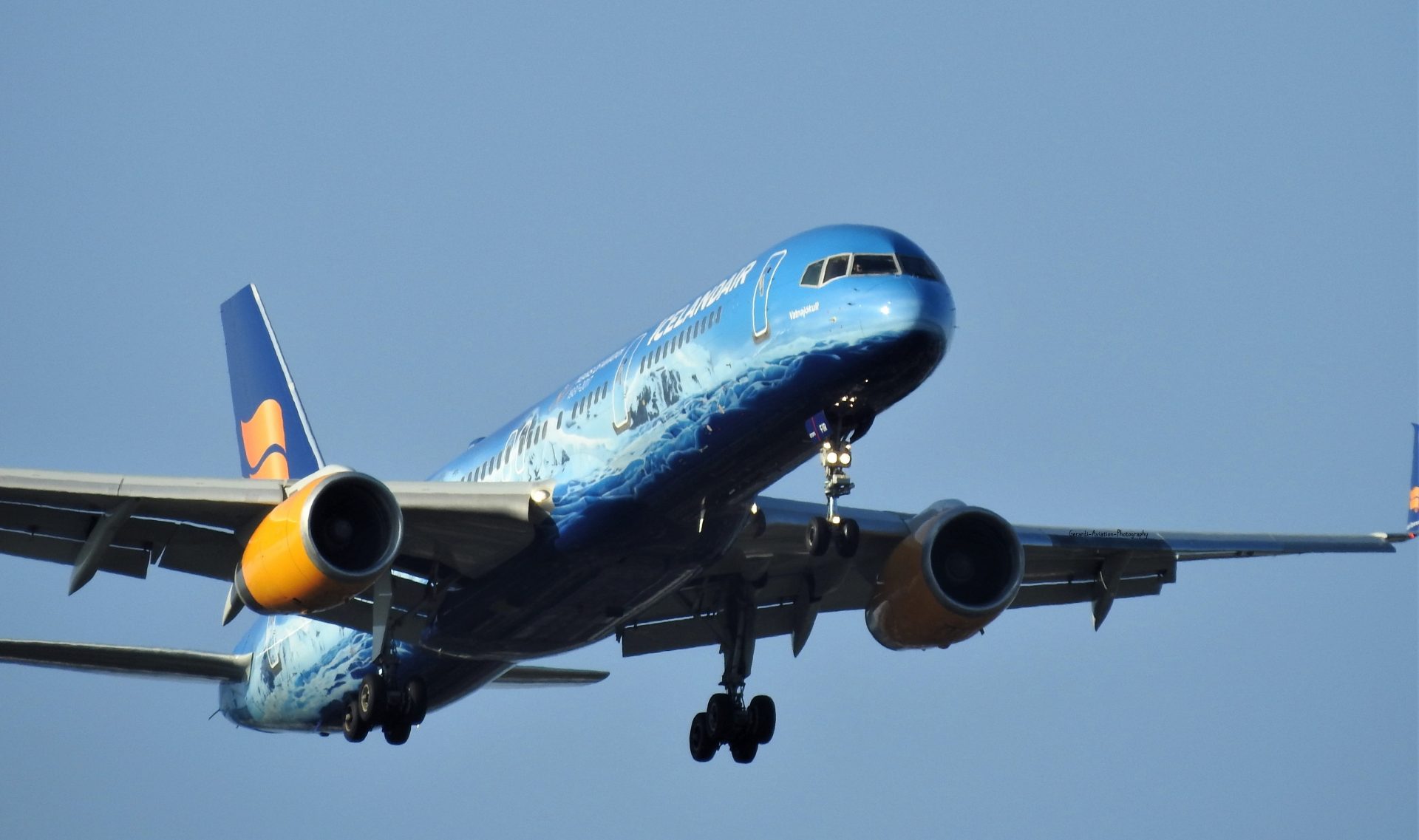
Icelandair Boeing 757 wearing the “Vatnajökull” livery on short final to Seattle-Tacoma (Photo: AirlineGeeks | Joey Gerardi)
(AG): Why did you decide to order Airbus A321s versus additional 737MAXs?
(MR): Well we do have more [737] MAX on order still, but the 321XLR particularly will give us more range and kind of diversify our network and give us the ability to fly a little bit further. We are planning on the opportunities that we are going to have around that to broaden our destinations
(AG): What do the colors on your forward tails represent?
(MR): The colors are representative of northern lights, so the greens, blues, and pinks. So it is kinda built around the colors of Iceland.
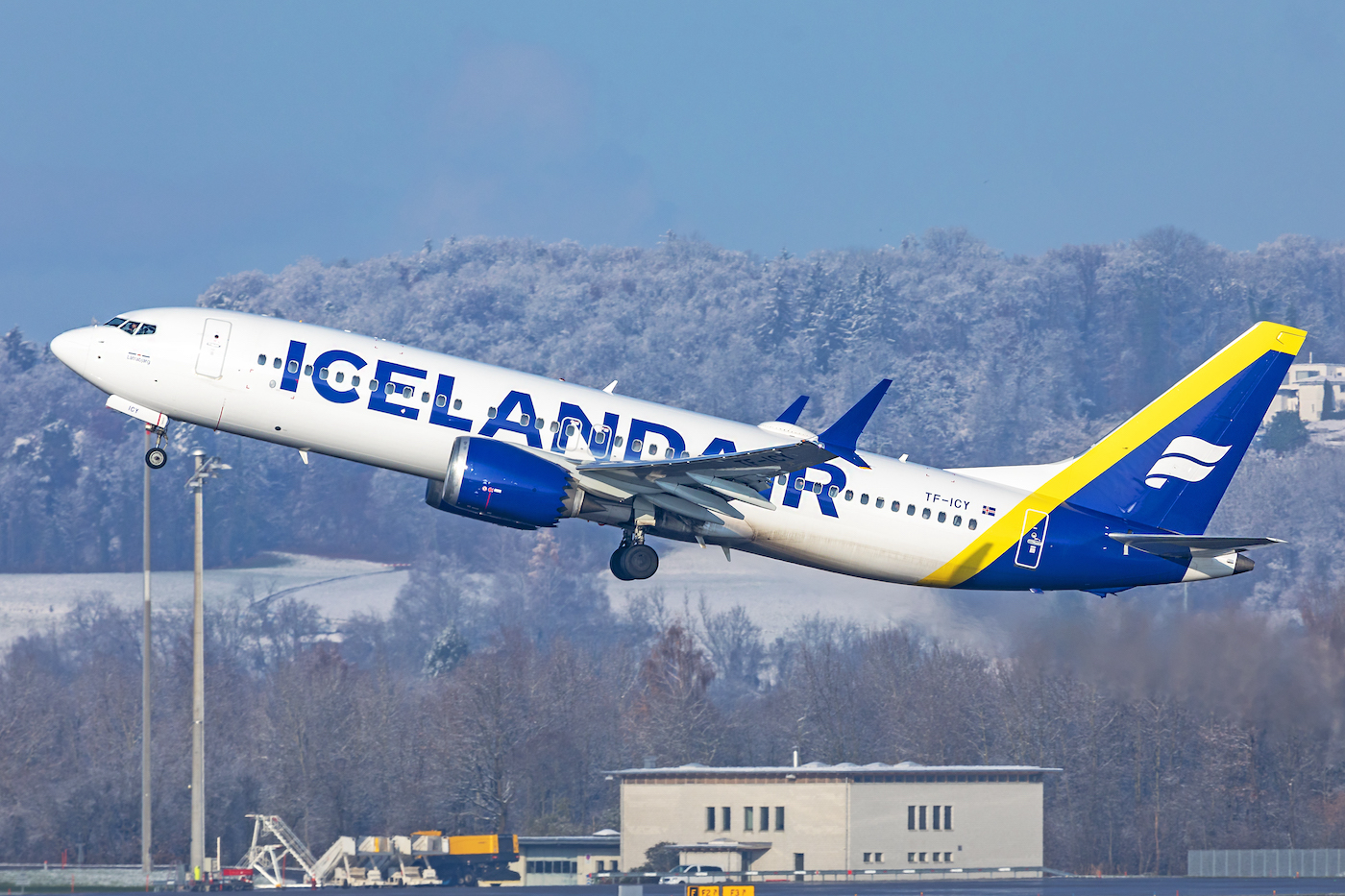
An Icelandair 737 MAX (Photo: AirlineGeeks | William Derrickson)
(AG): WOW has been gone for many years at this point, is Icelandair thinking of trying to fill some of their old routes like Dallas and St. Louis?
(MR); Well, we actually flew from Dallas, and so did WOW, and so did American and we see where that ended up. But, we are always looking to expand our network and we have a lot of planning that goes into those decisions, I am not the guy that makes those decisions. We are always looking to broaden the network and we will, as years go on and we get new aircraft we will start to be able to fly longer distances and continue to grow into the years. But any specific gateways? There are many on the table but I can’t say [any] specifically that will be announced anytime soon.
(AG): The MAX issue first came about in 2019. There were a couple of routes that you served with that aircraft that ended due to the aircraft issue, Cleveland being one of them. Do you have plans to reintroduce any of these destinations?
(MR): Yeah I mean Cleveland was one of the gateways affected, I think as we are rebounding from the pandemic and from the MAX situation, I can’t say it’s not on the table but I think right now we are focusing more on our current gateways than expanding right now. We are looking more to add capacity to existing routes and utilize the fleet in the best way we can. For example, in Boston, we have three flights a day, New York, three flights a day, Seattle, three flights a day on the 757, 767, and the 737MAX. So, once again I can’t comment on what gateways are in the mix but these cities are all viable and we have a team that evaluates and figures out the best opportunities for those airporrta as well as Icelandair.
(AG): How have your newer routes like Raleigh been doing load-wise?
(MR): Raleigh has been doing fantastic, and I mean, I can just be very blunt, surprisingly so. The team that investigates and figures out the routes were expecting it, but personally, I was very surprised at how it was doing. So much so, that earlier this year we announced we moved it from seasonal to year-round service so now we operate Raleigh year-round.
(AG): What is the first thing you want passengers to notice when they step on board an Icelandair aircraft?
(MR): We like to say your Icelandic experience begins as soon as you step on board, that’s our brand. And all of the saying on the back of the seats, the entertainment center, the food, and the brand on board really shines Iceland and Icelandair, and Icelandair is Iceland, so we try to incorporate it in everything we do. Everything from the uniforms to the flight attendants are very formal and traditional and it has an old-school feeling in that sense, it’s not joking or light-hearted, they are very graceful.
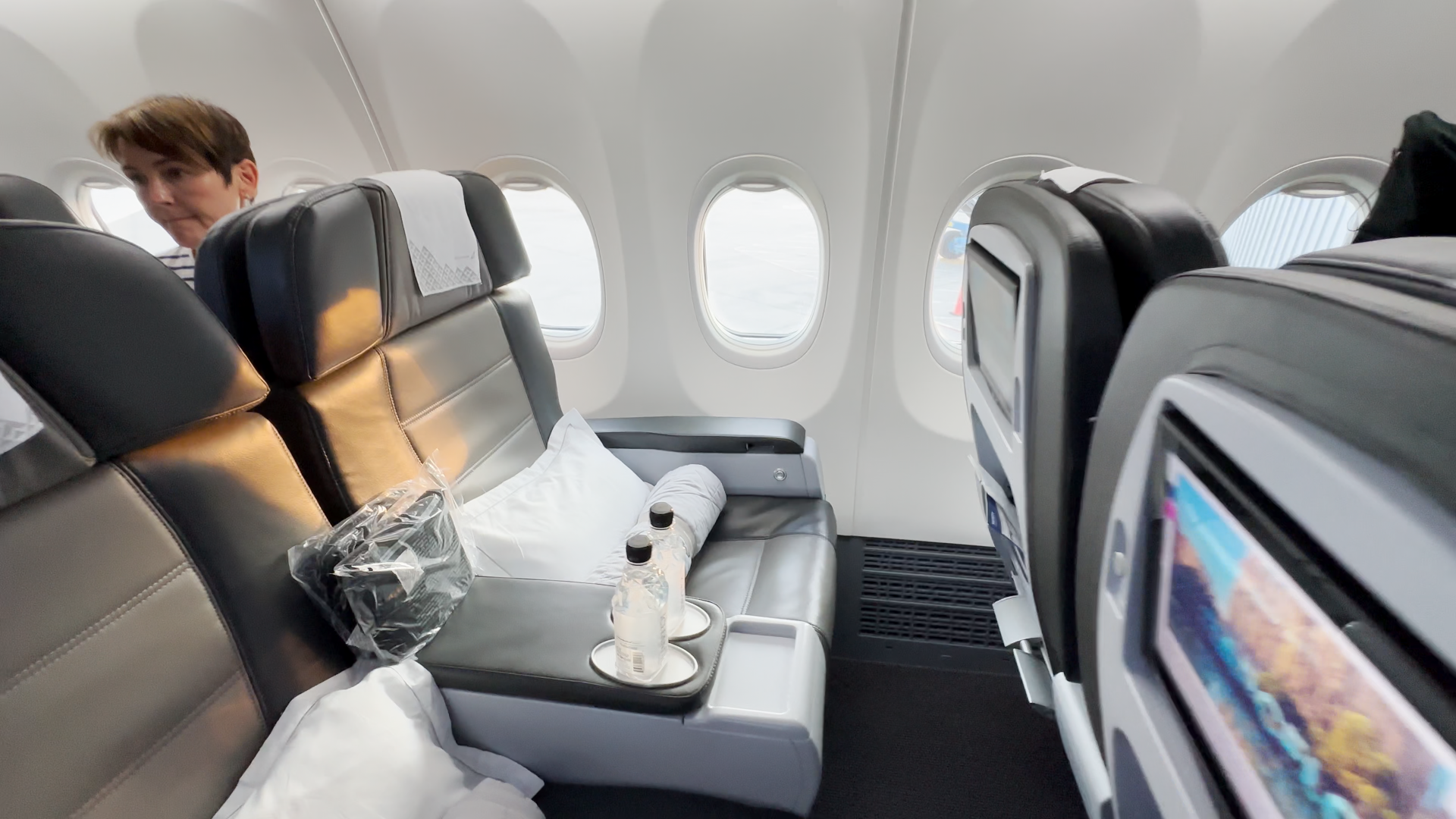
My seat 3A, for the flight over to Iceland (Photo: AirlineGeeks | Joey Gerardi)
(AG): With carriers like Norse and Frenchbee, those lower-cost airlines that operate flights from Europe to the United States, do you see that as a threat to the stopover program?
(MR): No, because they are a different product, Icelandair has never been a cheap airline, we consider ourselves a value airline. We are very competitive in price, but we offer a little bit higher standards than a cheap airline, and our prices usually include more amenities than a low-cost carrier
(AG): Do you see more people using Icelandair to travel to Iceland as a final destination or using the stopover program?
(MR): A little bit of everything, there is a cross mix. A majority of passengers are going beyond Iceland, people forget that Icelandair is not only Iceland, but we fly to Europe, and there is a growing interest in Iceland. I have been with the company for 23 years, and when I started people thought Iceland was far, remote, cold, and that Icelandair was an air conditioning company, but now people are aware of who we are and where Iceland is, along with our beauty, nature, volcanoes, and the films that are made here. So, there is more awareness now that has drawn more to the Icelandic market, and it’s been growing. The stopover program, we do encourage for all travelers on Icelandair, but I would say it is a healthy mix.
(AG): How did Covid affect Icelandair?
(MR): It affected us greatly, we went from 23 North American gateways with multiple flights a day, to one flight a week out of Boston and it was mostly cargo and essential travel only. So, we have rebounded greatly and our network is strong and thriving and we are having some of the best seasons we’ve had in years.
(AG): Do you plan on increasing the size of the aircraft serving Greenland when they open the new runways in the country?
(MR): I think that is something that we have evaluated because Greenland is trying to grow their market as well and Iceland is a perfect carrier and destination to go through to get there. I think that remains to be seen, but I do think Greenland will be a growing market and we will somehow fit into that in the future.
Flying over mountains in eastern Greenland (Photo: AirlineGeeks | Joey Gerardi)
(AG): New Icelandic carrier PLAY started from what remained of WOW, do you see them as a threat to your operations at all?
(MR): I mean, we just view them as competition. I think people take it out of context in Iceland, cause people think they are a big deal here because Icelandair has always been the main carrier and now we have an upstart, which is really the third one. You have to remember there was IcelandExpress, there was WOW, and now PLAY, and we have seen the transition they have all made into each other. I think on a global market, and from our perspective, they’re even smaller than we are, and we are a small airline. We consider competitors airlines like British Airways, Lufthansa, and Air France, but from a North American perspective, they are a very small competitors other than that they fly to our home.
PLAY Airbus A321neo in flight (Photo: PLAY)
(AG): What do you see the North American route system looking like in the next 2-5 years?
(MR): Well, I can’t see definitively because I’m not the guy that makes those decisions. but, we have some new aircraft coming, we have new gateways potentially on the block, and I would say if things continue the way we are going now, which is fantastic, Detroit is starting right now as we speak, I’m sure we will see a few more like this along with the aircraft variables, I would say 2-5 years will be a very impressive time for us as a carrier.
(AG): What is one thing that you think Icelandair could improve on?
(MR): I mean, I think we are great and I’m sure our passengers feel that way as well. but there is one discussion that keeps coming up and there are pros and cons to it, and it’s a great question; Lie-flat beds, why don’t we have them? First of all, most of our flying time including this one (referring to Detroit) is five hours, and most of our flights even though they happen in the evening, get to Iceland in the morning and there is usually a meal served so there isn’t really too much time to get comfortable and go to sleep. It would also have to fit in with the network, that those aircraft would then be flying a two-hour flight to London, where those lie-flat beds aren’t necessarily needed. That is a hot topic, and I do see both sides to it, but if I were to say one thing, I think it would be cool if we had lie-flat beds but I don’t know that it’s going to be sold to the higher-ups.
(AG): If you and the company had unlimited funds and capital, what would you hope to see happen with that?
(MR): I could do anything? I mean, obviously, we would love to break into markets like Asia and Africa, it’s a big world and I would love to see Icelandair expand and be part of it. Both to and from Iceland and North America, I would love to see us expand as an airline. I think the aircraft we’ve been needing, the Boeing 757, was our dreamchild, it was the perfect plane for our network and if they still made them we would still be buying them, and our friends over at Boeing know that. So, I would say broaden our horizons on different aircraft and we are kind of already starting to do that and we are headed in the right direction.
The video recording of this interview can be found below;
Joey has always been interested in planes for as long as he can remember. He grew up in Central New York during the early 2000s when US Airways Express turboprops ruled the skies. Being from a non-aviation family made it harder for him to be around planes and would only spend about three hours a month at the airport. He was so excited when he could drive by himself, the first thing he did with his driver's license was get ice cream and go plane spotting for the entire day. He graduated from Western Michigan University in 2022 with a B.S. in Aviation Management & Operations and a Minor in Business, and currently works for a major airline in his hometown.
Archer Aviation's Maker during a test flight. (Photo: Archer Aviation)
Joby Aviation announced last week that the Federal Aviation Administration (FAA) has approved flight testing of its electric air taxi, bringing the manufacturer one step closer to achieving approval for commercial operations in the aircraft.
Joby is the second manufacturer to receive approval for flight testing of such an aircraft, as Archer Aviation received the necessary certification in 2021. Though the testing and certification dates for aircraft such as these are being pushed back continually, it is they very well might become an integral part of the aviation industry, at least in the United States, by the end of the decade.
The certification process for new aircraft is notoriously slow, as has been proven by the Boeing 777X, which is still undergoing its final tests years after deliveries were set to start. Even after certification ends, it often takes a while before completely new aircraft are mainstream in the aviation industry. Often, operators take years to assess whether a particular type is safe and reliable enough to invest tens or hundreds of millions, if not billions, of dollars on orders.
These electric air taxis, also called eVTOL aircraft due to their ability to takeoff and land vertically like helicopters, may prove different. Joby and Archer both have big plans for their aircraft right out of the gate.
eVTOL Past and Future
Joby has a goal of becoming the “Uber of the Skies” by shuttling passengers conveniently and cheaply from place to place, and it has a $131 million contract with the United States Air Force to produce the aircraft. Archer has a multi-million dollar contract with United Airlines, which is planning to fly passengers from its O’Hare International Airport hub to downtown Chicago in the next couple of years.
These big contracts are massive votes of confidence in these yet-unproven aircraft manufacturers. Commercial helicopter flights are not a novelty. Propped up for years by government subsidies, the industry thrived for years in large cities like New York, Los Angeles, and Chicago. Even after a deadly crash and loss of subsidies killed the commercial helicopter market decades ago, a niche market still exists flying passengers into and out of airports in New York City.
More Questions Must Be Answered
In terms of civilian applications, these electric air taxis seem like they’ll start in this same role. United, as mentioned, plans to fly their Archer eVTOL aircraft between O’Hare and the Chicago Vertiport in the Loop, Chicago’s central business district.
One of the biggest looming questions is how these eVTOL air taxis will fit into the already-massive operation at O’Hare, which is the largest airport in the world by aircraft movements. The airport is already struggling to keep up with the current traffic flow it IS facing, as it’s in the middle of a decades-long, multi-billion-dollar upgrade that has already seen it completely redesign its runway layout and will bring the addition of multiple new satellite terminals, with options for more, to maximize capacity for the number of planes that can come in at one time.
United will need to find a way to fit their eVTOLs into this stream of traffic. The company no doubt wants these air taxis to appeal to passengers looking for a quick way to access business in Chicago quickly and easily, so it won’t want to have passengers sitting idly by waiting for a quiet period before flying into the city.
Considering that O’Hare’s passenger terminals are located in the middle of northerly and southerly airfield complexes with steady streams of aircraft coming in and out, getting passengers to one side of the airport to take board air taxis will be a logistical challenge; but so will finding out the ideal flow to fit the air taxis into the preexisting traffic flow.
United Airlines has 200 of Archer Aviation’s Midnight on order. (Photo: Archer Aviation)
As with any change of this magnitude, finding an ideal solution is going to take a lot of time and resources that only a company as large as United can comfortably invest. The airline still has a year or more to find a solution, which will no doubt require intricate planning and highly-skilled pilots, air traffic controllers, and other crewmembers to keep moving safely.
An equal challenge is how Joby will make itself into an “Uber of the Skies.” Such a service will likely be prominent first in cities, which are already congested and noisy. Putting aside the issue of fitting these air taxis into busy airspaces handling approaches and departures at major airports, air taxis will likely face significant backlash from citizens who do not want one more piece of transportation clouding the skies and increasing noise pollution. This will be of special concern among businesses and hospitals, who will likely object to having the increased noise interrupting critical meetings, procedures, and other operations.
If the service becomes popular, maintaining proper aircraft separation from each other and the buildings they’ll be flying around may also prove an issue. The FAA will need to enhance radar capabilities to maintain better separation from obstacles, not to mention add instrument approach procedures in the middle of crowded downtown areas, if these air taxis want any chance of operating on days that are not perfectly VFR. There is also the question of how and whether obstacle clearance requirements will change to even allow flight in downtown areas in the first place.
Potential Risk Mitigations
Perhaps Joby and Archer will be able to respond to these challenges. If these risks can not be mitigated, though, United and other operators will have additional work to do: planning contingencies if these air taxis can not get passengers to or from the airport on time in bad weather, congested airspace, or crowded city centers. Still, as with both helicopters and airplanes, there will likely be many uses for these eVTOL aircraft that will help their manufacturers succeed.
“This will transform the way we move around on a daily basis,” said Joby Founder and CEO JoeBen Bevirt. “We will be able to free ourselves from the constraints of driving in automobiles and we’ll be able to fly to more and more destinations over time. When you can get to your destination five times faster and see the beautiful world from the air, it’s not only more efficient but it’s a spectacular way to travel.”
“[The air taxis are] for a very small subset of the population, [they’re] not going to change my life in any way,” Wendy Root Askew, the Monterey County Supervisor, told Lookout Sant Cruz. Monterey County, California encompasses Joby’s testing facility.
United Airlines has 200 of Archer Aviation Midnight on order. (Photo: United Airlines)
“But if you listen to what they’re really saying, they’re saying we’re here to design, we’re here to innovate. The applications they have, the technology they’re building out, is relevant across a thousand different industries and a thousand different purposes. So, we’re really at the center of innovation,” said Root Askew.
It seems for now that eVTOL aircraft will be in the future of commercial aviation. However, there is a lot of work to be done to figure out just how they’ll fit into not only the aviation industry but into broader society. This isn’t to say that work can’t be done, but, as with everything in aviation, it is bound to be a long process with hiccups, do-overs, and plenty of lessons to be learned.
John McDermott is a commercial pilot pursuing a career in professional flight. His passion for aviation began in an Ann Arbor bookstore with a tale of enemy pilots during World War 2, and he hasn't looked back. Besides flying and writing for AirlineGeeks, John volunteers with Professional Pilots of Tomorrow and travels whenever he gets the chance.
Boom Supersonic Inks New Manufacturing Partnerships
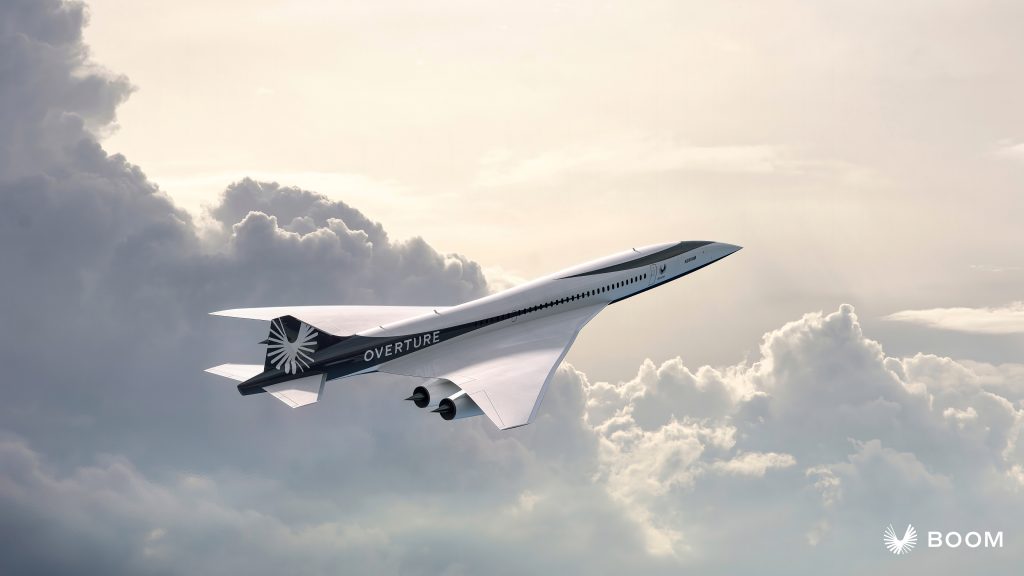
A rendering of Boom's Overture aircraft. (Photo: Boom Supersonic)
Boom Supersonic announced structural supply agreements with three major aerospace companies for its Overture supersonic aircraft at the Paris Air Show 2023. The Centennial, Colo.-based company has signed agreements with Aernnova for Overture’s wings, Leonardo for the fuselage and wing box, and Aciturri for the tail.
Overture is the sustainable supersonic aircraft being built by Boom that will fly twice as fast as today’s commercial airliners. It will be a 100% Sustainable Aviation Fuel (SAF) aircraft powered by Symphony™ engines manufactured by Florida Turbine Technologies (FTT), a commercial unit of Kratos Defense & Security Solutions Inc., according to the company.
Boom’s commercial backlog currently stands at 130 aircraft from major airlines including United, American and Japan Airlines. The company also continues to work with Northrop Grumman on a Department of Defense variant of a special mission variant under NASA’s High-Speed Endo-atmospheric Commercial Vehicle Conceptual Design Study and Technology Roadmaps Development program.
Three New Partnerships
The first agreement was signed with Aernnova of Spain, one of the world’s largest Tier 1 aerospace suppliers, which will design and develop Overture’s wing structure. Overture’s gull-wing is unique in that it is structurally thinner than typical subsonic wings to reduce drag and enable efficient travel at higher speeds, increase supersonic performance, and improve subsonic and transonic maneuverability.
The Overture aircraft (Photo: Boom)
The second agreement was signed with Leonardo, an Italian defense, aerospace and security company. The Italian company will support the integration of the structural components of the fuselage and will partner in the design and construction of two major sections of the Overture fuselage, including the wing box. The Overture has a shaped fuselage with a larger diameter toward the front of the aircraft and a smaller diameter toward the rear, chosen to minimize resistance to shock waves and maximize efficiency at supersonic speeds.
The third agreement was again signed with a Spanish company, Aciturri, a Tier 1 aerospace supplier of aerostructures and components for aircraft engines. Aciturri will develop and design the Overture tail, which features a differentiated horizontal stabilizer that provides greater control at subsonic speeds, particularly during takeoff and landing.
Showcasing the 3D Symphony Engine
Boom has partnered with Florida Turbine Technologies to assemble the initial production units of the Symphony engine, which will power the Overture. Boom will utilize FTT’s expertise for ground testing, flight testing and engine certification, and has selected Jupiter, Flo, as the base for initial production.
Boom’s Symphony engine (Photo: Boom)
At the Paris Air Show 2023, Boom also unveiled the 3D printed 1/3 scale model of the Symphony, whose technical specifications include:
Two-coil turbofan engine, medium bypass, no afterburner
35,000 lb thrust
Optimized for 100% Sustainable Aviation Fuel (SAF)
FAA Part 33 and EASA CS 33 compliant
ICAO Chapter 14 noise certification
Boom continues to make strides as it expands its global supplier network, which already includes Safran Landing Systems, Eaton, Collins Aerospace, Flight Safety International, FTT, GE Additive and StandardAero, consolidates the configuration of the Overture systems, and moves toward production.
Vincenzo graduated in 2019 in Mechanical Engineering with an aeronautical curriculum, focusing his thesis on Human Factors in aircraft maintenance. In 2022 he pursued his master's degree in Aerospace Engineering at the University of Palermo, Italy. He combines his journalistic activities with his work as a Reliability Engineer at Zetalab.
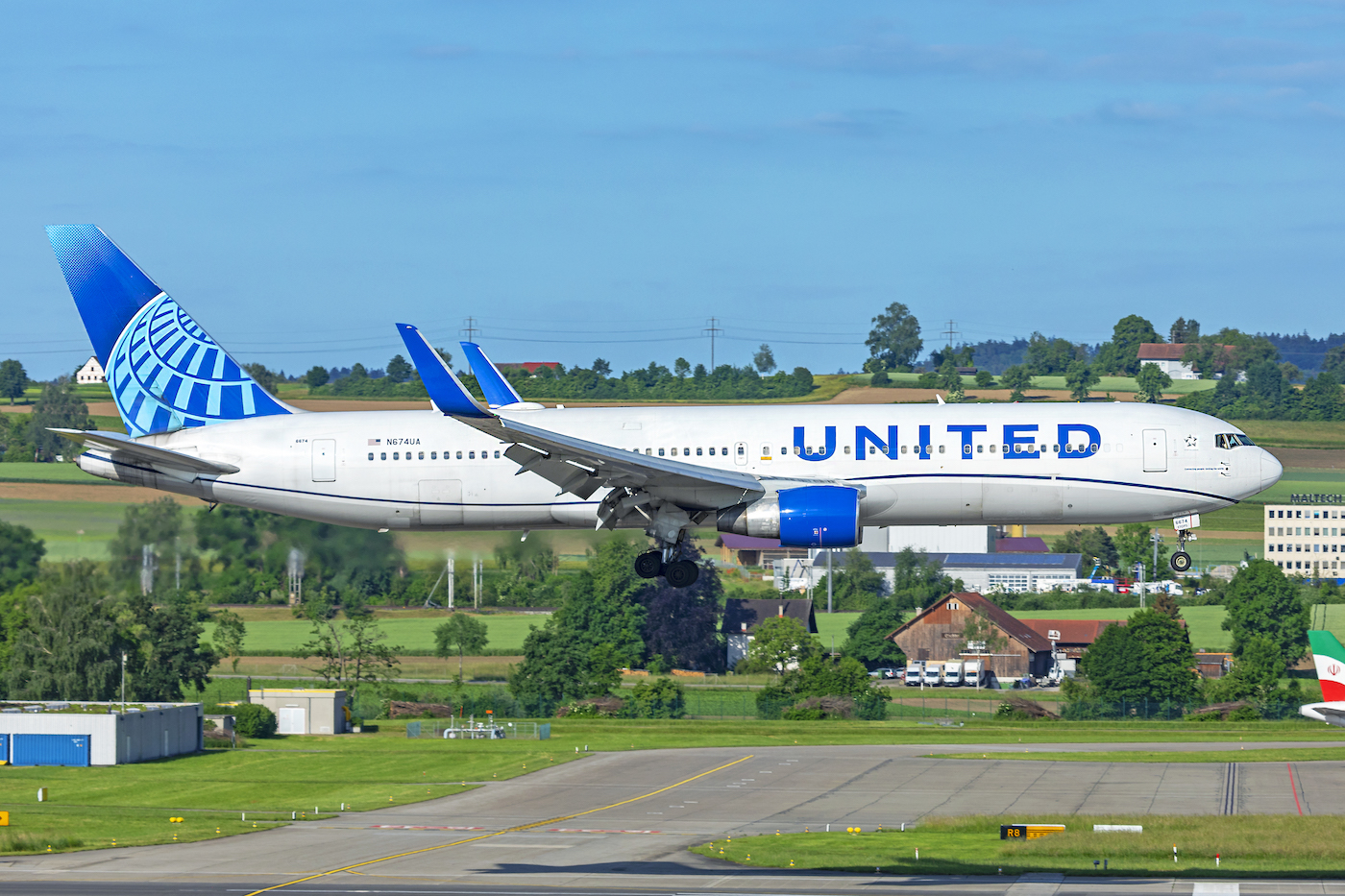
A United 767-300. (Photo: AirlineGeeks | William Derrickson)
After several months of encouraging—if lucky—reliability, stability has given way to wobbliness around the national aviation system. And in a coincidence only Agnes Callard could be rooting for, this sudden destabilization figures to coincide with the busiest air travel day of the summer: the TSA expects to screen 2.82 million travelers on Friday, which would surpass the pandemic recovery highwater mark set just earlier this month.
The primary culprit was a piece of energy apparently meandering around the upper atmosphere. Its slow-moving nature combined with ample moisture to antagonize New York City airports from Saturday to Tuesday; with associated convection focused across northern New Jersey, already-disadvantaged Newark (EWR) was especially snarled.
This proximity no doubt contributed to relatively more challenging conditions at the airfield, where it produced 109 mentions of thunder in EWR METARs. (Across the river, “only” 18 mentions at JFK and 12 at LGA.) But more critically, EWR relies on the airspace above northwestern NJ to a much greater extent for ingress and egress than JFK or LGA.
Departure tracks from EWR (blue), JFK (grey) and LGA (pink). EWR departures (and arrivals) are more likely to cross N90 boundaries along western fixes than LGA (biased north) or JFK (east). Ignore TEB’s green. (Photo: Improvement of Terminal Area Capacity in the New York Airspace, Donaldson & Hansmen)
This unsettled weather pattern has likewise upset the tenuous relationship between the DOT-led FAA and airlines. Given that United’s New York City franchise leans heavily on EWR, CEO Scott Kirby has seemingly volunteered to command this particular skirmish for airlines.
In a nominally-internal email, Kirby told employees that the FAA had failed them; calculatedly, we’d bet, he would soften his tone towards Administration leadership a few paragraphs later. We agree with Scott’s tonal pivot: the controller shortage is years in the making and we don’t fault current FAA employees. But underneath the headline-grabbing language, he started to pull at some interesting threads.
What’s a Thunderstorm Worth in Terms of Capacity?
One should expect thunderstorms to reduce airport capacity by some amount—and there’s a lot of history to glean how much weather “should” pressure capacity. However, Scott would suggest that FAA staffing constraints depressed capacity below weather-attributable depths. For their part, the FAA hasn’t refuted this insinuation, though notably, only a pair of Sunday evening operations plans included a mention of ZNY staffing.
So let’s concede staffing contributed to even-lower rates on Sunday; there were still eye-watering ground delay programs on Saturday, Monday, and Tuesday. If staffing dragged on the capacity for the duration of this 4-day event, that seems like a more defensible hill for Scott to occupy.
Absent additional mentions of ZNY staffing, we think our modeling can help to detangle non-weather influences. To wit, we prefer to aim our forecasts at the future, but occasionally they can help to contextualize past performance. And importantly, since our last product update, we’ve evolved from point estimates to probabilistic predictions. So what does that look like?
Let’s consider the first hour of the Tuesday GDP as an example (i.e. 13:00L, or 1 p.m. ET, on the 27th). In the final forecast we’d make for the hour, we’d predicted capacity would be 35.3 aircraft per hour: this is our best estimate of what capacity “should” have been when controlling for the weather (and runway status—all of which were open during the times in question). But historical capacity data is noisy and, even when we make our final forecast at T minus one hour, there’s still some weather uncertainty.
(Photo: Aerology)
For that reason, we want to focus not on our point estimate of capacity, but the range of possible capacity outcomes. To this end, we’ve visualized something like a tropical storm’s cone of uncertainty for each hour. We’d expect approximately 50% of actual values to fall within the blue bar, while the remaining 50% of values would be split evenly above and below the bar. For that 1 p.m. hour on Tuesday, when accounting for weather and runway status, we put chances at approximately 50% that the actual value would fall between 30 and 39. (While not visualized, our point estimate would generally fall toward the middle of this bar.) We’ve also charted the actual, recorded arrival rate with a red dot (36, in the case of 1 p.m. on Tue).
You can think of each hour as the roll of a four-sided die, where:
rolling a one yields low-end, below-our-uncertainty-bar capacity for that hour,
rolling a two or three results in expected, within-our-bar capacity,
and rolling a four returns a high-end, above-our-bar arrival rate.
For any given hour, you have a 25% chance of getting low-end capacity—hardly a remarkable event. Even across eight rolls (read: hours), you have a better than 1 in 10 chance of getting 4 or more low-end rates. We’d be reluctant to conclude there’s some influence other than weather, runway status, and noise at play in the wake of one ugly afternoon/evening. Maybe that’s why Scott qualified his remark that the reduction in rates was almost certainly a reflection of staffing constraints.
Who is Right?
But we can decrease variability by rolling the die more times, i.e. increasing sample size. We’ll set aside Sunday, when there was some self-acknowledgment of staffing constraints, and consider just the Saturday, Monday and Tuesday ground delay programs. Those three days provide a sample of 24 hours during which a GDP was active; a low-end, below-bar arrival rate was recorded 14 out of these 24 hours. If you were to roll our 4-sided die 24 times, what’s the chance that you get 14 or more low-end rates? On the order of 1 in 2,000. At those odds, we’d take a bet there’s some factor—most likely FAA staffing—influencing capacity that our model can’t see.
Could Scott (and, more recently, Joanna Geraghty from JetBlue) use this math to credibly claim that the FAA has underperformed during this event? Those would be his words, not ours. Regardless of blame-casting, these shades of capacity are material: given the compounding nature of delays (like compounding interest, but decidedly bad), delivering even one or two more aircraft per hour would seriously knock down EDCT delays.
But much like we’ve attempted to separate the hand dealt to the FAA (again, bad… like storm motion of five knots bad) from how they played it (arguably poorly), the same question should be asked of the airlines. Air traffic delays of 3 hours are an unquestionably weak hand to be dealt; even so, there should be some expectation as to how the airlines execute on those cards, however lousy.
Unfortunately, we haven’t reached the mile marker on our data science roadmap that would help to diagnose that. That said, when we’ve erected our model stack, we’d wager that a re-forecast supports a credible counter-claim from Secretary Pete.
And if I Don’t Care Who is Right but I’m Flying Over the Holiday Weekend?
As for Friday, high pressure remains in control for the New York metro area, though another slow-moving low-pressure system lurks across the Great Lakes. This low will swing a warm front through the Ohio Valley, with thunderstorms firing ahead of this boundary. Metro terminals look to remain dry, though convection could sneak into eastern Pennsylvania late day to exert some pressure on capacity. Using that same cone of uncertainty approach—but around air traffic delays—we think the 75th percentile of hourly average delays tops out at 42 minutes (in the 7 p.m. hour).
Valid at Fri 7 p.m. ET (Photo: NOAA Storm Prediction Center)
But for travelers booked on United on Friday, they’d be advised to pay closer attention to FlightAware than the National Weather Service. United is racing to get its operation fully recovered for this key test, though if they’re successful, it will be by an uncomfortably narrow margin. After canceling approximately a quarter of their mainline operation on Tuesday and Wednesday, their Thursday cancelation settled at 18%. As of 9 a.m. ET, there are 188 cancels on the books for today, though—of all the gambles we’ve made herein—we’d be most confident betting that more cancels are forthcoming.
For one, we suspect humpty-dumpty EWR has not quite been put back together; and there’s likely some recovery taking place related to yesterday’s irregular operations at DEN as well as ORD; and DEN figures to get hit again today. It’s just a matter of whether it’s a trickle or tranches. If Friday’s cancel count grows by less than 20% from here, we’d say they held the line. Accordingly, United hoisted waivers for EWR, DEN, and ORD.
Editor’s Note: AirlineGeeks has partnered with Aerology to deliver rich data-driven insights to our readers ahead of peak travel periods.
AirlineGeeks.com was founded in February 2013 as a one-person blog in Washington D.C. Since then, we’ve grown to have 25+ active team members scattered across the globe. We are all here for the same reason: we love deep-diving into the fascinating realm of the airline industry.
El Al has returned multiple planes to lessors after cutting all of its services. The airline is negotiating with its government and unions to accept a state aid package.
(Photo: AirlineGeeks | William Derrickson)
Delta Air Lines and El Al Israel Airlines recently announced a strategic partnership between the two international carriers. The partnership will benefit customers by allowing them to check in for a flight and have their baggage checked through to their final destination. The partnership will also allow the potential for additional routes to be opened up by either carrier between the United States and Israel as well.
The partnership between the two carriers will allow passengers to check in, check bags and get their boarding passes for their entire journey on the two carriers. According to a press release from the Atlanta-based carrier, customers can fly from Tel Aviv to 200 destinations served by Delta on the same day.
This will be accomplished by flying through airports that Delta serves, Atlanta, Boston, and New York’s John F. Kennedy International airport, along with the airports El Al serves which include New York’s JFK airport and Boston, along with Los Angeles, Miami and Newark.
Delta’s Senior Vice President for Europe, Middle East, Africa and India, Matteo Curcio, believes customers will benefit greatly from the new partnership stating, “Working closely with EL AL will further strengthen Delta’s connection to Israel by offering more customers unrivaled access to destinations across the U.S. Enhanced partnerships are integral to our long-term strategy to better connect Delta customers around the world.”
While Delta is a part of the Skyteam alliance, El Al is not affiliated with any of the global three alliances. The Israeli flag carrier does have other partnerships with several other airlines including Aeromexico, Alaska Airlines, All Nippon Airways, Etihad Airways, Qantas and now Delta. It is unknown how the new partnership with Delta will affect the carrier’s current partnership with Alaska, as the two US-based carriers are affiliated with two different alliances.
New Options For Customers
With Delta’s Los Angeles base, customers will be better connected on the West Coast traveling to and from Israel. This allows Delta and El Al to compete in the West Coast market directly with United, which is currently the only other airline to operate a route to Tel Aviv from the West Coast out of the carrier’s San Fransico hub. This will give customers another choice when traveling to Israel from that coast.
The partnership also begs the question of whether El Al or Delta will launch a new route to Tel Aviv in the future. Currently, El Al operates three flights a day from New York’s JFK airport and two flights a day from Newark to Tel Aviv utilizing Boeing 787 aircraft.
Delta also operates a daily flight from JFK utilizing the carrier’s Airbus A330s. With 4 flights a day from JFK now being offered to customers for El Al and Delta through the new partnership, there is potential for El Al to move an aircraft resource to a new route.
Both carriers also operate flights out of Boston to Tel Aviv. While no new routes have been announced by the Israeli flag carrier this month, El Al did announce that the carrier would launch flights to Melbourne, Australia this past March. The two carriers could also leave the current schedule as is, keeping the current frequency. Time will tell if either carrier will expand as a result of the partnership.
Zach’s love for aviation began when he was in elementary school with a flight sim and model planes. This passion for being in the air only intensified throughout high school when he earned his Private Pilot Certificate. He then attended Embry-Riddle Aeronautical University, earning his certificates and ratings to later flight instruct and share his passion for aviation with others. He now resides in the North East living out his dream as an airline pilot.
Sign-up for newsletters & special offers!
Get the latest stories & special offers delivered directly to your inbox