Stories

Delta Air Lines Reports Impressive Quarter

A Delta Air Lines Boeing 757 climbs out of Eagle County Airport. (Photo: AirlineGeeks | William Derrickson)

This past Thursday, Delta Air Lines announced record-breaking operating revenue and operating income in their June quarter financial results. The Atlanta-based carrier reported record international performance numbers across the Atlantic, Pacific and South American regions. An uptick in passenger numbers compared to June last year correlates with new deliveries the carrier has received in the previous 12 months along with the reactivation of previously parked and stored aircraft. 

This quarter’s reported revenue was up significantly, representing the carrier’s highest in history. Profitability for the carrier was just as impressive, operating at a margin of over 17%. The increase is partially attributed to an increase in consumer demand along with an overall decrease in fuel cost. Compared to the June quarter last year, the carrier’s fuel bill was 24% less for this quarter. 

With the strong report for June and expecting this trend to continue into this fall, Delta’s President, Glen Hauenstein said, “Robust demand is continuing into the September quarter where we expect total revenue to be similar to the June quarter, up 11 percent to 14 percent compared to the September quarter 2022 on capacity that is 16 percent higher.” 

International Demand

Following the pandemic, international demand has rebounded tremendously in the past year with the Atlanta-based carrier operating the largest transatlantic schedule to date this summer. Total international revenue for the quarter was up 61% according to the carrier, with domestic travel also showing a strong return up 8%.

While being the smallest market in terms of revenue, Delta’s Pacific market saw the largest increase of 175% compared to June of last year. According to the release, the carrier attributes this to Japan’s re-opening to international travelers along with the joint venture with Korean Air. 

The Atlanta-based carrier has been able to boost international flying due in part to new aircraft deliveries and reactivation of stored aircraft. According to UK-based aviation valuation firm, AviationValues, Delta currently has 91% of its total fleet active. This number is up significantly from the percentage of active aircraft during the pandemic, which data from AviaitonValues showed as 82% of the fleet.

The overall market value for the international carrier’s wide-body fleet has continued to grow since the pandemic began and had an uptick over the past year due to deliveries from Airbus. The carrier’s total Airbus A330 fleet has had a net valuation increase of 30.8% this past June compared to June of 2022. This is attributed to the delivery of new Airbus A330-900s from Airbus in the time frame. 

The carrier’s A350 fleet has also seen a valuation increase denoting additional deliveries in between June 2022 and 2023. Delta took delivery of two examples in the 12 months, N518DZ and N519DN, according to airfleets.net. AviationValues saw a market value change for Delta’s Airbus A350 fleet year over year of 560 million during that period, denoting the deliveries. 

Compared to the June quarter last year, the carrier offered 17% more seat miles for this quarter and operated with an 88% load factor. The carrier welcomed 18 new aircraft in the year, with 12 joining the fleet in the June quarter alone which helped attribute to the increase in available seat miles.

All aircraft currently being delivered to Delta are orders fulfilled by Airbus. The Airbus A321neo fleet has particularly grown in the 12-month time frame, from three examples to 32, according to AviationValues. With strong demand for domestic and international travel this summer, it’s no surprise that Delta predicts the second half of summer and the beginning of fall to produce strong results. 
Zach Cooke

Zach’s love for aviation began when he was in elementary school with a flight sim and model planes. This passion for being in the air only intensified throughout high school when he earned his Private Pilot Certificate. He then attended Embry-Riddle Aeronautical University, earning his certificates and ratings to later flight instruct and share his passion for aviation with others. He now resides in the North East living out his dream as an airline pilot.

United Unveils New Domestic First Class Seats

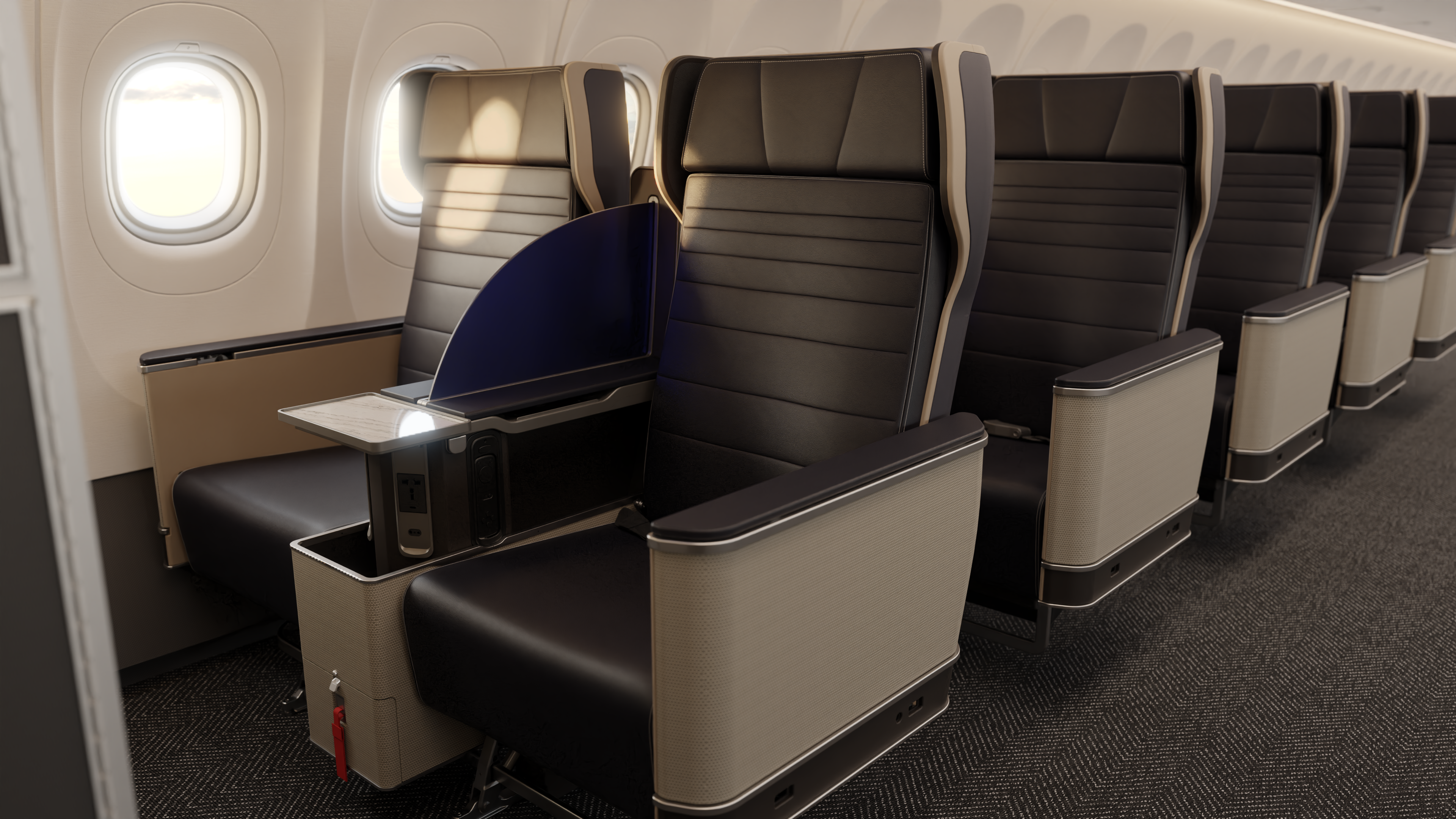
United's new domestic first class seat, unveiled on July 12, 2023 (Photo: United Airlines)

United Airlines is continuing the modernization of its narrowbody fleet with the introduction of a new domestic first class seat. The new seat features several improvements over the current product and is expected to debut later this summer.

The announcement comes just months after United began retrofitting its narrowbody fleet with new cabins. The Chicago-based carrier stated that it expects over two hundred aircraft to have the new first class seats by late 2026.

A Look at United’s New First Class Seat

The new product features winged headrests, a privacy divider between seats, five inches of recline and adjustable aisle arm rests. The seats are upholstered with vegan leather and have seat cushions designed by an ergonomist that sit one inch lower to accommodate a variety of passenger heights. The tray table has been made larger and is stored in the outer armrests of the seats to reduce passenger contact.

There will be three charging options at each seat: an AC outlet, a USB-C outlet and wireless charging. Wireless charging has been increasingly popular among new premium airline cabins, and the new seat is United’s first onboard product with wireless charging. The wireless charger is located in a compartment in the armrest.

United’s newly unveiled domestic first class seat features wireless charging (Photo: United Airlines)

The seats will also have a 13-inch high-definition seatback screen that with Bluetooth capability, allowing passengers to use their own headphones or earbuds. In an effort to improve accessibility, the airline has also included a remote for those unable to reach the touch screen.

United’s Narrowbody First Class Cabin Plans

A little over two years ago, United announced a new “signature interior” for its narrowbody jets. The announcement came alongside a massive order for 270 new narrowbody aircraft, consisting of a mix of Boeing 737 MAXs and Airbus A321neo aircraft.

New narrowbody aircraft delivered since the announcement – all of United’s Boeing 737 MAX 8s and some of its Boeing 737 MAX 9s – have the updated cabins, which feature larger overhead bins, in-seat power and seatback entertainment screens.

Product standardization across an airline’s fleet can be a challenge for large airlines like United, which has hundreds of narrowbody jets.

When narrowbody retrofits are completed in a few years, the airline’s narrowbody domestic first class cabins should have a uniform appearance with two similar but slightly different seats: the newly-announced iteration and the simpler version without the wireless charging, dividers and outer armrest tray tables.

This simpler version is already in service on a few retrofitted Airbus narrowbodies, the first of which re-entered service with United’s signature interior in May. According to the airline, the newest seats with wireless charging will be installed on Boeing 737 MAXs and Airbus A321neos.

Some Boeing 737 Next Generation aircraft will also be retrofitted with the latest seats. It is expected that the new first class seat will debut later this summer on a Boeing 737-800 registered as N73259, which has been undergoing interior modifications in Miami since May.

Meanwhile, Airbus A319, Airbus A320 and some Boeing 737 Next Generation aircraft will be retrofitted with the simpler version of the seats without wireless charging, dividers and outer armrests.

Andrew Chen

Andrew is a lifelong lover of aviation and travel. He has flown all over the world and is fascinated by the workings of the air travel industry. As a private pilot and glider pilot who has worked with airlines, airports and other industry stakeholders, he is always excited to share his passion for aviation with others. In addition to being a writer, he also hosts Flying Smarter, an educational travel podcast that explores the complex world of air travel to help listeners become better-informed and savvier travelers.

Where to Find Transatlantic Narrowbody Flights

Flying across the pond on a narrowbody jet isn't everyone's cup of tea.

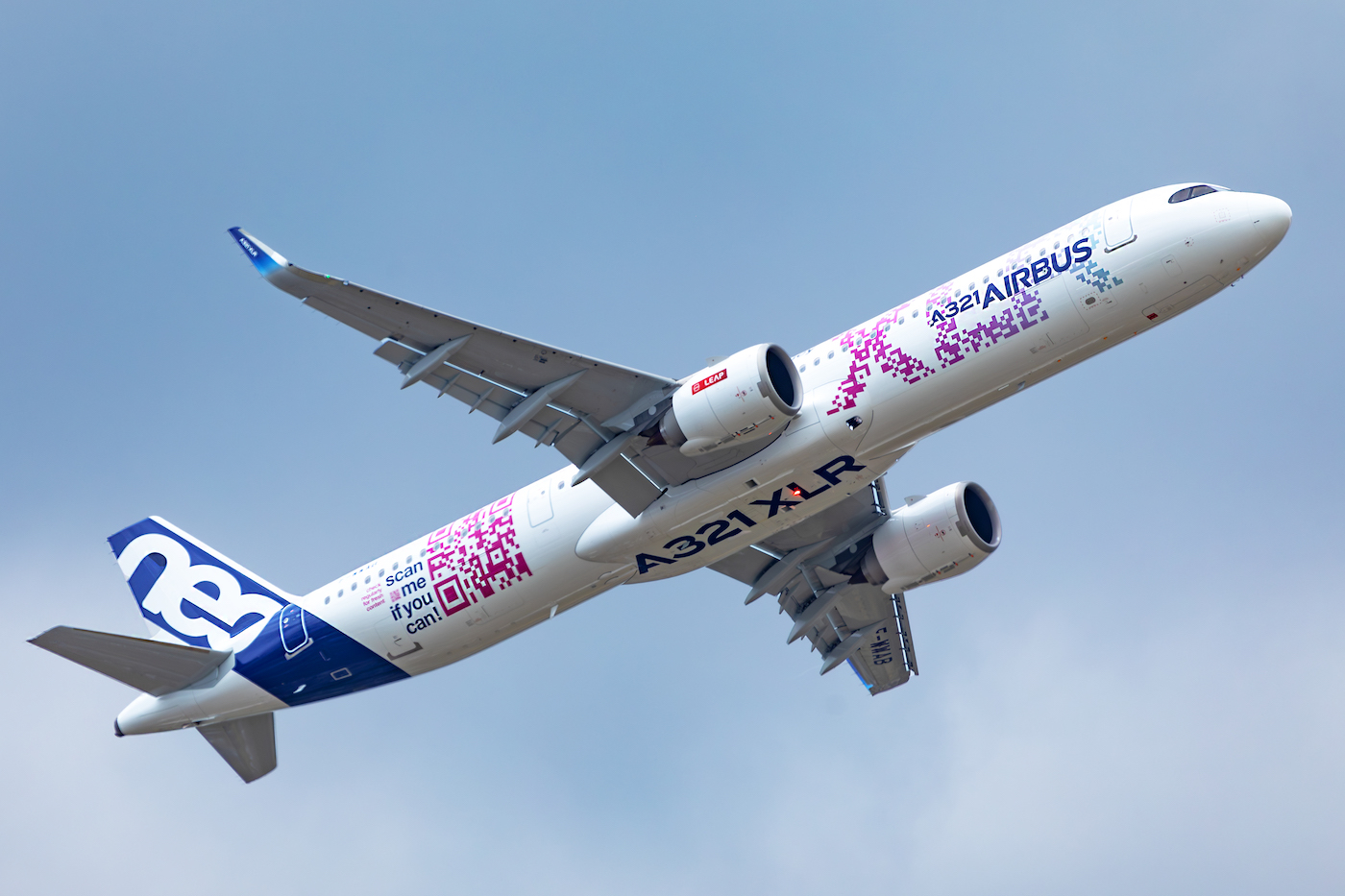
Airbus' A321XLR on display at the 2023 Paris Airshow (Photo: AirlineGeeks | William Derrickson)

Many narrowbody jets are able to fly longer routes with a lower density configuration or a lower payload, but the aircraft, including Boeing’s 737 or Airbus A320 aren’t exactly designed to fly these longer routes. These are mostly exceptional cases such as British Airways’ now-cancelled service between JFK and London City via Ireland or Virgin Australia’s new service between Cairns and Tokyo with B737-700.

Most of the longer routes are operated by aircraft designed to perform such flights with a full payload, including the older generation, such as the 757, and the newcomers, including the A321LR, A321XLR and 737 MAX.

The transatlantic market has also turned into a battlefield between Airbus and Boeing in selling their long-haul single-aisle aircraft. The A321LR and XLR have longer ranges than Boeing’s 737MAX while the two have similar capacities.

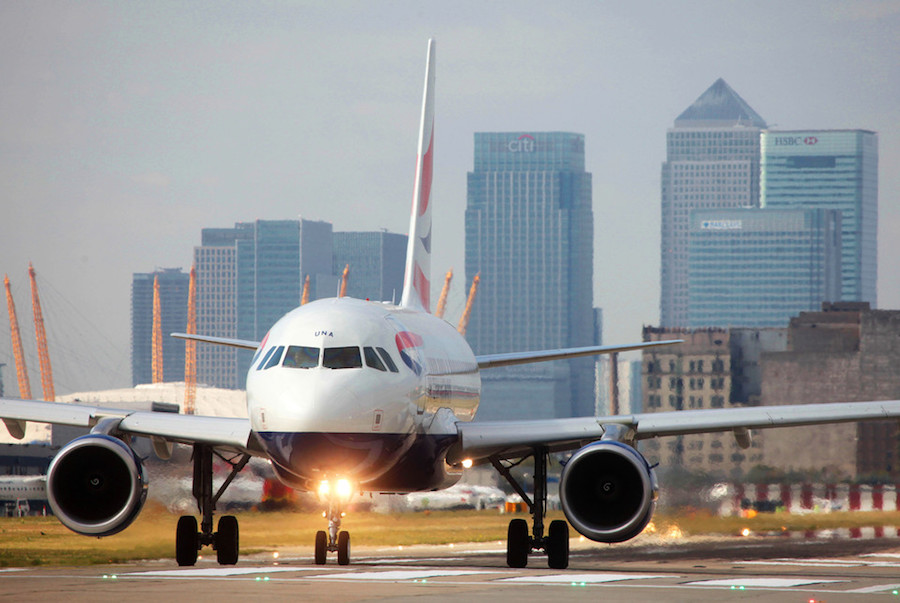
A British Airways A318 at London City Airport (Photo: British Airways)

The role of long-range narrowbodies 

New Markets

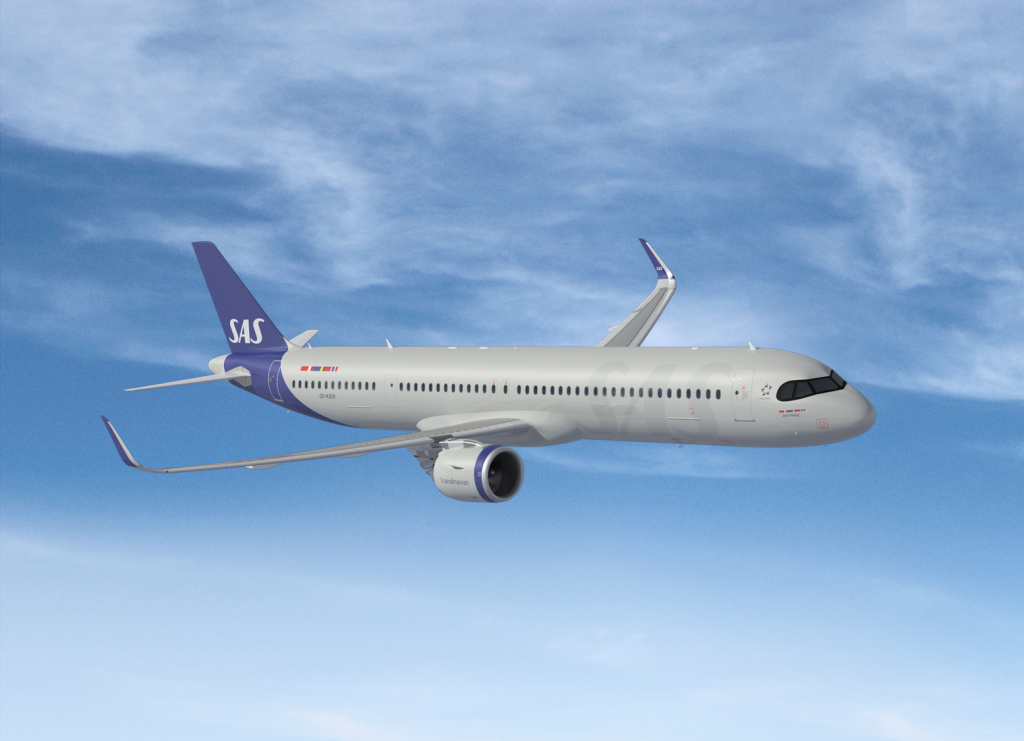
Doors open to secondary cities that would otherwise not have a European service, the like of Halifax, Hartford, Cleveland or Shannon. These aircraft would also allow airports that are not built to accommodate widebodies to receive transatlantic services. SAS’s new A321LR services to Newark are a great example of the impact these airplanes can have.

Flexibility

These aircraft allow airlines to maintain daily flights throughout the year. Routes that would traditionally be served by a single daily widebody are now served by multiple daily A321s, allowing for more choices for travelers and freedom for airlines to adjust schedules, maximizing load factors while maintaining frequency. It also allows cities to be served during off-peak seasons.

The first Airbus A321neoLR will be delivered to SAS in mid-2020. (Photo: SAS)

The airlines operating:

Aer Lingus 

A scaled operation from its hubs in Dublin and Shannon to across the Atlantic, the A321LR is Aer Lingus’ equipment of choice. Newly established Are Lingus U.K. also uses the A321 on its Manchester-New York route seasonally. 

The Summer 2023 schedule sees the A321LRs used on the following routes:

Dublin – Washington Dulles

Dublin – Newark

Dublin – Philadelphia

Dublin – Hartford Windsor Locks

Dublin – Cleveland

Shannon – JFK

Shannon – Boston Logan

Air Canada

Currently, there is only one route operated by Air Canada’s 737 MAX between Halifax and London, not particularly a long route, at only 2,867 miles.

Air Transat 

The other Canadian airline operating single-aisle across the pond, operating a fleet of A321s from Montreal and Toronto to Europe, is Air Transat. The carrier typically uses the type together with a fleet of A330s and adjusts with changes in demand. 

Toronto – Paris CDG

Toronto – Amsterdam

Toronto – Dublin

Toronto – Faro

Toronto – Glasgow

Toronto – Manchester

Toronto – Gatwick

Quebec City – Paris CDG

Quebec City – London Gatwick

Montreal – Brussels

Montreal – Basel

Montreal – Bordeaux

Montreal – Nates

Montreal – Nice

Montreal – Toulouse

Montreal – Amsterdam

Montreal – London Gatwick

Montreal – Porto

Montreal – Lisbon

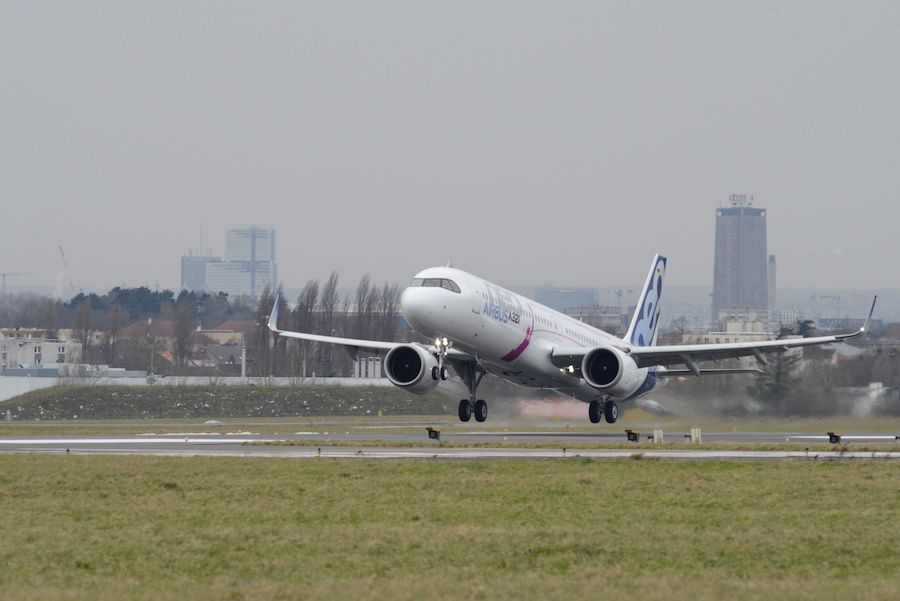
The first A321LR departs from Paris bound for JFK (Photo: Airbus)

SAS

Some of the longest narrow-body routes are operated by SAS. The A321LR is used on these ‘ultra-long’ routes:

Aalborg – Newark

Gothenburg – Newark

Copenhagen- Newark

Copenhagen – Boston

Copenhagen – Toronto

Stockholm – Toronto

La Compagnie 

An all-business airline that operates from French and Italian cities to Newark called La Compagnie also uses A321LRs:

Orly – Newark

Marseilles – Newark

Marseilles – Orly – Newark

Milan – Newark

TAP Portugal 

TAP flies A321LRs from Lisbon to North and South American destinations, including:

Lisbon – Wahington Dulles

Lisbon – Toronto

Lisbon – Boston

Lisbon – Montreal

Lisbon – Newark

Porto – Newark

Lisbon – Belem

Lisbon – Natal

United Airlines 

One of the only carriers still utilizing Boeing’s 757s on routes from its hubs in Washington Dulles, Chicago, and Newark to Europe is United. A handful of flights are also operated by the 737 MAX. The carrier has placed orders for A321XLRs to replace the 757s on some of these routes.

Newark – Malaga

Newark – Porto

Newark – Tenerife

Newark – Shannon

Newark – Dublin

Newark – Edinburgh

Chicago – Edinburgh

Chicago – Dublin

Chicago – Shannon

Washington Dulles – Porto

Washington Dulles – Edinburgh

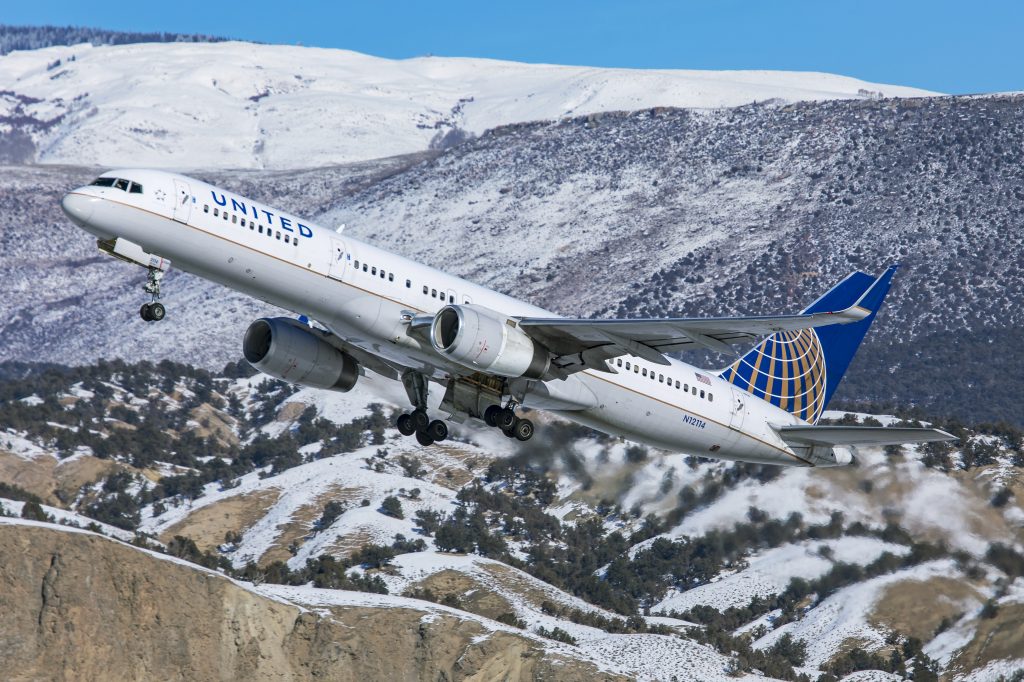
A United Boeing 757 departs Eagle County. (Photo: AirlineGeeks | William Derrickson)

JetBlue 

JetBlue uses A321LRs to fly from its hubs in Boston and JFK to London airports and Paris.

JFK – Paris

JFK – London Heathrow

JFK – London Gatwick

Boston – London Heathrow

Boston – London Gatwick

Service

With the airlines mostly full-service or all-business, traditional carriers are more fond of operating narrowbody aircraft on transatlantic routes. This can be attributed to low-cost carriers benefiting from economies of scale and not having business class hurt the financial potential of these operations.

Most airlines feature a premium heavy cabin on these services and for passengers, flying on a narrow-body over the ocean does not mean a compromised experience. Lie-flat business class seats and economy with IFEs are the industry standard, some frequent fliers have even decided that narrowbody flights are the ‘better’ way to fly transatlantic, quoting the relative privacy and intimacy as well as the faster speed of service all thanks to a smaller cabin.

Future

More airlines are expected to start serving the market with narrowbodies, with IAG having 14 A321XLR on order and 8 of them destined for Iberia.

The A321 fleet is the dominant player amongst the three common types at the momentwith most operators flying the jet. It is to be noted that Air Canada, Icelandair, and United have A321s on order and have plans to use them on transatlantic routes.

We could also see more 737s flying across the pond as the type had a greater presence before the grounding and many MAX flights have yet to be resumed after recertification, including WestJet’s services from Halifax and Air Canada’s from St. John’s, Newfoundland. The grounding, coupled with Norwegian’s bankruptcy, drastically reduced the number of transatlantic MAX services. 

Anthony Bang An

Anthony is an aviation enthusiast who grew up around the world from St. Louis to Singapore, and now lives in Amsterdam. He loves long-haul flying and finds peace in the sound of engine cruising. He aspires to share his passion for the sky though writing and providing another angle on the stories.

Easyjet Cancels Flights Amid Potential Strike

It is understood that dozens of flights to and from Gatwick were cancelled over the weekend.

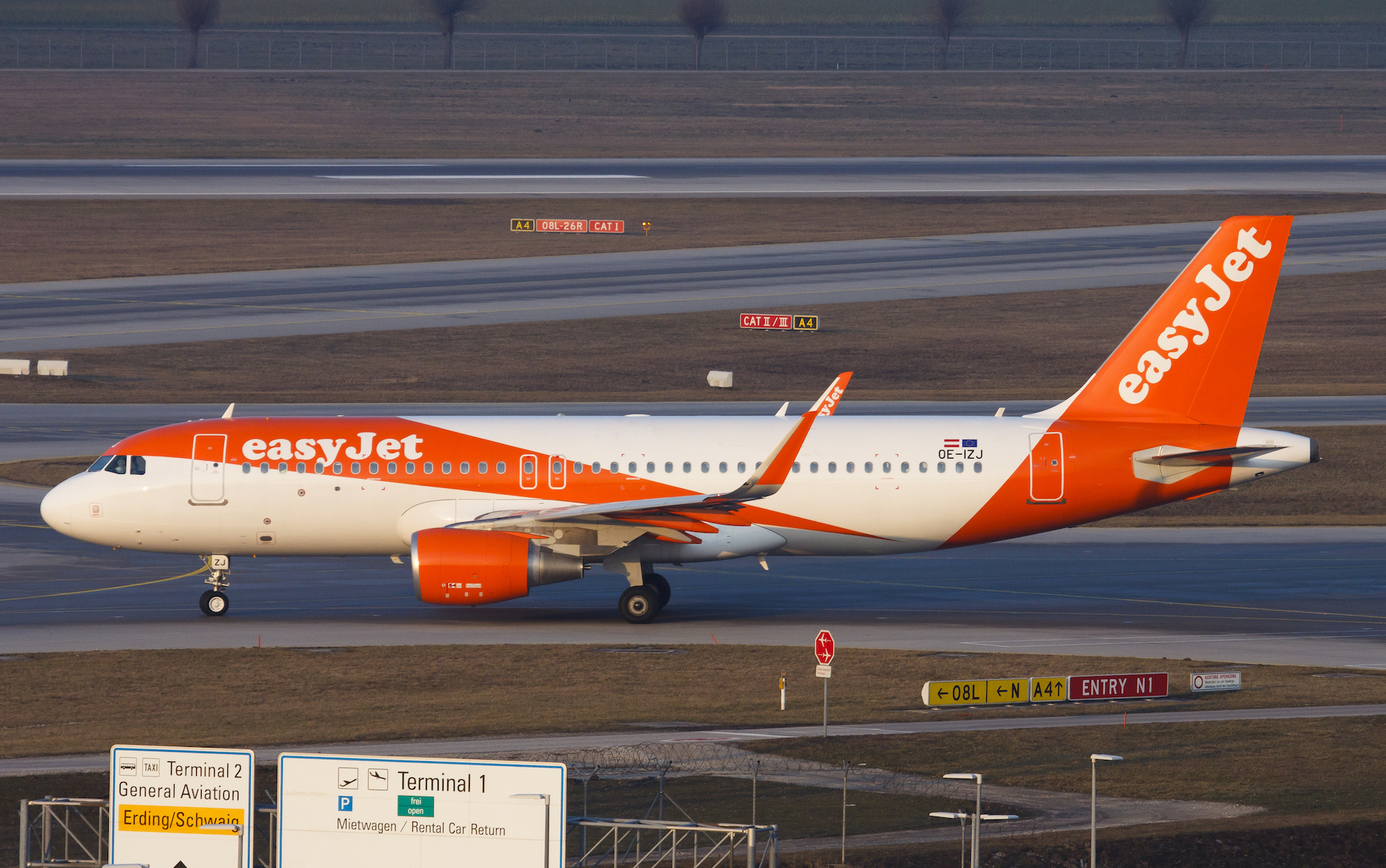
An EasyJet A320 with Sharklets (Photo: AirlineGeeks | Fabian Behr)

Easyjet, London’s Gatwick-based no-frills carrier, has announced that it will cancel 1,700 flights during the summer, in response to the potential strike from Union Syndicale Bruxelles (USB). It is expected 180,000 passengers could be affected, accordint to BBC.

USB is a union representing staff at Eurocontrol, which manages air traffic across Europe. The union is in dispute with management over the recruitment, management and rosters, giving a notice of a potential strike in the next six months. But USB stated the industrial action could take place with only a five-day notice.

However, Eurocontrol said there is no notice of specific industrial action and the firm dates have been received from the union, mentioning “it was making every effort to keep negotiations open and to find a constructive way forward.”

The shortage of air traffic control staff is becoming all too familiar. The union claimed Eurocontrol’s Network Manager Operations Centre (NMOC), which plays a key role in navigating the aircraft across Europe, has suffered from a 25% staff shortage and called for more workers to be hired.

The European airspace is being constricted after the invasion of Ukraine last year. The potential strike could put an additional strain on the airlines. Eurocontrol recently sounded the alarm that the demand from the airlines “might get close to capacity” for air traffic control in large parts of Europe, including London, Brussels and Madrid.

Most of Affected Passengers Rescheduled

Easyjet said 95% of the affected passengers have been rescheduled. It is understood that dozens of flights to and from Gatwick were cancelled over the weekend.

“As Eurocontrol has stated, the whole industry is seeing challenging conditions this summer with more constrained airspace due to war in Ukraine resulting in unprecedented air traffic control (ATC) delays, as well as further potential ATC strike action,” A spokesperson of Easyjet said to The Guardian.

Stewart Wingate, Gatwick’s chief executive, said the strikes could be the airport’s biggest headache this summer. Last month, France’s Civil Aviation Authority demanded airlines to scale back flights to and from France. Wingate said the strike often on short notice and it could make for knock-on problems for operations in London.

Ryanair cancelled more than 900 flights across Europe in June, about 1% of its operation, as a result of the strike in France, with air traffic controllers taking 60 days of industrial action thus far in 2023.

The USB strike could be the tip of the iceberg. Meanwhile, airlines across Europe could face another setback, with air traffic controllers in Italy set to walk out on July 15.

Air Algérie Secures Financing for Fleet Renewal Plans

Air Algerie 737
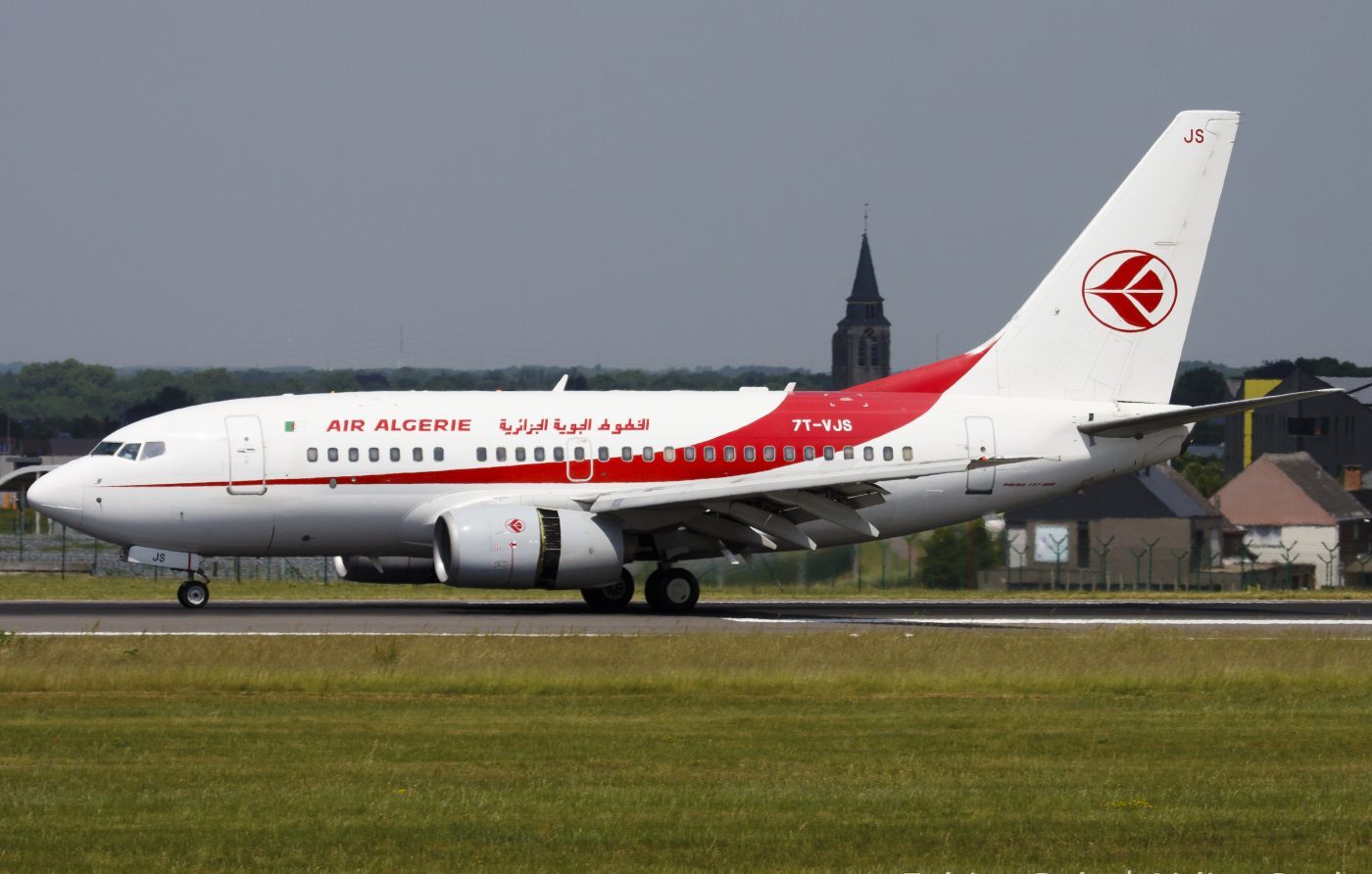
An Air Algérie 737-600 in Brussels. (Photo: AirlineGeeks | Fabian Behr)

Air Algérie, in its bid to renew its fleet, had secured financing from the Fonds National d’Investissement (FNI), Algeria’s state-owned national investment fund. The financing is expected to support the acquisition of 15 new aircraft, including eight Boeing 737-9 MAX, five Airbus A330-900 NEO, and two A350-1000 aircraft, which were ordered earlier this year. The resource credit agreement was signed between the FNI and Air Algérie on July 3, marking a major milestone in the carrier’s fleet modernization strategy, reports CH-Aviation.

While the specific details of the financing arrangement have not been disclosed, this development underscores the Algerian government’s commitment to supporting the national carrier in its efforts to enhance its fleet and improve its operations.

The fleet renewal plans aim to replace older aircraft and meet the growing demand for air travel in the region. On average, the state airline’s aircraft are 15 years old, but 20 of the current 55 planes are more than 20 years old. The airline is looking to retire twelve Boeing 737-600s and -800s, which are among those over 20 years old. Four 18-year-old Airbus A330-200s will also soon need to be replaced.

Replacing Old Fleet

Four years ago, the Algerian government gave the airline the green light to purchase new aircraft. After the pandemic, the airline began obtaining offers from manufacturers.

In May, Air Algérie announced its order for eight Boeing 737-9 MAX aircraft, per Airspace Africa, further solidifying its long-standing partnership with the American manufacturer. Additionally, the carrier signed a Memorandum of Understanding (MOU) for two Boeing 737-800(BCF)s, or Boeing Converted Freighters, which will support its cargo operations. The delivery of these new passenger jets is scheduled to commence in 2027, allowing Air Algérie to introduce modern and fuel-efficient aircraft into its fleet.

Simultaneously, Air Algérie confirmed its firm order with Airbus for the remaining seven wide-body aircraft, including five A330-900 NEOs and two A350-1000s. The deliveries of these Airbus aircraft are planned to begin in the second half of 2025, with four expected in 2025 and the remaining three in 2026. The addition of these wide-body planes will enable Air Algérie to expand its long-haul operations and offer enhanced services to passengers.

As part of its fleet renewal strategy, Air Algérie also sought to dry-lease additional aircraft. The carrier’s requirements included four General Electric-powered A330-200/-300s, two A330-900 NEOs, two Boeing 737-900s, and two Boeing 737-9 MAX aircraft. Bids for this leasing round were recently opened, marking another step in the process of augmenting the airline’s fleet.

Air Algérie has been dependent on government funds for years. Without repeated government cash injections, the airline would have gone under long ago. A former airline chief once summed up the general condition of the airline as follows: negative operating results, high levels of debt, little liquidity, overstaffing, and an inability to finance investments.

With the financing secured from the FNI, Air Algérie is on track to execute its fleet renewal plans and usher in a new era. The modernization efforts will position Air Algérie as a leading player in the region, offering a superior travel experience to its valued passengers.

Victor Shalton

Victor Shalton's love for aviation can be traced to when he was 11-years-old. As a seasoned aviation writer, he takes pride in providing the best aviation coverage around the globe and is passionate about advancing his skills in the aviation space. In addition, he loves travelling, writing, arts and while his speaking engagements have taken him around the world, he is proud to call Nairobi home.

Startup Connect Airlines Struggles To Complete Certification

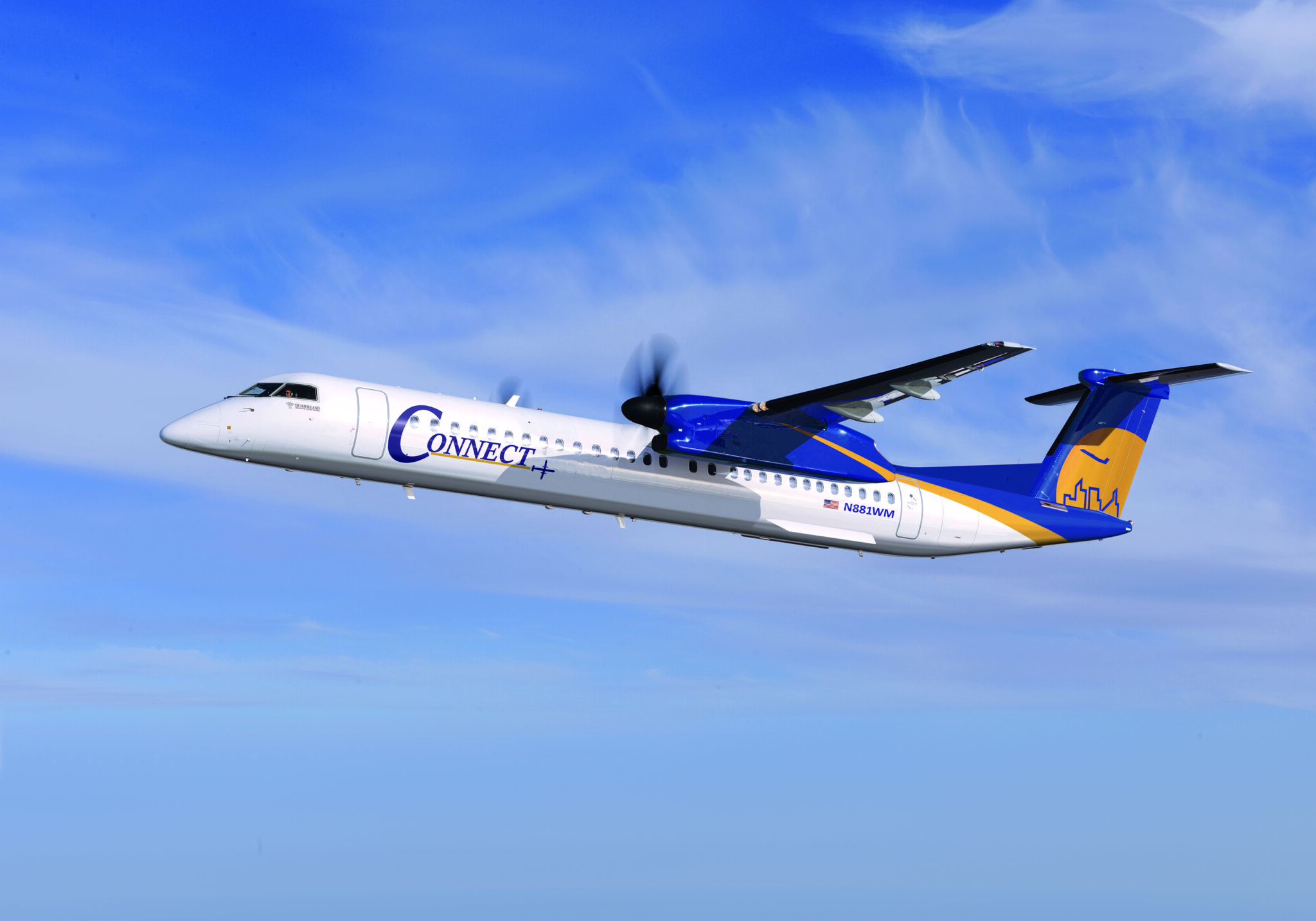
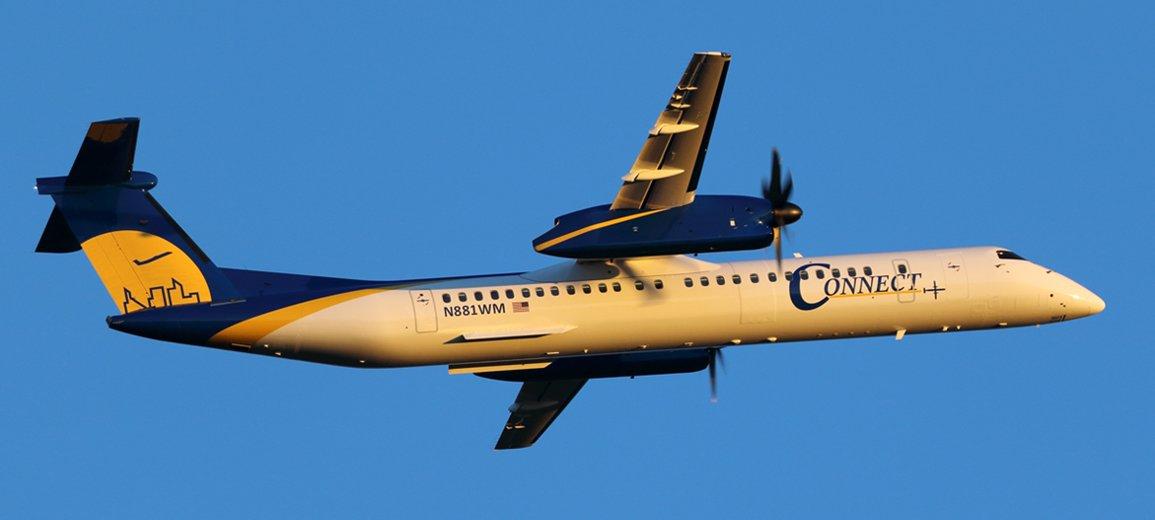
(Photo: Connect Airlines)

Massachusetts-based Connect Airlines announced on Saturday it is struggling to complete Federal Aviation Administration certification, pushing its operations launch back by at least a month. The carrier is struggling to complete the proving flights it needs to get its full approval to launch flights.

Connect Airlines has been in and out of the news for a while. It plans to launch flights from northwestern United States cities to Toronto’s Billy Bishop International Airport on a fleet of Bombardier Dash 8 turboprop aircraft.

Connect, FAA Argue Over Airline’s Viability

Connect Airlines was initially required to begin flights this month per its FAA-issued interstate and foreign operation authorizations. Due to this road bump, though, it has sent in a request to the Department of Transportation (DOT) to extend this deadline until October 5.

“It does not appear that Connect Airlines has made satisfactory progress toward obtaining FAA authority,” the Department of Transportation wrote in response. “The FAA notified the department that the proposed airline’s proving flights were terminated. Connect Airlines must provide adequate evidence that it still meets the department’s fitness criteria and that the applicant is making satisfactory progress in obtaining the required safety authority from the FAA.”

Though the FAA issued Connect a stark judgment, the company’s Director of Public Affairs, Scott Brownrigg, told FlightGlobal that the company is still operating its proving flights and is on pace to finish the certification. Brownrigg added that the airline is working alongside the FAA as part of the certification process and is even on the verge of a final FAA review. Additional proving flights should be completed this summer.

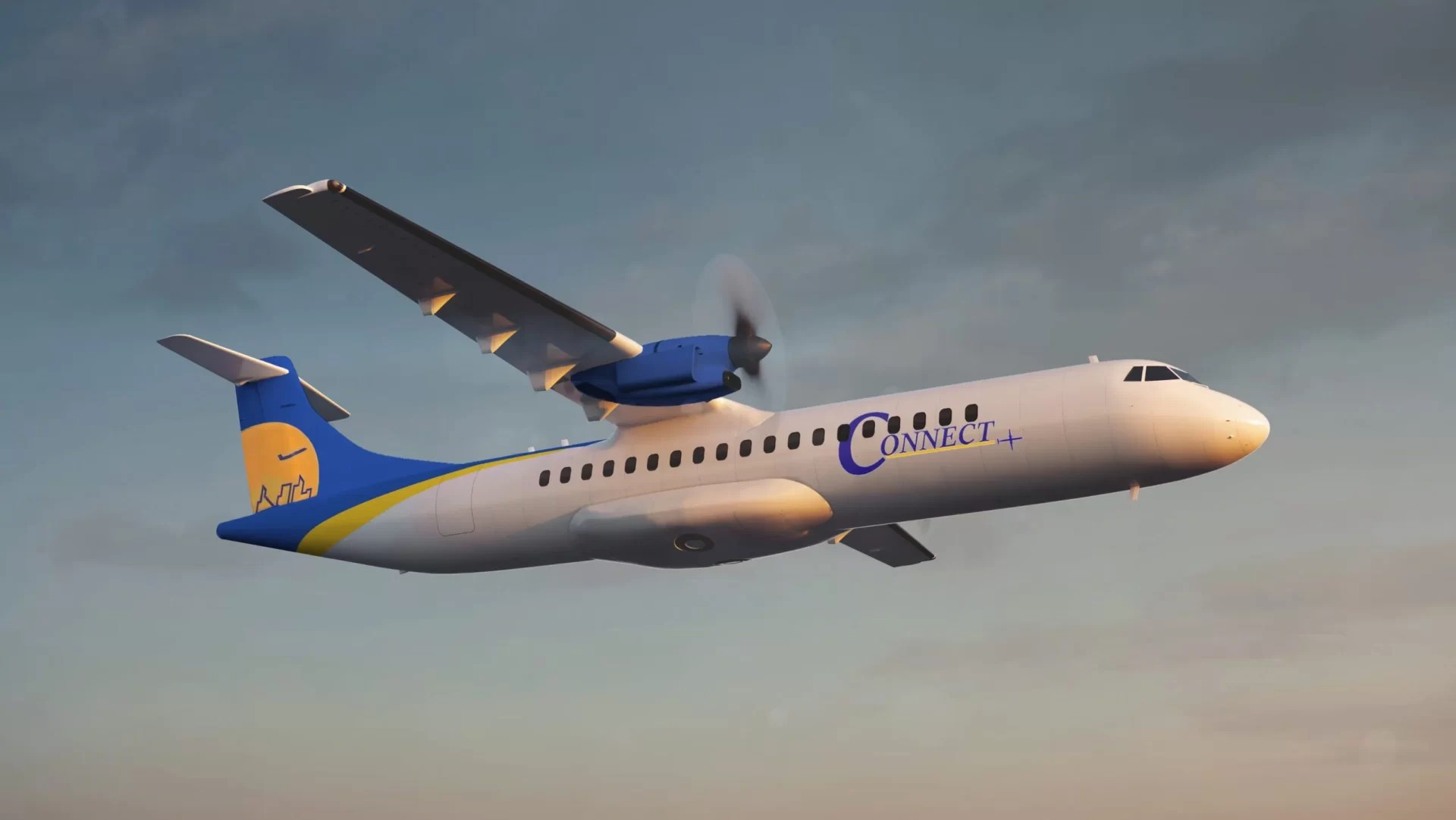
(Photo: Connect Airlines)

“There is an error in the DOT letter, as Connect’s certification process is continuing,” he says. “We continue to work with the FAA and as part of the normal certification process. They will be doing final manual reviews very shortly.”

“All along, we have been working with the FAA to ensure we demonstrate all safety performance standards,” he added.

“Connect has diligently prosecuted its FAA application since the department issued its certificates,” an attorney representing Connect wrote in the airline’s certification extension request last month. “This process has been unusually complicated given Connect’s desire to operate interstate, flag, and supplemental services. Accordingly, Connect’s request for additional time to make its certificate effective is well founded.”

Regardless of its status with the FAA, Connect Airlines needs to finish this same certification process with Transport Canada to be able to operate flights into Canada as well. The DOT gave Connect Airlines until early August to prove it is making progress on certification, which would give the company time to get certified with Canada by September as originally required, but if the airline already has hiccups at home, it’s doubtful whether it will get certified abroad on time either.

Connect Airways’ Public Interest

The airline said that its public interest is founded in the added efficiency of turboprops, its ability to connect underserved communities, and the benefits of increased competition at Billy Bishop Airport. The company is a brand under the existing Waltzing Matilda Aviation, which operates Cessna, Bombardier, and Embraer jets around Bedford, Massachusetts.

It is unclear as to whether Connect Airways will ever expand beyond the Toronto market. The company will effectively act as an American company with an operating base in Canada if all of its flights go into and out of Toronto. While it might not have to face the hurdles of actually opening a base in Toronto, this is certainly a unique business model. Connect will likely focus on establishing itself in the Billy Bishop market before expanding onward, but it would be interesting to see the company competing in other small- and midsize markets as Avelo Airlines, Breeze Airways, and even Red Way do.

Other Potential Markets

Whenever Connect manages to get off the ground, there is certainly a market for it across different pockets of the United States. The last strongholds of turboprops in major American regional airlines are declining, leaving room for Connect to fill the holes that cannot use the jets that older Dash 8s are being replaced with.

If certified, Connect Airways will fill a gaping hole left by Porter Airlines. Porter currently uses Billy Bishop as its main Toronto airport, just as Southwest Airlines prioritizes Midway Airport instead of O’Hare in Chicago. However, Porter is upgrading its fleet from the Dash 8 to the Embraer E190 E2, which will make it impossible to maintain its current operation size at Billy Bishop. When Porter moves some flights to Toronto’s Pearson International Airport, Connect Airlines will be able to fill the gap left by Porter quite easily.

If Connect finds the current business model successful, there are other ways to continue expansion in other similar markets. It could, for example, expand into British Columbia on the Pacific coast. With connections from American Pacific Northwest cities such as Seattle, Portland, and more, the company would once again find a niche opened by the retirement of Horizon Air’s Dash 8s.

(Photo: AirInsightGroup)

Like Porter, Horizon, which is Alaska Airlines’ wholly-owned regional subsidiary, effectively removed itself from a number of markets by eliminating the Dash 8 from its fleet. Though the airline will see benefits from better fleet continuity, Connect Airlines might have an easy time using its own Dash 8s to jump into some of the routes whose operational challenges, such as short runways and confined approaches, make jet flights difficult or impossible.

Other regional airlines do still fly turboprops in the United States. Silver Airways is well-known in the Florida region for the ATRs it uses across the southeastern United States. Empire Airlines in the Pacific Northwest uses turboprops as well, but it is primarily focused on cargo operations and lost its main passenger contract after the covid-19 pandemic hit.

Despite its current challenges, Connect Airways has big plans for the future. It currently has orders for up to 100 ATR aircraft converted to run on hydrogen fuel. The airline has a deal with Universal Hydrogen, which itself successfully flew a Bombardier Dash 8 on hydrogen in March, to convert 75 ATRs, with options for an additional 25 more. Deliveries are planned to start in 2025.

John McDermott

John McDermott is a commercial pilot pursuing a career in professional flight. His passion for aviation began in an Ann Arbor bookstore with a tale of enemy pilots during World War 2, and he hasn't looked back. Besides flying and writing for AirlineGeeks, John volunteers with Professional Pilots of Tomorrow and travels whenever he gets the chance.

Merlin Completes Autonomous Cessna Caravan Flights

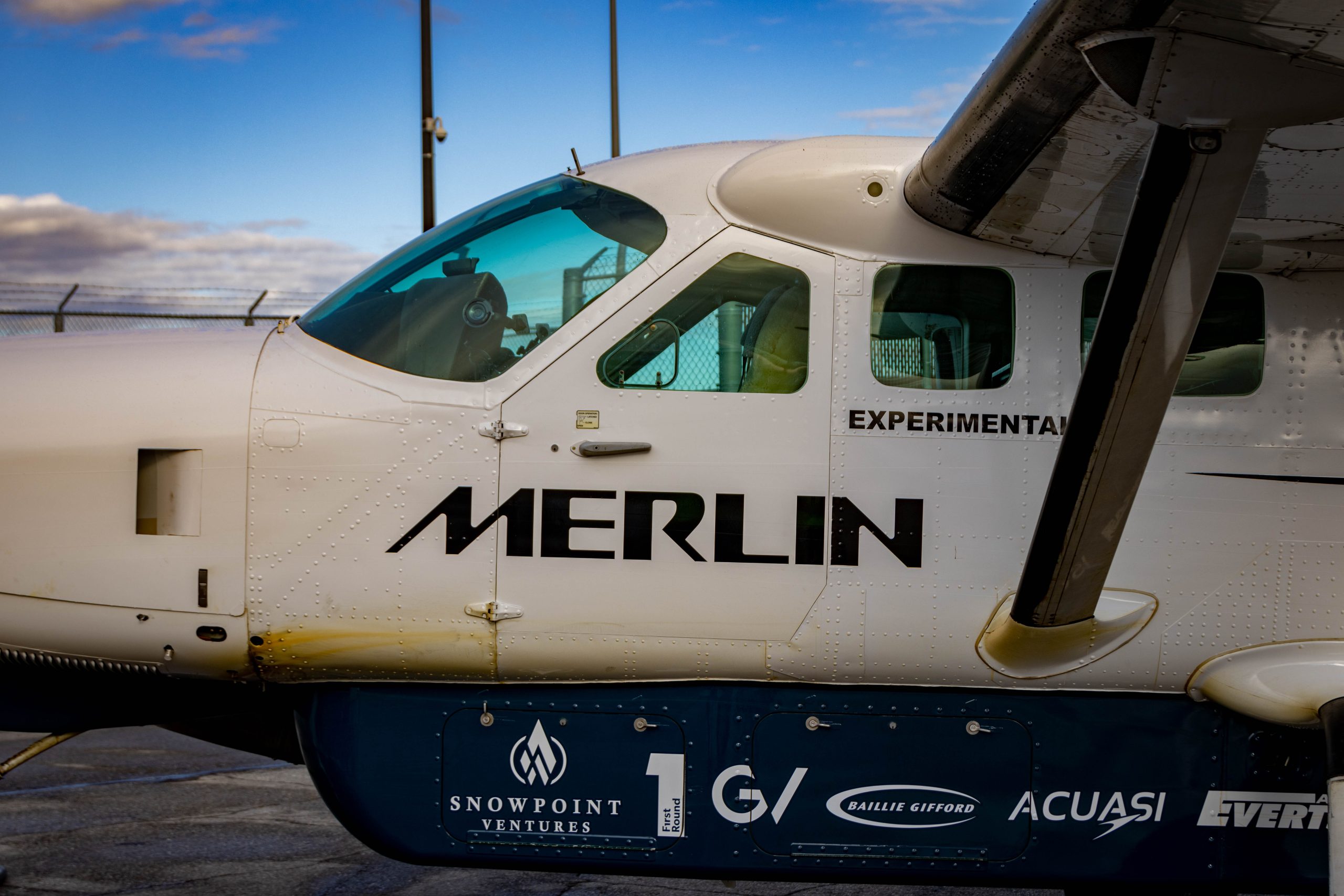
Merlin Lab's Autonomous Cessna 208 Caravan. (Photo: Merlin Labs)

Merlin Labs announced on July 6 that it completed 25 autonomous test flights in Alaska. The Boston-based company conducted the tests under a $1 million contract with the Federal Aviation Administration (FAA) to demonstrate a highly-automated flight control system with a safety pilot onboard. 

The company operated these test flights with the University of Alaska Fairbanks and Everts Air Cargo. All routes originated from Fairbanks at FAA-designated Uncrewed Aircraft System Test Site and flew to Fort Yukon, Galena, Huslia, Tanana, and Prudhoe Bay. 

The company claimed, “Over sixty hours of systems-on, autonomous flight time were completed with the Merlin Pilot, allowing for extensive data collection in a real-world environment with complex terrain and inclement weather. Merlin Pilot is the first autonomous system integrated into the National Airspace System.”

New Frontier

Several other companies are also in advanced stages of commercializing autonomous flight systems. Ribbit and Reliable Robotics are other leaders in the field.

Ribbit

On the same day as Merlin’s announcement, Ribbit also revealed that it had signed a $1.3M contract with Transport Canada and Innovative Solutions Canada to begin testing self-flying aircraft in remote regions. The company has completed over 200 hours of hands-free flights on a two-seat airplane. 

Under this contract, the Toronto-based company will provide a single aircraft with remote crew and maintenance services to support autonomous cargo flights for one year. Transport Canada plans to use the data to inform future regulations, standards, and policies.

Reliable Robotics

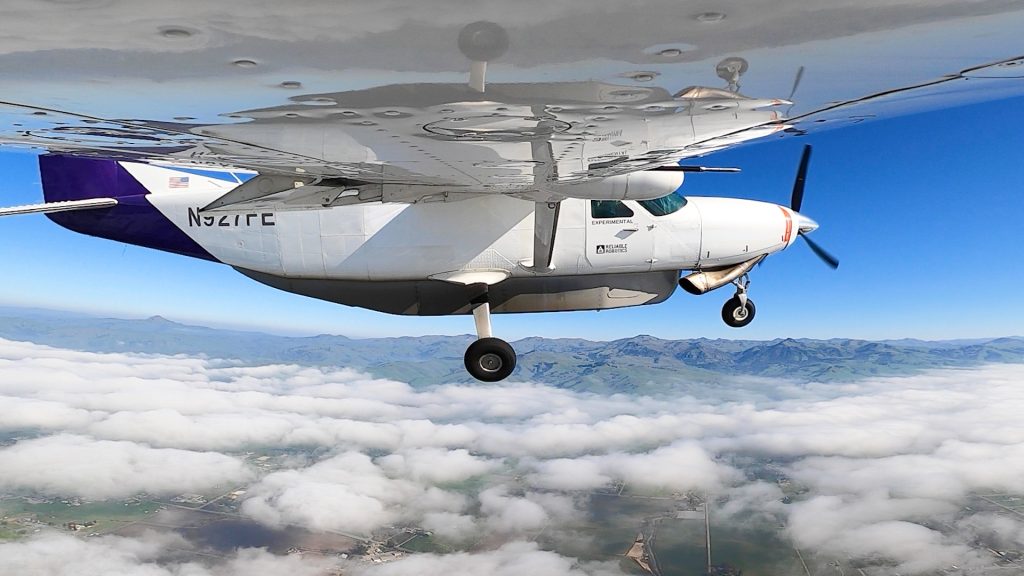
Reliable Robotics’ Cessna 208 test aircraft. (Photo: Reliable Robotics)

Reliable Robotics is another U.S.-based company that works on advancing safer flying technologies for conventional aircraft. The Hollister, California-based company received its certification basis approval from the FAA in August 2022 and is working toward developing a certifiable remote-piloted flying system with a safety pilot onboard for the first development phase.

It also recently announced the completion of a series of test flights with NASA to demonstrate a high-precision, high-integrity navigation system that enables automatic landing and take-off in addition to auto taxiing. 

The company also appears to be leading in commercializing its technology. Reliable Robotics has signed a deal with Azul Airlines to study retrofitting its regional airline subsidiary’s Cessna 208 Caravan aircraft fleet in Brazil with flight automation systems. While FedEx has not made any orders with the company, it provided the aircraft and publicly acknowledged its involvement in the company’s technology development.

Conclusion

Existing aircraft can already complete entire flights with little to no human input under nominal conditions. Autonomous technologies will enhance flight safety, augment flight accessibility and potentially reduce emissions. While companies like Wisk Aero are inching toward creating novel autonomous flying machines, retrofitted conventional planes will likely commercialize sooner. 

However, that does not mean that self-flying machines will soon fill our sky. All these companies are currently conducting test flights in rural or remote areas, which will likely continue as they enter into services. In addition, all three focus on small cargo-carrying airplanes, which have significantly less impact should the system fail during flight. Although we are still far away from your day-to-day flights operating from gate to gate, these new technologies will undoubtedly start impacting people living in remote communities. 

Fangzhong Guo

Fangzhong grew up near an OEM airport in northeastern China, where he developed his enthusiasm for aviation. Taking upon his passion, he's now working as an aircraft interior design engineer. Besides working in the aerospace industry, Fangzhong enjoys trying out different types of airplanes and seeing how airplane interiors have evolved. So far, he's flown on over 80 types of aircraft. He also planespots in his spare time. His rarest catches included the 747 Shuttle Carrier Aircraft and AN-225.

Finnair Posts High June Load Factor Despite Airspace Closures

A Finnair Airbus A350 lifts off. (Photo: Airbus)

Finnair, Finland’s national air carrier, carried 997,200 passengers in June, 9.9% more than in June 2022 and 3.8% more than in May 2023. These are excellent results considering that there was one day less in June than in May. The negative impact of inflation and the closure of Russian airspace, particularly towards Asia, is still evident, even though those related to the COVID-19 pandemic have virtually vanished.

Finland’s national air carrier recently shared its full-year 2023 forecasts on June 13, which showed positive profit due to the anticipated increase in travel demand surpassing previous expectations. Also, thanks to the more-favorable-than-expected fuel price trend, the Finnish airline has readjusted its forecasts, estimating that the operating result will probably reach or even exceed the 2019 level; however, even if the 2023 revenues continue, Finnair still forecasts that they might not get the pre-COVID level of 3,097.7 million euros.

During June 2023, 82% of flights reached their destination on time. Finnair’s traffic, measured by Revenue Passenger Kilometers, increased by 16.4% year-on-year, while overall capacity, measured by Available Seat Kilometers, increased by 15.1% year-on-year. Additionally, there was a 0.9% increase in the Passenger Load Factor compared to the previous year.

While domestic traffic has only slightly increased compared to last year, there has been a significant rise in Asian traffic. This is due to the reopening of the Hong Kong route in July of last year and additional capacity to Japan and South Korea. Furthermore, the route to Mumbai opened in August, contributing to the increase in traffic.

During October 2022, traffic over the North Atlantic decreased due to disruptions in operations between Stockholm and North American destinations. However, European traffic has slightly increased, while there has been a significant rise in the Middle East, thanks to the collaboration between Finnair and Qatar Airways, which started in November 2022. This partnership has led to an increase in cargo operations. With the rise in Asian capacity, cargo operations have improved compared to last year, despite the reduced North Atlantic cargo capacity due to the disrupted operations between Sweden and the United States.

Available line-tonne kilometers increased by 36.7%, and revenue per tonne-kilometer of planned cargo increased by 24.0% year-on-year, representing a 28.3% increase in total tonnes of freight.

Finnair’s goal of achieving a strategic comparable operating profit margin of at least 5% by mid-2024 has been advanced by 12-18 months due to an improved profit outlook. Although the forecasts have improved, Finland’s national air carrier’s operating environment remains uncertain due to the high fuel prices and ongoing closure of Russian airspace.

Traffic statistics for July 2023 will be published on August 8 while the outlook and guidance for the full year 2023 will be posted on July 21, in the following half-yearly report.

Vincenzo Claudio Piscopo

Vincenzo graduated in 2019 in Mechanical Engineering with an aeronautical curriculum, focusing his thesis on Human Factors in aircraft maintenance. In 2022 he pursued his master's degree in Aerospace Engineering at the University of Palermo, Italy. He combines his journalistic activities with his work as a Reliability Engineer at Zetalab.

Avelo Makes Summer Return to Bozeman Yellowstone International

Boarding Avelo's first ever commercial flight in Burbank. (Photo: AirlineGeeks | Taylor Rains)

On Wednesday, Jun 28, Avelo Airlines made their return to BZN. A flight that I was excited to be on. My experience with the Purple clad airline is limited as I have only flown with them once before, on their airline’s inaugural in April 2021.

As a Bozeman-based writer, my trip started on the return leg from BZN and it was not off to a great start. I received my check-in email about 24 hours before the flight was due to depart and when I attempted to check in I kept getting an error message saying that my reservation was not found. Alarmed, I called Avelo’s customer service number where a prerecorded message says it will cost $20 to make a new reservation or change an existing one. I spoke with an agent named Amy who was incredibly helpful. She told me she would forward the issue to another agent who would hopefully get me checked in. A few hours passed and I was still unable to check myself in, but at about 2 o’clock in the morning, the issue was finally fixed and I could get my boarding passes printed.

A note about customer service: while I had a wonderful experience on the phone, my parents, who traveled on the inbound leg, said they had a pretty miserable experience with phone support. So pre-flight customer experience seems to be a bit hit or miss with Avelo.

Arriving at Bozeman Airport is always a treat for me, it has grown exponentially since I was a little kid flying in and out on my way to my grandparent’s house, today however, BZN is the busiest airport in the state with seven different airlines regularly serving this destination. Avelo’s check-in desk is in between Southwest’s and JetBlue’s with one lane for bag drop and another for full service. I arrived well before the check-in desk was open, so I made my way straight through security. Avelo is operating out of gate B6, probably one of my favorite gates because of its proximity to the best coffee in the airport. At the gate Avelo had a table of Purple, Gold and Black sunglasses laid across a table for those of us traveling on this flight.

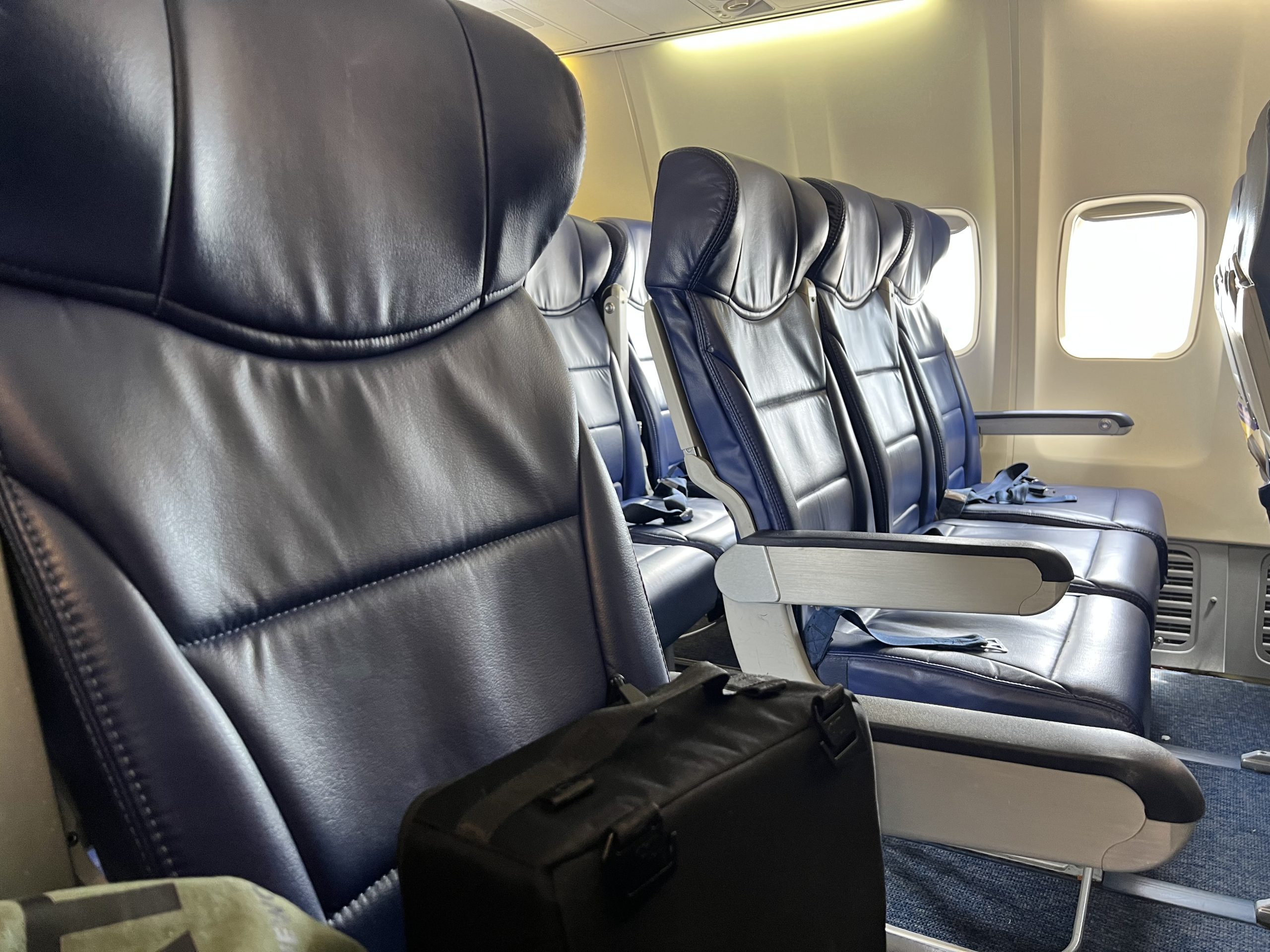
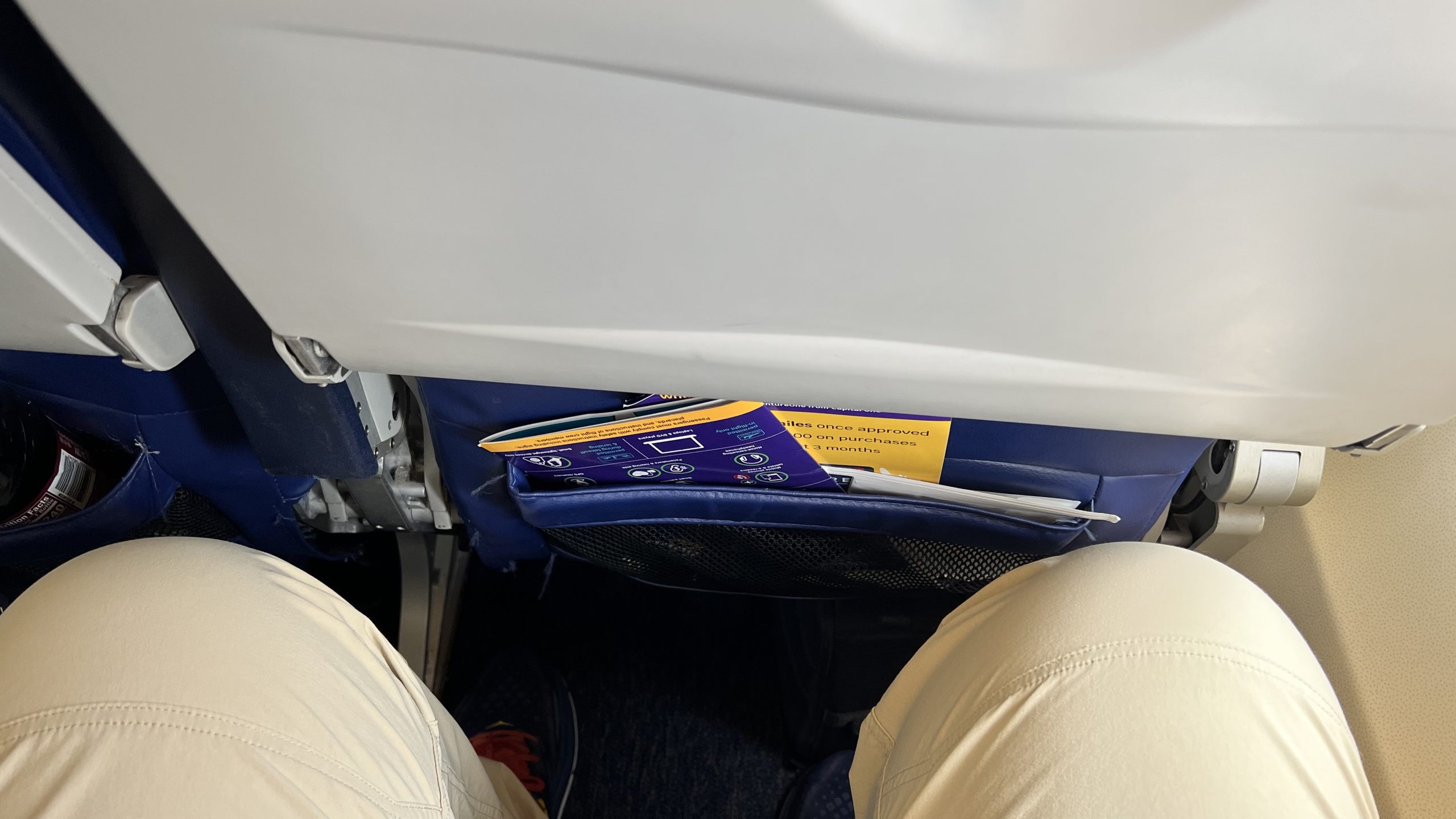
Boarding was prompt, likely due to this plane being about half full. My seat for this flight was 6F a window seat, although I did have the entire row to myself. The legroom at 6F was acceptable, but my knees touched the seat in front of me but in such a way that made my trip horribly uncomfortable. The tray tables are large and sturdy, and each row has air vents. The 737-700 we were flying on was showing its age, though, the plastic surrounding the window was quite yellow and the overhead plane looked like something from the early 2000s.

Food and Service

This is where Avelo loses some serious points. There is no food service, not even a buy-on-board option, and even for a low-cost carrier this is well below par. On a nearly three-hour flight, I would expect at least the option to purchase drinks or snacks. The flight attendant did mention at the end of the safety briefing that there is bottled water available on request, but I never saw anyone take them up on the offer. The last time I flew with this airline there were free snack bags provided with the promise of a buy-on-board menu in the future, but two years on that does not seem to have materialized. The service is hard to rate because, frankly there is not a lot for the crew to do, with no service portion of the flight I rarely saw any of the flight attendants during the entire flight.

If you would like to see the video trip report of this article click here: https://youtu.be/cdjGIlrpP4M

Trip Report: Trying to Fly During United’s Massive Meltdown

United 737 at Washington Dulles
A United Boeing 737 rotating out of Washington Dulles. (Photo: AirlineGeeks | Peter Weiland)

As a flyer one of the worst things you can hear is that your flight home has been cancelled. This happened to me, as well as thousands of other passengers, last week. I was in Los Angeles after covering Avelo’s flight to Burbank from Bozeman and as I so often do, booked my return flight on the once daily nonstop flight to Bozeman. This flight alone is the entire reason I am a United Elite. That flight has always been there, and it always leaves on time, or so I thought.

I knew the flight was being canceled about 15 minutes after checking into the H Hotel at LAX. A text message, that I normally would have ignored, followed swiftly by a push notification from the United app, “Due to operational reasons your flight to Bozeman has been canceled.” My heart sank and I immediately got on the app to see if I could rebook on to a flight to Denver and then on to Bozeman – sold out completely. I was now going to be spending two nights in Los Angeles, one completely unplanned. To make matters worse, the H Hotel was sold for the next night. I decided to use my Marriott points to book a room at the Sheraton.

The next morning, I packed my things and prepared to move to my new hotel fully expecting to be flying out the next day, I hung out for the day and ended up ordering dinner. Nothing from United so I assumed the flight would depart to Denver as planned until that unfortunate text message came through at 7 am, “Due to operational issues we have had to cancel your flight to Denver.” This message was shortly followed by a notification explaining that they had rebooked me. I’ll fully admit that I was excited, I still got to go home! Except this rebooking was for the next day and would see me fly from LAX to SAN then onto DEN and finally home to BZN. Being the tired and frustrated passenger that I was, I ended up booking the only seat available on the only available Delta Flight, every other airline was either sold out or priced outrageously. I knew Delta would get me there and I didn’t want to get stuck in either San Diego or Denver. I canceled my United booking and got home safely and on time with Delta.

Ultimately I had to spend well over $2000 on hotels, food and my additional flight purchase and the only response from United, when I submitted all the receipts to them, was that it could take up to 90 days for a reimbursement to be processed if they even deem me eligible to receive one.

I understand that many more people were stranded for much longer periods of time and may or may not have the flying experience that I do but I wanted to write this trip report because I feel it’s important for people to understand what it’s like to be stuck at the mercy of an airline that’s completely melting down internally. United’s CEO Scott Kelly has blamed both the weather and the FAA both for the shortcoming of the airline last but talking to so many employees over that four-day period of time it seems that there is a lot of work internally that needs to be done.

I would like to extend my sincerest gratitude to all the United employees that worked tirelessly to help the thousands of stranded passengers last week. You all are the unsung heroes of the airline industry.

Sign-up for newsletters & special offers!

Get the latest stories & special offers delivered directly to your inbox

SUBSCRIBE

Uh-oh! It looks like you're using an ad blocker.

Our website relies on ads to provide free content and sustain our operations. By turning off your ad blocker, you help support us and ensure we can continue offering valuable content without any cost to you.

We truly appreciate your understanding and support. Thank you for considering disabling your ad blocker for this website