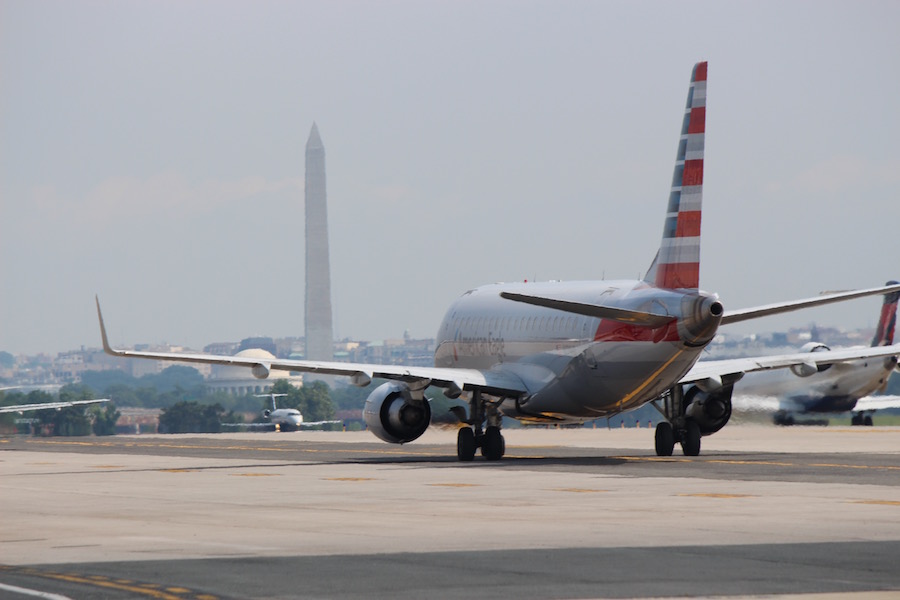
An American Eagle E175 taxis at Reagan National with a "monumental" backdrop. (Photo: AirlineGeeks | Ryan Ewing)
This past Wednesday, the United States House of Representatives voted down a new provision to allow an increase in the number of flights operated into and out of the closest airport to the Nation’s Capital, Washington Reagan National Airport. The legislation would have allowed carriers to operate more routes, aimed explicitly toward Western destinations. However, the rejection of the provision seeks to have more travelers use one of the Capital’s outlying airports, Washington Dulles International Airport.
The legislation would have allowed carriers to operate 14 additional flights from the slot-controlled Reagan Airport. The move would have benefitted Delta, which has a fairly large operation out of Reagan, but a small footprint at Dulles compared to United.
Currently, routes out of Reagan are limited to 1,250 miles. There are exceptions to this requirement, such as Alaska Airlines’ route from Seattle. However, the specific slots that Delta has been lobbying for are those that extend outside of the restriction perimeter.
Compared to April 2022, Delta saw an increase in passenger demand of 17.9% this past April, higher than both American and United. This increase in passenger travel for Delta competes directly with United’s Dulles operation. Reagan National is just four miles from Downtown, while Dulles is 30 miles outside of the city center. This makes Reagan significantly more convenient to those who are downtown.
Air traffic statistics published by Metropolitan Washington Airports Authority showed Reagan handling 200,000 more passengers than Dulles this past April, and almost one million more from the start of the year to that time. This reinforces the fact that Reagan is the airport of choice for D.C. locals.
Dulles Airport
While an increase in slots would benefit Delta, it would hamper United’s operation over at Dulles. The carrier worked with lawmakers to oppose the ruling, arguing that the airport wouldn’t be able to handle an increase in flights.
The additional argument to be made is that Reagan doesn’t have plans to grow additionally in the near future, as there really is not much space to work with. Dulles on the other hand, was designed with expansion in mind. Reagan has a current land area of just under 900 acres, while Dulles takes up 13,000 acres. The footprints alone at both airports foreshadow the increase in movements at Dulles in the future as the airport will be able to handle additional future traffic.
While The House did vote to reject, the bill continues on the legislative process onto the Senate and then the President, before it is fully terminated or enacted.
Zach’s love for aviation began when he was in elementary school with a flight sim and model planes. This passion for being in the air only intensified throughout high school when he earned his Private Pilot Certificate. He then attended Embry-Riddle Aeronautical University, earning his certificates and ratings to later flight instruct and share his passion for aviation with others. He now resides in the North East living out his dream as an airline pilot.
Trip Report: Finding a Better Connection to Europe Through Aer Lingus
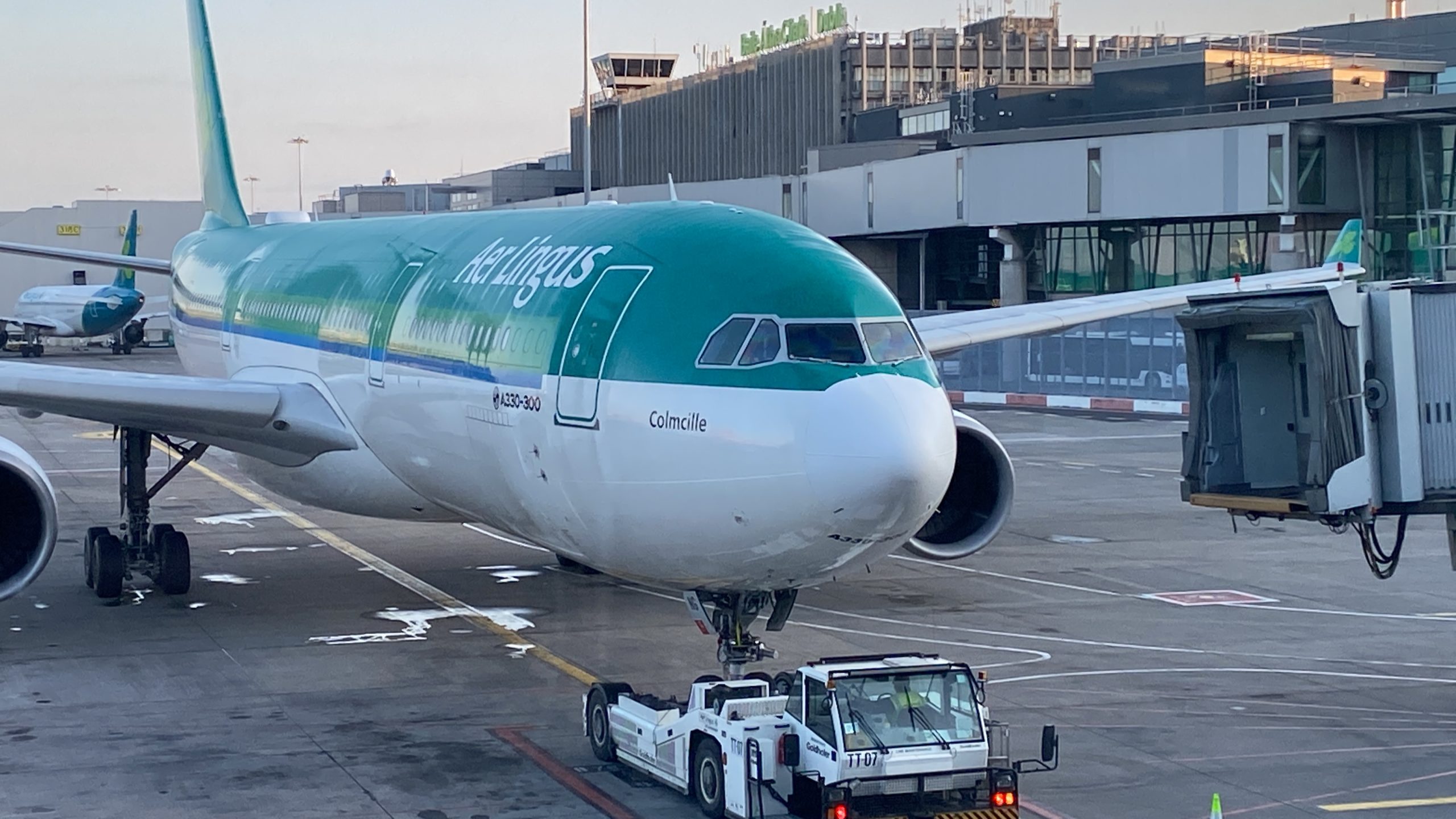
An Aer Lingus Airbus A330 awaits departure from Dublin.
(Photo: AirlineGeeks | John McDermott)
Iceland has become famous over the past few years for serving as a connection point between North America and Europe. The travel model — championed by WOW Air before its bankruptcy and continued by Play and Icelandair — sees passengers flying between major North American and European cities with a stop in Keflavík.
Thousands of passengers have used this method of travel since WOW Air started advertising Keflavík as a stopover point; passengers could either connect straight through Iceland or spend a few days in the country before moving on, saving money and getting an extra adventure as an added bonus.
There is another country, though, that could serve a similar purpose: Ireland. Similarly to Iceland, Ireland’s location is geographically beneficial for connections from North America to Europe. Located on the far Western edge of the European continent, the country’s capital, Dublin, makes for a fairly-direct connecting point for passengers going onward to Europe.
Though Ireland doesn’t have the same low-cost offering that Iceland does in the United States, its flag carrier, Aer Lingus, is similar to Icelandair, the full-service carrier that serves Iceland. On a recent trip from Chicago to Munich, I had originally looked to book through Iceland; Icelandair serves Chicago twice daily, making it a convenient connection. However, I soon found that Aer Lingus’ prices were cheaper than Icelandair’s, and I could get more amenities, such as free seat selection and a checked bag, for about the same cost that Icelandair would charge.
Booking My Flight
Thus, I decided to book Aer Lingus for my trip to Germany. The booking and check-in processes were fairly straightforward and are similar to any other flag carrier operation you’d find in Europe or the United States.
There are two things to note about the booking and checkin process. First, I noticed there was no place to list my American Known Traveler Number (KTN), which gives me automatic access to TSA PreCheck on departure from the United States and Global Entry upon my return.
Though for a moment I figured the area was just hidden somewhere – after all, it took me a try or two to find the KTN area when I first booked on Lufthansa – I learned a few days before my flight that Aer Lingus does not participate in the PreCheck program. Thus, I knew going into the flight that I’d be relegated to the standard security area on departure.
However, there was also a plus to the checkin program. This does not directly apply to me, but I feel it’s a nice touch: the airline offers a wide array of accommodations for travelers with allergies or disabilities as well as neurodivergent passengers. Besides being able to request an allergen-free or vegan meal, I noticed that there was also an option to request mobility assistance and even notify the crew that a traveler is autistic.
The flight crew could then accommodate these issues and either help a passenger onboard or, through a partnership with the Kinney Center for Autism Education and Support, assist with the sensory issues that could be cause by loud engines, changing lighting levels, or other sensory inputs that come from the normal operation of an aircraft; the airline has a special page on its website to help guide autistic passengers through each step of the onboard experience as well as the departure and arrival airport phases.
My Airport Experience in Chicago
My trip would consist of two legs. The first, a flight from Chicago’s O’Hare International Airport to Dublin International Airport, would be served by an Airbus A330-300. After an hour or so in Dublin, I would connect onto an Airbus A321neo that would fly me the rest of the way to Munich.
My flight to Dublin, flight EI 122, was scheduled to leave O’Hare’s Terminal 5, the international terminal used for departures by most foreign airlines, at 15:50. I arrived at the airport just after noon to check in for my flight. I had arrived at the airport just a few minutes after checkin had opened at the airport – early enough that the airport boards didn’t even list that checkin was open – so I made my way to the ticket counter and got in line.
The checkin process was easy. Though a fairly-substantial line had started forming, the airline staff was moving efficiently. Checkin included a passport check. The agent issued me boarding passes for both of my flights and checked my bag as well. After a short discussion about a pin from my alma mater that the checkin agent was wearing – Northwestern University chartered a flight to Dublin last summer to play a football game in Ireland – I took my boarding passes back and headed towards security.
For my first trip without PreCheck in about a year, the security process was straightforward. I used the central security checkpoint in Terminal 5. Though the line was substantial, the process was fairly painless; like the checkin workers, the TSA workers were moving efficiently, so, especially with all the extra time I had, there was no need to worry.
Exploring O’Hare’s Terminal 5
After clearing security, it was time to wait for my flight. I was dismayed to find that my gate did not have a view of the Airbus A330 that would fly us to Ireland, so I would not see the outside of the aircraft until many hours later on arrival into Dublin. I spent the bulk of my time exploring Terminal 5, including checking out the new Delta wing; Delta is one of a few domestic airlines that uses Terminal 5 and has by far the largest presence of any airline in Terminal 5, and it was my first chance to experience their facilities there firsthand since they moved from Terminal 2 last winter.
I also got to check out the new expansion for the first time. I worked at O’Hare for months while the expansion was being built, but this was my first time experiencing it as a passenger and not an employee. A few of the hardstands at the far end of the terminal I had once marshaled (relatively) tiny Pilatus PC-12s into now housed gates with Southwest 737s and United 787 Dreamliners preparing for passenger flights, quite the shift from the small turboprops, cargo flights (on passenger planes), and maintenance aircraft I had often seen there.
Boarding in Chicago
One thing I had been confused about was the section on my boarding pass that told us when the “gate closed.” This time was nearly an hour before the scheduled time of departure. I wondered if that meant that boarding would be completed by then and the gate closed, so that nobody else could board. Thus, I returned from my terminal exploration back to the gate especially early out of an abundance of caution.
My fears of missing my flight were unfounded. The gate closing time ended up being when the boarding process began. Before I knew it, a large crowd had gathered at the gate area in preparation for departure.
One of the biggest things I’ve noticed about transatlantic flights on European carriers that the boarding process is usually quite disorganized. Neither Lufthansa, which I’ve flown to Germany a couple times, nor Aer Lingus use boarding groups or dedicated lines. After letting preboarders and passengers in business class board, Aer Lingus simply started boarding back to front, calling sets of rows at a time and waiting for passengers to make their way through the crowd to board the aircraft.
As I had selected a seat in the next-to-last row, I was one of the first economy class passengers to board, a nice perk that I wasn’t expecting. As I made my way onto the aircraft, the first thing I noticed was how brightly green the interior was. The cabin design looked and felt decades old; whether it was that old I’m not sure, but the aircraft would show a bit of age throughout the flight, an issue I’ll get back to shortly.
I found my way to the back of the cabin to find my seat…and the metal box preventing me from fitting my backpack completely under the seat in front of me. This isn’t an issue I can really blame Aer Lingus for; I think it’s more an unfortunate product of how the A330 is built.
After really trying to push and squeeze my aging backpack into whatever space was left below the seat, I ended up fitting my backpack into the smallest overhead compartment I’ve ever seen. I was sure to pull my laptop and a book, both of which I stored in the seatback pouch in front of me, out of my backpack before departure.
During boarding, the crew made special note of two issues we’d encounter in flight today. First, they noted that the Wi-Fi onboard the aircraft wasn’t working. Per Aer Lingus’ website, it seems that Wi-Fi is standard on Aer Lingus’ Airbus A330s, so its dysfunction today must have been non-standard. Second, in keeping with the dated cabin features, we were warned that the In-Flight Entertainment screens might freeze in flight, but that we could page the cabin crew to fix the screens should they malfunction as well.
I was glad, therefore, that I had work and entertainment that did not rely on Wi-Fi to function. It was especially important, though, to pull everything I needed from my backpack before closing the overhead bin so I wouldn’t keep stepping over the passenger next to me to get into the aisle.
I found a pillow, a blanket, and earbuds waiting for me at my seat. This seems to be standard economy-class care on transatlantic services. The blanket and pillow were far from luxurious, but this is also standard-fare across airlines and isn’t something especially lacking about Aer Lingus. Though I didn’t use the blanket or earbuds, the pillow ended up coming in useful for back support throughout the flight.
Our Flight to Dublin
After getting settled, all I had to do was wait for departure. Our flight pushed back from the gate exactly on time; however, after push, we didn’t start taxi for 10-15 minutes. As with the room under the seat ahead of me, I expect this was not Aer Lingus’ fault but rather an operational delay relating to the airport or the air traffic control system. I couldn’t find the ATC audio of the pushback, so I don’t know exactly why we were delayed, but soon we were moving towards the northern airfield for departure.
Our takeoff and climbout were normal. Soon after departure, I tried testing the in-flight entertainment as part of the video trip report I was filming; as predicted, though, the screen froze within a few minutes of use. I decided not to page the cabin crew to have the screen unfrozen, but I did notice that the screen was quite outdated. Unlike the United 737 MAX 9 I had been on a couple weeks earlier, whose IFE screen was a standalone touchscreen unit, the system on this aircraft used a remote as its primary control. It took me a few minutes to get used to the controls, learn how to get what I wanted, and adjust to just how much effort it took to get the screen to do what I wanted. Since the screen froze, though, this ended up being a non-issue.
An hour or so into the flight, the cabin crew came by with a standard assortment of drinks, all free. I chose a water to boost my hydration at the start of my journey. Dinner was served within another hour. There was a chicken option, a beef stew, and a vegetarian option, but by the time the crew reached my row in the back, only the beef stew remained; the flight attendant joked that this was unusual, as people often tend to prefer the beef stew and leave the other options for the last few rows.
The stew came with a roll, a small salad, triple chocolate mousse, and a cup of water. I enjoyed the meal and would be happy to have it again. I’d even go so far as to say that this was one of my favorite onboard meals I’ve had lately. I certainly enjoyed eating it.
After dinner, the cabin crew dimmed the lights to let people sleep. We would never have a true night on this trip. It was daylight for the first half of the flight before the sun began to set over the western Atlantic ocean. The moment the sun had set on the way out, it was rising again as we approached Ireland; I wish I had captured a video of the sunset blending right into a sunrise as we approached Europe.
The flight attendants came through a few times throughout the flight offering coffee and tea, but I did not take any drinks after the very first service after departure. It was still nice to know that the option was available multiple times throughout the flight should I have wanted some.
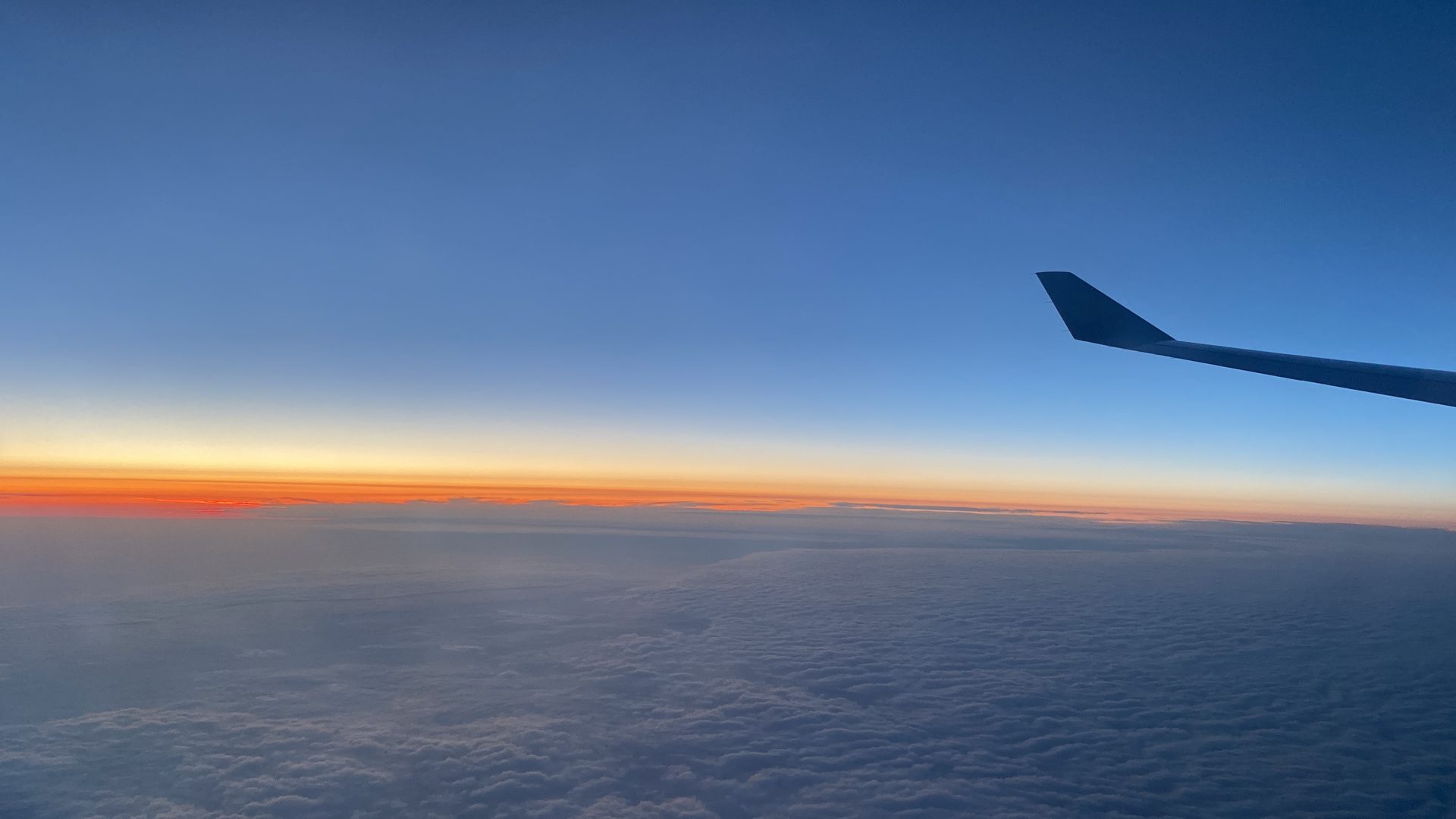
The half-sunset/half-sunrise while we approached Dublin. (Photo: AirlineGeeks | John McDermott)
I spent most of the rest of the flight editing the clips I had for my video trip report so far, and I managed to sleep for a couple hours. An hour or so before landing, the crew came by with the pre-arrival snack, a warmed sandwich with ham, egg, and cheese. This was definitely the best pre-arrival snack I’ve had in a while, even beating out the cold sandwiches I’ve had on Lufthansa over the past year. Aer Lingus’ sandwich was tasty, and the warmth was a welcome addition.
I also managed to ask the cabin crew about what the customs situation would be. When I visit Munich, I usually fly straight into Germany and either terminate in Munich or hop a domestic flight from Frankfurt; thus, I simply go through customs when I land from my first flight. I wasn’t sure if I’d go through customs in Ireland and officially enter the European Union or wait until arriving in Germany. The crew was polite, helpful, and knowledgeable (I’d clear customs in Germany), and the answer helped me feel more prepared for my connection.
Connection in Ireland
Our flight landed in Dublin just after 05:00 a.m., about 30 minutes early. When we taxied in and disembarked, I finally got my first look at the aircraft that had flown us safely across the pond. The plane wore Aer Lingus’ new white-based livery, as opposed to the green that the company is known for.
I couldn’t spend too much time admiring, though, as I had about an hour to find my connecting flight on to Germany. While I rushed around the terminal, I realized I’d need to join an incredibly-long line to make my connection. I might have accidentally cut in front of a bunch of people because I didn’t immediately recognize the line as that for connecting passengers…but I was certainly glad that I had an hour to make my connection, as other passengers around me had 10 or 20 minutes before their next flight left.
The line, though long, turned out to move pretty quickly; I was through in no more than five or ten minutes. The line was also considerably shorter than when I started; my guess is that, since a couple international flights had just arrived from the United States, the line was longer than normal since multiple widebodies had just dumped passengers into the same place.
Each passenger needed to scan their connecting boarding pass to be let into the main airport area. Afterwards, each passenger was asked if they were connecting to a flight within Ireland or to another country. Those connecting to other Irish destinations were pointed towards passport control, while I was sent toward a side exit that lead to connections for other destinations.
I ended up having enough time to explore the mostly-empty terminal. A few flights were going out, but it wasn’t even 6 am, so while some gates had empty planes waiting for passengers, many others were completely empty. Only a few flights were active at the time, so the airport was also relatively quiet, with not too many announcements.
Onward to Munich
I would continue on to Munich on flight EI352, an Airbus A321neo. It was my first time on an A321neo; I’ve been on other A320 family planes before, though. Aer Lingus flies two round trip connections from Dublin to Munich daily. Lufthansa also competes on this route, with two A320/A321 flights per day.
An interesting caveat: Aer Lingus also flies the Airbus A321 to a few cities in the United States. Most notably, the carrier just launched flights to Cleveland, Ohio on narrowbody Airbus aircraft. I have family in Cleveland, so maybe one day I’ll consider starting my trip there to fly two narrowbodies to get from the midwest to Munich and see what the narrowbodies-across-oceans hype is all about.
In Dublin, I decided not to get breakfast (not much was open that early in the morning anyways), and, after a bathroom break, I simply waited for my onward flight to Munich. The wait wasn’t long – we started boarding less than an hour after I arrived in the new terminal – and boarding soon began again. I was toward the back of the plane again, and I had priority boarding because, though I didn’t bring one, I had carry-on privileges on this flight. I did find it interesting that Aer Lingus only let me bring carry-ons on my flights between Dublin and Munich – I have the same perk on my return flight later this month – but not on either transatlantic flight.
I wonder if passengers often buy duty-free goods in Dublin and want to carry them on to their final destination, though I’m not sure how I’d consolidate an extra carry-on bag into my backpack in Dublin before heading back home. Either Aer Lingus has found a genius method of getting people to pay for an extra carry-on at the gate before hopping the pond or people find other means of getting rid of a carry-on (eating all the snacks they bought?) before boarding to go back home.
Upon boarding, the A321’s cabin instantly struck me as fresher and more modern than the A330’s cabin had been. The A321neo is surely a newer addition to Aer Lingus’ fleet than the A330, so maybe the airline installed a new cabin on this plane when it was delivered new but didn’t manage to upgrade my A330 yet.
I found my way to the back of the aircraft for my seat. Just as the cabin generally felt fresher upon boarding, my seat also felt more modern and up-to-date than my A330 seat. The IFE screen instantly reminded me of my aforementioned United Airlines MAX 9 screen, so I had high hopes to test it out in flight.
Our flight from Dublin ended up being significantly delayed. Though boarding was efficient, it took extra time to get enough fuel and pack all the checked bags onboard the plane. After pushback, we also spent a while sitting on taxiways waiting to join the long conga line for departure. Since we missed our departure slot, I wonder if other aircraft were prioritized for takeoff until we could fit into another opening in the airspace system.
Suddenly, though, we were moving, and we cut in front of a long line of Ryanair and fellow Aer Lingus planes holding on an auxiliary runway for departure. After a 30 minute departure delay, we got a beautiful view of Dublin Airport as we made a 180° turn towards the European mainland and Germany.
This flight was fairly uneventful. At 2 hours long, it was just long enough to enjoy and to demand a substantial form of entertainment (my book) but not long enough to warrant a proper service. Drinks and snacks were available only for purchase, reminiscent of a low-cost airline instead of a full-service flag carrier. I didn’t buy anything since I refilled my water bottle in Dublin.
The in-flight entertainment system worked perfectly on this flight. The system was fully touchscreen, so no awkward remotes to navigate or random freezes to derail your favorite movie. There were many different types of entertainment to choose from (movies, TV shows, podcasts, games, films about Aer Lingus’ history, and more), but the selection of titles within each category was varied. Though I scrolled the titles, I didn’t spend much time actually watching anything.
Despite our late departure from Dublin, we arrived in Munich exactly on time. The airport experience in Munich was standard. There was no line at passport control, so I got through in a few minutes. My checked bag was delivered within a reasonable amount of time.
Final Thoughts
Overall, I enjoyed my trip with Aer Lingus. Though there were occasional hiccups (the awkwardly-managed space below the seat in front of me, the Wi-Fi and IFE breakdown from Chicago to Dublin, and the delay leaving Ireland), most of these issues weren’t Aer Lingus’ fault, and the airline mitigated the issues that were in its control well. Both flight crews, especially on the transatlantic flight, were helpful and pleasant and made my flights enjoyable. The meal on the transatlantic flight was the best I’ve had on a flight lately, and the cabin environment from Dublin to Munich was state-of-the-art. We had entrancing cabin lighting and great views of a sunset and a sunrise en route to Dublin as a boost.
I believe Aer Lingus is a great option for connections from North America to Europe. I will definitely consider them again when I take my next trip. Additionally, I definitely want to try one of their narrowbody transatlantic flights as well to compare with the experience I had on this trip. I think that the combination of the A321 cabin with the long-haul service would make for an excellent experience.
Many thanks to Aer Lingus and my flight crews for getting our flights safely to their destinations, and to do so on time as well. I look forward to my next flights.
John McDermott is a commercial pilot pursuing a career in professional flight. His passion for aviation began in an Ann Arbor bookstore with a tale of enemy pilots during World War 2, and he hasn't looked back. Besides flying and writing for AirlineGeeks, John volunteers with Professional Pilots of Tomorrow and travels whenever he gets the chance.
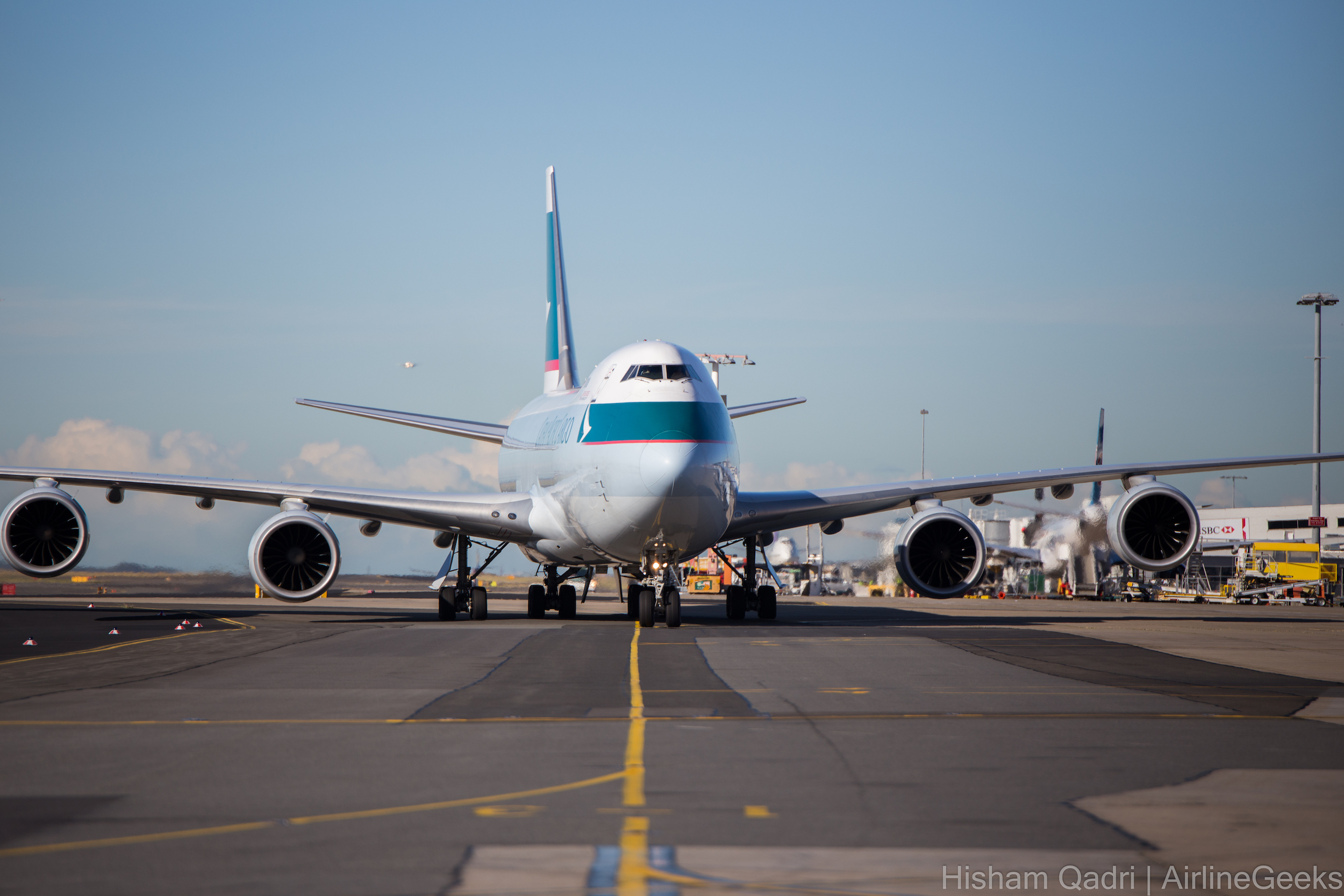
A Cathay Pacific Cargo 747-8F in Sydney (Photo: AirlineGeeks | Hisham Qadri)
Cathay Pacific has announced that it will ramp up its services to Australia by adding 58,240 seats to Perth, the airport reports. The carrier has recently revealed that its long-haul routes are especially popular for student traffic, such as to places like Australasia, the U.K. and North America since the pandemic.
The city’s flag carrier will operate five times a week to Perth, the gateway to Western Australia, starting Dec. 6. The airline will use an Airbus A350-900, which can carry 280 passengers with Business, Premium Economy and Economy Class. The extra flights are expected to meet the travel boom during the holiday season.
“Cathay Pacific has excellent connections throughout North Asia including mainland China, South Korea and Japan, as well as options through to the USA and Canada offering Western Australians access to a range of travel destinations,” Kate Holsgrove, Perth Airport’s Acting CEO, said.
Cathay Pacific currently operates 84 flights to and from Hong Kong and Australia, with six flights per week between Hong Kong and Perth.
Returning to Profitability
Cathay Pacific announced that it had carried over 1.5 million passengers last month with 87.7% load factor, expecting the outlook of July and August will be encouraging as it continues to scale up the flights meet the travel demand.
“We are very encouraged to see that our journey of rebuilding Cathay is on the right track. We have seen a trend of continuous improvement in the performance of our airlines and our financial position is healthy.” Ronald Lam, Chief Executive Officer of the airline, said.
The airline has finally seen a silver lining after keeping its head above water during the pandemic, expecting a consolidated profit of approximately HKD4 – 4.5 billion ($511 – $576 million) for the first half of 2023.
IATA even forecasts Hong Kong could turn the tables and reach pre-pandemic levels by the end of 2024, sooner than it expected. Cathay Pacific was left behind due to travel restrictions and losing HKD33.7 billion over three years, the most challenging period in Cathay Pacific’s history.
Meanwhile, Cathay Pacific is determined to enhance its services to Chinese passengers, announcing plans to hire 200 to 300 flight attendants in China. The new staff need to speak fluent Putonghua. It came after a discrimination incident, when three flight attendants were sacked after being accused of discriminating against non-English passengers.
The traffic figure has been improving since Hong Kong reopened its border in last September. According to Hong Kong International Airport, it currently handles about 120,000 passengers a day, about 60% of the pre-pandemic levels.
In addition, the airport hasn’t stopped expanding its facility during the pandemic. The third runway began operating last July, and the expansion of Terminal 2 is scheduled to be completed by the end of 2024. The airport could handle 102 million passengers by 2035 after the expansion.
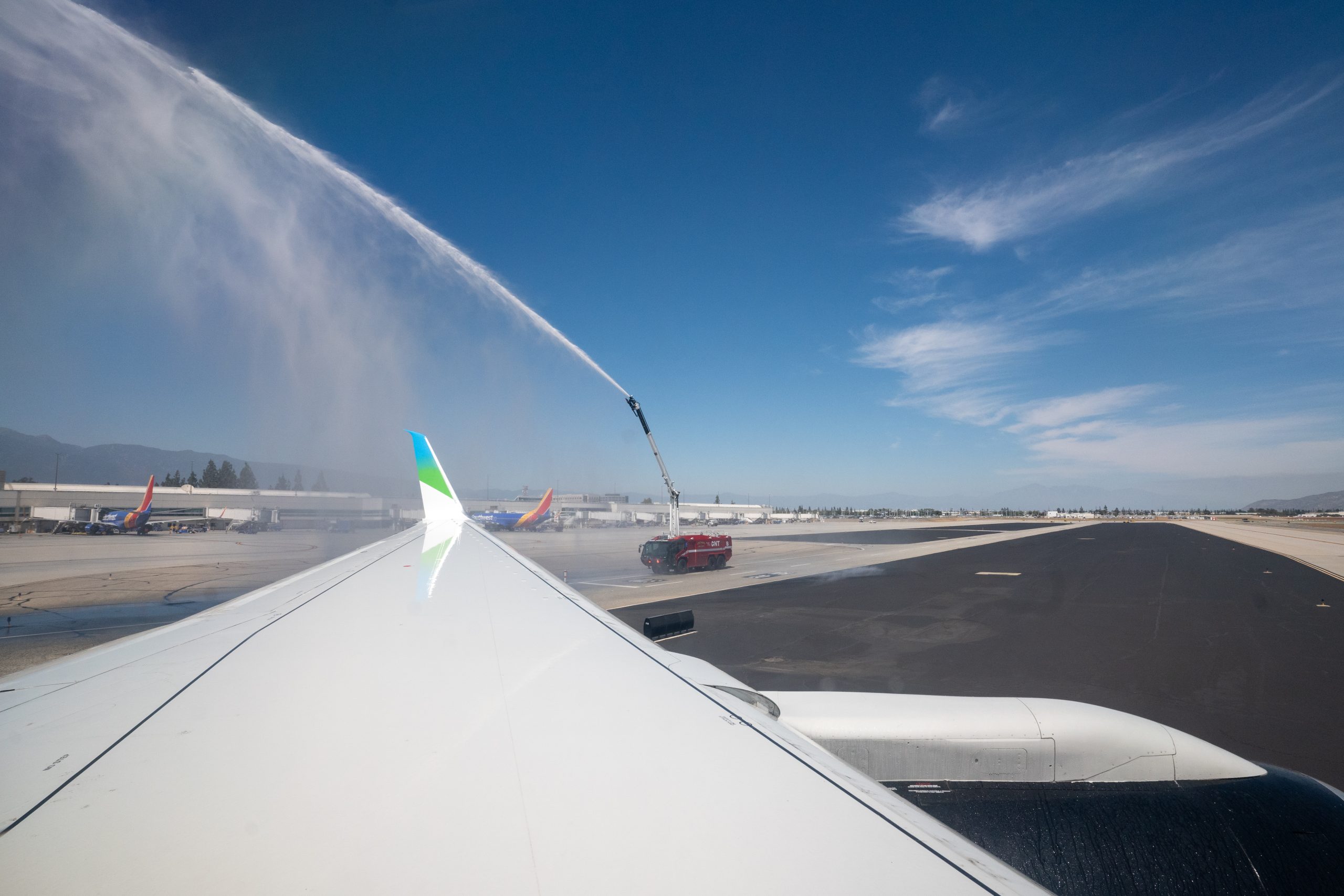
Water Salute for Northern Pacific Airways inaugural flight at Ontario International Airport in Ontario, Calif.
(Photo: AirlineGeeks | Fangzhong Guo)
After lengthy delays caused by geopolitical complications and certification issues, Northern Pacific Airways officially launched its first route on July 14, 2023, flying from Ontario, Calif, to Las Vegas. The first flight, 7H777, took off from Ontario at 2:57 pm and landed 40 minutes later in Las Vegas.
The inaugural was initially slated for May of 2023, and certification difficulties have pushed the date back several times. Although the short hop is far from the transpacific flights connecting the US west coast and Asia the airline has promised, it’s still an incredible feat to achieve nonetheless.
Despite a successful inaugural outbound flight, the airline had to cancel the return flight on Sunday. The plane appears to have run into mechanical issues after sitting 48hrs on the ramp in 115+F degree weather. According to reports, the company attempted to truck in spare parts from Ontario but had to eventually cancel the flight after more than 8 hours of delay. The aircraft departed Las Vegas on Monday afternoon on a ferry flight number back to Ontario.
AirlineGeeks flew on the inaugural flight, and here’s what flying on the world’s newest airline looks like.
Check-In
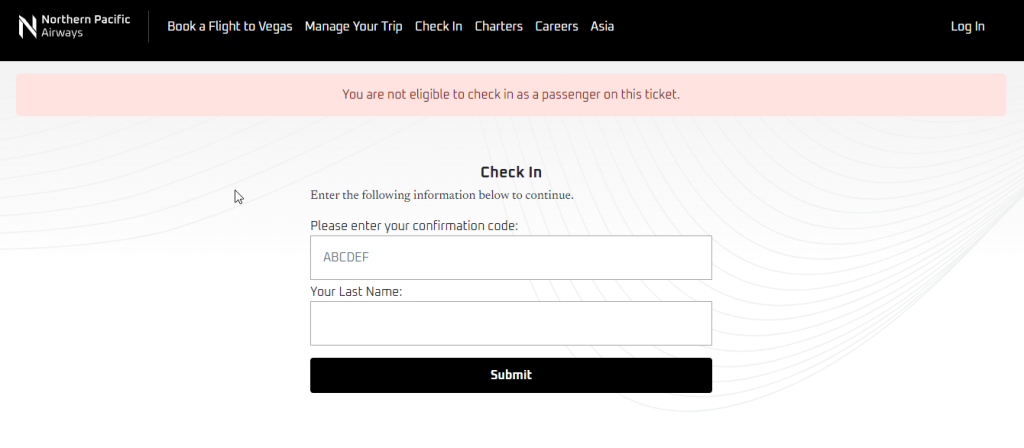
Checking in online with the newest airline has been challenging. The website will throw an error after seat selection unless the passenger logs in with the email used for the booking. However, the error message made no effort to point out how to resolve the error.
Northern Pacific Airways website requires logging in before checking in. (Photo: AirlineGeeks | Fangzhong Guo)
It also produced two different versions of boarding passes. Passengers can download a Northern Pacific-branded boarding pass. However, the link sent to your phone will show a Ravn Alaska-branded boarding pass, which operates as a separate brand under the same parent company as the Anchorage-based company.
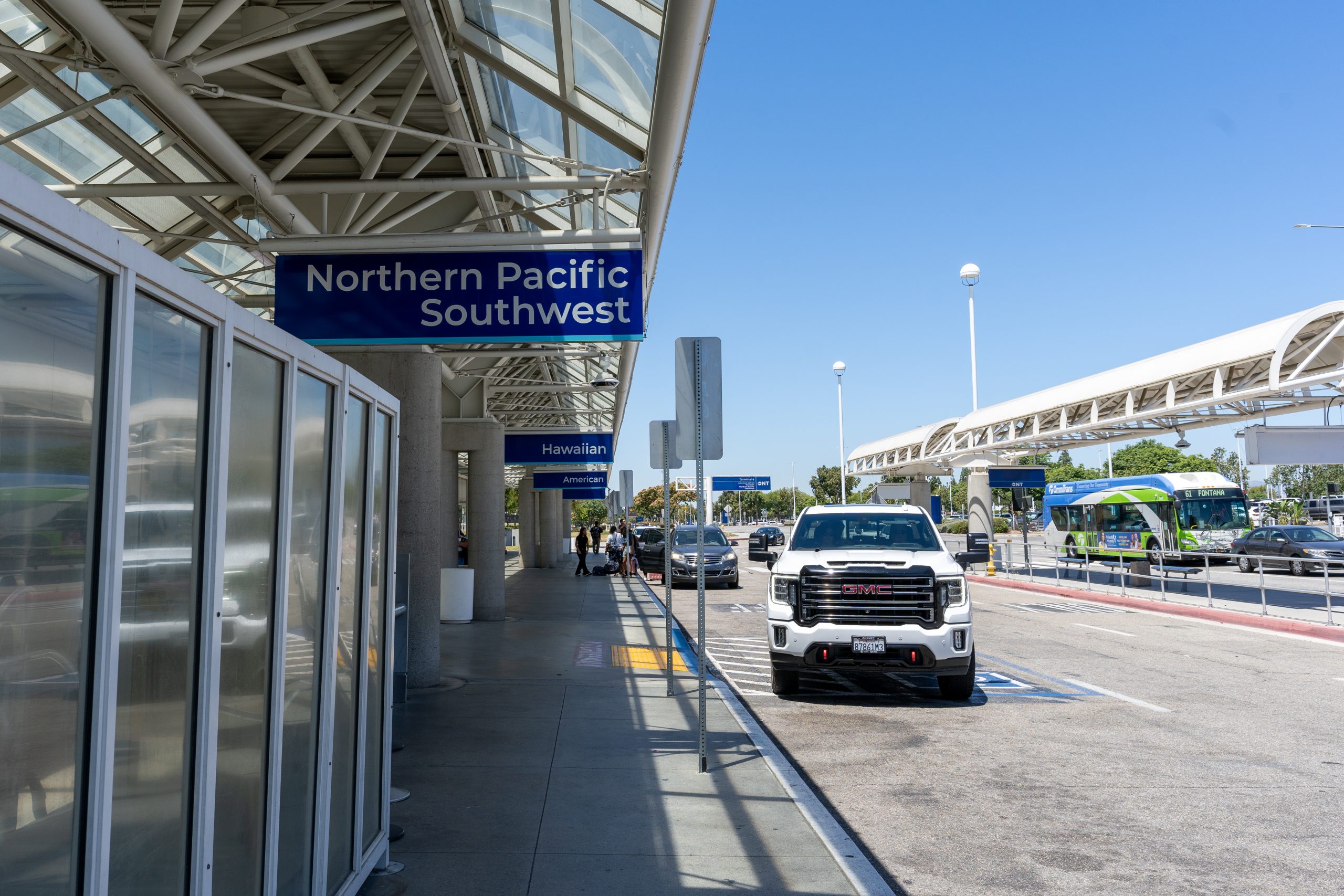
Northern Pacific flies from Terminal 4 at Ontario International Airport. The airport has already installed signs for the airline and put up ads on electronic billboards across the airport. The check-in counter at the airport operates similarly to any other airline. The printed boarding pass had more references to Ravn Alaska than Northern Pacific, which might confuse passengers.
Northern Pacific’s roadside sign at Ontario International Airport in Ontario, Calif. (Photo: AirlineGeeks | Fangzhong Guo)
Inaugural Ceremony
The carrier hosted a small ceremony at the gate. The company’s leadership and the airport authority remarked on the tremendous work that occurred to start the airline. The airline’s CEO, Rob Mckinney, also cut a ceremonial ribbon to celebrate the milestone.
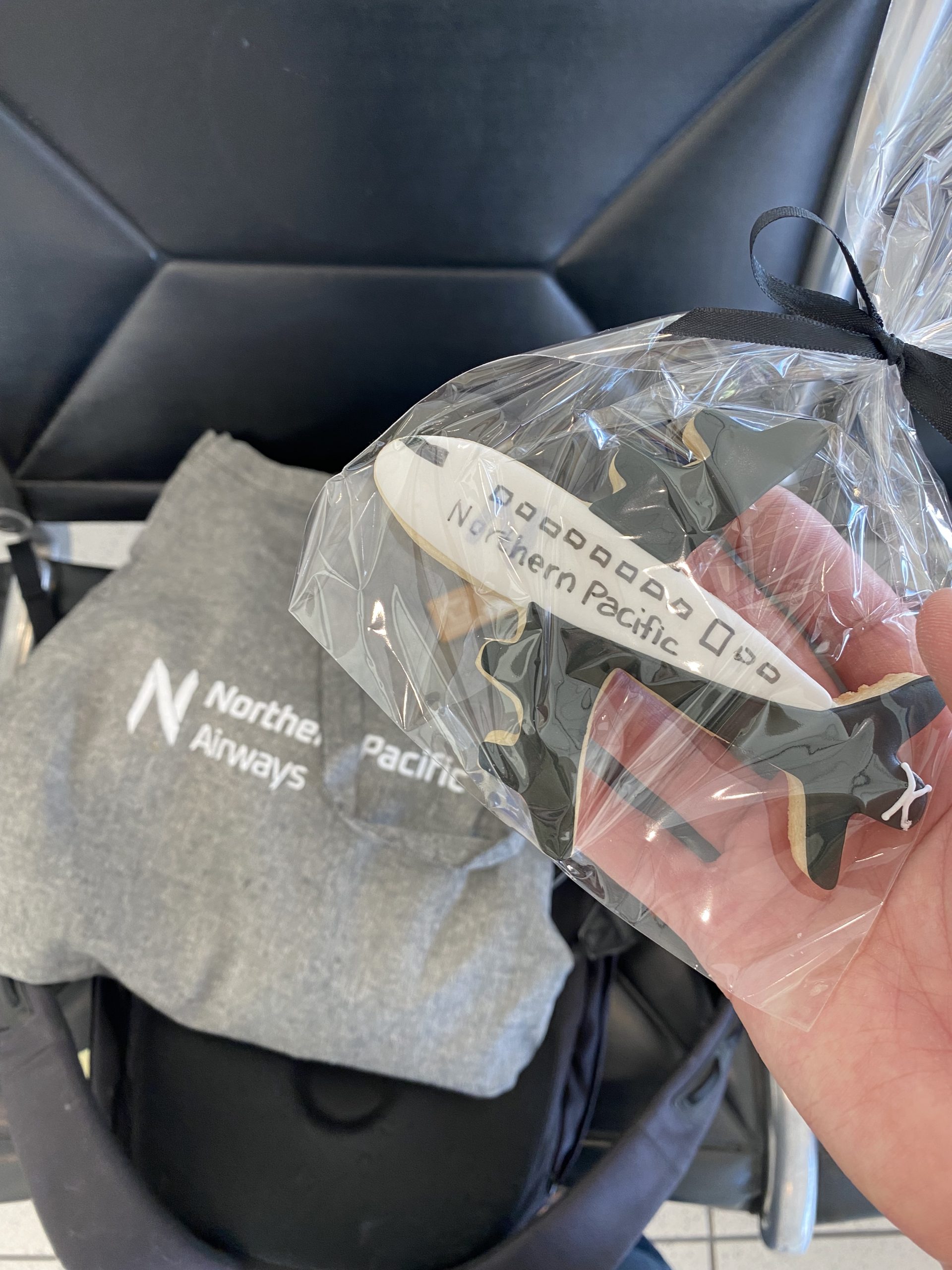
The pair also offered branded totes and themed cookies for passengers on the inaugural flight.
Northern Pacific Airway’s branded souvenirs for its inaugural flight. (Photo: AirlineGeeks | Fangzhong Guo)
Family and friends of the airline, along with AvGeeks from all over the country, made up the majority of the passengers on this flight. But there was a great number of unsuspecting passengers onboard, too. It was a pleasant surprise to them.
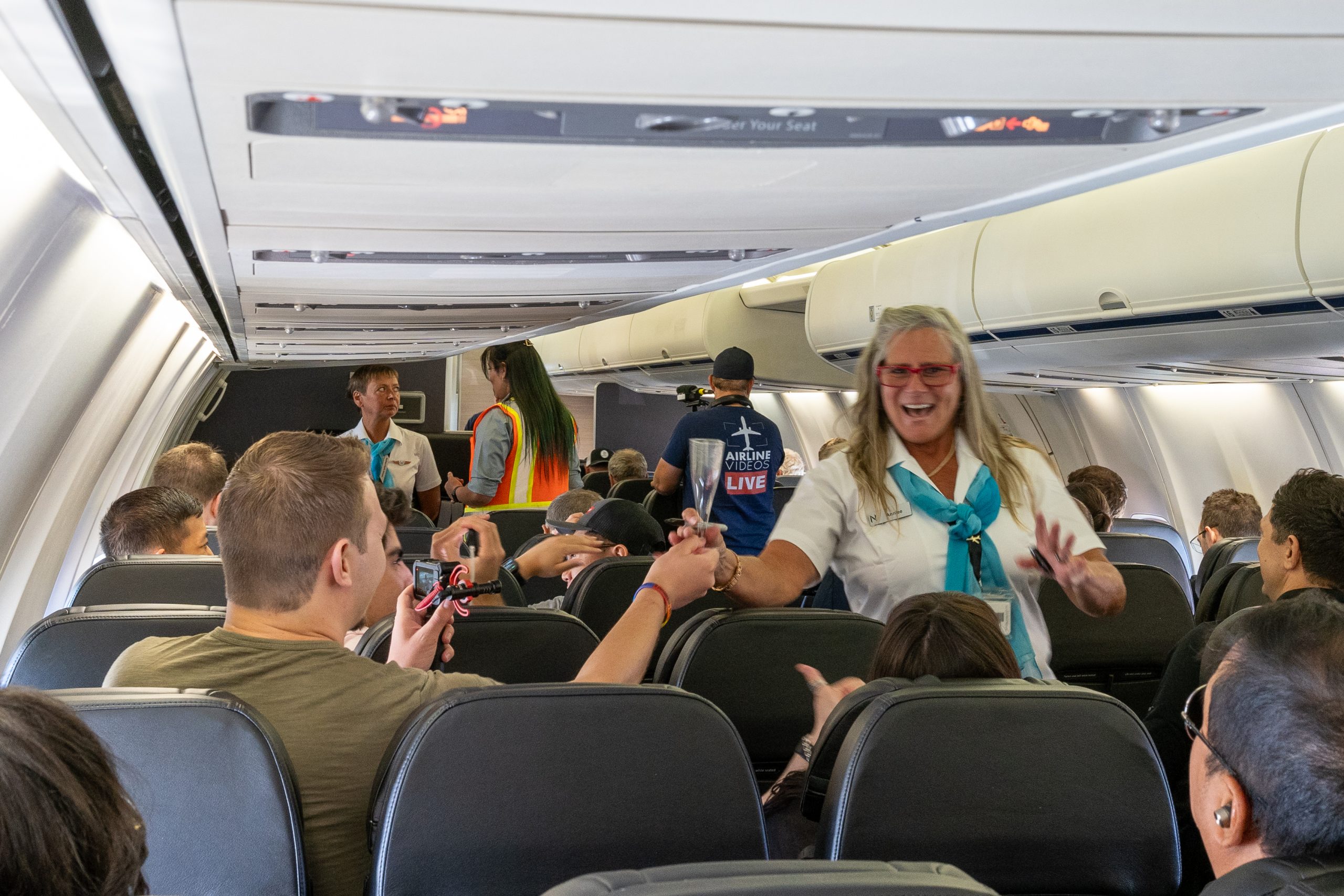
The energy remained high after boarding as many people took photos and videos onboard. Due to an ATC delay at Las Vegas airport, the crew started service on the ground, and the entire cabin toasted to the airline’s success. The fight attendant also jokingly said she’d sign the glasses while picking up the finished ones. Many passengers took on the offer, bringing some fun energy into the cabin while we waited for clearance.
Flight Attendant Annie was signing passengers’ glasses after a toast while the flight was delayed. (Photo: AirlineGeeks | Fangzhong Guo)
Last but not least, the flight was celebrated by water canons before departing the airport.
The Product
The airline may be the newest, but its planes are certainly not. The carrier acquired four American Airlines Boeing 757-200 aircraft retired during the pandemic and refurbished them. The aircraft is now the company’s Alaskan-themed bold new livery. However, the paint job looked rough, with many spillovers along the engine pylon.
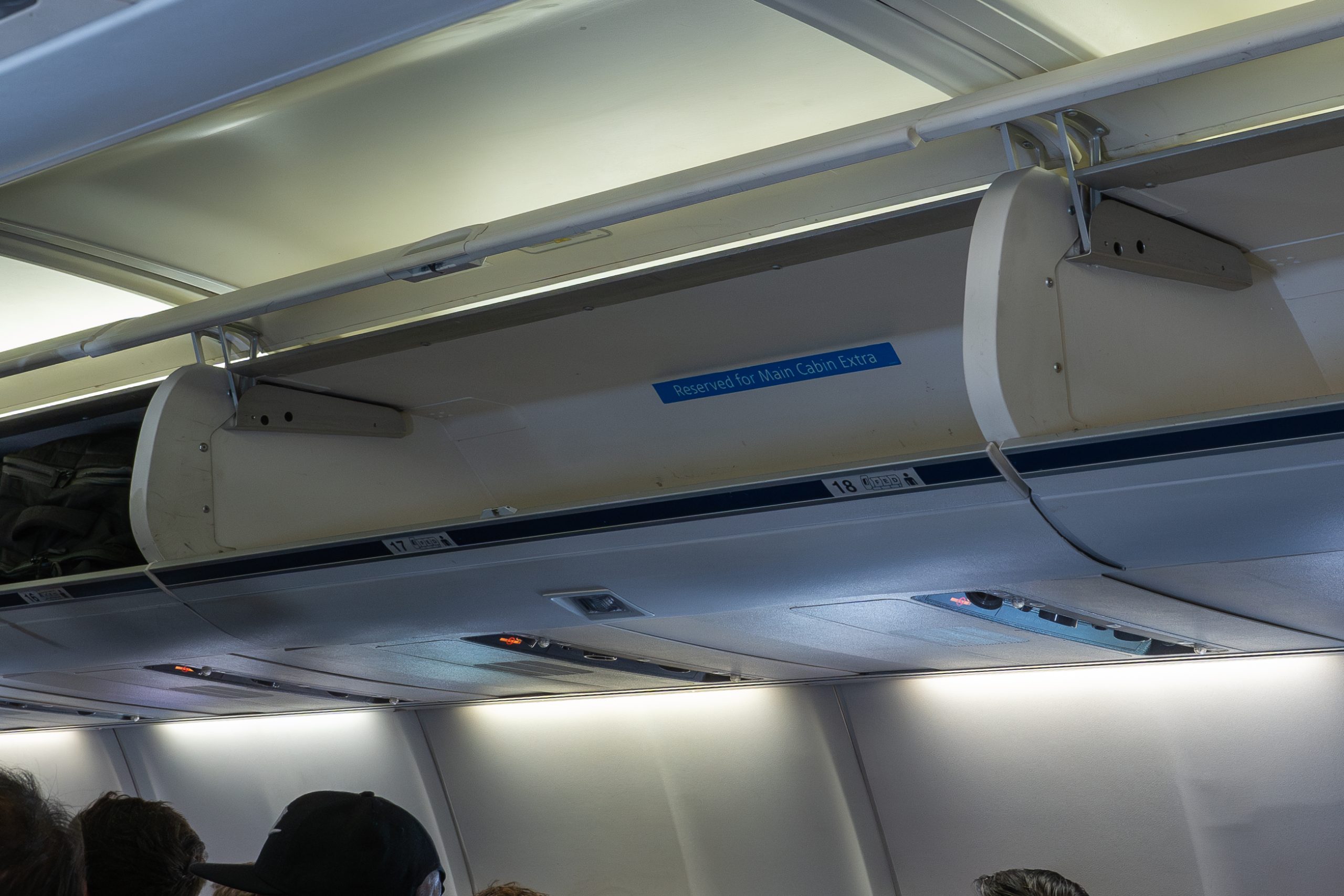
The airline kept most monuments from the plane’s American days. Very little has changed from overhead storage to the lavatory, except for a coat of newly applied paint in certain areas. Stickers with their previous owner’s “Main Cabin Extra” branding were still visible in the overhead storage.
American Airlines’ Main Cabin Extra sticker was still visible onboard Northern Pacific Airway’s newly acquired Boeing 757-200. (Photo: AirlineGeeks | Fangzhong Guo)
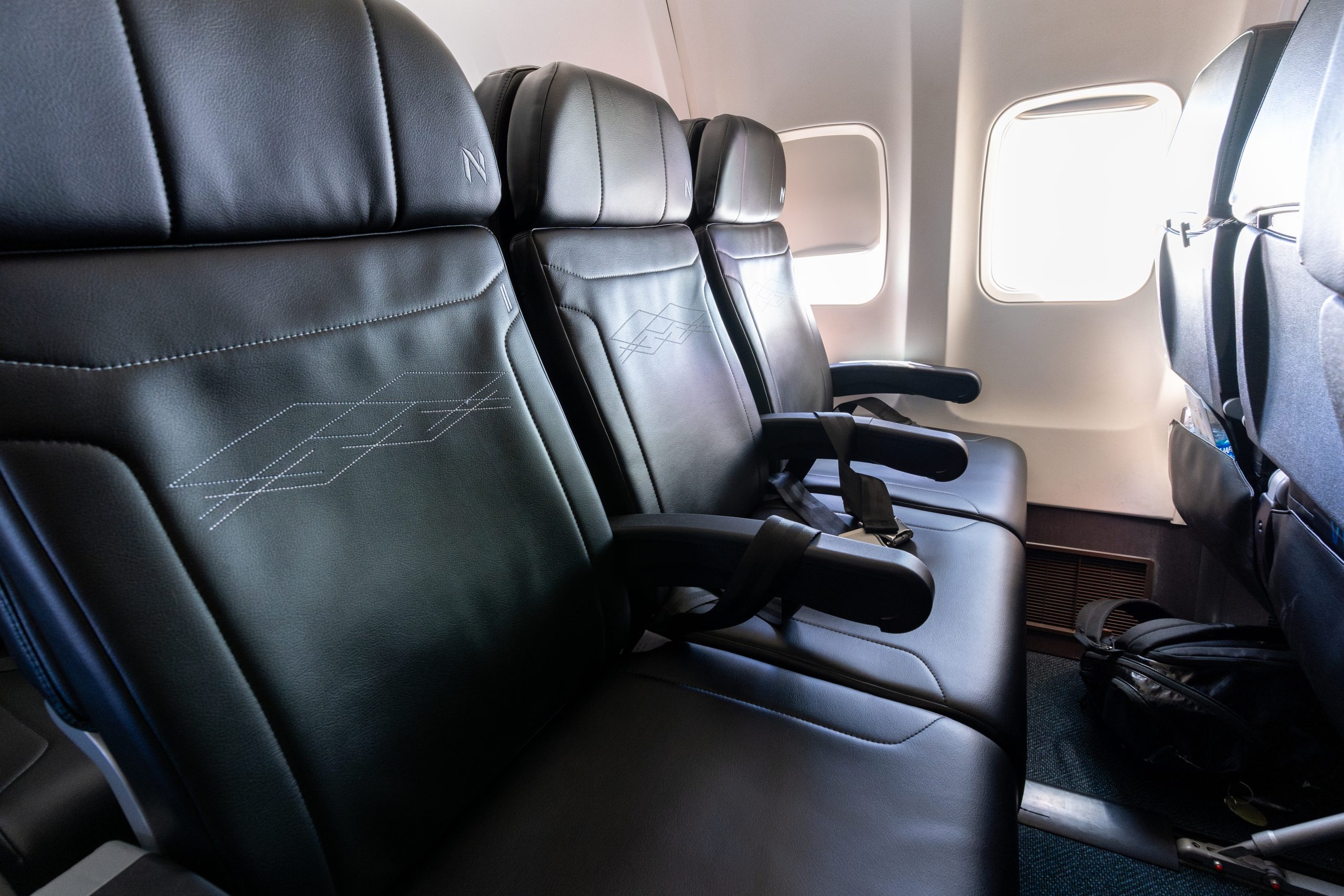
The economy seats are likely the same seats that flew with its previous owner as well. However, the new upholstery gave them a much sleeker look and made them more comfortable than the new slim seats. The seats are certainly more comfortable than those of its two competitors on this route, Frontier and Southwest.
Northern Pacific Airways put new upholstery on their newly acquired Boeing 757-200. (Photo: AirlineGeeks | Fangzhong Guo)
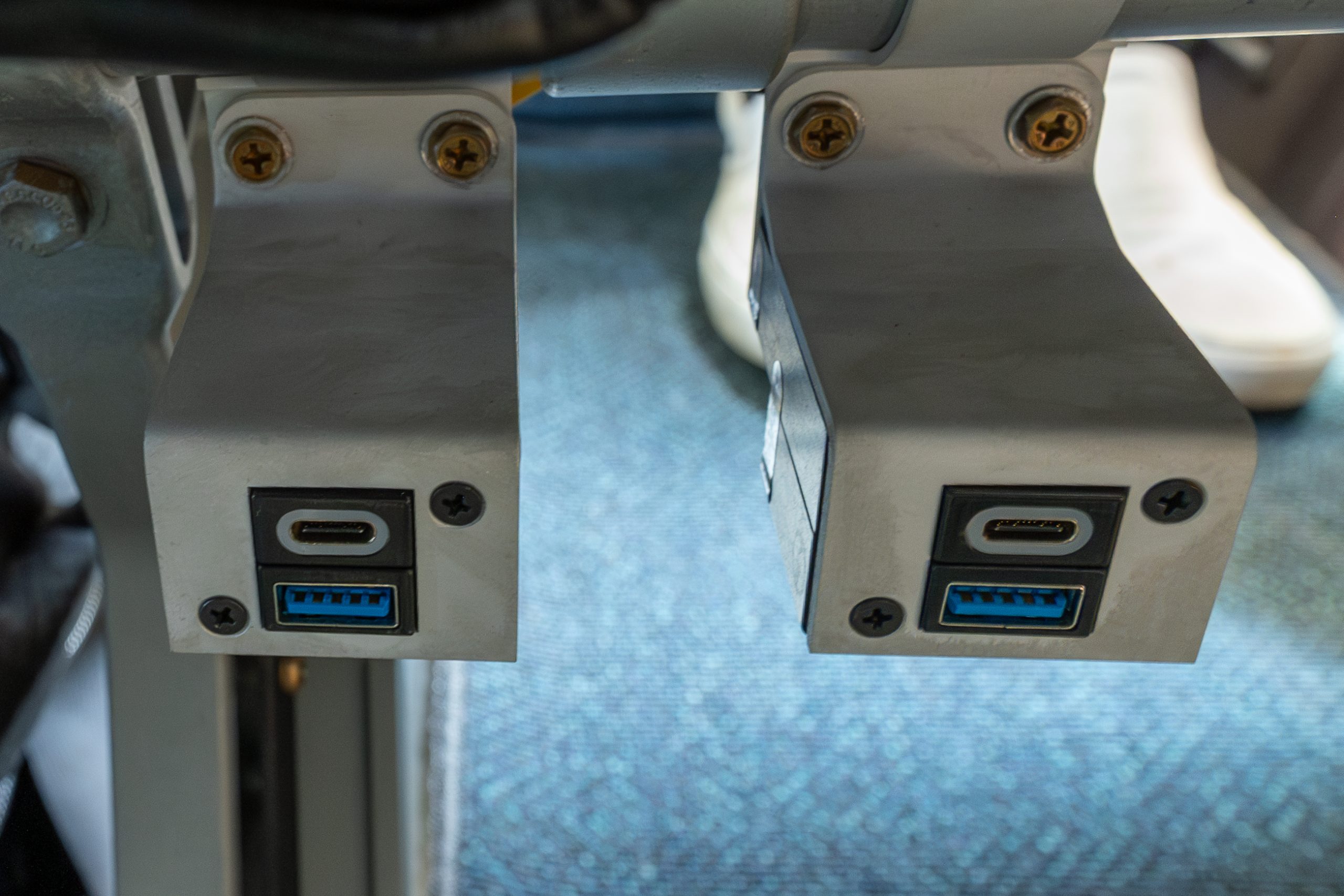
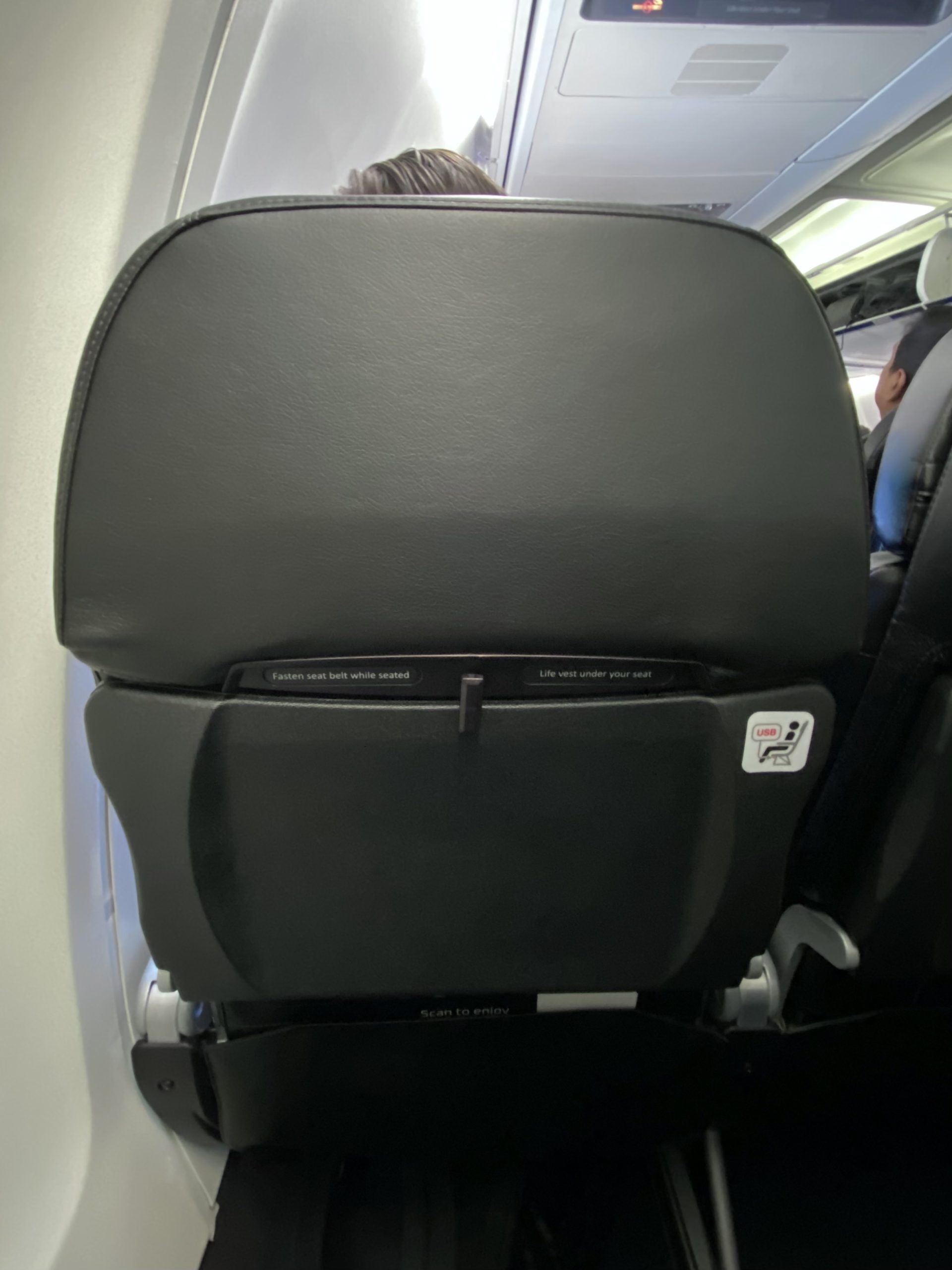
The old seat also means there was no seatback entertainment. The good news is Northern Pacific is offering complimentary WiFi onboard. While the cabin attendant specifically mentioned that the WiFi was working in the preflight announcement, I could not get connected. The only offering is the internet at the moment, which is more than enough for the company’s short hop. In addition to offering complimentary Wifi, passengers also have access to USB-C charging on every seat.
Northern Pacific Airways installed USB-C ports on its Boeing 757-200. (Photo: AirlineGeeks | Fangzhong Guo)
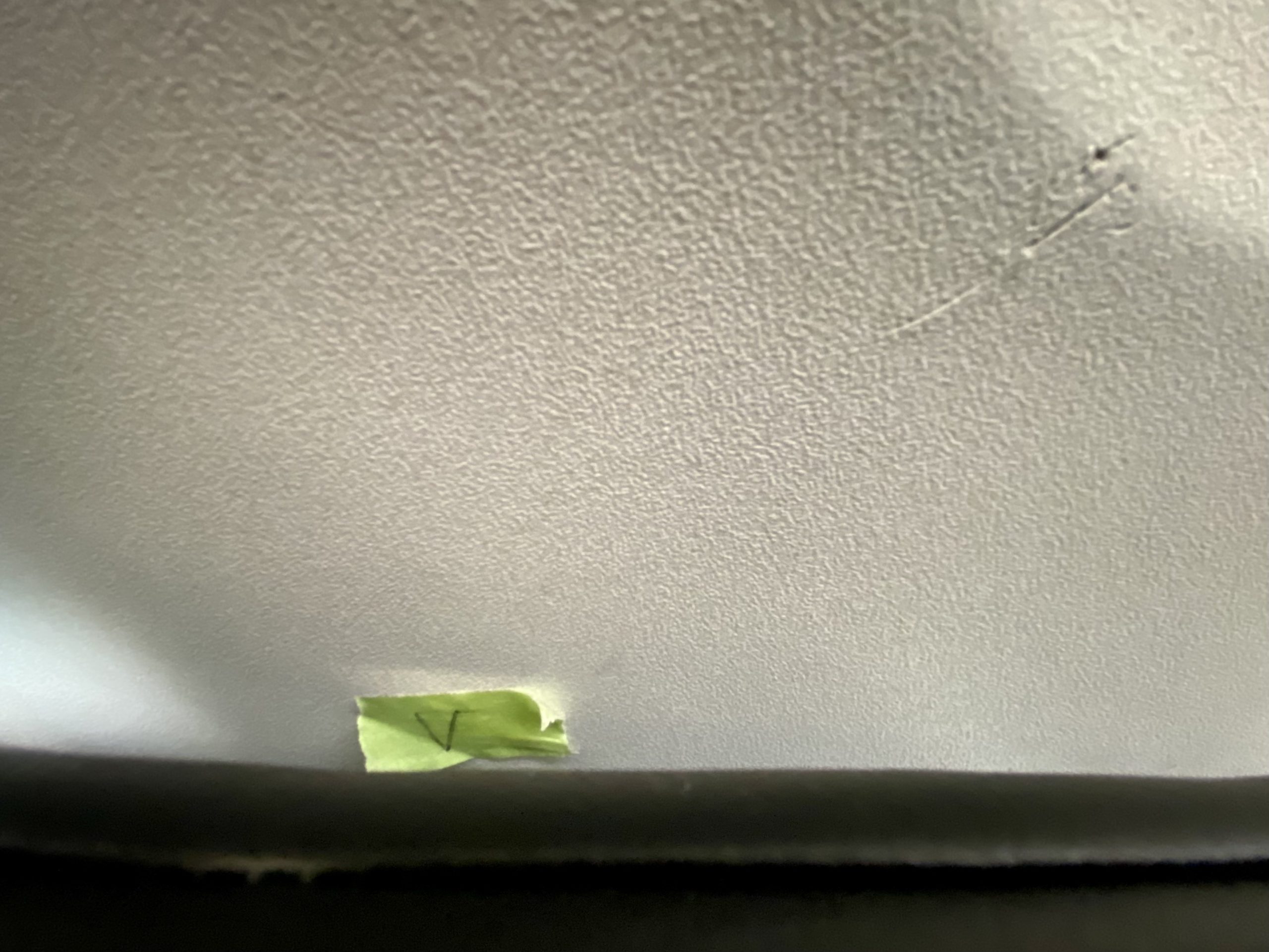
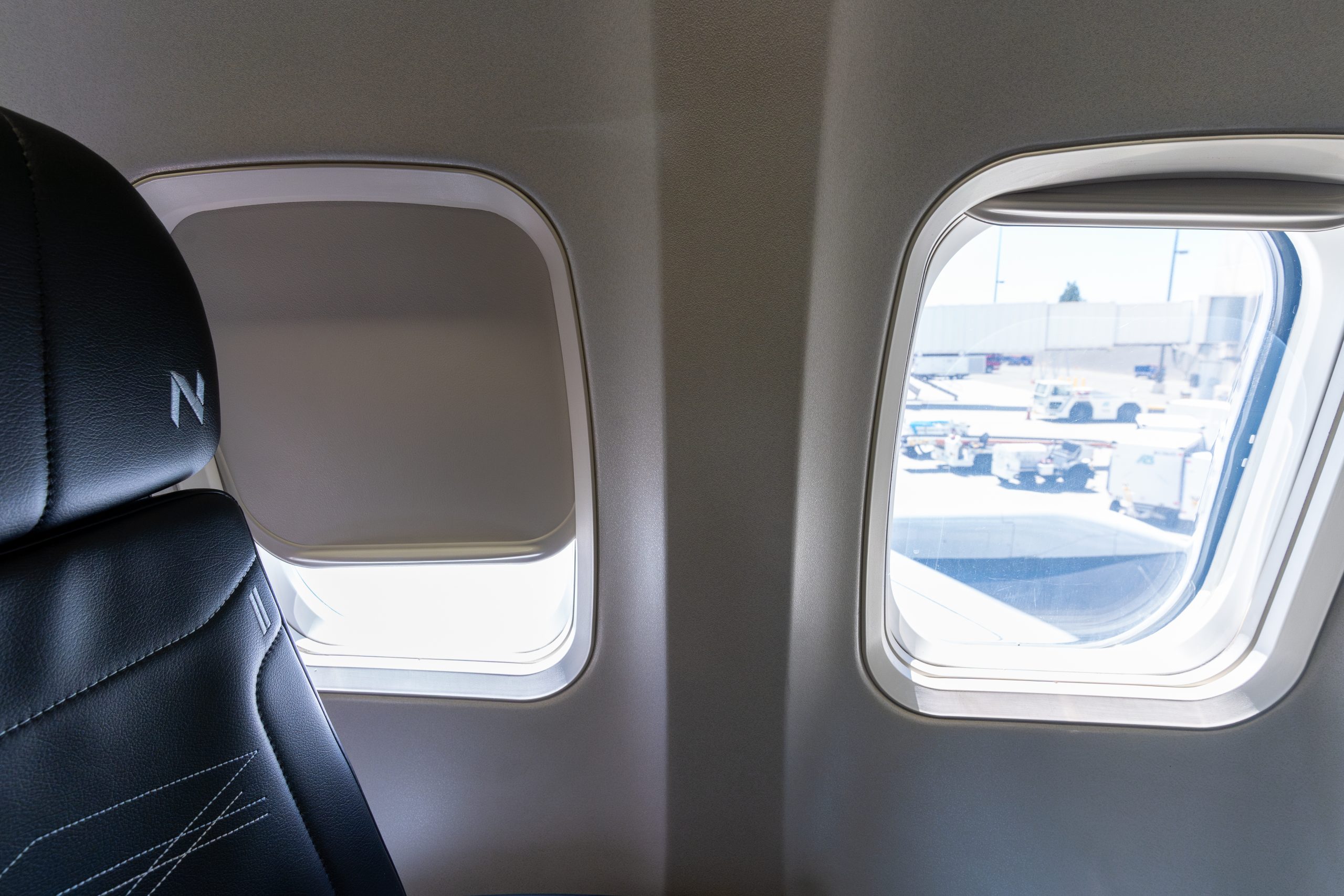
It’s also apparent that they still need to finish prepping the cabin. My window shade was very stuck and could only a third of the way up. The airline also marked out some damages on the side panel with painter tapes that the maintenance crew did not have time to take care of before the inaugural. Since it was a daytime flight, we didn’t see the starry skies ceiling the company showed in previous releases.
Maintenance marked out damages on the panel without repairing it. (Photo: AirlineGeeks | Fangzhong Guo)
Some window shade was stuck on the 28-year-old Boeing 757-200. (Photo: AirlineGeeks | Fangzhong Guo)
Economy seat on Northern Pacific Airway’s Boeing 757-200 does not have seatback entertainment. (Photo: AirlineGeeks | Fangzhong Guo)
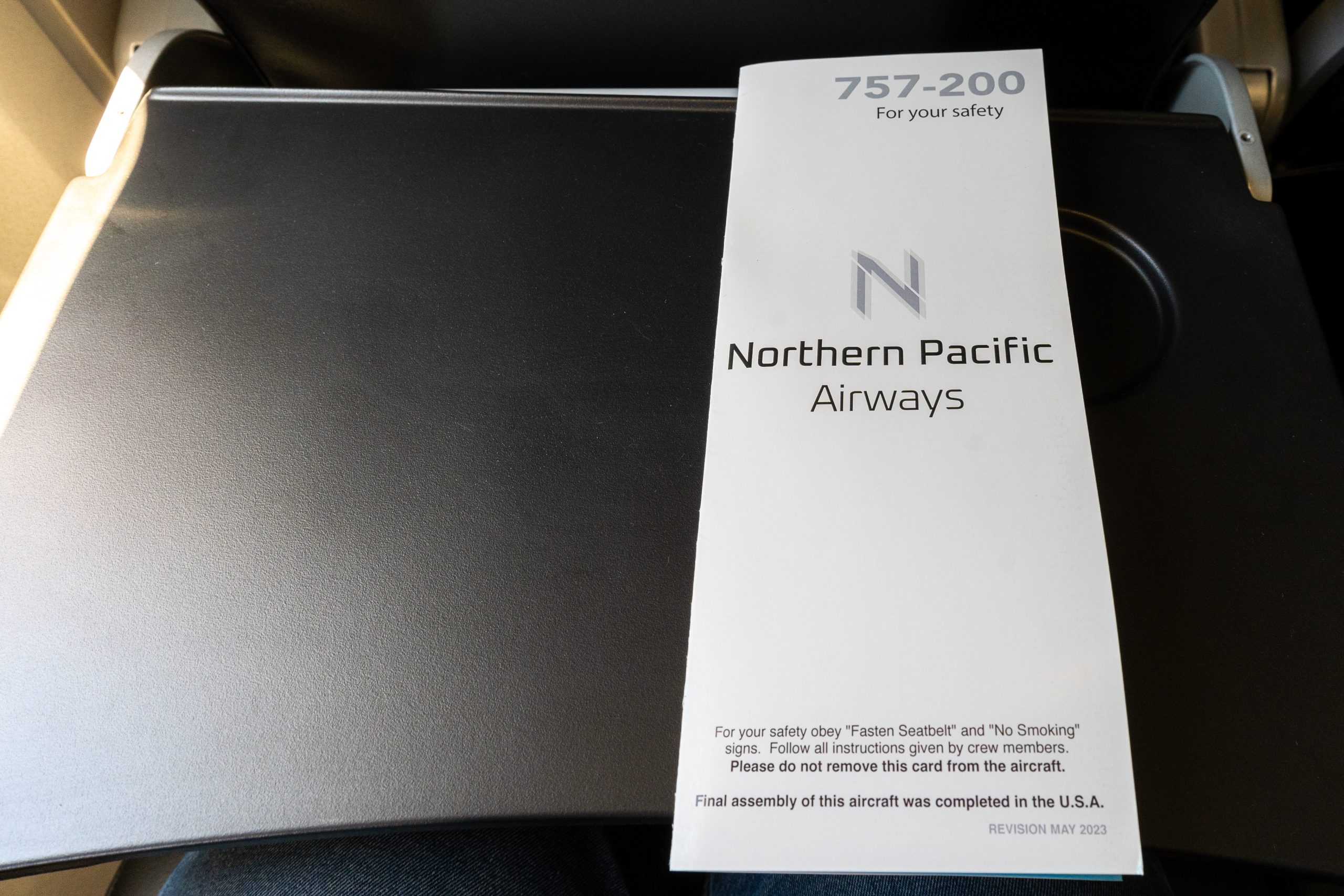
(Photo: AirlineGeeks | Fangzhong Guo)
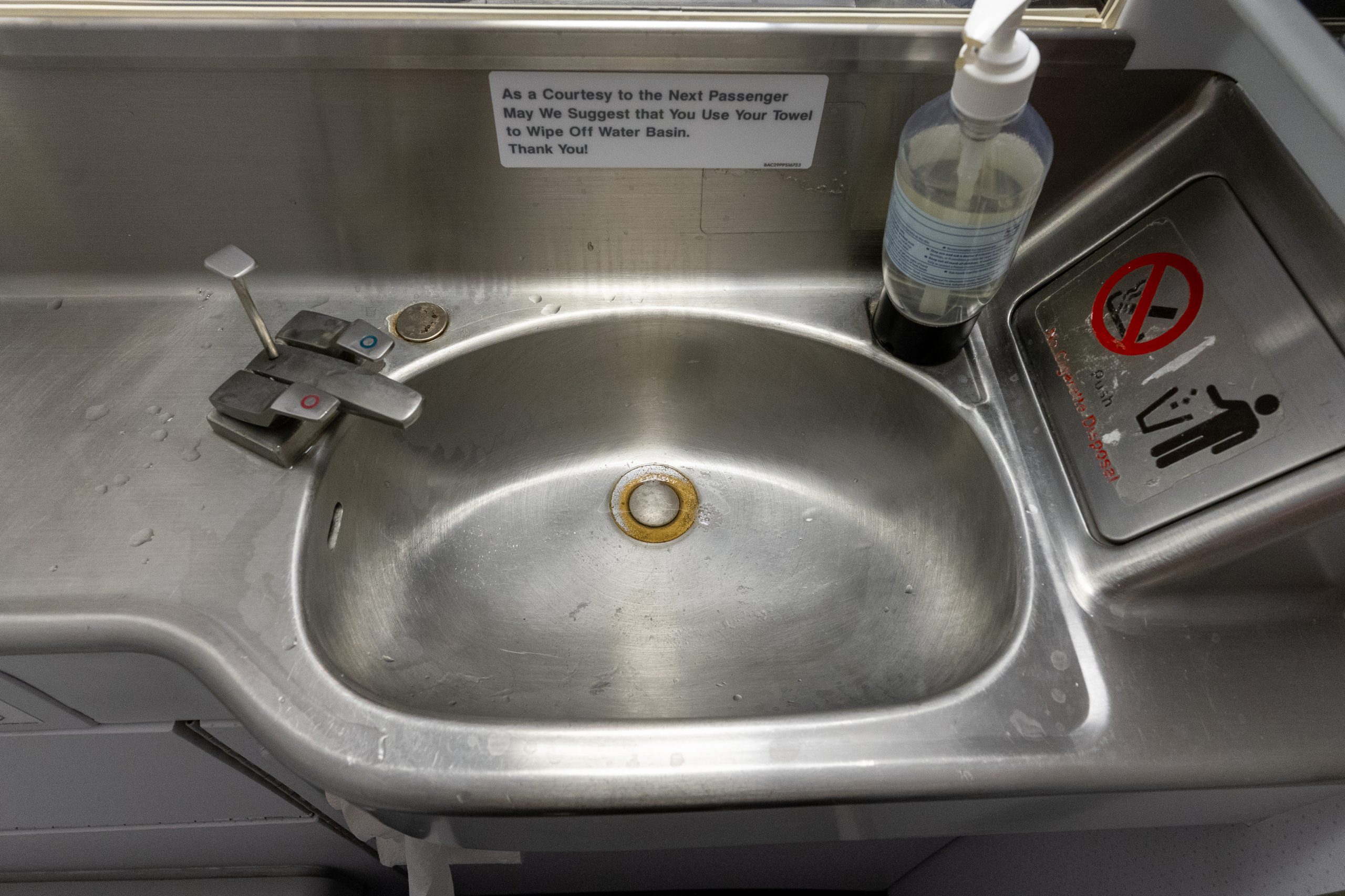
The original sink on Northern Pacific Airway’s newly acquired Boeing 757-200. (Photo: AirlineGeeks | Fangzhong Guo)
Inflight service includes a bottle of water, more than some of its competitors on this route.
What does the future hold?
While the airline’s eventual goal is still connecting the US with Asia under its Icelandair model, it has a long way to go.
No matter how short it was, the inaugural is an enormous step to take so the carrier can start working toward its ETOPS certification for its transpacific service. But one weekly service between Southern California and Las Vegas won’t be enough.
Therefore, the company hopes to attract some charter business during the down times of scheduled flights. Its second aircraft will also come online by the end of the month, which will be too many airplanes if there are no other flights.
The company also planned for Saipan Islands service with Northern Mariana Airways branding. However, the Anchorage-based airline felt that plan has since become farfetched following the collapse of Marianas Southern Airways, the regional carrier providing interisland services, and the lack of funding from the government. Therefore, Northern Pacific has shifted back its focus to serving Mexico from its southern California base. The company’s chairman mentioned to passengers that they could serve destinations like Cabo San Lucas and Puerto Vallarta both popular Mexican resort destinations.
It takes tremendous work to start an airline. I’d like to congratulate the airline on making its debut on a scheduled route. I’m also looking forward to seeing the airline succeed in realizing its transpacific plans and putting its beautiful Anchorage terminal to use.
Fangzhong grew up near an OEM airport in northeastern China, where he developed his enthusiasm for aviation. Taking upon his passion, he's now working as an aircraft interior design engineer. Besides working in the aerospace industry, Fangzhong enjoys trying out different types of airplanes and seeing how airplane interiors have evolved. So far, he's flown on over 80 types of aircraft. He also planespots in his spare time. His rarest catches included the 747 Shuttle Carrier Aircraft and AN-225.
United Airlines, Pilots Agree to Preliminary Contract
United is the latest U.S. airline to etch an AIP with its pilots.
A United 737 MAX 9, the larger variant of the 737 MAX 8, on the flight line. (Photo: AirlineGeeks | Katie Zera)
United Airlines has reached an Agreement in Principle (AIP) with the Air Line Pilots Association (ALPA), the union representing the company’s pilots, on a new contract. The announcement comes soon after American Airlines pilots similarly announced a plan to vote on a new contract later this summer.
If United’s new contract is approved by pilots, flight crew members will see between 35% and 40% raises over 4 years depending on fleet type. The contract will also bring improvements to “quality of work-life, compensation, job security, work rules, retirement, benefits.” It is worth $10 billion over its lifespan.
Calls for a contract strengthened after the covid-19 pandemic subsided and Delta Air Lines announced massive pay raises for its pilots. However, ALPA says it has been negotiating with United management for more than four years to reach a new agreement.
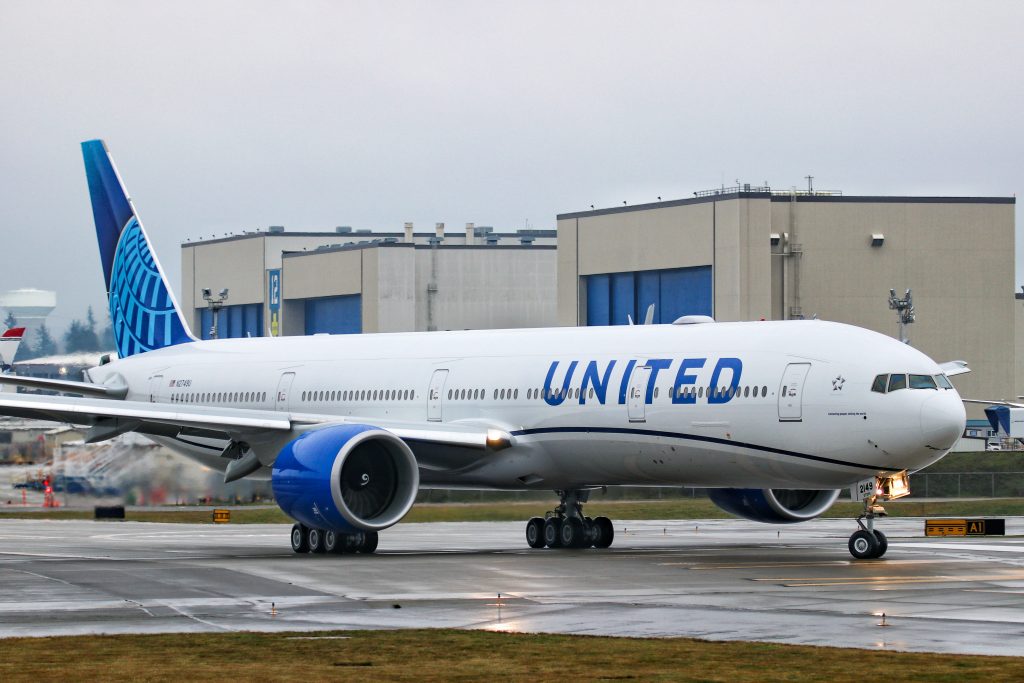
A United 777-300ER at Paine Field. (Photo: AirlineGeeks | Katie Bailey)
“We promised our world-class pilots the industry-leading contract they deserve, and we’re pleased to have reached an agreement with ALPA on it,” United Airlines said in a statement. “The four-year agreement, once ratified, will deliver a meaningful pay raise and quality of life improvements for our pilots while putting the airline on track to achieve the incredible potential of our United Next strategy.”
United pilots have been putting increasing pressure on management for months. Pilots picketed outside company offices this spring and say they have been ready to strike since then. Pressure increased when United faced massive flight cancellations and delays earlier this month. Though United blamed air traffic control staffing shortages and weather for the issues, pilots said that internal staffing was also a major issue that could have been solved with a better contract.
The FAA also said that it was not to blame for United’s issues and that it was ready to work with the carrier to resolve the situation.
Competitors’ Contracts
American Airlines pilots reached a similar AIP in May, and voting will be finalized later this summer. Delta’s contract, approved in March, includes $7 billion in cumulative increases pay and benefits over four years.
Since the covid-19 pandemic subsided and travel in the United States returned to near-pre-pandemic levels, pilots across the country have called for improved work rules and better pay. Regional airline pilots received pay increases quickly after the pandemic subsided, thanks in large part to increases by American Airlines’ wholly-owned subsidiaries. Other regionals subsequently matched these pay hikes.
Mainline companies have been slower to ratify contract updates. The big three legacy airlines made their moves months after the last regionals did so. Southwest Airlines pilots have also been fighting for changes at their company, though their demands go further. A meltdown over the 2022 holiday season exposed gaping issues in Southwest’s crew scheduling system and work rules.
Commercial Pilot Demand
Delta, American, United, and Southwest are expected to hire 8,000 pilots over the next year. Per Reuters, the United States is short roughly 10,000 pilots, a gap projected to last until 2027. Though the United States has seen an increase in the number of people passing commercial pilot checkrides in the last 18 months, to date roughly one Airline Transport Pilot retires for each new ATP pilot certified.
Airlines are fighting hard to find solutions to this problem, including fighting for an increase in the pilot retirement age and a possible loophole in the rule that requires 2 pilots in the cockpit of each airline flight. Since the covid-19 pandemic began, pilots have maintained that the US aviation industry has a pay shortage, not a pilot shortage, and that more people would become pilots if the high entry fee to start flying could be better managed.
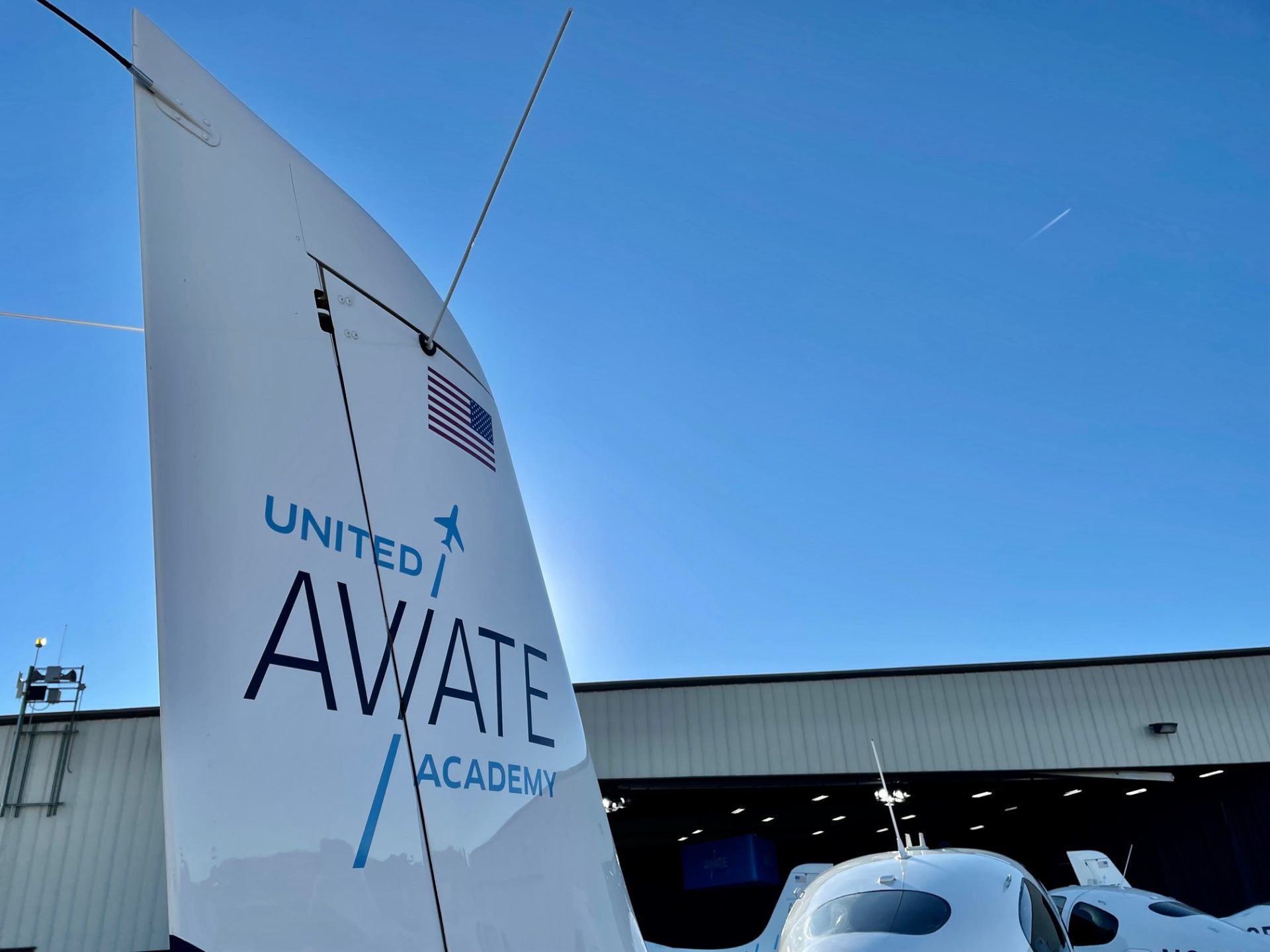
A United Aviate Academy aircraft (Photo: AirlineGeeks | Ryan Ewing)
Airlines already have methods to help pilots start their careers. American Airlines’ wholly-owned regional carriers have cadet programs that will reimburse cadets for some of their flight training; Mesa Airlines has a program that allows pilots to build flight hours at a reduced cost per hour; Delta Air Lines recently announced its own pilot pathway program; and United Airlines manages its own flight school in Arizona.
United pilots still need to vote on their new contract, a process that could take weeks or months after negotiators finalize the final contract language. However, this new agreement will certainly be a welcome relief for pilots. Hopefully, it will decrease tension between crews and management and help the airline run a smooth operation going forward.
John McDermott is a commercial pilot pursuing a career in professional flight. His passion for aviation began in an Ann Arbor bookstore with a tale of enemy pilots during World War 2, and he hasn't looked back. Besides flying and writing for AirlineGeeks, John volunteers with Professional Pilots of Tomorrow and travels whenever he gets the chance.
Airlink’s Embraer E195 Takes Flight in Stunning Black Livery
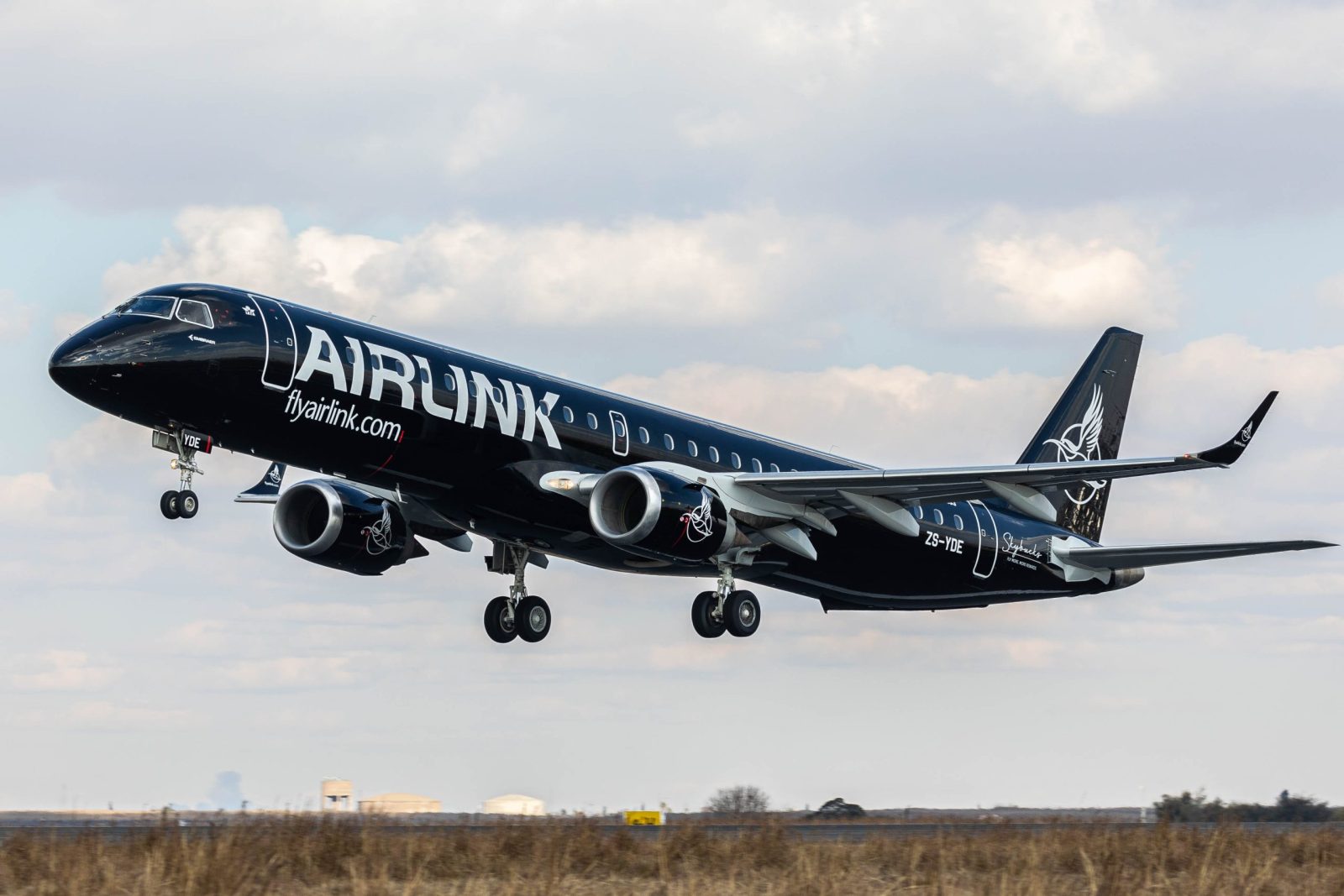
Airlink, the prominent regional airline in South Africa, has unveiled a striking addition to its fleet with the introduction of an elegant black special finish on one of its Embraer E195 aircraft. This captivating livery aims to highlight an important innovation while enhancing the airline’s commitment to glamour and style in air travel.
With the registration number ZS-YDE, this aircraft has completed its test flights and will soon begin operating on Airlink’s regular routes. The black livery serves as a visual representation of Airlink’s recently launched Skybucks frequent flyer program, where black represents the highest level of membership.
Previously flying under the registration UR-EMG for Ukraine International, this Embraer E195 joined Airlink’s fleet in April through a lease agreement. After successful test flights in Johannesburg last week, the aircraft has been re-registered as ZS-YDE and now stands as a symbol of elegance and sophistication in Airlink’s fleet.
Airlink’s decision to dress the Embraer E195 in a sleek black livery is aimed at drawing attention to the airline’s recently launched Skybucks frequent flyer program. The Skybucks program offers a range of benefits and rewards for its members, providing an extra level of recognition and appreciation to Airlink’s most loyal passengers.
There are four Skybucks membership tiers, with eligibility determined by the number of sectors or legs of a journey flown in 12 months. The Blue Tier is for customers who have flown less than 18 sectors, the Red is for 18 to 34 sectors, Emerald is for more than 35 sectors, and the Black tier membership is by invitation only. Each tier earns rewards at a different rate, with the higher tiers earning more Skybucks for the same flight at the same fare.
Reviving Glamour in Air Travel
Rodger Foster, the CEO of Airlink, expressed the airline’s commitment to reintroducing glamour and style to the skies. “Some say flying has lost its allure, but as Southern Africa’s premier airline, Airlink is putting glamour and style back in the skies. In addition to our top-class service provided by our friendly crew in their stylish new uniforms, we have dressed one of our svelte Embraer E-Jets in an elegant and chic little black number,” Roger said.
The airline aspires to create a travel experience that combines exceptional service, stylish aesthetics, and a touch of luxury, all while ensuring the highest standards of safety and efficiency.
The private South African airline officially changed its corporate name from SA Airlink to Airlink in October 2020 in a bold step towards independence which ended its 23-year franchise agreement with South African Airways and began operating and issuing tickets under its own Iata code 4Z. This freed Airlink and enabled it to forge business relationships with other international airlines that carry passengers and cargo to and from destinations throughout Southern Africa.
Victor Shalton's love for aviation can be traced to when he was 11-years-old. As a seasoned aviation writer, he takes pride in providing the best aviation coverage around the globe and is passionate about advancing his skills in the aviation space. In addition, he loves travelling, writing, arts and while his speaking engagements have taken him around the world, he is proud to call Nairobi home.
An Advanced Air Super King Air 350 in Albuquerque (Photo: AirlineGeeks | Joey Gerardi)
According to a local website in Salem, The Salem Reporter, the airport received an $850,000 federal grant to use for minimum revenue guarantees. A revenue guarantee entices airlines to serve these small communities and give them a chance, as the carriers won’t have to worry about filling the planes and making a profit during the first couple of years serving the new market.
This is very common throughout the industry and is how many airlines get a foothold on new routes and destinations. Then, once the revenue guarantee terms end, if the carrier had consistently full planes the airline will hopefully continue to serve this market if it has done well.
New Ultra-Low-Cost Service
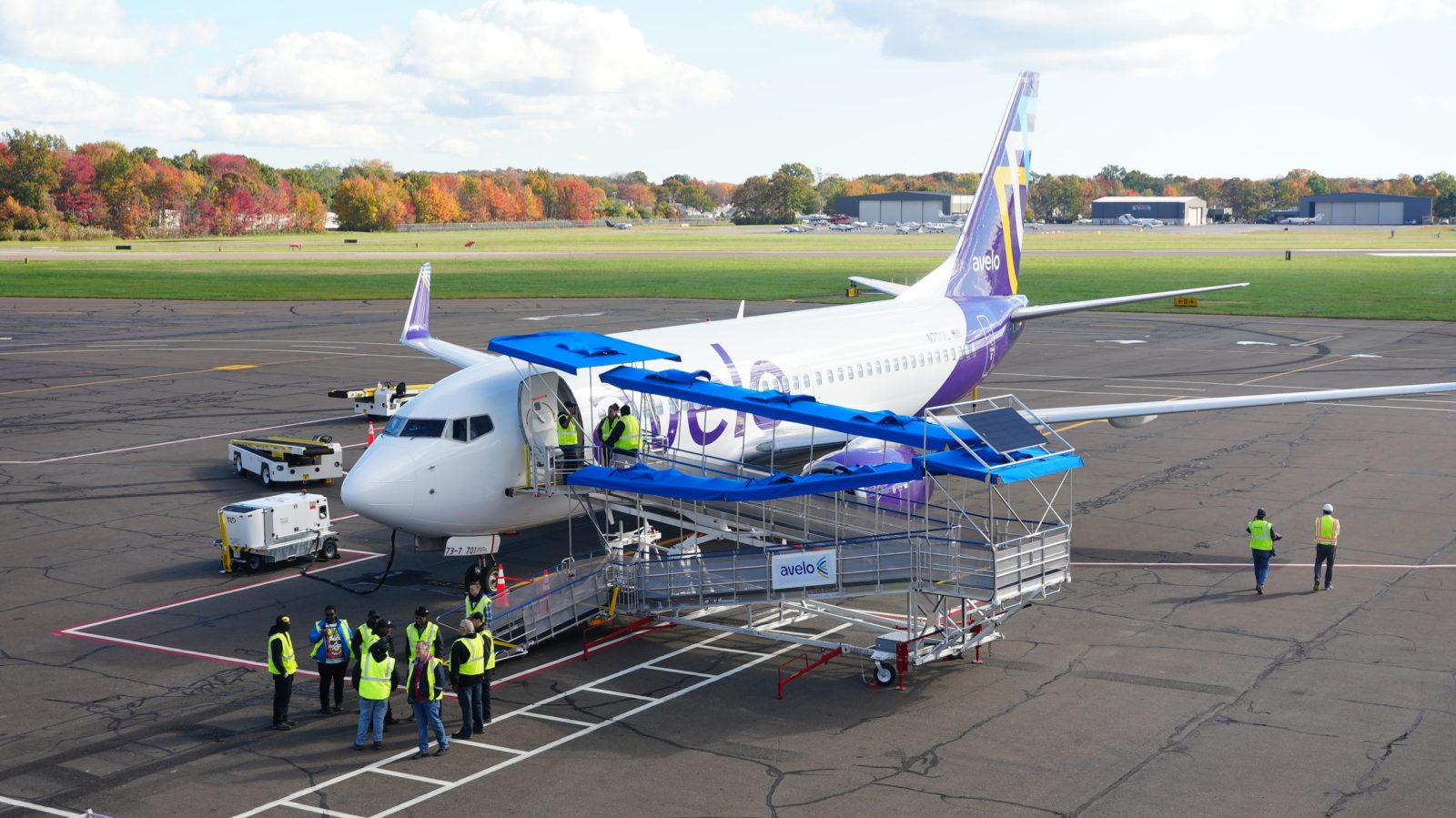
The new flights to Salem will be to Burbank, Calif. via ultra-low-cost start-up Avelo Airlines, as well as the airline’s newest base in Las Vegas. The first flight will operate to Las Vegas and will fly on a twice-weekly basis, Thursdays and Sundays, with Burbank flights beginning the next day on Oct. 6, 2023, and operating on Fridays and Mondays.
Boarding Avelo’s first-ever commercial flight in Burbank. (Photo: AirlineGeeks | Taylor Rains)
With airlines beginning to announce flights that start in the fall, it is expected that a couple more of the Small Community Development Grants will be used and airlines will announce flights on underserved routes in the coming months.
Joey has always been interested in planes for as long as he can remember. He grew up in Central New York during the early 2000s when US Airways Express turboprops ruled the skies. Being from a non-aviation family made it harder for him to be around planes and would only spend about three hours a month at the airport. He was so excited when he could drive by himself, the first thing he did with his driver's license was get ice cream and go plane spotting for the entire day. He graduated from Western Michigan University in 2022 with a B.S. in Aviation Management & Operations and a Minor in Business, and currently works for a major airline in his hometown.
Trip Report: China Eastern Domestic First Class
What is it like to fly China Eastern in domestic business class?
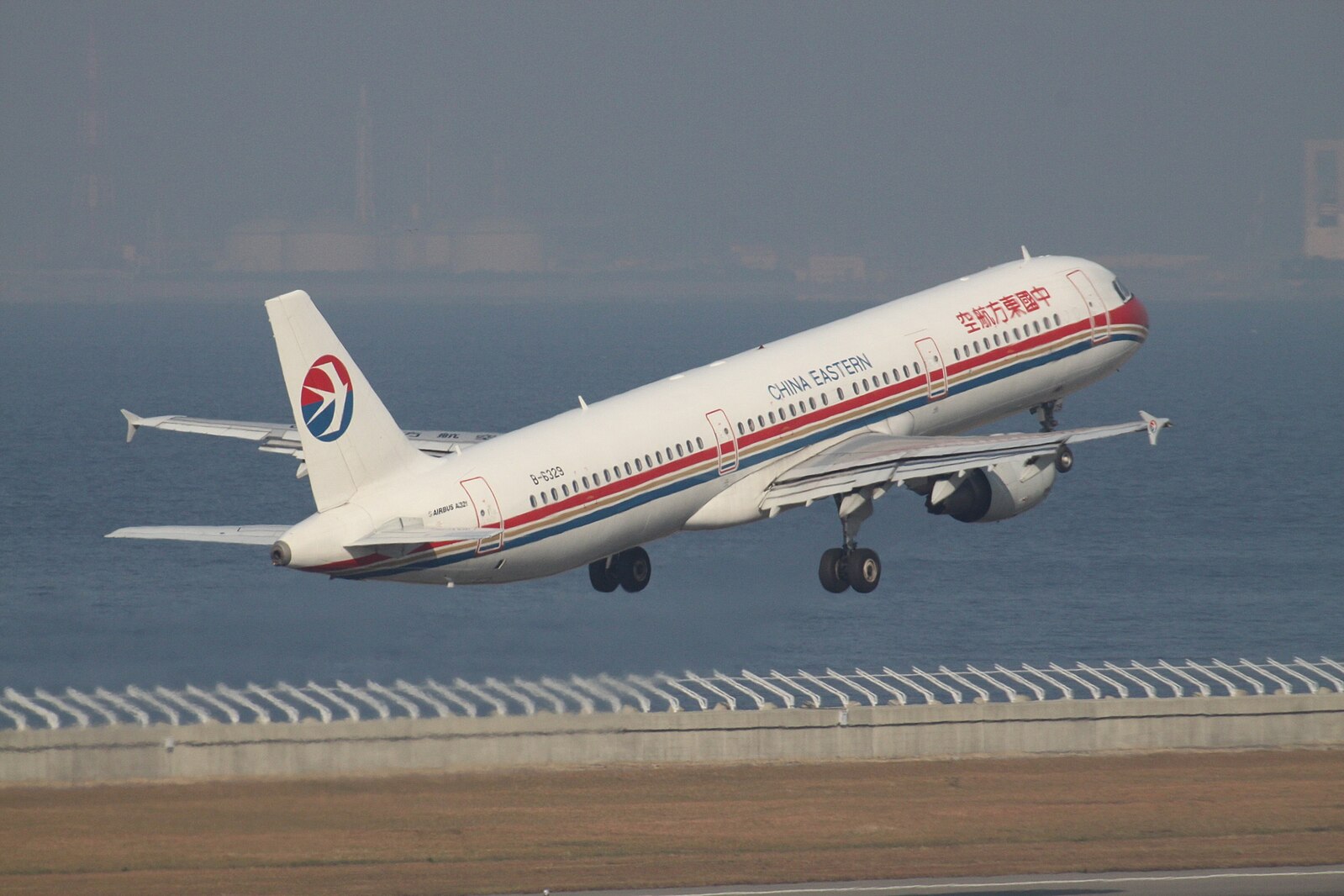
A China Eastern A321 (Photo: aeroprints.com, CC BY-SA 3.0 , via Wikimedia Commons)
I recently had the opportunity to experience an ‘authentic’ first class flight in China mainland. ‘Authentic’ as the airplane isn’t one of its flagships and the route isn’t one of he signature routes like between Beijing and Shanghai. Those are merely the minority of what China Eastern is and not the most accurate picture of the airline.
As an airline whose fleet is mostly narrow bodies and whose network has an overwhelming focus on domestic routes, this is the experience that most China Eastern customers are getting.
On the Ground
Check-in
My flight departs from Shanghai Hongqiao Airport, one of the main hubs of China Eastern. The airport serves domestic and selected regional destinations and is the smaller one of the two Shanghai airports.
Shanghai Hongqiao is one of China Eastern’s main hubs and therefore has a sizable premium check-in area. There were separate areas for business class passengers and frequent fliers, specifically its own members and Skyteam members. Skyteam elites and elite plus are able to use the check-in area.
The area is carpeted and fenced off from the rest of the check-in hall. Sofas are offered only for the business class section while the members would need to unfortunately stand while checking in for their flights.
The premium check-in area (Photo: China Eastern)
Lounge
China Eastern operated multiple lounges in the airport, with all but one of them on the airside of the terminal. The exception is the V21S lounger which I was ‘assigned’ to as per the sticker on my boarding pass. The lounge is on the floor above the departure hall and is operated and used solely by China Eastern passengers traveling in business class.
The lounge has its own security checkpoint with no line at all. Another highlight is the view of the lounge. It overlooks the two concourses of the terminal and the central taxiing area of the airport. The outdoor terrace would be a great spot for plane-spotting but was not open when I visited the lounge.
The lounge has more than enough seats but does get crowded during peak hours. Only selected seats had power outlets though it is not difficult to find one.
The food selection in the lounge is understandably oriental as the airport serves mostly domestic destinations and had no major international connection traffic. The signature item at the lounge is ‘MU NOODLE’ a noodle bar where noodle dishes are freshly prepared as you order and a nice selection of Chinese condiments are available for customers to add.
Salad and sandwiches were available as well as a pasta dish and they were admittedly terrible. You are strongly advised to always go for the local options in Asian countries as they are almost certainly the better one.
Red and white wines are available free of charge, along with a selection of beers and soft drinks. A selection of tea is nicely presented as well.
Onboard
Boarding
China Eastern’s A321 features 12 business class seats in a 2-2 configuration. The seats were retrofitted several years ago with a new color scheme and it is in good condition.
The first class seat on China Eastern A321 (Photo: Anthony An)
A pre-departure drink was served alongside a hot towel.
Amenities
Pillows and blankets were available for the short hop; slippers are also available and passengers are encouraged to bring them home. Earphone was also provided though not noise-canceling.
Food and Beverages
The flight departed a few minutes after eight so no meal was served. Snacks and fruits were still served on a beautiful plate alongside metal cutleries and a hot towel. I do appreciate some Asian and European airlines serving snacks in business in proper dining wares, which always feels way more premium than the bags of chips and cookies on Delta and United for flights of similar length.
Food service on MU2407 (Photo: Anthony An)
There was also a physical drink menu, titled ‘enjoyment,’ with a good selection of drinks for the flight.
Entertainment
The IFE was nothing too impressive; some foreign movies were available and a couple of Hollywood movies in English. It is sufficient for the two-hour flight while any flight longer than two hours might prove the system insufficient. There were no games available despite a games category and barely any TV shows.
Service
The cabin crews were extremely friendly and addressed me by my last name. They were attentive and despite not speaking the perfect English, communicated to the best of their ability.
Conclusion
Inconsistent is how I would describe this flight and China Eastern in general. The service was the real highlight and is absolutely on the level of world-class carriers while the entertainment seriously lacks quality content and the hard products are average at best.
For the short two-hour hop, the service onboard was outstanding and the catering was great as well. Though improvements on the hard products and entertainment can be made, it is overall an impressive flight.
Anthony is an aviation enthusiast who grew up around the world from St. Louis to Singapore, and now lives in Amsterdam. He loves long-haul flying and finds peace in the sound of engine cruising. He aspires to share his passion for the sky though writing and providing another angle on the stories.
JetBlue, American Airlines Begin First Steps To End Alliance
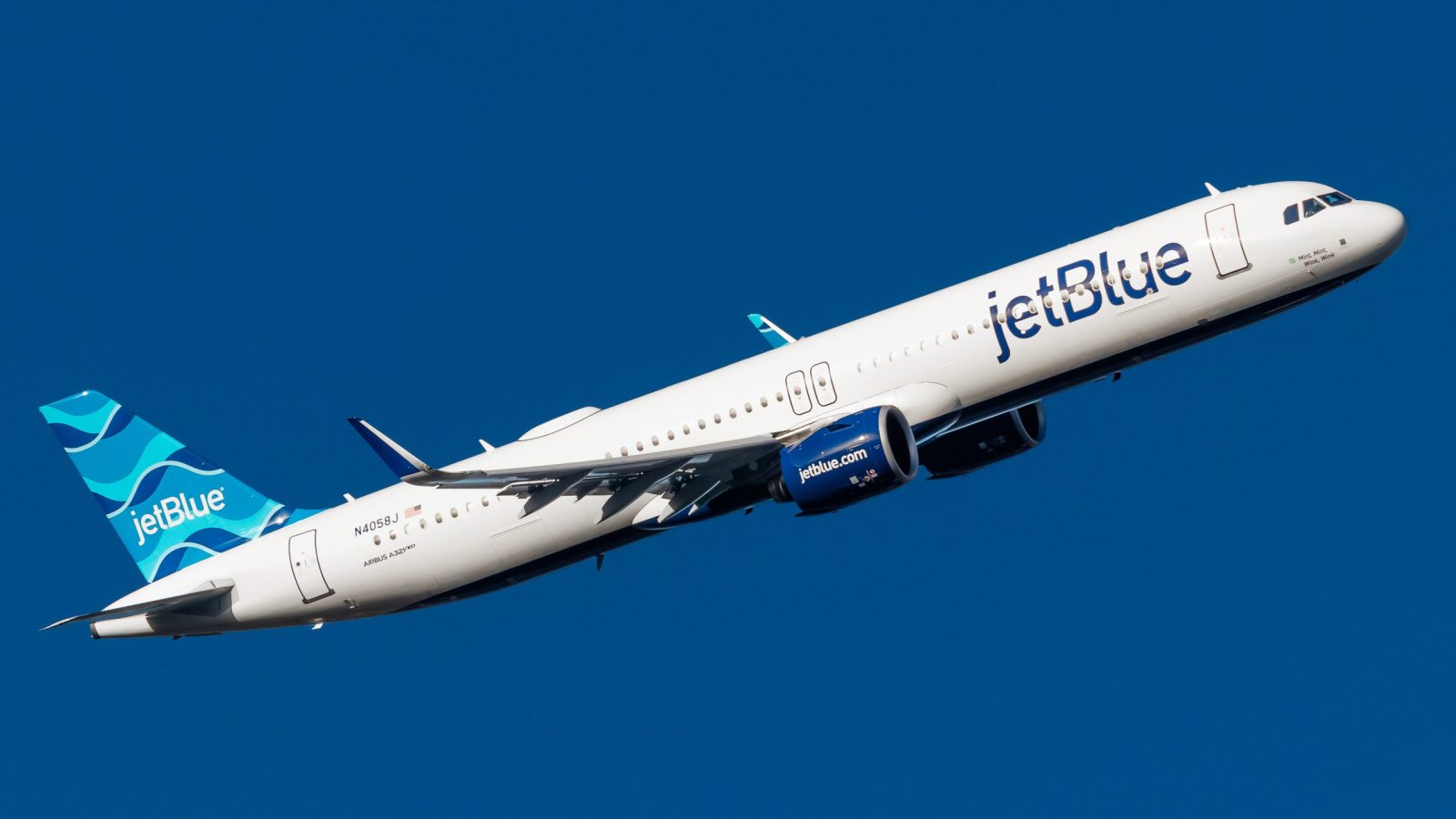
JetBlue Airbus A321 departing London Heathrow [AirlineGeeks | James Dinsdale]
American Airlines and JetBlue announced Friday that from July 21, both carriers will begin the ‘first step in the wind-down process’ of their ‘pro-competitive, pro-consumer Northeast Alliance (NEA).’ The move reported by Reuters comes after a U.S. District Court Judge ruled in May that the three-year-old alliance ‘”substantially” diminished competition in the domestic airline market.’
Beginning July 21, customers will no longer be able to book new codeshare bookings on either American Airlines or JetBlue. The airlines advised that customers with travel already booked would need to add TrueBlue or AAdvantage numbers to the existing booking before that date ‘in order to earn points, tiles and reciprocal perks.’
JetBlue’s NEA vice president Dave Fintzen said, “We are disappointed to be ending popular benefits like codesharing and reciprocal loyalty benefits. We know customers will miss these features and believe the U.S. Department of Justice’s position opposing them misses the mark. With the court’s recent ruling and the termination of the NEA, we have to sunset them in short order. Even as these benefits end, we are still committed to minimizing disruption to existing travel plans and continuing to deliver great value and our award-winning product and service to our customers.”
JetBlue had previously issued a statement advising that the carrier will not appeal the judge’s decision and seek to terminate the three-year arrangement with the world’s largest airline. JetBlue advised that the airline would now “turn even more focus to our proposed combination with Spirit, which is the best and most effective opportunity to truly transform the competitive landscape in the U.S. and bring the JetBlue Effect to more routes and markets across the country.”
With the termination of the NEA with American Airlines, JetBlue contends that the Department of Justice’s (DOJ) objections to its merger with Spirit Airlines are ‘entirely moot.’ JetBlue’s press release on the first step of the wind-down of the NEA states that “the DOJ should reconsider and support our plan to bring a national low-fare competitor to the Big Four; the flying public deserves better than the status quo. The DOJ itself has acknowledged the benefits of JetBlue’s disruptive impact on the industry, and we are open to working with the DOJ to address any remaining concerns they have.”
The challenge by the DOJ, Washington, D.C. and the states of Massachusetts and New York on JetBlue’s planned $3.8 billion acquisition of Spirit Airlines is scheduled to commence on Oct. 16. According to an earlier report by Reuters, the court case is scheduled for four weeks and a decision may be forthcoming by as early as the end of 2023.
John has always had a passion for aviation and through a career with Air New Zealand has gained a strong understanding of aviation operations and the strategic nature of the industry. During his career with the airline, John held multiple leadership roles and was involved in projects such as the introduction of both the 777-200 and -300 type aircraft and the development of the IFE for the 777-300. He was also part of a small team who created and published the internal communications magazines for Air New Zealand’s pilots, cabin crew and ground staff balancing a mix of corporate and social content.
John is educated to postgraduate level achieving a masters degree with Distinction in Airline and Airport Management. John has held the positions of course director of an undergraduate commercial pilot training programme at a leading London university. In addition he is contracted as an external instructor for IATA (International Air Transport Association) and has been a member of the Heathrow Community Fund’s ‘Communities for Tomorrow’ panel.
Avianca Makes Major Progress in A320 Retrofits
Even after bankruptcy, Avianca has made major strides in retrofitting its fleet.
An Avianca A320 in Miami (Photo: AirlineGeeks | William Derrickson)
Avianca, the largest airline in Colombia, was hit hard early during the COVID-19 pandemic. The airline was already in a precarious financial situation leading up to the pandemic with over $7 billion in debt. The complete suspension of operations during the Colombian government’s lockdown is what tipped the airline over the edge.
The airline declared Chapter 11 bankruptcy on May 10, 2020, right as the world was shutting down. It was a tense time for everyone and this was one of the largest airline bankruptcies that could be directly attributed to the COVID-19 pandemic.
It took the airline 18 months to work through its financial restructuring process and emerge from Chapter 11 bankruptcy. One of the key tenets of the restructuring was a simplification of the fleet and an increase in capacity on narrowbody aircraft at the expense of business class.
Fleet Changes
The long-haul fleet is now exclusively Boeing 787 aircraft, the carriers Airbus A330 variants were all retired between 2020 and 2023. The 787 will retain business class seating.
The short-haul fleet, which almost entirely consists of Airbus A320 aircraft, started undergoing retrofits sometime in early 2022. The goal of the reconfiguration was to increase capacity by 20 percent by reducing seat pitch and removing business class.
A320 family aircraft now consist of three rows of Premium seats in a 2×2 configuration, ten rows of Plus seating, and then the remainder of the aircraft being economy seating. The Premium seats will have headrests, device holders, and USB ports along with the ability to recline.
Avianca’s Premium seat (Photo: Avianca)
Plus seats will also feature the same amenities, but in a 3-3 configuration and less legroom.
Avianca’s Plus seat (Photo: Avianca)
Economy seats have an average pitch of 29’’ in a 3-3 configuration with seats that do not recline.
Avianca’s Economy seat (Photo: Avianca)
Avianca recently announced that it has reconfigured 104 Airbus A320S with the new interiors in-house with the help of over 1,500 technicians in less than two years. This process is going to continue with the remaining aircraft that feature the old interior. The airline is especially proud of this achievement given labor and supply chain shortages around the world.
Looking Ahead
Given the new high-density configurations, it seems apparent that the airline is seeking to implement a no-frills approach to flying. The airline now offers various fare structures and ancillary purchases that passengers can select to go beyond the simple economy experience. The new focus on economy class seating could suggest yielding challenges the airline could’ve faced in the past.
It makes sense given Avianca and low-cost carrier GOL now operate under the same holding company; the Abra Group. The operating environment in Latin America is also filled with low-cost carriers that make it challenging to operate with full-service airline fares.
The airline seems to have emerged from bankruptcy with a clear strategy. Alongside the focus on reconfiguration of aircraft, Avianca has also made significant additions to its route network. Just recently the airline launched new routes, including a dozen to the United States, along with the resumption of multiple routes that the airline had previously served prior to the COVID-19 pandemic.
Latin America is a battleground for low-cost carriers and it appears that Avianca is gearing up for the fight.
Hemal took his first flight at four years old and has been an avgeek since then. When he isn't working as an analyst he's frequently found outside watching planes fly overhead or flying in them. His favorite plane is the 747-8i which Lufthansa thankfully flies to EWR allowing for some great spotting. He firmly believes that the best way to fly between JFK and BOS is via DFW and is always willing to go for that extra elite qualifying mile. Hemal's opinions are his own and do not reflect those of his employer.
Sign-up for newsletters & special offers!
Get the latest stories & special offers delivered directly to your inbox