Stories

Vietnam Airlines Records Pre-Tax Profit and Expands Its Route Map

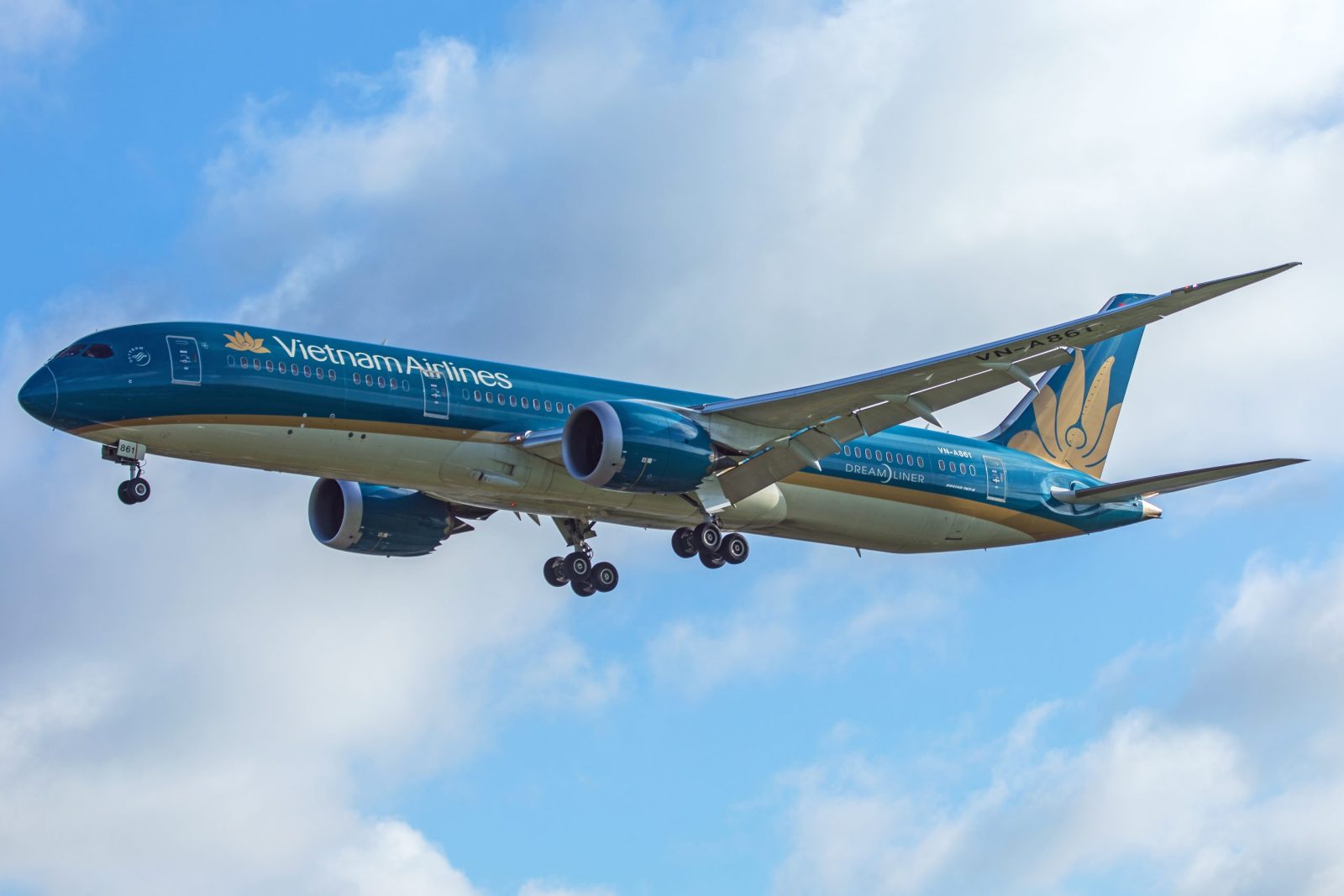
A Vietnam Airlines Boeing 787 Dreamliner
A Vietnam Airlines Boeing 787 Dreamliner on approach into London's Heathrow Airport. (Photo: AirlineGeeks | William Derrickson)

After three years of the pandemic, Vietnam Airlines has reported the first pre-tax profit of VDN 19.3 billion ($822,500) in the first quarter of 2023. As a result of the strong travel demand, the revenue in the first quarter was doubled year on year and close to the pre-pandemic levels to VDN 23.64 trillion, the highest quarter revenue since 2020. However, the carrier has recorded a post-tax loss of VDN 37.3 billion.

The airline served 5.1 million passengers in the first quarter of the year, increasing 63% year on year. It attributed to the Lunar New Year holidays in January, the airline needed to boost its capacity to meet the pent-up demand. Meanwhile, the international travel demand to U.S., Europe, Australia and domestic travel demand were also on the rise.

In addition, China has lifted its travel restrictions in January. Chinese government has gone further in allowing the travel agency to operate the sightseeing tours to Vietnam in mid-March. Vietnam has rolled out the red carpet for the first Chinese sightseeing tour in April. The Vietnamese carriers and the travel sectors are expected to be benefited from the sightseeing tours.

However, Pacific Airlines and Vietnam Air Services Company, the carriers’ subsidiaries were left behind, recording 40% lower than pre-pandemic levels. Earlier, The Civil Aviation Authority of Vietnam has revealed that it is confident of recovering, expecting a full recovery from the pandemic by the end of the year.

Route Map Expansion

In the second year of the post-pandemic, Vietnam Airlines continues to spread its wings, launching Hanoi – Melbourne, Australia on Jun. 15.  The airline will use A350-900 with three classes on the new route. The airline will operate 18 flights per week connecting two countries, providing the highest frequency in the country. Before the pandemic, almost 50% passengers flying with Vietnam Airlines to Australia.

India has been on Vietnam Airlines’ radar since last year, as the flights to New Delhi were launched in June. After one year of starting the flights, the airline will increase the service to India by adding Hanoi, Vietnam – Mumbai and Ho Chi Minh City – Mumbai starting on May. 20. Airbus A321s will be used on the routes.

In addition, the airline announced that its London service will resume to a daily service on Oct.29. Before the operation of daily service, the airline will gradually ramp up its frequencies to five-times-a-week starting from Jul. 1. Vietnam Airlines is in line with its rival, Bamboo Airways, to operate Boeing 787-9 Dreamliner in three classes.

“With the resumption of daily services from London confirmed once again for this winter, we are determined to return to pre-pandemic passenger numbers – which peaked at approximately 74,000 from London Heathrow in 2019 – as soon as possible,” Phan The Thang, the airline’s general manager for the U.K. and Ireland, said.

Cabo Verde Airlines Resumes Paris Routes and Expands Fleet

Cabo Verde Airlines (TACV) Boeing 737-700 (Photo: Instagram @caboverdeairlines)

Cabo Verde Airlines has announced the resumption of its flights between Cape Verde and Paris after more than three years of absence. From July 23, 2023, the airline will operate two flights per week between Praia-Nelson Mandela and Paris-CDG airport, operated by a Boeing 737-700 that can accommodate 12 passengers in Business class and 108 in Economy. Departures are scheduled on Sunday at 9:30 a.m. to arrive at 6:30 p.m., with return flights leaving France on Thursday at 11:00 a.m. to land at 2:20 p.m.

In addition to the Paris routes, Cabo Verde Airlines will also connect two other airports to the French capital starting from July 24, with a Boeing 737-700 taking off from Roissy to arrive at 2:20 p.m. in Sao Vicente-Cesaria Evoria then at 4:00 p.m. at its base in Sal-Amicar Cabral; it will leave on Wednesday at 7:45 a.m. and take off from Sao Vicente at 9:30 a.m. to land at 6:30 p.m. in Paris. Cabo Verde Airlines will compete with Azores Airlines in Praia, with Transavia France in Sal and without competition in Sao Vicente.

The airline had been grounded by the Covid-19 pandemic for 15 months but announced the resumption of its operations in June 2021, initially between Sal and Lisbon, its only other international destination at the time, with three weekly rotations.

After being renationalized in July 2021, Cabo Verde Airlines has just one 737-700 (D3-CCI) in its fleet, but it is expecting a second aircraft for July, a Boeing 737 MAX 8.

Also known as the Transportes Aéreos de Cabo Verde (TACV), the Cape Verde’s flag carrier, will lease the second aircraft to add to its only 737-700. The airline has launched a competition with its customers to baptize the future aircraft, with “Cidade Velha”, “Morabeza”, and “Esperança” currently leading the suggestions.

TACV had suspended its operations during the Covid-19 pandemic and relaunched its route between Praia-Nelson Mandela and Lisbon at the end of 2021, with Humberto Delgado Airport now also being served from Sal and Sao Vicente-Cesaria Evoria.

Renationalized in July 2021, TACV has transported 28,000 passengers since resuming operations. According to the Minister of Transport Carlos Santos, TACV is “in negotiation to rent a second plane to connect to Boston”, a city that, along with Brazil and France, is part of the airline’s plan for the near future “to be able to bring and promote more and more this interconnection with the diaspora, in the midst of all this turmoil.”

TACV has received state aid several times during the pandemic.

In February last year, the Cape Verdean government had granted another guarantee for a loan of USD 1.58 million to TACV, in view of “emergency needs”, such as the payment of salaries.

In March 2019, the State of Cape Verde sold 51% of TACV for USD to Lofleidir Cabo Verde, a company 70% owned by Loftleidir Icelandic EHF (Icelandair group, which took 36% of Cabo Verde Airlines — company’s trade name) and 30% by Icelandic entrepreneurs with experience in the aviation sector (who took over the remaining 15% of the privatized 51% share).

Victor Shalton

Victor Shalton's love for aviation can be traced to when he was 11-years-old. As a seasoned aviation writer, he takes pride in providing the best aviation coverage around the globe and is passionate about advancing his skills in the aviation space. In addition, he loves travelling, writing, arts and while his speaking engagements have taken him around the world, he is proud to call Nairobi home.

Indian Low-Cost Carrier Go First Files for Bankruptcy

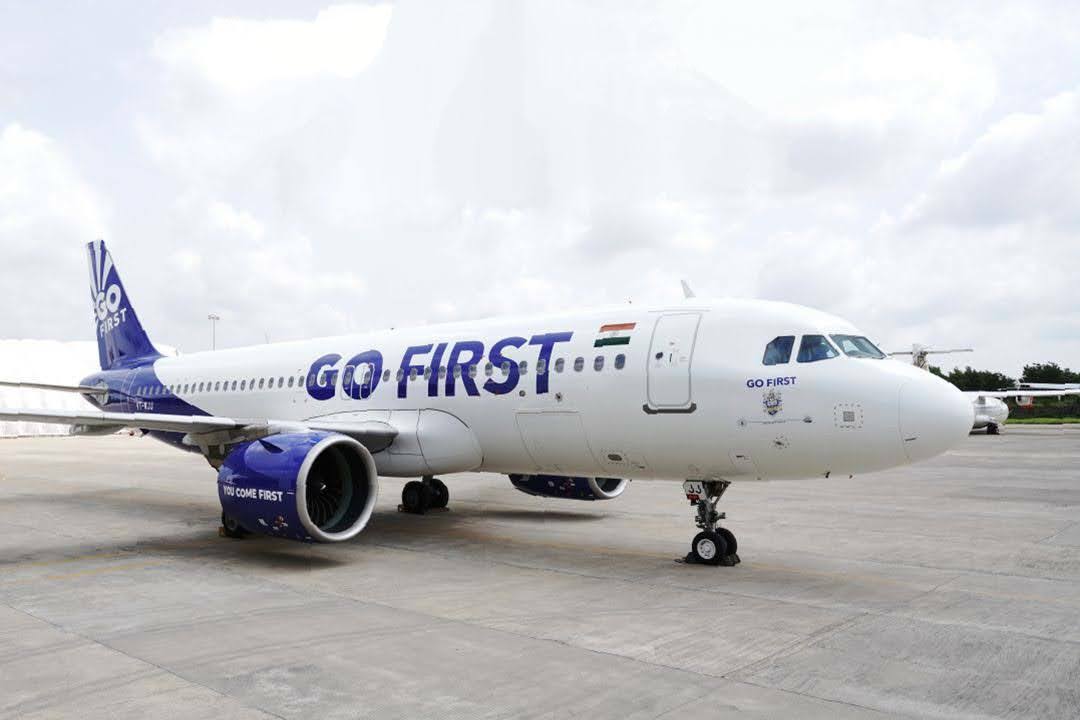
Go First's Airbus A320neo (Photo: Twitter @GoFirstairways)

Go Airlines of India, branded as “GO FIRST” has voluntarily filed for resolution and protections with the National Company Law Tribunal in New Delhi.

The low-cost carrier has filed for the same under Section 10 of the Insolvency Bankruptcy Code (IBC).

The 55-aircraft-strong carrier had to take the step owing to financial and operational problems being faced due to the increasing number of failing engines supplied by Pratt & Whitney. The engine manufacturer is the sole supplier of engines for the airline’s Airbus A320NEO fleet.

The airline was planning on going public last year. The airline, originally called GoAir, rebranded itself as “Go First” for the IPO.

The Indian airline has a fleet of 55 A320 NEOs, all powered by P&W engines. Since 2018, the same has been facing glitches, hampering operations, and causing delays and monetary losses to Go First as well as IndiGo. The difference between IndiGo and Go First is that the former has a huge fleet of A320s with both CFM and P&W engines. Hence, IndiGo is not facing similar complications as Go First.

P&W non-compliant with arbitration ruling

As of May 1, 25 out of 55 A320NEOs of the aircraft are grounded owing to engine issues. After a round of arbitration under the Singapore International Arbitration Centre (SIAC) dated Mar 30, 2023, the airline was awarded a verdict wherein P&W where required to supply at least 10 serviceable leased engines by April 2023 and a further 10 engines per month until December.

The same award was confirmed again on Apr. 15.

Pratt & Whitney failed to provide any serviceable leased engines to the troubled airline, further maintaining that no such engines are available to comply with the arbitration award.

The losses sustained by the single aircraft type operator in monetary terms are enough to make any airline operator sweat. In order to keep the airline in the air, the promoters have already infused nearly $391 million. Since the airline commenced operations in 2005, the promoters have invested approximately $800 million.

The engine-issue-plagued airline has received support from the Indian government via its Emergency Credit Line Guarantee Scheme.

The airline claims that the grounding of 50% of its fleet owing to P&W engine glitches, while still paying 100% operating costs has set the company back by a whopping $1.3 billion in lost revenues and additional expenses.

The Indian airline has been paying lessors amounts due even for the non-operational, grounded aircraft.

At its very essence, and as observed by the SIAC, the financial issues faced by the airline can also be laid with the ongoing issues with Pratt & Whitney.

If an engine manufacturer of faulty engines does not repair, supply new engines, or provide compensation for losses faced when the same issue manages to cripple 50% of the available capacity, any airline no matter how big or small will face similar problems.

In the past 24 hours, the airline halted flight bookings on May 3 and 4. Third-party booking websites removed the listing of the same. Additionally, the airline has also sued Pratt & Whitney.

The filing for resolution and protection has made Go First the first airline to file for bankruptcy since Jet Airways in 2018.

Aviation in India was following a commendable upward growth with the industry witnessing the best April in terms of domestic traffic, with the highest traffic and loads. The sector was able to cross the average daily traffic of February 2020, the last month of regular operations before the pandemic.

All the above simply points to all that Go First is losing in terms of revenue, traffic, and market share.
Regardless of whether or not the airline is able to recuperate from this speedbump, it will end up missing what looks to be a very fruitful and promising summer season in India.

Japan Airlines Announces New Disney-Themed Livery

The inaugural Boeing 787 Dreamliner for JAL preparing for a flight from Seattle to Tokyo. (Photo: AirlineGeeks | Katie Zera)

Japan Airlines (JAL) has unveiled its latest Disney-themed special livery to mark the 40th anniversary of Tokyo Disney Resort. The Japanese flag carrier has announced that a Boeing 767-300ER aircraft will start flying with the new look on June 9, 2023.

A Disney-Themed Experience

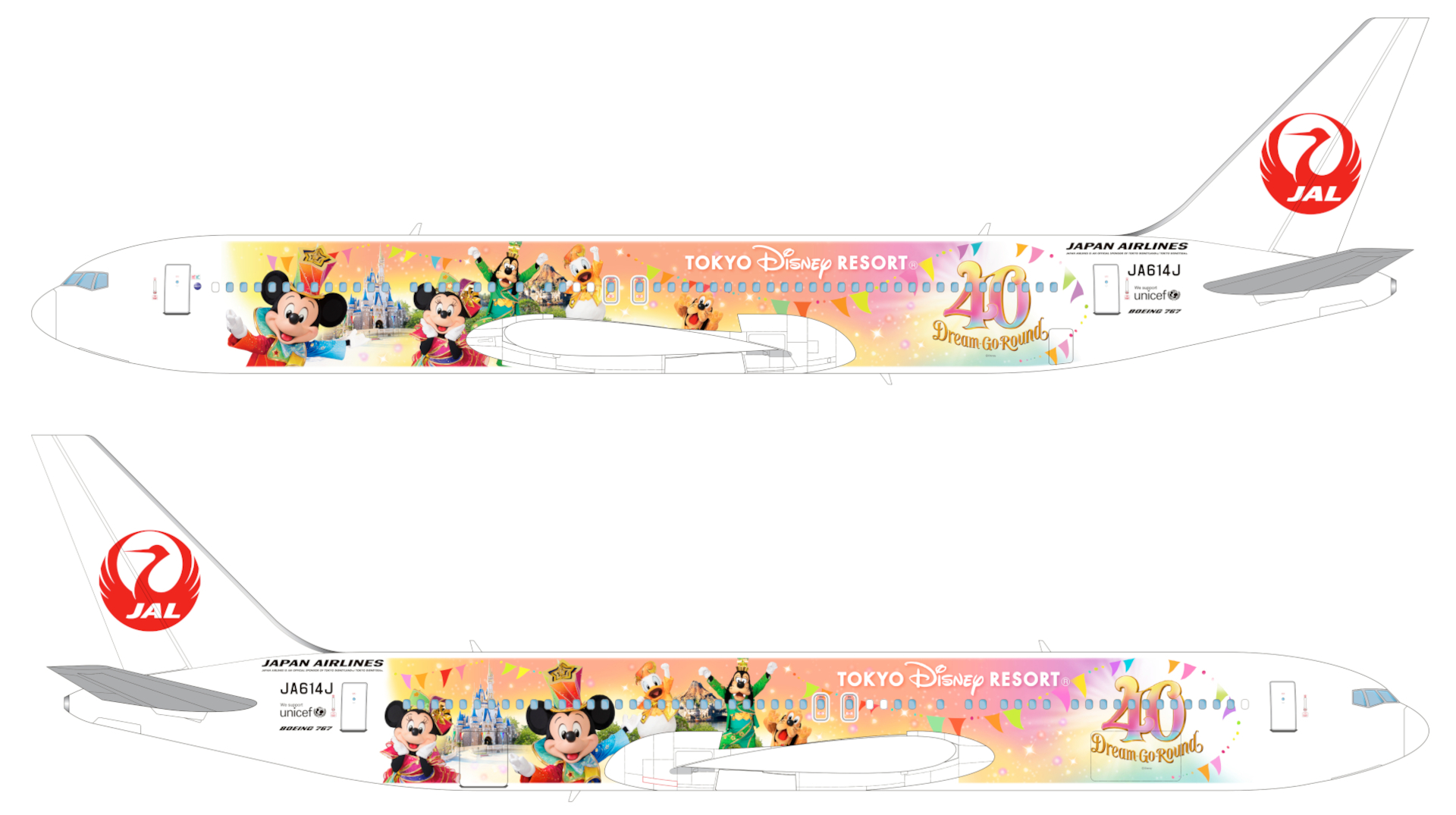
The special livery will feature popular Disney characters in front of a colorful background. Tokyo Disney Resort’s two theme parks, Tokyo Disneyland and Tokyo DisneySea, will also be represented by images of the parks’ centerpieces, Cinderella Castle and Mount Prometheus. The aircraft will be named “JAL Colorful Dreams Express” and will celebrate the resort’s “Dreams Go Round” 40th anniversary celebration.

Rendering of Japan Airlines’ special livery for the 40th anniversary of Tokyo Disney Resort. (Photo: Japan Airlines)

Not only will the aircraft feature a special livery, but passengers traveling on board the plane will also receive to themed amenities and service items. Passengers can request a special boarding certificate, which features one of three designs depending on when they travel during the year-long anniversary event. Once on board, travelers will find headrest covers featuring 40th anniversary artwork as well as themed paper cups during beverage service.

Themed cups, headrest covers and special boarding certificates for Japan Airlines’ themed aircraft for the 40th anniversary of Tokyo Disney Resort. (Photo: Japan Airlines)

The aircraft that will receive the new special livery is a 17.5-year-old Boeing 767-300ER, registered as JA614J. Japan Airlines is scheduled to make its Disney-themed debut on June 9, 2023 with a two-hour commemorative flight departing and arriving at Tokyo’s Haneda Airport.

The aircraft was first delivered to the airline in 2005 and currently has a domestic configuration with five first class seats, 42 “Class J” business class seats and 205 economy class seats.

According to the airline, the aircraft will serve domestic routes between Haneda Airport and destinations throughout Japan including Sapporo, Hiroshima, Fukuoka, Kagoshima, Osaka and Okinawa. The livery and experience will remain in service until the end of the anniversary celebration at the end of March 2024.

A Decades-Long Partnership

Japan Airlines has had a long-standing partnership with Tokyo Disney Resort. For instance, it has been a sponsor of Tokyo Disneyland, since the park opened in 1983. The carrier was a longtime sponsor of StarJets, an aerial carousel-style ride similar to the Astro Jets attraction found at Disneyland in California and Walt Disney World’s Magic Kingdom in Florida. The Japanese version of the attraction closed in 2017.

A Japan Airlines Boeing 767-300ER (JA615J) in 2022 with a “Disney 100” special livery. (Photo: Japan Airlines)

Since the early 1990s, Japan Airlines has had over a dozen special liveries themed for various aspects of Tokyo Disney Resort. Over the years, aircraft had special paint jobs and decals to mark special occasions such as Tokyo DisneySea’s opening and the 30th and 35th anniversaries of the resort, which helped promote the resort.

The Disney-themed aircraft have mostly been domestically-configured jets. Additionally, The resort’s success over the years has largely relied on Japanese visitors.

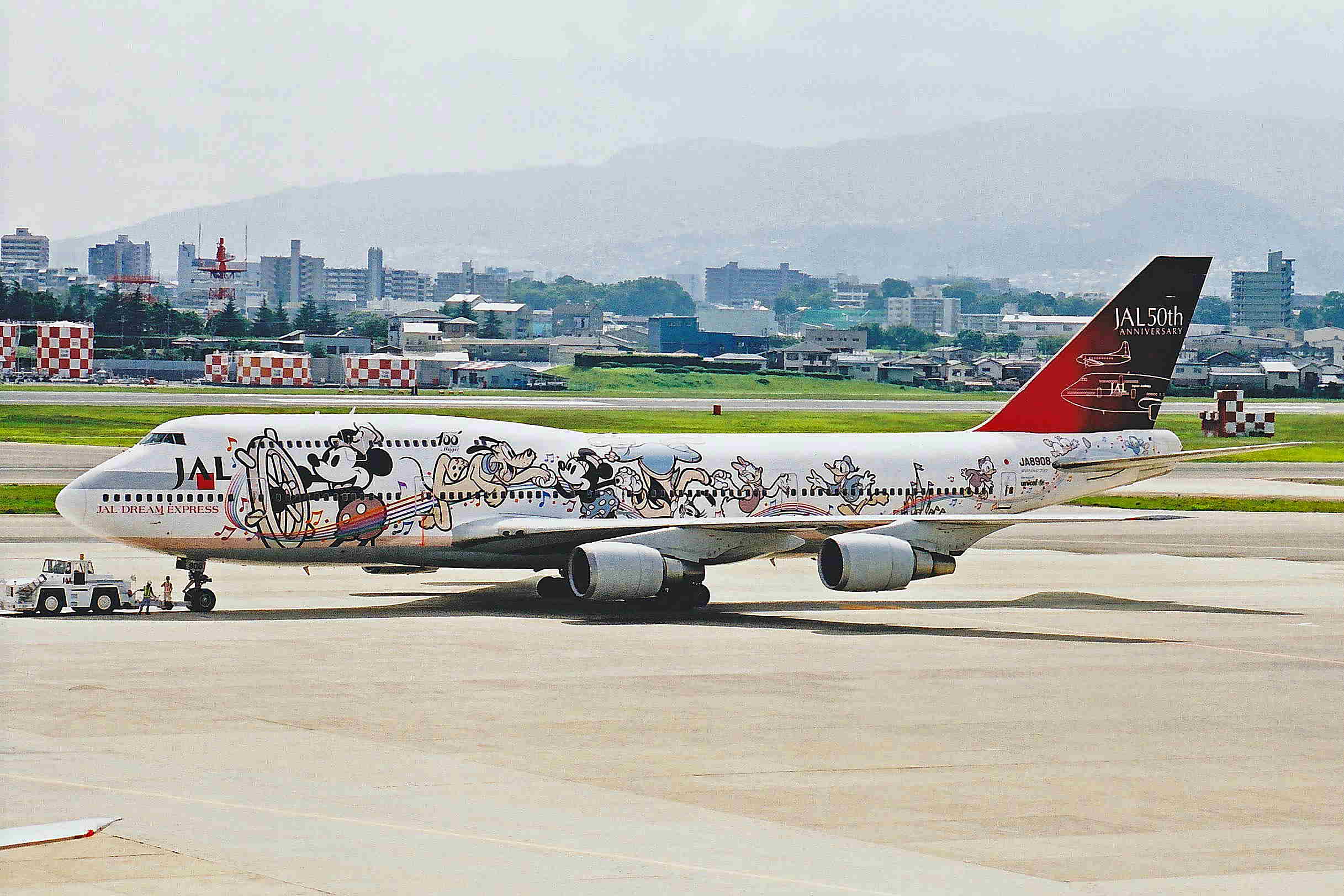
Japan Airlines Boeing 747-400D (JA8908) with a “Disney friends” special livery in 2001. (Photo: Ken Fielding (Wikimedia Commons), licensed under CC BY-SA 3.0)

Andrew Chen

Andrew is a lifelong lover of aviation and travel. He has flown all over the world and is fascinated by the workings of the air travel industry. As a private pilot and glider pilot who has worked with airlines, airports and other industry stakeholders, he is always excited to share his passion for aviation with others. In addition to being a writer, he also hosts Flying Smarter, an educational travel podcast that explores the complex world of air travel to help listeners become better-informed and savvier travelers.

Alaska Begins New Partnership with Taiwan’s STARLUX

An Alaska Airlines 737 MAX 9
An Alaska Airlines 737 MAX 9. (Photo: AirlineGeeks | Katie Zera)

Seattle-based Alaska Airlines has just begun its partnership with Taiwan-based STARLUX. The Taiwanese carrier just began its first flights to the United States two days ago, on April 27, 2023, which operated from the country’s capital in Taipei to Los Angeles, which is an Alaska Airlines hub.

The partnership means members from both airlines can enjoy benefits such as earning and spending miles in each other’s countries. Alaska Airlines passengers can now connect directly to STARLUX in LAX and continue onto 16 other destinations in Asia.

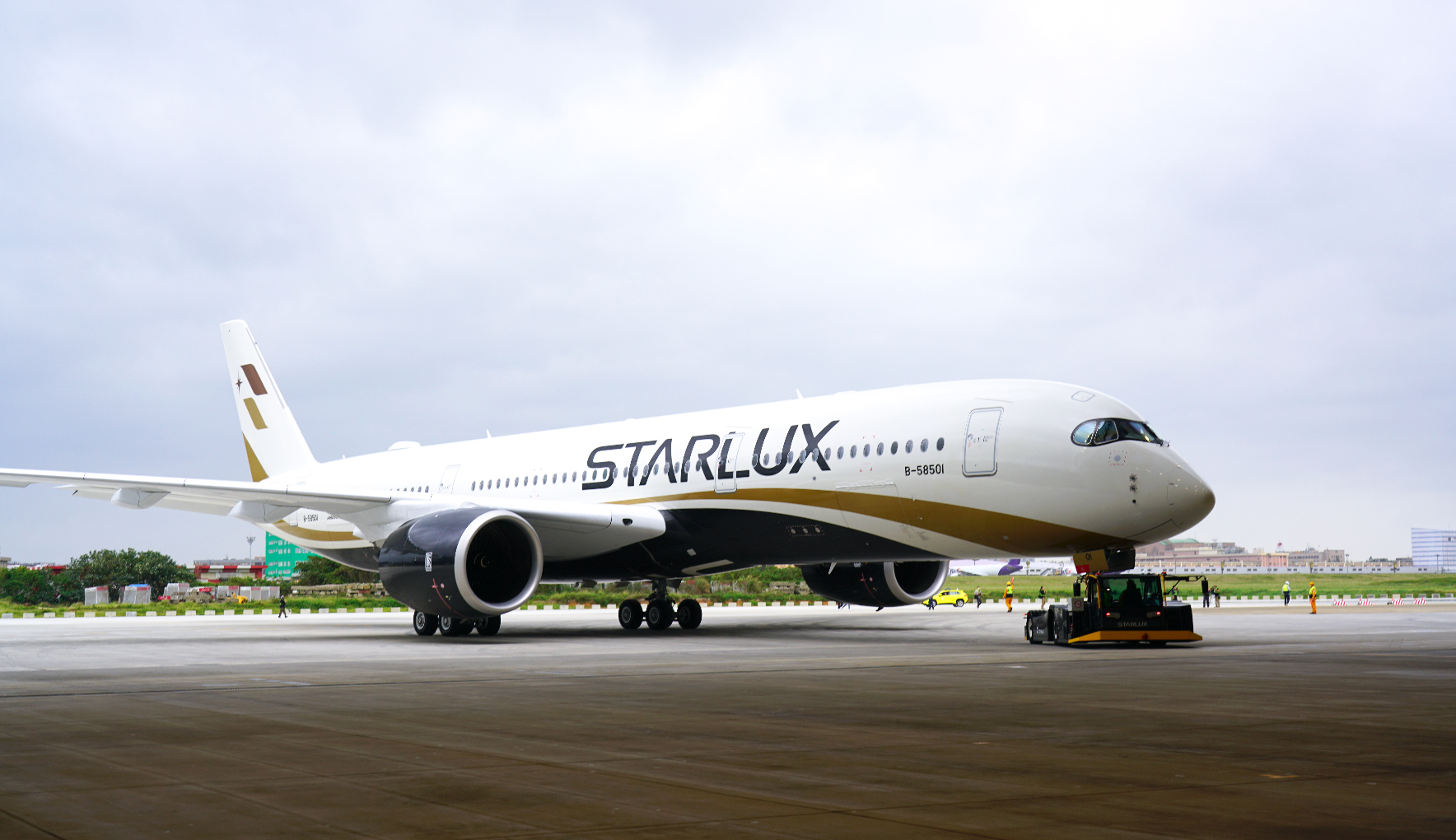
STARLUX Airlines’ first Airbus A350-900 at Taiwan Taoyuan International Airport after its delivery flight (Photo | STARLUX Airlines)

Alaska Airlines’ SVP of fleet, finance, and alliances Nat Pieper did have something to say regarding the partnership in a press release from the airline: “STARLUX is a premier global airline offering world-class service and amenities. We’re proud to be their first airline partner. Our guests will love flying on STARLUX, connecting the West Coast, Taipei and many more incredible places in Asia. We’re thrilled to offer our loyal Mileage Plan members another exciting way to see the world.”

STARLUX passengers flying into the United States can also connect with Alaska Airlines to over 100 destinations from their hub at LAX. The partnership also means bags will connect in either direction and within each other’s route network making it easier for passengers given the complexity of LAX.

Joey Gerardi

Joey has always been interested in planes for as long as he can remember. He grew up in Central New York during the early 2000s when US Airways Express turboprops ruled the skies. Being from a non-aviation family made it harder for him to be around planes and would only spend about three hours a month at the airport. He was so excited when he could drive by himself, the first thing he did with his driver's license was get ice cream and go plane spotting for the entire day. He graduated from Western Michigan University in 2022 with a B.S. in Aviation Management & Operations and a Minor in Business, and currently works for a major airline in his hometown.

New French ATC Protests: Ryanair Petition Surpasses 600,000 Signatures

Ryanair is one of the many carriers affected by the ATC strike (Photo: AirlineGeeks | Fabian Behr)

May 1, 2023, Labor Day, will see the next round of protests in France against the raising of the retirement age from 62 to 64. The reform, approved by the French Constitutional Court on April 14, has sparked new protests across the country. The change, sought by current President Emmanuel Macron, was presented as a way to force workers to pay more into the system, which the French government says is on the verge of going into deficit. The reform would also require 43 years of work to be eligible for a full pension, while people are already entitled to a full state pension at the age of 67, regardless of contributions.

Most French unions have therefore called on citizens and workers in all sectors to take to the streets in protests and marches. Air Traffic Controllers have also taken part in general strikes, and the French authorities have warned that this will lead to disruptions from the evening of Sunday, April 30, until 6 a.m. on Tuesday, May 2.

Just a few days ago, EasyJet CEO Johan Lundgren said that the British airline does not contest the right to strike, but flights on French soil must be protected, warning that France must deal with strikes before tourists “go elsewhere”. During the protests, some 10 million travelers were affected by delays and 64,000 people had their flights canceled.

In Paris, the Direction générale de l’aviation civile (DGAC) has asked airlines to cancel 33 percent of scheduled flights at Orly and 25 percent at Charles de Gaulle and Beauvais airports on May 1. However, not only French airports will be affected, but most likely the flight will only “pass through” French skies. The most affected airports will be Paris Orly, Charles de Gaulle and Beauvais, as well as Marseille, Lyon, Toulouse, Bordeaux, Nantes and Nice.

Ryanair confirmed that more than 600,000 passengers have already signed the “Protect Passengers: Keep EU Skies Open” petition launched by the Irish low-cost airline five weeks ago. The aim is to call on EU Commission President Ursula von der Leyen to take immediate action to protect the freedom of movement and overflight of European citizens during the French air traffic control strikes. Once the petition reaches one million signatures, the airline will present it to the EU Commission.

According to Ryanair’s website, in the first four months of 2023, more than 50 days of French ATC strikes (10 times more than in all of 2022) forced the Irish airline to cancel more than 3,700 flights, resulting in the short-term cancellation of more than 666,000 passenger flights, not only in French skies, but also in Germany, Spain, Italy, the United Kingdom and Ireland.

Vincenzo Claudio Piscopo

Vincenzo graduated in 2019 in Mechanical Engineering with an aeronautical curriculum, focusing his thesis on Human Factors in aircraft maintenance. In 2022 he pursued his master's degree in Aerospace Engineering at the University of Palermo, Italy. He combines his journalistic activities with his work as a Reliability Engineer at Zetalab.

SkyWest Joins Delta in Paying Flight Attendants for Boarding

Alaska continues expansion with Skywest-operated Embraer E175s (Photo: Ian McMurtry)

SkyWest Airlines announced over the weekend that it will give flight attendants boarding pay. This makes SkyWest the second major airline in the United States, after Delta, to pay cabin crew during the boarding process. To compensate for the change, SkyWest has updated its Flight Attendant pay rates to include $23.66 per hour of boarding time, according to pay rates forwarded to Aero Crew News.

According to SkyWest’s website, the company’s flight attendants are currently guaranteed a minimum of 76 flight hours per month. If flight attendants don’t spend at least that much time in flight, SkyWest will make up the difference so that the flight attendants earn 76 hours of pay. The amount of time that flight attendants spend during the boarding process depends on how many flights they take per day, which is itself dependent on how long the flights they take are each day. But if we assume that a flight attendant takes four flights per day with 30 minutes of boarding each, a SkyWest flight attendant will earn an extra $946 per month if they fly 20 days per month with that structure.

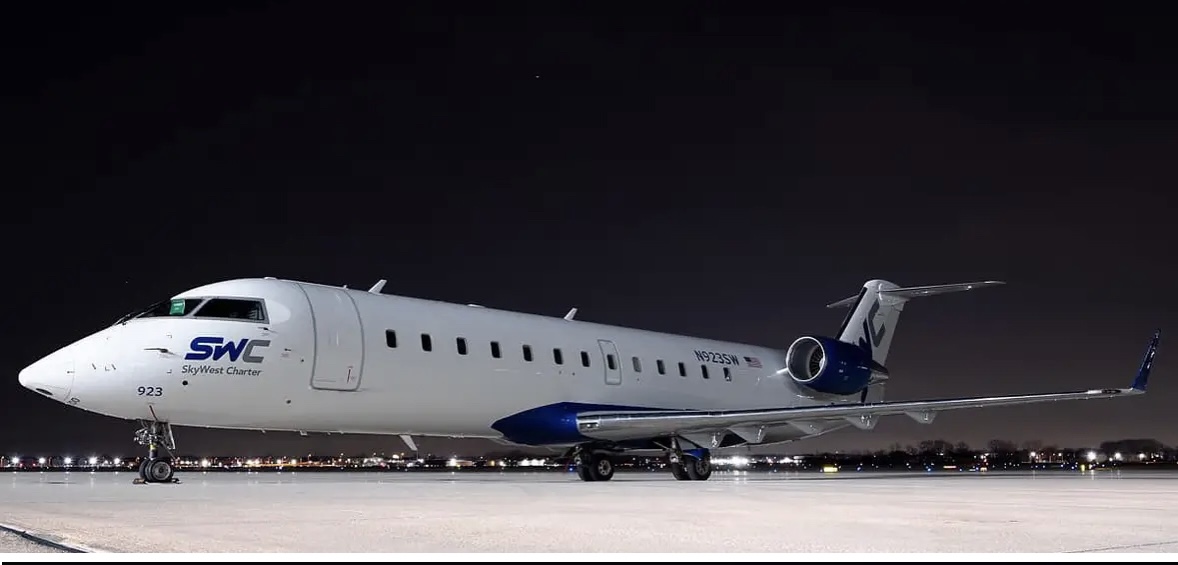
The first aircraft painted in SkyWest Charters colors. (Photo: AirlineGeeks)

Pilots and flight attendants alike have long called for a modification to their pay scales. Generally speaking, flight crews are usually paid based on flight time. Flight attendants themselves get paid their full rate when the cabin doors close. This can be a sticking point for crews, though, as they often show up long before a flight leaves and believe they should be compensated more for the flight planning and preparation they do before they even board.

As the airline industry rebounded from the initial shock of the Covid-19 pandemic, though, crews strengthened their calls for boarding time to be included in their pay rates. Flight attendants were especially vocal, as they are directly working with passengers and executing essential safety and security measures.

Delta Air Lines was the first to commit to the change, and the Association of Flight Attendants at Alaska Airlines has said that boarding pay is among negotiating items with their management. But SkyWest beat out big names such as American Airlines and United Airlines in paying flight attendants for boarding time. SkyWest flight attendants are not union members.

Compensation Aims to Fix Crew Shortages

SkyWest’s plan comes amid a severe airline staffing shortage that will challenge summer operations. The pilot shortage has been in the spotlight lately, but flight attendants are also in high demand.

Regional airline pilots’ pay has considerably increased since air travel has rebounded from the pandemic. There was a notable shift in the regional airline industry when American Airlines’ wholly-owned regionals substantially increased pilot pay, and other regional airlines followed suit to match the new rates.

A SkyWest CRJ-200 (Photo: Alan Wilson [CC BY-SA 2.0 (http://creativecommons.org/licenses/by-sa/2.0)], via Wikimedia Commons)
Thus, the question will be raised whether other regional carriers will follow SkyWest’s lead and pay their flight attendants boarding pay as well. While it’s debatable whether this pay will also translate to legacies – at the time of writing, Delta is the only legacy airline to have ratified a new pilot contract since the pandemic started – but, at a time when more new crewmembers are starting their careers at low-cost carriers instead of regionals, it may be critical for other regionals to match SkyWest’s offer to continue staffing all of their flights.

SkyWest Charter Developments

SkyWest’s announcement comes just days after it formally launched a new subsidiary, called SkyWest Charter, to help alleviate the effects of the pilot shortage. This will allow the airline to operate on-demand flights for sports teams or private individuals. SkyWest has all necessary FAA approvals to launch the subsidiary.

The only outstanding approval is SkyWest Charter’s FAA commuter authority, which will allow them to operate scheduled charter flights. This will be critical for SkyWest, as this final authorization will allow SkyWest to fly the Essential Air Service contracts it holds under different crew requirement regulations.

SkyWest hopes that all these adjustments in its pay scale and business model will alleviate the challenges of the flight crew shortage. It has yet to be seen whether the changes it has made, especially the flight attendant pay update, will stick with other airlines or how much SkyWest will be able to expand its flight operations with its new charter arm.

John McDermott

John McDermott is a commercial pilot pursuing a career in professional flight. His passion for aviation began in an Ann Arbor bookstore with a tale of enemy pilots during World War 2, and he hasn't looked back. Besides flying and writing for AirlineGeeks, John volunteers with Professional Pilots of Tomorrow and travels whenever he gets the chance.

Opinion: Icelandair Stopover Option Offers Unique Experiences

Icelandair Dash 8 at Akureyri International Airport, Iceland. (Photo: AirlineGeeks | John Flett)

Icelandair’s business model of leveraging the country’s mid-Atlantic geographic position allows the carrier to serve four markets: ‘TO, FROM, VIA and Within Iceland.’ With the population of Iceland estimated at just below 350,000, reliance on traffic to and from Europe and North America meant during the dark days of the pandemic that Icelandair did not have the benefit of a strong domestic market. As a comparison, the least populous of the 50 U.S. states Wyoming has a population of approximately 585,000. The U.S. domestic market with a population base of 350 million rebounded quickly but international routes and the airlines that relied on international passengers were hampered by varying travel restrictions.

Thankfully Icelandair endured and last month the airline announced that its winter 2023-24 schedule would be its most extensive to date. Tomas Ingason, Icelandair Chief Revenue Officer, advised: “We have been able to extend previously seasonal routes to year-round services and increase frequencies on other routes throughout the network for the winter 23/24 season. As a result, I’m delighted that we have been able to increase Icelandair’s capacity by 20-25%, compared to winter 2022/2023.”

Great news for the airline but also good news for its passengers as Icelandair continues to offer high customer service standards. On a recent flight from Toronto Pearson International (YYZ) to Keflavik (KEF) the airline offered access to the Plaza Premium Lounge in Terminal 3. For departures from KEF the airline operates its own excellent Icelandair Saga Lounge with its distinctive fireplace and panoramic views of the surrounding vistas.

Onboard, Icelandair has made the strategic decision not to offer lie-flat beds in the Saga Premium cabin. Given that single flight times rarely exceed six or seven hours this is understandable and did not detract from the premium experience. YYZ-KEF was a little over 5 hours with an early morning arrival time allowing for a leisurely meal with the viewing of a movie or two. Passengers traveling in the Economy cabin can pre-purchase meal items up until 24 hours prior to departure or cashless purchasing is available onboard.

Icelandair is certainly a strong advocate for the country it serves with regular ‘Taste of Iceland’ events promoting the country’s culture, specifically its cuisine. This is obviously evident onboard with the food the airline offers in both premium and economy cabins but also the extensive local gin and beer selection and inflight entertainment content. On the flight I undertook to Iceland, the main meal in Saga Premium was the best lamb dish that I have tasted, either in the air or on the ground. The tenderness and generous portion size were unlike any other airline meal I had experienced, and this was echoed by others who were traveling.

The airline’s strategy allows passengers to stopover in the country for one to seven days at no additional charge. Travelers flying transatlantic select this option when booking flights and can book the accommodation at the level that suits their needs and budget. On my trip, proximity the center of Reykjavik was required so we stayed at the Reykjavik EDITION. This new hotel is across the road from the Harpa Conference Hall and Conference Centre on the waterfront and close to the excellent FlyOver Iceland experience.

As part of the trip to Iceland, a day trip to the town of Akureyri on the northern coast of the main island was scheduled. This service was scheduled to be operated from the Reykjavik central city airport (RKV) by a De Havilland Canada DHC-8, or ‘Dash 8’. Once boarded the aircraft was beset with a mechanical issue and all passengers were made to deplane and await further instructions.

Goðafoss Waterfall near Akureyri, Iceland
(Photo: AirlineGeeks | John Flett)

With every minute of delay eating into potential time on the ground at the destination, it became a concern as to whether all passengers could be accommodated on the next flight.  That concern was alleviated when the airline announced that it was flying a 757 from KEF to RKV to ensure that everyone made it to Akureyri for however the amount of time they were planning on being there. A return flight from Akureyri was achieved on the Dash 8.

That level of customer service highlighted what is special about Icelandair and why the airline has seen a dramatic return to demand post-pandemic. In Q1 2023 the Icelandair Group achieved an operating income of $233.3 million up 47 per cent on the equivalent period in 2022. The carrier is set to operate to 54 destinations over the coming summer period, the most in the airline’s history. Recently, the airline’s future fleet strategy was announced with A321XLR and A321LR aircraft scheduled to enter the fleet beginning in 2025.


Icelandair provided all flights, accommodation and access to attractions.

John Flett

John has always had a passion for aviation and through a career with Air New Zealand has gained a strong understanding of aviation operations and the strategic nature of the industry. During his career with the airline, John held multiple leadership roles and was involved in projects such as the introduction of both the 777-200 and -300 type aircraft and the development of the IFE for the 777-300. He was also part of a small team who created and published the internal communications magazines for Air New Zealand’s pilots, cabin crew and ground staff balancing a mix of corporate and social content. John is educated to postgraduate level achieving a masters degree with Distinction in Airline and Airport Management. John has held the positions of course director of an undergraduate commercial pilot training programme at a leading London university. In addition he is contracted as an external instructor for IATA (International Air Transport Association) and has been a member of the Heathrow Community Fund’s ‘Communities for Tomorrow’ panel.

Photos: Southwest Debuts New Hawaiian-themed Special Livery

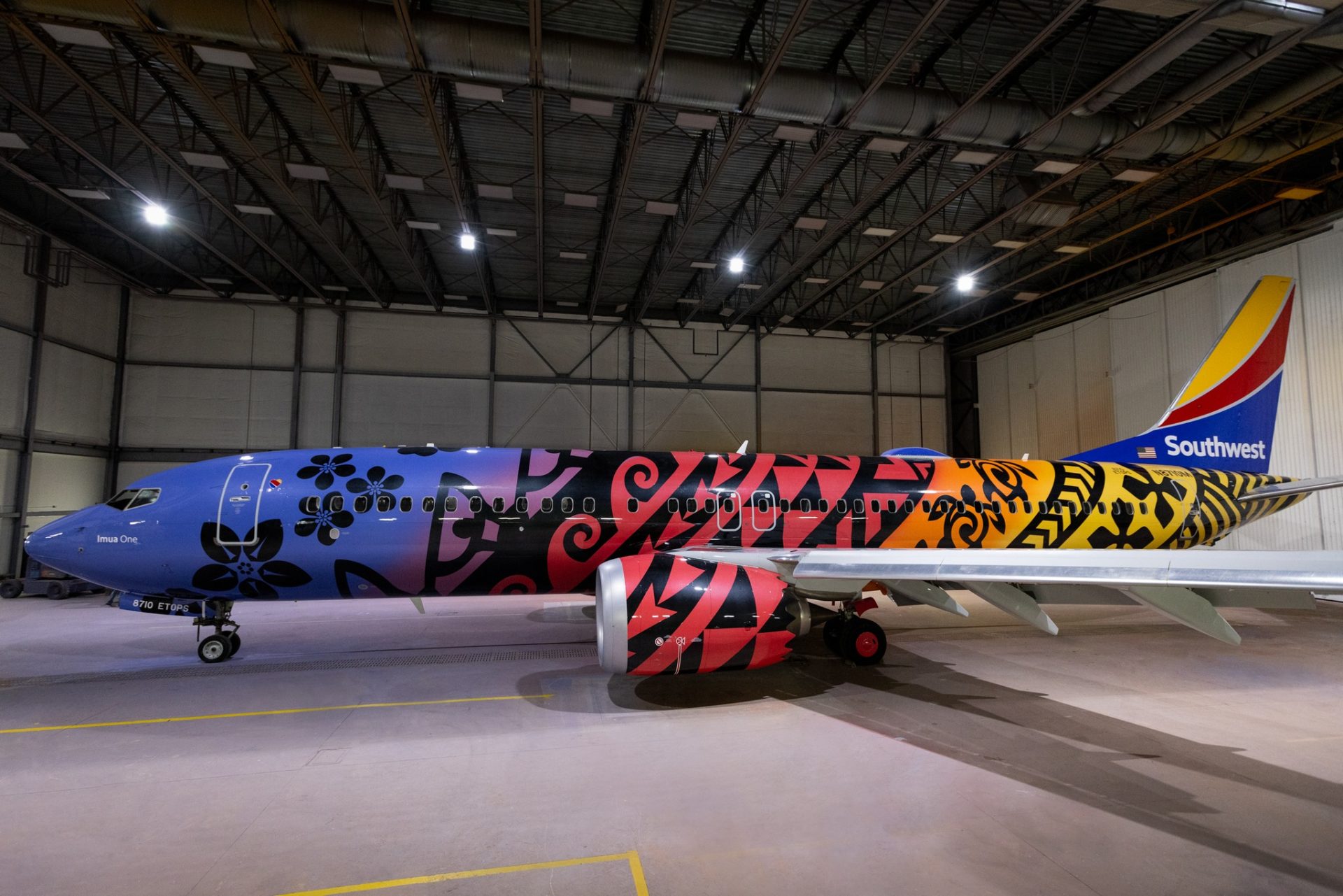
Southwest Airlines' new Imua One on display at Long Beach Airport. (Photo: Southwest Airlines)

Southwest Airlines announced a new special livery on Friday. The carrier painted an ETOPS-certified Boeing 737 MAX – registered N8710M – in a Hawaiian-themed design, dubbed Imua One, to celebrate its four-year anniversary of Southwest’s first inter-island flight in Hawaii.

The design centers around eight elements that “represent concepts in Hawaiian culture that also align with Southwest values,” Southwest said in a press release.

The concepts of Ohana (family), Honu (turtle), Aina (land), Ama (support), Hoku (star), Kai (ocean), Lokahi (unity), and Imua (forward) are all represented. These concepts are represented by symbols overlaid on a color gradient meant to evoke a sunset.

Iuma One waits in the paint hanger before departing Spokane. (Photo: Stephen M. Keller | Southwest Airlines)

Southwest also painted a lei near the nose of the aircraft with unique flowers representing each Hawaiian island that Southwest flies to. There are also five stars painted on the aircraft, representing each airport that Southwest flies to, including Honolulu, Lihue, Kahului, Kona, and Hilo.

“Imua, that means go forward with strength and courage and spirit,” said Southwest CEO and President Bob Jordan stated in a press release. “To me that’s what Southwest Airlines stands for. It’s a rally cry that unites a team in moving forward to a common goal, unified with direction.”

Southwest is also launching a video series with the aircraft called “Honoring the Heart of Hawaii” to highlight each of the values represented by Imua One.

Southwest’s Other Liveries

Imua One is Southwest’s 14th state-inspired aircraft. Other Southwest planes are painted in designs inspired by states such as Arizona, New Mexico, Illinois, Colorado, and Maryland. The company also has an aircraft called Freedom One, which wears a design based on the American flag.

Yet while Imua One is not the first state-inspired plane in Southwest’s fleet, it is the first that does not bear a state’s flag as its design. Rather, the plane incorporates various aspects of Hawaiian culture together into a new design. These concepts are largely conceptual and abstract.

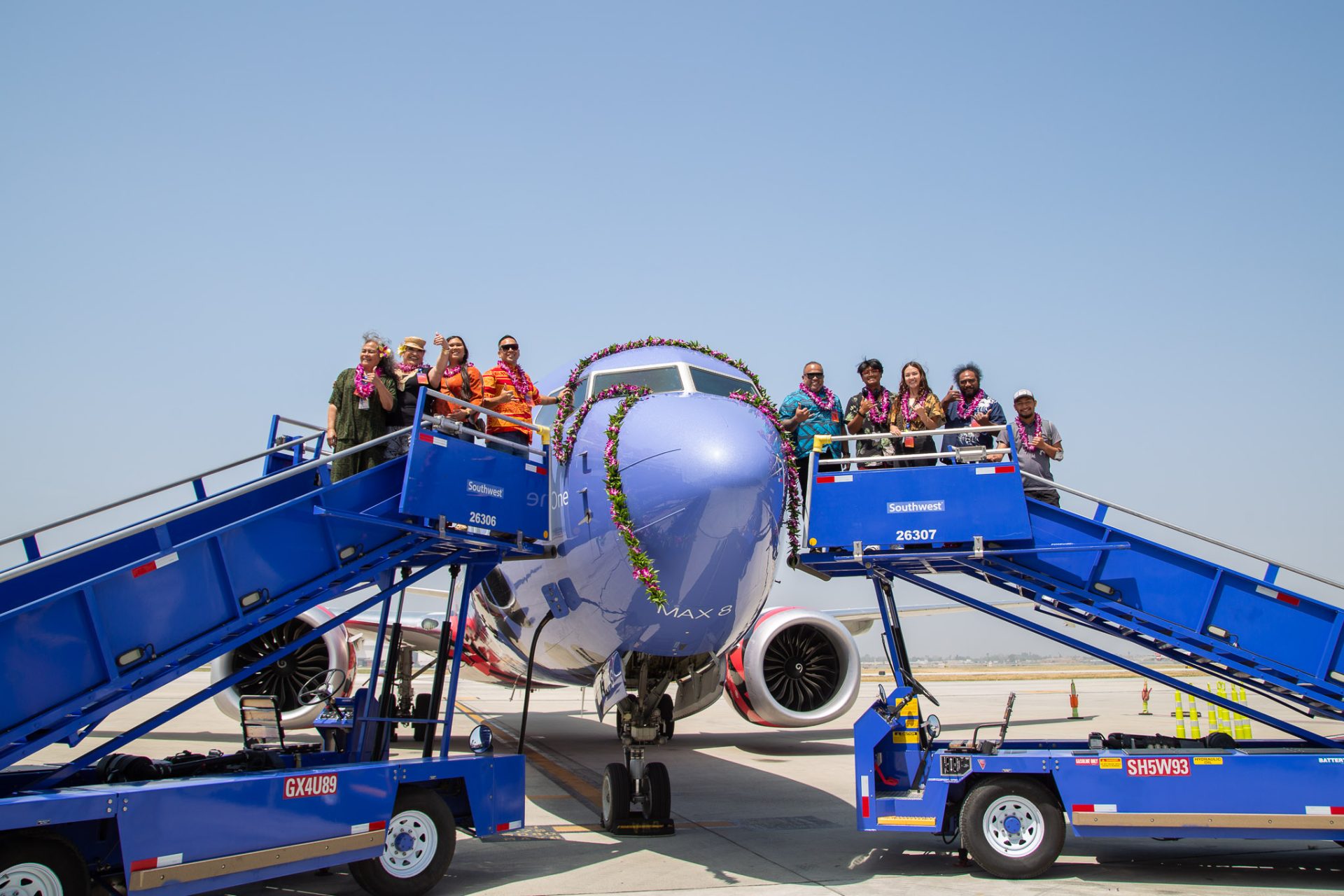
Southwest held a special commemoration at Long Beach Airport before Iuma One continued to Honolulu. (Photo: Southwest Airlines)

Iuma is the third 737 MAX that bears a special livery at Southwest. Two others honor Herb Kelleher, the company’s founder, and Colleen Barrett, the President Emeritus.

Iuma One spent about 3.5 weeks in Spokane, Washington being repainted with the design. It flew to Long Beach, Calif., where a celebration was held to honor the anniversary. The aircraft then continued on to Hawaii.

Other Aircraft Upgrades

Imua One isn’t drawing heads just for its paint job. It is also the first aircraft in Southwest’s fleet to feature a new cabin design centered around larger overhead bins, faster Wi-Fi, and power ports at every seat. This redesign was announced in May 2022 and will see Southwest spending $2 billion over 5 years to upgrade its entire fleet, starting with the 737 MAX sub fleet. 250 of the airline’s 700 aircraft will be retrofitted by the end of 2023, CNBC reports.

John McDermott

John McDermott is a commercial pilot pursuing a career in professional flight. His passion for aviation began in an Ann Arbor bookstore with a tale of enemy pilots during World War 2, and he hasn't looked back. Besides flying and writing for AirlineGeeks, John volunteers with Professional Pilots of Tomorrow and travels whenever he gets the chance.

European Union Introduces New Sustainable Fuel Mandates

An ITA Airways Airbus A320 with the new livery at Leonardo Da Vinci International Airport. (Photo: ITA Airways)

The European Union (EU)  — in its mission to decarbonize air travel —  have introduced a new environmentally friendly measure to tackle aviation carbon emissions. This isn’t exactly new across the European Union, they do this all time with new taxes and selective bans targeted towards the aviation industry. What makes this move new and worth mentioning is due to the fact that it’s a departure from the initial punitive measures.

This week, the EU reached a deal that would set binding targets for European airlines to start using more sustainable aviation fuels. The plan is to increase use of sustainable aviation fuels across the Union over the next three decades or so.

2 percent of aviation fuel supplied at European Union airports needs to be comprised of a sustainable aviation fuels by 2025, this grows to 6 percent in 2030, twenty percent in 2035 and all the way up to seventy percent by 2050.

Additionally, from 2030 the deal requires that 1.2 percent of fuels be synthetic. This grows to thirty-five percent in 2050.

This deal now needs to get approval from the EU countries and EU Parliament, but that’s more of a formality than anything. While there isn’t much noise from the country levels, there are some airlines, like Lufthansa, that are making noise over the deal citing increased costs and hurting competition, since the rules only apply to airlines flying from European airports and not to carriers flying into the EU.

However, EU airlines are going to receive around 2 billion euros to help with the transition, so it’s not likely they’re being left to fend for themselves.

Legislative Motivation

This rings different than the typical EU legislation. It’s among the few new legislative moves that are actually forward thinking. The deal that is being put in place is to squarely spur the sustainable aviation fuel industry.

Sustainable fuels are a thing, airlines all over the world are using sustainable fuels in some capacity. However, use is still extremely limited. While investments are growing in the sector there are a lot of barriers to overcome. This legislation from the EU puts on strong legislative pressure to spur the growth of sustainable aviation fuels.

If these goals are followed, then it puts a greater degree of certainty into the growth of sustainable aviation fuels.

The U.S. Approach

The United States Department of Transportation is following a somewhat different path. Instead of legislative fiat, the plan is to introduce a government-wide approach to work with the fuel industry to grow the market share of sustainable aviation fuels with a target to supply 100 percent of projected fuel use by 2050.

There are start ups every day touting some new electric or hydrogen plane concept. They will eventually come to fruition, but a stop gap is needed until technology develops to support it. Sustainable aviation fuels are the only realistic way at the moment to reliably reduce carbon emissions in the aviation industry.

Hemal Gosai

Hemal took his first flight at four years old and has been an avgeek since then. When he isn't working as an analyst he's frequently found outside watching planes fly overhead or flying in them. His favorite plane is the 747-8i which Lufthansa thankfully flies to EWR allowing for some great spotting. He firmly believes that the best way to fly between JFK and BOS is via DFW and is always willing to go for that extra elite qualifying mile. Hemal's opinions are his own and do not reflect those of his employer.
Sign-up for newsletters & special offers!

Get the latest stories & special offers delivered directly to your inbox

SUBSCRIBE

Uh-oh! It looks like you're using an ad blocker.

Our website relies on ads to provide free content and sustain our operations. By turning off your ad blocker, you help support us and ensure we can continue offering valuable content without any cost to you.

We truly appreciate your understanding and support. Thank you for considering disabling your ad blocker for this website