Recently, Etihad Airways — the Abu Dhabi-based airline of the United Arab Emirates — received the ‘Green Industries’ eco-label from the Emirates capital’s environment agency. In addition, Etihad Airways and SATAVIA recently signed a multi-year commercial agreement for the management of contrails within their daily flight operations.
The contract was signed by Mariam Al Qubaisi, Etihad Airways’ chief sustainability officer, and Adam Durant, managing director of SATAVIA, on 18 January 2023 at the World Future Energy Summit (WFES) at ADNEC in Abu Dhabi. SATAVIA is a leading green aerospace company based in the UK, which aims to green aviation by providing useful information to key stakeholders across the industry, enabling environmentally conscious operators to reduce their climate impact per flight by up to 60 percent.
Once in place, the new agreement will enable Etihad Airways to accelerate the airline’s progress toward climate-neutral operations.
According to an article in EUROCONTROL from 2021, contrails are formed by water, soot and cold air. When water vapor is expelled from the exhaust nozzle of an aircraft engine into the sufficiently cold air, it condenses and freezes around soot and other particles in the air, creating tiny ice crystals. Under certain atmospheric conditions, these ice crystals create layers of cirrus clouds, causing a ‘blanket’ effect that keeps warmer air trapped in the lower atmosphere.
SATAVIA’s contrail management platform, DECISIONX: NETZERO, aims to optimize commercial flight plans for greener operations by implementing small route changes on a minority of flights to avoid the formation of persistent, warming contrails.
Adam Durant, CEO and founder of SATAVIA, said that by implementing minimal changes to a small percentage of flights, Etihad Airways could eliminate the majority of its climate footprint (not directly related to CO2) with minimal impact on day-to-day operations and in a shorter timeframe than other green aviation interventions.
The Abu Dhabi Environment Agency has also awarded Etihad Airways the ‘Green Industries’ eco-label for finding innovative pollution control solutions and applying environmental best practices, leading to increased levels of environmental compliance across the airline. The agency awarded the label during a ceremony held on the sidelines of Abu Dhabi Sustainability Week.
There are four main categories under this award: resource demand management (which considers optimal energy use and resource conservation), pollution reduction from primary and secondary operations, record of environmental compliance with UAE requirements and finally, new approaches to environmental conservation. The award also recognizes the promotion of economic growth and improving the quality of life for Abu Dhabi residents.
The winning companies receive the award after being recognized for their eco-friendly performance through an in-depth assessment of the facility’s operations and initiatives, which ensures the implementation of environmental best practices to ensure the protection and sustainable development of the environment.
Vincenzo graduated in 2019 in Mechanical Engineering with an aeronautical curriculum, focusing his thesis on Human Factors in aircraft maintenance. In 2022 he pursued his master's degree in Aerospace Engineering at the University of Palermo, Italy. He combines his journalistic activities with his work as a Reliability Engineer at Zetalab.
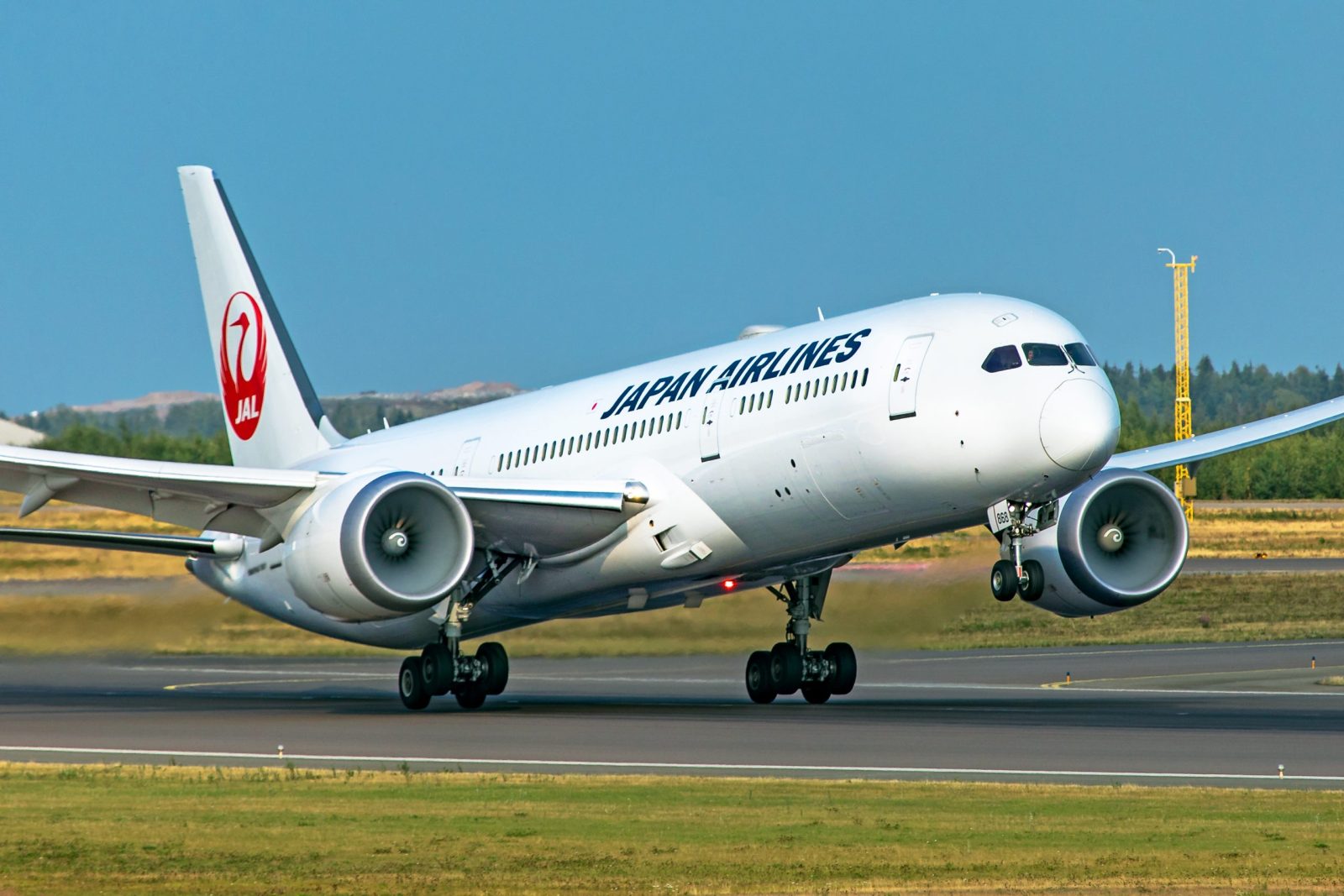
A Japan Airlines 787-9 departing. (Photo: AirlineGeeks | William Derrickson)
Over the past few weeks, a number of airlines around the world have made announcements about their onboard catering offerings. From new food and beverage options to the return of inflight chefs, these developments show a commitment from airlines to the passenger experience as the industry recovers from the COVID-19 pandemic.
Delta’s Menu Refresh
Atlanta-based Delta Air Lines is starting the new year with updated food and beverage options for premium passengers. Seasonal and regional menu items include a plant-based cheesesteak sandwich for passengers departing from New York’s John F. Kennedy International Airport, Spanish tapas like dried beef and aioli potato salad for passengers departing Spain and traditional afternoon tea on flights departing from the United Kingdom and Ireland.
For dessert, Delta is bringing back its dessert cart for those traveling in Delta One, the airline’s widebody business class product. The cart features plated desserts, fruit and cheese plates as well as a build-your-own ice cream sundae option. United Airlines also recently announced the return of its dessert cart for long-haul business passengers. Delta One passengers and those flying on the airline’s short-haul First Class product also have two new dessert options on flights longer than 900 miles: a chocolate chunk and sea salt cookie or a blueberry lemon cheesecake.
Delta One customers on some flights will also be treated to new alcoholic beverages. Firstly, there is a rosé label produced by La Fête Wine Company called La Fête du Rosé. The carrier describes the pink wine as a “perfectly balanced with a silky palate of vibrant strawberry grenadine and currant, ending with remarkable freshness.” Delta’s onboard cocktail partner, Tip Top Proper Cocktails, is also offering an espresso martini as well as a variety of other cocktails throughout the year in a rotating program.
Chocolate chunk and sea salt cookies from Bell’s Cookie Co. will be available for passengers in First Class and Delta One (Photo: Delta Air Lines)
Porter Reveals Catering Partners
North of the border, Toronto-based Porter Airlines has revealed the details of its updated onboard service offering, with a stated emphasis on partnering with high-quality Canadian brands. Porter offers an all-economy service but has recently announced a revamped onboard product with the introduction of its Embraer E195-E2 jets.
Porter offers beer and wine served in glassware to all passengers as well as a snack basket featuring a variety of options. The airline’s announcement highlights a number of Canadian products and brands. Perhaps most notably, Porter revealed the return of the beloved milk chocolate shortbread from Cookie It Up, which was previously offered on board and in the airline’s lounges until 2017.
While Porter’s network has largely focused on turboprop flights out of Toronto’s small downtown airport, Billy Bishop Toronto City Airport, it is expanding to Toronto Pearson International Airport with its new Embraer E195-E2 jets. These aircraft will operate new longer routes for the airline, including transcontinental flights to destinations such as Vancouver, British Columbia and Calgary, Alberta.
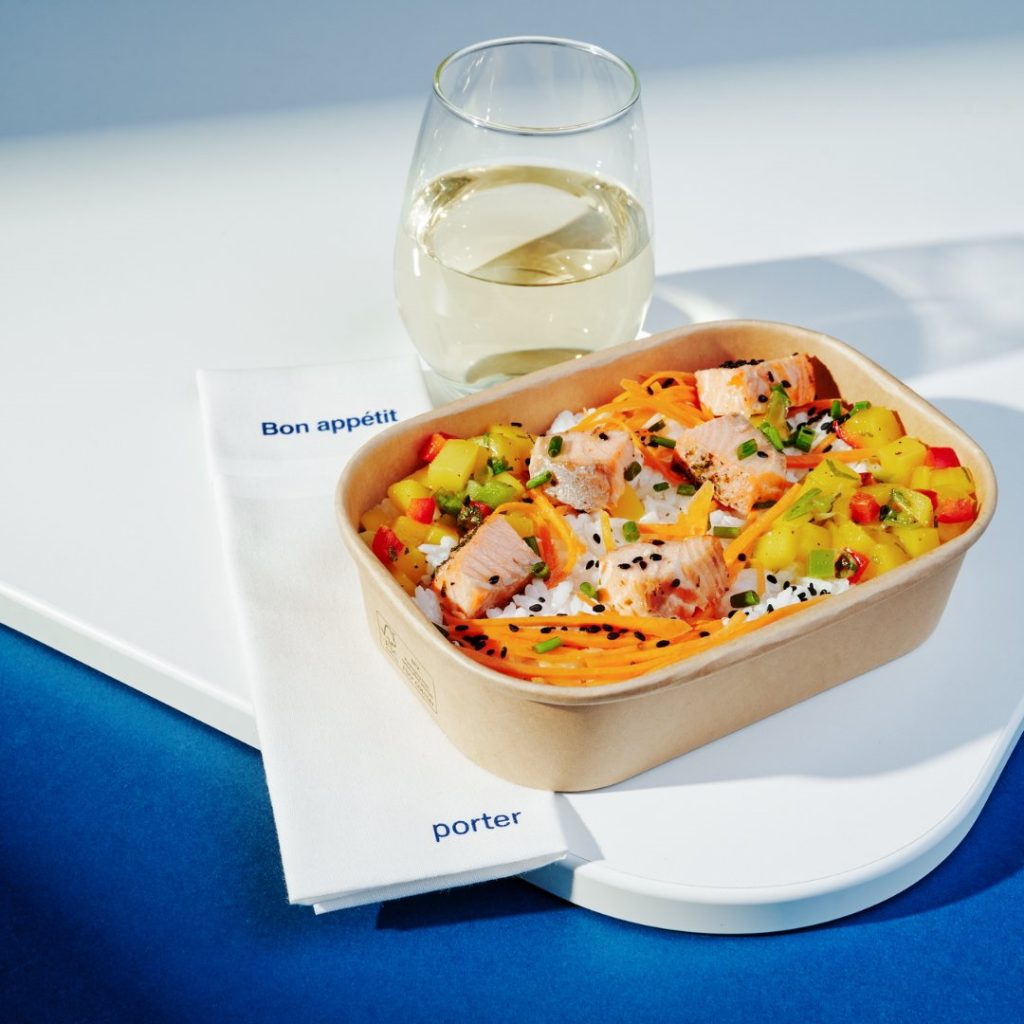
Food offerings on these flights will be included for passengers traveling on PorterReserve, the airline’s all-inclusive economy class option, and will be available for purchase by other passengers. The airline announced that options will include a selection of Canadian cheese, organic wellness shots, as well as menu options that vary between flights but include a chia smoothie bowl, tropical salmon poke and a seven-layer dip.
Porter Airlines is introducing meals on longer flights (Photo: Porter Airlines)
Flying Chefs Returning to Austrian Airlines Flights
Although there has been no formal announcement by the airline, Austrian Airlines appears to be bringing its flying chefs back to the skies. As first reported by One Mile at a Time, the airline has been hiring inflight chefs. The position was cut during the COVID-19 pandemic but it seems like the airline is getting ready to bring them back.
The inflight chef concept is only offered by a few airlines around the world. Onboard chefs are tasked with preparing food for passengers in long-haul first and business class cabins. However, most airline food is pre-cooked before being reheated on the aircraft and food on flights with chefs on board is no different. Onboard chefs generally do not have access to any special equipment and they largely perform roles that could otherwise be performed by flight attendants. That being said, the presence of a dedicated chef can provide the appearance of an elevated dining experience and showcases an airline’s commitment to premium catering.
Austrian Airlines is known for having high-quality catering from DO & CO and the return of inflight chefs shows that the company is focused on delivering a competitive soft product. It appears that the chefs will be returning to long-haul business class cabins this summer.
Onboard chefs are returning to Austrian Airlines business class cabins (Photo: Austrian Airlines)
Japan Airlines’ Economy Class Menu
While many food and beverage announcements focus on premium cabins, Japan Airlines’ latest catering news covers economy and premium economy class dining. The Tokyo-based carrier has recently unveiled its latest menu options for its economy class meal service, known as “RED à table.” RED à table is focused on the theme of “inflight meals for the future” and aims to help the airline achieve a number of United Nations Sustainable Development Goals. Menu options are changed from time to time and the carrier recently announced its latest offerings.
The current rotation includes two main dishes. The Japanese option is yuzu-flavored steamed rice with chicken and lotus root and the western option is beef stew with carrot rice and omelet. The new side dishes are a chilled minced-shrimp ball with ume plum paste, sweet potato with lemon and okra with mashed tofu and sesame.
It is common for food establishments in Japan to display models of their offerings to potential diners outside the restaurant. Japan Airlines has taken this concept online and provides details and photos of onboard food options for passengers in all cabins on a dedicated section of its website. According to the airline, the latest RED à table menu will be available on most medium-haul and long-haul flights.
Japan Airlines’ latest “RED à table” economy and premium economy class meal options (Photos: Japan Airlines)
Andrew is a lifelong lover of aviation and travel. He has flown all over the world and is fascinated by the workings of the air travel industry. As a private pilot and glider pilot who has worked with airlines, airports and other industry stakeholders, he is always excited to share his passion for aviation with others. In addition to being a writer, he also hosts Flying Smarter, an educational travel podcast that explores the complex world of air travel to help listeners become better-informed and savvier travelers.
Virgin Atlantic Airways recently announced that its brand-new Airbus A330neo will be named “Queen of the Skies” with royal registration G-VEII, in tribute to the late monarch. Queen Elizabeth II — the country’s longest-serving monarch — passed away on Sep. 8, after reigning for seven decades.
The new aircraft will enter the transatlantic services in April, with flights from London’s Heathrow Airport to Miami, New York and Tampa, Fla.
“Just like Queen Elizabeth during her historic 70-year reign, Virgin Atlantic is proud to fly the flag for the United Kingdom around the world. We’re delighted to soon be welcoming “Queen of the skies” to our fleet and hope that it serves as a fitting tribute to an unforgettable, much-loved monarch,” Corneel Koster, Chief Customer and Operations Officer of the airline said, in a statement.
“Queen of the skies” is best known for Boeing 747’s nickname and Virgin Atlantic has named its aircraft “Queen of the skies” twice. However, the name was never related to the former jumbo aircraft. In 2004, the late Queen unveiled an Airbus A340-600 with the same name in Toulouse, France. The ceremony was part of a state visit to France to celebrate the centenary of Entente Cordiale.
The carrier has a history of naming its aircraft after famous female icons, including “Diana” in tribute to Princess Diana. According to Virgin Atlantic, the “Queen of the Skies” will be in line with “Lady Emmeline” and “Fearless lady” to provide services to passengers, which paid homage to Emmeline Pankhurst and Eve Branson respectively. Pankhurst was the founder of the Suffragette movement and women’s rights activist, and Branson was the mother of Sir Richard Branson, the founder of Virgin Atlantic.
State-of-the-Art Technology
The airline was the first U.K. airline to announce a firm order for up to 16 Airbus A330neos in 2019. The A330neo is powered by Rolls-Royce’s Trent 7000 engine. The acquisition could pave the way for providing the greenest and youngest fleet to customers. The new aircraft is designed to be 13% more fuel and carbon efficient than the Airbus A330-300 and deliver a 50% reduction in airport noise contour.
The new aircraft operates in a three-class configuration, including Upper Class, Premium and Economy class. Passengers traveling in Upper Class and Premium can enjoy in-seat wireless charging. The customers in another cabin can also have a great number of USB connections and connect with its fastest Wi-Fi.
Virgin Atlantic believed the A330neo plays a significant role in its multi-billion dollars fleet transformation, demonstrating its commitment to the planet. The airline received the first A330neos in last September and currently operates three A330neos — with the remaining deliveries between 2023 and 2026.
An Air Serbia A330-200. Photo: Adam Moreira (AEMoreira042281), CC BY-SA 4.0 , via Wikimedia Commons
Air Serbia and Qatar Airways have announced a comprehensive codeshare agreement, set to begin on February 1, 2023. This partnership will allow passengers to seamlessly travel to over forty destinations when traveling on each other’s networks.
As part of the collaboration, Air Serbia will add its designator code and flight numbers onto Qatar Airways’ service between Belgrade and Doha, as well as various points beyond Doha including Adelaide, Baku, Brisbane, Tbilisi, Ho Chi Minh City, Hong Kong, Melbourne, Muscat, Nairobi, Perth, Seychelles, Singapore, and Sydney.
Air Serbia also plans to extend its coverage to Bangkok, Cape Town, Johannesburg, Phuket, Seoul, Tokyo, Yerevan, Zanzibar and many more, subject to obtaining necessary government approvals.
Qatar Airways, on the other hand, is adding its designator code and flight numbers onto numerous Air Serbia destinations. This partnership will allow Qatar Airways to expand its footprint in the Central and Eastern European markets, offering additional travel choices for its customers. At the moment, Qatar Airways operates five weekly flights between its hub in Doha and Belgrade, the Serbian capital.
Air Serbia’s CEO, Jiri Marek, said, “It is our great pleasure to announce the codeshare agreement with Qatar Airways, known for its global network of destinations and premium service. We are joining forces to provide passengers with new connection opportunities and access to unique destinations from both networks. Through this cooperation, we believe that we will be able to jointly bring more traffic and opportunities to Serbia for trade and tourism, as well as to increase traffic between the two hubs.”
Qatar Airways Group CEO, Akbar Al Baker, said, “We are extremely proud to unveil this partnership with Air Serbia, the leading airline in this region since it was founded in 1927, and we look forward to working effortlessly together.”
The codeshare partnership between Air Serbia and Qatar Airways is expected to bring more traffic and opportunities to Serbia for trade and tourism, as well as to increase traffic between their two hubs.
The partnership also allows Qatar Airways to expand its footprint in the Central and Eastern European markets, offering additional travel choices for its customers. The partnership, once fully implemented and approved, will cover over forty routes, providing passengers with new connection opportunities and access to unique destinations from both networks.
Air Serbia Joining Oneworld Alliance Membership
In addition to the codeshare agreement with Qatar Airways, Air Serbia sees the Oneworld airline alliance as a potential option for membership, but currently has no plans to join, Reports Ex-yu Aviation.
Air Serbia’s CEO, Jiri Marek, said in a statement, “Never say never but at the moment, and with the current structure of global alliances and their offerings, we see no possibility for a smaller airline because we would have to contribute more than we would get. I would say Oneworld is pretty flexible and could be an option if I look at what benefits I get from an alliance but right now we see any kind of membership in an alliance as a limitation.”
Victor Shalton's love for aviation can be traced to when he was 11-years-old. As a seasoned aviation writer, he takes pride in providing the best aviation coverage around the globe and is passionate about advancing his skills in the aviation space. In addition, he loves travelling, writing, arts and while his speaking engagements have taken him around the world, he is proud to call Nairobi home.
A Qantas 737-800 (Photo: Jordan Vuong from Perth, Australia [CC BY 2.0 (https://creativecommons.org/licenses/by/2.0)])
Australian flag carrier Qantas has found itself back in the spotlight after a week that included five significant mishaps. The airline, which was recently titled the world’s safest airline, experienced a series of technical and mechanical issues that included an engine failure and forced several flights to return to their respective departure terminals.
While no injuries were reported on any flight, scrutiny has once again returned to haunt Qantas, already having received heavy criticism from both staff and customer advocacy groups. In an Australian Broadcasting Corporation’s ‘4 Corners’ report from last year, unnamed sources – who are Qantas employees – were recorded as noting pressures within the airline were impacting the ability to perform aircraft maintenance to a satisfactory standard.
‘Mayday’ Between New Zealand and Australia
On Wednesday, Jan. 18, Qantas flight QF144 squawked 7700, declaring a mayday after an engine failure over the Pacific Ocean. The Boeing 737-800, which departed for Sydney International Airport from Auckland, experienced the issue approximately one hour from its destination.
Lowering the aircraft’s altitude to 20,000 feet, the crew safely landed the Boeing 737 in Sydney, later downgrading the mayday call to a PAN. According to passengers, the crew managed to maintain a calm atmosphere onboard despite some hearing a “bang” when the incident occurred, with the passengers only discovering the problem on landing.
The Australian Transport Safety Bureau (ATSB) has commenced investigations, with the organization’s Chief Commissioner, Angus Mitchell, stating the ATSB requested Qantas ‘quarantine’ the aircraft’s cockpit voice recorder (CVR) and flight data recorder (FDR).
“Once downloaded, information from those recorders will be analyzed at the ATSB’s technical facilities in Canberra, Mitchell said, adding that “losing an engine, and that’s the initial reports, is something that’s quite serious… It doesn’t happen that often.”
One Aborted Flight, Three Turn Around
With Wednesday’s mayday dominating headlines, Qantas continues to suffer additional scrutiny after one flight aborted and returned to the gate, while three more were forced to turn back.
On Thursday, the following day, Qantas flight QF101 was forced to return to Sydney after a “fault indicator” suggested a mechanical issue. The flight, bound for Nadi, Fiji, spent about two hours circling above the New South Wales coast before returning to land. A Qantas spokesperson said that the “Sydney to Fiji flight has returned to Sydney as a precaution after pilots received a fault indicator about a potential mechanical issue.”
Friday saw additional flights return to their airport of origin, with QF430 and QF1516 both turning back to Melbourne after spending a short period of time in the air.
QF430, bound from Melbourne to Sydney, was forced to return after pilots noticed “an indication of a minor engine issue,” according to an airline spokesperson. The Boeing 737 was able to land safely, with passengers transferred to another flight.
On the same day, QF1516 – bound for the Australian capital of Canberra – also returned to Melbourne, with the airline citing an issue with the 737’s flaps.
Friday also saw yet another Qantas flight fail to reach its destination, with QF686 aborting a departure from Adelaide to Melbourne and returning to the gate. According to a Qantas spokesperson, the Boeing 737 “returned to the gate at Adelaide airport after receiving a fault indication while on the runway.”
Mike’s love affair with flight and mechanical objects in the sky began at an early age, fascinated by space documentaries and the vintage Flight Simulator ’95. He currently works as an instructor for UAVs and is training to receive his Private Pilot Licence with the goal of working in manned flight instruction. An avid reader of all things aviation and manned space flight, Mike stays close to developments in aerospace while reminiscing and sharing the rich history of flight with others. He loves writing, engineering and science.
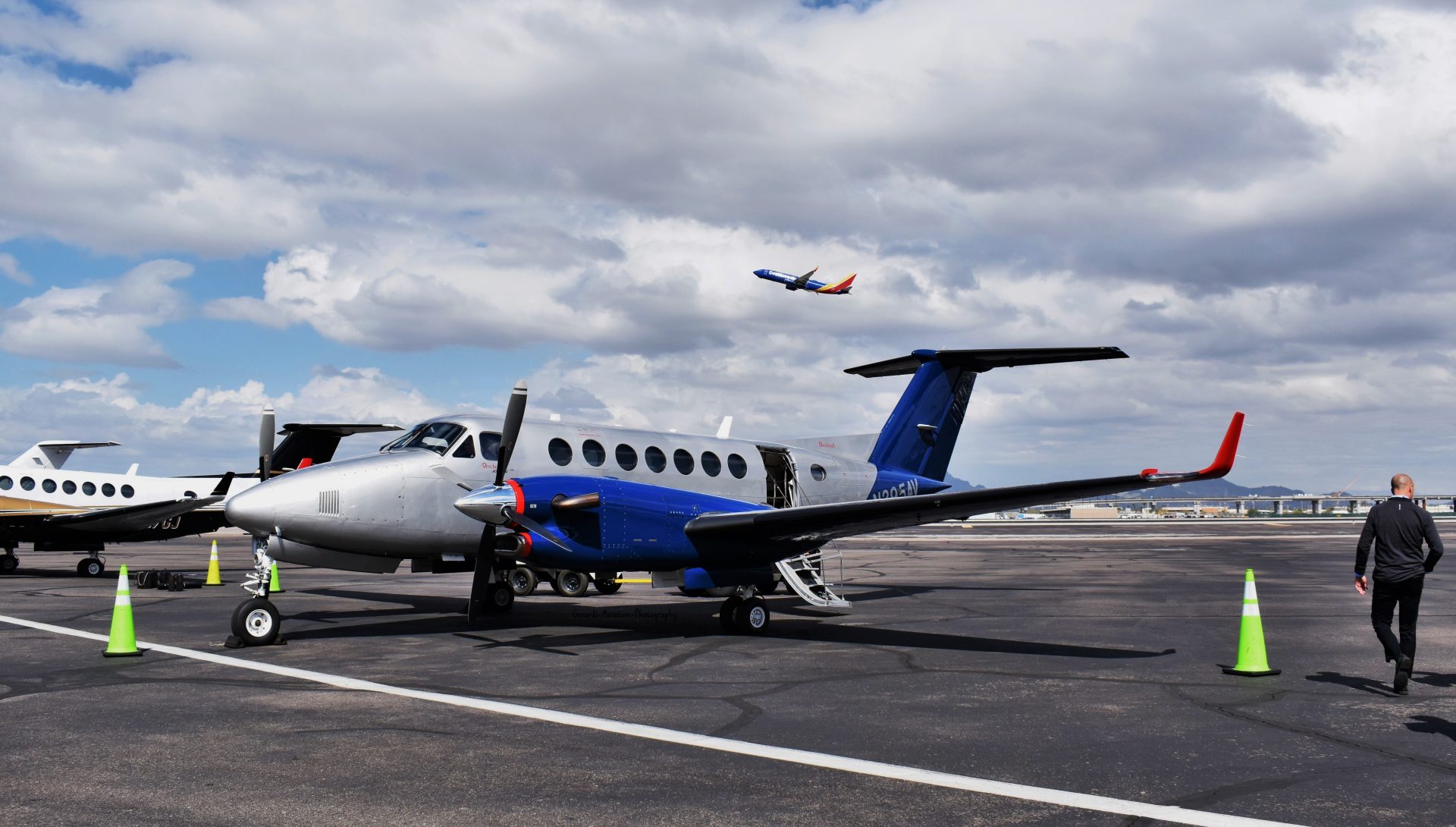
An Advanced Air Super King Air 350 in Albuquerque (Photo: AirlineGeeks | Joey Gerardi)
Hawthorne, Calif.-based Advanced Air has had quite the route change up in the past couple of months and has added routes to some communities that haven’t been part of the national air system in over ten years.
First up was Gallup, N.M., where the airline introduced service back in August 2022 with flights to Phoenix’s Sky Harbor International Airport. During the first three months of service in the community, they achieved a 69% load factor. This number usually would seem on the lower side, but it is actually a good number considering they haven’t had airline service since 2008 with Great Lakes Airlines.
An Advanced Air King Air 350 at Phoenix Sky Harbor (Photo: AirlineGeeks | Joey Gerardi)
Shortly after that, the airline announced they would no longer be partnering with and operating flights on behalf of Taos Air to the ski community of Taos, N.M. A few summers ago, AirlineGeeks flew on them from Austin to Carlsbad, Calif. with a connection in the small ski community. That trip report article can be found HERE, flights to that community are now operated by Dallas-based JSX.
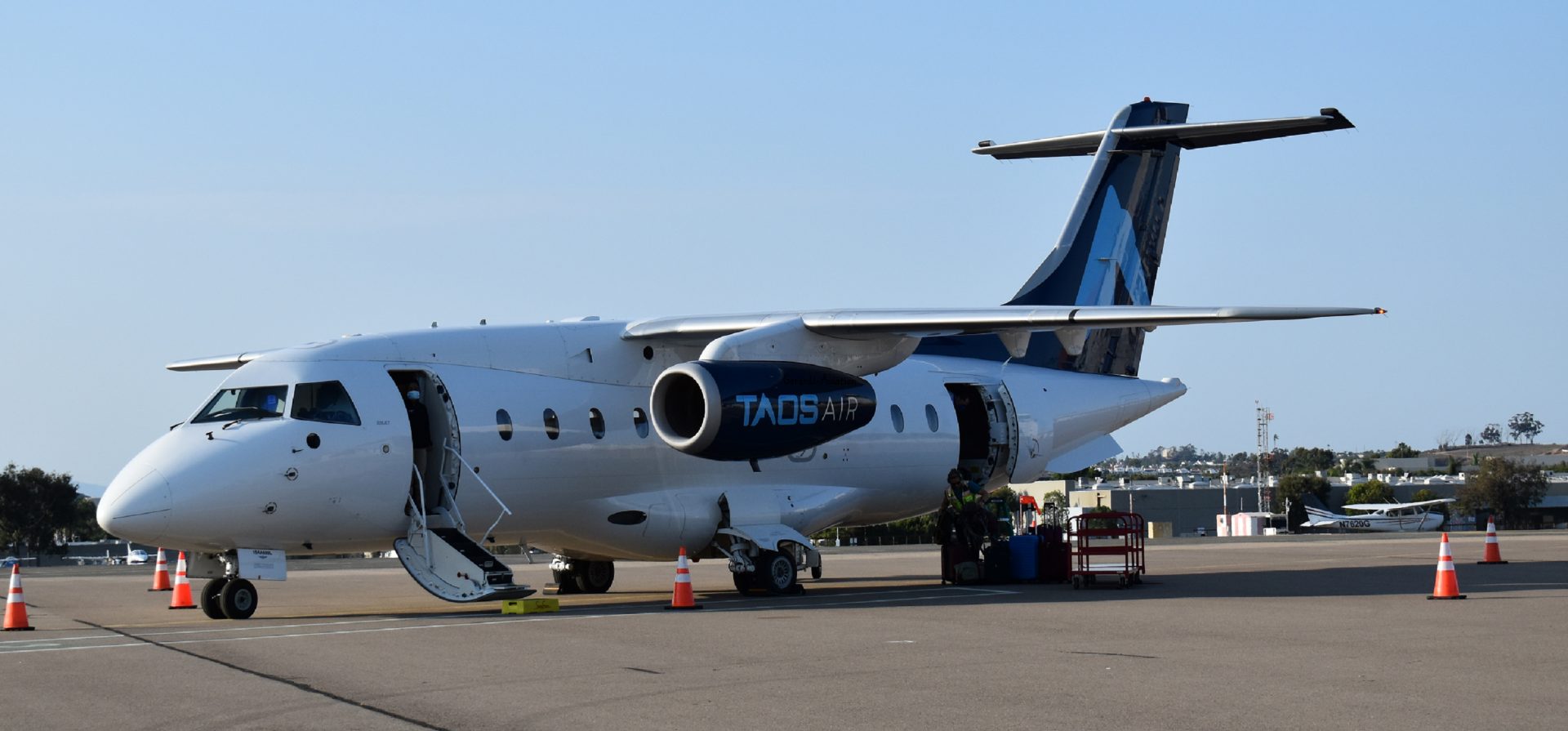
An Advanced Air Dornier 328Jet wearing the Taos Air livery (Photo: AirlineGeeks | Joey Gerardi)
Finally, just a few months ago, the airline announced they would be reintroducing another community back into the national air space system; Las Cruces, N.M. This community has been without commercial airline service for nearly 18 years. The last airline service Las Cruces had was back in 2005 when Westward Airways served the community with Pilatus PC-12s to Albuquerque.
Advanced Air began service here very recently, on Jan. 16, 2023, and will offer seven weekly flights to Albuquerque on their Beechcraft King Air 350s, which seat 8 passengers. They will offer two daily flights on Mondays and Fridays, and one flight a day Tuesdays through Thursdays, with no flights occurring on the weekends.
An Advanced Air Super King Air 350 in Albuquerque (Photo: AirlineGeeks | Joey Gerardi)
The new flights to Las Cruces are able to operate — thanks to the New Mexico Rural Air Service Enhancement or RASE for short — which provides a guarantee that small communities without scheduled operations could attract regular air service, like Advanced, to provide access to large or medium-sized airports. This program provides funding that comes from a mix of state and local city money to entice airlines to enter the smaller markets in New Mexico.
This RASE program is a version of the well-known Essential Air Service (EAS) program, the only difference is that the EAS program is a country-wide program. Gallup was the first community to receive funding under RASE, which is also flown to by Advanced Air. The RASE contract in Las Cruces began on Jan.16 with the flights and will run for two years until mid-January 2025.
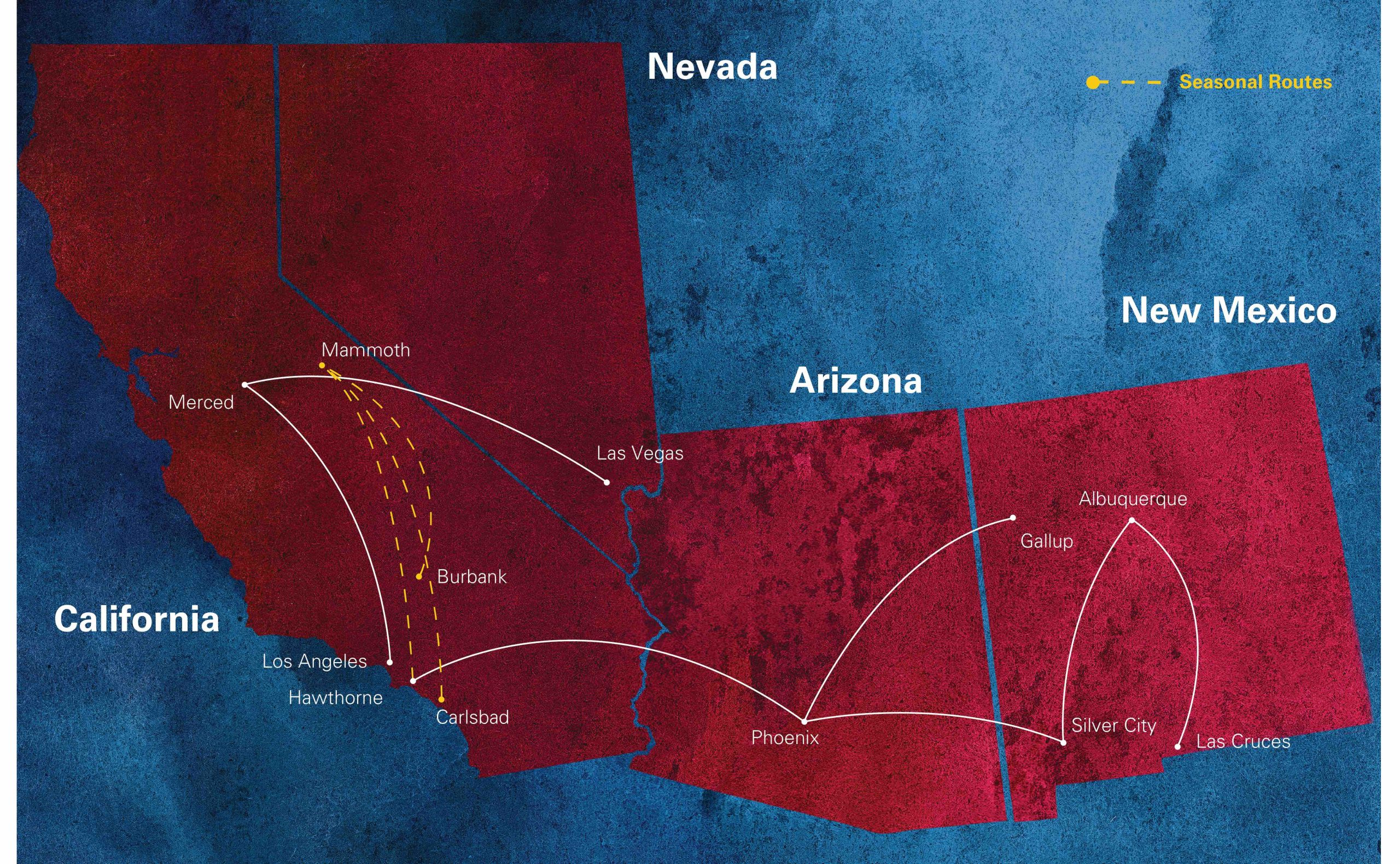
With Las Cruces, this brings Advanced Air up to 12 destinations on a mix of King Air 350s, Pilatus PC-12s and Dornier328Jets, Which includes their seasonal destinations from Mammoth Lakes in California.
Advanced Air’s route map as of January 2023 (Photo: Advanced Air)
All routes and schedules discussed in this article are subject to change without notice.
Joey has always been interested in planes for as long as he can remember. He grew up in Central New York during the early 2000s when US Airways Express turboprops ruled the skies. Being from a non-aviation family made it harder for him to be around planes and would only spend about three hours a month at the airport. He was so excited when he could drive by himself, the first thing he did with his driver's license was get ice cream and go plane spotting for the entire day. He graduated from Western Michigan University in 2022 with a B.S. in Aviation Management & Operations and a Minor in Business, and currently works for a major airline in his hometown.
Lufthansa Offer to Purchase Stake in ITA Airways Sparks European Consolidation Speculation
ITA Airways aircraft at Rome Fiumicino Airport. (Photo: ITA Airways)
Lufthansa recently announced a bid to acquire a minority stake in the Italian airline ITA Airways with an option to purchase the remaining shares in the future. A press release on Wednesday from the German carrier stated: ‘Today, the company submitted an offer to the Italian Ministry of Economy and Finance (Ministero dell’economia e delle finanze) to conclude a Memorandum of Understanding (MoU) in this respect. Contingent on both parties signing this MoU, further negotiations and discussions would be conducted on an exclusive basis.’
The carrier’s parent group views Italy as the most important aviation market outside of its home market in Germany, and the United States. Apart from the German flag carrier the Lufthansa Group also operates Brussels Airlines, Swiss and Austrian Airlines. Lufthansa stated that future talks with the Italian Ministry would ‘primarily focus on the form of a possible equity investment, the commercial and operational integration of ITA into the Lufthansa Airline Group, as well as resulting synergies.’
The official release from Lufthansa does not indicate how much of a stake they are initially bidding for. However, according to Reuters, it may be for an initial 40 percent stake valued between €200-300 million ($216-324 million), according to sources close to the situation. The Italian Ministry of Economy and Finance has disclosed that the bid from Lufthansa was the only one received. This follows interest from Skyteam alliance partners Air France-KLM and Delta Air Lines earlier in the process.
The announcement of Lufthansa’s bid for a stake in ITA Airways has sparked renewed discussion about the further consolidation and concentration of the European aviation market. In a further article discussing the Lufthansa offer, Reuters cites easyJet, SAS and TAP Portugal as possible targets for investment. Pre-pandemic German news site Handelsblatt reported in February 2020 on Lufthansa’s possible interest in Star Alliance partner TAP Portugal and Reuters indicated that this may still be a possibility given the Portuguese government’s interest in a full or partial sale of the airline. A Lufthansa spokesperson said: “We clearly focus on ITA. At the same time, however, we closely monitor consolidation in the European airline market.”
Air France-KLM and International Airlines Group (IAG) — the parent company of British Airways and other European carriers — are also cited as potential investors in the Portuguese carrier. In a response to a general inquiry on potential mergers, a spokesperson for Air France-KLM stated, “Right now our priority is to fully recover from the COVID crisis and to complete our transformation.” A SAS spokesperson said it’s “too early in the process to comment on any potential future investors”, easyJet and IAG have not made any firm statements on future sale or acquisition plans.
However, Ryanair Group chief executive officer Michael O’Leary has offered his candid view of what may transpire within the European aviation market. Mr. O’Leary stated, “TAP will finish up in BA-IAG, then I think easyJet is going to finish up being bought by either British Airways or Air France or both jointly, and then Lufthansa will buy Wizz (Air, the Hungarian low-cost carrier).”
John has always had a passion for aviation and through a career with Air New Zealand has gained a strong understanding of aviation operations and the strategic nature of the industry. During his career with the airline, John held multiple leadership roles and was involved in projects such as the introduction of both the 777-200 and -300 type aircraft and the development of the IFE for the 777-300. He was also part of a small team who created and published the internal communications magazines for Air New Zealand’s pilots, cabin crew and ground staff balancing a mix of corporate and social content.
John is educated to postgraduate level achieving a masters degree with Distinction in Airline and Airport Management. John has held the positions of course director of an undergraduate commercial pilot training programme at a leading London university. In addition he is contracted as an external instructor for IATA (International Air Transport Association) and has been a member of the Heathrow Community Fund’s ‘Communities for Tomorrow’ panel.
An Air India Boeing 777 taking off from San Francisco International Airport. (Photo: AirlineGeeks | Fangzhong Guo)
According to a Reuters report, Air India is near an order of 500 jets through AirLease Corp, one of the largest aircraft lessors in the world.
“As a result of this recovery, there is now more momentum for large orders from airlines who have sort of sat back and watched the movie, and now they’re seeing there’s going to be a positive trend.” Steven Udvar-Hazy, executive chairman of AirLease Corp, told the Airline Economics conference.
“We have this 500-aircraft order coming out of India, which is going to be about 400 narrowbody aircraft, probably a mix of (Airbus) A320neos, A321neos and (Boeing) 737 MAXs, and 100 wide-bodies which will include (Boeing) 787s, 777X, potentially some 777 freighters and (Airbus) A350s.”
Industry experts say the deal is pending engine negotiations.
An Air India Boeing 787 taking off from Paine Field Airport. (Photo: AirlineGeeks | Fangzhong Guo)
Final Assembly Line in India?
According to a separate report, the government of India is nudging Airbus and Boeing for airplane Final Assembly Lines(FAL) in India. The country forecasts a market for nearly 2,000 jets in the coming decade.
Planes for Jobs
Large orders from China and the US have prompted the construction of new FALs in the past. Chinese operators ordered 300 A320s in the two years leading up to Airbus’ announcement of its China FAL. American Airlines also made a headliner deal for 260 A320 family airplanes the year before Airbus’ US expansion. Lastly, the $38 billion order placed in 2015 by Chinese operators also led to the only Boeing completion center outside the US.
India is one of the fastest-growing aviation markets in the world. The largest airline in India, Indigo, currently holds orders for nearly 500 airbus airplanes. In addition to being the largest airline in India, the low-cost carrier is also the largest Airbus A320 NEO family operator.
While the pending narrowbody order will split between the duopoly, it’ll undoubtedly boost Airbus’s presence in the area further.
As of December 2022, Airbus holds orders for 6,620 of its narrowbodies, while its rival holds orders for 4,312 narrowbodies. The European manufacturer also plans to raise its production rate to nearly 70 aircraft, split between the A320 and A220 families. On the other hand, Boeing expects to cap 737 productions to 47 airplanes per month by the end of 2023. Both companies’ backlog stands at roughly eight years, so there does not appear to be any necessity for additional final assembly lines.
An Air India Express Boeing 737 landing at Singapore Changi Airport. (Photo: AirlineGeeks | Fangzhong Guo)
Supply Chain Challenges
The supply chain challenge adds another hurdle to the Indian government’s pursuit of a role in the aerospace sector.
Covid has put the entire aerospace supply chain under strain, and the industry has yet to recover to its pre-Covid level. While a new FAL takes 3-4 years to come online, suppliers will need help to reach higher production capacity.
Even though the southern Asian country is very involved in aerospace development, its involvement is mainly in design. It has yet to develop a significant presence in other aspects of aircraft manufacturing. The country will need to find a way to build its talent pool to land an FAL.
Fangzhong grew up near an OEM airport in northeastern China, where he developed his enthusiasm for aviation. Taking upon his passion, he's now working as an aircraft interior design engineer. Besides working in the aerospace industry, Fangzhong enjoys trying out different types of airplanes and seeing how airplane interiors have evolved. So far, he's flown on over 80 types of aircraft. He also planespots in his spare time. His rarest catches included the 747 Shuttle Carrier Aircraft and AN-225.
Ethiopian Strengthens U.S. Route Network, Restores Flights to China
An Ethiopian Boeing 777 rotates out of Washington Dulles.
(Photo: AirlineGeeks | William Derrickson)
Ethiopian has plans in place to expand its presence in the U.S. The airline is launching new flights from Addis Ababa, Ethiopia to Atlanta in May.
From May 16, 2023, the Ethiopian national carrier will offer four flights per week between its base in Addis Ababa’s Bole International Airport and Atlanta-Hartsfield Jackson Airport, operated by the Boeing 787-9 Dreamliner that can accommodate 30 passengers in Business class and 285 in Economy.
Although Ethiopian is a member of the Star Alliance, Atlanta is not a hub for the alliance and according to Aviation Week, the Star Alliance airline is currently in talks with Delta Air Lines – a member of the SkyTeam alliance – to establish a codeshare agreement.
Ethiopian Airlines will have no competition on this route, with Delta Air Lines offering flights to Africa from Lagos, Nigeria; Capetown, South Africa; Accra, Ghana and Johannesburg.
This new route will be Ethiopian’s sixth destination in North America, in addition to Chicago via Dublin in one direction, New York JFK via Lomé, Togo in both directions, Newark via Lomé, Togo, Toronto, Canada via Dublin in one direction and Washington D.C, through Dublin on the one way or through Lomé, Togo.
Departures are scheduled for Tuesday, Thursday, Saturday and Sunday at 10:00 p.m. to arrive the next day in Dublin at 4:20 a.m., leave 50 minutes later after refueling and land in the USA at 9:00 a.m. The flight time is 18 hours.
The return flights will leave Georgia on Monday, Wednesday, Friday and Sunday at 10:35 a.m. to land directly in Ethiopia the next day at 7:50 a.m.
Major restoration of Network in China
In other news, Ethiopian Airlines has announced plans to increase flights to China from next month, as travel restrictions in the Asian country are lifted.
The African carrier will be one of the first international airlines to restore capacity to China since quarantine requirements were lifted.
The airline plans to increase flights to Beijing and Shanghai to four flights a week next month and daily from March 1. Additionally, it will also add an additional weekly flight to Chengdu, China, resulting in 28 weekly flights to the country.
Ethiopian Airlines chief executive Mesfin Tasew said, “China is one of the largest markets for Ethiopian Airlines outside Africa, and the increase in flight frequencies will help revive the trade, investment, cultural and bilateral cooperation between Africa and China in the post-Covid era.”
“We are keen to further expand our service to China going forward,” Tasew added.
Before the pandemic, the country was an important market for Ethiopian Airlines serving cities such as Beijing, Chengdu, Guangzhou and Shanghai. The airline has been serving these cities since November 2020 albeit at a much lower frequency, according to Cirium data.
Ethiopian also operates cargo flights to cities across China including Guangzhou, Changsha, Shanghai, Zhengzhou and Wuhan.
Victor Shalton's love for aviation can be traced to when he was 11-years-old. As a seasoned aviation writer, he takes pride in providing the best aviation coverage around the globe and is passionate about advancing his skills in the aviation space. In addition, he loves travelling, writing, arts and while his speaking engagements have taken him around the world, he is proud to call Nairobi home.
Marc Rochet, the founder, CEO, and President of Frenchbee (Photo: AorlineGeeks | Joey Gerardi)
After my wonderful flight onboard French Bee’s inaugural journey from Miami to Paris’ Orly Airport, I had a chance to sit down and talk to the Founder, President, and CEO of the airline Marc Rochet, at the airline’s headquarters. The company’s offices are in a small building located right near their main hub in Paris’ Orly Airport.
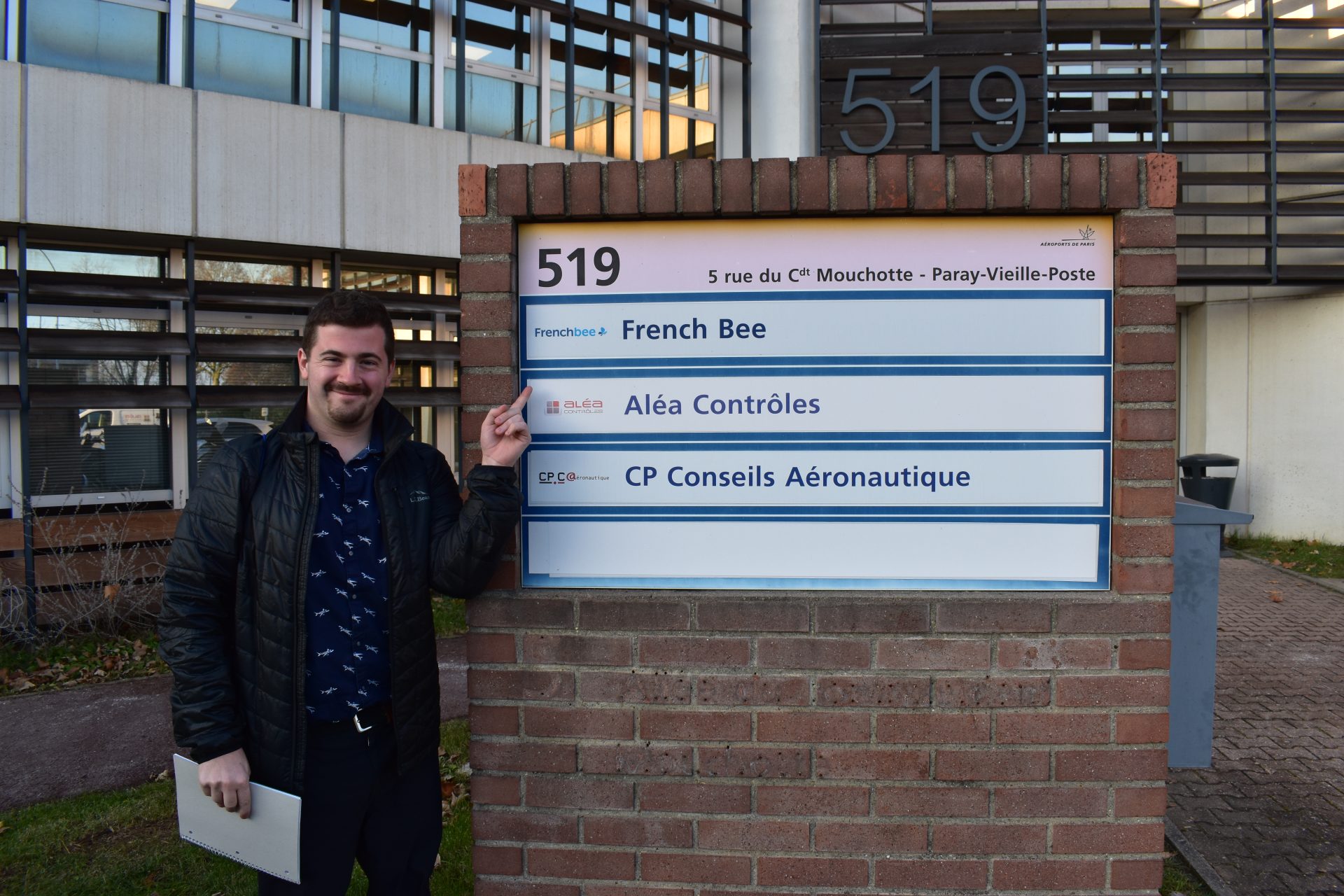
French Bee’s headquarters (Photo: AirlineGeeks | Joey Gerardi)
The trip report article for the inaugural French Bee flight from Miami can be found here. A video recording of this interview can be found at the end of this article for those that would like to also hear his audio responses.
Me, in front of Frenchbee’s headquarters (Photo: AirlineGeeks | Joey Gerardi)
AirlineGeeks (AG): Before we start, I want to get your title 100% correct; you are the director and CEO of French Bee, am I correct in saying this?
Marc Rochet (MR): Just to be clear I am the chairman and CEO of French Bee, I started French Bee, and I also manage Air Caraïbes, which is the sister company of French Bee with the same shareholder which is Groupe Dubreuil.
(AG): You mentioned Air Caraïbes, what made you want to start another airline after Air Caraïbes and others you started before that?
(MR): It’s a good question. Air Caraïbes was built up on the long-haul idea in 2003, and it was a successful airline almost immediately because, at this time, the route to the French Caribbean was only served by Air France and Corsair with quite old airplanes, older 747s. We made a profit almost in year one, and the growth of Air Caraïbes was very powerful and very strong. In 2015 we began to think about the future, and we made two decisions, one was to buy and lease some A350s which is a very modern and efficient airplanes with new technology. We also decided to grow, buy and lease A350s for the future and to use this to grow. Air Caraïbes at this time was focused on the Caribbean area, like French Guadeloupe, French Guyana, Martinique, Santo Domingo, Punta Cana, and Cuba. In our view, this was our main thinking at this time. We could fly anywhere with Air Caraïbes. If we wanted to as it was a full airline, we could fly to Tokyo, and we could fly to China. But, we found that most of our cabin crew was based in the West Indies which made it very difficult to fly to other destinations around the world. The second point, which is more important, is that Air Caraïbes like many airlines has a cost base increasing slowly for sure every year, and we have been thinking about that for a long time, and it is not impossible, but it is very difficult in the French system to make restructurations for the future with the same cost base. When we told the people of Air Caraïbes that we were thinking about growing, but we need to review the cost, they were very reluctant. So, we were thinking about that, and then came the idea we had in other situations, ok, let us go with the Air Caraïbes system and built a new one, a totally new airline from scratch, a blank sheet of paper and built a different structure, different name, different product, everything different, and then we built French Bee. We achieved a new product, for example, Air Caraïbes is three classes with business, but there is no business class on French Bee because we were targeting another market using other routes and other destinations. That is why we built this airline, to have a different cost base and a different product, we could have done it with Air Caraïbes, but we would not have achieved the same cost base.
Just after taking off from Miami (Photo: AirlineGeeks | Joey Gerardi)
(AG): So, when people normally think of low cost, they usually think of lower service. What is French Bee doing to change this idea of low-cost flying?
(MR): We had a lot of discussion about this, and everything is in the wording. I don’t like the way this notion of low cost, because low cost means low product, less maintenance, whatever, it’s tricky and you won’t be successful. We prefer to say smart cost, which means we built something from scratch, totally new, but we decided not to use some low-cost practices on key subjects, and I will give you two examples. One, we decided to build from scratch French Bee with the best aircraft for long-haul [flying], which is the A350, the 787 is a good one but we chose the A350. New aircraft, new technology, and flying more comfortable than the previous one, and this is not low cost when you buy an aircraft like the A350, it costs quite a lot of money, which we bought and lease. Secondly, let us take a subject that is totally absolutely non-discussable which is maintenance, with French Bee we decided to do maintenance with Air France Industries, Air France industries is definitely not the cheapest, but we want to not make any discussions about that.
(AG): What are you doing differently that low-cost airlines like WOW and Norwegian had failed at?
(MR): The fleet, which is one of the main differences. I don’t want to be too tough on our competitors, but let us look at WOW for instance, and also Norwegian and so on. Norwegian was launched with a lot of fanfare and noise. Norwegian at this time before they failed had two fleets, one fleet was a 737 fleet which was quite huge, and they also had a 787 fleet. I can tell you when you have one company and two fleets you are not anymore low cost because the crew would want to fly on the big one [plane] and they wouldn’t want to fly on the small one [plane], you would need two maintenance, two operations, this is totally different. You are adding complexity, and complexity is cost, so here we are simple, we have one type of airplane which is the A350 of which we have two types, the -900 and the -1000, but still, one fleet and we are focusing on the cost base.
A Wow Air A320neo aircraft in Dusseldorf (Photo: AirlineGeeks | Fabian Behr)
(AG): On the topic of your fleet, how many aircraft do you currently have and how many are on order?
(MR): We have four A350-900s, most of them are flying only to the US, and we have two -1000’s which are the biggest ones. The -1000 is very well suited for the Réunion Island route, which is a very popular route that sees 1.5 million passengers per year, we have had that route since 2017 and already have 20% of the market share. We have a good cargo position in that market and the -1000 is good for that, and the second one [A350-1000] was introduced a week ago in Toulouse, France and we bought this one, not a leased plane because our financial structure is a bit weakened due to the crisis [Coronavirus], but we are still strong. Now we are focusing on the -1000, we have some others on order, but we have not yet decided to send them to French Bee, Air Caraïbes or something else. We have different positions with the two airlines, which makes us flexible.
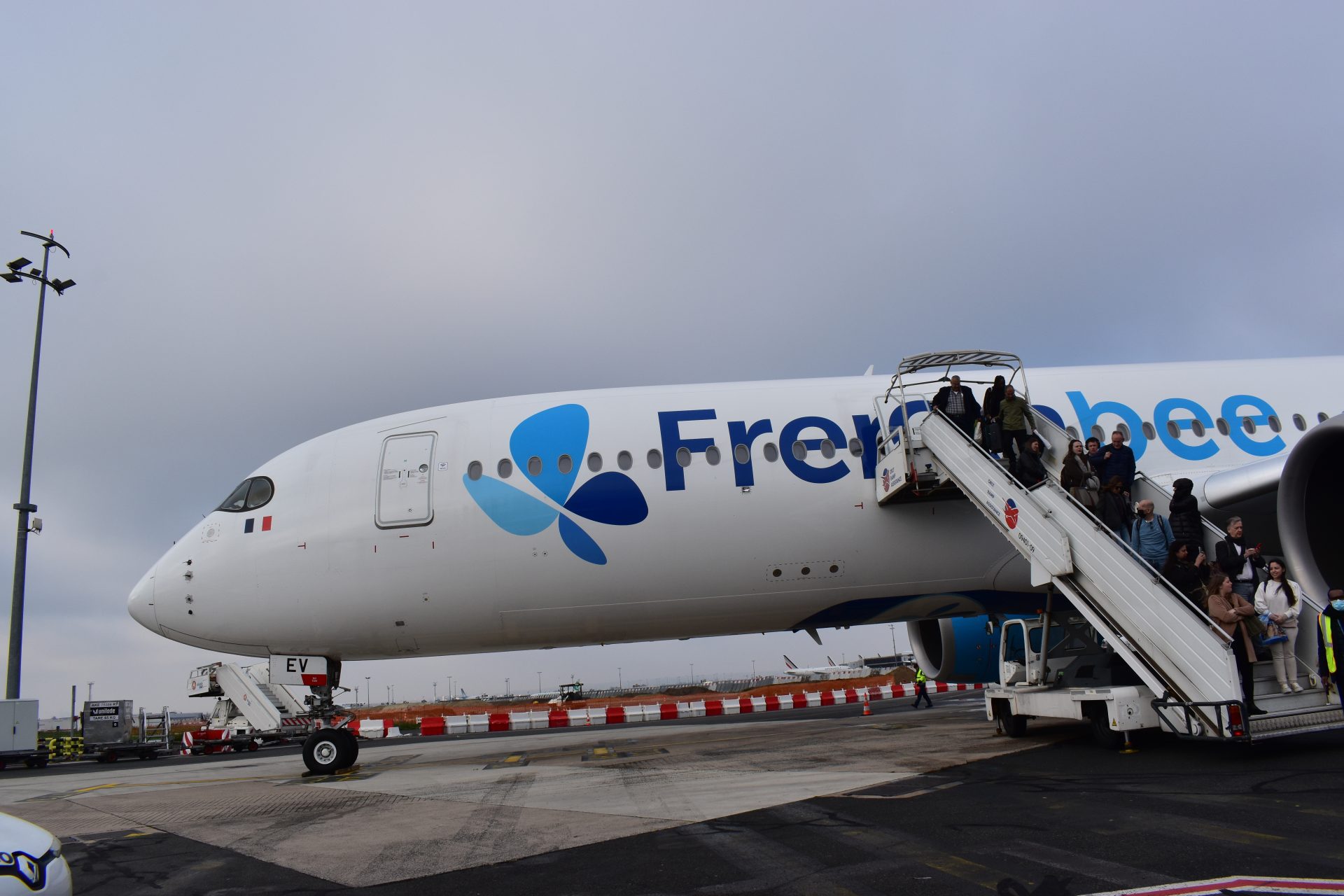
Deplaning onto the ramp in Paris (Photo: AirlineGeeks | Joey Gerardi)
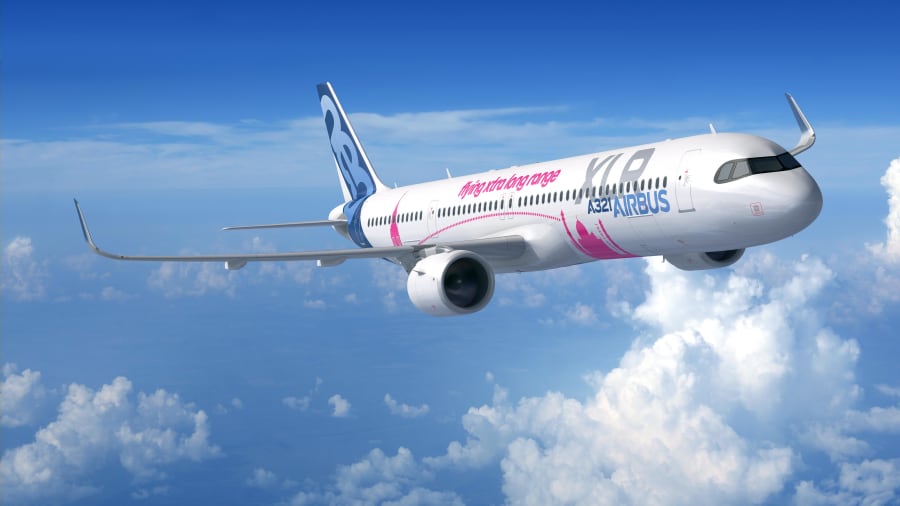
(AG): Airbus recently completed a 13hr test flight with the A321XLR, are you looking at this aircraft or will you try to stick with the single fleet type like you mentioned?
(MR): We are trying to stick to the single fleet. I am looking at the A321XLR which is a bit late to be clear. It was supposed to be introduced in 2023 and now it’s 2024 making it a bit complex. In the beginning, the A320 family was medium-haul, you can fly long-haul with it technically speaking, is it suitable for long-haul flying, we will need to see about that. Because it is a single aisle plane, it does not have the same comfort, or the same noise level, so we will see. What we think is that obviously, a smaller airplane is easier to operate cause there are fewer seats to fill and less of the market you need to catch, but we have to be sure the cost per seat mile is the same as the big ones [The A350] and speaking today, I am not convinced of this. For example with the A321 you have two pilots and let’s say 180 people behind, with the A350 you have two pilots and 400 people behind, it’s not the same economics. At the end of the day we will see, we are not in a rush, and we are very happy with the A350 so let’s stick to that for now.
An A321XLR mockup (Photo: Airbus)
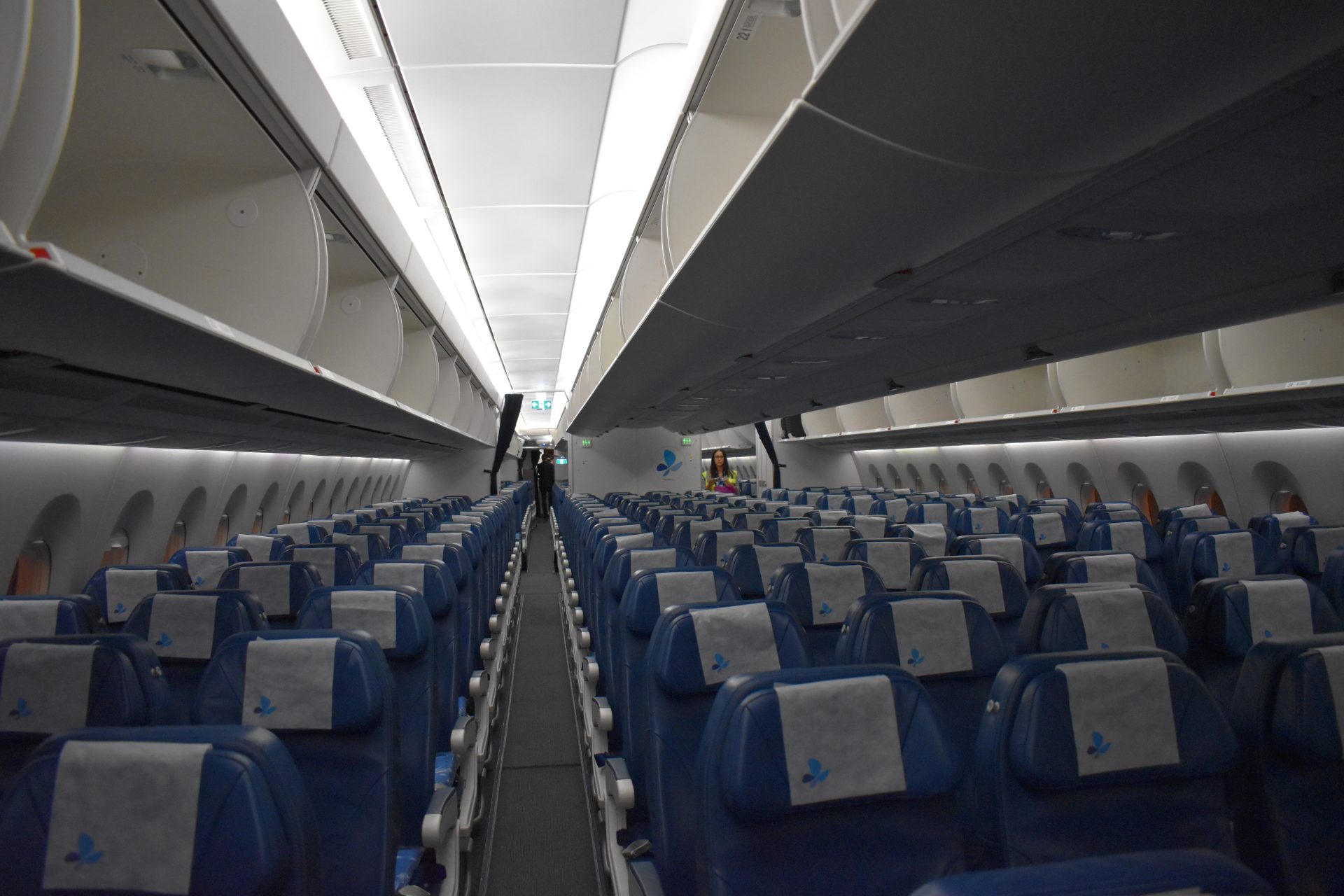
(AG): Most airlines have the economy section on the A350 configured as 3-3-3, what made you come to the decision for the high-density 3-4-3 that French bee went with?
(MR): Its two things, one is an economy thing, the more passengers you put into an airplane the better the economy of it is for your operation, but it is also balanced by comfort and what we think is that we have seen such an improvement in the technology into the new big airliners like the A350 that we could put more passengers into the cabin. The pressurization system is much better on A350 than the A321, vibration, noise protection, humidity, airflow, and so on, are all much better than on previous planes like the A330 and other older planes from Airbus, that you can put in more passengers in with the same level of comfort and even better comfort which is why we made this choice. Second, we are targeting only VFR, leisure passengers, and passengers traveling alone, we are not targeting business traffic. But beyond the crisis, these types of passengers are traveling more, the business traffic isn’t strong and I don’t think it will be strong for a long time due to things like zoom, skype, and so on. I think we made the right choice at the right moment and the right choice for the right customers. As I mentioned, we are not targeting high-level people who want to travel in very luxurious conditions, this is the job of Air France, British Airways, Delta, and others.
(AG): In the US, you serve New York, Los Angeles, San Francisco, and Miami, which are all coastal cities. Do you have plans on flying to cities inland like Dallas or Chicago?
(MR): We are looking at every opportunity and as I said before, internally speaking my first and highest priority for 2023 is to make us profitable again, we were profitable in 2019 and we haven’t been since then due to the Covid crisis, fuel costs, inflation, the dollar to the euro exchange rate, and we have to be profitable again first which I feel we will get to in 2023 and I am confident about that. A second point about the network, we are serving big routes that are along the oceans, New York, San Francisco, Miami, and LA because they are the biggest ones. If you fly into Dallas, Atlanta, or Chicago it is much more difficult for us today because we are still a small airline and we have no big commercial agreements with big airlines, if you don’t have an agreement with let’s say American and you fly into Dallas, you’re dead, you just don’t start that cause they will kill you immediately, unless you have an agreement with them for connecting traffic. So, we are focusing on points where we immediately don’t need a strong connection, the third target for us is to build that connection in the future. We already have an agreement with Alaska Airlines, which is working well ad we need to improve that and expand beyond. Then we can see how we will extend our network in the US, but we don’t think the extension will be fully based on connection, let’s take a route like Washington D.C., it’s probably a very good thing to fly to Washington from Paris, but it’s seasonal for the summer for people traveling alone, but we won’t get the traffic from the French or US Government, that will all go to Air France or United.
(AG): What made you choose San Francisco as the stopover for your Tahiti flights versus other large cities along the west coast?
(MR): At the time we decided to fly Tahiti, which is a French Territory obviously, and we just made the decision to stop by San Francisco because of two things, at this time all competitors were flying it via LA as a stopover, Air France and Air Tahiti Nui, so we decided to do something different because to add another flight to Tahiti from LA was not very interesting for the customer, so we decided to do it via San Francisco. The other reason why is that if you look at the market share, the biggest demand for Tahiti is from northern California and not southern California, and as we were on a standalone basis, no connecting traffic with American, Delta, or United, and we decided San Francisco would be the best point at this moment and we still think so. Now there is United flying San Francisco to Tahiti, I would prefer to fly it alone but it is what it is and it’s not our customer basis, most of the customers flying United to Tahiti are burning miles to do it, and I cannot get them anyways as if you are a US customer with a stockpile of miles with United, then you will fly United, so we are not loosing that much traffic and we are focused on people that are paying on their own without miles.
An Air Tahiti Nui 787 (Photo: AirlineGeeks | William Derrickson)
(AG): How does French Bee plan to compete with low-cost airlines like Norse and JetBlue both of which have recently announced New York to Paris flights?
(MR): JetBlue is a serious competitor. They have a very good brand and product, smaller airplane, but they are flying into CDG [Charles De Gaulle], so I think the biggest headache of JetBlue will be to Air France not to us, because it is not the same segment or type of customer, I think they will be a strong competitor to Air France into CDG. We don’t see them as a big danger for us, we even think it could be better for us because JetBlue is a small competitor going into CDG so far and the competition is good. As far as Norse, we will see, I think they will fly the 787 and into CDG as well, but they are very Norwegian minded, to be clear Norwegian has not been successful in the past, they have the same weak points as the past Norwegian, so okay, competition is competition, we have to be better than them. We now have a good presence in the US market and in the summer 2022 market we had more customers coming to France from the U.S. than we had France going to the U.S., so we will see, so at the end of the day if there are more passengers that want to fly and more companies that want to fly these customers than it will work, and if it works for everybody than we will be happy.
(AG): What is the first thing you want passengers to notice when they step on your aircraft for a flight?
(MR): I think that first of all, we want to tell them two things, one, we need to tell them that you will be flying on one of the best airliners in the world today, the best technology, it’s totally new. When you look at the transatlantic market you see a lot of old triple-sevens [Boeing 777’s] so when you fly French Bee you will fly on only A350s, and I think this airplane is going to be a great success they will sell and build a lot of them. Second, we want to tell you that you are boarding a French airplane with a product that is not at all luxury, but it’s a product where you get the value for the money you paid, it is a denser plane but its new technology so one thing is balancing the other one. The saving you will get by flying French Bee will make your holidays in Europe cheaper and they will benefit from that price.
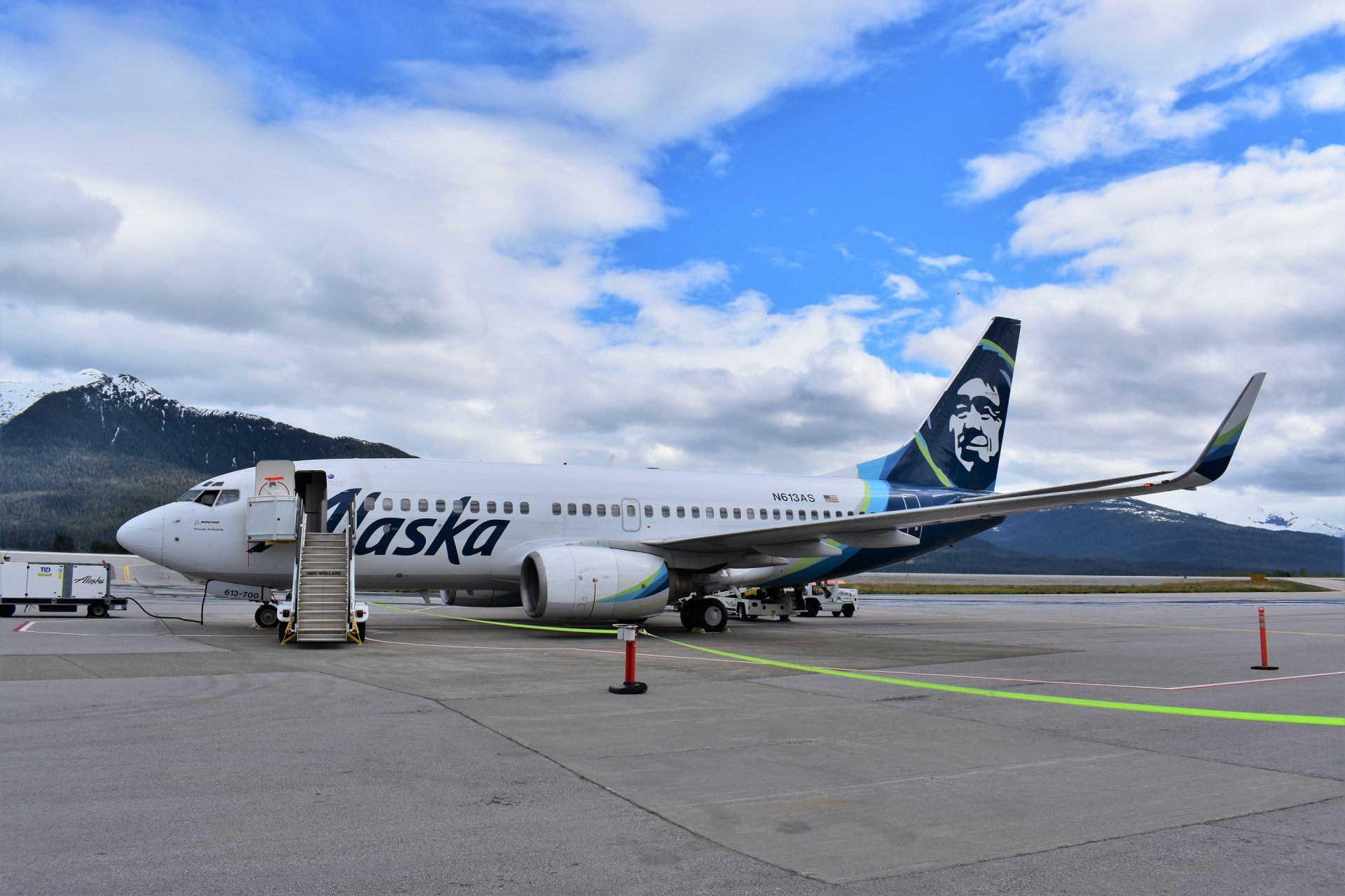
(AG): You already partner with Alaska Airlines, do you plan on partnering with any other airlines in the United States as you grow?
(MR): Yeah, we are trying to build something but it’s not easy because it’s a complex system where you need to build connections and interline systems. We now have a very good connecting system in France with TGV, the high-speed train and we can connect 17 stations in France, and we want to extend that in the U.S., it’s time-consuming and we need to do that but its one of our more important targets for 2023.
A Boeing 737-700 in Wrangell, Alaska (Photo: AirlineGeeks | Joey Gerardi)
(AG): With the exception of Réunion, every destination of yours is international, how did Covid restrictions affect French Bee?
(MR): It was a big impact, but because we are a small airline and a private company with one shareholder we were among the ones that can react very quickly, we made immediate decisions to stop and make some airplanes grounded and make some airplanes only cargo with medicine. For instance, we have been chosen by the French government to operate some medical flights to take Covid people that were injured into Tahiti on a special medical flight from Paris, Guadalupe, and Martinique. We did that because we could react faster than the others, Air France could’ve done medical flights, but at the end of the day, we did most of them because the French Government called and asked when we could start and we said in five days, so our reaction time gave us the capacity to adapt along with our financials. We also didn’t furlough any people, we did reduce salaries and it caused some troubles, especially with the inflation here [in France] and other countries, but we didn’t furlough anyone. Since we didn’t furlough anyone we now have the capacity to fly new frequencies and routes to Réunion, New York, and now Miami. Second, we didn’t change our fleet plans, we took delivery of the -1000 variant of the A350 which is not a cheap plane, and we kept our order. We could’ve called Airbus and told them we are very troubled financially, and that nothing has been like this before and canceled the order, but we said no and kept the order, we did move the order back slightly, but we didn’t cancel our aircraft orders during the crisis.
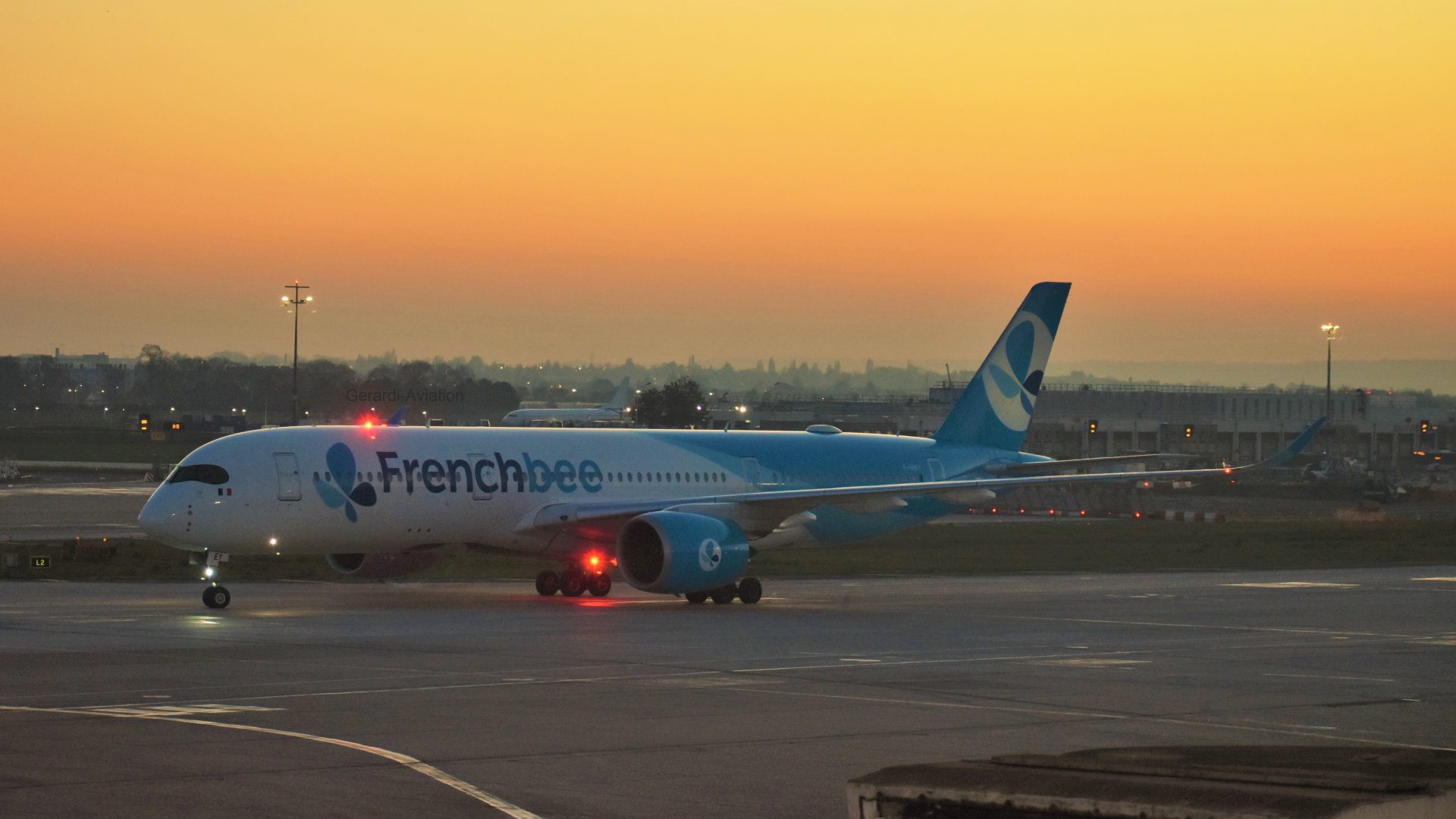
A French Bee Airbus A350 at Paris-Orly (Photo: AirlineGeeks | Joey Gerardi)
(AG): Is French Bee looking at any leisure markets in Asia?
(MR): Today no, because Asia is still hit heavily by the virus, not only China. Secondly, flying to Asia can be very costly because of the very very sad dramatic issue with Ukraine, you cannot overfly Russia and a lot of other countries like Iraq and Syria, so today no projects but in the future, we are looking at this kind of thing but it will depend on the time they are totally open again. The kind of customer we are looking for is leisure, VFR, and families, flights to Asia can be very complex, you need a special visa, you need to get a Covid test, go to the hospital, no way. Asia is not on our list, our network goal for 2023 is to build up our U.S. network.
(AG): More than half of your destinations are in the United States, does French Bee plan on joining the TSA PreCheck or Global Entry program?
(MR): Yeah, we are working on that, people in the operations center are moving but it is complex and not easy. But, of course, we want to go to the most seamless possible way of entering and getting out of the U.S. when traveling, a lot of work needs to be done but we are working on it as we want traveling to be easier
CBP’s Global Entry (Photo: U.S. Customs and Border Protection)
(AG): Time for a fun question, if the airline had unlimited funds and capital with zero restrictions, what would you do with it?
(MR): Well, first off, I never dream about getting unlimited money, but I’ll answer, of course, it would never happen and anyone in business knows money is not unlimited and I think its better this way to be clear, as we have seen a lot of projects with huge money and they do stupid things and having limited money people tend to be more careful. But, for the answer, I would say if we had more financial capabilities we would secure more A350s cause its a huge success and if you order planes today you won’t get them off the line for four years. The second thing I would do is to improve our data system, we already sell on Amadeus, Expedia, and other sites but I think that digitalization is already done in air transport but can and needs to be extended, if we don’t invest in that with more money and more intelligence. Like Amazon or Alibaba, they will catch the market and decide who the customer is and where they belong, and that’s a danger for us. Amazon knows more about their customers than we know about ours, for example, if you buy a water bottle on amazon today you’ll get it tomorrow morning but immediately they will tell you, by the way, we have another bottle of water that’s better than this and would you like a new one, so they can better understand their customers than we understand ours. So, to make a long answer much shorter, if we had unlimited money we would invest in more airplanes, and invest in data resources to better understand what my customer truly needs.
Me interviewing Marc Rochet at Frenchbee’s headquarters (Photo: AirlineGeeks | Joey Gerardi)
Thank you to Marc Rochet for talking to me about the airline and giving me some very in-depth and great answers to my questions. A video account of this full interview can be found below for those that would prefer to watch it.
Joey has always been interested in planes for as long as he can remember. He grew up in Central New York during the early 2000s when US Airways Express turboprops ruled the skies. Being from a non-aviation family made it harder for him to be around planes and would only spend about three hours a month at the airport. He was so excited when he could drive by himself, the first thing he did with his driver's license was get ice cream and go plane spotting for the entire day. He graduated from Western Michigan University in 2022 with a B.S. in Aviation Management & Operations and a Minor in Business, and currently works for a major airline in his hometown.
Sign-up for newsletters & special offers!
Get the latest stories & special offers delivered directly to your inbox