








Stories

Icelandair to Announce Future Aircraft Fleet Strategy

Icelandair 757-200 "Grábrók" (TF-FIY) at Akureyri International Airport, Iceland. (Photo: AirlineGeeks | John Flett)

Icelandair is close to announcing the airline’s fleet strategy, as it looks to a future without the iconic Boeing 757 aircraft. The Icelandic carrier currently has thirteen 757s in the operation of both the -200 and -300 variants that the airline cites as giving long range and versatility ‘making them ideal for U.S. West Coast and Canada operations’. The Boeing 757-200 aircraft has a total passenger capacity of 184 in a two-class configuration, while the ‘stretched’ -300 variant accommodates 225 passengers.

Icelandair’s current international fleet consists of widebody Boeing 767-300ERs and narrowbody 737 MAX 8 and MAX 9 aircraft servicing the airline’s network alongside the 757s. The all-Boeing nature of Icelandair’s international fleet is currently ‘perfectly suited to serve Icelandair’s route network’, according to the airline’s online fleet description.

Speaking to the media last week at the airline’s Mid-Atlantic Tradeshow event in Reykjavik, chief executive officer Bogi Nils Bogason discussed Icelandair’s future fleet strategy. Icelandair has recovered well post-pandemic, and in 2021, the airline merged international and domestic operations with Air Iceland Connect. Mr. Bogason said the airline has seen success with the launch of services to Raleigh-Durham, N.C. and will commence operations to Tel Aviv, Israel in May. He also stated that the airline had been supported well during the pandemic leading to the creation of a diverse group of shareholders.

Icelandair’s fleet makeup has been one of the key factors in the success of the airline’s round-trip stopover strategy through the Keflavik, Iceland hub. Passengers from Europe and North America are able to break up their journey and remain in the country for up to seven days. Bogason advised that the 757s would continue to operate in the passenger network until 2025/2026 and that the executive team was weighing up two options when it comes to replacing the aircraft type.

Given that Boeing last year sidelined plans to launch a new midsize airplane program, Bogason said that one option for Icelandair would be to increase the number of 737 MAX aircraft in the fleet and eventually replace the 767-300ER with 787 Dreamliners. This option would retain the all-Boeing nature of the fleet’s composition and retain the simplicity of dealing with a single manufacturer that some airlines maintain for cost-saving and other benefits.

However, according to Bogason, Icelandair is also considering a second option that could introduce Airbus A321LR and Airbus A321XLR aircraft into the international fleet. Though this option would lead to a mix of both manufacturer’s aircraft on the network Mr. Bogason said that this could be for a period of 5-10 years before a possible full replacement of Airbus aircraft.

The future fleet strategy will be announced “within months” and will have an impact on all areas of the airline’s business from a commercial and operational perspective. At the media event, several Icelandair executives including Tómas Ingason (Chief Revenue Officer), Sylvía Kristín Ólafsdóttir (Chief Customer Officer), Jens Bjarnason (Chief Operating Officer), Gísli Brynjólfsson (Global Marketing Director) and Ásdís Ýr Pétursdóttir (Director Communications and Sustainability) were in attendance.

During discussions on the future fleet strategy, it was mentioned that any expansion of Icelandair’s network would be considered within the range of existing aircraft. Icelandair’s 767-300ER has a flight range of up to 4,900 miles and according to Airbus, the A321XLR can reach ‘up to 4,700 nautical miles (nm) in a comfortable two-class layout’ with the Boeing Dreamliners having a maximum range of 6330 nm for the 787-10 up to 7305 nm and 7565 nm for the 787-8 and B787-9. However, the maximum range touted by the manufacturers may be somewhat curtailed by ‘hot and high’ operations to airports such as Denver International Airport, a part of Icelandair’s network.

Other areas of discussion at the event included Icelandair’s alliance strategy with Mr. Ingason saying that Icelandair would be looking to build on the relationships it currently has with North American partners JetBlue and Alaska Airlines and European airlines such as SAS and Finnair. Icelandair has no plans to join one of the three major global strategic alliances, but Mr. Ingason said the airline is instead “exploring opportunities.”

The question of lie-flat beds being introduced into the airline’s Saga Premium business class product was raised. However, the executives were clear that the current level of the hard product fits well with the airline’s route network and flight times. To conclude, Mr. Bogason acknowledged the challenge of Icelandair’s operating environment however it was clear from the last year that people “want to travel.” With Q3 2022 recording record passenger revenue, load factor and high unit revenue the airline’s upcoming annual results should validate this.


John Flett

John has always had a passion for aviation and through a career with Air New Zealand has gained a strong understanding of aviation operations and the strategic nature of the industry. During his career with the airline, John held multiple leadership roles and was involved in projects such as the introduction of both the 777-200 and -300 type aircraft and the development of the IFE for the 777-300. He was also part of a small team who created and published the internal communications magazines for Air New Zealand’s pilots, cabin crew and ground staff balancing a mix of corporate and social content. John is educated to postgraduate level achieving a masters degree with Distinction in Airline and Airport Management. John has held the positions of course director of an undergraduate commercial pilot training programme at a leading London university. In addition he is contracted as an external instructor for IATA (International Air Transport Association) and has been a member of the Heathrow Community Fund’s ‘Communities for Tomorrow’ panel.

Opinion: FLYR’s Bankruptcy Should Send A Signal To Low-Cost Startups That It Is Finally Time to Stop

Flyr's Boeing 737-800 (Photo: Flyr)

Norwegian ultra-low-cost startup carrier FLYR announced it had plans to file for bankruptcy on Tuesday following failed efforts to raise the cash needed to continue operations. 

The carrier had been operating for roughly a year and a half, offering services out of a base in Oslo to both business and leisure destinations throughout Europe. 

Unfortunately though, as has been seen around the globe with low-cost carrier startups, money is tight and more often than not, they scuffle until they can scuffle no longer. The company released a statement saying that “The board’s decision is unanimous and is due to the fact that there is no longer a realistic opportunity to achieve a solution for the short-term liquidity situation.” The airline had been searching in recent months for solutions with announcements in early November that there was potentially light at the end of the tunnel. 

Norwegian Roots

FLYR’s higher up circle seemed to carry a common theme that is also very present at new point-to-point long haul startup Norse: many had some experience working at Norwegian Air International during its disastrous long haul days. Nothing sets up a startup for financial success quite like hiring a myriad of accountants and executives from an airline that made itself into what was one of many victims of the low-cost startup market in Europe.  

FLYR also released reports in December saying load factor numbers looked promising at 77% for the low season though it hoped to increase those numbers going forward. Load factors for the 2022 year however sat at a measly 74%, far too low for any airline, especially a low cost one operating on a finite money line to sustain. It is one thing for a subsidiary of a large European carrier to struggle financially. It is another for an airline backed by little more than some less than confident investors. 

The reasons for low optimism didn’t stop at load factors either. A new CEO in Brede Huser was appointed at the end of November as Tonje Wikstrøm Frislid, FLYR’s then CEO, made the decision to step down. You cannot blame Frislid for having little interest in being at the helm of the airline’s downfall though from a morale standpoint, it is hard for things to look worse. Huser, a former Norwegian Air Shuttle executive, could likely do little to save the carrier from what is now bankruptcy. 

FLYR operated a fleet of 12 737-800 and 737 MAX 8 aircraft during its existence employing 450 individuals at bases in Oslo and at airports around Europe. It is obviously a sad day for the airlines employees who will now be in search of new work in the industry but this is another casualty in the market that should signal the end of the low-cost startup.

Ezra Gollan

Ezra Gollan is a student, photographer and aviation enthusiast based in New York, New York. He has spent over half a decade around New York City’s airports as a photographer.

Boeing Delivers Last Ever 747 to Atlas Air

The last Boeing 747 ever built taking off on its delivery flight. (Photo: AirlineGeeks | Fangzhong Guo)

On Jan. 31, 2023, Boeing delivered the last Boeing 747 ever built to its owner, Atlas Air. The delivery marks an end to the iconic jet’s 54-year production run at Boeing’s Everett factory, with a total of 1,574 units built. It also marks a real end to an era in aviation regarded by many to be one of the most thrilling.

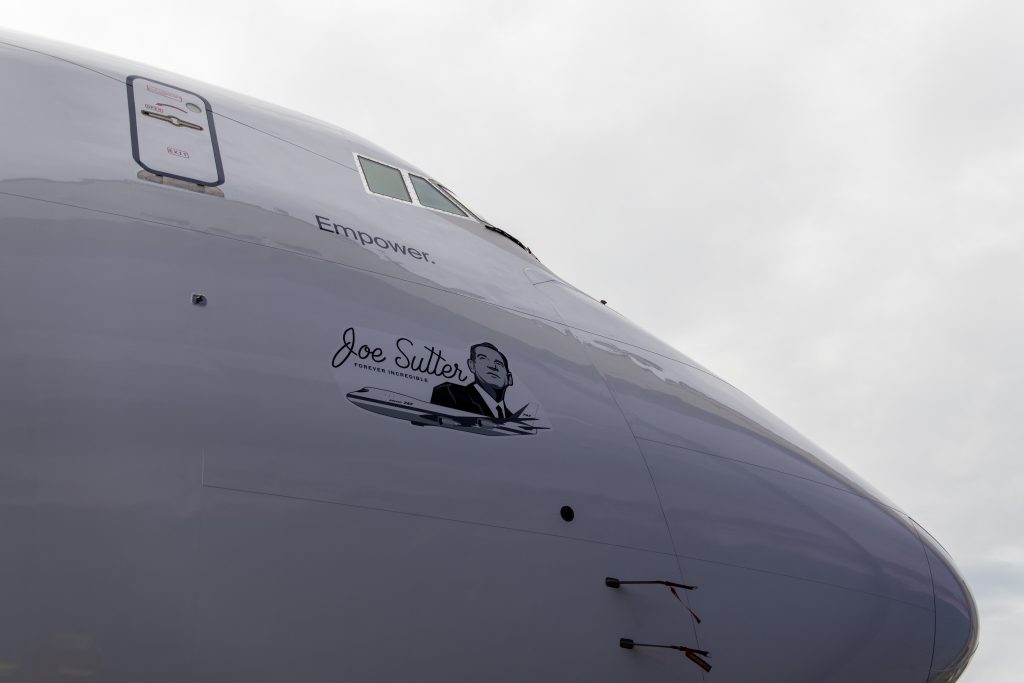
The final jet is a 747-8 Freighter, registration N863GT. Although the plane represents an important pivotal moment in aviation history, it did not receive much appreciation from its new owner. To the disappointment of the aviation community, the aircraft came out of the paint shop without any reference to its significance or history. Boeing later applied a decal marked Joe Sutter, also known as the father of the 747, to commemorate the moment. 

While the delivery meant the shutdown of the 747 production line, it won’t be the last new 747s being delivered. That honor will go to the pair of VC-25s, currently undergoing retrofit to become the future Air Force One presidential aircraft for the U.S. Air Force.

A special decal honoring Joe Sutter, the father of the 747, appears on the nose of the final 747. (Photo: AirlineGeeks | Fangzhong Guo)

Delivery Event

The delivery event was an emotional fair. The aerospace giant invited key customers, factory workers, and retirees who worked the 747. In addition, there were also members from the Boeing family and Sutter family to commemorate their forefather’s involvement in this iconic machine.

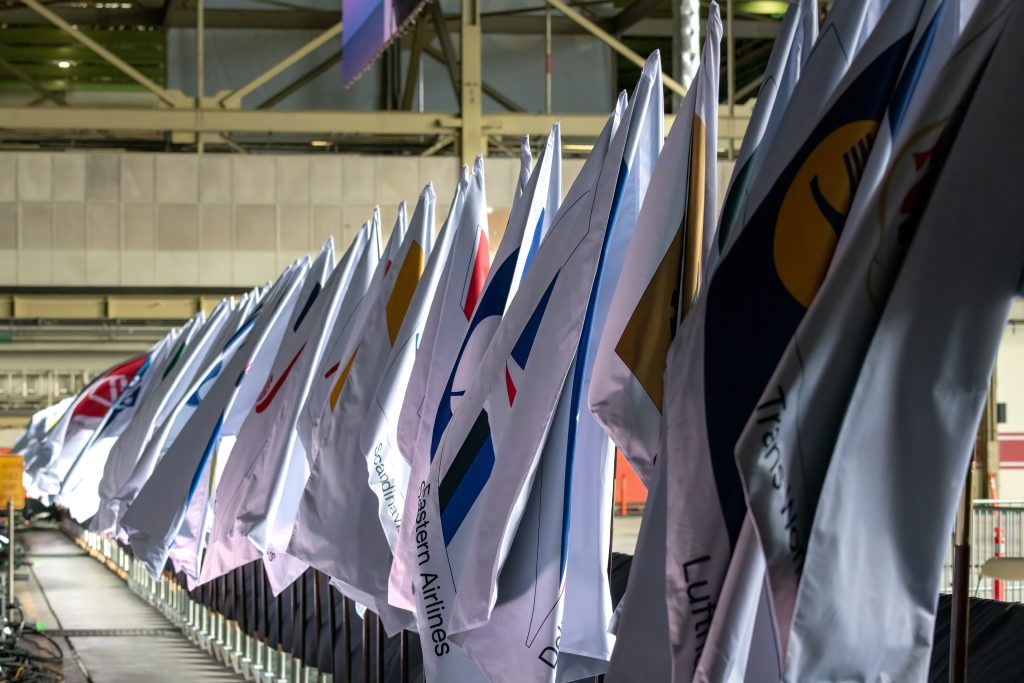
The event opened up with flag bearers carrying flags of all past and present 747 operators into the podium. The flags stretch from one end to the other in the 300ft wide 747 bay, signifying how many airline customers have flown the iconic jet. Notably, at the center of the stage were Pan Am and Atlas flags, the first and the last customer of the iconic 747. Charles Trippe, the grandson of Pan Am’s founder Juan Trippe, bore the Pan Am logo. At the same time, the Chief Pilot of Atlas’s 747 fleet carried the freight company’s logo.

Flags of past and present 747 operators stretch through the 747 final assembly bay. (Photo: AirlineGeeks | Fangzhong Guo)

Airline customers and suppliers are also invited on stage to share monumental moments of their involvement in the 747 program. UPS also took the chance to announce a special decal that will appear on the company’s last 747, delivered a year ago. The manufacturer also invited celebrity pilot John Travolta. “I had to be here in person. As a pilot, I know how great this plane is to fly,” said Travolta, who is licensed to fly the 707, 737, and 747 models.

After taking a trip down memory lane, it was time to deliver the last queen to its new owner. “It is fitting to deliver this final 747-8 Freighter to the largest operator of the 747, Atlas Air, where the ‘Queen’ will continue to inspire and empower innovation in air cargo. We are honored to continue our long history of flying this iconic aircraft for our customers around the world,” said John Dietrich, president, and chief executive officer, of Atlas Air Worldwide. 

Atlas Air’s flight plan for the final 747 delivery flight. (Photo: Atlas Air)

Stars of the Show

The main star of the show was, of course, the last 747 ever built. It was revealed through the hangar door and received the attention of everyone attending the event. Everyone, from customers to employees, raced to the stage to take one last photo with the last 747. It was also sentimental to see the hangar door closing after the event, as if the curtain was closing on the 747 glorious production era.

Employees and guests taking pictures of the final 747. (Photo: AirlineGeeks | Fangzhong Guo)

However, there were many other stars at the event. The Incredibles, these pioneers were construction workers, mechanics, engineers, secretaries, and administrators. They made aviation history by building the 747 – the largest commercial airplane in the world – in less than 28 months during the late 1960s. They had the chance to share their stories and memorabilia on the 747.

Retired Boeing worker Scott Tompkins sharing stories about his work on the first 747’s passenger payload systems. He was one of the ‘Incredibles’ attending the event. (Photo: AirlineGeeks | Fangzhong Guo)

History 

The 747 is a four-engined jet aircraft with an iconic second deck in front. Nicknamed the Queen of the Skies, the 747- 100 made its first test flight on February 9, 1969. It was the first airplane with two aisles and marked the first commercial use of the high bypass turbofan engine. It allowed more people to fly farther, faster and more affordable than ever before. 

First conceived in the 1960s for Pan-Am, the jet was created in the backdrops of commercial jet transportation, gaining enormous popularity following the Boeing 707. In addition to designing the plane to be larger and more efficient, Boeing also made the 747 adaptable to carry freight in case supersonic jets replace subsonic jets. This design choice moved the cockpit above the main deck, which led to the hump in front. It’s also the critical factor that the 747 family lasted more than half a century.

After a few iterations of the family jet, and several decades of technology advancements, large twin jets have become safer and more efficient, leaving the jumbo jet unpopular among passenger airlines. The latest generation, the 747-8i, only has three airline operators besides a few VIP configurations. However, the raised cockpit design made it popular among cargo operators. It’s one of the few freighter planes capable of carrying oversized freights. The cargo version outsold the passenger version by 59 of the 153 produced.

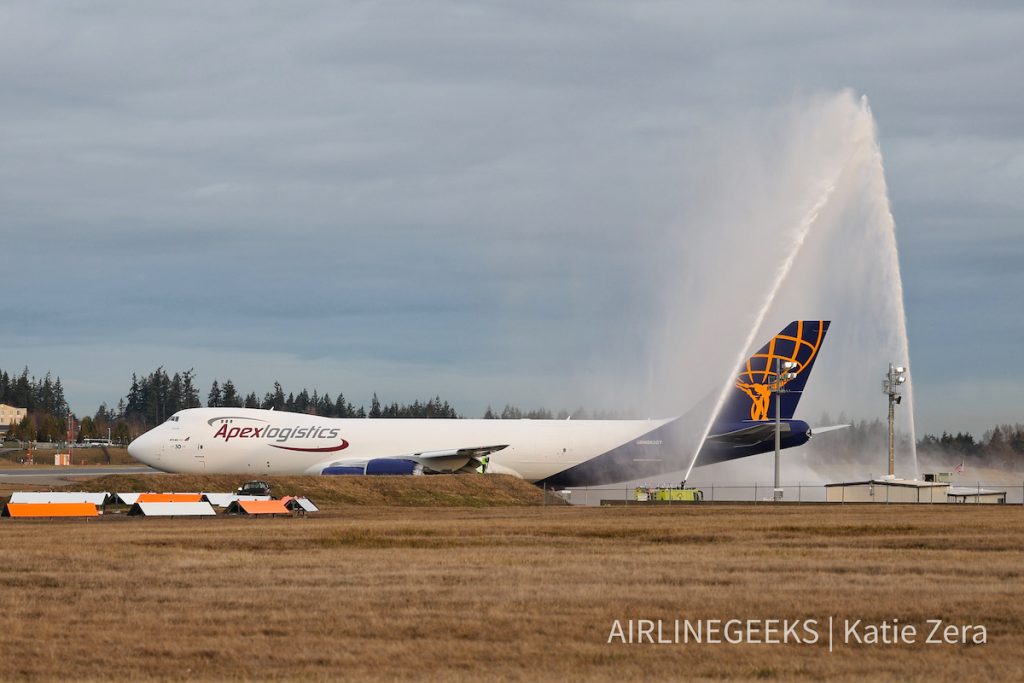
The last 747 departs with a water canon salute (Photo: AirlineGeeks | Katie Bailey)

Future of the Everett Factory

Once built for the iconic jumbo jet, the Boeing Everett factory was once the sole home for all its twin-aisle airplanes. However, little is left in the world’s largest building by volume. The Virginia-based company moved all 787 productions to its Charleston, South Carolina factory. The 767 program is producing three planes per month with sunsetting in sight. The popular 777 family’s successor, 777X, is running on limited production until it can deliver the aircraft in at least 2025.

With the exit of 747, the company is sitting on many real estates without a way to generate cash flow. On January 30, 2023, one day before the final 747 delivery, the manufacturer announced that it was adding a 4th 737 production line in the now vacant 787 production space. The latest final assembly will boost the 737 production rate by 25%. In the meantime, the rest of the building will serve as a modification center for reworking the 787s. The rework is expected to extend into late 2024. 

Fangzhong Guo

Fangzhong grew up near an OEM airport in northeastern China, where he developed his enthusiasm for aviation. Taking upon his passion, he's now working as an aircraft interior design engineer. Besides working in the aerospace industry, Fangzhong enjoys trying out different types of airplanes and seeing how airplane interiors have evolved. So far, he's flown on over 80 types of aircraft. He also planespots in his spare time. His rarest catches included the 747 Shuttle Carrier Aircraft and AN-225.

Norwegian Low-Cost Airline Flyr Declares Bankruptcy

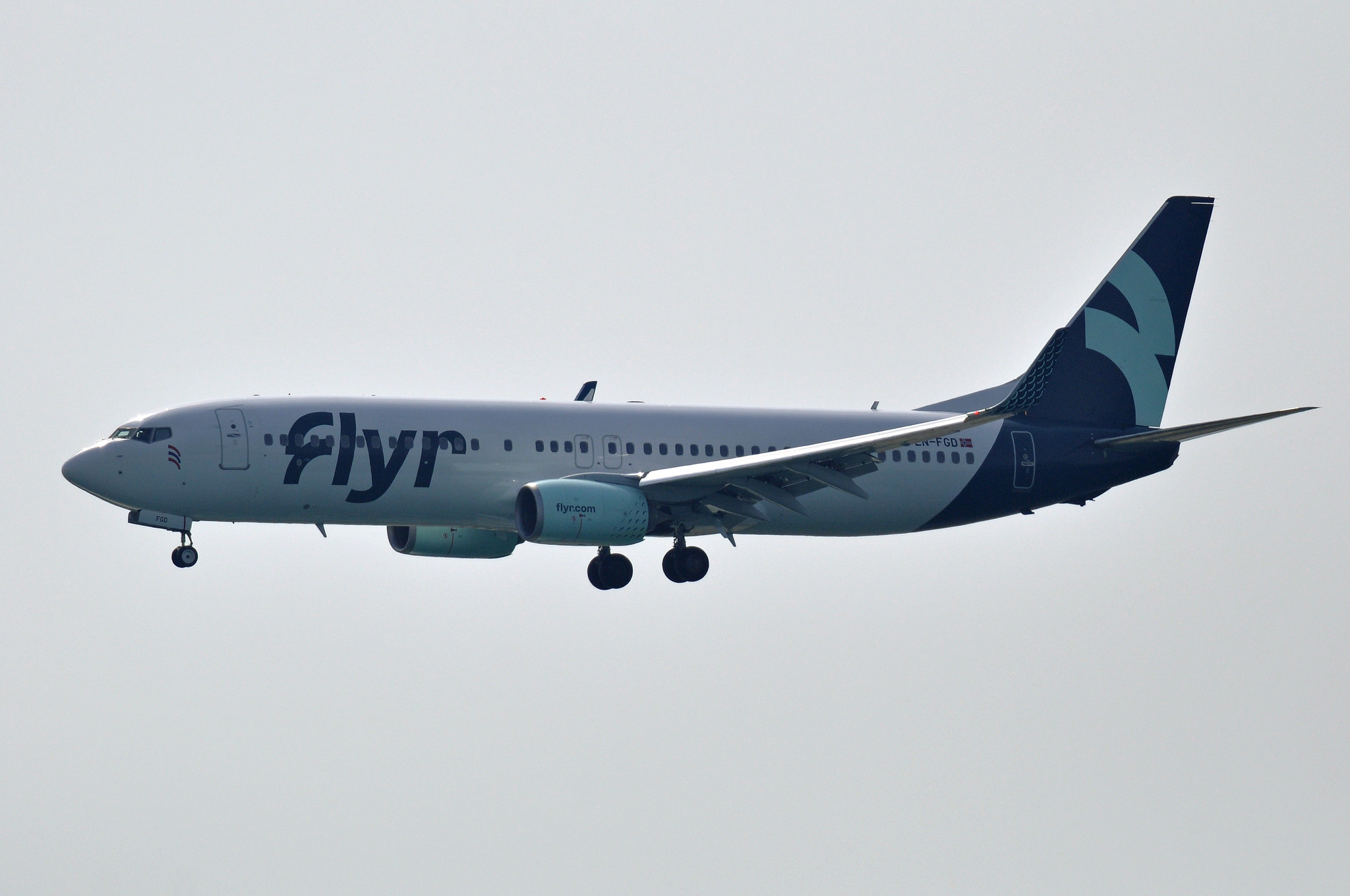
Flyr Boeing 737-82R landing at Nice Airport (Photo | Flickr (CC BY-SA 2.0) by Eric Salard)

After only 19 months of operations, Norwegian low-cost airline Flyr has been forced to suspend all its operations and plans to file for bankruptcy.

“Flyr was unsuccessful with the new financial plan and the board concluded on Tuesday evening that there are no alternatives for further operation. The company will file for bankruptcy on Wednesday morning”, says the airline’s website, specifying that “all flights are now canceled and will not be rescheduled”.

The carrier was founded in 2020 by a group of 30 investors led by Erik Braathens, a former director of Norwegian carrier Braathens SAFE that subsequently merged with Scandinavian Airlines in 2004 after 57 years of operations. The name of the airline is the verb “to fly” in Norwegian, and that represents simplicity, one of the main values of the airline.

The first flight took place on June 30, 2021 from Oslo Gardenmoer to Tromso, in the north of the country. Flyr was planning on focusing on the Norwegian domestic market, at the time served by the incumbent Scandinavian Airlines and struggling low-cost airline Norwegian that was going through financial difficulties exacerbated by all the travel restrictions brought by the Covid-19 pandemic.

They started operating with three Boeing 737-800 aircraft to which they subsequently added some leased Boeing 737 MAX. As of January 2023 the airline had an all-Boeing fleet of 12 aircraft, six 737-800s and six 737-8 MAX, all configured with 189 economy class seats.

After a summer 2022 season during which Flyr’s network expanded to include 35 destinations in 14 European countries, the airline decided to drastically reduce its network during the winter in order to save cash.

In January the Board of Directors announced that an attempt to secure funding for 330 million Norwegian Crowns ($33.27 million) had failed, Reuters reports. Then, on Jan. 31, the decision to cease trading and declare bankruptcy less than two years after their maiden flight.

A Large, But Sparse Country

The ruggedness of its territory and its sheer size and configuration make air transportation essential in Norway. However, in a country with slightly more than 5 million people scattered on a territory almost the size of California and with the distance between its southernmost town (Kristiansand) and its northernmost islands (Svalbard) being roughly the same as the distance between New York and Houston, it is easy to run into overcapacity problems when a new competitor tries to enter the market.

In addition to that, with the world still reeling from the demand shock caused by the pandemic and the lingering restrictions that delayed Flyr’s first flight until the very last day of the second quarter in 2021, cash flow proved insufficient to get through the second winter and eventually proved, once again, that in the airline business cash is king.

Vanni Gibertini

Vanni fell in love with commercial aviation during his undergraduate studies in Statistics at the University of Bologna, when he prepared his thesis on the effects of deregulation on the U.S. and European aviation markets. Then he pursued his passion further by obtaining a Master’s Degree in Air Transport Management at Cranfield University in the U.K. followed by holding several management positions at various start-up carriers in Europe (Jet2, SkyEurope, Silverjet). After moving to Canada, he was Business Development Manager for IATA for nine years before turning to his other passion: sports writing.

Cathay Pacific Reduces Flights to Japan

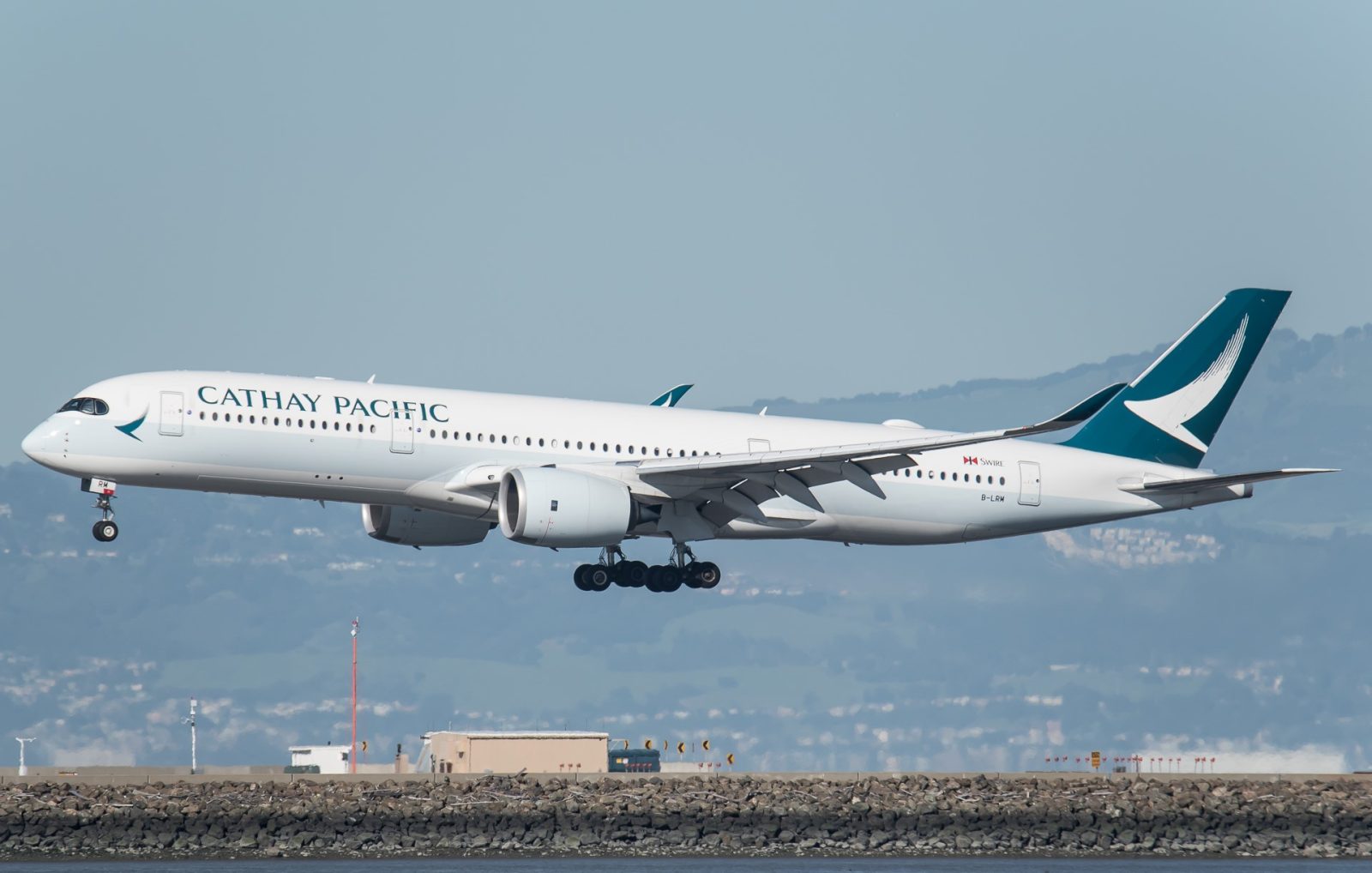
Cathay Pacific A350
A Cathay Pacific A350. (Photo: AirlineGeeks | Ben Suskind)

Cathay Pacific and Hong Kong Express, its low-cost carrier, have more than their fair share as 150 flights to Japan are being forced to cancel between Feb. 3 and March 2.

Japan carried out the new travel restrictions and limited the number of flights from Hong Kong since January. It came after the announcement of China to reopen its border. The Japanese government has requested the passengers have been in mainland China in the last seven days and the travelers coming from Macau directly must take a Covid-19 test on arrival. However, the passengers coming from Hong Kong could skip a PCR test on arrival thus far.

As a result of the latest Japan’s travel restrictions, Cathay Pacific reduce its flight operation to 72 flights per week into Japan, 12-13 flights per week less than what was originally planned. Cathay Pacific said it will try to communicate with the relevant authorities to minimize the impact on its customers.

The affected flights include Hong Kong to Tokyo’s Narita Airport, Osaka, Nagoya and Fukuoka. The passengers to Tokyo, Osaka and Fukuoka will be transferred to other available flights and the passengers to Nagoya will be transferred to Osaka flights, but the flights to Sapporo will operate as scheduled. The affected passengers can rebook their flight or get the refund.

In January, Hong Kong Express has already scraped the flights to Okinawa, Nagoya, Osaka, Tokyo’s Haneda Airport and Tokyo’s Narita Airport in response to the travel rules.

Japan is one of Hongkongers’ favorite travel destinations as it ticks all the boxes. Since Hong Kong government lifted its travel restrictions in September, the travel demand has been seen an uptick in short-haul leisure destinations. By popular demand, Cathay Pacific has ramped up the flight frequencies to Sapporo and Fukuoka in December.

Light at the End of the Tunnel

After three years of the pandemic, Cathay Pacific finally saw a huge increase in travel demand in December, the airline carried a total of 801,088 passengers in December, an increase of 768.7% compare with same time last year and the passenger load factor reached 83.3%. But the pandemic is far from over, it recorded a 73.3 decrease compare to 2019. Cathay Pacific flew nearly 60 destinations by the end of 2022, doubling the 29 it flew to in January 2022.

“Looking ahead into 2023, we are excited to be firmly on the path to rebuilding Cathay Pacific and the Hong Kong international aviation hub. Nevertheless, challenges still remain and we are taking a measured and responsible approach to our rebuilding efforts.” Ronald Lam, Chief Executive Officer of the airline said.

Earlier, the Hong Kong’s flag carrier expected to record a consolidated loss of approximately $817 million to $894 million. The airline loss $702 million for the year ended Dec.31 2021.

Somalia’s Aviation Takes Off: ‘Class A’ Airspace Restored After Three Decades

Morning over the Atlantic Ocean (Photo: AirlineGeeks | Joey Gerardi)

The International Air Transport Association (IATA) announced that the airspace over Somalia and the surrounding region will be reclassified as Class A effective from 26th January 2023.

The reclassification follows the operational restoration of air traffic control services, which had been disrupted for 30 years. The reclassification of the airspace is a major milestone for Somalia’s aviation industry, and it is expected to improve safety and efficiency in the region.

Mogadishu Flight Information Region (FIR)

The Mogadishu Flight Information Region (FIR) is one of the busiest airways in the region, connecting the African region to the Middle East, Western Europe, the Indian Ocean islands and the Indian subcontinent.

The region encompasses the landmass surrounding the Horn of Africa and extends into the Indian Ocean. The reclassification of the Mogadishu FIR to Class A airspace was made possible by the collaborative efforts of the Somalia Airspace Special Coordination Team that comprised of the Somali Civil Aviation Authority, IATA, the International Civil Aviation Organization, adjacent FIRs, and airlines.

According to IATA’s Regional Vice President for the Middle East and Africa, Kamil Al-Awadhi, “The reclassification of the Mogadishu FIR as ‘Class A’ airspace will significantly improve safety in the region and enhance efficiency. This is thanks to the collaborative efforts of the Somalia Airspace Special Coordination Team, comprising the Somali CAA, IATA, the International Civil Aviation Organization, adjacent FIRs and airlines.”

The operational restoration of air traffic control in the Mogadishu FIR was also made possible with the installation of modern radio navigation and other technological infrastructure. The commissioning of the new technology followed a successful trial, which began in May 2022.

Al-Awadhi added, “The upgrade of air traffic management and improved navigation and communication infrastructure will enhance situational awareness along an increasingly busy air corridor and its intersections with routes linking many of the world’s regions.”

According to IATA, all flights operating in Class A airspace must be cleared by air traffic control, which is responsible for maintaining lateral and vertical separation between aircraft. In the Mogadishu FIR, Class A airspace is the sky above the base altitude of approximately 24,500 feet above mean sea level.

Government’s commitment to revive the country’s aviation sector

The reclassification of Somalia’s airspace is a significant step towards the revival of the country’s aviation industry, which has been in disarray for many years.

In the Fall, Transport Minister Fardowsa Osman Egal set up a working group to create a plan to re-launch the airline.

According to sources, the airline could also receive support from Ethiopian Airlines, which has a history of investing in African airlines.

The Ethiopian Aviation Minister recently visited Mogadishu to discuss the possibility of cooperation. Somali Airlines was originally founded in 1964 and served destinations in Europe, the Middle East, and Germany with Boeing 720, 707-300, and Airbus A310 aircraft. However, it was dissolved in 1991 due to the outbreak of the civil war.

The reclassification of the Mogadishu FIR is a major milestone for Somalia’s aviation industry and is a clear indication of the government’s commitment to revive the country’s aviation sector.

Victor Shalton

Victor Shalton's love for aviation can be traced to when he was 11-years-old. As a seasoned aviation writer, he takes pride in providing the best aviation coverage around the globe and is passionate about advancing his skills in the aviation space. In addition, he loves travelling, writing, arts and while his speaking engagements have taken him around the world, he is proud to call Nairobi home.

Ryanair Begins Scimitar Retrofit For its Boeing 737 Fleet

The first Split Scimitar Winglet mounted on a Ryanair Boeing 737 NG. (Photo: Ryanair)

On 23 January 2023, Ryanair installed Split Scimitar Winglets on the first of more than 400 new-generation Boeing 737-800 aircraft in its fleet in order to reduce its carbon footprint. The Split Scimitar Winglets, jointly developed with Boeing, can reduce aerodynamic drag by up to 2%.

This retrofit comes after signing a $175 million deal with Aviation Partners Boeing (APB) and will improve the fuel efficiency of the Boeing 737 NG aircraft by up to 1.5%. Although these may seem like very small numbers, the efficiencies achieved through operational improvements make a big difference. At every stage of an aircraft’s operations, there are opportunities to reduce fuel consumption and, consequently, emissions. By fitting Split Scimitar Winglets Ryanair has estimated a reduction in annual consumption of 65 million liters of paraffin, as well as reducing the Irish airline’s carbon emissions by around 165,000 tonnes of CO2.

The investment was brought forward by Ryanair as the Irish airline plans to grow to carry 225 million passengers by 2026. These winglet modifications will further the airline’s goal of achieving zero emissions by 2050.

Split Scimitar Winglets (SSW) are offered by APB for the 737-800 and 737-900ER and entered service in early 2014. United Airlines’ first Boeing 737-800 equipped with the SSWs made its first test flight on 16 July 2013.

With the new winglets, the Boeing 737 NG will look very similar to the Boeing 737 MAX currently operated by Ryanair’s fleet. However, there are some differences:

– The Split Scimitar Winglets (of the Boeing 737s NG) have a mixed winglet-shaped main body, but with the upper end hooked backward, and they also have an additional scimitar-shaped fin that protrudes outwards and backward from the curvature of the winglet. The modification requires a trailing edge wedge and reinforced spars but does not involve any changes to the avionics, which is what makes them such a good investment.

– The MAX winglets (of the Boeing 737s MAX) have a simpler shape than the SSW, which is not ‘split in two’ but has a single continuous winglet, a small one at the bottom of the wingtip and a bigger one at the top.

A set of Split Scimitar Winglets weighs 133 kg (294 lbs) per aircraft, but allows a fuel economy of 1.6% on 1000-mile routes, rising to 2.2% on 3000-mile routes. This equates to an additional range of 65 nm.

Patrick LaMoria, APB’s Chief Commercial Officer, said it is an honor to be able to install Split Scimitar Winglets on the world’s largest fleet of next-generation 737-800 aircraft.

The retrofit of Split Scimitar Winglets was approved by the European Aviation Safety Agency in 2015, after receiving the green light from the Federal Aviation Administration for the US market.

Vincenzo Claudio Piscopo

Vincenzo graduated in 2019 in Mechanical Engineering with an aeronautical curriculum, focusing his thesis on Human Factors in aircraft maintenance. In 2022 he pursued his master's degree in Aerospace Engineering at the University of Palermo, Italy. He combines his journalistic activities with his work as a Reliability Engineer at Zetalab.

End of an Era: Alaska Retires the Dash 8 Q400

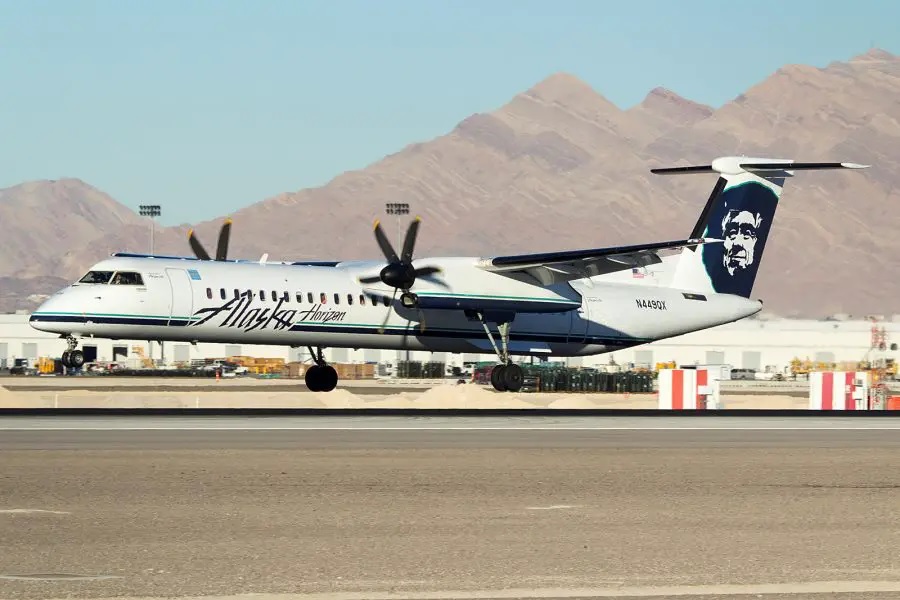
A Horizon Air Bombardier Dash 8 Q400. (Photo: AirlineGeeks | William Derrickson)

Alaska Airlines subsidiary Horizon Air has retired its Bombardier Dash 8 Q400 fleet, with the last passenger flight operating on Thursday, Jan. 26, 2023.

A 22-Year Legacy

The Dash 8 Q400 flew its first revenue flight for Horizon on Jan. 26, 2001, exactly 22 years before its final commercial flight for the airline on Thursday. Throughout its two decades of service, the Horizon Air Q400 was a staple at airports throughout the Pacific Northwest. The turboprop populated the commuter gates at Seattle–Tacoma International Airport’s Concourse C and at Portland International Airport’s B gates, shuttling passengers to destinations such as Spokane and Wenatchee in Washington, Boise in the adjacent state of Idaho and Vancouver in the neighboring Canadian province of British Columbia.

Between the retirement of Horizon’s older Dash 8 models and Canadair Regional Jets in 2011 and the introduction of its Embraer 175s in 2018, the Q400s were the backbone of the Horizon Air fleet. Horizon operated more than 50 Q400s over the last two decades, with over 30 in service as recently as last year. While the Q400 fleet previously carried a distinct Horizon Air livery, the turboprops later flew in Alaska Airlines colors under the branding of Alaska Horizon. Horizon’s Q400 fleet was also known for having special liveries with the colors of colleges and their sports teams.

A Horizon Air Bombardier Dash 8 Q400 in a San Diego State University Special Livery (Photo: AirlineGeeks | Ryan Krautkremer)

The final flight was operated by N421QX, a 16-year-old Q400 wearing a Horizon Air retro livery. The aircraft flew from Spokane to Seattle, arriving shortly after 7:00 p.m. on Thursday.


Shifting to an All-Embraer Fleet

While it appears that most of Horizon’s Q400s will be sold or scrapped, it has donated one to Portland Community College in support of its aviation maintenance and aviation science programs. The carrier also previously announced that a second Q400 was being donated to ZeroAvia, a company that recently made its first hydrogen-powered flight, with the goal of developing a hydrogen-electric powertrain.

The retirement of the Q400 leaves Horizon with a fleet of around 30 Embraer 175 jets. Alaska joins other major airlines across the United States in moving away from turboprops in favor of jet aircraft. While the Q400 will be missed by aviation geeks and plane spotters, the transition to a jet-only fleet is likely a welcome move for most travelers. The turboprop was not known for passenger comfort: the cabin felt cramped, there were very few amenities on board and the lavatory did not have a sink.

An Alaska Airlines news release about the Q400 retirement also noted the cost efficiencies in operating a single type of aircraft. The carrier pointed out that having two types of aircraft required two sets of parts, training programs and pilots, adding that the Embraer-only fleet will allow for a more efficient use of resources.

“We’re at a unique moment in time,” Horizon Air President Joe Sprague said in the news release. “With our shift to a single fleet of E175 jets, we’re laying a major new cornerstone of the foundation for our future.”

An Alaska Airlines E-175 operated by Horizon Air at Paine Field. (Photo: AirlineGeeks | Katie Bailey)

Andrew Chen

Andrew is a lifelong lover of aviation and travel. He has flown all over the world and is fascinated by the workings of the air travel industry. As a private pilot and glider pilot who has worked with airlines, airports and other industry stakeholders, he is always excited to share his passion for aviation with others. In addition to being a writer, he also hosts Flying Smarter, an educational travel podcast that explores the complex world of air travel to help listeners become better-informed and savvier travelers.

Amazon Air Launches Service in India, Leases Two Aircraft to Expedite Services

An Amazon Prime Air 767 touching down in Miami. (Photo: AirlineGeeks | William Derrickson)

Amazon has launched Amazon Air services in India. A first for the country, as to date no e-commerce company has had its own dedicated fleet operating in the country. Two Boeing 737-800 freighter aircraft will be used. Amazon has leased the two 737s from the cargo airline, Quikjet Cargo Airlines Pvt. Ltd. The aircraft will continue to be operated by the Indian cargo airline on behalf of Amazon. Additionally, the aircraft will carry the “Prime Air” branding of Amazon.

The operator was involved in trials for two months. Thereafter, on Monday, a public launch was carried out at GMR Hyderabad International Airport.

Amazon already has its own dedicated fleet comprising of 90 aircraft.

This venture into India will prove very fruitful for multiple counts. For starters, India is a huge market and by having dedicated freighters, Amazon will be able to bring down the delivery times as compared to other e-commerce competitors who rely on other logistics companies. The aircraft being used can carry 20,000 shipments, said Akhil Saxena, VP Customer Fulfilment, Amazon.

The aircraft will be used to do round trips to cities like Mumbai, New Delhi, Bangalore, Hyderabad, etc. speeding up Amazon deliveries by a considerable margin to several important cities and nerve points.

These operations are also in tune with the city of Hyderabad being an important city for IT companies and further increases its importance.

India has several such dedicated freighter services, namely: Blue Dart Aviation, SpiceXpress, Pradhaan Air Express and IndiGo CarGo. However, none of these are dedicated to an e-commerce company.

Blue Dart Aviation is the aircraft freighter wing of the courier service company, is based in Chennai, Tamil Nadu. It serves 7 metropolitan Indian cities with a fleet of 6 well-maintained Boeing 757-200F, the freighter variant of the 757 aircraft, also known as the “Flying Pencil”. The company is in the process of acquiring more aircraft to increase operations.

SpiceXpress is the freighter services arm of SpiceJet, an Indian LCC. The airline uses the freighter variants of the 737 for its operations. The company surged by quite a lot during the Covid-19 pandemic lockdown, when commercial flights were grounded. SpiceExpress at one point had even wet-leased Airbus A340s from HiFly Malta for freight services.

Pradhaan Air Express is a new air freighter in India, currently operating a single Airbus A320-200/P2F (passenger to freighter) aircraft. The airline has 3 more similar aircraft on order.

IndiGo CarGo is the cargo division of IndiGo, the biggest airline in India. The airline kicked off its dedicated freighter services using Airbus A321-200/P2F. The LCC has two such aircraft in operation with two more on order.

The above only displays the tremendous growth in air cargo capacity available and the demand for the same in India.

The launch of Amazon Air further sets into concrete the fact that India is fast emerging as the most sought after and fast-growing market across multiple segments. Aviation in India has already reached pre-pandemic figures in terms of passengers carried and the graph is poised to keep gaining altitude. With the launch of Amazon Air services in the country, e-commerce patrons will have faster delivery times and logistics support chains, ancillary services, etc., will also have a positive impact, hopefully leading to employment generation.

Be what it may, Amazon Air in India is a rather exciting venture signifying progress and development whilst also being an interesting livery to be present at airports and the skies

AirlineGeeks.com Staff

AirlineGeeks.com was founded in February 2013 as a one-person blog in Washington D.C. Since then, we’ve grown to have 25+ active team members scattered across the globe. We are all here for the same reason: we love deep-diving into the fascinating realm of the airline industry.

ZeroAvia Completes First Hydrogen-Powered Flight

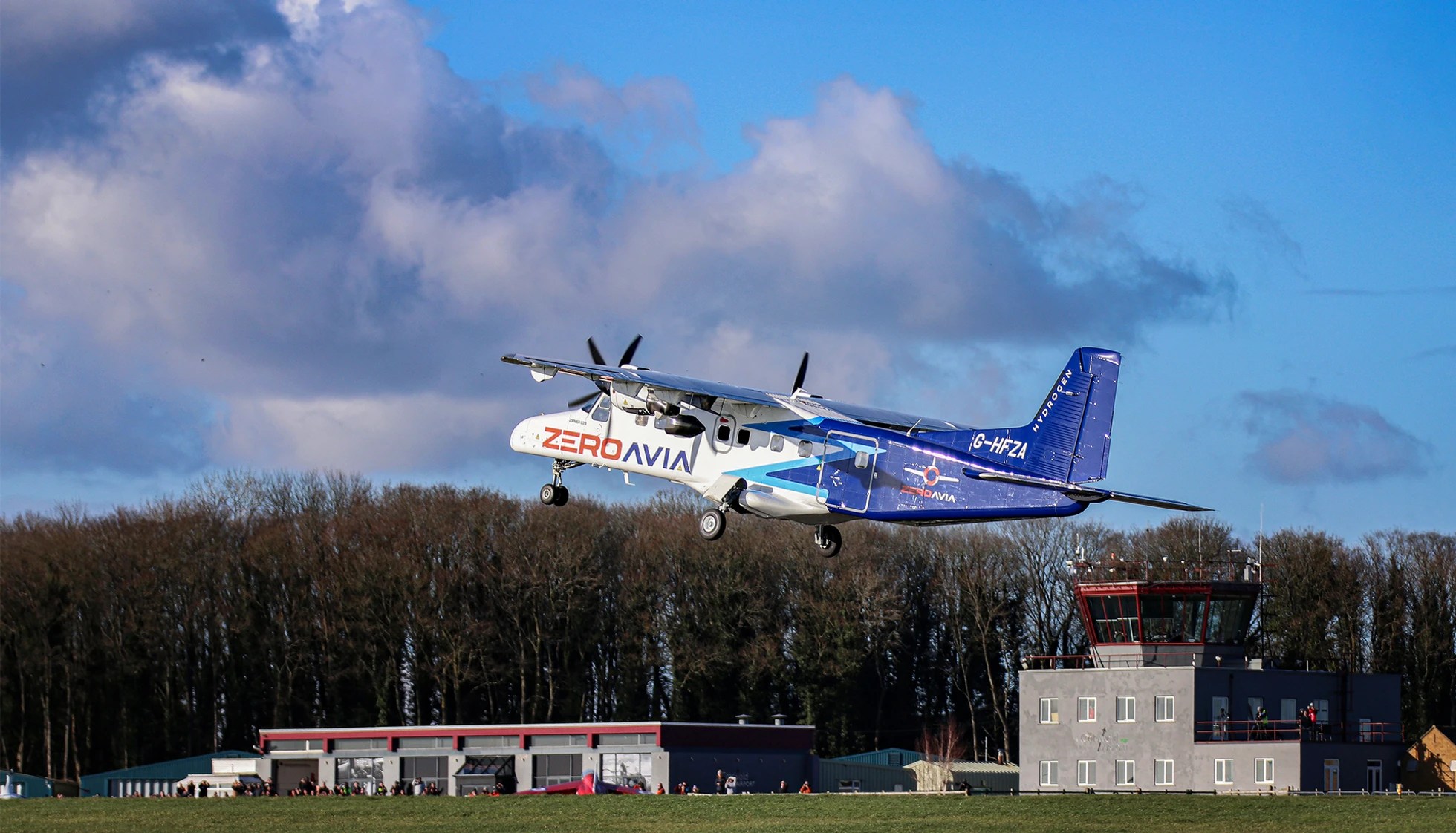
ZeroAvia's Dornier 228 Departure for First Flight. (Photo: ZeroAvia)

 ZeroAvia’s modified 19-seat Dornier 228 twin-engine aircraft took to the sky in testbed configuration for the first flight as part of the HyFlyer II project. The airplane was retrofitted with a full-size prototype hydrogen-electric powertrain on the aircraft’s left wing.

The flight took place from the company’s R&D facility at Cotswold Airport in Gloucestershire, U.K. and lasted 10 minutes. The aircraft completed taxi, take-off, a full pattern circuit and landing. The landmark flight forms part of the HyFlyer II project, a major R&D program backed by the UK Government’s flagship ATI Programme, which targets the development of a 600kW powertrain to support 9-19 seat aircraft worldwide with zero-emission flight.

U.S. Modified Version

ZeroAvia’s Dornier 228 in the US is staying dormant after the media display. (Photo: ZeroAvia)

The Hollister, Calif.-based company is also working on a similar conversion in its U.S. bases. It acquired a Dornier 228 from the defunct Vision Air in 2022. However, after a brief media appearance at its new home, the airplane returned to its base in Las Vegas.

While it makes sense to keep the plane at a location with a known maintenance facility, there’s no clear evidence the plane is receiving retrofits.

The company is also in rapid expansion mode. In addition to its Hollister and Kemble, UK site, it’s also hiring many engineers for its Seattle office. The Hollister-based company opened its Seattle office after inking a deal with Alaska Airlines Group for a conversion kit for the Bombardier Dash 8 Q400. However, the Seattle-based airline is conducting its last Q400 revenue flight this week on January 26. 

Universal Hydrogen’s First Flight 

In the meantime, AeroTEC and Universal Hydrogen are also actively working toward the first flight of a hydrogen-powered Bombardier Dash 8-300. The Dash 8-300 is a 50-seat airplane, significantly larger than the Dornier 228 that ZeroAvia flew. The Universal Hydrogen modification also only applies to a single side on the twin-engine aircraft.

The duo aimed to complete the first flight before the end of the year last year. However, that date has since slipped to January of 2023. The company’s social media has been posting pictures of the modification and engine run-up. Its social media also hinted taxi footage coming soon, which would be the last hurdle to clear before the first flight.

The Hawthorne, Cali.-based company is also working on retrofitting an ATR in Europe as a proving ground for operational testing regarding hydrogen fuel.

The Race to Hydrogen-Powered Flights

A rendering of E19-HE over the skies of London. (Photo: Embraer)

It is becoming increasingly clear that the aviation industry is pivoting toward hydrogen-electric for mainline applications in the future. In the US, the four major traditional airlines have invested in Hydrogen fuel in one way or another. United Airlines, American Airlines and Alaska Airlines all invested in ZeroAvia, while American also has a working relationship with Universal Hydrogen. Delta Air Lines is working directly with Airbus on pulling forward the future of hydrogen fuel. 

Both Airbus and Embraer are working on designs for a hydrogen-powered future. That leaves Boeing alone to focus on Sustainable Aviation Fuel and gaining significant efficiency improvement through aerodynamics.

Fangzhong Guo

Fangzhong grew up near an OEM airport in northeastern China, where he developed his enthusiasm for aviation. Taking upon his passion, he's now working as an aircraft interior design engineer. Besides working in the aerospace industry, Fangzhong enjoys trying out different types of airplanes and seeing how airplane interiors have evolved. So far, he's flown on over 80 types of aircraft. He also planespots in his spare time. His rarest catches included the 747 Shuttle Carrier Aircraft and AN-225.
Sign-up for newsletters & special offers!

Get the latest stories & special offers delivered directly to your inbox

SUBSCRIBE

Uh-oh! It looks like you're using an ad blocker.

Our website relies on ads to provide free content and sustain our operations. By turning off your ad blocker, you help support us and ensure we can continue offering valuable content without any cost to you.

We truly appreciate your understanding and support. Thank you for considering disabling your ad blocker for this website