IATA Director General Willie Walsh at the International Air Transport Association's 77th Annual General Meeting. (Photo: IATA)
The International Air Transport Association (IATA) reported a strong rebound in air travel in February as the impact of the Omicron variant of Covid diminishes.
However, IATA Director General Willie Walsh noted “unacceptably long lines” at airports ahead of a surge in Easter travel and warned of “a huge increase in passenger numbers in the coming months.”
Total traffic in February was more than double that of February 2021, up almost 116%. However, global traffic remained 45% down on February 2019. Worldwide domestic traffic rose 61% year on year and was just 22% below the level of 2019 despite wide variations by market.
Walsh also noted that the war in Ukraine, which began on Feb. 24, did not have a major impact on traffic levels.
“The recovery in air travel is gathering steam as governments in many parts of the world lift travel restrictions. States that persist in attempting to lock-out the disease, rather than managing it, as we do with other diseases, risk missing out on the enormous economic and societal benefits that a restoration of international connectivity will bring,” Walsh said in a statement.
International Passenger Markets
African airlines had a 69.5% rise in February revenue passenger kilometers (RPK) — a measure of airline capacity — versus year ago, a large improvement compared to the 20.5% year-over-year increase recorded in January 2022 compared to the same month in 2021. February 2022 capacity was up 34.7% and load factor climbed 12.9 percentage points to 63.0%.
Asia-Pacific airlines had a 144.4% rise in February traffic compared to February 2021, up somewhat over the 125.8% gain registered in January 2022 versus January 2021. Capacity rose 60.8% and the load factor was up 16.1 percentage points to 47.0%, the lowest among regions.
Middle Eastern airlines’ traffic rose 215.3% in February compared to February 2021, well up compared to the 145.0% increase in January 2022, versus the same month in 2021. February capacity rose 89.5% versus the year-ago period, and load factor climbed 25.8 percentage points to 64.7%.
European carriers saw their February traffic rise 380.6% versus February 2021, improved over the 224.3% increase in January 2022 versus the same month in 2021. Capacity rose 174.8%, and load factor climbed 30.3 percentage points to 70.9%.
North American carriers experienced a 236.7% traffic rise in February versus the 2021 period, significantly increased compared to the 149.0% rise in January 2022 over January 2021. Capacity rose 91.7%, and load factor climbed 27.4 percentage points to 63.6%.
Latin American airlines’ February traffic rose 242.7% compared to the same month in 2021, well up over the 155.2% rise in January 2022 compared to January 2021. February capacity rose 146.3% and load factor increased 21.7 percentage points to 77.0%, which was the highest load factor among the regions for the 17th consecutive month.
The U.S. remained the stand-out domestic market, with traffic in February 112% up on a year ago and just 7% down on 2019. The world’s second biggest domestic market — China — remained 35% down on 2019.
Victor Shalton's love for aviation can be traced to when he was 11-years-old. As a seasoned aviation writer, he takes pride in providing the best aviation coverage around the globe and is passionate about advancing his skills in the aviation space. In addition, he loves travelling, writing, arts and while his speaking engagements have taken him around the world, he is proud to call Nairobi home.
Maersk — a Danish shipping company — is known for its massive ships navigating the seas and its operational focus on being a shipping firm. The company also deals with inland freight transportation and associated services, such as supply chain management and port operation. They are now shifting their attention to a different aspect of nature: the skies.
Last year in November, Maersk announced and hinted at a push into air freight by ordering two Boeing 777F aircraft for the new cargo airline’s fleet, as well as acquiring German forwarder Senator International, which has its own air freight operations.
Maersk Air Cargo — the shipping company’s airline built on its existing integrator, Star Air — is the first step in what appears to be a full-scale entry into the airfreight business. Maersk Air Cargo, — based at Billund Airport — will take over Star’s operations and serve existing and future customers as well as Maersk’s end-to-end logistics. It will operate daily flights out of Billund Airport when it becomes operational in the second half of the year.
Fleet and Plans
Maersk will operate five aircraft, two 777Fs and three leased Boeing 767-300Fs, as well as three new 767-300Fs, according to the company. The three leased B767-300 freighters will be operational next year through Cargo Aircraft Management, ATSG’s leasing arm. The 777 freighters, which were purchased last year, are scheduled to be delivered by Boeing in 2024.
The B767 freighters will be utilized on US-China operations. When asked about the practicality of a 767 on the transpacific, one airline executive explained, “It can work, depending on rates of course, and also routes. Quite honestly, with the Trans-Siberian routes closed, for what I think will be years, the economic case for this will be OK for quite a while, especially if it’s a new generation production 767.”
The new aircraft will join operations between the second half of this year and 2024.
One-third of Maersk’s yearly tonnage will be carried on its own network, which will consist of a mix of owned and leased aircraft “replicating the structure that the company has within its ocean fleet”. Strategic commercial carriers and charter flight providers will provide the remaining capacity. The decision to start an air cargo firm comes as supply lines continue to be disrupted by Covid lockdowns, port logjams, and the Ukraine situation. Airfreight has helped organizations who need to move urgent cargo to keep their supply chains running smoothly.
Aymeric Chandavoine, Maersk’s worldwide president of logistics and services, explains the company’s huge push into air cargo: “Airfreight is a crucial enabler of flexibility and agility in global supply chains as it allows our customers to tackle time-critical supply chain challenges and provides transport mode options for high-value cargo.
“We strongly believe in working closely with our customers. Therefore, it is key for Maersk to also increase our presence in the global air cargo industry by introducing Maersk Air Cargo to cater even better to the needs of our customers,” Chandavoine added.
The Danish company believes that the new stand-alone airfreight service, when paired with its existing panoply of ocean, inland, warehousing and Customs services, will give customers a wider range of diverse supply chain alternatives. Customers are increasingly resorting to a combination of sea and air freight for more time-critical deliveries, according to logistics executives, as a result of the global supply chain disruption observed over the last two years.
Torben Bengtsson, global head of air & less than container load, AP Moller–Maersk, said, “Maersk Air Cargo is an important step of the Maersk Air Freight strategy, as it will allow us to offer customers a truly unique combination of air freight integrated with other transport modes. We see an increased and continued demand for air cargo both today and going forward as well as growing demand for end-to-end logistics, why it is important for us to strengthen our own-controlled capacity and advance further on our air freight strategy.”
The carrier plans to engage in an agreement with the Flight Personnel Union, which is part of the Danish Confederation and Trade Unions, in order to create jobs in the west Denmark region. Billund Airport’s chief executive, Jan Hessellund, stated that the airport is ecstatic to have been chosen as Maersk’s European airfreight hub and looks forward to taking the partnership to new heights.
Company Expansion
The company is likely to make additional expenditures on air freight as a result of this move. According to online reports, Maersk has participated in a ‘pre-bid’ to invest in the Jewar airport, which is being built west of Delhi. It’s fascinating to see lines get involved in airport development as well as ports. By their very nature, freight buyers are multimodal.
Maersk has also lately made investments in a number of logistics firms. Visible Supply Chain Management, a Salt Lake City e-commerce fulfillment company; Li & Fung Logistics, an Asian contract logistics and omnichannel fulfillment company; Pilot Freight, a US last-mile specialist; and Performance Team, a North American warehousing and fulfillment company are among the companies it has acquired. It is looking to cover the entire end-to-end chain, but what appears to be missing is a ground handler.
In regards to Maersk’s Air Cargo venture, Dorothea von Boxberg, CEO of Lufthansa Cargo told CargoForwarder, that she doubted shipping lines’ capacity to incorporate air cargo into their wider operations.
“Personally, I see few synergies between the two business segments of sea and air. The proponents probably underestimate what it takes to operate an airline profitably over a longer cycle. It requires a minimum fleet size and high commercial and operational competence to be financially successful,” Boxberg said. “To me, it appears that shipping companies are chartering freighters in response to, and for the duration of, the current capacity squeeze. Shipping companies that operate freighters will find out how tedious the air cargo business is without the involvement of freight forwarders.”
Kalai has always wanted to work in the aviation industry, having been fascinated by its inner workings since he was a child. In pursuit of his dream, he obtained a diploma in aviation management and is currently interning with a low-cost airline, under in-flight policies. In his free time, he loves to engage in recreational activities, and watch sports. In the upcoming years, Kalai intends to pursue his degree at a business school before working as an executive for a global airline around the world.
Tokyo’s Narita International Airport Completes its Expansion
Tokyo’s Narita International Airport — one of the major gateways into Japan — has completed its expansion on terminal three during the pandemic. The terminal opened in 2015 and is best known for hosting no-frills carriers. It is believed the terminal expansion can entice more travelers to go to Japan without breaking the bank.
Terminal three was designed to handle a maximum capacity of 7.5 million passengers annually in the first place. By popular demand, the number of passengers has easily reached its maximum to 7.64 million in 2017. In 2018, Narita International Airport announced an expansion after three years after launching terminal three.
The airport started its construction in 202, and the project costs 14 billion yen ($111.7 million). The expanded airport is expected to handle 15 million every year. According to the airport, the new terminal is 1.5 times bigger than the original size — adding 60 self-service check-in kiosks to enhance its contact-free services.
In addition, Narita has built a corridor between terminal three and terminal two. Transit passengers can benefit from the new corridor, as the walking distance will be cut by half.
Japan’s aviation industry has been hit hard by the pandemic. In 2021, Toyko’s Narita International Airport recorded 5.2 million passenger capacity, which was 50% less than in 2020. Ironically, the Summer Olympics in Tokyo did not stimulate the aviation sector last year due to the travel restrictions in the country. The travel bans have left the Olympics with no live audience. In 2019, the airport handled 44 million passengers.
Japan’s travel restrictions have put a strain on the airlines. According to All Nippon Airways and Japan Airlines, who are both major carriers in the country,the demand for international travel remains weak, where the pair carried 66,000 and 71,000 passengers in February respectively. The neighboring countries, such as South Korea, Singapore and Malaysia have been gradually reopening their borders to international travelers. Japan has closed its border to most travelers since the pandemic has begun.
Travel Restrictions Lifted
Recently, Japan has shown a sign of relaxing its travel restrictions by increasing the daily arrivals to 10,000 foreign visitors from 7,000. Earlier, Japan has allowed business travelers and students from low-risk countries, such as Singapore, South Korea and New Zealand, to enter the country.
Moreover, Japan has lifted the travel restrictions on 106 countries’ citizens, including the United States, Canada, the United Kingdom, France and Germany. Business travelers, foreign students and researchers from those 106 countries have been given a green light to enter Japan again. However, tourists are still barred from entering the country.
“There won’t be anyone new who will be able to enter Japan as a result of this change,” the Justice Ministry made itself clear in a statement.
The 74-year-old Alitalia was broken off into different business units prior to the shutdown of its flying division in October, with the handling and maintenance arms of the company to be auctioned off separately, as decided by the bankruptcy tribunal following the instructions of the European Union that was trying to ensure a suitable business discontinuity between the old Alitalia and the new ITA Airways.
During the past week, the extraordinary commissioners that have been handling the Alitalia receivership for the past three years have essentially concluded their work by completing the sale of the handling division of Alitalia to Swiss handling giant Swissport, and the sale of Alitalia’s maintenance division to Atitech, the Italian privately-owned MRO company based at Capodichino Airport in Naples, Italy.
The offers from Swissport and Atitech were presented earlier this year and preliminary agreements were signed on March 14, the Financial Post reported.
Almost 10,000 Jobs Preserved
The Italian government approved the sale of the two units for an undisclosed price, and this contextually takes care of the biggest problem that was left unsolved from the Alitalia bankruptcy: job preservation. According to the Italian newspaper Il Messaggero, of the 10,440 people that were still employed by Alitalia on Oct. 15, 2021, the date the company formally ceased to exist, more than 4,000 were employed in handling or maintenance — 2,700 people have now been reabsorbed by Swissport and a further 1,400 are now on Atitech’s payroll.
Between former Alitalia employees that have already been hired by ITA Airways and others that will be reintegrated by the end of the year, approximately 9,600 people of the original 10,440 have been reassigned to other companies, a percentage the government claims to be between 90% and 95%. The fate of Alitalia workers after the company’s demise has always been a major stumbling block in all the attempts made throughout the last decades to permanently solve Alitalia’s chronic inability to turn a profit and to align itself with the productivity levels of its competitors.
ITA Airways To Be Privatized by June
After more than 7 billion euros ($7.6 billion) of taxpayers’ money have been poured into the airline’s coffers since 2008, Alitalia finally ceased flying last October and was replaced by a smaller, state-owned airline called ITA Airways roughly half the size of its predecessor.
Now the Government has decided to privatize the airline selling it to a larger group in order to enable ITA Airways to be more competitive in the international marketplace. After establishing plans to completely renew its fleet with a large order of short-haul and long-haul Airbus aircraft, the carrier will be sold to the highest bidder among the interested parties, which at the moment include a joint venture between Italian shipping company MSC and Lufthansa, the U.S. equity fund Indigo Partners, already owning stakes in European LCCs such as Wizzair, and another U.S. equity fund, Certares, proposing a commercial partnership with Delta Air Line and Air France-KLM.
The deadline to present expressions of interest is April 18, which will also be the date when interested subjects will get access to the data room. The Italian government expects the sale to be completed by June 20, Italian newspaper Il Corriere della Sera reports.
Vanni fell in love with commercial aviation during his undergraduate studies in Statistics at the University of Bologna, when he prepared his thesis on the effects of deregulation on the U.S. and European aviation markets. Then he pursued his passion further by obtaining a Master’s Degree in Air Transport Management at Cranfield University in the U.K. followed by holding several management positions at various start-up carriers in Europe (Jet2, SkyEurope, Silverjet). After moving to Canada, he was Business Development Manager for IATA for nine years before turning to his other passion: sports writing.
The city of Taos, N.M. (Photo: AirlineGeeks | Joey Gerardi)
As the winter sports season draws to a close, airlines are ending or getting ready for flights that operate to winter sports-friendly destinations. Advanced Air operates winter seasonal flights to two of these destinations — Taos, N.M., and Mammoth Lakes, Calif. But with a relative lack of flights on the horizon for the summer, Advanced announced it would once again continue to operate flights to the two regions.
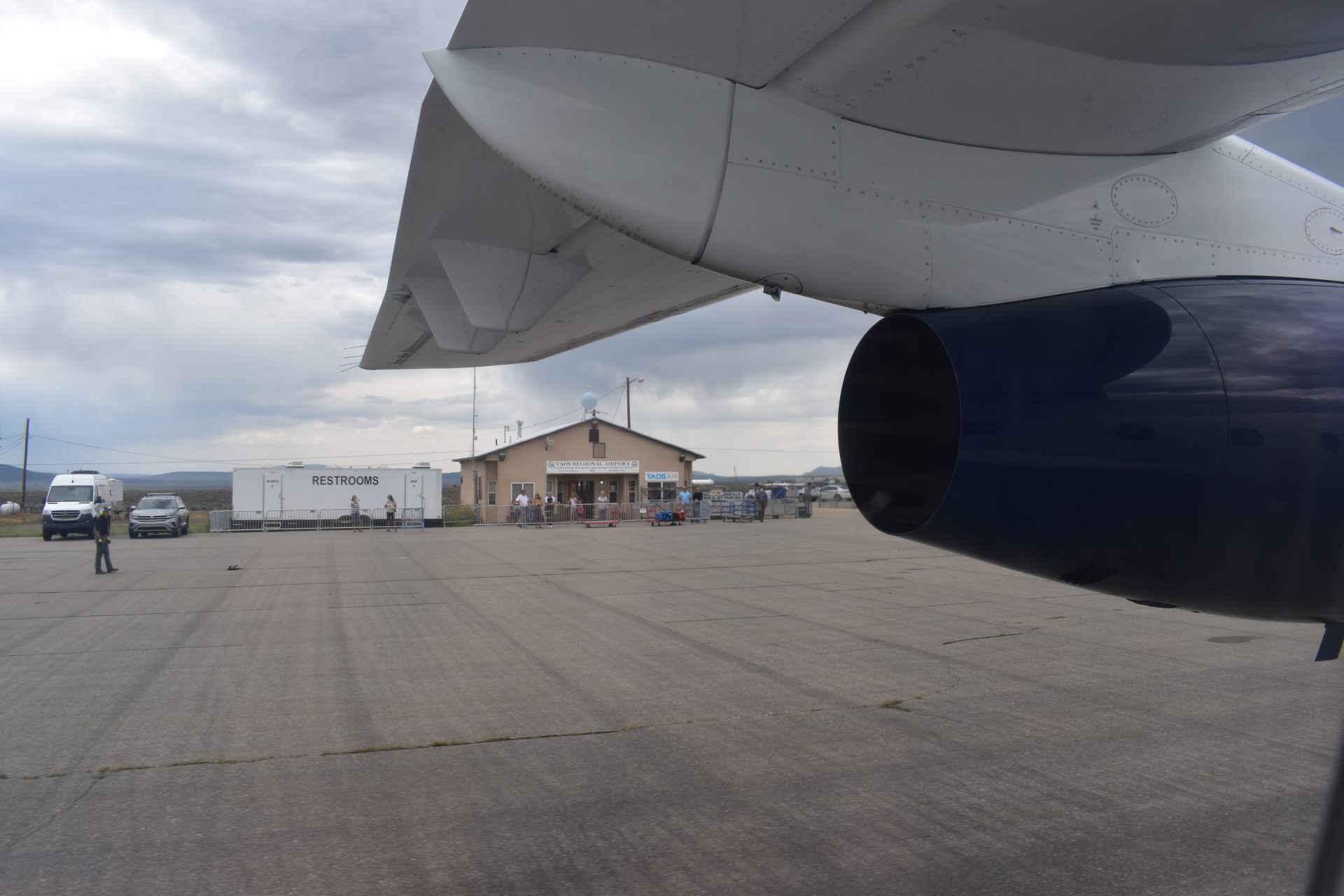
Pulling up to the terminal in Taos, N.M. (Photo: AirlineGeeks | Joey Gerardi)
This isn’t the first season that summer flights have operated to Taos, and AirlineGeeks even had the opportunity to fly to this destination with the carrier last summer.
“Summer is one of the best times of year to enjoy everything that the majestic town of Mammoth Lakes has to offer,” said Levi Stockton, Founder & President of Advanced Airlines. “We’re pleased to continue partnering with Mammoth Lakes Tourism to create an accessible and premium way for Southern Californians to get to one of their favorite summer destinations.”
Flights for the summer season to both destinations begin on June 16, and run until Sept. 12. The Mammoth Lake flight will operate four times a week to both Hawthorne, Calif. and Carlsbad, Calif., the latter of which is located just north of San Diego. Flights to both will operate Thursdays, Fridays, Sundays and Mondays using the carrier’s 30-seat Dornier Jet.
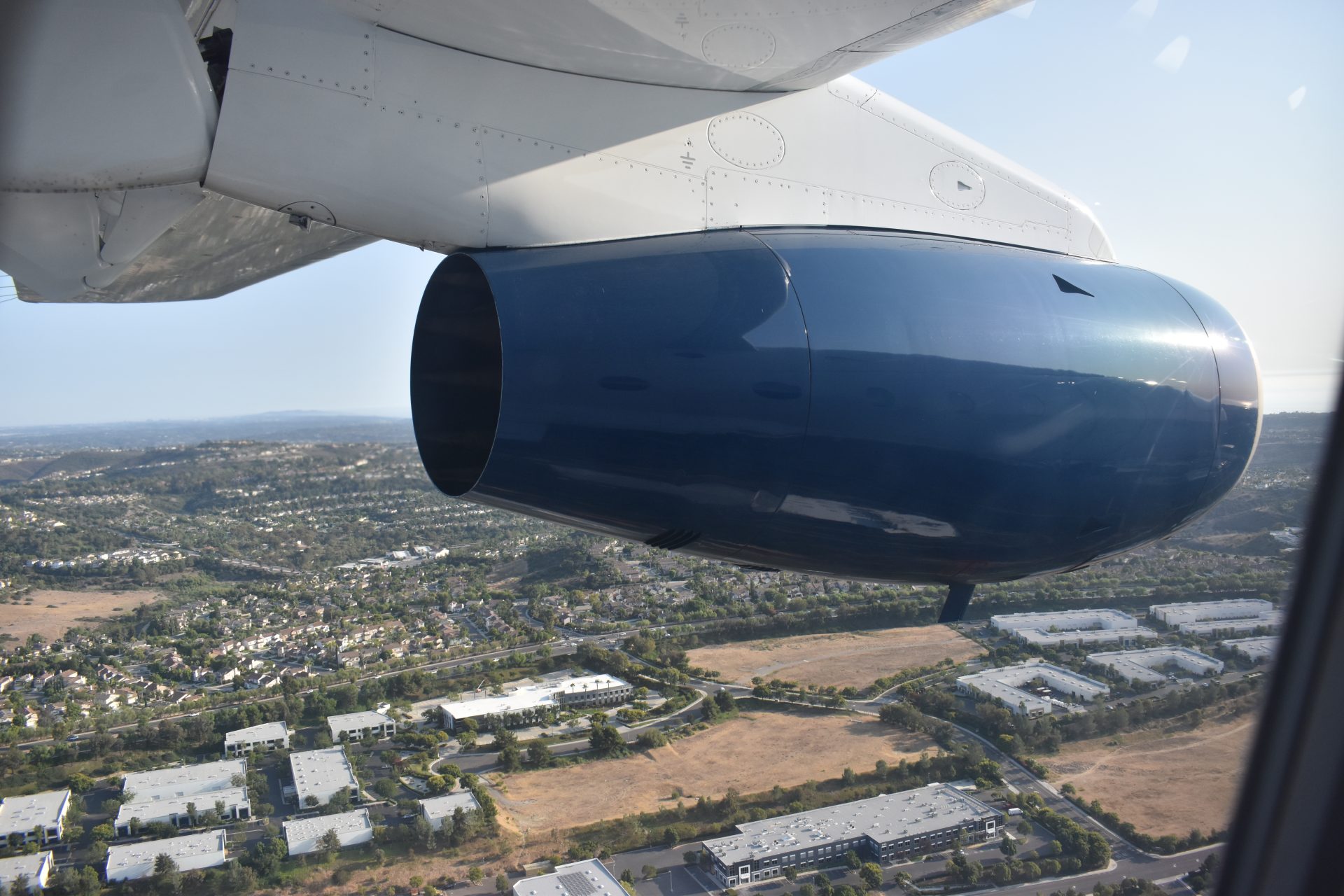
On final approach to Carlsbad, Calif. (Photo: AirlineGeeks | Joey Gerardi)
Advanced Air is the only airline operating directly into Mammoth Lakes Airport, as United Airlines moved its winter seasonal flights to Bishop Airport. But during the summer months, Advanced is the only option for flying to the region at all. It is also the first time in many years that the region will have flights operating during the summer months as they is more well known for the winter season, but they do hope to change that this season.
John Urdi, the Mammoth Lake Tourism Director, said of the flights, “Summer in the Eastern Sierra is truly magical, and with the addition of Advanced Airlines summer service to Mammoth Yosemite Airport, it’s easier than ever to get here to enjoy it ”
Flights to Taos, N.M. will operate on Thursdays and Sundays from Austin and Carlsbad, and will operate on Mondays and Fridays from Dallas’s Love Field Airport and Hawthorne. Passengers can even use Taos as a connecting point between Dallas and Hawthorne or Austin and Carlsbad.
Taos Air route map. (Photo: Taos Air)
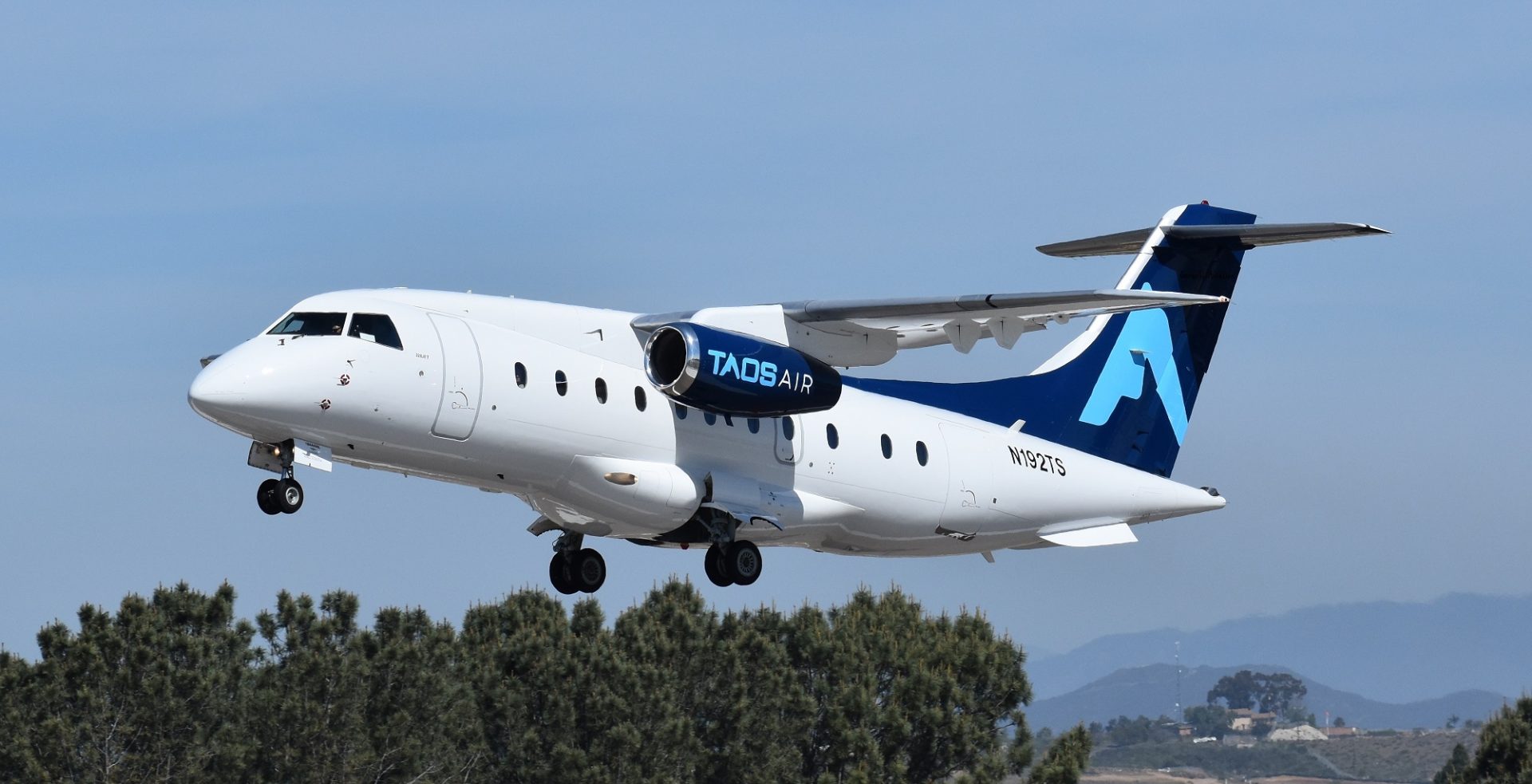
Advanced Air doesn’t have a specific livery for the Dornier Jet but instead paints the aircraft based on the region it is flying to. This is seen in Taos as the airline has painted a Taos Air livery onto the jet that operates there.
A Taos Air Dornier 328J departing Carlsbad, Calif (Photo: AirlineGeeks | Joey Gerardi)
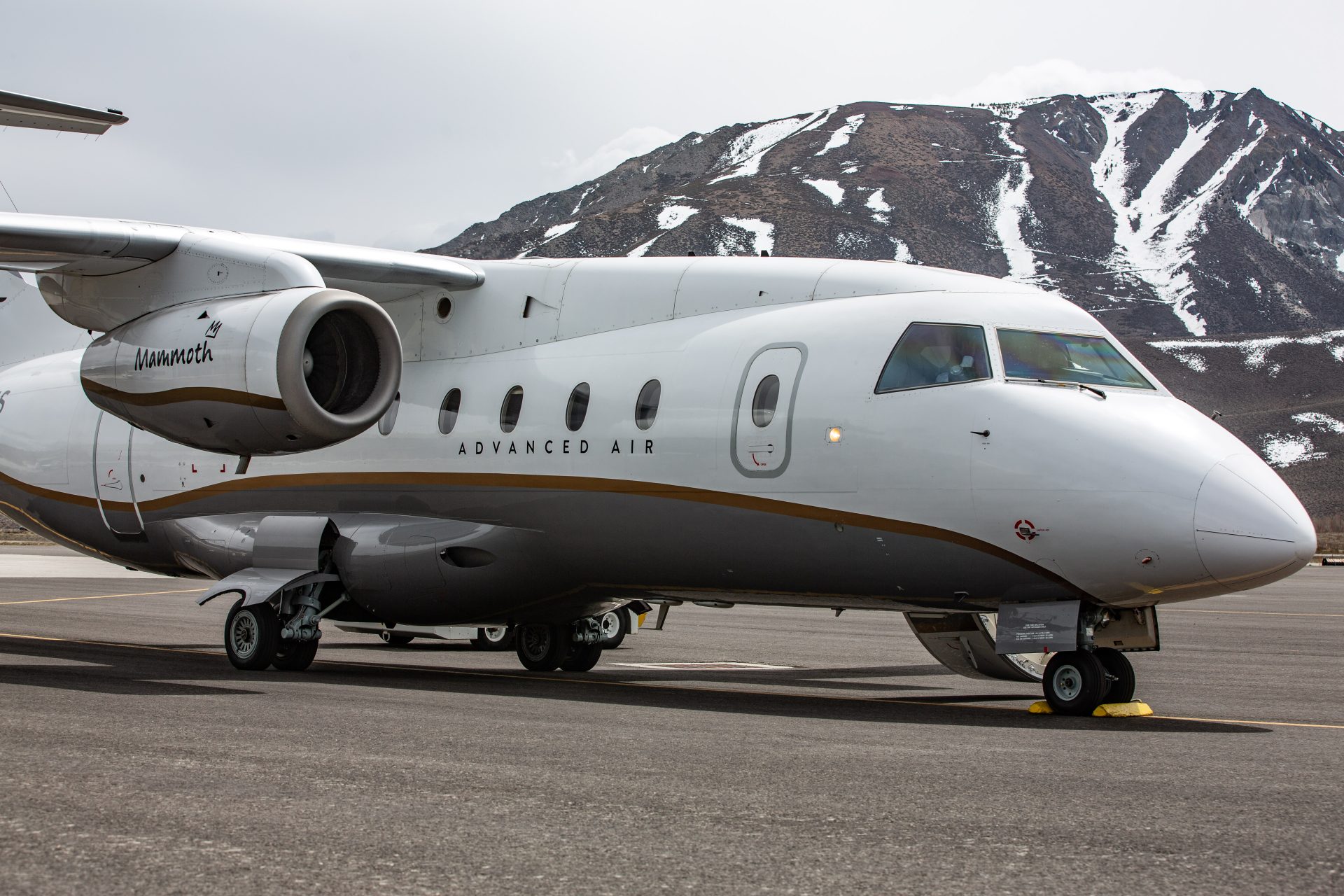
Along with this Taos Air livery, Advanced Air has released its first aircraft wearing a Mammoth Lake livery.
(Photo: Dakota Snider, Mammoth Lakes Tourism)
All flights to Taos and Mammoth Lakes will operate non-sterile, meaning passengers won’t have to go through TSA screening prior to getting on the flights making the actual time spent traveling shorter than it would be with security.
Joey has always been interested in planes for as long as he can remember. He grew up in Central New York during the early 2000s when US Airways Express turboprops ruled the skies. Being from a non-aviation family made it harder for him to be around planes and would only spend about three hours a month at the airport. He was so excited when he could drive by himself, the first thing he did with his driver's license was get ice cream and go plane spotting for the entire day. He graduated from Western Michigan University in 2022 with a B.S. in Aviation Management & Operations and a Minor in Business, and currently works for a major airline in his hometown.
Australian regional airline Regional Express experienced two incidents resulting in cancelled flights this week due to engine concerns. During take-off checklists, two separate flights operating Saab 340 turbo-prop aircraft reported smoke and flames emanating from the left engines.
The first incident occurred Tuesday, April 5 at Melbourne Airport when flight ZL 3937 bound for King Island was alerted by the ground staff of flames from the left side engine during start up procedures. In response, according to the ATSB, the flight crew “shut down both engines, discharged the left engine fire extinguisher and ordered an evacuation”, with passengers being told to jump from the Saab to the safety of the ground.
During the evacuation, the Sydney Morning Herald reported at least one passenger suffered an injured knee and elbow.
Following up on the incident, Rex stated, “emergency services in attendance found no evidence of fire,” adding that the shut down and evacuation followed standard procedures.
The following day, Wednesday, April 6, another Saab 340 had to be disembarked after boarding, with smoke observed from the aircraft’s left engine also.
The flight from Roma to Brisbane, previously operated by Qantas, was boarded and preparing for take-off when the crew directed passengers to leave using the stairs. No passengers were injured in the evacuation.
In another statement released by Rex, the airline explained the occurrence had “no connection whatsoever” to the incident in Melbourne the previous day. It has been suggested that the aircraft’s ground power unit had malfunctioned and caused some flaming around the engine in Melbourne.
While the ATSB investigates the incident at Melbourne, Rex has not grounded its fleet of Saab 340s at this point in time, with the Civil Aviation Safety Authority saying it has no concerns with Rex.
Passengers from both flights were accommodated on later flights.
Australian Flights Experiencing Turbulence
The aborted flights are just two of some major turbulence this week in Australian commercial aviation.
Wednesday saw major headlines across Australia highlighting the chaos of Sydney Airport, Australia’s largest and busiest. With passenger travel increasing as the Easter holidays loom, Sydney Airport staff have been unable to handle the sheer volume of passengers.
Terminals have been inundated with delays in security screening, noted to have been caused by staff shortages as Australia’s commercial flights increase to pre-COVID levels.
Additionally, Qantas CEO Alan Joyce suggested that the issues are resulting in part due to not “match fit” passengers, claiming they forgot to remove aerosols and laptops prior to security screening.
Following those comments, however, the Qantas CEO backtracked on his comments, stating “just to be clear, I’m not blaming passengers.”
Qantas Not Free From Issues
Despite Joyce’s commentary on passengers being the cause of some issues, Qantas itself has been forced to apologize for its poor customer service this week.
On Thursday, April 7, Qantas released an apology for the extremely long call wait times. Admitting they are “unacceptable”, the airline giant went on to explain they are unable to provide enough staff to assist passengers with flight changes, despite Qantas continuing to open up new routes.
According to one customer, Qantas kept them on hold for “four hours and disconnected,” with yet another statement that the reputation of Qantas is falling rapidly.
Qantas has stepped up its advertising campaign, with its latest advertisement including the famed Qantas children’s choir and notable Australian celebrities.
Qantas concluded its statement by saying, “We’re working every day to improve the experience for our customers.”
Mike’s love affair with flight and mechanical objects in the sky began at an early age, fascinated by space documentaries and the vintage Flight Simulator ’95. He currently works as an instructor for UAVs and is training to receive his Private Pilot Licence with the goal of working in manned flight instruction. An avid reader of all things aviation and manned space flight, Mike stays close to developments in aerospace while reminiscing and sharing the rich history of flight with others. He loves writing, engineering and science.
An Air Jamaica Boeing 737-800 landing at SXM (Photo: AirlineGeeks | Ian McMurtry)
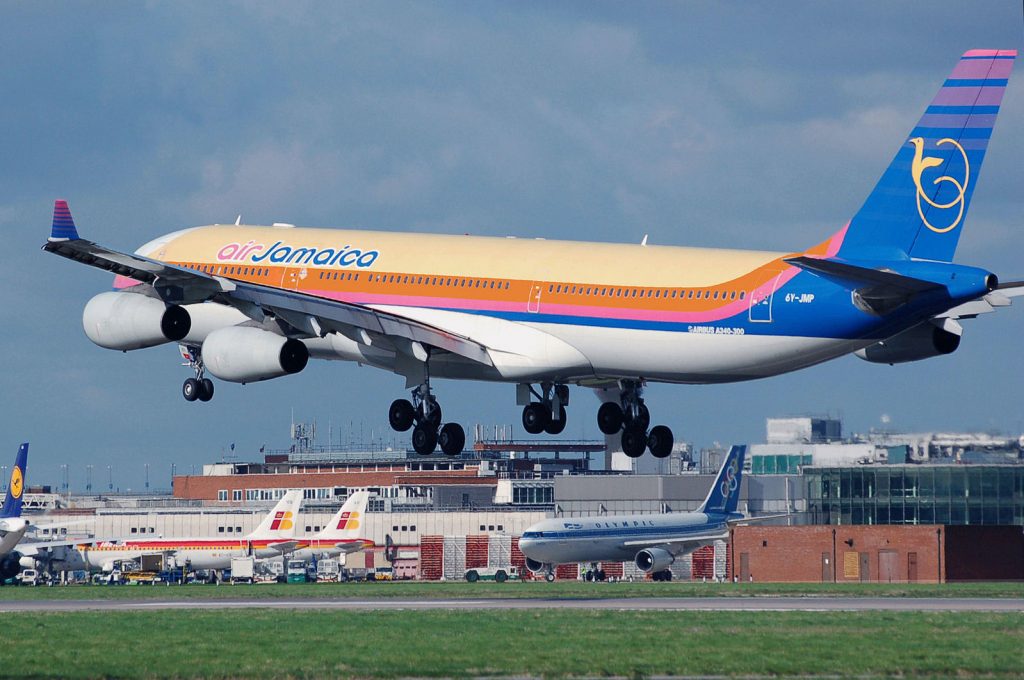
Formed in 1968, the government-backed Air Jamaica was the Caribbean island’s attempt at creating a flag carrier that would expand the island nation’s presence in the global aviation scene and allow for growth of the island nation for leisure travelers and Jamaican business travelers. Under government ownership, Air Jamaica would expand in various avenues over the years to achieve growth, at one point offering both Air Jamaica Express service between cities on the island and even pursuing Airbus A340s to launch London service, both the underwhelming statistics. However, Air Jamaica the route maps the airline had built were American-focused, with Airbus A320s, A321s and alone A319 making the north to south run consistently over the years.
The Decline of Air Jamaica
Air Jamaica had built a route map by 2008 that balanced its Kingston and Montego Bay hubs, with fights from the capital servicing Miami, New York-JFK, Toronto-Pearson, Nassau, Curacao, Orlando, Ft. Lauderdale, and Havana while Montego Bay would serve the same cities as well as Atlanta, Los Angeles, Baltimore/Washington, Philadelphia and Chicago O’Hare. While the airline had built an extensive route map, it was heavily indebted and the government was ready to cleanse itself of the cost burden that Air Jamaica had become, especially as other airlines had stepped up in Jamaica.
Fueled by Air Jamaica and the plethora of American carriers interested in the Caribbean, the 1990s and 2000s had seemed to achieve passenger numbers and growth for the island, with 2.9 million passengers between Montego Bay’s Sangster International Airport and Kingston’s Norman Manley International Airport in 1992 ballooning to 5.1 million passengers in 2008. Montego Bay had become the cornerstone to success for the island, with the airport quickly doubling Kingston’s traffic numbers over that period. These two airports would serve as the primary commercial airports, with occasional service to Ocho Rios’s Ian Fleming International Airport coming and going but the airport focuses on private traffic.
An Air Jamaica A340-300 (Photo: Adrian Pingstone [Public domain], from Wikimedia Commons)By 2011, Air Jamaica had retracted its route map as the fleet of Airbus A320s had trickled down to just four A320s, a single A321 and a single A319. The route map had had now existed of Montego Bay service to Ft. Lauderdale, Nassau, Philadelphia and New York-JFK while Kingston recorded flights to New York-JFK, Toronto-Pearson, and Nassau. The airline had also considered leasing a Boeing 777 to restore London service, but these plans were ultimately dropped.
These cuts were coming at the cost of Kingston, whose passenger count dropped from 1.7 million passengers to 1.4 million in 2011, however, the American and European obsession with Montego Bay meant that passenger numbers nearly offset Air Jamaica cuts, with 4.99 million passengers becoming 4.83 million in the same timeframe.
The Caribbean Takeover
The integration into Caribbean Airlines would occur in 2011 and fleet simplicity would occur as Air Jamaica shed its all-Airbus fleet to focus on Boeing 737-800s in a new livery. The Caribbean would downsize Air Jamaica’s role at Kingston, removing overcapacity and cost-cutting as the fleet was overhauled. As a result, Norman Manley Airport would record a -0.8% passenger growth for 2011-2012 yet the Caribbean would maintain its role as the largest carrier for the airport at 49% of total traffic. Caribbean Airlines would attempt to make Air Jamaica more Florida-focused, with Kingston-Miami and Kingston-Miami but the second route would not make it past its first year of operations.
Over the next five years, Caribbean would continue to strip away services to Kingston and Montego Bay as the airline was restructuring its own difficult financial situation. Faced with government harassment with flying Trinidad and Tobago’s flag and registration on an Air Jamaica livery plane and the collapse of Air Jamaica’s fleet to just three Boeing 737-800s, Caribbean made the decision in 2015 to retire the Jamaican brand and move forward with a single Caribbean name. By this time Caribbean and Air Jamaica failed to break into the top 5 largest carriers at Montego Bay and were being rivaled by JetBlue for the largest airline at Kingston.
Despite Caribbean’s divestment from Jamaica, other airlines were there to offset capacity reductions. Passenger traffic at Kingston would bottom out in 2013/14 for the capital at 1.37 million passengers, climbing back to 1.58 million by 2016/17. Meanwhile, Montego Bay would climb from 3.34 million in 2011/12 to 3.86 million by 2015/16.
The notable increase in Montego Bay was fueled by external airlines and increased capacity from foreign operators on existing routes. The airport authority noted that new market growth prevented any slowdowns like the arrival and expansion of Southwest, increased service from American, JetBlue and the growth of European destinations. During this time the northern shore airport would welcome Eurowings and Thomas Cook Scandinavia. The other notable event of early 2013 was the arrival of Fly Jamaica Airways, which would operate a Boeing 757 from Kingston to Toronto-Pearson and New York-JFK and by 2015 would take up 5% of the Kingston passenger traffic.
However, the years following the dissolving of Air Jamaica would see continued growth at Jamaican airports. By 2018, passenger traffic at Montego Bay had ballooned to 4.5 million passengers per year while Kingston has recorded a smaller increase to 1.6 million.
Seeing the increasing returns of the public-private partnership being operated in Montego Bay and the underwhelming growth of Kingston, the Cabinet of Jamaica created a committee in 2016 to begin looking into a similar structure for the nation’s capital.
Taking about the reason for this change, Chairman of the Enterprise Team of NMIA’s privatization Paul Scott noted, “Governments worldwide, including in Jamaica, have turned to Public-Private Partnerships to design, finance, build and operate infrastructure projects. Our most recent successfully completed PPP concession was the Kingston Container Terminal transaction. PPPs are an excellent vehicle for unlocking the value of assets, reducing debt and mobilizing local and foreign direct investment in the economy and we look forward to the improvements to come at the NMIA.
Mexico’s Grupo Aeroportuario del Pacifico SAB, who also had a majority stake in Montego Bay and had overseen its transformation since 2003, won the bid in 2018 and would take over the Norman Manley International Airport in October 2019, placing it under the operator’s name PAC Kingston Airport Limited. Since the creation of the abbreviated PACKAL group, the first large investment project has been undertaken. What was originally planned to be a $100 million investment for Kingston has transformed into a $200 million project for the two primary airports and Ocho Rios. The initial plan was stalled out due to COVID-19, but the next project has been given the green light which includes projects slated to take place between 2022 and 2025 including runway extension projects.
The Effect of COVID-19
On the airline side, the pandemic has reshuffled the airline listing for Kingston. Although Caribbean Airlines has not removed any routes in the recent past from either Kingston, service disruptions and government blockages have prevented the airline at 2019-levels. By 2021, Caribbean was the 6th largest airline at Kingston by aircraft movements and passengers. Kingston noted that 94% of its traffic originated or terminated in the United States, which would fuel the American airlines of American, JetBlue, Delta, Southwest and United taking the top five slots in the airport for passenger count and aircraft movement.
Caribbean’s route map at Kingston currently serves Antigua, Barbados, Ft. Lauderdale, Grand Cayman, Miami, Nassau, New York-JFK, Port of Spain, St. Maarten, Toronto-Pearson and seasonal flights to Orlando. Montego Bay has been stripped back to just New York-JFK and Ft. Lauderdale. Fly Jamaica, on the other hand, collapsed in March 2019 as a crash of their lone Boeing 757 four months prior left the airline with to scramble to find a Boeing 767 that in the end was not offsetting its cost to operate.
Now looking forward, with Caribbean Airlines finding its happy medium for the island of Jamaica, the airports of the island now brace for continued improvements in air service from American airlines as post-pandemic commercial service in the island recovers. Most notably, American is adding Ocho Rios back to the commercial world, launching November flights to Miami on Embraer E175s. American is also flying the E175 to Montego Bay, where it will connect Austin, Texas for the first time.
Ultra-low-cost carriers are also getting in on the action, with Spirit and Frontier adding Philadelphia and Miami, respectively, this May. As a result of change and investments from other airlines, Air Jamaica’s former destinations remain mostly connected to the island, with the lone exceptions being Curacao and Los Angeles. Talk of another Jamaican flagged carrier is in the works as well, with Fly Oriole considering an ultra-low-cost model that could begin in the coming years starting with inter-island operations and expanding outside the island within months of their initial start.
Although Ian McMurtry was never originally an avgeek, he did enjoy watching US Airways aircraft across western Pennsylvania in the early 2000s. He lived along the Pennsylvania Railroad and took a liking to trains but a change of scenery in the mid-2000s saw him shift more of an interest into aviation. He would eventually express this passion by taking flying lessons in mid-Missouri and joining AirlineGeeks in 2013. Now living in Wichita, Kansas, Ian is in college majoring in aerospace engineering and minoring in business administration at Wichita State University.
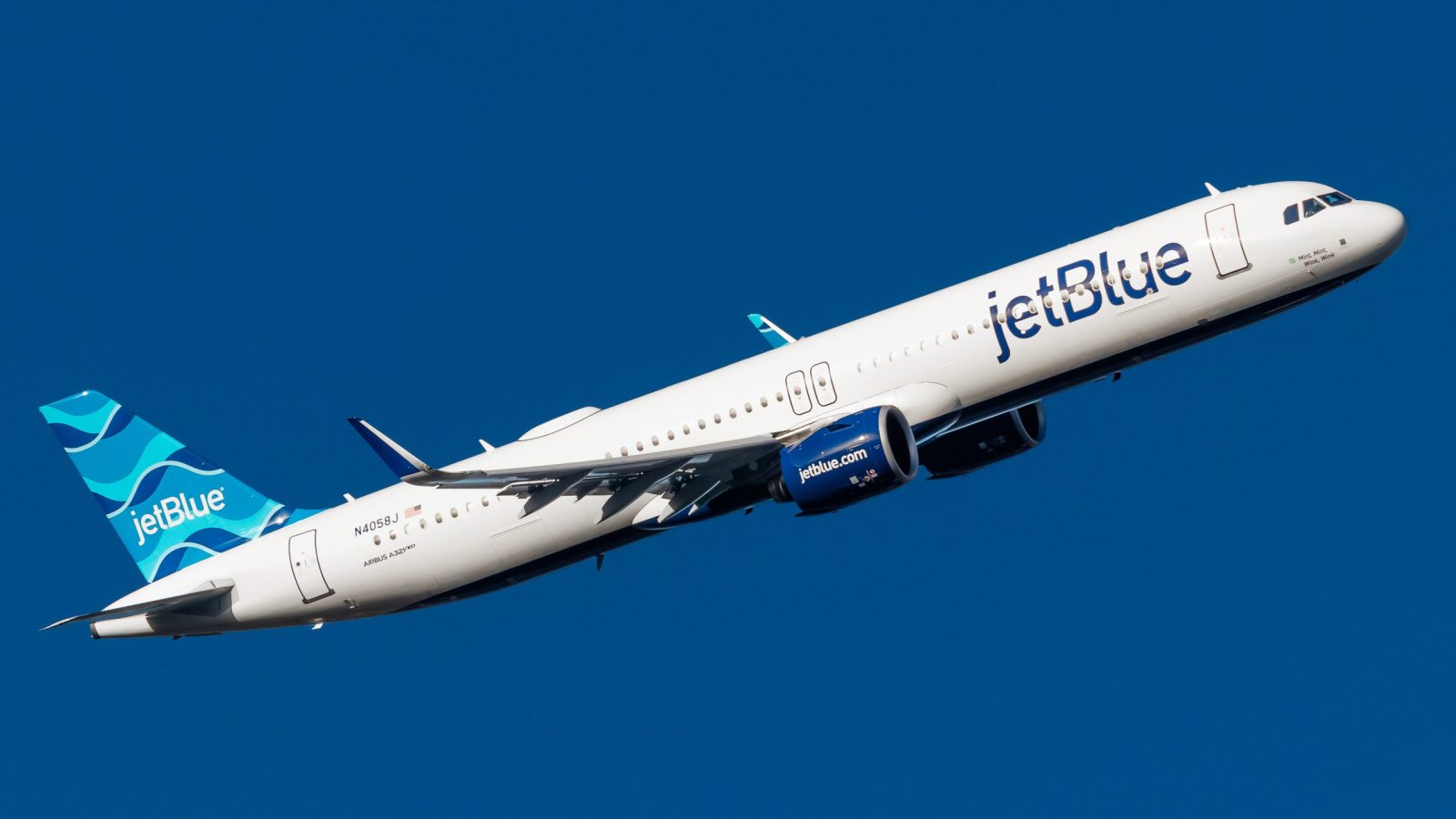
JetBlue Airbus A321 departing London Heathrow [AirlineGeeks | James Dinsdale]
JetBlue announced its plans to offer twice daily flights from Boston to London this summer. The carrier will offer nonstop service from the Boston Logan International Airport (BOS) to both London’s Gatwick Airport (LGW) and Heathrow Airport (LHR).
Flights between Gatwick and Boston will begin mid-summer on July 19, 2022, with its London Heathrow service beginning later in the summer on August 22, 2022.
Daily Schedule between Boston (BOS) and London Gatwick (LGW)
Beginning July 19, 2022 (Eastbound) & July 20, 2022 (Westbound)
BOS – LGW Flight #2104
LGW – BOS Flight #1926
6:37 p.m. – 6:35 a.m. (+1)
12:15 p.m. – 3:02 p.m.
Daily Schedule between Boston (BOS) and London Heathrow (LHR)
Beginning August 22, 2022 (Eastbound) & August 23, 2022 (Westbound)
BOS – LHR Flight #1620
LHR – BOS Flight #1621
6:32 p.m. – 6:30 a.m. (+1)
8:25 a.m. – 11:13 a.m.
“Our strategy of flying to both Heathrow and Gatwick Airports has been a success for us in New York, and we’ve secured slots to be able to do the same in Boston, becoming the only airline in New England offering flights to London’s two main airports,” said JetBlue’s chief executive officer, Robin Hayes.
“Our London service has been an incredible success so far and we’ve been able to go in with our unbeatable JetBlue service and experience and bring down fares on a traditionally overpriced route – the JetBlue Effect in action. We’re ready to do the same at Logan as we advance our growth strategies in both Boston and London.”
The announcement reinforced JetBlue’s commitment to the Massachusetts area. JetBlue continues to hold the title of Boston’s largest airline, serving more nonstop destinations than any other airline in Boston, with nearly 70 nonstop routes across the U.S., Caribbean and Latin America. Boston is also home to nearly 4,000 JetBlue crewmembers, with plans to hire more this year.
“JetBlue has been a great partner to Logan for many years and we are excited that they are launching two London – Boston services this summer,” said Ed Freni, Massport’s Director of Aviation. “These new flights give our passengers even more choice when they cross the Atlantic.”
The New York-based carrier will utilize its Airbus A321 Long Range (LR) aircraft for both Gatwick and Heathrow routes. Within Jetblue’s unique Airspace cabin interior, the aircraft is configured with 24 redesigned Mint suites allowing extra privacy through the use of sliding doors and 114 Ultraleather ‘Core’ seats, each at 18.4 inches wide. Each guest will also have access to AC and USB-C power.
Passengers in both core and Mint can stay connected through JetBlues free inflight wifi. Currently, JetBlue is the only airline to offer unlimited, free high-speed Wi-Fi on all flights between Boston and London. Additionally, customers have access to a selection of live TV channels and a library of seatback entertainment.
Seats on the carrier’s new London routes went on sale Tuesday with introductory roundtrip fares for U.S.-originating travelers flying to Gatwick starting at $499 roundtrip for the core experience and at $1,949 for JetBlue’s premium Mint experience. Roundtrip fares to Heathrow will cost a bit more, starting at $549 for core and $1,999 for Mint. U.K.-originating travelers introductory fares start at £349 for core and £1,449 for Mint from Gatwick with roundtrip fares from Heathrow start at £399 for core and £1,499 for Mint.
Chase Hagl grew up in Twin Falls, Idaho. His love and passion for Aviation landed him in Orem, Utah where he obtained a B.S. in Aviation Management with a minor in Business Management from Utah Valley University. Chase currently works as a flight attendant in Charleston, SC and is also the primary Inflight ASAP ERC representative for startup airline, Breeze Airways. His experience in the aviation industry spans back four years, working in areas including agriculture application, customer service, maintenance, and flight ops. In his free time, Chase enjoys road biking, astronomy, and flying.
Ryanair Posts Record High Passenger Numbers for March
Ryanair has posted positive gains in traffic figures for the month of March with the airline recording 11.2 million passengers carried. This is the highest number of passengers the airline has ever carried in March with the previous high being in 2019 when the Irish airline registered 10.9 million passengers. The figure is a definite cause for celebration given that it was achieved in spite of the cancellation of 2000 flights in the month due to Ukrainian airspace closures.
The airline operated over 67,800 flights in March and achieved an 87 percent load factor which was the highest in several months. Though the increasing load factor is a positive sign it is still some way off the 95 percent load factor achieved for the financial year ending March 2020.
Robust figures for the airline were also evident in Eurocontrol’s weekly summary of airline flight operations comparing 2022 figures with those of the same period in 2019. For the week ending 1 April Ryanair managed a gain of 14 percent over the pre-pandemic period three years ago with 2685 flights operating despite the impact of the Russian invasion of Ukraine. Only one other carrier posted a positive gain over 2019 with eastern European rival Wizz Air increasing flights by 10 percent with 622 in operation.
In a further promising sign, Eurocontrol reported that the U.K. market was the busiest state for the week from 31 March – 06 April. The U.K. averaged 4653 departures/arrivals per day across all airlines which sat at 78 percent of the comparable 2019 levels. All of the markets in the top 10 reported positive gains in flight numbers for the reported week with Turkey operating 97 percent of 2019 flights and Portugal 93 percent.
With the aviation industry seemingly on an upwards trend, there have been some negative events that threaten to hamper the recent gains. In addition to the situation in Ukraine airlines and airports in Europe and in other parts of the world have been facing staff shortages. The ongoing impact of the virus has been affecting staff sickness levels with an unsurprising spike in positive coronavirus cases since the removal of mask mandates and social distancing measures.
This staffing situation has been further exacerbated by the sudden removal of restrictions by governments leading to a surge in demand by passengers but limited time for aviation businesses to employ staff to cover the required positions. The shortages at Dublin airport have been affecting flight departures to the extent that Ryanair group chief executive Michael O’Leary suggested calling in the armed forces.
The Irish Mirror reported Mr O’Leary as saying, “It’s going to take six or eight weeks to hire and train about 200-300 additional security staff but during that six or eight weeks they need help. We need Minister Ryan, who is the Minister for Transport, to get involved in this. We’re proposing that 200 members of the Army be called in to help do the patting down at security screening.”
The continuing impact of CoVid-19 related issues on U.K. carriers was highlighted by Eurocontrol’s comparison figures for easyJet and British Airways. The low-cost airline was operating 15 percent fewer flights than in the same week of 2019 with British Airways flight numbers down a whopping 36 percent. Though both airlines had been seeing gains from the previous week in 2022 with easyJet flight numbers up 29 percent and British Airways a slender 6 percent.
John has always had a passion for aviation and through a career with Air New Zealand has gained a strong understanding of aviation operations and the strategic nature of the industry. During his career with the airline, John held multiple leadership roles and was involved in projects such as the introduction of both the 777-200 and -300 type aircraft and the development of the IFE for the 777-300. He was also part of a small team who created and published the internal communications magazines for Air New Zealand’s pilots, cabin crew and ground staff balancing a mix of corporate and social content.
John is educated to postgraduate level achieving a masters degree with Distinction in Airline and Airport Management. John has held the positions of course director of an undergraduate commercial pilot training programme at a leading London university. In addition he is contracted as an external instructor for IATA (International Air Transport Association) and has been a member of the Heathrow Community Fund’s ‘Communities for Tomorrow’ panel.
A LATAM Brasil A350-900 lands in São Paulo/Guarulhos. (Photo: AirlineGeeks | João Machado)
To support humanitarian crises worldwide, LATAM group will make free passenger and cargo transport available to the United Nations High Commissioner for Refugees (UNHCR). This aid is intended to support people who have had to leave their homes in search of safety.
This arrangement allows for the transfer of cargo at no cost, and contribution towards in tickets to destinations within the LATAM network. The initiative is part of the LATAM group’s “Solidarity Plane” program which seeks to generate value in society by providing free transportation to cover different needs in South America.
“It is essential for UNHCR to be able to count on the support and cooperation of companies with a social commitment to guarantee protection and help to displaced individuals. We are grateful for the immense wave of solidarity from people and companies worldwide with the emergency in Ukraine. Thanks to LATAM for this strategic alliance, which will help us reunite displaced families, and transport aid materials for those who had to flee their homes in Ukraine and in other parts of the world, including Latin America,” said José Samaniego, Regional Director UNHCR for the Americas.
“At LATAM we understand that as a company we are also a social actor, that gives us rights, but also an obligation to work for the benefit of the societies where we operate. The terrible situation in Ukraine and the consequences of conflict on millions of people led us to approach UNHCR, and today we are proud to be able to make transportation of refugees, donations, and humanitarian aid available to them and their families in all the destinations of our network,” said Roberto Alvo, CEO of LATAM Airlines Group.
According to the UNHCR Global Trends report, 1% of humanity was forced to flee their homes in 2020.
A major humanitarian crisis is currently unfolding in Ukraine and neighboring countries, which has displaced more than 10 million people.
Latin America and the Caribbean is no exception, with more than 18 million displaced people in need of aid. In addition, “we cannot forget places like Afghanistan, Syria, Ethiopia, Venezuela, Myanmar and many others that continue to need the support of UNHCR and other humanitarian organizations,” said Filippo Grandi, United Nations High Commissioner for Refugees.
LATAM’s “Solidarity Plane” program is part of the group’s sustainability strategy and seeks to generate value in society through free passenger and cargo transportation.
During the pandemic, “Solidarity Plane” has played an active role in the transportation of vaccines within the countries where it operates, mobilizing more than 232 million doses, in addition to transporting more than 3,400 health professionals to attend to urgent needs related to the Covid-19 pandemic.
Recently, the program announced alliances with solidarity and civil society organizations in Brazil, Chile, Colombia, Ecuador, and Peru, making available to them the expertise, infrastructure and connectivity through tickets and cargo transportation at no cost to organizations.
The three things Juan Pedro loves most about aviation are aircraft, airports, and traveling thousands of miles in just a few hours. What he enjoys the most about aviation is that it is easier and cheaper to travel around the world and this gives you the opportunity to visit places you thought were too far away. He has traveled to different destinations in North, Central, South America and Asia. Born, raised and still living in Perú, Juan is a lawyer, soccer lover, foodie, passionate traveler, dog lover, millennial and curious by nature.
Sign-up for newsletters & special offers!
Get the latest stories & special offers delivered directly to your inbox