








Stories

Bamboo Airways Eyes International Route Expansion

A Bamboo Airways 787 departs from Hanoi for its inaugural flight to the U.S. (Photo; Bamboo Airways)
A Bamboo Airways 787 departs from Hanoi for its inaugural flight to the U.S. (Photo: Bamboo Airways)

Bamboo Airways — a  Vietnamese leisure carrier — hasn’t stopped expanding its route map during the pandemic. Recently, the carrier announced the launch for flight operations between Ho Chi Minh City, Vietnam and Sydney on March 30. The new route is subject to government approval. The announcement has come days after launching the new route of Ho Chi Minh City, Vietnam to Melbourne, Australia.

“We are thrilled to be the first new international airline at Sydney Airport soon after Australia lifted international travel restrictions,” Dang Tat Thang, CEO of the airline said.

Last week, Australia reopened its international border to fully vaccinated travelers. The airline will provide twice-weekly services and is expecting to increase the frequency to four times a week by the end of this year.

The new route is supported by Government’s Aviation Attraction Fund. In the wake of the pandemic, Australia’s state of New South Wales rolled out the Aviation Attraction Fund — attracting airlines to re-commence flights to Sydney last October. The program is open to all airlines servicing international and domestic routes. NSW government has invested 60 million Australian Dollar in the fund and believed the program could benefit the state after the pandemic.

“Our airports are the gateway to our state, so supporting the return of airlines to them through the Aviation Attraction Fund is key to our recovery roadmap and achieving our goal of making NSW the premier visitor economy of the Asia Pacific,” Stuart Ayres, Minister for Enterprise, Investment, Trade, Tourism and Sport for Western Sydney said.

Geoff Culbert, CEO of Sydney Airport, has welcomed Bamboo Airways. “Vietnam is an incredibly popular destination for Australian leisure travelers and with a big Vietnamese diaspora in Sydney it makes sense to build greater connectivity between our two cities.”

New South Wales’ government revealed that over 123,000 Vietnam visitors arrived in Australia before the pandemic. According to the Vietnam National Administration of Tourism, more than 383,000 Australian tourists traveled to Vietnam in 2019. Australia has the largest Vietnamese community in the world outside Vietnam.

New Services to Europe

The carrier will operate this route with Boeing 787-9 Dreamliners, featuring 26 business class seats, 21 premium economy class and 247 economy class seats. Bamboo Airways is expected to provide 60,000 seats on this route annually.

In the meantime, Bamboo Airways and Sydney Airport signed a memorandum of understanding (MOU) to stimulate tourism, economic growth and opportunities for cultural exchange between the two cities.

Bamboo Airways is not only focused on the Australian market. Meanwhile, the airline has expanded its network by adding new services to Europe. The route Hanoi, Vietnam to Frankfurt has launched last week. Bamboo Airways provides two flights per week in the early stage and considers increasing its frequency if the demand surges. Also, the airline is looking forward to expanding its route map to other cities in Germany, such as Berlin and Munich.

In addition, the airline is set to launch flights between Hanoi, Vietnam to London in March — hoping to expand to nearly 40 international routes in 2022.


Russian Airline Aeroflot Violates Canadian Airspace

An Aeroflot 777-300ER at JFK (Photo: AirlineGeeks | Shaquille Khan)

Canada issued a warning after Russian airline Aeroflot violated a restriction on using Canadian airspace on Sunday.  The infringement occurred on the same day that Canada and Europe announced they would block their airspace to Russian airlines in retaliation to Moscow’s invasion of Ukraine, putting pressure on the U.S. to do the same.

“We are aware that Aeroflot Flight 111 violated the prohibition put in place earlier today on Russian flights using Canadian airspace,” Transport Canada said in a tweet late on Sunday. According to FlightRadar24, Aeroflot Flight 111 took off from Miami, Fla. to Moscow at 3:12 p.m. on Sunday. Following the infringement, Transport Canada announced that it will initiate an investigation into the actions of Aeroflot and Canada’s air-traffic control service provider, Nav Canada.

There are no direct flights between Russia and Canada, although numerous Russian flights every day have previously gone through Canadian airspace to other nations, according to a representative for Transport Minister Omar Alghabra.

“We will not hesitate to take appropriate enforcement action and other measures to prevent future violations,” the Canadian regulator said.

Nav Canada confirmed to Reuters that Aeroflot did enter the Canadian airspace. According to the report, the aircraft operator identified the flight a humanitarian flight as it approached domestic airspace, which requires special handling by air traffic control under normal conditions.

Canada and the EU’s Response

“We are currently cooperating with Transport Canada to investigate the occurrence, and are working with neighboring Air Navigation Service Providers to support rerouting of aircraft prior to them entering Canadian-controlled airspace,” Nav Canada said in a statement.

Alghabra announced on Sunday that his country would close its airspace to all Russian flights in order to hold Russia accountable for an unprovoked attack on its neighbor.

“We will hold Russia accountable for its unprovoked attacks against Ukraine,” transport minister Alghabra wrote in a Twitter post. “In response, we have closed Canadian airspace to Russian-owned or operated aircraft. The Government of Canada condemns Russia’s aggressive actions and we will continue to take action to stand with Ukraine.”

According to European Commission President Ursula von der Leyen, the European Union will close its airspace to planes owned, registered, or controlled by Russians, including “oligarchs’ private airplanes.”

“They won’t be able to land in, take off or overfly the territory of the EU,” von der Leyen added.

Impact to Aeroflot

As more airlines canceled flights into and out of Russia, and an increasing number of nations barred Russian airlines from operating, the US embassy in Moscow urged American residents in Russia to consider leaving the country immediately.

Meanwhile, Delta Air Lines has terminated its code-sharing agreement with Aeroflot, under which the airlines sold seats on each other’s flights.

“We have removed our code from Aeroflot-operated services beyond Moscow’s Sheremetyevo Airport, and Aeroflot’s code has been removed from Delta-operated services from Los Angeles and New York-JFK. Customers who will be impacted by these adjustments will be accommodated,” Delta stated in a statement on Friday, adding that it does not fly to Ukraine or Russia.

Aeroflot has also been barred from entering British airspace. Poland and the Czech Republic also announced that Russian airlines would be barred from using their airspace, while airlines such as IAG-owned British Airways and Virgin Atlantic began rerouting flights around Russian airspace.

Canada, in conjunction with the U.S. and other nations, has slapped heavy penalties on Russia, specifically targeting Russian President Vladimir Putin and Foreign Minister Sergei Lavrov.

Kalai Raajan

Kalai has always wanted to work in the aviation industry, having been fascinated by its inner workings since he was a child. In pursuit of his dream, he obtained a diploma in aviation management and is currently interning with a low-cost airline, under in-flight policies. In his free time, he loves to engage in recreational activities, and watch sports. In the upcoming years, Kalai intends to pursue his degree at a business school before working as an executive for a global airline around the world.

A Brief Intro to ADS-B, the Technology that Makes Planes Visible to Everyone, Everywhere

BAW1 and VS3's routes across the North Atlantic (photo: FlightRadar24)

The Russian invasion of Ukraine has set the world on edge. People are tuning in to minute-by-minute updates of what’s happening on the ground. Avgeeks, while keeping up with the events on the ground, are also looking up to the skies.

Ukrainian airspace has been cleared of civilian aircraft, and all that is really seen on popular flight tracking services like FlightRadar24 are military aircraft. We’ll do dive into what exactly is the technology that lets us see these aircraft movements.

Automatic Dependent Surveillance-Broadcast

Civilian aircraft and military aircraft use automatic dependent surveillance-broadcast (ADS-B), a technology onboard an aircraft used to determine its position and periodically broadcast it. Anyone with a receiver set up can pick up these broadcasts and determine a wealth of data about the flight.

This technology is making its way across the globe to the point that the overwhelming majority of commercial aircraft can be tracked this way. The U.S. requires all commercial aircraft to be equipped with an ADS-B transponder. Many other countries have the same rule, though it is not yet universal.

Benefits

ADS-B is the preferred method of surveillance for air traffic control as a number of countries for a variety of reasons, the most notable ones being safety and efficiency.

ADS-B allows for greater situational awareness among pilots, as it allows them to see other traffic operating in the airspace. In addition, the more accurate aircraft tracking gives air traffic controllers a more a better and more reliable understanding of where the aircraft is. This works hand in hand with traffic alert and collision avoidance systems to greatly increase safety.

While safety is most important, an extra side benefit of ADS-B is increased efficiency. Since air traffic controllers have a clearer understanding of where aircraft are, they can better guide aircraft in less time and distance. This results in immediate reduction in fuel consumption and emissions.

These transponders broadcast a plethora of data, all designed to significantly enhance aviation safety. Broadcasts are sent out at a varying rate depending on the type of message being sent but it’s always fewer than ever couple of seconds. The information in these messages include latitude, longitude, pressure, altitude, callsign, as well as track and ground speed.

Military Aircraft

The fun part here is when it comes to military planes. For commercial aircraft it’s a requirement among different governments that transponders must be on and broadcasting information. It’s a huge benefit to aviation safety and air traffic control efficiency after all.  The story changes with military aircraft.

Military aircraft are allowed to fly with their ADS-B position reporting turned off. This allows aircraft to conduct sensitive operatives related to homeland security, law enforcement, defense, warfare, surveillance and more without transmitting compromising information about the aircraft’s position.

The air-based military operations currently seen on flight tracking programs in and around Ukraine are there because they want to be made known as a show of force. Military refueling planes are often seen in the skies around Ukraine, it’s a not-so-subtle way of showing everyone who may be watching that there other things in the air that these tanker aircraft are providing support to.

There are other ways militaries around the world track enemy aircraft, but shows of force like these are a tried and true battlefield tactic.

Hemal Gosai

Hemal took his first flight at four years old and has been an avgeek since then. When he isn't working as an analyst he's frequently found outside watching planes fly overhead or flying in them. His favorite plane is the 747-8i which Lufthansa thankfully flies to EWR allowing for some great spotting. He firmly believes that the best way to fly between JFK and BOS is via DFW and is always willing to go for that extra elite qualifying mile. Hemal's opinions are his own and do not reflect those of his employer.

Ukrainian Government Confirms Destruction of AN-225, the World’s Largest Aircraft

The Antonov An-225 takes off in Toulouse, France. (Photo: Laurent Errera via Wikimedia Commons | https://commons.wikimedia.org/wiki/Category:Antonov_An-225_take_offs#/media/File:Antonov_An-225_Mriya_Antonov_Design_Bureau_(ADB)_UR-82060_-_MSN_13102_(2973322821).jpg)

After a morning in which many crossed versions circulated regarding the final fate of the Antonov AN-225, the Ukrainian government, through a publication made at 3:45 p.m. UTC on its official Twitter account, confirmed the destruction of the aircraft.

“The world’s largest aircraft ‘Mriya’ (The Dream) was destroyed by Russian occupants at an airfield near Kiev. We will rebuild the aircraft. We will fulfill our dream of a strong, free and democratic Ukraine,” the account said.

A post from Ukraine’s official Twitter account confirming the destruction of the Antonov An-225. (Photo: Ukraine via Twitter)

The aircraft was at Gostomel airport at the time it came under attack by invading Russian troops last Thursday. It has also been the scene of further fighting since then.

Alarms among the aviation community were raised this morning when the OSINT_Canada account posted an analysis of satellite imagery and ground photos of the airfield, showing the AN-225 hangar in flames and a silhouette underneath it that resembles that of the aircraft.

Radio Svoboda quoted two anonymous Antonov sources and the mayor of Bucha, a town near Gostomel airport, who assured that the aircraft was destroyed during the attacks.

In response, the Antonov Company, the parent company of Antonov Airlines, which operates the AN-225, said on its Facebook page, “There is a delay in the confirmed information on the status of the aircraft at Gostomel Airport as there is still fighting there. Please await the official announcement on the status of the aircraft.”

Antonov Airlines chief pilot Dmitry Antonov also posted on his Facebook account, “There are many rumors about the condition of the Mriya. Until there is no reliable information we do not believe in anything.”

Looking Forward

In any case, the outlook for the aircraft’s future became gloomier when at 2:50 p.m. UTC, Ukrainian Foreign Minister Dmytro Kuleba posted on his Twitter account a message hinting at the destruction of the AN-225.


“This was the largest aircraft in the world, AN-225 Mriya (‘dream’ in Ukrainian). Russia could have destroyed our Mriya. But they will never be able to destroy our dream of a strong, free, and democratic European state. We will prevail!” Kuleba said.

But finally, the government publication seems to put an end to the versions. Now it only remains to wait for the first images of the site to emerge.

This article was written by Edgardo Gimenez Mazó for Aviacionline.

AirlineGeeks.com Staff

AirlineGeeks.com was founded in February 2013 as a one-person blog in Washington D.C. Since then, we’ve grown to have 25+ active team members scattered across the globe. We are all here for the same reason: we love deep-diving into the fascinating realm of the airline industry.

Virgin Atlantic Announces Return of Full Complement of US Destinations

A Virgin Atlantic 787-9 at London Heathrow Airport. (Photo: AirlineGeeks | James Dinsdale)

Virgin Atlantic has announced that from April it will reinstate its full portfolio of destinations in the U.S. The return to a number of U.S. airports and an increase in frequency to others has been driven by a 50% increase in passenger demand from 2021 in light of relaxed travel restrictions.

“Following the relaxation of travel restrictions, we’ve seen demand increase to many of our global destinations, but particularly to our heartland in the USA. Our customers can’t wait to return,” Virgin Atlantic Chief Commercial Officer Juha Jarvinen said in a statement.

The airline will increase services to New York, San Francisco and Atlanta in coming weeks and in April will add a third daily flight from London’s Heathrow Airport to Los Angeles. Last month, Virgin Atlantic announced that Austin, Texas would be its first new U.S. destination in seven years with a four-times weekly service beginning on May 25. The carrier will also be recommencing operations to Seattle and Washington D.C. as early as next week.

“The restart of our Seattle and Washington D.C. services mark an important milestone, as we move into recovery and welcome our customers back on board to all the destinations they’ve missed.  We’re simply not Virgin without the Atlantic and our growing transatlantic portfolio demonstrates why we’re the airline of choice to the USA,” Jarvinen said.

The Seattle service will recommence on March 2 with five-times weekly service aboard Boeing 787-9 Dreamliner. An Airbus A330 will operate between the U.K. and U.S. capitals five times per week from March 5. Both destinations have traditionally been associated with strong business travel passengers giving access to the tech and political hubs of the U.S. to British travelers.

Hopes and Concerns Lay Ahead

Leisure travellers will be well catered for by Virgin Atlantic’s announcement that the airline will be the U.K.’s leading operator to Orlando, Florida. The theme parks of Orlando will be receiving U.K. visitors from Virgin Atlantic’s four gateway cities of London, Manchester, Edinburgh and Belfast.

Aviation analysts have predicted that business travel would be slow to return after the impact of the pandemic so Virgin Atlantic’s announcement is a positive sign. However it is unknown how the developing situation in Europe involving Russia’s invasion of Ukraine may impede the resurgence of premium air travel.

To give passengers further confidence in booking travel Virgin Atlantic has extended its policy of unlimited free date and flight changes for new bookings for travel through the end of 2022. For those travelers who may need to change their new or existing bookings, the airline has also extended by eight months the time by which they can rebook new flights until the end of 2023.

John Flett

John has always had a passion for aviation and through a career with Air New Zealand has gained a strong understanding of aviation operations and the strategic nature of the industry. During his career with the airline, John held multiple leadership roles and was involved in projects such as the introduction of both the 777-200 and -300 type aircraft and the development of the IFE for the 777-300. He was also part of a small team who created and published the internal communications magazines for Air New Zealand’s pilots, cabin crew and ground staff balancing a mix of corporate and social content. John is educated to postgraduate level achieving a masters degree with Distinction in Airline and Airport Management. John has held the positions of course director of an undergraduate commercial pilot training programme at a leading London university. In addition he is contracted as an external instructor for IATA (International Air Transport Association) and has been a member of the Heathrow Community Fund’s ‘Communities for Tomorrow’ panel.

Ukraine: The Ongoing Conflict’s Effects on the Aviation Industry

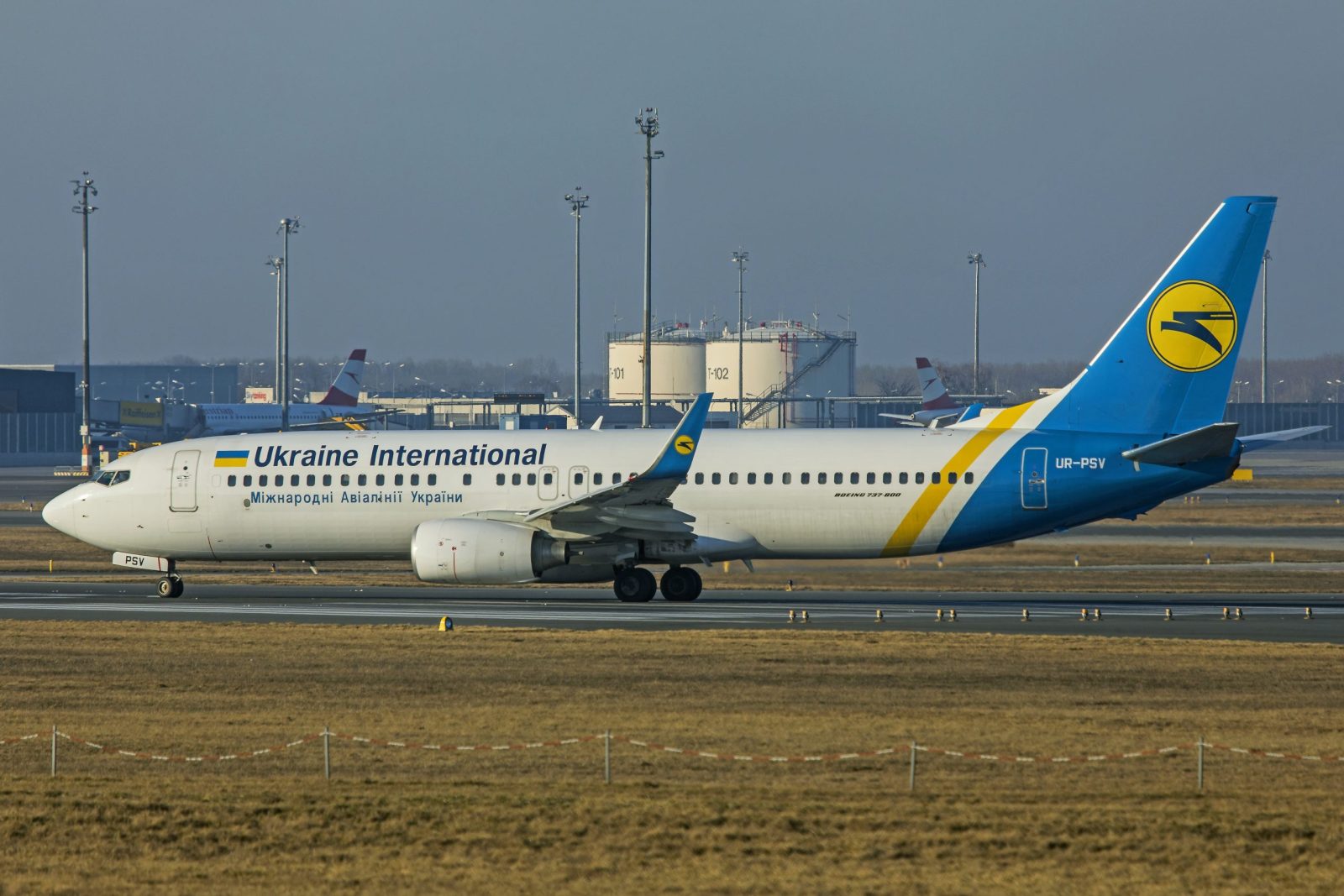
A Ukraine International Airlines Boeing 737-800
A Ukraine International Airlines Boeing 737-800 aircraft. (Photo: AirlineGeeks | William Derrickson)

The situation on the border between Ukraine and Russia has always been very tense. To better comprehend the reasons for this war, it is necessary to understand the events of recent years. The first problems in Ukraine began with the series of violent demonstrations called “Euromaidan” on the night of Nov. 21-22, 2013, in the main square of Kyiv. These protests erupted after Ukrainian President Janukovyč postponed the signing of the Political and Economic Association Agreement between Ukraine and the European Union (which later came into force in 2017) under heavy economic pressure from Russia.

The Ukrainian president had reached an agreement with Putin under which Russia would buy $15 billion of Ukrainian bonds, and discount the price of gas by a third. During the protests, on November 30, 2013, following the attack of government forces against the demonstrators there was an escalation of violence, leading to the Ukrainian revolution the following year, culminating in the ouster of President Janukovyč. Following this government crisis, the situation of Crimea, a peninsula facing the Black Sea, broke out.

After the collapse of the Soviet Union in December 1991, Crimea proclaimed self-government on May 5, 1992, but later agreed to remain within Ukraine as an independent autonomous republic. However, the region, whose majority is ethnic Russian, was militarily occupied by Russian troops in 2014 and through a referendum (defined as illegal by the UN, European Union, United States of America, and Ukraine itself) was annexed to the Russian Federation.

Then in May 2014, there was a referendum on the independence of the Donbas region, in the Donec basin, a river on the border between Ukraine and Russia. The referendum, organized by pro-Russian Ukrainian separatists was strongly criticized by the central government of Ukraine, the United States and the European Union, having reported strong electoral fraud and military repression. The only state to recognize the referendum was Russia. Therefore, part of the Donbas region unilaterally declared itself independent from Ukraine in 2014. 

Then in July 2014, Malaysia Airlines Flight 17 flying from Amsterdam to Kuala Lumpur was shot down by a surface-to-air missile (a system at that time employed by both Russian and Ukrainian armed forces) while flying over the eastern part of Ukraine, killing the 298 people on board (283 passengers and the 15 crew members). Responsibility for this downing is still not well defined, but preliminary conclusions state that flight MH17 was shot down by a surface-to-air missile via a system (probably arrived from Russia and then sent back to hide the evidence of its presence) that originated from a farm in an area controlled at the time by pro-Russian Ukrainian separatists.

Recent Developments and the Donbas War

The 2014 referendum on the independence of the Donbas region was recognized only by the Russian Federation, and on Feb. 21, 2022, Russian President Vladimir Putin officially recognized it as Russian territory. Therefore, on the night of Feb. 23-24, the Russian president gave the order to attack, explaining that he had authorized “a special operation” in Ukraine to “demilitarize the country” and “protect the Donbas region” effectively beginning the Russian invasion of Ukraine.

Less than 20 minutes after the attack began, Eurocontrol, the continent’s intergovernmental civil-military air traffic control organization, said that as a conflict zone, the airspace of Ukraine, Russia and Belarus within 100 nautical miles of the borders with Ukraine could be dangerous to fly over, avoiding the risk of civilian aircraft being misidentified and subsequently shot down again as with 2014’s Flight MH17. Shortly afterward in addition to Ukraine, the airspace of neighboring Moldova was also closed.

Travel Bans

The local airline, Ukraine International Airlines, has announced the suspension of all flights, while the low-cost airlines Ryanair and Wizz Air have announced the suspension of flights to Ukraine for at least the next two weeks. In response to the military invasion of Ukraine, the United Kingdom has banned all Russian aircraft from flying in British airspace, as have the Czech Republic, Bulgaria, Poland, Romania, Slovenia, Lithuania, Latvia and Estonia. Estonia’s prime minister, Kaja Kallas, urged all European nations to do the same, saying that “there is no place for the aggressor state’s planes in Europe’s democratic skies.”

Russia promptly responded with bans on flights by the airlines of the United Kingdom, Poland, the Czech Republic, Romania, Bulgaria, Estonia, Latvia, Slovenia, Germany, Italy, Iceland, Austria, the Netherlands and Malta

The closure of air traffic over Ukraine however further reduces the corridors of airlines flying between Europe and Asia. Already in the past months, airlines have tried to avoid Belarusian airspace by flying to Turkey or further north to the Baltic States and Finland. All this after the hijacking in Minsk of a Ryanair Athens-Vilnius flight, actually hijacked only to arrest an activist and his girlfriend on board. In the event of a complete diplomatic breakup between the West and Russia, Putin could order no aircraft (civilian or cargo) to pass over his country. This would have serious repercussions, forcing companies to further lengthen routes with higher kerosene consumption.

Vincenzo Claudio Piscopo

Vincenzo graduated in 2019 in Mechanical Engineering with an aeronautical curriculum, focusing his thesis on Human Factors in aircraft maintenance. In 2022 he pursued his master's degree in Aerospace Engineering at the University of Palermo, Italy. He combines his journalistic activities with his work as a Reliability Engineer at Zetalab.

More Metroliner Flights Set to Begin in U.S.

A Denver Air Connection Fairchild Swearingen Metroliner in Alliance, Neb. (Photo: AirlineGeeks | Joey Gerardi)

Every AvGeek strives for unique and out-of-the-way experiences. In the United States, these AvGeek trips consist of flights such as Alaska’s Milk Run along the Alaskan panhandle, United Airlines’ Micronesian Island Hopper from Honolulu to Guam, and others. But perhaps the one most accessible to those on the mainland U.S. is located in the middle of the country and operates out of Denver on the U.S.’s only remaining passenger flight on a Metroliner. AirlineGeeks had a chance to take this flight roughly two years ago, the trip report of which can be found here.

The route operates to a small Essential Air Service, or EAS, located in northwestern Nebraska named Alliance. At least once a week, you will be able to see someone on social media making the trek out to the Mile High City to fly on this unique aircraft type, which has almost disappeared from the skies of the U.S. passenger market. The good news for AvGeeks is not only is the Metroliner sticking around in Alliance for a while longer, but they have just gained another route.

The unique passenger cabin of the Denver Air Connection Metroliner (Photo: AirlineGeeks | Joey Gerardi)

The aircraft in question, the Metroliner, is flown on Denver Air Connection, or DAC, and all flights are operated by a smaller company named ‘Key Lime Air.’ The airline was just awarded the EAS contract in the small community of McCook located in southwestern Nebraska and will be taking over the contract from the current airline, San Francisco-based Boutique Air. Metroliner flights on DAC to McCook will begin June 1, 2022, and will run until May 31, 2024.

So your options of flying a passenger Metroliner in the United States have doubled from only two daily flights to four once McCook begins.

More good news, the community of Cortez, Colo. has also recommended Denver Air Connection for its new upcoming EAS contract term. And while it isn’t final yet, if the DOT does award the contract to that airline, you will be able to fly from Denver all the way to Phoenix Sky Harbor, with a stop in Cortez, on the Metroliner.

Again, that isn’t 100% as the DOT hasn’t made the final decision yet. But even if they don’t get awarded the Cortez contract, this once nearly extinct aircraft in the United States, will be found on two, and maybe four routes in the country, and all stemming from the Rocky Mountain hub of Denver.

Joey Gerardi

Joey has always been interested in planes for as long as he can remember. He grew up in Central New York during the early 2000s when US Airways Express turboprops ruled the skies. Being from a non-aviation family made it harder for him to be around planes and would only spend about three hours a month at the airport. He was so excited when he could drive by himself, the first thing he did with his driver's license was get ice cream and go plane spotting for the entire day. He graduated from Western Michigan University in 2022 with a B.S. in Aviation Management & Operations and a Minor in Business, and currently works for a major airline in his hometown.

China Southern to Retire Airbus A380 Fleet

China Southern A380
A China Southern Airbus A380 on approach into Los Angeles. (Photo: AirlineGeeks | William Derrickson)

Earlier today, China Southern Airlines sent the first two airframes of its Airbus A380 fleet to Victorville, Calif., then heading for the Mojave Desert, a small slice of which serves as a notorious aircraft graveyard. Asia’s largest airline officially kicked off the process of retiring its A380 fleet. By the end of 2022, all five China Southern A380s will be retired.

Flight CZ5067 was operated by the airline’s first Airbus A380. The aircraft, registered B-6136, took off at 12:10 p.m. from Guangzhou’s Baiyun International Airport. A moment later, the second A380 received by China Southern, B-6137 left the airport one final time.

China Southern is the only carrier in the nation operating the super jet. After receiving the first of five orders in 2011, the Guangzhou-based carrier took its Airbus A380 to many metropolises around the world, operating regularly to Beijing, Sydney, Melbourne, Los Angeles, Amsterdam and other cities.

The super jet was once a financial nightmare for China Southern, as the operating cost for A380 was extremely high, and China Southern never could find a sufficiently profitable route to gain a margin with the aircraft.

Disappointed Community

The Chinese aviation community was disappointed with the retirement of the legendary jet from the Chinese carrier. A large group of avgeeks was at Baiyun Airport to bid farewell B-6136 and B-6137 at the very same spot where they greeted those two from Toulouse, France, when the legendary jets first made China their home.

China Southern did not publicize any news related to the retirement of the Airbus A380. According to an online aviation outlet in China, the airline decided not to hold any ceremony for the retiring fleet.

After the pandemic, many operators of the Airbus A380 decided to retire their superjumbo jet fleet, as the demand for travel plummeted worldwide. China Southern, on the other hand, made a fortune with their A380s due to the restrictions imposed by the Chinese Authorities to only keep one flight from one country each week. The ability to utilize the huge capacity of the A380 to operate that single flight proved to be a significant advantage for the carrier. However, as the restrictions slightly loosened, and traveling demand trended down as the pandemic dragged on, China Southern finally made up its mind to move away from the jet.

Convoluted Journey

China Southern was the only airline to operate Airbus A380 on domestic flights. On the busy route between Beijing and Guangzhou, the A380 was a frequent player. China Southern’s A380, along with the flagship of Air China, the Boeing 747-8, operated the first flight out of the brand-new Beijing Daxing International Airport. The airport is now the second-largest hub of China Southern, right after its Guangzhou headquarters.

At the beginning of the Airbus A380 era of China Southern, the carrier was trying to use the aircraft to serve the Beijing 2008 Olympic Games. However, as the delivery of the A380 was delayed several times, the aircraft not only missed the Beijing Olympics, it also missed the 2010 Asia Olympic Games hosted in China Southern’s home city of Guangzhou. As a result, China Southern extended its hand to Air China, hoping to exchange some international flights out of Beijing. The endeavor was not successful.

China Southern then started to put the super jet on domestic flights, then slowly onto international routes to Los Angeles, Amsterdam and Sydney. Unfortunately, just as the A380 started to turn a profit for China Southern, the pandemic swept the globe. Now, after struggling for over two years, losing over $20bn, China Southern will no longer be an operator for the legendary Airbus A380.

The decision to not celebrate and give its A380s a proper goodbye was not well received in the Chinese avgeek community. A lot of A380 fans are gathering online, sharing their precious memories with A380. The aircraft was greatly loved by passengers, and it will be missed by the community that flew it.

Lei Yan

Lei is from Inner Mongolia, China, and now lives in Guangzhou. He grew up in an aviation family, where his passion began. During his time at Penn State University, he studied Industrial Engineering specializing in operations research, and he graduated with an honor’s thesis on airport gate assignment optimization. Now, he is a Purchasing Manager with Procter & Gamble. In his free time, he enjoys flying, reading, and wandering around the city.

Lufthansa Cargo Complements Medium-Haul Network With A321 Freighters

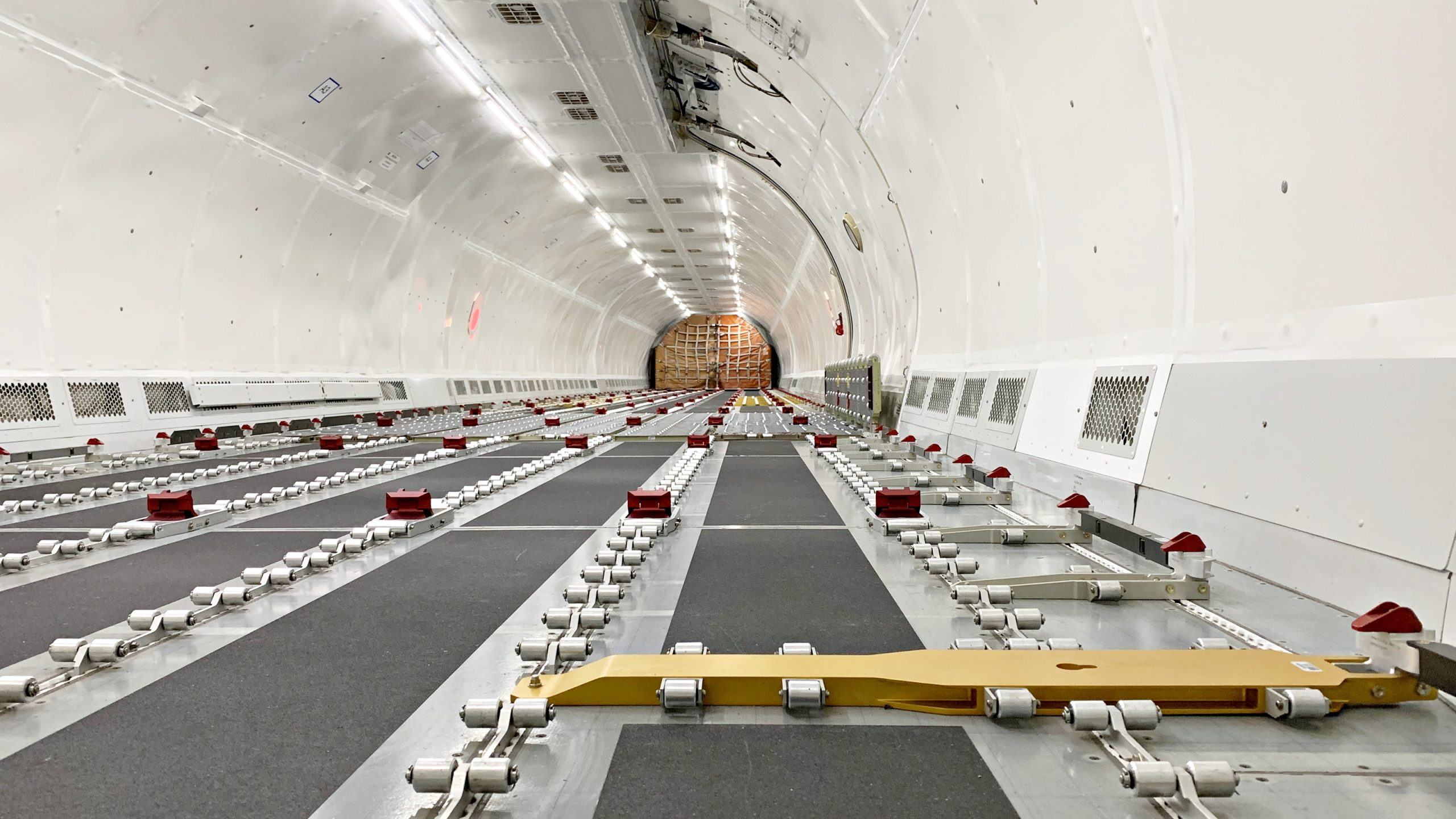
Lufthansa Cargo A321 D-AEUC maindeck (Photo: Lufthansa Cargo)

The surge in cargo demand worldwide has pushed for not just the cargo-only airlines, but commercial airlines to push for more freighters to be leased or purchased as belly spaces onboard passenger aircraft were not as feasible – especially when the amount of cargo needing to be shipped immediately has been on the rising trend as well.

As one of the world’s leading companies in the transport of air freight, Lufthansa Cargo has been ferrying cargo across its own fleet of freighters, as well as in the bellies of passenger aircraft operated by Lufthansa Airlines, Austrian Airlines, Brussels Airlines, Eurowings Discover and SunExpress. But with the rising demand in cargo, the more space there is, the merrier for both airline and customers.

Introducing the A321F

And the merrier it will get for Lufthansa Cargo and its customers as the airline received the delivery of the first of two Airbus A321F converted freighters.

Operated by twin engines, the A321 is one of the most versatile aircraft in its class for both commercial passenger use and freighter use, as it is able to carry containers in the main deck. As a result, it offers faster loading and unloading and therefore enables efficient flight operations.

Registered as D-AEUC and operated by Lufthansa CityLine on behalf of the cargo carrier, the converted freighter is completed with reinforced floorings that have a roller system for moving cargo, as well as a large cargo door — a snug fit for a total of 14 pallet and container positions in the main deck and an additional 10 positions in the lower deck.

“With the added medium-haul freighters, we are opening up a whole new strategic business segment. In the future, the A321F will offer attractive same-day and eCommerce solutions within Europe and to selected medium-haul destinations, and the new network represents a major step towards the fast-growing eCommerce segment,” explained Ashwin Bhat, Chief Commercial Officer Lufthansa Cargo, in a press release.

Ready For Service

Although bookings for customers will start from March 1, Lufthansa Cargo will only be using the converted A321 freighter from March 15 to gradually complement a worldwide route network with flights to Dublin, Istanbul, Malta, Manchester, Tel Aviv and Tunis. The first flight for the A321F will be from Frankfurt to Dublin.

Thereafter from March 29, the cargo carrier will then be adding flights to Cairo as well whereby the partially new stations in the freighter network will be served two to three times a week from and to Frankfurt.

Bhat continued, “On one hand, available capacity in the global air freight market continues to be scarce and, at the same time, end consumers expect short delivery times for their ordered goods. With the medium-haul freighter, we can close this gap and continue to reliably and quickly provide our customers with the capacity they need with the same quality and expertise for which Lufthansa Cargo is known.”

The second converted A321F is expected to enter service later in the summer, and Lufthansa Cargo will also be increasing the number of destinations served as the twin-engined freighter has a range of 3,500 kilometers.

Charlotte Seet

Fascinated by aircraft from a very young age, Charlotte’s dream was to work alongside the big birds one day. Pursuing her dream, she went on to achieve her diploma in Aviation Management and is currently working on her degree in Aviation Business in Administration with a minor in Air Traffic Management. When she’s not busy with school assignments, you can find her aircraft spotting for long hours at the airport. In Charlotte’s heart, the Queen of the Skies will always be her favorite aircraft.

Possible Open Skies Agreement Between Dominican Republic, US

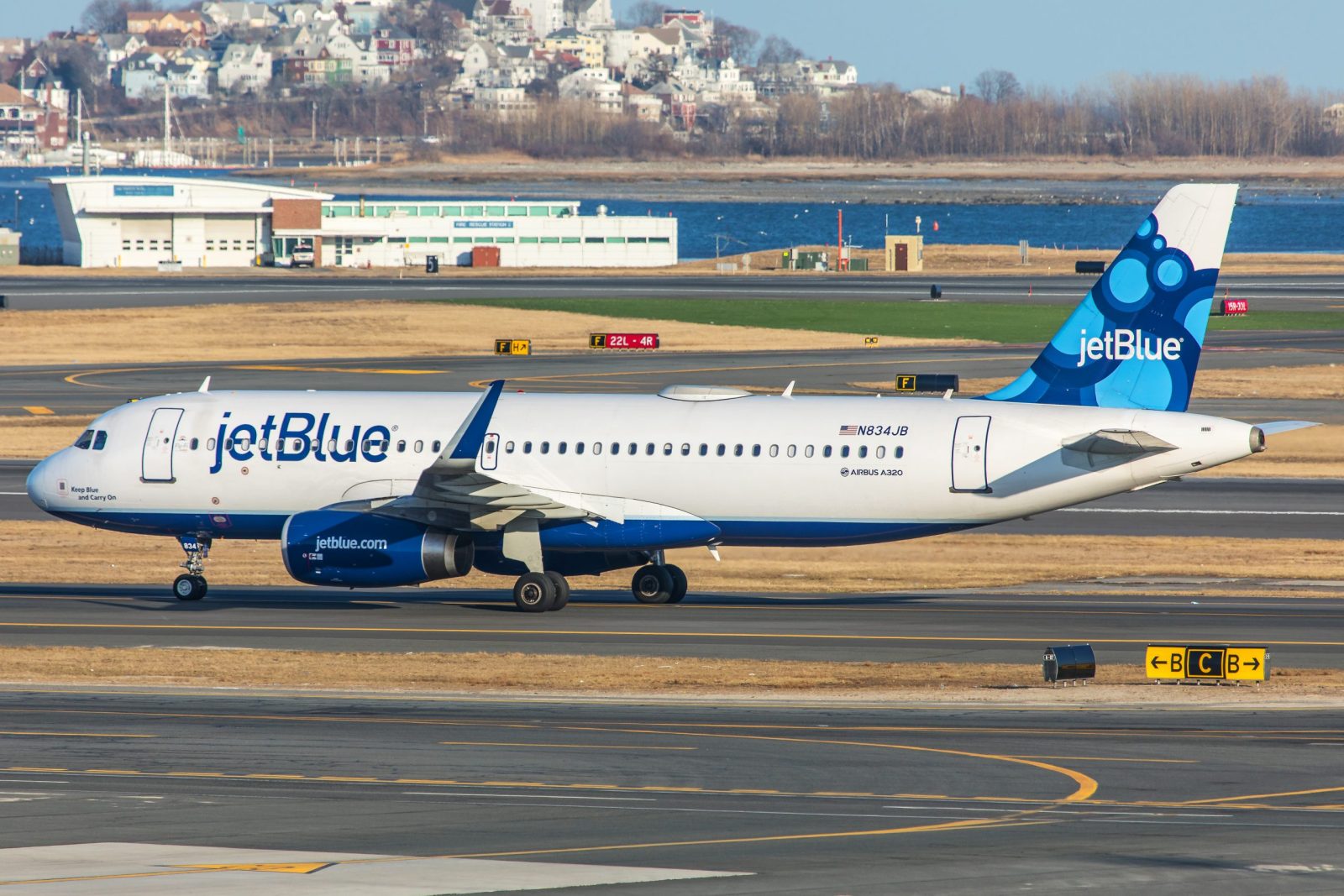
JetBlue A320
A JetBlue A320 in Boston. (Photo: AirlineGeeks | William Derrickson)

Last week, the process began to take another historic step for aviation in the Dominican Republic by starting negotiations with the U.S. government to establish an open skies agreement between the two countries.

Although it is true that the Dominican Republic is not a favorite vacation destination for American tourists, this agreement could generate a greater influx of tourists to the Caribbean country. These negotiations have no other purpose than to increase air operations between the two countries, creating more operations and frequencies than currently exist between the two markets.

However, if the open skies agreement between both nations is approved, further regulation will likely be necessary to guarantee fair competition between airlines.

According to a statement published by the Civil Aviation Board, this agreement also includes better fares, with a shift toward more competitive prices for the Dominican market. In addition, the agreement encourages the launch of more routes, frequencies and commercial and tourist promotion exchange between the Dominican Republic and the U.S.

A Longtime Goal

In 2021, the Dominican Civil Aviation Board approved 12 commercial cooperation agreements between airlines of different nationalities, thus promoting connectivity and the development of tourism in the Dominican Republic.

Last year, it also approved 48 new routes and flight frequencies, signing new air service agreements, ratifying and amending those already made. In addition, 5,491 non-scheduled or charter flights were authorized for exclusive cargo air operations and 5,909 for passenger and combined transport, totaling a general total of 11,400 charter operations.

Likewise, the Dominican Republic also had a significant increase in the number of air passengers, closing the year with 10,753,720 people transported through Dominican airports. That number led to estimated direct and indirect income for the country of $9,926 million and the recovery of more than 400,000 direct and indirect jobs.

Recently, the Dominican Civil Aviation Board granted permission to Plus Ultra Líneas Aéreas and Jetblue Airways Corporation for the operation of new routes that will connect the Dominican Republic with Europe and a new route between the U.S. and the Caribbean country.

Plus Ultra will operate the route between Madrid and Santo Domingo. It will be covered by its Airbus A340-300 and/or A340-600 aircraft, with capacities of 275 to 360 passengers. The Spanish carrier will start this operation with four weekly flights: Tuesdays, Thursdays, Fridays and Sundays. The airline plans to transport approximately 42,900 passengers during the first year of operation.

Likewise, the Civil Aviation Board approved Jetblue’s request to include the route between Boston and Puerto Plata, which had been on trial for a month. This new route will start on May 7 and will be carried out on an Airbus A320, with one weekly flight on Saturdays until December 2022. Jetblue estimates an annual offering of 14,340 seats for this new route.

Juan Pedro Sanchez Zamudio

The three things Juan Pedro loves most about aviation are aircraft, airports, and traveling thousands of miles in just a few hours. What he enjoys the most about aviation is that it is easier and cheaper to travel around the world and this gives you the opportunity to visit places you thought were too far away. He has traveled to different destinations in North, Central, South America and Asia. Born, raised and still living in Perú, Juan is a lawyer, soccer lover, foodie, passionate traveler, dog lover, millennial and curious by nature.
Sign-up for newsletters & special offers!

Get the latest stories & special offers delivered directly to your inbox

SUBSCRIBE

Uh-oh! It looks like you're using an ad blocker.

Our website relies on ads to provide free content and sustain our operations. By turning off your ad blocker, you help support us and ensure we can continue offering valuable content without any cost to you.

We truly appreciate your understanding and support. Thank you for considering disabling your ad blocker for this website