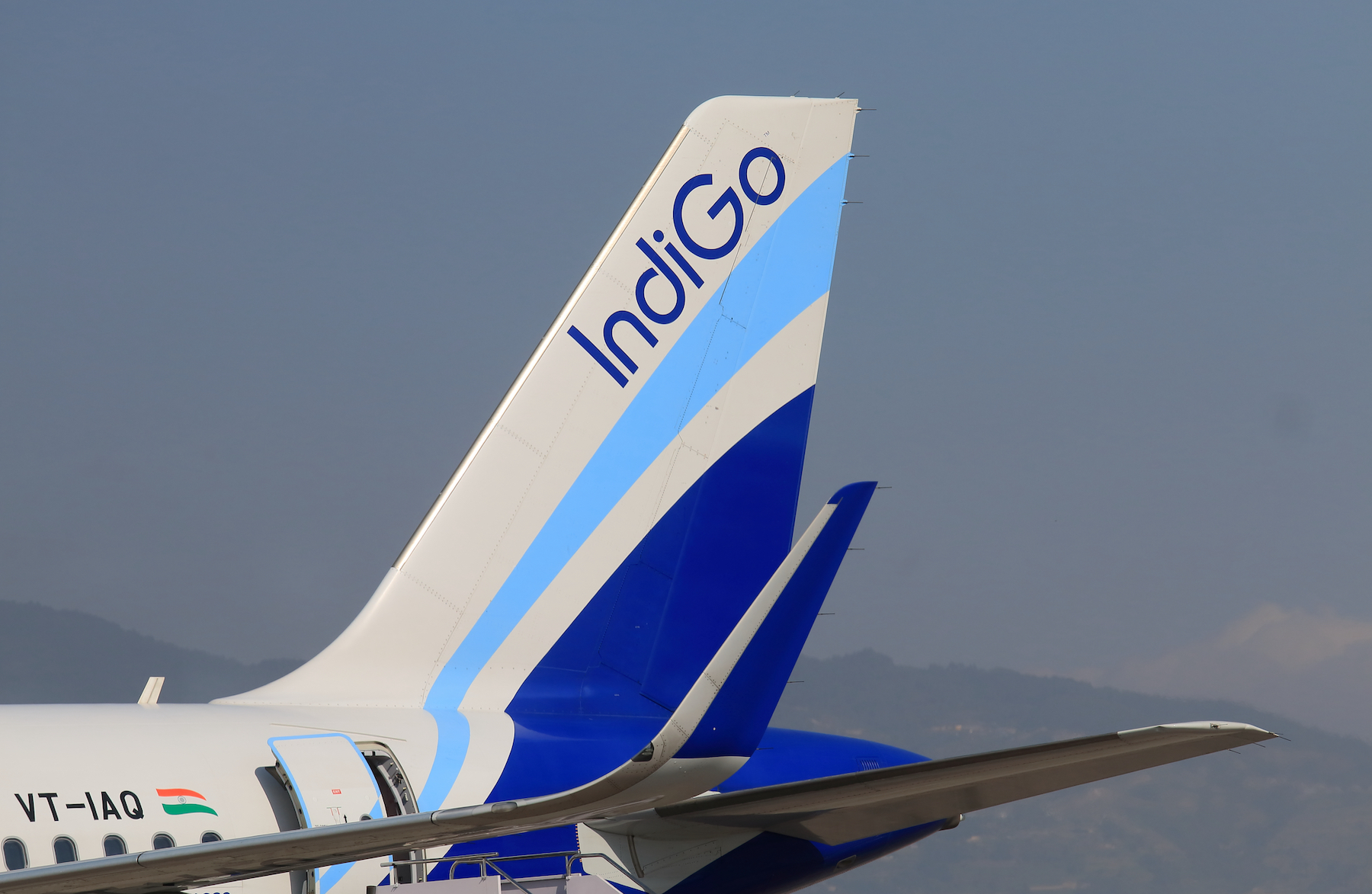
Indian low-cost airline IndiGo is boosting allowances for pilots weeks after a scheduling crisis forced the cancellation of nearly 4,500 flights.
According to a report from The Times of India, the carrier is hoping to shore up morale after the disruptions, which came at the height of an important travel season in the country.
IndiGo captains will see their compensation for layovers rise from R 2,000 to R 3,000, or about $33, the news site said. First officers will receive R 1,500, up from R 1,000.
For deadheading trips, captains will get R 4,000, up from R 3,000, and first officers will receive R 2,000, up from R 1,500.
The increases will take effect on Thursday.
IndiGo is the largest airline in India by passenger volume and controls about 65% of the country’s domestic market.
The carrier reportedly failed to adjust its crew schedules to align with new mandates from the Directorate General of Civil Aviation, the country’s civil aviation regulator, triggering the cancellations earlier this month. The Ministry of Civil Aviation is now investigating the incident.
Zach Vasile is a writer and editor covering news in all aspects of commercial aviation. He has reported for and contributed to the Manchester Journal Inquirer, the Hartford Business Journal, the Charlotte Observer, and the Washington Examiner, with his area of focus being the intersection of business and government policy.
GAO: Small Airports ‘More Vulnerable’ as Air Service Lags
Report finds post-pandemic recovery has lagged at smaller airports, with funding gaps and airline industry shifts compounding challenges.
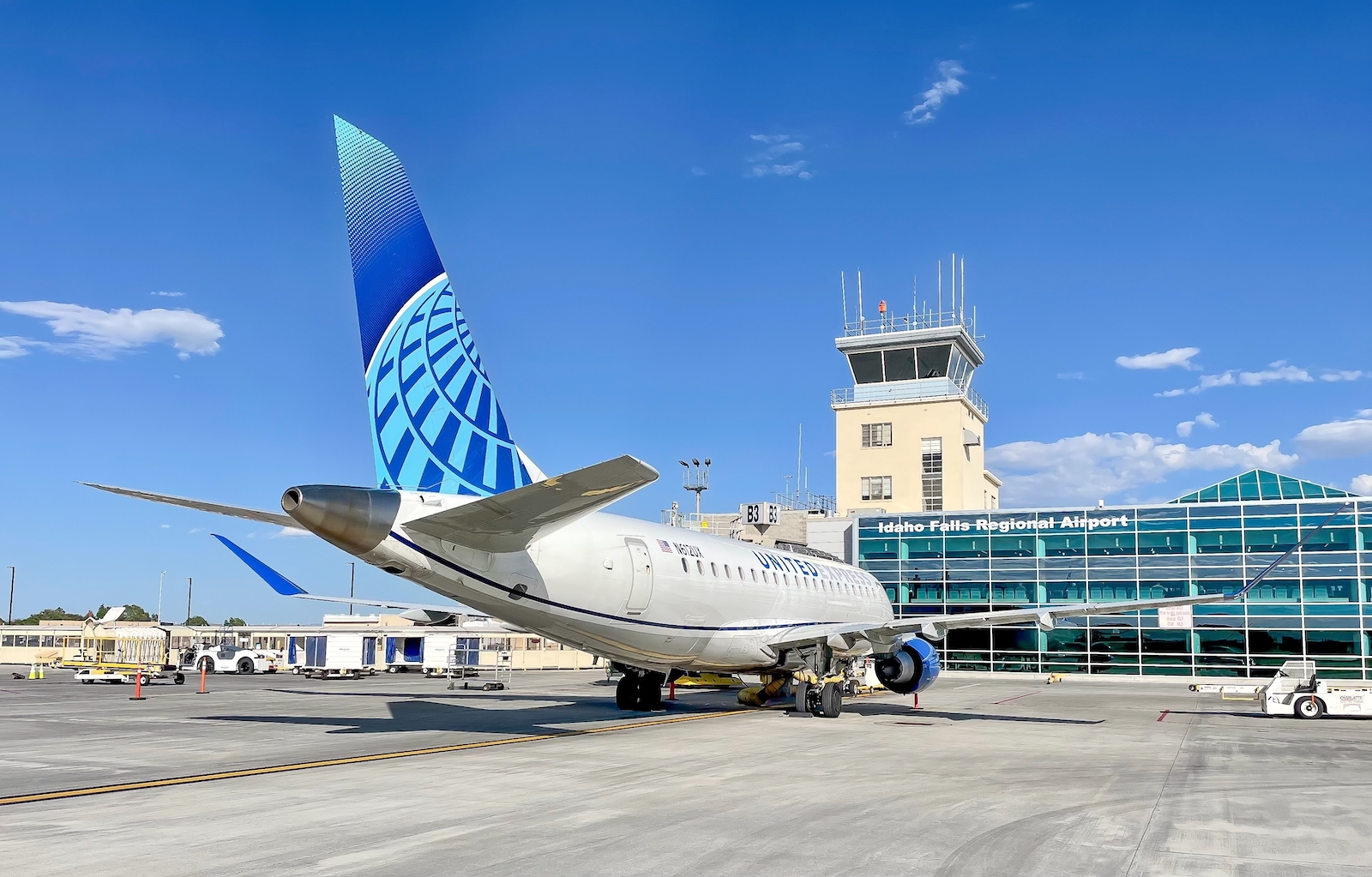
A United Express Embraer E175 (Photo: Shutterstock | Austin Deppe)
A new report from the U.S. Government Accountability Office finds that many of the nation’s smallest commercial airports continue to face challenges in securing and maintaining scheduled passenger air service, even as larger airports have largely recovered from the COVID-19 pandemic.
According to the GAO, air service at nonhub airports — defined as airports with less than 5% of annual U.S. passenger enplanements but more than 10,000 yearly boardings — declined sharply in 2020 and has not fully rebounded. By 2024, the average number of daily departures per route at nonhub airports remained 19% below 2018 levels, while large hub airports saw a smaller decline.
“Nonhub airports have experienced a slower recovery in air service compared to larger airports,” the GAO wrote, adding that these airports “generally have fewer routes and less frequent service, making them more vulnerable to service reductions.”
The report, issued in December and mandated by the FAA Reauthorization Act of 2024, analyzed Department of Transportation flight data from 2018 through 2024 and included interviews with federal officials, aviation stakeholders, and representatives from selected nonhub airports.
GAO found that nonhub airports not receiving Essential Air Service subsidies have faced particularly steep challenges.
From 2018 to 2024, more than 70% of non-EAS nonhub airports experienced declines in average daily departures per route. The report noted that connectivity at these airports declined more sharply than at EAS-supported airports, stating that “airports receiving EAS generally maintained more consistent access to the national air transportation system.”
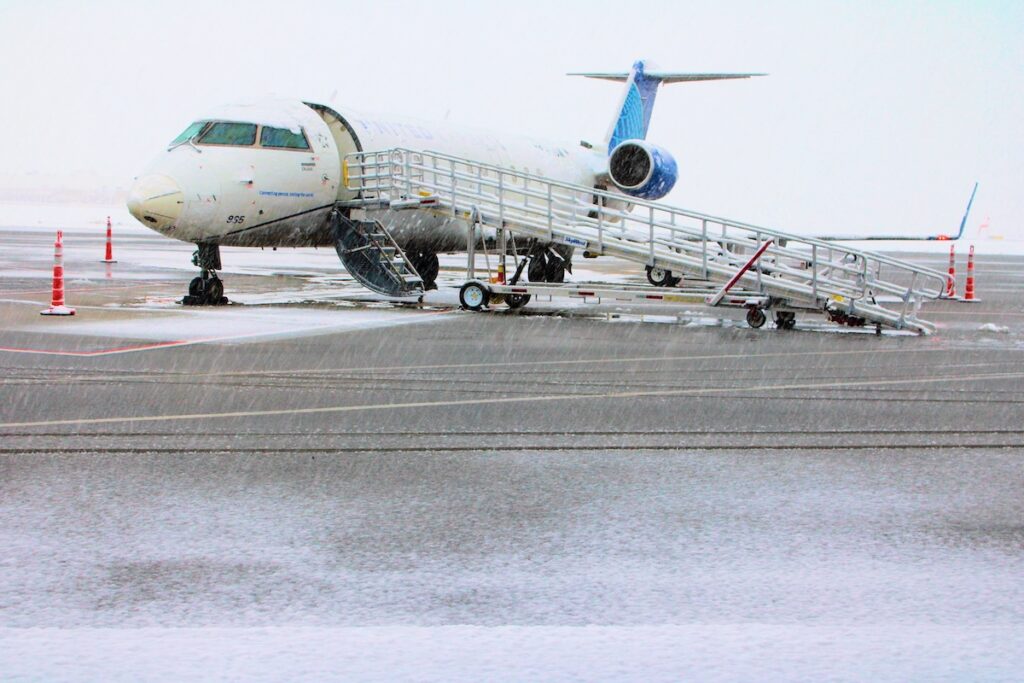
A United CRJ-200 in Prescott, Arizona. (Photo: Shutterstock | photojohn830)
The Department of Transportation administers two primary programs aimed at supporting air service to small communities: the Essential Air Service program and the Small Community Air Service Development Program. While SCASDP grants are intended to help non-EAS communities attract new service, GAO found that demand for the program consistently exceeds available funding.
For fiscal year 2023, DOT received applications totaling more than $30 million but awarded just under $12 million in grants to 14 communities. GAO noted that “the amount of funding available through SCASDP has not kept pace with the financial incentives airlines now require to initiate service.”
Airport officials and other stakeholders told the agency that airlines increasingly expect larger revenue guarantees before committing aircraft to smaller markets. “Stakeholders reported that airlines’ minimum revenue guarantees have increased since the pandemic,” the report stated, while adding that SCASDP grants “often do not cover the full amount airlines seek.”
Not Enough Funding
Although the FAA Reauthorization Act of 2024 increased the program’s authorized funding level and provided DOT with greater flexibility to modify existing grants, GAO found that communities still face difficulties once grant funding ends. According to the report, “some communities have been unable to sustain service after the expiration of federal support.”
GAO also pointed to broader airline industry trends contributing to reduced service at nonhub airports, including airlines’ shift toward larger aircraft and lower flight frequencies in smaller markets. The report stated that airlines have adjusted their networks “to improve profitability by concentrating service in higher-demand markets,” a change that has reduced options for smaller communities.
Passenger leakage was also cited as an ongoing issue, with travelers in small communities choosing to drive to larger nearby airports. GAO noted that this behavior “can further weaken demand at nonhub airports, making it more difficult for communities to attract or retain service.”
The report did not include formal recommendations but outlined policy options previously raised by aviation stakeholders, such as increasing funding for small community air service programs or revising eligibility requirements. GAO noted that any changes to those programs would require congressional action.
Ryan founded AirlineGeeks.com in February 2013 and has spent more than a decade covering the airline business. His work has been featured by CNN, WJLA, CNET, and Business Insider. His aviation experience spans airport operations, Part 135 regulatory compliance, and airline crew workforce planning, along with time behind the yoke of a Cessna 172 and interviews with airline executives. Ryan now serves as Group President of Firecrown Media’s Aviation Group. He holds a B.S. in Air Transportation Management and an MBA from Arizona State University and teaches Airline Management at Embry-Riddle Aeronautical University.
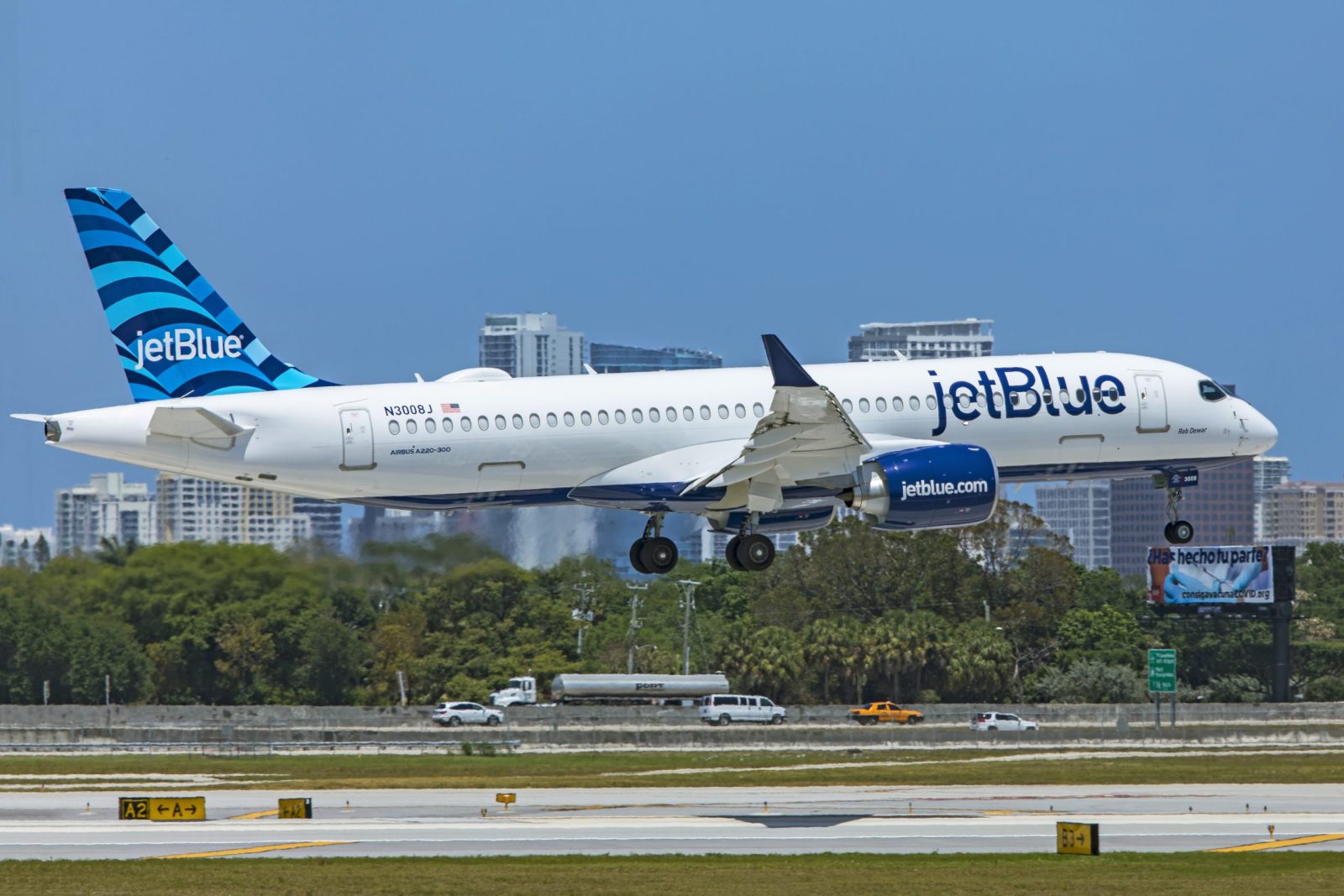
A JetBlue Airways Airbus A220 prepares for landing in Fort Lauderdale, Florida.
(Photo: AirlineGeeks | William Derrickson)
JetBlue is set to launch a new daily nonstop route from its New York-JFK hub next year.
New service to Cleveland will launch March 30, 2026, the carrier said Tuesday, and tickets are now on sale. JetBlue will operate the connection with an Airbus A220 aircraft.
“New York is not only a great destination and business hub, but it’s now another JetBlue gateway for Clevelanders and Northeast Ohioans,” Dave Jehn, JetBlue’s vice president of network planning and airline partnerships, said in a news release. “With our new route, Cleveland customers can choose what works best for them, unlocking even more access to JetBlue’s growing leisure network.”
The carrier currently connects Cleveland and Boston.
American and Delta also offer regular service between JFK and Cleveland.
Zach Vasile is a writer and editor covering news in all aspects of commercial aviation. He has reported for and contributed to the Manchester Journal Inquirer, the Hartford Business Journal, the Charlotte Observer, and the Washington Examiner, with his area of focus being the intersection of business and government policy.
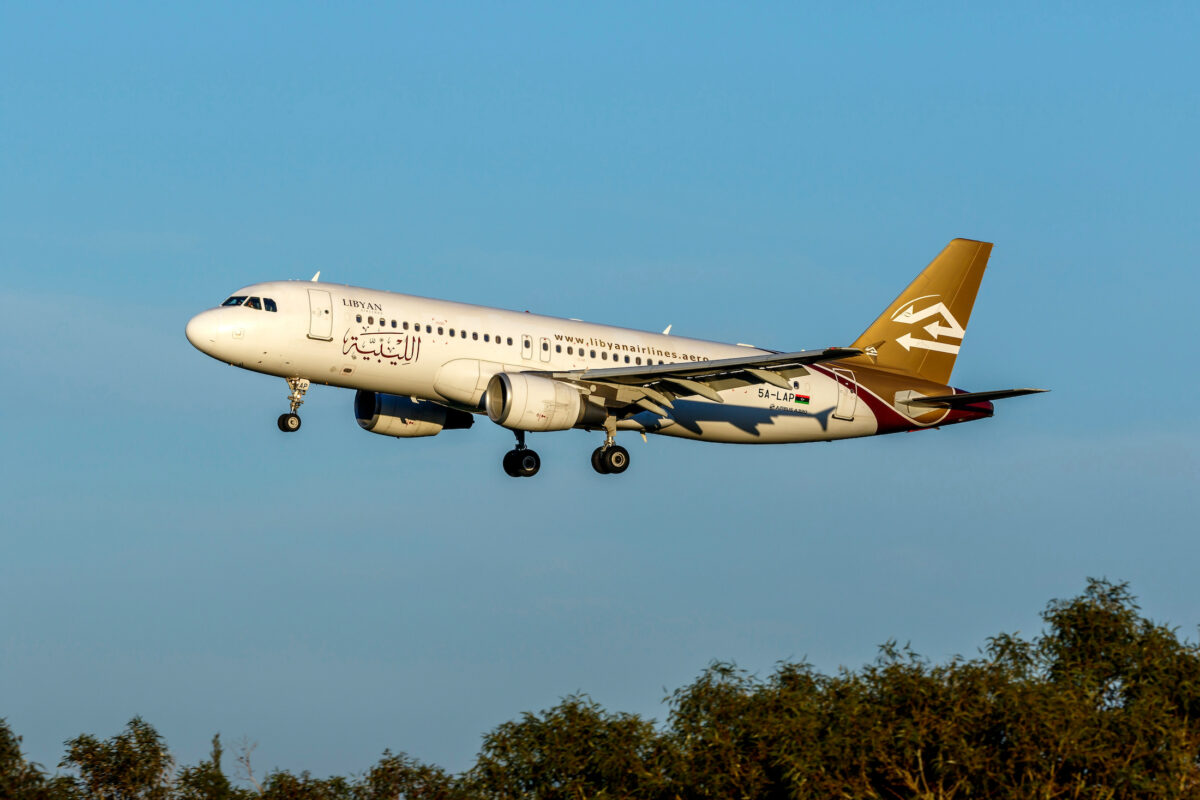
Libya Looks to Establish New Airline
The country is working to revive its aviation industry after years of decline.
The country currently has two national carriers: Libyan Airlines and Afriqiyah Airways. These carriers are both state-owned entities.
The new airline is expected to connect the Libyan capital of Tripoli with various destinations in North Africa and the Middle East.
The initiative is part of Libya’s effort to grow its aviation sector, which has been in decline for several years.
“I am excited to lead the upcoming launch of this new carrier dedicated to connecting Libya with the wider region and the world,” Ziad Farhoud, the new CEO of Libyan United Airlines, said in a statement.
The airline hopes to build a fleet of Airbus A320 aircraft to support its regional routes.
Lorne is a South Africa-based aviation journalist. He was captivated and fascinated by flying from the day he took his first airline flight. With a passion for aviation in his blood, he has flown to destinations in all corners of the globe. Lorne has traveled extensively and lived in various countries. Drawing on his travels and passion for aviation, Lorne enjoys writing about airlines, routes, networks, and new developments.
Delaware Bill Would Increase Scrutiny of Avelo
The carrier is again facing backlash for its work with ICE.
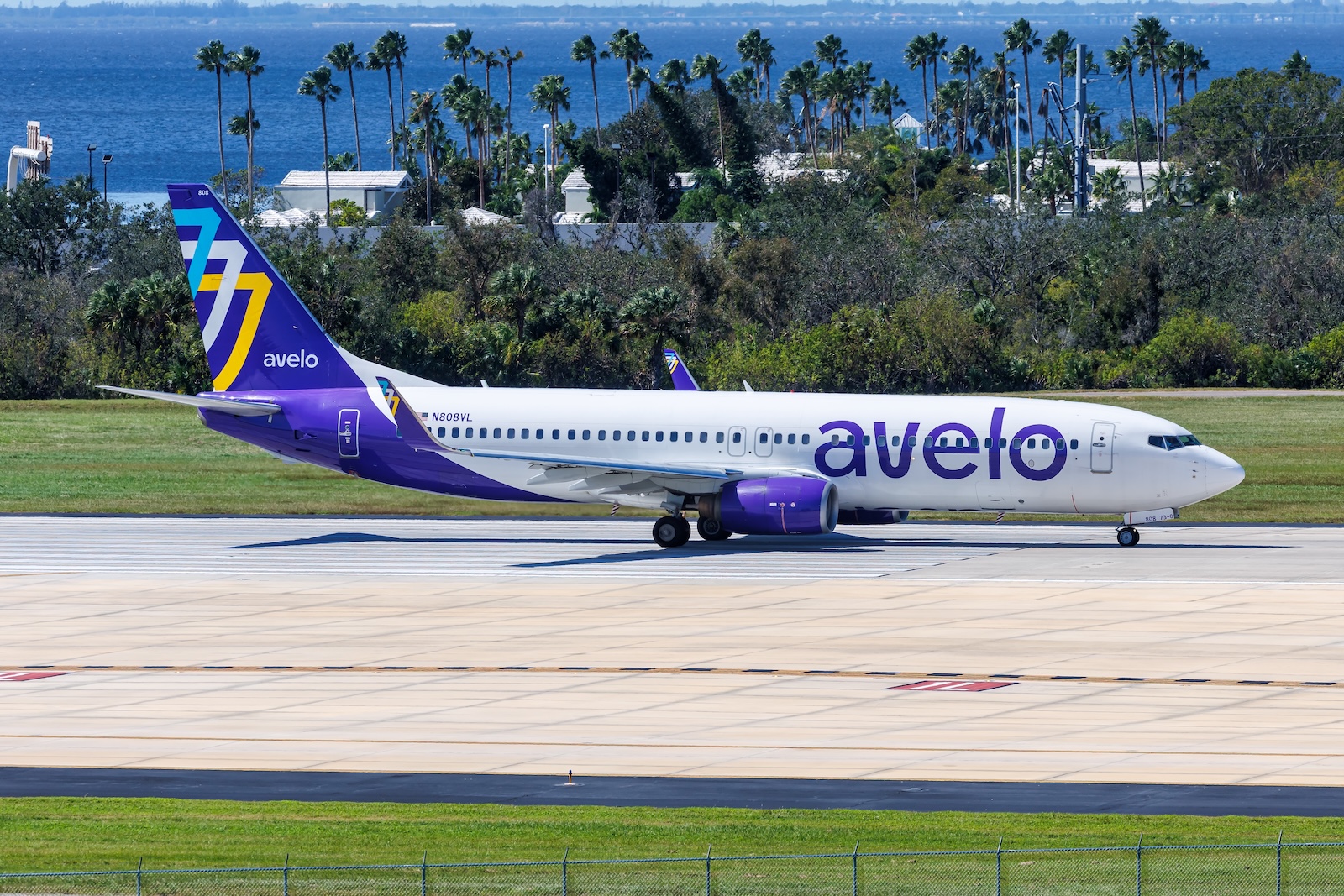
An Avelo Boeing 737-800. (Photo: Shutterstock | Markus Mainka)
A bill put forward by lawmakers in Delaware could make it harder for ultra-low-cost carrier Avelo to do business in the state.
The resolution, sponsored by a state senator and a state representative, urges the Delaware River and Bay Authority to end incentives for any business that contracts with U.S. Immigration and Customs Enforcement (ICE) to facilitate deportations. Avelo has operated deportation flights for the federal government since May, and is specifically named in the bill.
The Delaware River and Bay Authority operates Wilmington Airport and has a marketing incentives agreement that reimburses Avelo for advertising at Wilmington.
The bill notes “significant discontent” among members of the public and elected officials that DRBA funds “are being used to support a company involved in ICE deportations that lack sufficient due process protections for individuals ICE has sought to be removed.”
The City of Wilmington has already passed a resolution discouraging contracts with companies that work with ICE.
Avelo is the only commercial airline currently operating flights to and from Wilmington. American connects Wilmington Airport to Philadelphia International Airport via motorcoach.
Avelo’s involvement in deportation flights has drawn scrutiny from immigration and civil rights activists and from officials in states like California, New Hampshire, and Connecticut. Over the weekend, protests were held outside airports where the carrier operates.
Avelo has defended its contract with ICE as a critical financial lifeline.
Zach Vasile is a writer and editor covering news in all aspects of commercial aviation. He has reported for and contributed to the Manchester Journal Inquirer, the Hartford Business Journal, the Charlotte Observer, and the Washington Examiner, with his area of focus being the intersection of business and government policy.
Former Cadets Sue American for $36 Million
The plaintiffs claim they faced racial discrimination while enrolled in the American Airlines Cadet Academy.
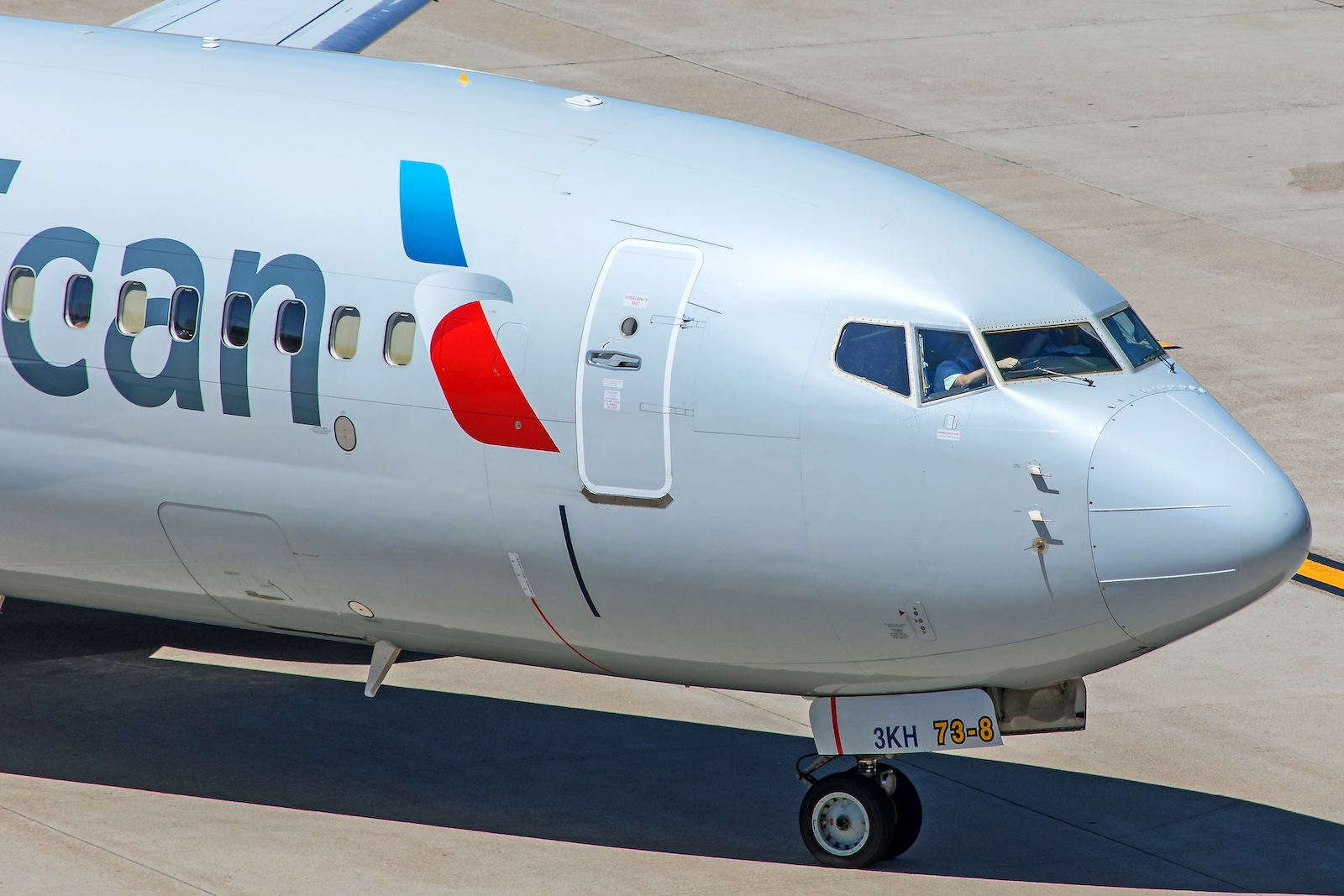
An American Boeing 737-800. (Photo: AirlineGeeks | William Derrickson)
A group of former cadets is suing American Airlines over a training program they allege was dysfunctional, under-resourced, and rife with racist bullying.
The 18 plaintiffs were formerly enrolled in the American Airlines Cadet Academy, which provides a potential pathway to a pilot job at one of American’s wholly-owned regional subsidiaries. The program was marketed to non-white students as a fast and affordable way to enter the predominantly white U.S. airline industry, the lawsuit alleges, but was actually engaged in “reverse redlining” – specifically targeting racial minorities with false advertising, predatory loans, and a deeply flawed training regime.
“Defendants’ efforts to develop and train a new diverse generation of pilots would be commendable if the AACA were what it claimed to be – a high-quality, accelerated, cost-saving program in which people with little or no aviation experience could become licensed commercial pilots in one year,” attorneys for the plaintiffs wrote. “Instead, defendants targeted people of color for participation in a substandard program that defendants knew they had almost no chance of completing.”
Some of the former students were removed from the academy by American, while others left on their own. They are seeking at least $36 million in compensation.
The complaint also names American Airlines Federal Credit Union and Coast Flight Training and Management as defendants. American Airlines Federal Credit Union offers tuition financing for the Cadet Academy, and Coast is one of several flight schools that provide the training.
American defended the cadet program in a statement to AirlineGeeks.
“To run the best airline in the world, we need the best and brightest people – and the American Airlines Cadet Academy is an important part of that mission,” the carrier said. “Through this program, we have sought to expand the pipeline of talented cadets from all over the country, many of whom now enjoy rewarding careers at American Airlines. We take seriously the concerns raised by this group of former cadets, but we believe the allegations are without merit.”
Careers Derailed
According to the complaint – filed earlier this month in a federal court in California – there was a vast difference between how American and Coast initially represented the Cadet Academy and the actual experiences of the plaintiffs once they were enrolled.
The airline allegedly told students that they could and would achieve all the ratings required to become a commercial pilot within one year, but in reality, the majority of trainees did not complete the program, and most who did required longer than 12 months.
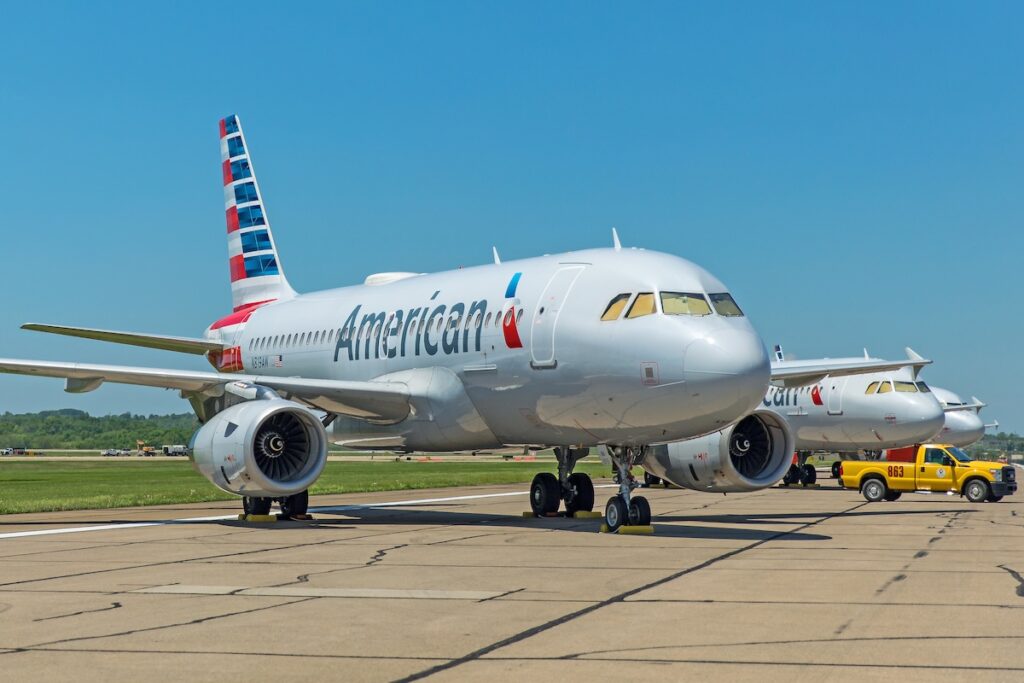
American aircraft parked in Pittsburgh. (Photo: AirlineGeeks | William Derrickson)
Collectively, the plaintiffs recalled only three cadets in any of their cohorts who successfully finished the academy in 12 months, which translates to 3.7% of their starting classes.
The plaintiffs were also given much less time to practice flying than promised, mainly because of insufficient aircraft and a shortage of teachers. The AACA initially committed to assigning each cadet a mentor, but availability was a persistent problem. Only four of the 18 plaintiffs received a mentor within the first three months of starting the program, according to the lawsuit, and eight never received a mentor at all.
Another point of contention is the cost of the program. Attorneys claim the students were quoted one price but were not told that factors outside of their control, such as flight scheduling and aircraft availability, could greatly increase that figure.
To support their training, the former cadets took on loans, some with rates as high as 11%. They now owe between $26,000 and $130,000, with the average being $83,000.
Bias in Training
The plaintiffs related many instances of racial bullying from flight instructors, including criticism of their hairstyles, being mocked and sworn at, and having their intelligence demeaned. One instructor allegedly suggested that a black student was struggling in the program because of their background.
Bias against minority students appeared in other ways, the lawsuit claims. The plaintiffs allegedly faced higher turnover among their instructors, encountered instructors who refused to teach them, had more difficulty than their white peers in setting up flying hours, were graded more harshly than their white peers, and were not shown the same respect and professionalism generally given to white students. These factors combined to gradually undermine their performance, attorneys said.
The issue of racist bullying was brought up to instructors, mentors, site directors, and the president of Coast, including at town hall-style meetings, but nothing was done to address the problem, the lawsuit states.
Plaintiffs also said that American officials were made aware of discrimination within the program, among other issues, but they did not offer meaningful assistance. In one exchange, the cadets were allegedly advised to “keep their heads down” and do the best they could in the face of adversity.
Flight instructors also harmed the plaintiffs financially by essentially “defaming” them to American, attorneys said, making it much less likely that they would ever be hired by the airline in the future.
Zach Vasile is a writer and editor covering news in all aspects of commercial aviation. He has reported for and contributed to the Manchester Journal Inquirer, the Hartford Business Journal, the Charlotte Observer, and the Washington Examiner, with his area of focus being the intersection of business and government policy.
American Plans 100-Flight Expansion at Chicago O’Hare
The carrier expects to operate over 500 daily departures from Chicago by spring 2026.
The carrier said Monday that it will boost flights to more than 75 destinations from Chicago. Markets set for increased service include Boston, Dallas/Fort Worth, San Francisco, Savannah, Georgia, Cincinnati, Ohio, and Orlando, Florida. Connections to popular spring break destinations, such as Las Vegas and Panama City and Sarasota in Florida, will double.
The expansion brings American’s total daily departures from Chicago to over 500, which is in line with pre-pandemic levels, according to airline officials.
“We’re committed to rebuilding our Chicago hub to be stronger and more compelling for our customers, and our 2026 plans are both emblematic of that objective and an exciting way to end a year defined by bold growth and investment at ORD,” Steve Johnson, American’s vice chair and chief strategy officer, said in a news release. “Our continued focus on Chicago during the next year – a year that we celebrate the centennial of American and our 100th year of service at ORD – will make our network even more attractive and continue to enhance the travel experience, improve reliability, and introduce more premium options for our customers.”
American Boeing 737 at O’Hare. (Photo: Shutterstock | Nate Hovee)
American is also extending its summer service from Chicago to two European destinations, Dublin and Paris. The Dublin route will operate about one month longer than in years past, the carrier said, while service to Paris will be extended by about three months.
American added 29 new destinations from Chicago in 2025, including Honolulu, Mexico City, Madrid, and Naples, Italy. It also increased service on existing routes to cities like Seattle and Houston.
Zach Vasile is a writer and editor covering news in all aspects of commercial aviation. He has reported for and contributed to the Manchester Journal Inquirer, the Hartford Business Journal, the Charlotte Observer, and the Washington Examiner, with his area of focus being the intersection of business and government policy.
American Acquires Stake in Post-Merger Republic
The carrier received shares in connection with the merger of Republic and Mesa last month.
A Republic Airways E175 aircraft. (Photo: Shutterstock | Austin Deppe)
Joining its rivals United and Delta, American Airlines has acquired a minority stake in the post-merger Republic Airways Holdings.
According to a Dec. 19 filing with the U.S. Securities and Exchange Commission, American acquired about 9.7 million shares in the regional airline, amounting to 20.8% of the company.
Americans’ stake was secured through an agreement connected to the merger of Republic and Mesa Airlines, the filing states. As part of the transaction, the carrier agreed not to unload any Republic stock for at least 180 days after the closing date.
Republic and Mesa completed their merger in November. The combined business now owns the world’s largest Embraer fleet, with nearly 300 E170 and E175 aircraft, and operates over 1,300 daily departures, making it one of the largest regional airlines in the U.S.
Even though they are now legally one company, the two carriers will maintain parallel operations until they can be consolidated under a single operating certificate.
Republic and Mesa will continue to operate flights for their current airline partners. Republic has service agreements with American, United, and Delta, while Mesa works only with United, flying as United Express.
Zach Vasile is a writer and editor covering news in all aspects of commercial aviation. He has reported for and contributed to the Manchester Journal Inquirer, the Hartford Business Journal, the Charlotte Observer, and the Washington Examiner, with his area of focus being the intersection of business and government policy.
Livery of the Week: Lufthansa Turns 100
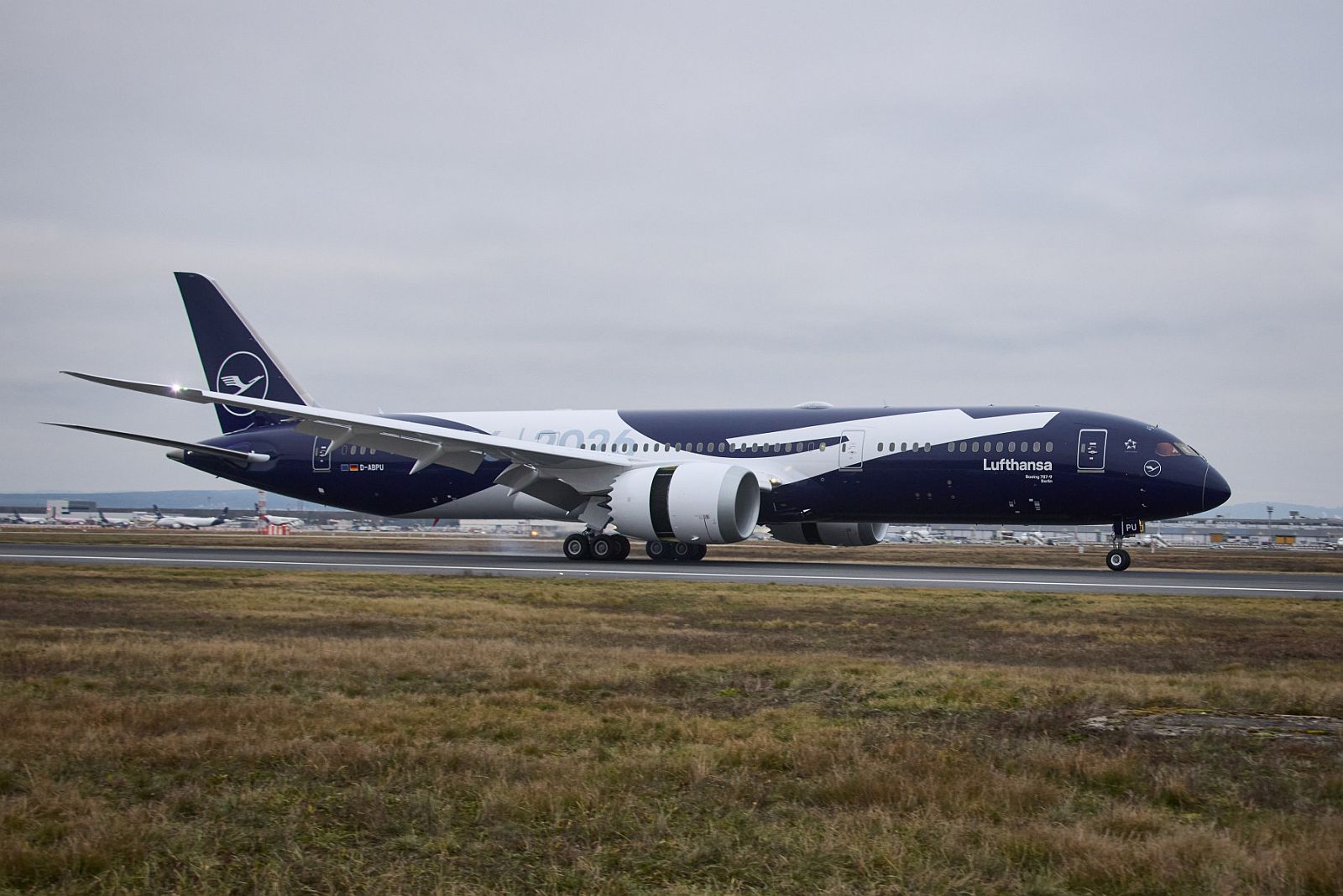
Lufthansa starts the celebrations for its 100th anniversary with a special livery for a new Boeing 787-9 aircraft.
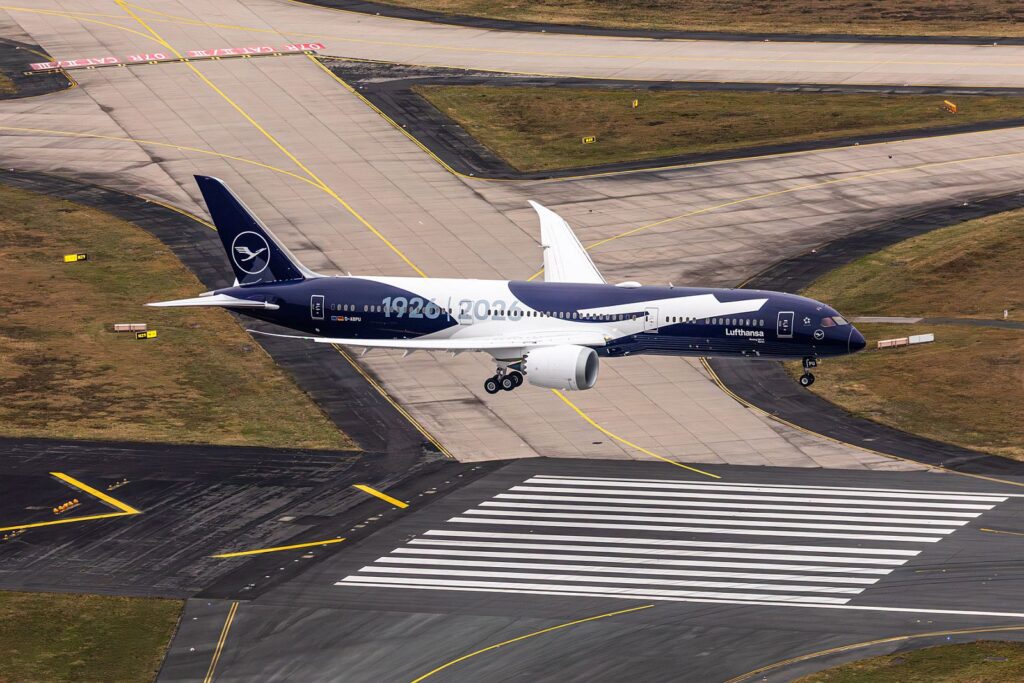
Lufthansa Boeing 787-9 aircraft in 100th anniversary livery (Photo: Lufthansa)
Editor’s Note: AirlineGeeks is proud to present our ‘Livery of the Week’ series. Every Friday, a team member will share an airline livery, which can be from the past, present, or even a special scheme. Some airline liveries are works of art. The complexity associated with painting around critical flight components and the added weight requires outside-the-box thinking from designers. The average airliner can cost upwards of $200,000 to repaint, creating a separate aircraft repainting industry as a result.
Have an idea for a livery that we should highlight? Drop us a line.
German flag carrier Lufthansa is one of the oldest airlines still operating under its current name and will celebrate its 100th anniversary in 2026.
The first event to celebrate this important milestone took place on Tuesday in Frankfurt when the carrier took delivery of a Boeing 787-9 aircraft in a special celebratory livery purposely designed to commemorate 100 years in the sky.
Lufthansa Boeing 787-9 aircraft in 100th anniversary livery landing in Frankfurt (Photo: Lufthansa)
Giant Crane
The new aircraft landed at Lufthansa’s main hub airport at 9.37 a.m. local time, coming from the Boeing facilities in Everett, Washington, and for the first time it officially displayed the livery depicting a giant while logo across the entire fuselage.
The crane logo was originally designed by German artist Otto Ferle in 1918, and it was adopted in 1926, right at the beginning of the carrier’s life, when the name was Deutsche Luft Hansa. The crane was selected to reflect wisdom and vigilance.
“Our Lufthansa crane stands for safety, pioneering spirit, premium quality, but also for freedom and reliability,” said Jens Ritter, Chief Executive Officer of Lufthansa Airlines, in a statement. “This has been the case for the past 100 years and will continue to be so in the future. We are proud of our tradition and our values, and we look forward to continuing our great history. The special livery of the Boeing 787 honors our identity and also stands for a proud team of Lufthansa employees who give everything every day for the safety and well-being of our guests.”
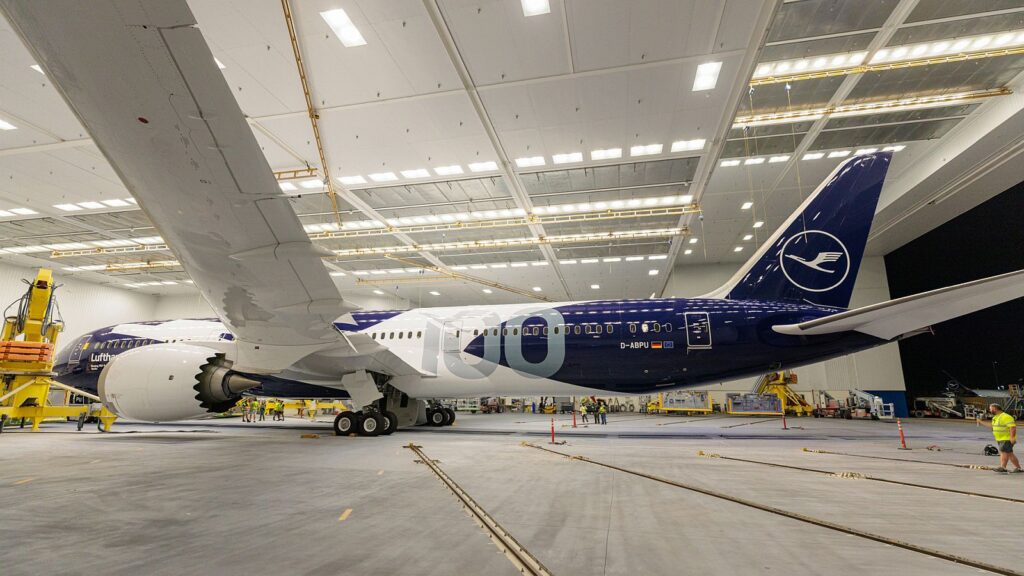
Lufthansa Boeing 787-9 aircraft in 100th anniversary livery (Photo: Lufthansa)
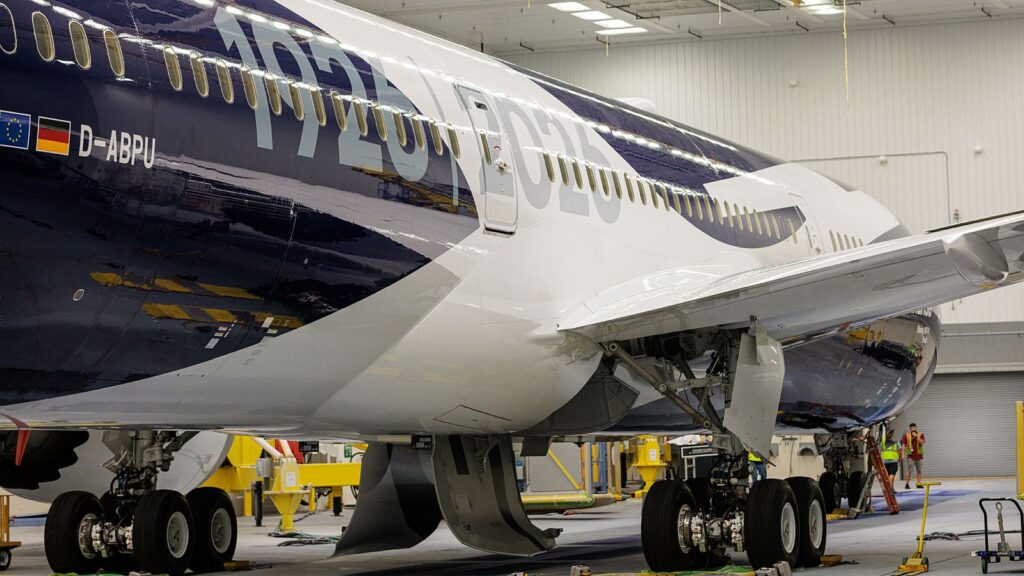
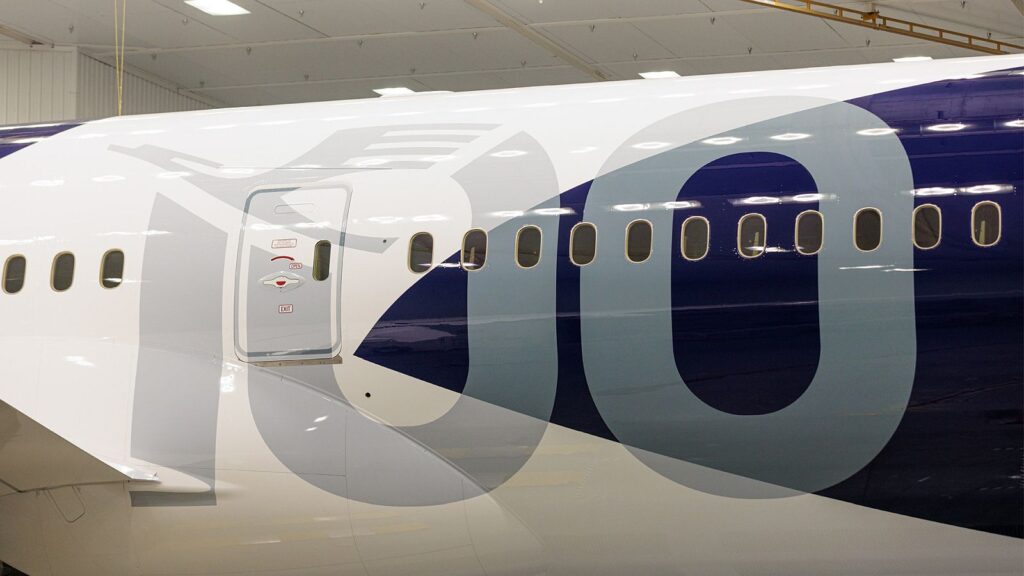
This livery, ideated by Anglo-Irish designer David Hedley Noble of the design studio Aerobrand, features the Lufthansa crane logo spanning from the tailfin all the way up to the front door in the classic white color over a deep blue background. Right behind the wing, on the port side of the aircraft, a pale-grey “100” recalling a smaller version of the logo remembers the 100th anniversary occasion, while on the starboard side, the same pale-grey is used to display the numbers “1926-2026.”
Lufthansa Boeing 787-9 aircraft in 100th anniversary livery (PhotoLufthansa)
Three-Class Configuration
The aircraft is a Boeing 787-9 aircraft, registered as D-ABPU, and after the necessary certification procedures, will enter commercial services performing short-haul flights from Frankfurt before being permanently moved to Lufthansa’s long-haul fleet.
Lufthansa Boeing 787-9 aircraft in 100th anniversary livery (Photo: Lufthansa)
It is configured with 287 seats featuring the new Allegris Business Class product with 28 seats, 28 more seats in Premium Economy, and 231 Economy seats. It is part of a small batch of 10 Boeing 787-9 aircraft destined for the Lufthansa mainline fleet after five examples of the same model originally destined to Hainan Airlines were acquired in 2022 and redirected to fully-owned subsidiary Austrian Airlines.
This is just the first of a series of special liveries Lufthansa is planning to unveil during 2026 to celebrate its 100th anniversary. Aerobrand has revealed they are already working on a vintage livery for an Airbus A321 aircraft and a special design for an Airbus A350-1000, while Lufthansa has confirmed that one of its existing Boeing 747-8i aircraft will also feature a celebratory livery.
Looking for a new airplane model? Head over to our friends at the Midwest Model Store for a wide selection of airlines and liveries.
Vanni fell in love with commercial aviation during his undergraduate studies in Statistics at the University of Bologna, when he prepared his thesis on the effects of deregulation on the U.S. and European aviation markets. Then he pursued his passion further by obtaining a Master’s Degree in Air Transport Management at Cranfield University in the U.K. followed by holding several management positions at various start-up carriers in Europe (Jet2, SkyEurope, Silverjet). After moving to Canada, he was Business Development Manager for IATA for nine years before turning to his other passion: sports writing.
Delta Resumes Domestic Route
Daily service will enhance Midwest connectivity from one of the airline’s Northeast gateways.
A Republic Airways Embraer jet (Photo: Shutterstock | Wirestock Creators)
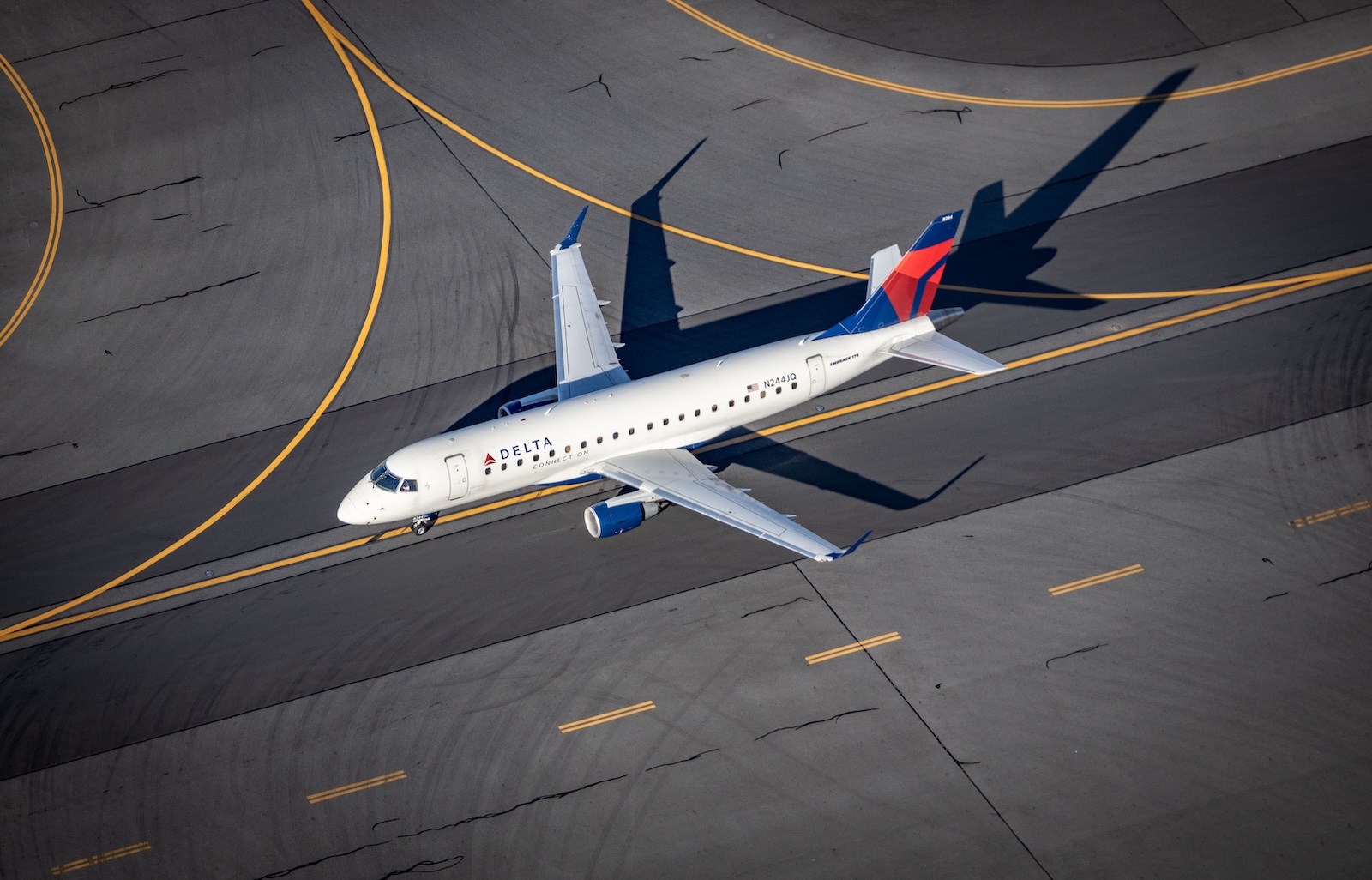
Delta is continuing to fine-tune its domestic network ahead of the 2026 summer travel season with the addition of a daily nonstop route set to launch in early June, according to a company spokesperson.
Beginning June 7, 2026, the Atlanta-based carrier will introduce once-daily service between Boston and Madison, Wisconsin. The route will be operated with an Embraer E175 and was last served in 2024.
Flights from Boston will depart at 2:00 p.m. and arrive in Madison at 3:53 p.m. The return service will depart Madison at 4:45 p.m., arriving back in Boston at 8:19 p.m.
Tickets for the new route are expected to go on sale this weekend, Dec. 27, the spokesperson said.
Ryan founded AirlineGeeks.com in February 2013 and has spent more than a decade covering the airline business. His work has been featured by CNN, WJLA, CNET, and Business Insider. His aviation experience spans airport operations, Part 135 regulatory compliance, and airline crew workforce planning, along with time behind the yoke of a Cessna 172 and interviews with airline executives. Ryan now serves as Group President of Firecrown Media’s Aviation Group. He holds a B.S. in Air Transportation Management and an MBA from Arizona State University and teaches Airline Management at Embry-Riddle Aeronautical University.