











Alaska Airlines is making bold changes to the airport experience in an effort to reduce the amount of time passengers have to spend in airport lobbies. The airline is investing $2.5 billion in improvements at its hub and focus city airports with the goal of getting travelers through to security in five minutes or less.
New Bag Tag Stations
The Seattle-based carrier is eliminating a staple of the modern-day check-in lobby by replacing its existing check-in kiosks with new bag tag stations. The new stations are equipped with an iPad and a card payment terminal. Passengers who arrive at the airport with a printed or mobile boarding pass can scan their pass at the station, pay any bag fees if needed and receive a bag tag.
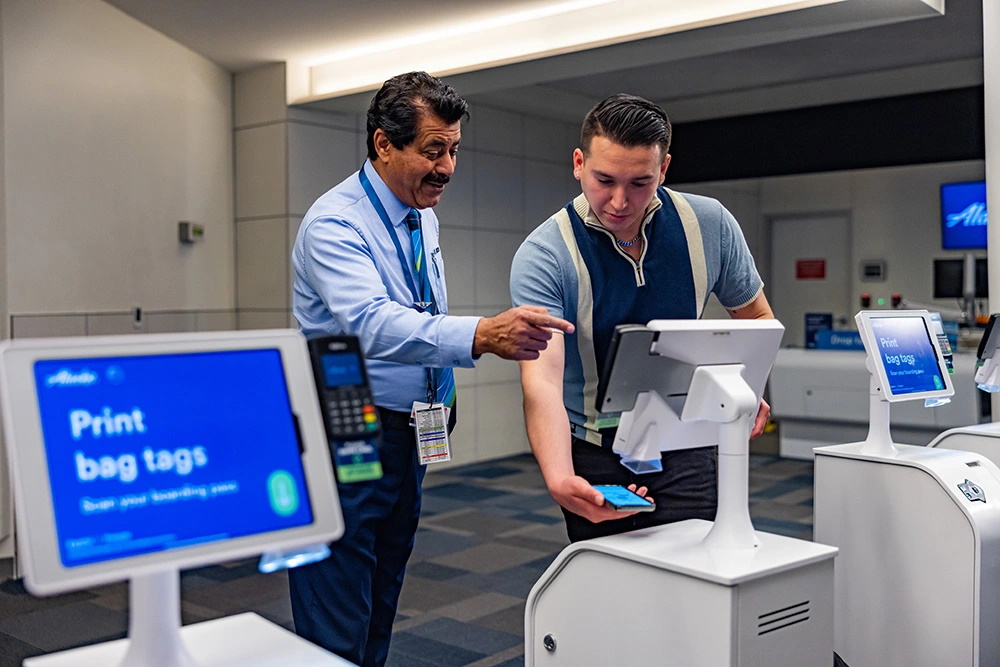
The airline has already started installing the new bag tag stations at Portland International Airport and Las Vegas’ Harry Reid International Airport and is planning on rolling out the new machines at its hub and focus cities. Other airports expected to get the new stations include Seattle–Tacoma International Airport, Los Angeles International Airport, San Francisco International Airport and Ted Stevens Anchorage International Airport. Alaska expects to complete the transition to the bag tag stations by the end of 2023.
Expanding Technology Use
Alaska is looking to build upon the trend of passengers increasingly using online and mobile check-in options. Approximately 75 percent of its passengers currently check-in before arriving at the airport and the airline is looking to raise that number to 90 percent.
Starting in the spring of 2024, the airline will also be introducing new bag drop technology. The machines will incorporate the use of biometrics and have the ability to scan faces, government-issued identification and bag tags. Airlines have been expanding the use of biometrics to improve the travel experience and Alaska’s move demonstrates its willingness to embrace this technology.
With the new system, the goal is to get passengers through the airport lobby seamlessly and efficiently. Travelers will check in beforehand and arrive at the airport with a boarding pass, before scanning their pass and receiving a bag tag. They will then take their bag to an automated bag drop station that will incorporate biometrics to allow passengers to use their faces as their identification and boarding pass. Customer service staff will be available to help travelers who require additional in-person assistance.
“As we thought about how to provide the most caring experience for our guests, it was clear the lobby was a pain point. We realized the majority of our guests were doing most of the kiosk actions on their own phones and we could reduce the congestion in our airports,” Alaska Senior Vice President of Innovation and Merchandising Charu Jain said in a press release. “Alaska was the first airline to introduce kiosks more than 20 years ago, and we’ll be the first airline to remove them. We’re looking forward to offering the new full guest experience next summer.”
