












Qatar Airways recently announced its financial performance for the first half of the company’s 2023-2024 fiscal year with better-than-expected results.
The airline reported a net profit of $1 billion in the first half of the 2023-2024 fiscal year, a significant increase compared to the same period last year. The first half net profit for the current fiscal year is almost on par with the net profit Qatar Airways saw in the previous 2022-2023 fiscal year, which was $1.21 billion. Qatar Airways is expected to far exceed last year’s performance and end the fiscal year with higher topline revenue than pre-COVID times.
Revenues for the first half of the year were $11 billion, up 7.4 percent compared to the same period last year. Load factors were at 83.3 percent, up from the same period last year. The increased load factors also came with higher yields for the airline at 3.6 percent showing that the airline was making more money with the same seats compared to last year.
Continued Growth
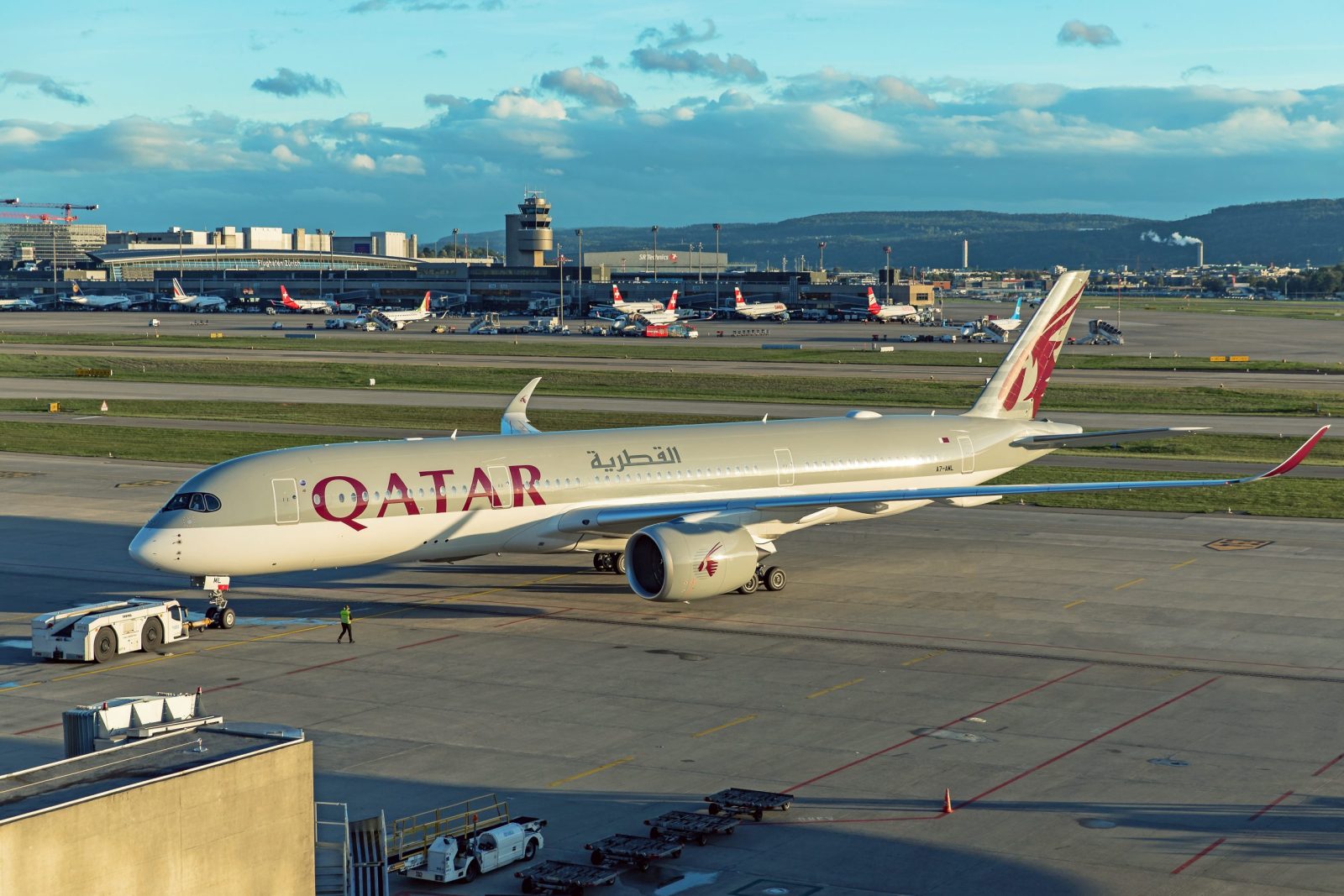
This growth can be attributed to the rebound in international travel along with the return to service of the majority of the airline’s Airbus A350 aircraft which were grounded due to quality issues during the manufacturing process. The return of the majority of the A350 fleet has increased the overall capacity of the airline greatly. Qatar Airways had resorted to flying older jets and leased aircraft from other airlines such as Cathay Pacific to maintain its schedule.
Passenger counts have steadily been increasing and the airline has been growing to match that. There are plans for significant fleet expansion with around 150 aircraft currently on the order books. There have been a number of new destinations announced from Doha as well. New routes include flights to many secondary cities across the globe such as Chittagong in Bangladesh and Kinshasa in the Democratic Republic of Congo.
The airline has also announced resumptions of service from Doha to Beijing, Birmingham, Buenos Aires, Casablanca, Davao, Marrakesh, Nice, Osaka, Phnom Penh, Ras Al-Khaimah, and Tokyo Haneda.
While the airline is bullish on the future, it has identified several potential headwinds that could impact forecasts. The continued geopolitical tensions across several regions add to the overall uncertainty since it is possible there will be an impact on demand for air travel. Additionally, a strengthening U.S. Dollar has impacted earnings to date and this is likely to continue.
Fuel prices continue to be an ever-present concern due to the two factors above with the potential of overall fuel costs for the airline continuing to increase. The carrier’s long-time CEO will also be departing his role in November.