










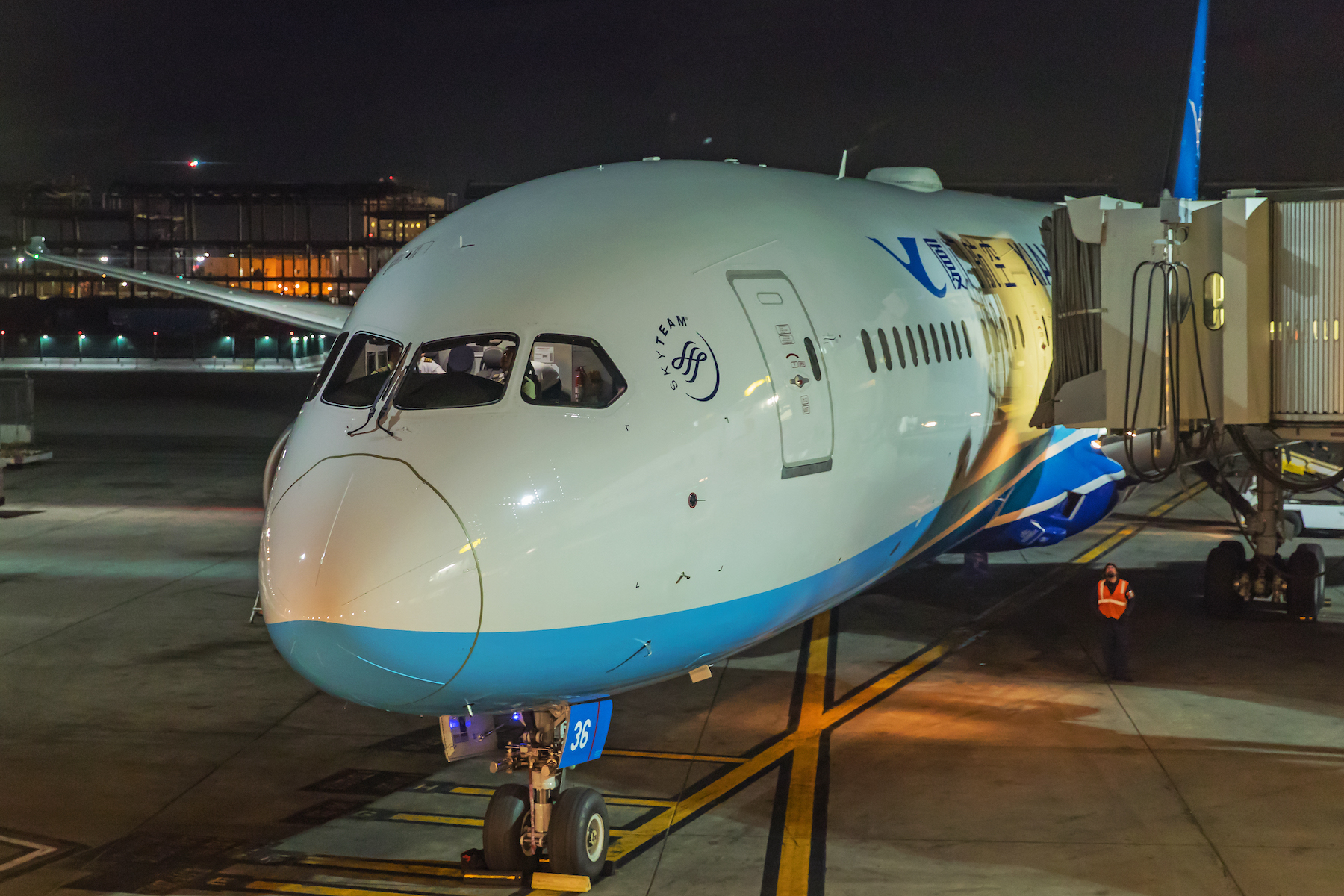

Xiamen Airlines is set to return to New York in late May with the resumption of flights to Fuzhou. The route was discontinued due to the pandemic and has since remained suspended due to the flight cap between China and the United States along with low demand.
The carrier will run two weekly flights between the Southern Chinese city and New York using a Boeing 787-9 Dreamliner. The tickets for the nonstop flight are currently available for purchase. The flight from JFK will have a block time of over 16 hours and cover a distance of 7,770 miles, making it one of the longest flights out of New York and the United States. The other direction takes around 14 and a half due to more favorable winds.
Fuzhou is the ancestral home of many in the Chinese American diaspora community in the New York area. The city pair of Fuzhou and New York was one of the largest unserved transpacific markets and has specifically strong VFR (Visiting Friends and Relatives) demand, which prompted Xiamen Airlines to launch the route in 2017.
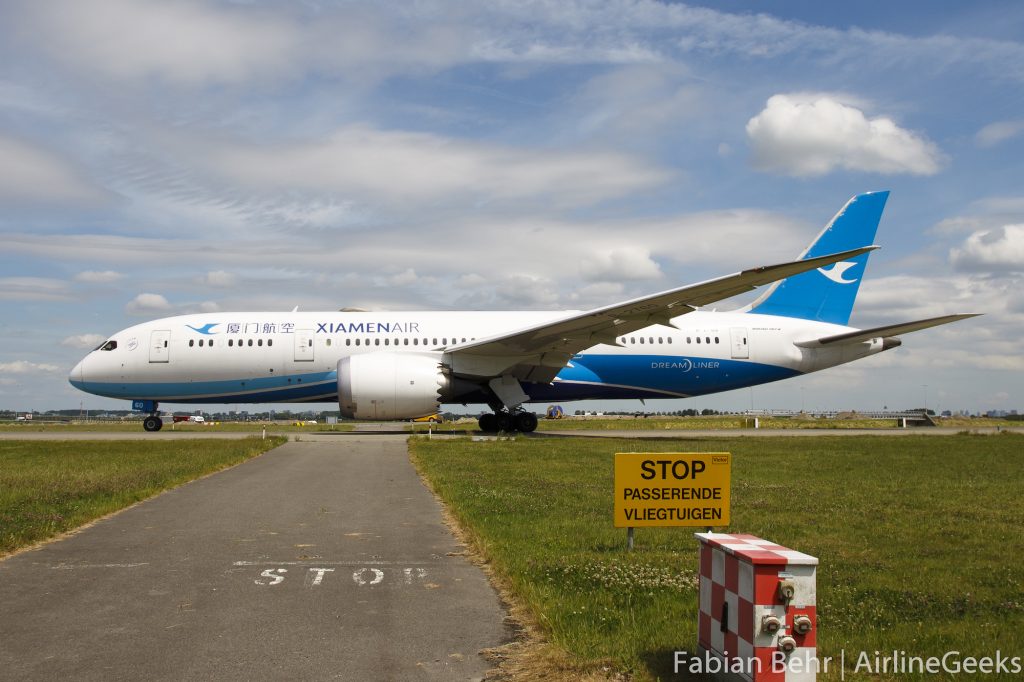
This is a part of the newly approved increase in flights between China and the United States, rising from 35 to 50 weekly flights starting on March 31. Xiamen Airlines’ only other US destination is Los Angeles, where it operates five weekly flights from its main hub of Xiamen.
Russian Airspace?
One of the most controversial topics when it comes to transpacific flying is the use of Russian airspace. U.S. carriers do not use the airspace while Chinese carriers, along with Indian and Middle Eastern airlines, continue to use it, often resulting in significantly shorter routings and flight times.
With Russian airspace out of bounds, it also becomes impractical for U.S. airlines to operate flights from the East Coast to East Asia. Some of the flights that were previously operated but are now impractical include:
- Atlanta (ATL) to Shanghai (PVG), operated by Delta
- Washington (IAD) to Beijing (PEK), operated by United
- Newark (EWR) to Shanghai (PVG), operated by United
- Newark (EWR) to Hong Kong (HKG), operated by United
- Dallas/Fort Worth (DFW) to Hong Kong (HKG), operated American
For the same reason, some of the new slots given to the Chinese carriers limited their ability to use Russian airspace. For instance, Air China’s flights between Washington, D.C. and Beijing avoid Russian airspace and thus require a technical stop in Los Angeles on the return leg. Hainan Airlines’ flights between Boston and Beijing face the same issue and make a stop in Seattle on the return journey.
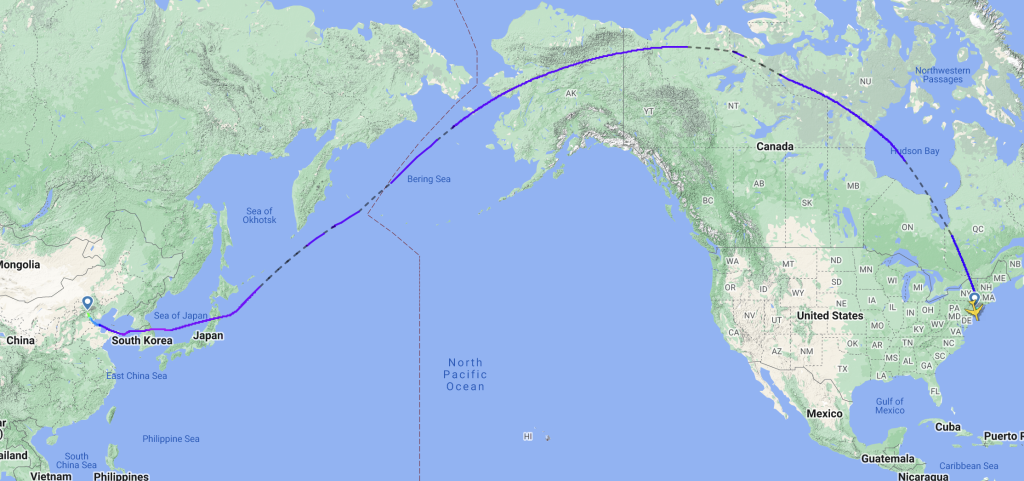
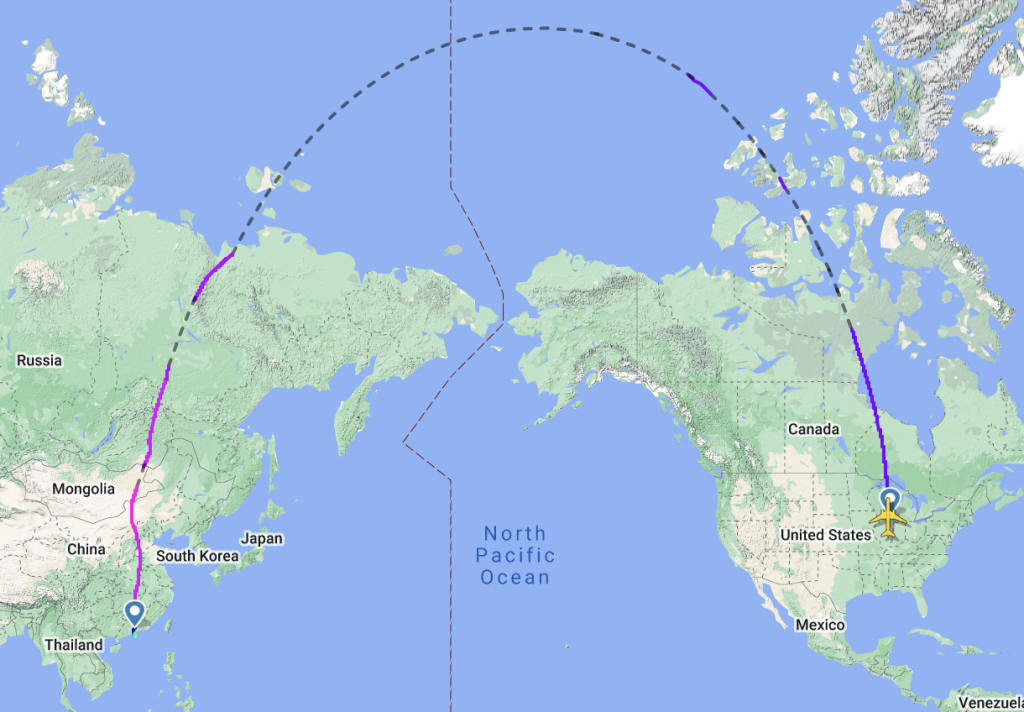
Xiamen Airlines’ previous filing suggests a stopover in Urumqi on the return journey, according to its initial application with the Department of Transportation (DOT). However, the stopover has since been removed from the schedule and its website.
50 Weekly Flights Are All Used Up
Since the flight cap between the countries was raised to 50 weekly flights for both nations, meaning 50 each for American and Chinese carriers, all 50 will be used by the Chinese airlines when the New York flights are launched while U.S. carriers currently only utilize 31 of them.
The main reason for the low utilization by the US.. carriers again returns to the issue of Russian airspace. U.S. airlines are unable to justify operating flights from their East Coast and Midwestern hubs and are unable to codeshare with their Chinese partners on flights where Russian airspace is used.
