










Stories

United Schedules First Mainline Flight With Starlink

The carrier is expanding use of the satellite internet technology across its fleet of Boeing 737-800s.

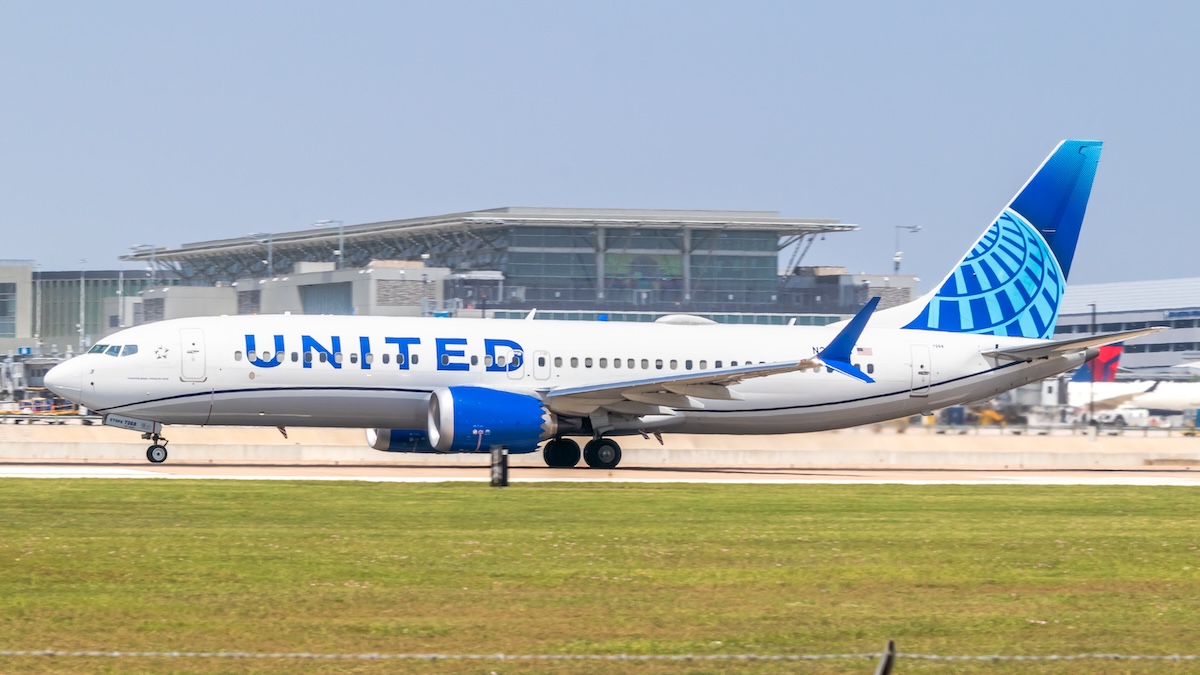
United 737-800
A United Boeing 737-800 (Photo: Shutterstock | Robin Guess)

United on Wednesday will operate its first mainline flight equipped with Starlink wireless internet.

United Flight 2940 is set to depart Newark Liberty International Airport in New Jersey for Houston around 8 a.m. using a Boeing 737-800 aircraft with two Starlink antennas. The over 170 passengers on board will be able to access Starlink Wi-Fi through their personal devices and inflight entertainment screens, the carrier said, allowing them to stream, shop, game, and work much as they would at home, with high speeds and low latency.

Also on Wednesday, the Starlink-equipped 737 will fly from Houston to Fort Lauderdale, Florida, as Flight 365 and from Fort Lauderdale back to Houston as Flight 445.

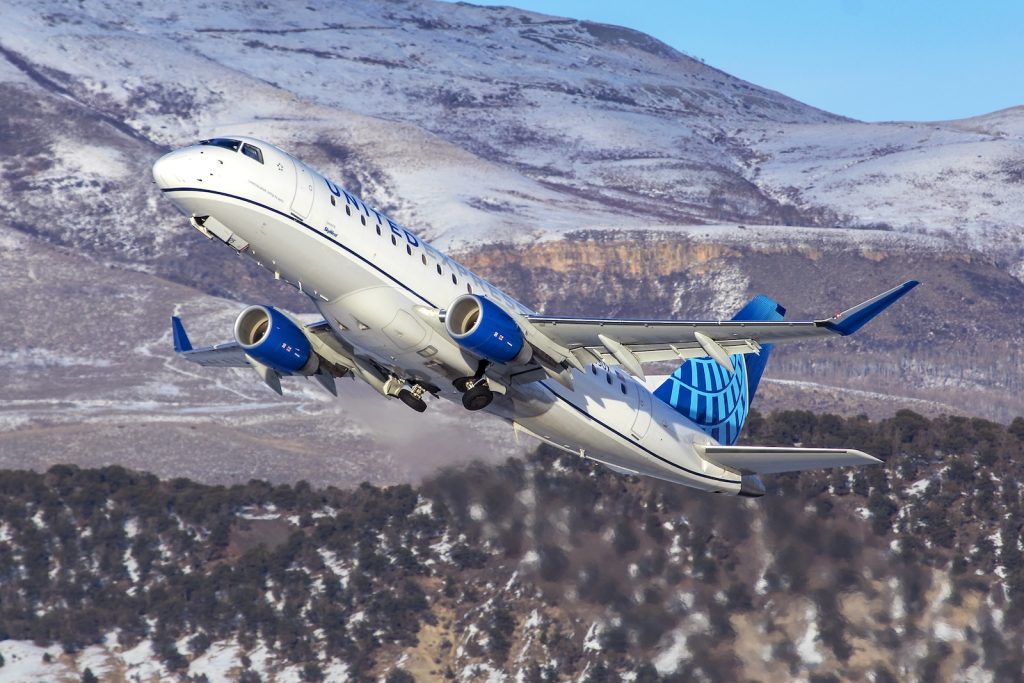
The airline expects to install Starlink on up to 15 mainline 737-800 aircraft each month. United has already installed Starlink on more than half of its regional jets.

United 737-800 with Starlink
Starlink equipment installed on a United 737-800. (Photo: United)

“We’re committed to raising the bar when it comes to the onboard experience, and with Starlink, we’re changing how people fly,” David Kinzelman, United’s chief customer officer, said in a statement. “Whether it’s catching a live game, streaming an award show, or working, United customers won’t miss a beat when they’re onboard a Starlink-equipped flight.”

The FAA in September approved a supplemental type certificate for Starlink’s use on United’s 737-800s. The carrier expects to have an additional aircraft type certified to offer Starlink by the end of the year, though it did not say which type that will be.

Starlink, which is owned by aerospace company SpaceX, provides wireless internet service from a constellation of more than 7,600 miniature satellites in low Earth orbit. It offers speeds of up to 250 megabits per second.

United makes Starlink-enabled wireless internet free for all MileagePlus customers.

Zach Vasile

Zach Vasile is a writer and editor covering news in all aspects of commercial aviation. He has reported for and contributed to the Manchester Journal Inquirer, the Hartford Business Journal, the Charlotte Observer, and the Washington Examiner, with his area of focus being the intersection of business and government policy.

Breeze Secures Financing for Planned Growth

The airline has entered a partnership with alternative investment manager AIP Capital.

A Breeze A220
A Breeze A220. (Photo: Shutterstock | Wenjie Zheng)

Low-cost airline Breeze said it has secured new financing to support its ongoing growth efforts.

Breeze and alternative investment manager AIP Capital on Tuesday announced the closing of $47.5 million in secured debt financing through AIP’s private credit business. The financing is secured by a “diversified collateral package” including the airline’s spare parts inventory, a spare engine, and a flight simulator, the partners said.

Breeze leaders said AIP’s loan will help power the carrier’s growth strategy, which includes the addition of new domestic and international routes and new ancillary products.

“We’re excited to have partnerships like AIP looking to explore innovative ways to support Breeze’s growth and mission to provide an elevated premium leisure experience to our current and future guests in unserved and underserved communities,” Breeze CFO Trent Porter said in a statement.

Breeze last month announced the planned launch of its first international flights after being certified as a U.S. flag carrier by the FAA. Starting early next year, the airline will serve Cancun, Mexico; Punta Cana, Dominican Republic; and Montego Bay, Jamaica.

Breeze has also added a number of domestic destinations this year, including Fort Lauderdale and Key West, Florida; Salisbury, Maryland; Greensboro/Winston-Salem, North Carolina; Albany and Rochester, New York; and Memphis, Tennessee. New routes to Lincoln, Nebraska, and Tri-Cities, Tennessee, are expected to come online later this year.

Zach Vasile

Zach Vasile is a writer and editor covering news in all aspects of commercial aviation. He has reported for and contributed to the Manchester Journal Inquirer, the Hartford Business Journal, the Charlotte Observer, and the Washington Examiner, with his area of focus being the intersection of business and government policy.

Air Serbia Revives Canada Route After 34-Year Gap

Service will start in May 2026.

Air Serbia Airbus A320
An Air Serbia Airbus A320. (Photo: Air Serbia)

Air Serbia is adding nonstop service between the Serbian capital of Belgrade and Toronto.

Starting May 23, 2026, flights will operate twice weekly, on Wednesdays and Saturdays, using Airbus A330‑200 aircraft. Tickets go on sale Oct. 16.

By the time it launches, Air Serbia’s Belgrade-Toronto route will be the first nonstop connection between the two cities in 34 years. Jat Airways, then the flag carrier of Yugoslavia, last served the route in May 1992.

Toronto will be Air Serbia’s third destination in North America, behind New York and Chicago, and its first in Canada.

“This strategic step marks the beginning of a new chapter in the history of our company and represents a continuation of Serbia’s economic, commercial, and cultural development,” Air Serbia CEO Jiří Marek said in a statement. “Toronto is known as one of the world’s most important destinations with a large Serbian diaspora, so the significance of this direct service goes beyond economic and commercial considerations.”

Air Serbia said travelers from Toronto will be able to connect through Belgrade to European destinations like Athens, Budapest, Bucharest, Prague, Sarajevo, Vienna, Zurich, Sofia, Bulgaria, and Dubrovnik, Croatia, among others.

Air Serbia flies mainly within Europe but also offers connections to Turkey, Georgia, central Russia, and China.

Zach Vasile

Zach Vasile is a writer and editor covering news in all aspects of commercial aviation. He has reported for and contributed to the Manchester Journal Inquirer, the Hartford Business Journal, the Charlotte Observer, and the Washington Examiner, with his area of focus being the intersection of business and government policy.

Qantas Says Stolen Customer Data Leaked Online

The Australian flag carrier was targeted by hackers in July.

A Qantas A380 lands at Dallas/Fort Worth International Airport. (Photo: AirlineGeeks | William Derrickson)

Australian flag carrier Qantas said Sunday that customer data stolen in a July cyberattack has been leaked online.

In a statement, the airline said cybercriminals stole 5.7 million customer records, most of which were limited to a customer’s name, email address, and frequent flyer details. A smaller number of customers also had their business or home address, date of birth, gender, and phone number exposed.

No credit card details, personal financial information, or passport details were affected, Qantas said, and passwords, PINs, and login details were not accessed or compromised. The data that was stolen is not enough to gain access to frequent flyer accounts, according to airline officials.

Customers whose data was stolen were notified back in July when the breach took place. The hackers are believed to have gained access to the records through a third-party platform.

Qantas did not say how many of the 5.7 million stolen records were leaked, or how it became aware that customers’ information is now circulating online.

The carrier said it has an ongoing injunction, granted by the Supreme Court of New South Wales, to prevent the stolen data from being viewed, used, transmitted, or published by anyone, but Troy Hunt, a cybersecurity expert in Australia, told The New York Times this week that the order essentially amounts to asking the hackers not to publish the records. Australian courts have no way of enforcing the injunction, he added.

Qantas is continuing to work with law enforcement agencies, including the Australian Cyber Security Centre and the Australian Federal Police, to investigate the breach.

Australian police have not publicly identified the cybercriminal group that attacked Qantas, but earlier this year, the FBI warned that international hacker collective Scattered Spider is increasingly targeting the airline industry, making the organization a likely suspect. The group’s members operate from the U.S., Canada, and the U.K.

Zach Vasile

Zach Vasile is a writer and editor covering news in all aspects of commercial aviation. He has reported for and contributed to the Manchester Journal Inquirer, the Hartford Business Journal, the Charlotte Observer, and the Washington Examiner, with his area of focus being the intersection of business and government policy.

Virgin Atlantic Appoints New CEO

Corneel Koster will lead the airline starting in 2026.

Virgin Atlantic 787
A Virgin Atlantic Boeing 787 Dreamliner seconds from touchdown in Las Vegas. (Photo: AirlineGeeks | William Derrickson)

Virgin Atlantic’s leadership board has appointed Corneel Koster as the airline’s new CEO.

Koster –who served as the board’s chief customer and operating officer for the British carrier– will succeed Shai Weiss as CEO starting on Jan. 1, 2026. Weiss will leave the company after a seven-year tenure on Dec. 31, 2025.

According to a news release from Virgin Atlantic, Koster “has been instrumental in running a safe and reliable operation” since rejoining Virgin’s board in 2019.

“As part of the leadership team, he played a pivotal role ensuring the airline emerged from the pandemic thriving and reliable, while leading the introduction of the airline’s award-winning A330neo aircraft and delivering digital operational transformation,” the release stated.

Koster has held senior and commercial roles at Virgin Atlantic, Delta, Aeromexico, and KLM Royal Dutch Airlines over his 30-year career. 

His predecessor became CEO in 2019 and led the company during the chaotic COVID-19 pandemic. Weiss was credited with leading customer satisfaction and helping the airline return to profitability during his tenure.

“Shai has done an outstanding job over the past seven years,” said Richard Branson, founder of Virgin Atlantic, in the release. “I’m grateful for his vision, passion and commitment to creating brilliant experiences that have made the airline stronger and raised the bar across the industry. I’m delighted to welcome Corneel as CEO. He embodies the Virgin spirit – bold, curious and ready to shake up the status quo. We look forward to this exciting new chapter.”

Weiss congratulated Koster on his appointment, saying he could “think of no one better to take over” the position.

“I leave Virgin Atlantic full of pride, knowing I have played a part in its bright red history,” he said. “Together, we’ve transformed through the pandemic and emerged faster, better and stronger than ever. We are now well on our way to achieving our mission of becoming the most loved travel company, having laid the foundations for a world of exciting opportunities as a premium flag carrier.”

Caleb Revill

Caleb Revill is a journalist, writer and lifelong learner working as a Junior Writer for Firecrown. When he isn't tackling breaking news, Caleb is on the lookout for fascinating feature stories.

Union Fighting WestJet’s Pilot Age Cap

The carrier currently allows pilots older than 65 to operate domestic flights.

WestJet 737 MAX
A WestJet 737 MAX 8. (Photo: AirlineGeeks | Katie Zera)

The Air Line Pilots Association is fighting a decision by Canadian airline WestJet to prohibit pilots older than age 65 from flying.

In a statement provided to AirlineGeeks, ALPA said that, should the policy take effect Nov. 1, 44 pilots would be “immediately impacted.” That number would grow to approximately 200 pilots over the next five years.

Currently, WestJet allows pilots older than 65 to fly on certain domestic routes within Canada. They cannot operate flights into U.S. airspace because the FAA’s mandatory retirement age for commercial airline pilots is 65. Canada does not have a universal mandatory retirement age for airline pilots, and the decision is left up to the individual carriers.

ALPA said the WestJet Pilots Master Executive Council filed a formal policy grievance in June and is now gathering information and working with counsel to bolster its case. An arbitrator has been appointed to hear the grievance.

The unionized WestJet pilots have also applied for an interim order that would block the airline from implementing the age cap until arbitration is finished.

WestJet 787
A WestJet Boeing 787 Dreamliner. (Photo: AirlineGeeks | Katie Zera)

“This decision by WestJet management will affect many of their long term dedicated employees that helped build WestJet into the respected airline it is today,” Capt. Bernie Lewall, chair of the WestJet Pilots Master Executive Council, said in a statement. “We believe WestJet should respect its workers and their rights, as protected by the collective agreement, and the Canadian Human Rights Act.”

“WestJet introduced an Age-Restricted Flying Policy, applicable to Pilots, earlier this year due to growing operational and regulatory complexities,” WestJet said in a statement. “The International Civil Aviation Organization (ICAO) regulations do not allow Pilots over age 65 from flying in international airspace including the United States.”

Age caps for commercial airline pilots have generated considerable debate over the last few years. Many countries stick to the ICAO’s standard of 65, but increasingly industry groups and individual pilots are pushing for an upward adjustment, arguing that pilots in their mid-to-late 60s who remain healthy should be allowed to keep their jobs.

An effort spearheaded by the International Air Transport Association to raise the global mandatory retirement age from 65 to 67 failed at the ICAO’s summit in Montreal last month.

Zach Vasile

Zach Vasile is a writer and editor covering news in all aspects of commercial aviation. He has reported for and contributed to the Manchester Journal Inquirer, the Hartford Business Journal, the Charlotte Observer, and the Washington Examiner, with his area of focus being the intersection of business and government policy.

Boeing, Southwest Score Industry First in Parts Authentication

The two companies, together with Aeroexchange, completed the first parts shipment using a digital airworthiness certificate.

Southwest 737 MAX 8
A Southwest Boeing 737 MAX 8 (Photo: AirlineGeeks | Katie Zera)

Boeing, Southwest, and aviation purchasing portal Aeroxchange completed the aerospace industry’s first parts shipment using a digital authentication certificate in place of a paper record.

The FAA’s Form 8130-3 certifies the airworthiness of aircraft parts and components. The form is paper-based, but recently a battery serviced at Boeing’s product repair services center in Davie, Florida, was shipped through Aeroexchange’s eARC platform using a digital version of the 8130 certificate.

Southwest received the battery at its facility in Dallas and verified its authenticity and airworthiness using the new digital system, making it the first aerospace part processed in this way.

Southwest 737-700
A Southwest Boeing 737-700. (Photo: AirlineGeeks | Katie Zera)

Boeing led the project to develop the digital certificate and secure authorization for its use from the FAA. The manufacturer said the technology is encrypted and secure, and can authenticate an authorized signer’s identity.

“This industry-first shipment reflects Boeing’s dedication to pursuing game-changing solutions through teamwork and partnership,” said William Ampofo, senior vice president of parts, distribution, and supply chain at Boeing Global Services, in a news release. “Together with Southwest Airlines and Aeroxchange, we are transforming how the industry ensures part authenticity and supply chain security.”

Boeing said it started developing the digital 8130 based on recommendations from the Aviation Supply Chain Integrity Coalition, which aims to prevent unapproved parts from entering the aviation supply chain. Boeing, Southwest Airlines, and Aeroxchange are all members of the organization.

Boeing said it will continue rolling out use of the digital 8130 certificate across all nine of its product repair services centers as they receive authorization from the FAA to use electronic systems for recordkeeping.

Zach Vasile

Zach Vasile is a writer and editor covering news in all aspects of commercial aviation. He has reported for and contributed to the Manchester Journal Inquirer, the Hartford Business Journal, the Charlotte Observer, and the Washington Examiner, with his area of focus being the intersection of business and government policy.

Air Botswana to Sell Three Aircraft

The airplanes were not in service and had become a drain on state resources, officials said.

Air Botswana aircraft
An Air Botswana Embraer E170. (Photo: Air Botswana via Wikimedia Commons)

Botswana’s national carrier, Air Botswana, will sell off three aircraft from its current fleet.

The sale includes two Embraer ERJ-145s and an E175.

This is a significant move since the airline only has six aircraft, and when the sale is completed, Air Botswana will lose half its fleet.

The aircraft have been grounded for some time and are now a drain on state resources, government officials said.

Air Botswana currently operates its flight schedule with just an Embraer E-70 and two ATR 72-600s.

From its hub in Gaborone, the carrier flies to Francistown, Maun, and Kasane in Botswana; Johannesburg, Durban, and Cape Town in South Africa; Windhoek, Namibia; Harare, Zimbabwe; and Lusaka, Zambia.

Burden on State Resources

Botswana’s President, Duma Boko, said in a televised interview that buyers for the aircraft have already been found. In the future, Air Botswana will wet-lease aircraft instead of buying them, he added.

“Instead of going out and doing wet-leases for aircraft, you go and buy aircraft, many of which are now grounded, so you’ve parked financial resources that we could otherwise have used in the industry,” he said, describing the airline’s past approach. “So these are some of the decisions that served to delay and or impede progress.”

Lack of ‘Industry Experience’

Boko put the situation down to inadequate aviation experience among previous members of Air Botswana’s management team.

“Many of them did not have industry experience, and so decisions that were taken tended to be decisions that were not informed by any real experience and/or outcomes that would help the industry,” he said.

The two ERJ-145s, received in the second half of 2024, had been operated on behalf of Air Botswana by Namibia’s charter/ACMI operator, Westair Aviation. This was because of regulatory obstacles to registering the aircraft in Botswana.

Ch-Aviation reported that Air Botswana’s pilots and engineers were also not familiar with the ERJ-145 aircraft.

The E175, received in August last year, had been grounded for over eight months. This is due to regulatory delays by Botswana’s Civil Aviation Authority regarding the approval of the E175’s manuals.

Lorne Philipot

Lorne is a South Africa-based aviation journalist. He was captivated and fascinated by flying from the day he took his first airline flight. With a passion for aviation in his blood, he has flown to destinations in all corners of the globe. Lorne has traveled extensively and lived in various countries. Drawing on his travels and passion for aviation, Lorne enjoys writing about airlines, routes, networks, and new developments.

American Pilots Prepare For A321XLR

Check pilots trained over the North Atlantic using A321neo aircraft last month.

American A321XLR
American's first A321XLR taxiing in Hamburg. (Photo: Tobias Gudat)

American Airlines has completed a series of transatlantic training flights meant to get pilots ready for the Airbus A321XLR.

Between Sept. 4 and 25, a group of American check pilots flew 42 flights between Philadelphia and Edinburgh, Scotland, using an A321neo.

American mainly uses its A320-family aircraft on routes within the U.S. and Canada, but the A321XLR, which the airline will start operating next year, has a range of up to 4,700 nautical miles, opening up new potential destinations.

For that reason, pilots must be trained in new regions, including the North Atlantic.

An American A321neo aircraft at Dallas/Fort Worth (Photo: AirlineGeeks | William Derrickson)

A group of eight check pilots flew with FAA inspectors so they could be trained and qualified to operate the A321 over the North Atlantic. The eight then trained the rest of the check pilot cohort, and now this larger group will start training American’s A320-family line pilots, initially from American’s New York pilot base.

The training the check pilots received focused on flight procedures unique to the North Atlantic, the use of radios different from those used on domestic flights, and suitable diversion airports in the region.

“These training flights were a huge success,” said Capt. Josh Hall, American’s A320 fleet captain, in a news release. “This effort sets us up nicely to begin training our line pilots to fly the A321XLR over the North Atlantic, and it was only made possible by the hard work and professionalism of our check pilots, the FAA, and our A320 flight training and fleet technical teams.”

The airline has not said which transatlantic routes the aircraft will serve, though more details will be shared “soon.”

Delivery of American’s first A321XLR is expected by the end of 2025. Initially, the aircraft will fly between New York and Los Angeles before being deployed in long-haul markets.

Zach Vasile

Zach Vasile is a writer and editor covering news in all aspects of commercial aviation. He has reported for and contributed to the Manchester Journal Inquirer, the Hartford Business Journal, the Charlotte Observer, and the Washington Examiner, with his area of focus being the intersection of business and government policy.

Spirit Secures $475 Million Lifeline

The carrier will have immediate access to $200 million as it navigates its second bankruptcy.

Spirit Airbus A321 jet
A Spirit Airbus A321. (Photo: Shutterstock | Skycolors)

Spirit on Friday unlocked a new funding source as it works to maintain normal operations during its second bankruptcy period in less than a year’s time.

The ultra-low-cost airline said it received approval from the U.S. Bankruptcy Court for the Southern District of New York for a multi-tranche debtor-in-possession financing facility of up to $475 million from its existing bondholders. Of that total, $200 million will be available immediately.

The financing arrangement was first announced in September, but Spirit needed a final ruling from the court.

Spirit has been dangerously short of liquid capital for months. The carrier reported net losses in the two quarters since its emergence from its first bankruptcy and has struggled with weak demand for domestic leisure travel.

The bankruptcy court also signed off on a deal between Spirit and aviation leasing company AerCap that will speed up the airline’s fleet modernization program and clear the way for the eventual delivery of 30 aircraft.

AerCap helped trigger Spirit’s second bankruptcy by claiming defaults on 37 aircraft in Spirit’s fleet, but as part of the new agreement, AerCap will pay Spirit $150 million, and Spirit will reject leases on 27 aircraft, freeing itself from the financial commitment.

The deal settles all disputes between the two companies.

“We are pleased to have reached another significant milestone in our restructuring, which represents continued progress toward securing a successful future for Spirit,” Spirit President and CEO Dave Davis said in a statement. “With these approvals in place, we are better equipped to build a stronger airline that delivers unmatched value to American consumers. We thank our stakeholders for their support and the Spirit team for their dedication and resilience during this process.”

Spirit filed for Chapter 11 bankruptcy protection in August after warning investors that it might not survive the year as a going concern. It has furloughed hundreds of pilots and canceled routes, and is now working with the bankruptcy court to end aircraft leases that contributed to its high debt load.

Zach Vasile

Zach Vasile is a writer and editor covering news in all aspects of commercial aviation. He has reported for and contributed to the Manchester Journal Inquirer, the Hartford Business Journal, the Charlotte Observer, and the Washington Examiner, with his area of focus being the intersection of business and government policy.
Sign-up for newsletters & special offers!

Get the latest stories & special offers delivered directly to your inbox

SUBSCRIBE

Uh-oh! It looks like you're using an ad blocker.

Our website relies on ads to provide free content and sustain our operations. By turning off your ad blocker, you help support us and ensure we can continue offering valuable content without any cost to you.

We truly appreciate your understanding and support. Thank you for considering disabling your ad blocker for this website