










Stories

Caribbean Airlines Axes Two U.S. Routes

Service changes take effect in November.

A Caribbean Airlines Boeing 737 MAX
A Caribbean Airlines Boeing 737 MAX. (Photo: Shutterstock | Kevin Porter)

Caribbean Airlines will modify its U.S. network beginning Nov. 2 by suspending two routes. The airline said the update is part of its network optimization program and was made in response to “current economic conditions” affecting specific routes.

Effective Nov. 2, flights between Kingston and Montego Bay, Jamaica, and Fort Lauderdale, Florida, will end. The final services will operate on Nov. 1 under flight numbers BW30 through BW33.

The network changes were loaded in last week’s Cirium Diio schedule update and confirmed by the carrier last month.

“Caribbean Airlines remains steadfast in its mission to connect people and communities across the region and beyond,” said the airline’s commercial chief, Martin Aeberli, in a news release. “While adjustments to our schedule are sometimes necessary in response to evolving market conditions, our commitment to delivering a safe, reliable, and customer-focused service remains unchanged.”

Boeing 737 water canon salute
A Caribbean Airlines Boeing 737 (Photo: Caribbean Airlines)

Passengers booked beyond Nov. 1 on affected flights are being notified directly. The airline said full refunds will be issued automatically,

Caribbean Airlines will continue to serve Port of Spain from Fort Lauderdale. The carrier began connecting Fort Lauderdale and Jamaica in 2011.

In addition to Fort Lauderdale, the airline also serves New York-JFK; Miami; Orlando, Florida; and San Juan, Puerto Rico, in the U.S.

Ryan Ewing

Ryan founded AirlineGeeks.com back in February 2013 and has amassed considerable experience in the aviation sector. His work has been featured in several publications and news outlets, including CNN, WJLA, CNET, and Business Insider. During his time in the industry, he's worked in roles pertaining to airport/airline operations while holding a B.S. in Air Transportation Management from Arizona State University along with an MBA. Ryan has experience in several facets of the industry from behind the yoke of a Cessna 172 to interviewing airline industry executives. Ryan works for AirlineGeeks' owner FLYING Media, spearheading coverage in the commercial aviation space.

Air Transat Adds New International Routes

The Montreal-based airline is also converting several seasonal routes to year-round.

An Air Transat A330-200
An Air Transat A330-200. (Photo: AirlineGeeks | William Derrickson)

Canadian airline Air Transat is adding new routes to Europe and the Caribbean, set to start later this year and in 2026.

The Montreal-based carrier said it is expanding service from Quebec City and Ottawa and will operate some connections not flown by any other airline.

Starting May 21, 2026, Air Transat will fly nonstop between Quebec City and Marseille, France, once per week on Thursdays. The route, which will be exclusive to Air Transat, will run until Oct. 8, 2026.

A previously announced new service between Quebec City and Fort-de-France, Martinique, scheduled to launch Dec. 14 of this year, will be extended over the summer of 2026, operating once weekly on Mondays.

From Ottawa, Air Transat will fly to London Gatwick and Montreal. The Ottawa-London Gatwick route will commence May 15, 2026, and operate three times a week on Tuesdays, Fridays, and Sundays.

This service will be Air Transat’s first transatlantic route from Ottawa. No other airline currently connects Ottawa and London Gatwick.

The Ottawa-Montreal route will run between May 5, 2026, and Oct. 23, 2026. The flight will help travelers in Ottawa access Air Transat’s full network, airline leaders said.

Expanded Service to Latin America, Caribbean

Beginning in the summer of 2026, Air Transat will also annualize several popular seasonal routes, including Montreal to Cartagena, Colombia; Montreal to Pointe-à-Pitre, Guadeloupe; Montreal to San José, Costa Rica; and Toronto to Medellín, Colombia, via Cartagena. The Montreal to Cartagena route will be extended to reach Medellín, with Cartagena as a stopover.

Zach Vasile

Zach Vasile is a writer and editor covering news in all aspects of commercial aviation. He has reported for and contributed to the Manchester Journal Inquirer, the Hartford Business Journal, the Charlotte Observer, and the Washington Examiner, with his area of focus being the intersection of business and government policy.

JSX Adds New Route, Cuts Another

The carrier will shake up its network this winter.

JSX Embraer jet
A JSX E-145 in Austin. The airline exclusively operates the Embraer jet. (Photo: AirlineGeeks | Mateen Kontoravdis)

JSX announced updates to its network on Wednesday, including the launch of a new year-round route and the suspension of another.

Beginning Jan. 8, the air carrier will start nonstop service between Denver’s Centennial Airport and Orange County, California. The route will operate once daily, four days per week.

The company said the new link will also enable one-stop, no-plane-change itineraries for travelers connecting between Dallas and Orange County via Denver.

At the same time, JSX will adjust its existing Centennial–Dallas service to operate four days per week, down from daily.

In addition, nonstop flights between Centennial and Burbank, California, will end on Jan. 5. After that date, one-stop itineraries between Dallas and Burbank will no longer be available, though JSX said travelers will be able to connect between the two cities via Las Vegas, subject to availability.

JSX describes itself as a “public charter jet service” offering flights from private terminals with shorter check-in times and a premium onboard experience. The carrier currently operates 30-seat Embraer jets, with plans to add turboprop aircraft by the end of 2025.

Ryan Ewing

Ryan founded AirlineGeeks.com back in February 2013 and has amassed considerable experience in the aviation sector. His work has been featured in several publications and news outlets, including CNN, WJLA, CNET, and Business Insider. During his time in the industry, he's worked in roles pertaining to airport/airline operations while holding a B.S. in Air Transportation Management from Arizona State University along with an MBA. Ryan has experience in several facets of the industry from behind the yoke of a Cessna 172 to interviewing airline industry executives. Ryan works for AirlineGeeks' owner FLYING Media, spearheading coverage in the commercial aviation space.

FAA Issues Brief Ground Stop in Nashville

The agency cited staffing problems.

Crowds at Nashville International Airport.
Crowds at Nashville International Airport. (Photo: Shutterstock | Alexandra Adele)

Staffing shortages triggered a brief ground stop at Nashville International Airport on Tuesday as the effects of the federal government shutdown continue to ripple through the U.S. air transportation system.

According to an FAA advisory, the ground stop went into effect around 6:30 p.m. local time and expired at 8 p.m. The agency cited “staffing” as the cause.

The advisory did not link the shortage to a specific segment of workers, but it likely refers to air traffic controllers, who are under significant strain due to the government shutdown.

Earlier in the day, the FAA advised officials at Nashville that it would be reducing the number of flights arriving at and departing from the airport due to a shortage of air traffic controllers. Those restrictions went into effect at 2:30 p.m. local time, before the ground stop, and will continue “until further notice,” the airport wrote on Facebook.

Because of the government shutdown, federal workers deemed essential, including air traffic controllers and TSA officers, have been working without pay. Starting on Monday, the U.S. Transportation Department noted a slight increase in the number of air traffic controllers calling out sick, which translated to delays at a number of major airports, including Chicago O’Hare, Denver, and Newark, New Jersey.

On Monday evening, Hollywood Burbank Airport in Southern California was left without a single air traffic controller for about six hours. Arrivals and departures at Burbank were handled remotely by controllers in San Diego.

Zach Vasile

Zach Vasile is a writer and editor covering news in all aspects of commercial aviation. He has reported for and contributed to the Manchester Journal Inquirer, the Hartford Business Journal, the Charlotte Observer, and the Washington Examiner, with his area of focus being the intersection of business and government policy.

Frontier Adding Two Routes

The carrier will expand its winter schedule.

Frontier A321neo
A Frontier A321neo (Photo: AirlineGeeks | William Derrickson)

Frontier is set to add two routes to its network starting next year. In recent months, the Denver-based airline has bolstered service in some markets as fellow ultra-low-cost carriers Spirit and Avelo reshuffle their networks.

Starting on Feb. 13, Frontier will resume an intra-Florida route between Orlando and Pensacola. This route is currently scheduled to operate five times in February and once in March.

The carrier last served this route in 2022. 

Frontier A320neo
A Frontier Airbus A320neo (Photo: AirlineGeeks | William Derrickson)

Beginning Dec. 7, Frontier will launch three-times-weekly service between Burbank, California, and Las Vegas, a route it last served in 2023. The carrier will compete with Southwest and Spirit in this market. 

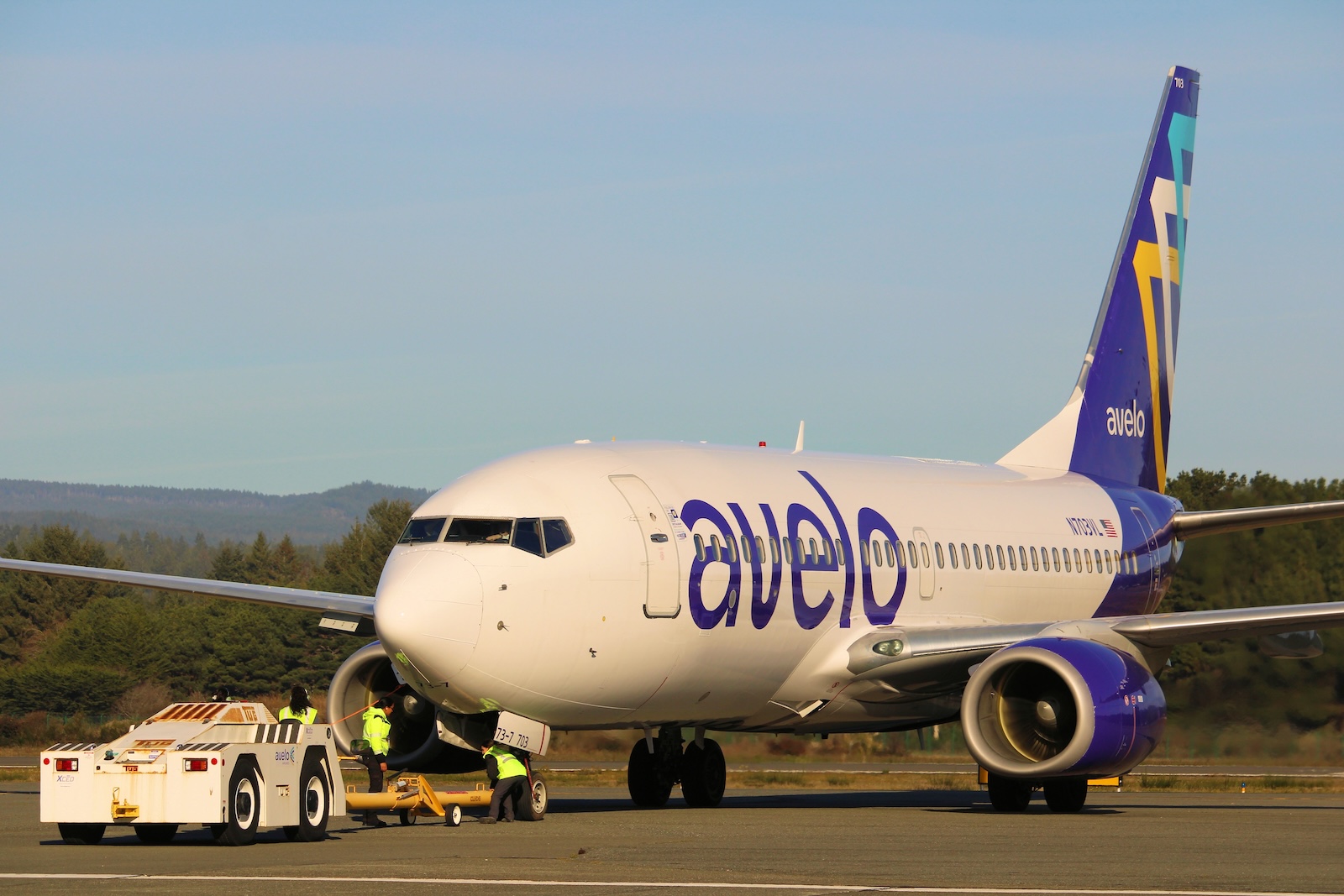
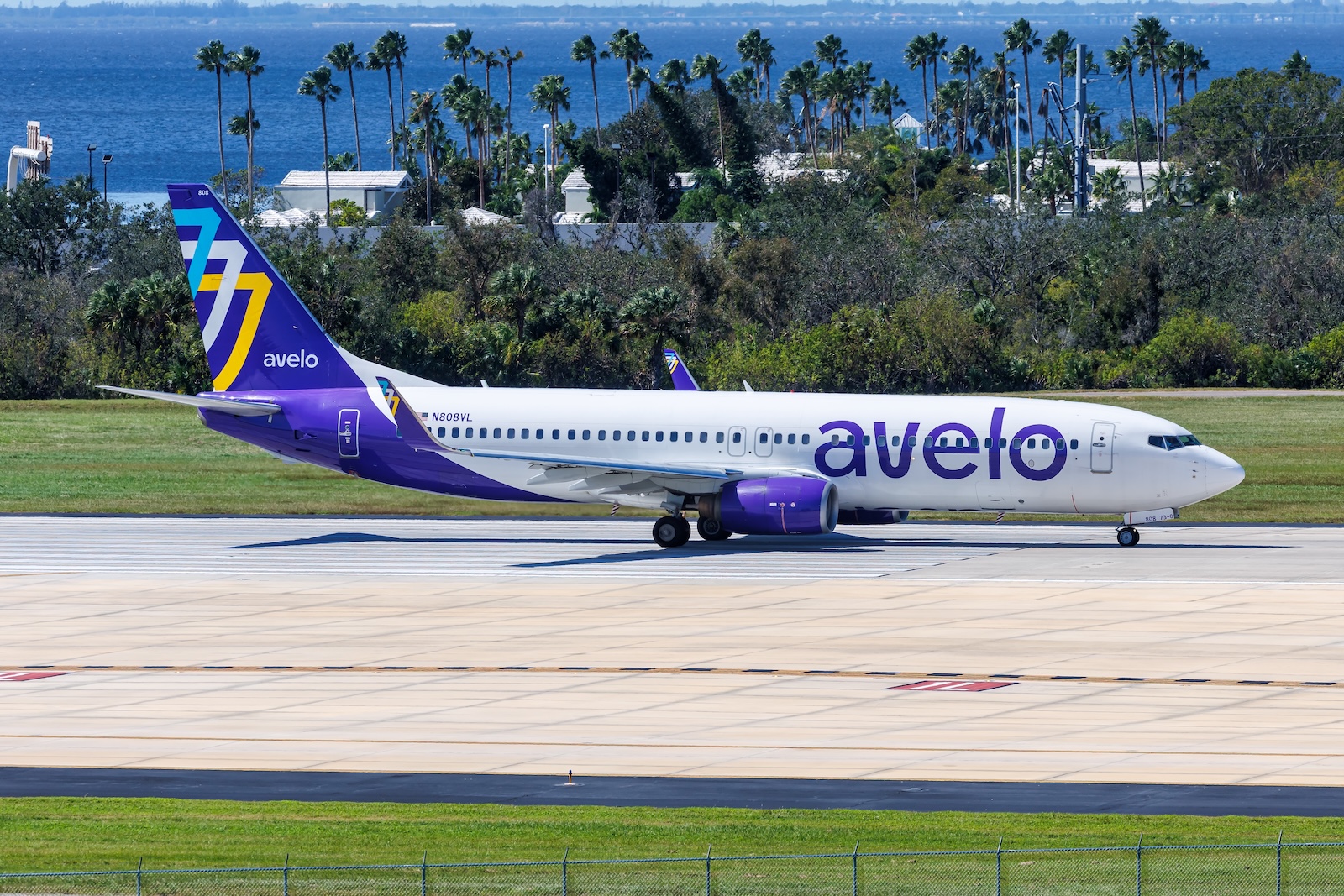
The new Burbank-to-Las Vegas route comes as Avelo announced plans to halt operations on the West Coast, while also closing its Burbank base.

These new routes were noted in last week’s Cirium Diio schedule update and later confirmed by a Frontier spokesperson. 

Ryan Ewing

Ryan founded AirlineGeeks.com back in February 2013 and has amassed considerable experience in the aviation sector. His work has been featured in several publications and news outlets, including CNN, WJLA, CNET, and Business Insider. During his time in the industry, he's worked in roles pertaining to airport/airline operations while holding a B.S. in Air Transportation Management from Arizona State University along with an MBA. Ryan has experience in several facets of the industry from behind the yoke of a Cessna 172 to interviewing airline industry executives. Ryan works for AirlineGeeks' owner FLYING Media, spearheading coverage in the commercial aviation space.

Family Awarded $16.9 Million After Runway Overrun

PenAir Flight 3296 crashed through a fence and into ballast harbor rocks while attempting to land in Dutch Harbor.

PenAir Flight 3296 after overrunning a runway in Dutch Harbor, Alaska. (Photo: NTSB via Wikimedia Commons)

A Washington jury has awarded $16.9 million to the family of a man who was killed when a PenAir flight overran a runway in Alaska almost six years ago.

Law firm Miller Weisbrod Olesky, which represented the family of the late David Oltman, announced the verdict on Monday and said it far exceeded earlier settlement offers put forward by PenAir, now defunct, and its insurance carrier.

The case was the first fatal commercial airline crash to advance to a verdict by jury in more than two decades.

“We have given this family financial security, but more importantly, they have been told this loss was avoidable and the fault of the airline,” said Clay Miller, lead counsel and name partner at Miller Weisbrod Olesky, in a statement.

PenAir Flight 3296, operated on behalf of Alaska Airlines using a Saab 2000 turboprop aircraft, departed Anchorage on Oct. 17, 2019, bound for Dutch Harbor on Amaknak Island in southern Alaska. While attempting to land in Dutch Harbor, the airplane overran the runway, crashed through a chain perimeter fence, and hit harbor ballast rocks. One of the propellers struck a road sign and the rocks, causing it to shatter and spray debris into the fuselage.

PenAir Flight 3296. (Photo: NTSB via Wikimedia Commons)

Oltman, then 38 and a resident of Washington, was killed and several other people were injured.

Maintenance Issue

In its final report on the accident, the National Transportation Safety Board said the aircraft’s anti-skid system was cross-wired by a brake maintenance contractor, leaving it “substantially compromised.” The agency also laid part of the blame on the pilots’ decision to land in Dutch Harbor with a significant tailwind.

Attorneys for Oltman’s family said the flight should never have departed Anchorage because PenAir had “numerous clues” that the anti-skid system was not working properly.

The airline’s legal team denied responsibility for the accident and blamed Saab and the State of Alaska, which operates Dutch Harbor Airport.

The jury ultimately found Pen Air 70% at fault and the brake maintenance contractor 30% at fault. The judge in the case ruled that PenAir is legally responsible for the actions of the contractor.

The entire $16.9 million award will be the responsibility of PenAir and its insurance carrier.

PenAir had filed for bankruptcy before the crash and ceased operations in 2019. Its assets were sold to Ravn Air Group, which also went out of business.

Zach Vasile

Zach Vasile is a writer and editor covering news in all aspects of commercial aviation. He has reported for and contributed to the Manchester Journal Inquirer, the Hartford Business Journal, the Charlotte Observer, and the Washington Examiner, with his area of focus being the intersection of business and government policy.

With EAS Subsidies at Risk, Airlines Promise Business as Usual

More than 160 U.S. airports — 40 in Alaska alone — could lose Essential Air Service funding if the shutdown continues past Sunday.

Alaska 737-700
A Boeing 737-700 in Wrangell, Alaska (Photo: AirlineGeeks | Joey Gerardi)

As the federal government shutdown moves into its second week, the Essential Air Service (EAS) program’s future remains uncertain. 

During a Monday press conference in Newark, New Jersey, Transportation Secretary Sean Duffy said funding for the program would dry up by Sunday. The Department of Transportation later told EAS carriers that they would be relieved from serving subsidized communities should funding lapse. 

According to the Regional Airline Association, 169 airports throughout the U.S. are subsidized under the program, with many located in Alaska. There are roughly 40 EAS-eligible communities in Alaska, which Duffy acknowledged Monday.

“The number one user of this [program] is Alaska. Again, you don’t have roads in Alaska,” he said. “They travel by air, and a lot of these are small communities. Alaska will be impacted, but every state across the country will be impacted by the inability to provide the subsidies airlines [need] to service these communities.”

Grant Aviation is the largest holder of EAS contracts in Alaska, with 22 communities served as of October 2024. Annual subsidy rates for these contracts total over $11 million. 

Alaska Airlines also holds several EAS contracts in its namesake state, including Adak, Cordova, Yakutat, Gustavus, Petersburg, and Wrangell. In a statement, an airline spokesperson said it “takes seriously our unique obligation to serve as the critical transportation link for these communities to hubs within and beyond the state of Alaska.”

United CRJ-200
A United CRJ-200 in Prescott, Arizona. (Photo: Shutterstock | photojohn830)

The carrier acknowledged the DOT’s notification of a potential lapse in funding should the government not reopen by Sunday, though it committed to continue serving these communities.

“Despite this potential uncertainty, Alaska Airlines currently plans to continue operating reliable flights as scheduled while the federal government works to resolve the shutdown,” the spokesperson added.

Grant Aviation did not respond to AirlineGeeks’ request for comment on the potential lapse in funding.

Lower 48

While the state of Alaska will likely be one of the hardest hit regions should EAS funding cease, the contiguous states are not immune to the uncertainty. 

Perhaps most vulnerable to this would be regional airline SkyWest, which holds the most EAS contracts in the Lower 48. It provides federally subsidized service to around three dozen communities. 

The carrier receives nearly $200 million in annual subsidies for EAS service, according to 2024 DOT data. 

But much like Alaska Airlines, the carrier also plans to continue service should funding lapse amid a prolonged shutdown. 

“We are working with each community and evaluating our capabilities in the event of a longer-term government shutdown,” a SkyWest spokesperson told AirlineGeeks in a statement. “It is our intent to honor our service commitments, including those under the Federal EAS program who rely on SkyWest’s reliable air service as an essential economic lifeline.”

Other EAS contract holders – including Denver Air Connection and Contour – have publicly echoed SkyWest’s comments. 

“Contour Airlines recognizes the vital nature of the air service we have been entrusted to provide to rural America,” a Contour spokesperson told The Parkersburg News and Sentinel. “Accordingly, Contour will continue to operate its full flight schedule during the federal government shutdown.”

A Contour Embraer jet
A Contour Embraer jet (Photo: Denver International Airport)

Southern Airways Express CEO and COO Deanna White told AirlineGeeks in a statement that the carrier remains “committed to maintaining regional air connectivity for the Essential Air Service (“EAS”) communities we serve through Southern Airways and Mokulele Airlines.”

“EAS subsidy funding from the U.S. Department of Transportation will pause beginning October 13th as long as the federal government remains shut down. Despite this potential funding interruption, we will continue flying all EAS routes with full scheduled service as planned,” White continued.

Alongside SkyWest and Contour, the carrier holds a large number of EAS contracts, including four in Hawaii.

Should airlines continue operating these flights beyond Sunday – if the shutdown is not resolved – the DOT said they’d be doing it “at their own risk,” as reimbursement cannot be guaranteed.

Editor’s Note: This story was updated on Wednesday, October 8, 2025, at 9:37 a.m. ET to add comments from Southern Airways Express.

Ryan Ewing

Ryan founded AirlineGeeks.com back in February 2013 and has amassed considerable experience in the aviation sector. His work has been featured in several publications and news outlets, including CNN, WJLA, CNET, and Business Insider. During his time in the industry, he's worked in roles pertaining to airport/airline operations while holding a B.S. in Air Transportation Management from Arizona State University along with an MBA. Ryan has experience in several facets of the industry from behind the yoke of a Cessna 172 to interviewing airline industry executives. Ryan works for AirlineGeeks' owner FLYING Media, spearheading coverage in the commercial aviation space.

Neos Suspends Route Between Canada and India

The service will end Wednesday.

Neos 787-9
A Neos 787-9 aircraft (Photo: 周逸飞, CC BY-SA 4.0 , via Wikimedia Commons)

Italian airline Neos is suspending flights between Toronto and Amritsar, India.

In a statement, the airline said the service, which involves a stopover in Milan, will be suspended as of Wednesday. It blamed “current international geopolitical instability and the resulting decline in booking trends.”

Neos said it will reach out to affected customers and provide instructions for a refund. Customers who booked Toronto-Amritsar flights through a travel agency were told to contact the agency directly.

Neos launched the service between Toronto and Amritsar in 2023 to help connect eastern Canada’s relatively large Punjabi diaspora population with northern India. FlyAmritsar, an Indian organization that advocates for expanded air service to and from Amritsar, called the airline’s decision a “major setback” for the region and for the Punjabi community in North America.

Toronto will remain a part of Neos’ route network, with nonstop service to Milan set to continue.

Neos has its main operations base at Milan Malpensa Airport and flies primarily within Europe, Africa, and the Middle East. It has one destination in the U.S., New York-JFK, which it connects with Milan and Bari, Italy.

Zach Vasile

Zach Vasile is a writer and editor covering news in all aspects of commercial aviation. He has reported for and contributed to the Manchester Journal Inquirer, the Hartford Business Journal, the Charlotte Observer, and the Washington Examiner, with his area of focus being the intersection of business and government policy.

A320 Passes 737 As Most Delivered Jet in History

The manufacturer broke its rival’s record with a delivery in Saudi Arabia on Tuesday.

An A320 assembly facility in Toulouse, France.
An A320 assembly facility in Toulouse, France. (Photo: Airbus)

Airbus has scored a symbolic win in its competition with Boeing.

As of Tuesday, Airbus’ A320 family is the most delivered commercial aircraft in history, surpassing Boeing’s 737. Boeing’s longstanding record was broken when Airbus delivered a jet to Saudi low-cost-carrier Flynas.

Airbus has now delivered 12,268 A320 aircraft since the type’s introduction in 1988. Boeing, by comparison, has delivered 12,262 737s, according to fleet data from Cirium.

The 737, which entered service in 1968, was the most delivered commercial aircraft in the world for decades.

The A320 surpassed the 737 as the best-selling aircraft by total orders in 2019, but the 737 remained ahead in total deliveries until this week.

Boeing in Renton
737 MAX aircraft in Renton (Photo: Shutterstock | Thiago B Trevisan)

The A320 and the 737 have become the workhorses of the global airline industry. Together, the manufacturers have delivered over 20,100 of the two types.

Boeing’s production has been limited by increased regulatory oversight since the fatal crashes of two 737 MAX jets in 2018 and 2019. The company is gradually increasing output and hopes to soon turn out 42 737 MAX airplanes per month. In 2026, it plans to dial up that tempo to 52 per month.

Zach Vasile

Zach Vasile is a writer and editor covering news in all aspects of commercial aviation. He has reported for and contributed to the Manchester Journal Inquirer, the Hartford Business Journal, the Charlotte Observer, and the Washington Examiner, with his area of focus being the intersection of business and government policy.

Alaska, Hawaiian to Begin Flight Renumbering

Hawaiian flights will adopt Alaska’s “AS” code in 2026.

Alaska and Hawaiian aircraft
Alaska and Hawaiian aircraft in Maui. (Photo: Shutterstock / EQRoy)

Alaska Airlines has detailed plans to renumber Hawaiian Airlines flight numbers as the two carriers prepare for a full system integration next year. The change is part of a broader effort to align operations ahead of obtaining a Single Operating Certificate (SOC).

Beginning Oct. 26, the company said Hawaiian flights will be renumbered under new Alaska-style ranges to prevent overlap and confusion in communications, according to Aeroroutes

Neighbor Island flights will use AS1000–1299, while North America and international services will operate under AS800–999.

At the time of the Passenger Service System (PSS) cutover on April 22, 2026, all Hawaiian flights will retain their flight numbers but transition from the “HA” prefix to Alaska’s “AS” designator. For example, flight HA800 will become AS800.

The renumbering accompanies Alaska and Hawaiian’s broader PSS migration from Amadeus to Sabre, which is scheduled to occur overnight on April 21, 2026. The airlines – which finalized their merger last year – are hoping to obtain a Single Operating Certificate by the end of 2025.

Ryan Ewing

Ryan founded AirlineGeeks.com back in February 2013 and has amassed considerable experience in the aviation sector. His work has been featured in several publications and news outlets, including CNN, WJLA, CNET, and Business Insider. During his time in the industry, he's worked in roles pertaining to airport/airline operations while holding a B.S. in Air Transportation Management from Arizona State University along with an MBA. Ryan has experience in several facets of the industry from behind the yoke of a Cessna 172 to interviewing airline industry executives. Ryan works for AirlineGeeks' owner FLYING Media, spearheading coverage in the commercial aviation space.
Sign-up for newsletters & special offers!

Get the latest stories & special offers delivered directly to your inbox

SUBSCRIBE

Uh-oh! It looks like you're using an ad blocker.

Our website relies on ads to provide free content and sustain our operations. By turning off your ad blocker, you help support us and ensure we can continue offering valuable content without any cost to you.

We truly appreciate your understanding and support. Thank you for considering disabling your ad blocker for this website