










Stories

Airport Using Lasers to Ward Off Drones

Police in Germany are using the tactic as drone interference at airports spreads across Europe.

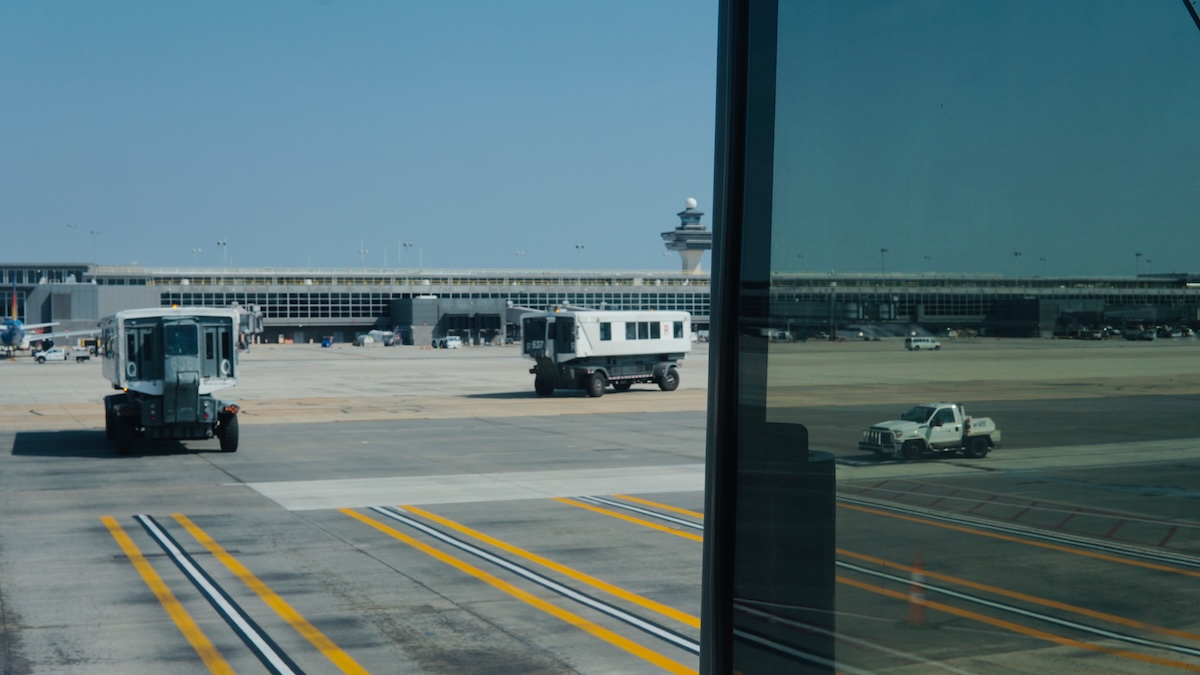
Munich Airport in Germany.
Munich Airport in Germany. (Photo: Shutterstock | manfredxy)

A major airport in Europe is using lasers to both track and chase off drones after sightings forced officials to cancel flights.

According to German newspaper Bild, police equipped with lasers are now stationed around Munich Airport in case the drones return. The lasers can tell authorities how far the drones are from the airport and serve as a warning to operators that the vehicles have crossed into restricted airspace.

Drones have been spotted hovering near and around the airport since Oct. 2. As a precaution, over a dozen flights were canceled that day, and incoming flights were redirected to Stuttgart, Nuremberg, Frankfurt, and Vienna.

The drones reappeared one day later, flying near Munich’s north and south runways, and again on Oct. 4, when about 170 flights were canceled.

Police in Germany are trying to identify the individuals operating the drones.

Drone sightings have triggered delays and cancellations at airports across Europe in recent weeks, including in Denmark, France, Norway, Lithuania, Latvia, Poland, and Romania. Elected officials, including German Chancellor Friedrich Merz, suspect Russia is behind the incursions, probably as retaliation for Europe’s isolation of Russia during its ongoing war with Ukraine. So far, there is no evidence conclusively linking Russia to the drones.

Zach Vasile

Zach Vasile is a writer and editor covering news in all aspects of commercial aviation. He has reported for and contributed to the Manchester Journal Inquirer, the Hartford Business Journal, the Charlotte Observer, and the Washington Examiner, with his area of focus being the intersection of business and government policy.

Essential Air Service ‘Will Be Impacted’ by Shutdown

Funding will run out by Sunday, Duffy said.

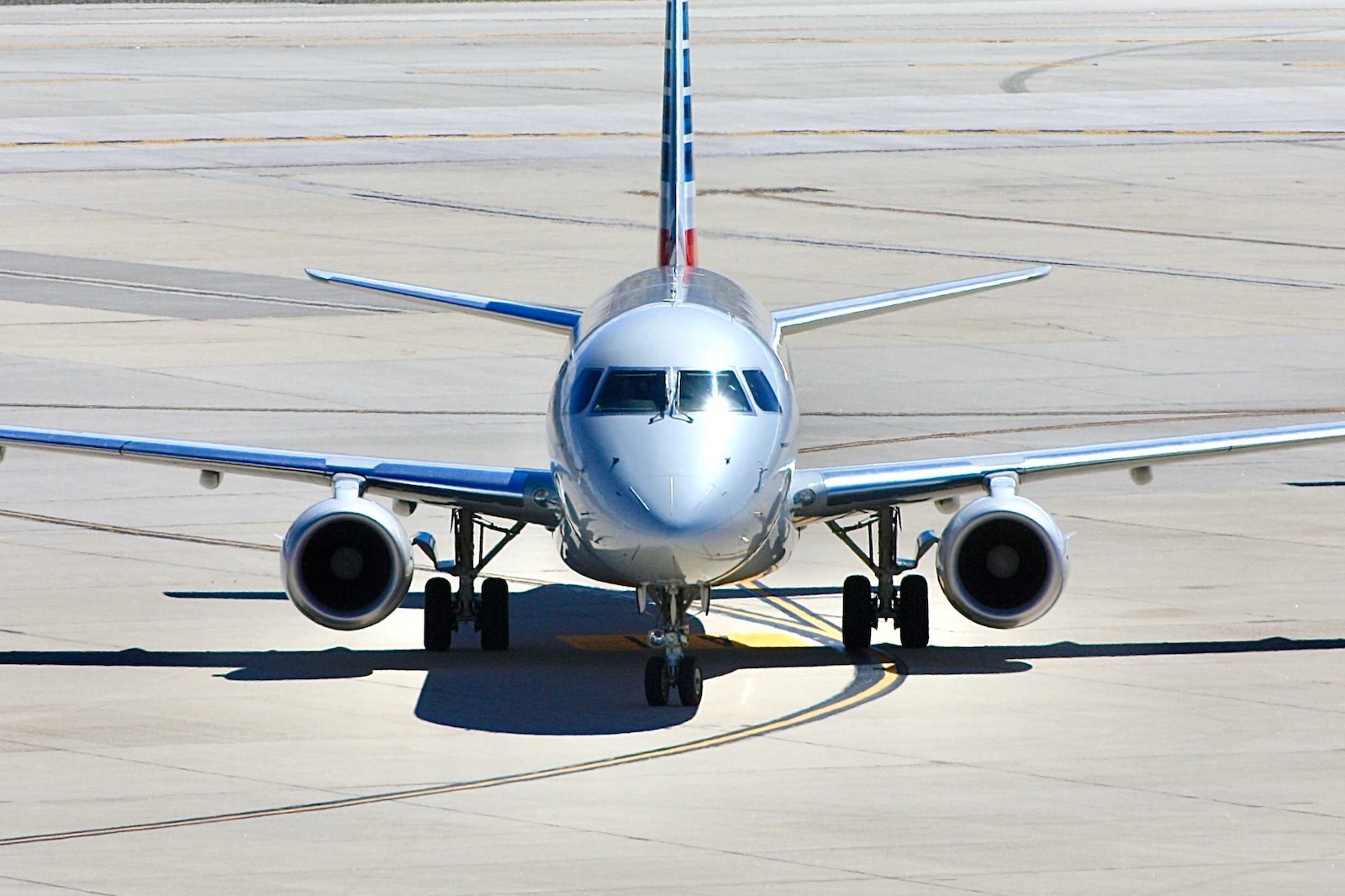
Regional jet
An American Eagle E145 (Photo: AirlineGeeks | William Derrickson)

The Essential Air Service (EAS) program will run out of funding as early as Sunday, Transportation Secretary Sean Duffy said. His comments come as a federal government shutdown continues into its second week.

Certain federal government employees – including air traffic controllers and TSA officers – will continue to work without pay. But Duffy added that non-critical workers within his agency have been laid off as a result of the shutdown.

During a press conference on Monday, Duffy sounded the alarm about the potential impacts on communities subsidized under the federal government program, while blaming the shutdown on Democrats. 

“So there’s many small communities across the country that will now no longer have the resources to make sure they have air service in their community,” he stated.

Due to its heavy reliance on the program, Alaska will be heavily impacted, the secretary noted. 

“The number one user of this [program] is Alaska. Again, you don’t have roads in Alaska,” he continued. “They travel by air, and a lot of these are small communities. Alaska will be impacted, but every state across the country will be impacted by the inability to provide the subsidies airlines [need] to service these communities.”

Communities seeking air service under the program – which is funded by Congress and administered by the DOT – must submit a formal proposal when service is at risk or an incumbent carrier plans to exit. The process typically begins when an airline notifies the DOT of its intent to terminate service to an eligible small community

The agency then issues a request for proposals (RFP), inviting qualified carriers to submit bids outlining proposed schedules, aircraft types, and subsidy requirements. These proposals are published in the Federal Register and shared with local officials for review and comment.

Delta CRJ-200
A Delta Connection CRJ-200 in Butte, Mont. (Photo: AirlineGeeks | Joey Gerardi)

After evaluating the bids, the DOT selects a carrier based on factors such as reliability, proposed service frequency, community input, and subsidy cost.

In a notice issued Monday, the agency warned that if the shutdown extends beyond October 12, it will relieve air carriers of their obligations under all active Essential Air Service (EAS) contracts.

Beginning October 13, the DOT said it would suspend subsidy payments until Congress restores funding. The department noted that carriers choosing to continue operations beyond that date would do so “at their own risk,” as reimbursement cannot be guaranteed.

Last-Minute Funding

Duffy added that funding for the EAS program was originally slated to run dry by Thursday, but that his agency found “some more money to put in.”

Now, he says EAS funding will cease by Sunday.

“Essential Air Service subsidies are expected to expire as soon as Sunday. USDOT exhausted every resource in trying to prolong an EAS shortfall, including transferring unrelated funding from the FAA as an advance,” a DOT spokesperson said as part of a statement. 

“USDOT is in the process of notifying carriers of the shortfall and alerting communities of the potential impacts,” the spokesperson added.

Despite efforts by the Trump administration to dramatically slash EAS funding as part of President Trump’s ‘Skinny Budget,’ Duffy called the program “important,” adding that it has continually maintained bipartisan support in both chambers.

“But we don’t have the money for [it] moving forward,” he concluded. 

Ryan Ewing

Ryan founded AirlineGeeks.com back in February 2013 and has amassed considerable experience in the aviation sector. His work has been featured in several publications and news outlets, including CNN, WJLA, CNET, and Business Insider. During his time in the industry, he's worked in roles pertaining to airport/airline operations while holding a B.S. in Air Transportation Management from Arizona State University along with an MBA. Ryan has experience in several facets of the industry from behind the yoke of a Cessna 172 to interviewing airline industry executives. Ryan works for AirlineGeeks' owner FLYING Media, spearheading coverage in the commercial aviation space.

Indian Pilots Want 787s Grounded

The RAT system was triggered on an Air India 787 on Saturday.

Air India 787-8
An Air India Boeing 787-8 Dreamliner. (Photo: AirlineGeeks | William Derrickson)

A professional pilots association in India is calling on regulators to inspect every Boeing 787 Dreamliner in the country after one of the airplanes unexpectedly activated an emergency power system over the weekend.

In a message to the Directorate General of Civil Aviation and other government aviation bodies, the Federation of Indian Pilots said the aircraft should be grounded and their electrical systems checked for possible problems. The plea came one day after an emergency backup generator known as a ram air turbine (RAT) was triggered on an Air India 787 flying from Amritsar in northern India to Birmingham in the U.K.

The ram air turbine is meant to kick in when the aircraft’s engines lose power, among other factors, but Air India said this did not happen, and “all electrical and hydraulic parameters were found normal,” according to the BBC.

The flight landed safely in Birmingham. The return flight to India was canceled, and the aircraft involved has been temporarily removed from service.

Notably, the RAT was activated on the Air India 787 that crashed shortly after takeoff from Ahmedabad, India, in June. The aircraft lost altitude and hit the campus of a medical college, killing a total of 260 people on board and on the ground. One passenger survived.

Authorities in India are investigating the cause of the crash with assistance from experts from the U.S. and U.K. According to their preliminary findings, a cockpit voice recorder captured one pilot asking the other why he had cut off power to the engines, and the other pilot replying that he had not.

The Indian government ordered inspections of all 787s in the aftermath. No problems were found, and the airplanes returned to service.

The DGCA said it has launched an investigation of the Amritsar-Birmingham flight but has so far not ordered another round of inspections for all 787s in the country.

Zach Vasile

Zach Vasile is a writer and editor covering news in all aspects of commercial aviation. He has reported for and contributed to the Manchester Journal Inquirer, the Hartford Business Journal, the Charlotte Observer, and the Washington Examiner, with his area of focus being the intersection of business and government policy.

50th Aircraft Joins JSX’s Fleet

New jet features a special livery.

JSX 50th aircraft
JSX's 50th aircraft (Photo: JSX)

Dallas-based public charter carrier JSX has formally taken delivery of its 50th aircraft, the company said. 

The aircraft, an Embraer E145, was unveiled with a special retro-themed livery celebrating the milestone. JSX said the retro-inspired design pays homage to the “idyllic golden age of air travel.”

JSX's 50th aircraft
JSX’s 50th aircraft (Photo: JSX)

JSX’s fleet has until now been composed primarily of Embraer E135 and E145 jets. The carrier has also announced plans to begin operating ATR 42-600 turboprop aircraft later in 2025, with two units already leased and more expected under a letter of intent

In announcing the 50th delivery, JSX said the new aircraft “carries history in the making,” reflecting both the company’s past trajectory and ambitions for the future. 

JSX retro livery
JSX’s 50th aircraft features a retro livery. (Photo: JSX)

Though the company began operations in 2016 (originally as JetSuiteX), it has grown quickly within the “hop-on” public charter niche by offering a premium cabin product and FBO-based operations. 

The 50th aircraft is registered as N960JX. Before joining JSX’s fleet, it operated for the now-defunct regional airline ExpressJet. 

Ryan Ewing

Ryan founded AirlineGeeks.com back in February 2013 and has amassed considerable experience in the aviation sector. His work has been featured in several publications and news outlets, including CNN, WJLA, CNET, and Business Insider. During his time in the industry, he's worked in roles pertaining to airport/airline operations while holding a B.S. in Air Transportation Management from Arizona State University along with an MBA. Ryan has experience in several facets of the industry from behind the yoke of a Cessna 172 to interviewing airline industry executives. Ryan works for AirlineGeeks' owner FLYING Media, spearheading coverage in the commercial aviation space.

American to Remove Bag Sizers From Gates

The change is meant to speed up the boarding process.

American 737-800
American Boeing 737 at O'Hare. (Photo: Shutterstock | Nate Hovee)

American Airlines is simplifying part of its boarding process in hopes of saving customers time and getting them on their flights faster.

In a statement to AirlineGeeks, the carrier confirmed it will soon remove metal bag sizers, which measure carry-on bags to ensure they will fit in an overhead bin and don’t need to be checked, from its airport gates. Currently, passengers are required to use the devices to check that their bags do not exceed 45 linear inches.

American said the change builds on other “enhancements” to its boarding process introduced earlier this year. These include additional board time for domestic mainline flights and new boarding technology.

American is not changing its standards for what qualifies as a carry-on bag, and its employees will still monitor bag size at check-in and at gates to make sure oversized items are checked.

Bag sizers will remain in airport lobbies for customers to determine whether their carry-on will fit in an overhead bin.

Zach Vasile

Zach Vasile is a writer and editor covering news in all aspects of commercial aviation. He has reported for and contributed to the Manchester Journal Inquirer, the Hartford Business Journal, the Charlotte Observer, and the Washington Examiner, with his area of focus being the intersection of business and government policy.

Court to Rehear Case on Airline ‘Junk Fees’

Seventeen federal judges will weigh in on a Biden-era rule aimed at promoting price transparency.

Aircraft at Reagan National Airport
Aircraft at Reagan National Airport (Photo: Shutterstock | Kit Leong)

A federal appeals court has agreed to rehear a case pitting a Biden-era consumer protection rule against most of the U.S. airline industry.

The rule, issued in 2024 but so far blocked from taking effect, would require airlines to fully disclose their fees to customers when they book a flight. Airlines and industry trade groups sued to stop the measure, and in January, the 5th U.S. Circuit Court of Appeals in New Orleans ruled that while the U.S. Department of Transportation had the authority to make such a rule, it had violated procedure by denying the airlines a chance to comment on a study that assessed the proposal’s impact on fees.

The appeals court said Thursday that its 17 active judges will sit “en banc” and review that decision. In “en banc” proceedings, all judges of a particular court hear a case.

The development was first reported by Reuters.

The current Department of Transportation, now under different leadership, has not sought to rework and reimplement the price transparency rule, even though the January ruling gave it the ability to do so. In general, the Trump administration has shown much less interest in passing or upholding consumer protection rules for the airline industry, and has already dropped enforcement of some.

United, American Airlines, Delta, Alaska Airlines, JetBlue, and three trade groups, including Airlines for America, have argued that the rule exceeds the FAA’s statutory authority. Airlines for America, which represents all the U.S. legacy carriers, has said the FAA should limit its rulemaking to issues directly related to airline operations and safety.

Headed Back to Court

The Transportation Department issued several rules focusing on consumer protection in commercial air travel in 2023 and 2024, including a measure that required airlines to compensate passengers for delays of over three hours. Another notable rule from that period required airlines to assume responsibility for damage to passenger mobility equipment, such as wheelchairs.

The department also announced a joint investigation with the U.S. Justice Department looking into the “state of competition in air travel.” The two agencies said they would gather information on industry consolidation, airport access rules, and “anticompetitive conduct,” among other topics.

Some of these directives were blocked by the courts, and the Trump administration has declined to defend them. In September, the Department of Transportation said it would withdraw the delay compensation rule, and earlier this week it decided not to enforce protections for mobility devices.

There has been no word on the status of the investigation into airline competition. Airlines for America has argued it should be stopped.

Zach Vasile

Zach Vasile is a writer and editor covering news in all aspects of commercial aviation. He has reported for and contributed to the Manchester Journal Inquirer, the Hartford Business Journal, the Charlotte Observer, and the Washington Examiner, with his area of focus being the intersection of business and government policy.

Etihad Announces Return to Zanzibar

The service will operate between June and September of 2026.

Etihad A320
An Etihad Airbus A320. (Photo: Shutterstock | Markus Mainka)

Etihad Airways will operate seasonal service to the island of Zanzibar next summer.

The carrier will resume the medium-haul route on June 14, 2026, and end the service on Sept. 6. It will offer four rotations per week between Abu Dhabi and the Indian Ocean island.

Flights will be operated with an Airbus A320 aircraft, offering Business and Economy Class cabins.

“Zanzibar is the perfect summer escape and we are thrilled to welcome it back to our growing network,” said Etihad CEO Antonoaldo Neves in a news release.

Expanded Route Network

Zanzibar becomes Etihad’s 30th new destination announced this year.

Last week, the airline said that it will be flying to Palma de Mallorca in the Balearic Islands in the summer of 2026.

Etihad’s return to Zanzibar has been made possible by a larger and more complete European network, with multiple double-daily services into Abu Dhabi.

Zanzibar is a popular tourist destination on its own or coupled with a safari in Kenya or Tanzania.

Lorne Philipot

Lorne is a South Africa-based aviation journalist. He was captivated and fascinated by flying from the day he took his first airline flight. With a passion for aviation in his blood, he has flown to destinations in all corners of the globe. Lorne has traveled extensively and lived in various countries. Drawing on his travels and passion for aviation, Lorne enjoys writing about airlines, routes, networks, and new developments.

Boeing Further Delays 777X Deliveries

The delay will likely cost the manufacturer billions of dollars.

A Boeing 777X
A Boeing 777X testbed aircraft. (Photo: AirlineGeeks | William Derrickson)

Boeing has pushed back the debut of its long-delayed 777X widebody jet to early 2027, according to a new report from Bloomberg.

Citing unnamed sources with knowledge of the matter, the news outlet said Boeing will likely not be able to deliver its first 777X aircraft next year as planned. Customers such as Lufthansa and Emirates are already making changes to their fleet planning for 2026 to accommodate the delay, Bloomberg reported.

The 777X was originally scheduled to enter commercial service in 2020, but technical problems, supply chain issues, and continued delays in the aircraft’s certification by the FAA have postponed deliveries several times. The FAA has faulted the type for an alleged lack of “design maturity” and in 2020 reported an “uncommanded pitch event” on a test flight, which caused the airplane’s nose to pitch up without pilot input.

The manufacturer has said it expects the FAA to certify the aircraft at some point in 2026.

Postponing the 777X once again will likely cost Boeing between $2.5 billion and $4 billion in accounting charges, according to Bloomberg.

Company officials declined to comment on the outlet’s story.

‘Behind Our Plan’

Boeing executives have signaled in recent weeks that the 777X’s certification was falling behind schedule.

Last month, CEO Kelly Ortberg told Morgan Stanley’s Laguna Conference that there was a “mountain of work” tied to the 777X, though he pointed out that there are now five aircraft in the testing program.

There have been no new technical problems with the 777X or its engines, Ortberg added, but the certification process as a whole is taking longer to navigate than company leaders anticipated.

“We’re clearly behind our plan in getting the certification done,” he said, according to Business Insider.

A Boeing 777X aircraft (Photo: AirlineGeeks | Katie Zera)

At the time, Ortberg was still confident the aircraft would be ready by 2026.

Boeing has not provided its own estimate of how much a delay would cost. That information will likely be disclosed in the manufacturer’s next earnings report, set to be released Oct. 29.

At the Morgan Stanley conference, Ortberg said that even a minor holdup could have a “pretty big financial impact because we’re in a reach-forward loss situation.” He said he had asked CFO Jay Malave to look at the financial implications of a delay.

Boeing has also struggled to gain certification for two of its 737 MAX variants, the MAX 7 and the MAX 10, both of which were expected to enter service years ago. Earlier this week, The Wall Street Journal reported that the company is developing a new single-aisle jet that could eventually replace the 737 MAX.

Zach Vasile

Zach Vasile is a writer and editor covering news in all aspects of commercial aviation. He has reported for and contributed to the Manchester Journal Inquirer, the Hartford Business Journal, the Charlotte Observer, and the Washington Examiner, with his area of focus being the intersection of business and government policy.

Livery of the Week: JetBlue’s Puerto Rico Scheme

The new design is featured on an Airbus A320.

JetBlue special livery
New JetBlue special livery (Photo: JetBlue)

Editor’s Note: AirlineGeeks is proud to present our ‘Livery of the Week’ series. Every Friday, a team member will share an airline livery, which can be from the past, present, or even a special scheme. Some airline liveries are works of art. The complexity associated with painting around critical flight components and the added weight requires outside-the-box thinking from designers. The average airliner can cost upwards of $200,000 to repaint, creating a separate aircraft repainting industry as a result. 

Have an idea for a livery that we should highlight? Drop us a line

JetBlue introduced a new special livery highlighting its ties to Puerto Rico this week. The airline unveiled the aircraft, named Isla del Bluencanto, during an event at San Juan’s Luis Muñoz Marín International Airport on Thursday.

The design was selected through a public vote from three proposals by Puerto Rican artists. Local artist Juan Gutiérrez Rovira, known as The Stencil Network, created the winning concept. The aircraft features motifs symbolizing Puerto Rico’s heritage, including a jíbaro figure on the tail representing rural traditions, fruits and native flora across the fuselage, and the phrase Somos Boricua paired with the Puerto Rican flag painted on the underside of the fuselage.

The new look follows JetBlue’s first Puerto Rico–inspired livery, Bluericua, introduced in 2018. 

San Juan is also home to JetBlue’s first crew base outside the continental United States. Earlier this year, the airline announced that both pilots and flight attendants will be based there.

Registered as N657JB, Isla del Bluencanto will operate across JetBlue’s network.

Looking for a new airplane model? Head over to our friends at the Midwest Model Store for a wide selection of airlines and liveries.

Ryan Ewing

Ryan founded AirlineGeeks.com back in February 2013 and has amassed considerable experience in the aviation sector. His work has been featured in several publications and news outlets, including CNN, WJLA, CNET, and Business Insider. During his time in the industry, he's worked in roles pertaining to airport/airline operations while holding a B.S. in Air Transportation Management from Arizona State University along with an MBA. Ryan has experience in several facets of the industry from behind the yoke of a Cessna 172 to interviewing airline industry executives. Ryan works for AirlineGeeks' owner FLYING Media, spearheading coverage in the commercial aviation space.

Spirit Moves to Shed 87 Aircraft

If approved, the carrier could cut nearly 41% of its total fleet.

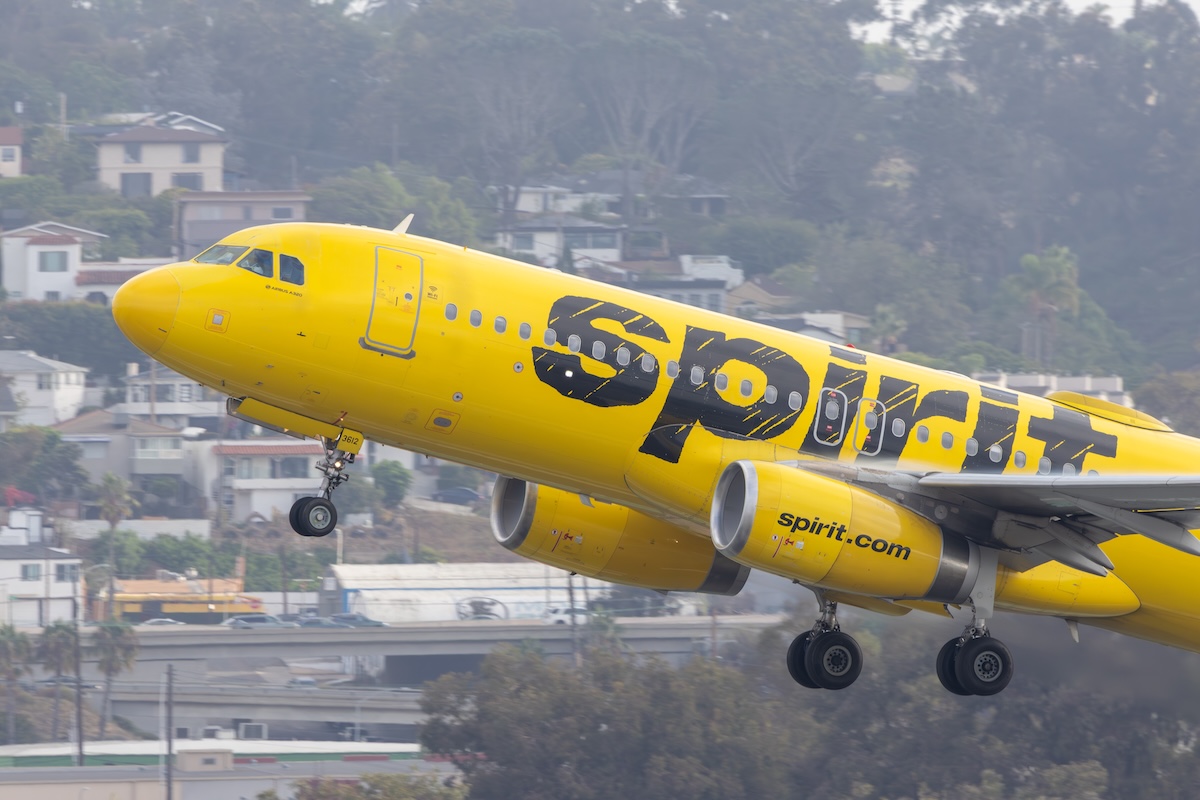
Spirit A320neo
A Spirit A320neo. (Photo: AirlineGeeks | William Derrickson)

Spirit is seeking court approval to reject leases covering 87 aircraft as part of its ongoing Chapter 11 restructuring, according to filings in the U.S. Bankruptcy Court for the Southern District of New York this week.

In a declaration, Spirit’s Chief Financial Officer Fred Cromer said the airline’s analysis showed that the aircraft — referred to in the filings as “Excess Equipment” — are no longer necessary for the carrier’s revised business plan. 

“Rejecting these leases, which together amount to the leases on 87 aircraft, will relieve Spirit of the burden of unprofitable leases and of the costs of maintaining and storing several aircraft that are already out of service,” Cromer stated.

The 87 aircraft represent nearly 41% of the ultra-low-cost carrier’s total fleet. Spirit currently has around 200 Airbus A320-series aircraft

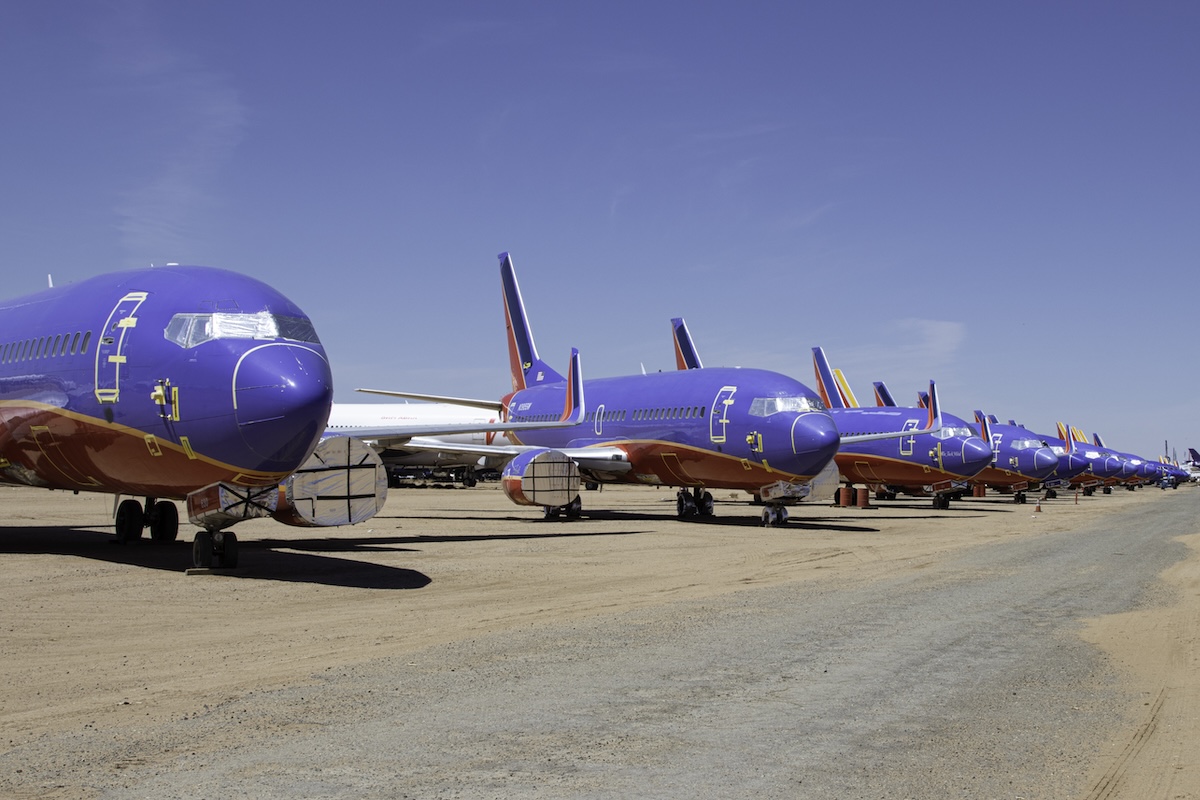
The filing, made on Thursday, requests authorization to reject equipment leases under Section 365 of the U.S. Bankruptcy Code. Affected aircraft include A320s, A320neos, and A321neos. Court documents note that many of the aircraft listed have already been removed from active service and are being stored at facilities such as Phoenix Goodyear Airport in Arizona.

Spirit A320neo
A Spirit A320neo in Los Angeles (Photo: AirlineGeeks | William Derrickson)

The airline entered Chapter 11 protection on Aug. 29 for the second time in less than a year. The proposed lease rejections will “materially lower Spirit’s debt and lease obligations and realize hundreds of millions of dollars in annual operating savings,” it said.

Of the 87 aircraft slated for rejection, the majority are A320neos, totaling more than 65 jets. Spirit is also seeking to shed a significant number of current-engine-option A320 aircraft, with 19 listed in the filing. The plan further includes three A321neo aircraft.

Lease Restructuring 

In addition to cutting aircraft, Spirit is pursuing broader restructuring agreements with major lessors. A separate filing outlines a restructuring framework with AerCap covering 27 aircraft, with Spirit describing the deal as a cornerstone of its “go-forward fleet.”

If approved, the proposed rejections will take effect beginning Oct. 27, 2025, pending a court hearing scheduled for Oct. 16. Spirit said the move will leave the airline with sufficient aircraft to meet customer demand while eliminating what it described as a “cash drain” from underutilized jets.

In a statement, an airline spokesperson said the move will help “align our fleet with our previously announced network adjustments.”

“This step is expected to generate significant cost savings for the airline. The motion is subject to court approval, and we continue to engage with key stakeholders, including our lessors, as part of our ongoing restructuring to position Spirit for the future, “ the spokesperson added. 

The carrier has already slashed capacity across its network, and has pulled out of more than a dozen U.S. cities in recent months

Ryan Ewing

Ryan founded AirlineGeeks.com back in February 2013 and has amassed considerable experience in the aviation sector. His work has been featured in several publications and news outlets, including CNN, WJLA, CNET, and Business Insider. During his time in the industry, he's worked in roles pertaining to airport/airline operations while holding a B.S. in Air Transportation Management from Arizona State University along with an MBA. Ryan has experience in several facets of the industry from behind the yoke of a Cessna 172 to interviewing airline industry executives. Ryan works for AirlineGeeks' owner FLYING Media, spearheading coverage in the commercial aviation space.
Sign-up for newsletters & special offers!

Get the latest stories & special offers delivered directly to your inbox

SUBSCRIBE

Uh-oh! It looks like you're using an ad blocker.

Our website relies on ads to provide free content and sustain our operations. By turning off your ad blocker, you help support us and ensure we can continue offering valuable content without any cost to you.

We truly appreciate your understanding and support. Thank you for considering disabling your ad blocker for this website