Stories

JetBlue Adds Eight Routes and New City

JetBlue is adding a mix of year-round and seasonal routes ahead of the winter vacation season, mostly from Florida and the Northeast.

JetBlue A220
A JetBlue Airways Airbus A220 prepares for landing in Fort Lauderdale, Florida. (Photo: AirlineGeeks | William Derrickson)

JetBlue is adding a mix of year-round and seasonal routes ahead of the winter vacation season.

The low-cost carrier announced it will serve Vero Beach, Florida, for the first time and restart flights to and from Daytona Beach, Florida. The airline is also launching routes connecting Florida with New York, the Caribbean, and Latin America and strengthening existing service between Boston and warm weather destinations.

JetBlue officials said the expansion is part of an effort to grow markets in the Northeast and Florida, where the airline’s “unique combination of low fares and great service resonate.”

Year-round daily flights connecting New York-JFK and Boston with Daytona Beach will start Dec. 4. Service from those same airports, Boston and New York-JFK, to Vero Beach will launch one week later, on Dec. 11, also operating daily.

Caribbean Expansion

On Dec. 13, seasonal service will start between Fort Lauderdale, Florida, and Santiago de los Caballeros, Dominican Republic, running once daily until Jan. 19, 2026.

Later in the month, JetBlue will start flights from Tampa, Florida, to Punta Cana, Dominican Republic, and Islip, New York. The Tampa-Punta Cana route will begin Dec. 18 and operate once daily year-round, while the Tampa-Islip service will start Dec. 19 and run four times weekly until April 29, 2026.

Also on Dec. 18, three-times weekly flights between Fort Myers, Florida, and Islip will begin. This service is seasonal and ends on April 28, 2026.

At Boston, JetBlue is dialing up the frequency of existing flights to destinations in the Caribbean and Central America.

Starting Dec. 18, service from Boston to St. Thomas, St. Maarten, Nassau, Bahamas, and Liberia, Costa Rica, will operate daily. Two days later, on Dec. 20, JetBlue will add a second Saturday flight between Boston and Grand Cayman, and in the new year, on Jan. 10, 2026, a second Saturday flight between Boston and Bridgetown, Barbados, is set to launch.

JetBlue has both added and axed routes this year while zeroing in on markets with strong demand, especially Florida. Last month, the carrier announced plans to connect Fort Lauderdale with Atlanta, Austin, Tampa, and Norfolk, Virginia, and increase flights on existing routes between Fort Lauderdale and Los Angeles, Las Vegas, Phoenix, Raleigh-Durham, North Carolina, and Richmond, Virginia.

Zach Vasile

Zach Vasile is a writer and editor covering news in all aspects of commercial aviation. He has reported for and contributed to the Manchester Journal Inquirer, the Hartford Business Journal, the Charlotte Observer, and the Washington Examiner, with his area of focus being the intersection of business and government policy.

Southwest Adds New City, 17 Routes

Southwest is shaking up its network with service to a brand-new destination and over a dozen additional routes starting in 2026.

Southwest 737-800
A Southwest Boeing 737-800. (Photo: Shutterstock | Markus Mainka)

Southwest is shaking up its network with service to a brand-new destination and over a dozen additional routes. The Dallas-based airline has announced new destinations in recent weeks, including St. Thomas.

Starting next year, Knoxville, Tennessee, will join Southwest’s network. Flights are slated to begin on March 5.

From Knoxville, the carrier plans to serve Nashville twice per day, along with daily flights to Baltimore, Dallas, and Orlando, Florida.

By the end of this month, the airline says it will announce another destination “where the ocean wears two shades of blue and every landing feels like an adventure. More adventures also await at one of Southwest’s homes on the Pacific Coast next year.”

Other Routes

In addition to its new destinations, Southwest will bolster service in other markets.

From San Diego, it will add daily, year-round service to Eugene, Oregon; Maui, Hawaii; Portland, Oregon; Puerto Vallarta, Mexico; and Seattle. Flights are scheduled to start on March 7.

The carrier will also add Saturday-only flights from San Diego to Bozeman, Montana, and Spokane, Washington.

Southwest's March 2026 expansion
Southwest’s March 2026 expansion (Photo: gcmap)

The carrier will add a batch of new and returning routes beginning on March 5. Southwest is introducing twice-daily service on three routes: Chicago Midway and Milwaukee; Phoenix and Tucson, Arizona; and Little Rock, Arkansas, and Nashville.

In addition, the airline will operate twice-daily flights between Chicago Midway and Des Moines, Iowa; Tulsa, Oklahoma; and Wichita, Kansas, starting on March 5, along with twice-daily flights between Dallas and Oklahoma City.

Summary

Origin Destination Start Date Frequency
Knoxville (TYS) Nashville (BNA) Mar 5, 2026 Twice daily
Knoxville (TYS) Baltimore (BWI) Mar 5, 2026 Daily
Knoxville (TYS) Dallas (DAL) Mar 5, 2026 Daily
Knoxville (TYS) Orlando (MCO) Mar 5, 2026 Daily
San Diego (SAN) Eugene (EUG) Mar 5, 2026 Daily, year-round
San Diego (SAN) Maui (OGG) Mar 5, 2026 Daily, year-round
San Diego (SAN) Portland (PDX) Mar 5, 2026 Daily, year-round
San Diego (SAN) Puerto Vallarta (PVR) Mar 5, 2026 Daily, year-round
San Diego (SAN) Seattle (SEA) Mar 5, 2026 Daily, year-round
San Diego (SAN) Bozeman (BZN) Mar 7, 2026 Saturdays
San Diego (SAN) Spokane (GEG) Mar 7, 2026 Saturdays
Chicago Midway (MDW) Milwaukee (MKE) Mar 5, 2026 Twice daily
Phoenix (PHX) Tucson (TUS) Mar 5, 2026 Twice daily
Little Rock (LIT) Nashville (BNA) Mar 5, 2026 Twice daily
Chicago Midway (MDW) Des Moines (DSM) Mar 5, 2026 Twice daily
Chicago Midway (MDW) Wichita (ICT) Mar 5, 2026 Twice daily
Dallas (DAL) Oklahoma City (OKC) Mar 5, 2026 Twice daily

Editor’s Note: This story was updated on Aug. 14, 2025 at 10:51 a.m. ET to properly reflect the number of routes.

Ryan Ewing

Ryan founded AirlineGeeks.com back in February 2013 and has amassed considerable experience in the aviation sector. His work has been featured in several publications and news outlets, including CNN, WJLA, CNET, and Business Insider. During his time in the industry, he's worked in roles pertaining to airport/airline operations while holding a B.S. in Air Transportation Management from Arizona State University along with an MBA. Ryan has experience in several facets of the industry from behind the yoke of a Cessna 172 to interviewing airline industry executives. Ryan works for AirlineGeeks' owner FLYING Media, spearheading coverage in the commercial aviation space.

BermudAir Adds New Routes

BermudAir is launching nonstop, year-round service to LaGuardia and Newark and starting a seasonal route between Newark and Anguilla.

A BermudAir aircraft
A BermudAir aircraft. (Photo: BermudAir)

BermudAir, the flag carrier of Bermuda, is expanding its service network with nonstop flights to and from two major Northeast airports.

Starting the week of Oct. 26, the airline will connect St. George’s, Bermuda, with LaGuardia Airport in New York and Newark Liberty International Airport in New Jersey. Both routes will operate twice weekly, with flights between Newark and Bermuda scheduled for Thursdays and Sundays, while service between LaGuardia and Bermuda is set for Wednesdays and Saturdays.

On Dec. 18, BermudAir will launch seasonal service between Newark and the British Caribbean territory of Anguilla through its new subsidiary, AnguillAir. This service will operate twice weekly on Thursdays and Sundays.

The airline did not say when the Newark-Anguilla route will end.

“Expanding our New York-area service is a significant step forward for BermudAir, providing both leisure and corporate travellers with more flexibility and convenient access to Bermuda,” said Adam Scott, BermudAir’s CEO and founder, in a news release. “The Newark–Anguilla flights create an exciting opportunity for us to serve a vibrant and diverse travel market that values high-quality island experiences. It allows us to respond to strong demand for easy, reliable access to Caribbean destinations.”

BermudAir, which operates from L.F. Wade International Airport in St. George’s, currently serves 10 cities in the eastern U.S. and Canada, including Boston, Montreal, Toronto, Orlando, Florida, and Charleston, South Carolina. Besides Newark, it also plans to connect Boston and Baltimore to Anguilla starting in December.

Zach Vasile

Zach Vasile is a writer and editor covering news in all aspects of commercial aviation. He has reported for and contributed to the Manchester Journal Inquirer, the Hartford Business Journal, the Charlotte Observer, and the Washington Examiner, with his area of focus being the intersection of business and government policy.

DOT Revamps Air Travel Complaints System

The U.S. Department of Transportation has launched a new and modernized web-based system for air travel service complaints.

Multiple aircraft
Regional aircraft at New York LaGuardia Airport. (Photo: AirlineGeeks | William Derrickson)

The U.S. Department of Transportation has launched a new and modernized web-based system for air travel service complaints.

According to a news release published Wednesday by the department, the new service will be used to submit and handle complaints per the Aviation Complaint, Enforcement, and Reporting System (ACERS).

The new overhaul will replace what the department has called an “outdated” consumer complaint system originally developed during the 1990s.

“I’m committed to making USDOT work better for the American people,” said U.S. Secretary of Transportation Sean Duffy, in the release. “By modernizing our technology and getting rid of outdated legacy systems, we can better serve the traveling public and maximize efficiencies.”

Air travel service complaints, comments, and compliments can now be filed via the ACERS consumer portal here.

The new system is expected to speed up filings significantly with real-time submissions to airlines or ticket agents. Previously, tickets would take over a month to be received by the industry.

“ACERS will significantly improve the customer experience for the tens of thousands of consumers who file air travel service complaints with the Department against airlines and other air travel related companies,” DOT stated in its news release.

AirlineGeeks.com Staff

AirlineGeeks.com was founded in February 2013 as a one-person blog in Washington D.C. Since then, we’ve grown to have 25+ active team members scattered across the globe. We are all here for the same reason: we love deep-diving into the fascinating realm of the airline industry.

DOJ Backs DOT Move Against Delta-Aeroméxico Immunity

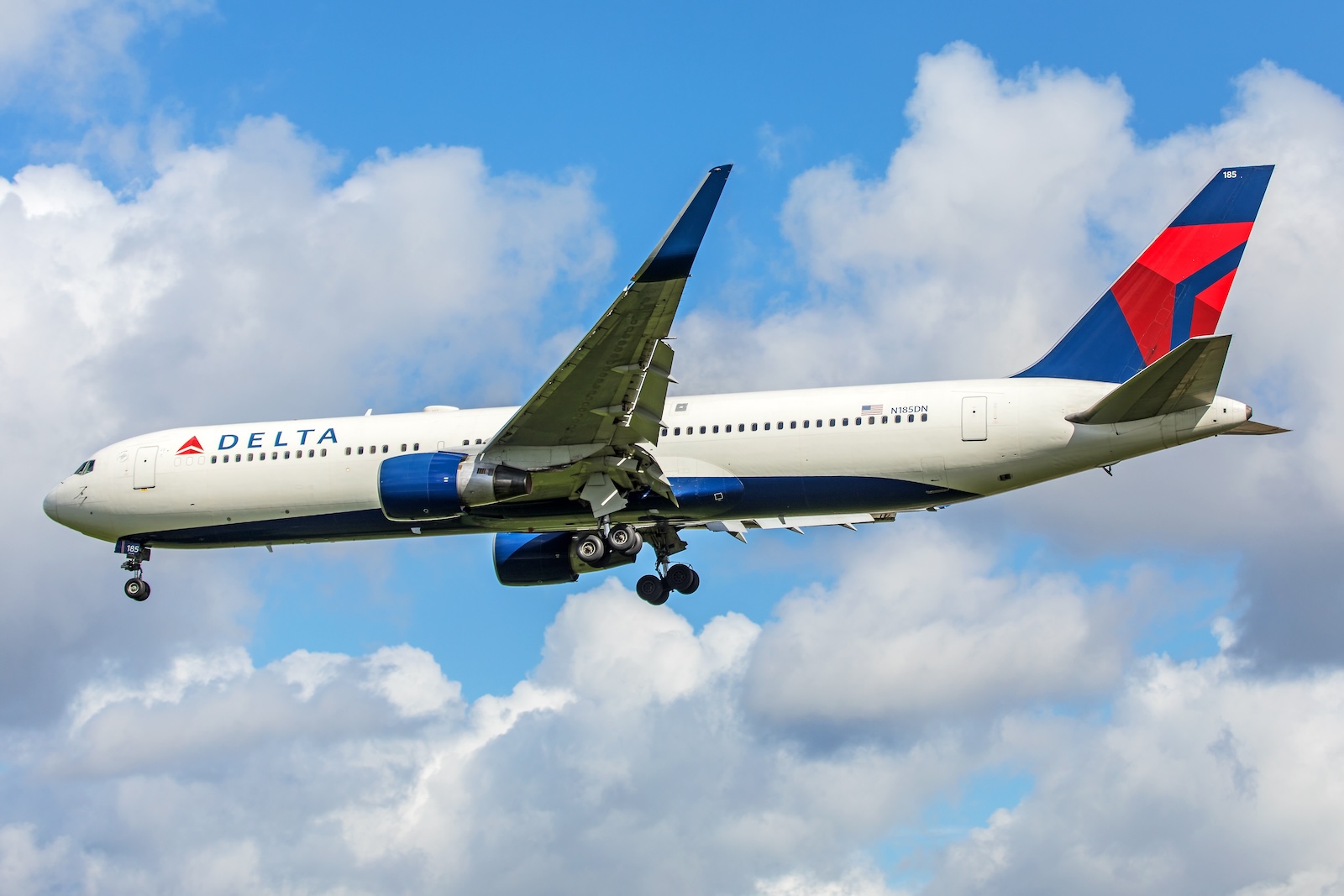
The DOJ is backing an effort by the Transportation Department to revoke the antitrust immunity agreement underlying Delta’s joint venture with Aeroméxico.

Delta 737-900ER
A Delta 737-900ER in Los Angeles. (Photo: AirlineGeeks | William Derrickson)

The U.S. Department of Justice is backing an effort by the Transportation Department to revoke the federal antitrust immunity agreement underlying Delta’s joint venture with Mexican flag carrier Aeroméxico.

Last month, the Transportation Department announced the two airlines no longer qualify for immunity from antitrust enforcement – granted by the federal government on a provisional basis in 2016 – because the Mexican government has illegally seized slots from U.S. carriers at Mexico City International Airport and forced U.S. all-cargo carriers out of the Mexico City market.

Delta and Aeroméxico now have until Oct. 25 to show why they still deserve that protection, or else their partnership will be “disapproved.” This would not necessarily dissolve the joint venture, though it would make it harder to operate and would probably force the airlines to end some aspects of their alliance.

The Justice Department weighed in for the first time on Aug. 8, giving its blessing to undo the immunity arrangement.

“DOJ supports DOT’s tentative decision to withdraw its approval and grant of antitrust immunity for the Delta/Aeroméxico Joint Venture,” the department wrote in a comment on the DOT’s case docket. “DOT conducted an analytically rigorous evaluation of the competitive effects of the Joint Venture consistent with its statutory authority and its public interest mandate to consider competitive market forces and the impact of actual and potential competition.”

Like the DOT, the Justice Department laid blame on the Mexican government for, in its view, undermining free market principles and locking U.S. carriers out of Mexico’s busiest international airport.

Delta and Aeroméxico have both protested the DOT’s decision, arguing it will cost workers their jobs and reduce service between the U.S. and Mexico.

‘Public Interest’ Questions

Delta and Aeroméxico, which is headquartered in Mexico City, have had a close relationship since the 1990s and began codesharing and coordinating on some operations in the 2010s. In 2015, the carriers put forward plans for an expanded partnership allowing them to share information and jointly determine routes. The size and market share of the two airlines meant they needed to secure immunity from U.S. antitrust regulations, and the DOT granted this protection in 2016, during the closing days of the Obama administration.

Aeromexico 737 MAX 8
An Aeromexico Boeing 737 MAX 8. (Photo: Boeing)

The deal set the stage for Delta to acquire up to 49% of Aeroméxico’s shares, and gave Delta a seat on Grupo Aeroméxico’s board. That stake was reduced after Aeroméxico’s restructuring, and Delta currently owns about 20% of the airline.

The immunity agreement was subject to renewal after five years, giving the federal government time to determine if it was serving the flying public’s interest as intended. Delta and Aeroméxico successfully petitioned for a delay, and when the matter came up again, they applied for a five-year extension.

This time around, though, the Transportation Department was more critical. Department regulators accused the Mexican government of arbitrarily changing and seizing slots at Mexico City International Airport, to the detriment of U.S.-based and other foreign carriers. Mexico’s lack of formal slot allocation procedures and apparently protectionist air travel policy was forcing U.S. carriers to reduce service, the department added, and undermining the cooperative, free market structure that the immunity agreement was meant to support.

The situation worsened in 2023 when the Mexican government, citing congestion problems, ordered U.S. cargo operators like FedEx and UPS to relocate from Mexico City International Airport to the recently opened Felipe Ángeles International Airport. Felipe Ángeles is considered a less desirable landing point for freight carriers, as it is further away from Mexico City and increases logistical hurdles.

By 2024, the Transportation Department had tentatively decided to dismiss Delta and Aeroméxico’s application and let the antitrust immunity agreement expire, and that position was reaffirmed with its announcement last month. Officials said the airlines’ joint venture had succeeded only in placing the majority of U.S.-Mexico air cargo operations under their control, and now that the two enjoyed a dominant position at Mexico City International Airport, further support from the U.S. government was not needed.

Carriers Weigh In

American and Allegiant have commented on the DOT’s docket in favor of sunsetting the Delta-Aeroméxico immunity agreement. Both airlines argue that the arrangement is unfair and hurts U.S.-Mexico travel instead of promoting it.

Allegiant also criticized the Transportation Department for pausing its review of a potential partnership with Mexican ultra-low-cost carrier Viva Aerobus, which it maintains would provide a better value for travelers.

Aeromexico’s Boeing 737s lined up at the gates of Mexico City’s Benito Juárez International Airport. (Photo: Shutterstock)

Delta, meanwhile, filed an objection to the department’s ruling and called its joint venture “unquestionably pro-consumer, pro-competitive, and pro-American.”

“[The partnership] unlocks hundreds of millions of dollars annually in benefits for U.S. citizens who travel to Mexico on a U.S. airline (Delta) and another airline with significant U.S. ownership (Aeroméxico),” the carrier wrote. “The joint venture generates nearly 4,000 U.S. jobs, more than $310 million of U.S. GDP, and more than $200 million of annual tourism spending in the United States. If Delta and Aeroméxico’s Joint Cooperation Agreement (“JCA”) is unwound, those economic benefits for the United States will evaporate and the market will be captured by the airlines’ competitors.”

Delta has also requested more time to formally reply to the Transportation Department’s requests for additional information about its joint venture with Aeroméxico.

Zach Vasile

Zach Vasile is a writer and editor covering news in all aspects of commercial aviation. He has reported for and contributed to the Manchester Journal Inquirer, the Hartford Business Journal, the Charlotte Observer, and the Washington Examiner, with his area of focus being the intersection of business and government policy.

Allegiant Exits Airport After Four Years

This airport will have one less airline, with Allegiant planning to completely exit a market it began serving during the COVID-19 pandemic.

Allegiant Airbus A320
An Allegiant Airbus A320. (Photo: Shutterstock | Joe A. Kunzler)

Allegiant will completely halt service to an airport it began serving during the COVID-19 pandemic. This move comes as the carrier has added new points to its route map in recent weeks.

In 2021, the ultra-low-cost carrier started flights to Minneapolis/St. Paul, going head-to-head with Sun Country and Delta. Over the last four years, it has tried a few different routes from the Minnesota city, including Asheville, North Carolina; Phoenix/Mesa; along with Punta Gorda, Palm Beach, and Sarasota, Florida.

Most recently, though, Allegiant’s Minneapolis network has been reduced to just Asheville and Knoxville, Tennessee. The carrier operated near-weekly flights on both routes, with the last service taking place on Aug. 11, per Cirium Diio schedule data.

A spokesperson from the Metropolitan Airports Commission – which operates Minneapolis/Saint Paul International Airport – confirmed that Allegiant will no longer serve the Twin Cities. Flights have also been removed from the carrier’s website at the time of writing.

Recently, Allegiant has added three new airports. Later this year, the carrier will begin serving Fort Myers, Florida; Huntsville, Alabama; and Atlantic City, New Jersey.

An airline spokesperson did not immediately respond to AirlineGeeks’ request for comment on the Minneapolis exit.

Ryan Ewing

Ryan founded AirlineGeeks.com back in February 2013 and has amassed considerable experience in the aviation sector. His work has been featured in several publications and news outlets, including CNN, WJLA, CNET, and Business Insider. During his time in the industry, he's worked in roles pertaining to airport/airline operations while holding a B.S. in Air Transportation Management from Arizona State University along with an MBA. Ryan has experience in several facets of the industry from behind the yoke of a Cessna 172 to interviewing airline industry executives. Ryan works for AirlineGeeks' owner FLYING Media, spearheading coverage in the commercial aviation space.

Mesa Nears Merger With Republic As It Completes Fleet Transition

Mesa Air Group, the parent company of Arizona-based Mesa Airlines, will soon ask its shareholders to vote on its planned merger with Republic Airways.

Mesa CRJ-900
A Mesa Airlines CRJ-900 in Phoenix. (Photo: Shutterstock | Robin Guess)

Mesa Air Group, the parent company of Arizona-based Mesa Airlines, will soon ask its shareholders to vote on its planned merger with Republic Airways.

In a third-quarter earnings statement released Wednesday, Mesa said it will file a definitive proxy statement and prospectus with the U.S. Securities and Exchange Commission. The documents will then be mailed to shareholders for a vote.

In June, Mesa and Republic cleared the mandatory waiting period for mergers under federal antitrust law, and the SEC declared the partners’ registration statement – a preliminary version of the proxy statement and prospectus – “effective,” meaning the deal can move forward.

Republic’s shareholders have already approved the merger.

Mesa reported third-quarter operating revenue of $92.8 million and net income of $20.9 million, up from a loss of $19.9 million in the corresponding quarter of 2024.

Mesa Chairman and CEO Jonathan Ornstein said that, given the two airlines’ recent financial performance, he expects the combined company would have 12-month run-rate annual revenue in the range of $1.8 billion to $2.0 billion.

Republic and Mesa first announced plans to merge in April. The combined company will keep the Republic name, and 88% of the business will be owned by Republic shareholders. Mesa shareholders will own a minimum of 6% and up to 12% depending upon Mesa achieving certain pre-closing criteria.

The carriers will continue operating flights for their current partners. Republic has service agreements with United, Delta, and American, while Mesa works only with United, flying as United Express.

The merger is expected to close in the third or fourth quarter of 2025.

All-Embraer Fleet

Mesa also announced that it is flying only Embraer E175 aircraft as part of its transition to a single-type fleet. It is in the process of selling off its out-of-service Bombardier CRJ-900s.

Officials said the move to an all-Embraer fleet will simplify Mesa’s operations and reduce costs in the long term.

The airline currently operates 60 E175s, with 254 daily departures.

Zach Vasile

Zach Vasile is a writer and editor covering news in all aspects of commercial aviation. He has reported for and contributed to the Manchester Journal Inquirer, the Hartford Business Journal, the Charlotte Observer, and the Washington Examiner, with his area of focus being the intersection of business and government policy.

Allegiant Adds Another New City

Allegiant’s move could be an attempt to muscle in on Spirit’s territory as the latter airline faces mounting financial challenges.

Allegiant 737 MAX
Allegiant's first 737 MAX aircraft (Photo: Allegiant)

Ultra-low-cost carrier Allegiant is launching four new nonstop routes to and from Atlantic City, New Jersey.

The routes, all of which link Atlantic City to destinations in Florida, will come online later this year and early next year.

“Connecting this vibrant community with several cities across Florida not only strengthens our leisure network, but opens up more affordable and convenient travel options for our customers in both regions,” said Drew Wells, Allegiant’s chief commercial officer. “It’s a win for travelers seeking sun and sand, and for those who want to experience the coastal charm of the Eastern Seaboard or stroll along Atlantic City’s famed boardwalk.”

Starting Dec. 4, Allegiant will offer flights between Atlantic City and Fort Lauderdale, Florida. Service between Atlantic City and St. Petersburg, Sanford, and Punta Gorda – also all in Florida – will begin President’s Day weekend, Feb. 14-16, 2026.

Allegiant has a robust network in Florida, with additional destinations such as Orlando, Jacksonville, West Palm Beach, and Key West, among others. In New Jersey, it serves Newark Liberty International Airport.

Allegiant has announced a series of service expansions over the last several weeks and just recently added Huntsville, Alabama, and Fort Myers, Florida, to its network.

Atlantic City International Airport is served directly by fellow ultra-low-cost carrier Spirit and by American via Landline bus service. Allegiant’s move could be an attempt to muscle in on Spirit’s territory as the latter airline faces mounting financial challenges and uncertainty about its ability to continue operations.

Spirit connects Atlantic City with destinations in Florida, including Miami and Orlando. The two airlines will compete directly only on service between Atlantic City and Fort Lauderdale.

Zach Vasile

Zach Vasile is a writer and editor covering news in all aspects of commercial aviation. He has reported for and contributed to the Manchester Journal Inquirer, the Hartford Business Journal, the Charlotte Observer, and the Washington Examiner, with his area of focus being the intersection of business and government policy.

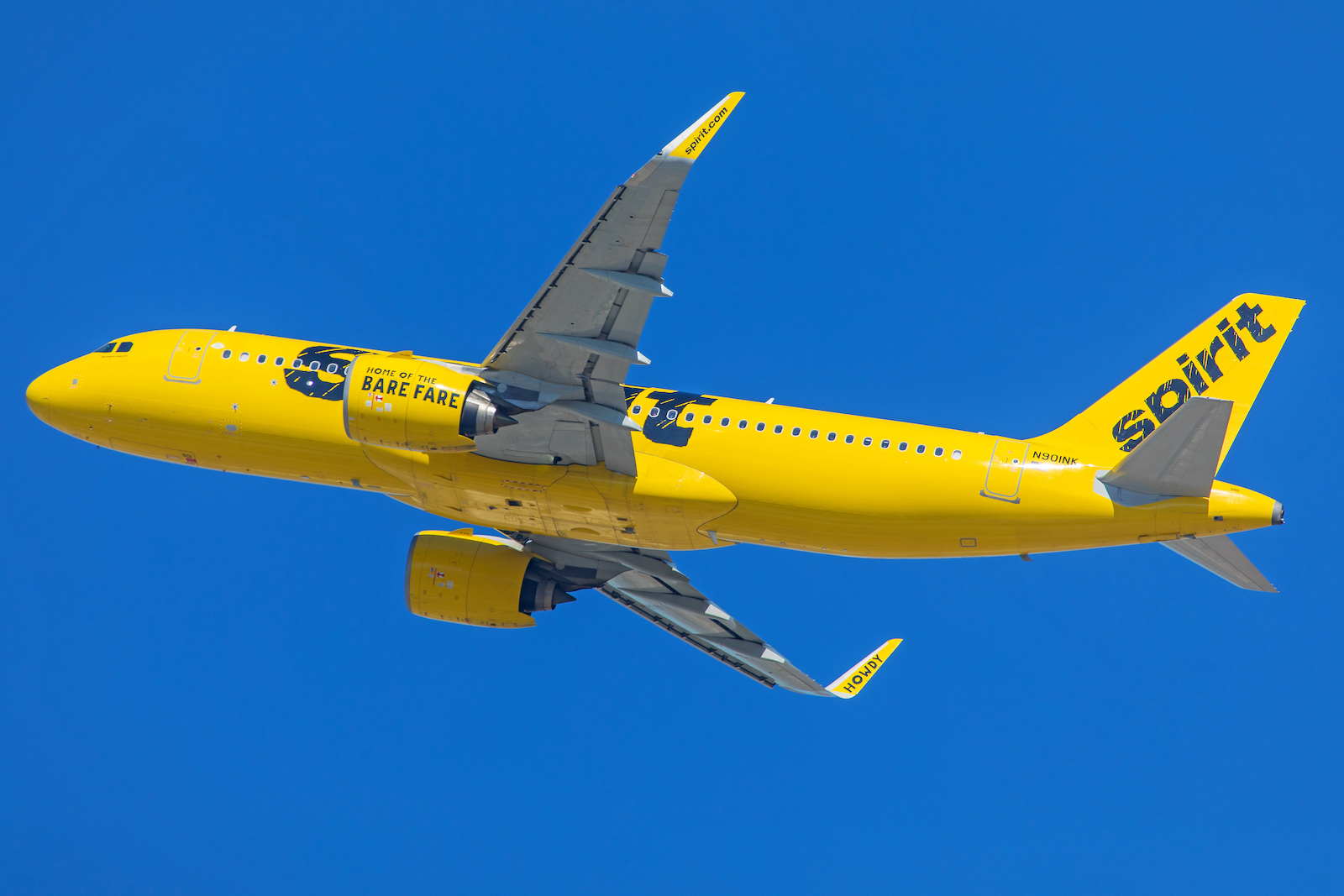
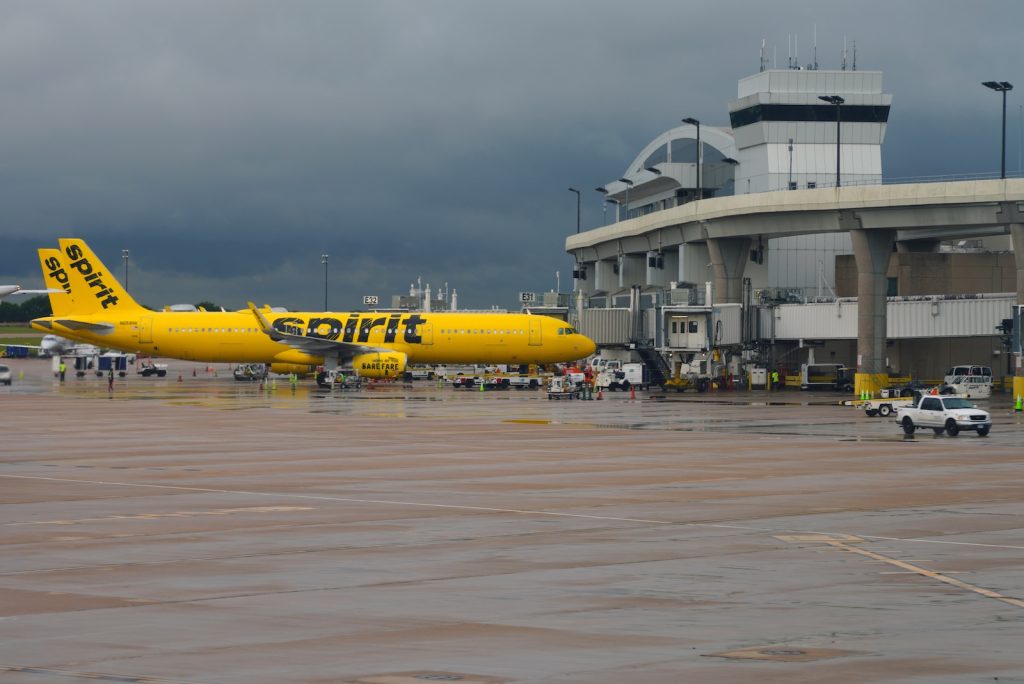
Spirit Pilots Told to ‘Consider All Options’

Spirit’s ALPA Master Executive Council – which represents roughly 3,000 pilots – has warned members that the airline is in a “fragile financial position."

Spirit aircraft
Spirit Airbus jets. (Photo: AirlineGeeks | William Derrickson)

Spirit’s Air Line Pilots Association (ALPA) Master Executive Council (MEC) – which represents the carrier’s roughly 3,000 pilots – has warned members that the airline is in a “fragile financial position” and encouraged pilots to take a “clear-eyed” look at their personal situations.

Tuesday’s message – which was viewed by AirlineGeeks – follows the ultra-low-cost carrier’s disclosure in its latest SEC filing that there is “substantial doubt” about the company’s ability to continue operating over the next year without significant changes.

Spirit MEC chair Captain Ryan Muller told pilots that Spirit reported a second-quarter pre-tax loss of about $250 million, bringing its year-to-date loss to roughly $560 million. Management has taken steps, including network changes, spare engine sale-leasebacks, cost reductions, and three rounds of pilot furloughs since September 2024, Muller added.

The airline has furloughed over 500 pilots at the time of writing.

“We won’t sugarcoat it: Spirit is in a fragile financial position. The reality we face today is not the one many of us envisioned when we joined this airline,” the letter states.

Even with these measures, the union said Spirit does not expect results to improve quickly enough to meet minimum liquidity covenants tied to debt agreements and a credit card processing contract. Additional potential actions include selling or monetizing aircraft, real estate, and excess airport gate capacity.

A Spirit Airlines Airbus A319 prepares for landing. (Photo: AirlineGeeks | William Derrickson)

“Management cautions there is no guarantee these initiatives will succeed; failure could trigger covenant defaults and debt acceleration,” he added.

The MEC also noted that Spirit’s credit card processor is requesting more collateral before renewing its agreement, which expires in December 2025, a move that could reduce unrestricted cash.

While the union said it will continue working to protect jobs and pursue a third furlough mitigation agreement, it urged pilots to prepare for a range of possible outcomes.

“Each pilot must ultimately decide what is best for themselves and their families,” Muller told members. “We urge you to take a clear-eyed look at your personal situation, explore all available options, and prepare for a range of possible outcomes.”

CEO Pushes Back

In a separate message to Spirit employees seen by CBS News, Spirit CEO Dave Davis shared that this disclosure was required by the airline’s auditors.

“Let me start by providing some context around what’s included in the report. The report uses the phrase ‘substantial doubt about the Company’s ability to continue as a going concern.’ This is a phrase required by our outside auditors to convey that there is risk if we do not make changes. But, we are,” he said.

Ryan Ewing

Ryan founded AirlineGeeks.com back in February 2013 and has amassed considerable experience in the aviation sector. His work has been featured in several publications and news outlets, including CNN, WJLA, CNET, and Business Insider. During his time in the industry, he's worked in roles pertaining to airport/airline operations while holding a B.S. in Air Transportation Management from Arizona State University along with an MBA. Ryan has experience in several facets of the industry from behind the yoke of a Cessna 172 to interviewing airline industry executives. Ryan works for AirlineGeeks' owner FLYING Media, spearheading coverage in the commercial aviation space.

Hawaiian Cuts Three Long-Haul Routes

The carrier is ending flights in a handful of “underperforming” markets, including one it has served for around 14 years.

Hawaiian A330
A Hawaiian Airlines A330-200 in Las Vegas. (Photo: AirlineGeeks | William Derrickson)

Hawaiian Airlines will adjust its network later this year by suspending three long-haul routes and redeploying capacity to international and domestic markets with stronger demand.

The carrier said Tuesday that the changes are aimed at boosting seat availability where travel demand to Hawaii is highest.

Service between Honolulu and Seoul Incheon will end after the Nov. 21 flight. Honolulu–Fukuoka, Japan, and Honolulu–Boston service will end after Nov. 19. Hawaiian said passengers on the affected routes will be offered alternative travel arrangements or refunds.

Boston-to-Honolulu – the longest U.S. domestic flight – will see no nonstop service with Delta also planning to axe the route on Nov. 20.

A Hawaiian Airlines Airbus A330-200 taxiing in Boston. (Photo: AirlineGeeks | Ben Suskind)

“It’s always a difficult decision to suspend a route, especially in cities like Seoul, which we have enjoyed serving for over 14 years. However, despite our team’s best efforts, soft post-pandemic travel demand from Asia combined with various market challenges have persisted in Seoul, as well as in Fukuoka and Boston, both of which we entered in 2019,” said Hawaiian CEO Joe Sprague, as part of a news release.

Shifting Capacity

The airline plans to use aircraft freed from the suspended routes to expand operations in other parts of its network.

Honolulu–Sydney service will increase from five weekly flights to daily between Dec. 18, 2025, and Jan. 31, 2026. Service between Honolulu and Papeete, Tahiti, will grow from one to two weekly flights starting in March 2026.

Hawaiian will also increase domestic service during peak travel periods. Honolulu–Los Angeles will grow to five daily flights from Nov. 21 to Dec. 1, 2025, and again from Dec. 19, 2025, to Jan. 6, 2026. Honolulu–Seattle service will rise to four daily flights from late November 2025 through mid-April 2026.

These moves come as Alaska and Hawaiian work to finalize a single operating certificate following their merger. Alaska continues to expand its long-haul presence from Seattle, recently adding London Heathrow, Tokyo Narita, Rome, and Seoul.

Ryan Ewing

Ryan founded AirlineGeeks.com back in February 2013 and has amassed considerable experience in the aviation sector. His work has been featured in several publications and news outlets, including CNN, WJLA, CNET, and Business Insider. During his time in the industry, he's worked in roles pertaining to airport/airline operations while holding a B.S. in Air Transportation Management from Arizona State University along with an MBA. Ryan has experience in several facets of the industry from behind the yoke of a Cessna 172 to interviewing airline industry executives. Ryan works for AirlineGeeks' owner FLYING Media, spearheading coverage in the commercial aviation space.
Sign-up for newsletters & special offers!

Get the latest stories & special offers delivered directly to your inbox

SUBSCRIBE

Uh-oh! It looks like you're using an ad blocker.

Our website relies on ads to provide free content and sustain our operations. By turning off your ad blocker, you help support us and ensure we can continue offering valuable content without any cost to you.

We truly appreciate your understanding and support. Thank you for considering disabling your ad blocker for this website