









Stories

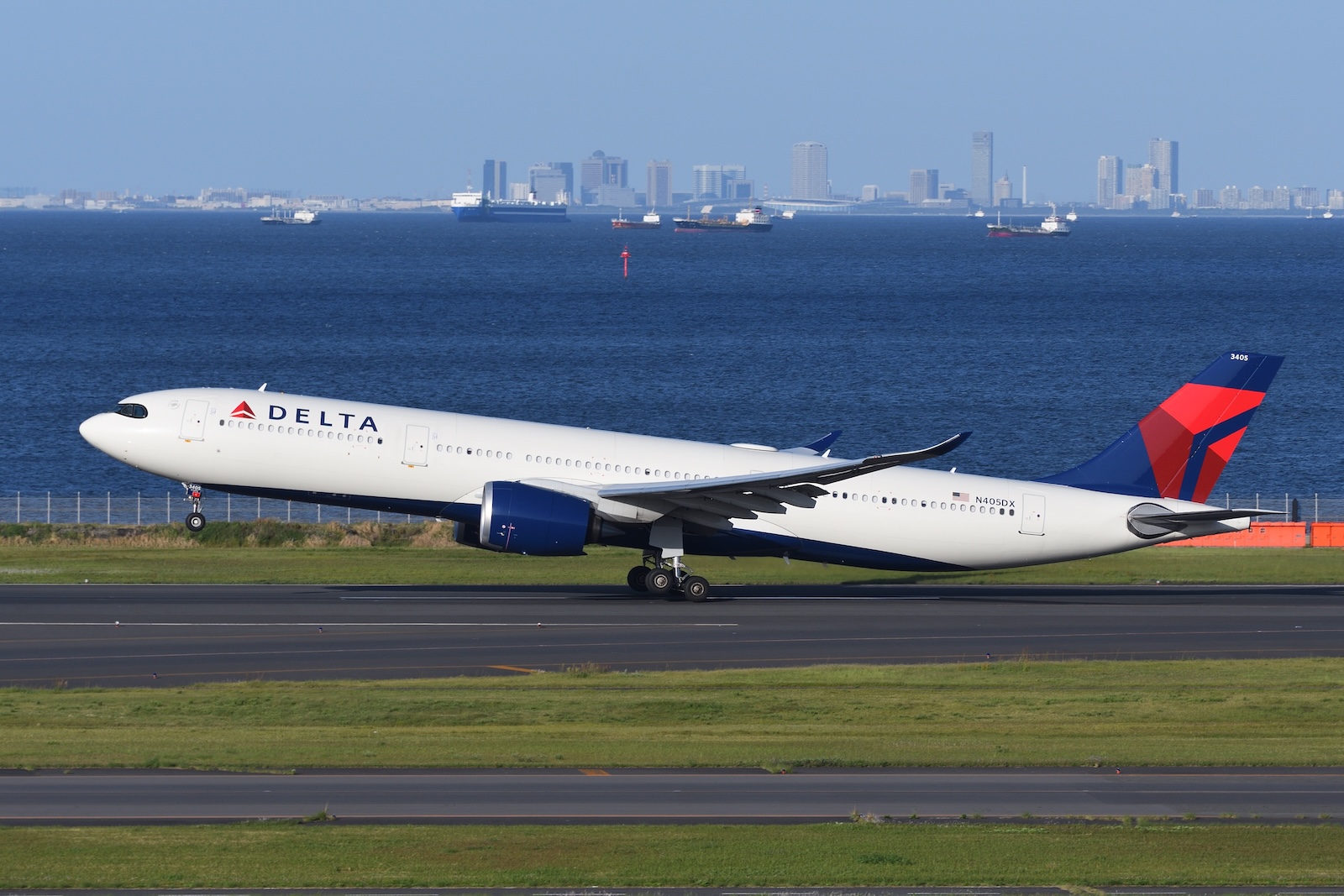
Delta Pays $8M to Settle Claims It Misused Pandemic Relief Funds

Delta accepted money from the temporary Payroll Support Program and failed to abide by rules that placed a cap on compensation paid to executives.

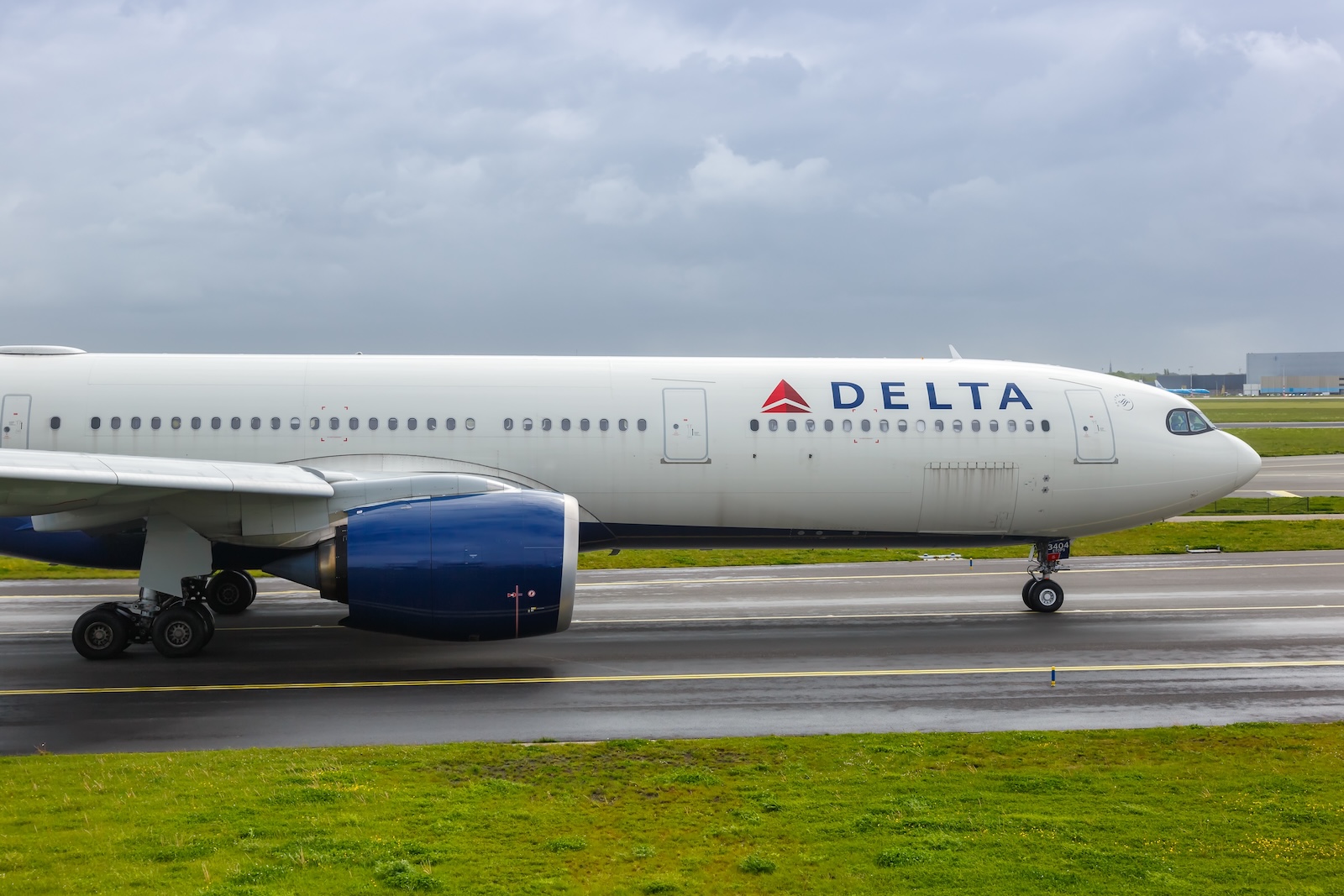
Delta aircraft
Delta aircraft in Boston (Photo: AirlineGeeks | William Derrickson)

Delta has paid $8.1 million to the federal government to settle claims it misused pandemic-era business relief funds.

According to the U.S. Justice Department, Delta accepted money from the temporary Payroll Support Program and failed to abide by rules that placed a cap on compensation paid to executives. The airline then falsely certified that it had complied with the payment limit, government attorneys said.

The settlement was announced by the U.S. District Court for the Northern District of Georgia on Tuesday.

“When companies accept federal assistance, especially generous pandemic relief funds like those at issue here, they owe a duty to the American people to respect the conditions placed on those funds,” said U.S. Attorney Theodore S. Hertzberg. “We will continue to enforce all available laws to punish the misuse of taxpayers’ money.”

A Delta A220
A Delta A220-100 (Photo: Shutterstock | Minh K Tran)

Delta received about $11.9 billion as part of the Payroll Support Program, including at least $8.2 billion in the form of grants it did not need to pay back. By accepting the money, the airline agreed to program rules limiting payments to any executives who earned over $425,000 in 2019. That stipulation, written to ensure that executives were not misusing or diverting taxpayer-provided support, remained in force until April 2023.

A third-party financial researcher later filed a whistleblower complaint in federal court alleging Delta had violated the False Claims Act, triggering an investigation by the Justice Department. The complaint claimed Delta paid some corporate officers more than was permitted, then “allegedly falsely certified its compliance with the caps” and failed to inform the U.S. Treasury Department of its error.

The whistleblower will receive $825,000 from the settlement, plus attorney’s fees.

The Justice Department noted that the claims resolved by Delta’s payment are “allegations only,” and there has been no determination of liability.

Zach Vasile

Zach Vasile is a writer and editor covering news in all aspects of commercial aviation. He has reported for and contributed to the Manchester Journal Inquirer, the Hartford Business Journal, the Charlotte Observer, and the Washington Examiner, with his area of focus being the intersection of business and government policy.

Alaska Cleared to Take Over Hawaiian Airlines Routes

The U.S. Department of Transportation on Monday granted the transfer of international route authorities from Hawaiian Airlines to its new corporate parent, Alaska Air Group, allowing the company to officially take over those flights.

Alaska 737 aircraft
An Alaska Air 737 aircraft (Photo: Shutterstock | oasisamuel)

The U.S. Department of Transportation on Monday granted the transfer of international route authorities from Hawaiian Airlines to its new corporate parent, Alaska Air Group, allowing the company to officially take over those flights.

The ruling further advances Alaska Air Group’s integration of Hawaiian, which it acquired for $1.9 billion. The deal was announced in December 2023 and closed in September 2024.

Alaska Air Group owns Hawaiian, Alaska Airlines, and regional airline Horizon Air.

Transportation officials said they did not receive any letters opposing the transfer of authorities from Hawaiian to Alaska during the public comment period.

“The Department finds that both Alaska Airlines and Hawaiian will remain viable air carriers after the merger and that the combined operations of the air carriers will enhance domestic competition in the airline industry,” the approval letter reads. “The merger is expected to generate $400 million in run-rate synergies, which will create a more financially secure and resilient combined carrier that will be able to weather adverse economic conditions and other future financial challenges.”

According to the department’s filing, Hawaiian is authorized to fly to any country with which the U.S. has an Open Skies agreement and has certificates for travel to Papeete, Tahiti, and Tokyo Haneda. It also has exemptions for third-country codesharing to Vietnam and Hong Kong.

The airline has codeshare agreements with China Airlines, Japan Airlines, Korean Air, Virgin Australia, Air China, Turkish Airlines, and Philippine Airlines, which Alaska Air Group will inherit.

Zach Vasile

Zach Vasile is a writer and editor covering news in all aspects of commercial aviation. He has reported for and contributed to the Manchester Journal Inquirer, the Hartford Business Journal, the Charlotte Observer, and the Washington Examiner, with his area of focus being the intersection of business and government policy.

Wizz Air Ending Operations in Abu Dhabi

Hungarian ultra-low-cost carrier Wizz Air is ending operations in Abu Dhabi and pulling out of its Middle East subsidiary, Wizz Air Abu Dhabi.

A Wizz Air Airbus A321
A Wizz Air Airbus A321. (Photo: AirlineGeeks | William Derrickson)

Hungarian ultra-low-cost carrier Wizz Air is ending operations in Abu Dhabi.

In a statement released Monday through the London Stock Exchange, the airline said it will suspend all flight operations out of Abu Dhabi’s Zayed International Airport effective Sept. 1. The carrier is also withdrawing from Wizz Air Abu Dhabi, its Middle East subsidiary, which was created as a joint venture between Wizz and the Abu Dhabi Developmental Holding Company.

Customers with flights booked after Aug. 31 will be contacted directly and offered a refund or alternate travel arrangements, Wizz Air said.

Company officials said their low-cost model was running up against significant hurdles in the Middle East, including regulatory issues, “geopolitical volatility,” and engine reliability constraints, which were exacerbated by the Gulf’s extremely hot and harsh weather conditions.

“The operating environment has changed significantly,” Wizz Air CEO József Váradi said in a statement. “Supply chain constraints, geopolitical instability, and limited market access have made it increasingly difficult to sustain our original ambitions. While this was a difficult decision, it is the right one given the circumstances. We continue to focus on our core markets and on initiatives that enhance Wizz Air’s customer proposition and build shareholder value.”

Wizz Air launched its Abu Dhabi subsidiary in 2020. The Abu Dhabi Developmental Holding Company, which functions as the sovereign wealth fund for the Emirate of Abu Dhabi, owned 51% of the venture, while Wizz Air Holdings owned the remaining 49%. Wizz Air Abu Dhabi currently offers flights to destinations in the Middle East, Central Asia, and Eastern Europe, including Cyprus, Egypt, Jordan, Kazakhstan, Romania, and Saudi Arabia.

The regional airline has faced challenges as fighting among Israel, Lebanon, Iran, and the Palestinian organization Hamas has repeatedly forced the shutdown of airspace over and around the United Arab Emirates. Abu Dhabi has also been overshadowed by its larger Emirati neighbor, Dubai, which hosts the busiest airport in the region and the second-busiest airport in the world.

Wizz Air said it now plans to focus on its core markets in Europe and will look at increasing its presence in Austria, the U.K., and Italy.

Zach Vasile

Zach Vasile is a writer and editor covering news in all aspects of commercial aviation. He has reported for and contributed to the Manchester Journal Inquirer, the Hartford Business Journal, the Charlotte Observer, and the Washington Examiner, with his area of focus being the intersection of business and government policy.

Global Crossing Airlines Acquires Its First Aircraft, Leases Four More

The Miami-based charter airline, also referred to as GlobalX, announced the aircraft acquisition and additional lease plans in an online news release Monday.

GlobalX Airlines
A GlobalX Airlines Airbus A321. Red Way Airlines flights were operated by GlobalX. (Photo: GlobalX Airlines)

Global Crossing Airlines has acquired its first aircraft with plans to lease four additional Airbus A319 aircraft.

The Miami-based charter airline, also referred to as GlobalX, announced the aircraft acquisition and additional lease plans in an online news release Monday.

The company’s first aircraft acquisition will be an Airbus A320 powered by two CFM56-5B engines. The aircraft was purchased from Falcon 2019-1 Aerospace Limited by an affiliate of GlobalX, with financing provided by London-based financial firm Volofin Capital Management.

“This acquisition marks a major milestone for GlobalX as we transition from an exclusively leased fleet to a hybrid ownership model,” said Ryan Goepel, president and chief financial officer of GlobalX, in the release. “Owning select aircraft enhances our ability to manage long-term operating costs, plan maintenance and modifications more efficiently, and most importantly—build tangible asset value. These moves are part of our broader strategy to strengthen the balance sheet, improve key financial metrics, and position the company for long-term success.”

In addition, GlobalX has signed lease agreements for four Airbus A319 aircraft with manufacturer serial numbers 2477, 2481, 2492, and 2503. The company’s fleet growth is in response to increasing demand in its charter and passenger service business.

“These new aircraft are arriving at exactly the right time,” he said. “They represent more than a 20% increase to our current fleet and are critical to meeting the growing needs of our customers and supporting our rapid scale in passenger operations.”

The first A319 is expected to be delivered on August 31, 2025, and it will enter into service around 30 days afterward. The rest will be delivered one at a time on September 30, October 31, and November 30, 2025.

Following approvals by the Federal Aviation Administration and the Department of Transportation, GlobalX will operate a fleet of 22 Airbus A320 aircraft.

GlobalX is a U.S.-based Part 121 domestic flag and supplemental airline. The company operates flights both domestically and internationally throughout the U.S., the Caribbean, Europe, and Latin America.

The company has also contracted with the U.S. government to regularly operate deportation flights for illegal immigrants to Guatemala, Honduras, and Mexico, according to a New York Times report.

AirlineGeeks.com Staff

AirlineGeeks.com was founded in February 2013 as a one-person blog in Washington D.C. Since then, we’ve grown to have 25+ active team members scattered across the globe. We are all here for the same reason: we love deep-diving into the fascinating realm of the airline industry.

Emirates Acquiring Four A380s

Emirates is taking ownership of four Airbus A380s it has leased from investment company Doric Nimrod Air Three Limited since 2013.

Emirates A380
An Emirates Airbus A380. (Photo: AirlineGeeks | William Derrickson)

Emirates is taking ownership of four Airbus A380s it has leased from investment company Doric Nimrod Air Three Limited since 2013.

Doric Nimrod Air Three, which is based in the British Crown Dependency of Guernsey, said Emirates will pay a total of £131.9 million, or about $180 million, for the aircraft and take possession of them between August and November of this year. All four of the A380s were leased to Emirates for a period of 12 years, and their titles will transfer on the exact date their lease ends.

Emirates, one of the two flag carriers of the United Arab Emirates, operates a mix of Airbus and Boeing aircraft. It currently owns 116 A380s, making it the largest operator of the type in the world.

Doric Nimrod Air Three is a joint fund formed by Nimrod Capital and Doric GmbH. It describes itself as generating returns for investors by acquiring, leasing, and selling aircraft, in this case the four A380s. Two similar companies, Doric Nimrod Air Two and Doric Nimrod Air One, also leased and then sold A380s to Emirates.

With the sale of the aircraft, Doric Nimrod Air Three intends to pay proceeds to investors and then dissolve itself by 2026.

Zach Vasile

Zach Vasile is a writer and editor covering news in all aspects of commercial aviation. He has reported for and contributed to the Manchester Journal Inquirer, the Hartford Business Journal, the Charlotte Observer, and the Washington Examiner, with his area of focus being the intersection of business and government policy.

United Ending Last Two Bus Routes

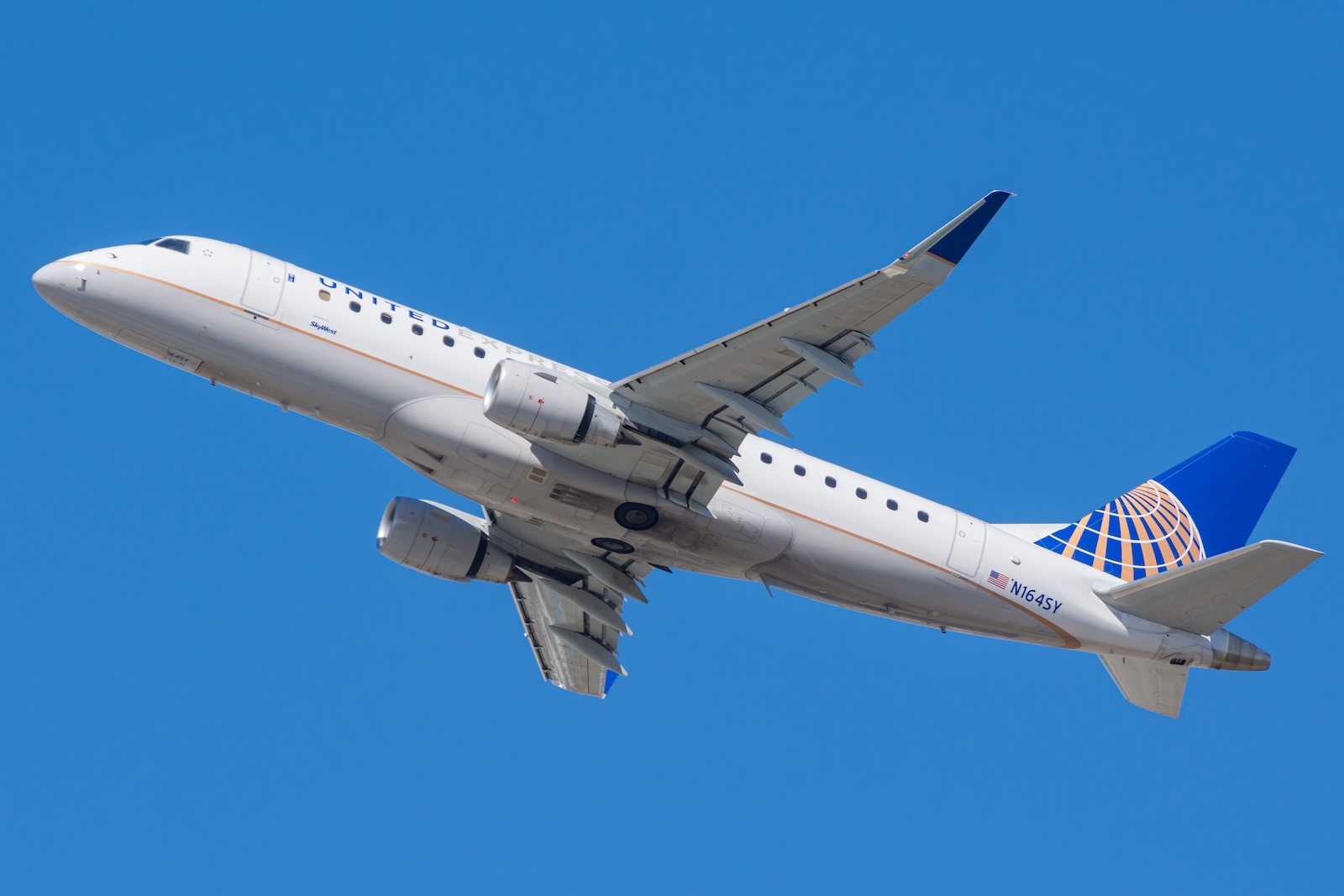
United is ending bus service between Newark, New Jersey, and Allentown, Pennsylvania, and between Denver and Fort Collins, Colorado.

United's Landline bus
United's Landline bus (Photo: City of Fort Collins)

United is ending its last two Landline bus routes.

Bus service between Denver International Airport and Northern Colorado Regional Airport in Fort Collins, Colorado, is scheduled to end July 31, while the route between Newark Liberty International Airport in New Jersey and Lehigh Valley International Airport near Allentown, Pennsylvania, will terminate Sept. 1.

The airline did not provide a reason for scrapping the two connections.

“Our bus service from Newark to Allentown and from Denver to Fort Collins, Colorado, will end as Landline focuses on other opportunities,” the carrier said in a statement to AirlineGeeks. “We are reaching out to customers to offer refunds or rebooking options.”

United’s bus routes are operated by the Landline Company, which provides ground transportation between airports. It also operates routes for American, Air Canada, and Sun Country.

United has allowed customers to earn miles and points on its bus routes, and passengers’ luggage is transferred from aircraft to the bus at no additional cost. The airline advertised the service as offering many of the same amenities available on its airplanes, including wireless internet, reclining seats, and entertainment options.

Zach Vasile

Zach Vasile is a writer and editor covering news in all aspects of commercial aviation. He has reported for and contributed to the Manchester Journal Inquirer, the Hartford Business Journal, the Charlotte Observer, and the Washington Examiner, with his area of focus being the intersection of business and government policy.

Avelo Closes Base, Cuts Routes

Avelo will suspend service to one of the airports it first served when launching flights in 2021 while also cutting a handful of routes.

Avelo 737-800
An Avelo Boeing 737-800. (Photo: Shutterstock | Edgardo M Moya)

Avelo will suspend service to one of the airports it first served when launching flights in 2021. The airline is also cutting a handful of routes as it continues to refocus its operational strategy on the East Coast.

In a statement Monday, Avelo CEO Andrew Levy said the ultra-low-cost carrier’s base in Burbank, California, will close by Dec. 2, 2025. The airline’s first-ever flight was between Burbank and Santa Rosa in April 2021.

“This was not an easy decision,” Levy stated. “Our company’s deepest operational roots are in BUR, having launched our first flight there over four years ago during the COVID pandemic.”

An Avelo Airlines Boeing 737-800. (Photo: Joe Scarnici/Getty Images for Avelo Air)

He added that the current service to Burbank “will not deliver adequate financial returns in a highly competitive backdrop.” The airline will reduce service to the Southern California airport on Aug. 12 to just one aircraft.

“We intend to redeploy these BUR aircraft to business areas where we see more efficient longer-term growth prospects, while also building depth and breadth to our East Coast operation,” he continued.

Levy said employees at the carrier’s Burbank base will be offered transfers to other parts of the airline’s network.

Route Cuts

According to Ishrion Aviation on X, Avelo will exit three stations and cut seven West Coast routes in mid-August.

These include flights between Salem, Oregon, Burbank, and Las Vegas; Santa Rosa, California, to Las Vegas, Burbank, Redmond, Oregon, and Kalispell, Montana; and Las Vegas to Redmond.

The airline will no longer regularly serve Salem, Las Vegas, or Santa Rosa as part of these network changes.

Ryan Ewing

Ryan founded AirlineGeeks.com back in February 2013 and has amassed considerable experience in the aviation sector. His work has been featured in several publications and news outlets, including CNN, WJLA, CNET, and Business Insider. During his time in the industry, he's worked in roles pertaining to airport/airline operations while holding a B.S. in Air Transportation Management from Arizona State University along with an MBA. Ryan has experience in several facets of the industry from behind the yoke of a Cessna 172 to interviewing airline industry executives. Ryan works for AirlineGeeks' owner FLYING Media, spearheading coverage in the commercial aviation space.

Delta Stripping Engines from Aircraft to Make Up Shortage, Skirt Tariffs

Delta is stripping engines off of Airbus jets in Europe and using them to get grounded airplanes in the U.S. back in service, according to a report from Bloomberg.

Delta A321neo
A Delta Airbus A321neo. (Photo: Shutterstock | Robin Guess)

Delta is stripping engines off of Airbus jets in Europe and using them to get grounded airplanes in the U.S. back in service, according to a report from Bloomberg.

The airline is taking Pratt & Whitney powerplants from European-built A321neos and sending them to the U.S. duty-free to compensate for a lack of usable engines stateside, sources with knowledge of the matter told the business outlet. The information was confirmed by Delta CEO Ed Bastian, who told Bloomberg that a “very small” number of new engines were being shipped from Europe to the U.S. When asked if the carrier plans to keep taking parts from new airplanes, he said Delta “will continue that.”

The sources said Delta has A320neo-family aircraft in the U.S. it cannot use due to engine troubles. These airplanes will be returned to service when the new engines are installed.

Airlines around the world are coping with a shortage of aircraft engines owing to supply chain problems, increased labor costs, and a mass recall of Pratt & Whitney powerplants that began in 2023. Pratt is inspecting and repairing affected engines, but hundreds of aircraft worldwide remain grounded as the process continues.

By shipping engines to the U.S., Delta is also skirting, or at least delaying, the payment of tariffs imposed by the Trump administration.

If the airline were to take delivery of the A321neos in Europe, it would have to pay the baseline 10% tax on European imports. But because the engines were built in the U.S., Delta can move them without incurring extra costs, and the carrier gets to grow its operating fleet without taking possession of tariffed European aircraft.

Delta can keep the now engineless A321neos in Europe until a new trade agreement between the U.S. and the EU cancels the tariff permanently, as many industry watchers and analysts expect.

Bastian said last week that Delta is “not planning to pay tariffs on aircraft deliveries,” suggesting the carrier will continue seeking workarounds until the global trade environment settles.

In April, Forbes reported that Delta was having its new A350s sent from Airbus’ factory in Toulouse, France, to Tokyo, instead of the U.S. The carrier reportedly planned to use the aircraft in international service, keeping them away from U.S. airports, to avoid paying the 10% tariff.

Zach Vasile

Zach Vasile is a writer and editor covering news in all aspects of commercial aviation. He has reported for and contributed to the Manchester Journal Inquirer, the Hartford Business Journal, the Charlotte Observer, and the Washington Examiner, with his area of focus being the intersection of business and government policy.

After Crash Report, FAA Declares Boeing Fuel Switches Safe

The FAA has said fuel control switches on Boeing aircraft, including the Dreamliner, are safe, after they were highlighted in a report on a 787 crash.

An Air India Boeing 787 Dreamliner departing London Heathrow.
An Air India Boeing 787 Dreamliner departing London Heathrow. (Photo: James Dinsdale)

The FAA has said fuel control switches on Boeing aircraft, including the 787 Dreamliner, are safe, after the devices were highlighted in a preliminary report on an Air India 787 crash in June that killed 260 people.

According to Reuters, the agency issued a continued airworthiness notification on July 11 to airlines that operate Boeing aircraft. Reuters said its reporters saw a copy of the document and spoke with four unnamed sources with knowledge of the matter.

India’s Aircraft Accident Investigation Bureau concluded last week that the fuel control switches in the cockpit of Air India Flight 171 were switched off, cutting fuel to the aircraft’s engines. The bureau’s report does not say who or what flipped the switches.

In the cockpit voice recording, one pilot is heard asking the other why he moved the switches from “Run” to “Cutoff,” and the other pilot replies that he did not. The switches were then reversed, and the engines were in the process of coming back online when the airplane crashed into the campus of a medical college, not far from where it took off.

The AAIB report referenced a 2018 advisory from the FAA, which encouraged airlines operating Boeing aircraft to inspect the locking mechanism on the fuel switches to ensure they could not be moved by accident. Air India did not follow this guidance, the report stated.

The FAA said its 2018 advisory was based on reports that fuel control switches were installed with the locking feature disengaged, but added that this did not make the devices themselves unsafe.

“Although the fuel control switch design, including the locking feature, is similar on various Boeing airplane models, the FAA does not consider this issue to be an unsafe condition that would warrant an Airworthiness Directive on any Boeing airplane models, including the Model 787,” the agency wrote, according to Reuters. “The FAA will continue to share relevant information with foreign civil aviation authorities as appropriate.”

Mandatory Inspections

Despite the agency’s assurances, South Korea is reportedly preparing to order all airlines flying Boeing aircraft to examine the fuel switches. A spokesperson for the country’s transportation ministry told Reuters that their inspections would align with the recommendations in the FAA’s 2018 advisory.

Air India, meanwhile, has been carrying out enhanced inspections on all of its 777s and 787s since the crash on June 12. The time needed for the safety checks has forced the airline to scale back or slash both domestic and international routes this summer.

Air India CEO Campbell Wilson said in a memo to staff on Monday that new questions raised by the preliminary investigation will take time to resolve.

“The preliminary report identified no cause nor made any recommendations, so I urge everyone to avoid drawing premature conclusions as the investigation is far from over,” he wrote.

Zach Vasile

Zach Vasile is a writer and editor covering news in all aspects of commercial aviation. He has reported for and contributed to the Manchester Journal Inquirer, the Hartford Business Journal, the Charlotte Observer, and the Washington Examiner, with his area of focus being the intersection of business and government policy.

Southwest Adds First New Destination Since 2021

The new destination will be Southwest’s first network addition since the airline began serving Syracuse, New York, and Bellingham, Washington, in 2021

Southwest 737 aircraft
Southwest Boeing 737 aircraft (Photo: Shutterstock | Robin Guess)

Southwest is preparing to expand its route network with the addition of a new destination in early 2026 — the first since 2021. The airline announced Monday that this development marks the beginning of a broader strategy to introduce multiple new destinations, with additional announcements expected later this summer.

Starting in early 2026, the carrier will begin serving St. Thomas in the U.S. Virgin Islands.

“We are listening closely to what our Customers want — from new products and loyalty benefits to new destinations,” said Southwest CEO Bob Jordan in a news release. “We want to make Southwest Airlines the easy and obvious choice every time, and this is another meaningful step in our ongoing transformation.”

The newly announced destination brings Southwest’s total number of island destinations in the Atlantic region to nine, joining locations such as Aruba, the Bahamas, and Jamaica. The airline also continues to serve destinations in Mexico, Belize, and Central America.

Beyond its route network, Southwest is planning to introduce premium seating options, fare bundles, and a reconfigured cabin layout starting in early 2026. Assigned seating will begin rolling out later this year, part of the airline’s ongoing efforts to modernize its offerings.

Southwest interiors 737
Refreshed interiors on Southwest aircraft (Photo: Southwest Airlines)

The new destination will be Southwest’s first network addition since the airline began serving Syracuse, New York, and Bellingham, Washington, in 2021. Southwest ended flights to both markets in 2024.

Ryan Ewing

Ryan founded AirlineGeeks.com back in February 2013 and has amassed considerable experience in the aviation sector. His work has been featured in several publications and news outlets, including CNN, WJLA, CNET, and Business Insider. During his time in the industry, he's worked in roles pertaining to airport/airline operations while holding a B.S. in Air Transportation Management from Arizona State University along with an MBA. Ryan has experience in several facets of the industry from behind the yoke of a Cessna 172 to interviewing airline industry executives. Ryan works for AirlineGeeks' owner FLYING Media, spearheading coverage in the commercial aviation space.
Sign-up for newsletters & special offers!

Get the latest stories & special offers delivered directly to your inbox

SUBSCRIBE

Uh-oh! It looks like you're using an ad blocker.

Our website relies on ads to provide free content and sustain our operations. By turning off your ad blocker, you help support us and ensure we can continue offering valuable content without any cost to you.

We truly appreciate your understanding and support. Thank you for considering disabling your ad blocker for this website