










Stories

Livery of the Week: LOT Polish Airlines

One of commercial aviation’s oldest airline logos remains the centerpiece of the Polish flag carrier’s fleet.

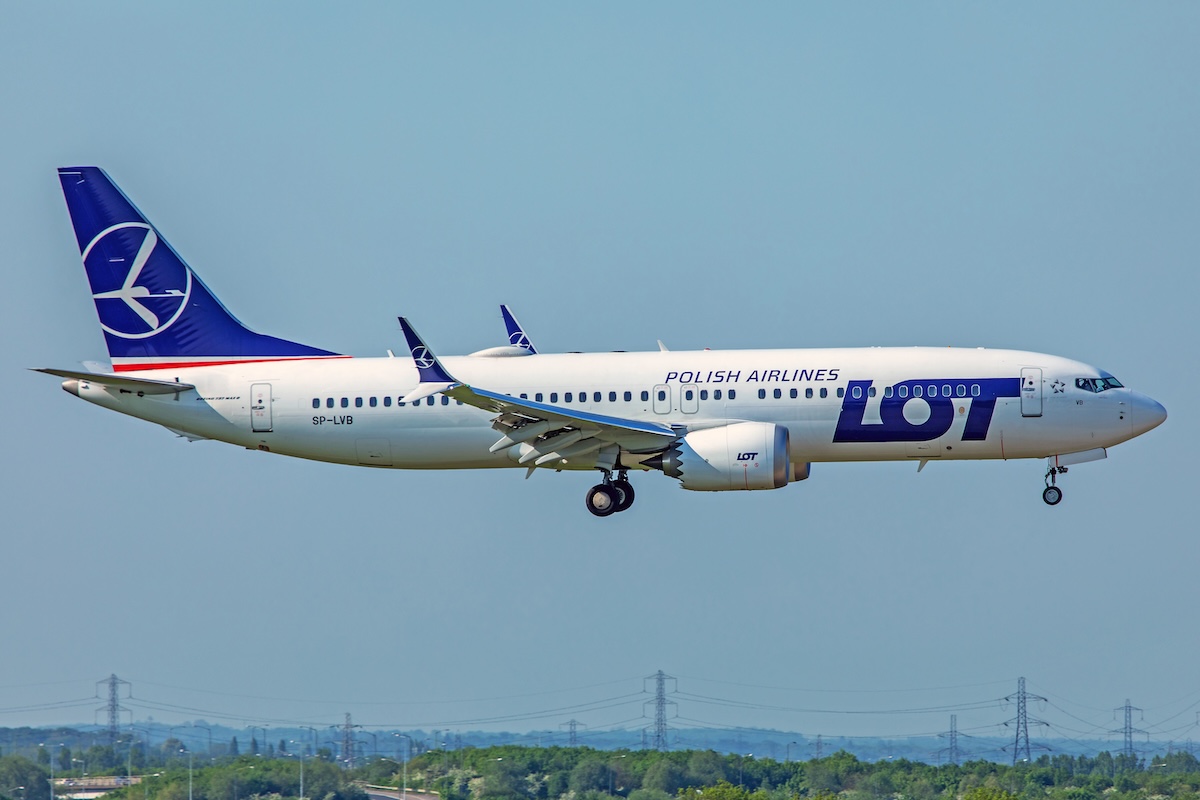
LOT 737 MAX 8
A LOT Polish Airlines 737 MAX 8 (Photo: AirlineGeeks | William Derrickson)

Editor’s Note: AirlineGeeks is proud to present our ‘Livery of the Week’ series. Every Friday, a team member will share an airline livery, which can be from the past, present, or even a special scheme. Some airline liveries are works of art. The complexity associated with painting around critical flight components and the added weight requires outside-the-box thinking from designers. The average airliner can cost upwards of $200,000 to repaint, creating a separate aircraft repainting industry as a result. 

Have an idea for a livery that we should highlight? Drop us a line.

LOT Polish Airlines’ standard livery is centered on a stylized flying crane that has represented the carrier for nearly a century. The emblem appears prominently on the vertical stabilizer, giving LOT a visual identity that has remained recognizable even as the airline’s aircraft and branding have evolved.

The crane is displayed in white inside a circular blue field on the tail. Designed by Polish graphic artist Tadeusz Gronowski around 1929, the logo depicts a crane in flight and was selected through a competition held shortly after the airline was established. Although it has been refined over the decades, the basic design has remained part of LOT’s identity ever since.

The rest of the aircraft follows a relatively restrained layout. A predominantly white fuselage carries large dark-blue “LOT” titles along the forward section, while a blue cheatline runs beneath the cabin windows. The airline’s full name, Polish Airlines, appears in smaller lettering nearby.

Red and white accents provide a connection to the colors of the Polish flag without dominating the design.
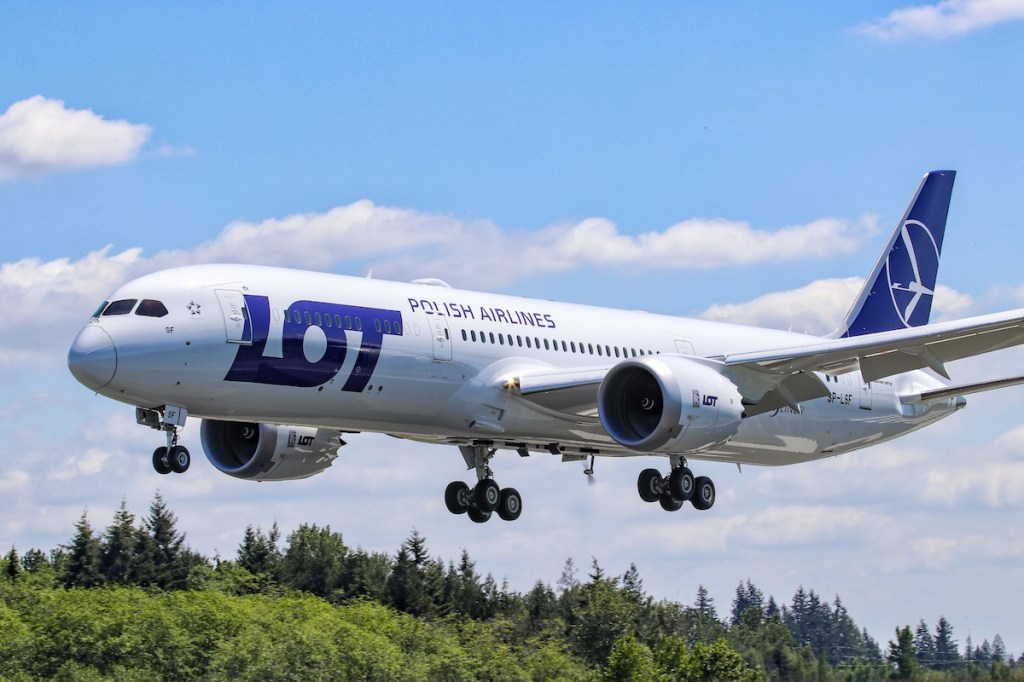
A LOT Polish Airlines Boeing 787-9 Dreamliner
A LOT Polish Airlines Boeing 787-9 Dreamliner. (Photo: AirlineGeeks | Katie Zera)

The livery is used across LOT’s varied fleet, including Boeing 737s and 787 Dreamliners as well as Embraer regional jets. Despite differences in aircraft size and proportions, the blue tail and crane emblem provide a consistent appearance throughout the fleet.

LOT has periodically introduced special schemes, including liveries commemorating Polish independence and milestones in the airline’s history. Its standard design, however, has continued to rely heavily on the crane logo first created during the carrier’s earliest years.

Founded in 1929, LOT is among the world’s oldest continuously operating airlines. Nearly a century later, Gronowski’s crane remains at the center of its visual identity, linking the aircraft flying today with the carrier’s earliest years.

Looking for a new airplane model? Head over to our friends at the Midwest Model Store for a wide selection of airlines and liveries.


Ryan Ewing

Ryan founded AirlineGeeks.com in February 2013 and has spent more than a decade covering the airline business. His work has been featured by CNN, WJLA, CNET, and Business Insider. His aviation experience spans airport operations, Part 135 regulatory compliance, and airline crew workforce planning, along with time behind the yoke of a Cessna 172 and interviews with airline executives. Ryan now serves as Group President of Firecrown Media’s Aviation Group. He holds a B.S. in Air Transportation Management and an MBA from Arizona State University and teaches Airline Management at Embry-Riddle Aeronautical University.

Air France Expands Caribbean Network

A new route will come online in December.

An Air France A320 in Amsterdam.
An Air France A320 in Amsterdam. (Photo: AirlineGeeks | William Derrickson)

Air France will grow its footprint in the Caribbean this winter with a new route between Guadeloupe and Central America.

Starting Dec. 11, the carrier will connect Pointe-à-Pitre and Panama City. Flights will operate twice weekly until March 5, 2027.

Air France said the service is timed to help travelers from Fort-de-France, Martinique, and Cayenne, French Guiana, reach Panama City via Pointe-à-Pitre.

The carrier’s Caribbean network, anchored in Guadeloupe, includes year-round connections to Martinique, French Guiana, the Dominican Republic, Belém and Fortaleza in Brazil, and Miami.

The airline also offers nonstop service from Paris to Panama City.

Zach Vasile

Zach Vasile is a writer and editor covering news in all aspects of commercial aviation. He has reported for and contributed to the Manchester Journal Inquirer, the Hartford Business Journal, the Charlotte Observer, and the Washington Examiner, with his area of focus being the intersection of business and government policy.

CBP Expands ‘Remote’ Baggage Screening at JFK

Passengers arriving from Doha will not have to recheck their luggage for a connecting flight.

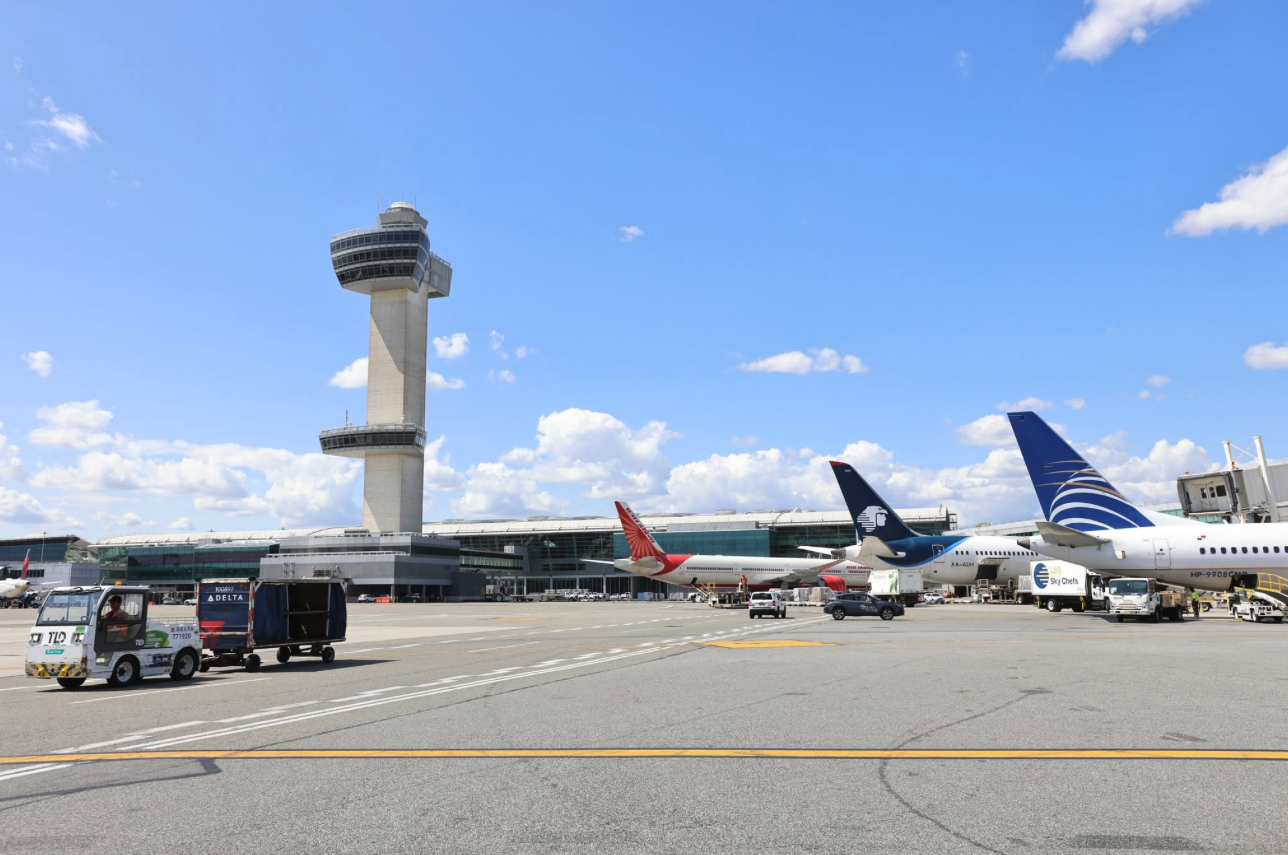
New York-JFK. (Photo: John F. Kennedy International Airport)

Passengers flying with Qatar Airways from Doha to New York-JFK no longer have to reclaim and recheck their luggage with customs for a connecting onward flight.

U.S. Customs and Border Protection last month brought the Doha-JFK route into its recently launched International Remote Baggage Screening program, which allows customs officers to inspect the bags of U.S.-bound travelers for potential threats or contraband ahead of time.

With IRBS, security agents at select foreign airports capture X-ray images of checked bags on U.S.-bound flights and transmit them to CBP officers, who remotely review them while the aircraft is en route. In this case, the scans will be sent from Hamad International Airport to JFK.

The approach expedites processing and allows connecting passengers to proceed directly to their onward flight without having to reclaim and recheck their baggage, unless they are selected for additional, in-person inspection.

“The expansion of International Remote Baggage Screening on the Doha-JFK route significantly bolsters our enforcement capabilities,” Diane Sabatino, CBP’s executive assistant commissioner, said in a news release. “This initiative leverages advanced technology and international partnerships to proactively identify and interdict threats before they reach the U.S. By collaborating with Qatar Airways, the Qatar Ministry of the Interior, and the New Terminal One, we are strengthening our security posture and ensuring that all baggage is rigorously screened to prevent the entry of illicit items and protect the homeland.”

CBP tested remote screening in 2025 on American Airlines’ route between Los Angeles and Sydney, Australia. The option is now available on a handful of international routes, including United’s service from San Francisco to Sydney and American flights between Dallas/Fort Worth and London Heathrow.

Zach Vasile

Zach Vasile is a writer and editor covering news in all aspects of commercial aviation. He has reported for and contributed to the Manchester Journal Inquirer, the Hartford Business Journal, the Charlotte Observer, and the Washington Examiner, with his area of focus being the intersection of business and government policy.

Delta Takes On Alaska With Restored Asia Route

The airline is returning to a market it last served in 2020.

Delta A330neo
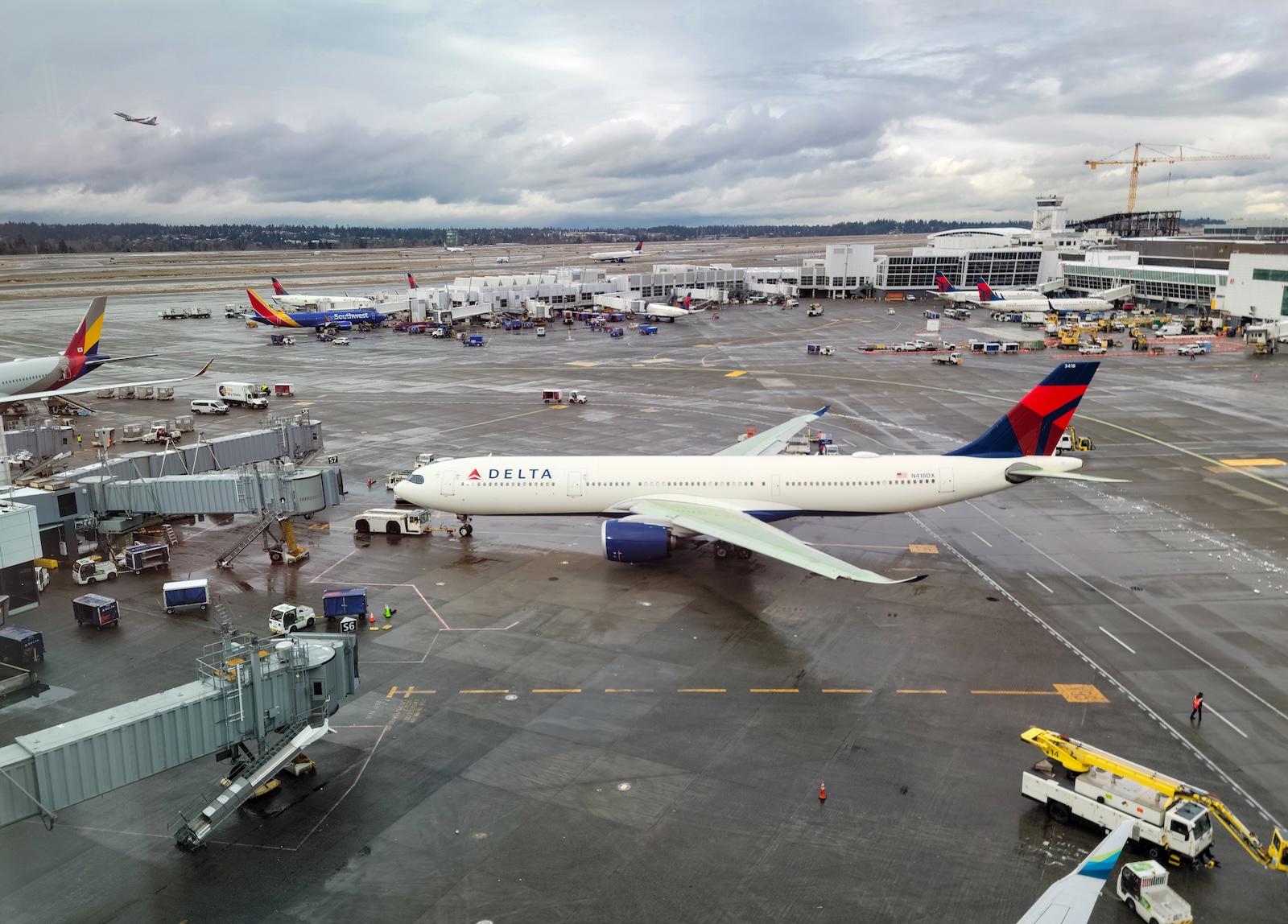
A Delta Airbus A330neo. (Photo: Shutterstock | Nate Hovee)

Delta is returning to a transpacific market where it will compete directly with Alaska Airlines, which launched service in May 2025.

The Atlanta-based carrier will begin daily nonstop flights between Seattle and Tokyo Narita on March 27, 2027. Delta plans to operate the route with an Airbus A330-900neo.

Delta last served the route in 2020, according to Cirium Diio schedule data. Its return will set up head-to-head competition with Alaska, which entered the market following the completion of its acquisition of Hawaiian.

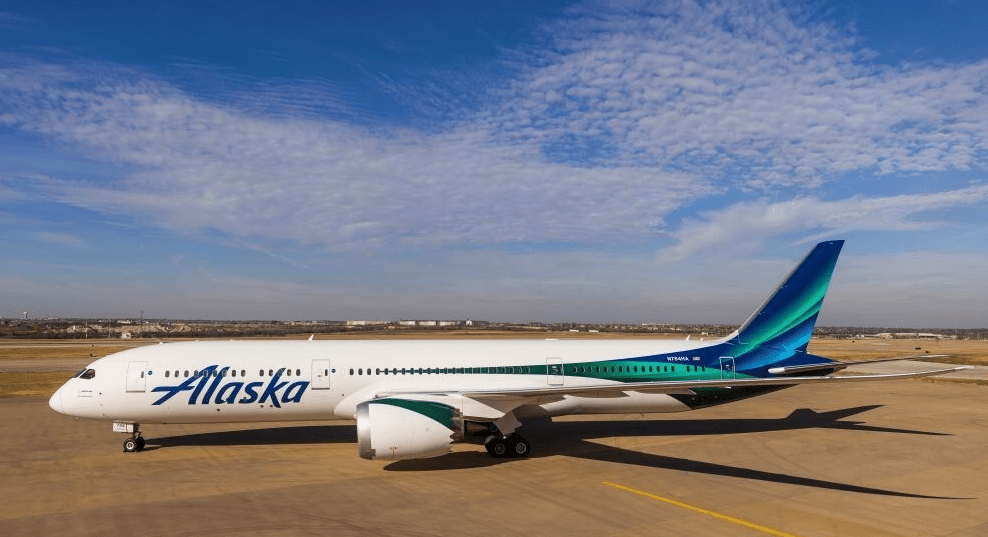
An Alaska Boeing 787. (Photo: Alaska Airlines)

“Japan continues to be one of the most important and beloved destinations in Delta’s global network, and adding Seattle-Narita service gives our customers even more choice when planning their travel,” Jeff Arinder, Delta’s vice president of international network planning, said in a news release.

The new flight will complement Delta’s existing service between Seattle and Tokyo Haneda. The carrier shifted all of its scheduled service in Tokyo from Narita to Haneda in 2020.

Ryan Ewing

Ryan founded AirlineGeeks.com in February 2013 and has spent more than a decade covering the airline business. His work has been featured by CNN, WJLA, CNET, and Business Insider. His aviation experience spans airport operations, Part 135 regulatory compliance, and airline crew workforce planning, along with time behind the yoke of a Cessna 172 and interviews with airline executives. Ryan now serves as Group President of Firecrown Media’s Aviation Group. He holds a B.S. in Air Transportation Management and an MBA from Arizona State University and teaches Airline Management at Embry-Riddle Aeronautical University.

United to Resume Route to West Coast

Flights will operate daily starting in October.

A United 737-800
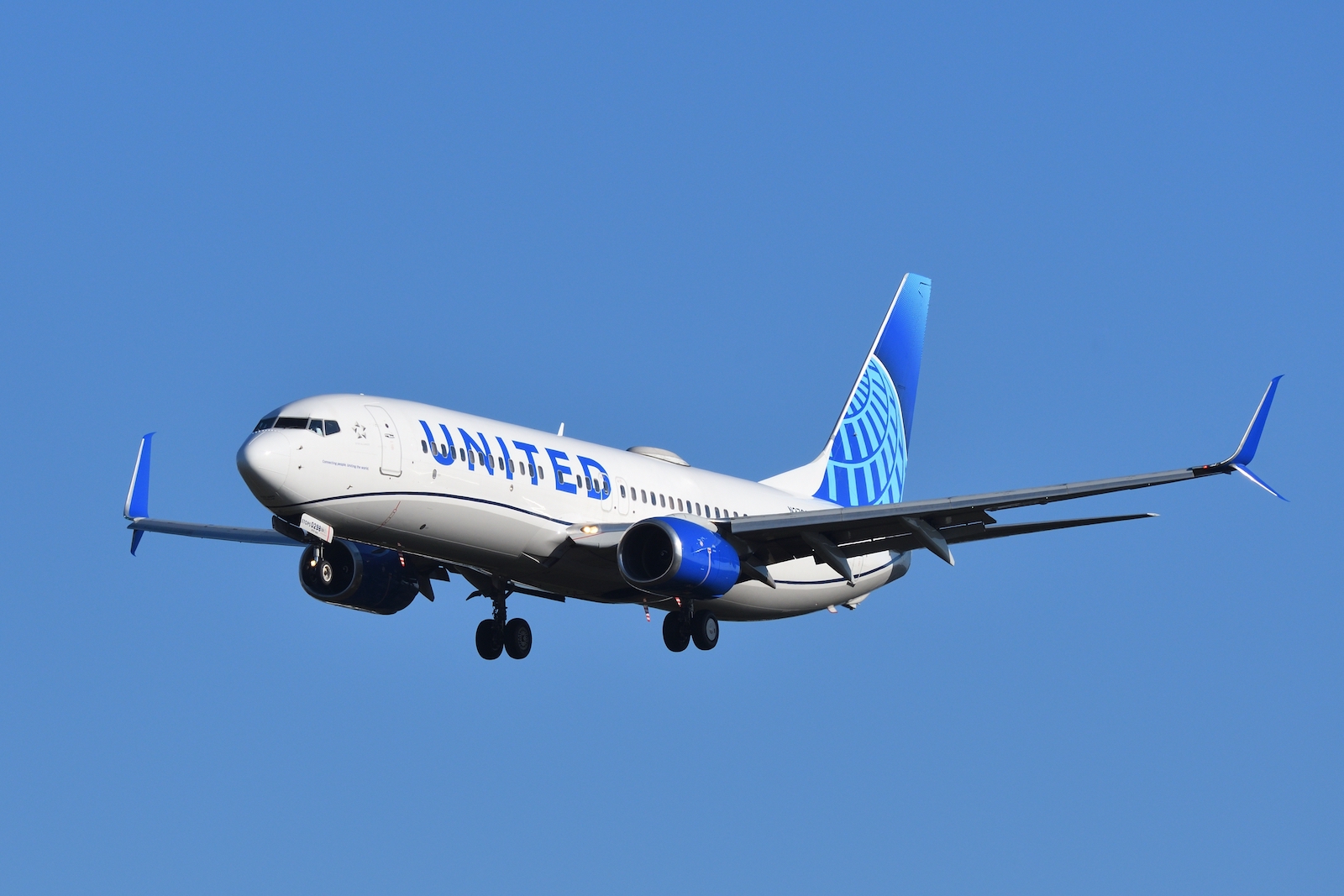
A United Boeing 737-800 in Tokyo. (Photo: Shutterstock | viper-zero)

United is set to resume nonstop service between Cincinnati, Ohio, and the West Coast.

Starting Oct. 25, the carrier will connect Cincinnati/Northern Kentucky International Airport with San Francisco. Flights will operate daily using Boeing 737-800 aircraft.

United last served this route in 2020, according to Cirium Diio schedule data.

San Francisco will be United’s sixth nonstop destination from Cincinnati/Northern Kentucky, behind Chicago O’Hare, Denver, Houston, Washington Dulles, and Newark, New Jersey. United said San Francisco has historically been one of the airport’s largest underserved markets.

Cincinnati/Northern Kentucky International is located in Boone County, Kentucky, and serves the broader Cincinnati metro area and communities around the tripoint of Kentucky, Ohio, and Indiana.

“We’re thrilled to expand United’s presence in Cincinnati with the addition of new nonstop daily service between Cincinnati and San Francisco,” Mark Weithofer, managing director of domestic network planning at United, said in a news release. “This gives travelers in the tri-state region direct access to the West Coast and from there, convenient access to destinations across the Pacific through United’s San Francisco hub.”

The route will be supported in part through a minimum revenue guarantee from the JobsOhio Air Service Restoration program. Financial details were not disclosed.

Zach Vasile

Zach Vasile is a writer and editor covering news in all aspects of commercial aviation. He has reported for and contributed to the Manchester Journal Inquirer, the Hartford Business Journal, the Charlotte Observer, and the Washington Examiner, with his area of focus being the intersection of business and government policy.

EasyJet Agrees to $7.7B Takeover By Apollo

Castlelake, which was also in the running, withdrew its bid on Thursday.

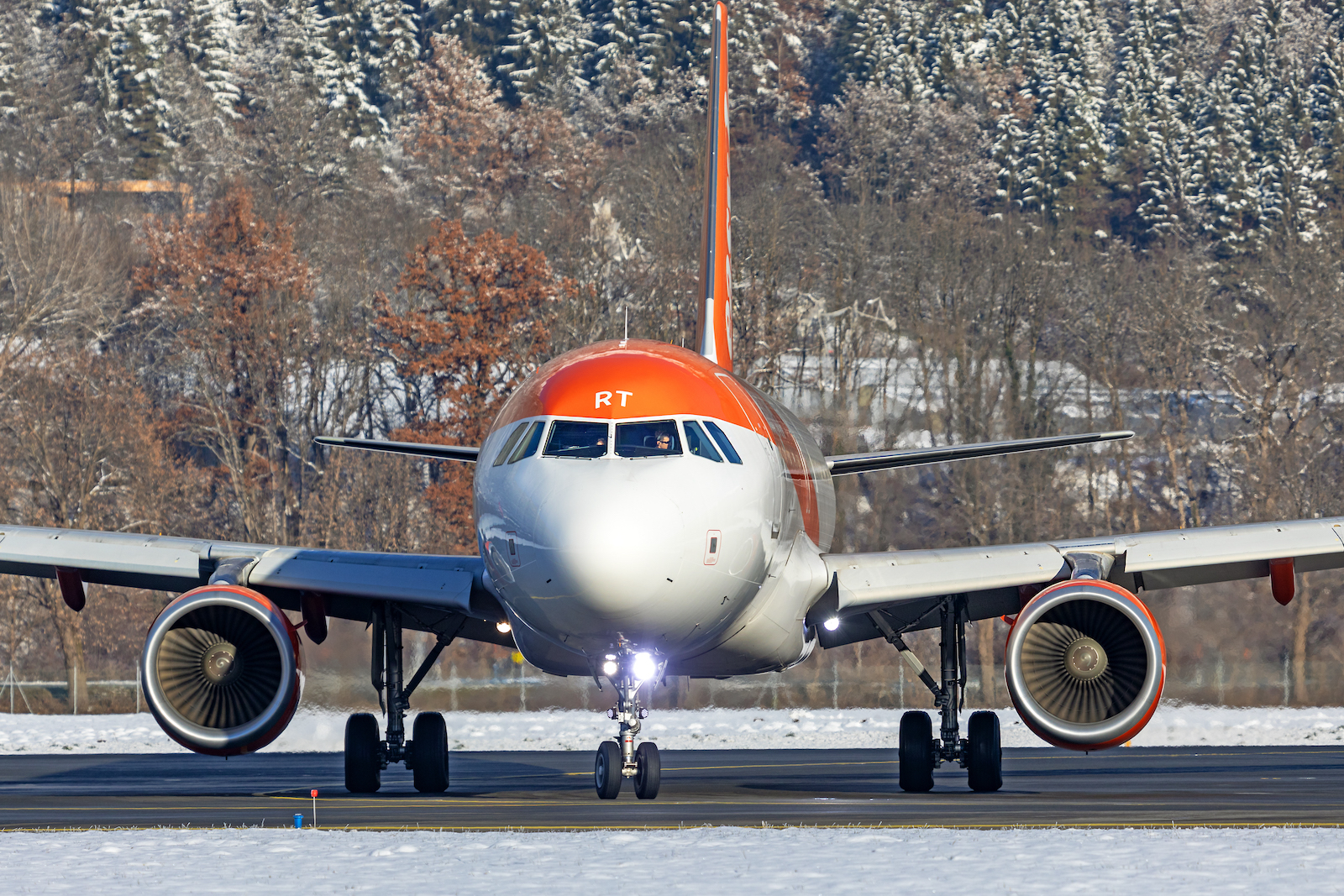
An easyJet Airbus A320 aircraft (Photo: AirlineGeeks | William Derrickson)

British carrier EasyJet has agreed to be acquired by U.S. asset manager Apollo in a deal that would take the airline private for about $7.7 billion.

EasyJet’s directors said Thursday that they will formally recommend shareholders vote in favor of the buyout, which would entitle each investor to £7.15 in cash per share. The value represents a “significant premium” on the carrier’s current stock price, they added.

“The EasyJet board has carefully evaluated the proposal from Apollo alongside EasyJet’s standalone prospects,” Non-Executive Chairman Stephen Hester said in a news release. “While we remain confident in the strength of our business and the opportunities ahead, we believe this offer appropriately recognises the quality of the business we have built and delivers immediate, certain, and attractive value for shareholders.”

The airline’s leaders also said Apollo is highly supportive of their existing management strategy and believes there is meaningful potential for long-term growth. With a new infusion of capital, they said, Apollo will look to optimize EasyJet’s loyalty program and network, improve revenue management, and pursue new partnership and distribution opportunities.

The announcement came the same day alternative investment firm Castlelake formally withdrew from the bidding process. The company made several offers for EasyJet earlier this summer and appeared to be moving toward a deal until Apollo began its pursuit last month.

Castlelake did not give a reason for dropping its bid.

EasyJet initially insisted that it had no interest in any acquisition, but softened its position as Castlelake gradually increased its offers through June and July. The highest Castlelake offer valued EasyJet at around $7.3 billion.

To comply with EU ownership regulations, the family of EasyJet founder Stelios Haji-Ioannou and other large shareholders will retain between 45% and 49% of the carrier. An EU trust will hold up to 5%.

Apollo currently owns stakes in Sun Country, Aeroméxico, and Atlas Air.

Zach Vasile

Zach Vasile is a writer and editor covering news in all aspects of commercial aviation. He has reported for and contributed to the Manchester Journal Inquirer, the Hartford Business Journal, the Charlotte Observer, and the Washington Examiner, with his area of focus being the intersection of business and government policy.

Seventh 777X Completes First Flight

The aircraft will be used to conduct ETOPS and function and reliability testing.

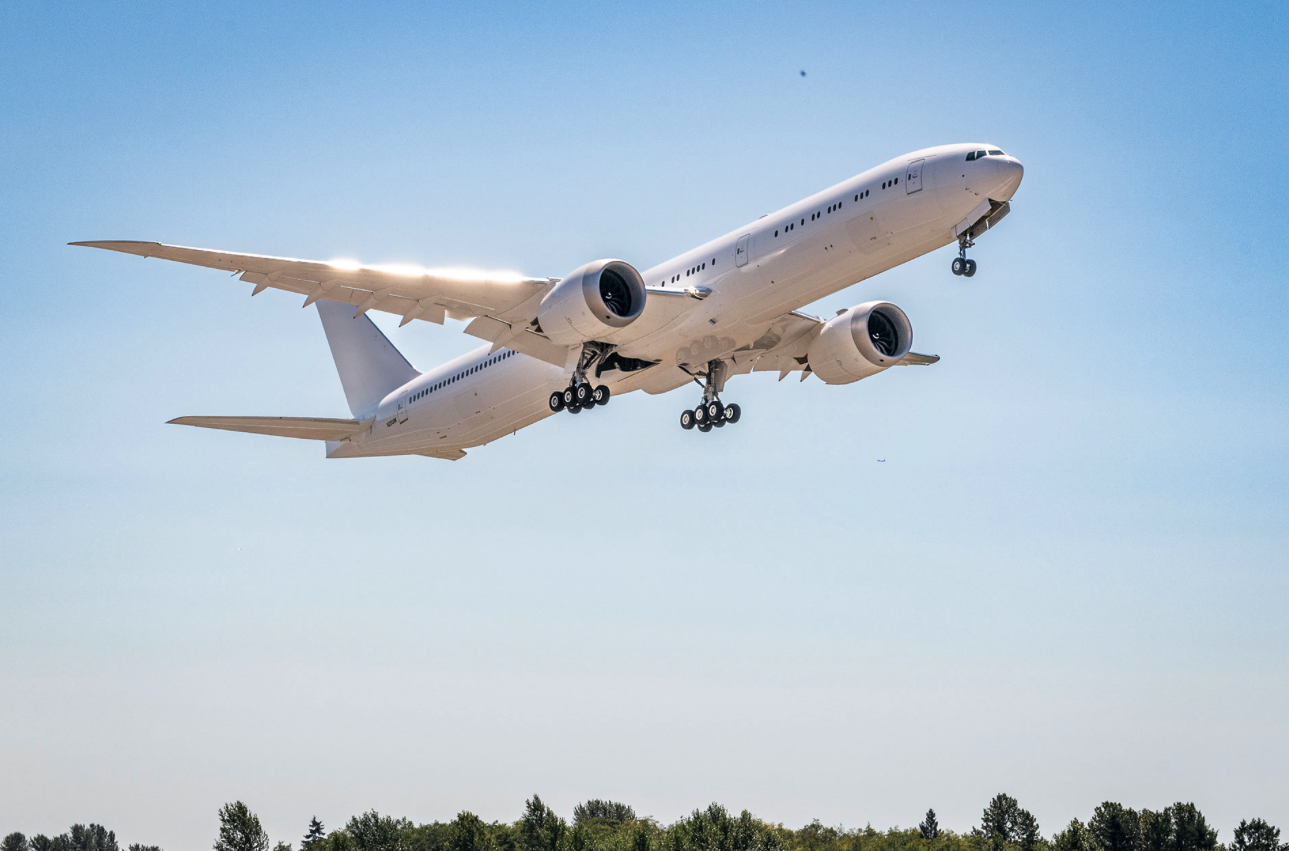
The seventh 777-9 takes off on its first flight. (Photo: Boeing, Marian Lockhart)

Boeing’s seventh 777-9 took to the skies for the first time late last month as the testing campaign for the long-delayed type appears to be ramping up.

The aircraft departed Paine Field in Everett, Washington, on July 24 and flew for about three hours over Washington, Idaho, and Oregon. It landed back at Paine Field that evening.

According to Boeing, an engineering pilot on board the flight said the airplane performed “beautifully.”

The company said the jet will be used to conduct extended operations (ETOPS) and function and reliability testing over the next several months.

“It’s quite a milestone, but it’s not the end of the line,” JeRae McCoy, 777X change incorporation and refurbishment conformities manager, said in a news release. “We’ve got more work to do to certify this airplane and begin deliveries. We’re going to keep working together to get there.”

The 777X – designed as the successor to the 777 – has faced numerous delays since development began in the early 2010s. Preliminary testing revealed cracks in the aircraft’s engine thrust links, and an “uncommanded pitch event” in 2020 drew intense scrutiny from the FAA. At the same time, Boeing had to shuffle workers and resources to the 737 MAX program after the fatal crash of two MAX jets.

The 777X program has largely stabilized over the last two years, however, and Boeing now expects the type to be certified and enter commercial service in 2027.

More recently, on Aug. 3, Boeing said that it got five 777-9s airborne within 24 hours. Crews conducted systems, propulsion, and interior tests during about 18 hours of flight testing and additional ground tests.

Customers have so far ordered more than 650 777X airplanes.

Zach Vasile

Zach Vasile is a writer and editor covering news in all aspects of commercial aviation. He has reported for and contributed to the Manchester Journal Inquirer, the Hartford Business Journal, the Charlotte Observer, and the Washington Examiner, with his area of focus being the intersection of business and government policy.

Air India Expands Service to Canada

The carrier is adding a new route to Toronto.

An Air India Boeing 777 taking off from San Francisco International Airport. (Photo: AirlineGeeks | Fangzhong Guo)

Air India will add a new route to Canada this winter while upgrading an existing connection with the Boeing 787 Dreamliner.

The carrier announced it will launch nonstop flights between Mumbai and Toronto on Oct. 25. The service will operate three times weekly through March 26, 2027, using 777-300ER aircraft.

Air India said it will be the only airline in the world connecting the two cities.

Dreamliner Upgrade

The carrier is also growing capacity on its existing Delhi-Toronto route with the introduction of the 787-9.

Airline officials said the type entered service on the roughly 7,200-mile connection on Aug. 1.

This winter, seven of the 10 weekly flights between Delhi and Toronto will operate with the 787. The other three weekly flights will transition from the 777-300ER to the 787 in January 2027.

Air India said these changes will increase overall capacity between India and Canada by 4,400 seats each month this winter.

Zach Vasile

Zach Vasile is a writer and editor covering news in all aspects of commercial aviation. He has reported for and contributed to the Manchester Journal Inquirer, the Hartford Business Journal, the Charlotte Observer, and the Washington Examiner, with his area of focus being the intersection of business and government policy.

U.S. Lifts Sanctions on Fly Baghdad

The Treasury Department formerly accused the carrier of working with the Iranian government.

The Treasury building in Washington, D.C. (Photo: U.S. Department of the Treasury)

The U.S. Treasury Department said Wednesday that it has lifted sanctions on an Iraqi airline that it once linked to Iran’s Islamic Revolutionary Guard Corps.

The department removed all sanctions on Fly Baghdad, also known as Iraq Express, and two of its aircraft, citing a change in the carrier’s behavior. The department did not provide specifics about those changes but emphasized that there has been no shift in U.S. policy toward the Iranian government and the IRGC.

Under the sanctions, Fly Baghdad was barred from using the U.S. banking system, and U.S. citizens and corporations could not do business with it.

The sanctions relief comes as the U.S. and Iran are reportedly nearing a deal to reopen the Strait of Hormuz and end their five-month-long war. It was not immediately clear if the federal government’s decision was a part of or influenced by the negotiations between Washington and Tehran.

The Treasury Department’s Office of Foreign Assets Control first sanctioned Fly Baghdad in early 2024, alleging connections to the IRGC’s elite Quds Force, which helps support Iranian-aligned paramilitary groups across the Middle East.

The OFAC accused Fly Baghdad and its executives of laundering money for the Iraqi militia Kata’ib Hezbollah, ferrying weapons and fighters from Iran to Syria, and supporting groups such as the Syrian Arab Republican Guard and Lebanese Hezbollah. The office’s initial order listed CEO Basheer Abdulkadhim Alwan al-Shabbani as a “secondary sanctions risk.”

It is not clear if al-Shabbani is still running the airline.

Zach Vasile

Zach Vasile is a writer and editor covering news in all aspects of commercial aviation. He has reported for and contributed to the Manchester Journal Inquirer, the Hartford Business Journal, the Charlotte Observer, and the Washington Examiner, with his area of focus being the intersection of business and government policy.

Norse Atlantic Looks for Potential Buyer, Partner

The carrier is struggling to overcome higher jet fuel prices and route disruptions stemming from the war in Iran.

A Norse Boeing 787
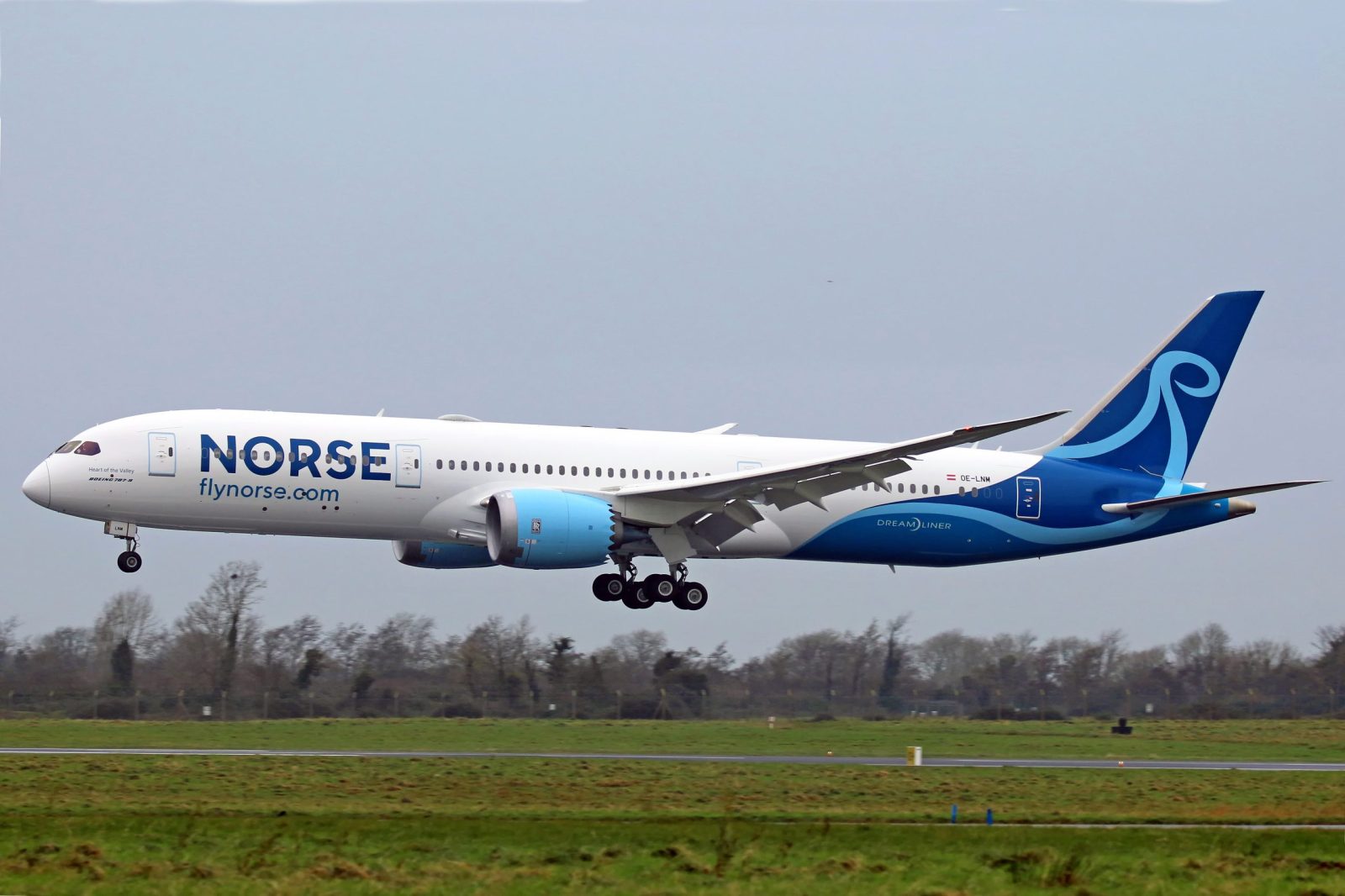
A Norse Atlantic Airways 787-9. (Photo: Norse Atlantic Airways | Malcolm Nason)

Norwegian low-cost carrier Norse Atlantic is looking for a buyer or partner as it continues efforts to restructure and cut costs.

In a recent statement, the airline acknowledged for the first time that it is exploring a potential merger or sale.

“Given the level of interest received to date as part of the strategic review, the board has decided to move forward with a formal process, which may result in a sale, merger, or partnership,” the carrier said. “Further information will be provided as and when appropriate.”

The announcement came as Norse Atlantic ended an aircraft, crew, maintenance, and insurance (ACMI) agreement with IndiGo, which provided the Indian airline with six Norse Atlantic aircraft. Some of the returning aircraft will be reintegrated into Norse Atlantic’s operations, officials said, while others could be loaned out through a new ACMI deal with a different partner carrier.

“We are grateful for the strong cooperation we have had with IndiGo over the past eighteen months,” Norse Atlantic CEO Eivind Roald said in a news release. “However, there is no doubt that the elevated fuel prices, airspace disruptions, and longer flight routes resulting from the Middle East conflict have affected the commercial viability of the arrangement for both parties. We have therefore jointly concluded that alternative deployment of the aircraft will be more commercially beneficial to both parties.”

Norse Atlantic launched a sweeping restructuring plan earlier this year as higher fuel prices ate into its earnings. The airline laid off staff, furloughed some crew members, and instituted temporary pay cuts for some non-flying crew. It is also in the process of moving its headquarters from Arendal, Norway, to Oslo.

In May, Bloomberg reported that the airline brought on JPMorgan Chase to lead a potential sale process.

Norse Atlantic operates only long-haul flights, with destinations in Europe, Southeast Asia, South Africa, and North America.

Zach Vasile

Zach Vasile is a writer and editor covering news in all aspects of commercial aviation. He has reported for and contributed to the Manchester Journal Inquirer, the Hartford Business Journal, the Charlotte Observer, and the Washington Examiner, with his area of focus being the intersection of business and government policy.
Sign-up for newsletters & special offers!

Get the latest stories & special offers delivered directly to your inbox

SUBSCRIBE

Uh-oh! It looks like you're using an ad blocker.

Our website relies on ads to provide free content and sustain our operations. By turning off your ad blocker, you help support us and ensure we can continue offering valuable content without any cost to you.

We truly appreciate your understanding and support. Thank you for considering disabling your ad blocker for this website