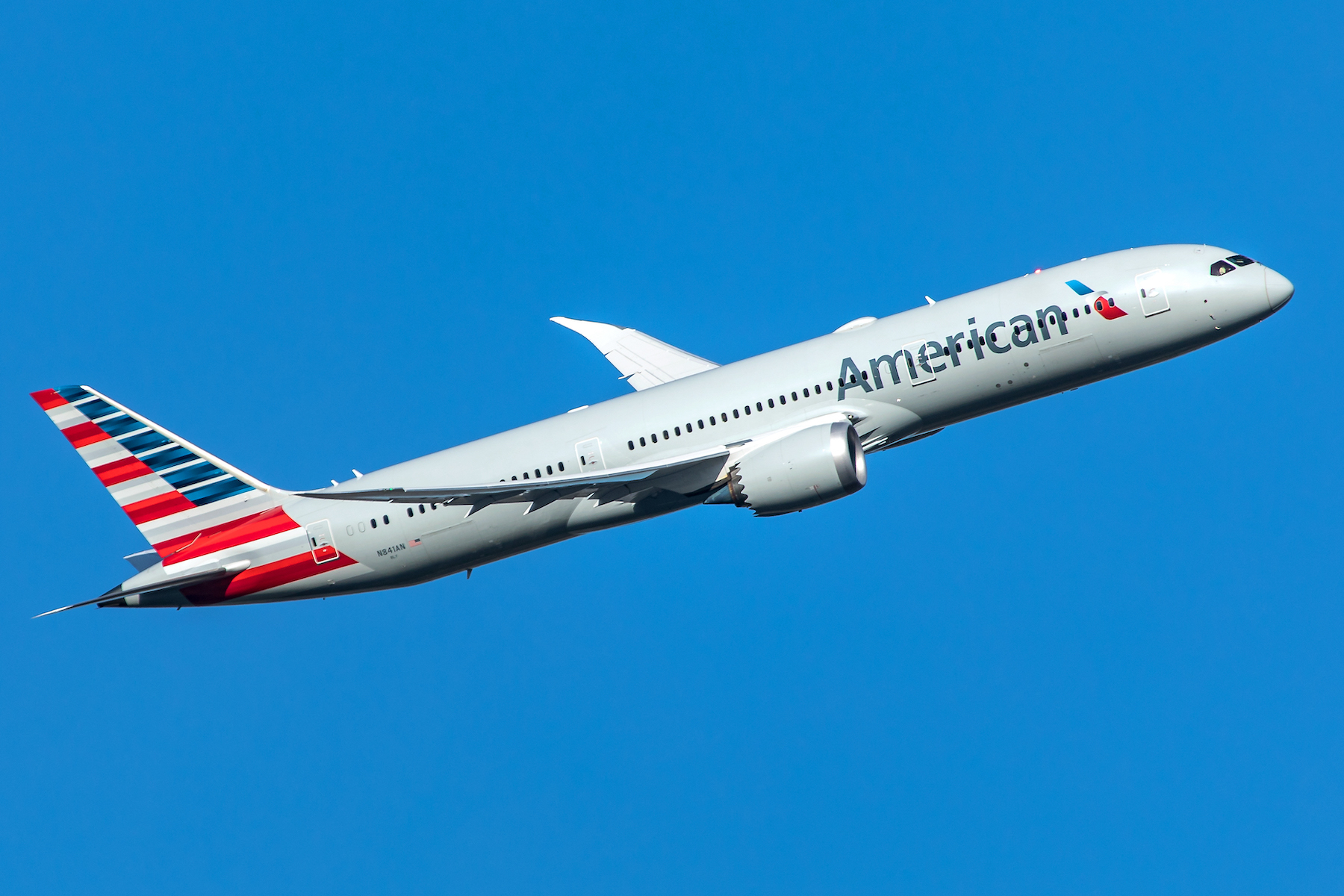
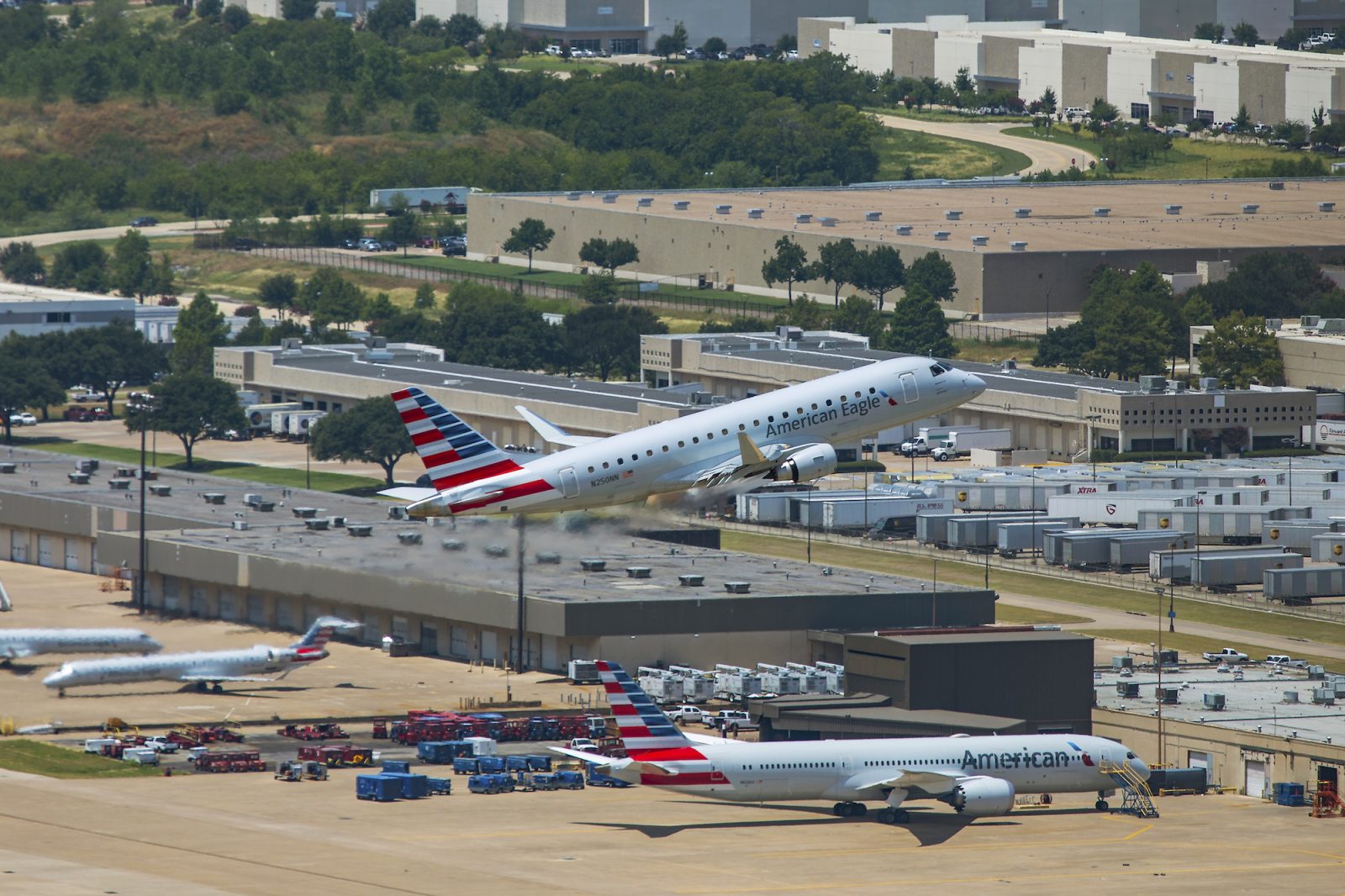
An American Boeing 787-9 Dreamliner departs London Heathrow (Photo: AirlineGeeks | William Derrickson)
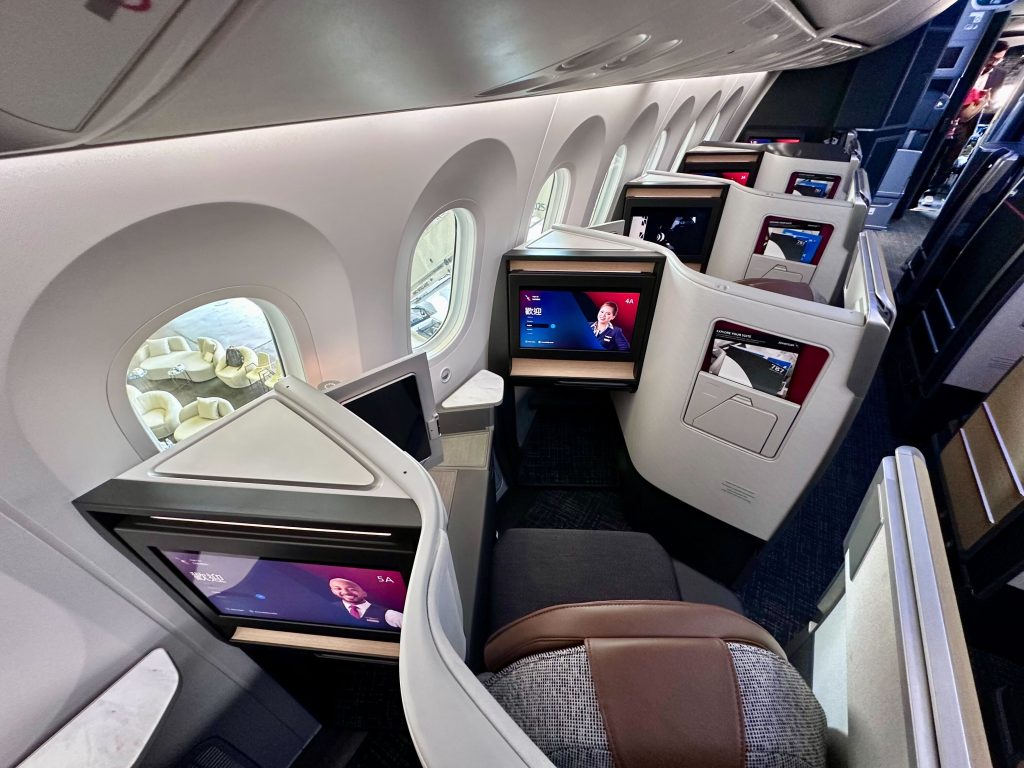
American plans to debut its premium-heavy Boeing 787-9 Dreamliner on one of its longest routes. The aircraft entered revenue service last week, operating between Chicago O’Hare and Los Angeles, as well as London Heathrow.
The Fort Worth, Texas-based airline will also use the 787-9P between Dallas/Fort Worth and Auckland, New Zealand. At 7,439 miles, this route is the carrier’s third-longest scheduled flight, after Dallas/Fort Worth-Brisbane and Los Angeles-Sydney.
American’s senior vice president of network planning, Brian Znotins, shared during a May 29 media event that the 787-9P would be added on Dallas/Fort Worth-Auckland flights this winter. The airline scheduled the 244-seat aircraft on this route last weekend.
According to Cirium Diio schedule data, the aircraft will begin operating between Dallas/Fort Worth and Auckland on Jan. 5, replacing the carrier’s standard 787-9 configuration. The 787-9P will serve this seasonal route on a daily basis.
In the coming months, the 787-9P will operate from Chicago and Philadelphia to London, along with Philadelphia to Zurich. This winter, it will be deployed on the carrier’s flight between Dallas/Fort Worth and Brisbane.
More Destinations
Znotins added that the new 787-9Ps will unlock more destinations for the carrier, particularly those with strong premium demand.
“ No one in the airline is more excited to receive these airplanes than we are in the network planning team, of which I’m part of,” he said. “It’s something that we’ve been waiting for, for a number of years, because we have a number of destinations we’re very excited to launch these airplanes to.”
American also plans to reconfigure its Boeing 777-300ERs with the Flagship Suites product. In addition, the carrier’s Airbus A321XLRs will feature these premium seats as well, which will unlock new long-haul destinations, Znotins continued.
Ryan founded AirlineGeeks.com in February 2013 and has spent more than a decade covering the airline business. His work has been featured by CNN, WJLA, CNET, and Business Insider. His aviation experience spans airport operations, Part 135 regulatory compliance, and airline crew workforce planning, along with time behind the yoke of a Cessna 172 and interviews with airline executives. Ryan now serves as Group President of Firecrown Media’s Aviation Group. He holds a B.S. in Air Transportation Management and an MBA from Arizona State University and teaches Airline Management at Embry-Riddle Aeronautical University.
Federal Judge Dismisses Lawsuit Over Southwest’s 737 MAX Use
Court records show that none of the plaintiffs actually flew on a MAX aircraft during that period but instead traveled on Southwest’s 737-700 and 737-800 jets.
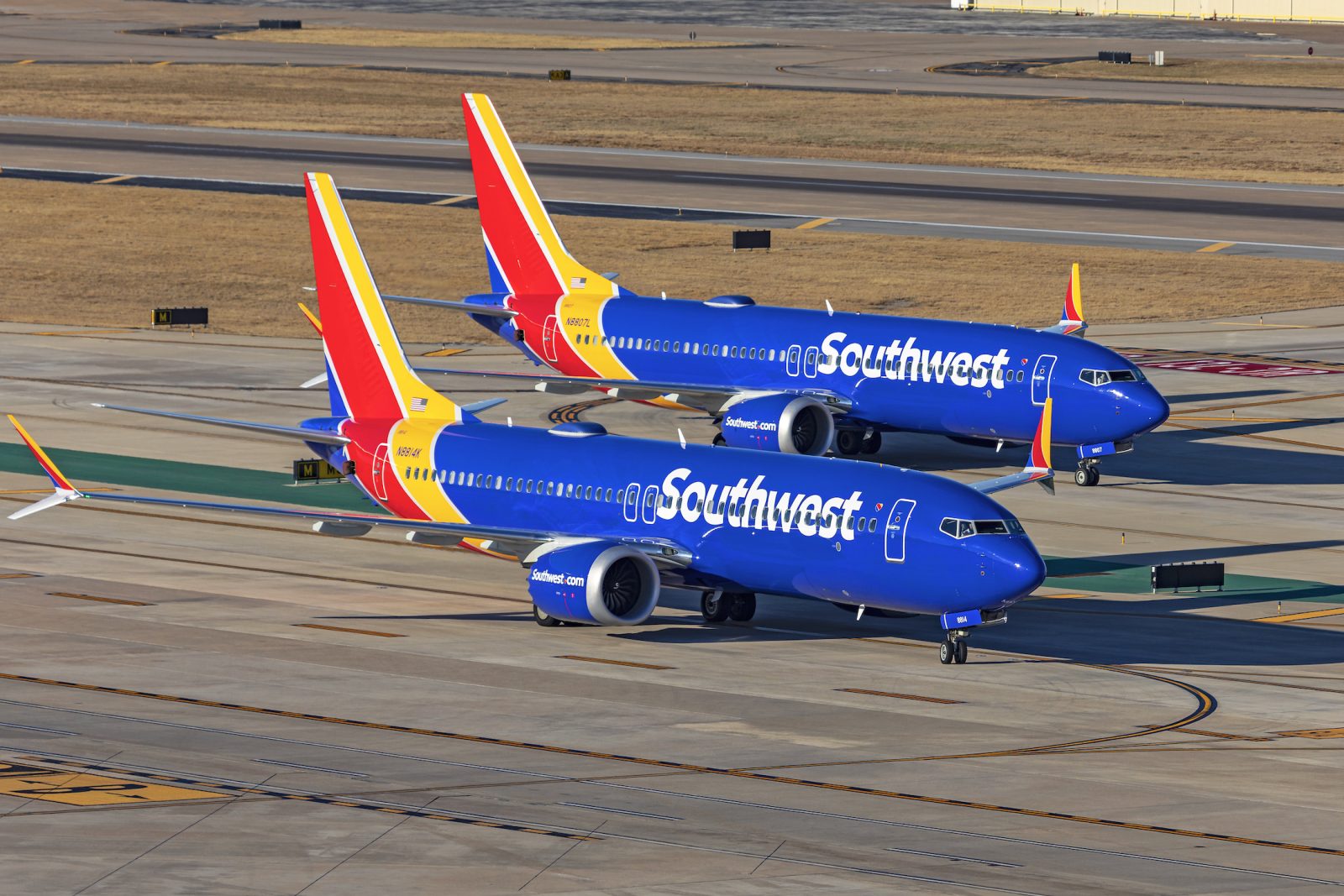
Southwest 737 MAX 8 aircraft. (Photo: AirlineGeeks | William Derrickson)
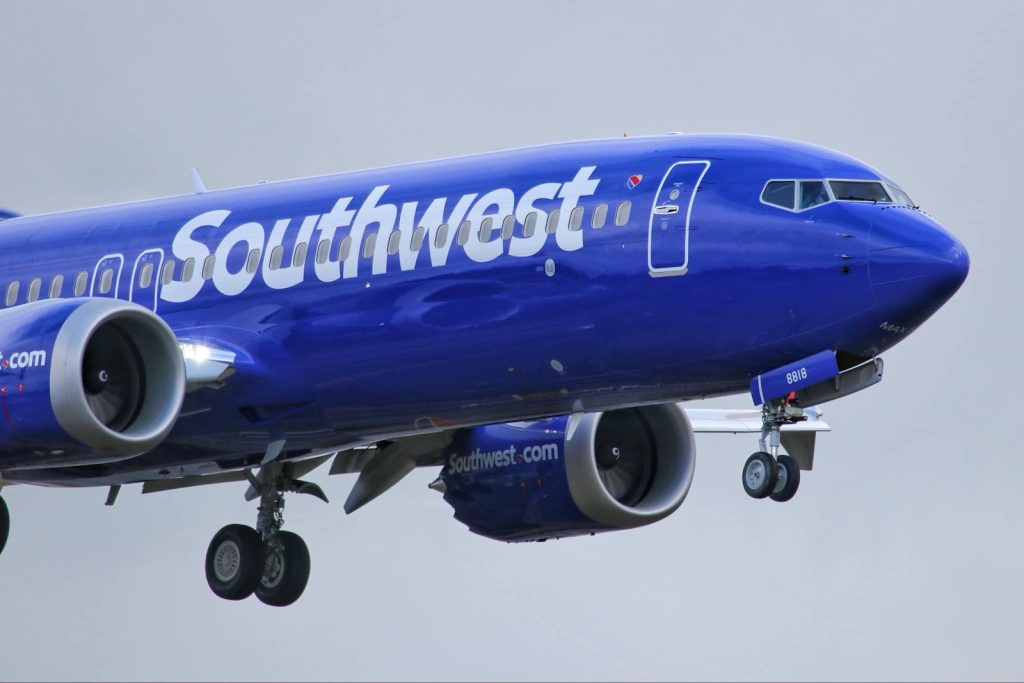
A federal judge in Texas has dismissed a lawsuit filed by customers who claimed Southwest overcharged them for flights on Boeing 737 MAX 8 jets, ruling that the plaintiffs lacked standing to sue because they failed to demonstrate any concrete injuries.
The 2021 class action lawsuit, filed by three customers in the U.S. District Court for the Western District of Texas, alleged that the airline breached its Contract of Carriage by flying the “unsafe, non-airworthy, and defective” 737 MAX aircraft without sufficient pilot training and in violation of FAA regulations.
The plaintiffs, who purchased Southwest tickets for travel between Aug. 29, 2017, and March 13, 2019, claimed they were “overcharged” because buying a ticket with Southwest meant “unwittingly taking a chance of flying aboard the fatally flawed 737 MAX.”
However, court records show that none of the plaintiffs actually flew on a MAX aircraft during that period but instead traveled on Southwest’s 737-700 and 737-800 jets.
The lawsuit came after two fatal crashes involving 737 MAX aircraft operated by Lion Air and Ethiopian Airlines, which led to the FAA grounding all MAX aircraft in the U.S. in March 2019. The plaintiffs sought to represent approximately 40 million passengers who flew with Southwest during the defined class period.
Arguments
The plaintiffs’ central argument focused on Southwest’s alleged breach of safety promises contained in its Contract of Carriage, Customer Service Commitment, and website materials. They claimed the Dallas-based carrier made three main promises: that its pilots were properly trained on all aircraft including the MAX, that it operated safe flights on airworthy aircraft, and that it complied with FAA safety regulations.
According to the plaintiffs, their economic injury stemmed from not receiving “the benefit of the bargain” because they paid for safety promises that Southwest allegedly failed to fulfill.
A Southwest Boeing 737 MAX 8 (Photo: AirlineGeeks | Katie Zera)
Southwest countered that the plaintiffs lacked Article III standing because they suffered no concrete injury. The airline argued that because no plaintiff actually flew on a MAX aircraft, any alleged safety risk never materialized, making their claims purely hypothetical. Southwest relied heavily on a decision by the U.S. Court of Appeals for the 5th Circuit in Rivera v. Wyeth-Ayerst Laboratories. The court dismissed a similar case for lack of standing where plaintiffs received exactly what they paid for.
Judge’s Rationale for Dismissal
The court identified two potential “overcharge theories” in the plaintiffs’ complaint. The first theory claimed that plaintiffs were overcharged because they were unknowingly exposed to a safety risk by purchasing Southwest tickets. The judge rejected this theory, citing the 5th Circuit’s decision in Earl v. Boeing Company, which held that plaintiffs lacked standing when complaining of “a past risk of physical injury” that “never materialized.”
The second theory alleged that plaintiffs were overcharged because they paid for specific safety promises that Southwest breached. The court found this theory also failed to establish standing because it rested on unsupportable inferences similar to those rejected in Earl.
The judge determined that the plaintiffs could not plausibly demonstrate how the court could calculate “the difference between the value represented and the value received” without hypothesizing a “but-for” world that Earl had already rejected as raising no plausible theory of economic harm.
Ryan founded AirlineGeeks.com in February 2013 and has spent more than a decade covering the airline business. His work has been featured by CNN, WJLA, CNET, and Business Insider. His aviation experience spans airport operations, Part 135 regulatory compliance, and airline crew workforce planning, along with time behind the yoke of a Cessna 172 and interviews with airline executives. Ryan now serves as Group President of Firecrown Media’s Aviation Group. He holds a B.S. in Air Transportation Management and an MBA from Arizona State University and teaches Airline Management at Embry-Riddle Aeronautical University.
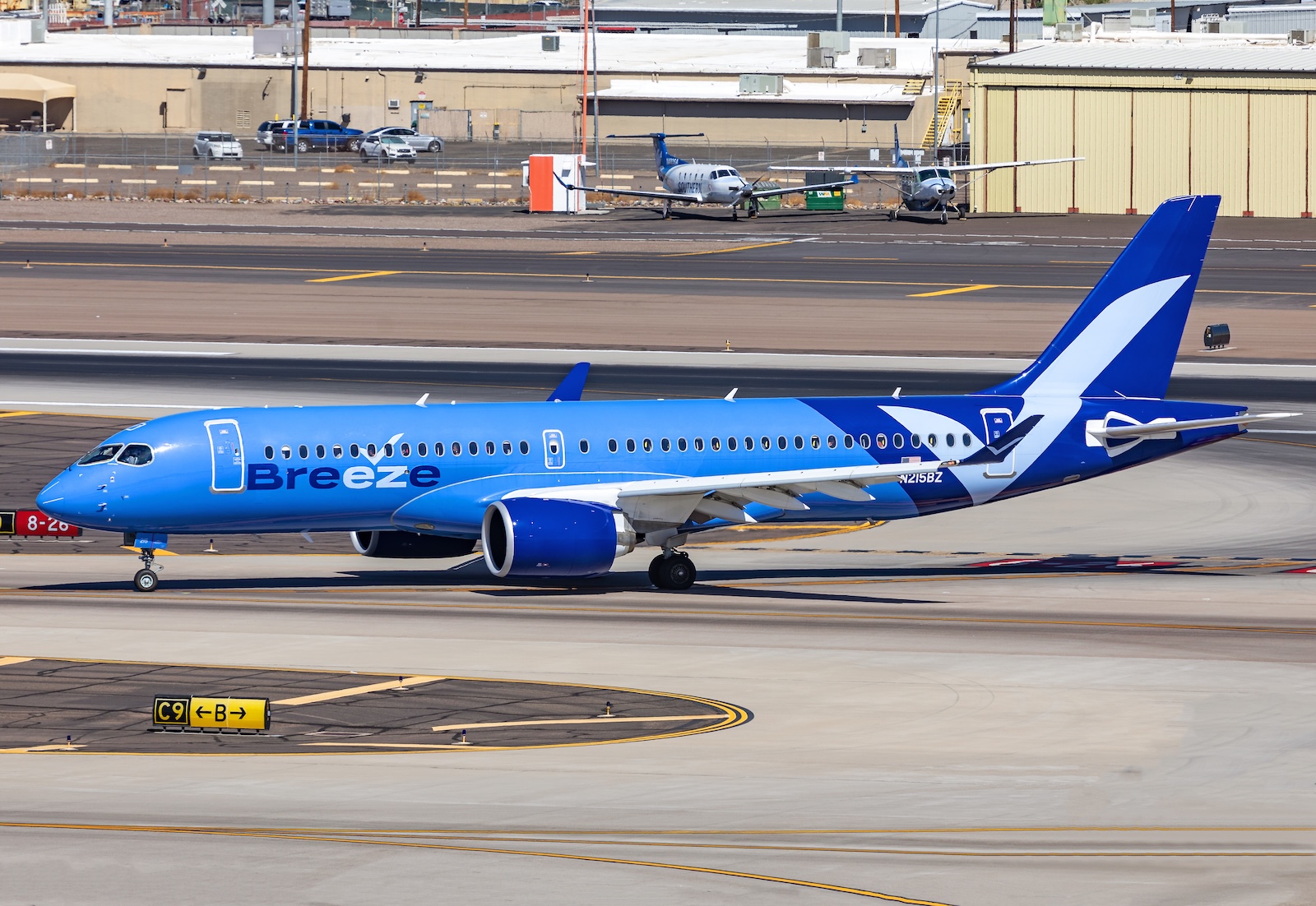
A Breeze Airways Airbus A220 aircraft. (Photo: AirlineGeeks | William Derrickson)
The Department of Transportation has granted Breeze’s request for exemption authority to provide scheduled foreign air transportation to countries with which the U.S. maintains open-skies agreements. The decision, filed last week, allows the carrier to expand operations internationally without waiting for final certificate approval.
The exemption, which remains effective through June 6, 2027, enables Breeze to operate flights between the United States and all nations that have established open-skies relationships with the U.S., including signatories to the Multilateral Agreement on the Liberalization of International Air Transportation (MALIAT).
“We have decided to grant Breeze the requested exemption authority to serve all open-skies partners,” stated Benjamin J. Taylor, director of the office of international aviation, in the agency’s notice.
The DOT also granted Breeze’s request for blanket authority, meaning the carrier will automatically gain exemption authority to serve any new country that enters into an open-skies agreement with the United States without requiring additional approvals.
“We find that the award of such authority, on a prospective basis, with the enhanced administrative convenience it would accord to the carrier, is consistent with the public interest,” the notice declared.
He’s hinted at flights to the Caribbean and even trans-Atlantic service to “Ireland or the British Isles, secondary cities, seasonal.”
A Breeze spokesperson told AirlineGeeks on Monday that the airline plans to announce international service later this year. The carrier is still working through its flag carrier and Extended Twin-Engine Operations (ETOPS) approvals, but this DOT nod is a “milestone,” the spokesperson added.
Ryan founded AirlineGeeks.com in February 2013 and has spent more than a decade covering the airline business. His work has been featured by CNN, WJLA, CNET, and Business Insider. His aviation experience spans airport operations, Part 135 regulatory compliance, and airline crew workforce planning, along with time behind the yoke of a Cessna 172 and interviews with airline executives. Ryan now serves as Group President of Firecrown Media’s Aviation Group. He holds a B.S. in Air Transportation Management and an MBA from Arizona State University and teaches Airline Management at Embry-Riddle Aeronautical University.
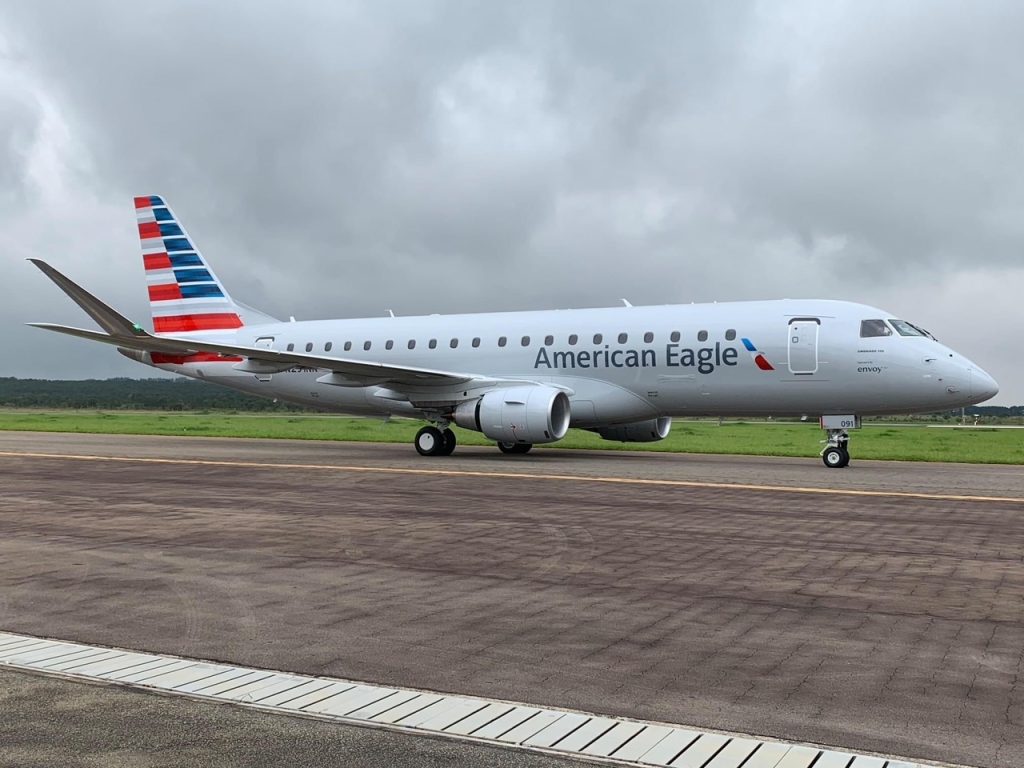
Envoy, which is wholly owned by American Airlines Group, said the new jets will bring its all-Embraer fleet to 214 aircraft. The E175s are expected to be delivered in 2026 and 2027.
“As we remain focused on our core principles of safety, quality, and cost control, Envoy continues to grow strategically and sustainably – delivering value to our customers, employees, and American Airlines Group shareholders,” said President and CEO Pedro Fábregas. “This milestone reflects the dedication and hard work of our more than 21,000 employees across North America, the Pacific, the Caribbean, and the Bahamas.”
An Envoy Air Embraer E175 (Photo: Envoy Air)
Envoy flies the E175 and the slightly smaller E170. With additional E175s already ordered and arriving later this year, the airline expects to have at least 181 aircraft by the end of 2025.
Envoy did not mention any complications stemming from new tariffs placed on Brazil, where Embraer is based.
Notably, Alaska Air Group has put off delivery of two new E175s over the expense of the additional taxes. The two jets were supposed to be used by its subsidiary, Horizon Air.
Zach Vasile is a writer and editor covering news in all aspects of commercial aviation. He has reported for and contributed to the Manchester Journal Inquirer, the Hartford Business Journal, the Charlotte Observer, and the Washington Examiner, with his area of focus being the intersection of business and government policy.
Boeing Back in Business in China After Tariff Clash
Boeing has delivered its first aircraft to China since the country temporarily blocked its airlines from accepting the company’s jets.
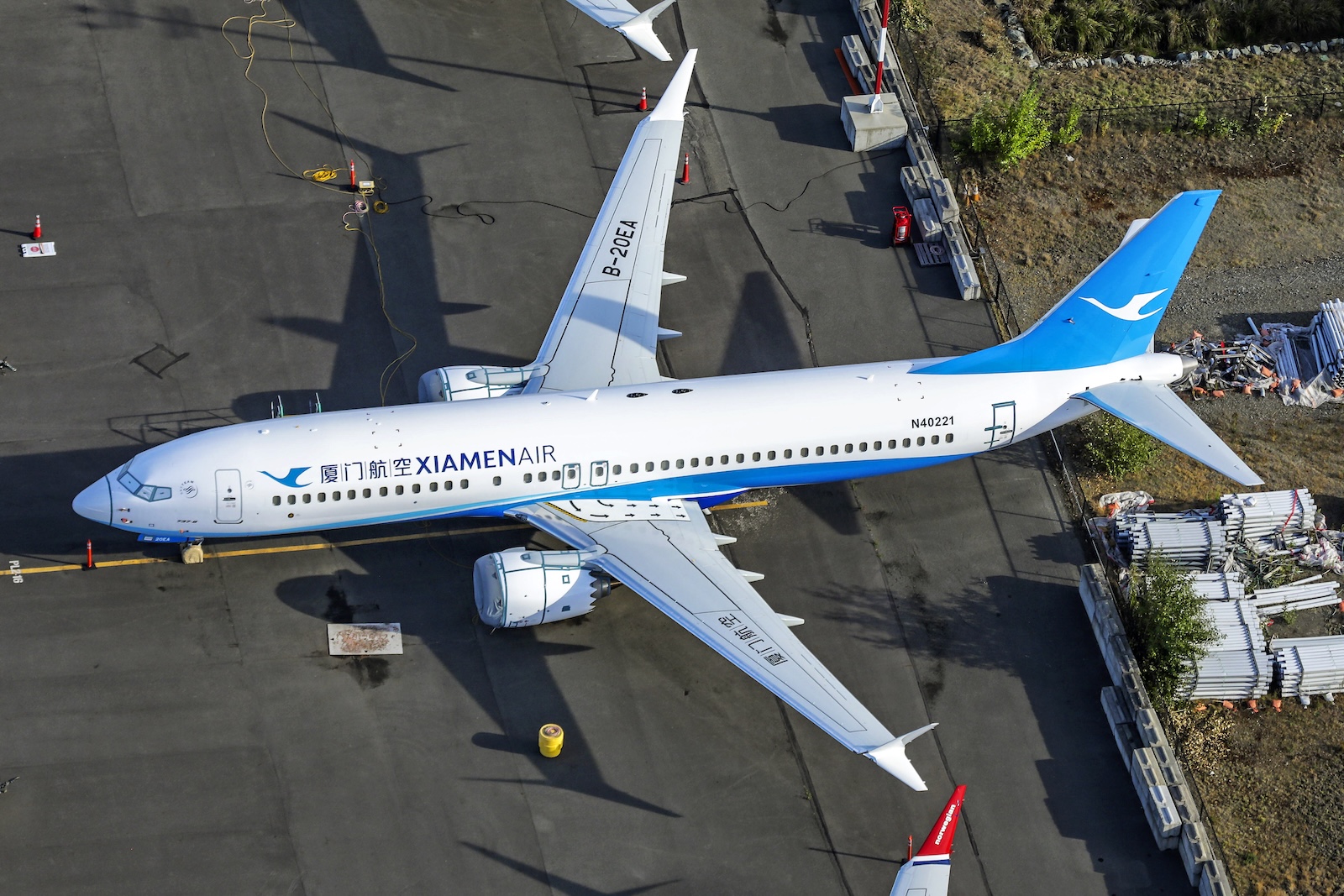
A Xiamen Boeing 737 MAX (Photo: AirlineGeeks | William Derrickson)
Boeing on Monday made its first delivery to China in almost two months after Beijing temporarily blocked Chinese airlines from accepting the company’s jets.
According to Reuters, the aircraft, a 737 MAX 8, was flown from Seattle and landed at a Boeing facility outside Shanghai. It was painted with the colors and insignia of China’s Xiamen Airlines.
Boeing sells to a number of airlines in China, including Xiamen, Air China, Donghai Airlines, China Eastern Airlines, and China Southern Airlines. The country represents about 10% of Boeing’s order backlog, Reuters reported.
The Chinese government told the country’s airlines to stop accepting Boeing aircraft in April after President Donald Trump announced a fresh round of international tariffs, including new, higher taxes on Chinese imports. As the two countries retaliated against each other, U.S. tariffs on China climbed to 145%.
Tensions cooled as trade talks resumed, and in early May the Chinese government announced it would again allow carriers to take delivery of Boeing jets. A couple weeks later, CEO Kelly Ortberg said the company would restart shipments to China.
While Airbus outperforms Boeing in the Asia-Pacific region in general, Boeing has identified China as a key market, with its 2024 commercial outlook suggesting passenger traffic there will double by 2040. Aside from Airbus, it will also have to contend with state-owned manufacturer Comac, whose narrowbody C919 entered service with Chinese carriers in 2023. The C919 is meant to compete directly with the 737 MAX.
U.S.-China trade talks were set to enter a new phase on Monday with the start of face-to-face meetings in London. Treasury Secretary Scott Bessent and Commerce Secretary Howard Lutnick are among the officials representing the U.S.
Zach Vasile is a writer and editor covering news in all aspects of commercial aviation. He has reported for and contributed to the Manchester Journal Inquirer, the Hartford Business Journal, the Charlotte Observer, and the Washington Examiner, with his area of focus being the intersection of business and government policy.
Spirit Gets Compensation for Engine Recall
Spirit has entered an agreement that will provide compensation for the aircraft it has been forced to ground due to problems with Pratt & Whitney engines.
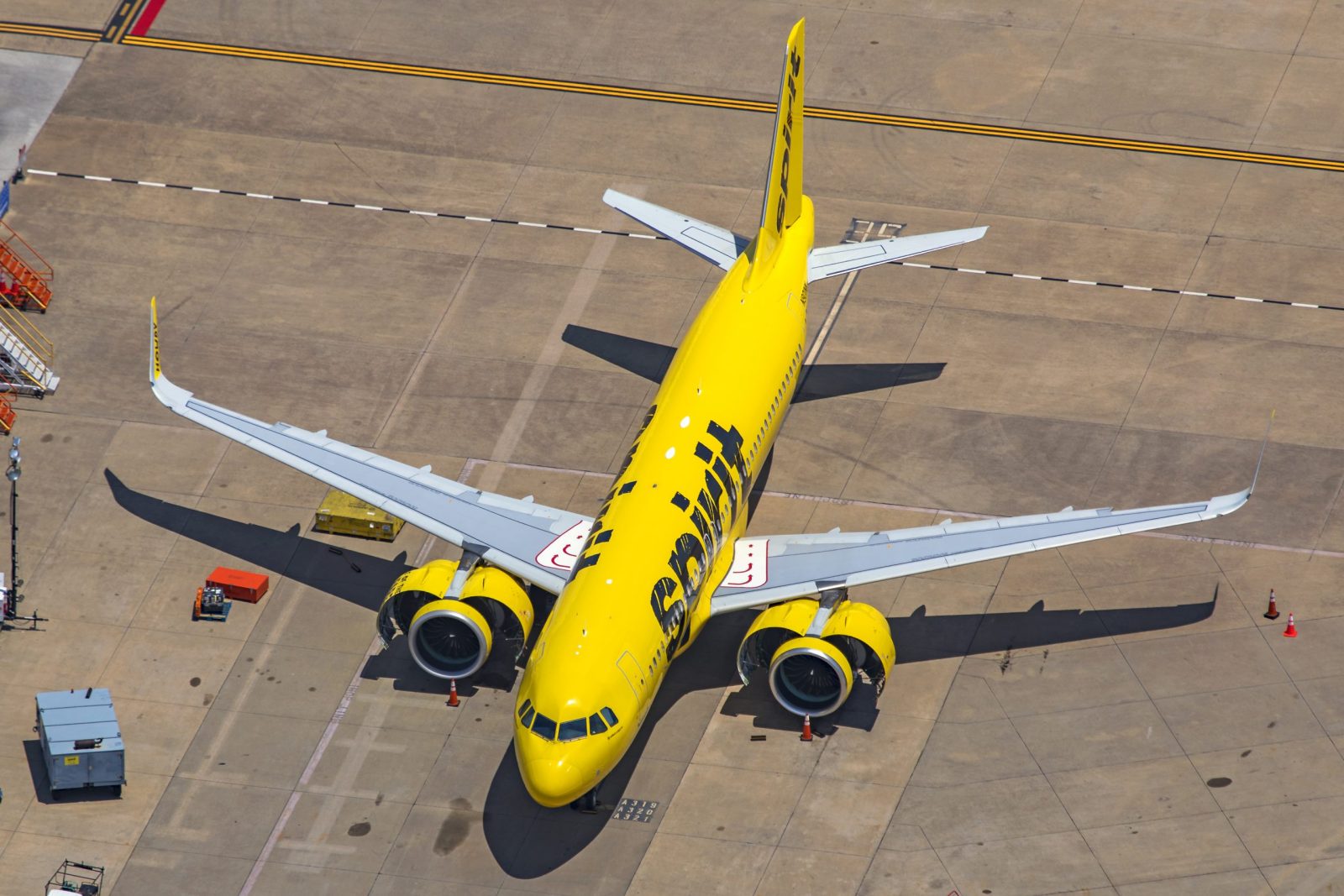
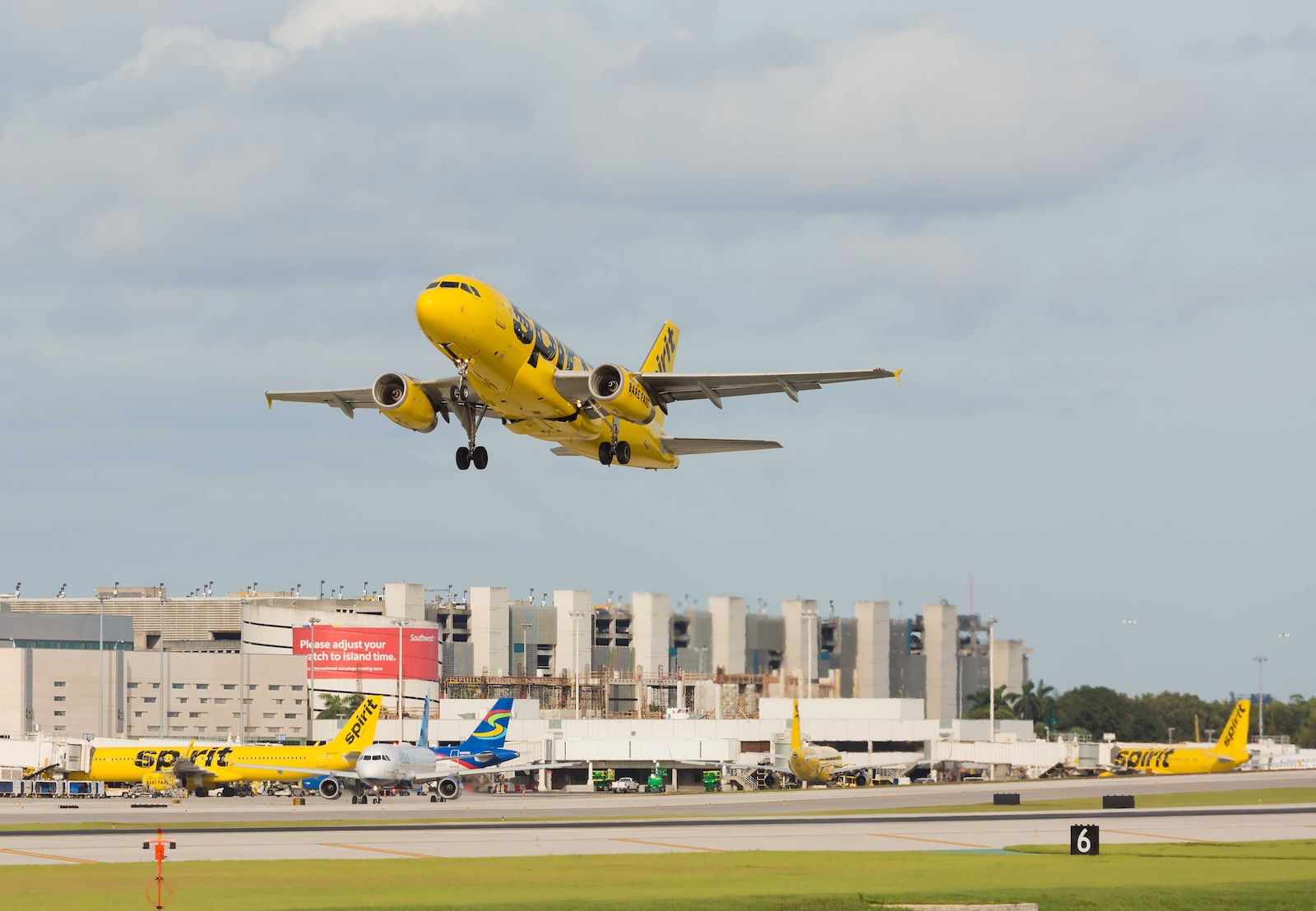
A Spirit A320neo. (Photo: AirlineGeeks | William Derrickson)
Ultra-low-cost carrier Spirit is getting compensation for a manufacturing issue that has forced the grounding of some of its aircraft.
In a filing with the U.S. Securities and Exchange Commission, the Florida-based airline said it entered an agreement with International Aero Engines, which will provide a monthly credit to Spirit through the end of this year “as compensation for each Spirit aircraft unavailable for operational service due to GTF engine issues.”
IAE is an affiliate of aircraft engine maker Pratt & Whitney, which builds the geared turbofan powerplant that has caused complications for Spirit and numerous other airlines.
In 2023, Pratt issued a recall for the engines over defects that could cause cracking. Thousands of airplanes were grounded as a result. The company is inspecting and repairing the engines, and carriers like Spirit are facing long waits to get their GTF-powered aircraft back in service.
Spirit told the SEC that the deal’s impact on liquidity will be between $150 million and $195 million. As part of the arrangement, the airline has agreed to release all claims for compensation for the recall that accrue between March 26, 2024, and Dec. 31, 2025.
Road to Recovery
Spirit emerged from bankruptcy protection in March after four months of financial restructuring designed to alleviate its debt load. The carrier has struggled in the years since the COVID-19 pandemic, mainly due to increased operating expenses. In 2024, it reported a net loss of over $1 billion.
The airline has recently sought to roll back its no-frills reputation with new premium seating offerings, expanded benefits from its customer loyalty program, and a Spirit-branded debit card.
Zach Vasile is a writer and editor covering news in all aspects of commercial aviation. He has reported for and contributed to the Manchester Journal Inquirer, the Hartford Business Journal, the Charlotte Observer, and the Washington Examiner, with his area of focus being the intersection of business and government policy.
FAA Extends Restrictions at Newark
The FAA has announced it will continue to limit flights at Newark Liberty International Airport through the end of October.
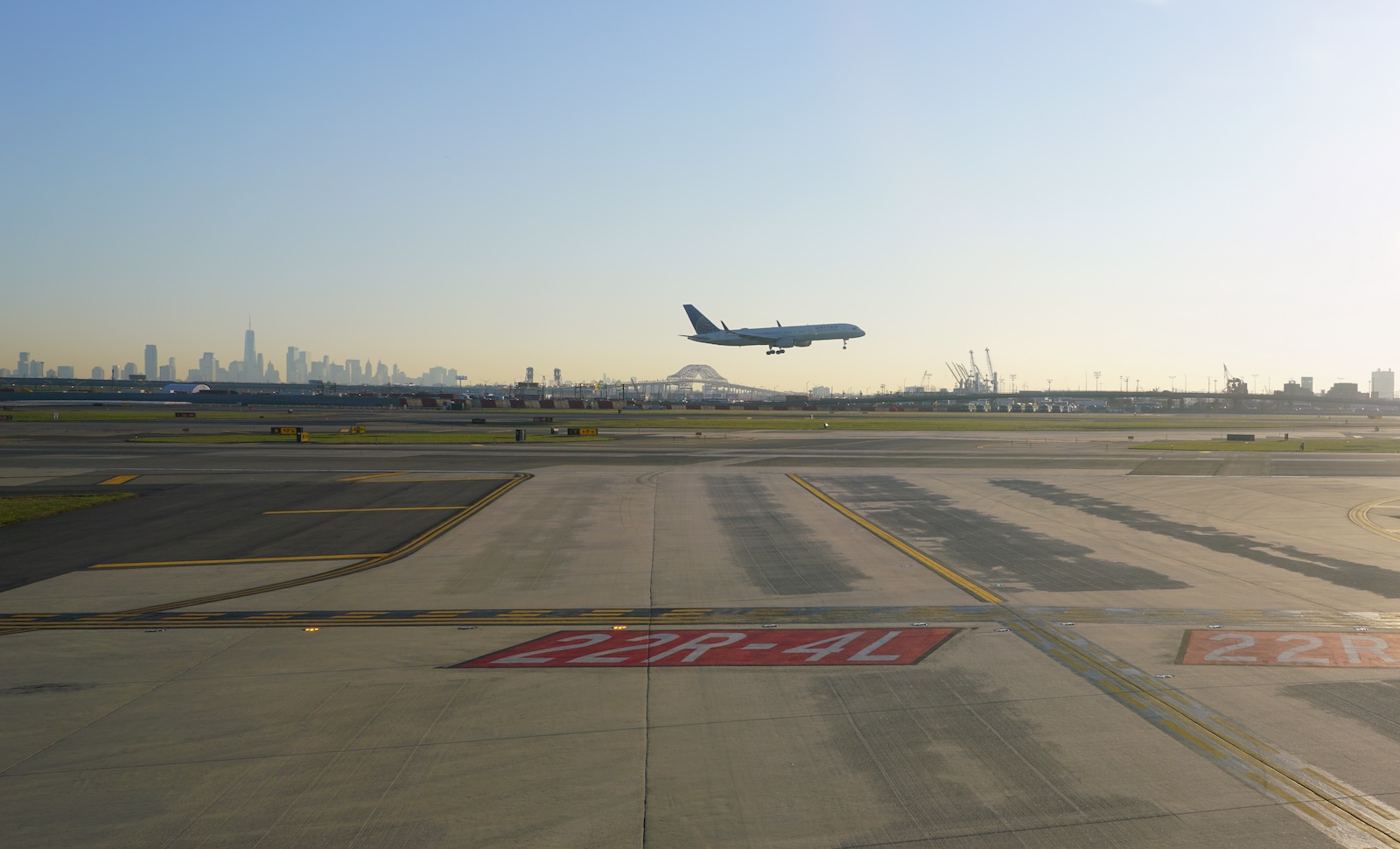
Runway at Newark Liberty International Airport. (Photo: Shutterstock | EQRoy)
The FAA has announced it will continue to limit flights at Newark Liberty International Airport through the end of October. Restrictions were initially imposed after a series of high-profile radio and radar outages at the Newark TRACON facility, which controls arrivals and departures at the airport.
The airport will not exceed 34 arrivals and 34 departures per hour, for up to 77 total hourly operations. The restrictions aim to maintain safety and alleviate flight delays, the FAA says.
“The confirmed reduced rates will maintain safety while alleviating excessive flight delays at the airport due to staffing and equipment challenges,” the FAA wrote in its order. “The early completion of runway construction at the airport that added to the delays will also contribute to a more efficient operation.”
United, by far the largest airline operating at the airport, has praised the limits, saying they will “help ensure that we can safely and reliably operate the flights that remain on the schedule.” The airline has cut some of its flights out of Newark, though it plans to raise that number with the rehabilitation of Newark’s third runway nearing completion.
That runway, known as 4L/22R, has been closed since April 15. It reopened to traffic on June 2, two weeks ahead of schedule, though it is being limited to departures only until navigation equipment that aids in landing can be tested for proper calibration.
ATC Staffing and Technology
Transportation Secretary Sean Duffy said Newark is set for multiple technology upgrades after the blackouts last month. The FAA is also rushing to stabilize ATC staffing levels.
Controllers have criticized the FAA’s 2024 decision to move Newark’s TRACON controllers from the New York Approach facility to Philadelphia. Though the FAA cited low staffing levels and a low training success rate, controllers worried that Philadelphia’s lagging technology would make failures more likely and increase safety risks.
“I don’t want to over promise and under deliver, but if everything goes well, and there can be problems when you test the line, but if it all goes well, we should be able to turn over to this new fiber line at the start of July,” Duffy said.
Duffy’s plan is to finish technology upgrades in Newark by the end of October.
John McDermott is a commercial pilot pursuing a career in professional flight. His passion for aviation began in an Ann Arbor bookstore with a tale of enemy pilots during World War 2, and he hasn't looked back. Besides flying and writing for AirlineGeeks, John volunteers with Professional Pilots of Tomorrow and travels whenever he gets the chance.
Spirit Warns of Tariff Impact
Spirit, like other U.S. airlines, is bracing for an increase in the cost of foreign-made aircraft due to Trump's new tariffs.
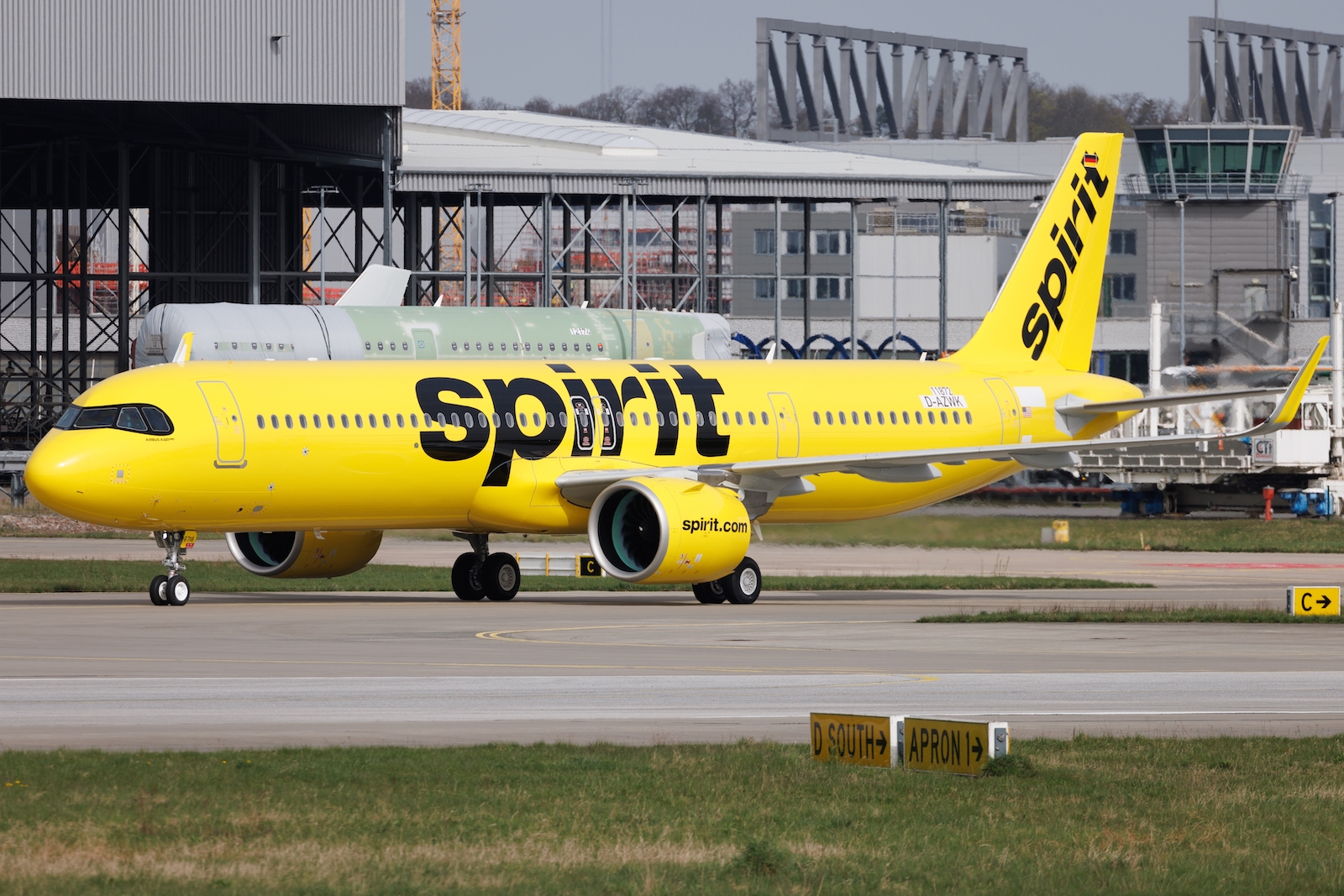
A Spirit Airbus A321neo aircraft. (Photo: Shutterstock | Kevin Hackert)
Ultra-low-cost carrier Spirit has warned of the impact new import tariffs could have on its ability to order new aircraft. The airline operates an all-Airbus fleet, and many of its aircraft are delivered from the manufacturer’s headquarters in France.
Since taking office in January, President Donald Trump has imposed tariffs on numerous countries, including some of the U.S.’s biggest trading partners. Some have since been rolled back or temporarily suspended.
Tariffs are currently enforced on all imports from the European Union. Trump initially called for 20%, but the rate has been temporarily reduced to 10% through early July. The tariffs are expected to return to the original 20% unless a deal is struck in the next month.
Spirit’s Order Book
Spirit has orders for nearly 100 Airbus aircraft, and 92 are set to be delivered from Europe over the next six years. It also has lease agreements for 39 A320neo and A321neo aircraft to be delivered between 2025 and 2028. Regardless of whether the next administration continues Trump’s tariff rates, that still leaves a majority of Spirit’s deliveries potentially subject to higher prices.
A brand new Airbus A320neo has a list price of $110.6 million. With a 20% tariff applied, the new cost rises to $132.72 million, adding billions of dollars to airplane costs. While it is likely Spirit received a bulk discount on close to 100 jets, the price hike is nonetheless significant, and one that Spirit will need to pass on to its customers.
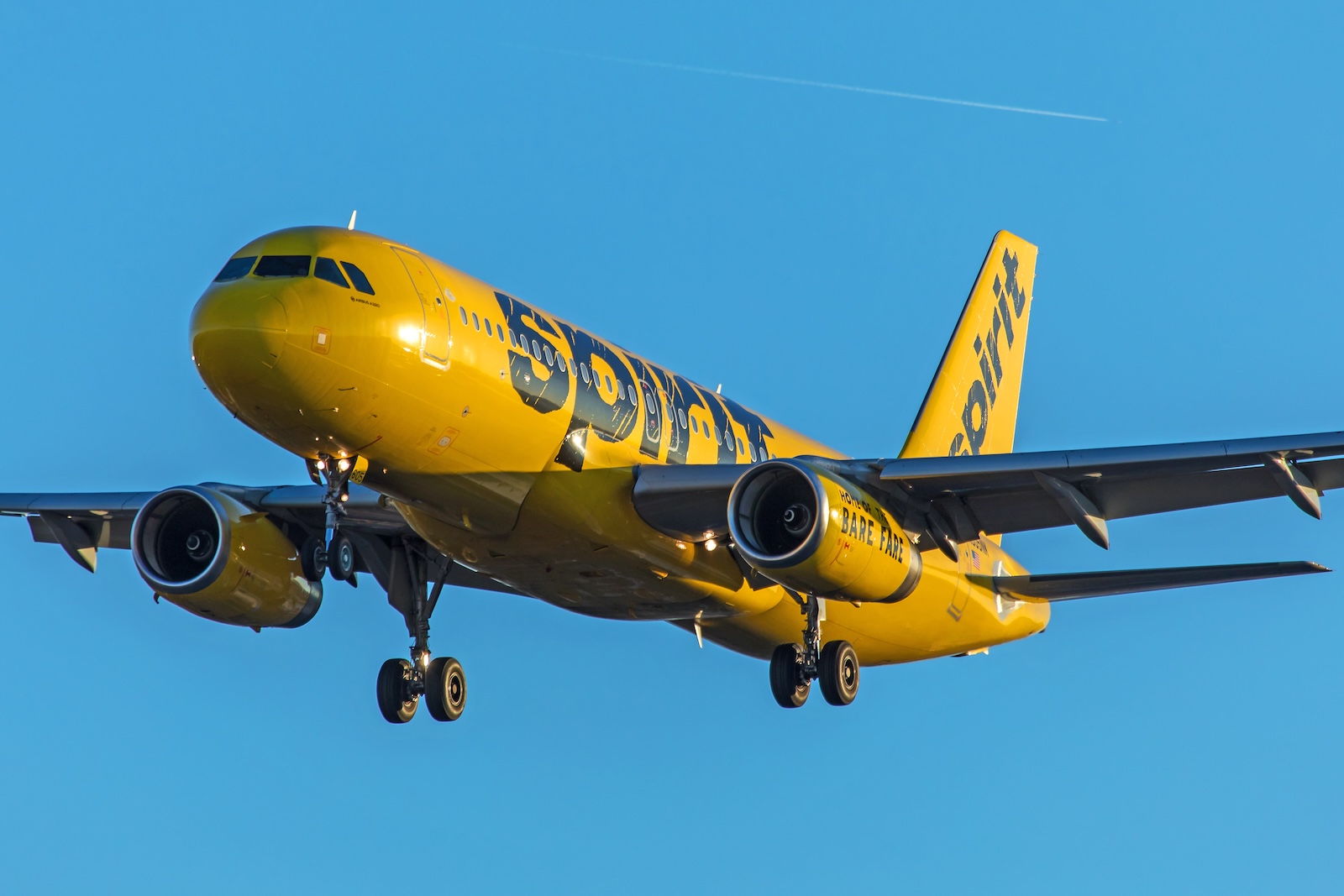
A Spirit A320. (Photo: AirlineGeeks | William Derrickson)
But the price impact won’t be limited to the aircraft themselves. Also impacted are new parts required to service the fleet and keep aircraft flying. While Spirit certainly has some backlog of parts, it won’t last forever, especially if specialty parts with less backlog are required.
“The imposition of these tariffs may increase the cost of, among other things, imported new Airbus aircraft and parts required to service our Airbus fleet, which in turn could have a material adverse effect on our business, financial condition, and/or results of operations,” Spirit said in a filing with the U.S. Securities and Exchange Commission.
Recent Bankruptcy
The news comes as Spirit attempts a significant rebranding after exiting Chapter 11 bankruptcy protection. The company is trying to build a completely new image while staying fundamentally true to its low-cost roots. The goal is to be a friendlier, more accessible airline that can compete with major legacy airlines without the same price hike.
As part of its rebrand, Spirit has opened an additional service class, increased the perks of its frequent flier program, and reshaped its advertising to appear more accessible and desirable for more people.
A significant issue leading up to Spirit’s bankruptcy filing was the grounding of numerous aircraft required by engine maker Pratt & Whitney. The manufacturer found last year that a materials issue would require engines to be inspected sooner than normal, causing planes to be grounded sooner and for longer periods than Spirit anticipated.
A Spirit Airbus aircraft. (Photo: Shutterstock | Carlos Yudica)
Not the Only Airline
Spirit is not the only U.S. airline to reconsider its orders for foreign aircraft. Delta has warned it may stop taking delivery of foreign-made aircraft due to Trump’s tariffs. Besides a large fleet of Boeing 717s, 737s, 757s, and 767s, Delta operates a significant Airbus fleet. It is the only A350 operator in the U.S., retired its Boeing 777s during the COVID-19 pandemic, and may need to consider retiring aging 717s and 757s within the next 10 years.
Boeing has expressed concerns over how tariffs will impact its supply chain, which relies on materials produced around the world. The manufacturer may struggle to raise funds due to the tariffs.
Uncertain Future
Due to these risks, Spirit says that it may need to reconsider its order book.
“We may seek to postpone or cancel delivery of aircraft currently scheduled for delivery, and may choose not to purchase as many aircraft as we intended in the future,” Spirit said in a statement to Yahoo Finance, adding that the future impact of tariffs is “very much subject to change.”
John McDermott is a commercial pilot pursuing a career in professional flight. His passion for aviation began in an Ann Arbor bookstore with a tale of enemy pilots during World War 2, and he hasn't looked back. Besides flying and writing for AirlineGeeks, John volunteers with Professional Pilots of Tomorrow and travels whenever he gets the chance.
ITA Considering New Routes to U.S.
According to a report from Italian newspaper Corriere della Sera, ITA is considering launching nonstop routes from Rome to Newark, New Jersey, and Houston.
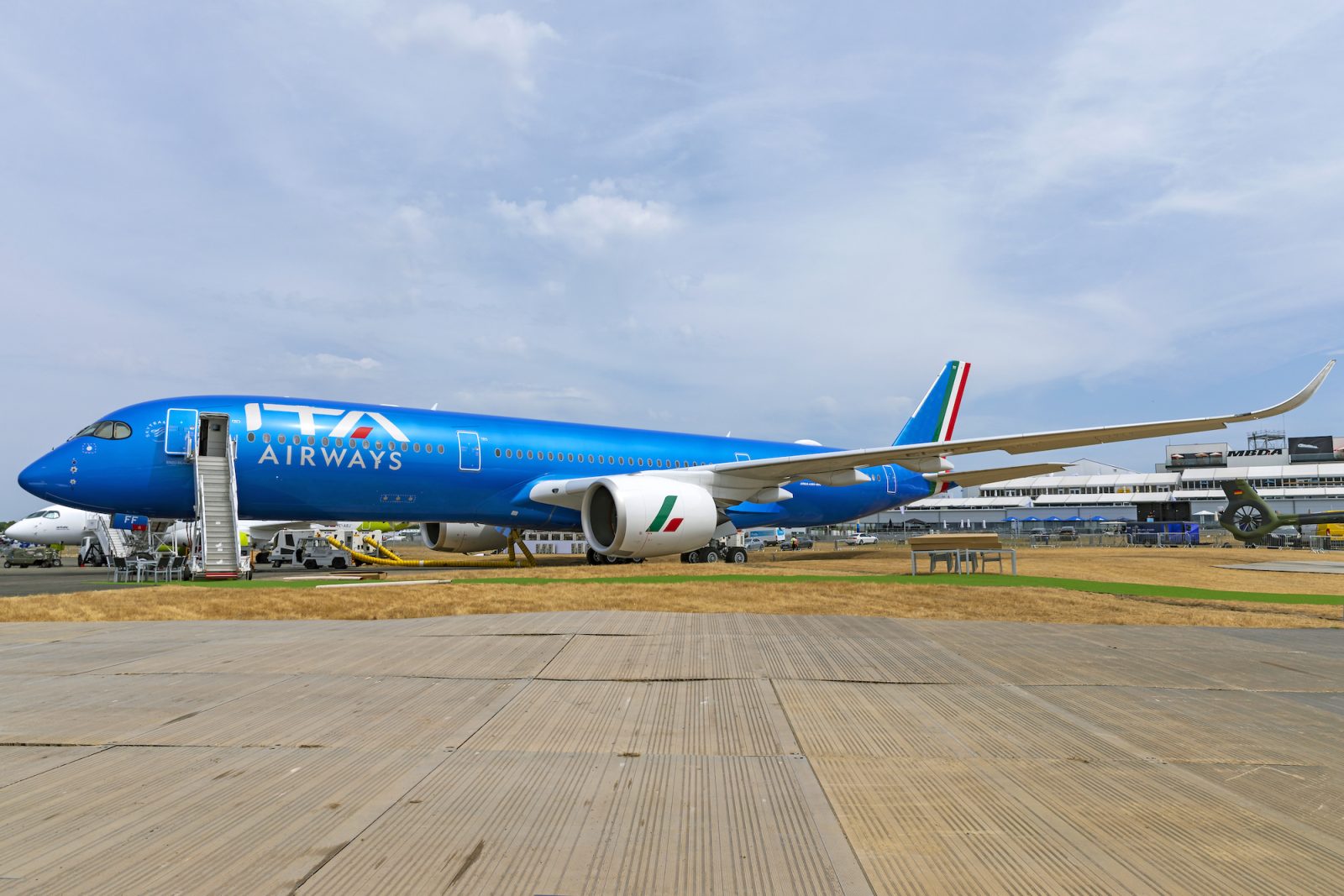
An ITA Airways A350-900. (Photo: AirlineGeeks | William Derrickson)
ITA Airways, the flag carrier of Italy, is reportedly exploring new routes to the U.S.
According to a report from Italian newspaper Corriere della Sera, ITA is considering launching nonstop routes from Rome to Newark, New Jersey, and Houston. Corriere cited individuals with knowledge of the airline’s planning; ITA declined to comment.
The report said the routes could come online in 2027. Both Newark and Houston are hubs for United, Corriere pointed out, which could help ITA’s operations when the carrier formally joins the Star Alliance next year. United is a founding member of the Star Alliance.
ITA currently flies nonstop between Rome and JFK.
ITA is also considering adding routes from Rome to Mumbai, Singapore, and Osaka, Japan, among other destinations.
The Corriere report suggested the airline is looking at expanding its network to boost profitability.
Some of the carrier’s planning hinges on geopolitical events outside its control, including the reopening of Russian airspace to Western carriers, which would allow ITA to connect with Moscow and expand service to Beijing, Hong Kong, and Shanghai.
Zach Vasile is a writer and editor covering news in all aspects of commercial aviation. He has reported for and contributed to the Manchester Journal Inquirer, the Hartford Business Journal, the Charlotte Observer, and the Washington Examiner, with his area of focus being the intersection of business and government policy.
American Looks to Cut Some Cuba Flights
American filed a motion with the DOT on Friday, requesting an expansion of its previously granted temporary dormancy waiver for certain U.S.-Cuba flights.
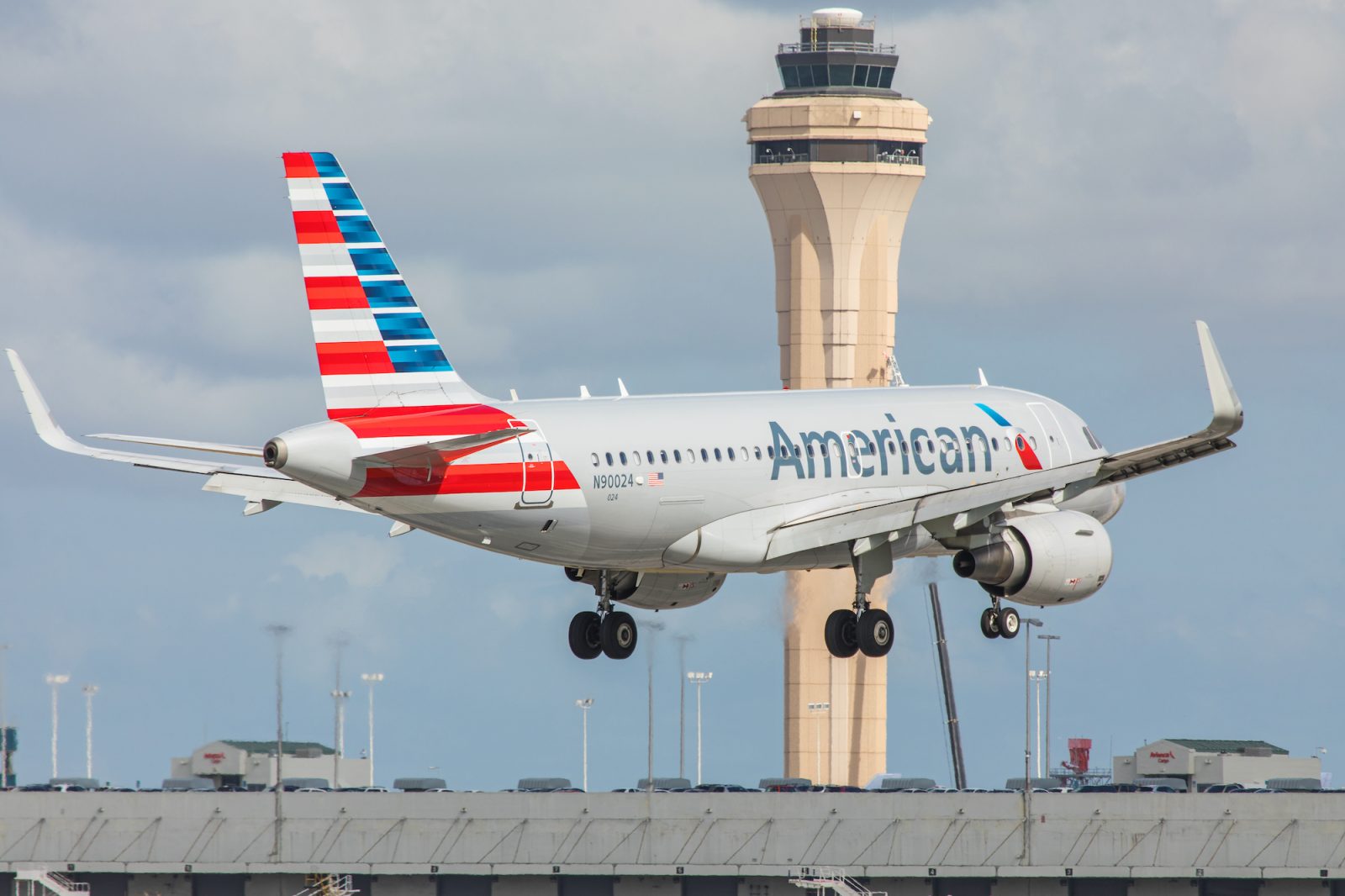
An American A319 landing in Miami. (Photo: AirlineGeeks | William Derrickson)
American filed a motion with the Department of Transportation on Friday, requesting an expansion of its previously granted temporary dormancy waiver for certain U.S.-Cuba flights during the summer 2025 season.
The carrier cited “deeper challenges to the rebound of U.S.-Cuba passenger demand” as the primary reason for seeking these route cuts. The request specifically targets Miami-Havana and Miami-Santiago de Cuba routes, while maintaining the relief already granted for other U.S.-Cuba destinations.
“In light of these ongoing challenges and for the purpose of more efficiently deploying its scarce aircraft, American seeks to supplement the temporary suspension of a limited number of its U.S.–Cuba services for the remainder of the summer 2025 season,” the Fort Worth, Texas-based carrier said.
American’s motion seeks to modify its existing waiver, which the DOT approved on March 21, to include up to three of its eight daily Miami-Havana roundtrips on Mondays, Thursdays, Fridays, Saturdays, and Sundays, as well as four of its eight daily Miami-Havana roundtrips on Tuesdays and Wednesdays.
Market Exit
The airline also requests to suspend its daily Miami-Santiago de Cuba flights on all days of the week. If approved by the agency, American will complete exit this airport, leaving it with no non-stop U.S. service.
The previous waiver already covered specific frequencies for American’s services to Camaguey, Holguin, Matanzas/Varadero, and Santa Clara, which remain unchanged in the new request.
In its filing, American argued that the requested relief is “narrowly tailored, limited to the remainder of the summer 2025 season” and would enable the airline to “better align its capacity and services with market conditions.” The carrier emphasized that the waiver would provide operational flexibility to resume services sooner should market conditions improve.
The DOT has not yet issued a decision on American’s request.
Ryan founded AirlineGeeks.com in February 2013 and has spent more than a decade covering the airline business. His work has been featured by CNN, WJLA, CNET, and Business Insider. His aviation experience spans airport operations, Part 135 regulatory compliance, and airline crew workforce planning, along with time behind the yoke of a Cessna 172 and interviews with airline executives. Ryan now serves as Group President of Firecrown Media’s Aviation Group. He holds a B.S. in Air Transportation Management and an MBA from Arizona State University and teaches Airline Management at Embry-Riddle Aeronautical University.