The Senate Commerce Committee held its confirmation hearing for Bedford on Wednesday, where he was pressed on whether legislators should raise the retirement age.
Last year, a Senate committee narrowly struck down plans to include the age increase as part of the FAA Reauthorization Act. Had this provision been passed, airline pilots would be able to fly until 67, an increase from the current age of 65.
“So those [who] wish to serve having an arbitrary mandatory retirement age doesn’t seem like the right answer to me,” Bedford said during the hearing.
Raising the retirement age was met with immense pushback from industry groups, including the Air Line Pilots Association (ALPA), which is the largest pilots union, representing around 79,000 members.
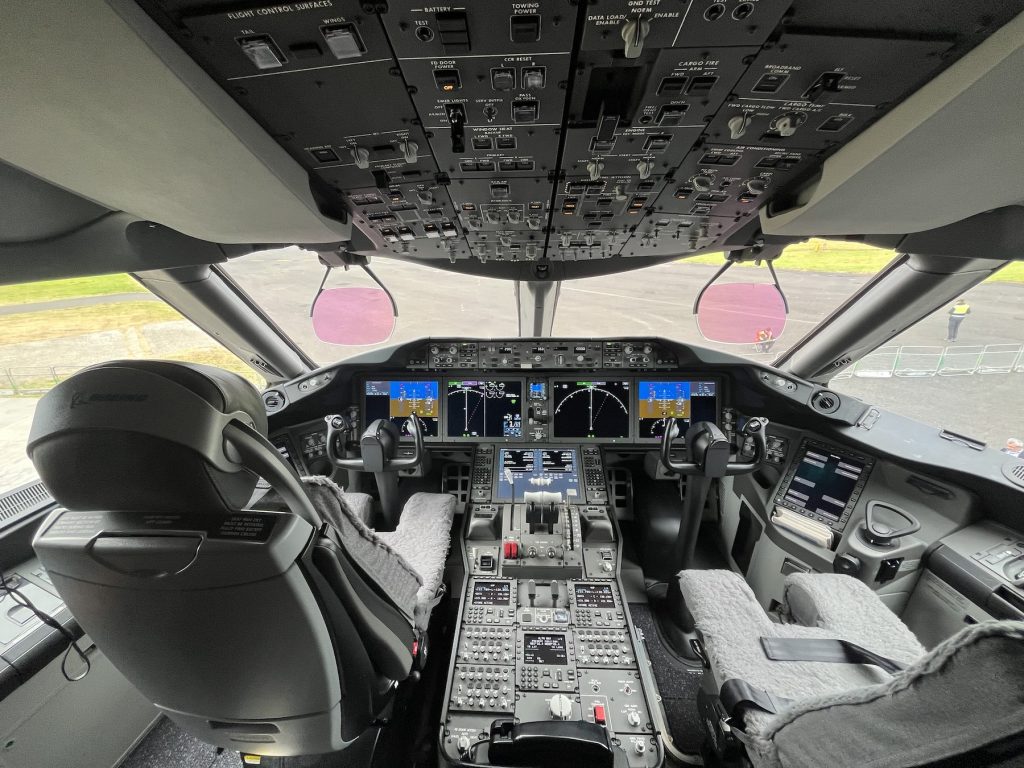
Inside a Boeing 787 Dreamliner flight deck at the Farnborough Airshow (Photo: AirlineGeeks | William Derrickson)
“We had a of debate on the merits of it, which are, I think, pretty clear that we have really experienced pilots that still have a lot of gas in the tank … and a lot of mentoring that they can bring to the table for the younger workforce that we’re developing for the future,” he added.
International Logistics
Bedford noted that raising the retirement age comes with some strings attached. These include alignment with International Civil Aviation Organization (ICAO) standards.
A handful of countries allow their airline pilots to fly beyond 65, but that age is largely the standard worldwide.
“But then there’s the logistics of the fact that these men and women are actually at the top of the fleet food chain,” Bedford continued. “They’re flying in the left seat of the most advanced widebody aircraft across the planet, and that’s great.”
“We have to be sensitive to the fact that the disruption that it would cause if in fact they can’t operate widebody airplanes and have to be deregulated down to a narrowbody jet may prohibit them from even wanting to serve.”
ICAO will become “very critical” to raising the retirement age, Bedford said. “I think it’s absolutely possible to accomplish that in a reasonable period of time.”
ICAO last raised the mandatory retirement age from 60 to 65 in 2006.
Ryan founded AirlineGeeks.com in February 2013 and has spent more than a decade covering the airline business. His work has been featured by CNN, WJLA, CNET, and Business Insider. His aviation experience spans airport operations, Part 135 regulatory compliance, and airline crew workforce planning, along with time behind the yoke of a Cessna 172 and interviews with airline executives. Ryan now serves as Group President of Firecrown Media’s Aviation Group. He holds a B.S. in Air Transportation Management and an MBA from Arizona State University and teaches Airline Management at Embry-Riddle Aeronautical University.
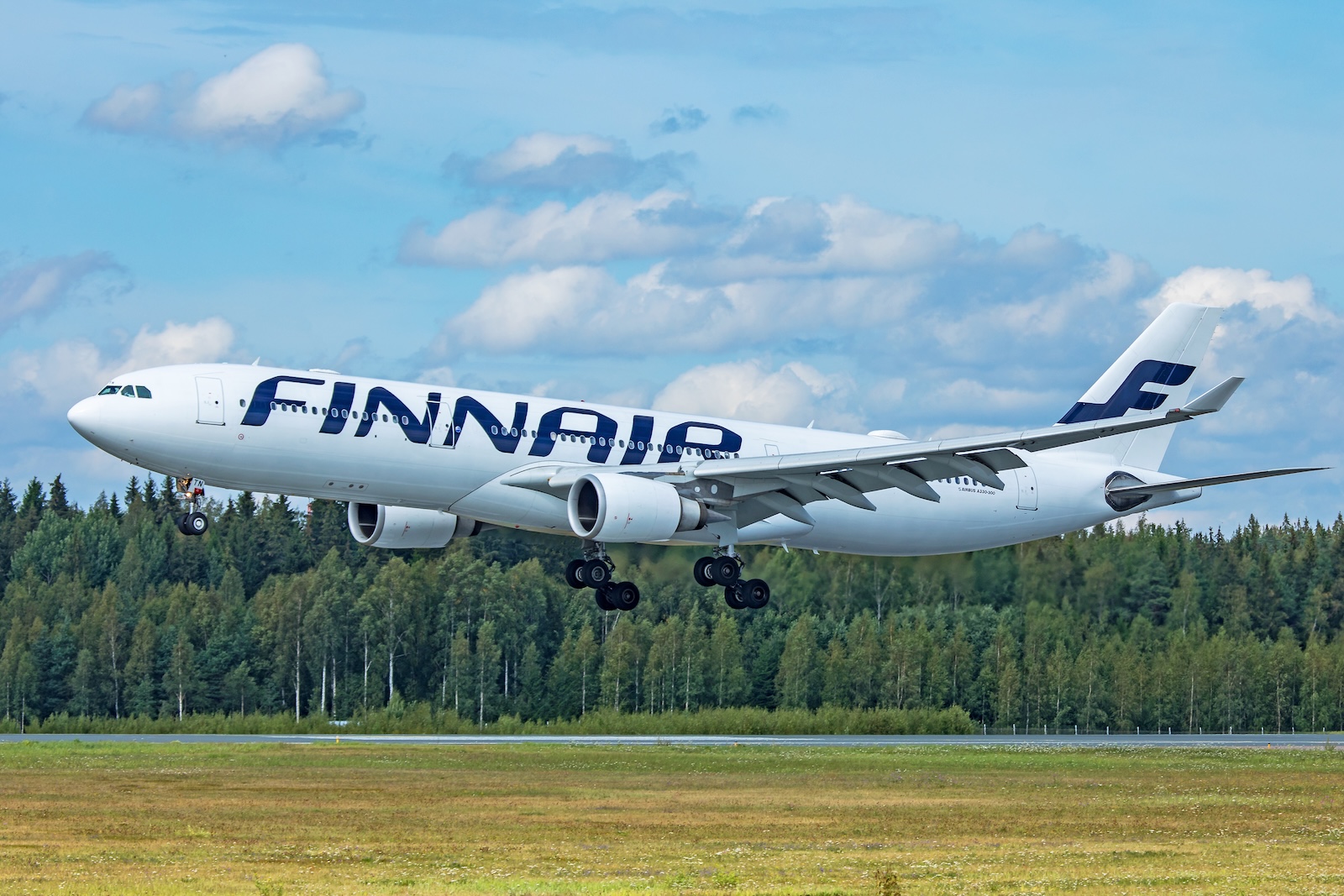
A Finnair Airbus A330. (Photo: AirlineGeeks | William Derrickson)
Finnish flag carrier Finnair is restarting nonstop service to Canada for the first time in over a decade.
The airline announced its Helsinki-Toronto route will relaunch on May 4, 2026. Flights will operate three times a week during the summer, on Mondays, Wednesdays, and Sundays, using Airbus A330s.
Finnair last flew between Helsinki and Toronto in 2015. When the route restarts, it will be the only nonstop flight linking Canada and Finland.
More North America Service
Finnair currently has six destinations in North America: New York-JFK, Chicago O’Hare, Dallas/Fort Worth, Los Angeles, Miami, and Seattle.
Airline officials said the Toronto route will give North American travelers better access to Helsinki, tourist spots around the Nordic countries, and the Baltic states further east, which receive relatively few transatlantic visitors. They also envision Helsinki serving as a bridge between Canada and India, with the flight from Toronto timed to allow connections to Finnair’s daily service to Delhi.
“Canada is fast becoming one of the most popular long-haul destinations for Europeans, while the Nordics are also heating up amongst North American travelers, so we are confident that this route will prove a hit with both business and leisure travelers heading across the Atlantic,” said Javier Roig Sanchez, Finnair’s general manager for North America, in a news release. “We also expect to see strong demand for travel between Canada and India, as customers experience the ease and convenience of connecting via Helsinki Airport, when travelling between North America and Asia.”
Toronto is the second new destination Finnair has announced for 2026. The first was the Norwegian town of Alta, one of the northernmost settlements in the world. Flights between Helsinki and Alta are scheduled to begin on March 29, 2026.
Finnair mainly serves destinations in Europe, but over the last several years has been expanding its presence in North America and the Middle East. Like all other Western carriers, it has been banned from using Russian airspace, making it more difficult and costly to maintain its routes to East Asia.
Zach Vasile is a writer and editor covering news in all aspects of commercial aviation. He has reported for and contributed to the Manchester Journal Inquirer, the Hartford Business Journal, the Charlotte Observer, and the Washington Examiner, with his area of focus being the intersection of business and government policy.
Man Posed as Flight Attendant to Book Free Trips
A federal jury found Tiron Alexander, 35, guilty of wire fraud and entering into a secure area of an airport under false pretenses.
Prosecutors said Alexander exploited a program offered by airlines for pilots and flight attendants. He ordered the tickets through one carrier’s website while claiming to work for various other airlines and submitted false identifying information to support his application. He used 30 different badge numbers and dates of hire during the course of the scheme.
Alexander ultimately booked over 120 flights between 2018 and 2024 but only flew in person on 34 of them, government attorneys said.
Zach Vasile is a writer and editor covering news in all aspects of commercial aviation. He has reported for and contributed to the Manchester Journal Inquirer, the Hartford Business Journal, the Charlotte Observer, and the Washington Examiner, with his area of focus being the intersection of business and government policy.
IATA: Delivery Delays Likely to Last For Years
The International Air Transport Association said a variety of factors will continue to delay the delivery of aircraft to airlines for years to come.
The airline trade group said manufacturer backlogs now exceed 17,000 aircraft, up from 10,000-11,000 before the COVID-19 pandemic, with an implied wait time of 14 years. IATA linked the delays to supply chain issues, including problems with engines and a shortage of spare parts. The slowdown could be made worse by tariffs imposed by the U.S., the report said.
A number of airlines have delayed the launch of new routes because they do not have the aircraft necessary to support them. The holdup has also increased leasing costs and hurt efficiency, since airlines are sometimes stuck using airplanes that are poorly suited for a given service.
This year, 1,692 aircraft are expected to be delivered to airlines. This is the highest number since 2018 but is still down 26% compared to year-ago estimates, IATA noted.
According to the report, over 1,100 aircraft less than 10 years old are currently in storage, constituting 3.8% of the worldwide fleet. That figure stood at 1.3% between 2015 and 2018.
Nearly 70% of those grounded aircraft have Pratt & Whitney PW1000G engines, which have been the subject of a mass recall and inspection effort since 2023. Some of the engines have parts made with contaminated powdered metal, which causes cracking. Pratt is now in the process of checking the powerplants and performing repairs where needed.
RTX Corp., Pratt’s parent company, has estimated the recall will cost about $7 billion.
Despite those challenges, IATA predicted airlines will see a rise in profitability due to falling fuel prices and increased passenger demand. Net profits are projected to grow from $32.4 billion in 2024 to $36 billion in 2025.
Zach Vasile is a writer and editor covering news in all aspects of commercial aviation. He has reported for and contributed to the Manchester Journal Inquirer, the Hartford Business Journal, the Charlotte Observer, and the Washington Examiner, with his area of focus being the intersection of business and government policy.
Silver Airways Ceases Operations After 14 Years
Florida-based Silver Airways halted all service on Wednesday following a nearly five-month long Ch. 11 bankruptcy process.
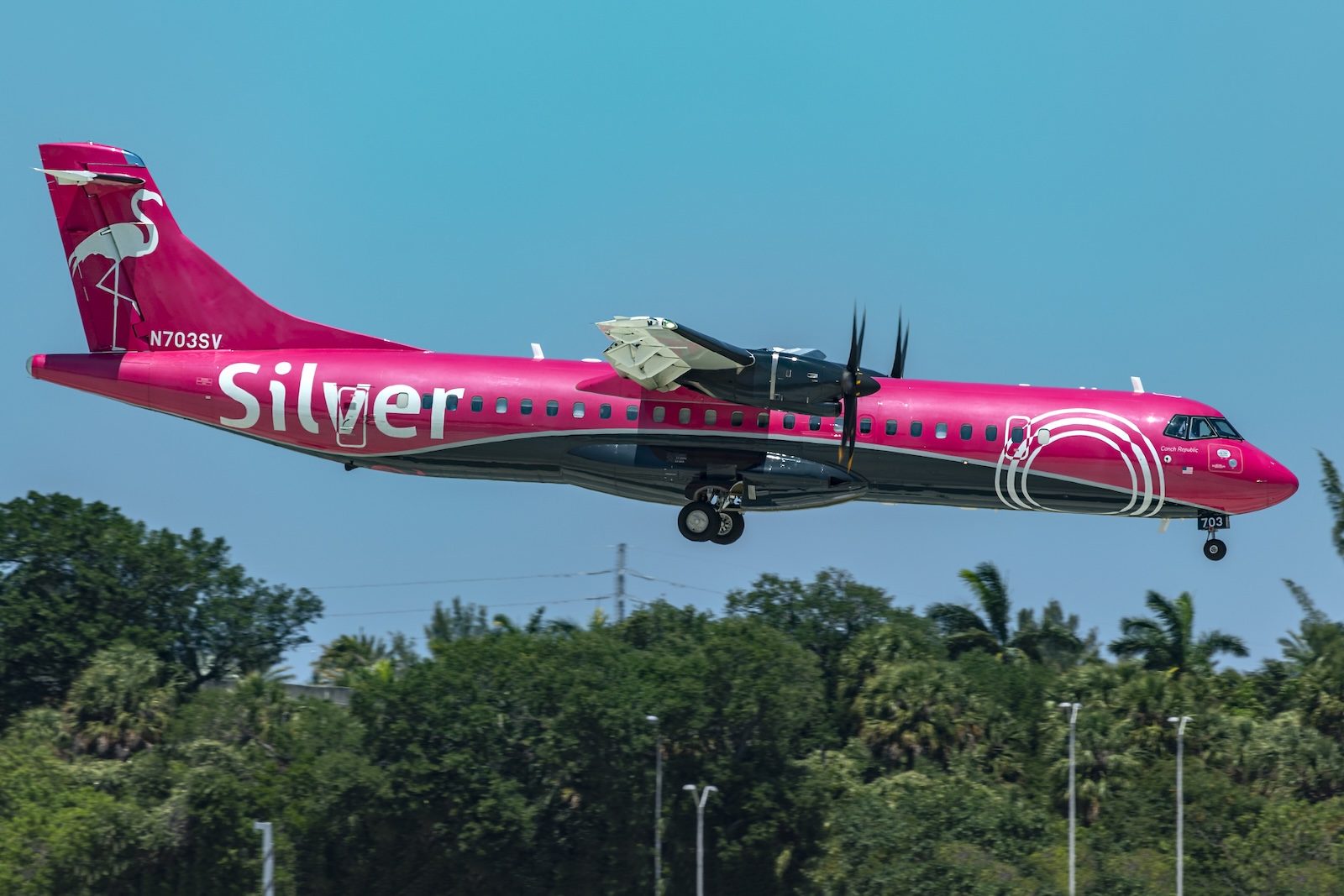
A Silver Airways ATR 72 aircraft (Photo: AirlineGeeks | William Derrickson)
Florida-based Silver Airways halted all service on Wednesday following a nearly five-month-long bankruptcy process.
“We regret to inform you that we are ceasing operations as of today, June 11, 2025,” the carrier said in a social media post. Silver planned to operate just over 1,500 scheduled flights this month, per Cirium Diio schedule data.
Investment firm Wexford Capital purchased the airline’s assets – including its fleet of ATR aircraft – but opted not to continue operating them.
“Silver entered into a transaction to sell its assets to another airline holding company, who unfortunately has determined to not continue Silver’s flight operations in Florida, the Bahamas and the Caribbean,” the company added.
According to court documents, the airline’s assets were valued at approximately $90 million, fully encumbered by $400 million in secured debt. Additionally, the airline owed $8 million in taxes and $27.7 million to unsecured creditors at the time of the bankruptcy filing.
Founded in 2011, the carrier was born from the assets of Gulfstream International Airlines. Throughout its history, Silver operated a broad network, including scheduled flights and government-subsidized Essential Air Service routes.
As of this month, it had bases in Tampa and Fort Lauderdale, Florida, along with San Juan, Puerto Rico.
Ryan founded AirlineGeeks.com in February 2013 and has spent more than a decade covering the airline business. His work has been featured by CNN, WJLA, CNET, and Business Insider. His aviation experience spans airport operations, Part 135 regulatory compliance, and airline crew workforce planning, along with time behind the yoke of a Cessna 172 and interviews with airline executives. Ryan now serves as Group President of Firecrown Media’s Aviation Group. He holds a B.S. in Air Transportation Management and an MBA from Arizona State University and teaches Airline Management at Embry-Riddle Aeronautical University.
Airline CEOs Champion Tech, Watch Macro Trends in New Survey
Increasingly, industry leaders said they are concentrating on things they can control, like cost structures, operational reliability, and network performance.
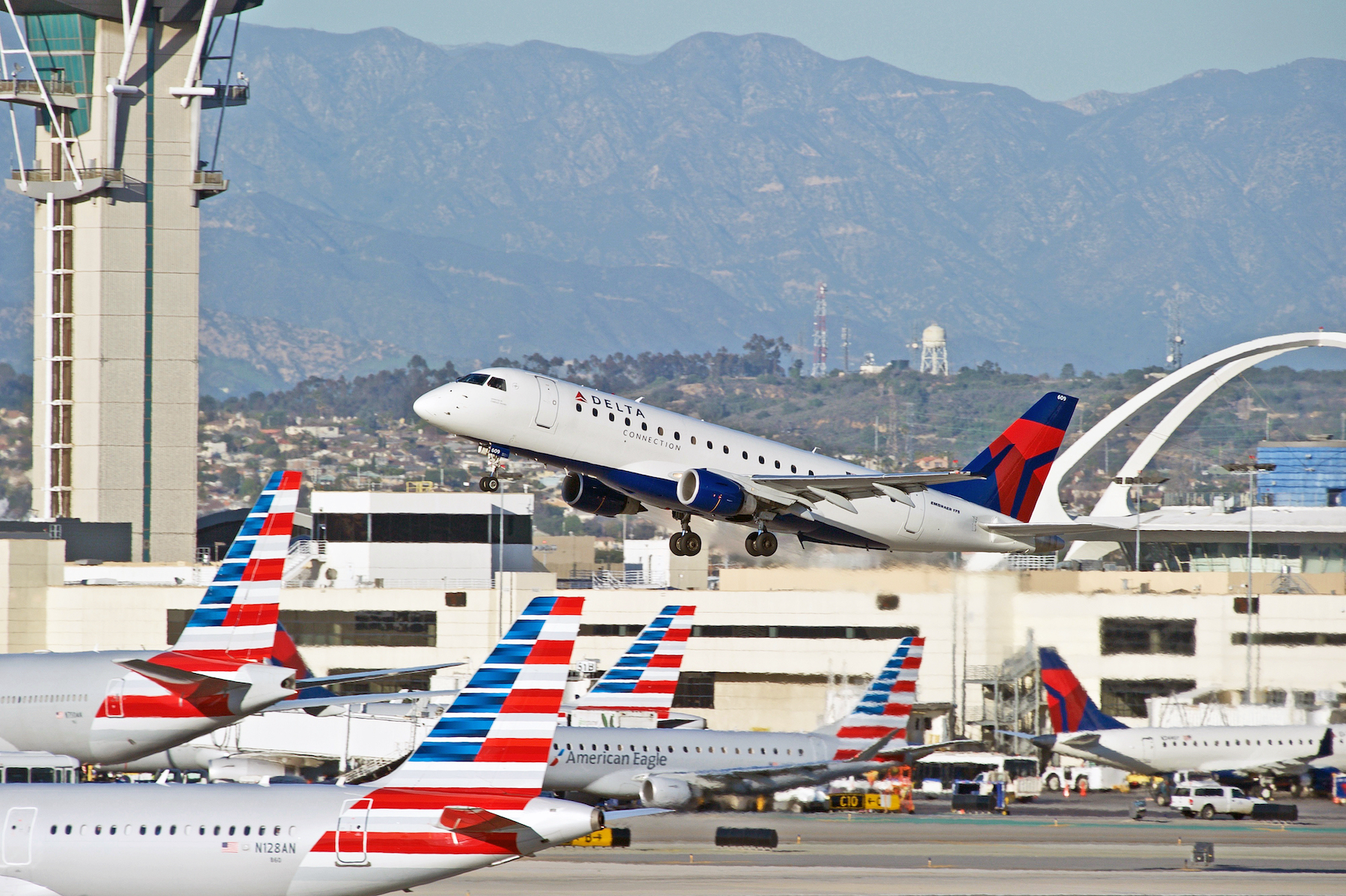
American and Delta aircraft in Los Angeles. (Photo: Shutterstock)
Airline CEOs are focusing less on pandemics and pilot shortages and more on big-picture macroeconomic trends, geopolitical instability, and efficient, resilient operations, according to a recent survey and report from Deloitte.
The professional services company spoke with 32 airline executives from around the world to get an idea of where the sector is moving as it emerges fully from the shadow of the COVID-19 pandemic, adjusts to higher costs, and accommodates surging demand. Increasingly, industry leaders said they are concentrating on things they can control, like cost structures, operational reliability, and network performance, while keeping a watchful eye on things they can’t, like broader market fluctuations and international conflicts.
Asked to rate their top three risk concerns, half of the CEOs surveyed picked “economic and market conditions,” followed by “geopolitical instability” (47%), “supply chain disruptions” (40%), “regulatory challenges” (33%), and “inflation and cost pressure” (30%). Notably, fuel prices and workforce shortages – major concerns in years past – were some way down the list, at 13% each.
Technology disruptions came in at 7%, while pandemics scored only 3%.
“Airlines are focused more on the macro forces at play as opposed to the micro items,” Deloitte global aviation leader Bryan Terry told AirlineGeeks. “For example, they really recognize uncertainty in the marketplace, the geopolitical tensions in the world and being able to respond to those, and those are rising to the fore compared to, say, pilot availability or fuel price volatility. It’s not so much that those decreased in importance, but we saw a leapfrogging to top of mind for some of these macro forces that are driving uncertainty.”
Tariffs have been in the news since early April, when President Donald Trump announced a slew of new import taxes on some of the U.S.’s biggest trading partners, but the respondents did not rate them highly, at only 10%. Terry suggested this may be because airline CEOs see tariffs as one piece of a more complex global dynamic.
“It’s the tariffs, but it’s broader than the tariffs,” he said. “We were actually a little bit surprised that tariffs scored a little bit lower. They view tariffs as part of a bigger picture, looking at market uncertainty. Tariffs impact the supply chain, they also impact passenger demand. I think we also see [the tariffs] going back and forth, and it’s an unsettled environment and it’s still evolving. And I think airlines are looking for a stable playing environment that they can deal with.”
Asked about their top strategic priorities for improvement, the executives listed “operational excellence” (66%), “cost control and financial health” (60%), “customer experience” (53%), and “commercial performance” (47%).
Airline CEOs appear at a press conference for a planned air traffic control overhaul project. (Photo: U.S. Department of Transportation)
Analysts found that, after years of workforce expansion, carriers are “rebalancing toward leaner, more efficient operations” while at the same time focusing on operational excellence and “day-to-day execution.” Reliability, they wrote, has become “non-negotiable.”
“The message is clear based on the survey’s findings: Most CEOs are not chasing perfection — they’re building resilience,” the company’s report read. “The goal isn’t just to avoid delays, but to run smarter, recover faster, and create a more predictable experience in an unpredictable world.”
Driving Growth
The CEOs were especially bullish on technology, with 47% naming it the top expected driver for growth in 2025, more than revenue management (44%), operational reliability (38%), and customer experience (34%). Analysts said the executives see “transformative technology” as the key to unlocking value across their businesses, from network planning to customer experience.
For now, the focus is on data analytics rather than artificial intelligence and machine learning. Airlines are sorting out their once-fragemented systems and modernizing their data environments, the report said, driving immediate improvements in efficiency and profitability.
Still, AI has a role to play. The executives see future openings for AI in fields like revenue management and dynamic pricing (80%) and predictive maintenance (60%).
“The thinking is, data analytics today, AI tomorrow,” Terry said.
Technology is also expected to change the customer experience. The respondents said they envision putting more control into the hands of travelers through mobile apps. Over time, they suggested, the cumulative experience of many easy transactions and flights will increase customer loyalty.
“Ultimately, CEOs may not be chasing technology for technology’s sake,” the report said. “They’re investing where it counts, that is, where it improves reliability, sharpens pricing, and helps strengthen the customer relationship.”
‘Can’t Replicate People’
Investment in the airline industry’s workforce also emerged as a theme across the executives’ replies.
While worker shortages are no longer the challenge they once were, the respondents said they still want to boost employee engagement and well-being (47%) and optimize staffing levels (40%). These goals go hand in hand with leadership development and succession planning, which over half of the CEOs listed as a top priority.
“You can replicate products, you can buy planes, you can buy seats, but you can’t replicate people,” Terry said.
Zach Vasile is a writer and editor covering news in all aspects of commercial aviation. He has reported for and contributed to the Manchester Journal Inquirer, the Hartford Business Journal, the Charlotte Observer, and the Washington Examiner, with his area of focus being the intersection of business and government policy.
Iran Air Exploring Expansion If U.S. Sanctions Dropped
Iran Air is reportedly reaching out to prospective partners and aircraft suppliers as it prepares for the possible rollback of U.S. sanctions.
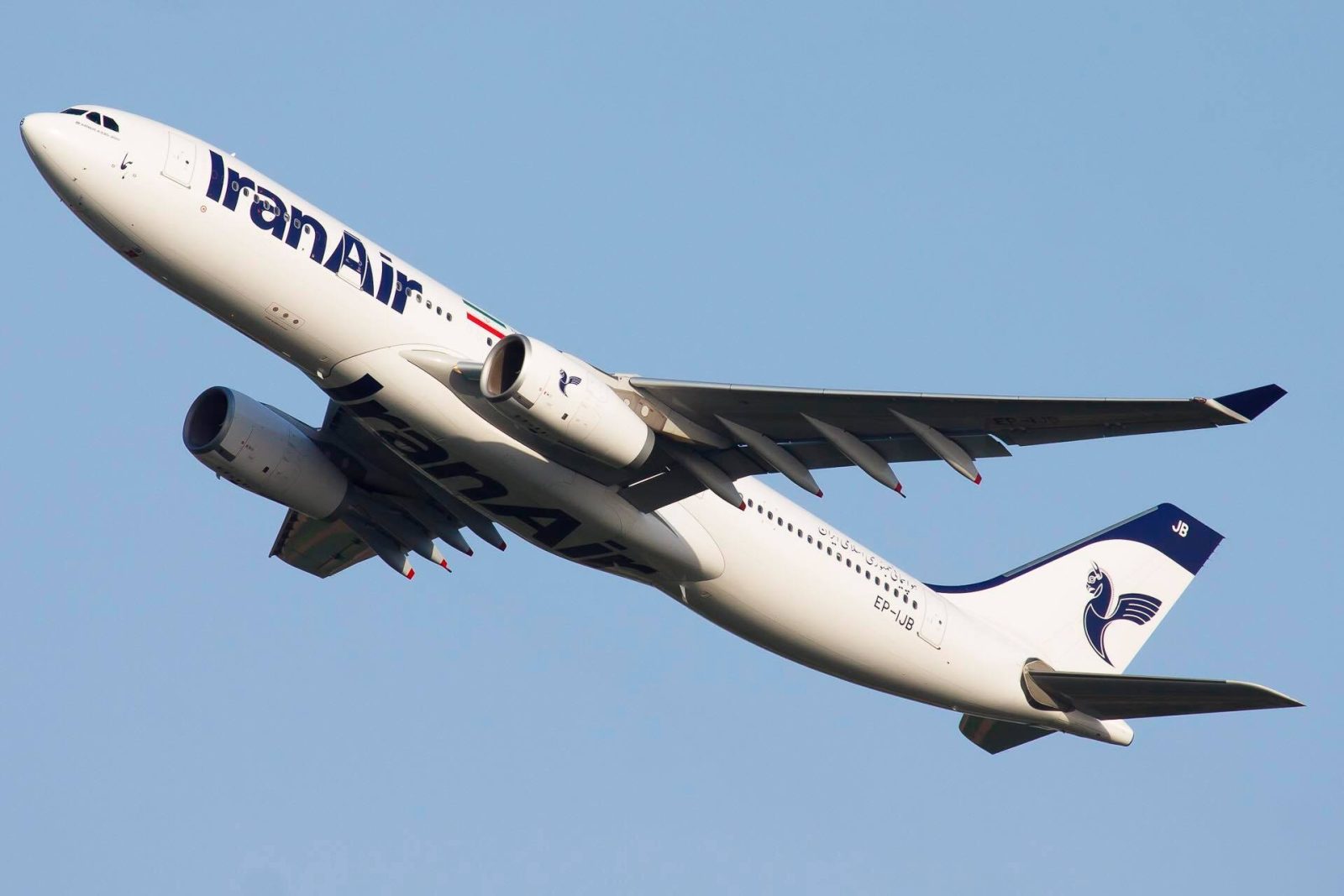
An Iran Air A330-200, EP-IJB, departing Frankfurt. (Photo: AirlineGeeks | Fabian Behr)
Iran Air is reportedly putting out feelers to potential partners and suppliers as it prepares for a possible release from U.S. sanctions.
With U.S. and Iranian officials once again discussing limits on Tehran’s highly controversial nuclear program, Iran Air sent representatives to a gathering of the International Air Transport Association in New Delhi to sound out prospects for expansion, Bloomberg reported Tuesday. The news agency cited people with knowledge of the event, who did not want to be named “discussing private matters.”
Iran Air reportedly approached Japan Airlines, Vietnam Airlines, and Royal Air Maroc, possibly concerning codeshare agreements. The encounters were not pre-planned, Bloomberg said.
Iran Air representatives also stopped in at a night reception hosted by Boeing. There was some brief contact between the representatives and Boeing officials, the sources said, but no commercial discussions.
Under current U.S.-led sanctions, no American-made aircraft or related aviation technology can be sold to Iran without prior authorization, and Boeing and Airbus cannot discuss aircraft or parts sales with the country without a license. As a result, Iran Air operates a comparatively small, aging fleet and frequently runs short on needed spare parts, hurting operations.
The carrier has also become isolated from international markets. Some companies refuse to service and refuel Iranian aircraft, and in 2024, Iran Air was banned from some European airspace for providing weaponry to Russia during its invasion of Ukraine.
Now that sanctions relief is in the picture, Iran Air hopes to grow its fleet from less than 50 aircraft to at least 100 through direct purchases, Bloomberg reported. The carrier is most interested in Boeing and Airbus jets and doesn’t want to pursue Russian or Chinese alternatives.
Iran Air reportedly sees promise in building its network within Asia. It would like to expand service to China, Thailand, Japan, India, and Malaysia, according to Bloomberg.
Prospects for a Breakthrough
The U.S. and European Union loosened restrictions on Iranian civilian flights in 2015 after the country agreed to limit its enrichment of uranium in exchange for economic benefits. The deal, which had the backing of France, Germany, China, Russia, and the U.K., collapsed in 2018 after President Donald Trump withdrew from it and announced a policy of “maximum pressure” on Iran, which entailed new sanctions.
Now back in office, Trump seems intent on reaching a new deal with Iran, though it is not clear if the end result would be meaningfully different than the 2015 accord, or if it will even come to fruition. Iranian Supreme Leader Ali Khamenei has said his government will not accept limits that impinge on Iran’s sovereignty, and he has taken a dim view of Trump and negotiations with the U.S. for years.
Iran maintains that it is not pursuing a nuclear bomb and wants to use nuclear power for peaceful purposes, like energy.
The talks remain ongoing. On Monday, Reuters reported that Iranian negotiators had submitted a counterproposal to the U.S. after deeming an earlier offer from Washington “unacceptable.”
Zach Vasile is a writer and editor covering news in all aspects of commercial aviation. He has reported for and contributed to the Manchester Journal Inquirer, the Hartford Business Journal, the Charlotte Observer, and the Washington Examiner, with his area of focus being the intersection of business and government policy.
Pilots Strike at Argentine Flag Carrier
A strike by pilots in Argentina has canceled almost two dozen flights and will likely cost the country’s flag carrier Aerolíneas Argentinas $1.1 million.
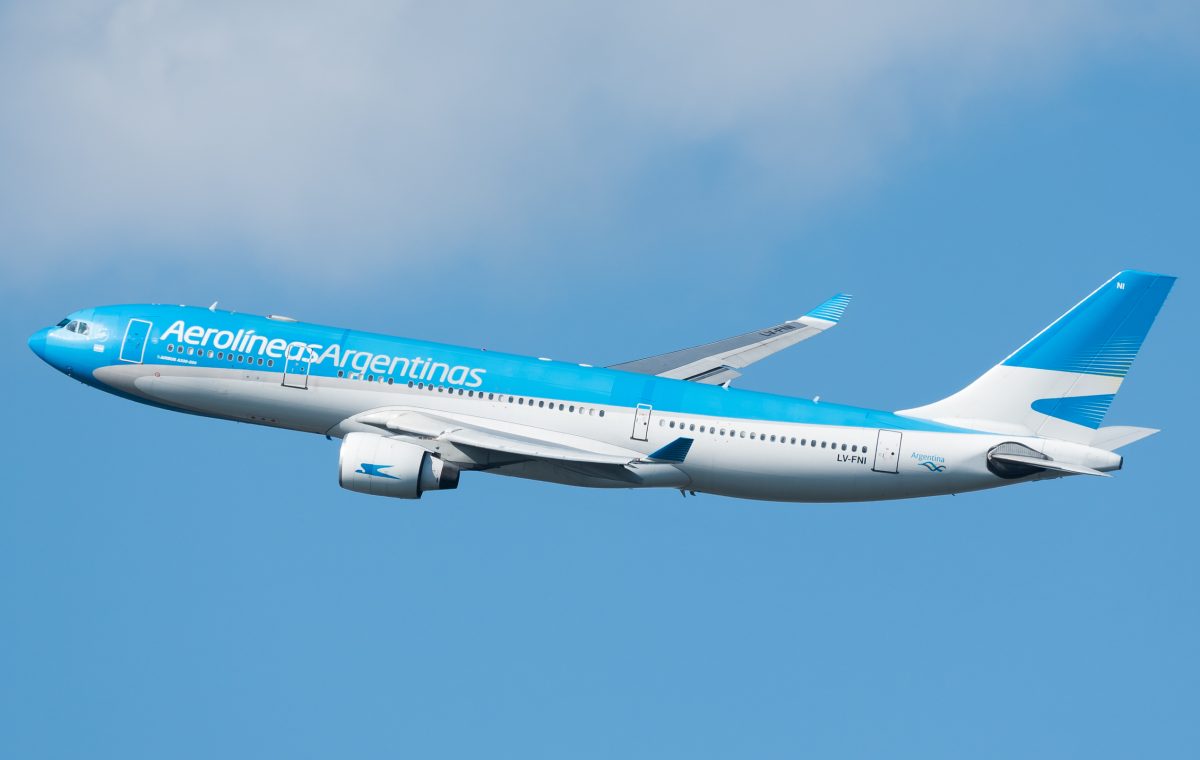
An Aerolineas Argentinas A330-200 departs from JFK. (Photo: AirlineGeeks | Ben Suskind)
A strike by unionized pilots in Argentina has canceled almost two dozen flights and will likely cost the country’s state-owned flag carrier Aerolíneas Argentinas $1.1 million.
News site Noticias Argentinas reported that the strike, carried out by members of the Air Line Pilots Association at Ezeiza International Airport and Aeroparque Jorge Newbery, will continue through Tuesday to 2 a.m. Wednesday. So far, 22 flights have been canceled and 28 have been rescheduled, affecting about 6,000 passengers.
The union said the strike is a response to a breach of contract by the company, delays in salary increases, the lack of a professional development plan, and the “absence of a clear and sustainable strategy for the future of Aerolíneas Argentinas.”
The group also cited technical failures on aircraft, changes to schedules and procedures, and “deteriorating working conditions.”
The airline told Noticias Argentinas that the union never presented the demands it is now making during prior contract negotiations. It suggested the work stoppage is a political calculation on the part of the union’s leadership, not a response to legitimate grievances.
“This latest strike highlights the extortionate nature of this practice,” the carrier said. “While Aerolíneas Argentinas does everything possible to spare its passengers, [union leader Pablo] Biró uses them as hostages. With two long weekends and the winter season ahead, this dynamic must stop.”
The pilots union had already threatened to strike around Easter, but a last-minute settlement was worked out and the strike was called off, Noticias Argentinas said.
Aerolíneas Argentinas said passengers can use its customer service channels or travel agents to reschedule their flights free of charge, or request a refund.
Zach Vasile is a writer and editor covering news in all aspects of commercial aviation. He has reported for and contributed to the Manchester Journal Inquirer, the Hartford Business Journal, the Charlotte Observer, and the Washington Examiner, with his area of focus being the intersection of business and government policy.
Piedmont to Introduce Embraer E175 Jets
American Airlines regional subsidiary Piedmont announced plans to add a new aircraft type to its fleet in 2028, shifting away from its fleet of 50-seat jets.
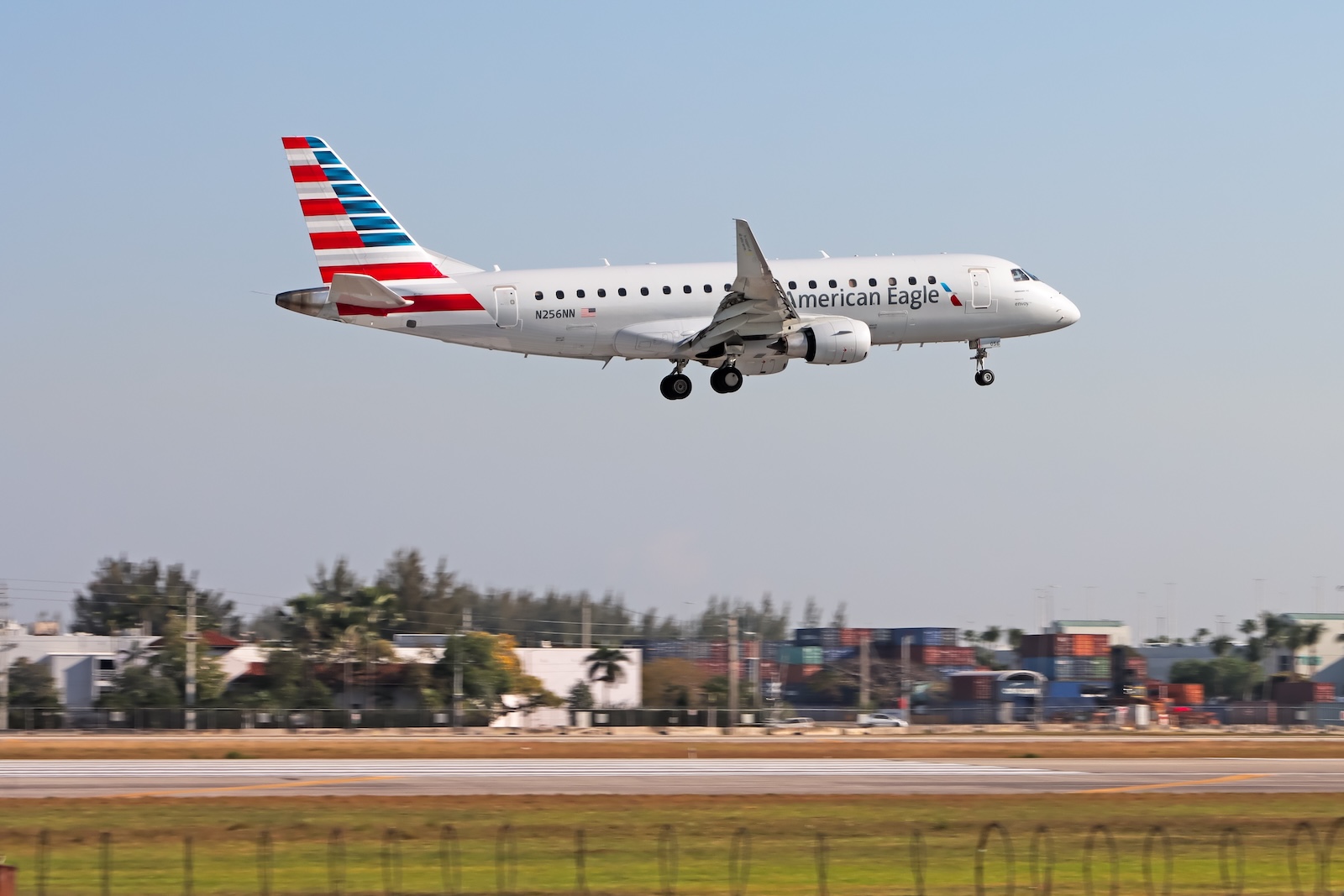
An American Eagle E175. (Photo: Shutterstock | Ryken Papy)
American Airlines regional subsidiary Piedmont announced plans Tuesday to add a new aircraft type to its fleet, marking what the company describes as a major “milestone” in its operational growth.
Starting in early 2028, Piedmont will begin integrating Embraer E175 jets into its network.
The E175, a 76-seat regional jet, will offer both business class and economy seating, with 12 seats in business and 64 in the main cabin. Each aircraft will also feature high-speed satellite Wi-Fi and in-seat power for passengers, the airline shared.
“The allocation of new Embraer 175 aircraft to Piedmont is a direct reflection of the Piedmont team’s commitment to safety, operational excellence and customer service,” said Nate Gatten, executive vice president of American Eagle, corporate real estate, and government affairs, in a news release. “We’re excited for the future of American’s regional network and the important role Piedmont will continue to play in it.”
E145s Remain Until At Least 2030
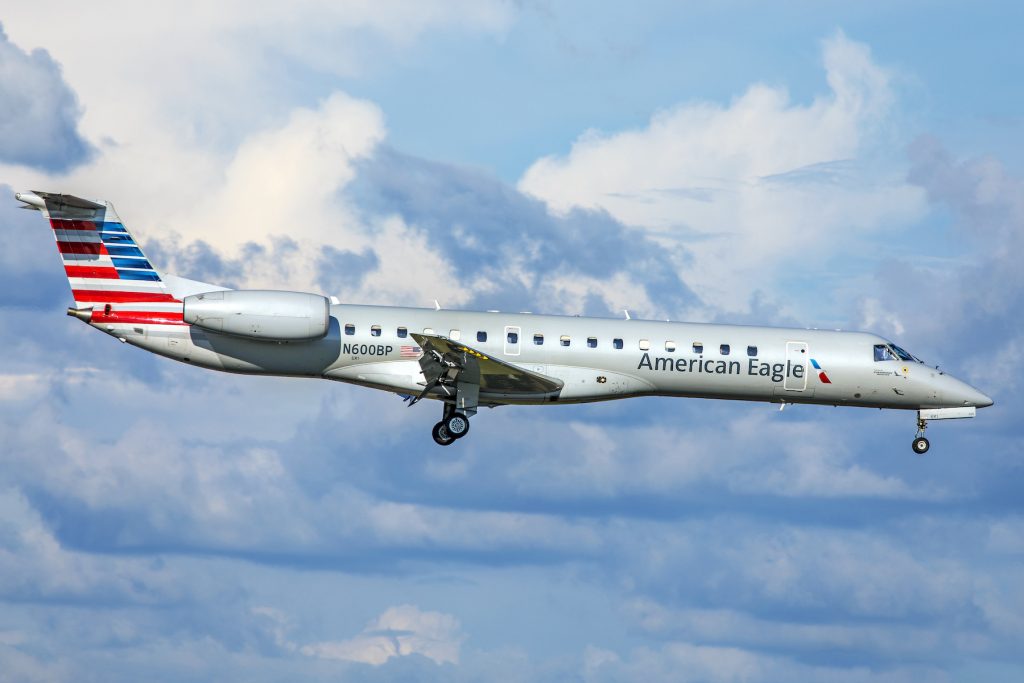
The first of 45 E175s is expected to be delivered during the first quarter of 2028, with entry into revenue service planned for several months later. Piedmont anticipates receiving one or two aircraft per month over three years. During this time, the carrier will continue operating its current fleet of Embraer 145 regional jets.
Piedmont President and CEO Eric Morgan cited the dedication of the airline’s 11,000 employees as a driving factor behind the fleet expansion. “We’re excited about what a new fleet type means for both our team and our customers — more space, more comfort and more style,” Morgan said in a statement.
The last Dash 8 flight for Piedmont taxis out (Photo: AirlineGeeks | William Derrickson)
The upcoming introduction of a two-class cabin product brings Piedmont in line with many of its regional airline peers, which already operate dual-class aircraft in the American Eagle network. Fellow American Eagle operator Envoy announced Monday plans to add more E175s to its fleet.
Piedmont said the E175 jets will complement its existing Embraer 145 fleet, and both types are expected to operate concurrently into the 2030s. Specific route assignments, maintenance hubs, and crew base plans for the new aircraft are expected to be announced at a later date.
A Piedmont Airlines Embraer 145 (Photo: AirlineGeeks | William Derrickson)
American has three wholly-owned regional subsidiaries. In addition to Piedmont, Envoy operates a fleet of all-E175s, and PSA flies CRJ-700 and CRJ-900 jets.
Ryan founded AirlineGeeks.com in February 2013 and has spent more than a decade covering the airline business. His work has been featured by CNN, WJLA, CNET, and Business Insider. His aviation experience spans airport operations, Part 135 regulatory compliance, and airline crew workforce planning, along with time behind the yoke of a Cessna 172 and interviews with airline executives. Ryan now serves as Group President of Firecrown Media’s Aviation Group. He holds a B.S. in Air Transportation Management and an MBA from Arizona State University and teaches Airline Management at Embry-Riddle Aeronautical University.
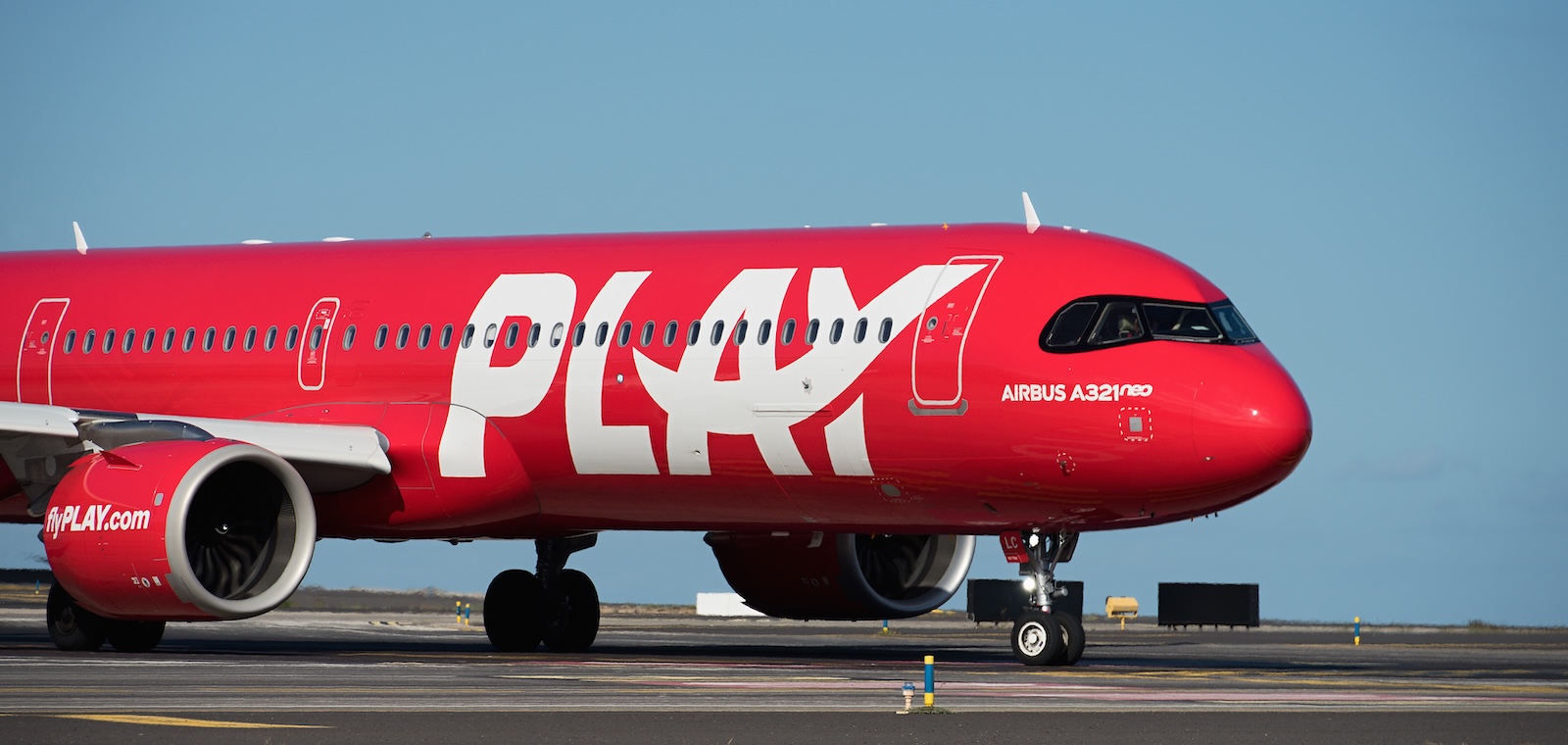
A PLAY Airlines A321neo (Photo: Shutterstock | Pavel1964)
Iceland-based carrier PLAY has announced that it is halting service to its last three scheduled destinations in the United States: Baltimore, Boston, and Stewart, New York, which will bring an end to the airline’s flights on the North American continent come October 2025.
Back in April 2025, the airline ended its last flights to Canada, which operated via Hamilton Airport three times a week. During that same time, it also reduced service to Stewart and completely cut flights to Washington Dulles.
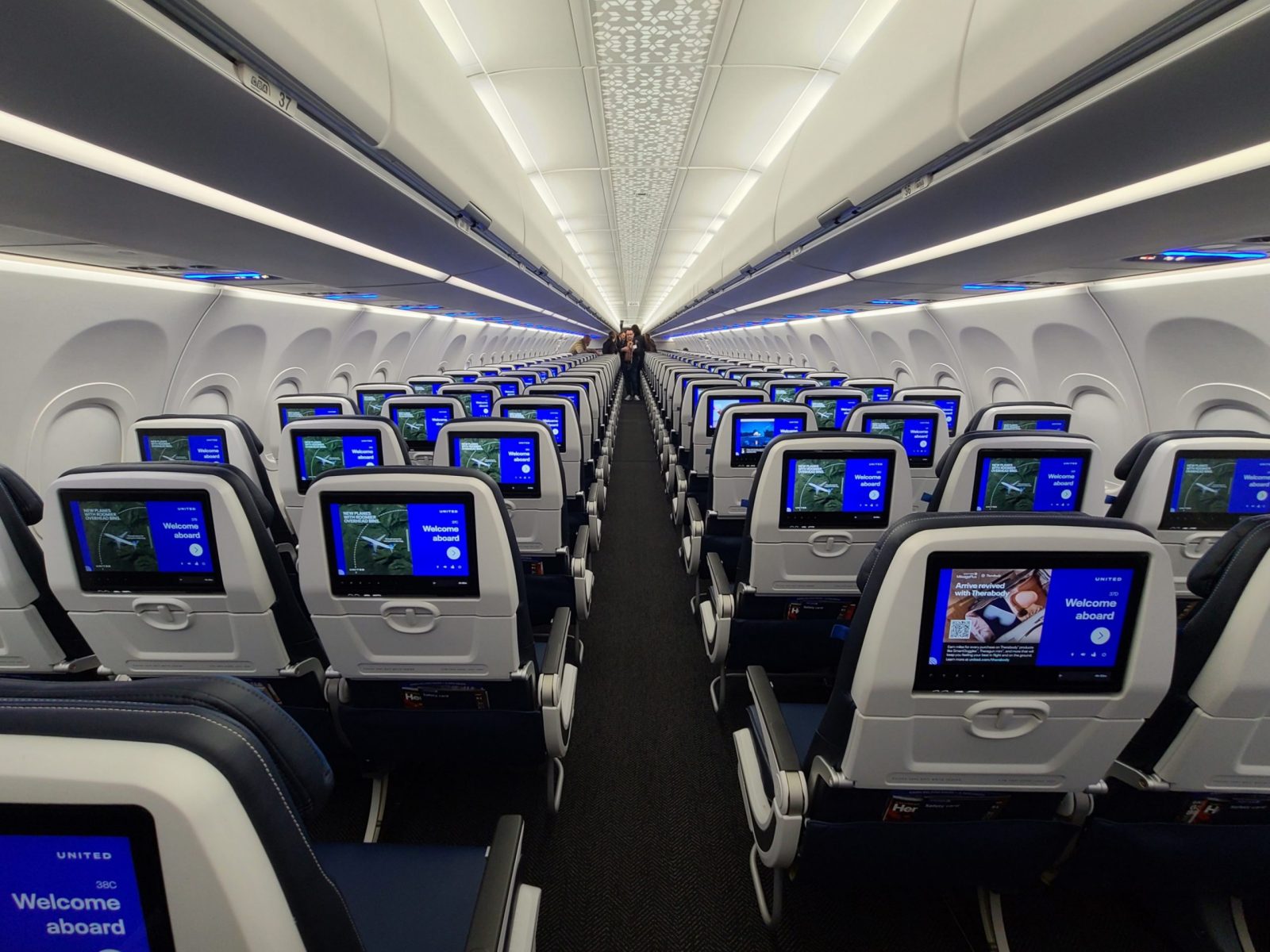
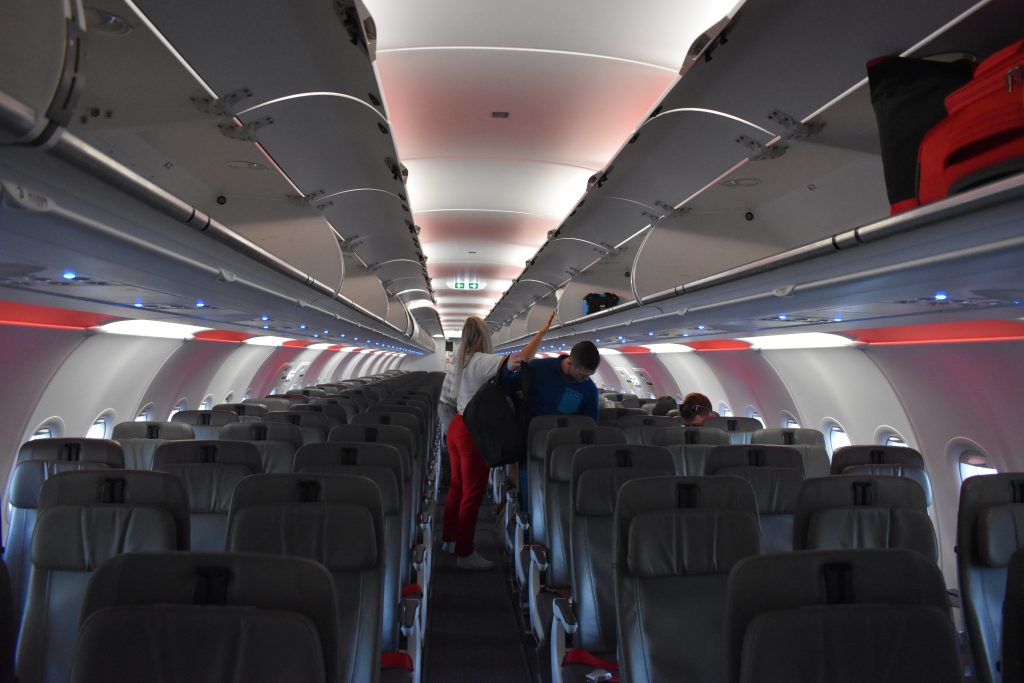
The passenger cabin of PLAY’s Airbus A320neo (Photo: AirlineGeeks | Joey Gerardi)
The carrier also operated its last scheduled flight with its larger Airbus A321neo, which was the first aircraft type introduced into its fleet.
More Cuts Planned
Along with the complete exit away from the North American market, which the company has said is “less successful,” it also plans on having fewer cities in Northern Europe, while also increasing routes to sunny destinations from Iceland. PLAY will also drop its Icelandic Air Operating Certificate (AOC) and keep its AOC from Malta.
As far as its fleet, now with only 10 A320neos, PLAY doesn’t plan on keeping all of those, with a plan to only utlize four of them, and the remaining six will be leased to other airlines.
While a lot is happening from a passenger perspective, the airline says not much will change as crews will still be based in Iceland.
Joey has always been interested in planes for as long as he can remember. He grew up in Central New York during the early 2000s when US Airways Express turboprops ruled the skies. Being from a non-aviation family made it harder for him to be around planes and would only spend about three hours a month at the airport. He was so excited when he could drive by himself, the first thing he did with his driver's license was get ice cream and go plane spotting for the entire day. He graduated from Western Michigan University in 2022 with a B.S. in Aviation Management & Operations and a Minor in Business, and currently works for a major airline in his hometown.
Sign-up for newsletters & special offers!
Get the latest stories & special offers delivered directly to your inbox