Scandinavia Has Lost 1.2M Airline Seats Over Airspace Closures
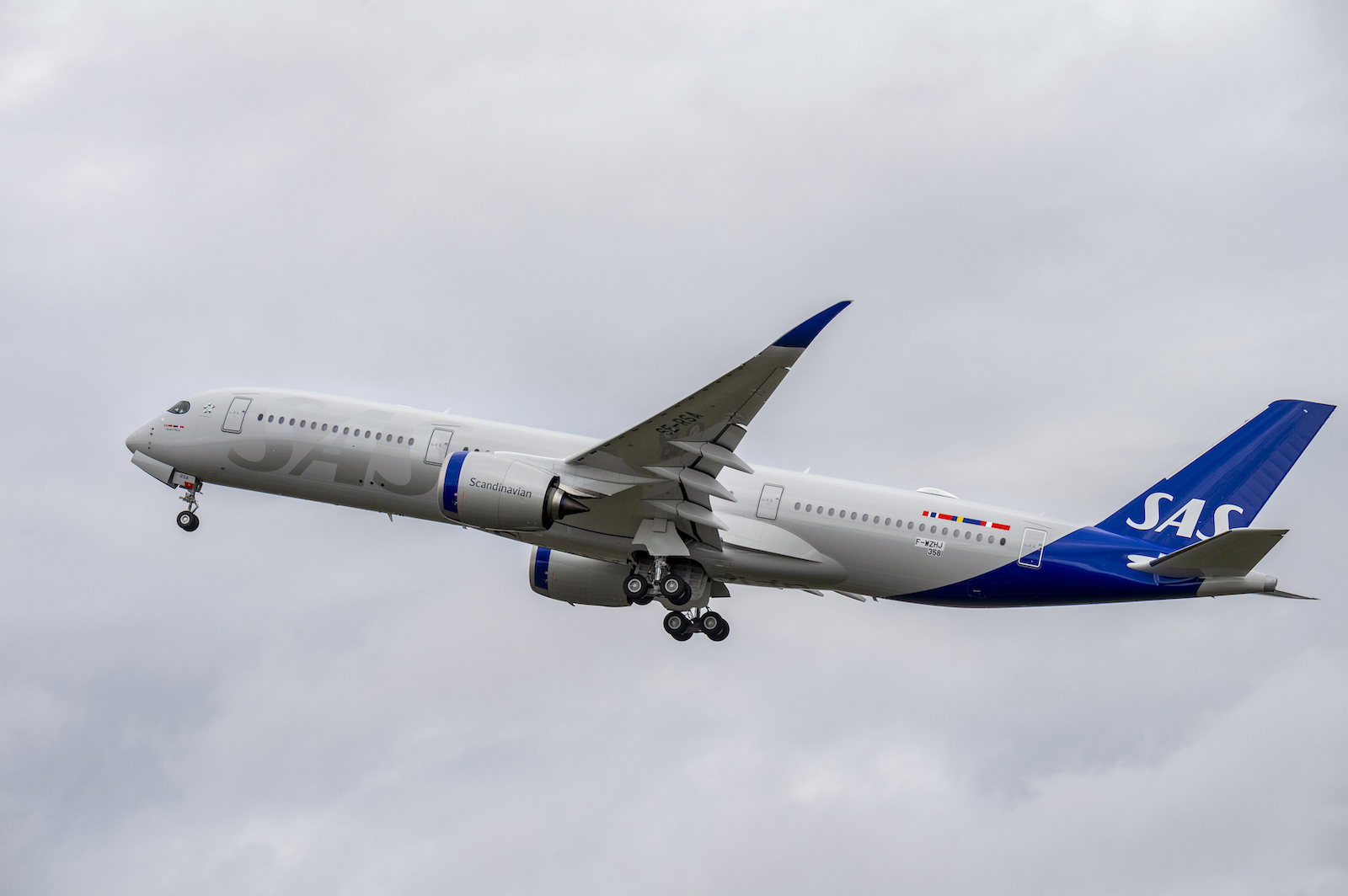
The closure of Russian airspace to Western carriers, combined with the closing of airspace due to armed conflicts in the Middle East, has made it much harder for Scandinavian airlines to travel to Asia.
Scandinavia has lost over 1.2 million departing airline seats as a result of the closure of airspace due to geopolitical instability and armed conflicts, according to a new report.
Researchers at SAS Group, the parent company of Scandinavian Airlines, found the region shed 700,000 departing seats to Russia, Belarus, and Ukraine between 2019 and 2024 and about 500,000 departing seats bound for Asia and the Middle East in that same timeframe.
The loss was mainly attributable to the Russia-Ukraine war and the decision by Russia to close its airspace to Western carriers as punishment for Western support for Ukraine, though conflicts in other parts of the world also limited flight operations.
SAS Group said that, because it can no longer fly directly over Russia, flights bound for Asia take more time and consume more fuel. As a result, the company is not offering non-stop flights to China in 2025.
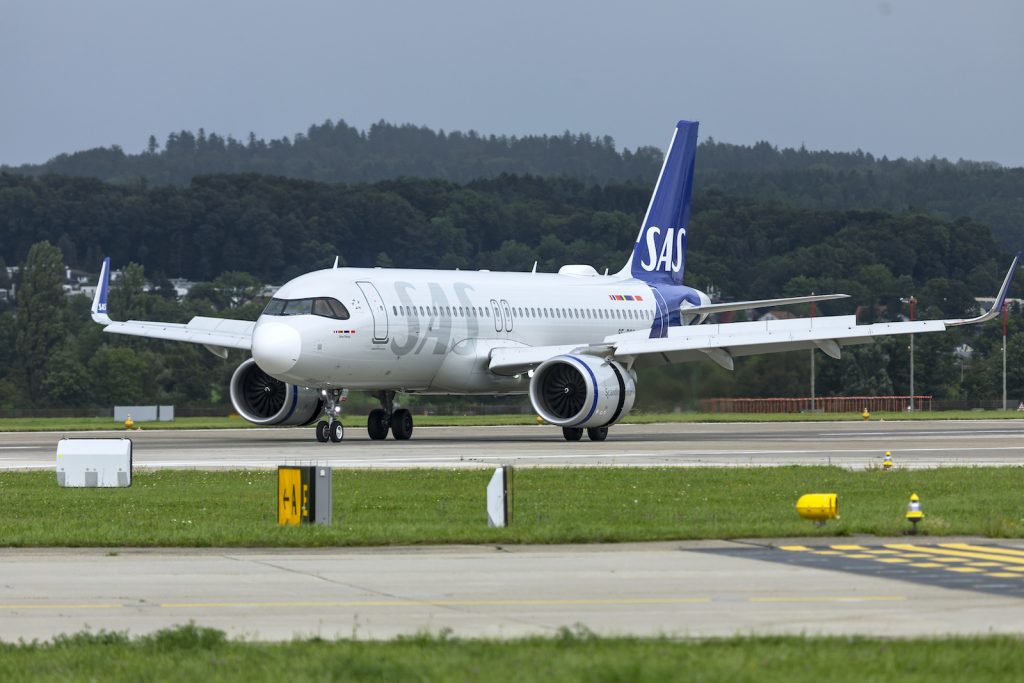
An SAS Airbus A320neo. [AirlineGeeks – William Derrickson]The report also highlighted the advantage held by Chinese carriers, which are still allowed to fly over Russia and operate much as they did before the start of the Russia-Ukraine war. As of this year, the only way to fly directly between the Scandinavian countries and China is on a Chinese airline, and European travelers seeking shorter, cheaper flights are increasingly booking with Chinese carriers. SAS Group said Chinese airlines are scaling up capacity to accommodate the new customers.
“As long as Russian airspace remains closed, this imbalance will persist,” said Mads Brandstrup Nielsen, senior vice president of public affairs at SAS. “While we remain committed to connecting Scandinavia to Asia, the industry needs a level playing field to ensure long-term sustainability, fair competition, and reliable connectivity for our customers.”
Redrawing the Map
Additionally, Northern and Eastern European cities are losing their position as a connector between Europe and Asia. The SAS report noted that Helsinki was the major hub for Scandinavians flying east to China, but since Finnair was banned from Russia, much of the traffic has shifted south to Dubai, Doha, and Istanbul, where carriers can still use Russian airspace. This trend was exacerbated by the cancellation of a Frankfurt-Beijing route operated by Lufthansa in November 2024.
The report also linked airspace closures to an increase in shipping costs for cargo moving between Europe and Asia.
Russia closed its airspace to carriers based in the European Union and the United States in 2022 during the opening stages of its war against Ukraine. As a result of the conflict, Ukraine, Belarus, and Moldova have also greatly limited commercial air traffic.
SAS and other Western carriers have also cut off or greatly limited routes to some areas of the Middle East due to escalating conflicts there, including the Syrian civil war, clashes between Israel and Lebanon, and missile attacks between Israel and Iran. Scandinavian Airlines suspended service to Tehran in 2021 and Tel Aviv in 2023.
Zach Vasile is a writer and editor covering news in all aspects of commercial aviation. He has reported for and contributed to the Manchester Journal Inquirer, the Hartford Business Journal, the Charlotte Observer, and the Washington Examiner, with his area of focus being the intersection of business and government policy.
American Adds Seven Routes
American is expanding its winter schedule with the addition of seven routes and increased service in some existing markets.
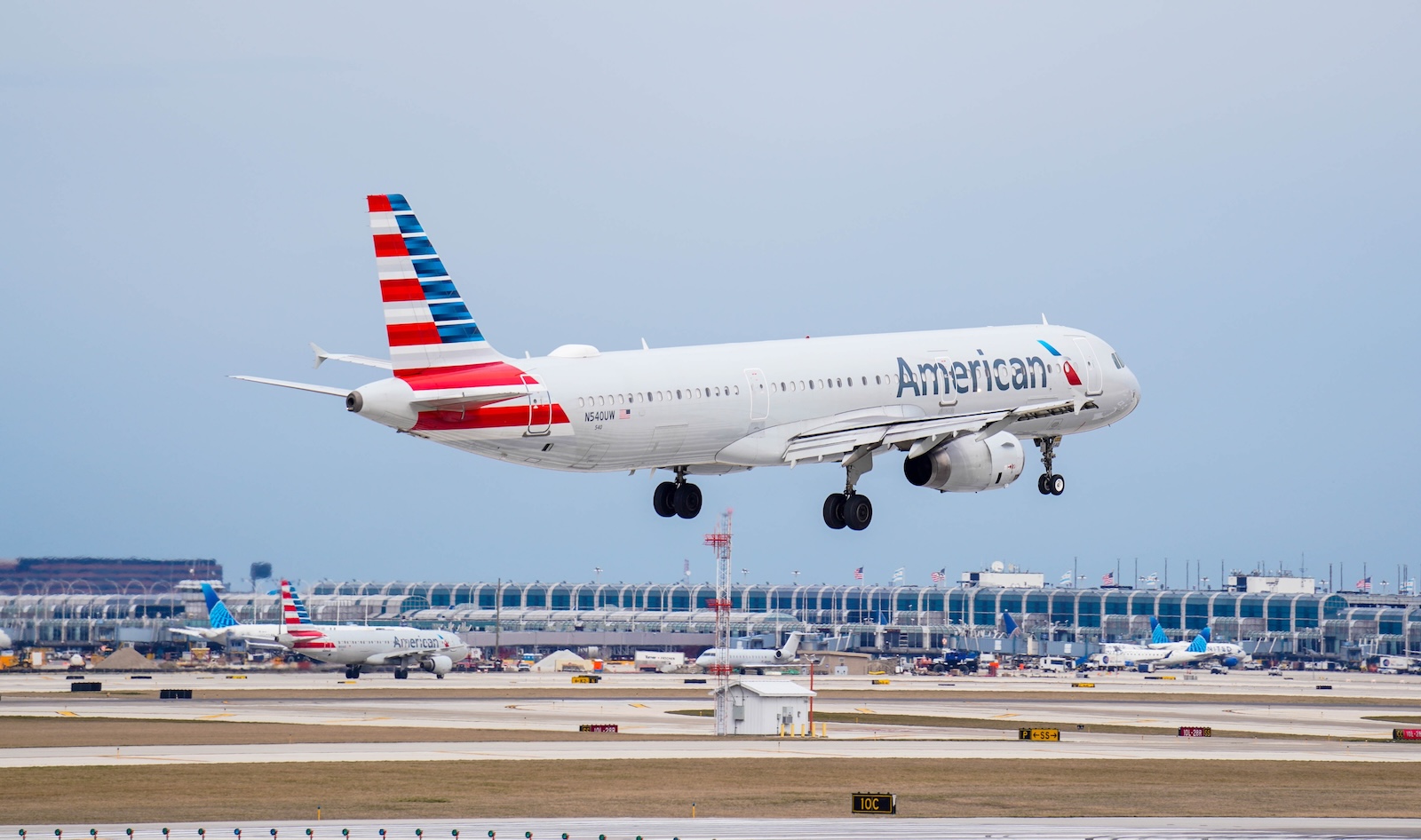
An American A321 in Chicago. (Photo: Shutterstock | MKPhoto12)
American is expanding its winter schedule from Chicago O’Hare with the addition of seven destinations and increased service on existing routes, aiming to double its capacity to warm-weather locations across Mexico, the Caribbean, and Central America.
The expansion includes five international destinations and two domestic routes. Flights will begin between August and December 2025, with varying frequencies.
New Routes
Curacao: Saturday-only service beginning Dec. 6
St. Croix, U.S. Virgin Islands: Saturday-only service beginning Dec. 6
St. Maarten: Saturday-only service beginning Nov. 8
Guatemala City: Up to three weekly flights beginning Nov. 6
San Jose, Costa Rica: Daily service beginning Nov. 2
Roanoke, Virginia: New daily service beginning Aug. 6
Akron/Canton, Ohio: Twice-daily service beginning Oct. 6, last served in 2020
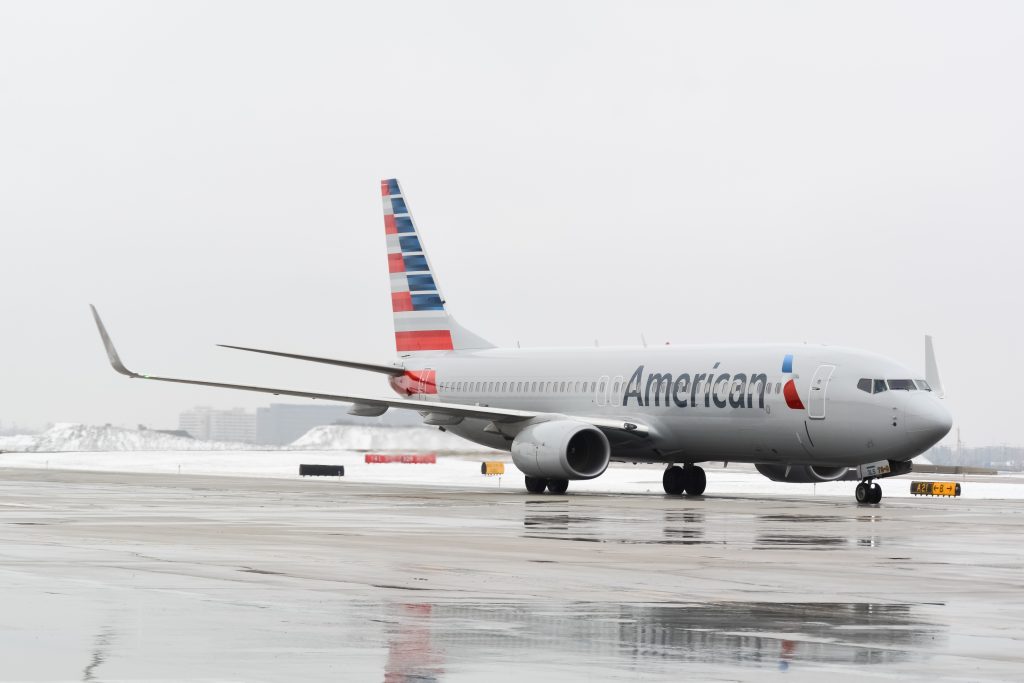
An American 737-800 at Chicago O’Hare International Airport (Photo: Greg Linton)
The carrier is also bolstering frequencies on some existing routes:
Aruba: Increased to daily service starting Dec. 18
Grand Cayman, Cayman Islands: Increased to daily service starting Dec. 18
Liberia, Costa Rica: Increased to daily service starting Dec. 18
Nassau, Bahamas: Increased to daily service starting Dec. 18
St. Thomas, U.S. Virgin Islands: Increased to daily service starting Dec. 18
Puerto Vallarta, Mexico: Increased to two daily flights from Dec. 18 through Jan. 6
Montego Bay, Jamaica: Up to two daily flights beginning Nov. 2
Cancun, Mexico: Up to three daily flights starting Nov. 2
Los Cabos, Mexico: Up to two daily flights starting Nov. 2
San Juan, Puerto Rico: Up to two daily flights starting Dec. 18
With these additions, American will serve more destinations from Chicago O’Hare to Mexico, the Caribbean, and Central America than any other airline, according to a news release emailed to AirlineGeeks. The airline has added 17 new destinations from ORD in 2025, the most growth in any of its hubs this year.
Tickets for the expanded winter service will be available starting May 5.
American’s chief strategy officer, Steve Johnson, said during an earnings call last week that the airline “disagrees” with the airport’s decision. The airline is appealing it, he added.
Ryan founded AirlineGeeks.com in February 2013 and has spent more than a decade covering the airline business. His work has been featured by CNN, WJLA, CNET, and Business Insider. His aviation experience spans airport operations, Part 135 regulatory compliance, and airline crew workforce planning, along with time behind the yoke of a Cessna 172 and interviews with airline executives. Ryan now serves as Group President of Firecrown Media’s Aviation Group. He holds a B.S. in Air Transportation Management and an MBA from Arizona State University and teaches Airline Management at Embry-Riddle Aeronautical University.
EVA Air's executive team launches the BizFam Corporate Rewards Program (Photo: EVA Air)
During a glitzy ceremony held at a hotel in Taipei on Wednesday, Taiwanese carrier EVA Air unveiled its new corporate travel rewards platform, known as BizFam.
The company said BizFam will help corporations and their employees manage their rewards points and get access to benefits.
“EVA BizFam is more than a platform, it is a partnership,” said EVA President Clay Sun. “We’ve built it with a deep understanding of our users’ needs to create a one-stop travel management solution for companies of all sizes worldwide.”
Companies can now apply for BizFam membership through the EVA website at no cost, officials said.
The BizFam system allows both companies and individual employees traveling for work to accumulate points that can then be used for free tickets to events, cabin upgrades, and airport privileges. The platform is accessible on mobile phones, desktops, and tablets.
Expanding Its Offerings
BizFam also gives users access to joint promotions, exclusive offers, and other perks sponsored by partnering companies. EVA said these benefits include discounts on hotels, airport transfers, coffee breaks, and spa treatments, among other leisure activities.
The carrier said it plans to continue negotiations with global brands to expand its offerings and will refine the platform based on user feedback.
Aside from BizFam, EVA officials also discussed market uncertainty created by tariffs imposed by the United States and said the carrier remains committed to growing its fleet. It is set to receive more than 50 new aircraft from Airbus and Boeing by the end of the decade.
Company officials told AirlineGeeks that they have not received word of any delays in manufacturing or deliveries from their partners but will watch to see if and how the tariffs affect the airline industry.
Vanni fell in love with commercial aviation during his undergraduate studies in Statistics at the University of Bologna, when he prepared his thesis on the effects of deregulation on the U.S. and European aviation markets. Then he pursued his passion further by obtaining a Master’s Degree in Air Transport Management at Cranfield University in the U.K. followed by holding several management positions at various start-up carriers in Europe (Jet2, SkyEurope, Silverjet). After moving to Canada, he was Business Development Manager for IATA for nine years before turning to his other passion: sports writing.
Delta Moving Forward With Raises Despite Uncertainty
Delta is giving eligible employees a 4% raise despite an uncertain economic environment.
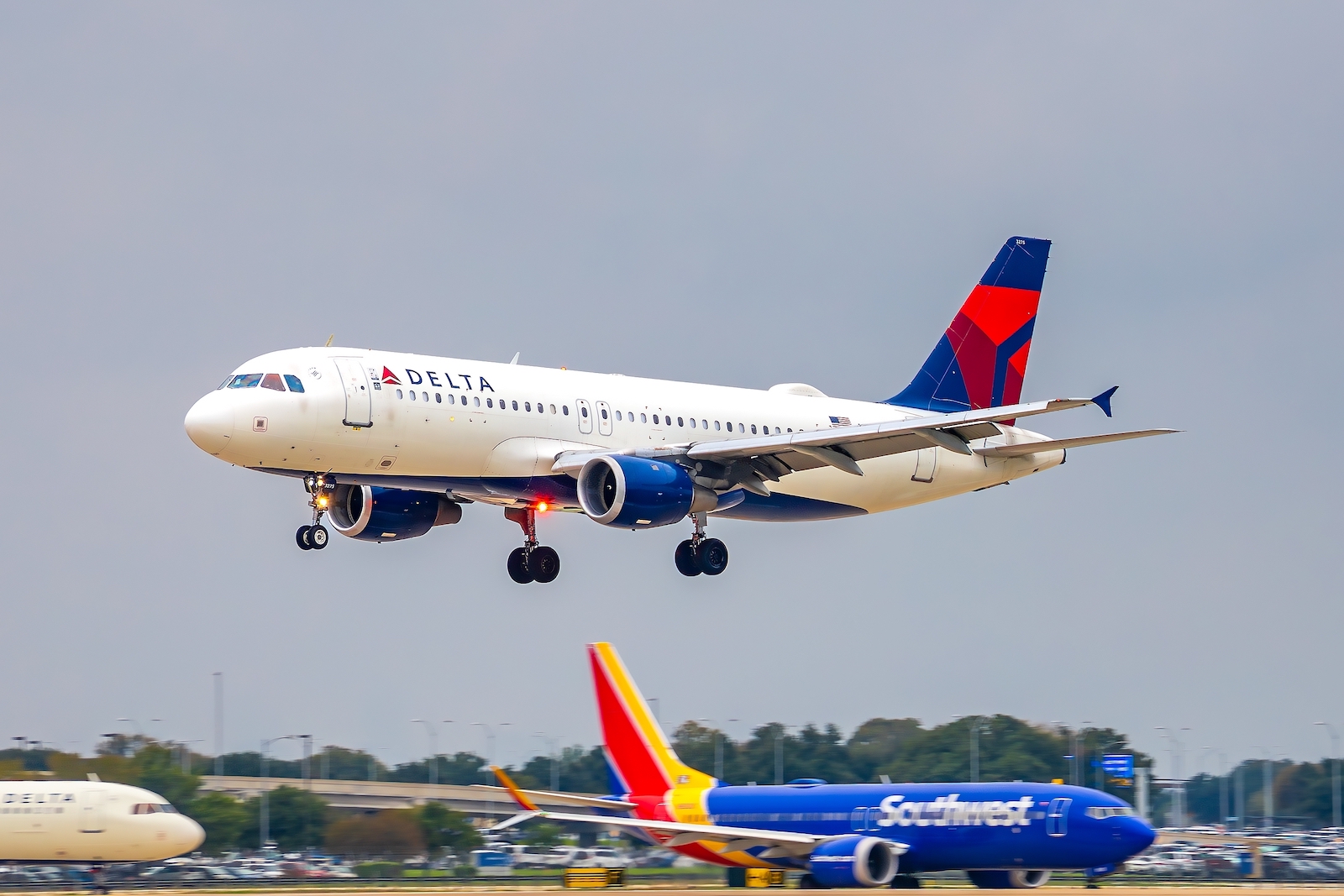
Delta and Southwest aircraft in Austin. (Photo: Shutterstock | lorenzatx)
Delta says it will move forward with a 4% pay increase for non-union employees despite an increasingly uncertain economic outlook hampering the broader airline industry.
The pay bump will take effect June 1 and applies to most Delta workers except for pilots and dispatchers, whose salaries are set by union contracts. It is the fourth consecutive year Delta employees have received a raise.
The carrier first announced the pay increase in January, when CEO Ed Bastian predicted “the best financial year” in the company’s history. Demand for travel was comparatively strong and many industry watchers expected a continued rebound from the disruptions of the COVID-19 pandemic.
But concerns about tariffs and international trade have undermined that once sunny outlook, and many airlines are now reducing their capacity and adjusting earnings expectations.
That includes Delta, which earlier this month withdrew its financial guidance for 2025, citing “broad macro uncertainty.” Company officials said it would be “premature” to offer a new prediction for the year, given the disruptive effects of tariffs on the global economy.
“February and March reflected a much more challenging macro environment than anyone initially planned for coming into 2025,” Bastian told investors at the time. “We were positioned for another year of strong growth, however, given broad economic uncertainty around global trade, growth has largely stalled.”
Looking to the second quarter, Delta forecast that its total revenue could decline up to 2% or grow by up to 2% over the prior year.
Still, the carrier is intent on implementing the raise as promised.
In a new statement, Bastian said Delta will continue to “invest” in its employees “even as we face new pressures.”
In February, Delta employees received the equivalent of about five weeks of extra pay as part of the company’s profit-sharing plan. A total of $1.4 billion was distributed to workers worldwide.
Zach Vasile is a writer and editor covering news in all aspects of commercial aviation. He has reported for and contributed to the Manchester Journal Inquirer, the Hartford Business Journal, the Charlotte Observer, and the Washington Examiner, with his area of focus being the intersection of business and government policy.
Supply Chain Crisis Forces Airlines to Get Creative With Parts
Engine issues, production backlogs, and labor and parts shortages have airlines and aircraft lessors scrambling to maintain operational readiness.
Delta TechOps in Atlanta (Photo: AirlineGeeks | William Derrickson)
The commercial aviation industry is navigating a serious supply chain crisis, leading airlines and aircraft lessors to adopt innovative strategies to maintain operational readiness. Recently, aircraft lessor Azorra partnered with Delta Material Services (DMS) to dismantle an Airbus A220-300 for spare parts, marking the first such occurrence for this relatively new aircraft model. Although dismantling modern aircraft is uncommon, this situation underscores the severity of the ongoing component shortage.
At the heart of the crisis are persistent issues concerning Pratt & Whitney’s PW1500G engines, widely used in the Airbus A220 fleet. These engines, despite their efficiency, have faced frequent reliability concerns, resulting in numerous inspections and prolonged maintenance periods. With multiple aircraft grounded due to such complications, the demand for available spare engines and parts has grown significantly.
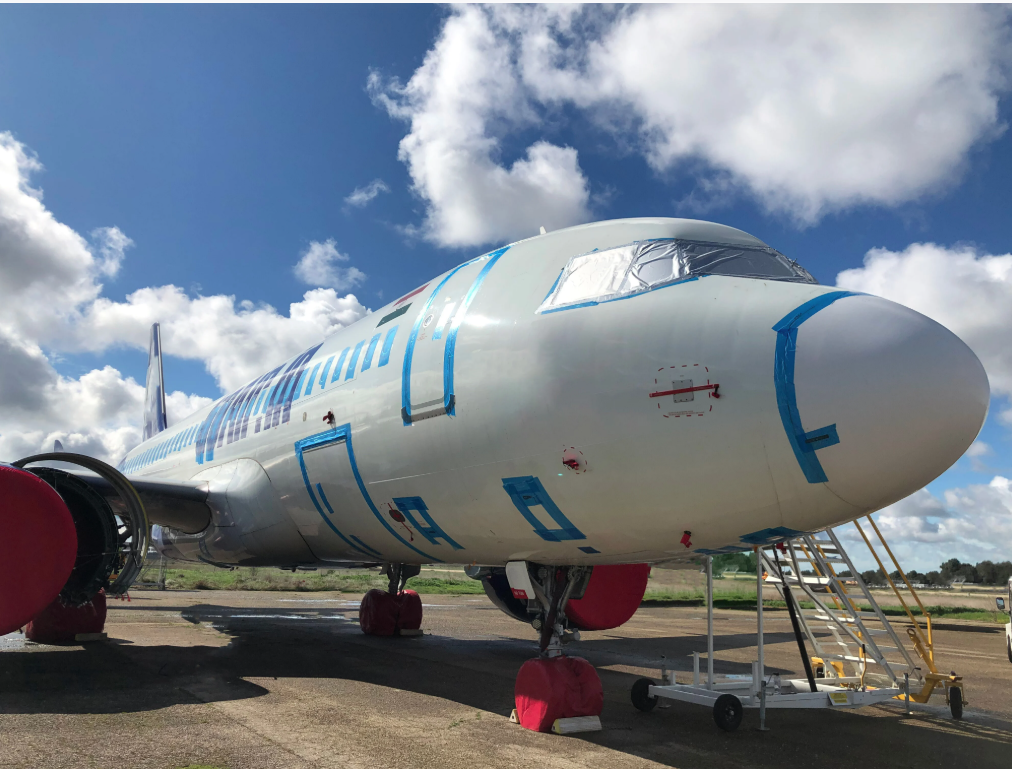
Former Go First A320neo (Photo: Unical Aviation)
Beyond specific engine-related challenges, manufacturers are experiencing dramatic backlogs in aircraft production, intensifying constraints across the sector. According to Alton Aviation Consultancy’s latest analysis, narrowbody aircraft — which are the backbone of airlines’ short- and medium-haul services — now face delivery delays of nearly a decade.
Moreover, widebody aircraft production has also slowed, leaving airlines facing waits of seven to eight years for new deliveries. In turn, airlines have been compelled to adjust fleet strategies, opting to extend the useful life of existing aircraft to cope with prolonged delivery timelines.
The MRO Impact
This extension of aircraft lifespans has directly impacted the maintenance, repair and overhaul (MRO) industry, resulting in significantly heightened demand precisely as MRO providers themselves face severe operational constraints. Skilled labor shortages remain a central challenge as many technicians exited aviation during the pandemic and have not returned, creating a workforce gap that could take years to mend.
Training new aviation maintenance personnel is a long process, and the marked increase in maintenance requirements has overwhelmed existing capacities, prolonging maintenance downtimes substantially. These challenges extend maintenance downtime significantly and complicate securing aircraft parts to keep these aged aircraft flying safely.
Exacerbating these operational delays are shortages in essential aerospace materials like titanium, a situation driven largely by geopolitical disruptions in traditional supplier regions. Sanctions on primary exporters like Russia have forced manufacturers to seek alternative suppliers, leading to procurement challenges and increased costs. Given these constraints, airlines and lessors are increasingly exploring unconventional solutions, like the recent A220 dismantling, to temporarily alleviate these mounting pressures by repurposing valuable components.
Despite the challenges, industry observers also recognize potential opportunities created through these constraints. Avolon, one of the world’s largest aircraft leasing firms, has stated that the unprecedented disparity between supply and demand will likely reshape aviation market dynamics over the next decade.
Supply deficits could bolster airline profitability, especially if carriers concentrate efforts on their most profitable route networks and achieve optimal fleet utilization amid capacity limitations. According to Avolon’s analysis, net airline profits could rise as much as 16%, reaching approximately $36 billion by 2025.
Yet the broader economic environment remains uncertain. Typical economic recovery cycles last four to six years, and the current expansion is already well into its fifth year, suggesting potential economic downturn risks. Europe’s economic growth is showing early signs of stagnation, and broader geopolitical instability introduces additional volatility.
AirlineGeeks.com was founded in February 2013 as a one-person blog in Washington D.C. Since then, we’ve grown to have 25+ active team members scattered across the globe. We are all here for the same reason: we love deep-diving into the fascinating realm of the airline industry.
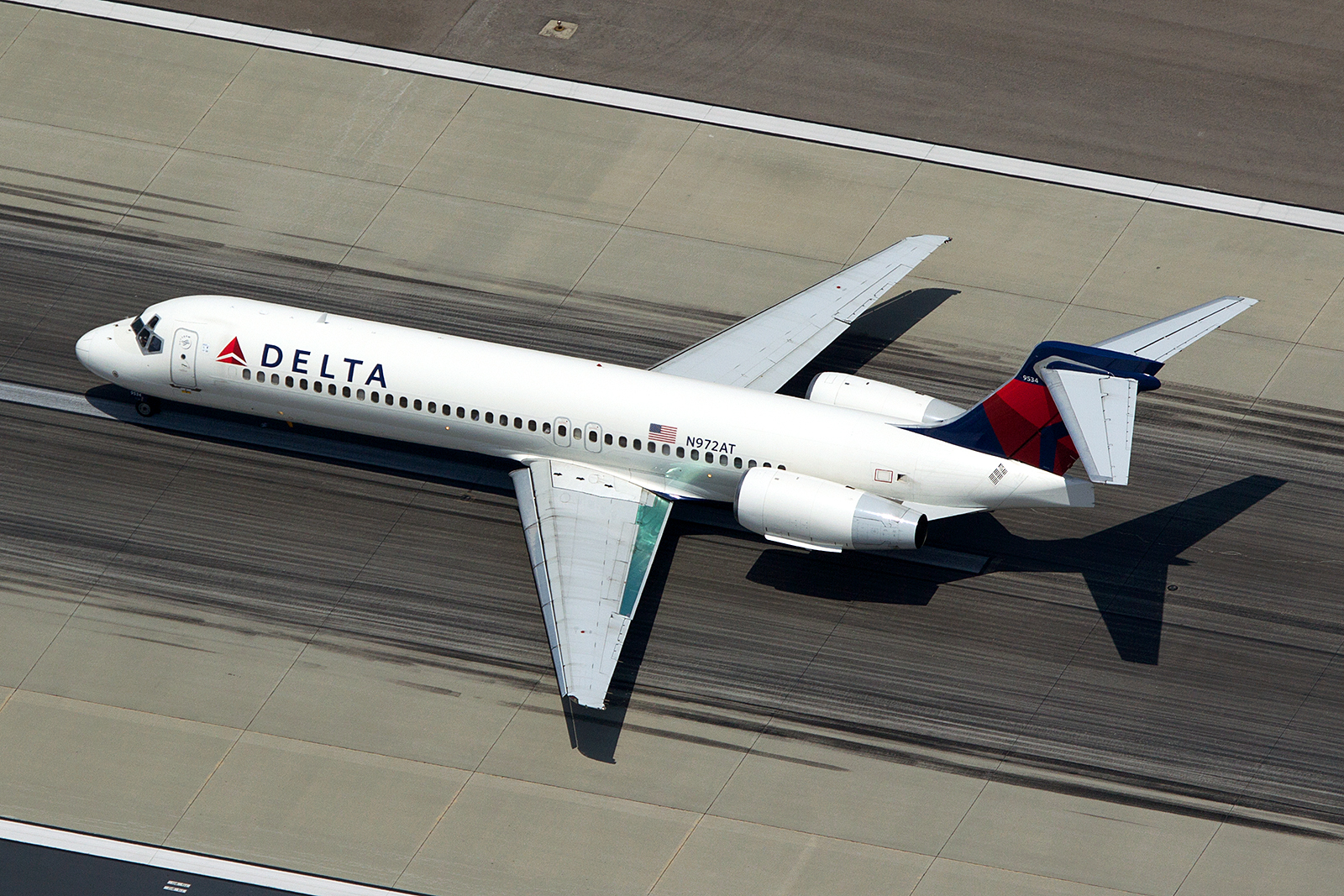
A Delta Boeing 717. (Photo: AirlineGeeks | William Derrickson)
The FAA is requiring landing gear inspections for Boeing 717-200 aircraft after a recent incident.
In June 2023, Delta flight 1092 successfully landed at Charlotte Douglas International Airport in North Carolina despite its nose landing gear failing to deploy.
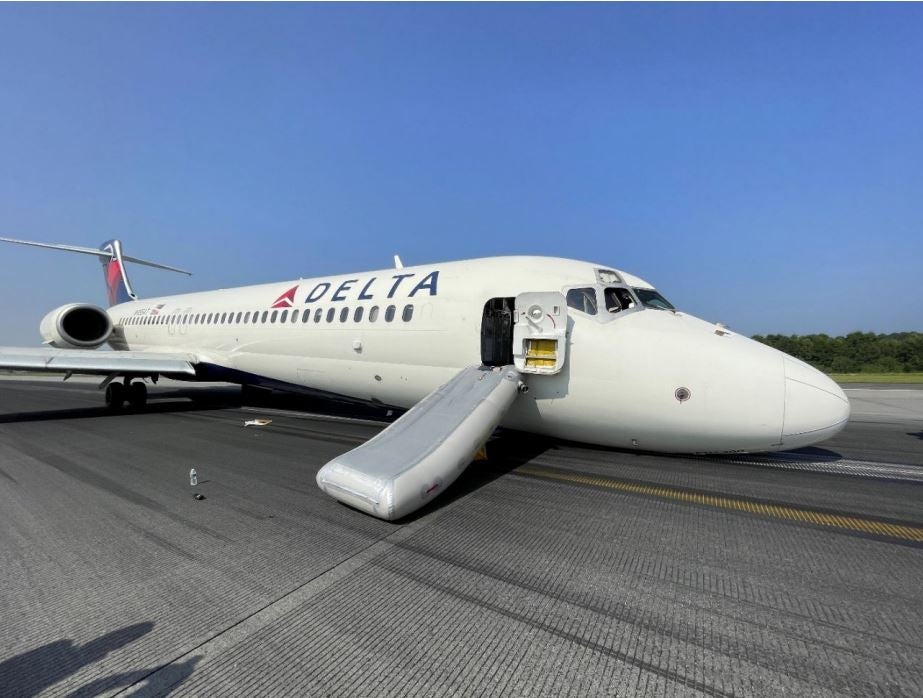
Photos of the incident posted on social media at the time showed the airplane parked on the runway with emergency slides deployed. No injuries were reported.
On Tuesday, the FAA published a new airworthiness directive (AD) detailing its report on the incident and mandating actions to be taken by operators.
The AD stated that during the Delta Boeing 717’s approach, its flight crew was alerted to an unsafe gear indication. While the aircraft’s two main landing gear deployed, its front nose landing gear stayed retracted.
The nose landing gear remained stuck despite an alternative deployment method by pilots, and the aircraft ultimately landed without using its front landing gear.
View of airplane in final resting position. (Photo: NTSB)
“A report released by the National Transportation Safety Board (NTSB) identified that a failure of the upper lock link assembly caused the lower lock link assembly to swing down to a vertical position which contacted the NLG [nose landing gear] assembly,” the FAA stated in its directive. “The contact restricted the movement of the NLG and prevented it from moving out of the retracted position.”
The NTSB found that the root cause of this upper lock link assembly failure was due to nonconforming surface roughness from tool marks on the surface.
The FAA stated that this condition, if not addressed, could result in failure of the landing gear to fully extend, restricting ground maneuverability and increasing the risk of runway excursion.
The AD requires repetitive inspections for cracking of the upper lock link. According to reporting by Aviation Week, the instructions come from a Boeing alert requirements bulletin issued on Feb. 12.
The FAA estimated that this AD would affect 117 airplanes registered in the U.S., costing American operators $49,725 per inspection cycle. If replacement parts are deemed necessary, the agency estimated an additional cost to operators of $18,584.
The Aviation Week report stated that only two airlines — Hawaiian and Delta — still fly 717s with combined totals of 84 in service and 23 parked in long-term storage.
AirlineGeeks.com was founded in February 2013 as a one-person blog in Washington D.C. Since then, we’ve grown to have 25+ active team members scattered across the globe. We are all here for the same reason: we love deep-diving into the fascinating realm of the airline industry.
A JetBlue A320 aircraft. (Photo: Shutterstock | Markus Mainka)
JetBlue and United are reportedly working toward a partnership.
Three industry sources familiar with the matter told Reuters that the alliance could “provide greater connectivity to customers” and allow them to “earn and burn frequent-flier miles,” but so far, the carriers do not envision coordinating on pricing and schedules.
The deal has not been finalized, the sources added.
United declined to comment on Reuters’ report, while JetBlue referred back to comments made by JetBlue President Marty St. George on a quarterly earnings call on Tuesday. St. George said JetBlue is negotiating with a “domestic carrier with a broader network,” and that an announcement would likely be made in the current quarter. He did not provide further details.
JetBlue, which is based in New York City, has struggled to rebound after the COVID-19 pandemic, posting a profit in just two of the last nine quarters.
The carrier attempted to expand its reach and revitalize its business with a partnership with American Airlines, billed as the “Northeast Alliance.” The arrangement would have allowed the two companies to share passengers and coordinate on routes, but a federal judge ruled against it, finding the partnership would harm competition in the industry.
American is now suing JetBlue over the failed alliance and seeking to recoup damages.
JetBlue also attempted to buy Spirit, but that deal was also blocked by a federal court ruling after a trial last year.
Rebuilding at JFK
Meanwhile, Italian newspaper Corriere della Sera reported Wednesday that United sees a partnership with JetBlue as a way to expand its reach and challenge rival Delta at one of its major hubs, John F. Kennedy International Airport in New York. United currently flies out of LaGuardia Airport and Newark Liberty International Airport, but not JFK.
Unlike Reuters, Corriere reported that United is exploring options ranging from an alliance to a full acquisition of JetBlue. The leading proposal, according to the newspaper, is a three-step plan starting with a commercial alliance and progressing to a strategic partnership, followed by a full acquisition. Corriere said United leadership would seek to coordinate the buyout with the Trump administration to avoid regulatory hurdles.
A United Airbus A320 (Photo: Shutterstock | Wenjie Zheng)
That narrative goes against the outlook offered by United CEO Scott Kirby last month. According to Reuters, Kirby said that while he would like to have a presence at JFK, the “headache” of “buying a whole airline to get there” was a nonstarter.
In January, United wrote to the Securities and Exchange Commission denying that it was pursuing any acquisitions.
Zach Vasile is a writer and editor covering news in all aspects of commercial aviation. He has reported for and contributed to the Manchester Journal Inquirer, the Hartford Business Journal, the Charlotte Observer, and the Washington Examiner, with his area of focus being the intersection of business and government policy.
WestJet Axes Another Transborder Route
WestJet is cutting another route to the U.S., just weeks before it was scheduled to launch. The airline is blaming a lull in transborder demand.
A WestJet Boeing 737 MAX. (Photo: Shutterstock | Vadim Rodnev)
WestJet is cutting another route to the U.S., just weeks before it was scheduled to launch. The Canadian low-cost carrier is blaming the change on a “downward shift in demand for U.S. travel.”
According to a KXAN report on Tuesday, the airline confirmed it will no longer link Vancouver, British Columbia, and Austin, Texas. This new route was first announced in November and scheduled to begin on May 11.
The carrier would have gone head-to-head with Air Canada in the market, offering three-times-weekly service.
Demand Slowdown
A WestJet spokesperson told KXAN: “Due to a downward shift in demand for U.S. travel, WestJet has made the difficult decision to suspend scheduled direct service between Vancouver, British Columbia, and Austin, Texas.”
The spokesperson added that the airline hopes to add the flights in the future. WestJet currently serves Calgary, Alberta, from Austin.
This is not the airline’s first U.S. route cut this year. In March, the carrier removed planned flights between Calgary and New York-LaGuardia, along with Edmonton, Alberta, to Orlando, Florida, per Aeroroutes.
Ryan founded AirlineGeeks.com in February 2013 and has spent more than a decade covering the airline business. His work has been featured by CNN, WJLA, CNET, and Business Insider. His aviation experience spans airport operations, Part 135 regulatory compliance, and airline crew workforce planning, along with time behind the yoke of a Cessna 172 and interviews with airline executives. Ryan now serves as Group President of Firecrown Media’s Aviation Group. He holds a B.S. in Air Transportation Management and an MBA from Arizona State University and teaches Airline Management at Embry-Riddle Aeronautical University.
Renderings of new San Antonio airport terminal (Photo: Corgan — Lake|Flat)
Global design firm Corgan is helping to design a new 900,000 square foot terminal at the San Antonio International Airport.
According to a news release emailed to AirlineGeeks from Corgan, the company has partnered with San Antonio-based architectural firm Lake Flato Architects to join Terminals A and B at the airport with a brand new Terminal C.
Construction work began for the new terminal in December 2024. A news release from the San Antonio’s municipal government at the time explained that the new terminal is part of a Terminal Development Program (TDP) to improve airport infrastructure over the next 20 years.
“TDP is the cornerstone of Elevate/SAT, a $2.5 billion expansion and capital improvements plan that will improve and enhance SAT, the customer experience and the San Antonio region,” the city’s release stated. “Elevate/SAT is the largest capital improvement plan that the City of San Antonio has undertaken.”
San Antonio new terminal renderings (Photo: Corgan)
Corgan stated that the project includes a ground transportation center, parking garage, central utility plant, and terminal roadway alignment. Terminal C will have 17 gates and is expected to be completed in 2028.
The new terminal’s design includes natural materials and warm earth tones to reflect the region’s landscape.
“Upon arrival, visitors are greeted by a 60-foot garden, reminiscent of the shaded Cypress paseos and covered bridges of the Riverwalk,” Corgan’s release stated. “Great hovering shed roofs shelter the three great rooms of Terminal C: ticketing, the Gateway Terminal, and the Mercado Food and Retail Hall.”
As the master architect on the project, Corgan will collaborate with Lake Flato to provide programming, planning, schematic design and design development, among other duties.
The SAT expansion joins several other recent airport expansion and remodel projects designed by Corgan. Notably, the firm has been working on a unique concourse widening project at the Hartsfield-Jackson Atlanta International Airport using modular construction to keep flights moving.
AirlineGeeks.com was founded in February 2013 as a one-person blog in Washington D.C. Since then, we’ve grown to have 25+ active team members scattered across the globe. We are all here for the same reason: we love deep-diving into the fascinating realm of the airline industry.
Many commuter flights only are operated by a single pilot. (Photo: AirlineGeeks | Fangzhong Guo)
A headset is one of the most essential pieces of equipment an airline pilot can invest in. Whether you want to improve communication clarity, filter out background noise, protect your hearing, or enhance your comfort level, we have assembled a list of headsets curated explicitly for airline pilots. Let’s explore which one can meet your unique needs.
Please note that each airline may have its own specifications regarding headset standards. Therefore, you should always check with your base administrative office for approval before purchasing equipment required for flight, including a headset.
Quick Look: 6 Best Aviation Headsets for Airline Pilots
Let’s examine the best aviation headsets for airline pilots.
Bose A30 Aviation Headset
Best for: Overall headset for airline pilots
Bose A30 Aviation Headset [Courtesy: Sporty’s]One of the top competitors in the aviation headset market is the Bose A30 Aviation Headset. This next-generation headset is an upgrade from the previous A20 model and has been refined using user reviews to make this the best version yet. The A30 upgrades include a reduction in weight, less clamping force, and an overall increase in comfort. This active noise-cancelling headset features Bluetooth connectivity and has received rave reviews in various aircraft types.
Key Features and Specifications
Active noise reduction: Yes
TSO-approved: Yes
Weight: 15 ounces
Warranty: 5 years
Additional features: 20% less clamping force than the A20; contoured fabric headband pad; tap control for talk-through; side-swapping microphone; thinner and lighter cable; dual volume controls; three ANR modes; Bluetooth volume control; prioritization option; 3.5mm auxiliary input for external audio source
Bose Proflight Series 2 Aviation Headset [Courtesy: Amazon]The Bose ProFlight Series 2 Aviation Headset is explicitly designed for airline flight decks and features noise reduction, comfort, and advanced audio features. It weighs just five ounces and uses comfortable silicone ear tips to eliminate side pressure. It still features digital active noise reduction, Bluetooth connectivity, and famous Bose audio quality.
Key Features and Specifications
Active noise reduction: Yes
TSO-approved: Yes
Weight: 5 ounces
Warranty: 5 years
Additional features: Smallest, lightest, most comfortable headset from Bose; digital active noise cancellation; active equalization; electret noise-cancelling mic; three user-selectable levels of noise cancellation; Bluetooth phone and audio connection; audio prioritization
Lightspeed Delta Zulu Headset [Courtesy: Sporty’s]The Lightspeed Delta Zulu Headset is an excellent choice for airline pilots. It introduces a new class of aviation headsets by combining advanced noise reduction technology with life-saving carbon monoxide alerts. The Delta Zulu may be the smartest headset available to airline pilots today, featuring customizable audio profiles and comprehensive Bluetooth support.
Key Features and Specifications
Active noise reduction: Yes
TSO-approved: No
Weight: 14.9 ounces
Warranty: 7 years
Additional features: Carbon monoxide detector; hearing EQity; stainless steel headband and magnesium ear cups; Bluetooth audio and communications interface; durable cables; dual volume controls; COM priority; removable battery pack
David Clark DC ONE-X Headset [Courtesy: Sporty’s]The David Clark brand is among the most iconic names in the aviation headset market. The company markets its David Clark DC ONE-X Headset as a hybrid electronic noise-cancelling headset that provides active noise cancellation. The headset is Bluetooth-enabled to connect to cell phones and music players and is equipped with a plush, around-the-ear leatherette ear seal designed to reduce heat buildup. One of the best features of the headset is that it folds up to fit in the palm of your hand, making it ideal for professional pilots.
Key Features and Specifications
Active noise reduction: Yes
TSO-approved: Yes
Weight: 12.3 ounces
Warranty: 5 years
Additional features: Sleek, low-profile design; Bluetooth technology; full-size leatherette ear seals; over-the-ear design; M-55 electret microphone; lightweight alloy headband; compact storage when collapsed; includes David Clark headset case; uses 2 AA batteries
Telex Airman ANR 850 Headset [Courtesy: Sporty’s]The Telex Airman ANR 850 Headset is an affordable and comfortable option for airline pilots that builds on the tradition of the Telex Airman 750 Headset ($289.95), the most popular lightweight headset in the world. This compact and lightweight headset is the standard headset equipped on some commercial carriers. The earphones are mounted on a stainless steel sliding bar with virtually no clamping pressure for the user, and the open-air earphones are great for heat reduction.
Key Features and Specifications
Active noise reduction: Yes
TSO-approved: Yes
Weight: 4 ounces
Warranty: 3 years
Additional features: Adds up to 12dB of active noise reduction; amplified electret mic with fully flexible boom; larger ear cushions; hassle-free ANR without batteries; set and forget volume control; folding design; uses standard PJ plugs
Disadvantages
Users have reported the noise cancellation of the Telex Airman ANR 850 Headset is not as effective as other premium aviation headsets.
Price: $499
Clarity Aloft Pro Plus Headset
Best for: Lightweight headset for airline pilots
Clarity Aloft Pro Plus Headset [Courtesy: Sporty’s]For the ultimate lightweight option, the Clarity Aloft Pro Plus Headset brings passive noise-cancelling to another level, building on the acclaimed performance of the original Clarity Aloft Headset ($575.00). Clarity achieves this through its patented Comply Canal Tip earplugs, which provide a tight seal that prevents noise from getting in but are loose enough not to hurt the pilot’s ears. Weighing only 1.5 ounces, this headset is ideal for long flights and work trips.
Key Features and Specifications
Active noise reduction: Yes
TSO-approved: Yes
Weight: 1.5 ounces
Warranty: 3 years
Additional features: Professional grade and flexible microphone; low profile and flexible stainless steel headband; Comply Canal Tip earplugs; tiny speakers and electret microphone; uses standard PJ plugs
Things to Consider When Shopping for an Aviation Headset
Let’s explore what to consider when shopping for an aviation headset as an airline pilot.
Noise reduction
One key factor when choosing a headset for an airline pilot is its noise-cancelling capabilities. Most headsets feature Active Noise Cancelling (ANC) technology as the standard. ANC is a straightforward technology that uses a microphone to detect ambient noise. The headset analyzes these sound waves and emits opposing waves to prevent incoming sounds from reaching the eardrum. Effective noise reduction is crucial for minimizing fatigue and enhancing overall communication clarity in the flight deck.
Comfort and fit
Another factor to consider when shopping for a headset is the fit and comfort level offered by the device. Lightweight headsets minimize neck strain during long flights, while ergonomic headband designs ensure proper pressure distribution. An adjustable headband provides a secure and comfortable fit for various head sizes. When selecting ear cups, it is crucial to consider material breathability and seal design.
Audio quality and communication
Audio quality and communication are also crucial factors when choosing a headset. Microphone clarity is essential for voice transmissions with ATC and internal crew communications, while speaker quality guarantees clear reception of radio transmissions and intercom.
Durability and reliability
Durability and reliability are additional factors to consider when shopping for a headset. The build quality, materials, and overall construction are crucial for the device’s longevity. The manufacturer’s warranty is also an essential aspect to consider, as it guarantees support from the manufacturer in case of equipment malfunction or failure.
Connectivity and additional features
Connectivity and additional features are also critical when selecting an aviation headset. Bluetooth connectivity is essential for integrating personal devices and electronic flight bags (EFBs). Additionally, some headsets have adjustable noise cancellation levels, while others offer battery-saving features like automatic shut-off.
A reliable headset is crucial for maintaining clear and reliable communication in the fast-paced, high-risk aviation environment. Let’s add one of these aviation headsets to your virtual cart today!
FAQ
Why is a good aviation headset essential for airline pilots?
A good aviation headset is essential for airline pilots to improve communication clarity, filter out background noise, protect their hearing, and enhance their comfort level.
What are the key differences between aviation headsets and regular headphones?
The key differences between aviation headsets and regular headsets include:
Type of noise cancellation, as aviation headsets are designed with active noise cancellation
Microphone quality and design, as aviation headsets come with boom microphones designed for clear communication
Durability and build, as aviation headsets are designed to withstand long hours of wear and extreme environments
Comfort for extended use, as aviation headsets are designed with thicker ear seals, adjustable bands, and lightweight materials
Price and technology, as aviation headsets are more expensive due to their specialized technology and certification requirements
Do airlines provide headsets, or do pilots typically buy their own?
While airlines typically provide headsets within their aircraft flight decks, many professional pilots invest in their own premium aviation headsets for better quality and comfort.
What is the typical lifespan of an aviation headset for an airline pilot?
A well-maintained, high-quality aviation headset can last well over a decade; however, with frequent technological improvements, pilots often choose to replace their headset every 5 to 10 years.
Are there any specific regulations or certifications (like TSO) that airline pilot headsets must meet?
Specific pilot headset policies vary by airline. Some airlines require a TSO-approved headset to be available in the cockpit; however, pilots may use any personal headsets during operations. Other airlines explicitly mandate the use of TSO-approved headsets for all communications. If you have questions about your airline’s policy, check with your base administrative office for approval before purchasing a headset.
AirlineGeeks may earn revenue from the products available on this page and participate in affiliate programs.
AirlineGeeks.com was founded in February 2013 as a one-person blog in Washington D.C. Since then, we’ve grown to have 25+ active team members scattered across the globe. We are all here for the same reason: we love deep-diving into the fascinating realm of the airline industry.