Alaska Launches Partnership With Philippine Airlines
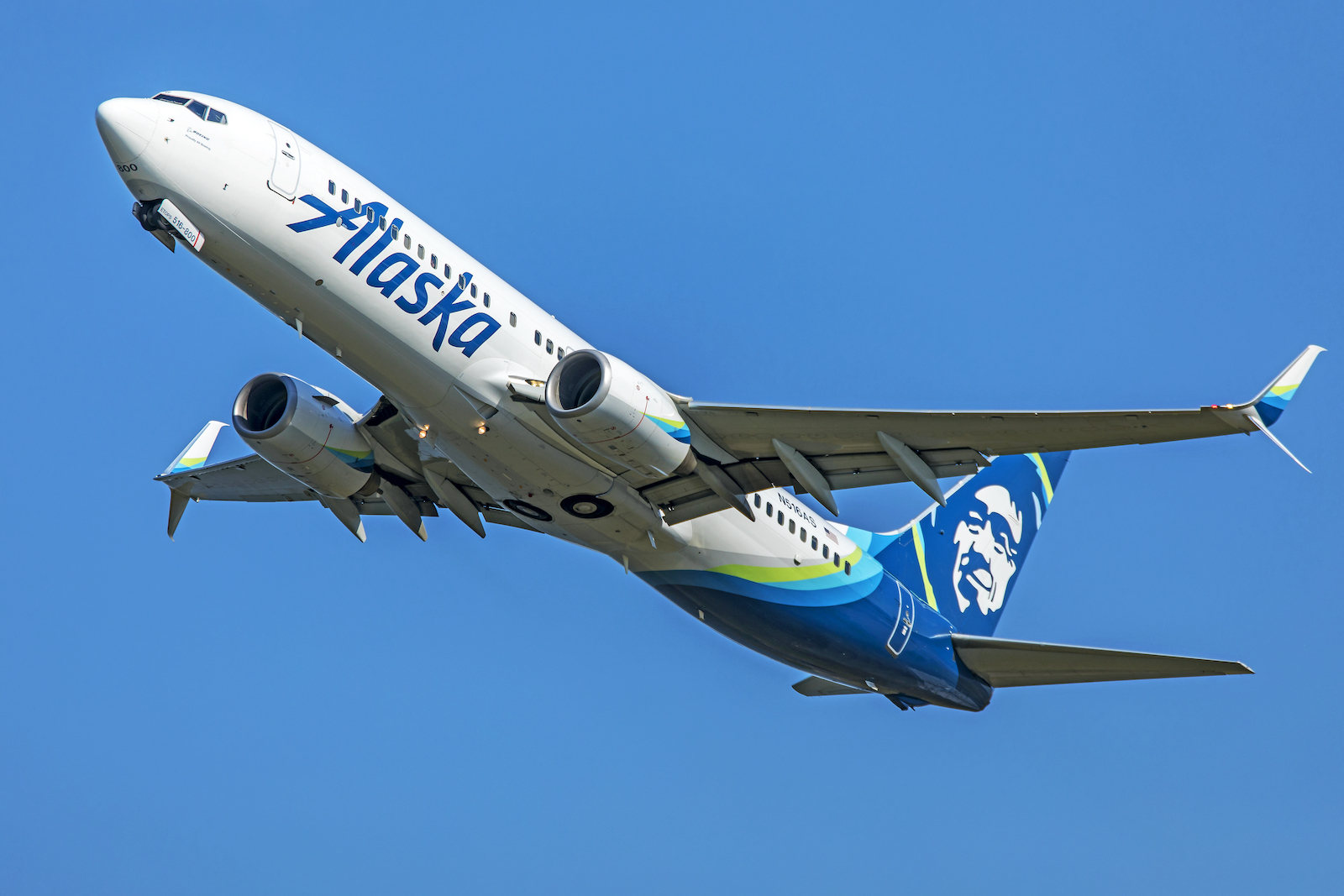
Alaska Airlines said its new global partnership will allow customers to book flights to Manila using its website and earn rewards across both carriers.
The two companies said customers will soon be able to book flights on Philippine through Alaska’s website and earn and use Alaska mileage points on Philippine flights.
Alaska officials said the alliance will help customers book visits to popular destinations like Boracay and Palawan in the Philippines.
Brett Catlin, Alaska’s vice president of loyalty, alliances, and sales, also noted that the long-haul flights will serve the substantial Filipino communities living in Alaska, Hawaii, and Washington.
Philippine offers a number of flight options between Manila and Alaska’s hubs on the West Coast and in Hawaii, including five non-stop flights a week from Honolulu, three non-stop flights a week from Seattle, two daily non-stop flights from Los Angeles, and a daily non-stop flight from San Francisco. Alaska customers can fly first to Manila and then connect to dozens of destinations in Asia and elsewhere.
Alaska said it is Philippine’s first North American loyalty partner. The carrier has similar arrangements with 31 other airlines.
Philippine already had a partnership in place with Hawaiian Airlines, which is part of Alaska Air Group, and that deal will be expanded to allow Hawaiian’s customers to earn and redeem miles on Philippine. Philippine will continue to offer Hawaiian codeshare flights on its website.
Zach Vasile is a writer and editor covering news in all aspects of commercial aviation. He has reported for and contributed to the Manchester Journal Inquirer, the Hartford Business Journal, the Charlotte Observer, and the Washington Examiner, with his area of focus being the intersection of business and government policy.
Livery of the Week: Air India
The updated design marks the first major visual overhaul for the carrier in decades and reflects ongoing efforts to reposition the airline for growth.
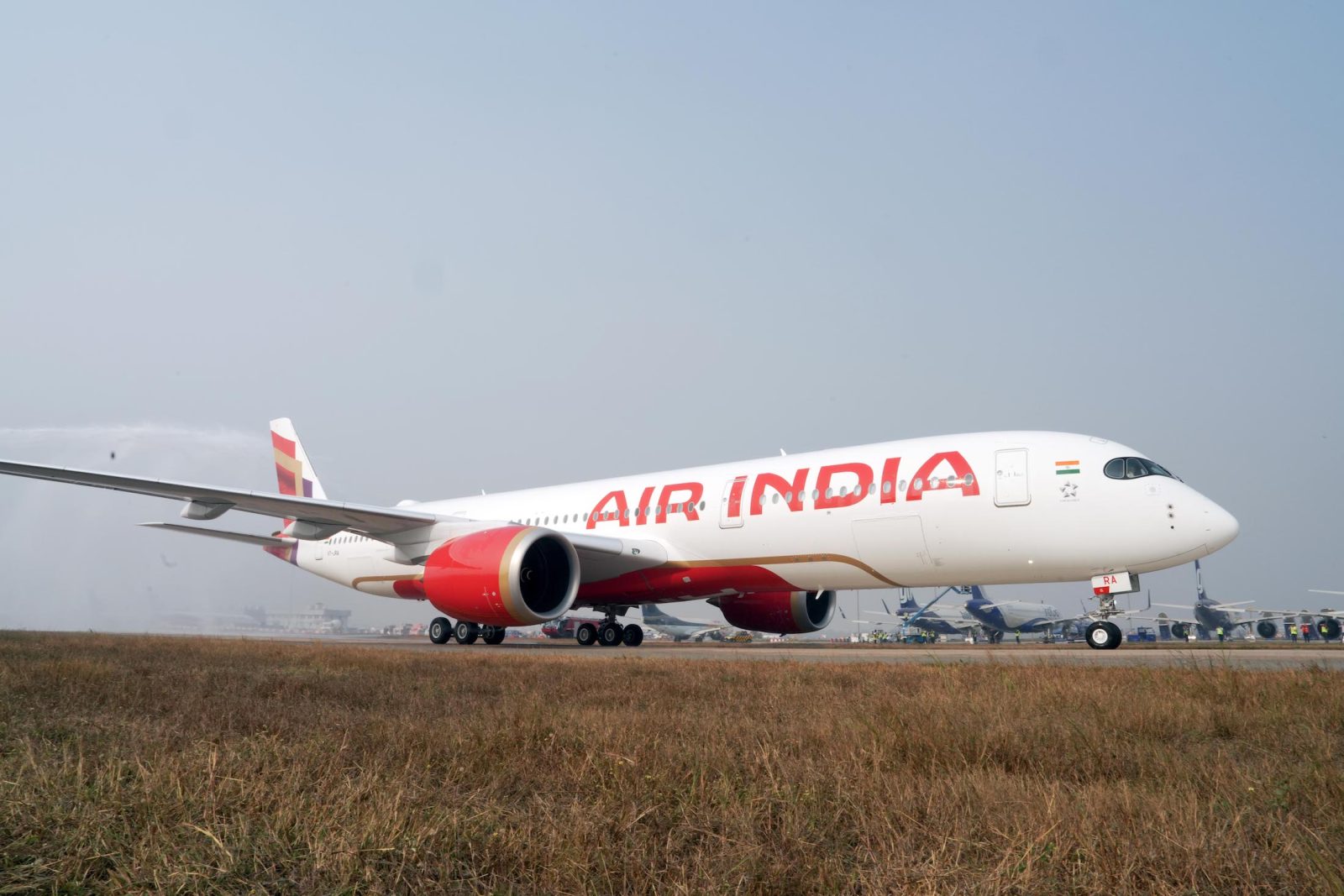
Air India's first A350 aircraft. (Photo: Air India)
Editor’s Note: AirlineGeeks is proud to present our ‘Livery of the Week’ series. Every Friday, a team member will share an airline livery, which can be from the past, present, or even a special scheme. Some airline liveries are works of art. The complexity associated with painting around critical flight components and the added weight requires outside-the-box thinking from designers. The average airliner can cost upwards of $200,000 to repaint, creating a separate aircraft repainting industry as a result.
Have an idea for a livery that we should highlight? Drop us a line.
In 2023, Air India unveiled a new livery as part of a broader brand refresh under the Tata Group’s ownership. The updated design marks the first major visual overhaul for the carrier in decades and reflects ongoing efforts to reposition the airline for international growth.
The new livery features a clean white fuselage with a deep red underbelly and updated “Air India” titles. The tail incorporates a modernized version of the airline’s historic Indian window arch motif, rendered in a geometric gold and red design.
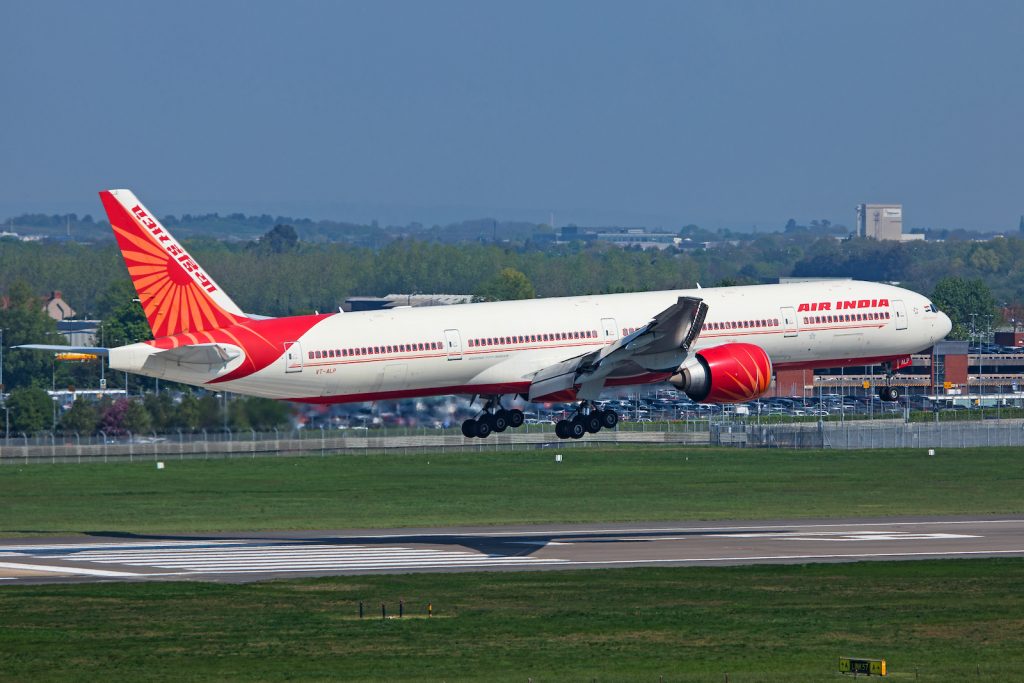
This new branding replaces the long-standing red-and-white scheme that included the signature jharokha-style window frames and the Maharaja mascot, both of which were associated with Air India for over 50 years. According to the airline, the new look is intended to represent a modern, confident India on the global stage.
The first aircraft to wear the new livery was an Airbus A350. The repainting process is expected to continue gradually across the existing fleet as part of a larger modernization program that includes fleet renewal, cabin upgrades, and enhanced service standards.
An Air India Boeing 777-300ER (Photo: AirlineGeeks | William Derrickson)
While public reception has been mixed, especially among those familiar with Air India’s legacy branding, the airline has positioned the redesign as a step toward aligning its identity with global premium carriers. With the Tata Group planning significant investments into fleet and infrastructure, the new livery is one of many changes aimed at revamping the airline’s image in a competitive international market.
Looking for a new airplane model? Head over to our friends at the Midwest Model Store for a wide selection of airlines and liveries.
Ryan founded AirlineGeeks.com in February 2013 and has spent more than a decade covering the airline business. His work has been featured by CNN, WJLA, CNET, and Business Insider. His aviation experience spans airport operations, Part 135 regulatory compliance, and airline crew workforce planning, along with time behind the yoke of a Cessna 172 and interviews with airline executives. Ryan now serves as Group President of Firecrown Media’s Aviation Group. He holds a B.S. in Air Transportation Management and an MBA from Arizona State University and teaches Airline Management at Embry-Riddle Aeronautical University.
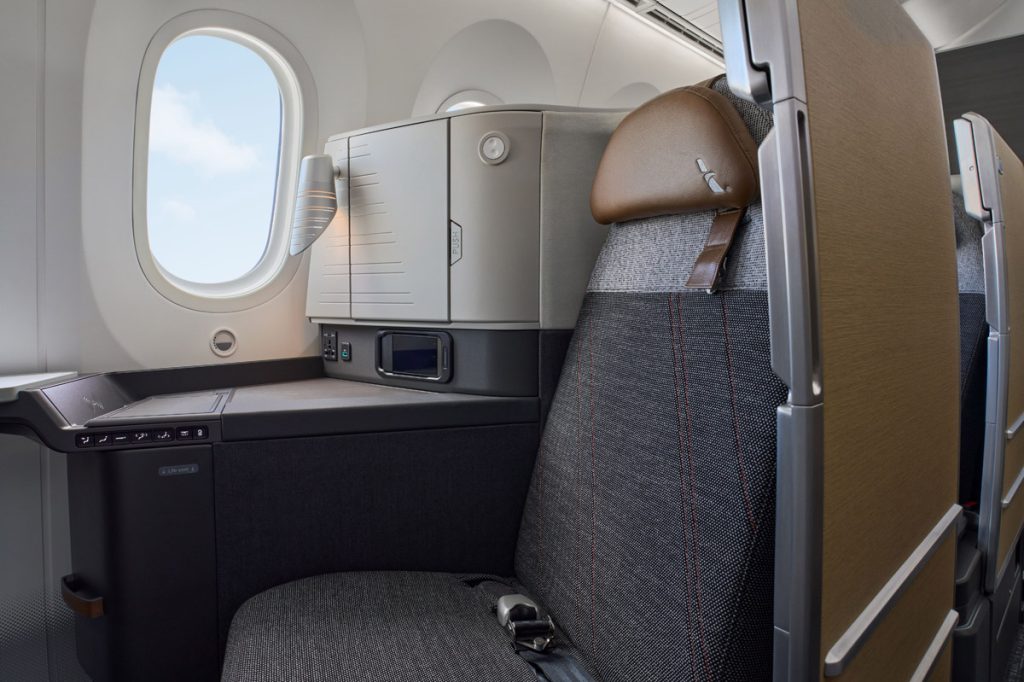
The carrier’s next-generation Flagship Suite seats will include a sliding privacy door, more personal storage space, a wireless charging pad for phones, and a chaise lounge-style seat with an adjustable headrest pillow.
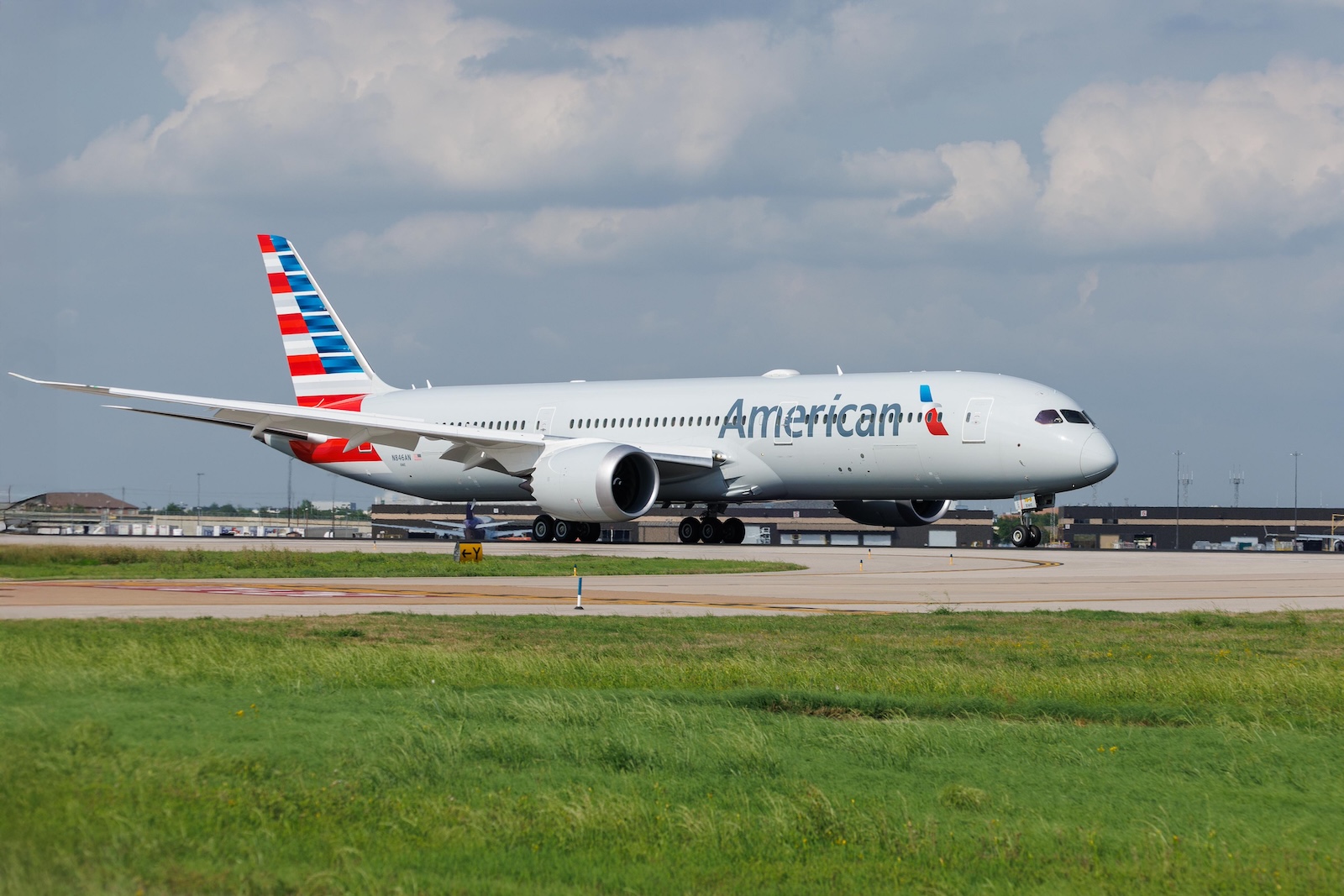
American said it had taken deliveries of the first two 787-9s equipped with Flagship Suite seating on Tuesday and plans to add 28 more to its fleet between now and 2029.
American’s new Flagship Suites product (Photo: American Airlines)
Each 787-9 built for American has 51 Flagship Suite seats in the business class portion of the aircraft. The suites are also expected to be installed on American’s new Airbus A321XLR aircraft and retrofitted Boeing 777-300ERs.
Domestic Start
These aircraft will begin operating between Chicago O’Hare and Los Angeles on June 5 as Flight 2012.
Then, the suites will open to passengers for the first time on a June 5 flight from Chicago to London, followed by flights between Philadelphia and London in August and Philadelphia and Zurich in September.
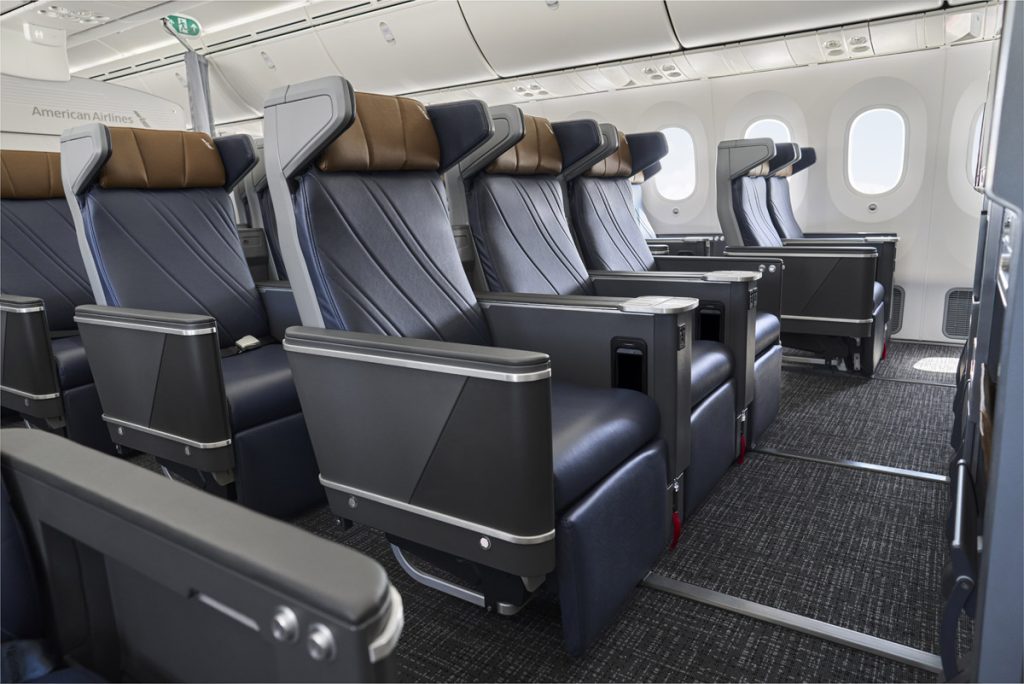
Premium economy on American’s new premium 787s (Photo: American Airlines)
Tickets for the inaugural Chicago-London flight will go on sale on Monday, the carrier said.
Flagship Suite seats come with some perks, including Priority check-in and boarding and access to American’s Flagship lounges. Flagship Suite ticketholders also get multi-course in-flight meals, wine, amenity kits with luxury skincare items, and blankets.
American first announced the updated Flagship Suite seats in 2022 and said the option would be available to customers by 2024. Boeing’s strained supply chain, however, delayed deliveries of the 787-9 for over a year. The carrier said it plans to grow its number of lie-flat and premium economy seats by 50 percent by the end of the decade.
Zach Vasile is a writer and editor covering news in all aspects of commercial aviation. He has reported for and contributed to the Manchester Journal Inquirer, the Hartford Business Journal, the Charlotte Observer, and the Washington Examiner, with his area of focus being the intersection of business and government policy.
Delta Adds 14 Domestic Routes
The airline is set to expand its domestic network later this year with a series of new winter seasonal and year-round routes.
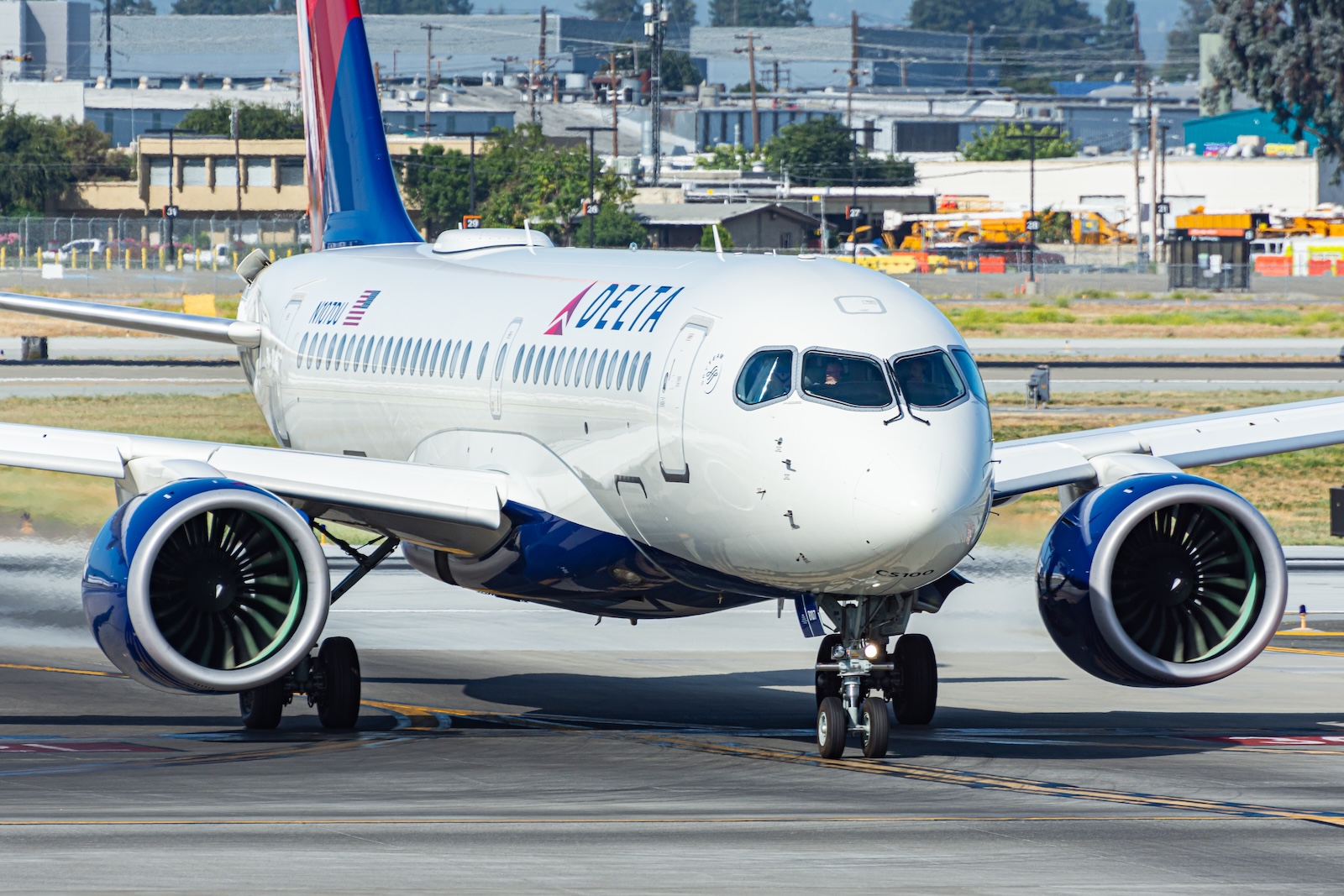
A Delta A220-100. (Photo: Shutterstock | Minh K Tran)
Delta is set to expand its domestic network later this year with a series of new winter seasonal and year-round routes.
The latest schedule updates include new Saturday-only winter services to Orlando, Florida, a seasonal route to Palm Springs, California, and several new daily routes from major hubs and secondary cities, an airline spokesperson shared with AirlineGeeks on Friday.
Seasonal Winter Service to Orlando
Beginning Dec. 20, the airline will launch Saturday-only seasonal service from Orlando to seven cities. These routes will run through April 11, 2026.
The new Orlando routes will operate from the following cities:
Nashville, Tennessee
Indianapolis
Kansas City, Missouri
Pittsburgh
Grand Rapids, Michigan
Louisville, Kentucky
Columbus, Ohio
New Austin Route
The Atlanta-based airline will also introduce a Saturday-only seasonal route between Austin–Bergstrom International Airport in Texas and Palm Springs International Airport. The route will operate from Nov. 8 through April 26, using an unspecified regional aircraft.
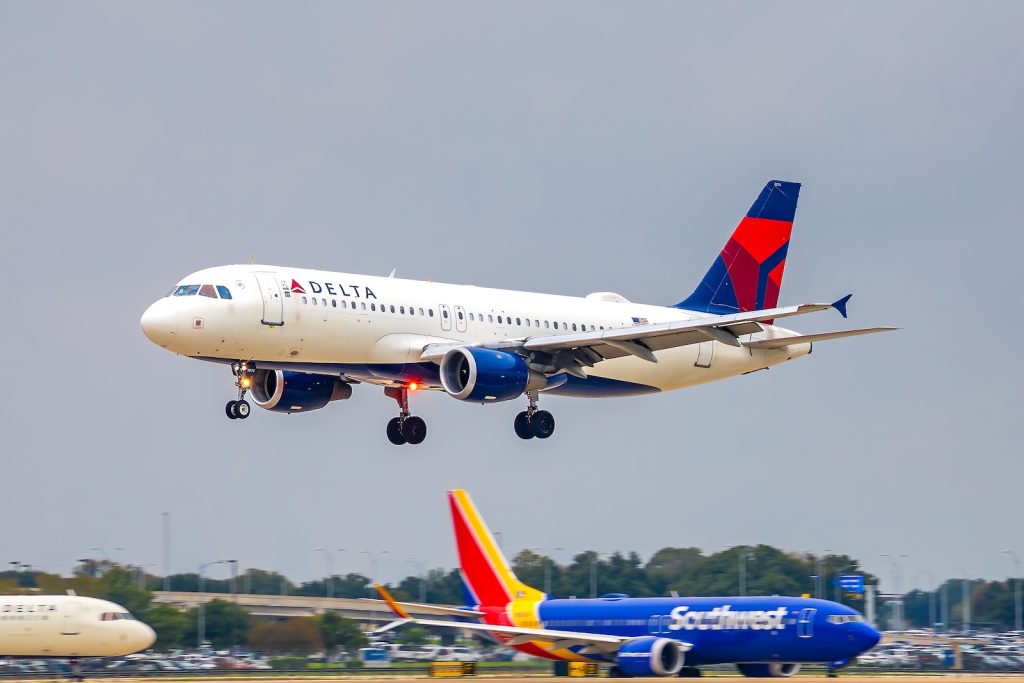
Delta and Southwest aircraft in Austin. (Photo: Shutterstock | lorenzatx)
Starting Sept. 8, Delta will begin daily service on five domestic routes.
Little Rock, Arkansas – Salt Lake City
White Plains, New York – Minneapolis-St. Paul with a CRJ-900
New York-JFK – St. Louis with an Embraer E175
New York-JFK – Houston with an Airbus A220-100
New York-JFK – Memphis, Tennessee, with an E175
The carrier will also launch new daily service between New York-LaGuardia and Northwest Florida Beaches International Airport in Panama City Beach. This route begins Nov. 6 and will be operated with an Embraer 175.
Ryan founded AirlineGeeks.com in February 2013 and has spent more than a decade covering the airline business. His work has been featured by CNN, WJLA, CNET, and Business Insider. His aviation experience spans airport operations, Part 135 regulatory compliance, and airline crew workforce planning, along with time behind the yoke of a Cessna 172 and interviews with airline executives. Ryan now serves as Group President of Firecrown Media’s Aviation Group. He holds a B.S. in Air Transportation Management and an MBA from Arizona State University and teaches Airline Management at Embry-Riddle Aeronautical University.
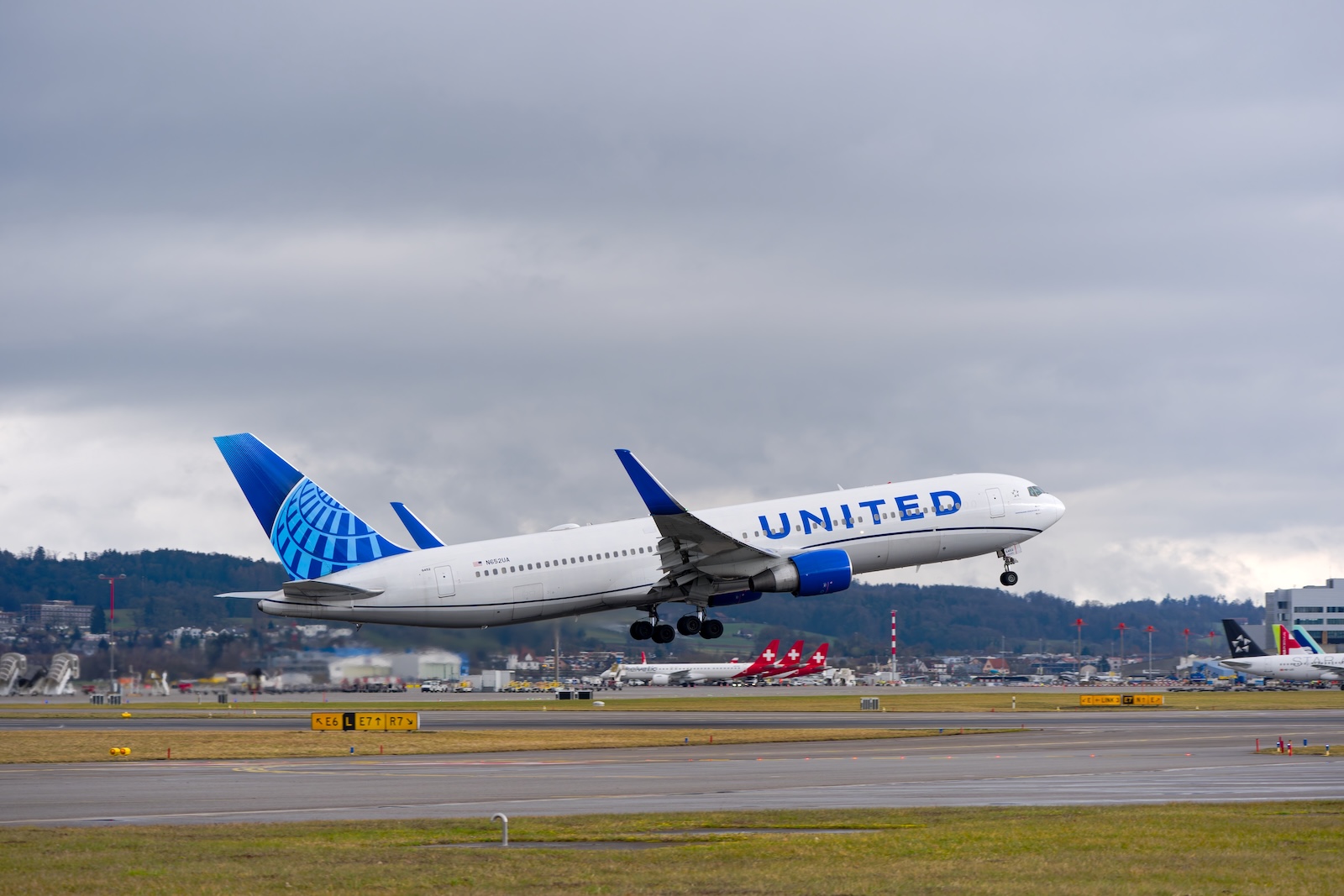
A United Boeing 767-300. (Photo: Shutterstock | Michael Derrer Fuchs)
A federal judge has dismissed a lawsuit filed by former United pilot Romullo Tadeu Melo Silva, who claimed the airline defamed him following a hard-landing incident that damaged a Boeing 767-300 aircraft in Houston.
Silva, who was hired as a first officer just five months earlier in February 2023, was at the controls during the landing, with Capt. Robert Goudon serving as the monitoring pilot.
According to the NTSB’s final report published on Jan. 15, 2025, the incident occurred when Silva held back pressure on the control yoke after the main landing gear touched down to prevent the nosewheel from hitting the runway.
However, the nosewheel struck with “abnormal force,” causing what appeared to be a bounce. Silva then pulled back on the control yoke again, attempting to keep the nosewheel from making a second impact.
Flight data recordings revealed that control column inputs varied between 5 degrees nose high and 5 degrees nose low during the landing sequence. The data also showed that the speedbrakes deployed simultaneously with the thrust reversers, as the nosewheel bounced a second time before making a third contact with the runway. The aircraft then began decelerating normally after Goudon took control.
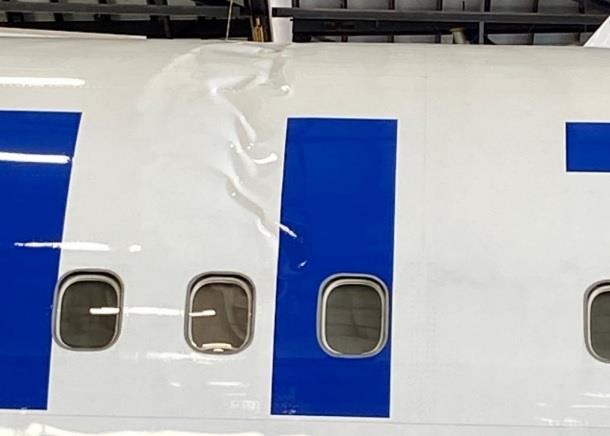
None of the 202 passengers and crew aboard were injured, but photographs included in the NTSB report showed damage to the fuselage of the aircraft, which had been buckled. The aircraft remained out of service for several months while repairs were made.
Damaged United 767 following the hard landing (Photo: NTSB)
Post-Incident Developments
Following the incident, the airline immediately pulled Silva from flight duty. He remained grounded until Sept. 30, 2023, then the carrier directed Silva to undergo simulator training focused specifically on landings.
Silva was subsequently required to complete a “check ride” – a test flight supervised by a senior pilot to assess his readiness to return to passenger service. According to Silva’s legal complaint, the senior pilot who conducted his evaluation on Oct. 2, 2023, was “hostile, degrading and intimidating.” Silva failed this evaluation, and United terminated his employment on Oct. 12, 2023.
In his lawsuit, Silva claimed that while he was indeed flying the aircraft during landing, Goudon was officially the pilot in command and had “failed to arm the speed brake on the aircraft” – a failure that contributed to the hard landing. Silva further maintained in his complaint that the touchdown “was not hard.”
Silva’s lawsuit alleged that, as a result of United’s report to the FAA, his “record with the FAA has been substantially tarnished,” leaving him unable to secure employment with any other air carrier, including private carriers operating under 14 CFR Part 135. According to the complaint, this employment barrier had cost him at least $100,000 in lost income.
Judge Dismisses Claim
On Thursday, U.S. District Judge William J. Martini granted the carrier’s motion to dismiss Silva’s complaint. In his written opinion, Martini found Silva’s defamation claim deficient on multiple grounds.
First, the court determined that Silva’s complaint lacked sufficient information about the alleged report to establish whether it could be considered defamatory. Martini wrote that the court had “no information regarding whether the FAA has disclosed or would disclose such a report to plaintiff’s would-be employers, or whether the contents of this unspecified report would render plaintiff ineligible for an in-flight employment position.”
Second, Martini found that communications made to government agencies like the FAA are generally subject to qualified privilege under New Jersey law. This privilege applies to communications made “bona fide upon any subject-matter in which the party communicating has an interest, or in reference to which he has a duty.”
The court concluded that Silva had not adequately demonstrated that United acted with malice – knowing the statement was false or acting with reckless disregard for its truth. His only allegation on this point was that “United made this false report to the FAA intentionally and knowingly for the purpose of protecting Captain Goudon, despite the cost to Mr. Silva,” which the court deemed conclusory and insufficient.
The NTSB’s final report on the incident, released in January 2025, had already determined that Silva’s “improper control inputs after the airplane touched down” and the flight crew’s “lack of recognition that the speedbrakes were not armed” were the causes of the hard landing and subsequent aircraft damage.
Silva, who worked as a flight attendant at United before becoming a pilot, has not announced whether he plans to appeal the decision or file an amended complaint.
Ryan founded AirlineGeeks.com in February 2013 and has spent more than a decade covering the airline business. His work has been featured by CNN, WJLA, CNET, and Business Insider. His aviation experience spans airport operations, Part 135 regulatory compliance, and airline crew workforce planning, along with time behind the yoke of a Cessna 172 and interviews with airline executives. Ryan now serves as Group President of Firecrown Media’s Aviation Group. He holds a B.S. in Air Transportation Management and an MBA from Arizona State University and teaches Airline Management at Embry-Riddle Aeronautical University.
“Instead of transparency, however, we have secrecy. Instead of consultation, exclusion,” said Capt. Wayne Scales, JetBlue MEC chairman, in a message to pilots.
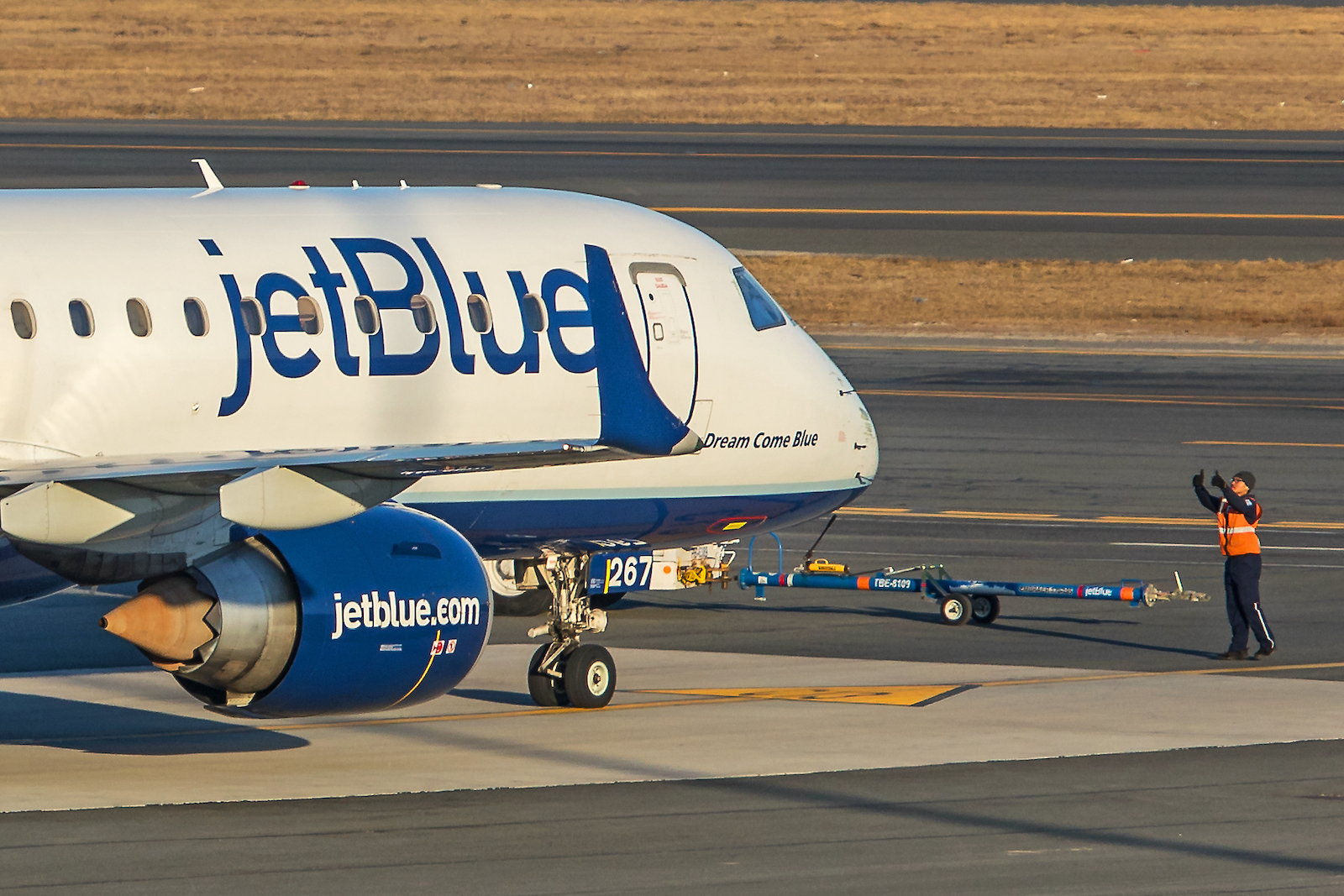
A JetBlue E190 in Boston (Photo: AirlineGeeks | William Derrickson)
JetBlue pilots – represented by the Air Line Pilots Association – are voicing serious concerns over the airline’s recently reported partnership with United, a move they claim was negotiated behind closed doors without union consultation or transparency.
The deal, characterized by airline leadership as a “domestic partnership,” has raised significant fears about job security and the future direction of the airline.
“Instead of transparency, however, we have secrecy. Instead of consultation, exclusion,” said Capt. Wayne Scales, JetBlue MEC chairman, in a message to pilots viewed by AirlineGeeks.
Addressing the venture during the Q1 earnings call, JetBlue President Marty St. George expressed optimism about what the partnership meant for customers but stopped short of confirming it.
“That wasn’t just a talking point. That was a message,” Scales emphasized. “We are not part of their plan.”
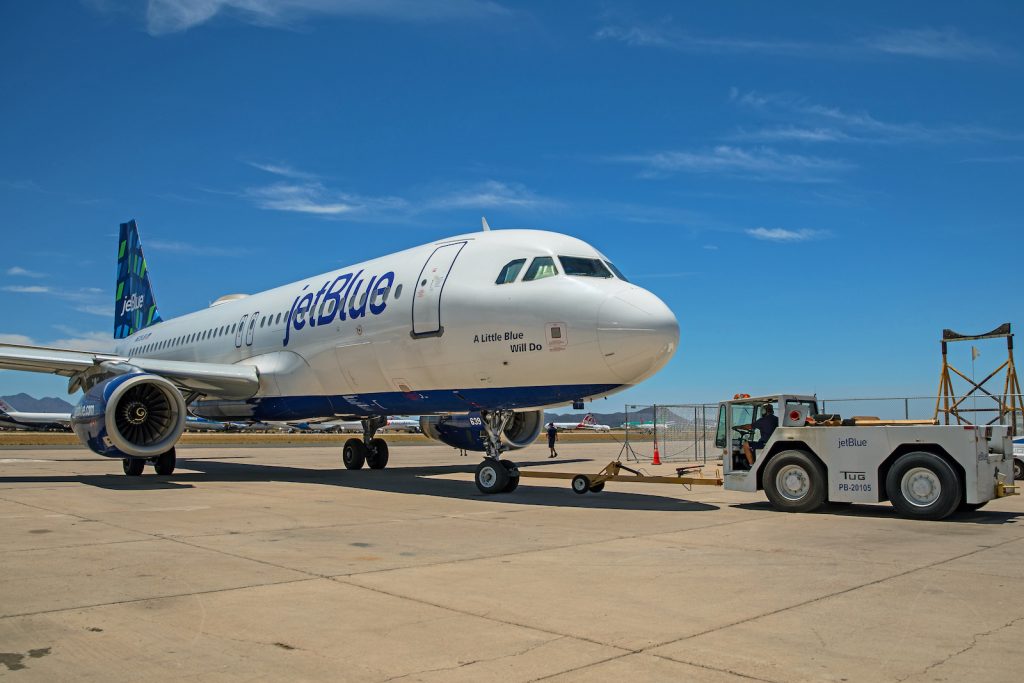
A JetBlue A320 in Marana, Arizona. (Photo: AirlineGeeks | William Derrickson)
The pilots’ concerns are rooted in contractual protections outlined in CBA Section 1, which includes a prohibition on entering into commercial agreements without addressing pilot job security. According to Scales, management has neither approached the union nor acknowledged these concerns, leaving pilots in the dark about how this partnership might reshape the airline and impact their careers.
Automation Concerns
JetBlue’s investment strategy compounded these fears, particularly its financial commitment to Beacon AI, a company developing artificial intelligence co-pilots and autonomous flight systems.
In the April 2025 issue of FLYING Magazine, Stephen Snyder, managing director of JetBlue Ventures, stated: “The aviation industry has already successfully transitioned from four-person flight crews to two, and we see a clear path toward single-pilot or fully autonomous operations with the right technology.”
The pilots’ union views this investment as “a direct attack on our profession” and “an attempt to reduce — and eventually eliminate — pilot jobs.”
“This is not a company operating with the best interests of its pilots in mind—at all,” Scales wrote. “This is a company planning a future without its pilots.”
In response to these developments, the union is actively engaging with ALPA National, including attorneys and professional staff, to challenge what they see as “very real threats” posed by both the domestic partnership and automation investments. They added that excluding pilots from these decisions constitutes “a betrayal of the pilots they claim to value.”
“This isn’t just a negotiation – it’s a fight for our future,” concluded Scales in his message to pilots. “We see what management is doing. We know what’s at stake. And we will not be silent, sidelined, or replaced.”
Ryan founded AirlineGeeks.com in February 2013 and has spent more than a decade covering the airline business. His work has been featured by CNN, WJLA, CNET, and Business Insider. His aviation experience spans airport operations, Part 135 regulatory compliance, and airline crew workforce planning, along with time behind the yoke of a Cessna 172 and interviews with airline executives. Ryan now serves as Group President of Firecrown Media’s Aviation Group. He holds a B.S. in Air Transportation Management and an MBA from Arizona State University and teaches Airline Management at Embry-Riddle Aeronautical University.
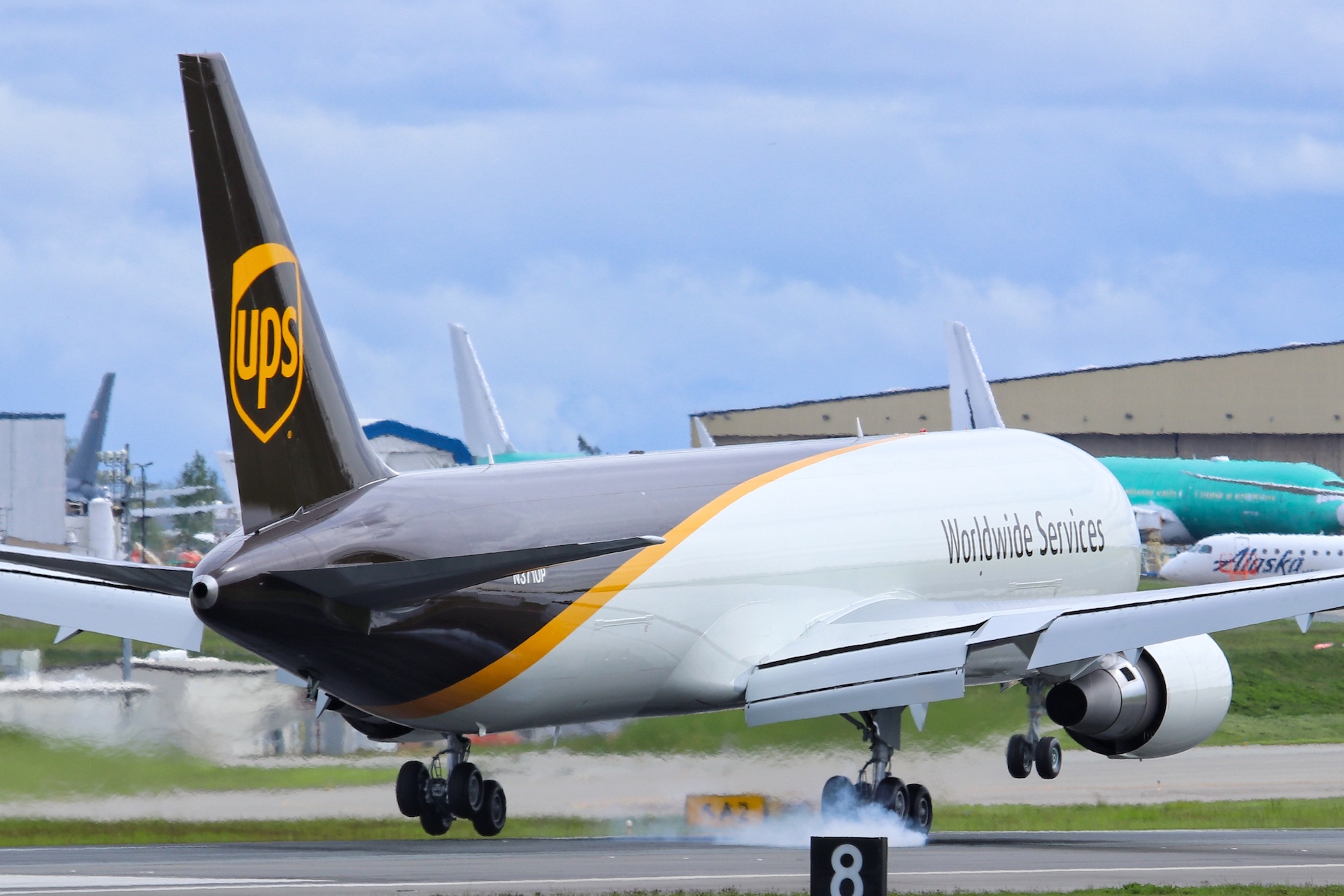
A UPS Boeing 767 aircraft (Photo: AirlineGeeks | Katie Zera)
The Federal Aviation Administration has issued a new airworthiness directive (AD) for certain Boeing 767 model aircraft to address corrosion damage on satellite communications (SATCOM) parts.
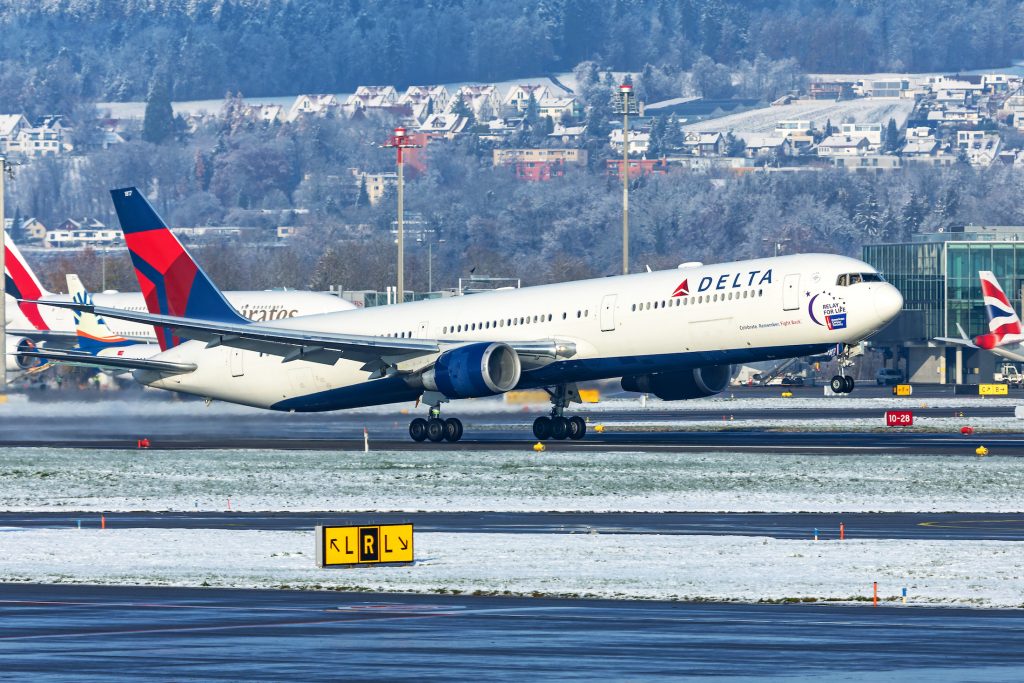
A Delta 767-400 (Photo: AirlineGeeks | William Derrickson)
The AD, published by the FAA on Tuesday, requires repetitive detailed inspections of the SATCOM high gain antenna adapter plate for corrosion damage on Boeing 767-200, 767-300, 767-300F and 767-400ER airplanes.
The FAA stated it had received a report showing corrosion damage was found on a 767’s high gain antenna adapter plate during a heavy maintenance check by an unnamed operator.
The most severe corrosion was found at the nutplates around the edges of the adapter plate, which are used to fasten the antenna assembly to the adapter plate.
“Corrosion was also found at the adapter plate mounting lugs and the area around the bonding strap that are connected between the adapter plate and the airplane skin,” the AD stated. “Contributing factors that lead to an increase in risk of a parts departing airplane (PDA) event include a lack of maintenance inspections and repair procedures, and a lack of nutplate or nutplate recess corrosion protection.”
The FAA stated that a PDA event involving the parts affected could damage the surfaces of primary flight control flaps and rudders, which could jeopardize safety while in flight and during landing.
The FAA estimated that this AD would affect 597 airplanes registered in the U.S., costing U.S. operators $558,195 per inspection cycle.
If adapter plate repairs are needed, the FAA estimated this would cost $425 in labor. The agency estimated that replacing the adapter plate would cost $18,170.
These instructions came the same day that the FAA issued another AD mandating inspections for landing gear on Boeing 717 aircraft to address a 2023 gear collapse incident.
AirlineGeeks.com was founded in February 2013 as a one-person blog in Washington D.C. Since then, we’ve grown to have 25+ active team members scattered across the globe. We are all here for the same reason: we love deep-diving into the fascinating realm of the airline industry.
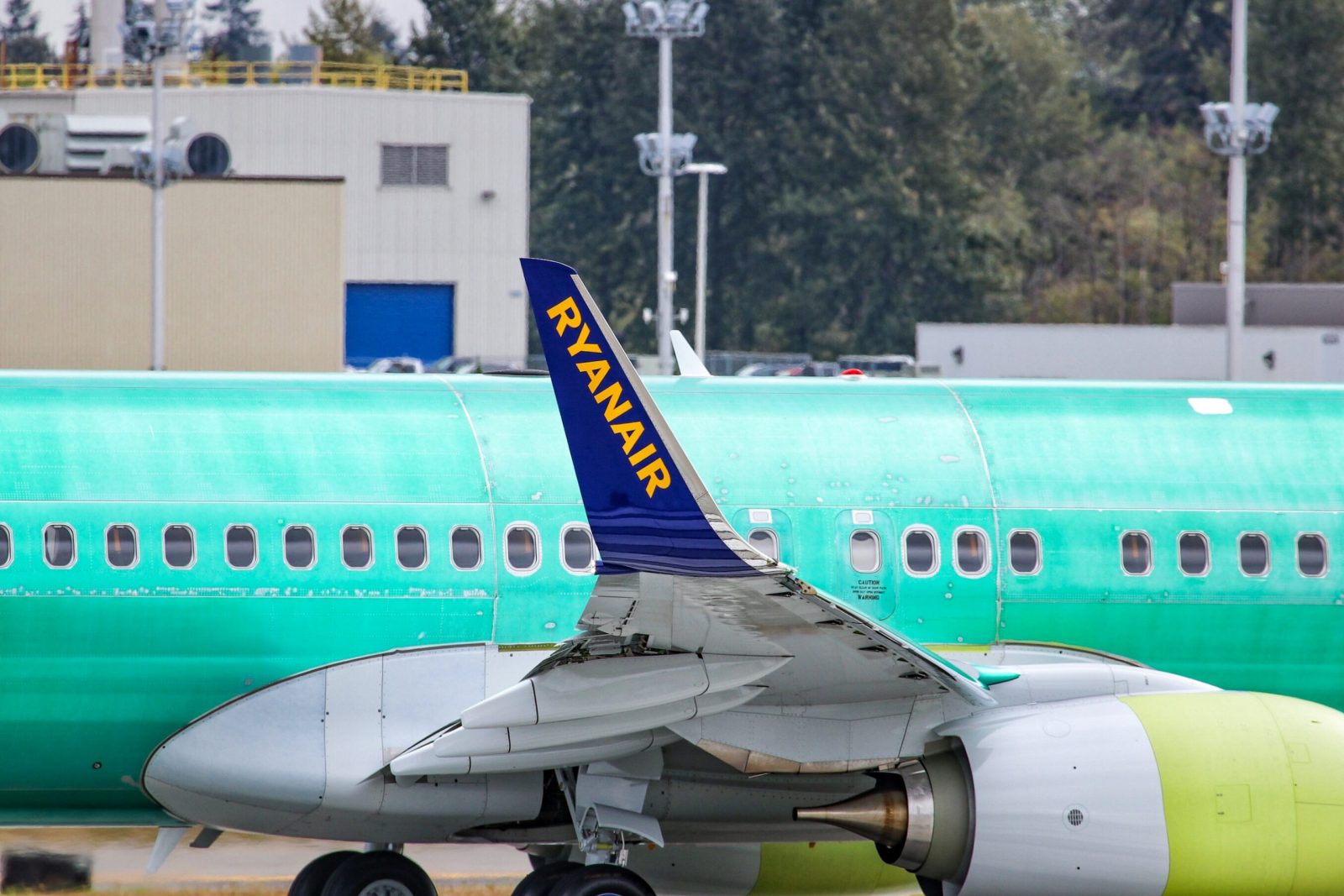
A Ryanair 737-800 at Paine Field.
(Photo: AirlineGeeks | Katie Zera)
Ryanair CEO Michael O’Leary has cautioned that the low-cost airline could scrap its significant aircraft orders with Boeing if the United States imposes tariffs that substantially increase the cost of the planes, according to Reuters. The warning comes as the Irish carrier, Europe’s largest by passenger numbers, also indicated it would consider purchasing aircraft from Chinese manufacturer COMAC under the right financial conditions — a prospect that has already drawn sharp criticism from a U.S. lawmaker citing national security risks.
The airline is currently slated to receive 29 more Boeing 737 MAX aircraft by March 2026. The airline also has 150 firm orders and 150 options for the yet-to-be-certified 737 MAX 10 model, with initial deliveries expected in 2027.
In a letter to U.S. Representative Raja Krishnamoorthi, O’Leary expressed his deep concerns about potential tariffs, stating that Ryanair would be forced to reconsider its commitments to Boeing and potentially seek alternative suppliers if the levies make Boeing’s aircraft economically unviable.
He pointed out that Ryanair’s contracts with Boeing, similar to those with European rival Airbus, do not typically account for the imposition of tariffs, meaning any such costs would likely be passed on directly to the airline.
O’Leary Eyes Chinese Alternative Amid Security Concerns
Amid U.S. national security concerns surrounding Chinese-made aircraft, O’Leary acknowledged that Ryanair has not engaged in discussions with COMAC since 2011. However, he stated the airline would be open to considering purchases from the Chinese state-backed planemaker if they offered a compelling cost advantage of 10-20% compared to Airbus.
While Airbus currently has its production booked for the remainder of the decade, and COMAC’s C919 aircraft does not yet meet Ryanair’s capacity requirements or have European certification, O’Leary’s comments signal a potential shift in the airline’s procurement strategy amid growing uncertainties.
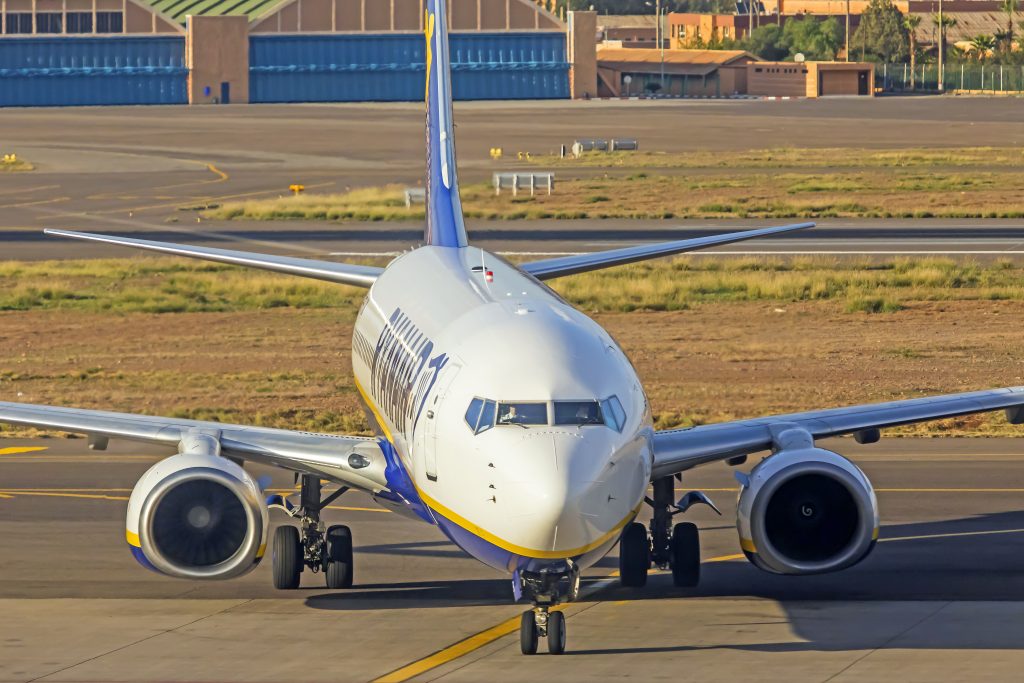
A Ryanair 737-800 at Marrakesh Menara Airport in Morocco. (Photo: AirlineGeeks | William Derrickson)
This openness to Chinese aircraft has already sparked pushback. U.S. Representative Raja Krishnamoorthi has voiced serious concerns over Ryanair’s potential interest in COMAC, citing significant national security risks and the company’s alleged ties to the Chinese military. He argued strongly against U.S. and European airlines considering such purchases. The Chinese government has repeatedly denied these allegations.
Interestingly, Ryanair has recently noted an improvement in the quality of Boeing’s aircraft deliveries, a positive sign after previous production issues that contributed to delivery delays. These delays have already impacted Ryanair’s operational forecasts, forcing the airline to reduce its passenger number projections for the next fiscal year to 206 million, down from an initial 215 million.
Tolga is a dedicated aviation enthusiast with years of experience in the industry. From an early age, his fascination with aviation went beyond a mere passion for travel, evolving into a deliberate exploration of the complex mechanics and engineering behind aircraft. As a writer, he aims to share insights , providing readers with a view into the complex inner workings of the aviation industry.
Ex-Spirit CEO Received Over $4 Million in 2024 Bonuses
Last year, the carrier reported a net loss of roughly $1.2 billion. This loss was significantly higher than the $448 million reported in 2023.
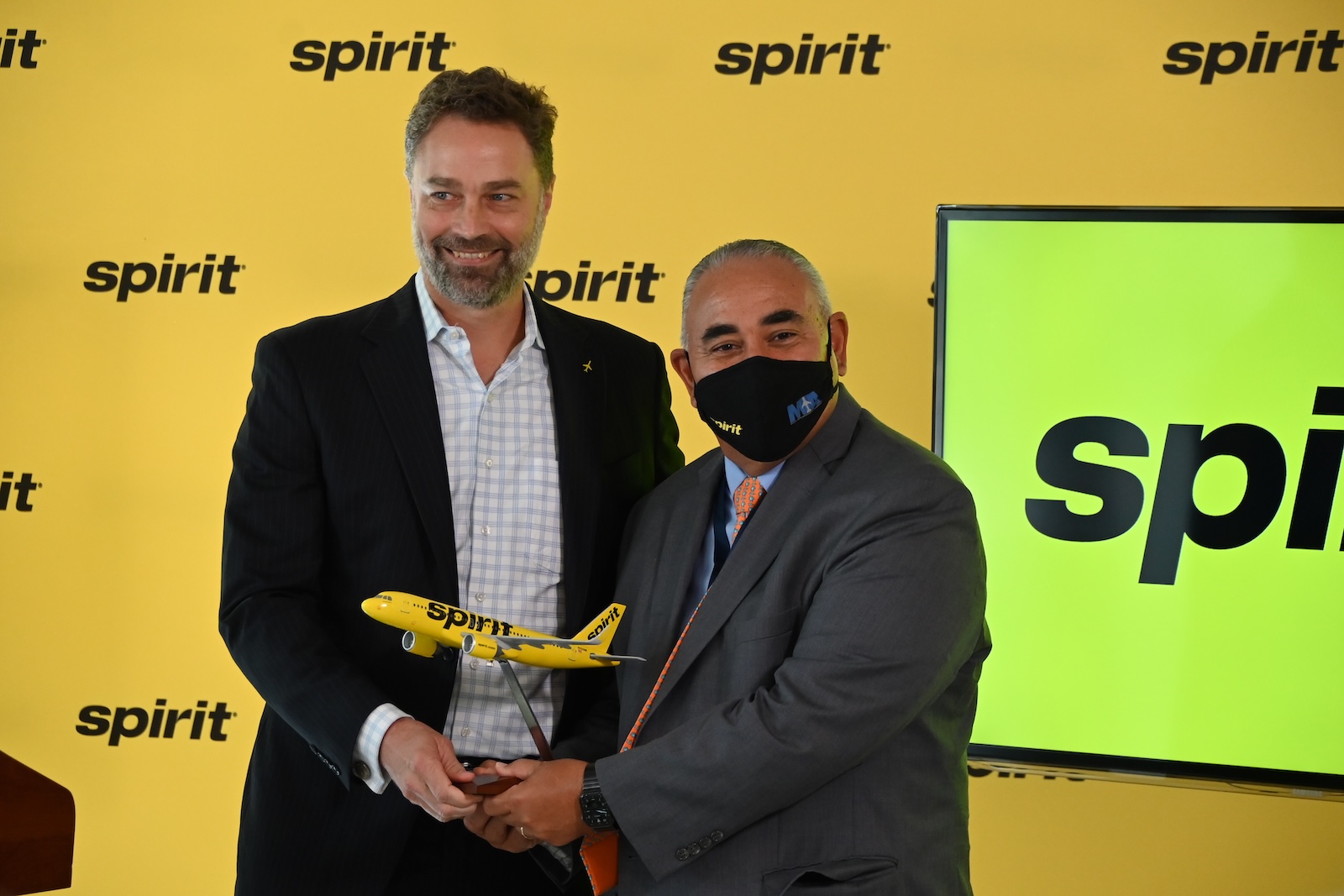
Gift exchange tradition between Ted Christie, President & CEO of Spirit Airlines (left), and Jimmy Morales, Chief Operations Officer for Miami-Dade County (Photo: Miami-Dade County)
According to a recent filing with the Securities and Exchange Commission, Ted Christie, the former president and chief executive officer of Spirit, received $8,169,764 in total compensation in 2024.
Spirit implemented adjustments to the base salaries of its executives, including Christie, with these changes taking effect on July 1, to ensure competitive positioning, the ultra-low-cost carrier said.
His base salary was increased from $750,000 in 2023 to $950,000 in 2024, a nearly 27% raise.
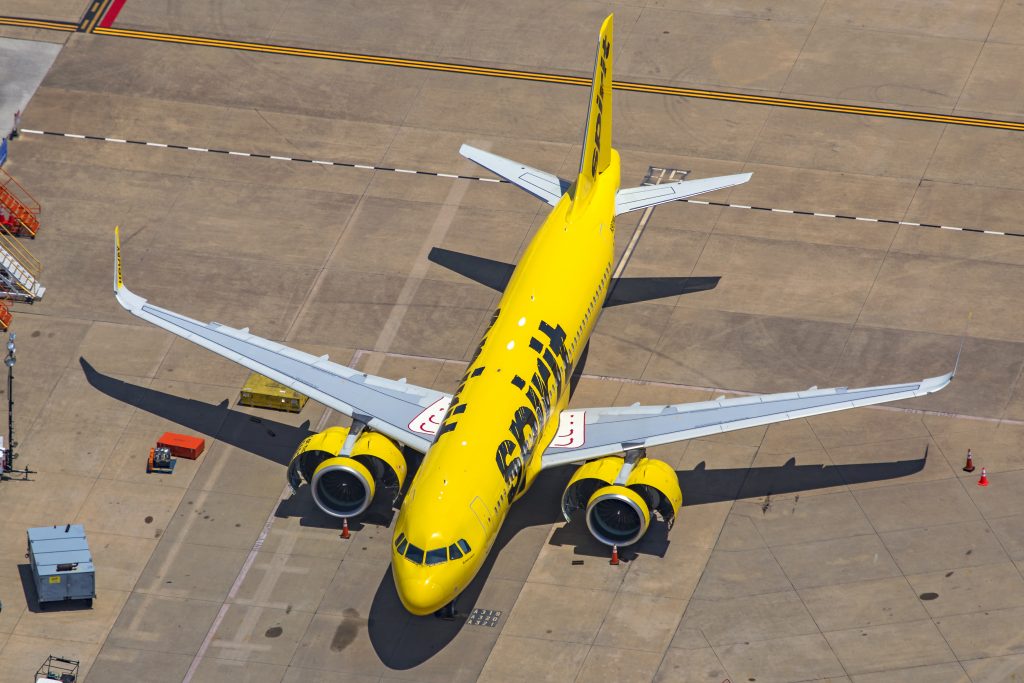
A Spirit A320neo (Photo: AirlineGeeks | William Derrickson)
In response to the challenges posed by the bankruptcy proceedings, the airline implemented a retention program. With it, Christie received $3,800,134 as a one-time cash retention award.
This award, the airline stated, was intended to “promote stability in our management team during the period of uncertainty associated with the Restructuring.”
The median total employee compensation at the carrier was $80,071 in 2024, meaning Christie made 102 times more. In 2023, Christie’s total compensation was $6,601,404, representing a nearly 24% year-over-year increase.
As part of his separation agreement, Christie will receive over $1.5 million as part of a terminal agreement since he was terminated without cause, the filing states.
Ryan founded AirlineGeeks.com in February 2013 and has spent more than a decade covering the airline business. His work has been featured by CNN, WJLA, CNET, and Business Insider. His aviation experience spans airport operations, Part 135 regulatory compliance, and airline crew workforce planning, along with time behind the yoke of a Cessna 172 and interviews with airline executives. Ryan now serves as Group President of Firecrown Media’s Aviation Group. He holds a B.S. in Air Transportation Management and an MBA from Arizona State University and teaches Airline Management at Embry-Riddle Aeronautical University.
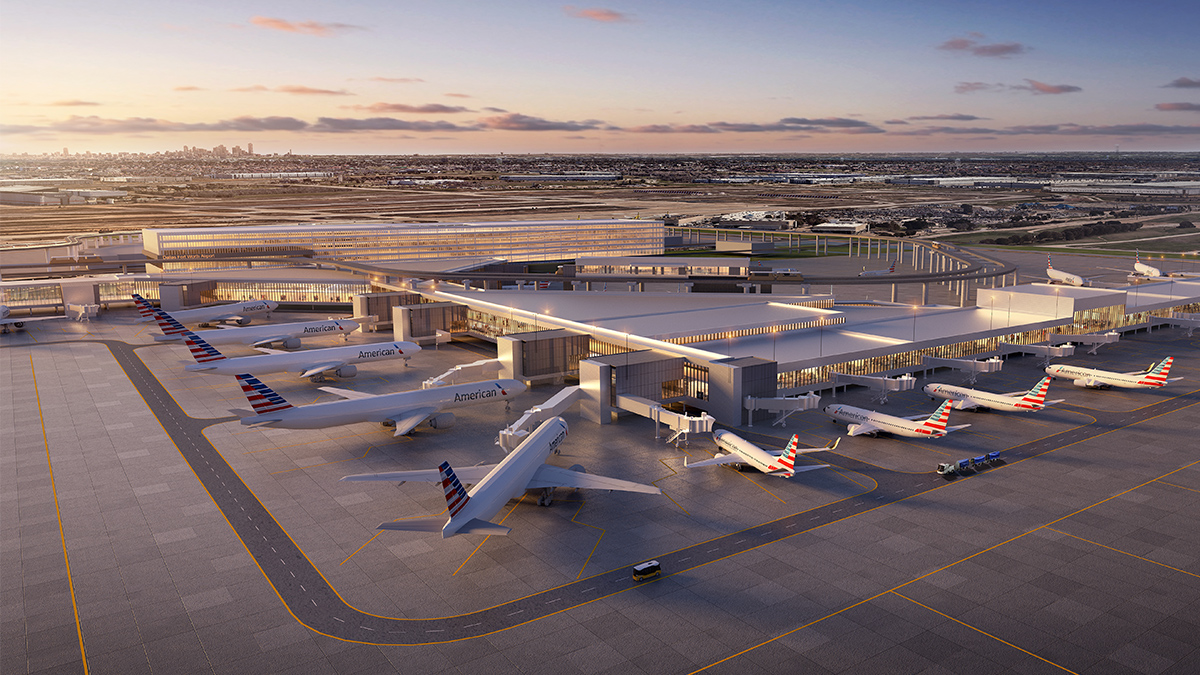
Renderings of Terminal F (Photo: American Airlines)
Dallas Fort Worth International Airport and American shared Thursday an expansion of Terminal F, marking the most significant investment at DFW since Terminal D opened two decades ago. The enhanced plan includes a $4 billion investment, doubling the originally planned gate capacity and accelerating the construction timeline.
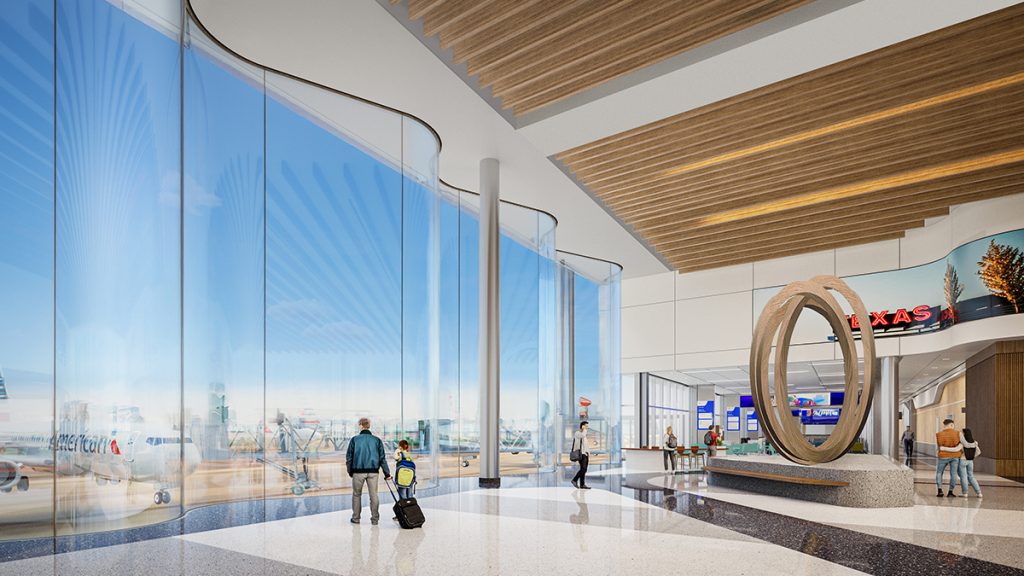
This new plan includes 31 gates, up from the original 15. American plans to occupy all gates at the facility, which will include expanded international operations capabilities, increased lounge and premium spaces, and a modernized lobby check-in experience.
In addition, the updated design incorporates dedicated facilities for widebody aircraft, creating additional capacity for international flights. Terminal F’s design includes both a walking connection to Terminal D and a new Skylink station, providing passengers with multiple options for moving between terminals.
Terminal F at DFW rendering (Photo: American Airlines)
The first phase of Terminal F remains on track to open in 2027, with the enhanced features coming online in subsequent phases, the airport said in a news release.
Long-Term Commitment
The agreement extends American’s Use and Lease Agreement with DFW through 2043. This partnership builds on previous investments, including the $2.72 billion expansion of the Central Terminal Area and reimagining of Terminal C.
Ryan founded AirlineGeeks.com in February 2013 and has spent more than a decade covering the airline business. His work has been featured by CNN, WJLA, CNET, and Business Insider. His aviation experience spans airport operations, Part 135 regulatory compliance, and airline crew workforce planning, along with time behind the yoke of a Cessna 172 and interviews with airline executives. Ryan now serves as Group President of Firecrown Media’s Aviation Group. He holds a B.S. in Air Transportation Management and an MBA from Arizona State University and teaches Airline Management at Embry-Riddle Aeronautical University.