









Stories

Air Wisconsin Halts Scheduled Flights, Future Uncertain

After its contract with American ended this week, Air Wisconsin’s future remains up in the air. Its last batch of scheduled flights left Chicago Thursday.

Air Wisconsin CRJ-200
An Air Wisconsin CRJ-200 aircraft (Photo: Appleton International Airport)

After its contract with American Airlines ended this week, Air Wisconsin’s future remains up in the air. Its last batch of scheduled flights left Chicago O’Hare Thursday evening.

In January, American and Air Wisconsin announced that they would end their regional capacity agreement on April 3. The regional carrier had been operating American Eagle-branded flights since 2022 under a five-year contract.

Sixty CRJ-200s owned by Air Wisconsin were included in this deal. During its short tenure under the American Eagle banner, the carrier operated flights from American’s Chicago and Philadelphia hubs.

‘Strategic Shift’

In a January news release, Air Wisconsin President and CEO Robert Binns said the airline is making a “strategic shift.” The carrier’s focus will now shift to government-subsidized Essential Air Service flying and charter operations.

Air Wisconsin has already bid for a handful of Essential Air Service markets, including Burlington, Iowa, and Quincy, Illinois.

Despite support from the Air Line Pilots Association, the city of Burlington ultimately opted for Contour Airlines’ proposal. The Department of Transportation will now award the contract.
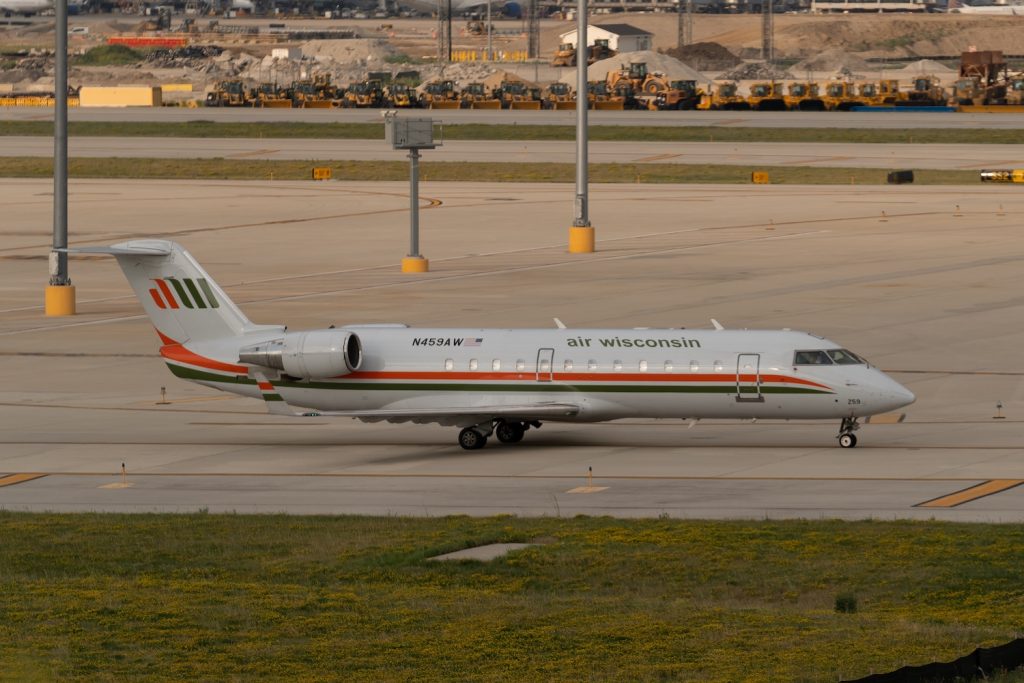
An Air Wisconsin CRJ-200 aircraft (Photo: Shutterstock | Nathan Klemstein)

Along the same lines, Quincy has also opted for Contour, which is a public charter operator and not a scheduled Part 121 carrier like Air Wisconsin. Air Wisconsin also proposed service to Watertown, South Dakota, but the DOT opted for service on SkyWest.

Had Air Wisconsin won these contracts, it would have received around $20 million in annual subsidies from the federal government.

Job Losses

A reduction in Air Wisconsin’s workforce is also on the horizon. Over 500 jobs could be cut, the airline told state regulators in February.

Roughly 513 employees may face layoffs, the airline said in the notice. This figure includes 219 management employees and 294 who are union-represented.

“At this point, the company is unable to assess the extent of those reductions,” said Tina Vos, vice president of human resources for Air Wisconsin in the termination notice viewed by The Advance-Titan. “The duration of the reduction is unknown and will be dependent on alternative flying opportunities.”

According to Planespotters.net, the carrier maintains a fleet of 62 CRJ-200 aircraft. With Air Wisconsin leaving American’s regional network, so does the CRJ-200.

Later this year, American plans to operate only two-class aircraft from its Chicago O’Hare hub. Its 50-seat Embraer E145s will continue to service its Charlotte, North Carolina, and Philadelphia hubs.

Ryan Ewing

Ryan founded AirlineGeeks.com in February 2013 and has spent more than a decade covering the airline business. His work has been featured by CNN, WJLA, CNET, and Business Insider. His aviation experience spans airport operations, Part 135 regulatory compliance, and airline crew workforce planning, along with time behind the yoke of a Cessna 172 and interviews with airline executives. Ryan now serves as Group President of Firecrown Media’s Aviation Group. He holds a B.S. in Air Transportation Management and an MBA from Arizona State University and teaches Airline Management at Embry-Riddle Aeronautical University.

A Look at Atlanta’s Unique Concourse Widening Project

How the Hartsfield-Jackson Atlanta International Airport is keeping airplanes flying amid $1.4 billion in terminal renovations.

Atlanta Airport construction
Construction at Atlanta airport (Photo: Corgan)

The busiest airport in the world is undergoing renovations with a unique construction method designed to keep airplanes – and travelers – moving.

In 2024, the Hartsfield-Jackson Atlanta International Airport had 62.7 million seats available, according to aviation analysts at OAG.

The airport plays a vital role to carriers like Delta, which plans to offer 1.1 million weekly seats from Atlanta for customers this summer.

Delta operates at all seven concourses in Atlanta, and it occupies 36 of the 40 gates at Concourse D. The airline had a clear interest in Concourse D’s long-needed renovation project – namely to keep flights moving while it happened.

So when the airport received $1.4 billion to begin widening Concourse D, architecture and design company Corgan was hired in partnership with Atlanta-based architecture firm Goode Van Slyke to help get the project done.

Most importantly to stakeholders, the concourse had to remain operational during renovations.

Creating a Solution

That would prove to be easier said than done.

Concourse D, built in the 1980s for small regional aircraft, was the narrowest of all ATL’s concourses, and Corgan was hired to expand the building size by nearly 60%.

At the behest of ATL’s Airport General Manager Balram Bheodari, and after gathering the input of carriers operating at the concourse, Corgan opted for a unique expansion method: modular construction.

This method, which would keep the airport fully operational while the concourse size was increased,  had only been done at one other airport by another architectural company. While the option was more expensive to perform, the cost-benefit of keeping flights going for operators was worth it.

Modular construction allowed for Corgan to begin building giant modular sections near the airport grounds and move them as “building blocks” into new, expanded frames around the concourse.

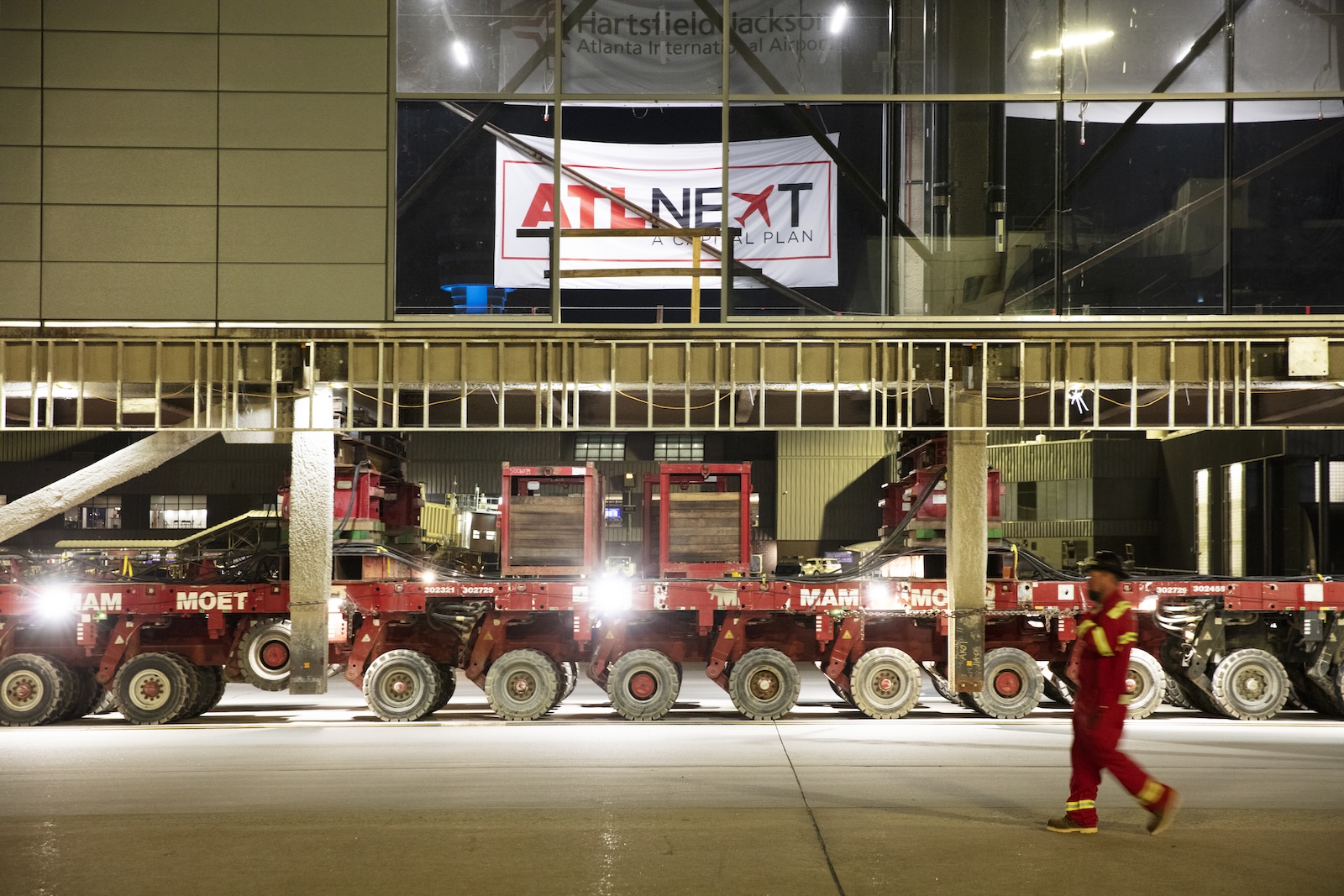
Corgan used high-tech equipment and trailers called Self-Propelled Modular Transporters (SPMTs) to transport these 700-ton modular units after they were built. These moves have been carefully performed overnight while the ramp area is closed.

Construction started at the end of 2023. With a total of 19 modules and interior fit-outs planned, Corgan is aiming to complete the project by summer 2029.

Gopi Swaminathan, associate principal and project manager at Corgan, told AirlineGeeks in a virtual interview that this project has required a high degree of finesse due to the airport still operating.

“Modular construction is so much easier if they give us the whole conquest where we just go demo it, then we’ll put [the module units in],” Swaminathan said. “But the story with Atlanta is [that] keeping the gates live is the most important thing compared to what other airports are doing.”

“I don’t think DFW [the other airport that has opted for modular construction] had that kind of criteria in their program,” he continued. “… This has a lot more complexity, especially dealing with a building that is 45 years old.”

In January 2025, five 100×100 feet modules were installed at ATL, marking a major step forward for the project. Corgan stated on its website that once the project is completed, approximately 21,000 square feet of additional boarding space will be available in Concourse D.

AirlineGeeks.com Staff

AirlineGeeks.com was founded in February 2013 as a one-person blog in Washington D.C. Since then, we’ve grown to have 25+ active team members scattered across the globe. We are all here for the same reason: we love deep-diving into the fascinating realm of the airline industry.

IATA Launches SAF Registry

IATA’s SAF Registry is now live, providing a global system to track and verify sustainable aviation fuel transactions with more transparency and accessibility.

SAF-powered engine
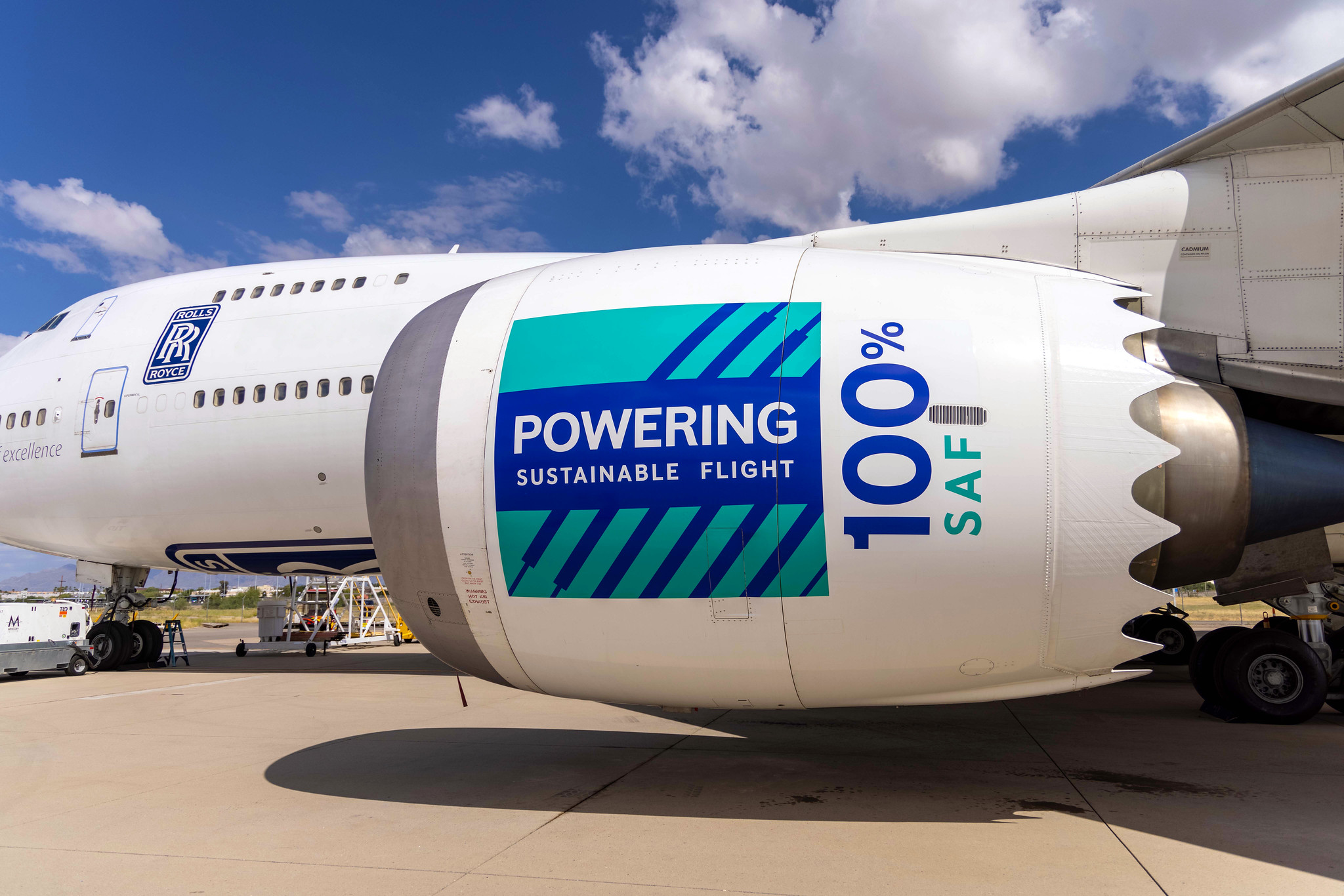
Rolls-Royce unveils a 100% SAF engine. [Photo - Rolls-Royce]

The global aviation industry just got a major boost in its push toward sustainability. The International Air Transport Association (IATA) has launched a new Sustainable Aviation Fuel (SAF) Registry, a system designed to track and verify SAF transactions worldwide. Now managed by the Civil Aviation Decarbonization Organization (CADO), the registry aims to create a transparent and reliable marketplace for SAF, helping airlines and corporate customers account for their emissions reductions.

Ensuring Transparency in SAF Transactions

With aviation responsible for about 2-3% of global carbon emissions, the industry is under increasing pressure to cut its environmental impact. SAF — fuel made from renewable sources like used cooking oil or agricultural waste — has been touted as a key solution. But there’s a problem: supply is extremely limited, and it’s often difficult to track who is using SAF and how much of a difference it’s actually making.

That’s where the SAF Registry comes in, according to IATA. The system is designed to ensure that every gallon of SAF is properly recorded, eliminating concerns about double counting and allowing airlines to claim their SAF investments toward emissions reductions.

“Aviation’s decarbonization is a team effort,” said Marie Owens Thomsen, IATA’s senior vice president of sustainability and chief economist. “In releasing the SAF Registry to CADO for launch, we have put in place a critical platform for the benefit of all stakeholders. It ensures that all airlines in the world have access to SAF and that their SAF purchases can be claimed against any climate-related obligations in this domain.”

One of the biggest barriers to SAF adoption has been its availability. Right now, production is concentrated in just a few locations, making it logistically difficult—and expensive—for many airlines to incorporate SAF into their operations. The registry could help solve that problem by connecting fuel producers with airlines no matter where they are, making it easier for the industry to scale up SAF usage.

Beyond airlines, the registry is also designed to involve corporate customers. Large businesses that rely on air travel for their operations have been looking for ways to offset their emissions, and the registry gives them a way to directly invest in SAF. By purchasing SAF credits, companies can contribute to aviation’s decarbonization while also meeting their own sustainability goals.

CADO, the organization now responsible for maintaining and operating the registry, was founded in March and is based in Montreal. While IATA played a key role in creating the system, the goal is for the registry to operate independently, with membership open to international organizations and companies across the SAF supply chain.

Already, more than 30 companies—including airlines and aerospace firms—have started the onboarding process. Participation in the registry is free until April 2027, at which point it will switch to a cost-recovery model.

Despite the enthusiasm around the registry, industry leaders acknowledge that this is just one piece of a much larger puzzle. SAF currently accounts for less than 1% of total aviation fuel use, and without significant policy support, scaling up production will remain a challenge.

Tolga Karadeniz

Tolga is a dedicated aviation enthusiast with years of experience in the industry. From an early age, his fascination with aviation went beyond a mere passion for travel, evolving into a deliberate exploration of the complex mechanics and engineering behind aircraft. As a writer, he aims to share insights , providing readers with a view into the complex inner workings of the aviation industry.

NTSB Warns of Boeing Evacuation Slide Issues

The National Transportation Safety Board has issued new safety recommendations to Boeing and the Federal Aviation Administration regarding evacuation slides.

Damaged FedEx 757
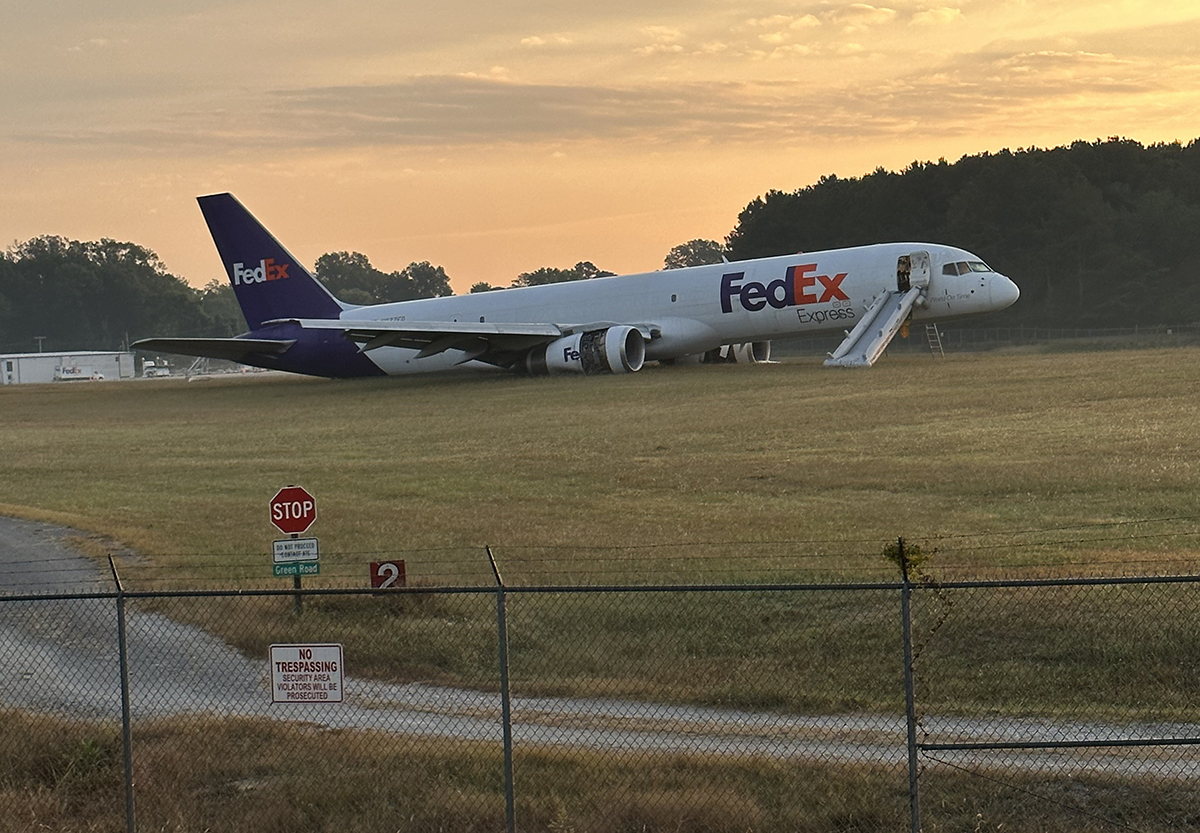
The damaged Fedex 757 (Photo: AirlineGeeks)

The National Transportation Safety Board has issued new safety recommendations to Boeing and the Federal Aviation Administration regarding evacuation slides on certain aircraft types.

These recommendations stem from an ongoing investigation into an emergency landing, involving a FedEx Boeing 757-200 in Chattanooga, Tennessee.

On Oct. 4, 2023, FedEx flight 1376 experienced a hydraulic system failure shortly after takeoff from Chattanooga Metropolitan Airport. The flight crew attempted an emergency gear-up landing, during which the aircraft sustained substantial damage.

When evacuating, the crew encountered issues with both the left (L1) and right (R1) doors. The L1 door would not fully open due to an incorrectly routed deployment strap, while the R1 door was difficult to open because its slide pack jammed.

The NTSB’s investigation revealed that the R1 door’s bannis latch, which releases the slide pack, did not conform to required modifications specified in FAA Airworthiness Directive (AD) 86-09-09. This AD mandated changes to prevent slide packs from jamming doorways during emergencies.

The aircraft’s R1 bannis latch had only one link instead of the required three and lacked other necessary hardware, investigators stated.

Noncompliance

Following this incident, FedEx inspected its entire Boeing 757 fleet and found that about 24% of doors were not compliant with either AD 86-09-09 or a subsequent directive, AD 2001-15-01. These findings prompted Boeing to issue a multioperator message alerting other airlines to the potential issue.

The NTSB’s review of Boeing and FedEx maintenance manuals found inconsistent depictions of the correct bannis latch configuration, which could lead to confusion among maintenance personnel and the potential installation of nonconforming components.

Based on these findings, the NTSB has issued several recommendations, including:

  • Boeing should issue a service bulletin advising 757 operators to inspect and, if necessary, modify or replace bannis latches to ensure correct configuration.
  • The FAA should require all Boeing 757 operators to conduct these inspections and modifications.
  • Similar recommendations were made for Boeing 737 models that use the same bannis latch design, including newer variants such as the -700 and -800.
  • Boeing should review and revise maintenance manuals to ensure consistent and accurate depiction of the correct bannis latch assembly for affected aircraft models.
  • The FAA should require operators to update their maintenance manuals accordingly.

The Chattanooga gear-up landing remains under investigation. While the aircraft suffered damages, no injuries were reported following the accident.

Ryan Ewing

Ryan founded AirlineGeeks.com in February 2013 and has spent more than a decade covering the airline business. His work has been featured by CNN, WJLA, CNET, and Business Insider. His aviation experience spans airport operations, Part 135 regulatory compliance, and airline crew workforce planning, along with time behind the yoke of a Cessna 172 and interviews with airline executives. Ryan now serves as Group President of Firecrown Media’s Aviation Group. He holds a B.S. in Air Transportation Management and an MBA from Arizona State University and teaches Airline Management at Embry-Riddle Aeronautical University.

Secret Service Denies Involvement in False TCAS Alerts

Last week, Sen. Ted Cruz (R-Texas) blamed these March 1 alerts on the “improper” testing of counter-drone technology.

Aircraft at DCA
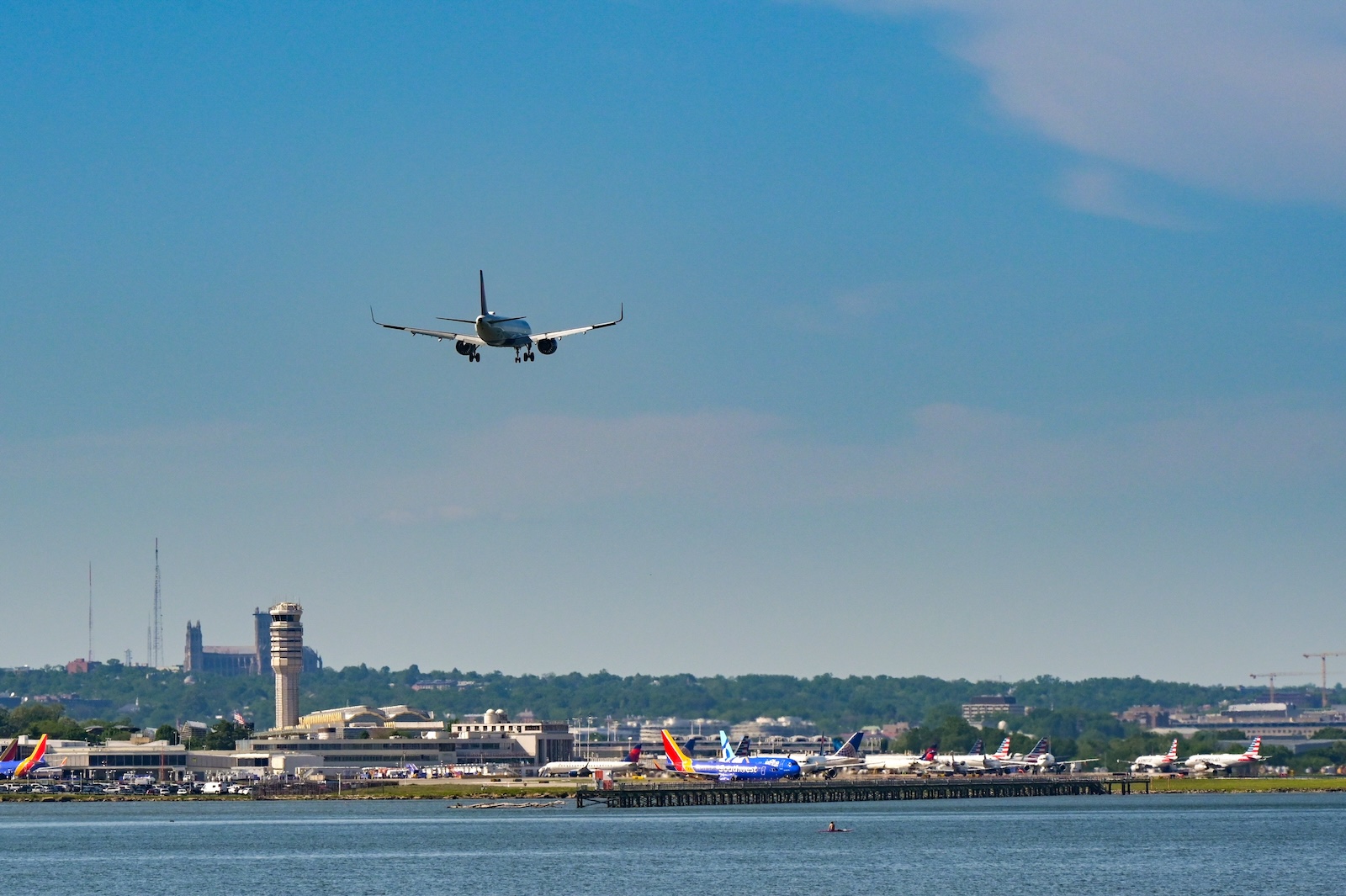
Aircraft landing at Reagan National Airport (Photo: Shutterstock | Ceri Breeze)

A slew of false Traffic Collision Avoidance System (TCAS) alerts near Reagan National Airport (KDCA) in Washington, D.C., last month has garnered attention from lawmakers. Last week, Sen. Ted Cruz (R-Texas) blamed these March 1 alerts on the “improper” testing of counter-drone technology by the Navy and Secret Service.

Several flights reported these alerts while on the River Visual for Runway 19. One Republic Airways crew noted an onboard alert at roughly 1,200 feet, adding that “there was something diving straight onto us,” per air traffic control audio recordings. Another PSA crew said it received two traffic advisories, warning of a non-imminent collision.

These alerts prompted pilots to maneuver aircraft away from the reported traffic conflict, which was never there. The Federal Aviation Administration is investigating.

Secret Service Not Involved

These phantom alerts came just over a month after January’s deadly midair collision between a CRJ-700 and Black Hawk helicopter at the D.C. airport. All 67 individuals on both aircraft were killed.

“ I think we were all alarmed that just a few weeks after the tragedy, commercial pilots were being told they were at imminent risk of a deadly midair collision,” Cruz said during a recent Senate hearing. “It’s now come to my attention that these warnings were caused by the Secret Service and the U.S. Navy and improperly testing counter-drone technology at DCA.”

But the Secret Service says it wasn’t involved, the agency told FLYING in a statement last week.

“The U.S. Secret Service did not conduct any drone system testing in the National Capital Region on March 1, 2025. The agency has been coordinating with the FAA to ensure our systems do not interfere with FAA frequencies or commercial air traffic operations,” an agency spokesperson stated. “Additionally, the Secret Service respects the oversight conducted by Senator Cruz and has reached out to his office to offer a briefing on our airspace operations.”

The U.S. Navy did not respond to FLYING’s request for comment.

Last week, a Delta Air Lines Airbus A319 and Air Force T-38 jets were involved in another close call near the airport. While departing, the A319 crew received a Resolution Advisory (RA) for the T-38s, which were performing a flyby at Arlington Cemetery.

“Was there an actual aircraft about 500 feet below us?” the Delta crew asked air traffic control after responding to the RA.

Editor’s Note: This story first appeared on FlyingMag.com. 

Ryan Ewing

Ryan founded AirlineGeeks.com in February 2013 and has spent more than a decade covering the airline business. His work has been featured by CNN, WJLA, CNET, and Business Insider. His aviation experience spans airport operations, Part 135 regulatory compliance, and airline crew workforce planning, along with time behind the yoke of a Cessna 172 and interviews with airline executives. Ryan now serves as Group President of Firecrown Media’s Aviation Group. He holds a B.S. in Air Transportation Management and an MBA from Arizona State University and teaches Airline Management at Embry-Riddle Aeronautical University.

Indian Passengers Stranded in Turkey After Diversion

Hundreds of Indian passengers face prolonged delays at a Turkish airport after their London-Mumbai flight makes an emergency landing.

Virgin Atlantic 787
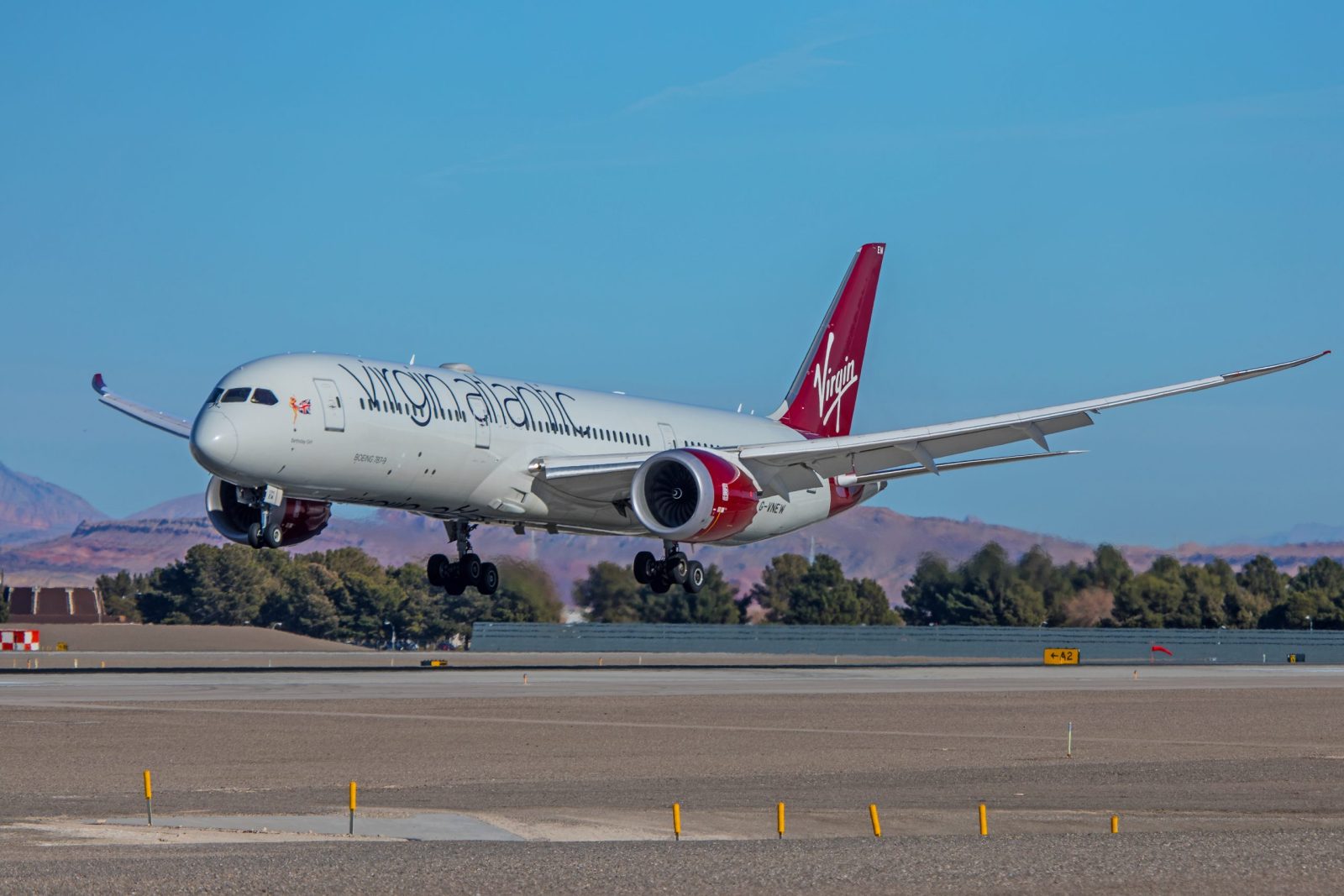
A Virgin Atlantic Boeing 787 Dreamliner seconds from touchdown in Las Vegas. (Photo: AirlineGeeks | William Derrickson)

Over 200 Indian passengers remain stranded at Diyarbakir Airport in southeastern Turkey after their Virgin Atlantic flight, VS 358, from London to Mumbai made an emergency landing due to a medical incident, officials and passengers confirmed.

The Boeing 787-9 Dreamliner, carrying 225 passengers, diverted to Diyarbakir Airport (DIY) late Wednesday after a passenger experienced a medical emergency mid-flight, according to Virgin Atlantic and airport officials. The passenger was subsequently treated by local medical personnel.

Passengers Suffer Due to Airport Infrastructure Shortcomings

However, as a predominantly domestic airport with shared civilian and military operations, it lacks the necessary ground handling capabilities and passenger facilities to support a widebody aircraft and its large passenger volume for a prolonged period.

Passengers reported being kept in the airport’s limited transit area for over 16 hours, with minimal updates from the airline. Social media posts from passengers and their families highlighted the worsening conditions.

The airline attributed the delay to the logistical challenges of arranging a replacement aircraft and the limited resources at Diyarbakir Airport. Passengers have expressed frustration over the lack of clear communication and the absence of basic amenities, including adequate food and rest facilities.

Virgin Atlantic, in a response on its X (formerly Twitter) account, stated that due to Diyarbakır Airport being outside its operational hours, customers remained in the international departure lounge overnight. The airline added that refreshments, including water, were provided, and they sincerely apologized for any inconvenience caused.

The Indian Embassy in Ankara confirmed they were aware of the situation and were in contact with both the airline and Turkish authorities to provide assistance to the stranded passengers. “We are monitoring the situation closely and are providing necessary consular support,” an embassy spokesperson said.

According to reports from Diyarbakir Airport officials, they are assisting the passengers to the best of their ability, given the airport’s limited capacity for international diversions. A local airport official reportedly stated, “We are providing what facilities we have available, but this is not an airport designed for this scale of international transit.”

As of Thursday afternoon, Virgin Atlantic was reportedly arranging for a replacement aircraft to transport the passengers to Mumbai. The exact departure time remained uncertain, and passenger frustrations continued to mount.

Tolga Karadeniz

Tolga is a dedicated aviation enthusiast with years of experience in the industry. From an early age, his fascination with aviation went beyond a mere passion for travel, evolving into a deliberate exploration of the complex mechanics and engineering behind aircraft. As a writer, he aims to share insights , providing readers with a view into the complex inner workings of the aviation industry.

Heathrow CEO Grilled by U.K. Transport Committee

Heathow's boss and other top exectives have been called to explain the power outage that shut down Europe's busiest airport for almost a day.

Boeing 777 at London Heathrow
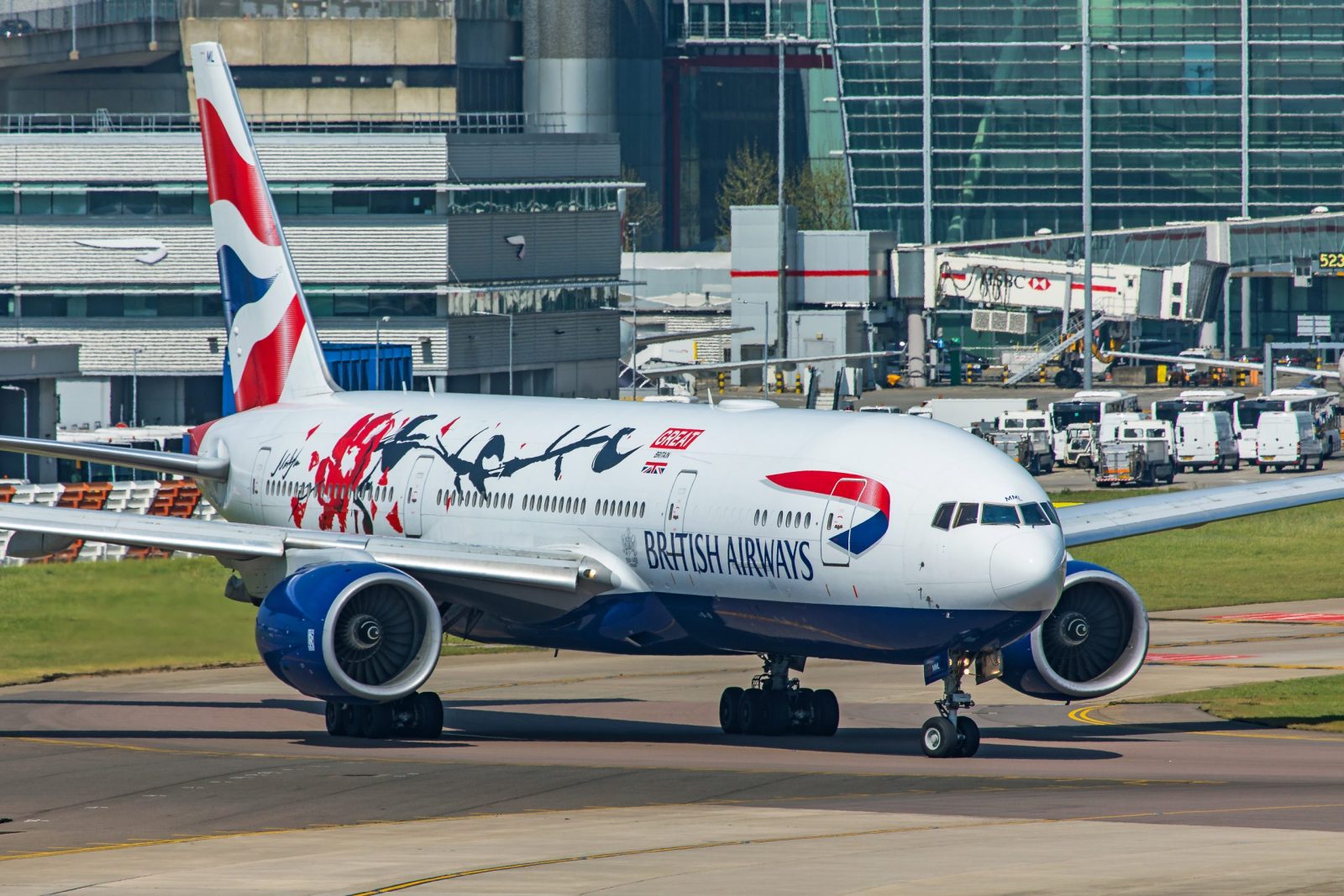
A British Airways Boeing 777 at London Heathrow. (Photo: AirlineGeeks | William Derrickson)

The CEO of London Heathrow Airport, Thomas Woldbye, together with representatives from the National Grid and power provider SSE, were called to appear before the Transport Select Committee to explain the events that led to the full closure of one of the busiest airports in Europe for the entire day on Friday, March 21.

During the night between March 20 and March 21 a fire broke out in an electrical substation in Hayes, north of Heathrow, critically affecting the power supply to the airport and therefore leading to the extraordinary decision to completely shut down the airport.

Eventually, a few long-haul flights were operated on Friday evening, and traffic was gradually brought back to normal on Saturday, but approximately 300,000 passengers in the United Kingdom and abroad were affected by the incident, which effectively grounded resident airline British Airways, one of the largest carriers in the world.

The British newspaper The Independent estimated the total cost to airlines at approximately £100m ($131m) in lost revenue and passenger care expenses.

Committee Had Already Expressed Concerns

The chief executive for the Heathrow Airline Operators’ Committee (HOAC), Nigel Wicking, was present at the hearing and was very critical towards Heathrow Airport’s management of the situation and the incident.

According to Mr. Wicking, during the weeks leading to the incident, thefts of cables and wires around the airport led to one of the runways losing its lighting, and this posed the issue of resilience for the airport. The concerns were relayed to the Team Heathrow director on March 15, six days before the fire, and both the CEO and the CCO of Heathrow Airport had been made aware of these concerns on March 19, two days before the fire, the BBC reports.

Woldbye stated that the extent of the outage prevented the airport from operating safely therefore, the closure was unavoidable. He called the situation “unprecedented” and, while offering his “deepest regrets” and his “sincerest apologies” to the passengers affected, defended the decision to shut down the airport and the length of the shutdown to protect the safety of everyone involved.

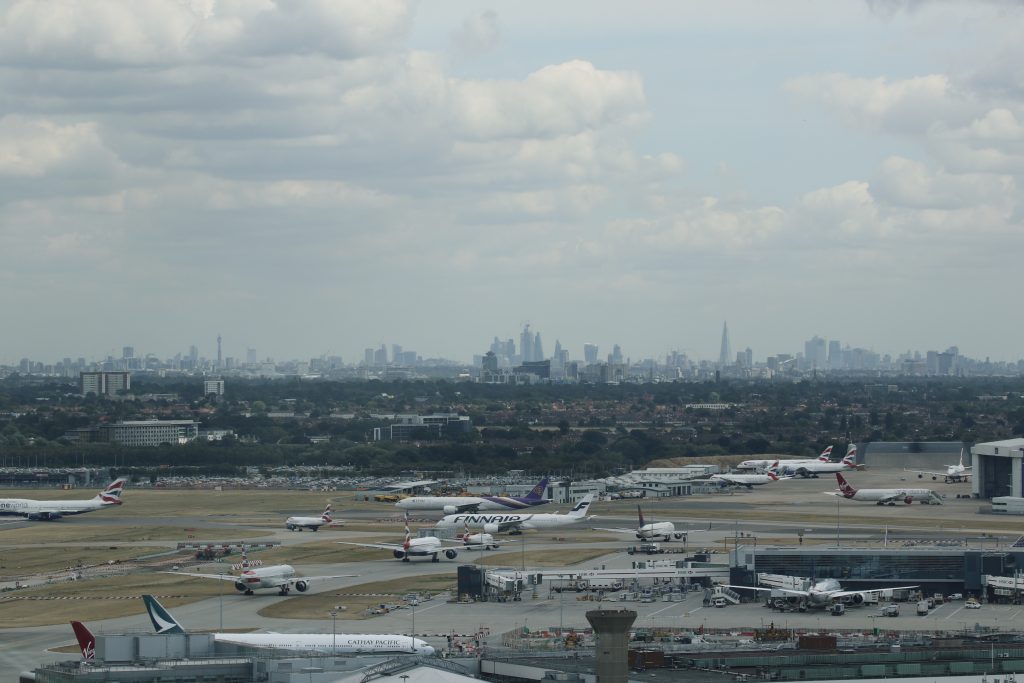
Aircraft lining up for departure out of London Heathrow Airport. (Photo: AirlineGeeks | James Dinsdale)

The construction of a full resilience system for Heathrow Airport that would allow the operations to continue even after such an incident is considered “very high,” Woldbye stated, and this would in turn increase charges and fees for the operating airlines that are already paying some of the highest airport fees in the world. But the HOAC is already expecting a resilient airport, considering the price tag attached to operating from it, and more accurate information on recovery time when a critical incident like this occurs.

Wicking questioned the need to maintain the full closure of the airport for almost the entire day of March 21: “In terms of Terminal 5, my understanding from both British Airways but also on the day, was that pretty much everything was fine to operate by mid-morning, by 10 o’clock,” the BBC reported.

Expansion Power Struggles

Heathrow Airport has been trying to obtain permission to expand with a third runway for the best part of three decades in order to keep up with increasing traffic demand. It is one of the most coveted destinations by airlines around the world, and it is currently at full capacity with two parallel independent runways.

According to Woldbye, expansion plans would require Heathrow to double its power needs, and the HOAC estimates the cost could be between £40bn and £60bn (between $52bn and $78bn), and this cost would be passed on to the airlines and eventually to passengers in terms of higher fees.

Vanni Gibertini

Vanni fell in love with commercial aviation during his undergraduate studies in Statistics at the University of Bologna, when he prepared his thesis on the effects of deregulation on the U.S. and European aviation markets. Then he pursued his passion further by obtaining a Master’s Degree in Air Transport Management at Cranfield University in the U.K. followed by holding several management positions at various start-up carriers in Europe (Jet2, SkyEurope, Silverjet). After moving to Canada, he was Business Development Manager for IATA for nine years before turning to his other passion: sports writing.

Reagan National Airport Sees Traffic Slump

The Ronald Reagan Washington National Airport has seen a substantial decrease in passengers following January’s midair collision in Washington, D.C.

Aircraft at Reagan National Airport
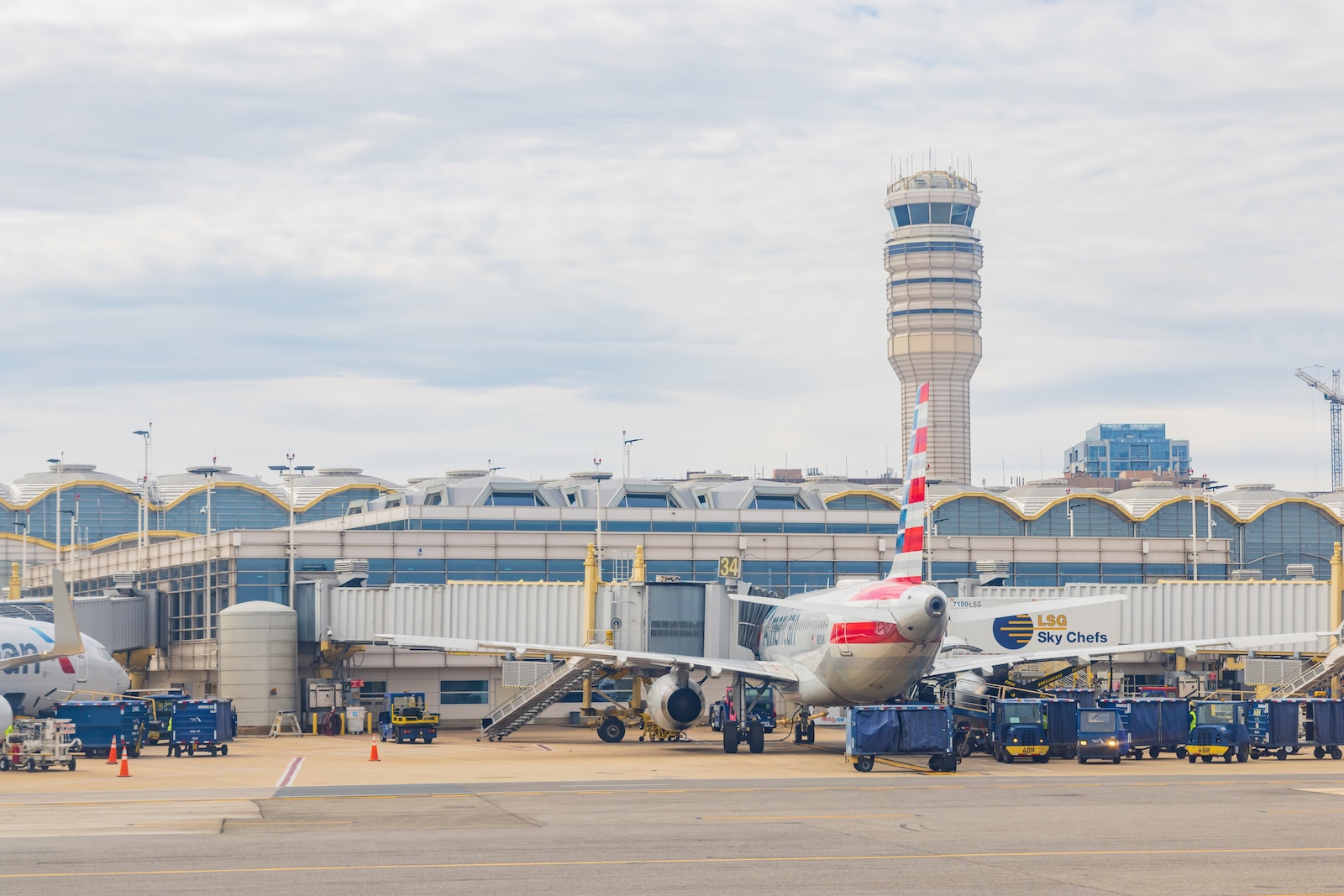
Aircraft at Reagan National Airport (Photo: Shutterstock | Kit Leong)

The Ronald Reagan Washington National Airport has seen a substantial decrease in passengers following January’s midair collision in Washington D.C.

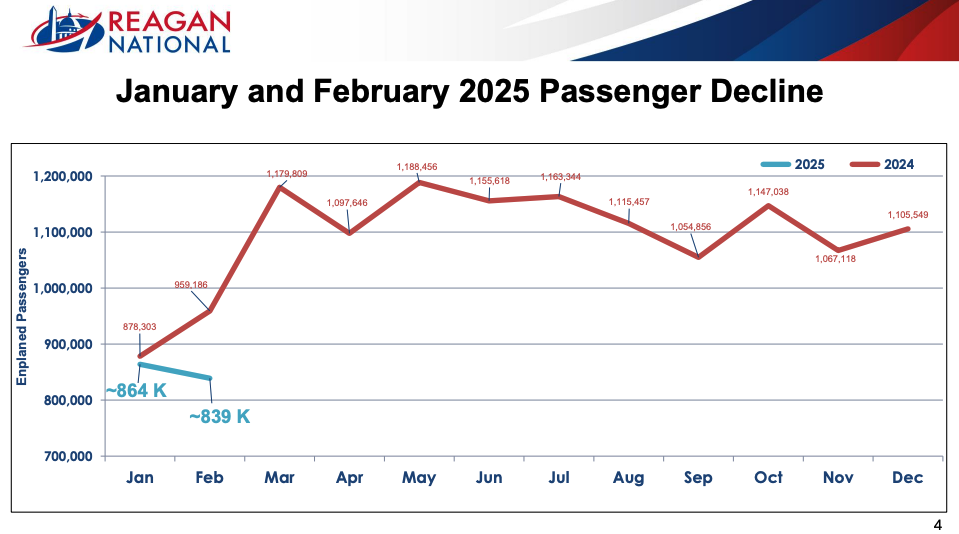
According to a recent report by the Metropolitan Washington Airports Authority (MWAA), the airport saw over 120,000 less enplaned passengers in February 2025 compared to the same month a year prior.

Aside from the 12% drop in passengers, February also saw a substantial decrease in on-time arriving flights from 88.7% last year to 58.5%. Arriving flight delays increased from 10.8% in February 2024 to 33.9% in February 2025.

Cancelled arriving flights also increased from 0.5% to 7.6% between the two years.

The report attributed this decline in travelers to the deadly midair collision between a PSA Airlines flight and a U.S. Army Black Hawk helicopter on Jan. 29. It also noted winter weather and economic challenges.

Decline in passengers at Reagan National
Decline in passengers at Reagan National (Photo: MWAA)

The Washington airport saw over 14 inches of snow in January and February, the report stated, leading to flight cancellations and delays. The weather brought on unplanned expenses totaling $1.65 million.

The report diagnosed “uncertain economic confidence” from the Middle East and Ukraine conflicts, and government downsizing in Washington, D.C. as other factors to the decline in travelers.

A graphic included in the report indicated that expenses per passenger are likely to increase as passenger numbers, non-airline revenue, and the customer experience suffer.

Operational Impact of Jan. 29 Collision

The report also gave a timeline of significant events from Jan. 29’s accident causing diversions, airfield and runway closures, to Feb. 11, when the remaining runways were reopened.

The crash caused several operational impacts for the D.C. airport. The Federal Aviation Administration capped the airport’s normal arrival rate of 32 flights per hour to 28 per hour one day after the incident.

On Jan. 31, the FAA mandated a pause on all flights at Reagan National whenever a helicopter was operating in close proximity. This order also restricted helicopter operations in the area to law enforcement, medical flights, and VIP transports.

On Feb. 6, the FAA dropped the airport’s arrival rate from 28 flights per hour to 26. The rate was later raised back to 28 when Runways 15/33 and 4/22 reopened on Feb. 11.

Flight rates were bumped up again to 30 flights per hour on Feb. 28.

FAA Ups Air Traffic Controller Support

In an emailed statement, the FAA said it is increasing support and oversight for air traffic controllers at Reagan National, and is evaluating the current arrival rates at the airport.

“To support the well-being of controllers, a Critical Incident Stress Management (CISM) team will visit DCA in early April, offering confidential support for staff following stressful events,” the FAA stated. “The FAA will also conduct regular wellness checks at the facility.”

This move follows a bloody brawl between controllers in the tower last week. One controller has been placed on leave and charged by authorities following the fight.

The FAA said it is increasing operational supervisor staffing at the airport from six personnel to eight. It is also reviewing staffing numbers for certified professional controllers.

The agency will also review scheduled flight times that are disproportionately gravitating to the beginning and end of each hour, a topic also covered in the MWAA report.

AirlineGeeks.com Staff

AirlineGeeks.com was founded in February 2013 as a one-person blog in Washington D.C. Since then, we’ve grown to have 25+ active team members scattered across the globe. We are all here for the same reason: we love deep-diving into the fascinating realm of the airline industry.

SkyWest to Fly CRJ-900s for American Eagle

Regional carrier SkyWest plans to add a new aircraft type to its American Eagle operation starting this summer from Dallas/Fort Worth and Phoenix.

A Mesa-operated American Eagle CRJ-900 aircraft.
A Mesa-operated American Eagle CRJ-900 aircraft. (Photo: AirlineGeeks | William Derrickson)

SkyWest plans to add a new aircraft type to its American Eagle operation this summer. The regional carrier currently flies CRJ-700s and Embraer E175s for the Fort Worth, Texas-based airline.

According to Cirium Diio and Ch-aviation schedule data, SkyWest will fly the CRJ-900 under the American Eagle brand. Starting in July, the type will operate some flights from American’s Dallas/Fort Worth and Phoenix hubs.

Initially, these routes will include Dallas/Fort Worth to Austin, Waco, and Lubbock, Texas. From Phoenix and Dallas/Fort Worth, the CRJ-900s are also scheduled to operate multiple daily flights to St. George, Utah.

These aircraft will feature 76 seats: 12 in first class and 64 in the main cabin.

“SkyWest will begin flying a small number of CRJ900s from our existing fleet for American Airlines beginning this summer,” a spokesperson from the regional airline said. “This flying is a part of our broader flying agreement with American.”

American already has CRJ-900s flying in its regional network. The carrier’s regional subsidiary, PSA Airlines, operates around 80 CRJ-900s.

American Eagle CRJ-700
An American Eagle CRJ-700 aircraft operated by SkyWest (Photo: AirlineGeeks | William Derrickson)

Other U.S. CRJ-900 Operators

Currently, SkyWest operates over 30 CRJ-900s on behalf of Delta Connection, according to Cirium Fleet Analyzer data.

Earlier this year, Mesa Airlines phased out its remaining CRJ-900s, which were operating for United Express at the time. A handful of these aircraft have been sold, with some going to American.

Mesa previously flew the CRJ-900s for American until the two airlines ended their contract in 2023.

Editor’s Note: This story was updated on Friday, April 4, 2025 at 4:48 p.m. ET to add a comment from SkyWest. 

Ryan Ewing

Ryan founded AirlineGeeks.com in February 2013 and has spent more than a decade covering the airline business. His work has been featured by CNN, WJLA, CNET, and Business Insider. His aviation experience spans airport operations, Part 135 regulatory compliance, and airline crew workforce planning, along with time behind the yoke of a Cessna 172 and interviews with airline executives. Ryan now serves as Group President of Firecrown Media’s Aviation Group. He holds a B.S. in Air Transportation Management and an MBA from Arizona State University and teaches Airline Management at Embry-Riddle Aeronautical University.

Delta to End French Polynesia Service

Delta will be readjusting its schedule, with two route increases, as well as two discontinuations one of which includes pulling out of a country completely.

Delta 767-300ER
A Delta 767-300. (Photo: AirlineGeeks | William Derrickson)

Delta has adjusted four of its routes, including some increases and reductions in service. 

The airline has been readjusting its flights to Alaska for the last couple of months. First, the carrier announced it would not be resuming seasonal summer service from Seattle to Ketchikan and Sitka, both of which are located in the state’s southeast panhandle.

In its most recent schedule update, Delta’s Atlanta to Anchorage service will be going year-round. During the summer season, the route will be upgauged from a Boeing 757-200 to a 767-300.

Delta is now slated to serve the route once a week during the off-peak winter season using a 757–200.

More Service Increases

Another new route that is being upgraded is its recently announced service to Marrakesh in Morocco. Even before it begins, this route will be going from its planned three-times-weekly service to daily flights, but only for a limited period.

The flight will be daily between Dec. 19 and Jan. 6, After that, it will revert back to its regular three times weekly flights until the end of the season.

A Delta Boeing 767-400 aircraft (Photo: Shutterstock | Nadezda Murmakova)

Market Exits

It’s not all upgrades for leisure routes at Delta as the airline is canceling two routes, one of which will take the carrier out of a country completely.

First, the airline will not be resuming its Boston to Honolulu service next season. The route began on November 21, 2024 and was a major milestone as a carrier then connected all of its hubs, with the exception of LaGuardia, to Hawaii’s busiest city. This route only lasted one season and was the airline’s longest domestic flight at just over 11 hours of flight time going westbound from Boston. 

The next route that will be ending is Delta’s flight between Los Angeles and Papeete located in Tahiti, and is currently being served on the Boeing 767-300. This is another seasonal route for Delta, which lasts from December until mid-June and has operated for several years, even having its season extended in the past.

Unfortunately, the airline will be removing this route completely, and it will not be resuming next season. This route’s end will take Delta out of Tahiti, although the route is still served by its partner Air France.

A Delta spokesperson confirmed the Tahiti exit in a statement: “Delta will discontinue nonstop service between Los Angeles (LAX) and Tahiti (PPT) as we adjust our schedule to best meet customer demand. The final flight will operate on June 7, 2025. Impacted customers will be automatically rebooked on flights operated by our joint venture partner, Air France, which offers service between LAX and PPT up to seven times per week.”

Joey Gerardi

Joey has always been interested in planes for as long as he can remember. He grew up in Central New York during the early 2000s when US Airways Express turboprops ruled the skies. Being from a non-aviation family made it harder for him to be around planes and would only spend about three hours a month at the airport. He was so excited when he could drive by himself, the first thing he did with his driver's license was get ice cream and go plane spotting for the entire day. He graduated from Western Michigan University in 2022 with a B.S. in Aviation Management & Operations and a Minor in Business, and currently works for a major airline in his hometown.
Sign-up for newsletters & special offers!

Get the latest stories & special offers delivered directly to your inbox

SUBSCRIBE