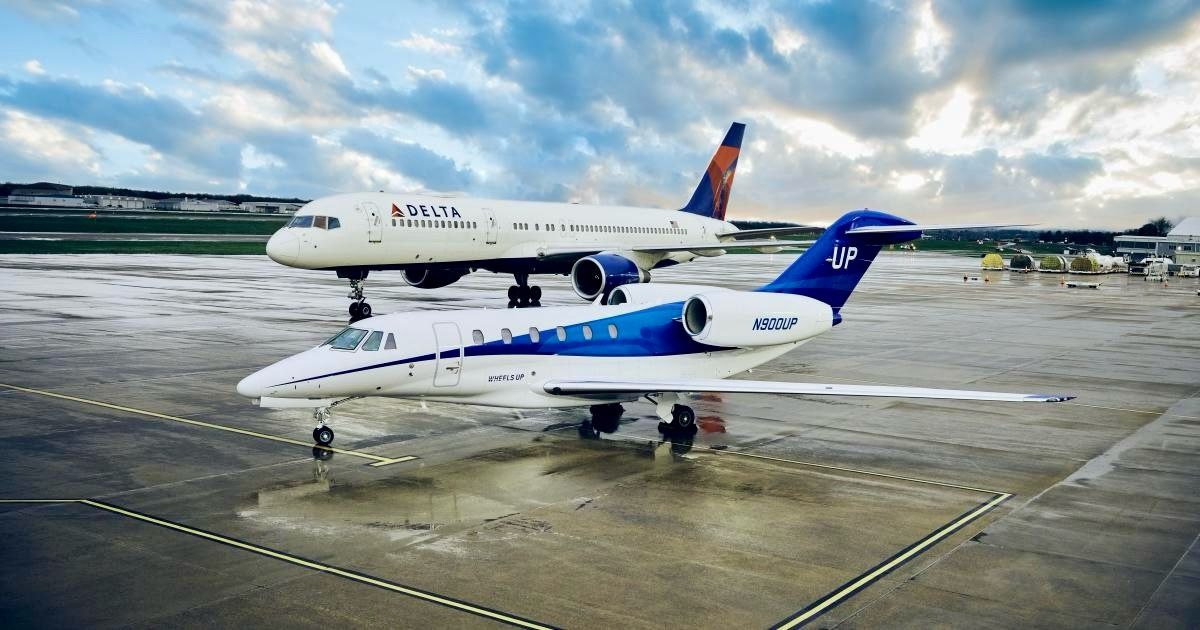
Delta and Wheels Up aircraft (Photo: Delta Air Lines)
Delta sees Wheels Up as a key part of its premium portfolio, even as the private aircraft operator faces financial turbulence. Delta CEO Ed Bastian expressed optimism on Wheels Up’s future during a recent Investor Day event.
The Atlanta-based airline leads an investor consortium that owns 95% of Wheels Up. Earlier this year, the private aviation firm moved its headquarters to Atlanta.
As private jet travel boomed during the COVID-19 pandemic, Bastian says Delta has since seen consumer shifts between Wheels Up and the airline’s premium first and business class products.
“Once things started to stabilize, those customers came back to Delta or to other commercial providers,” Bastian added. “… We got some work to do, but eventually it’s going to be [the] next step on our premium ladder.”
Despite continued quarterly losses, Wheels Up has reported some financial improvements this year. In Q3 2024, the company reported a net loss of $57.7 million, down from $114.8 million during the same period last year.
“No airline has ever been able to integrate commercial with a private opportunity,” Bastian continued. “We have Delta people inside Wheels Up … learning about the business and how we can schedule it, how we can price it, [and] how we can operationalize it. We’re the world’s best at all that stuff.”
“In the next couple years, I think you’re going to see that asset grow meaningfully and I think you’re going to see a lot of value that we create, not just for our business, but potentially as owners,” he concluded.
Ryan founded AirlineGeeks.com in February 2013 and has spent more than a decade covering the airline business. His work has been featured by CNN, WJLA, CNET, and Business Insider. His aviation experience spans airport operations, Part 135 regulatory compliance, and airline crew workforce planning, along with time behind the yoke of a Cessna 172 and interviews with airline executives. Ryan now serves as Group President of Firecrown Media’s Aviation Group. He holds a B.S. in Air Transportation Management and an MBA from Arizona State University and teaches Airline Management at Embry-Riddle Aeronautical University.
Turkish Airlines' new amenity kit (Photo: Turkish Airlines)
Turkish Airlines announces the release of new amenity kits for business class passengers in collaboration with French fashion house Lanvin.
The amenity kits come in five different designs allowing passengers to collect different kits across flights. Bags will be available in brown, black, tan, and cream. Each bag has a focus on sustainability being reusable and many of the contents are made from recycled materials such as the eye mask and socks. Earplugs are packed in paper and the toothbrush is made from bamboo instead of the standard plastic.
The cosmetic products in the bag are also Lanvin-branded. The amenity kits will include lotion and lip balm.
The Lanvin amenity kits continue Turkish Airlines’ tradition of partnering with premium brands for amenity kits. The previous amenity kit partnership, with Ferragamo, lasted over a year since it was introduced in late spring of last year.
New Business Class Seating
The launch of these new amenity kits immediately followed the airline’s unveiling of its next-generation business class cabin, the Crystal Business Class. The new cabin features entirely new seats for the entire Turkish Airlines Boeing 777 fleet, with retrofits planned to start next year.
These seats are a significant enhancement from the current seat offering on the airline’s Boeing 777 aircraft which has been around for many years and is no longer cutting edge. The current Boeing 777s are in a 2-3-2 configuration with many seats not having direct aisle access.
The new cabins will contain 42 seats, each 23 inches wide, in a staggered 1-2-1 configuration with each seat having direct aisle access and sliding doors for added privacy.
Turkish has not published how long it will take to retrofit its entire fleet of nearly three dozen Boeing 777 aircraft. While retrofits will start in 2025, it will likely take several years before all Boeing 777s feature the new seats.
New Airbus A350 aircraft that are delivered will also feature these new seats.
Hemal took his first flight at four years old and has been an avgeek since then. When he isn't working as an analyst he's frequently found outside watching planes fly overhead or flying in them. His favorite plane is the 747-8i which Lufthansa thankfully flies to EWR allowing for some great spotting. He firmly believes that the best way to fly between JFK and BOS is via DFW and is always willing to go for that extra elite qualifying mile. Hemal's opinions are his own and do not reflect those of his employer.
Emirates to Serve Thanksgiving Meals
Passengers will get to enjoy many Thanksgiving favorites in the air between November 23-30 on flights to and from the United States.
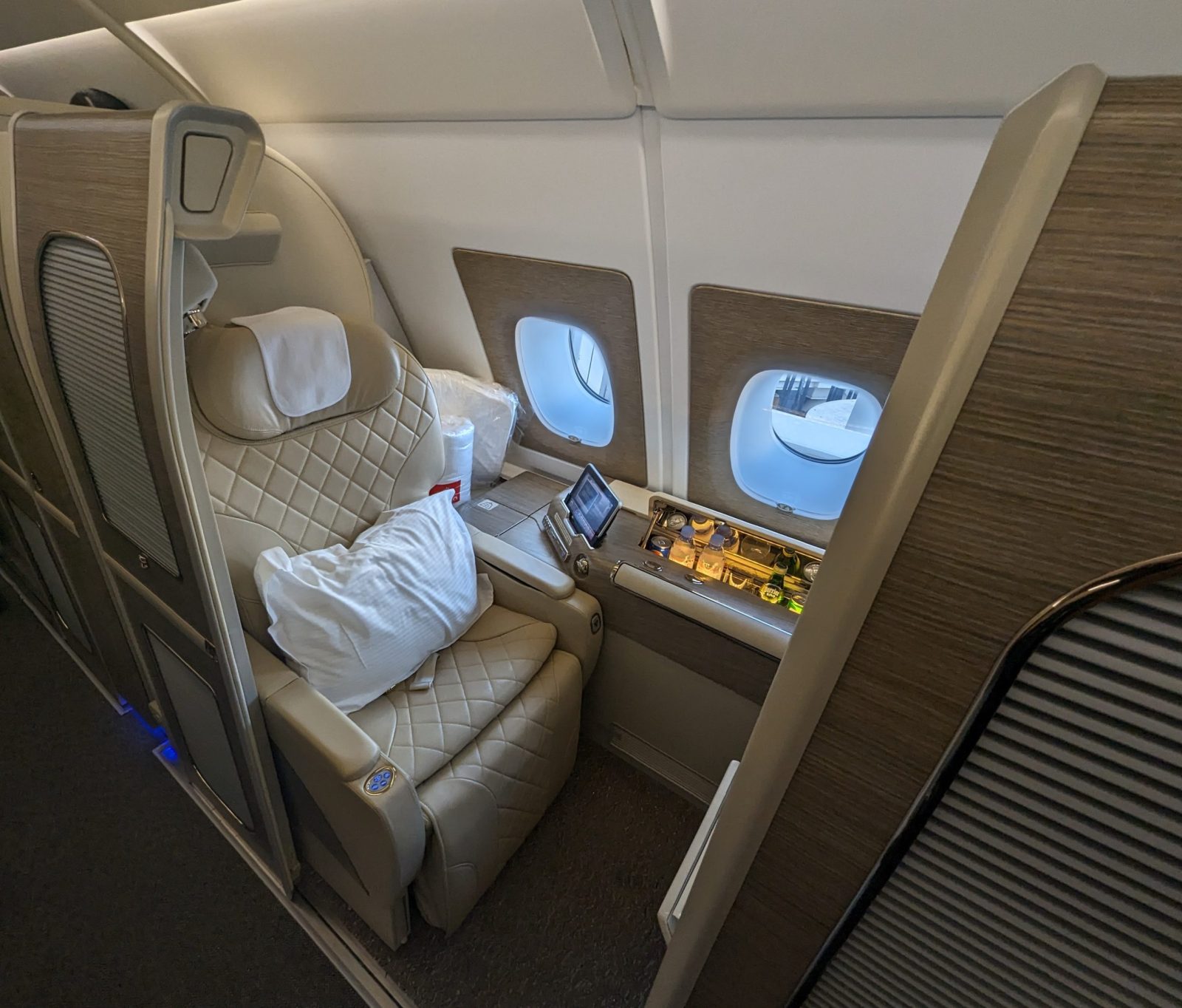
Emirates A380 first class seat (Photo: AirlineGeeks | Hemal Gosai)
Emirates is taking part in Thanksgiving this year. Passengers will get to enjoy many Thanksgiving favorites in the air between November 23-30 on flights to and from the United States.
The menus will vary by class of service, but all featured dishes are inspired by the holiday.
In first class from Dubai to the U.S., passengers will be able to order celeriac and pear soup with leek as a soup course. This will be followed by an appetizer of smoked salmon with chives, cucumber, pea shoots, and a horseradish sauce. The main course is a heft turkey leg roulade with roasted butternut squash, mashed potatoes, brussels sprouts, roasted pecans, cranberry sauce, and cornbread. The dessert course includes an option of warm apple fritters with mascarpone cream and cinnamon sugar, or a key lime tart with raspberry coulis.
From the U.S. to Dubai, the menu is different in first class. The soup is a sweet potato soup with poached lobster and chives. The appetizer is a seafood platter served with caviar. The main course is a lemon, zaatar, and buttermilk roasted turkey with celeriac apple puree, maple-roasted caraway pumpkin and beetroot, kale with cranberries, pecan, and cornbread stuffing. Dessert is a choice of hot toffee apple and pecan cake with a caramel sauce and marshmallows, or a chocolate marble cheesecake with a berry compote and vanilla custard.
Emirates’ Thanksgiving meals (Photo: Emirates)
Business class features a soup followed by salmon gravadlax and a main course of sliced turkey with similar accompaniments as in first class. Premium economy will also have similar meal options.
In economy, passengers can opt for a Waldorf Salad with vegan mayonnaise, followed by roasted chicken with cranberry jus, chestnut roulade with turkey bacon, maple-baked parsnips, carrot mash, peas, and potato wedges. Dessert will feature pumpkin, apple, and cheese mouse with cinnamon cream and ginger biscuit crumbles along with a pumpkin spiced cookie.
On select A380 flights from Dubai to Los Angeles, New York, San Francisco, and Washington Dulles, the onboard bar will feature pecan cupcakes and other festive snacks.
Lounge Offerings
Emirates lounges in the United States in New York, Boston, Los Angeles, and San Francisco will also be celebrating Thanksgiving. The lounges will offer roasted turkey with apple sage stuffing, garlic mashed potatoes and fall squash pumpkin, and cheesecake mouse.
The airline’s lounges in Dubai will offer pumpkin tarts, roasted turkey breast with cranberry sauce, stuffing, chestnuts, new potatoes, roasted root vegetables, and festive cocktails.
Hemal took his first flight at four years old and has been an avgeek since then. When he isn't working as an analyst he's frequently found outside watching planes fly overhead or flying in them. His favorite plane is the 747-8i which Lufthansa thankfully flies to EWR allowing for some great spotting. He firmly believes that the best way to fly between JFK and BOS is via DFW and is always willing to go for that extra elite qualifying mile. Hemal's opinions are his own and do not reflect those of his employer.
Longer Routes, Bigger Jets on BermudAir’s Radar
Chicago, Texas, and even Europe are in BermudAir's future cards as the startup airline continues to expand, its CEO says.
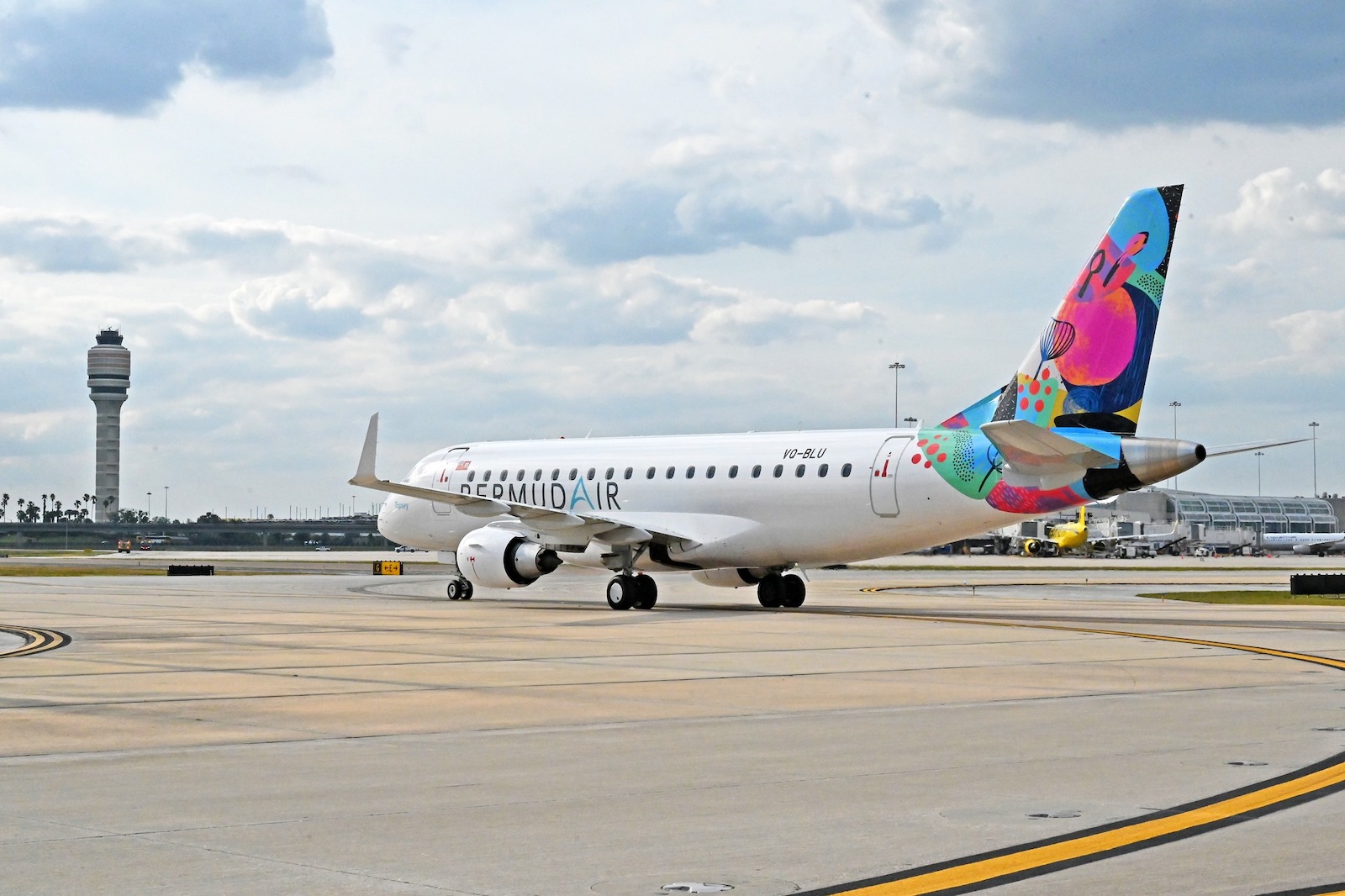
A BermudAir E175 (Photo: Orlando International Airport)
BermudAir continues to expand, adding three new U.S. destinations last week. The startup airline now serves 10 markets in the U.S. and Canada with a fleet of just two Embraer E175s.
Since it began operations just over a year ago, the airline has taken a small but mighty approach to growth, seeking to become Bermuda’s premier airline. Founder and CEO Adam Scott remains bullish on the carrier’s future, putting the island on an even more global stage.
“We want to grow the market so that it’s really a year-round destination and show it off,” Scott said during an interview with AirlineGeeks on Tuesday.
New Routes
Last week, BermudAir announced three new routes slated to begin in April 2025. These include Charleston, South Carolina; Hartford/Bradley, Connecticut; and Raleigh/Durham, North Carolina.
None of these markets have nonstop service to Bermuda, and Scott hopes they can prove useful for both locals and travelers originating in Bermuda.
“We look at where people are traveling from and where people are traveling historically. Of course, before we came along, a lot of that traffic had to go through traditional hubs with a connection. What we’re doing … is providing that direct service,” he added. “Very frankly we have smaller aircraft with fewer seats and so a lot more markets make sense for us than our competitors with much larger aircraft with a much higher number of seats to operate.”
The airline currently serves a handful of destinations throughout the Eastern Seaboard, including Baltimore; Boston; Orlando and Fort Lauderdale, Florida; White Plains, New York; Halifax, Nova Scotia; and Toronto.
While BermudAir growth has largely concentrated on the East Coast, Scott says that may change.
Going Farther
With two Embraer jets set to join the fleet by the spring of 2025, Scott adds that more destinations may be on the table. These could include more inland routes, such as Chicago or some markets in Texas.
“Ultimately I think Chicago is a really interesting market and perhaps some markets out in Texas,” he shared. “And so we’ll definitely look to take advantage of opportunities like that in the future.”
Scott also notes that European expansion could be in the airline’s cards. Bermuda is a British Overseas Territory and sees regular trans-Atlantic flights via British Airways.
“We do have ambitions ultimately to fly trans-Atlantic and I think there are several opportunities for us out there,” he added. “… Europe is definitely in our sights at some point.”
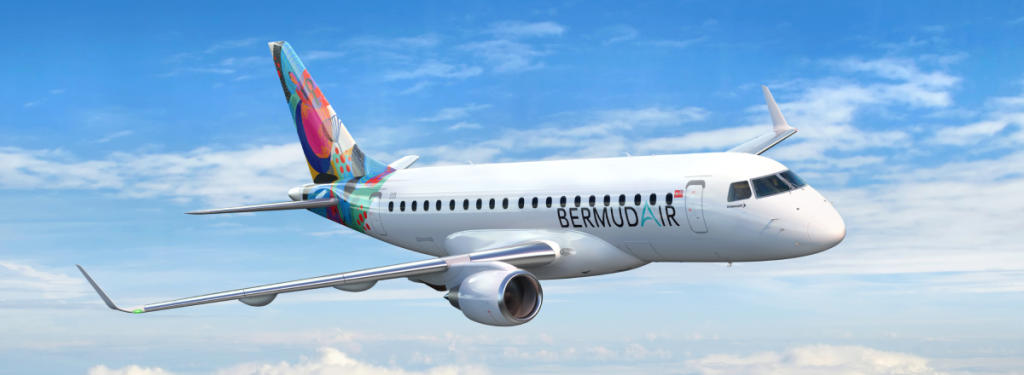
BermudAir will operate Embraer 175 aircraft. (Photo: BermudAir)
In order to “stretch a little farther,” Scott said, the airline will need aircraft that can handle a longer range.
Bigger Jets
Of course, to serve these longer-distance markets, Scott isn’t ruling out larger aircraft. He said BermudAir is “very into the E-Jets.”
The airline’s leased E175s – originally operated by the U.K.’s Flybe – are equipped with 88 seats in a standard configuration. It plans to install more premium business class seats by year-end.
“We’ll probably be looking at the slightly larger aircraft … and of course, range and performance [are] important,” Scott said. “Certainly for the markets that we’re looking at now and over the course of the next 12 months, the Embraers are great aircraft for us.”
Ryan founded AirlineGeeks.com in February 2013 and has spent more than a decade covering the airline business. His work has been featured by CNN, WJLA, CNET, and Business Insider. His aviation experience spans airport operations, Part 135 regulatory compliance, and airline crew workforce planning, along with time behind the yoke of a Cessna 172 and interviews with airline executives. Ryan now serves as Group President of Firecrown Media’s Aviation Group. He holds a B.S. in Air Transportation Management and an MBA from Arizona State University and teaches Airline Management at Embry-Riddle Aeronautical University.
A United Aviate Academy SR-20 (Photo: AirlineGeeks | Ryan Ewing)
Flying for a major airline is the ultimate goal for many aspiring aviators. Although the path to an airline can take years, some flight schools partner with airlines to help students begin their careers.
The scope of partnerships between airlines and flight schools can vary. Some only involve career presentations and resources from the airline, while pathway programs often involve a guaranteed interview or a defined career flow path. The programs run by mainline carriers typically require pilots to fly for a regional partner before moving to the mainline company.
Airlines often have names for their various pilot pathway programs. Examples include United’s Aviate program, Southwest’s Destination 225°, and American’s Cadet Program.
Flight schools with airline partnerships are situated all across the United States. Many schools also partner with multiple airlines.
Eastern United States
Infinity Flight is a partner in theAmerican Airlines Cadet Academy. The school is situated at Trenton-Mercer Airport in New Jersey and is planning on opening a second location in St. Pierce, Florida,. in early 2025.
FLYT Aviation is based at the Atlanta Regional Airport in Peachtree City, Georgia. Located near Delta’s headquarters in Atlanta, the airline is part ofDelta Propel. FLYT Aviation was recentlyacquired by U.S. Aviation Academy.
International Aero Academy is a partner in Spirit’s Wings Pilot Pathway Program. The school is in Lakeland, Florida.
L3Harris is an information technology and defense company. However, it also operates a flight school at Sanford International Airport in Florida. It has pathway partnerships with regional carriers like Republic, CommuteAir, and PSA as well as partnerships with low-cost carriers Avelo and Spirit.
Phoenix East Aviation in Daytona Beach, Florida, is one of the flight schools in United’s Aviate program.
Skyborne Airline Academy is part of Delta’s Propel program and SkyWest’sPilot Pathway Program. The school also has partnerships with other airlines like JSX, Avelo Airlines and Endeavor Air. Skyborne is located in Vero Beach, Florida.
SkyWarrior is a flight school in Pensacola. It is one of three schools inSouthwest’s Destination 225° program and also has partnerships with airlines like Air Wisconsin and Silver Airways.
Thrust Flight has three campuses in Texas. It is part of Spirit’s Wings Pilot Pathway Program and Avelo’s pathway program. Other airlines including Republic and Envoy are also partners with Thrust Flight.
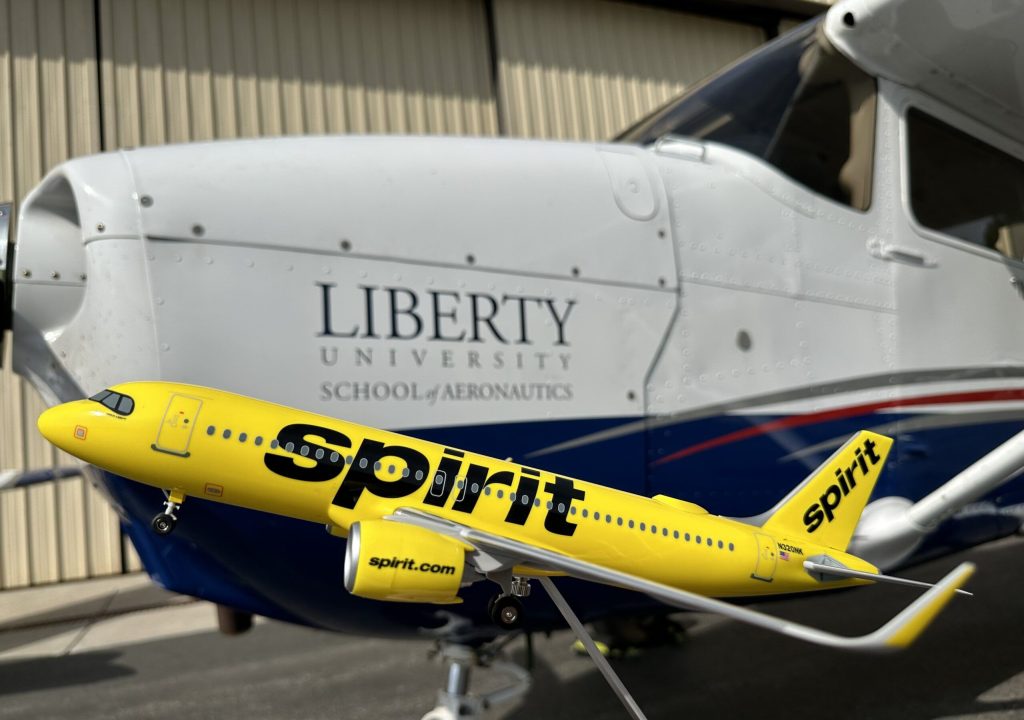
Spirit and Liberty University partner to direct hire pilots (Photo: Spirit Airlines)
Western United States
CAE is best known for being a flightsimulator manufacturer, but it also operates multiple flight training programs. Its flight school in Phoenix trains pilots as part of the American Airlines Cadet Academy, JetBlue’sGateway Select pilot pathway, and Southwest Destination 225°.
Cornerstone Aviation is a Utah-based flight school with two locations in Salt Lake City and Ogden. It is part of three airline pilot pathway programs: Envoy’s Cadet Program, United Aviate, and the SkyWest Pilot Pathway Program.
McAir Aviation in Broomfield, Colorado, is home to Allegiant’sAltitude Pilot Pathway program. The school is also part of Envoy Air and SkyWest Airlines’ pathway programs.
United Aviate Academy is United’s ownflight school. The school is in Goodyear, Arizona, and was formerly the Westwind School of Aeronautics Phoenix. As per its name, the school is part of theUnited Aviate program.
Nationwide
ATP is one of the country’slargest flight schools. With over 77 locations and 600 aircraft, the school has partnerships with many mainline and regional carriers. It is part of United Aviate and Delta Propel and other partners include Breeze Airways, SkyWest Airlines, GoJet Airlines, and Air Wisconsin.
Coast Flight has three locations in Texas as well as a site in San Diego. The school is part of the American Airlines Cadet Academy and also has partnerships with SkyWest, Mesa, and Envoy Air.
Epic Flight Academy has locations in Texas, Florida, and Arizona. It is one of the flight schools in United’s Aviate program and also has pathways to Southern Airways Express, SkyWest, Republic, and Breeze.
US Aviation Academyis part of many airline pathways programs, including the SkyWest Pilot Pathway Program, Southwest Destination 225°, and United Aviate. The school is headquartered in Denton, Texas but has seven flight training locations in Texas, Missouri, Georgia, and New York.
AeroGuard Flight Training Center has tthree campus locations in Arizona and Texas. The school is a partner in SkyWest’s pilot pathway program.
Other Flight Schools
While this article has covered some of the largest and best-known flight schools in the country, there are many others that have partnerships with airlines. For example, Envoy’s Cadet Program alone has over 30 partner schools. Many airlines also have partnerships with colleges that offer flight training programs alongside a degree or certificate.
Frequently Asked Questions
Do Airlines Pay for Flight Training?
In the United States, airlines generally do not pay for a pilot’s flight training. However, some airlines offer financial assistance through their pilot pathway programs. For example, the SkyWest Pilot Pathway Program provides tuition reimbursement up to $17,500 at certain flight schools.
What Are the Benefits of Training at a Flight School with Airline Partners?
Flight schools with airline partnerships offer their students the opportunity to build professional relationships during their flight training. Pilot pathway programs often also include benefits like a guaranteed interview or career progression opportunities upon meeting certain requirements.
Do You Need to Train at a Flight School with Airline Partners?
Although flight schools with airline partners can offer many benefits to their students, many pilots do not attend these schools. Airline pathway programs rarely offer a guaranteed job, and some pilots find it easier and faster to train at their local flight school without any airline partnerships. Each pilot’s training journey is unique and there are many paths to the airlines.
Andrew is a lifelong lover of aviation and travel. He has flown all over the world and is fascinated by the workings of the air travel industry. As a private pilot and glider pilot who has worked with airlines, airports and other industry stakeholders, he is always excited to share his passion for aviation with others. In addition to being a writer, he also hosts Flying Smarter, an educational travel podcast that explores the complex world of air travel to help listeners become better-informed and savvier travelers.
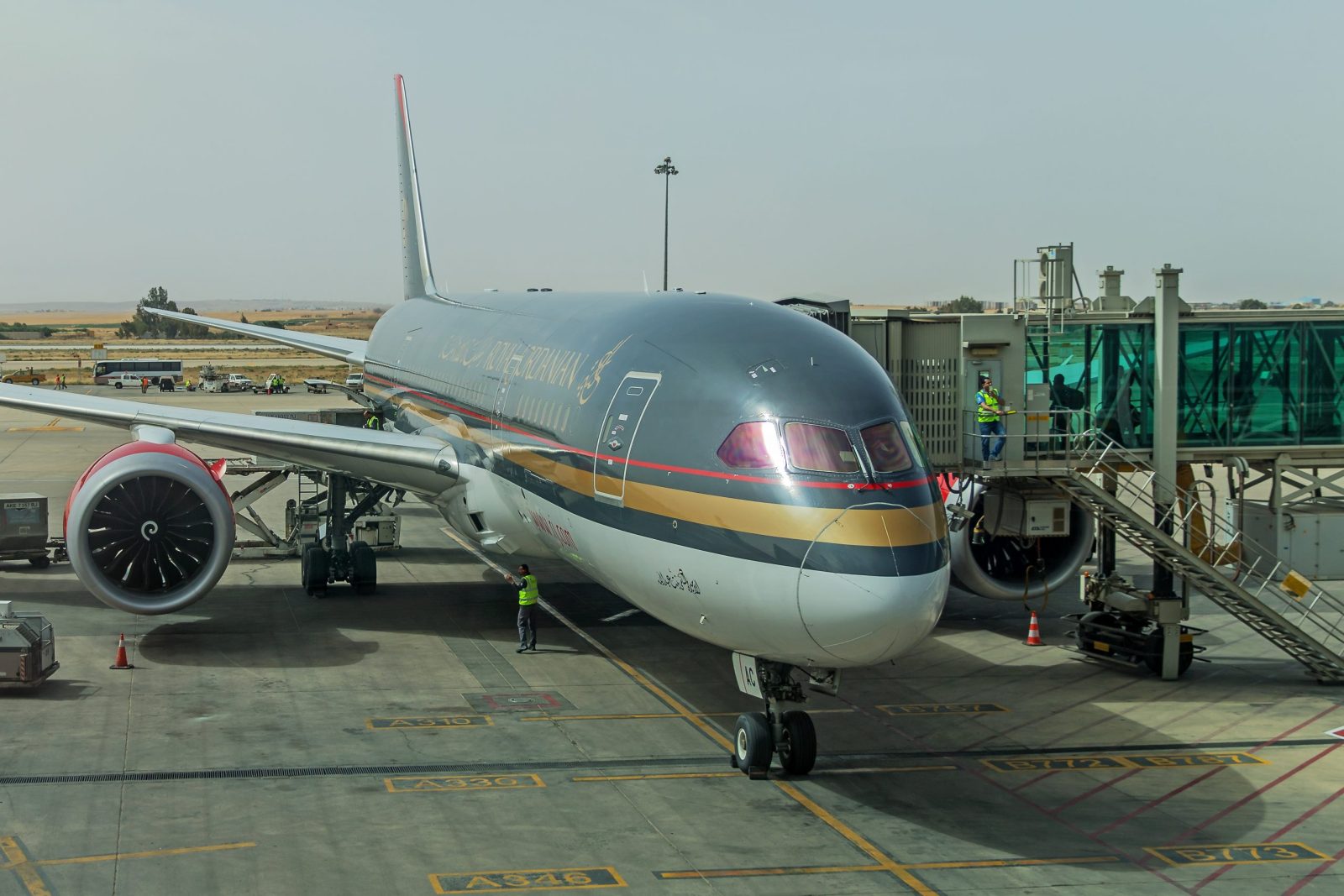
A Royal Jordanian 787-8 boarding passengers at Amman, Jordan.
(Photo: AirlineGeeks | William Derrickson)
After teasing the route last week on Instagram, Royal Jordanian has scheduled service to its fourth U.S. city. Currently, the Jordanian flag carrier serves New York-JFK, Chicago O’Hare, and Detroit.
Next year, the airline will add service to Washington Dulles. Flights from Amman, Jordan, will begin on March 23.
The new route is slated to operate twice per week on Tuesdays and Sundays with a Boeing 787-8 Dreamliner. The airline’s 787 aircraft feature 24 business class seats along with 246 in economy.
“Our upcoming first flight between the two capitals, Washington, D.C., and Amman, marks a significant milestone in RJ’s global expansion strategy, making this the fourth U.S. city we fly directly to,” said Royal Jordanian CEO Mr. Samer Majali in a news release. “By linking these two dynamic markets, we aim to stimulate tourism, trade and investment opportunities. This crucial connection provides seamless connectivity to the Gulf, Levant and North Africa, reinforcing our commitment to providing exceptional service and connecting people across the globe, aligning with RJ’s five-year expansion strategy.”
Royal Jordanian will compete directly with United, which also flies between the two cities. The airline discontinued the route in August though, citing safety concerns in the Middle East.
Ryan founded AirlineGeeks.com in February 2013 and has spent more than a decade covering the airline business. His work has been featured by CNN, WJLA, CNET, and Business Insider. His aviation experience spans airport operations, Part 135 regulatory compliance, and airline crew workforce planning, along with time behind the yoke of a Cessna 172 and interviews with airline executives. Ryan now serves as Group President of Firecrown Media’s Aviation Group. He holds a B.S. in Air Transportation Management and an MBA from Arizona State University and teaches Airline Management at Embry-Riddle Aeronautical University.
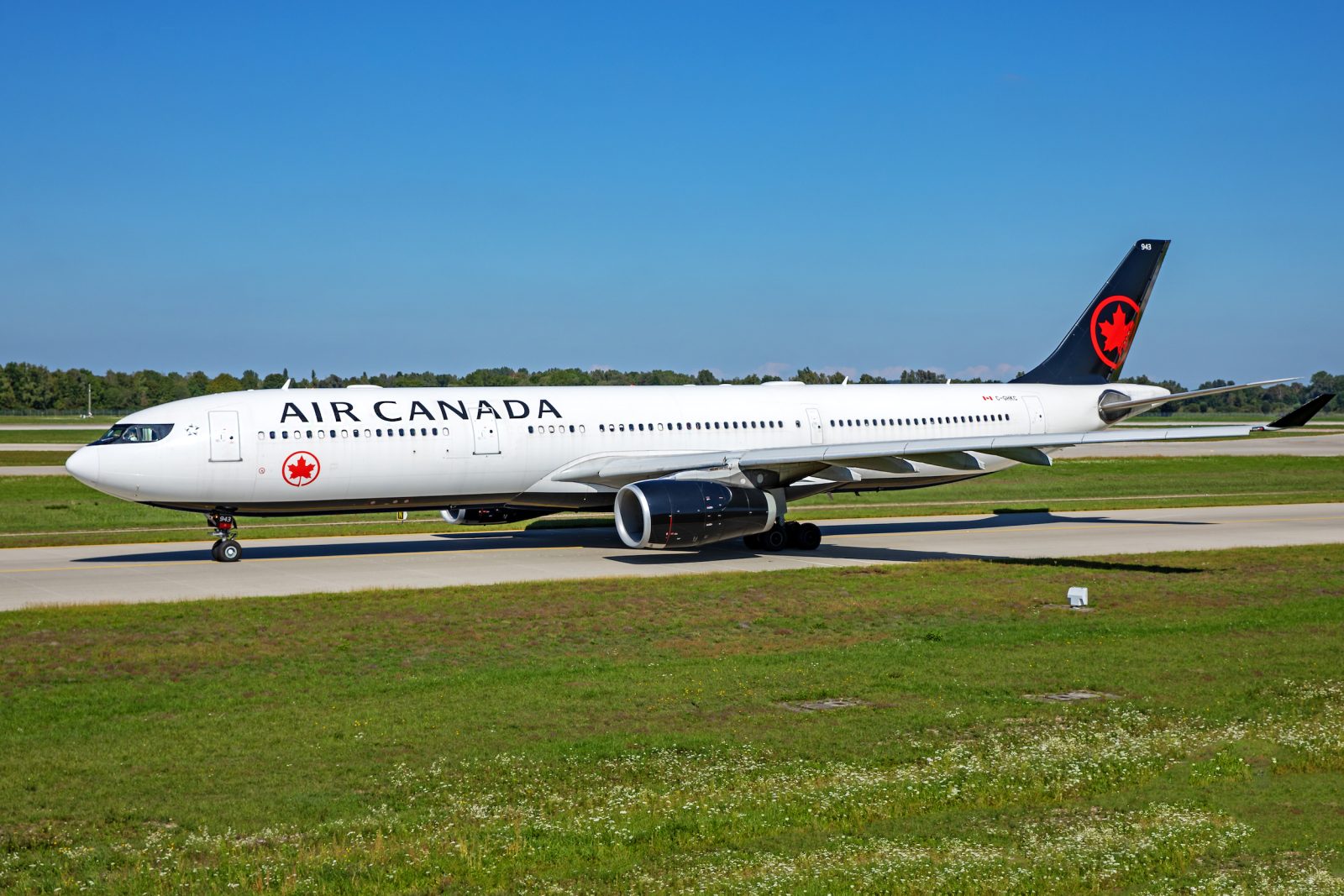
An Air Canada A330. (Photo: AirlineGeeks | William Derrickson)
Air Canada is adding one of its largest aircraft on a U.S. route. Recently, the airline has been growing its transborder network, adding routes and deploying larger aircraft.
Beginning on Feb. 1, 2025, the carrier will fly an Airbus A330-300 between Toronto and Tampa, Florida. Ishrion Aviation reports that the airline will operate the aircraft on the route twice daily.
Previously, Air Canada planned to operate four daily flights between the two cities but added the two widebody flights instead. The A330 is scheduled to serve the route through Feb. 28.
According to Cirium Diio schedule data, Air Canada has previously operated widebody jets to Tampa. Between 2015 and 2020, the carrier operated Boeing 767-300s to the Florida city.
In addition to Tampa, Air Canada’s A330s fly to Fort Lauderdale and Orlando, Florida; Las Vegas; Los Angeles; and Phoenix in the U.S. The airline is also slated to deploy its unretired 767s to Las Vegas and Phoenix next year.
Ryan founded AirlineGeeks.com in February 2013 and has spent more than a decade covering the airline business. His work has been featured by CNN, WJLA, CNET, and Business Insider. His aviation experience spans airport operations, Part 135 regulatory compliance, and airline crew workforce planning, along with time behind the yoke of a Cessna 172 and interviews with airline executives. Ryan now serves as Group President of Firecrown Media’s Aviation Group. He holds a B.S. in Air Transportation Management and an MBA from Arizona State University and teaches Airline Management at Embry-Riddle Aeronautical University.
This past week we saw Vistara, the beloved Indian airline, be officially consumed by Air India. The move, while expected, is both a happy and sad moment for many Indian travelers.
Vistara was first started as a joint venture between the Tata Group and Singapore Airlines as a new full-service carrier in India to challenge Air India and Jet Airways in 2015. After the bankruptcy of Jet Airways a couple of years after. it was just Air India and Vistara left as full-service carriers in the country.
The two airlines competed fiercely in the coming years with Vistara bringing on new aircraft with globally competitive business class products and flying many of the same routes as Air India. Passengers largely enjoyed the modern and elegant experience with Vistara and the airline really embodied their slogan: Fly The New Feeling.
For many, including myself, the Vistara brand brought excitement to Indian aviation. This rang especially true after the bankruptcy of Jet Airways. Vistara filled that premium carrier space in India that Air India couldn’t.
Air India had just become a shell of its former shelf, a basket case airline that some actively avoided. This is why Vistara was the only real hope for premium service from an Indian carrier that could play on a global scale.
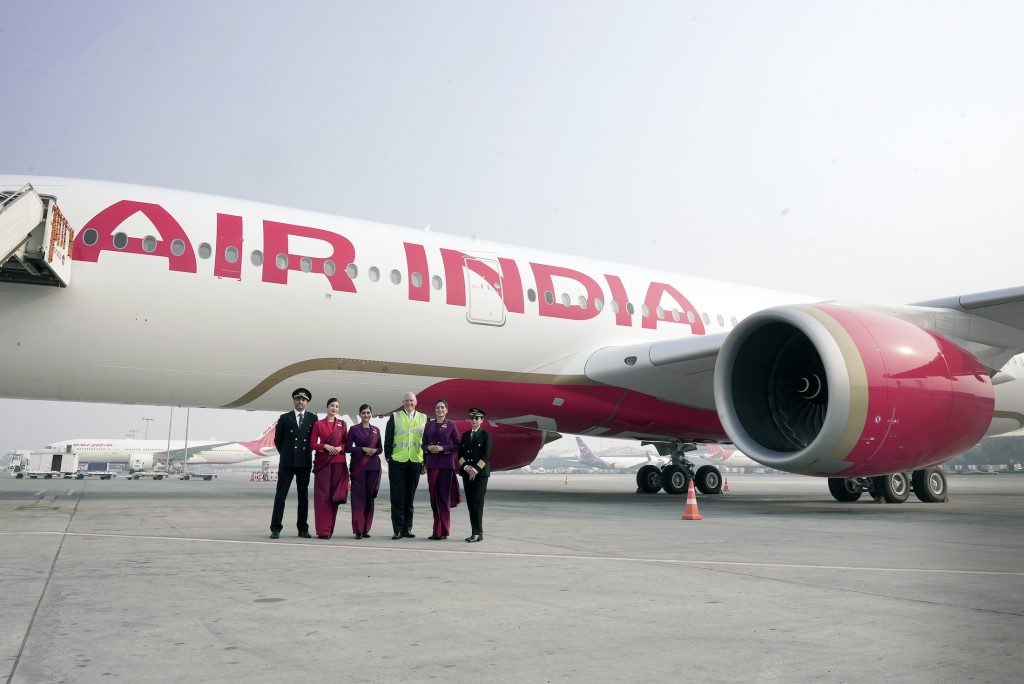
Air India’s first A350 (Photo: Air India)
Then it became known that the Tata Group was going to be the likely suitor in the Indian government’s attempt to privatize Air India. The big question in everyone’s minds was what will happen to Vistara?
Vistara and Air India Merger
Most assumed that it would be enveloped into Air India at some point since it didn’t seem likely that the Tata Group would want to operate two separate airlines. That is exactly what ended up happening.
In January 2024, it was announced that all regulatory clearance for the merger with Air India would be wrapped up by the middle of the year and operations would merge by the middle of the next year. Things ended up happening faster than expected with Vistara announcing that it would stop accepting new bookings the first week of September 2024 and officially merge with Air India on Nov. 12, 2024.
The merger came and went as expected. While there are still Vistara-branded aircraft flying around and some Vistara signage still lingering, both airlines are operating under a single operator certificate. While there are some challenges passengers and employees of the combined entity are facing, they are about what one would expect with an airline merger. It will take some time for the issues to be sorted out.
Vistara was an excellent airline run by Tata before they acquired Air India and many are hoping that the combined entity will continue to exemplify the excellence of the Tata Group as it seeks to bring Air India up through the ranks as a global premium airline.
I’ve flown on both Vistara and Air India across my travels in India. Vistara was a pleasure to fly and I’m looking forward to a refreshed Air India with many of the touches from Vistara carried over. There are a lot of airlines that I’ve flown on that don’t exist anymore, but Vistara will be one of the few that I will always remember fondly.
Hemal took his first flight at four years old and has been an avgeek since then. When he isn't working as an analyst he's frequently found outside watching planes fly overhead or flying in them. His favorite plane is the 747-8i which Lufthansa thankfully flies to EWR allowing for some great spotting. He firmly believes that the best way to fly between JFK and BOS is via DFW and is always willing to go for that extra elite qualifying mile. Hemal's opinions are his own and do not reflect those of his employer.
What Could a Post-Bankruptcy Spirit Look Like?
Industry experts are analyzing what Spirit’s recent bankruptcy filing could mean for the carrier and the market at large.
In a Form 8-K filed by the airline on Monday, Spirit announced it has entered into a restructuring support agreement (RSA) with aims to reduce its debt, provide increased financial flexibility, and position Spirit for long-term success.
Spirit stated in the form that it expects to continue operating its business normally throughout the Chapter 11 process. Customers will be able to book and fly without interruption and can use all tickets, credits, and loyalty points as normal.
Additionally, the Chapter 11 process will not impact employee wages or benefits. Spirit stated that vendors, aircraft lessors, and holders of secured aircraft indebtedness will continue to be paid normally.
“I am pleased we have reached an agreement with a supermajority of both our loyalty and convertible bondholders on a comprehensive recapitalization of the Company, which is a strong vote of confidence in Spirit and our long-term plan,” said Spirit CEO Ted Christie in the Form 8-K. “This set of transactions will materially strengthen our balance sheet and position Spirit for the future while we continue executing on our strategic initiatives to transform our Guest experience, providing new enhanced travel options, greater value and increased flexibility. I’m extremely proud of the Spirit team’s hard work and dedication, which is key to our sustained progress in advancing our business and delivering for our Guests.”
As part of the Chapter 11 process, Spirit stated it is filing a proposed plan of reorganization dubbed “Project Bravo” and expects to be delisted from the New York Stock Exchange in the near term. Its common stock will continue to trade in the over-the-counter marketplace through the Chapter 11 process. Shares are expected to be canceled and have no value as part of Spirit’s restructuring.
‘Project Bravo’
The airline’s reorganization plan – also included in its 8-K – details a turnaround initiative to realign the carrier’s business model to evolved customer needs while maintaining low costs.
Dubbed Project Bravo, it is broken down into five segments: liquidity enhancements, maintaining an industry cost advantage, network enhancements, improving the guest experience, and revamping Spirit’s branding.
For customers, the plan will add free changes across fares, new simplified boarding zones, free Wi-Fi access for loyalty sign-ups, improved contact center service with reduced wait times, and more. All passengers will also be served water and a small snack on their flights.
Network enhancements will include an effort to maximize “out and back” flying and increase “less than daily” flying. Spirit’s loyalty program will also see an upgrade.
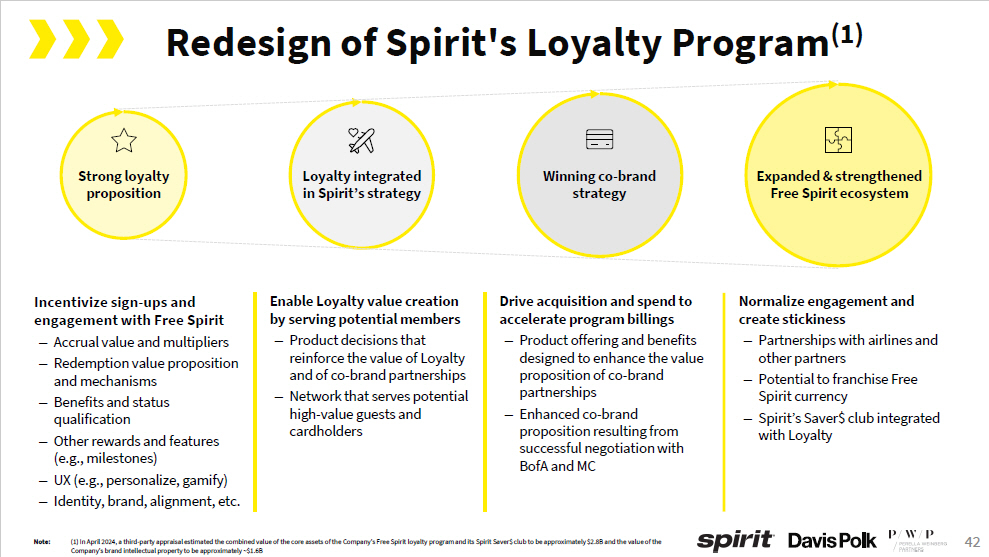
Spirit’s transformation plan (Photo: Spirit Airlines)
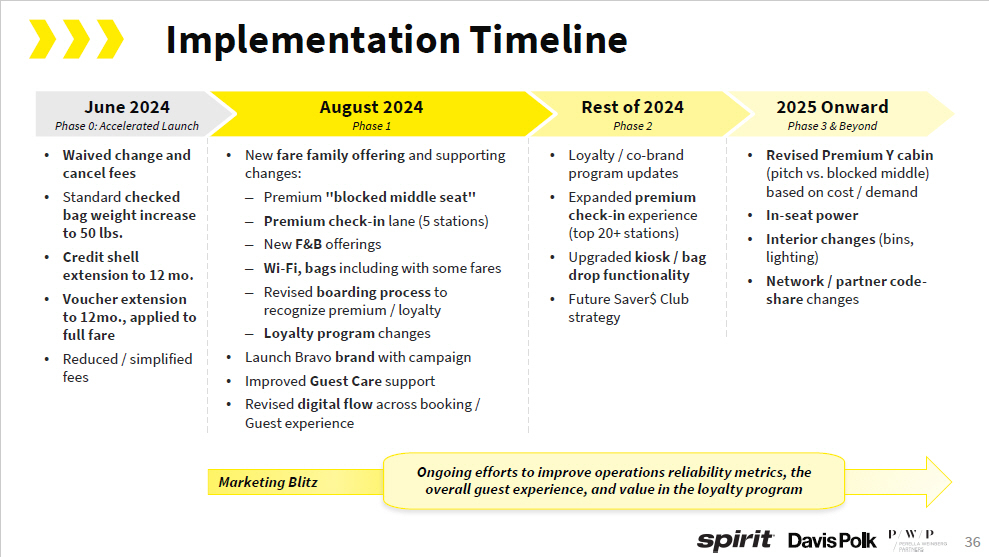
Project Bravo is currently in phase 2 of its implementation timeline for the rest of 2024. During phase 2, Spirit is upgrading its loyalty program, expanding the premium check-in experience, and upgrading kiosk/bag drop functionality. Phase 3 is expected to begin in 2025 onward and will add revised premium cabin seating, in-seat power, interior changes to bins and lighting, and network/partner code-share agreements.
Spirit’s plan to roll out changes (Photo: Spirit Airlines)
An Expert Weighs In
Cory Bengtzen, pilot and CEO of SkyShare, provided insight into what Spirit’s bankruptcy merger could mean for the carrier and industry at large.
“Given that Spirit’s Chapter 11 filing is still fresh within the industry, there’s certainly an opportunity for rivals to claw-back market share,” Bengtzen told AirlineGeeks in an emailed statement. “Primarily by expanding flight routes or reducing fares while Spirit reduces capacity. However, should Spirit ultimately exit the market or consolidate in any way, other airlines could very well flip the script and raise prices in the absence of competition. A heightened sense of industry uncertainty might strain financial stability and sway investor confidence.”
He said that while Project Bravo could help boost its reputation with customer satisfaction, Spirit now needs to prioritize financial recovery plans.
“To improve growth and earnings, the airline might also need to consider strengthening its operational efficiency, addressing fleet issues, and restoring customer confidence,” Bengtzen said. “Spirit Airlines’ bankruptcy filing, which is expected in the very near future, will likely have an immediate impact on our industry and throw a curveball into this holiday season.”
With the busy holiday travel season approaching, Bengtzen said that he foresees Spirit reducing its flight schedules due to its financial struggles – which in turn could cause disruptions, cancellations, and reduced flight options for customers.
Bengtzen cited AAA, which projects nearly six million travelers by air over Thanksgiving alone this year. Because Spirit typically operates more than 700 daily flights, Bengtzen said a reduction of its normal flight schedule will put pressure on other carriers which may create a domino effect.
“Another critical concern for travelers is uncertainty – will the airline be able to meet demand?” Bengtzen said. “Will Spirit maintain their usual low-cost fares throughout the busy travel period or increase costs to bolster their bottom line? The timing of this announcement in many ways is a setback for the entirety of our industry.”
Spirit has already furloughed 186 pilots this year and plans to cut 330 more in early 2025. Bengtzen said that the carrier’s pilot furloughs improve its financial standing, but new pilot hires take weeks or even months to get certified due to training slot shortages.
“With a pilot shortage dominating all of aviation, to jettison so much of your most critical workforce unfortunately speaks volumes,” Bengtzen said.
So what does this bankruptcy mean for consumers? Bengtzen said that many travelers rely on budget airlines like Spirit for affordable travel options, especially for regional flights.
“Spirit may not significantly alter its pricing in the short term; however, the bankruptcy process could involve tightening capacity, rolling-back routes, and shifting operational resources,” he said. “This could potentially lead to higher fares on many routes and/or higher costs for add-ons like carry-on baggage, seat selection, and on-board conveniences, ultimately putting the total price of travel on par with other airlines.”
AirlineGeeks.com was founded in February 2013 as a one-person blog in Washington D.C. Since then, we’ve grown to have 25+ active team members scattered across the globe. We are all here for the same reason: we love deep-diving into the fascinating realm of the airline industry.
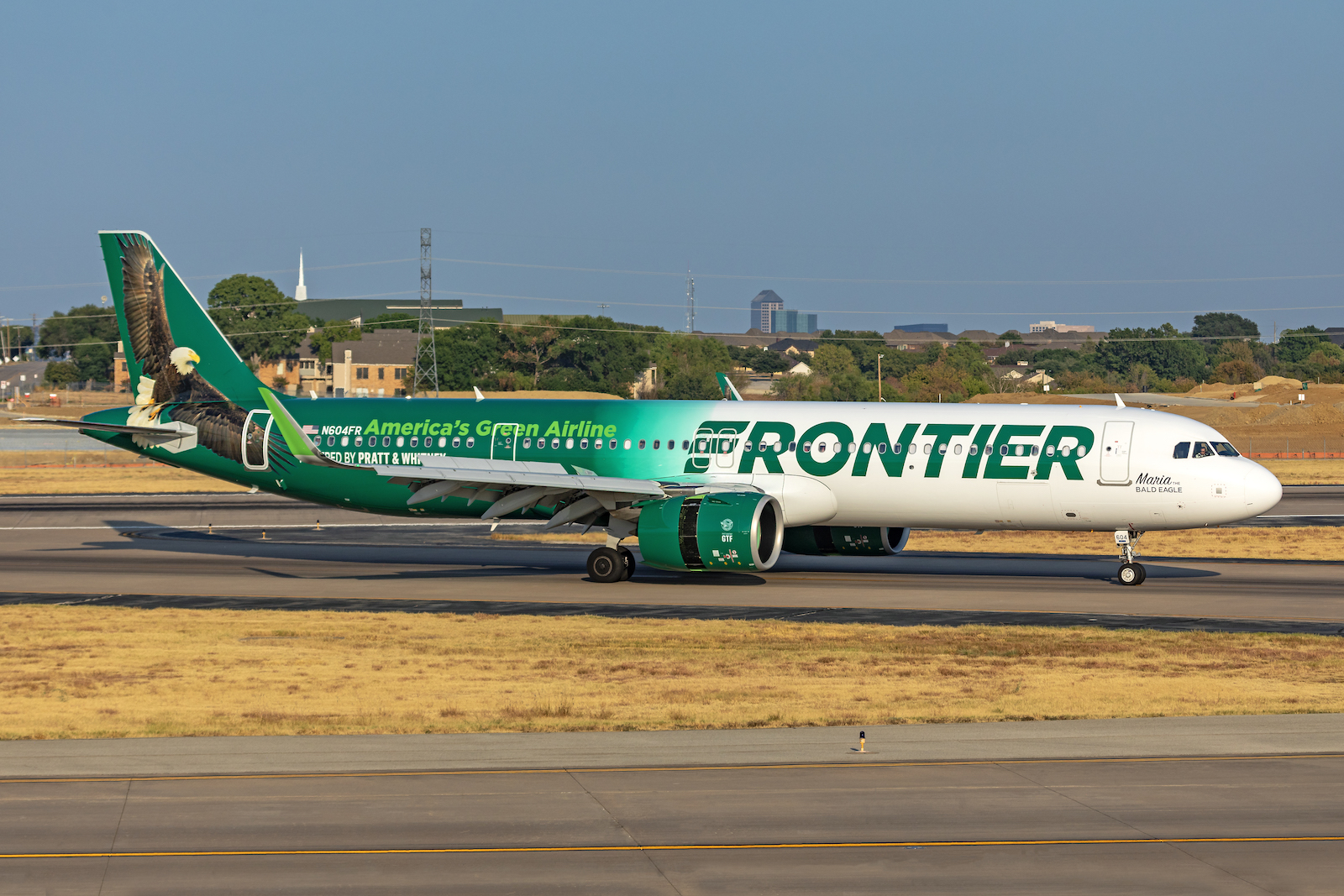
A Frontier Airbus A321neo (Photo: AirlineGeeks | William Derrickson)
Frontier is expanding its network with 16 new routes launching in February and March 2025. These new routes will connect passengers from 21 airports across the United States and the Caribbean, the carrier said in a Tuesday news release.
The expansion includes a return to Tucson, Arizona, Reno, Nevada, and Antigua and Barbuda for Frontier.
New Routes
Flights between San Juan, Puerto Rico, from V.C. Bird International Airport starting Feb. 15, 2025, with a frequency of once per week. Frontier recently opened a crew base in San Juan.
From Atlanta, the airline will begin serving Indianapolis starting March 7, 2025, with a frequency of three times per week.
Service from Austin, Texas, to Orlando, Florida, Chicago O’Hare, Cincinnati, and Phoenix starts March 6 and 7, with frequencies ranging from two to three times weekly.
From Tampa, Florida, the carrier is adding service to Houston-Bush, Indianapolis, and Milwaukee, starting March 6 and 7. Each route will be served three times per week.
On March 7, Frontier will resume flights to Reno with three times weekly service to Denver and Las Vegas. Tucson will receive Frontier flights to Denver starting March 3, operating three times per week.
In addition, flights from Miami to Bradley International Airport start Feb. 13, 2025, with a twice-per-week frequency. The airline will also connect Nashville, Tennessee, Los Angeles, and Oklahoma City with Orlando beginning March 6 and 7, with two to three flights per week.
Ryan founded AirlineGeeks.com in February 2013 and has spent more than a decade covering the airline business. His work has been featured by CNN, WJLA, CNET, and Business Insider. His aviation experience spans airport operations, Part 135 regulatory compliance, and airline crew workforce planning, along with time behind the yoke of a Cessna 172 and interviews with airline executives. Ryan now serves as Group President of Firecrown Media’s Aviation Group. He holds a B.S. in Air Transportation Management and an MBA from Arizona State University and teaches Airline Management at Embry-Riddle Aeronautical University.