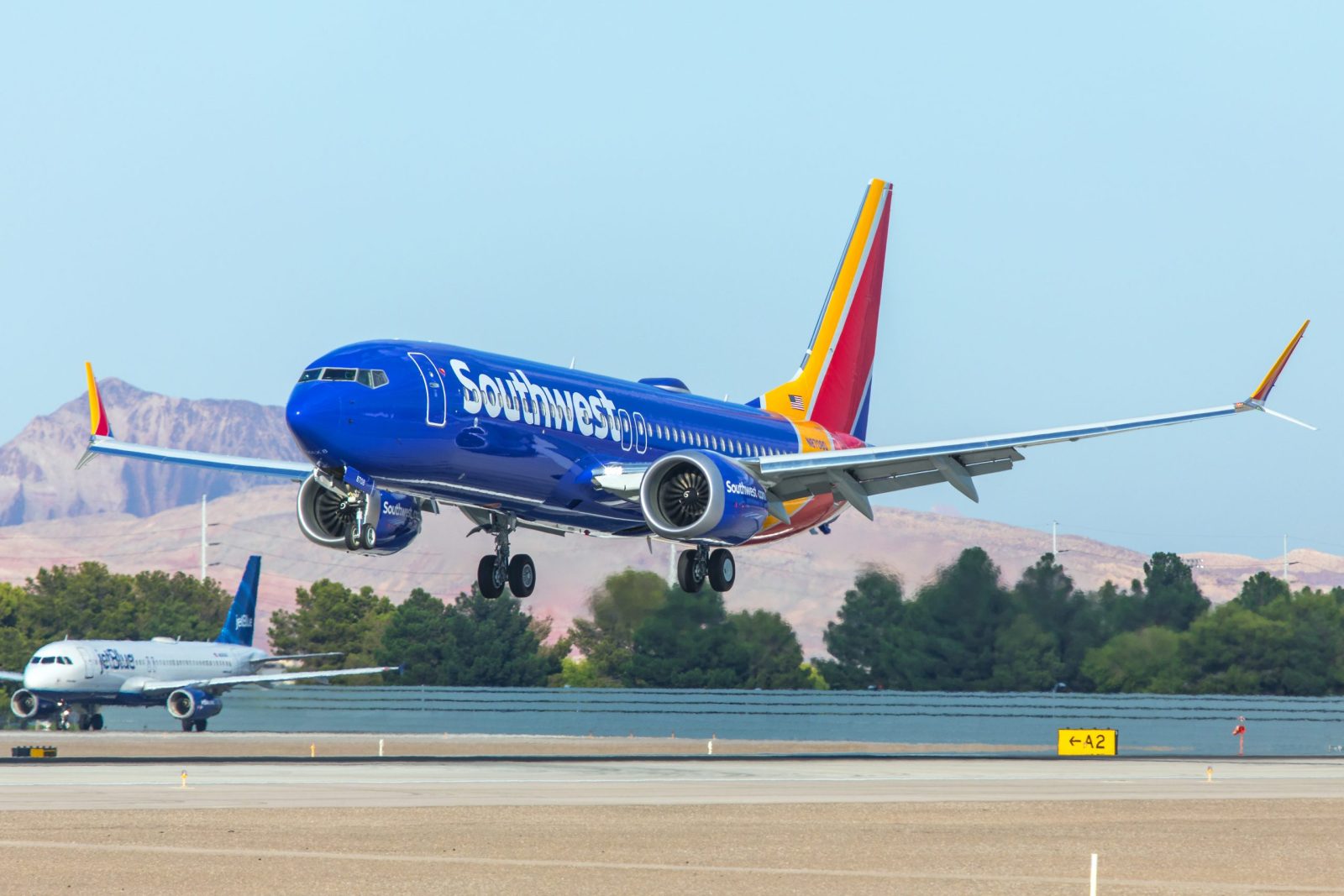
A Southwest 737 MAX 8 in Las Vegas. (Photo: AirlineGeeks | William Derrickson)
A Southwest Boeing 737 was reportedly struck by gunfire on Friday evening, an airline spokesperson said. The aircraft was hit while taxiing for departure at Dallas Love Field.
Flight 2494 to Indianapolis suffered damage consistent with a gunshot to the right side of the aircraft below the flight deck. The 737 MAX 8 jet — registered as N8744B — returned to the gate.
No injuries were reported following the incident and passengers will be rebooked on a different aircraft, the airline said.
“Law enforcement authorities have been notified and the plane has been removed from service,” the spokesperson added in a statement.
A spokesperson from the Dallas Police Department confirmed the shooting and said the agency is investigating. The FBI referred questions to the Dallas Police Department.
Ryan founded AirlineGeeks.com in February 2013 and has spent more than a decade covering the airline business. His work has been featured by CNN, WJLA, CNET, and Business Insider. His aviation experience spans airport operations, Part 135 regulatory compliance, and airline crew workforce planning, along with time behind the yoke of a Cessna 172 and interviews with airline executives. Ryan now serves as Group President of Firecrown Media’s Aviation Group. He holds a B.S. in Air Transportation Management and an MBA from Arizona State University and teaches Airline Management at Embry-Riddle Aeronautical University.
Boeing’s 17,000 Layoffs Include Over 400 Aerospace Union Members
Over 400 Society of Professional Engineering Employees in Aerospace union members have been let go after Boeing started sending layoff notices to employees.
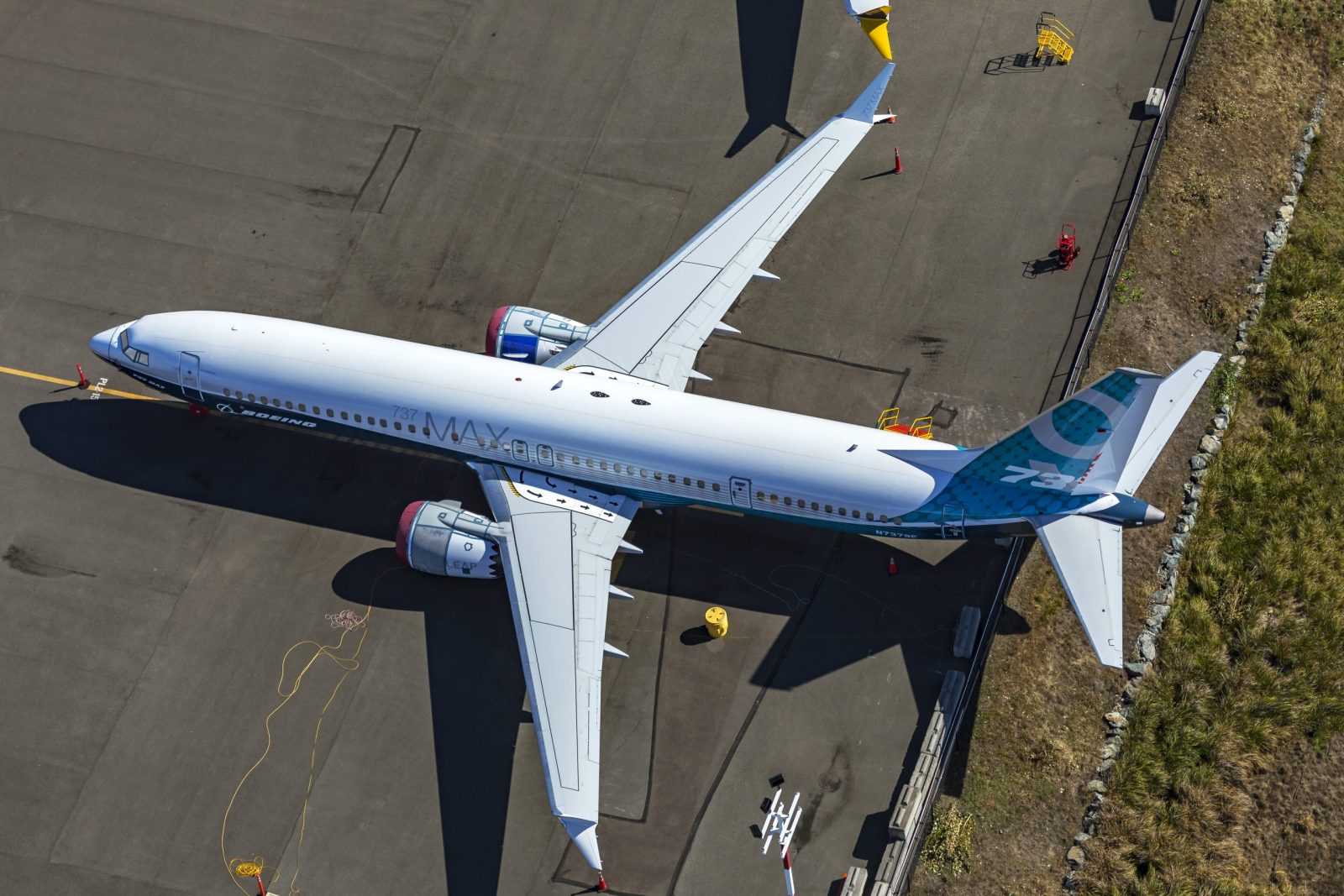
A Boeing 737 MAX 9 testbed aircraft.
(Photo: AirlineGeeks | William Derrickson)
Over 400 Society of Professional Engineering Employees in Aerospace (SPEEA) union members have been let go after Boeing started sending layoff notices to employees on Wednesday.
The company announced in October it would let go of 17,000 employees – around 10% of its workforce – by January of next year.
Boeing notified SPEEA Thursday night that 438 of its members have, or will, receive layoff notices this week, a SPEEA spokesperson told AirlineGeeks in an emailed statement. Of those, 218 are engineers and 220 are technical workers.
“We are reviewing the data to ensure that Boeing followed the layoff procedures spelled out in our union contracts, and we are preparing meetings for next week with the laid-off members to help them understand their options and navigate the process of applying for unemployment,” the spokesperson said.
AirlineGeeks.com was founded in February 2013 as a one-person blog in Washington D.C. Since then, we’ve grown to have 25+ active team members scattered across the globe. We are all here for the same reason: we love deep-diving into the fascinating realm of the airline industry.
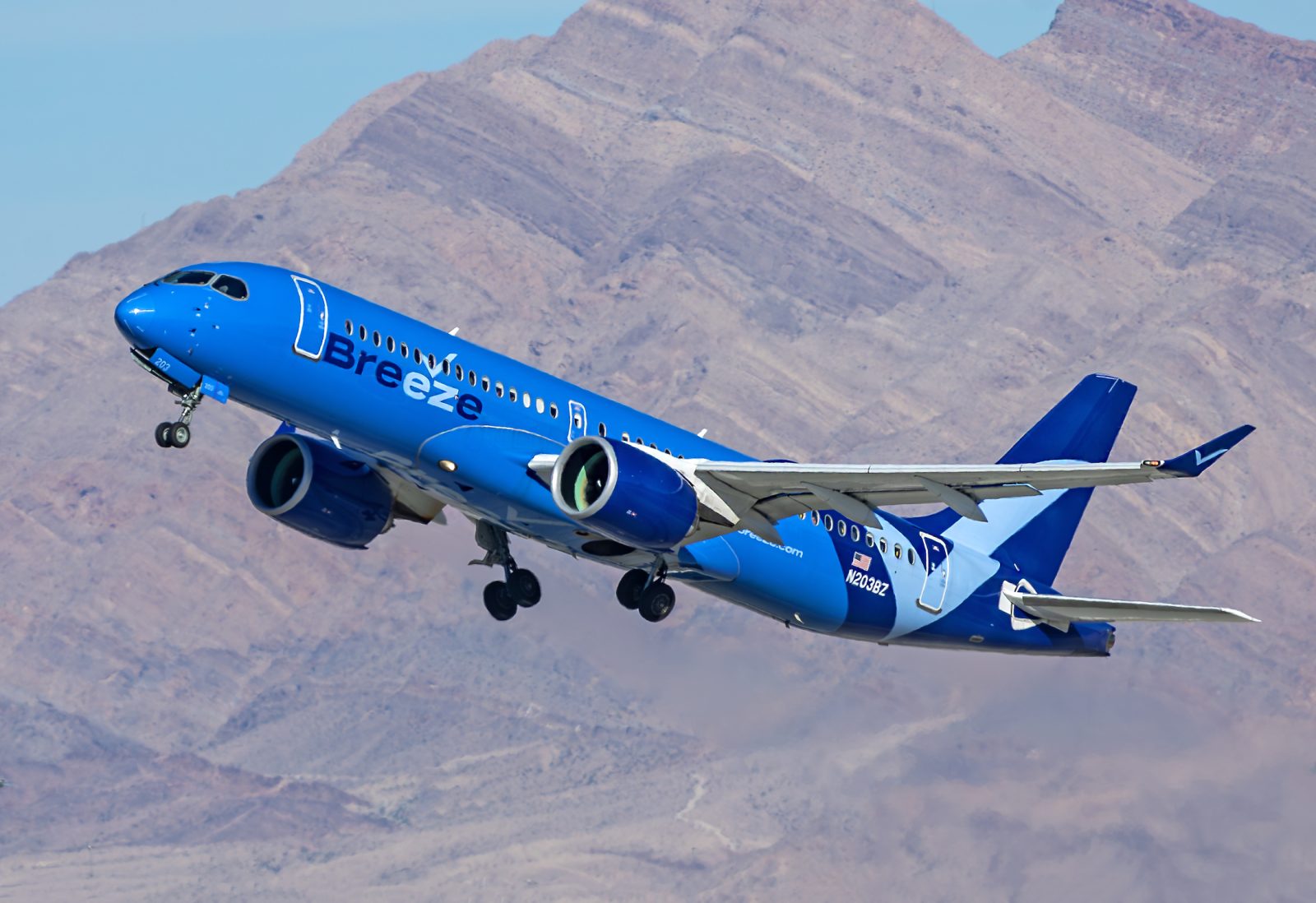
A Breeze A220 aircraft. (Photo: AirlineGeeks | William Derrickson)
Editor’s Note: AirlineGeeks is proud to present our ‘Livery of the Week’ series. Every Friday, a team member will share an airline livery, which can be from the past, present, or even a special scheme. Some airline liveries are works of art. The complexity associated with painting around critical flight components and the added weight requires outside-the-box thinking from designers. The average airliner can cost upwards of $200,000 to repaint, creating a separate aircraft repainting industry as a result.
Have an idea for a livery that we should highlight? Drop us a line.
Breeze Airways, one of the newest entrants to the U.S. airline market, revealed its unique livery when it began operations in 2021. The airline, known for its focus on point-to-point travel, has opted for a design that reflects its brand identity and promises a fresh approach to air travel.
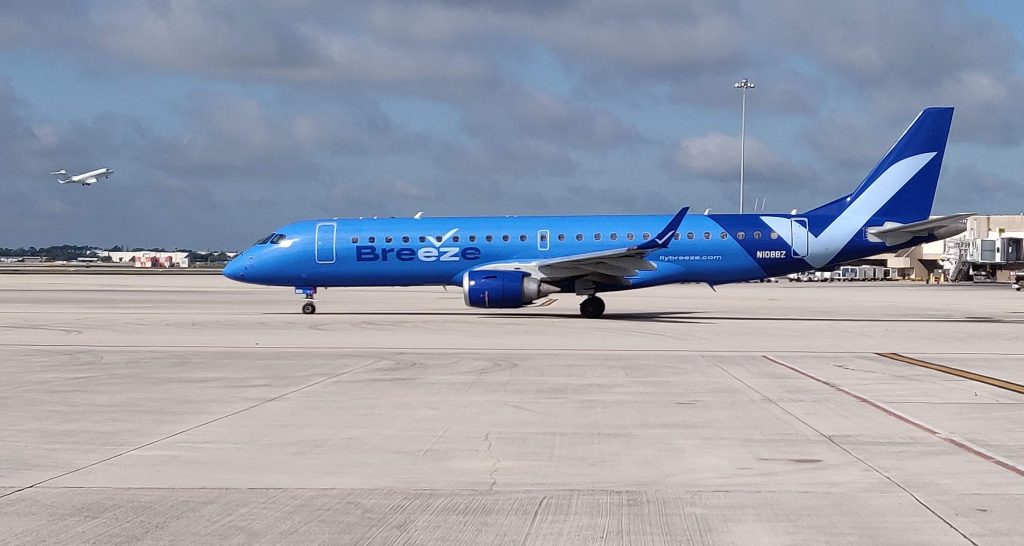
Breeze Airways Embraer 190 at West Palm Beach International Airport (PBI) (Photo: Airlinegeeks | Vanni Gibertini)
The livery – which is on Breeze’s Airbus A220 and Embraer aircraft – features a prominent checkmark logo, representing the ease and efficiency that the carrier aims to provide. The aircraft’s body is painted in a sleek blue color with the checkmark logo displayed on the tail section.
According to planespotters.net data, the airline currently has just over 40 jets in its fleet with more on order from Airbus. Breeze serves 66 destinations across the U.S.
Looking for a new airplane model? Head over to our friends at the Midwest Model Store for a wide selection of airlines and liveries.
Ryan founded AirlineGeeks.com in February 2013 and has spent more than a decade covering the airline business. His work has been featured by CNN, WJLA, CNET, and Business Insider. His aviation experience spans airport operations, Part 135 regulatory compliance, and airline crew workforce planning, along with time behind the yoke of a Cessna 172 and interviews with airline executives. Ryan now serves as Group President of Firecrown Media’s Aviation Group. He holds a B.S. in Air Transportation Management and an MBA from Arizona State University and teaches Airline Management at Embry-Riddle Aeronautical University.
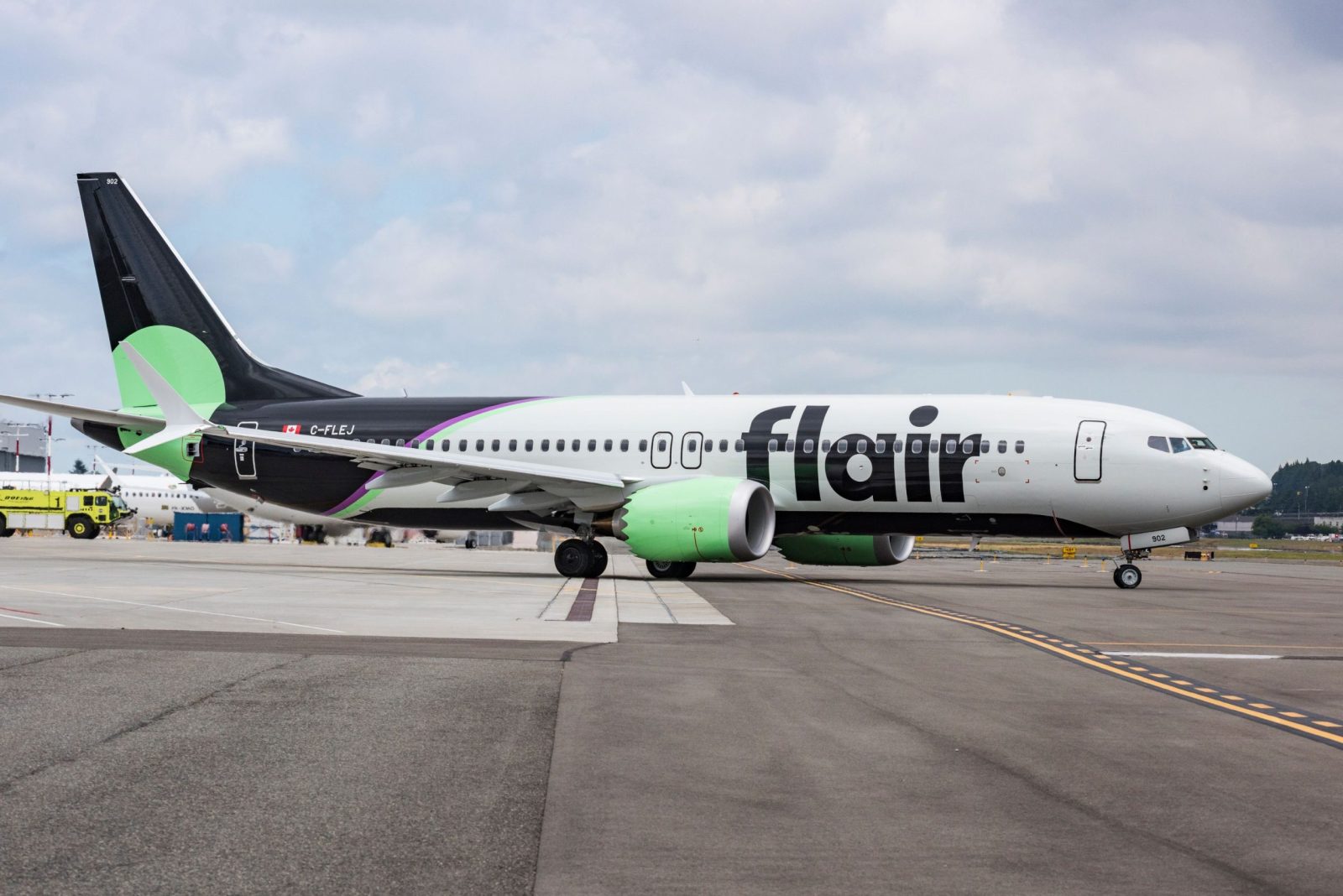
This week, Canadian low-cost carrier Flair Airlines announced an ‘On-Time Guarantee (OTG)’ initiative to compensate passengers for delayed and canceled flights.
This week, Canadian low-cost carrier Flair Airlines announced an ‘On-Time Guarantee (OTG)’ initiative to compensate passengers for delayed and canceled flights. The CAD$60 (US$42.64) e-vouchers will be issued to travelers over the age of 18 when an ‘eligible flight is delayed by more than 60 minutes from the arrival time’ or ‘is canceled within 72 hours before the departure time’ as stated on the passenger itinerary.
Maciej Wilk, Interim CEO of Flair Airlines stated: “Our commitment to passengers has never been stronger. With the OTG, we’re raising the bar in Canadian aviation. The guarantee is simple: if we don’t get you there on time, we’ll compensate you. No other airline in Canada offers this level of accountability. We’re confident in our operations, and we’re putting it all on the line for our passengers.”
The e-vouchers are issued automatically to customers on ‘eligible flights’ and valid for 60 days toward the base fare of a future booking on a Flair Airlines service. “The OTG is our pledge to deliver the service passengers deserve. We are determined to earn our customers’ trust,” added Juliana Ramirez, VP of Ancillary & Digital Innovation.
The OTG initiative does not replace the Air Passenger Protection Rights (APPR) detailed by the Canadian Transportation Agency (CTA). The APPR states that ‘airlines must provide compensation for the inconvenience of flight cancellations and flight delays of three hours or more and if the disruption is within their control and not related to safety, and if the airline notified you of the disruption 14 days or less in advance.’
Under the terms of the APPR, Flair is deemed a ‘large airline’ and has specific obligations concerning passenger compensation. If applicable, large airlines must pay the following amounts (in Canadian dollars): ‘$400 if the passenger arrives three or more hours late, but less than six hours; $700 if the passenger arrives six or more hours late, but less than nine hours; $1,000 if the passenger arrives nine or more hours late.’
In Flair’s most recent operational report for October 2024, the carrier announced a 99.6% completion rate declaring the airline ‘Canada’s most reliable.’ With regard to on-time performance, Flair ranked behind Porter Airlines (83.3 percent) and WestJet (82.9 percent) with 82 percent of flights arriving on schedule.
Flair’s Vice President of Flight Operations, Captain Matt Kunz, said “October brought some operational challenges, including a bird strike on October 24 during a departure from Toronto. The aircraft encountered a 5.4-kilogram crane on takeoff. A bird struck the top of the Captain’s windshield, sending some glass into the flight deck. Despite difficult conditions, the crew expertly managed the situation, returning safely to Toronto without injury.”
Captain Kunz added: “This is where the hundreds of hours each pilot spends in training truly pay off. At Flair, we’re proud of our industry-leading pilot training program, supported by our Toronto-based simulator.”
John has always had a passion for aviation and through a career with Air New Zealand has gained a strong understanding of aviation operations and the strategic nature of the industry. During his career with the airline, John held multiple leadership roles and was involved in projects such as the introduction of both the 777-200 and -300 type aircraft and the development of the IFE for the 777-300. He was also part of a small team who created and published the internal communications magazines for Air New Zealand’s pilots, cabin crew and ground staff balancing a mix of corporate and social content.
John is educated to postgraduate level achieving a masters degree with Distinction in Airline and Airport Management. John has held the positions of course director of an undergraduate commercial pilot training programme at a leading London university. In addition he is contracted as an external instructor for IATA (International Air Transport Association) and has been a member of the Heathrow Community Fund’s ‘Communities for Tomorrow’ panel.
FAA Probing Honolulu Flight After Close Call With Mountains
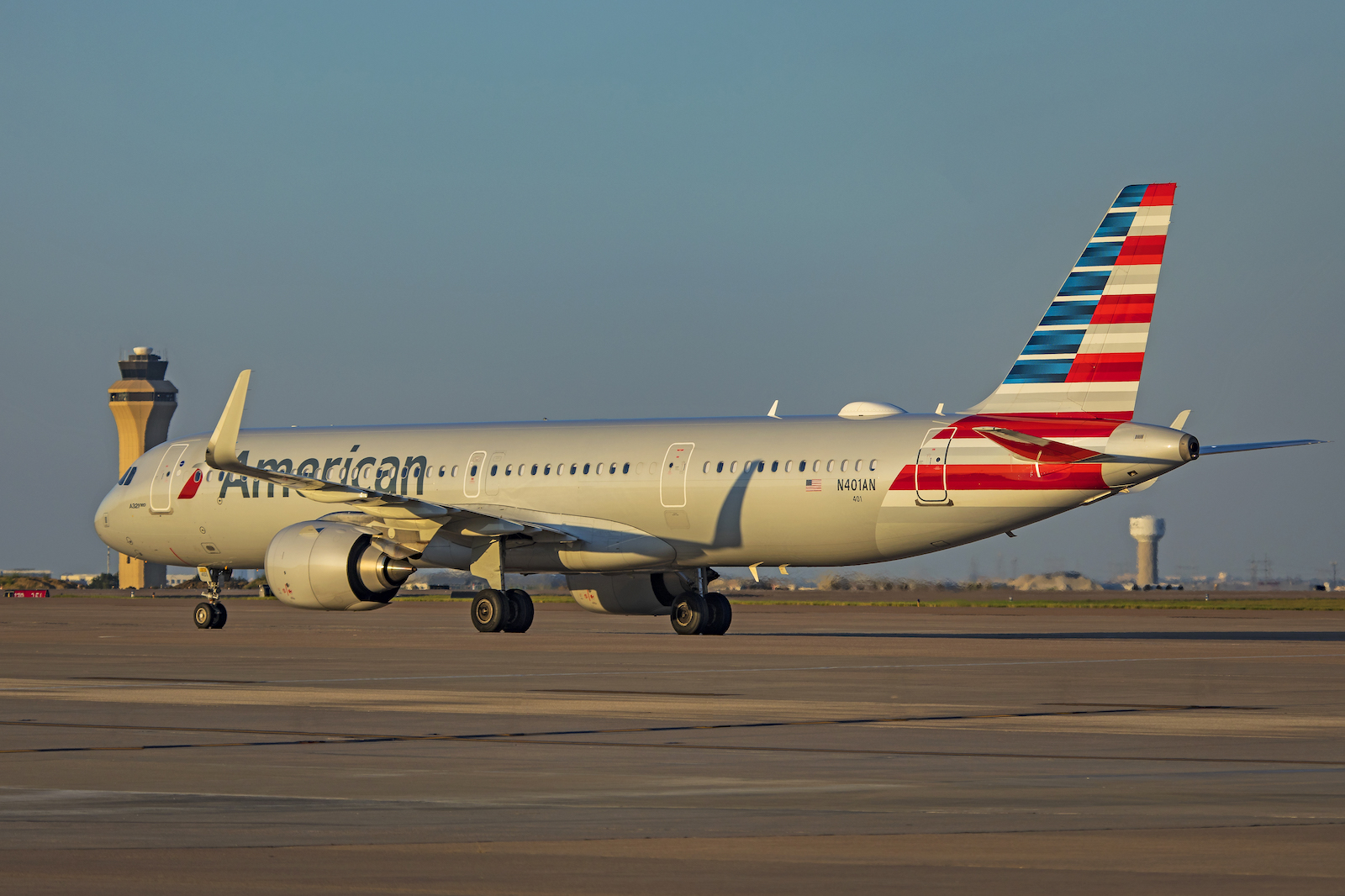
According to initial reports, an American Airlines Airbus A321neo failed to turn correctly, putting the jet close to nearby terrain.
An American A321neo aircraft at Dallas/Fort Worth (Photo: AirlineGeeks | William Derrickson)
The Federal Aviation Administration said it is investigating an early Wednesday incident in Honolulu. According to initial reports, an American Airlines Airbus A321neo failed to turn correctly, putting the jet close to nearby terrain.
American flight 298 was operating from Honolulu to Los Angeles when the crew requested runway 8L for departure. Air traffic control approved the request, and the flight departed an hour behind schedule at around 1 a.m. local time.
Departures from Honolulu’s runway 8L require an immediate right turn to avoid mountainous terrain just east of the airport. Flight 298 continued straight, failing to make the customary turn.
first opinion:
“Departing 8L is fairly rare, yes the SID does call for an immediate right turn to avoid terrain
So obviously a mistake on the crews part
Can’t speak to how close the terrain was but if the controller is giving them a turn to avoid it I can imagine a GPWS…
The air traffic controller – who was managing around four different frequencies at the time – instructed the crew to expedite the aircraft’s climb and begin the right turn. Per Flightradar24 ADS-B data, the A321neo was already above the mountains when the instruction was given.
“An air traffic controller instructed American Airlines Flight 298 to perform an expedited climb after the crew did not make the assigned turn while departing from Honolulu International Airport,” an FAA spokesperson told AirlineGeeks in a statement. “The controller’s actions ensured the aircraft remained safely above nearby terrain.”
The aircraft landed safely in Los Angeles nearly five hours later.
One passenger told The Aviation Herald: “Upon leaving HNL, the flight took off on rwy 8L which is very unusual. Instead of immediately turning right after takeoff the flight continued in a straight line headed right for the Koolau Mountains and then appeared to barely miss the mountains and turned right to go out over the ocean.”
“In person, the plane sounded like they had it at 100% trying to get away from the mountains,” the passenger said.
ADS-B data shows the aircraft passed approximately 1,400 feet over the terrain.
“The safety of our customers and team members is our top priority. During the climb out of Honolulu on November 13, the crew of American Airlines flight 298 requested and received right-turn clearance and complied with controller instructions. There was no Enhanced Ground Proximity Warning System (EGPWS) alert as there were no issues with terrain clearance based on the trajectory of the aircraft,” an American spokesperson said in a statement on Friday.
Editor’s Note: This story was updated on Friday, Nov. 15, 2024 at 11:56 a.m. ET to add a statement from American.
Ryan founded AirlineGeeks.com in February 2013 and has spent more than a decade covering the airline business. His work has been featured by CNN, WJLA, CNET, and Business Insider. His aviation experience spans airport operations, Part 135 regulatory compliance, and airline crew workforce planning, along with time behind the yoke of a Cessna 172 and interviews with airline executives. Ryan now serves as Group President of Firecrown Media’s Aviation Group. He holds a B.S. in Air Transportation Management and an MBA from Arizona State University and teaches Airline Management at Embry-Riddle Aeronautical University.
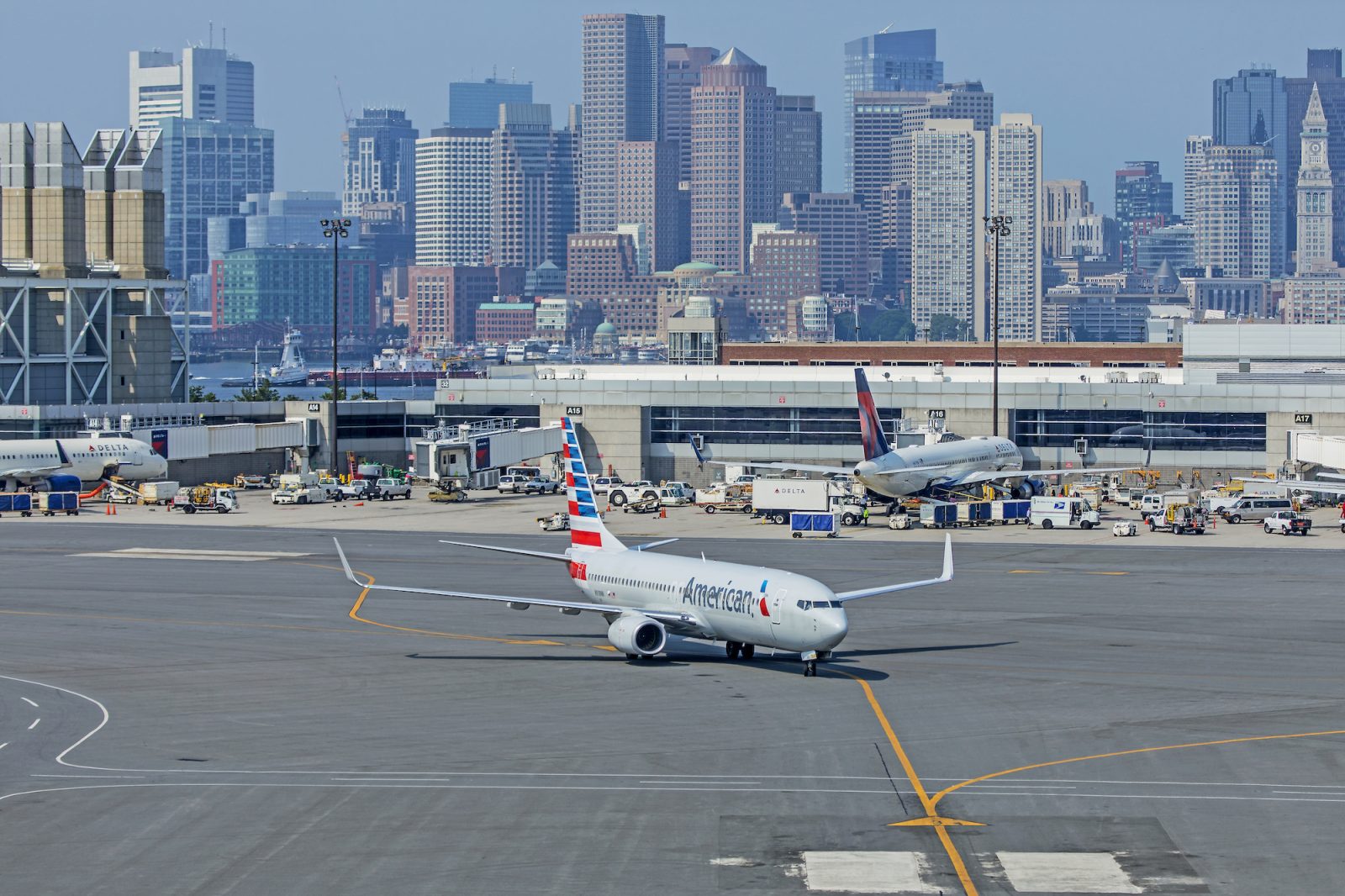
An American Airlines 737-800 taxiing at Boston Logan International Airport. (Photo: AirlineGeeks | William Derrickson)
Executives at two prominent U.S. carriers said they were looking forward to working with the new administration under President-elect Donald Trump at the Skift Aviation Forum in Dallas on Tuesday. This comes after Delta’s CEO commented on the positive impact a second Trump presidency might have on the industry.
American Airlines CEO Robert Isom and Drew Wells, chief commercial officer at ultra-low-cost carrier Allegiant, expressed their optimism alongside Willie Walsh, director general of the International Air Transport Association (IATA) during the forum.
Isom said that it’s great to have the election finished.
“First off, I’d just like to say that certainty helps, right?” Isom said. “Taking uncertainty out of the equation is going to be beneficial all around. And so it’s great to have the election behind us.”
“We support commerce,” he continued. “And I know that no matter who’s in office, that’s important. In regard to President Trump, I think we have a good indication from the last administration of the real enthusiasm for aviation. Don’t forget, under President Trump’s watch, we started support for the airline industry in the U.S. during the darkest days, the earliest days of COVID.”
Without that support, Isom said American and the airline industry as a whole would look very different, adding that he was thankful for the attention the industry received during the pandemic.
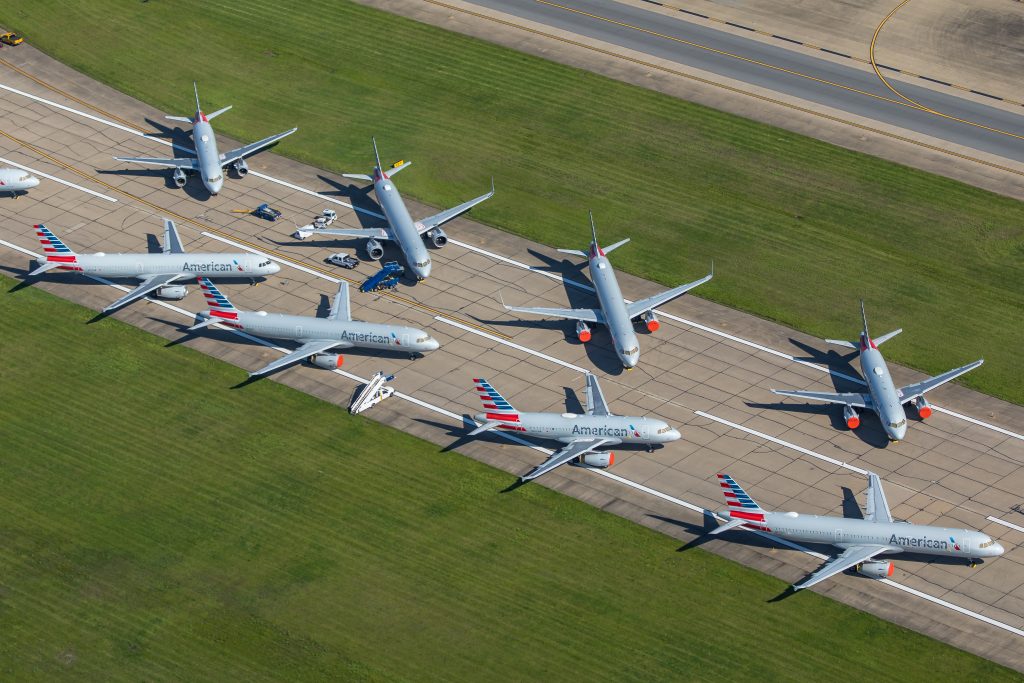
American Airlines aircraft parked on a runway during the COVID-19 pandemic. (Photo: AirlineGeeks | William Derrickson)
“As we go forward, I think that that’s the message,” Isom said. “We have to invest in this industry. It’s critically important within the U.S. and certainly [the] globe…We really do need to do what’s right to enable people to come together. And on that front, we’ve got some work to do to enable people to get to the United States with allowing a lot more visas.”
“I think on balance, the platform [Trump] ran on was to try to unlock business potential by looking at regulation as to where it was most effective in trying to ease the bureaucracy, ease the burdens,” Bastian said in the Chattanooga Times Free Press report.
ULCC Executive Weighs In
Wells said during the Skift Aviation Forum he thinks there will probably be a bit more of a relaxed stance on what the Department of Justice may pursue when it comes to mergers and acquisitions.
“I think there were some, perhaps, tax-friendly aspects of the first term. But beyond that, I don’t know that I have any great answers. I really like the Allegiant story regardless of who’s in office. And I think there’s an immense amount of runway to come, regardless of what happens there.”
On the International Stage
Walsh said he sees the situation as a positive for airlines.
“I think if you look at the administration under Trump the first time round, it was very positive,” he said. “You know, Robert Isom made the comment, and I’ve heard others say it too, that [the Trump administration] stepped in very quickly to secure the future of the industry through the CARES Act.”
Walsh said the industry has seen a “massive move” toward greater regulation in Europe, and that has also been seen under President Joe Biden’s administration.
“I think that was driven by generating headlines for people with political ambition,” he said. “So I think we see that change. So I look at several positives, clearly the oil prices responded positively as well…I think we have to look at this as a positive opportunity.”
Walsh said that the industry has “never” had certainty.
“Look at our industry, I’m 45 years in the industry now. We’ve always had uncertainty. We’ve probably had more geopolitical uncertainty in the past five years than I’ve witnessed in the previous 40 years,” he shared. “But you know, our industry is very resilient and we’re capable of operating in an environment where we have that uncertainty.”
AirlineGeeks.com was founded in February 2013 as a one-person blog in Washington D.C. Since then, we’ve grown to have 25+ active team members scattered across the globe. We are all here for the same reason: we love deep-diving into the fascinating realm of the airline industry.
The Abu Dhabi-based airline attributed its strong financial results to booming passenger numbers, expanding cargo business, and strategic cost-saving measures.
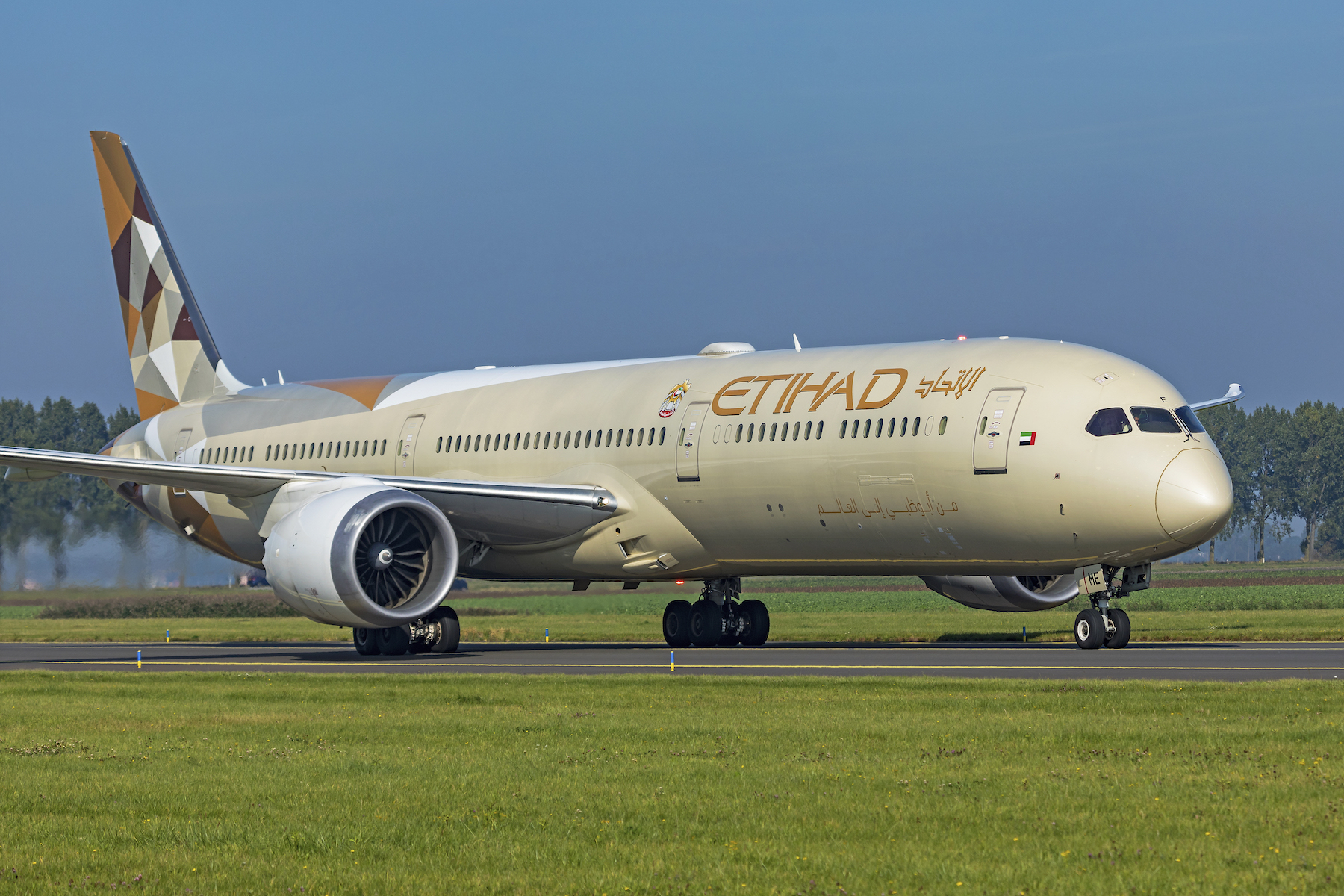
An Etihad Airways Boeing 787-10 Dreamliner. (Photo: AirlineGeeks | William Derrickson)
Etihad Airways reported a sharp rise in profit for the first nine months of 2024, with after-tax earnings of AED 1.4 billion (USD 368 million), marking a 66% increase over the same period last year. The Abu Dhabi-based airline attributed its strong financial results to booming passenger numbers, expanding cargo business, and strategic cost-saving measures.
Strong Revenue Growth
The airline’s revenue rose to AED 18.4 billion (USD 5.0 billion) over the nine-month period, up 21% from AED 15.1 billion in 2023. Antonoaldo Neves, chief executive officer of Etihad Aviation Group, described the results as a reflection of the company’s focus on growth and efficiency. “This impressive growth is driven by strong results in both passenger and cargo revenues,” Neves said in a news release. “It underscores the effectiveness of our strategy and the strength of our growth trajectory.”
Passenger demand drove much of the revenue increase, with the airline carrying 13.6 million travelers between January and September — a 35% jump compared to last year. With expanded routes and additional flights on existing routes, Etihad’s network now serves 83 destinations, up from 72 last year, while its total flight capacity grew by 31%. The average passenger load factor reached 87%.
Revenue from passenger flights totaled AED 15.2 billion (USD 4.1 billion), up 21% from the prior year, while cargo operations generated AED 3.0 billion (USD 808 million), also a 21% increase. Etihad attributed the cargo revenue growth to expanded capacity and partnerships, including a recent collaboration with China’s SF Airlines aimed at boosting UAE-China trade routes.
Fleet Expansion
Neves highlighted the airline’s investment in expanding its fleet, which now includes 95 aircraft, a 16-aircraft increase from the same period in 2023. This year’s deliveries included six A321neos, while the company also reintroduced its flagship A380 on select routes.
The airline reported a reduction in its cost per available seat kilometer (CASK) excluding fuel, down 8% year-on-year, despite rising expenses associated with growth and service enhancements. This reduction, Neves said, was achieved through careful management of resources and targeted cost-saving measures.
Looking toward the remainder of the year, Etihad plans further expansion, with additional destinations expected by year-end.
Tolga is a dedicated aviation enthusiast with years of experience in the industry. From an early age, his fascination with aviation went beyond a mere passion for travel, evolving into a deliberate exploration of the complex mechanics and engineering behind aircraft. As a writer, he aims to share insights , providing readers with a view into the complex inner workings of the aviation industry.
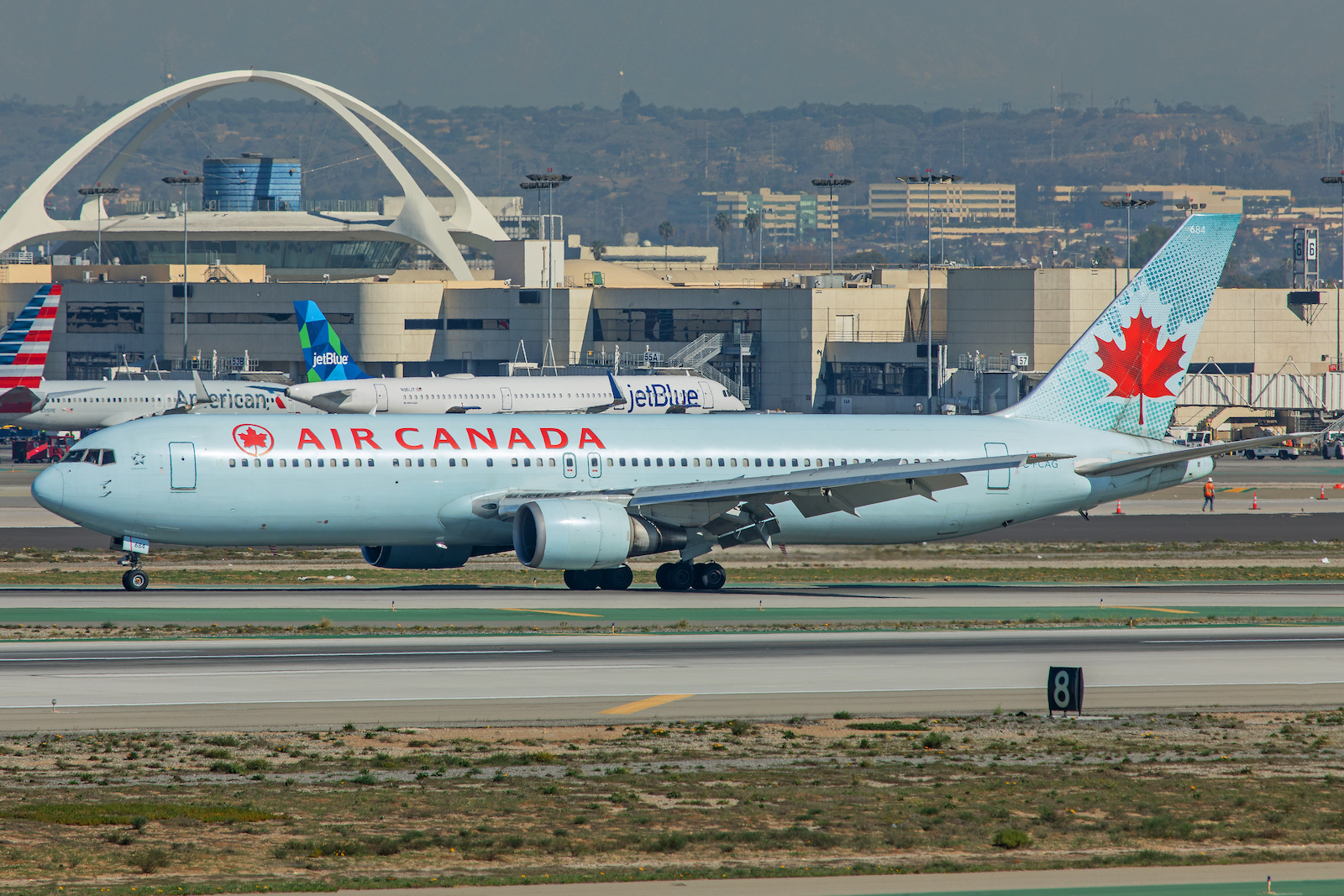
Air Canada to Relaunch 767 Service in February
The Canadian carrier recently announced plans to take two 767s out of retirement, returning them to passenger service in 2025.
According to Ishrion Aviation, the airline will initially deploy the jet to five destinations from its Toronto hub. The aircraft begins flights to Las Vegas on Feb. 1, 2025. Starting on Feb. 15, 2025, the 767s will fly to Edmonton and Calgary, Alberta.
Later, the aircraft will fly to Montego Bay, Jamaica, and Phoenix starting in March. Flights to Phoenix are currently planned for March 14, 16 and 23.
The two aircraft are registered as C-FOCA and C-GLCA. Both jets – which are around 30 years old – had been in storage at Pinal Airpark in Arizona until they were ferried to John C. Munro Hamilton International Airport earlier this year.
Air Canada leadership called the move “temporary insurance” in the airline’s short-term fleet plan. “These are two older 767s that used to be part of our passenger mainline fleet,” said Mark Galardo, Air Canada’s executive vice president of revenue and network planning, during a third-quarter earnings call.
The carrier also added the 767 back to its website’s fleet page. Each aircraft can accommodate up to 211 passengers with 24 lie-flat business class seats and 187 in economy.
Ryan founded AirlineGeeks.com in February 2013 and has spent more than a decade covering the airline business. His work has been featured by CNN, WJLA, CNET, and Business Insider. His aviation experience spans airport operations, Part 135 regulatory compliance, and airline crew workforce planning, along with time behind the yoke of a Cessna 172 and interviews with airline executives. Ryan now serves as Group President of Firecrown Media’s Aviation Group. He holds a B.S. in Air Transportation Management and an MBA from Arizona State University and teaches Airline Management at Embry-Riddle Aeronautical University.
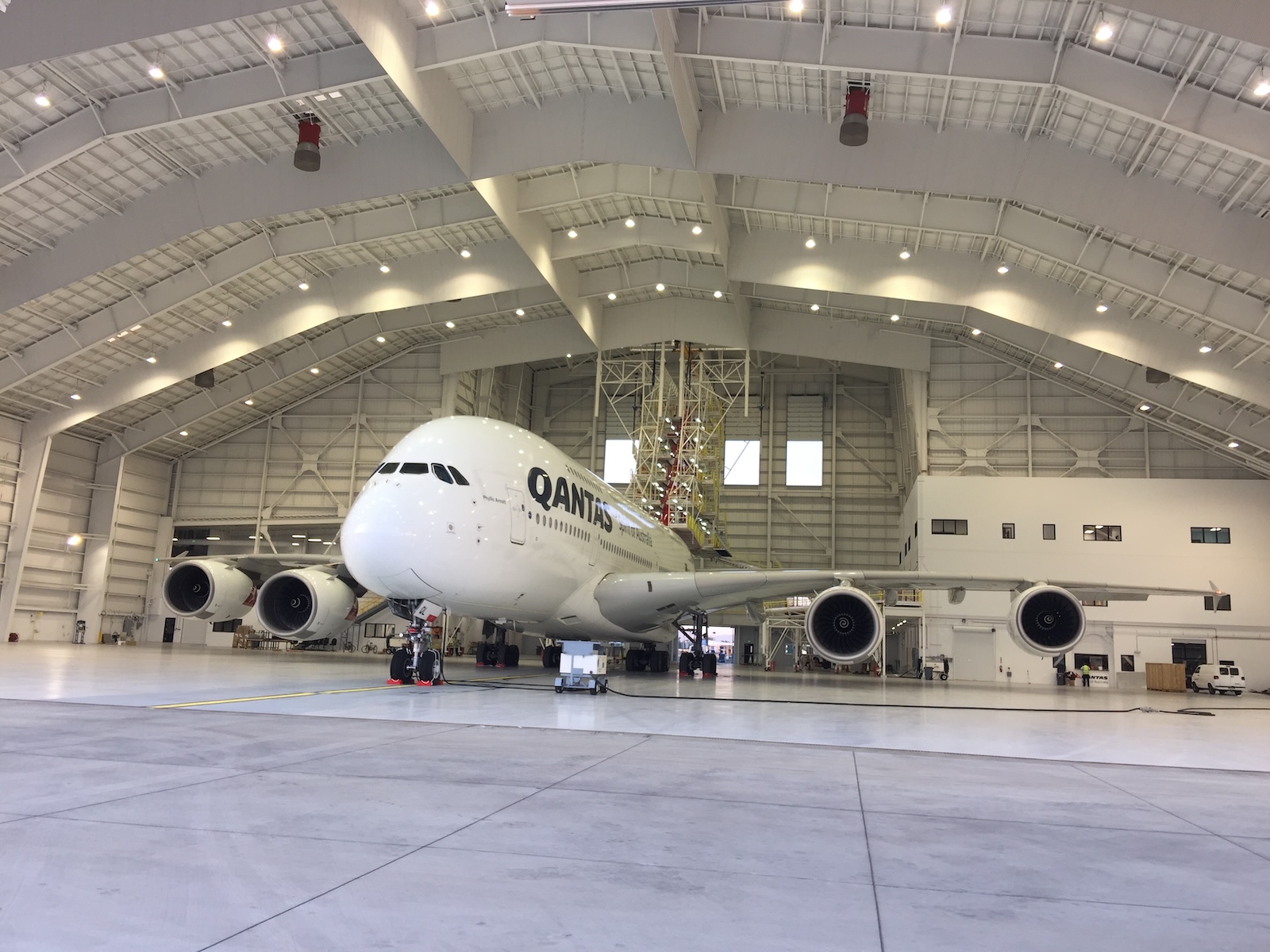
A Qantas A380 in the carrier's Los Angeles maintenance facility (Photo: Qantas)
A Qantas Airbus A380 operated 34 flights with a nylon tool stuck in one of its engines, Australian Transport Safety Bureau investigators said. The jet – registered as VH-OQL – was not damaged.
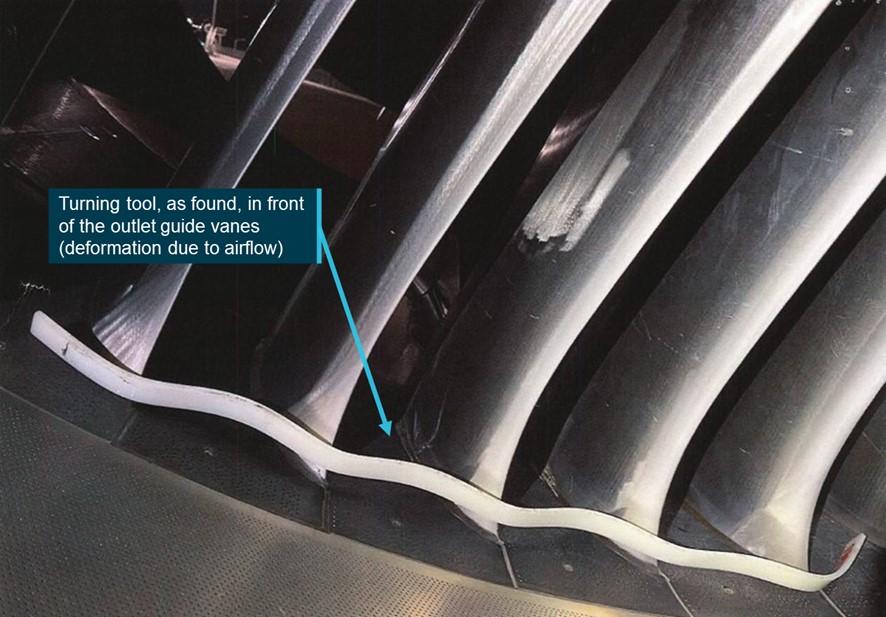
The over 4-foot-long tool was found on Jan. 1, 2024, stuck in the outboard left engine’s inlet. Nearly a month prior, on Dec. 6, 2023, the engine underwent a scheduled borescope inspection, which is when the tool was left behind, investigators stated.
Roughly 24 days later, the superjumbo aircraft returned to Los Angeles for more scheduled maintenance. Maintenance staff found the missing tool in the engine’s low‑pressure compressor.
The ATSB said the aircraft had operated 294 flight hours with the tool lodged in the engine. While no damage was reported to the engine itself, the tool was “deformed by high energy airflow.”
“The ATSB investigation found that maintenance engineers did not notice the tool had been left in the engine’s low-pressure compressor case when conducting checks for foreign objects at the completion of the borescope inspection task,” ATSB Chief Commissioner Angus Mitchell said in a news release.
Mitchell adds that maintenance staff knew the tool was missing but dispatched the aircraft anyway.
According to the ATSB, Qantas has since reminded staff of the “importance of ensuring all tooling is returned and actioned by tool store personnel.”
Ryan founded AirlineGeeks.com in February 2013 and has spent more than a decade covering the airline business. His work has been featured by CNN, WJLA, CNET, and Business Insider. His aviation experience spans airport operations, Part 135 regulatory compliance, and airline crew workforce planning, along with time behind the yoke of a Cessna 172 and interviews with airline executives. Ryan now serves as Group President of Firecrown Media’s Aviation Group. He holds a B.S. in Air Transportation Management and an MBA from Arizona State University and teaches Airline Management at Embry-Riddle Aeronautical University.
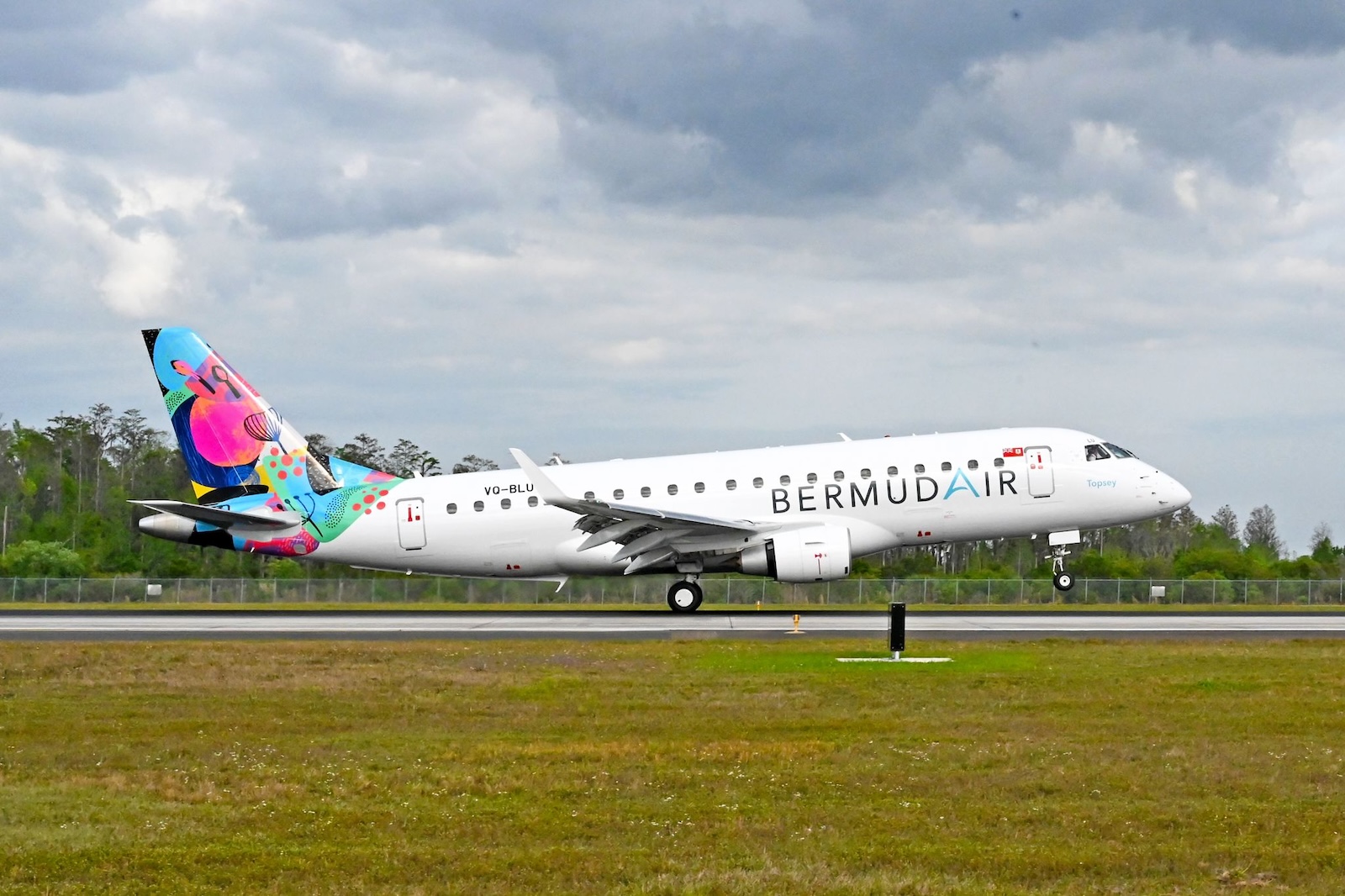
A BermudAir E175 aircraft. (Photo: Orlando International Airport)
Startup BermudAir is growing its U.S. network with plans to add three new markets next year. The Bermuda-based airline was founded in 2023 and currently has two Embraer E175s in its fleet.
In April, the carrier will begin serving Hartford, Connecticut; Charleston, South Carolina; and Raleigh/Durham, North Carolina, according to Ishrion Aviation on Twitter/X. The new routes begin in April.
Service to Hartford starts April 3, operating twice per week. Raleigh/Durham also operates twice per week starting April 11. Finally, the carrier’s new route between Bermuda and Charleston starts April 19 with Saturday-only service.
These new routes join BermudAir’s existing U.S. network of five destinations, including Baltimore; Boston; Fort Lauderdale and Orlando, Florida; and White Plains, New York. In addition, the carrier serves St. George, Toronto, and Halifax in Canada.
Earlier this year, the airline said it plans to introduce new business class seats by the end of 2024.
Ryan founded AirlineGeeks.com in February 2013 and has spent more than a decade covering the airline business. His work has been featured by CNN, WJLA, CNET, and Business Insider. His aviation experience spans airport operations, Part 135 regulatory compliance, and airline crew workforce planning, along with time behind the yoke of a Cessna 172 and interviews with airline executives. Ryan now serves as Group President of Firecrown Media’s Aviation Group. He holds a B.S. in Air Transportation Management and an MBA from Arizona State University and teaches Airline Management at Embry-Riddle Aeronautical University.