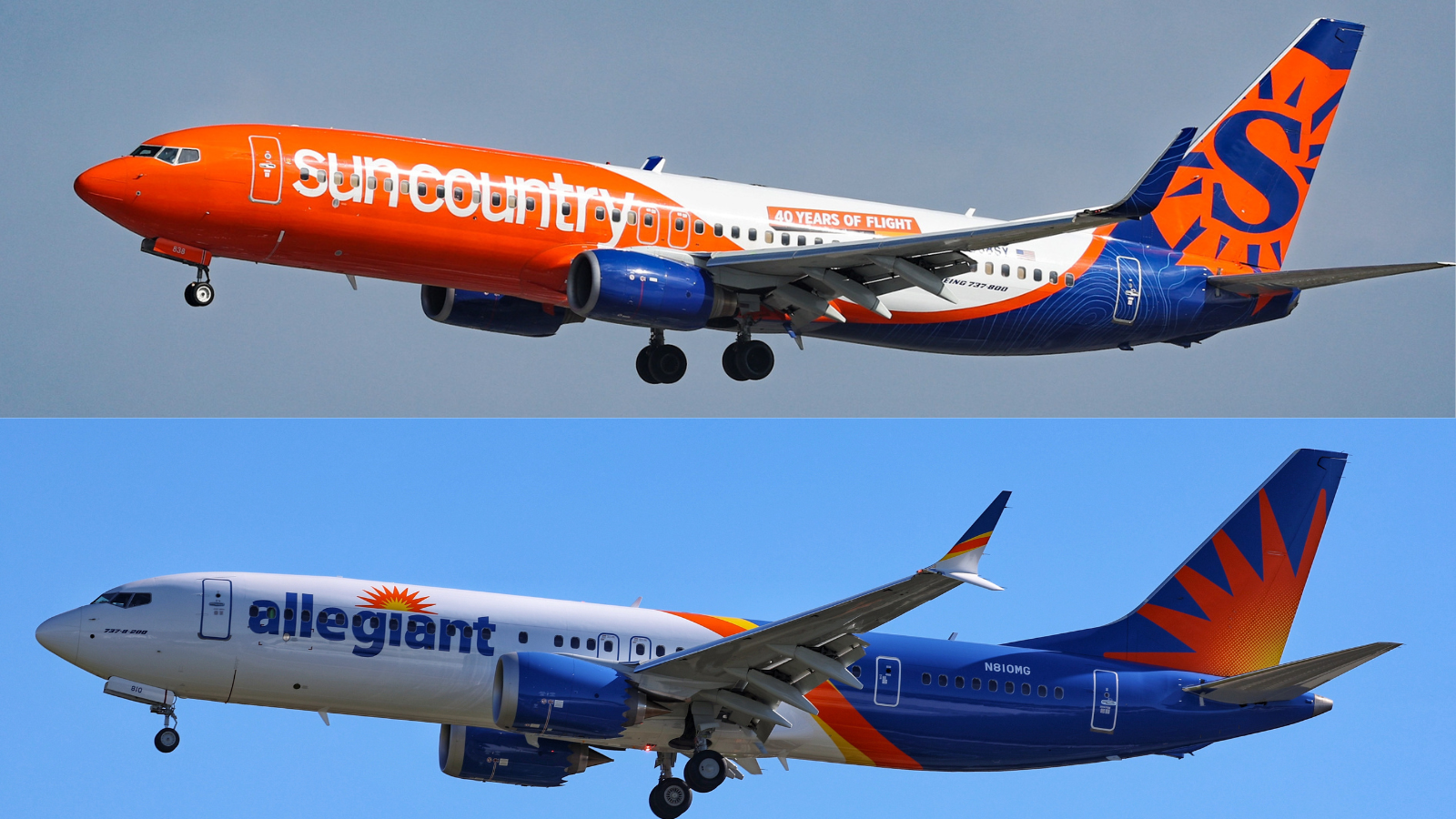
Sun Country and Allegiant aircraft. (Photo: AirlineGeeks | Katie Zera)
International and domestic route rights held by Minnesota-based Sun Country will now also cover the airline’s parent company, Allegiant, the Department of Transportation ruled this week.
In a decision released Wednesday, department officials said the transfer will not harm competition or adversely affect the international trade position of the U.S. Going forward, Allegiant will be able to operate all Sun Country routes, though the two airlines will be barred from operating any route simultaneously.
The department found that Allegiant and Sun Country do not “meaningfully compete” at present and overlap on only one route – Appleton, Wisconsin, to Fort Myers, Florida.
The ruling could allow Allegiant to operate its first international flights. The carrier currently flies only within the U.S., while Sun Country offers flights to destinations in Canada, Mexico, Central America, and the Caribbean.
Zach Vasile is a writer and editor covering news in all aspects of commercial aviation. He has reported for and contributed to the Manchester Journal Inquirer, the Hartford Business Journal, the Charlotte Observer, and the Washington Examiner, with his area of focus being the intersection of business and government policy.
Livery of the Week: RwandAir
The East African carrier’s colorful tail draws inspiration from one of Rwanda’s national symbols.
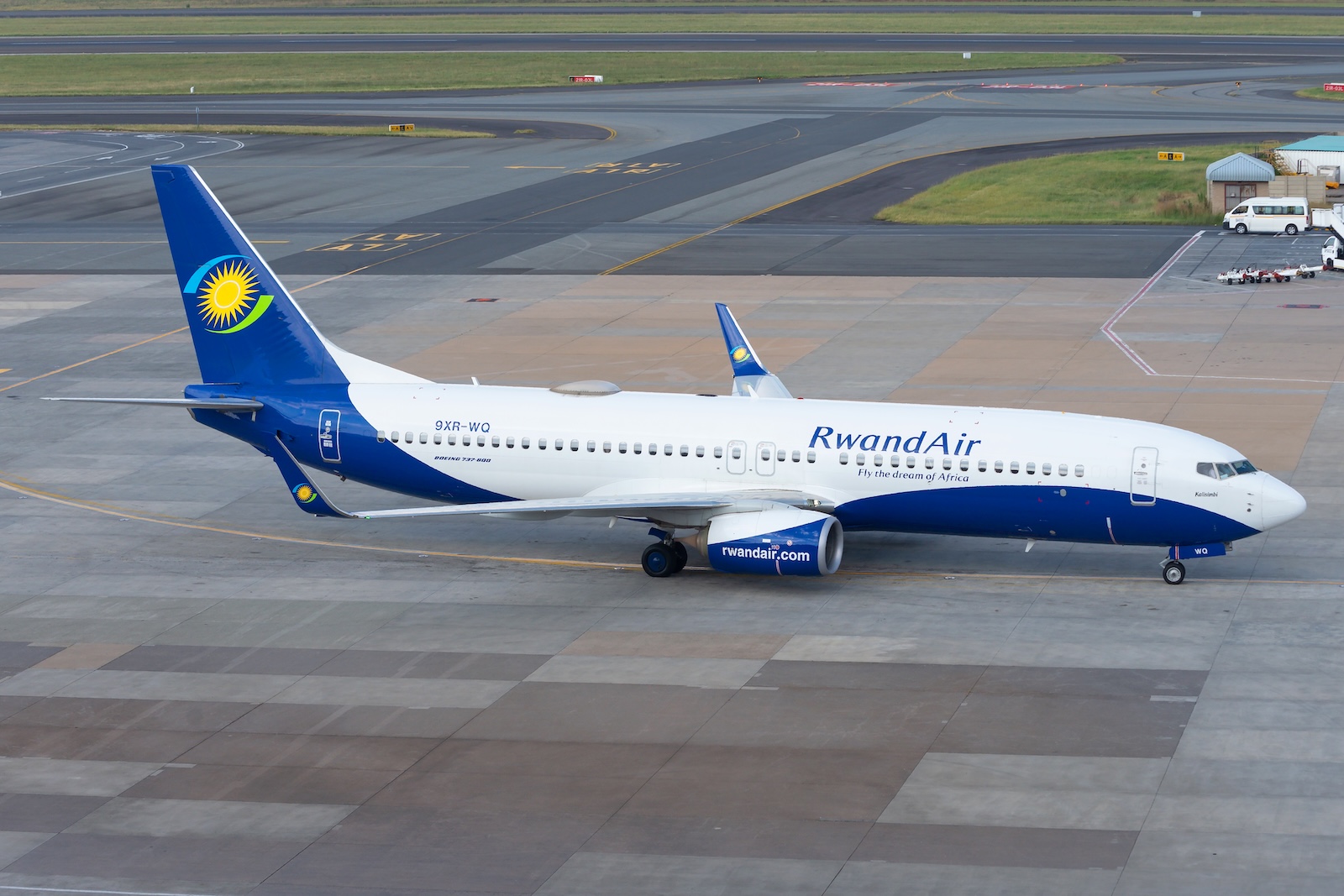
RwandAir Boeing 737 taxiing (Photo: Shutterstock | Thiago B Trevisan)
Editor’s Note: AirlineGeeks is proud to present our ‘Livery of the Week’ series. Every Friday, a team member will share an airline livery, which can be from the past, present, or even a special scheme. Some airline liveries are works of art. The complexity associated with painting around critical flight components and the added weight requires outside-the-box thinking from designers. The average airliner can cost upwards of $200,000 to repaint, creating a separate aircraft repainting industry as a result.
Have an idea for a livery that we should highlight? Drop us a line.
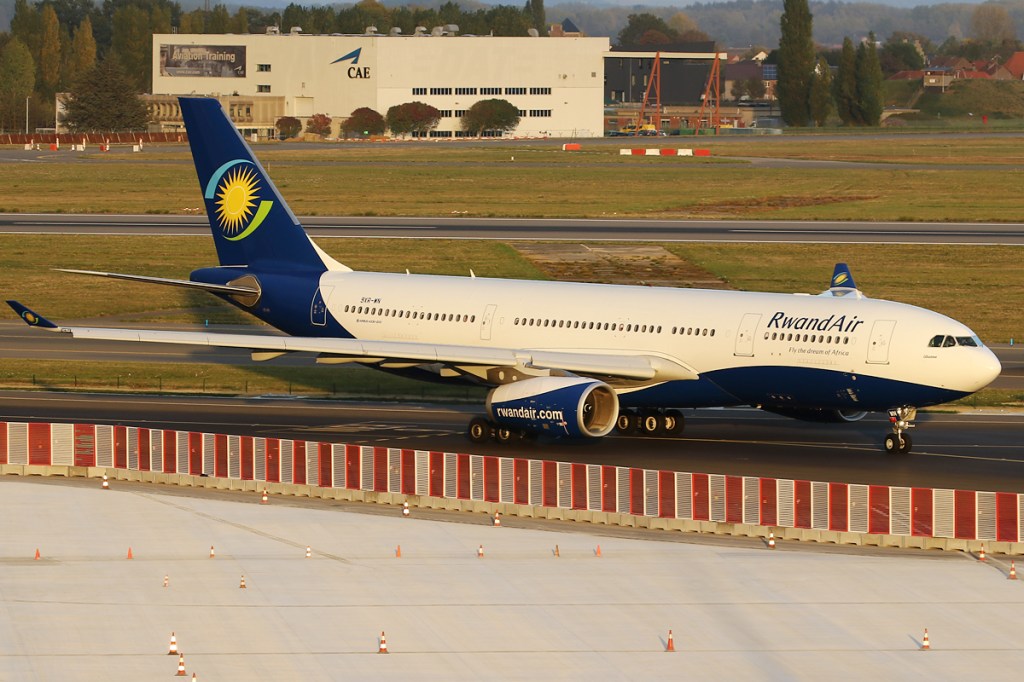
RwandAir’s standard livery is centered on a multicolored sunburst design that stretches across the vertical stabilizer and rear fuselage. The pattern, rendered in shades of blue, yellow, and green, is inspired by the sun motif found on Rwanda’s national flag and has become the defining feature of the airline’s fleet identity.
The tail artwork radiates outward in a series of curved lines, creating the appearance of a rising sun. The design is paired with a predominantly white fuselage, allowing the vibrant colors to stand out while maintaining a clean and modern appearance.
Along the forward section of the aircraft, “RwandAir” titles appear in dark blue lettering, accompanied by the airline’s slogan, “Fly the Dream of Africa,” on certain aircraft. A thin blue cheatline runs beneath the cabin windows toward the rear of the aircraft, visually connecting the fuselage to the colorful tail.
The livery is applied consistently across RwandAir’s fleet, including Boeing 737s, Airbus A330s, and Bombardier CRJ-900 regional jets. While the proportions vary by aircraft type, the sunburst pattern remains the focal point of the design regardless of the size of the aircraft.
Unlike many modern airline liveries that rely on a single dominant color, RwandAir embraces a broader palette that reflects both its national identity and its position as one of Africa’s fastest-growing carriers. The result is a design that is both contemporary and unmistakably tied to its home country.
Today, the sunburst livery can be seen on flights across Africa, Europe, the Middle East, and Asia, serving as a colorful ambassador for Rwanda and one of the more distinctive fleet identities in the region.
Looking for a new airplane model? Head over to our friends at the Midwest Model Store for a wide selection of airlines and liveries.
Ryan founded AirlineGeeks.com in February 2013 and has spent more than a decade covering the airline business. His work has been featured by CNN, WJLA, CNET, and Business Insider. His aviation experience spans airport operations, Part 135 regulatory compliance, and airline crew workforce planning, along with time behind the yoke of a Cessna 172 and interviews with airline executives. Ryan now serves as Group President of Firecrown Media’s Aviation Group. He holds a B.S. in Air Transportation Management and an MBA from Arizona State University and teaches Airline Management at Embry-Riddle Aeronautical University.
A Ryanair 737-800 aircraft approaches Barcelona Airport. (Photo: AirlineGeeks | William Derrickson)
A passenger was nearly sucked out of a window opening on a Ryanair flight Friday morning after the windowpane near his seat detached in mid-air.
Other travelers on board the flight, which was heading from Thessaloniki, Greece, to Memmingen, Germany, told media outlets that the man’s head and shoulders were briefly outside the aircraft fuselage. His seatbelt kept him in place, however, and other passengers nearby helped pull him fully back inside the cabin.
Their statements could not be independently verified as of Friday. Ryanair said only that the flight returned to Thessaloniki after a “passenger window detached.”
“The aircraft landed normally and the passengers returned to the terminal,” the carrier said in a statement.
Ryanair did not mention any injuries to passengers or the crew, though some outlets, including CBS News, reported that the man who was partially pulled out of the window was hospitalized in Greece for friction burns.
FlightAware shows that Ryanair uses a Boeing 737-800 on its Thessaloniki-Memmingen connection.
According to some Greek media sources, a piece of the aircraft’s engine broke off and smashed into the window, causing a cabin decompression event. Neither Ryanair nor authorities in Greece have confirmed this.
If the account of engine failure is accurate, it would closely mirror a 2018 episode in which a woman was partially sucked out of a Southwest flight. Fragments from an engine cowl burst a cabin window, resulting in explosive decompression. The woman was pulled back inside the aircraft by flight attendants and other passengers but died of blunt force trauma.
Zach Vasile is a writer and editor covering news in all aspects of commercial aviation. He has reported for and contributed to the Manchester Journal Inquirer, the Hartford Business Journal, the Charlotte Observer, and the Washington Examiner, with his area of focus being the intersection of business and government policy.
Palm Beach Airport Officially Renamed for Trump
The airport’s location identifier will switch from PBI to DJT.
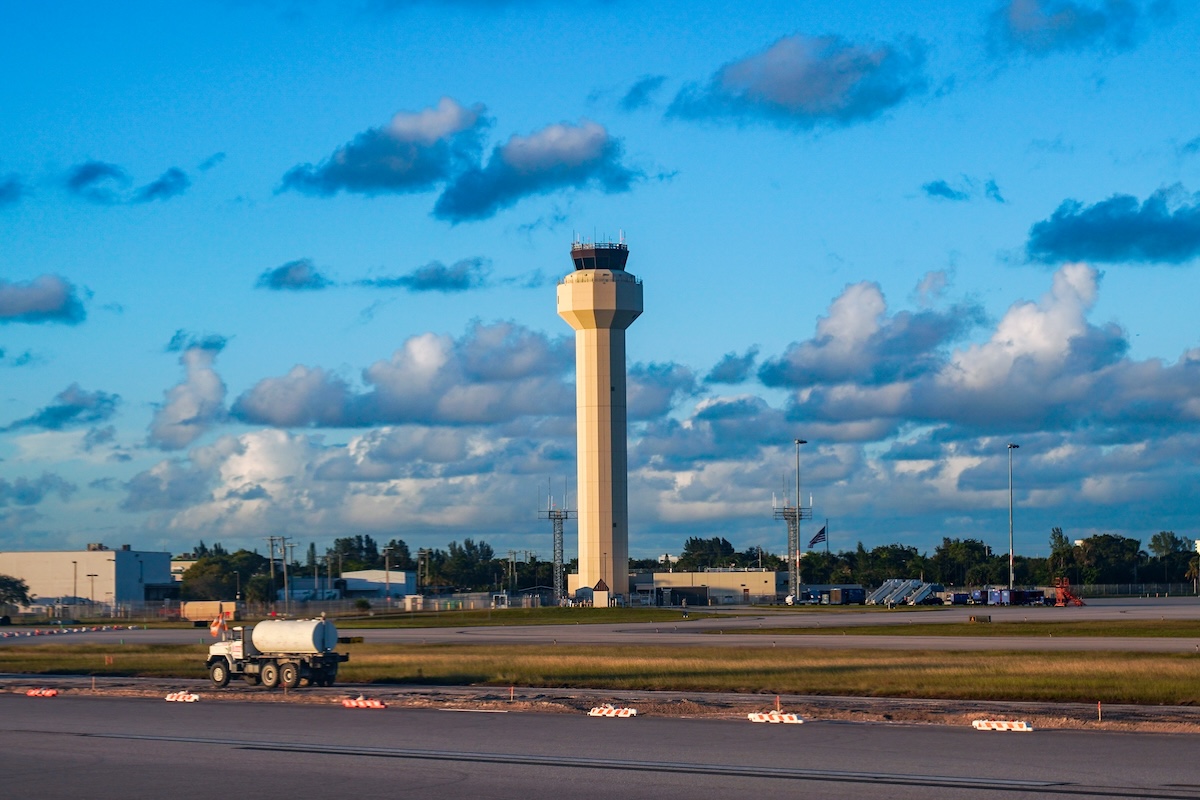
Airport in West Palm Beach (Photo: Shutterstock | Leonard Zhukovsky)
Palm Beach International Airport in Florida is now officially President Donald J. Trump International Airport, making it the first airport in the U.S. to be named after a sitting president.
The change, which had been in the works for months following state and federal efforts, took effect Thursday, according to the FAA. The airport’s FAA location identifier will be changed to “DJT,” and its ICAO identifier will be changed to “KDJT.”
Updates to signage, branding, and public‑facing materials will occur in phases, airport officials said this week. They also clarified that there has been no change in the airport’s ownership, and flight operations will continue as normal.
President Donald J. Trump International is located in Palm Beach County, not far from the president’s Mar-a-Lago resort.
Florida Governor Ron DeSantis signed legislation to rename the airport in March, following a push by state Republicans. The FAA approved the change, and has been updating the airport’s name in its internal systems.
Separately, some Republicans in Congress have proposed renaming Washington Dulles after Trump, but this appears highly unlikely with his name now attached to the airport in Palm Beach.
There are now nine commercial airports and three general aviation airports in the country named after presidents.
Zach Vasile is a writer and editor covering news in all aspects of commercial aviation. He has reported for and contributed to the Manchester Journal Inquirer, the Hartford Business Journal, the Charlotte Observer, and the Washington Examiner, with his area of focus being the intersection of business and government policy.
North Carolina Airport Looks to Expand Commercial Service
Officials now have $4.5 million from the state to fund a revenue guarantee agreement.
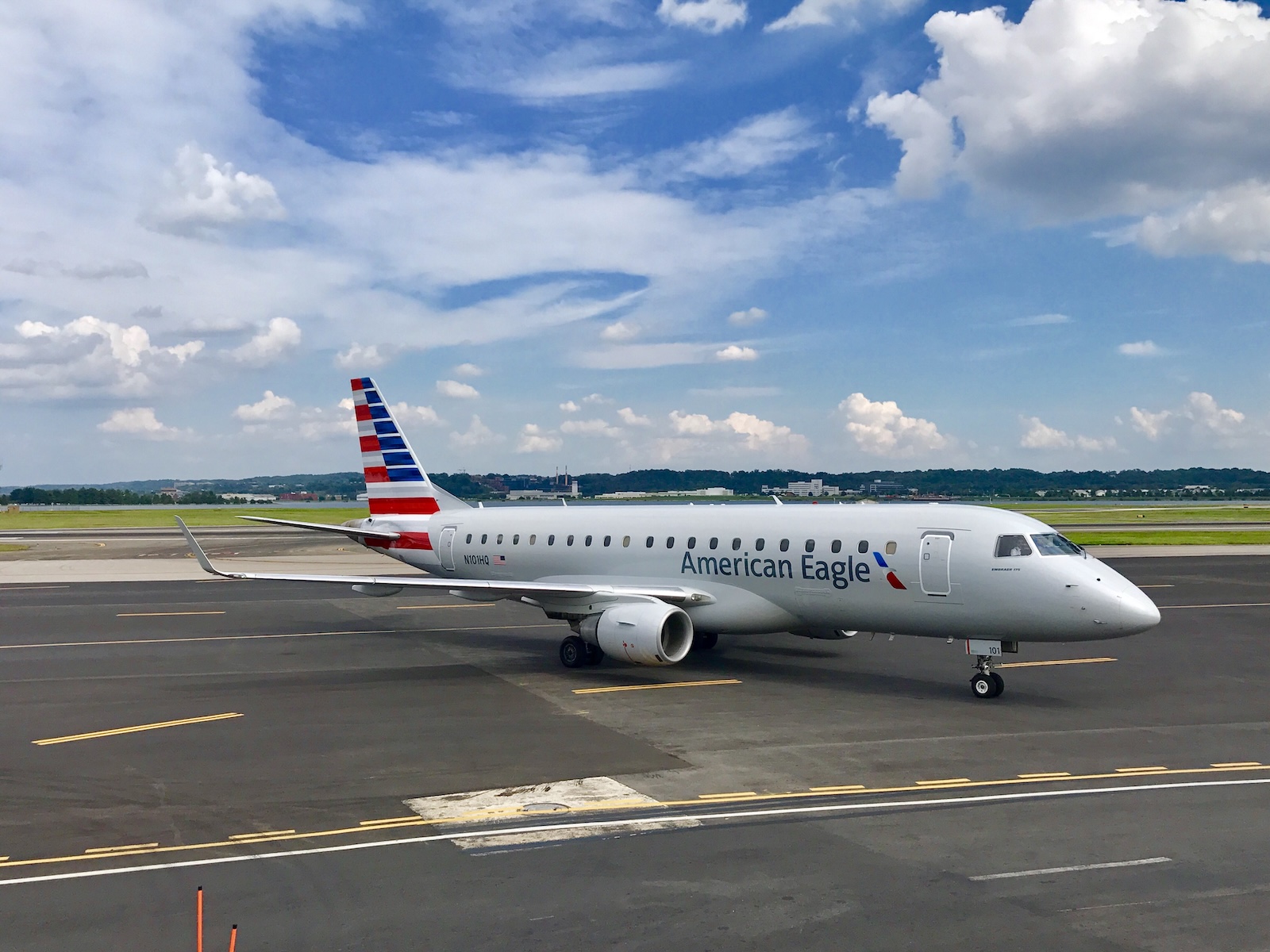
An American Eagle Embraer jet. (Photo: Ryan Ewing)
A small, mostly GA-focused airport in North Carolina will get $4.5 million to help attract a new airline.
WCTI-TV reported Wednesday that the money was allocated to Pitt-Greenville Airport in a state budget recently signed into law by Governor Josh Stein. The funding will support a revenue guarantee for carriers that opt to connect Greenville.
Many small airports use revenue guarantees to help reduce the financial risk for potential partner airlines.
Currently, only American Airlines serves Greenville, with American Eagle commuter flights to Charlotte.
Airport Executive Director Brandon Craft told WCTI that the addition of another airline could help grow Greenville into a travel hub for eastern North Carolina. He also said that the airport is pursuing grants to help expand and improve its facilities.
Greenville is located about 80 miles east of Raleigh.
Zach Vasile is a writer and editor covering news in all aspects of commercial aviation. He has reported for and contributed to the Manchester Journal Inquirer, the Hartford Business Journal, the Charlotte Observer, and the Washington Examiner, with his area of focus being the intersection of business and government policy.
JetBlue Launches Eight New Routes, Plans Six More
The carrier is adding a new destination in South America.
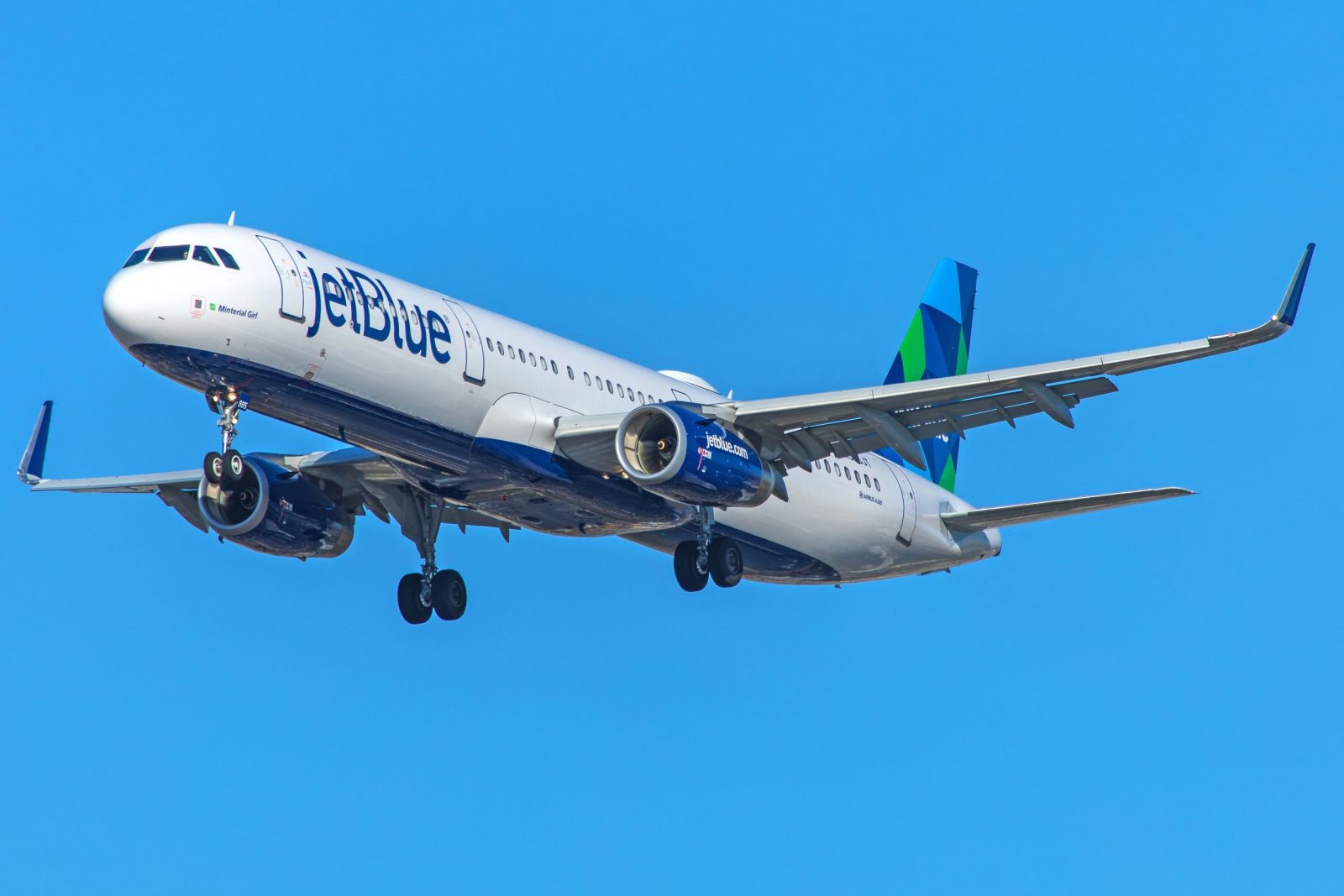
A JetBlue Airbus A321. (Photo: AirlineGeeks | William Derrickson)
JetBlue this week launched eight new routes from its hub in Fort Lauderdale, Florida, and said six more connections are in the works for later this year.
On Wednesday, the carrier added daily service between Fort Lauderdale and Cleveland, Ohio, followed by connections to Baltimore (three times daily), Charlotte, North Carolina (three times daily), Nashville, Tennessee (three times daily), Detroit (twice daily), Houston (three times daily), Chicago O’Hare (twice daily), and Ponce, Puerto Rico (daily), on Thursday. All eight of the routes were previously announced in May.
JetBlue officials have said they are building up Fort Lauderdale to capture market share once held by Spirit Airlines, which went out of business May 2. The carrier has also hired former Spirit employees in South Florida.
Another six routes from Fort Lauderdale will come online this fall; they are Indianapolis (Nov. 2), Columbus, Ohio (Nov. 2), San Diego (Nov. 19), Barranquilla (Oct. 1) and Cali (Oct. 15) in Colombia, and Caracas, Venezuela (date to be confirmed).
JetBlue has never served Caracas before, but signaled it would in a statement in May. The Department of Transportation canceled a 2019 ban on passenger and cargo flights between the U.S. and Venezuela in January following the arrest of Venezuelan President Nicolás Maduro.
American Airlines was the first U.S. airline to return to the country; its Miami-Caracas service started April 30. United has said it will reconnect Houston and Caracas in early August.
“We are very excited about this next phase of growth and look forward to delivering great value to the people of South Florida,” JetBlue CEO Joanna Geraghty said in a news release. “We’re building on our already strong foundation by adding more destinations, creating more connections, and giving customers even more reasons to choose JetBlue.”
With the new routes factored in, JetBlue will operate more than 125 daily departures to more than 55 nonstop destinations from Fort Lauderdale.
Zach Vasile is a writer and editor covering news in all aspects of commercial aviation. He has reported for and contributed to the Manchester Journal Inquirer, the Hartford Business Journal, the Charlotte Observer, and the Washington Examiner, with his area of focus being the intersection of business and government policy.
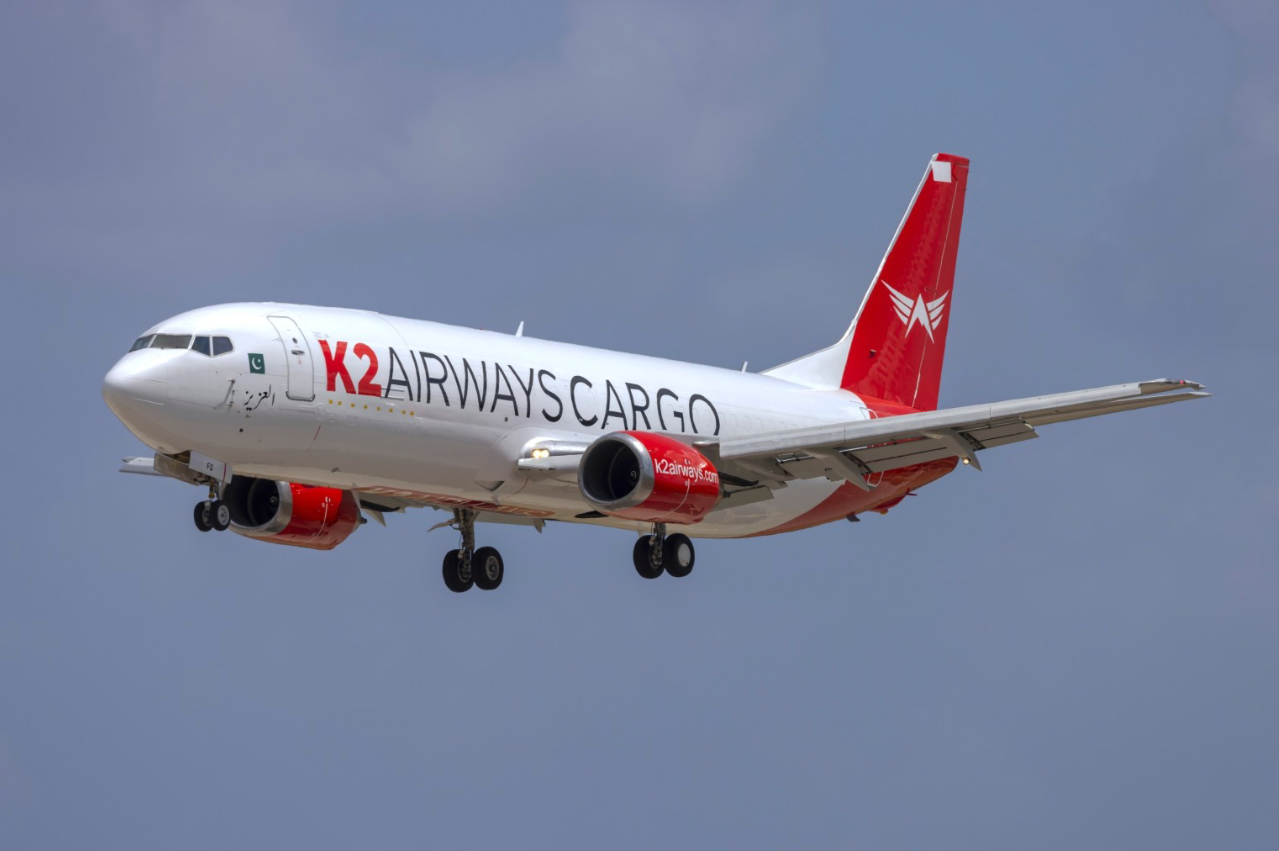
Searchers Find Wreckage From Crashed 737 Freighter
The K2 Airways aircraft disappeared from radar Tuesday night.
None of the flight’s five crew have been found. K2 Airways, which operated the 737, said Tuesday that the crew consisted of two pilots, two engineers, and one support staffer.
“We continue to pray earnestly for the safety of our colleagues,” the carrier said in a statement.
ABC News of Australia reported that rough seas are complicating the search and recovery effort.
The airplane departed Sharjah in the United Arab Emirates and was en route to Karachi when the pilots reported a problem with the navigation system. According to Flightradar24, preliminary ADS-B data shows the 737 experienced a loss of altitude, climbed, and then suddenly descended again from around 34,350 feet. The aircraft was 1,100 feet above sea level when signals were lost.
Pakistani investigators said it is unclear what caused the aircraft to dive so sharply.
Zach Vasile is a writer and editor covering news in all aspects of commercial aviation. He has reported for and contributed to the Manchester Journal Inquirer, the Hartford Business Journal, the Charlotte Observer, and the Washington Examiner, with his area of focus being the intersection of business and government policy.
Delta Extends ‘Basic’ Fare Option to Premium Offerings
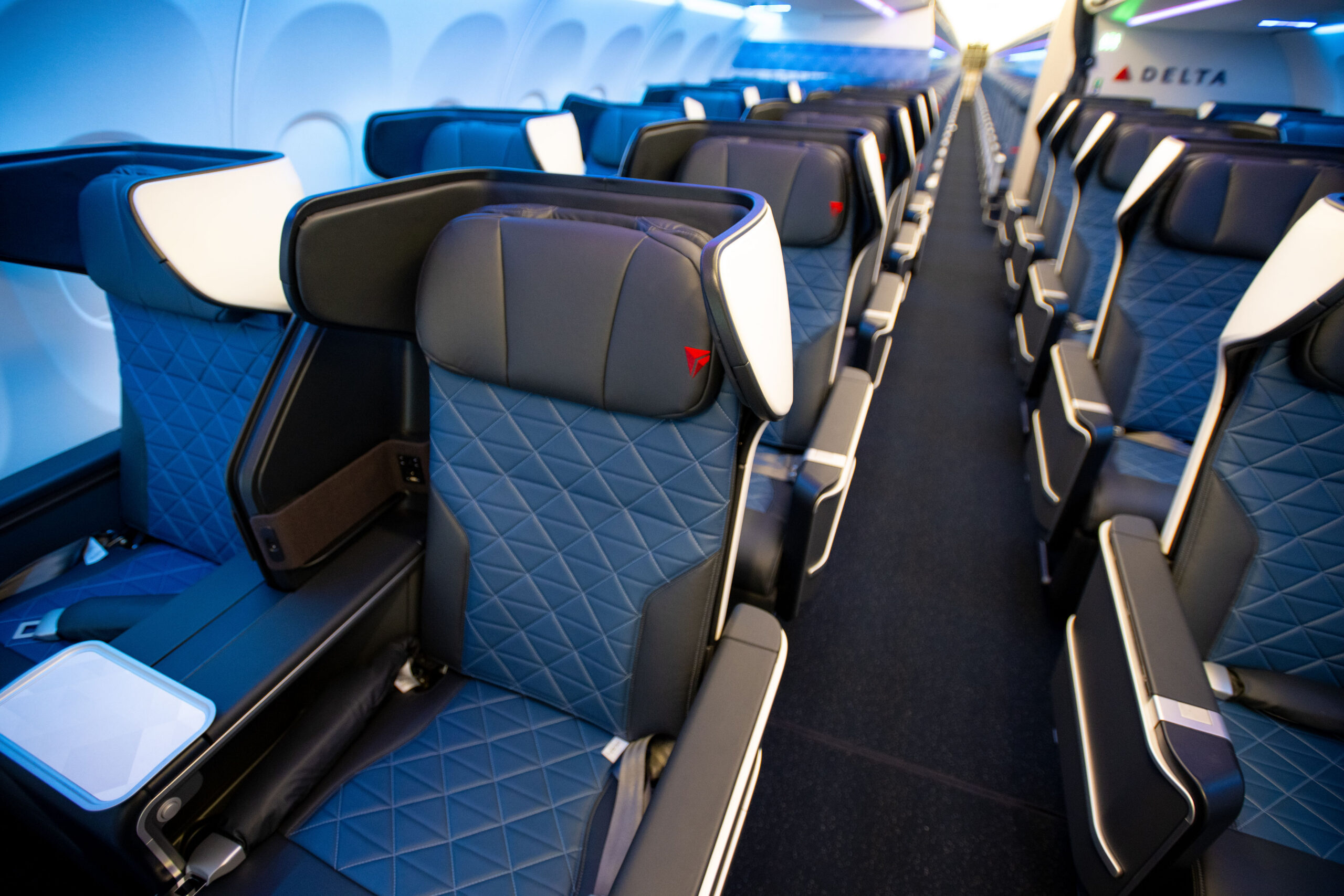
Starting Wednesday, customers can select a lower-priced, no-frills rate for Delta First, Delta Premium Select, and Delta One.
The airline said the new rate will help more customers access its premium offerings at a lower price point.
While there is no difference in the flight experience compared to Delta’s Classic and Extra fares, Basic-tier customers are excluded from some of the airline’s standard premium benefits, with seats assigned at check-in, a reduced checked bag allowance, fewer earned miles, and no complimentary or free upgrades. They are also not able to access Delta Sky Clubs unless they have eligibility through a means beyond their fare, such a Delta Sky Club membership or a qualifying credit card.
“This expansion gives customers more ways to choose the Delta experience that best fits their trip, and a new way to access our premium tier products,” Joe Esposito, Delta’s executive vice president and chief commercial officer, said in a news release.
Delta First Basic is available and flying in select domestic and Latin American markets starting Wednesday.
Delta Premium Select Basic and Basic Business – Delta’s name for the Basic tier of Delta One – are available for purchase starting Wednesday for flights scheduled for September and after.
Delta introduced its Basic-Classic-Extra system for main cabin seats last year. It extended the Basic option to its Delta Comfort product in November.
Zach Vasile is a writer and editor covering news in all aspects of commercial aviation. He has reported for and contributed to the Manchester Journal Inquirer, the Hartford Business Journal, the Charlotte Observer, and the Washington Examiner, with his area of focus being the intersection of business and government policy.
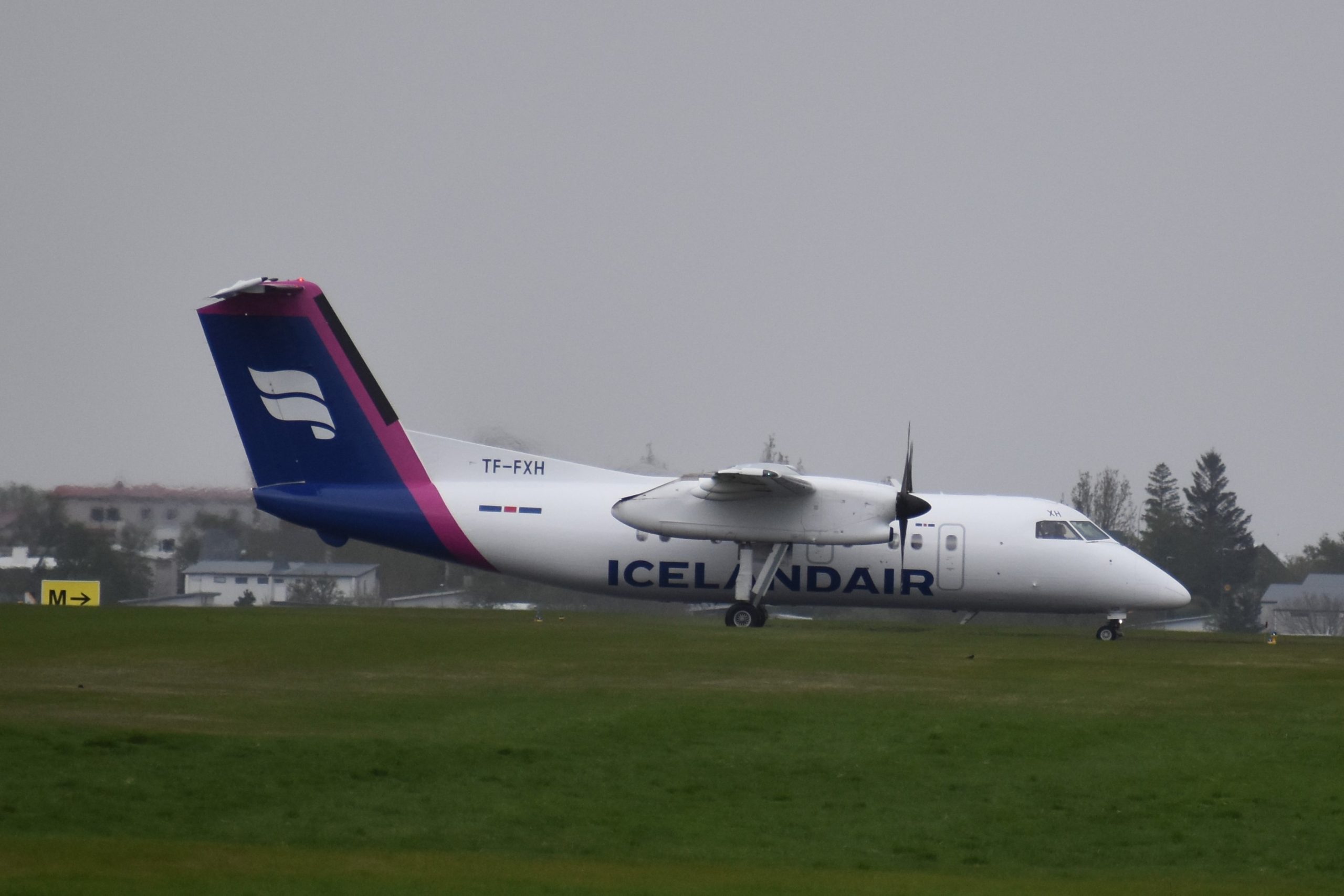
Icelandair to Keep Dash 8-200
The airline has changed its fleet and network plans after securing a new air service agreement.
An Icelandair Dash 8-200. (Photo: AirlineGeeks | Joey Gerardi)
Last summer, AirlineGeeks reported that Icelandair was planning on retiring its Dash 8-200s in the summer of 2026, but it looks like this plan will be changing, and with it, the airline will also keep one of its most vital links.
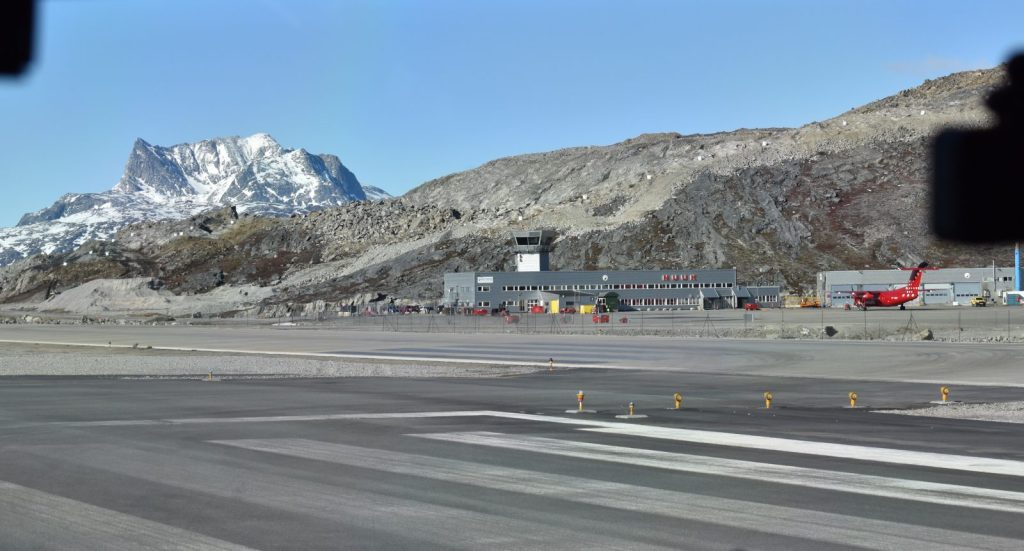
With airports in Greenland opening newer, longer runways, the need for the smaller Dash 8 diminished, as the carrier could fly its slightly larger Dash 8-400s, more commonly known as the Q400, to its four destinations in Greenland. However, there was still one destination in Icelandair’s network that couldn’t handle anything larger than the small -200: Ísafjörður.
With the retirement of the Dash 8-200, Icelandair was going to end flights to Ísafjörður, as it didn’t make sense to keep a small fleet type just for one route. But the plan has changed, as the airline has been selected for an air service agreement to serve Ísafjörður for the next four years.
We had the chance to speak with Icelandair’s communications manager, Guðni Sigurðsson, about the change.
AirlineGeeks (AG): Will Ísafjörður keep its current service levels, or will it be altered in any noticeable way?
Guðni Sigurðsson (GS): Under the four-year agreement, service to Ísafjörður will remain year-round, but with lower frequency than the historical operation. Nine weekly flights in September-October and March-April, 7-weekly flights during the winter period (November-February), and 10-weekly flights during the peak summer season (May-August). This represents a reduction from the current double-daily summer schedule and from the current 11x weekly winter schedule, while still maintaining a consistent year-round service pattern with more flights in the peak summer months. The result is a more seasonally adjusted schedule that preserves key travel options for residents and visitors while aligning capacity more closely with expected demand.
AG: Icelandair had planned on ending Ísafjörður in conjunction with the last Dash 8-200 flights at the end of the 2026 summer season. Why did Icelandair bid for the contract if it was planning on retiring the aircraft type?
GS: When Icelandair announced plans to retire the Dash 8-200 fleet, the business case for continuing to operate the aircraft had largely disappeared. The aircraft had primarily been used on routes to Greenland and Ísafjörður, but new airport infrastructure in Greenland has allowed larger and more efficient aircraft to take over much of that flying. At the time, operating the Dash 8-200 fleet solely for Ísafjörður was not considered economically sustainable.
The possibility of government-supported services to both Höfn and Ísafjörður created operational synergies and a stronger revenue base than relying on Ísafjörður alone. That was one of the reasons Icelandair participated in the Höfn tender and later bid for the Ísafjörður contract as well.
The terminal in Nuuk, which was demolished in the summer of 2024. (Photo: AirlineGeeks | Joey Gerardi)
AG: Icelandair was supposed to retire the Dash 8-200 as part of a fleet simplification. Does this mean the aircraft will now remain in service?
GS: Yes, since the recent awarding of public service contracts for both Höfn and Ísafjörður, the outlook for the Dash 8-200 fleet has changed and created a sufficient operating platform to continue flying the aircraft type alongside our fleet of the larger Dash 8-Q400. Therefore, the previously announced retirement plan is no longer proceeding as originally adjusted.
AG: What is the long-term plan for Ísafjörður going forward?
GS: The newly signed agreement secures service through 31 August 2030, providing a stable framework for continued operations over the next four years. Icelandair sees the route as strategically important both for residents of the Westfjords and for maintaining visibility and access to the region through Icelandair’s international sales and distribution network in Europe and North America.
A thank-you to Guðni Sigurðsson of Icelandair for answering our questions about the Dash 8-200 and the flights to Ísafjörður. Air service is vital for a community such as Ísafjörður, a community of less than 3,000 people, which sits up in Iceland’s secluded Westfjords region and has limited public bus options outside of the region, with options to the capital of Reykjavík taking around eight or nine hours and requiring multiple transfers.
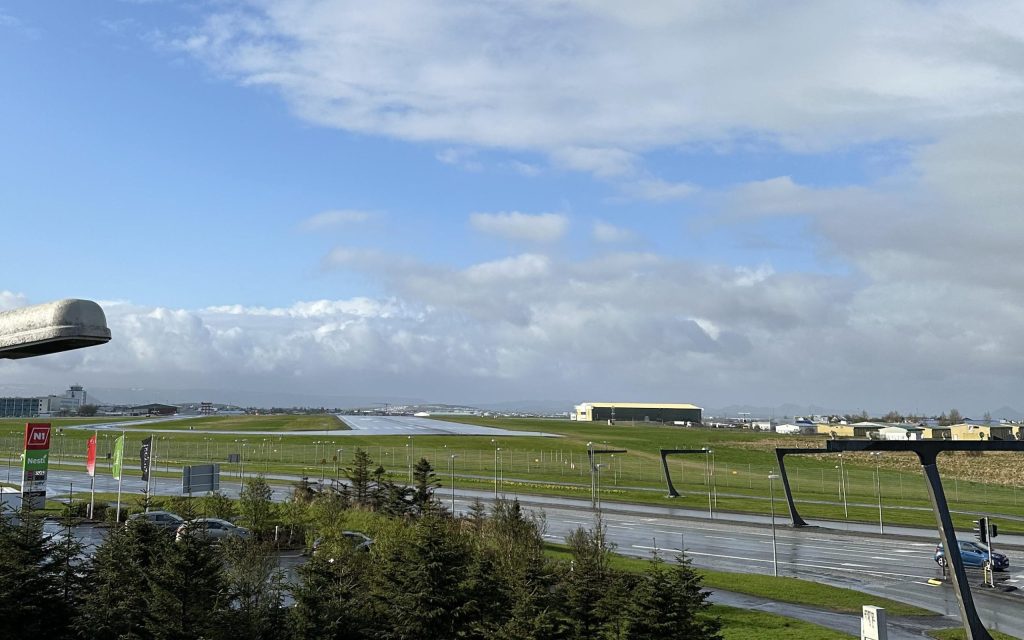
Reykjavík Domestic Airport. (Photo: AirlineGeeks | Joey Gerardi)
Joey has always been interested in planes for as long as he can remember. He grew up in Central New York during the early 2000s when US Airways Express turboprops ruled the skies. Being from a non-aviation family made it harder for him to be around planes and would only spend about three hours a month at the airport. He was so excited when he could drive by himself, the first thing he did with his driver's license was get ice cream and go plane spotting for the entire day. He graduated from Western Michigan University in 2022 with a B.S. in Aviation Management & Operations and a Minor in Business, and currently works for a major airline in his hometown.
Air Canada Names New CEO
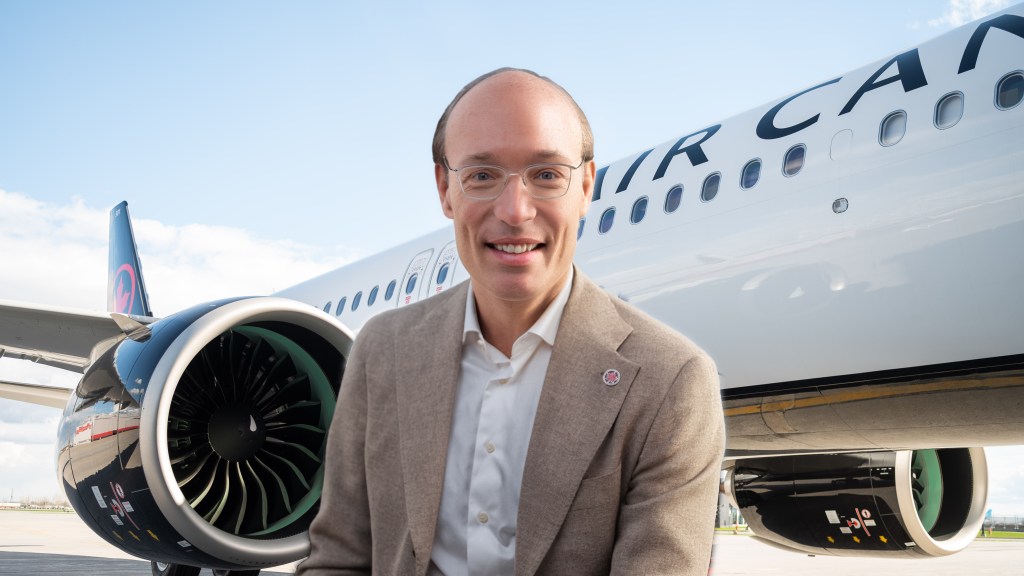
Anko Van der Werff will succeed outgoing chief executive Michael Rousseau.
According to Air Canada, Van der Werff has held leadership positions at Scandinavian, Avianca Group, and Aeroméxico. He also previously worked at KLM Royal Dutch Airlines and Qatar Airways.
Vagn Sørensen, chair of the board of directors of Air Canada, praised Van der Werff’s “exceptional breadth of international aviation experience.”
“We are confident he will drive further value-creating growth and transformation while maintaining our commitment to disciplined capital allocation,” Sørensen said in a news release.
Anko Van der Werff. (Photo: Air Canada)
Rousseau’s retirement will take effect Aug. 31. The outgoing CEO faced intense criticism earlier this year after speaking almost entirely in English in a video statement on the collision of an Air Canada regional jet and a fire truck at LaGuardia Airport, which killed two pilots.
The near exclusion of French – one of the country’s two official languages, spoken by around 8 million Canadians – was slammed on social media, and by elected officials, including Prime Minister Mark Carney and lawmakers from Quebec.
Rousseau had been knocked for his lack of French on other, earlier occasions, but the furor over the video statement was widely seen as the last straw and the likely end to his roughly five-year tenure as chief executive.
Van der Werff, a native of the Netherlands, speaks Dutch and can communicate in French, Air Canada said Wednesday. To underscore the point, the carrier released two videos of Van der Werff introducing himself, one in English, the other in French.
“Air Canada is a globally recognized airline leader,” Van der Werff said in a statement. “It is an honor to be chosen to lead this iconic Canadian company as it advances its ambitions and strategy, builds on its award-winning employee culture and customer value proposition, and prepares for an even brighter future.”
Zach Vasile is a writer and editor covering news in all aspects of commercial aviation. He has reported for and contributed to the Manchester Journal Inquirer, the Hartford Business Journal, the Charlotte Observer, and the Washington Examiner, with his area of focus being the intersection of business and government policy.
Sign-up for newsletters & special offers!
Get the latest stories & special offers delivered directly to your inbox