









Stories

airBaltic Bolsters A220 Fleet Despite Profit Woes

The airline's net profit during the first half of 2024 was hindered by ongoing Pratt & Whitney engine issues on its Airbus A220 fleet.

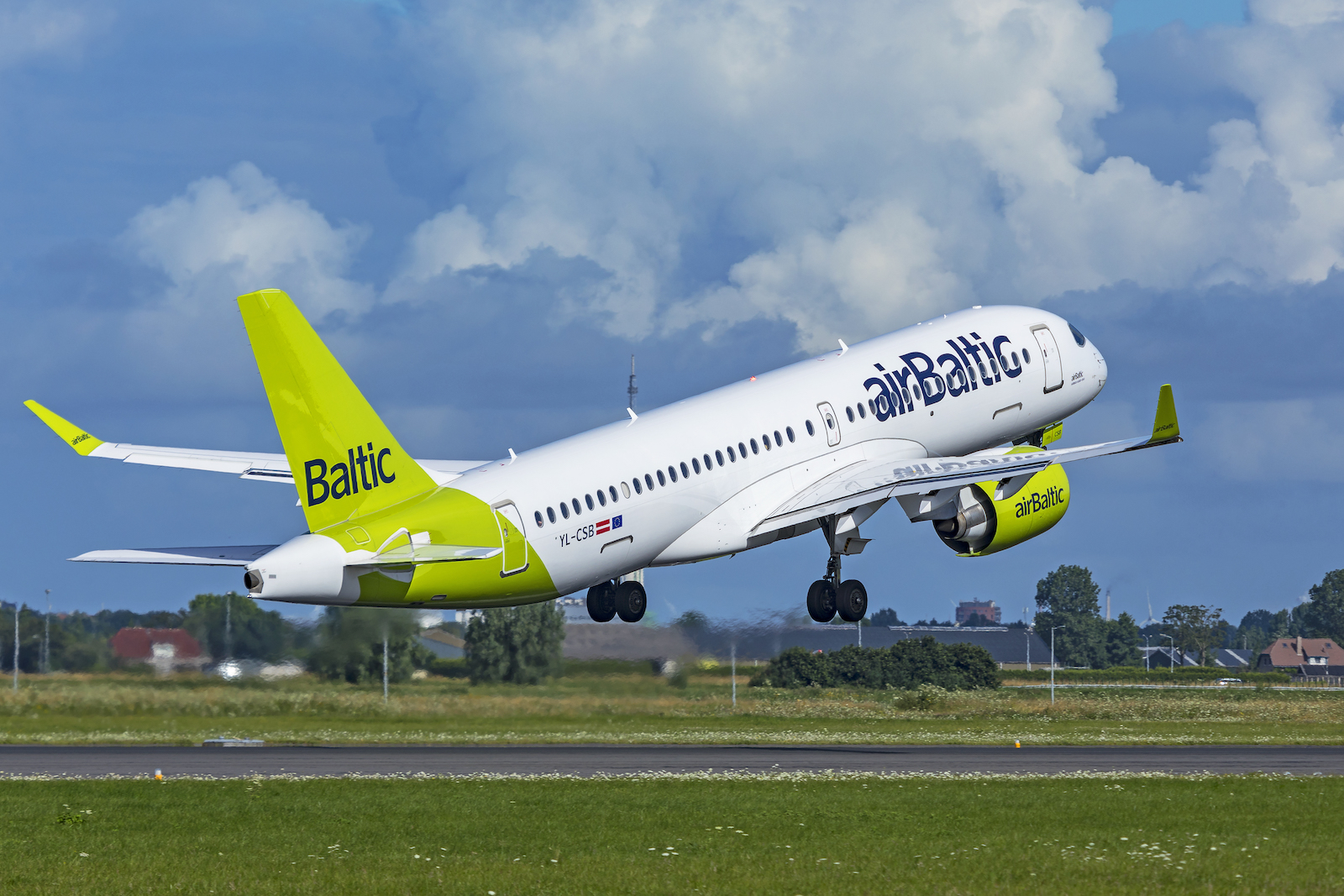
An airBaltic Airbus A220. (Photo: AirlineGeeks | William Derrickson)

airBaltic, the Latvian national carrier, reported financial results for the first half of 2024.

Engines Issues Continue

airBaltic reported the topline revenue figure up 16% YoY to a record approximately EUR 339 million (USD 379 million). This is thanks to the number of passengers carried being up by 11.1%, reaching 2.2 million.

The other component of the revenue growth was the increase in the average ticket price. This follows the focus on medium-haul routes reaching southern parts of Europe, specifically the Canary Islands. The carrier launched a new base in the Gran Canaria in December last year, so the move had a meaningful impact this year.

The carrier still faces two main issues: the conflict in Ukraine impacting the airspace and commerce west of its home bases in the Baltics and the persisting Pratt & Whitney engine issues. The latter issue allegedly impacted the bottom line severely enough this year that the carrier has reported a net loss of EUR 89 million (USD 100 million).

Martin Gauss, President and CEO of airBaltic stated: “We have had a strong first half of the year, driven by an increase in flights and passengers, enhanced efficiency, and a dedicated focus on customer service. Similar to others in the industry, we have faced rising costs and capacity challenges, yet our strategic focus and operational efficiency have allowed us to handle these challenges successfully. Moreover, airBaltic’s performance in H1 demonstrates the airline’s resilience and capability to adapt and thrive in a challenging market environment.”

airBaltic’s network in 2024 (Source: flightconnections.com)

Management Looks Forward

The temporary issues should not impact the company’s future. In 2023, during the Dubai Airshow, airBaltic placed a firm order for 30 units of the A220 family. The total orderbook, including delivered frames, grew to 80 aircraft.

Now the carrier has placed an order for an additional 10 units. This incremental order puts the airline’s Airbus A220 fleet potentially at 90 units, which is only 10 shy of the 100 that the carrier’s leadership envisioned for by 2030. It will also reaffirm airBaltic as the biggest European operator of the type.

“For the first time in the company’s history, airBaltic plans to operate a fleet of close to 100 A220-300 aircraft, and these exercised options are the next step in the right direction. Over the years, this aircraft type has proven its operational capabilities and value – it has been the backbone of our operations and has played an integral role in the international success story of airBaltic. By exercising these options, we are strengthening our unwavering support and trust in the A220 Programme and are looking forward to our fleet expansion over the upcoming years,” Gauss added.

The reported results and confirmed order are allowing airBaltic to be optimistic about its future. Unfortunately, the reported profitability issues may cause the potential IPO timings to slip into 2025.

Filip Kopeć

A passionate aviation enthusiast that started off his career as an aerospace engineer, but found his true calling on the commercial side of the airline business. Now as a finance guy among avgeeks and an avgeek among finance guys, he has experience working in the Revenue Divisions of three airlines. In his spare time he enjoys traveling, but admittedly sometimes is more about the journey than the destination.

Australian Air Travelers Set For New ‘Customer Rights Charter’

Australian passengers are expected to benefit from an ‘aviation customer rights charter’ to be announced by the federal government this week.

A Virgin Australia Boeing 777 in Los Angeles. (Photo: AirlineGeeks | William Derrickson)

Australian passengers are expected to benefit from an ‘aviation customer rights charter’ to be announced by the federal government this week. The Sydney Morning Herald reports that Transport Minister Catherine King will also appoint an independent ombudsman. In other Australian agencies such as the Australian Financial Complaints Authority (AFCA), an ombudsman is ‘an independent person who investigates and resolves complaints between parties. An ombudsman is fair and impartial when considering complaints.’

In setting out the need for the customer rights charter, Kind has stated: “Too many Australians have been left out to dry when flights are canceled or disrupted and it’s impossibly complex to get a refund or even contact a company representative. Customers deserve to get their money back if they are owed it. Full stop. It’s time to take strong action to protect consumer rights with an Aviation Industry Ombuds Scheme and charter of customer rights.”

The Aviation Industry Ombuds Scheme and Charter of Customer Rights would supersede the current body associated with unresolved passenger complaints, the Airline Customer Advocate (ACA). The ACA has been fully funded by Jetstar, Qantas, and Virgin Australia and promotes itself as ‘a free and independent service.’ As a body, the ACA only accepted passenger complaints that have already been submitted to the respective airlines and there has been no response or the complainant is seeking a review of the response received.

The ACA’s annual report for 2023 identified ‘Refund Requests’ as the number one complaint (38 percent of eligible complaints received) overall and number one for passengers dealing with Qantas and Rex Airlines, currently in voluntary administration. Flight delays or cancellations were second overall (35 percent) and the number one source of complaints for Jetstar and Virgin Australia passengers.

Baggage services (8 percent), Fees or charges (5 percent), and complaints related to loyalty/frequent flyer programs (3 percent) rounded out the top five of the fifteen categories eligible to be considered by the ACA.

Under the government’s proposed new charter, airlines are expected to provide details on why flights are delayed and/or cancelled. According to the Sydney Morning Herald, the ombudsman ‘will be able to request additional information about specific flights and will have the power to refer for legal action instances of misconduct under competition law.’

Passengers with disabilities will also have a greater focus within the customer rights charter. “People with disability continue to encounter inaccessible facilities and services at airports and face unhelpful practices and systems adopted by airlines, with evidence to this effect heard throughout the Disability Royal Commission,” said Social Services Minister Amanda Rishworth. “They have a right to fair treatment and to compensation when their essential equipment is damaged or destroyed.”

Full implementation of the ‘aviation customer rights charter’ and the role of ombudsman is expected in 2026.

John Flett

John has always had a passion for aviation and through a career with Air New Zealand has gained a strong understanding of aviation operations and the strategic nature of the industry. During his career with the airline, John held multiple leadership roles and was involved in projects such as the introduction of both the 777-200 and -300 type aircraft and the development of the IFE for the 777-300. He was also part of a small team who created and published the internal communications magazines for Air New Zealand’s pilots, cabin crew and ground staff balancing a mix of corporate and social content. John is educated to postgraduate level achieving a masters degree with Distinction in Airline and Airport Management. John has held the positions of course director of an undergraduate commercial pilot training programme at a leading London university. In addition he is contracted as an external instructor for IATA (International Air Transport Association) and has been a member of the Heathrow Community Fund’s ‘Communities for Tomorrow’ panel.

Air Canada Pilots Vote in Favor of a Strike

Pilots at Canada’s largest airline could walk off the job next month, after overwhelmingly voting in favor of giving their union a strike mandate.

Air Canada A330
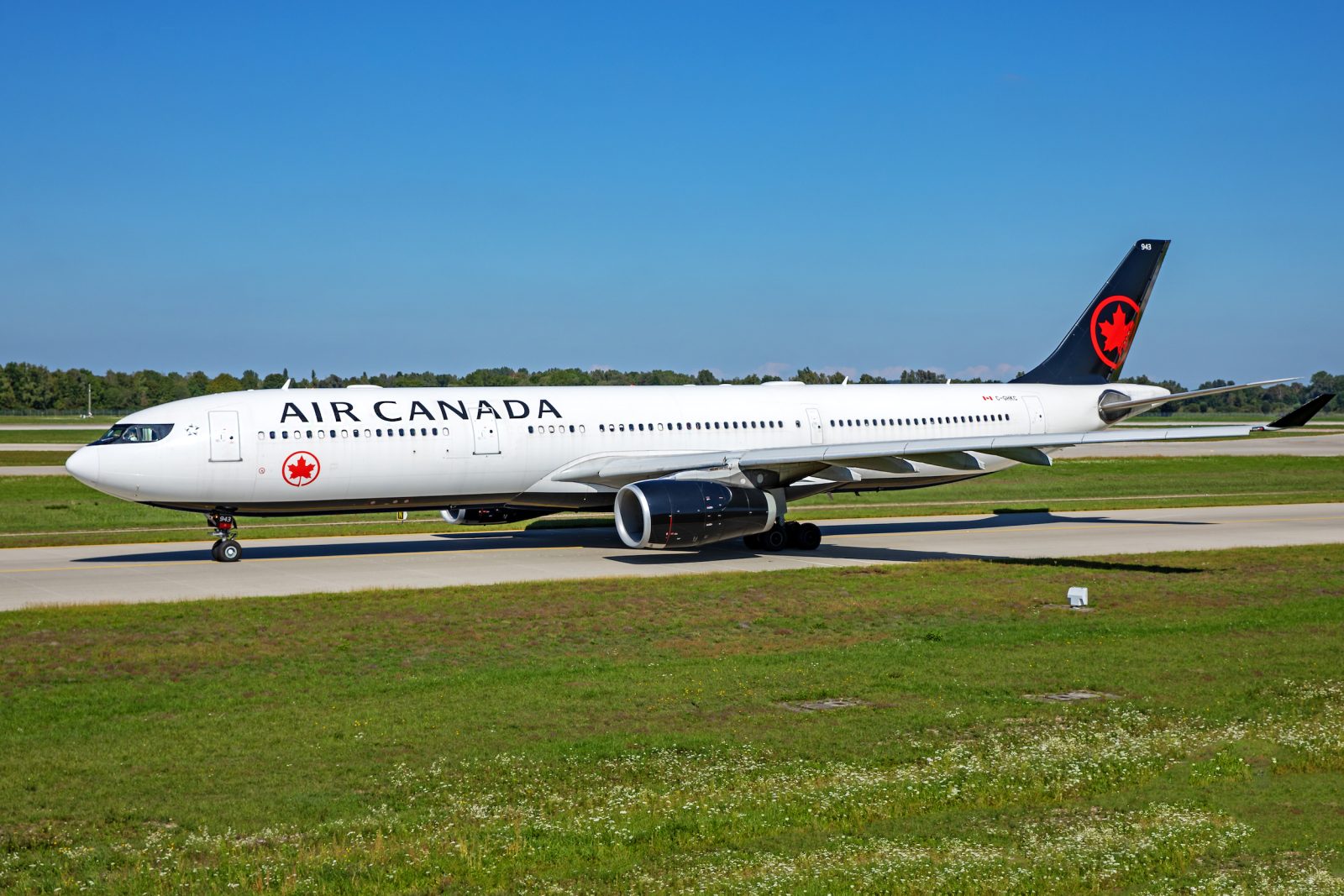
An Air Canada A330. (Photo: AirlineGeeks | William Derrickson)

Pilots at Canada’s largest airline could walk off the job next month, after overwhelmingly voting in favor of giving their union a strike mandate. According to the union, the strike vote passed with 98 percent support earlier this week.

Replacing a Decade-Old Deal

Negotiations between Air Canada and The Air Line Pilots Association (ALPA) – which represents the company’s 5,400-plus pilots – began in June of 2023. Although the airline has stated that the parties have reached agreements on many issues, the union cites compensation, retirement benefits and quality-of-life improvements as points of contention.

Air Canada pilots currently work under the provisions of a 2014 collective agreement. Charlene Hudy, chair of ALPA’s Air Canada unit, told The Canadian Press that the contract is “stale” and “outdated,” adding that there are elements of the current agreement that stem back to the period following the company’s 2003 bankruptcy. That contract expired in September of 2023.

Pilots Could Strike as Early as September 17

Canada’s aviation industry is federally regulated, meaning that the labor dispute process is governed by federal legislation and regulations.

After six months of talks between Air Canada and ALPA, the parties entered private mediation in January of 2024. In June, the union filed a notice of dispute and enter conciliation, citing an inability to reach a new collective agreement with the employer.

This set off a 60-day conciliation period, which will expire on Monday. Canadian law then mandates a 21-day cooling-off period before any strike or lockout action can occur. A 72-hour notice must also be given by the applicable party. ALPA’s pilots will therefore be in a position to go on strike as early as September 17.

Under this same process, WestJet’s mechanics came within days of a lockout in May and a strike in June before the parties reached last-minute agreements to return to the bargaining table. Pilots at the company’s regional subsidiary – WestJet Encore – also voted in favor of a strike mandate earlier this year, but the parties averted any labor action and ratified a new collective agreement in June.

In a similar labor relations standoff involving railway companies Canadian National (CN) and Canadian Pacific Kansas City (CPKC), this week the Canadian Government has intervened to force binding arbitration on the two parties effectively trying to prevent possible strikes and lockouts that could disrupt supply chains across North America.

A similar resolution would be possible also for Air Canada.

Air Canada pilots at an informational picket in downtown Toronto in May of 2024 (Photo: Air Line Pilots Association)

Pilot Pay Lagging Behind the U.S.

Pilot unions in Canada have been closely watching the record-breaking contracts obtained by their counterparts south of the border. Major airlines in the United States like American Airlines, Delta Air Lines, and Southwest Airlines have all reached agreements with their pilots over the past few years that include pay raises of up to 50 percent. With these new contracts, pilots in the U.S. can make twice as much as their Canadian colleagues.

Air Canada pilots have pointed to pay increases at United Airlines in particular as justification for improved compensation. “We all fly passengers under the Star Alliance. So we’re flying the same passengers in the same airspace on some of the very same routes, and those pilots are being compensated dramatically more than us,” Hudy told The Canadian Press. United pilots ratified a new collective agreement in September of 2023 that will see pay raises of up to 40 percent over four years.


Andrew Chen

Andrew is a lifelong lover of aviation and travel. He has flown all over the world and is fascinated by the workings of the air travel industry. As a private pilot and glider pilot who has worked with airlines, airports and other industry stakeholders, he is always excited to share his passion for aviation with others. In addition to being a writer, he also hosts Flying Smarter, an educational travel podcast that explores the complex world of air travel to help listeners become better-informed and savvier travelers.

Delta Continues Austin Expansion

Delta is once again expanding its network from Austin–Bergstrom International Airport, adding a new regional route in 2025.

Delta E175
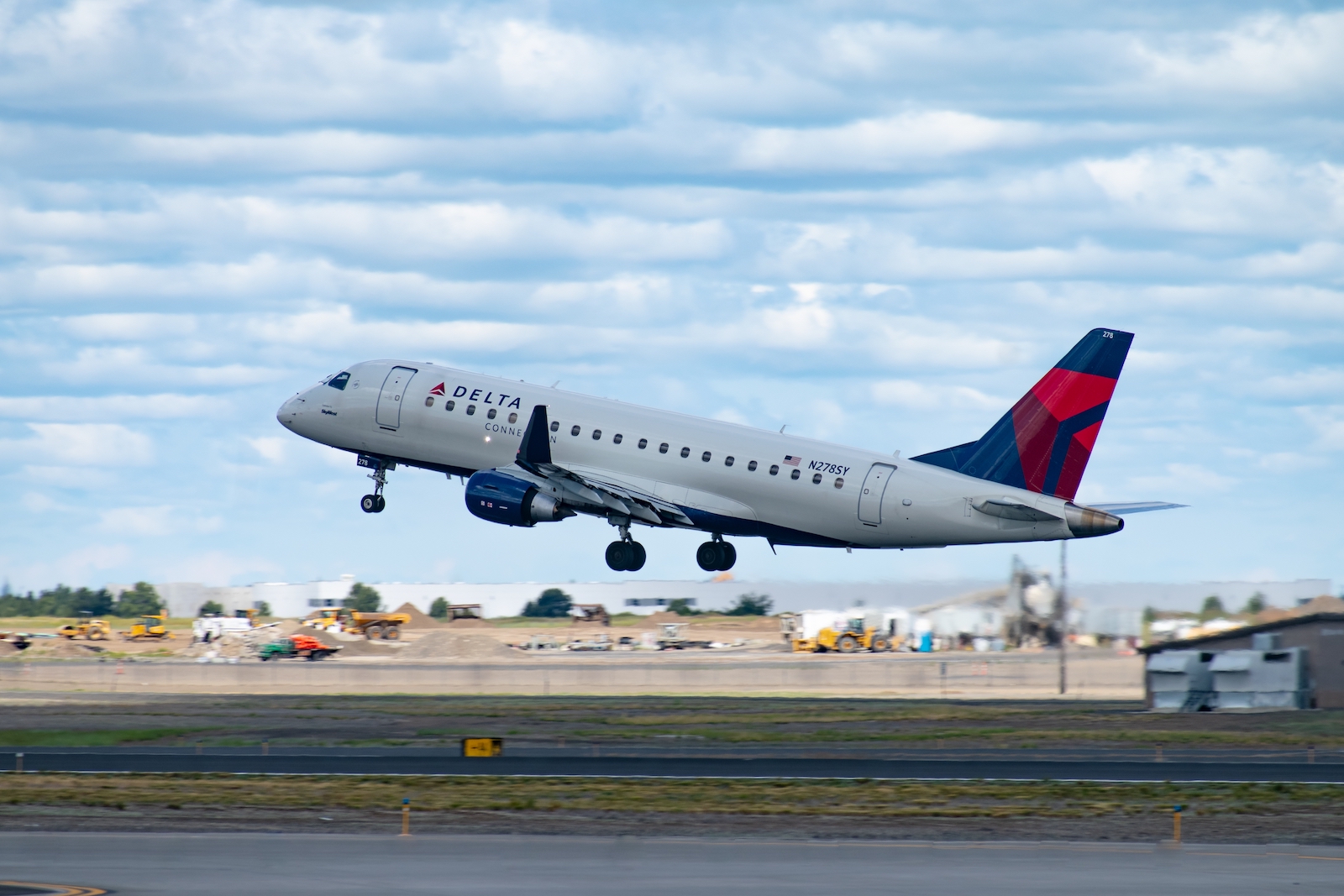
A SkyWest E175 in Delta colors. (Photo: Shutterstock | Jon Tetzlaff)

Delta is once again expanding its network from Austin, adding a new route in 2025. The Atlanta-based airline has recently doubled down on service from the Texas capital with a handful of new routes added this year.

In early 2025, the carrier plans to add service between Austin and New Orleans. According to Cirium Diio schedule data, the new route will start on Feb. 27, 2025 operating twice per day.

A SkyWest Embraer E175 will operate the new service. The regional carrier recently opened a new crew base in Austin.

Delta will compete with Southwest on the Austin-New Orleans route. American cut the same route in February 2024.

With an ongoing expansion in the market, Delta currently serves all of its hubs from Austin in addition to Las Vegas, Orlando, Cincinnati, Harlingen, Midland, McAllen, Nashville, and Raleigh/Durham.

“This expansion not only creates an access point to diverse opportunities for business, leisure, and cultural exploration spanning Texas and beyond but also solidifies Delta’s commitment to being a key player in Austin’s evolving landscape,” said Joe Esposito, Delta’s SVP of Network Planning in a 2023 press release. “Austin is growing rapidly, and this 20% increase in capacity mirrors that growth as we look to provide our customers with unparalleled convenience in the region.”

Austin has seen a handful of high-profile air service changes in recent months. Earlier this year, Virgin Atlantic cut its service between the central Texas city and London Heathrow. Allegiant also announced plans to close its Austin crew base while cancelling several routes from the airport in 2025.

Editor’s Note: This story was updated on Monday, Aug. 26, 2024 at 11:22 a.m. ET to properly reflect the new route’s start date. 

Ryan Ewing

Ryan founded AirlineGeeks.com in February 2013 and has spent more than a decade covering the airline business. His work has been featured by CNN, WJLA, CNET, and Business Insider. His aviation experience spans airport operations, Part 135 regulatory compliance, and airline crew workforce planning, along with time behind the yoke of a Cessna 172 and interviews with airline executives. Ryan now serves as Group President of Firecrown Media’s Aviation Group. He holds a B.S. in Air Transportation Management and an MBA from Arizona State University and teaches Airline Management at Embry-Riddle Aeronautical University.

Southwest Doubles Down on Red-Eye Flying

Earlier this year, Southwest announced plans to begin overnight flights for the first time in its 53-year history starting in 2025.

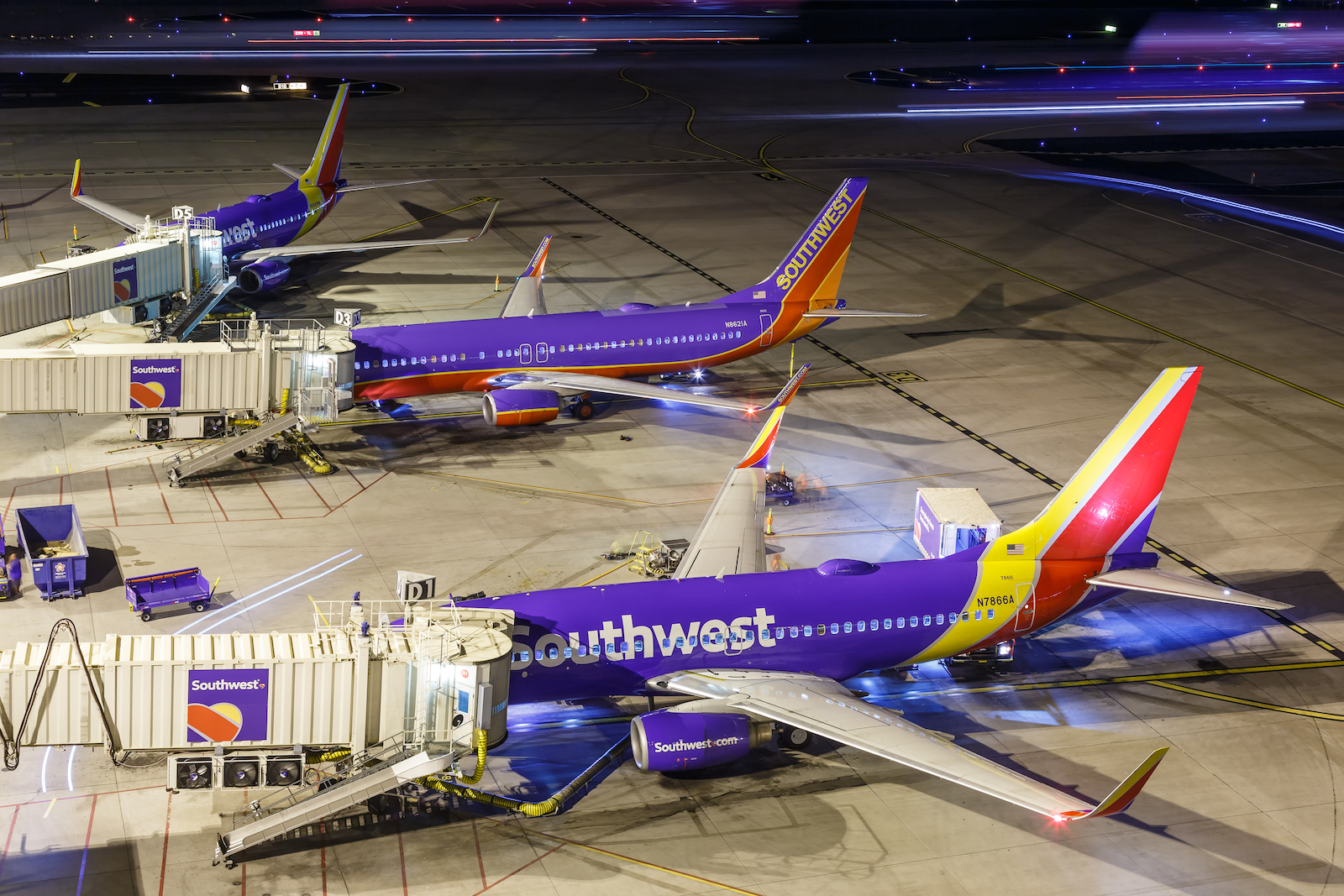
Southwest 737 aircraft in Phoenix (Photo: Shutterstock | Markus Mainka)

Earlier this year, Southwest announced plans to begin overnight flights for the first time in its 53-year history. The airline is slated to begin these flights on the evening of Feb. 13, 2025 from Las Vegas, Los Angeles, and Phoenix.

In the carrier’s most recent update, it is slated to add more red-eye flights from Denver, Sacramento, and San Diego. Beginning on March 6, 2025, Southwest will add overnight flights from these cities to Baltimore.

During a July earnings call, Southwest CEO Bob Jordan said he was “really proud” of the new overnight flights. “Our customers want it, but what it also does for us is it produces ASMs without having to buy extra aircraft. I mean, the aircraft are available, obviously, overnight,” he added.

Schedule data from Cirium Diio shows the following Southwest routes including overnight flights in early March 2025:

Origin Destination Dep. Time (Local) Arr. Time (Local)
LAS MDW 2355 0520
LAX HOU 2355 0500
PHX ATL 2355 0520
PHX MCO 2355 0550
DEN BWI 2345 0500
LAX BNA 2345 0535
LAS BNA 2330 0500
LAX MDW 2320 0515
LAS ATL 2300 0545
PHX BWI 2300 0510
LAS MCO 2220 0540
LAS BWI 2205 0530
SMF BWI 2155 0550
LAX BWI 2145 0540
SAN BWI 2135 0520

New Routes

As part of its most recent schedule update, the Dallas-based airline is adding a handful of new routes.

Starting March 8, 2025, Southwest will add new weekly international service from Nashville to both Cabo San Lucas/Los Cabos, Mexico and Punta Cana. This expands the airline’s existing international service from Nashville to Cancun. Additionally, Sacramento will gain a new Saturday service to Puerto Vallarta starting on the same date.

On March 6, 2025, the carrier plans to add more domestic routes, including Austin to Milwaukee, Austin to Reno, Nashville to Indianapolis, and Sacramento to Tucson.

Ryan Ewing

Ryan founded AirlineGeeks.com in February 2013 and has spent more than a decade covering the airline business. His work has been featured by CNN, WJLA, CNET, and Business Insider. His aviation experience spans airport operations, Part 135 regulatory compliance, and airline crew workforce planning, along with time behind the yoke of a Cessna 172 and interviews with airline executives. Ryan now serves as Group President of Firecrown Media’s Aviation Group. He holds a B.S. in Air Transportation Management and an MBA from Arizona State University and teaches Airline Management at Embry-Riddle Aeronautical University.

Delta COO of 15 Months to Leave Airline

After 15 months of working as chief operating officer at Delta Airlines, Michael Spanos is leaving the company on August 31.

A Delta Airbus A321 rockets out of Reagan National Airport in Washington, D.C. (Photo: AirlineGeeks | William Derrickson)

After 15 months of working as chief operating officer at Delta, Michael Spanos is leaving the company at the end of August.

A Form 8-K filed by the Atlanta-based carrier with the Securities and Exchange Commission (SEC) on Friday states that Spanos will depart the company effective August 31. With his departure, Spanos will receive the benefits provided under Delta’s officer and director severance plan and existing award agreements under its performance compensation plan.

In a memo sent to airline employees and published by Fox 5 Atlanta, Delta CEO Ed Bastian confirmed Spanos’ plans to depart. Bastian said that earlier this summer, Spanos told him he was considering opportunities outside of Delta.

“Since joining Delta, Mike immersed himself with our frontline teams, prioritizing safety first and always,” Bastian said in the letter. “Under Mike’s leadership, he has helped to advance Delta’s performance over the past year, and we continue to lead the industry across all operating metrics.”

Bastian stated that Delta has seen a significant reduction in injuries during the first half of 2024 versus last year under Spanos’ leadership. He also said that Delta does not currently plan to backfill Spanos’ role.

Spanos is a U.S. Marine Corps veteran and former CEO at Six Flags Entertainment amusement parks. Bastian did not specify in his memo what company Spanos is joining.

Delta made headlines this summer for its poor handling of an industry-wide IT outage caused by a faulty software update. The airline has been fighting a public relations battle after threatening legal action against CrowdStrike and Microsoft, which Delta holds responsible for $500 million in losses during the incident.

AirlineGeeks.com Staff

AirlineGeeks.com was founded in February 2013 as a one-person blog in Washington D.C. Since then, we’ve grown to have 25+ active team members scattered across the globe. We are all here for the same reason: we love deep-diving into the fascinating realm of the airline industry.

U.S. Pilot Hiring Sees July ‘Surge’

Data from FAPA — Future and Active Pilot Advisors — shows 13 major U.S. carriers onboard 301 new aviators last month, up from 187 in June. 

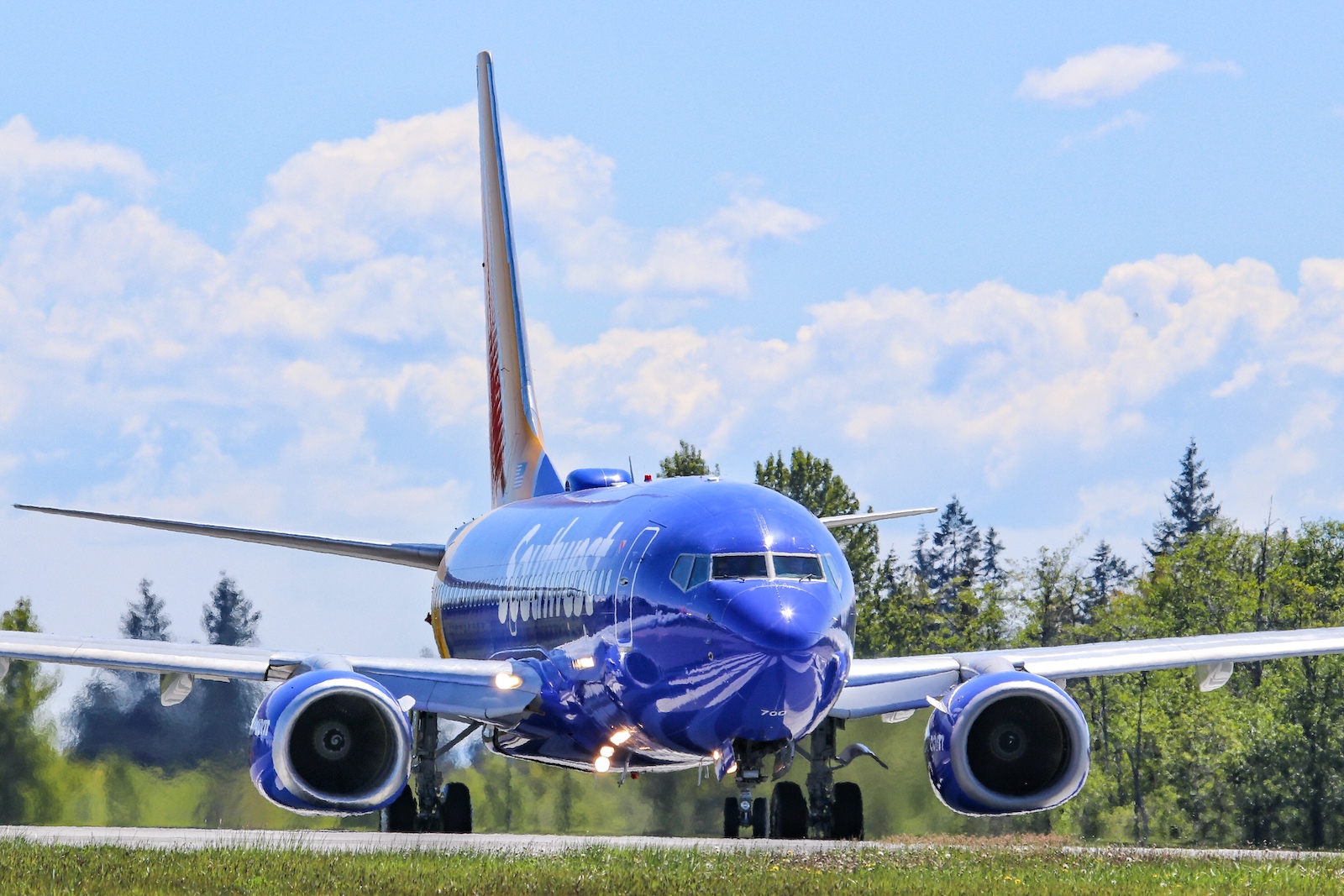
A Southwest 737-700 at Paine Field. (Photo: AirlineGeeks | Katie Zera)

Major U.S. airlines reported a modest overall increase in pilot hiring last month. Data from FAPA — Future and Active Pilot Advisors — shows 13 major U.S. carriers onboard 301 new aviators last month, up from 187 in June.

During peak summer months, it isn’t uncommon for airlines to slow hiring tempos to flex training resources in the daily operation. FAPA, which has tracked pilot hiring data for over three decades, called the increase “a ray of sunshine through the clouds” in its monthly bulletin, citing a so-called “surge” in hiring at three carriers.

Leading the hiring pack were United, UPS, and Southwest. United hired the most pilots in July with 130 joining the airline’s ranks.

Cargo operator UPS hired 74 new pilots as it gears up for a new contract with the U.S. Postal Service starting next month. Earlier this year, Southwest said it would pause new hire classes through the end of 2024. However, the airline reported that it onboarded 22 new pilots in July.

A spokesperson from the Dallas-based carrier confirmed the uptick, attributing it to hiring obligations associated with Southwest’s Destination 225 pathway program.

“As we have seen from previous months and bulletins, with hiring numbers decreasing and varied rates, there is little reliability in pacing out each month into annually projected numbers,” FAPA said in its August bulletin. “The most honest thing we can say is the 2024 estimate provided by all major airlines was around 5,000 total pilots hired.”

The firm noted that four carriers did not provide hiring projections this year. So far in 2024, major airlines hired a total of 3,915 pilots.

A Dynamic Trend

July 2024’s pilot hiring figures are still a far cry from the 1,098 pilots hired by major U.S. carriers at the same time last year. During the first half of 2024, airlines hired approximately 40% fewer pilots on a year-over-year basis.

Citing aircraft delivery delays and normalizing attrition levels as reasons for the slowdown, airlines hired just over 3,600 pilots from January through June, a decrease from 6,509 during the same period in 2023.

Ryan Ewing

Ryan founded AirlineGeeks.com in February 2013 and has spent more than a decade covering the airline business. His work has been featured by CNN, WJLA, CNET, and Business Insider. His aviation experience spans airport operations, Part 135 regulatory compliance, and airline crew workforce planning, along with time behind the yoke of a Cessna 172 and interviews with airline executives. Ryan now serves as Group President of Firecrown Media’s Aviation Group. He holds a B.S. in Air Transportation Management and an MBA from Arizona State University and teaches Airline Management at Embry-Riddle Aeronautical University.

Livery of the Week: Azerbaijan Airlines

Azerbaijan Airlines, the national flag carrier of Azerbaijan, has a distinctive livery that reflects the country's rich history.

An Azerbaijan Airlines Boeing 787-8 in London (Photo: AirlineGeeks | William Derrickson)

Editor’s Note: AirlineGeeks is proud to present our ‘Livery of the Week’ series. Every Friday, a team member will share an airline livery, which can be from the past, present, or even a special scheme. Some airline liveries are works of art. The complexity associated with painting around critical flight components and the added weight requires outside-the-box thinking from designers. The average airliner can cost upwards of $200,000 to repaint, creating a separate aircraft repainting industry as a result. 

Have an idea for a livery that we should highlight? Drop us a line. 

Azerbaijan Airlines, the national flag carrier of Azerbaijan, has a distinctive livery that reflects the country’s rich history and culture. The airline’s branding is a blend of tradition and modernity, showcasing the country’s heritage while maintaining a contemporary aesthetic.

Azerbaijan Airlines signs a $1.1 Billion deal with Boeing (Photo: Azerbaijan Airlines)

The primary color of Azerbaijan Airlines’ livery is a vibrant blue, symbolizing the Caspian Sea, which plays a significant role in the country’s geography and economy. The livery also includes a stylized light blue cheatline along the fuselage.

The 32-year-old airline has a fleet of over 30 aircraft. It currently serves 55 destinations around the globe, including the U.S. and Europe.

Looking for a new airplane model? Head over to our friends at the Midwest Model Store for a wide selection of airlines and liveries.

Ryan Ewing

Ryan founded AirlineGeeks.com in February 2013 and has spent more than a decade covering the airline business. His work has been featured by CNN, WJLA, CNET, and Business Insider. His aviation experience spans airport operations, Part 135 regulatory compliance, and airline crew workforce planning, along with time behind the yoke of a Cessna 172 and interviews with airline executives. Ryan now serves as Group President of Firecrown Media’s Aviation Group. He holds a B.S. in Air Transportation Management and an MBA from Arizona State University and teaches Airline Management at Embry-Riddle Aeronautical University.

Emirates Continues Investment in Airbus A380 Fleet

Emirates is doubling down on the Airbus A380 as it recently bought five of the superjumbo jets from aircraft lessor Doric Nimrod.

Emirates A380
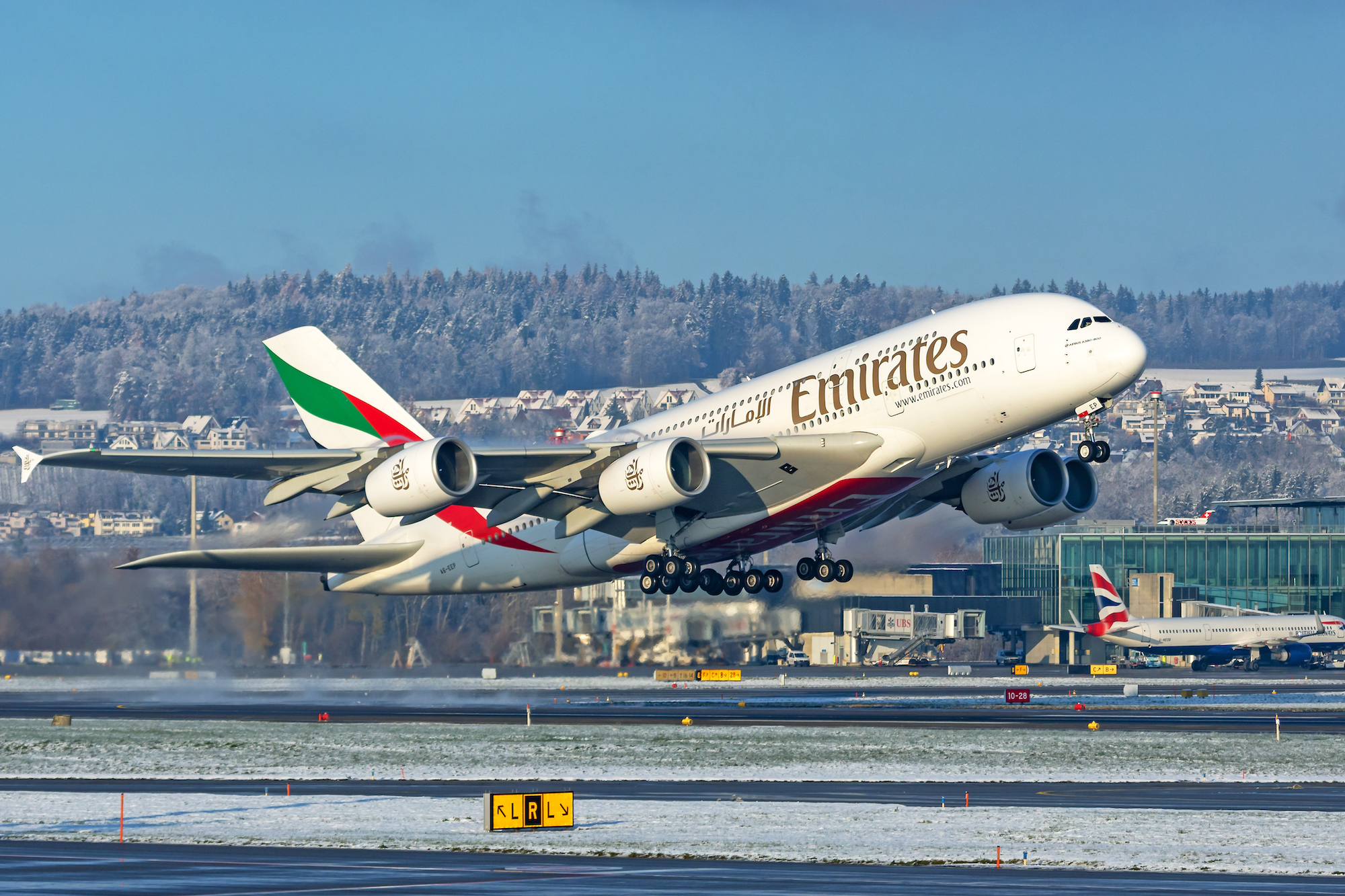
An Emirates Airbus A380. (Photo: AirlineGeeks | William Derrickson)

Emirates is doubling down on the Airbus A380 as it bought five of the superjumbo jets from aircraft lessor Doric Nimrod. This isn’t a net increase in the fleet since these aircraft were already leased out to the airline on 12-year terms. The airline is simply buying assets it had previously leased.

The UAE-based carrier is paying approximately $40 million for each of the five aircraft. This will be in addition to two other A380s that Emirates purchased from the same lessor last year when the respective leases were up.

New A380s went for anywhere between $300 million to $400 million at sticker price, though most were purchased at likely around half that price. The current used market is around $50 million per airplane and there are no more being produced.

Average life cycles for the aircraft are expected to be 20 years and with around eight years of life expectancy remaining that works out to $5 million a year.

The airline is also working in advance to secure support for the aircraft into the future since the airline expects to be flying A380s for a minimum of another 15 years. Last year the airline signed agreements worth over $1.5 billion to create a network of partners for a variety of maintenance, repair, and overhaul services along with parts provision, component repairs, and technical support.

This includes companies such as Safran, Honeywell, Pratt & Whitney, Collins Aerospace, and more to ensure long-term support for the aircraft.

Hemal Gosai

Hemal took his first flight at four years old and has been an avgeek since then. When he isn't working as an analyst he's frequently found outside watching planes fly overhead or flying in them. His favorite plane is the 747-8i which Lufthansa thankfully flies to EWR allowing for some great spotting. He firmly believes that the best way to fly between JFK and BOS is via DFW and is always willing to go for that extra elite qualifying mile. Hemal's opinions are his own and do not reflect those of his employer.

How To Become a Flight Test Engineer

Before being delivered or coming out of maintenance checks, an aircraft’s proper function and operation must be confirmed.

Honeywell staff at work inflight on the 757 (Photo: AirlineGeeks | Ryan Ewing)

Before being delivered or coming out of maintenance, an aircraft’s proper function and operation must be confirmed. Flight Test Engineers are tasked with planning and completing these return-to-service tests to ensure the safety of passengers and crew onboard the aircraft.

What is a Flight Test Engineer?

Flight test engineers ensure that aircraft are in safe condition for operations before signing them off to carry passengers or cargo. They inspect aircraft, design tests, and analyze data to identify system performance and determine an aircraft’s airworthiness.

Flight test engineers work on various aircraft, from commercial jets to military aircraft and small airplanes used in flight training or charter operations. They verify that aircraft meet the requirements outlined in Federal Aviation Regulations, and they determine the best course of action to take to ensure such compliance.

Do Flight Test Engineers Actually Fly?

Flight Test Engineers are not necessarily pilots; in fact, their duties are distinct from those of a pilot. Flight Test Engineers can do their jobs either from onboard an aircraft, often monitoring sensors and computer equipment from a passenger cabin or cargo compartment, or from the ground with data sent directly from aircraft sensors.

Flight Test Engineers work to test a specific parameter on each test flight. They work closely with pilots to develop and execute plans of action for each test flight. Upon completion of a flight, the Flight Test Engineer processes and analyzes the results to determine the outcome of the test flight.

TPE331-14GR test engine installed on a 757 (Photo: Honeywell)

While Flight Test Engineers often have flying experience, many do not, and most companies do not require their flight testers to be pilots. Still, flying experience – or experience from other aviation fields such as maintenance – can be beneficial for those interested in careers as Flight Test Engineers.

In fact, Flight Test Engineers and test pilots play distinctly different roles. While test pilots actually fly the airplanes, Flight Test Engineers do tests and interpret results. They often dictate which maneuvers, routes, and profiles the test pilots fly to ensure the right type and amount of data is collected.

How to Become a Flight Test Engineer

Many Flight Test Engineers earn advanced degrees in Flight Test Engineering, another form of engineering, or another STEM subject. Others complete on-the-job training with aircraft manufacturers or companies who specialize in testing used aircraft for delivery to new owners.

The U.S. military offers training to its own Flight Test Engineers to ensure its own aircraft are maintained in high quality conditions. Many of these Engineers continue their careers in the field as civilians after leaving the military.

Test pilots, further, often transition into roles as Flight Test Enginers due to their intricate knowledge of aircraft systems and performance. Pilots can be exceptionally attractive candidates, especially if they are already familiar with the aircraft type being tested.

Flight Test Engineers make on average $134,885 in the United States, though they can earn upwards of $160,000. Being a Flight Test Engineer can be a lucrative position, as they need to be intimately familiar with aircraft systems and possess the technical knowledge required to identify patterns, adjust tests, and recognize minute issues that must be addressed.

Though often a demanding job, the rewards of being a Flight Test Engineer can be equally beneficial. Seeing the fruits of a major test come to fruition is highly gratifying. Flight Test Engineers play a critical role in ensuring the continued success of safe commercial and military flight operations.

John McDermott

John McDermott is a commercial pilot pursuing a career in professional flight. His passion for aviation began in an Ann Arbor bookstore with a tale of enemy pilots during World War 2, and he hasn't looked back. Besides flying and writing for AirlineGeeks, John volunteers with Professional Pilots of Tomorrow and travels whenever he gets the chance.
Sign-up for newsletters & special offers!

Get the latest stories & special offers delivered directly to your inbox

SUBSCRIBE

Uh-oh! It looks like you're using an ad blocker.

Our website relies on ads to provide free content and sustain our operations. By turning off your ad blocker, you help support us and ensure we can continue offering valuable content without any cost to you.

We truly appreciate your understanding and support. Thank you for considering disabling your ad blocker for this website