









Stories

Carl Icahn’s Gaze Turns to JetBlue

Carl Icahn's purchase of JetBlue shares along with two board seats is enough to make many nervous given his history with TWA.

A JetBlue Airbus A320 on the ground in Boston. (Photo: AirlineGeeks | William Derrickson)

Carl Icahn has set his sights on JetBlue with his recent $200 million purchase of the airline’s shares this past week. The purchase makes Icahn the third largest shareholder at JetBlue and that is sending shivers down the spines of many.

Icahn, the original corporate raider, has a history of buying shares in companies and using the subsequent voting rights that the shares entitle him to push through significant changes that he and his investors feel would result in increased value in the company and ultimately a higher stock price. This often comes with much opposition to management, many of whom find themselves out of a job.

These corporate raiders would raise funds to buy enough shares in a company to get themselves onto the board. They then would do whatever they could to unlock value at the company. This involves just about anything from selling valuable assets and reducing payroll to spinning off high-performing divisions.

When the stock price would rise with these actions the raiders sold their positions and pocketed a hefty sum while also leaving the company with back-breaking debt that was used by the raiders to acquire the company in the first place.

Icahn and TWA

Icahn followed a similar approach with the leveraged buyout of TWA in the 1980s. Ichan felt the airline was undervalued at the time and took over the airline in what is called a leveraged buyout. This is when a company starts issuing bonds against the combined assets of the company it wants to take over. This means that the assets of the acquired company are used as collateral against the bonds.

It’s essentially buying a company and sticking the acquired company with the costs of being acquired. The process allows for a company to buy and take private a much larger firm by leveraging only a small amount of its own assets. This unfortunately can leave the acquired firm with so much debt financing that financing payments can often exceed operating cash flows.

Ichan came in with vast amounts of cash and was looking to make big changes at the airline. According to him, TWA was performing poorly due to mismanagement of the airline as evidenced by the company losing money. However, years later it was still doing poorly. Many soon came to think that Icahn was using TWA as simply a way to acquire significant wealth.

Icahn took the company in 1988 netting himself over $400 million in the deal and straddling TWA with over $500 million in debt. Icahn then sold off valuable assets like TWA’s routes to other airlines leaving himself with a tidy sum. Shortly afterward, TWA went bankrupt in 1992 with many believing it was Icahn’s actions that destroyed the company.

Icahn and JetBlue

Given Icahn’s history with TWA, many are watching the JetBlue transaction carefully. It’s gained even more attention now that Icahn is being allotted two board seats at JetBlue. This gives him and Icahn Enterprises greater control over the airline and further spooks many who remember the story of TWA.

This is leading to a lot of speculation around JetBlue. Enilria, a writer of very insightful commercial aviation analysis, shared on their Patreon a very well-thought-out idea of what the airline must do now.

The airline should trade gates at Los Angeles for slots as New York’s LaGuardia then turn Boston into a hub for Canadians traveling to Europe by partnering with Porter for greater reach into Canada to find those passengers. Enilria also suggests expanding at Fort Lauderdale along with Miami. There is significant potential to grow the Latin American market out of South Florida, the writer adds.

There are many different paths for JetBlue moving forward. It will have to tread very carefully as the watchful eyes of Carl Icahn are now focused on it. No one knows for sure what Icahn is going to do in the future with JetBlue but there’s enough history to be concerned that it may not end up well for the airline.

Hemal Gosai

Hemal took his first flight at four years old and has been an avgeek since then. When he isn't working as an analyst he's frequently found outside watching planes fly overhead or flying in them. His favorite plane is the 747-8i which Lufthansa thankfully flies to EWR allowing for some great spotting. He firmly believes that the best way to fly between JFK and BOS is via DFW and is always willing to go for that extra elite qualifying mile. Hemal's opinions are his own and do not reflect those of his employer.

Airbus ‘Targets the Sweet Spot,’ Says CEO at the Annual Earnings Call

The strong yearly performance was driven by the record-breaking deliveries number, allowing for the proposal of a special dividend for shareholders.

Airbus' A321XLR on display at the 2023 Paris Airshow (Photo: AirlineGeeks | William Derrickson)

On February 15 Airbus SE, commercial aircraft, defense and space, and helicopter manufacturing company, presented full-year 2023 results. The Group CEO Guillaume Faury, together with Group CFO, Thomas Toepfer, delivered a presentation that consisted primarily of good news for the last year. The plan for 2024 is built on, according to the CEO, assessing and targeting “the sweet spot” which is the balance between demand and the ability to deliver, while maintaining the highest safety standard.

Strong Performance

The company reached the goals set for the reported period. Driven by a record-breaking number of deliveries, revenue reached 65.4 billion EUR ($70.5 billion). This resulted in Adjusted EBIT of 4.6 billion EUR ($5 billion) and free cash flow of 4.4 billion EUR ($4.7 billion).

The consolidated annual order intake is valued at 186.5 billion EUR ($201 billion) which stands at almost three times the company’s reported revenue. This represents the state of the aircraft manufacturing market right now, as airlines are not able to source enough new aircraft.

Commercial aircraft manufacturing continues to bring around 70% of the company’s revenues. It is also the most profitable of its segments as measured by the EBIT adjusted margin of 10.1% in FY 2023.

The biggest challenge for Airbus in the coming future is ramping up production. The current limitation is not cash for investment but rather supply chain issues as well as a lack of developed manufacturing facilities and skilled labor.

Airbus segment revenue figures (Source: Airbus Financial Reporting)

Special Dividend to be Paid Out

Speaking of cash, the company holds a net cash position of 10.7 billion EUR ($11.5 billion). This contributes to the overall very healthy liquidity of the company, with credit facilities signed in 2022 still open and not in use. Given this comfortable setting, the company announced its proposal for a dividend payout.

Remaining within the committed payout ratio of 30-40%, the company proposed a dividend of 1.80 EUR ($1.90) per share, which is at the same level as the previous year. On top of that, the company’s management proposes to pay out a special dividend of 1.00 EUR ($1.10) per share as compensation for the years 2019 and 2020, when the company withheld the dividend payment.

This is a symptomatic gesture though, as with the current constraints, deploying more capital would not automatically yield positive results. The management, driven by its mission to maximize shareholder value, decided that a partial cash payout of the company’s earnings would be the best way forward.

A Virgin Atlantic Airbus A350-1000 on the production line. (Photo: Airbus)

Guidance for 2024

The company mentioned the current industry challenges but said it plans to handle them accordingly. Any future outlook was given without taking into account any possible increase in worldwide GDP or air traffic and assuming the supply chain challenges would remain the same.

The manufacturer aims to deliver around 800 commercial aircraft. That should bring 6.5 to 7.0 billion EUR ($7.0 billion to $7.5 billion) of Adjusted EBIT for the year as well as 4.0 billion EUR ($4.4 billion) of free cash flow.

The key priorities of the company remain the same. The manufacturer is committed to its main goal to ramp up production with 2026 targets in place. This growth is intended to be achieved in a profitable manner, with a strong commercial positioning across businesses, leveraging digitalization and the development of sustainable aerospace. Additionally, the company aims to successfully manage the transformation of the Airbus Defense and Space division.

Filip Kopeć

A passionate aviation enthusiast that started off his career as an aerospace engineer, but found his true calling on the commercial side of the airline business. Now as a finance guy among avgeeks and an avgeek among finance guys, he has experience working in the Revenue Divisions of three airlines. In his spare time he enjoys traveling, but admittedly sometimes is more about the journey than the destination.

Delta Expands Service with New Boston-Honolulu and Seattle-Miami Routes

Delta is expanding its domestic network for next winter, launching new nonstop routes connecting Boston to Honolulu and Seattle to Miami.

Delta 767-300ER
A Delta 767-300. (Photo: AirlineGeeks | William Derrickson)

Delta is expanding its domestic network for next winter, launching new nonstop routes connecting Boston to Honolulu and Seattle to Miami. The Atlanta-based carrier is also adding capacity in Hawaii on a handful of existing routes, while resuming another.

Starting Nov. 21, 2024, Delta will operate a daily seasonal nonstop service between Boston (BOS) and Honolulu (HNL). The route is scheduled to operate through April 30 with a Boeing 767-300ER. Delta will compete directly with Hawaiian Airlines, which also operates the same route.

Bolstering Existing Service

From the airline’s Salt Lake City (SLC) hub, flight frequency to HNL will increase with a second daily seasonal option starting on Nov. 6, 2024. Similarly, Seattle (SEA) customers will gain access to a third daily seasonal flight to HNL beginning Dec. 21, 2024.

In addition, Delta plans to resume its route from Atlanta (ATL) to Maui (OGG) starting on Nov. 21, 2024. The airline says it will have up to 22 daily nonstop flights to Hawaii in Winter 2024.

New Transcon Route

Starting on Dec. 21, 2024, Delta will launch a new daily transcontinental route from Seattle (SEA) to Miami (MIA). This new service is slated to be year-round and operated by the carrier’s new Airbus A321neo.

Ryan Ewing

Ryan founded AirlineGeeks.com in February 2013 and has spent more than a decade covering the airline business. His work has been featured by CNN, WJLA, CNET, and Business Insider. His aviation experience spans airport operations, Part 135 regulatory compliance, and airline crew workforce planning, along with time behind the yoke of a Cessna 172 and interviews with airline executives. Ryan now serves as Group President of Firecrown Media’s Aviation Group. He holds a B.S. in Air Transportation Management and an MBA from Arizona State University and teaches Airline Management at Embry-Riddle Aeronautical University.

Embraer Says It Will Join United Airlines Ventures’ Sustainable Flight Fund

Brazilian aerospace company Embraer said it will join United Airlines Ventures’ Sustainable Flight Fund, which supports SAF startups.

Embraer jets have made test flights using 100 percent SAF. (Photo: Embraer)

Embraer said it will join United Airlines Ventures’ Sustainable Flight Fund, an investment program aimed at increasing the supply of sustainable aviation fuel (SAF) through investment in related startup companies.

United launched the fund in February 2023, and it has since grown to include 22 corporate partners. The airline and its partners have committed more than $200 million to invest in companies working to decarbonize air travel.

“Embraer is proud to join United Airlines Ventures’ Sustainable Flight Fund, which is aligned with our commitment to develop and support innovative solutions to address the growing need for a clean energy transition in aviation,” said Leonardo Garnica, head of corporate innovation at Embraer. “In a joint collaborative effort with our partners, we can accelerate large-scale SAF production as the aviation industry progresses toward the goal of net-zero emissions by 2050.”

The use of renewable energy sources can cut greenhouse gas emissions by as much as 80 percent, Embraer said. Boosting the availability of SAF is among the company’s goals within its plan to reach carbon-neutral operations by 2040.

Embraer said the pursuit of sustainability remains a key part of its business strategy. The company has conducted flight tests using 100 percent neat SAF and is exploring new methods for accelerating development of zero-emission propulsion systems.

Editor’s Note: This story first appeared on FlyingMag.com

AirlineGeeks.com Staff

AirlineGeeks.com was founded in February 2013 as a one-person blog in Washington D.C. Since then, we’ve grown to have 25+ active team members scattered across the globe. We are all here for the same reason: we love deep-diving into the fascinating realm of the airline industry.

Livery of the Week: KLM’s Swooped A321neo Design

KLM Royal Dutch Airlines has revealed details about the livery and interior design of its upcoming Airbus A321neo fleet.

A rendering of KLM's A321neo (Photo: KLM)

Editor’s Note: AirlineGeeks is excited to launch our ‘Livery of the Week’ series. Every Friday, a team member will share an airline livery, which can be from the past, present, or even a special scheme. Some airline liveries are works of art. The complexity associated with painting around critical flight components and the added weight requires outside-the-box thinking from designers. The average airliner can cost upwards of $200,000 to repaint, creating a separate aircraft repainting industry as a result. 

Have an idea for a livery that we should highlight? Drop us a line

KLM Royal Dutch Airlines has revealed details about the livery and interior design of its upcoming Airbus A321neo fleet, set to be delivered in the coming months. The airline will begin operating the first of these new aircraft this summer, with Copenhagen, Berlin, and Stockholm among the initial destinations.

A Bold New Look

The A321neo sports a fresh livery that is both stylish and practical. The signature blue and white colors remain, but the dividing line now dips lower, completely covering the nose cone in blue, and creating a ‘swoop’ across the fuselage.

This design not only creates a striking new appearance but also facilitates easier nose cone replacements without affecting the iconic blue markings. Additionally, the cockpit windows boast a new black outline.

Enhanced Passenger Comfort

Passengers onboard the A321neo can expect wider seats, larger tray tables, and spacious overhead bins that offer increased legroom and storage space. Each seat is equipped with a tablet holder and a USB port for personal entertainment and device charging. Multi-colored mood lighting throughout the cabin adjusts to different stages of the flight.

“The arrival of the A321neo marks a major upgrade of our European fleet. It is 50% quieter and generates 15% fewer carbon emissions than the aircraft it is replacing, making this an important step towards cleaner, quieter and more fuel-efficient aviation,” said Marjan Rintel, KLM’s CEO, in a press release.

The carrier plans to receive its first A321neo in August 2024. As of now, it has approximately 30 A321neo aircraft planned.

Looking for a new airplane model? Head over to our friends at the Midwest Model Store for a wide selection of airlines and liveries.

Ryan Ewing

Ryan founded AirlineGeeks.com in February 2013 and has spent more than a decade covering the airline business. His work has been featured by CNN, WJLA, CNET, and Business Insider. His aviation experience spans airport operations, Part 135 regulatory compliance, and airline crew workforce planning, along with time behind the yoke of a Cessna 172 and interviews with airline executives. Ryan now serves as Group President of Firecrown Media’s Aviation Group. He holds a B.S. in Air Transportation Management and an MBA from Arizona State University and teaches Airline Management at Embry-Riddle Aeronautical University.

Spirit Scraps Tulum Service Plans in 2024

Ultra-low-cost carrier (ULCC) Spirit canceled its plans to serve Tulum's brand-new airport starting in March 2024, citing Pratt and Whitney engine issues.

Spirit's first A321neo (Photo: Spirit Airlines)

Ultra-low-cost carrier (ULCC) Spirit canceled its plans to serve Tulum’s new airport starting in March 2024. Citing ongoing issues with its Pratt and Whitney engines, the carrier has postponed the service launch indefinitely.

“We are postponing the start date of our Tulum (TQO) service as we continue to manage operational constraints related to Pratt & Whitney GTF engine availability,” the airline said in a statement to Ishrion Aviation.

“We apologize to our Guests for any inconvenience and we’re reaching out to those with impacted travel plans to offer alternate flight options or a refund. We look forward to the opportunity to serve Tulum in the future and will share more once we have an updated schedule,” the statement continued.

The Miramar, Fla.-based airline originally planned to be one of the early U.S. carriers to land in Tulum with service from both Fort Lauderdale and Orlando. Both routes were slated to begin on March 28, 2024.

Both American and Delta plan to launch service to Tulum on March 28 from their respective hubs. United plans to begin service on March 31. 

Spirit continues to struggle with constraints around issues with the Pratt and Whitney GTF engines. The airline lost $183.7 million in the fourth-quarter of 2023.

Ryan Ewing

Ryan founded AirlineGeeks.com in February 2013 and has spent more than a decade covering the airline business. His work has been featured by CNN, WJLA, CNET, and Business Insider. His aviation experience spans airport operations, Part 135 regulatory compliance, and airline crew workforce planning, along with time behind the yoke of a Cessna 172 and interviews with airline executives. Ryan now serves as Group President of Firecrown Media’s Aviation Group. He holds a B.S. in Air Transportation Management and an MBA from Arizona State University and teaches Airline Management at Embry-Riddle Aeronautical University.

Maggot Mayhem Forces Delta Flight Back to Amsterdam

A Delta flight from Amsterdam to Detroit returned to Schiphol Airport on Tuesday after a suitcase containing rotting fish burst open.

Delta A330-300
A Delta A330-300 (Photo: AirlineGeeks | William Derrickson)

A Delta flight from Amsterdam to Detroit was forced to return mid-air on Tuesday after a suitcase containing rotting fish burst open in the overhead compartment, unleashing a shower of maggots onto unsuspecting passengers in the economy cabin.

An unexpected incident necessitated the aircraft’s return to the departure airport, approximately one hour after take-off. Upon touchdown, all passengers disembarked from the aircraft and the offending suitcase, harboring the unfortunate fish, was secured for disposal. Subsequently, the aircraft underwent a thorough sanitation process.

Eyewitnesses Detail Shocking Encounter

An eyewitness on Reddit, reportedly sitting close to the scene, later stated the fish was packed in newspaper.

“My family and I were in the row directly in front of the maggots. The lady right behind us told the flight attendants the maggots were falling on her head. Ugh. I turned around and they were wiggling around on the seat. They moved us further in front though. One of our carry-on bags was right nearby the disgusting one so at the end of the flight when I went to get it after checking it over thoroughly, the passenger in question was still sitting there and didn’t exit the plane. Assuming some kind of consequences but unclear what. Also apparently it was wrapped in newspaper.”

Another passenger, Kelce, in an interview with the Daily Mail, said that Delta staff reportedly identified the owner of the suitcase and detained them on the aircraft after other passengers had disembarked. Kelce also noted that Delta offered passengers experiencing overnight delays compensation in the form of 8,000 frequent flyer miles, complimentary hotel accommodations, and a $30 meal voucher.

Delta Apologizes But Reminds Carry-On Rules

Delta, in a statement, expressed regret for the disruption.”We apologize to the customers of Flight 133 AMS-DTW as their trip was interrupted due to an improperly packed carry-on bag. The aircraft returned to the gate and passengers were placed on the next available flight. The aircraft was removed from service for cleaning.”

The airline’s website says ” Edible perishable items are allowed on board, as part of your carry-on baggage – provided there is no violation of agricultural restrictions for the destination country.” It also adds that, “Though we do allow perishables to be brought as carry-on or checked baggage at your own risk, be sure to transport them using approved materials to keep them fresh.”

While this bizarre incident will undoubtedly remain an unforgettable, albeit unpleasant, experience for passengers onboard DL133, the maggot episode serves as a cautionary tale for proper travel etiquette and raises questions about airline responsibility and enforcement of carry-on guidelines.

Tolga Karadeniz

Tolga is a dedicated aviation enthusiast with years of experience in the industry. From an early age, his fascination with aviation went beyond a mere passion for travel, evolving into a deliberate exploration of the complex mechanics and engineering behind aircraft. As a writer, he aims to share insights , providing readers with a view into the complex inner workings of the aviation industry.

Porter to Open New E195-E2 Crew Bases

Porter Airlines is continuing its growth with the opening of three new pilot and cabin crew bases for its Embraer E195-E2 fleet.

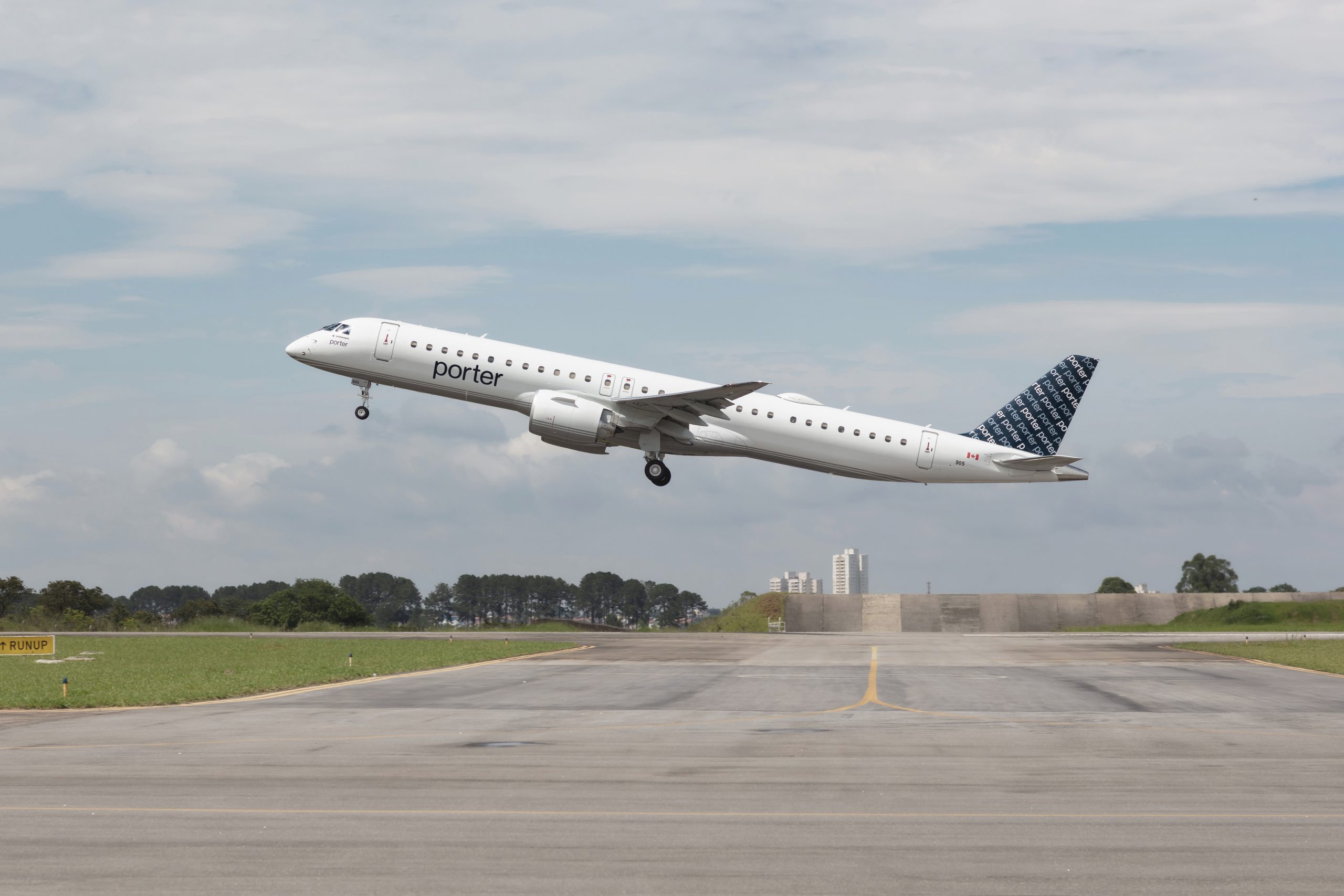
A Porter Airlines Embraer E195-E2 (Photo: Embraer)

Porter Airlines is continuing its growth with the opening of three new pilot and cabin crew bases for its Embraer E195-E2 fleet. According to an internal memo, the Canadian airline will be adding these bases in Ottawa, Montreal, and Vancouver.

Details: Porter’s Three New Crew Bases

After operating for a decade and a half out of Toronto Billy Bishop City Airport with a fleet of Dash 8 Q400 turboprops, Porter placed an order for 30 Embraer E195-E2 jets in 2021. As jet aircraft are not permitted at Toronto’s smaller airport, this move also meant that Porter was expanding to Toronto Pearson International Airport.

Porter’s 29 Embraer E195-E2 aircraft entered service in early 2023 and now serve over a dozen destinations across Canada and the United States. It’s no secret that the carrier has ambitious growth plans for its jet fleet, as it has an additional 46 jets on order.

The airline has kept its Dash 8 and E195-E2 crew bases separate. It currently has an E195-E2 base at Toronto Pearson and Dash 8 crew bases at Toronto Billy Bishop City Airport, Ottawa Macdonald–Cartier International Airport, Thunder Bay International Airport, and Halifax Stanfield International Airport.

The three new E195-E2 crew bases will be at Ottawa Macdonald–Cartier International Airport, Montréal–Trudeau International Airport, and Vancouver International Airport. Porter has been expanding its E195-E2 operations beyond its Toronto Pearson hub and the introduction of these new crew bases signals the carrier’s intention to continue to do so.

Porter CEO Michael Deluce speaks at the gate prior to the airline’s inaugural flight from Vancouver to Toronto in February of 2023 (Photo: AirlineGeeks | Andrew Chen)

Porter’s Growing Jet Operations

Porter already has multiple E195-E2 routes from these three airports, including Ottawa – Vancouver, Ottawa – Orlando, and Toronto Pearson – Vancouver, and the airline plans on starting E195-E2 operations in Montreal this spring with flights to Calgary, Edmonton, and Vancouver.

The carrier has also steadily been introducing jet routes to the United States, both from Toronto Pearson and Ottawa. There are also plans for Porter to start flying from a brand-new terminal at Montréal – Saint Hubert Airport.

Andrew Chen

Andrew is a lifelong lover of aviation and travel. He has flown all over the world and is fascinated by the workings of the air travel industry. As a private pilot and glider pilot who has worked with airlines, airports and other industry stakeholders, he is always excited to share his passion for aviation with others. In addition to being a writer, he also hosts Flying Smarter, an educational travel podcast that explores the complex world of air travel to help listeners become better-informed and savvier travelers.

Mexican Regional Airline Looks to Fly Cessna Caravans to U.S.

Mexican regional startup Aerus is eyeing new international service from a handful of cities in Mexico to the U.S., according to a recent DOT filing.

An Aerus Cessna Grand Caravan (Photo: Vmzp85, CC BY-SA 4.0 , via Wikimedia Commons)

Mexican regional startup Aerus is eyeing new international service from a handful of cities in Mexico to the U.S. Starting operations in April 2023, the airline currently serves 10 domestic destinations with a fleet of three Cessna Grand Caravans.

Aerus — which goes by the legal name Aerotransportes Rafilher S.A. de C.V. — is privately owned. By 2025, the company has plans for up to 14 aircraft and 500 employees, including orders for 30 all-electric Eviation Alice airplanes.

The airline recently filed with the Department of Transportation (DOT) requesting approval to operate flights from Mexico to the U.S. In the filing, Aerus proposed the following routes: Monterrey to Brownsville, Corpus Christi, Laredo, and McAllen, along with Tampico to Brownsville and McAllen. As of now, the airline has only proposed flights to Texas.

As part of the network expansion, the carrier expects to operate between 1,100 and 1,200 round-trip flights annually to the United States. The airline says it plans to average eight passengers per flight.

Why Texas

In an interview with ch-aviation, Aerus CEO Javier Herrera García said the decision to serve the four Texas destinations is due to cultural and business ties. “[Aerus] will be carrying executives and tourists to the U.S. on business and pleasure, thereby fostering commerce between Mexico and the United States consistent with the objectives of the United States Mexico Canada Agreement…,” the airline said in its DOT filing.

If approved, Aerus will join Aeromexico, VivaAerobus and Volaris with scheduled service to the U.S. In September 2023, the U.S. upped Mexico’s air safety rating, paving the way for carriers to add additional flights and routes.

Ryan Ewing

Ryan founded AirlineGeeks.com in February 2013 and has spent more than a decade covering the airline business. His work has been featured by CNN, WJLA, CNET, and Business Insider. His aviation experience spans airport operations, Part 135 regulatory compliance, and airline crew workforce planning, along with time behind the yoke of a Cessna 172 and interviews with airline executives. Ryan now serves as Group President of Firecrown Media’s Aviation Group. He holds a B.S. in Air Transportation Management and an MBA from Arizona State University and teaches Airline Management at Embry-Riddle Aeronautical University.

Alaska Airlines to Expand Freighter Service to Los Angeles

Alaska Airlines will take advantage of two new Boeing 737-800 converted freighters to open its first dedicated cargo service south of Seattle.

Alaska Airlines currently operates three Boeing 737-700 cargo jets. Next month they will be joined by two larger 737-800 converted freighters. (Photo: Alaska Air Cargo)

Alaska Airlines will take advantage of two new Boeing 737-800 converted freighters to open its first dedicated cargo service south of Seattle, starting in April, said Adam Drouhard, managing director for cargo.

Los Angeles will be the newest market for the freighters, which currently don’t fly beyond Seattle in the Lower 48 states.

The newly modified aircraft will help Alaska Air Cargo broaden its market reach in Alaska, speed up deliveries and reduce stress on the airline’s three Boeing 737-700 converted freighters that currently serve the state.

By bringing on the new 737-800 cargo jets, “we’re making sure we’re getting reliability in our schedule, getting more balanced with our fleet. But it’s going to add a lot of capacity and growth. There will be about 70% more capacity in our network overall for the state,” Drouhard told FreightWaves at the AirCargo 2024 conference here this week. He spoke on the exhibit floor, where Alaska Airlines (NYSE: ALK) had a booth to showcase its transport service to freight shipping intermediaries.

In November, Boeing delivered one 737-800 passenger aircraft for all-cargo operations and is putting the finishing touches, including upgrading galley fixtures and applying a new paint job, on the second aircraft. Touch work on the planes, which came from Alaska’s passenger fleet, was done by Boeing’s airframe repair partners in Costa Rica and Canada.

The first plane is currently grounded for scheduled maintenance. Both cargo jets will be ready for service by mid-March, the cargo chief said.

The conversions were originally scheduled to be completed last year, but the aerospace industry is still plagued by shortages of skilled workers and supply chain challenges that have delayed production across the aftermarket freighter industry.

With five freighters in the fleet, Alaska Air Cargo will be better able to deliver medicine, household goods and fresh food to communities in Alaska, many of which have limited road access, while also moving seafood and other export commodities to cities across North America with passenger services that connect in Seattle and Los Angeles.

Each 737-800 freighter can carry 10,000 pounds more than a 737-700. With a configuration that also holds more containers, the -800s will have 40% additional space than their predecessors.

Widespread dependence on air service means the Alaska Airlines freighters make about seven departures per day, which is more taxing on the airframe and engines than flying at a constant speed and altitude. The 737-700s on some routes will make three to five stops between Anchorage and Seattle. The planes also run about 10 hours per day. By reducing daily operating time to eight hours and the number of cycles, Alaska Air Cargo can extend their longevity, Drouhard explained.

“The uniqueness of that market up there is high cycle for us. So as we add two more aircraft to our fleet, it helps us right-size capacity so we’re not trying to solve so many stops off of one plane,” he said. “It also allows us to unbundle markets, so that way markets get much more dedicated capacity that’s not shared. We’re able to spread that schedule across more aircraft.”

Inside main deck of Boeing 737-800 after conversion to cargo configuration. (Photo: Alaska Air Cargo)

The new Los Angeles destination will initially be connected to Alaska through Seattle, but management expects to launch direct flights between Los Angeles International Airport and cities in Alaska in 2025. Alaska Airlines currently averages three daily departures from Seattle to Alaska.

“As the new expansion gets going, we want to keep close to Seattle rotation-wise. It makes it simple for us. As we get this set in place, we’ll be looking at opportunities to go direct to Anchorage, or other places like King Salmon, Bethel, Nome or the Alaska North Slope,” said Drouhard.

The new freighters are also in the process of becoming certified for flying long distances over open water. The aircraft’s expanded range will allow the cargo team to explore new routes, such as a possible nonstop from King Salmon to Seattle.

Cargo revenue at Alaska Airlines was about $130 million in 2023, nearly flat with the prior year. The revenue performance was much better than that of most airlines, which experienced revenue declines of 25% to 50% last year because of tepid freight demand and overcapacity. The difference is that most airlines operate in the international freight market, where the downturn was most severe, whereas Alaska operates domestically.

Drouhard said he expected to generate 10% to 15% more cargo revenue in 2024 because of the larger cargo fleet.

Editor’s Note: This story first appeared on FreightWaves

AirlineGeeks.com Staff

AirlineGeeks.com was founded in February 2013 as a one-person blog in Washington D.C. Since then, we’ve grown to have 25+ active team members scattered across the globe. We are all here for the same reason: we love deep-diving into the fascinating realm of the airline industry.
Sign-up for newsletters & special offers!

Get the latest stories & special offers delivered directly to your inbox

SUBSCRIBE

Uh-oh! It looks like you're using an ad blocker.

Our website relies on ads to provide free content and sustain our operations. By turning off your ad blocker, you help support us and ensure we can continue offering valuable content without any cost to you.

We truly appreciate your understanding and support. Thank you for considering disabling your ad blocker for this website