









Stories

Inside Look: United Debuts America’s First Airline-Owned Early Baggage System

United’s Early Baggage System (EBS) at George Bush Intercontinental Airport (IAH) has gone live, marking the opening of the first of its kind system in the U.S.

An overview of United's Early Baggage System at Houston George Bush Intercontinental Airport (Photo: AirlineGeeks | Andrew Chen)

United Airlines’ Early Baggage System (EBS) at George Bush Intercontinental Airport (IAH) in Houston has gone live, marking the opening of the first-of-its-kind system in the United States. The new facility – which is the first privately owned early baggage system in the country – became operational earlier this month and is now processing up to 80,000 bags per day.

A New State-of-the-Art Baggage System

The EBS is a processing and storage system that stores bags from passengers who have arrived early for their flights or have long layovers at the airport. During irregular operations that lead to delays and cancellations, bags belonging to delayed passengers can also be stored at the EBS facility.

The system consists of an intricate network of tracks, trays, storage shelves and supporting structures. With a throughput of 40 bags per minute – meaning that it can accept 40 bags and release 40 bags each minute – the EBS places each bag on a tray that moves throughout the system. Throughout the system, there are a total of 3,476 trays – with each one having the ability to hold one bag – and a total of 3,300 storage spots. A sophisticated computer system tracks each bag and releases them based on flight times.

Inside United’s new Early Baggage System at IAH (Photo: AirlineGeeks | Andrew Chen)

Built in a six-story building that sits above a terminal access road, the EBS facility is a new structure that is connected to IAH’s Terminal C. The $90 million EBS was constructed as part of a larger $365 million replacement of the Terminal C and Terminal E baggage system.

Although the EBS is physically connected to the baggage systems for Terminal C and Terminal E, bags from all terminals can be sent to the facility. The EBS operates a crew of approximately four to seven people, including one system subject matter expert and one supervisor.

United’s new Early Baggage System at IAH, as seen from the ground level (Photo: AirlineGeeks | Andrew Chen)

United’s EBS was designed by German technology conglomerate Siemens AG, which has also installed similar systems at airports including Kuala Lumpur International Airport and Seoul Incheon International Airport.

Reducing Lost and Delayed Baggage

According to Paul Young, United’s Facility/Bag System Manager at IAH, the threshold for bags to be sent to the EBS is two hours, meaning that bags that arrive at the airport early by two hours or more will be sent to the facility.

Some of the 3,476 trays and 3,300 storage spots in United’s new Early Baggage System at IAH (Photo: AirlineGeeks | Andrew Chen)

During a visit to the EBS, Young told AirlineGeeks that bags that arrived early would previously be sent to the bag room at the departure concourse for the bag’s next flight, leaving them more prone to missing the flight. Airline bag rooms can rely heavily on manual processing, exposing bags to a higher risk of being missed, misplaced or forgotten.

The EBS is expected to address these challenges, as the system stores bags in a computer-tracked system that prioritizes the release of baggage according to flight time. To further increase the efficiency and reliability of the airline’s baggage delivery at IAH, the EBS is also able to automatically release bags early in the event that a passenger changes their flight.


Andrew Chen

Andrew is a lifelong lover of aviation and travel. He has flown all over the world and is fascinated by the workings of the air travel industry. As a private pilot and glider pilot who has worked with airlines, airports and other industry stakeholders, he is always excited to share his passion for aviation with others. In addition to being a writer, he also hosts Flying Smarter, an educational travel podcast that explores the complex world of air travel to help listeners become better-informed and savvier travelers.

SkyWest to Open Austin Crew Base

SkyWest is slated to open a new crew base in Austin starting on June 1, 2024, primarily operating flights on behalf of Delta Connection.

A SkyWest Embraer aircraft operating for Delta Connection. (Photo: AirlineGeeks | William Derrickson)

SkyWest is slated to open a new crew base in Austin starting on June 1, 2024. According to sources, the base will be for Embraer E175 operations.

Austin will be the carrier’s third crew base in Texas, joining Dallas/Fort Worth and Houston, along with the 20th overall. SkyWest confirmed the new crew domicile in a recent Instagram post.

According to Cirium Diio data, SkyWest is scheduled to operate 721 E175 flights to and from Austin in June. The regional carrier primarily operates on behalf of Delta in the Austin market, including the airline’s new routes to McAllen and Midland, Texas. From Austin, SkyWest also operates a handful of E175 flights for United Express to both Houston and Los Angeles.


View this post on Instagram


A post shared by SkyWest Airlines (@skywestairlines)

The new base announcement comes just months after American said it would cut over 20 routes from Austin, the majority of which were operated by regional aircraft. SkyWest flies CRJ-700 aircraft on behalf of American Eagle in Austin.

SkyWest will join ultra-low-cost carrier (ULCC) Allegiant, which also maintains a crew domicile in the Texas capital.

Ryan Ewing

Ryan founded AirlineGeeks.com in February 2013 and has spent more than a decade covering the airline business. His work has been featured by CNN, WJLA, CNET, and Business Insider. His aviation experience spans airport operations, Part 135 regulatory compliance, and airline crew workforce planning, along with time behind the yoke of a Cessna 172 and interviews with airline executives. Ryan now serves as Group President of Firecrown Media’s Aviation Group. He holds a B.S. in Air Transportation Management and an MBA from Arizona State University and teaches Airline Management at Embry-Riddle Aeronautical University.

American Returns Last COVID-Grounded 737 to Service

American returned its last remaining Boeing 737-800 grounded as a result of the COVID-19 pandemic to revenue service last week.

American 737 aircraft
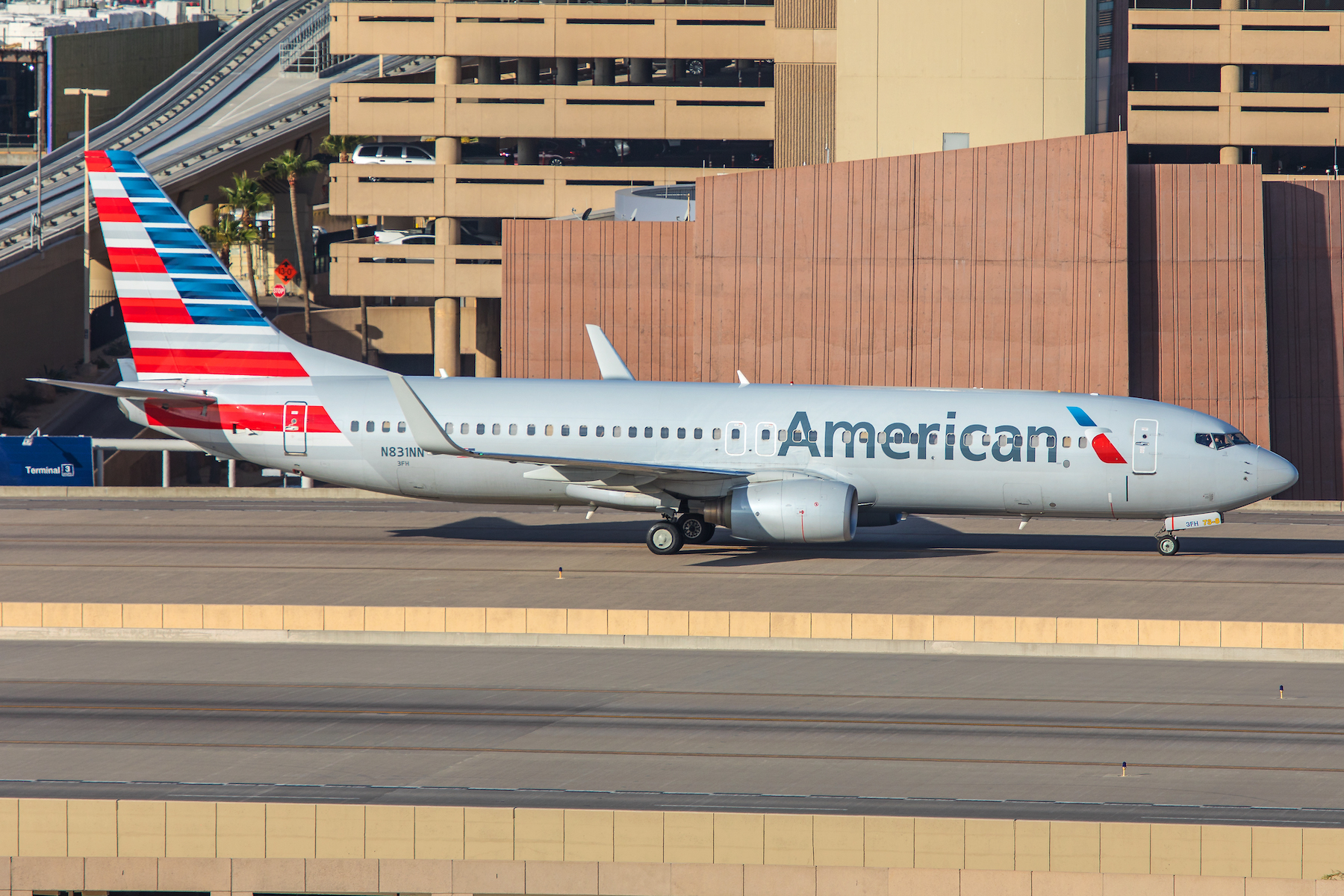
An American 737-800 in Phoenix. (Photo: AirlineGeeks | William Derrickson)

American returned its last Boeing 737-800 grounded as a result of the COVID-19 pandemic to revenue service last week. Registered as N920AN, the nearly 25-year-old aircraft had been in storage for more than four years.

In 2020, the Fort Worth-based airline placed over 70 so-called ‘Block 1’ 737-800 aircraft – those delivered from 1999 to 2001 – into long-term storage programs. American gradually returned these aircraft to revenue service as demand for air travel increased during the pandemic.

According to Cirium Fleet Analyzer data, N920AN was the last remaining 737-800 in a long-term storage program within American’s fleet. In November 2023, it ferried from the carrier’s storage facility in Roswell, N.M. to Jacksonville, Fla.’s Cecil Airport, presumably for interior retrofits and return to service checks.

An American 737-800 and MD-80 in Roswell, N.M. (Photo: AirlineGeeks | William Derrickson)

As first pointed out by aviation watchdog JonNYC on Twitter/X, the 737 re-entered revenue service on April 8, 2024. American has over 300 Boeing 737-800 in addition to nearly 60 737 MAX jets.

Due to the COVID-19 pandemic, American retired a handful of fleet types in 2020, including the Embraer E190, Airbus A330, Boeing 757, and Boeing 767. The airline also placed several aircraft into storage programs as worldwide travel demand slumped.

Ryan Ewing

Ryan founded AirlineGeeks.com in February 2013 and has spent more than a decade covering the airline business. His work has been featured by CNN, WJLA, CNET, and Business Insider. His aviation experience spans airport operations, Part 135 regulatory compliance, and airline crew workforce planning, along with time behind the yoke of a Cessna 172 and interviews with airline executives. Ryan now serves as Group President of Firecrown Media’s Aviation Group. He holds a B.S. in Air Transportation Management and an MBA from Arizona State University and teaches Airline Management at Embry-Riddle Aeronautical University.

Cairo International Airport Sets New Passenger Records

The Aïd al-Fitr holidays this year, celebrated during the Ramadan festival, showcased exceptional performance for Cairo International Airport.

Terminal 1 at Cairo Airport (Photo: Shutterstock)

The Aïd al-Fitr holidays this year, celebrated during the Ramadan festival, showcased exceptional performance for Cairo International Airport. April 13, 2024 will remain etched in history as the airport handled 746 flights (arrivals and departures) and accommodated 94,000 passengers, setting a new daily record since the start of its commercial operations in 1945.

From April 9 to 14, Cairo International Airport, situated in Heliopolis, Cairo, Egypt, greeted an impressive 3,636 flights, carrying a total of 500,000 passengers. This surge in travel activity represents a significant peak for the airport.

In response to the increased demand, the airport administration deployed all available resources according to a action plan developed by the Ministry of Civil Aviation in collaboration with relevant authorities.

This plan aimed to efficiently manage the influx of passengers and air traffic, especially during holidays and peak periods. Acting upon the directives of Mohammed Abbas Helmy, Minister of Civil Aviation, airport staff worked to ensure the provision of necessary facilities and services to travelers. Additionally, special attention was given to pilgrims returning from the Holy Lands, with dedicated 24-hour teams stationed in passenger terminals to facilitate smooth transitions and provide assistance as needed.

Continued Growth

This remarkable performance underscores the ongoing growth in traffic to Egypt’s primary aviation gateway. The previous daily record, set just a year ago on April 24, 2023, saw the airport handle 612 flights and accommodate 82,000 passengers. Before that, the record dated back to Dec. 30, 2022, with 77,000 passengers welcomed in a single day.

Beyond these peak periods, Cairo’s airport was the most sought-after in Africa in 2022, accommodating 20,009,336 travelers, according to ACI Africa, the continental branch of the Airports Council International (ACI).

Earlier on January 15, the Egyptian government unveiled plans to double Cairo International Airport’s capacity. This project entails the construction of a new passenger terminal, poised to accommodate 30 million passengers annually, effectively more than doubling its existing capacity.

Furthermore, the Minister of Civil Aviation, Mohamed Abbas Helmy, announced that Egypt will initiate an international bidding process to oversee and manage Egyptian airports. Speaking during an interview with CNBC Arabic on February 26, Helmy confirmed that the bid would encompass all airports, including Cairo International Airport.

In alignment with previous reports, Prime Minister Mostafa Madbouly emphasized the importance of engaging private sector entities in managing and operating Egyptian airports. Notably, the Egyptian government disclosed plans in November 2023 to tender contracts to private firms for airport management and operation. Prime Minister Madbouly reiterated the government’s commitment to fostering partnerships with the private sector, affirming its intent to delegate airport management and operation to private entities in the foreseeable future.

Victor Shalton

Victor Shalton's love for aviation can be traced to when he was 11-years-old. As a seasoned aviation writer, he takes pride in providing the best aviation coverage around the globe and is passionate about advancing his skills in the aviation space. In addition, he loves travelling, writing, arts and while his speaking engagements have taken him around the world, he is proud to call Nairobi home.

Analysis: Chinese Carriers’ Future Widebody Orders

With aging Boeing 777-300ER and Airbus A330 fleets, Chinese carriers are becoming increasingly in need of new widebody jets.

A China Eastern 777 turns onto the runway in Los Angeles. (Photo: AirlineGeeks | William Derrickson)

It has been seven years since mainland China carriers placed orders with Boeing, and it has been five years for Airbus to see Chinese widebody orders. The two major aircraft manufacturers supply all the widebody passenger jets for Chinese airlines, and the new competitor, COMAC, is joining the arena in the 2030s with its C929.

According to Boeing, as the market continues to recover and regain momentum for growth, its need for new generation widebody aircraft is estimated to be over 1,500 by the 2040s. In this article, we will deep dive into each manufacturer’s product offerings and the potential items on Chinese airlines’ shopping lists.

Airbus

Airbus now takes the largest market share of the Chinese passenger jet market. Airbus’ widebody product portfolio will include its A330neo and A350 series jets in the coming decade. The A330 has the largest widebody fleet in China, with both passenger and cargo configurations. With a mature operating system, the A330neo is an advantageous candidate for replacing and upgrading airlines’ aging fleets.

According to a procurement release from Hainan Airlines, it is looking to acquire 20 aircraft gallies for A330-900 jets. Such release confirmed that the carrier is planning to receive A330neo jets. However, the order and delivery dates have yet to be announced.

For the A350, Airbus has fully delivered the 30 orders placed by Air China and 20 orders placed by China Eastern. In future years, Airbus will continue to produce 10 A350s for China Southern and four to Sichuan Airlines for the remainder of their orders.

Boeing

Boeing’s widebody product portfolio includes its 787 Dreamliner and the next-generation 777X. Boeing’s 777-300ER is the backbone of Chinese carriers’ long-haul international and major domestic flights.

Although the orders have yet to be announced, all big three carriers have lined up Boeing’s 787 delivery plans for the coming years. The exact variant of 787 of those deliveries is still unknown, but it is believed there will be the larger 787-10. This order is to replace the aging A330s retiring in the coming years.

COMAC: The Newcomer

Chinese manufacturer COMAC is also introducing its first widebody jet, the COMAC C929. COMAC’s single-aisle jet – the C919 – is now delivering its sixth frame to China Eastern. The big three state-owned carriers of China will certainly place some orders for the C929 to support national industry. However, due to the uncertainty of its certification and delivery timeline, we will likely see major orders and development updates on C929 in three to five years.

Overall, the Chinese aviation market has grown to be the world’s second-largest with a variety of widebody jets from Boeing and Airbus. The Chinese carriers are now trying to replace their aging A330s, and Airbus’ A330neo and Boeing’s 787 have been ordered for this purpose.

For future expansions and fleet upgrades, Boeing’s 777X and Airbus’ A350-1000 may be considered to replace the aging Boeing 777-300ER. For the newcomer, COMAC, it is almost certain that Chinese carriers will order its future C929. However, the exact quantity and the performance of the jet will be seen in the future.

Lei Yan

Lei is from Inner Mongolia, China, and now lives in Guangzhou. He grew up in an aviation family, where his passion began. During his time at Penn State University, he studied Industrial Engineering specializing in operations research, and he graduated with an honor’s thesis on airport gate assignment optimization. Now, he is a Purchasing Manager with Procter & Gamble. In his free time, he enjoys flying, reading, and wandering around the city.

U.S. Airlines Push Back on China Flight Increases

Major U.S. airlines and various union groups are uniting together and asking authorities to stop approving any more flights between the United States and China.

An Air China Boeing 787-9 in Los Angeles.
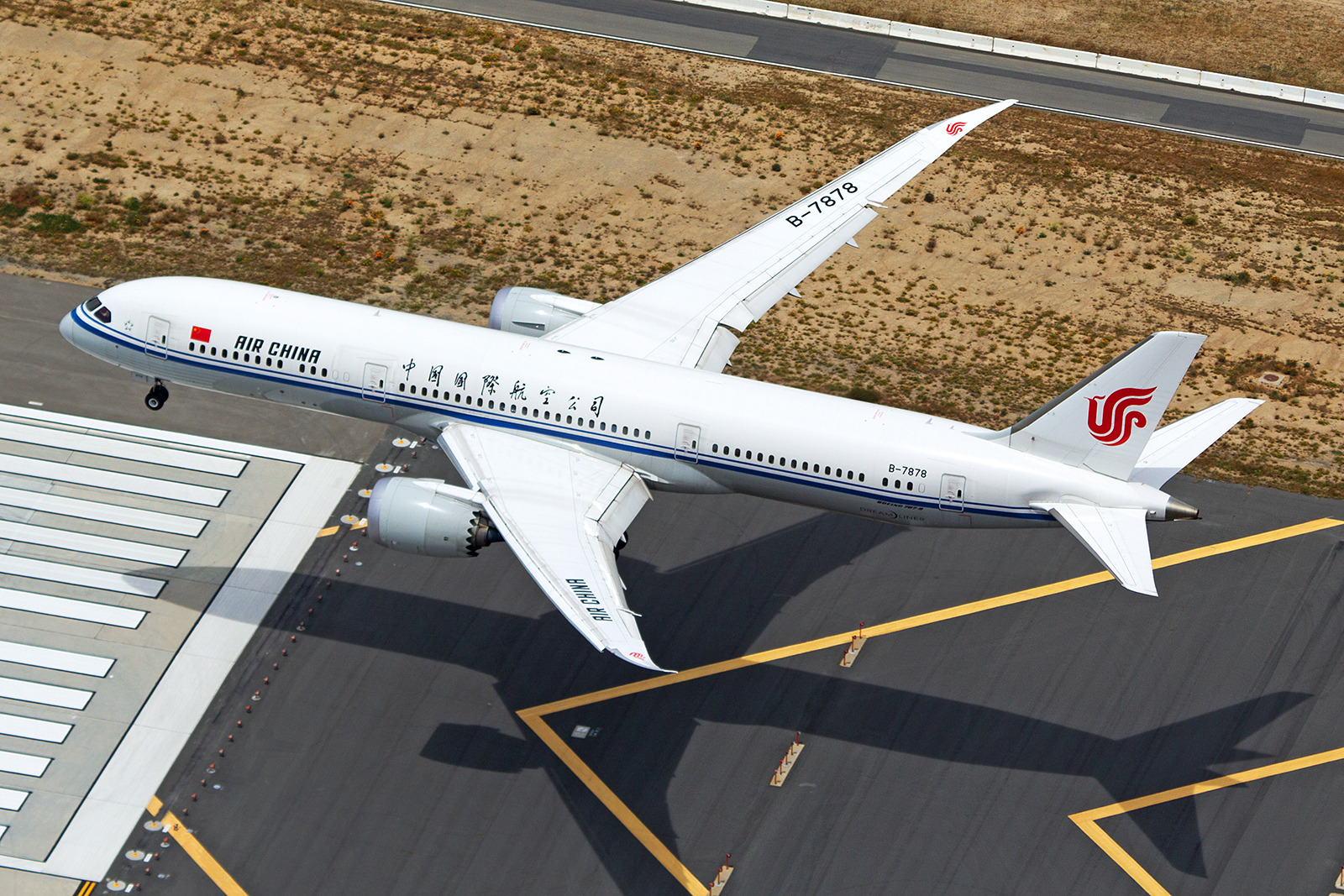
An Air China Boeing 787-9 in Los Angeles. (Photo: AirlineGeeks | William Derrickson)

Major U.S. airlines and various union groups are uniting together and asking authorities to stop approving any more flights between the United States and China because of “anti-competitive” policies imposed on U.S. carriers, according to the Associated Press. The group expressed its grievances in a letter sent to Secretary of State Anthony Blinken and Secretary of Transportation Peter Buttigieg.

CEO of Airlines for America (A4A) and the presidents of the Air Line Pilots Association (ALPA), the Allied Pilots Association (APA), and the Association of Flight Attendants (AFA) signed the letter.

Current Condition

The number of flights between China and the U.S. has significantly increased in the past year since China removed its COVID Zero policy. On March 31, Chinese airlines have started operating the new 50 flights weekly schedule that was approved by the Department of Transportation (DOT) earlier in the month.

The new count is up more than 50% from the previous level of 31 flights per week. The bilateral increase means U.S. airlines can also fly 50 flights per week to China. According to Aeroroutes, U.S. and China carriers offered 357 one-way flights in week 32 of 2019, more than three times the latest approved level.

Reuters reported at the time that, A4A in a statement, said it “supports the U.S. government’s approach to slowly, gradually and reciprocally reopen the market with China,” adding, “it’s imperative the U.S. government maintains this approach.”

Flip-Flopping Stance

The airlines and unions said in their Thursday letter that COVID-era rules imposed by China are still affecting U.S. airlines’ ability to operate in the country. However, the letter did not elaborate on which rules still affect American operations.

The U.S. airlines also said that Chinese airlines get an advantage by flying shorter routes through Russian airspace, which none of the U.S. airlines have done since the Russia-Ukraine war broke out two years ago. However, only a handful of Chinese flights overfly Russian airspace.

Newly added flights have all avoided Russian airspace, which also caused certain westbound flights to add technical stops. The letter could force Chinese carriers to pull out from Russian airspace entirely should they plan to increase U.S. flights further.

The letter also said that Chinese airlines get “certain protections” from the government, allowing them to operate their routes irrespective of market conditions. However, it did not elaborate on the specifics of these protections either. 

In addition to the letter from trade groups and airline unions, lawmakers in Washington, D.C., also chimed in. Chairman Mike Gallagher and Ranking Member Raja Krishnamoorthi, Chairman and Ranking Member of the Select Committee on the Strategic Competition Between the United States and the Chinese Communist Party, sent a letter to Secretary Blinken and Secretary Buttigieg urging the officials to be cautious when approving new flights between the United States and the People’s Republic of China, citing unfair market practices and security concerns.

The letter also cited an article from NASDAQ about the Civil Aviation Administration of China’s plan to restore international service as part of its claim for China’s unfair competition claims, even though the article only reported goals of the Chinese authority and no specifics on its approach.

Fangzhong Guo

Fangzhong grew up near an OEM airport in northeastern China, where he developed his enthusiasm for aviation. Taking upon his passion, he's now working as an aircraft interior design engineer. Besides working in the aerospace industry, Fangzhong enjoys trying out different types of airplanes and seeing how airplane interiors have evolved. So far, he's flown on over 80 types of aircraft. He also planespots in his spare time. His rarest catches included the 747 Shuttle Carrier Aircraft and AN-225.

JetBlue Inches Closer to Essential Air Service

Back at the end of February 2024, AirlineGeeks reported that JetBlue had put in a proposal for its first-ever Essential Air Service (EAS) contract.

A JetBlue Embraer ERJ-190 in the airline's Blueprint livery.
A JetBlue Embraer ERJ-190 in the airline's Blueprint livery. (Photo: AirlineGeeks | William Derrickson)

Back at the end of February 2024, AirlineGeeks reported that JetBlue had put in a proposal for its first-ever Essential Air Service (EAS) contract. Now, almost two months later, the airline is closer to the proposal possibly becoming a reality.

Presque Isle, Maine, which is known to have one of the most expensive EAS subsidies in the lower 48 states given its location further away from a larger hub than most, is now getting closer to the selection of the community’s EAS airline for the next couple of years.

With the community comments now posted online, it is interesting to see the breakdown of what the community thinks of each airline and how they stack up against each other.

Four airlines submitted bids for Presque Isle this time around; American, Boutique Air, JetBlue, and United. The number of comments is significant with over 150 being submitted to the DOT for consideration of the next airline contract. However, several of the comments come from people with identical last names meaning that some are likely different family members within the same household.

Community Comments

Boutique and American are essentially non-factors and will not be chosen for the contract. Boutique didn’t get a single community comment in favor of them, while American did get one, but it is also the most expensive option with the yearly subsidy requested being over $17,000,000.

Silver Airways got a single community comment in favor of them, but the carrier never submitted a proposal so it is not getting selected. US Airways also got one community comment in favor of it, but given the airline has been gone for roughly a decade now, this is most likely an error at the fault of the person submitting the comment.

AG silver
A Silver Airways ATR 42-600 (Photo: AirlineGeeks | Joey Gerardi)

The two main competitors are JetBlue and United, with United getting many more comments with over 100 in favor of it getting the contract. JetBlue got just under 50 comments in favor of it. Comment emails from people vary in length and have anything from a very in-depth review of why they believe a specific airline should be chosen, to a play-by-play of a bad personal experience with a certain airline, to a very simple singular sentence saying “Please don’t choose them” with no explanation as to why.

For JetBlue, positives given were; “it’s a bigger aircraft,” “they have nicer planes,” and an overwhelming number of comments in regards to the Boston flight being good for patients in northern Maine needing to get to Boston’s world-class medical facilities. Some negatives for JetBlue include the lack of connections out of Boston compared to United out of Newark, as well as only having one flight a day.

United had the same comments, including a variety of personal experience stories and then some patterns throughout the over 100 comments. Some of United’s positives mentioned in the comments included; “more connecting opportunities than Boston” and “two flights a day.” Some of the negatives mentioned included the weather in Newark, which could theoretically be the same for Boston, and a simple one-sentence statement in an email that read “Newark sucks.”

There are also a number of comments in favor of United that want the carrier for the simple reason of already having United MileagePlus accounts, and not wanting to start over from scratch with an airline points account.

While United does have significantly more comments in favor of them, JetBlue does have one big name on its side: the city of Presque Isle which are the elected officials of the city.

The DOT has been known to side with the airport board, or the city if they don’t have an airport council, even if more individual citizens want a different airline than the elected officials of the city. JetBlue is still the cheaper option by almost $3,000,000 per year than United.

For example, the DOT selected Cape Air for Manistee, Mich.’s EAS contract back in 2020. More individual people wanted Boutique but the city council wanted Cape so that was selected. At the same time, the DOT doesn’t always side with the city if one of the bids is less expensive. In Watertown, S.D., the city council wanted SkyWest and so did most of the individual citizens living there, but Denver Air Connection was cheaper so that is what was chosen by the DOT.

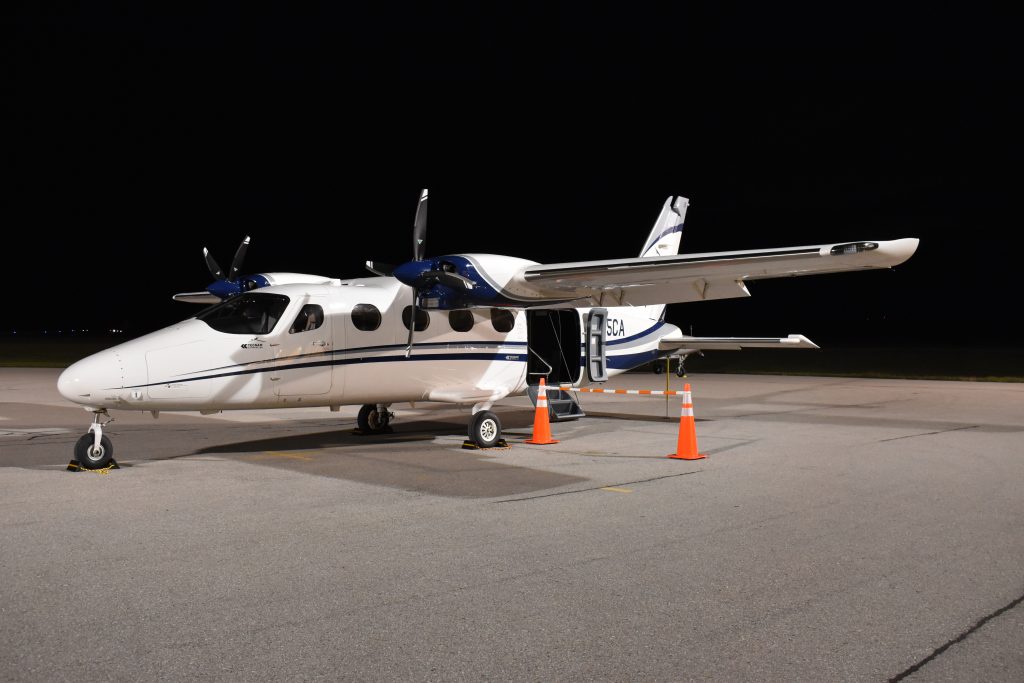
Cape Air’s brand new Tecnam P2012 Traveller in Manistee, Mich. (Photo: AirlineGeeks | Joey Gerardi)

So, it is anyone’s contract to win as there are no consistencies for every single EAS proposal as the decision can be affected by different situations every year. With the current contract ending on May 31, 2024, a decision needs to be made soon and is usually already done by this point.

Joey Gerardi

Joey has always been interested in planes for as long as he can remember. He grew up in Central New York during the early 2000s when US Airways Express turboprops ruled the skies. Being from a non-aviation family made it harder for him to be around planes and would only spend about three hours a month at the airport. He was so excited when he could drive by himself, the first thing he did with his driver's license was get ice cream and go plane spotting for the entire day. He graduated from Western Michigan University in 2022 with a B.S. in Aviation Management & Operations and a Minor in Business, and currently works for a major airline in his hometown.

Airlines Amend Schedules to Avoid Iranian Airspace

Several airlines, including Air India, Qantas, and Lufthansa, are amending flight schedules and routes due to escalating tensions in the Middle East.

Air India narrowbody aircraft (Photo: Kambui [CC BY 2.0 (https://creativecommons.org/licenses/by/2.0)])

Several airlines, including Air India, Qantas, and Lufthansa, are amending flight schedules and routes due to escalating tensions in the Middle East. The changes to flight schedules are to avoid overflight of the airspace of countries where conflict has the potential to escalate.

The Guardian reports that Qantas will reroute its Perth to London non-stop service to include a stop in Singapore as the 17-and-a-half-hour flight overflew Iranian airspace. The return Boeing 787-9 service will continue to fly non-stop between Heathrow and Perth due to favorable westerly winds that do not require overflight of the Islamic Republic of Iran.

The Australian carrier’s response coincides with an advisory from the country’s government warning citizens of potential travel disruptions due to the escalation of events in the region. “The security situation could deteriorate quickly, with little or no notice,” the warning advisory said. “This may also result in airspace closures, flight cancellations and flight diversions, and other travel disruptions. Airports may pause operations due to heightened security concerns.”

Air India has also amended flight routes to avoid Iranian airspace though unlike European carriers the airline continues to operate through Russian airspace. The Times of India reports that the carrier is undertaking a more northerly flight path for its Delhi-London service. This route replaces the usual India-Pakistan-Iran-Turkey-Black Sea path to Europe. The carrier’s service from Delhi to Tel Aviv operated on Saturday though a spokesperson stated: “We are closely monitoring the developing situation in the Middle East.”

Indian carrier Vistara is also taking steps to protect operational integrity for flights to European destinations. “Contingency routes, which are kept available to ensure operational continuity during such eventualities, are being used instead,” said a spokesperson. “This may result in longer flight times on certain routes and associated delays.”

Earlier in the week, Lufthansa announced the temporary suspension of flights from Frankfurt to Tehran. In a statement, the German carrier said, “Due to the current situation in the Middle East, Lufthansa has decided to suspend flights to and from Tehran until Thursday, April 11, 2024. We are constantly monitoring the situation in the Middle East and are in close contact with the authorities. The security and safety of our guests and crew members have top priority for Lufthansa.”

On Thursday, Reuters reported that Lufthansa had extended the suspension of the service by two days through April 13. It was also noted that fellow Lufthansa Group carrier Austrian Airlines was revising the flight schedules of its six-times-per-week Vienna to Tehran service to avoid an overnight layover. Lufthansa and Austrian Airlines are the only European carriers that offer non-stop services to the Iranian capital.

John Flett

John has always had a passion for aviation and through a career with Air New Zealand has gained a strong understanding of aviation operations and the strategic nature of the industry. During his career with the airline, John held multiple leadership roles and was involved in projects such as the introduction of both the 777-200 and -300 type aircraft and the development of the IFE for the 777-300. He was also part of a small team who created and published the internal communications magazines for Air New Zealand’s pilots, cabin crew and ground staff balancing a mix of corporate and social content. John is educated to postgraduate level achieving a masters degree with Distinction in Airline and Airport Management. John has held the positions of course director of an undergraduate commercial pilot training programme at a leading London university. In addition he is contracted as an external instructor for IATA (International Air Transport Association) and has been a member of the Heathrow Community Fund’s ‘Communities for Tomorrow’ panel.

Qantas Pauses Nonstop London Flight Amid Middle East Tension

Qantas will add a stop in Singapore on its flight between Perth and London as the airline avoids Iranian airspace amid growing tensions.

A Qantas 787-9 performs a test flight at Paine Field. (Photo: AirlineGeeks | Katie Zera)

Qantas is rerouting its longest flight and the world’s fourth-longest passenger route due to concerns about Iranian attacks in the Middle East. The flight, operated by a Boeing 787-9, will add a stopover in Singapore to refuel as the Dreamliner cannot cover the distance if Iran airspace is avoided.

The affected flight is QF9 from Melbourne to London Heathrow, with a stopover in Perth. The flight will now have two stopovers, in Perth and Singapore. The return flight, QF10, will also avoid Iran airspace but can fly directly between London and Perth thanks to favorable wind conditions.

The new flight numbered QF209, will have a stopover of 1.5 hours in Singapore before making its way to London. QF209 on April 12 followed a northern route over Turkmenistan to avoid Iranian airspace, then turned slightly South over the Black Sea to avoid the Russian and Ukrainian airspace.

The flight path of QF209 from Singapore to London (Photo: Flightrader24)

More Airlines Are Avoiding Iran Airspace

The only Western airlines serving Iran are Lufthansa and its subsidiary Austrian. Both airlines have suspended their flights to Tehran amid tensions. Lufthansa stopped flying over a week ago while Austrian continued flying into the Iranian capital with an adjusted schedule until April 11. The Lufthansa Group has also stopped using Iranian airspace for its flights to and from Asia.

Several other carriers, including Air India, have also stopped using Iranian airspace due to security concerns. More airlines are expected to join as the situation escalates. This is set to pose another challenge for airlines flying between Asia and Europe after the closure of Ukrainian airspace and the avoidance of Russian airspace by most carriers.

Qantas Service via Singapore

Singapore is unsurprisingly chosen as the stopover airport for Qantas due to the large presence Qantas has in the city. Qantas’ other service to Europe, QF1 and QF2 between Sydney and London, make a regular stop in Singapore where it also enjoys fifth freedom rights, meaning the ability to carry passengers between Singapore and London.

Qantas uses A380 on its flights from Sydney to London via Singapore (Photo: AirlineGeeks | Hisham Qadri)

Other than the “Kangaroo Service” between Sydney and London via Singapore, Qantas flies another daily service between Sydney and Singapore, two daily flights between Melbourne and Singapore, and one daily flight each from Perth and Brisbane to Singapore. Its subsidiary, Jetstar, also has a daily flight to Singapore from Melbourne.

The latest development could impact future Qantas services to Europe from Perth. Qantas is planning to launch flights to Paris in time for the Olympics and relaunch flights to Rome in 2024. However, with the Middle East situation uncertain, these flights could be impacted as well.

Anthony Bang An

Anthony is an aviation enthusiast who grew up around the world from St. Louis to Singapore, and now lives in Amsterdam. He loves long-haul flying and finds peace in the sound of engine cruising. He aspires to share his passion for the sky though writing and providing another angle on the stories.

Miami Airport Plans to Convert All Jet Bridges to Glass

Miami International Airport (MIA) unveiled a new glass passenger boarding bridge at gate H17 on Friday, marking a move towards wider use of the technology.

Miami-Dade County leadership opens new glass jet bridge (Photo: Miami-Dade County)

Miami International Airport (MIA) unveiled a new glass passenger boarding bridge at gate H17 on Friday, marking a move towards wider use of the technology.

The overhauled bridge follows a similar structure introduced at gate D14 in late 2022. MIA plans to install 62 glass bridges in the first phase by 2028, aiming to become a leader in their use among U.S. airports.

“I am so proud to unveil our newest glass bridge at MIA and announce our ambitious plans to introduce 60 more, making MIA the largest user of these energy-efficient innovations in the country,” said Miami-Dade County Mayor Daniella Levine Cava in a news release.

During a press conference, the airport announced that all of its 126 gates would be converted to glass as part of a $1.7 billion master plan to upgrade its infrastructure. The plan has already modernized 30 gates with steel bridges since 2019.

According to the airport, glass bridges offer some advantages. They provide a more open and spacious feel for passengers compared to traditional steel bridges. Additionally, their design and insulation improve energy efficiency by reducing cleaning needs and improving temperature control, the airport stated in a press release.

These types of jet bridges are more widely used outside the U.S. Only a handful of U.S. airports have glass bridges, including Kansas City International Airport, which opened a brand-new terminal in 2023. 

“[Glass bridges are] the industry trend right now,” MIA Director and CEO Ralph Cutié said during a press conference. “If you go to Europe…you will see bridges like that everywhere, so we are very excited about it.”

MIA recorded record-setting passenger numbers in 2023. The airport handled 52.3 million passengers, up three percent from 2022. Fort Worth-based firm TK Airport Solutions is fabricating the airport’s new jet bridges.

Ryan Ewing

Ryan founded AirlineGeeks.com in February 2013 and has spent more than a decade covering the airline business. His work has been featured by CNN, WJLA, CNET, and Business Insider. His aviation experience spans airport operations, Part 135 regulatory compliance, and airline crew workforce planning, along with time behind the yoke of a Cessna 172 and interviews with airline executives. Ryan now serves as Group President of Firecrown Media’s Aviation Group. He holds a B.S. in Air Transportation Management and an MBA from Arizona State University and teaches Airline Management at Embry-Riddle Aeronautical University.
Sign-up for newsletters & special offers!

Get the latest stories & special offers delivered directly to your inbox

SUBSCRIBE

Uh-oh! It looks like you're using an ad blocker.

Our website relies on ads to provide free content and sustain our operations. By turning off your ad blocker, you help support us and ensure we can continue offering valuable content without any cost to you.

We truly appreciate your understanding and support. Thank you for considering disabling your ad blocker for this website