









Stories

Advanced Air to Operate U.S.’s Longest Dornier 328 Flight

Advanced Air announces its 12th and 13th destinations, including the longest Dornier 328Jet route in the United States at over 600 miles.

An Advanced Air Dornier 328Jet in Carlsbad, Calif. (Photo: AirlineGeeks | Joey Gerardi)

Hawthorne, Calif.-based Advanced Air has unveiled another round of expansion, bringing with it two more cities to its network, including Crescent City and Oakland, Calif.; one of which is an Essential Air Service (EAS) community, and the other becomes the new longest Dornier 328Jet route in the United States.

The airline has yet to make a formal announcement of its new community but has already put the flights up for sale on the airline’s website among other booking sites. Crescent City, Calif. is one of three EAS airports in the state of California and actually falls into the “Alternate Essential Air Service” AEAS category. These AEAS contracts work in virtually the same way as typical EAS, with the only difference being that in AEAS, the community is awarded the grant and they pay the carrier for the air service directly instead of everything having to go through the government for approval, as well as the fact the communities have much more influence of the airline schedules and timing.

Advanced will now hold two of the three EAS cities in California, with the carrier already having the contract in Merced. This will also be Advanced Air’s first EAS contract it holds with service being operated on its 30-seat Dornier 328Jet, as the other three contracts are for the eight-seat King Air or Pilatus PC-12.

An Advanced Air King Air 350 at Phoenix Sky Harbor (Photo: AirlineGeeks | Joey Gerardi)

Longest 328Jet Flight

The airline will begin service to Crescent City on March 17, 2024, with the current carrier offering services here, Contour Air, operating its last flight on the evening of March 16. In addition to offering services to Oakland like Contour, Advanced will also offer less than daily flights to its headquarters in Hawthorne, which will become the longest Dornier 328Jet flight in the country, at 630 miles.

AirlineGeeks had a chance to talk with Ryan Cooley, who is the director of the Border Coast Regional Airport Authority in Crescent City, and ask him a few questions about this new upcoming service with Advanced Air.

AirlineGeeks (AG): The current Alternate EAS contract term is up in nine months [Sept. 30, 2024], so why switch carriers now versus waiting until the term is up in less than a year and having them bid with a new contract?

Ryan Cooley (RC): So it was really all about growth potential opportunity, Advanced Air came up to visit us in 2023 just to express interest in our area. They have a lot of customers that fly out of the LA Basin on their aircraft, the 30-seat regional jet, to Mammoth, California, and a lot of outdoor enthusiasts. They thought perhaps they could tap into the Border Coast, Redwoods, and camping, and hiking region for the summer months as well as year-round. After a lot of thought and deliberation, as well as discussions with our board members at Border Coast Regional Airport Authority, on January 3, 2024 special session was held, and after months of discussion and research unanimously voted to terminate the existing air service with Contour Airlines and enter into a new air service agreement with Advanced Air to help promote growth and opportunity. Contour Airlines has been a good air service provider to Oakland, but, as you’ve seen over the years and especially last year their service has been focused on expanding in the Midwest and especially the East Coast.

So, from being forward-thinking, and thinking about our future and potential opportunities for the airport, the combination of being able to get flights not only to Oakland but now to the LA Basin. Advanced Air will provide service to the LA Basin as well as Oakland, we will be able to tap into more opportunities for tourism and bring people up here to our region, to allow our business travelers, and our residents to travel down to the [LA Basin]. We actually had a leakage and retention study done back in the fall by an aviation consulting company here, and what we found out is from Port Orford, Ore. to Klamath, Calif., which is our catchment area along the coast for potential air travel, 64% of the air travelers from our region drive over to Medford, Ore. to get to LA. So, if we can tap into that, it’s just more opportunities for us to grow our enplanements and to get over 10,000 enplanements a year again, and to bring more tourism here, as well as business travelers. So that’s why, it’s all about opportunity, growth, and the potential it can bring to the region from an economic standpoint.

(AG): What is the daily flight offering going to look like, split between Oakland and Hawthorne, Calif. (LA Basin?)

(RC): We are in a unique situation currently, just the way the air service grant was set up and drafted before I got here as Airport Manager in 2020. The grant was enough to provide roughly seven round trips to Oakland a week and so that’s what Contour currently does, one flight in and one flight out a day, except in the summer where they occasionally add another flight on Fridays and Sundays. But, with the current grant amount right now we are looking at seven round trips a week, but what Advanced Air has proposed is between six and eight round-trip flights per week to Oakland, based on seasonality, and then two flights a week to Hawthorne-Los Angeles for the beginning of their partnership with us.

They have to finish out the existing grant which goes to September 30, 2024, using the grant amount that is left, then when the new air service agreement is initiated and the grant is awarded on October 1, 2024, they will operate under the same grant amount that we are currently in, for year four and year one of the new grant. But we plan on negotiating with the DOT for grant years two, three, and four of the new grant term for increases in those amounts, in order to get the amount necessary to do what Advanced Air is proposing; 12 round trips a week to Oakland, and five round trips a week to Hawthorne. But that wouldn’t happen until October of 2025, as we need to work with the grant amount that we are currently given, but the main goal is keeping the current offering we currently have, the seven weekly flights to Oakland, and then adding the additional flights to Hawthorne-Los Angeles as a bonus.

(AG): Contour does codeshare and baggage agreements with American Airlines, but Advanced doesn’t have any agreements currently with anyone. Does this concern you at all or are you not worried about this?

(RC): So, since COVID, American Airlines pulled Oakland, so when our passengers fly to Oakland on Contour unfortunately there are no codeshares or agreements for our passengers to take advantage of anyways, so they go to Oakland on Contour and have to pick up their [checked] bags and go to another airline to recheck them, or just take carryon bags. So, nothing is really going to change in the short term anyway, as they can’t even take advantage of the codeshares and interlines, even with Contour that they do offer since American doesn’t fly to Oakland. My goal is to work closely with Advanced Air and to discuss with and encourage them, which they have discussed in the past, they are open to interlines, with one of the prominent airlines in Oakland at some point in the future.

(AG): Is the service out of Crescent City going to be sterile or non-sterile, given Oakland has TSA screening and Hawthorne doesn’t?

(RC): So Advanced Air has their AOSSP, which is their security program, so we will be flying into Oakland and out of Oakland sterile, TSA will be staying here, and nothing will change in the aspect of our Oakland flights. What brings a new piece of the puzzle is the fact that Hawthorne is a non-sterile airport, I have already sent out a request to the TSA with our proposed schedule, to see if a precedence has been set in the past or if there is a possibility since they are here anyways to screen our passengers out of Crescent City bound for Hawthorne. That way the airline and airport can continue to use the boarding room holding gate which requires passing security to use it, so they don’t have to use an alternate route to get out to the aircraft because of the non-sterile aspect. There are ways to work around it, but we are working with the TSA to make sure we follow every rule and aspect of their security policy.

Advanced Air’s current route map (Photo: Advanced Air)

Advanced Air has continued to grow and now operates a pretty sizable operation for a carrier of its size. With the addition of Crescent City, it will have 13 destinations (11 year-round, two seasonal), and will now offer three to four nonstop destinations just from its home base in Hawthorne, Calif. depending on the time of the year.

It will also give aviation enthusiasts two more routes and opportunities to fly on the rare Dornier 328Jet, a 30-seat aircraft that until a few years ago was fading away from the commercial skies of the United States, but now has a strong presence not only in Advanced Air’s fleet, but for Denver Air Connection as well.

Joey Gerardi

Joey has always been interested in planes for as long as he can remember. He grew up in Central New York during the early 2000s when US Airways Express turboprops ruled the skies. Being from a non-aviation family made it harder for him to be around planes and would only spend about three hours a month at the airport. He was so excited when he could drive by himself, the first thing he did with his driver's license was get ice cream and go plane spotting for the entire day. He graduated from Western Michigan University in 2022 with a B.S. in Aviation Management & Operations and a Minor in Business, and currently works for a major airline in his hometown.

Livery of the Week: Air Tahiti Nui

Air Tahiti Nui, the flag carrier of French Polynesia, boasts a livery as captivating as the destinations in which it serves, adorning a fleet of Boeing 787s.

An Air Tahiti Nui 787-9 at Paine Field (Photo: AirlineGeeks | Katie Bailey)

Editor’s Note: AirlineGeeks is excited to launch our ‘Livery of the Week’ series. Every Friday, a team member will share an airline livery, which can be from the past, present, or even a special scheme. Some airline liveries are works of art. The complexity associated with painting around critical flight components and the added weight requires outside-the-box thinking from designers. The average airliner can cost upwards of $200,000 to repaint, creating a separate aircraft repainting industry as a result. 

Have an idea for a livery that we should highlight? Drop us a line

Air Tahiti Nui, the flag carrier of French Polynesia, boasts a livery as captivating as the destinations in which it serves. More than just paint on metal, it’s a canvas of cultural references and natural inspiration, whispering tales of the islands on every flight.

The livery’s dominant feature is a gradient of blues, mirroring the spectrum of the Tahitian seas. The deepest azure at the top transitions to softer turquoise, evoking the ocean’s depths and the sun-kissed lagoons. White, representing the sand and sunlit clouds, forms the lower half and engine cowlings.

An Air Tahiti Nui 787-9 (Photo: AirlineGeeks | William Derrickson)

Flags and Flowers

Proudly displayed behind the flight deck is the flag of French Polynesia, with red and white stripes mirroring those that run along the fuselage. On the tail fin, the airline’s emblem, the tiare flower, blooms in white against the blue. This fragrant national symbol, often worn behind the ear, embodies purity and beauty.

On the airline’s Boeing 787-9s, the rear fuselage comes alive with intricate “tattoos” inspired by Marquesan navigation charts. These patterns represent constellations, ocean currents, and even the shapes of islands, whispering navigation secrets across the sky.

Each element holds deeper significance. The soaring albatross symbolizes resilience and overcoming challenges. The manta ray embodies grace and wisdom, guardians of the Polynesian seas. The waves around the tiare flower whisper of freedom and the interconnectedness of life.

Evolution of a Canvas

While the core elements remain, the livery has evolved. Launched in 2018, the 787-9 livery refined the previous design, adding complexity and depth to the “tattoos.”

Air Tahiti Nui’s livery is more than just a visual identity. It’s a tangible expression of Polynesian culture, whispering tales of ancient navigators, breathtaking landscapes, and the island spirit. The all-Dreamliner operator flies to a handful of destinations in the U.S., Oceania, Asia, and Europe.

Looking for a new airplane model? Head over to our friends at the Midwest Model Store for a wide selection of airlines and liveries.

Ryan Ewing

Ryan founded AirlineGeeks.com in February 2013 and has spent more than a decade covering the airline business. His work has been featured by CNN, WJLA, CNET, and Business Insider. His aviation experience spans airport operations, Part 135 regulatory compliance, and airline crew workforce planning, along with time behind the yoke of a Cessna 172 and interviews with airline executives. Ryan now serves as Group President of Firecrown Media’s Aviation Group. He holds a B.S. in Air Transportation Management and an MBA from Arizona State University and teaches Airline Management at Embry-Riddle Aeronautical University.

Alaska Takes Delivery of First Boeing 737 MAX 8

Alaska Airlines takes delivery of its first Boeing 737 MAX 8. The airline currently operates the MAX 9 variant and has MAX 10 aircraft on order.

Alaska's new 737 MAX 8 (Photo: Alaska Airlines)

Alaska Airlines has historically operated an all-boeing fleet of aircraft. The minor blip of Virgin America aircraft aside, the airline has been proudly Boeing, and more specifically proudly all Boeing 737s of some variant, for decades.

Therefore, it comes as no surprise that as Alaska continues to grow, it continues to keep buying more Boeing 737 aircraft. The airline has 80 737 MAX aircraft on order with options and purchase rights for another 105.

The airline already operates over 60 Boeing 737 MAX 9 variants that are quite popular with the airline. The carrier states that the variant has done very well with guest satisfaction, fuel efficiency, and economics.

Arrival of the MAX 8

The airline this week announced delivery of the first MAX 8 variant of which the airline has 15 on order. These aircraft have lower seating capacity than the MAX 9 aircraft and will primarily be used to fly longer nonstop routes with fewer passengers.

The longer range of the MAX 8 allows for the airline to introduce routes that it was previously unable to such as nonstop flights from Anchorage to New York’s JFK. The airline will be launching this route on June 13 of this year and will become the longest flight the airline operates at 3,386 miles.

Alaska has taken an interesting approach when it comes to the configuration of these aircraft. The first five aircraft will have 159 seats, 12 first class and 147 economy seats. After those initial five aircraft, the rest of the aircraft will come with 16 first class seats and 145 economy seats. At some point in the future, the airline will then reconfigure the first five aircraft to have the same seating as the later delivered aircraft.

It’s unclear as to why the airline went with this plan, although it is possible that supply chain issues may have played a part in this odd configuration plan.

The 737 MAX 8 aircraft have the longest range but the smallest capacity; these aircraft will service longer haul routes between medium-sized markets. The MAX 9 aircraft that are already in service will operate routes of high demand within range limitations of the aircraft which are quite impressive as well. The MAX 10 is still being certified by Boeing but it’s expected the airline will start taking deliveries in 2025. This aircraft will have the largest capacity of any MAX variant.

Hemal Gosai

Hemal took his first flight at four years old and has been an avgeek since then. When he isn't working as an analyst he's frequently found outside watching planes fly overhead or flying in them. His favorite plane is the 747-8i which Lufthansa thankfully flies to EWR allowing for some great spotting. He firmly believes that the best way to fly between JFK and BOS is via DFW and is always willing to go for that extra elite qualifying mile. Hemal's opinions are his own and do not reflect those of his employer.

Start-Up Aeroitalia Adds New Milan-London Flight

Aeroitalia, an Italian startup airline, is set to launch new flights between Milan's Bergamo Airport and London's Southend Airport.

A Boeing 737-800 in the Aeroitalia livery. (Credit: Aeroitalia).

Aeroitalia has announced it will commence service between Milan’s Bergamo Airport and London’s Southend Airport on March 25, 2024. The Italian startup airline plans to operate the flight six times weekly. It will use its Boeing 737-800 aircraft based at Bergamo and Rome’s Fiumicino Airport.

Southend Airport stated, “The new route will offer convenient connection to Italy’s fashion hub of Milan, with with leisure-friendly morning departure times attracting travelers from both ends of the route.” The carrier will introduce this new flight to London as its first to England, and it will become Southend’s 11th destination.

The airport has entered a partnership with Aeroitalia, with more routes to be added in the future, according to the release.

Southend’s CEO John Upton stated that this partnership marks a “significant milestone” for the airport, providing passengers “with a convenient gateway to the heart of Italian football, fashion and culture in Milan.”

Aeroitalia’s History

Aeroitalia was founded in 2022 to add additional airline service to the Italian airline industry following the collapse of Alitalia and Air Italy, also creating jobs for employees coming from these defunct carriers. The airline currently operates a fleet of Boeing 737-700, 737-800, and ATR 72-600 aircraft across European destinations, with plans to expand to South America and Europe after solidifying its continental network. The airline maintains bases at Bergamo, Fiumicino, Ancona, and Comiso.

The airline operates an extensive network within Italy with connections to Spain and Romania, along with seasonal service to leisure destinations in Greece:

Image
Aeroitalia’s current route map. (Photo: Aeroitalia)

The carrier also announced that it acquired a majority stake in Romanian regional airline Air Connect in November 2023, adding the ATR 72-600 aircraft to the fleet. The airline believes that the acquisition “will allow Aeroitalia to strengthen its presence in the Italian regional market and will strengthen its feeder capacity towards the Rome Fiumicino hub.”

Aeroitalia CEO Gaetano Intrieri is “confident that this new route will become a bridge between cultures” with the addition of London to the network.

Intrieri added that the airline is “determined to continue to improve and expand our operations to always offer [passengers] high-quality services,” expressing excitement about the new partnership.

The route will now offer passengers in England onward connections to smaller destinations in Italy. Currently, Southend only offers Alicante, Amsterdam, and Paris’s Charles de Gaulle as regular destinations on easyJet, with seasonal service to Faro, Geneva, Grenoble (starting February 4, 2024), Málaga, and Palma de Mallorca.

Balkan Holidays Air also announced seasonal flights to Burgas (in southeast Bulgaria) starting June 17, 2024. With the addition of Milan, the airport will now have nonstop service on three airlines to eight countries.

Arya Karnik

Ever since he was a kid, Arya has been interested in aviation. With his entire family overseas, he has taken many family trips worldwide to places like the United Kingdom and India. He lives in Colorado but attends The University of Alabama, studying Computer Engineering with a minor in Computer Science. He hopes to obtain his PPL and eventually translate his engineering degree to working in operations at an airline.

United to Expand Flight Training Capacity

United is bolstering its pilot training capacity in Denver with the opening of a new 113-acre facility. The carrier plans to add 12 new full simulators.

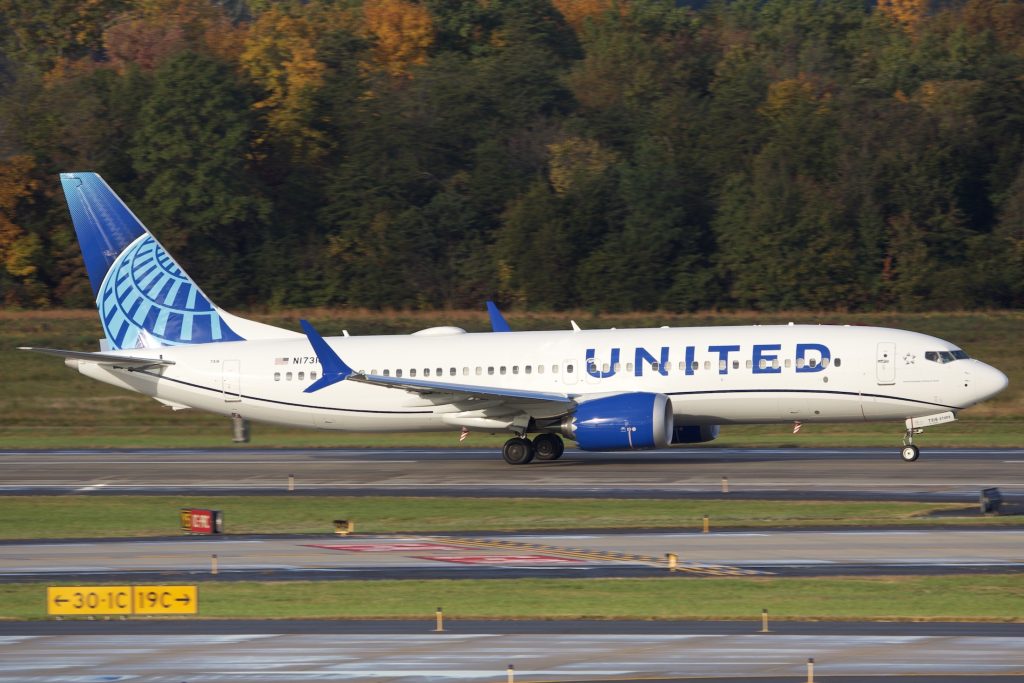
United_UA_737_Max_9_KRNT_BoeingFactory_katie_bailey_5
A United 737 MAX 9, the larger variant of the 737 MAX 8, on the flight line. (Photo: AirlineGeeks | Katie Zera)

United is bolstering its pilot training capacity in Denver with the planned opening of a new 113-acre facility. According to The Denver Post, the Chicago-based carrier plans to add 12 new full-motion simulators as part of the project’s first phase.

Back in August, United paid $33 million to acquire a piece of undeveloped piece of land near Denver International Airport. In a land development filing, the airline said there was “an immediate need” to build a new simulator facility.

Currently, the airline has one of the largest single flight training centers in the world. Located near the new planned facility, its Flight Training Center (FTC) boasts 39 full-motion flight simulators and 15 other training devices. The facility trains 16,500 pilots each year.

United is continuing to hire roughly 200 pilots per month, according to data from FAPA.aero. In October, the airline reported a record-setting month for pilot hiring.

According to the filing, the airline hopes to have the new facility operational by late 2027. As this is the project’s initial phase, the airline notes that expansion could also expand beyond 2027.

Denver Expansion

United is continuing to eye growth in Denver, even beyond its hub at the airport. The carrier is also exploring the potential of a new corporate campus in Denver.

“United is actively investigating programmatic needs to support corporate campus activity accommodating 5,000 employees in future phases of the project,” the company said in the same filing. The airline’s main corporate office is in Willis Tower in downtown Chicago.


Ryan Ewing

Ryan founded AirlineGeeks.com in February 2013 and has spent more than a decade covering the airline business. His work has been featured by CNN, WJLA, CNET, and Business Insider. His aviation experience spans airport operations, Part 135 regulatory compliance, and airline crew workforce planning, along with time behind the yoke of a Cessna 172 and interviews with airline executives. Ryan now serves as Group President of Firecrown Media’s Aviation Group. He holds a B.S. in Air Transportation Management and an MBA from Arizona State University and teaches Airline Management at Embry-Riddle Aeronautical University.

The Most On-Time Airlines and Airports of 2023

In its annual punctuality evaluation, Cirium examines on-time performance among airlines and airports around the world and highlights the top performers.

An Avianca 787 Dreamliner.
An Avianca 787 Dreamliner. (Photo: AirlineGeeks | William Derrickson)

Avianca has taken the top spot in a global aviation analytics firm’s 2023 On-Time Performance Review. In its annual punctuality evaluation, Cirium examines on-time performance among airlines and airports around the world and highlights the top performers.

The Most Punctual Airlines Around the World

Avianca took the top spot among global airlines, with an on-time arrival rate of 85.73%. The Colombian carrier was followed closely by Azul Airlines and Qatar Airways, with Delta Air Lines and Iberia rounding out the top five. Cirium considers an on-time flight to be one that arrives within 15 minutes of its scheduled gate arrival time.

Top performer Avianca has faced many challenges in recent years and was applauded by Cirium’s Senior Director of Advanced Initiatives, David White. “Avianca succeeded in reinventing itself following its emergence from bankruptcy in December 2021 with a plan to modernize its fleet, improve customer satisfaction, increase operational efficiency, and to help fill the void left by the cessation of operations by low-cost Columbian carrier Viva,” White wrote in Cirium’s report. “Avianca embodies the qualities necessary to thrive in challenging times – agility, adaptability, resilience, determination, and a clear strategic vision.”

The most punctual airlines span the globe, representing four regions out of the five defined by the company: Asia Pacific, Europe, Middle East & Africa, Latin America, and North America. To be classified as a global airline, Cirium requires that a carrier be within the top 10% of passenger airlines by capacity and volume and that it serve at least three of the five regions.

The only region not represented in the top five was the Asia Pacific region, where All Nippon Airways was the most punctual airline with 82.75% of its flights arriving on time. When compared to 2022 figures, the Tokyo-based airline fell five spots in the global rankings – from second place to seventh place – with a nearly 6% drop in on-time arrivals.

2023’s Most Punctual Airports

Minneapolis-St. Paul International Airport was the most on-time global airport in Cirium’s report. The Delta hub served 157 routes throughout the year and had an on-time departure rate of 84.44%. Two Indian airports – Rajiv Gandhi International Airport in Hyderabad and Kempegowda International Airport in Bangalore – took the second and third place spots, respectively. Bogota’s El Dorado International Airport was fourth on the list and Salt Lake City International Airport was in fifth place.

Cirium categorizes airports by passenger volume into global, large, medium, and small airports. The passenger volume requirements for the global and large airport categories are the same but airports must serve at least three regions to be in the global category.

Since airports can be in both the global and large airport categories, there was significant overlap in the rankings for these two categories. The only notable difference was the presence of Ronald Reagan Washington National Airport in the sixth spot on the large airport category list, with an on-time performance of 83.20%. The centrally located airport in Washington, D.C. only has domestic routes and a small number of international markets from airports with preclearance facilities, meaning that it did not meet the three-region requirement to be considered a global airport.

Airports across the United States performed well within the global and large airports categories, with Detroit Metropolitan Wayne County Airport, Seattle–Tacoma International Airport, and Philadelphia International Airport also making the top ten lists for both categories. Osaka International Airport – more commonly referred to Itami Airport – ranked first among medium airports and Mariscal Sucre International Airport in Quito, Ecuador took the top spot in the small airports category.

Andrew Chen

Andrew is a lifelong lover of aviation and travel. He has flown all over the world and is fascinated by the workings of the air travel industry. As a private pilot and glider pilot who has worked with airlines, airports and other industry stakeholders, he is always excited to share his passion for aviation with others. In addition to being a writer, he also hosts Flying Smarter, an educational travel podcast that explores the complex world of air travel to help listeners become better-informed and savvier travelers.

Analysis: Airline Diversity in Istanbul and Doha

A big part of growth is expanding the number of airlines in and out of airports and a diversity of carriers is a common trait for global hubs.

443459-A64I0028-f09345-original-1663140532
Inside Doha's Hamad Airport (Photo: Qatar Airways)

On the very last day of 2023, an Air China A330 landed at Istanbul International Airport and the airline became the 100th carrier to serve the airport. Istanbul airport has seen strong growth in the past few years and this is especially in the form of new carriers; it is one of just three airports in the world to host 100 or more airlines. 

A big part of growth is expanding the number of airlines in and out of airports and a diversity of carriers is a common trait for global hubs. In 2023, more and more airports, especially in the Middle East, are catching on, growing the number of carriers and at the same time, destinations. 

One way for airports to build a portfolio of airlines is by bringing in the home airline’s partners. Vice versa, airports with more airlines and services also benefit the base airlines with more connections and possibilities of cooperating. Airline diversity also benefits another group massively – the customers – by offering more competition and choices which can mean cheaper fares.

Istanbul’s Story

Istanbul Airport has pursued an aggressive expansion and was ‘aiming 100 airlines by the 100th anniversary of the Republic’ as Türkiye was celebrating its 100th birthday in 2023. The project, seemingly political and symbolic, also carries significance in the direction that the airport is pursuing: more airlines and less (over)reliance on the hub airlines. 

The project achieved its aim. With Air China from Beijing, the airport now has 100 airlines. Among others, the airport welcomed daily services from Thai International from Bangkok, China Eastern from Shanghai, AirBaltic from Riga and Wizz Air from London and Budapest. Many of the new airlines have signed agreements with Turkish Airlines.

First China Eastern flight from Shanghai in Istanbul (Photo: Istanbul Airport)

The airline also launched specific sub-projects to strategically position itself to be a top candidate for airlines looking for new routes. Its initiative, ‘China Friendly Airport.’ which entails creating language-friendly websites and services and facilitating easy transits, certainly worked to its desire with two new Chinese carriers in 2023. 

Istanbul’s success can be attributed to the support from the Turkish government and the airport’s effort to appeal to different demographic groups and attract travelers. However, only time will tell if the growth will be sustainable. 

Doha and Qatar Airways

Doha has also seen its fair share of new carriers in 2023 and the trend will continue into 2024. Oneworld alliance partner Iberia started its flight from Madrid, a first for the carrier, and JAL will start flying from Haneda, also a first for the airline. Doha will become both airlines’ only Middle Eastern destination. 

 Iberia joins British Airways and Qatar Airways to expand the world's largest airline joint business
Iberia has a joint business agreement with Qatar Airways (Photo: Iberia)

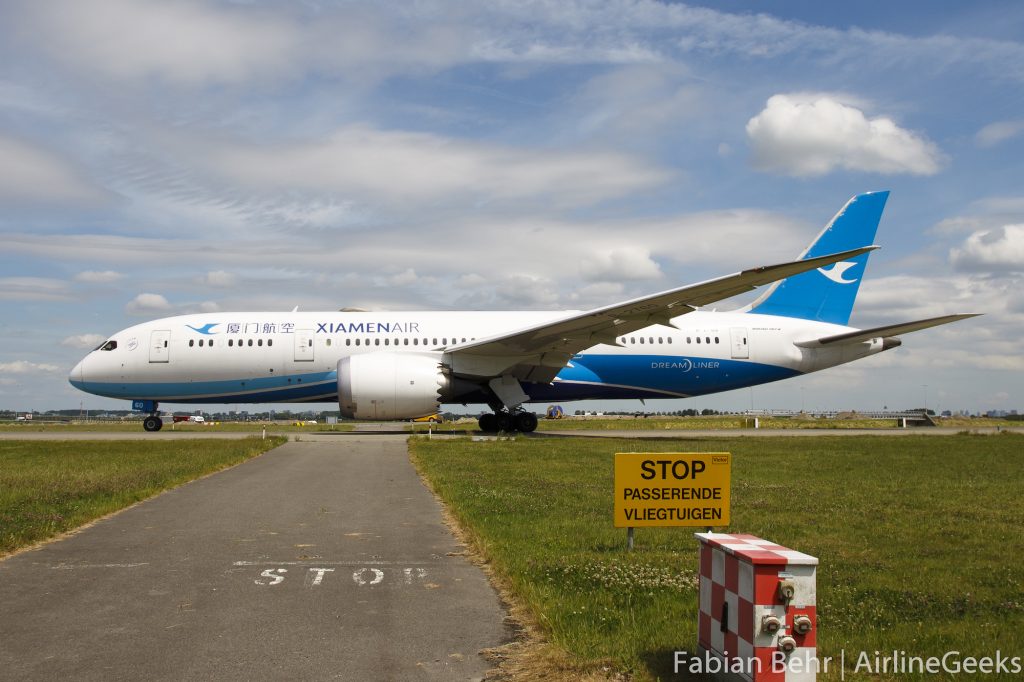
Xiamen Airlines, not a oneworld carrier but a new partner and subsidiary of close Qatar partner China Southern, launched flights to both Beijing Daxing and Xiamen in 2023, both in a business partnership with Qatar Airways. China Southern seems likely to start its own service too as Qatar Airways owns a 5% stake in the airline along with codeshare agreements.

These new additions build on the 2022 entries of Finnair flying to three Nordic capitals of Copenhagen, Helsinki, and Stockholm, and American Airlines whose service has now switched to its Philadelphia hub.  

American began service to Doha in 2022 (Photo: Hamad Airport)

There is no doubt that there are massive incentives and in many cases, Qatar Airways would help with sales of the seats with various guarantees under joint business agreements. However, this frees up capacity for Qatar, which was a problem during the World Cup and the A350 paint saga, and continues due to slow deliveries and rapid growth of demand. At the same time, it could be a great way to cultivate these markets and turn Doha into a preferable transit location.

For these new carriers, Doha can represent an access point to many unserved destinations with Qatar’s network. Iberia’s Asian network hasn’t recovered partly due to the Russian airspace closure and Qatar can help with reaching those destinations. On the other hand, JAL does not have any flights to Africa or the Middle East and has a thin Europe network that is impacted by Russian airspace as well. 

For Chinese carriers especially, putting airplanes to Doha is a great use of the equipment that are under-utilized due to the slow recovery in another market, specifically to North America where there are many complications on top of slow recovery. Finnair faces a similar scenario with Doha being a great way to get some flying hours into the A330s. 

Diversity Benefits Home Carriers Too

In 2023, Middle Eastern airlines have fully embraced the fact that the diversity of carriers and partnerships helps their business. There are three main reasons: 

  • Increasing capacity and destination offerings: especially seen from the case of Qatar Airways in Doha where partners provide relief to capacity needs. 
  • Creating new slots and flying rights: Middle Eastern airlines often face restrictions as they almost always offer more capacity and serve markets unilaterally. Emirates’ partnership with Air Canada which allows it to launch a new Montreal route is a great example. 
  • Capturing more demand: when loyalty and brand recognition are considered, local airlines often have a bigger customer base and they just know their market better. Hub airlines can benefit from their partners feeding more passengers in to connect. The agreements with Chinese carriers can be said to be the case for both Doha and Istanbul. 

Anthony Bang An

Anthony is an aviation enthusiast who grew up around the world from St. Louis to Singapore, and now lives in Amsterdam. He loves long-haul flying and finds peace in the sound of engine cruising. He aspires to share his passion for the sky though writing and providing another angle on the stories.

Envoy Bolsters Fleet with 19 New Embraer Jets

Envoy Air, a wholly-owned regional subsidiary of the American Airlines Group, announced it will add 19 Embraer regional jet aircraft to its fleet.

Envoy E175
An Envoy Air E175 aircraft (Photo: AirlineGeeks | William Derrickson)

Envoy Air, a wholly-owned regional subsidiary of the American Airlines Group, announced it will add 19 Embraer regional jet aircraft to its fleet, with deliveries starting later this year.

The order comprises eight Embraer 175s and eleven Embraer 170s, adding to a series of fleet expansion announcements made throughout 2023. This includes six E175s announced in March, seven E175s and five E170s in June, and four E175s in October.

With Wednesday’s addition, Envoy’s total fleet commitment stands at 169 aircraft, including 126 E175s and 43 E170s.

“This measured, sustainable success is a direct outcome of Envoy’s commitment to safety, quality and cost,” said Envoy President and CEO, Pedro Fábregas, said in a press release. “These three principles are central to everything that we do, and enable us to provide safe, high-performing, and cost-effective regional service for the thousands of customers we serve each day, for American Airlines Group and its shareholders, and for more than 19,700 Envoy employees in the Pacific, North America, the Bahamas and the Caribbean.”

Increasing Popularity

The Embraer 170 and 175 are popular choices for regional airlines due to their increased fuel efficiency and passenger comfort. The aircraft can seat up to 78 passengers in a high-density configuration.

Envoy is one of the largest operators of the E170-series of aircraft with approximately 140 in its fleet. The airline is a key player in American’s regional network, operating roughly 800 daily American Eagle-branded flights. Last year, Envoy retired its last 50-seat E145 aircraft.

Ryan Ewing

Ryan founded AirlineGeeks.com in February 2013 and has spent more than a decade covering the airline business. His work has been featured by CNN, WJLA, CNET, and Business Insider. His aviation experience spans airport operations, Part 135 regulatory compliance, and airline crew workforce planning, along with time behind the yoke of a Cessna 172 and interviews with airline executives. Ryan now serves as Group President of Firecrown Media’s Aviation Group. He holds a B.S. in Air Transportation Management and an MBA from Arizona State University and teaches Airline Management at Embry-Riddle Aeronautical University.

All on A350 Survive Accident in Tokyo

A Japan Airlines Airbus A350 caught fire on Tuesday after colliding with a Bombardier Dash 8 operating for the Japanese Coast Guard.

A Japan Airlines Airbus A350-900 at Tokyo Haneda International Airport (Photo: Shutterstock)

A Japan Airlines Airbus A350 caught fire on Tuesday after colliding with a Bombardier Dash 8 operating for the Japanese Coast Guard. The commercial aircraft had just landed and was rolling out on runway 34R at Tokyo’s Haneda airport when the collision occurred.

There was no indication of any problem onboard the Japan Airlines plane before landing. Officials believe that the collision happened in what is known as the “touchdown zone” on the runway, the area where a commercial jet must land in order to ensure a safe rollout. The touchdown zone starts at the runway threshold, which marks the beginning of the available landing distance, and extends for several thousand feet. This means that the collision occurred early in the touchdown sequence, where the Dash 8 might have been waiting to depart once the passenger jet cleared the runway.

The A350 burst into flames immediately after the collision. According to reports, 70 fire trucks were required to put out the blaze.

All 379 passengers and crew onboard the Japan Airlines plane were evacuated in just over 90 seconds, in line with aircraft certification requirements and crew training guidelines. However, five of six people onboard the coastguard aircraft were killed; only the pilot, who is in critical condition at the time of writing, survived.

Analysts are highly commending the Japan Airlines crew for not only evacuating the plane so efficiently and successfully but also for keeping the jet on the runway and away from other aircraft. This made it easier for fire crews to fight the blaze without risking more aircraft.

“The cabin crew must have done an excellent job. It was a miracle that all the passengers got off,” said Paul Hayes, director of air safety at U.K.-based aviation consultancy Ascend by Cirium, to Reuters.

The Coast Guard aircraft was flying to an airbase in Niigata prefecture to assist with the rescue efforts after an earthquake killed nearly 50 people. The aircraft was heading to deliver humanitarian aid to the earthquake site.

Japanese Prime Minister Fumio Kishida commended the Coast Guard crew for their service to Japan and thanked other crews for their continued efforts.

“This [accident] is a great regret as the crew members performed their duties with a strong sense of mission and responsibility for the victims of the disaster area,” Kishida said, referring to those killed on the Coast Guard plane.

Runway Incursion Speculation

It will take time to determine what caused the crash. Investigations for most accidents, especially those involving multiple transport category aircraft at busy airports with hundreds of passengers and military crews, can take two years or more, as investigators must analyze every piece of information and every potential factor to accurately determine what happened. However, we already know that the Japan Airlines plane received and read back a clearance to land on the runway they were using. The Coast Guard plane was issued a hold-short clearance.

The question must arise, therefore, whether a runway incursion occurred. Again, such is unconfirmed, but the fact that it was an evening hour with minimal lighting means it might have been more difficult for the Coast Guard crew to identify the ground markings that note where the taxiway ends and the runway begins.

ATC communications, and cockpit discussions, will be heavily scrutinized during the investigation. Was there any uncertainty about what either the Japan Airlines A350 or the Coast Guard aircraft was cleared to do? Did each crew know where they were and what they were doing, and did either see the other aircraft before the collision? If a runway incursion did occur, did the Coast Guard crew suspect as much, and did air traffic controllers say anything?

What is known is that the Coast Guard aircraft was not equipped with a “modern ADS-B transponder,” a type of device used to identify an aircraft’s location and send information about it to air traffic control and other aircraft, per Sky News. This means that, regardless of the equipment installed at Haneda to alert controllers to a plane’s location or warn them of runway incursions, the plane might not have activated warnings on its proximity to the runway or the Japan Airlines aircraft because it would not be emitting the most accurate signals about its position. ADS-B is more accurate than conventional radar surveillance.

ADS-B has been required on all airplanes with a transponder since 2020 in the United States. Aircraft around the world tend to conform to requirements in major aviation markets such as the U.S. in order to maintain type certification around the world. The Japan Airlines plane certainly had ADS-B equipment onboard, but it is currently unclear why a Coast Guard aircraft would not.

What is clear is that this accident was likely just that. Airports, and aviation in general, have such thorough safety measures that significant accidents never occur due to a single mistake. Rather, a chain of mistakes and minute failures usually add up to cause accidents.

This incident calls to mind a 2022 incident in Peru. A fire truck on a training exercise missed a turn and entered a runway where a LATAM aircraft was taking off. The plane burst into flames, but all the passengers survived.

First A350 Hull Loss

This accident represents the first hull loss of any Airbus A350 jet. The type started flying in commercial service in 2015. This was also the first hull loss of any composite airliner, per Leeham News.

The A350 joins the Boeing 787 Dreamliner as only the second commercial airliner made entirely of composite materials. When the Dreamliner was undergoing testing, significant research was done into how composite airliners react to fires. Two 787s have experienced fires before: another Japan Airlines aircraft had a battery problem in Boston that caused a fire, and an Ethiopian 787 was set on fire by pinched wiring in London. Both planes were heavily damaged but subsequently repaired.

When the Dreamliner was introduced nearly 15 years ago, airport fire departments feared that they would need to change the way they fight fires to adapt to the characteristics of composite aircraft.

“This will fundamentally change everything from strategy and tactics and equipment,” said Bill Davis, the assistant chief of the Denver Fire Department assigned to the Denver International Airport, in 2009. “It strikes me that we’re definitely going to have to train to and equip ourselves differently. I’ve studied fires in military composites. This (B-2A crash) is the first of an all-composite airplane; usually, there are just parts that are composites.”

JAL’s first A350 in Toulouse (Photo: AirlineGeeks | Ryan Ewing)

However, Boeing said at the time that there is no effective difference between an airplane made of composites and one made of traditional parts. The manufacturer advised fire departments to treat the 787 like any other airplane.

“Boeing has done extensive testing on the properties of the composite materials being used on board the 787 and its reaction in both in-flight fire and post-crash fire scenarios. Boeing has found – and by law must demonstrate to the FAA – that the 787 will be as safe, or safer than, today’s airplanes. The composites used on the 787 demonstrate performance that meets those requirements,” Boeing said in a statement in response to concerns.

Tuesday’s A350 crash will provide useful information about how composite aircraft respond to fires in real-world situations and will help guide how fire brigades respond to fires on composite aircraft in the future. As is unfortunately the case, accidents are often among the best ways to determine how to keep aviation safe and refine safety practices for the future.

Ongoing Investigation

The runway on which the collision occurred is still closed at the time of writing, and it likely will be for some time more. Crash investigators will need to inspect the wreckage of both the Dash 8 and the A350 to collect preliminary data, including the flight data and voice recorders from both aircraft. They will also collect debris from the site, take pictures, interview crewmembers, and more.

Airbus is sending employees to Japan to assist with the investigation.

A significant number of flights have been canceled at Haneda, as all runways were closed for a time to facilitate rapid response. Though the airport has begun to reopen, it will be a while before it is again operating at full capacity.

The A350 involved was only two years old and was registered in September 2021.

John McDermott

John McDermott is a commercial pilot pursuing a career in professional flight. His passion for aviation began in an Ann Arbor bookstore with a tale of enemy pilots during World War 2, and he hasn't looked back. Besides flying and writing for AirlineGeeks, John volunteers with Professional Pilots of Tomorrow and travels whenever he gets the chance.

FLYING Media Group Acquires FindaPilot.com

FLYING Media Group (FMG) has acquired FindaPilot.com, a website which matches a wide-array of pilots with over 4,000 aviation employers.

FindaPilot's logo (Photo: FindaPilot.com)

FLYING Media Group (FMG) has acquired FindaPilot.com, a website which matches pilots with aviation employers. FindaPilot was founded in 1997 and has 25,000 pilots and 4,000 aviation employers registered on its platform.

Findapilot.com attracts a diverse range of customers, primarily companies involved in the business aviation sector. This sector includes charter companies, corporations with private jet fleets, aviation consulting firms, and flying clubs. The website is the largest source of contract pilots, providing flexible employment opportunities to commercial pilots with a range of backgrounds and type ratings.

Small businesses, which often lack the resources of large recruiting departments, have relied upon FindaPilot.com for the past two decades to reach pilots for missions and careers. FMG plans to expand the focus to include large national employers, while creating additional tools for small aviation businesses, all focused on helping pilots find the perfect career opportunities, regardless of where they are geographically or in what phase of their career.

However, FindaPilot.com is more than a career website; it offers a rich set of pilot profile data that can be used by employers targeting a specific type rating or skill set and for pilots seeking contract employment or new career opportunities.

FindaPilot founder John Peroyea will stay involved with the business after the transaction.

“Over the past 25 years, I have been passionate about building the most successful platform to help pilots maximize their career potential and achieve their goals,” Peroyea said. “I believe that by joining the FMG family, FindaPilot can deliver advanced opportunities for pilots beyond our wildest dreams.”

“With this acquisition, FMG will connect its content platform with FindaPilot.com, providing a comprehensive platform for pilot career development and continuing education,” said Craig Fuller, CEO of FMG.

FLYING Media Group provides content and information for more pilots than any other source in the world through its network of nearly 30 aviation brands.

Globally, there is a shortage of more than 34,000 pilots in the aviation industry, and the situation is expected to get more challenging over the next decade. FMG is investing significantly in resources that will expand the number of pilots that join the industry and help them along the way as they advance in their careers.

Through the Learn to Fly series on FLYINGMag.com, continuing education journals (Aviation Safety, IFR, Aviation Consumer), news and information (AVweb and FLYINGMag.com) enthusiast content (FLYING Magazine, Plane & Pilot, Kitplanes, Airline Geeks), or B2B resources (AvBuyer, Business Air, Aircraft for Sale), FMG offers the most comprehensive set of resources for pilots anywhere.

“We are thrilled to welcome FindaPilot.com to the FLYING Media Group family,” Fuller added. “With a strategic product roadmap for our aviation career platform, we are going to blend education, community, mentorship, and job matching into a comprehensive offering for the aviation community.”

AirlineGeeks.com Staff

AirlineGeeks.com was founded in February 2013 as a one-person blog in Washington D.C. Since then, we’ve grown to have 25+ active team members scattered across the globe. We are all here for the same reason: we love deep-diving into the fascinating realm of the airline industry.
Sign-up for newsletters & special offers!

Get the latest stories & special offers delivered directly to your inbox

SUBSCRIBE