










Stories

Interview: Air Greenland CEO Talks Future Network Plans, Fleet Strategy

CEO of Air Greenland Jacob Nitter Sørensen talks about his airline's expansion at airports around the country, and possible future flights to the United States.

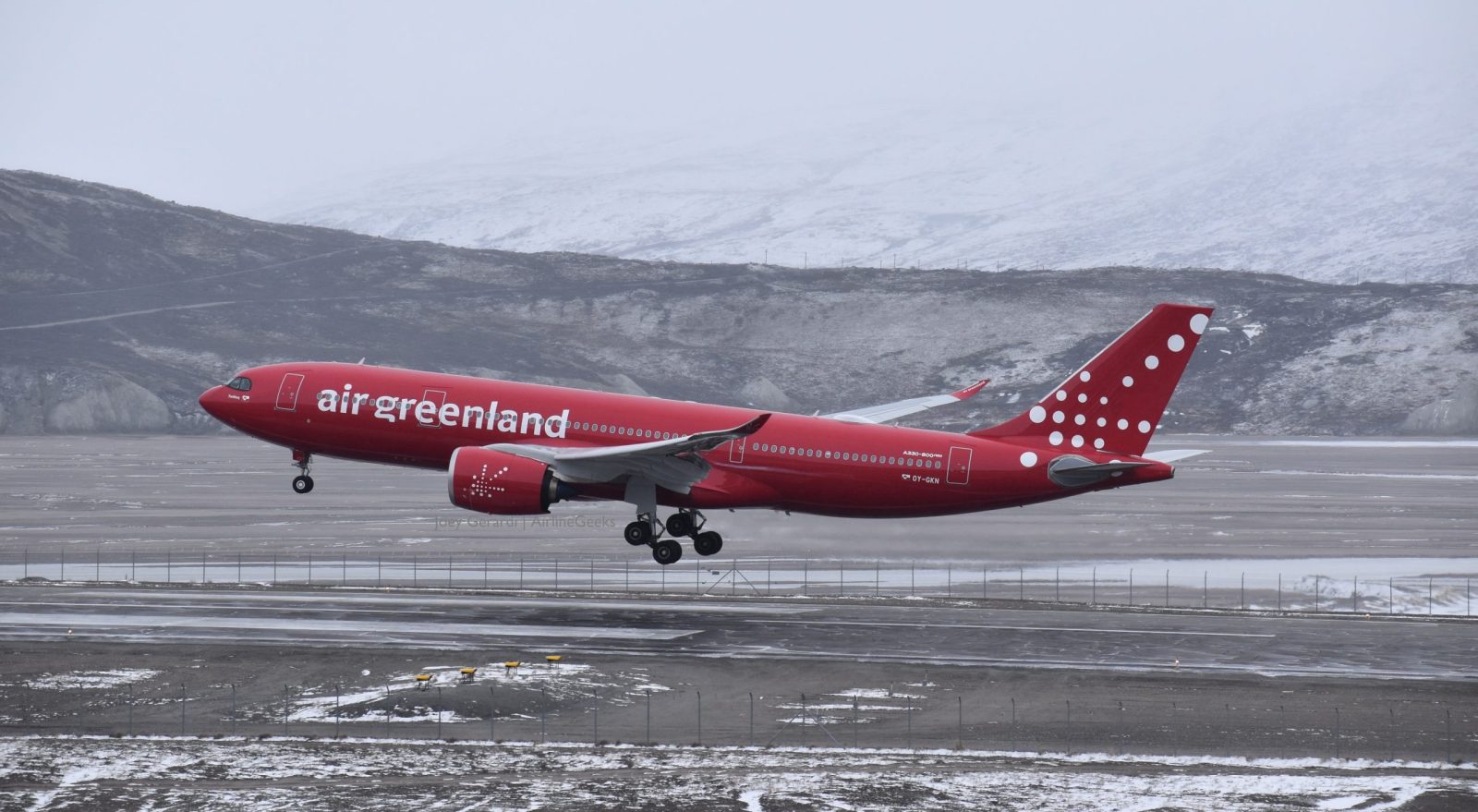
Air Greenland's sole Airbus A300-800neo seconds before touching down in Kangerlussuaq
Air Greenland's sole Airbus A300-800neo seconds before touching down in Kangerlussuaq (Photo: AirlineGeeks | Joey Gerardi)

Air Greenland has an interesting history and an even more intriguing future ahead. With airport expansions taking place around the country and the delivery of the airline’s biggest investment ever, its flagship Airbus A330-800neo, the future for the airline is looking upward.

AirlineGeeks had the opportunity to interview the CEO of the airline, Jacob Nitter Sørensen, and ask him some questions not only about the airline itself but also about infrastructure growth plans across Greenland.

The author at Air Greenland’s headquarters in Nuuk, Greenland (Photo: AirlineGeeks | Joey Gerardi)

AirlineGeeks (AG): Once your newer runways open in Nuuk, Ilulissat, and others, are you going to phase out your international hub there in Kangerlussuaq?

Jacob Nitter Sørensen (JNS): Yeah, so today with Kangerlussuaq being the main hub, of course, the idea is to switch the main hub to Nuuk, and with Ilulissat as a secondary hub. We’ll still be flying into Kangerlussuaq with domestic aircraft, and hopefully, there will also be demand for international charter flights to Kangerlussuaq in the future, because I believe that Kangerlussuaq will continue to be an attractive destination both for, tourism purposes, but also with increased military activities. So, in terms of being the main hub, yes we are gonna switch to Nuuk, but we’ll still be flying to Kangerlussuaq.

(AG): Will you shift your new seasonal Kangerlussuaq to Billund service to Nuuk once the runway opens?

(JNS): Yeah, most likely that’s going to be the case. Around 50 to 60 percent of the passengers, total passengers, are going to need, Nuuk as the final destination. So it makes sense also to switch the Billund service to here [Nuuk] in the future.
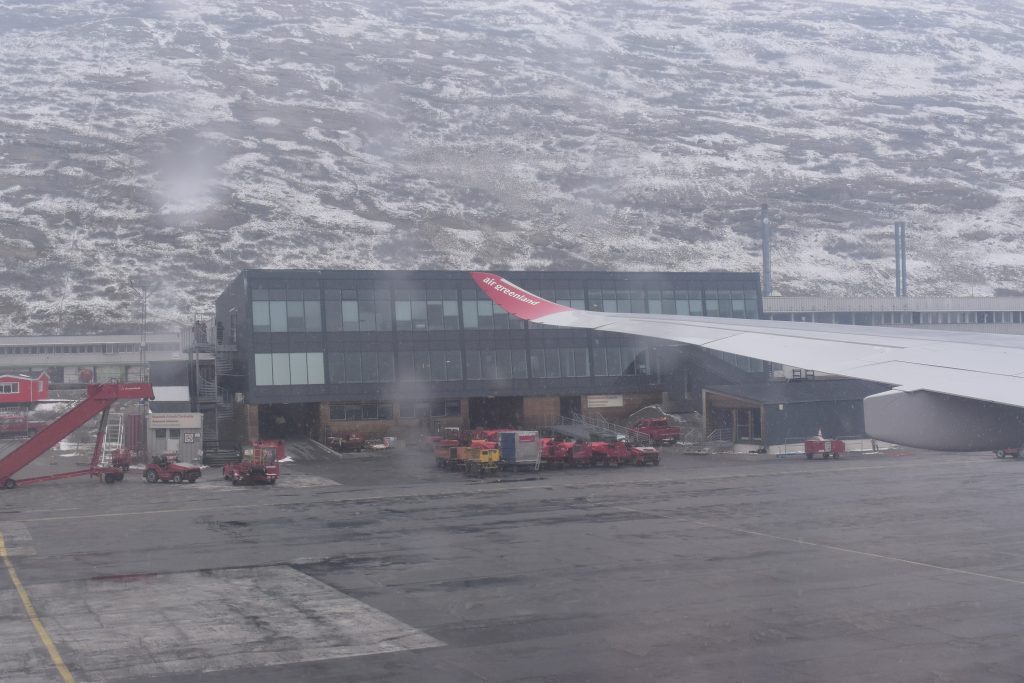
The terminal in Kangerlussuaq (Photo: AirlineGeeks | Joey Gerardi)

(AG): Will the service with your A330-800neo to Copenhagen alternate between Nuuk and Ilulissat, or will it primarily fly out of Nuuk?

(JNS): It’s probably going to be primarily Nuuk, and then in the high season we will alternate a little bit. The seasonal demand in Ilulissat is very variable, with very high demand in the summer months and very low demand in the wintertime. So, in the summer months, that will make sense with the 330 [Airbus A330-800neo], but not in the winter time, where we’ll probably be utilizing, and dispatching narrow-body aircraft to Ilulissat.

(AG): You recently announced that you’re going to resume flying to Iqaluit in May of 2024. How do you plan on expanding your newly announced partnership with Canadian North out of their hub in Iqaluit?

(JNS): Yeah, so, we’re very excited to start flying that route again, there are many many ties between our regions, our countries, both cultural and also business-wise. So, I think it’s going to make a big difference that we have the direct route [to Iqauluit] and of course, Canadian North is a very important partner in making the route viable, and maybe even making the route a year-round route. Of course, with their network, they are key in securing as many passengers as possible with their routes to Toronto, Ottawa, Montreal, and so on. I think that’s gonna make a difference. So they have a seasonal route to Toronto and hopefully, that will also at some point turn into an all-year route.

But anyway, the Canadian North network is key to making our new route to Iqaluit a success, so now we’re gonna start up, and hopefully, it will be off to a good start next year. And then I think when the market sees the opportunities, I’m sure that we’re going to see taking off in a positive way, both in terms of tourism, but also within the mineral exploration sector. A lot of Canadians are working in agreement in the mineral exploration field. And also the new airport being built in South Greenland is by a Canadian company, so there’s definitely a basis for passengers from Southern Canada, as well as New England.

(AG): I know briefly you served the United States in the early 2000s through Baltimore. With these new runways opening up and the hopefully increased tourism, do you plan on ever resuming a route to the United States, whether that be Baltimore or somewhere else?

(JNS): Well, it’s not going to be Baltimore, but we’re definitely looking at the United States. There’s a great interest in Greenland in the United States, and it’s actually a very short flight from Greenland to say, New York, and it’s actually a shorter flight than the Copenhagen flight. So, yes, we are definitely looking at expanding towards the west, but the main constraint at the moment is that all the hotel capacity, the receiving capacity increment is close to maximum at the moment, so we could open a route, but then we’ll just cannibalize passengers from other regions because the whole system is running at close to max capacity at the moment. When the new airports open that will definitely make investing easier and more attractive, and we are seeing a lot of projects at the moment maturing. So, I think within a few years time, we’ll definitely see expansion toward the west.

(AG): In the 2022 annual report, Air Greenland mentioned they signed a letter of intent to increase strategic cooperation through codeshare with Icelandair. What does this mean exactly and how do you continue to act upon this going forward into the future?

(JNS): Icelandair is geographically well located in the North Atlantic and they have a very strong international network. Especially the North American network is very interesting for agreement, and as I mentioned earlier if we’re going to increase [service] towards the west, to the U.S., the codeshare agreement with Icelandair is a very important step in building the traffic and can benefit both airlines, especially at the current time where, as I mentioned, the capacity is constrained.

So, I think through Icelandair we will be able to expand and build the Greenlandic tourism industry in sort of organic implements, utilizing their very strong international network to the benefit of both companies. One of the prerequisites for such a partnership is IOSA certification, and we estimate to be IOSA certified by the spring of next year [Spring 2024], and then we can start acting upon the intentions that we have signed together.

(AG): It’s been just slightly over a year since your new flagship A330-800neo was delivered to you. How has the first year been with the aircraft? Have you seen any challenges that have been unexpected or expected?

(JNS): The first year has been great and the aircraft has outperformed the expectations both in terms of reliability and in terms of fuel consumption, and it’s also been very, very well received by the passengers, so in every way, it has been a great success. It was at the time, and it is still is the biggest investment in the company’s history, so of course as CEO, you are a little bit anxious when you get the keys and you start operating the aircraft. But, a year down the road it’s all smiles and we are so happy with the aircraft, and it has been the right decision for our airline. The only problem was with two GPS antennas, and we had those switched and that’s the only problem that we’ve had with the aircraft itself.

There was a ground handling incident in Copenhagen, where the handling agent towed the aircraft into an A320 and both aircraft lost [and were damaged], but you can’t really blame that on the aircraft. So, apart from that, we haven’t had any issues at all.

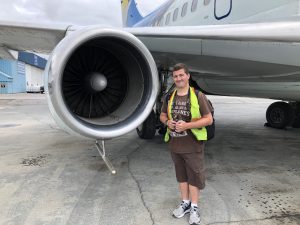
Passing by the Airbus A330-800neo engine (Photo: AirlineGeeks | Joey Gerardi)

(AG): What is the first thing that you want passengers to know when they step on board your new flagship versus the older A330-200?

(JNS): Well, first of all, we want people to feel that they are already in Greenland when they enter the aircraft, and that was true in the old aircraft and in the new aircraft. But of course, with the new aircraft, we want our customers, our passengers to feel that they have entered into a modern aircraft and feel that this is a professional airline that operates modern, well-maintained, and nice-looking aircraft, equipment, that is comfortable for the passengers and I think you get that feel when you get into the aircraft that it’s well maintained, it’s nice looking, it’s well thought out, and that’s basically what we want people to feel. With the IFE, the inflight entertainment system, which is all designed in-house by our own marketing people, it’s the same thing, we want to give people a different experience than just your standard IFE, we want people to get the feel for everything that Greenland has to offer in terms of culture, people, nature, experiences, and so on.

(AG): I know the trunk route of your airline is your Greenland to Copenhagen flight. Do you tend to see more passengers or more cargo on that route?

(JNS): Well we definitely see a year-on-year growth in passengers. I think on the cargo side, the demand is there, but with the current infrastructure we have bottlenecks that limit the amount of cargo that we can bring in, and especially in times of bad weather and irregularities, the cargo is held up for quite a long time and it takes a long time to clear the backlogs, and that sort of puts a limit to the cargo growth. But I think with the new airport opening in June, we will also see significant growth in cargo numbers. So over the last few years, it’s definitely had passenger growth, not cargo, but I expect the cargo to pick up as soon as we have the bottlenecks removed with the new infrastructure.

Long Dash 8 Flights

(AG): You also fly a route to Iceland from Greenland, does that route see more cargo or passengers given it’s on a Dash 8?

(JNS): That’s definitely passengers because it’s a very long flight in a Dash 8, so you’re limited on your payload. This basically means that there are times with headwinds where you can’t even do a full load of passengers and that also limits the amount of cargo that we can bring on that job, so that’s definitely a passenger-focused route and not so much cargo.

An Air Greenland Dash-8~200 (Photo: AirlineGeeks | Joey Gerardi)

(AG): You operate a single long-haul aircraft, the A330neo, eight Dash-8s, helicopters, and medevac. How does the airline handle the complexity of this multi-aircraft system as each plane is so very different from the next?

(JNS): That’s a difficult task, and the only way that we can handle it is by employing really, really, really skilled people with many years of experience and professionals who know their stuff. So, we have probably, within the European system, the most complicated Air Operator Certificate of all. And, that of course is a difficult task, but I’ll definitely hand that to our very, very skilled people and our very engaged and loyal staff. Whether it be in flight operations or technical ground operations, and that’s, that’s how we make it work. We’re not a lot of people here but we have very dedicated people that have been doing this for a long, long time, so it’s people who make it work.

(AG): As the Dash-8s increase in cycles/hours flown, will they be replaced with other newer Dash-8s or with a different aircraft type?

(JNS): The Dash-8~200 that we operate, they’re all modified by the way to fit our current operating environment. It’s a great aircraft, but it’s also getting old as you mentioned, and today there isn’t really a potential replacement aircraft. We are anxious to see the new ATR-42~600 STOL [Short Takeoff and Landing] version and what the capabilities of that aircraft are. So basically we have only very few options and one of them is of course expanding the runways that we operate into, and that discussion is slowly starting to unfold with the government, but we don’t really have very many options. Fortunately, the Dash-8 aircraft is limited by cycles, and we operate long legs, which means that we don’t put very many cycles on the aircraft. We still have quite a few years to go before they reach the limits, but of course, the older an aircraft gets, the more difficult it gets to get spare parts, the more expensive spare parts get, so it’s something that we’re looking at closely and following and in a few years, we need to have a plan for replacing those aircraft. Replacing them with new Dash-8s is not really an option, because they are fairly new, I think the last ~200 was built in 2009, so that’s not really an option.

(AG): You briefly mentioned that the Dash 8s are modified. How and what do you do to modify these aircraft there in Greenland?

(JNS): So all the Dash-8~200s, the ~200 was born without ground spoilers, so we’ve modified all the ~200s with ground spoilers, that’s basically to reduce the takeoff distance required and thereby increasing the potential payload during takeoffs. We also have aircraft with long-range tanks that extends the range of the aircraft. We have put glass cockpits in some of the aircraft as well. And we have also modified, or basically purchased, and developed performance data that fits our current operation in Greenland.

(AG): Interesting, I believe I was on one of those aircraft with the extended range tanks, I believe it was OY-GRP when I flew from Iceland to Greenland.

(JNS): Yeah, correct, so we increased the fuel capacity from about 2, 500 kilos (5,511.557 lbs) to 4, 500 kilos (9,920.802 lbs), which is almost an 80 percent increase of capacity, which helps.

(AG): So we’re kind of at the end of COVID now, but how did that affect your operations not only there in Greenland, but on your international flights to Iceland and Copenhagen?

(JNS): So COVID hit us really hard, in the beginning, everything was of course shut down, but we didn’t have COVID in Greenland, the government managed to keep COVID out of Greenland for a long, long time. But they were very strict on who they let into the country, so our international flights reduced to one a week in the beginning with only passengers allowed by the government. But because of the cargo demand, we had to increase the flights to three a week which were full of cargo, but we only had like 34 passengers on these flights, it’s not allowed unless you’re 30. And, the domestic network we also had to keep, you know, going around and medicine and COVID samples and so on.

So, we entered an agreement with the government, who basically purchased flight hours at cost, the cost of producing the hours, and thereby we could keep the airline going, while we didn’t have very many passengers. We had to let go of about 20, 25% of the workforce, it was pretty, it was pretty tough, but we quickly, quickly came back. We had the 2021 summer season which was really, really good, and once everyone got omicron in the beginning of 2022 and after that, you know, everyone just started flying again. we are way above pre-COVID levels now, so we are trying to forget COVID and just look forward.

(AG): Other than your flight to Iceland, I’ve noticed that there seem to be dramatically fewer flights on Sundays in your system than on any other day of the week. Why is this?

(JNS): Yeah, that’s a really, really good question because Sunday is typically the, the most busy day of the week for an airline. But that’s basically because of the system here with the airports, they are manned for six days a week so if we want to fly on Sundays, you’ll have to pay quite substantial opening fees for the airports, so it’s not really economically viable to operate a full Sunday [schedule]. We do in the summertime because we need to, but not in the wintertime, and that’s, of course, because the airports they are staffed, and if they want to do a seven-day-a-week thing with opening hours, they have to employ, of course, more staff, and there’s only one customer, and that’s an agreement. So, that’s just too expensive.

(AG): I just saw they put in new landing systems in Nuuk a couple of weeks ago with your new runway opening there in Nuuk. How do you expect the newer landing systems to affect, or I guess in this case, improve your operating there in Nuuk?

(JNS): I think it’s going to be a game-changer and is going to make a huge difference. So we’re going to get ILS, instrument landing system category one, which is of course not the best you can have, but it’s a great improvement compared to what we have today. I used to fly the Dash-8 myself as a pilot, and for the nerds out there, today we operate what is called an offset localizer approach, which basically means that you’re coming off at an angle to the airport, you’re not coming straight in, and you have to be able to see the airport today from 1.8 nautical miles away, and you can go down to about 600 feet, that’s a long way from the airport. And with a new ILS system, you can go down to 200 feet and you’ll have glideslope guidance, you’ll have nice approach slides, a wider runway, and everything. So I think that’s going to greatly improve the operational reliability and the regularity in and out of Nuuk, so we’ll be looking forward to that definitely.

Banking over Nuuk (Photo: AirlineGeeks | Joey Gerardi)

(AG): I know you said you won’t be opening any new routes from Nuuk in the short term due to hotel constraints, but do you see other airlines starting new flights here? And if so, how is Air Greenland prepared to handle this competition that they’ve never really had in the past?

(JNS): Yeah, that’s a good question. Of course, if you’re looking at Nuuk and Ilulissat, there’s definitely going to be interest from other airlines, especially in the summertime because that’s when the passenger numbers are higher. If you look at the unit costs, Air Greenland is competitive, but the way the system works today where you have a combination of, you know, the domestic network and the international network, today, all international passengers, they fly on a domestic flight either going to or from. Both the international flights and the domestic flights are paying for the whole system, so to speak. So if we get into a very competitive situation, that’s going to affect the domestic network because we’ll of course have to match the prices of our competitors and that means that we’ll have to increase the prices on the domestic network and that’s going to be, of course a problem and a challenge.

As I said in the beginning of my answer, the unit cost for operating the international routes, they’re competitive, but our prices are probably a little bit higher than other operators, and that’s because we’re using that excess money to fund the domestic network, whereas in the US, you have the Essential Air Service, In Europe, you have the PSO system where the government funds some of the thinner routes. We don’t really have that system on the domestic network in Greenland, so that’s gonna be interesting to see how that plays out. If we’re gonna see too much cherry-picking from other airlines, it’s gonna be a big problem, for the whole system. Of course, we are preparing by having a competitive schedule, having a competitive product and hopefully, the passengers will choose Air Greenland over some of the other competitors that are starting services.

(AG): Your A330-800neo flies on 5% sustainable aviation fuel (SAF), which is really great. Is there anything else you plan on doing to increase your sustainability, not only on your A330, but your domestic flights around the country?

(JNS): That’s also a good question because one of the reasons for investing in a 5% sustainable aviation fuel was to increase and to boost investments in a sustainable aviation fuel, we were that we were made possible to get SAF out of Copenhagen airport, and that’s really, really great. The big issue for airlines today is that, well, the adoption of SAF is not ramped up, it’s not scaled up to a level where anyone can get it, and so if you take too much, then you just drive up the price. So it’s a balance right now, of supply and demand, and of course, we wanna fly with as much sustainable aviation fuel as possible, but it’s also a matter of driving inventions. If you look at the helicopters we’ve switched the whole helicopter fleet, and especially the change from the old Bell 212 helicopters to the new Airbus 155 helicopters, reduces CO2 emissions by around 40%, which is, you know, a great reduction. On the Dash-8 domestic fleet, we have a lot of initiatives on direct routings, optimum descents, apps that optimize our settings on each flight, and so on. So, yes, we’re doing a lot of things, we are changing all our ground equipment to electrified equipment and so on, so we’re doing all, all that we can. And, of course, we don’t think it’s going fast enough but we are trying to drive the initiatives as far as we can.

One of Air Greenland’s now retired Bell 212’s (Photo: AirlineGeeks | Joey Gerardi)

(AG): Iif there was one thing you could improve about the airline, what would it be?

(JNS): Definitely better weather, I would improve the weather. The weather is our biggest challenge, and so, of course, I can’t change the weather. But, if we were to improve our operations, and if we could deal with the weather conditions in a more optimum way, that would increase the experience for our customers. So we are lacking approach aids at many of the airports. If we could get better landing systems, not just in Nuuk and Ilulissat, but also on the coastal airports, that would greatly improve the operation.

Editor’s Note: A video account of this interview can be found below.
Joey Gerardi

Joey has always been interested in planes for as long as he can remember. He grew up in Central New York during the early 2000s when US Airways Express turboprops ruled the skies. Being from a non-aviation family made it harder for him to be around planes and would only spend about three hours a month at the airport. He was so excited when he could drive by himself, the first thing he did with his driver's license was get ice cream and go plane spotting for the entire day. He graduated from Western Michigan University in 2022 with a B.S. in Aviation Management & Operations and a Minor in Business, and currently works for a major airline in his hometown.

FedEx Pilots Seek Release From Federally Mediated Contract Talks

The union representing some 5,800 pilots at FedEx Express has asked the National Mediation Board to be officially released from mediation.

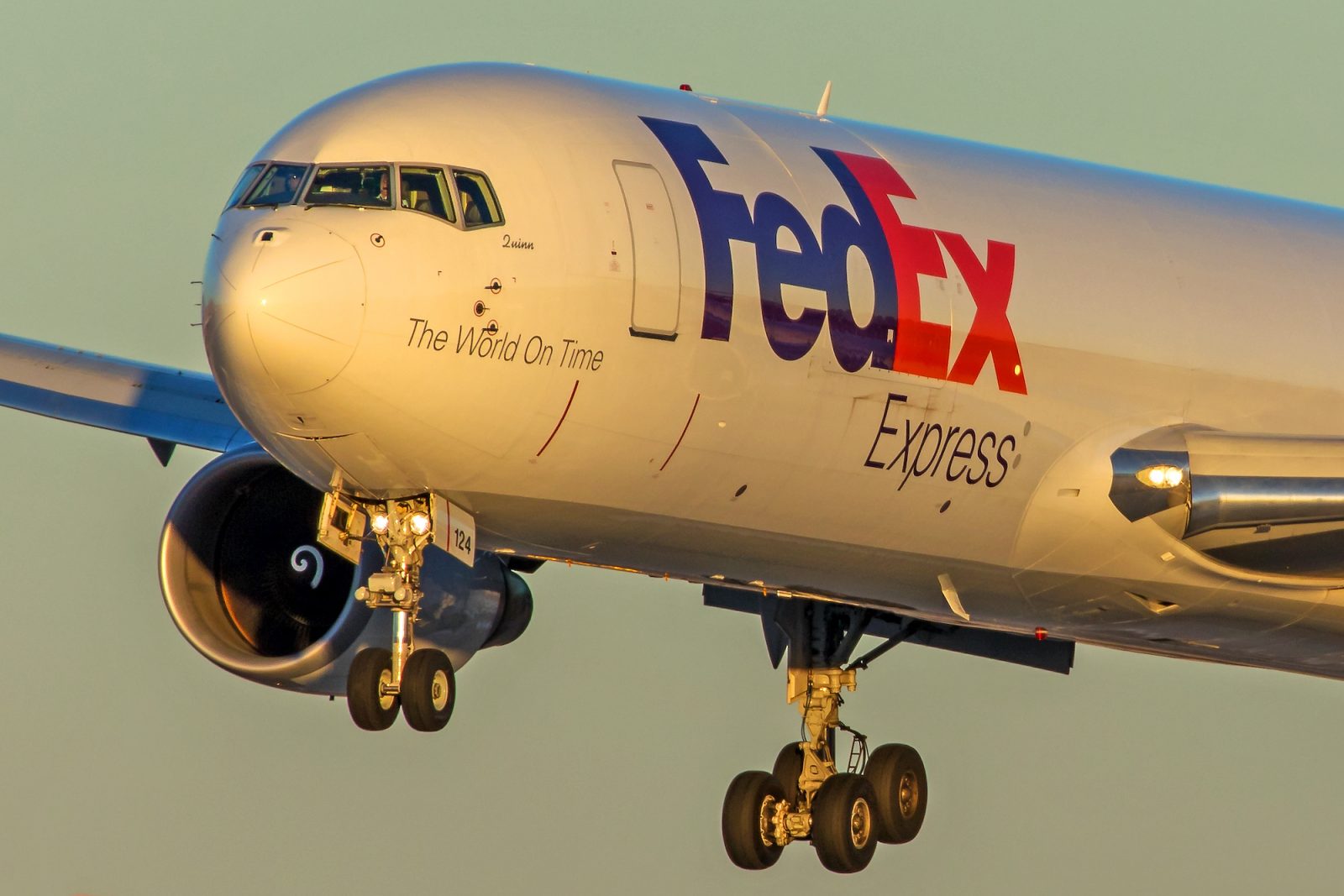
A Fedex 767 in Las Vegas (Photo: AirlineGeeks | William Derrickson)

The union representing some 5,800 pilots at FedEx Express has asked the National Mediation Board to be officially released from mediation for the purpose of being able to go on strike against the company to achieve a new contract.

The Air Line Pilots Association (ALPA) announced Friday that it asked the federal agency to declare an impasse in contract negotiations and move the process to binding arbitration. The request is designed to clear the way for a potential strike against the company in a heavily regulated bargaining process. Talks, which have been underway for nearly three years, have broken down over retirement, pay and quality of life.

The sides reached a tentative agreement that was endorsed by the FedEx ALPA Master Executive Council, but narrowly rejected by membership in July. It would have raised pilot pay 30% over four years. Mediated negotiations resumed in November.

“While ALPA has been generous in our movement on positions, FedEx’s incremental movement on some items and refusal to accept many of ALPA’s items indicate an unwillingness to ever reach an agreement,” Captain Christopher Comer and First Officer Jose Gomez, local FedEx union leaders, said Wednesday in a letter to fellow pilots obtained by FreightWaves.

FedEx said internal divisions within the pilots’ union are the main reason for the lack of a deal.

“We strongly disagree that a release from mediation is appropriate. This is a common union tactic that does not impact our outstanding service to customers around the world,” the company said in a statement.

“We have already reached one tentative agreement with our pilots that ALPA leadership supported and hailed as ‘the highest value achieved among major carriers in the last twenty years.’ Despite active support by its leadership, FedEx pilots narrowly voted it down last summer, and since that time we have seen continuous changes in union direction and leadership that have hindered progress toward a new deal. FedEx remains steadfastly committed to bargaining in good faith and reaching an agreement that is fair to all stakeholders. We believe the mediation process under the supervision of the National Mediation Board – which ALPA requested – remains the best way to achieve that goal.”

The pilots said FedEx apparently doesn’t intend to offer more money to a new contract proposal that it did last year. The comment indirectly referenced a FreightWaves article from January in which Pat DiMento, FedEx’s vice president of flight operations and training, was reported saying the company plans to offer the same amount of total money to the pilots as it did in the tentative agreement, but reallocate it differently between retirement, higher pay scales, signing bonuses or other areas.

“The intransigence of the company should not be a surprise to us, nor should it be used as an excuse for lowering our expectations. Rather, it should be the motivation for our deliberate, intentional demonstration of our unwavering will and unflinching determination to achieve the recognition that we have earned and that we deserve,” the letter said.

Pilots are also concerned about how pilots are paid when removed from trips for student training and language regarding medical mandates, such as vaccines, according to a Jan. 26 message from the FedEx negotiating committee to the pilot group.

ALPA notes that FedEx Express accounted for nearly half of the corporation’s $90 billion in revenue last year, is also in the midst of a $5 billion stock buyback and that 18 days of flying would pay for the entire increase pilots seek in a four-year contract.

But the union ask comes at a fraught time for FedEx, which is under shareholder pressure to increase profitability after a prolonged stretch of weaker parcel demand. This lack in demand previously spurred management to undertake an ambitious restructuring strategy designed to improve network efficiency and save $6 billion in structural costs.

At the same time, the future of FedEx’s contract with the U.S. Postal Service is an open question with the Postal Service motivated to shift more volume to cheaper ground transportation and FedEx considering whether to walk away from the business if it can’t get higher rates needed to make its daytime flying profitable.

FedEx pilots are making much less money than they did two years ago because there are fewer flight hours. Management has indicated a desire to offer early retirement packages to hundreds of pilots once a new contract is finalized, FreightWaves reported in January.

“In this business environment, as a pilot you can’t go in there asking for the world. It’s just not going to happen,” DiMento privately told a group of FedEx evaluators late last year.

Next Steps

The Master Executive Council plans to organize an informational picket on Wall Street on March 21 to coincide with the release of FedEx’s quarterly earnings, according to the letter.

Collective bargaining for airlines is governed under the Railway Labor Act, which is much more restrictive than general labor law.

Under federal rules designed to prevent work interruptions in critical interstate commerce, workers are prohibited from striking and companies from locking out workers until a lengthy series of bargaining steps, including federal mediation, are completed. The federal mediator has the power to hold the parties in mediation indefinitely.

Before a strike can take place, the National Mediation Board (NMB) must first decide that additional mediation efforts would not be productive and offer the parties an opportunity to arbitrate the dispute before a special panel.

If either side declines the arbitration, both parties enter a 30-day “cooling off” period, after which the parties can engage in self-help — a strike by the union or a lockout by management.

Arbitration in the airline industry is rare because both sides must agree to it. And, the NMB historically has been very reluctant to open the door to potential strikes, which airlines often use to their advantage in negotiations.

And getting to the point of a legal strike doesn’t end there. The law allows the president to create an emergency board to investigate a labor dispute and issue a report within 30 days if the parties reject binding arbitration. That is followed by another 30-day period to consider the board’s recommendations and reach an agreement. If no agreement is reached at the end of the second cooling-off period, the parties may take action.

The pilot union at Air Transport International, a cargo subsidiary of Air Transport Services Group, in late January also asked the National Mediation Board to end contract talks and allow the process to move to arbitration.

Editor’s Note: This story first appeared on FreightWaves. 

AirlineGeeks.com Staff

AirlineGeeks.com was founded in February 2013 as a one-person blog in Washington D.C. Since then, we’ve grown to have 25+ active team members scattered across the globe. We are all here for the same reason: we love deep-diving into the fascinating realm of the airline industry.

Livery of the Week: Delta’s ‘Dark-Nose Widget’

Introduced in 1982, this paint scheme became synonymous with the airline during the 1980s and early 1990s, displayed on several different aircraft types.

A Delta 727 aircraft (Photo: G B_NZ, CC BY-SA 2.0 , via Wikimedia Commons)

Editor’s Note: AirlineGeeks is excited to launch our ‘Livery of the Week’ series. Every Friday, a team member will share an airline livery, which can be from the past, present, or even a special scheme. Some airline liveries are works of art. The complexity associated with painting around critical flight components and the added weight requires outside-the-box thinking from designers. The average airliner can cost upwards of $200,000 to repaint, creating a separate aircraft repainting industry as a result. 

Have an idea for a livery that we should highlight? Drop us a line. 

Delta sported a distinctive look for over a decade with its “Dark-Nose Widget” livery. Introduced in 1982, this paint scheme became synonymous with the airline during the 1980s and early 1990s.

The Dark-Nose Widget livery featured a prominent element – a dark blue section extending from the cockpit towards the passenger cabin. This design element contrasted with the airline’s white fuselage and gave the aircraft a distinct, two-toned appearance.

A key feature was Delta’s “Widget” logo, a stylized red and dark blue triangle designed by Robert Bragg in 1962. In this livery design, the Widget logo appeared prominently on both the tailfin and the forward fuselage.

Complementing the dark blue and white color scheme was a cheatline – a thin red stripe above a thicker black stripe – that ran along the length of the aircraft. This design element added a touch of dynamism and helped visually break up the white fuselage.

The Dark-Nose Widget livery adorned a wide range of Delta’s fleet, including Boeing 727s, 737s, 757s, 767s, and MD-80s. It also appeared in slightly modified forms on the carrier’s L-1011 Tristar.

Later Paint Schemes

While the Dark-Nose Widget livery served Delta faithfully for over 15 years, the airline eventually introduced a new color scheme in 1997. The so-called “Ron Allen” interim livery, which preceded the current design, saw the return of the words “Delta Air Lines” to the fuselage and a revised color palette.

A Boeing 757 on exhibit at the Delta Flight Museum, located at the Hartsfield-Jackson Atlanta International Airport (ATL). (Photo: Shutterstock)

Unlike its U.S. airline peers, Delta does not have any retro liveries. However, the Dark-Nose Widget livery can still be found on Boeing 757-200 and 767 aircraft static displays at the Delta Flight Museum in Atlanta.

Looking for a new airplane model? Head over to our friends at the Midwest Model Store for a wide selection of airlines and liveries.

Ryan Ewing

Ryan founded AirlineGeeks.com in February 2013 and has spent more than a decade covering the airline business. His work has been featured by CNN, WJLA, CNET, and Business Insider. His aviation experience spans airport operations, Part 135 regulatory compliance, and airline crew workforce planning, along with time behind the yoke of a Cessna 172 and interviews with airline executives. Ryan now serves as Group President of Firecrown Media’s Aviation Group. He holds a B.S. in Air Transportation Management and an MBA from Arizona State University and teaches Airline Management at Embry-Riddle Aeronautical University.

Ex-Alaska A321neos Find New Life in American Fleet

Alaska’s former Airbus A321neos are slowly getting a new lease on life as they join American’s fleet in the coming months.

American is set to add 10 former Alaska A321neos to its fleet in the coming months. (Photo: AirlineGeeks | William Derrickson)

Alaska’s former Airbus A321neos are slowly getting a new life as they join American’s fleet. In September 2023, Alaska retired its last Airbus aircraft, once again becoming an all-Boeing operator.

A month later, American announced its plan to acquire the 10 A321neos from the Seattle-based airline. With the oldest aircraft having been delivered to then Virgin America in January 2018, the sub-fleet is relatively young.

N925VA – a former Alaska A321neo destined for American – in Roswell, N.M. on March 2, 2024. (Photo: AirlineGeeks | William Derrickson)

“We have signed an agreement with Alaska Airlines to purchase 10 Airbus A321neo aircraft that we expect to join fleet in the fourth quarter of this year and the first quarter of 2024,” said American’s Chief Financial Officer Devon May during a third-quarter 2023 earnings call. “Our 2023 aircraft CapEx is now expected to be approximately $1.9 billion, which includes a portion of the Alaska A321neo deliveries.”

The ten aircraft have yet to be placed into revenue service, per data from Flightradar24. According to airline industry insider JonNYC on Twitter/X, the aircraft were originally scheduled to enter service as a batch once all entry-into-service checks were complete.

N929VA is set to join American’s fleet after being acquired from Alaska last year. (Photo: AirlineGeeks | William Derrickson)

However, this plan appears to have changed. The first ex-Alaska A321neo is reportedly entering revenue service early next month, per JonNYC.

The ten aircraft are scattered around different American maintenance bases, including Pittsburgh, San Salvador, and San Antonio. Flight tracking data also shows a handful in Roswell, N.M.

Former Alaska A321neo aircraft slated to operate for American in the coming months (Photo: AirlineGeeks | William Derrickson)

Only four entered service with Virgin America, while the remaining six joined the Alaska fleet after the 2018 merger of the two carriers. According to data from ch-aviation, American has 70 A321neo aircraft currently in service, making the Fort Worth-based airline the largest North American customer of the type.

Editor’s Note: Photos in this article were taken at Roswell Air Center on March 2, 2024. 

Ryan Ewing

Ryan founded AirlineGeeks.com in February 2013 and has spent more than a decade covering the airline business. His work has been featured by CNN, WJLA, CNET, and Business Insider. His aviation experience spans airport operations, Part 135 regulatory compliance, and airline crew workforce planning, along with time behind the yoke of a Cessna 172 and interviews with airline executives. Ryan now serves as Group President of Firecrown Media’s Aviation Group. He holds a B.S. in Air Transportation Management and an MBA from Arizona State University and teaches Airline Management at Embry-Riddle Aeronautical University.

When the Airport Duty Free Stores Make Sense

If you're looking to buy an expensive item, it may be better to wait until your next trip abroad and take advantage of favorable taxation rules for travelers.

Duty free shop inside Hamad International Airport (Photo: Shutterstock)

I was recently in Qatar for a couple of days right before Valentine’s Day. This unexpected trip messed up my plans to wait until the last minute to buy a Valentine’s Day present for my wife. She had very casually mentioned wanting a new necklace a few weeks prior which I took to be a hint.  My plan was to swing by a jewelry store a day or two before Valentine’s Day and call it a day. The last-minute trip squashed those plans and I was stuck figuring out what I would be able to buy in Qatar or if I should make a stop on my way home from the airport. I settled on trying to buy something in Qatar where there is no sales tax or try duty free at the Doha airport on the return leg.

Once I got to Doha, I noticed there was a very large mall called the Place Vendome. It seemed like a place one could buy nice things, but upon closer inspection it turned out to be a place where the nice things were extremely expensive. Ironically, one of the cheapest places was Tiffany’s & Co., an iconic New York-based luxury jewelry house. I ended up buying a very nice set of gold olive leaf earrings for about the same price I’d pay in the United States pretax. On a $1,000 purchase sales tax of 8.25% here in Houston would have added another $82 to my purchase.

Many other countries across the world often charge a Value Added Tax to purchases which can be returned to the traveler if they are taking the purchased goods out of the country. The steps and level of involvement to do this varies by country. It’s usually much simpler to shop where there is no sales or value-added tax.

Airport Duty Free

When I got back to the airport to fly home, I also decided to check out duty free at Doha International Airport. There were quite a few luxury brands with duty free locations at the airport and I was wondering if I should try to sneak in a purchase of an Omega Moonwatch as a Valentine’s Day purchase for myself. I was quite surprised to find the prices right around retail prices in the United States. While I do travel often, I never paid duty free much attention so I wasn’t aware that, for a good number of items, it can be a decent deal.

It turns out that duty free purchases being a decent deal was news to me but most other people already knew. Both Qatar and the UAE release some high-level financial data on how their duty free operates. Qatar Duty Free announced a 32 percent increase in duty free sales for 2023 compared to the year prior. Dubai Duty Free posted a 24 percent increase in sales for 2023 compared to the year prior and had crossed the $2 billion in sales mark taking it back to pre-pandemic sales levels.

Declaring Purchases to Customs

It is important to note though that purchases should be declared when re-entering the United States. Any purchases over the personal exemption of $800 may incur a duty and failing to declare items may result in hefty penalties. I made sure to keep my receipt handy and blurted out that I had things to declare when I got the CBP officer after the Global Entry kiosk. She was actually surprised that I was declaring something and sent me to another officer who would examine my purchase to determine if there would be a duty since I was over the personal exemption.

The second officer asked me the usual slew of questions and asked for the receipt. After a couple of minutes of typing on his computer, he let me know the calculated duty for the earrings I purchased was $8 and they won’t be collecting it since it’s a small amount. I was then free to go.

Buying expensive items oversees in countries without sales tax or robust duty free shops can be a good way to save some money compared to buying the same item within the country. It is important to remember that it’s always better to be upfront with United States Customs and Border Protection officers. My experience was smooth because I declared my purchases. If I had not done that and my bags were searched, I would’ve potentially faced penalties and revocation of Global Entry.

Hemal Gosai

Hemal took his first flight at four years old and has been an avgeek since then. When he isn't working as an analyst he's frequently found outside watching planes fly overhead or flying in them. His favorite plane is the 747-8i which Lufthansa thankfully flies to EWR allowing for some great spotting. He firmly believes that the best way to fly between JFK and BOS is via DFW and is always willing to go for that extra elite qualifying mile. Hemal's opinions are his own and do not reflect those of his employer.

A Decade of Mystery: MH370 Anniversary Renews Search Hopes

Friday, March 8, 2024 marks the 10th anniversary of the disappearance of Malaysia flight 370. The Boeing 777 vanished from radar shortly after takeoff.

Malaysians showing support by writing prayers on a wall at a shopping complex. (Photo: Shutterstock)

This Friday, March 8, 2024 marks the 10th anniversary of the disappearance of Malaysia Airlines flight MH370. The Boeing 777-200 – registered as 9M-MRO – vanished from radar shortly after takeoff from Kuala Lumpur, Malaysia, en route to Beijing, China, with 239 people on board.

Despite extensive underwater searches spanning over 46,000 square miles (120,000 square kilometers) across a vast swathe of the Indian Ocean, the wreckage of MH370 has never been found. The cause of the disappearance remains one of aviation’s biggest unsolved mysteries, with theories ranging from mechanical failure and hijacking to deliberate pilot action.

A Timeline of Uncertainty

The disappearance of MH370 unfolded over several bewildering hours. At 12:41 a.m. local time on March 8, 2014, the flight took off uneventfully. However, just over an hour later, routine communication with air traffic control ceased. Military radar picked up the aircraft on a seemingly deliberate course change, far off its intended flight path. The last confirmed signal from MH370 came via a satellite ping at 8:19 a.m., indicating the plane was somewhere in the southern Indian Ocean.

“Malaysia Airlines confirms that flight MH370 has lost contact with Subang air traffic control at 2.40 a.m., today (8 March 2014),” the airline said in a statement at the time.

Debris Offers Small Clues, But No Answers

In the years since the disappearance, debris believed to be from MH370 has washed ashore on various coastlines bordering the Indian Ocean. These fragments have been crucial in determining a probable search area, but haven’t provided any definitive answers about the 777’s fate.

Reports of debris have been cumulated into a Google Map. While it is strongly believed much of the debris came from the aircraft, none of which has been confirmed by investigators.

Renewed Search Efforts

The 10th anniversary has reignited efforts to find MH370. Malaysia’s Transport Minister, Anthony Loke, is considering a renewed search proposal from seabed exploration firm Ocean Infinity. This proposal focuses on a specific area in the southern Indian Ocean identified through refined satellite data analysis. According to Al Jazeera, Ocean Infinity says it would not charge for the search unless wreckage or debris were found.

“The Malaysian government is committed to the search, and the search must go on,” Loke said during an event in honor of the 10th anniversary.

A Malaysia Airlines 777-200 similar to the one involved in MH370 (Photo: Aero Icarus from Zürich, Switzerland [CC BY-SA 2.0 (https://creativecommons.org/licenses/by-sa/2.0)], via Wikimedia Commons)

A Day of Remembrance

Friday will also be a day of remembrance for the victims and their loved ones. Memorial events are planned in Malaysia and China to honor the 239 passengers and crew who were on board MH370.

The anniversary serves as a stark reminder of the human cost of this tragedy. On the flight were 227 passengers and 12 crew members from 14 different countries. Five children were also onboard the flight.

Looking Ahead

While the mystery of MH370 may not be solved on the 10th anniversary, the possibility of a renewed search offers a potential path forward for those who lost loved ones. “No matter if it is 10 years, 20 years or more, as long as we are still alive … we will not cease to press for the truth. We believe the truth will eventually come to light,” said Bai Zhong, a Chinese national whose wife was on the stricken jet, told Al Jazeera.

Ryan Ewing

Ryan founded AirlineGeeks.com in February 2013 and has spent more than a decade covering the airline business. His work has been featured by CNN, WJLA, CNET, and Business Insider. His aviation experience spans airport operations, Part 135 regulatory compliance, and airline crew workforce planning, along with time behind the yoke of a Cessna 172 and interviews with airline executives. Ryan now serves as Group President of Firecrown Media’s Aviation Group. He holds a B.S. in Air Transportation Management and an MBA from Arizona State University and teaches Airline Management at Embry-Riddle Aeronautical University.

United to Slow Pilot Hiring, Blames Boeing Delivery Delays

According to a CNBC report, the Chicago-based carrier will pause new hire classes in May and June, citing delivery delays at Boeing. 

United 737-800 aircraft
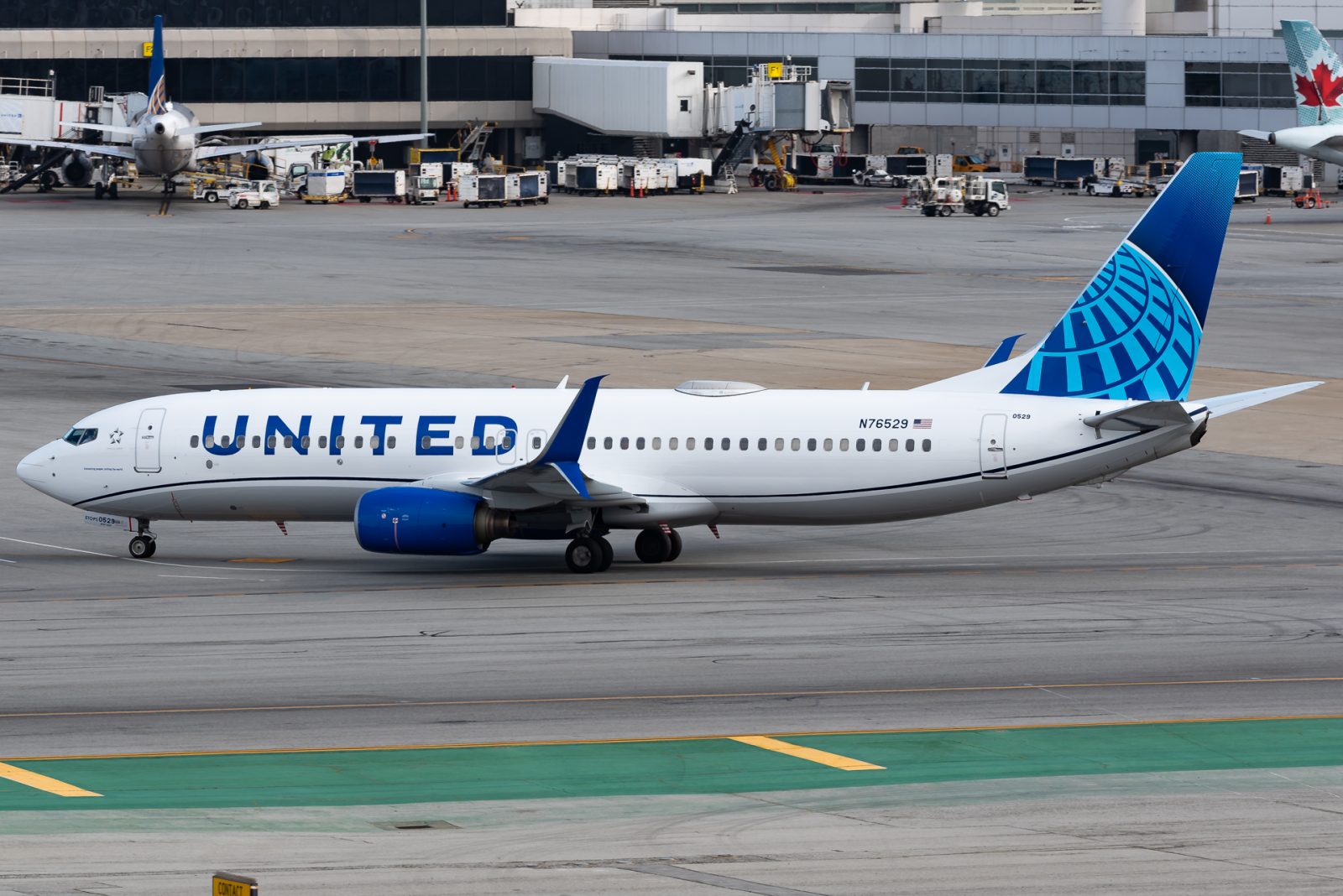
A United 737-800 in San Francisco. (Photo: AirlineGeeks | Ben Suskind)

United is the latest U.S. carrier to slow pilot hiring this year. According to a CNBC report, the Chicago-based carrier will pause new hire classes in May and June, citing delivery delays at Boeing.

The airline expects to receive 21 fewer 737 MAX aircraft this year than its original forecast. Manufacturing delays continue to plague Boeing following January’s door plug incident on an Alaska 737 MAX 9.

In 2024, United had also expected to receive 80 737 MAX 10 aircraft from Boeing, but certification timelines continue to slip. The carrier recently removed the largest variant of the 737 MAX from its fleet plan. 

“We wanted to let you know that United will slow the pace of pilot hires this year due to continued new aircraft certification and manufacturing delays at Boeing,” said United’s Marc Champion, Vice President of Flight Operations,and Kirk Limacher, Vice President of Flight Ops Planning and Development, in an internal memo viewed by CNBC.

The memo continued to say that the airline expects to resume new hire classes in July.

According to data from FAPA.aero, United hired 2,349 pilots in 2023, the second most of any major U.S. carrier. Across the board, pilot hiring at major U.S. airlines was down roughly 6% between 2022 and 2023.

So far this year, the airline said it hired 450 pilots with plans for up to 800 by the end of April.

“As you know, United has hundreds of new planes on order and while we remain on a path to be the fastest growing airline in the industry, we just won’t grow as fast as we thought we would in 2024 due to continued delays at Boeing,” Champion and Limacher added in the Thursday memo.

Following Other Airlines

United isn’t the only U.S. carrier to slow pilot hiring this year. Delta announced it would be slashing its hiring plans in half in 2024.

Last week, Southwest said it would stop pilot hiring through the end of this year. Ultra-low-cost carrier Spirit stopped hiring pilots in late 2023.

Ryan Ewing

Ryan founded AirlineGeeks.com in February 2013 and has spent more than a decade covering the airline business. His work has been featured by CNN, WJLA, CNET, and Business Insider. His aviation experience spans airport operations, Part 135 regulatory compliance, and airline crew workforce planning, along with time behind the yoke of a Cessna 172 and interviews with airline executives. Ryan now serves as Group President of Firecrown Media’s Aviation Group. He holds a B.S. in Air Transportation Management and an MBA from Arizona State University and teaches Airline Management at Embry-Riddle Aeronautical University.

United Expanding International Network This Year

In addition to three new destinations, the Chicago-based airline will also add more flights to China, South Korea, and Portugal.

A United 767-300.
A United 767-300. (Photo: AirlineGeeks | William Derrickson)

United Airlines will expand flights across the globe this year, adding new routes and additional service to a handful of destinations. 

The airline on Thursday announced it would add new flights to Morocco, the Philippines, Japan, and Colombia. United will also operate more flights to China, South Korea and Portugal. 

“We have consistently been ahead of the curve in finding hidden gem destinations for our customers to explore and remain committed to providing the most unique slate of travel options for their adventures abroad,” said Patrick Quayle, United’s Senior Vice President of Global Network Planning and Alliances, in a news release. 

United will launch flights from Newark Liberty International Airport to Marrakech beginning Oct. 24. The nonstop flights will be operated three times a week on a Boeing 767-300ER aircraft. 

The airline will begin operating daily nonstop flights on July 31 from Tokyo’s Narita International Airport to Mactan-Cebu International Airport in Lapu-Lapu, Philippines. The flight will be operated by a Boeing 737-800. 

In addition, United will fly nonstop to Medellin, Colombia for the first time. The daily nonstop flights will depart from George Bush Intercontinental Airport in Houston beginning Oct. 27 on a Boeing 737 aircraft. 

Other new flights:

  • Shanghai to Los Angeles four times weekly beginning Aug. 29 before expanding to daily service in October 
  • Additional daily flights from Los Angeles to Hong Kong on Oct. 26
  • Additional daily flights from San Francisco to Seoul on Oct. 25
  • New route between Tokyo and Guam beginning in May 
  • Additional daily flights from Newark to Porto, Portugal beginning May 23 

Brinley Hineman

Brinley Hineman covers general assignment news. She previously worked for the USA TODAY Network, Newsday and The Messenger. She is a graduate of Middle Tennessee State University and is from West Virginia. She lives in Brooklyn with her poodle Franklin.

Qatar Airways Says Goodbye to Boeing 747 Freighter

The company’s cargo subsidiary announced that its lone remaining Boeing 747-8 freighter finished its last flight on Friday.

Qatar's 747-8F cargo aircraft (Photo: AirlineGeeks | Chuyi Chuang)

The 747 jumbo jet era is over at Qatar Airways. The company’s cargo subsidiary announced that its lone remaining Boeing 747-8 freighter finished its last flight on Friday, arriving at its base in Doha from Barcelona, Spain.

Qatar Airways Cargo acquired two 747-8s in 2017 and recently agreed to sell them to UPS. The airline will now operate an all-Boeing 777 fleet as it seeks better efficiency and emissions reductions.

The two cargo jets, which are young by freighter standards at 10 and seven years, logged more than 9,000 flights totaling more than 66,000 hours. Together hauled nearly 882,000 tons of goods, including racing cars and horses, around the world.

Qatar Airways Cargo is the largest cargo airline in the world by cargo ton miles. “When we welcomed our Boeing 747 freighters to the Qatar Airways Cargo fleet seven years ago we were responding to a sharp rise in customer demand for capacity, which we were quickly able to fulfill. Our Next Generation freighter strategy is based both on evolving customer expectations and our firm commitment on sustainability and efficiency. Efficiency is achieved through fleet harmonization and simplification, and sustainability is improved by the latest in-flight and fuel technology,” said Chief Cargo Officer Mark Drusch, in a news release.

Drusch moved to the cargo side in January from Qatar Airways, where he was senior vice president of revenue management, alliances and strategy. Prior to joining Qatar Airways in 2019, he spent 20 years at Delta Air Lines, Continental Airlines and Lufthansa LSG Sky Chefs. He took the position previously held by Guillaume Halleux, who left the company last year.

Qatar Airways Cargo operates 27 Boeing 777 freighters and expects to receive another aircraft by the middle of March. It has a firm order with Boeing for 34 next-generation 777-8 freighters, which will reduce fuel use and carbon emissions by 30% compared to the 747-8.

Emirates CEO Tim Clark recently said he expects further development delays for the first 777X passenger plane.

UPS recently confirmed that the 747-8s picked up from Qatar Airways won’t join the fleet until late this year or early 2025. The planes require some modifications and a new paint job to meet UPS requirements. Aircraft tracking site FlightRadar24 shows the last Qatar Airways 747 arrived at Victorville Logistics Airport in Southern California, which has an aircraft maintenance facility. In 2014, Boeing painted the plane in the colors of the Seattle Seahawks football team to celebrate the team’s Super Bowl victory.

The 747-8s represent an environmental and fuel upgrade compared to the MD-11s that UPS is phasing out.

Editor’s Note: This story first appeared on Freightwaves. 

AirlineGeeks.com Staff

AirlineGeeks.com was founded in February 2013 as a one-person blog in Washington D.C. Since then, we’ve grown to have 25+ active team members scattered across the globe. We are all here for the same reason: we love deep-diving into the fascinating realm of the airline industry.

Virgin Australia Plans for First Domestic In-Cabin Pet Policy

Virgin Australia announced plans to become the first domestic airline in the country to allow small cats and dogs to travel in the cabin with their owners.

A Virgin Australia Boeing 777 in Los Angeles. (Photo: AirlineGeeks | William Derrickson)

Virgin Australia has unveiled plans to make history as the first domestic airline in the country to permit small cats and dogs to travel alongside their owners in the cabin. This eagerly anticipated pet-friendly policy, slated for launch within the next 12 months, will specifically cater to select domestic flights, providing a unique travel experience for pet owners within designated cabin rows.

Regulatory Changes And Public Support

This decision comes in the wake of a 2021 regulatory change by the Australian Civil Aviation Safety Authority (CASA), which eased restrictions on in-cabin pet travel. Currently, major Australian airlines such as Qantas, Virgin Australia, Jetstar, and Regional Express permit service dogs to accompany their owners in the cabin at no additional cost.

However, all other pets have been restricted to travel in the cargo hold. With this move, Virgin Australia is poised to become the first domestic airline in Australia to welcome pets in cabins, offering pet owners increased convenience and the ability to keep their animals close during air travel.

Virgin Australia’s chief executive, Jayne Hrdlicka, noted the success of this arrangement internationally, highlighting that allowing pets on flights is a common practice in North America.”Overwhelmingly, our guests tell us they want to travel with their pets, and we are now on a journey to make that a reality,” she said.

Referring to a recent poll conducted on Virgin’s Facebook page, 85% of respondents supported the airline allowing pets in the cabin.

Ensuring Safety and Comfort

However, specific limitations are in place. To ensure passenger comfort and safety, pets will be restricted to designated rows, unable to roam freely or occupy laps. They must be securely transported in a Virgin Australia-approved ventilated carrier that fits under the owner’s seat throughout the flight.

Acknowledging the concerns of passengers uncomfortable with the new in-cabin pet policy, Hrdlicka clarified, “It won’t be a menagerie on board; we’re just talking dogs or cats.” She also emphasized that the designated pet-friendly rows will facilitate easy separation between pet owners and passengers with pet allergies or sensitivities.

Melbourne Airport CEO, Lorie Argus said the airport was looking forward to helping Virgin Australia deliver the Australian-first.

“We’ve been investing significant effort into providing relief areas for assistance animals and these facilities have ample capacity to serve Virgin Australia’s new guests,” she said. “We expect the pets in cabin concept will prove a popular offering and we look forward to working with Virgin Australia to make it a reality.”

While details regarding participating routes and associated fees are forthcoming, Virgin Australia’s move marks a significant shift in domestic pet travel options within Australia.

Tolga Karadeniz

Tolga is a dedicated aviation enthusiast with years of experience in the industry. From an early age, his fascination with aviation went beyond a mere passion for travel, evolving into a deliberate exploration of the complex mechanics and engineering behind aircraft. As a writer, he aims to share insights , providing readers with a view into the complex inner workings of the aviation industry.
Sign-up for newsletters & special offers!

Get the latest stories & special offers delivered directly to your inbox

SUBSCRIBE

Uh-oh! It looks like you're using an ad blocker.

Our website relies on ads to provide free content and sustain our operations. By turning off your ad blocker, you help support us and ensure we can continue offering valuable content without any cost to you.

We truly appreciate your understanding and support. Thank you for considering disabling your ad blocker for this website