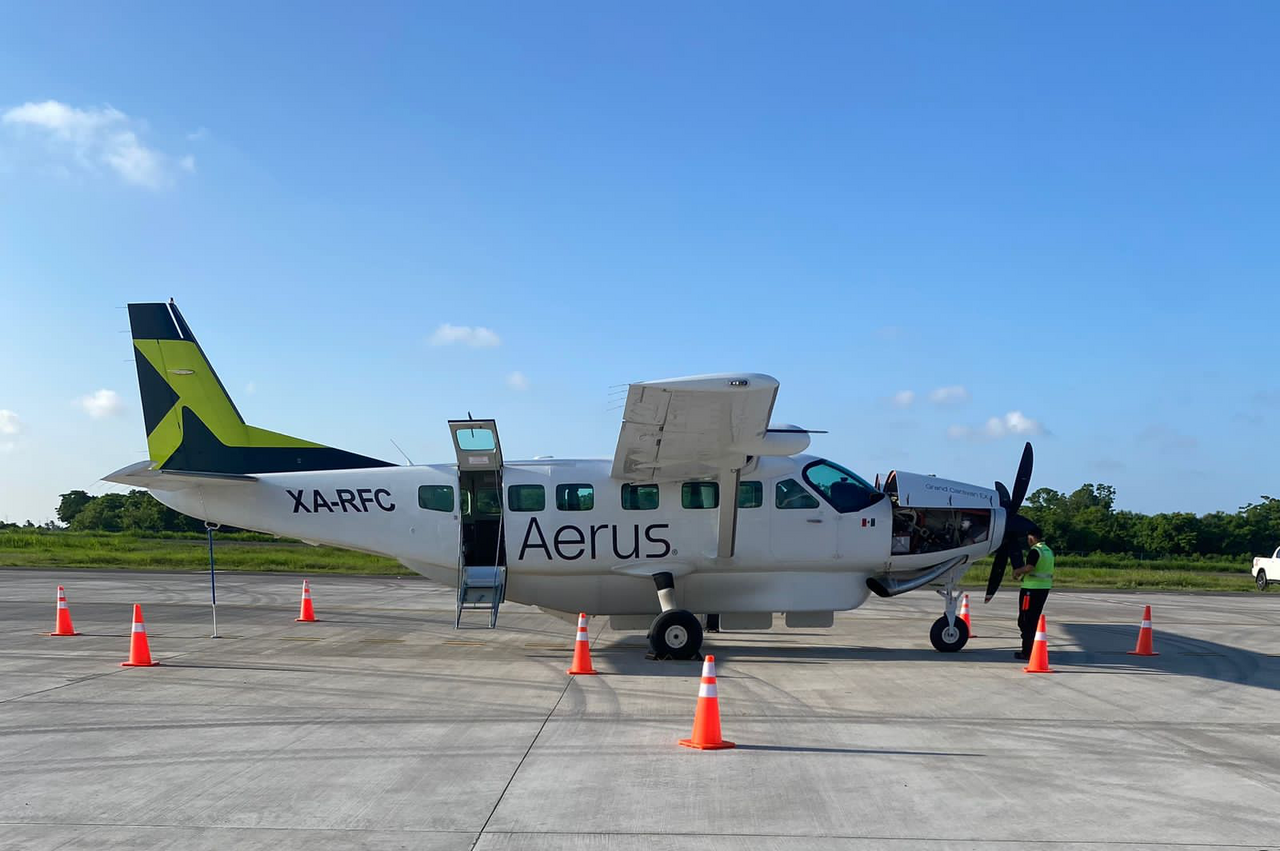
An Aerus Cessna Grand Caravan (Photo: Vmzp85, CC BY-SA 4.0 , via Wikimedia Commons)
Mexican regional startup Aerus is eyeing new international service from a handful of cities in Mexico to the U.S. Starting operations in April 2023, the airline currently serves 10 domestic destinations with a fleet of three Cessna Grand Caravans.
Aerus — which goes by the legal name Aerotransportes Rafilher S.A. de C.V. — is privately owned. By 2025, the company has plans for up to 14 aircraft and 500 employees, including orders for 30 all-electric Eviation Alice airplanes.
The airline recently filed with the Department of Transportation (DOT) requesting approval to operate flights from Mexico to the U.S. In the filing, Aerus proposed the following routes: Monterrey to Brownsville, Corpus Christi, Laredo, and McAllen, along with Tampico to Brownsville and McAllen. As of now, the airline has only proposed flights to Texas.
As part of the network expansion, the carrier expects to operate between 1,100 and 1,200 round-trip flights annually to the United States. The airline says it plans to average eight passengers per flight.
Why Texas
In an interview with ch-aviation, Aerus CEO Javier Herrera García said the decision to serve the four Texas destinations is due to cultural and business ties. “[Aerus] will be carrying executives and tourists to the U.S. on business and pleasure, thereby fostering commerce between Mexico and the United States consistent with the objectives of the United States Mexico Canada Agreement…,” the airline said in its DOT filing.
If approved, Aerus will join Aeromexico, VivaAerobus and Volaris with scheduled service to the U.S. In September 2023, the U.S. upped Mexico’s air safety rating, paving the way for carriers to add additional flights and routes.
Ryan founded AirlineGeeks.com in February 2013 and has spent more than a decade covering the airline business. His work has been featured by CNN, WJLA, CNET, and Business Insider. His aviation experience spans airport operations, Part 135 regulatory compliance, and airline crew workforce planning, along with time behind the yoke of a Cessna 172 and interviews with airline executives. Ryan now serves as Group President of Firecrown Media’s Aviation Group. He holds a B.S. in Air Transportation Management and an MBA from Arizona State University and teaches Airline Management at Embry-Riddle Aeronautical University.
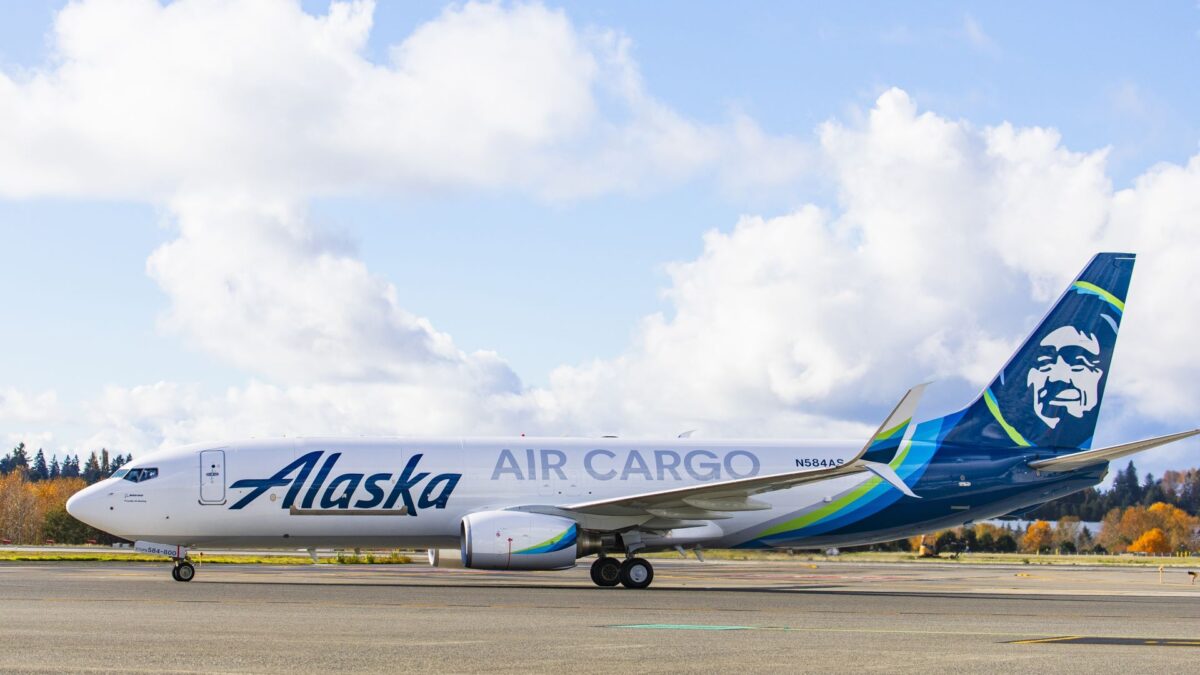
Alaska Airlines currently operates three Boeing 737-700 cargo jets. Next month they will be joined by two larger 737-800 converted freighters. (Photo: Alaska Air Cargo)
Alaska Airlines will take advantage of two new Boeing 737-800 converted freighters to open its first dedicated cargo service south of Seattle, starting in April, said Adam Drouhard, managing director for cargo.
Los Angeles will be the newest market for the freighters, which currently don’t fly beyond Seattle in the Lower 48 states.
The newly modified aircraft will help Alaska Air Cargo broaden its market reach in Alaska, speed up deliveries and reduce stress on the airline’s three Boeing 737-700 converted freighters that currently serve the state.
By bringing on the new 737-800 cargo jets, “we’re making sure we’re getting reliability in our schedule, getting more balanced with our fleet. But it’s going to add a lot of capacity and growth. There will be about 70% more capacity in our network overall for the state,” Drouhard told FreightWaves at the AirCargo 2024 conference here this week. He spoke on the exhibit floor, where Alaska Airlines (NYSE: ALK) had a booth to showcase its transport service to freight shipping intermediaries.
In November, Boeing delivered one 737-800 passenger aircraft for all-cargo operations and is putting the finishing touches, including upgrading galley fixtures and applying a new paint job, on the second aircraft. Touch work on the planes, which came from Alaska’s passenger fleet, was done by Boeing’s airframe repair partners in Costa Rica and Canada.
The first plane is currently grounded for scheduled maintenance. Both cargo jets will be ready for service by mid-March, the cargo chief said.
The conversions were originally scheduled to be completed last year, but the aerospace industry is still plagued by shortages of skilled workers and supply chain challenges that have delayed production across the aftermarket freighter industry.
With five freighters in the fleet, Alaska Air Cargo will be better able to deliver medicine, household goods and fresh food to communities in Alaska, many of which have limited road access, while also moving seafood and other export commodities to cities across North America with passenger services that connect in Seattle and Los Angeles.
Each 737-800 freighter can carry 10,000 pounds more than a 737-700. With a configuration that also holds more containers, the -800s will have 40% additional space than their predecessors.
Widespread dependence on air service means the Alaska Airlines freighters make about seven departures per day, which is more taxing on the airframe and engines than flying at a constant speed and altitude. The 737-700s on some routes will make three to five stops between Anchorage and Seattle. The planes also run about 10 hours per day. By reducing daily operating time to eight hours and the number of cycles, Alaska Air Cargo can extend their longevity, Drouhard explained.
“The uniqueness of that market up there is high cycle for us. So as we add two more aircraft to our fleet, it helps us right-size capacity so we’re not trying to solve so many stops off of one plane,” he said. “It also allows us to unbundle markets, so that way markets get much more dedicated capacity that’s not shared. We’re able to spread that schedule across more aircraft.”
Inside main deck of Boeing 737-800 after conversion to cargo configuration. (Photo: Alaska Air Cargo)
The new Los Angeles destination will initially be connected to Alaska through Seattle, but management expects to launch direct flights between Los Angeles International Airport and cities in Alaska in 2025. Alaska Airlines currently averages three daily departures from Seattle to Alaska.
“As the new expansion gets going, we want to keep close to Seattle rotation-wise. It makes it simple for us. As we get this set in place, we’ll be looking at opportunities to go direct to Anchorage, or other places like King Salmon, Bethel, Nome or the Alaska North Slope,” said Drouhard.
The new freighters are also in the process of becoming certified for flying long distances over open water. The aircraft’s expanded range will allow the cargo team to explore new routes, such as a possible nonstop from King Salmon to Seattle.
Cargo revenue at Alaska Airlines was about $130 million in 2023, nearly flat with the prior year. The revenue performance was much better than that of most airlines, which experienced revenue declines of 25% to 50% last year because of tepid freight demand and overcapacity. The difference is that most airlines operate in the international freight market, where the downturn was most severe, whereas Alaska operates domestically.
Drouhard said he expected to generate 10% to 15% more cargo revenue in 2024 because of the larger cargo fleet.
Editor’s Note: This story first appeared on FreightWaves.
AirlineGeeks.com was founded in February 2013 as a one-person blog in Washington D.C. Since then, we’ve grown to have 25+ active team members scattered across the globe. We are all here for the same reason: we love deep-diving into the fascinating realm of the airline industry.
Kenya Airways Adding Four New Destinations in 2024
Kenya Airways' extensive network spans three domestic and 42 international destinations as of February 2024 with plans to add four more routes by year end.
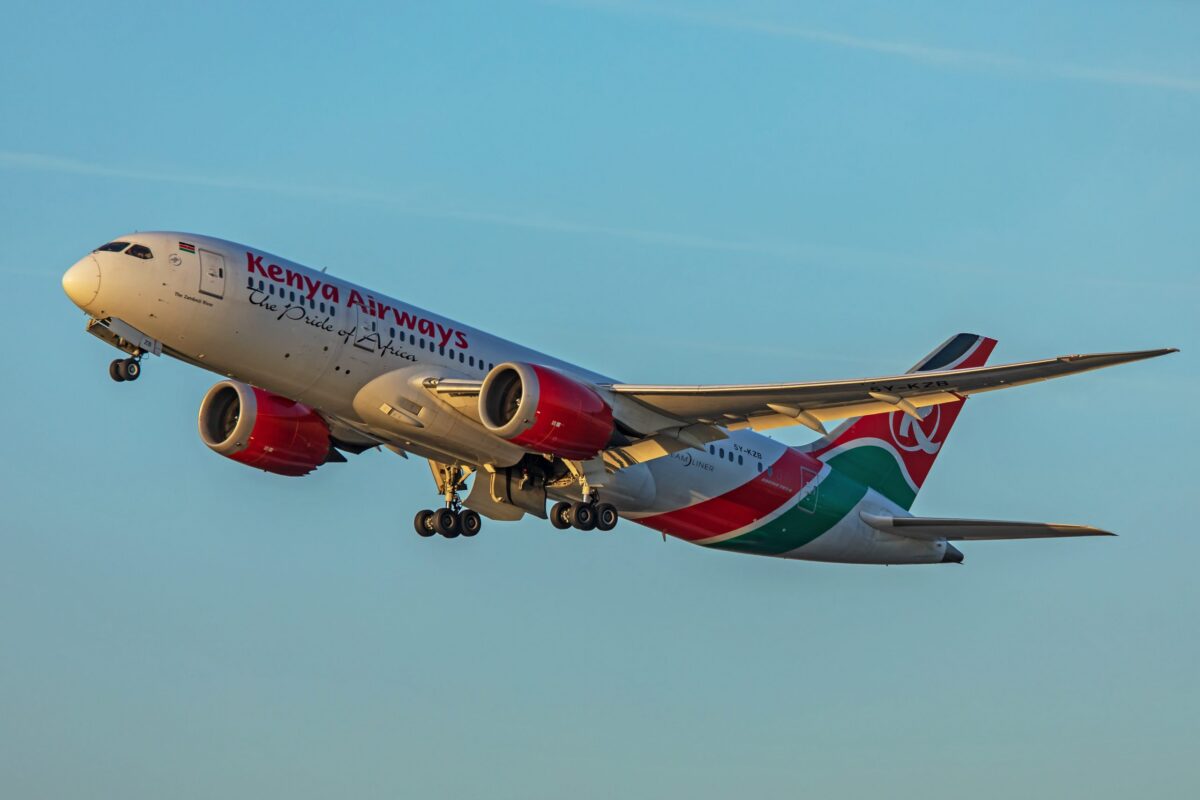
A Kenya Airways Boeing 787 Dreamliner
(Photo: AirlineGeeks | William Derrickson)
Kenya Airways’ network spans three domestic and 42 international destinations across 36 countries as of February 2024. The Kenya national airline aims to strengthen its network to 46 by the end of 2024. This was revealed by the airline’s Head of Network and Alliances Martin Gitonga, in an interview podcast on Monday, Feb. 12, 2024, conducted by AviaDev Africa.
Notable among these developments is the initiation of thrice-weekly flights to Mogadishu, Somalia, slated to commence on February 15. It’s worth noting that Kenya Airways Cargo expanded its route network to enable cargo flights between Sharjah, United Arab Emirates (UAE), and Mogadishu, Somalia, beginning Feb. 8, 2024. The cargo service intends to augment its frequency to two flights weekly by April 2024.
“So we are actually going to grow from our current 42 destinations. We are looking at closing 2024 at 46 destinations. Right now live Mogadishu Somalia, which from 15th of February this month we will start three weekly flights and that’s on Mondays, Thursdays and Saturdays flying directly and connecting the youngest East Africa community country to Kenya,” Gitonga added during the podcast.
Furthermore, Gitonga announced the anticipated relaunch of flights to Maputo, Mozambique, on June 15, marking the airline’s second destination in the Mozambican market. Currently offering three weekly flights to Nampula, Kenya Airways aims to expand operations to daily flights in response to growing demand.
An “Africa First” Network Strategy
Central to Kenya Airways’ strategy is its “Africa first” policy, focused on bolstering intracontinental connectivity and driving economic growth across the region. Gitonga emphasized plans to enhance frequency and capacity on key African routes, including the introduction of Boeing 787 operations four times a week to Accra and Freetown, Sierra Leone, effective in May. Notably, this move comes amidst increasing competition, as Ethiopian Airlines also announces its expansion into the intra-African market with the introduction of service to Freetown, commencing May 31, 2024, with three weekly flights.
For Kenya Airways, plans are also underway to enhance connectivity from Accra to Dakar, with the SkyTeam Alliance airline set to increase services from twice weekly to three times a week from June onwards.
Lagos emerges as another significant focal point for Kenya Airways’ expansion strategy, as highlighted by Martin Gitonga. The city’s burgeoning demand and the gradual improvement in challenges related to fund repatriation, buoyed by state support, underscore its importance as a key destination. Gitonga revealed plans to ramp up flight frequency from current daily to 10 times a week. Additionally, Kenya Airways will deploy its flagship aircraft, the Boeing 787, particularly on night rotations.
With these initiatives, Kenya Airways anticipates substantial growth during the summer season, solidifying its position as a leading carrier in the region.
Meanwhile, as the world anticipates major global events, Kenya Airways stands to capitalize on opportunities for expansion and increased visibility. Gitonga highlighted the airline’s readiness for the Paris Olympics, with plans to scale up operations to nine times a week during the event, scheduled from July 26 to August 11.
Moreover, discussions on potential expansions in bilateral agreements signal Kenya Airways’ intent to strengthen its position as a premier carrier for transatlantic travel, leveraging strategic partnerships with U.S. industry players like Delta and JetBlue.
Victor Shalton's love for aviation can be traced to when he was 11-years-old. As a seasoned aviation writer, he takes pride in providing the best aviation coverage around the globe and is passionate about advancing his skills in the aviation space. In addition, he loves travelling, writing, arts and while his speaking engagements have taken him around the world, he is proud to call Nairobi home.
Etihad Pilots Now Certified to Fly Both A350 and A380 Aircraft
Etihad Airways announced on Wednesday that its pilots have received regulatory approval to operate both the Airbus A350 and A380 aircraft interchangeably
Etihad pilots with an A380 (Photo: Etihad Airways)
United Arab Emirates-based Etihad Airways announced on Wednesday that its pilots have received regulatory approval and completed training to operate both the Airbus A350 and A380 aircraft interchangeably. This achievement positions Etihad as one of the first airlines globally with pilots certified for both aircraft types.
The certification process involved “rigorous” approvals and comprehensive training programs for pilots, the airline says. This new capability allows for seamless transitions between the two widebody jets, potentially enhancing operational flexibility and network resilience.
“This achievement will enhance the resilience and flexibility of the airline’s network and is [a] testament to our commitment to continuously push the boundaries of efficiency, innovation, and customer satisfaction, and at all times ensuring safety is Etihad’s number one priority,” said Etihad’s Chief Operating Officer Mohammad Al Bulooki in a press release.
Other Mixed Fleet Programs
Etihad has a history of implementing mixed fleet flying programs, having previously qualified pilots to operate various Airbus and Boeing models interchangeably. These include the Airbus A320 and A330 aircraft, A330 and A340, and its Boeing pilots to fly the 777 and 787. The airline says this practice sets “new standards for fleet commonality.”
Pilots can be assigned to either aircraft type based on operational needs, potentially improving crew scheduling and resource utilization.
Not a Common Practice
The vast majority of major carriers certify pilots on a single equipment type for multiple reasons, including operational simplicity, labor contract stipulations, and local regulations. However, under certain conditions, pilots may be certified to fly two similar equipment types.
At Etihad, pilots are allowed to operate two similar aircraft types through a dedicated program approved by the aircraft manufacturer and the UAE’s Civil Aviation Authority. This sort of program is called ‘Mixed Fleet Flying’ or ‘MFF’ for short.
In 2021, All Nippon Airways (ANA) received similar approval from Airbus and Japanese aviation regulators for its pilots to interchangeably operate the Airbus A320 and A380. At the time, ANA was the first and only carrier to introduce Mixed Fleet Flying for both the A320 and A380.
Ryan founded AirlineGeeks.com in February 2013 and has spent more than a decade covering the airline business. His work has been featured by CNN, WJLA, CNET, and Business Insider. His aviation experience spans airport operations, Part 135 regulatory compliance, and airline crew workforce planning, along with time behind the yoke of a Cessna 172 and interviews with airline executives. Ryan now serves as Group President of Firecrown Media’s Aviation Group. He holds a B.S. in Air Transportation Management and an MBA from Arizona State University and teaches Airline Management at Embry-Riddle Aeronautical University.
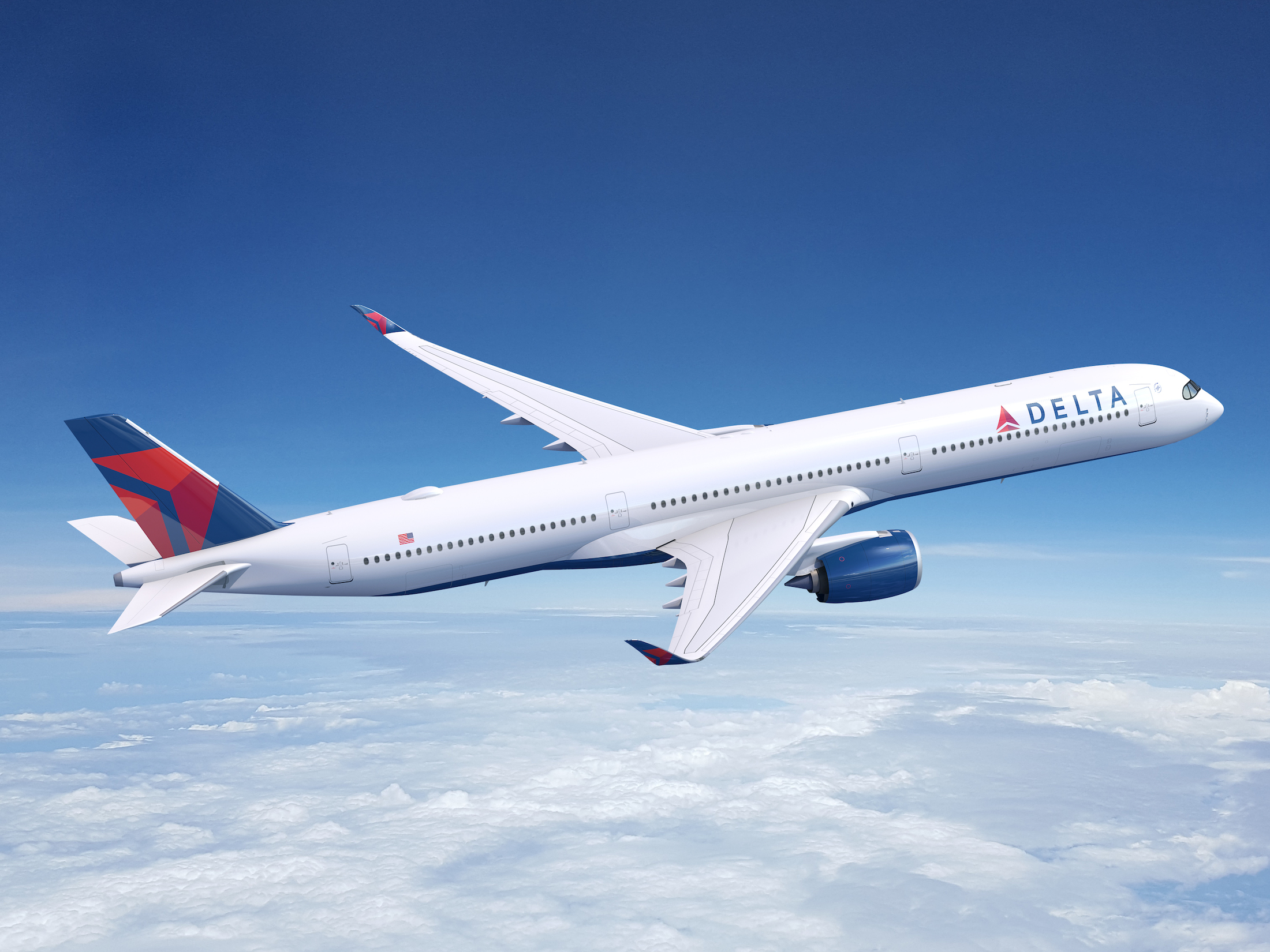
Delta's A350-1000s, set for delivery in 2026, will add premium capacity and potentially allow expansion to India, Australia, and other new destinations.
Delta Air Lines recently announced an order for 20 A350-1000s with options for 20 more. Although the first jet won’t arrive until 2026, interest surrounding the jet is high, and many wonder where the aircraft will fly.
First, why did Delta order the A350-1000?
To speculate where the jet will fly, the motivations behind the order need to be understood. The main possible reasons are:
A larger gauge aircraft with more premium capacity and likely lower costs
For constrained airports and markets, especially in Europe, where additional frequencies will become increasingly more difficult to come by under environmental pressures.
Delta competitor, American Airlines, has 60 seats in First and Business on its 777-300ER, and its new premium-heavy 787-9s will have 51 business class seats. Delta’s most premium widebody has just over 30 seats in the business class cabin.
Delta’s business class product, Delta One. (Photo: Delta)
There is a clear contrast here with Delta offering significantly fewer premium seats. Coming into 2024, premium cabins are the money earners. In 2023, the demand for business class was strong despite traditional business travel not having returned 100%, according to Forbes.
A rendering of the restaurant area at Delta’s new JFKk premium lounge (Photo: Delta Air Lines)
Therefore, one can expect Delta’s A350-1000 to have a higher number of business class seats, or be premium-heavy, in other words.
Possible Destinations
Although nothing has been announced by the airline as of yet, a few potential routes would likely be well-suited for the A350-1000.
Asia-Pacific
Delta has always focused on East Asia, and these routes are suited for larger aircraft as they cover longer distances often with more connecting traffic. The international travel demand in the region is returning slowly. Still, Delta will be a strong player in the region as the recovery curve continues, building on partnerships with Korean Air and China Eastern.
These markets could include Shanghai Pudong, Seoul Incheon, or Tokyo Haneda.
The market between North America and Oceania is strong and booming. The A350-1000 could be an ideal aircraft for Delta to provide more capacity and capture a larger market share with routes to Sydney or even Melbourne, which is not currently served by the carrier.
Delta is the only airline out of the big three U.S. carriers without a flight to India. The U.S. and India market is massive. However, Delta lacks a partner in the region, whereas United is partnered with Air India and Emirates while American is with Qatar Airways. Mumbai and New Delhi are possible candidates.
Europe
Some routes to Europe could benefit from a larger airplane, especially since both major Delta operations in Europe, Schiphol and Paris, are facing capacity constraints. With Delta’s reliance on these airports, one solution could be using larger aircraft to accommodate growth and offset reduction in frequency.
Leisure routes to Europe are also performing well for Delta, mainly on a seasonal basis. These connections also see strong premium class demand as the trend of ‘leisure business’ grows. Destinations such as Athens and Rome are possible candidates during the peak summer season.
Africa
Flights between the U.S. and South Africa have generally performed well, and the airline can use a bigger aircraft to perhaps achieve better margins. These destinations could include both Johannesburg and Cape Town.
The market can always change in the next two years, and only time will tell where Delta will fly the new A350-100s.
Anthony is an aviation enthusiast who grew up around the world from St. Louis to Singapore, and now lives in Amsterdam. He loves long-haul flying and finds peace in the sound of engine cruising. He aspires to share his passion for the sky though writing and providing another angle on the stories.
African Airlines Exceed Pre-Pandemic Levels Amid Global Challenges
The aviation industry encountered unprecedented challenges during the global pandemic, yet African airlines have showcased resilience.
An Ethiopian Boeing 777 rotates out of Washington Dulles.
(Photo: AirlineGeeks | William Derrickson)
The aviation industry encountered unprecedented challenges during the global pandemic, yet African airlines have showcased resilience. According to a report published by the African Airlines Association (AFRAA) on Feb. 12, 2024, January 2024 saw African airlines not only surpass pre-pandemic traffic levels but also project strong growth for the upcoming year.
Steady Recovery
In January 2023, Revenue Passenger Kilometers (RPKs) were 2.06% above the same month’s level in 2019, indicating a robust recovery in passenger demand. Simultaneously, available Seat Kilometers (ASKs) were 7.1% higher, reflecting increased capacity and confidence in air travel.
In its March 2023 data report, the trade association that brings together airlines from across the African Union, projected that by the end of 2023, total passengers carried by African airlines would reach 85 million, approximately 10 million short of the full year 2019 passenger traffic. This steady increase indicates a positive trajectory for the industry.
Positive Revenue Outlook
Cargo operations also play a crucial role in aviation’s resurgence, with African airlines representing 30.8% of total cargo movement to and from the region in November 2023, totaling 149.6 million Kgs. These operations include transporting essential goods, medical supplies, and e-commerce shipments, contributing to economic stability and growth.
AFRAA reports a positive outlook for airline revenues in 2023, with a narrowing revenue gap compared to 2022. The projected revenue shortfall for African airlines in 2023 is expected to be around US$200 million, an improvement compared to the US$3.5 billion revenue gap observed in 2022. This trend reflects a gradual recovery and stabilization of the industry following pandemic-induced disruptions.
Furthermore, major African airports, including Johannesburg, South Africa; Nairobi, Kenya; Addis Ababa, Ethiopia; Lusaka, Zambia; Cairo, Egypt; Casablanca, Morocco; Abidjan, Côte d’Ivoire and Lagos, Nigeria have achieved or surpassed pre-COVID levels of intra-Africa connectivity since December 2022. The total number of intercontinental routes operated by African airlines exceeded pre-COVID levels since October 2022. This achievement, coupled with the resumption of operations to 99.2% of pre-pandemic routes.
Despite positive momentum, African airlines continue to face challenges posed by fluctuating jet fuel prices. The global average jet A-1 price experienced marginal fluctuations, ending the week of Jan. 19, 2023, at US$108.92 per barrel. Managing operational costs remains a priority for airlines as they navigate market uncertainties and maintain financial sustainability.
The African Airlines Association, founded in Accra, Ghana, in 1968, stands as a pivotal force in shaping the aviation landscape across the African continent. Headquartered in Nairobi, Kenya, AFRAA boasts a membership of 50 airlines, collectively representing over 85% of total international air traffic within Africa.
Victor Shalton's love for aviation can be traced to when he was 11-years-old. As a seasoned aviation writer, he takes pride in providing the best aviation coverage around the globe and is passionate about advancing his skills in the aviation space. In addition, he loves travelling, writing, arts and while his speaking engagements have taken him around the world, he is proud to call Nairobi home.
Members of Congress Tell FAA to Change Rules Regarding Pilot Mental Health
Members of the U.S. House of Representatives have sent a letter to FAA Administrator Michael Whitaker expressing concern over the agency’s “approach to ensuring aviation professionals can obtain mental healthcare in a timely and efficient manner.”
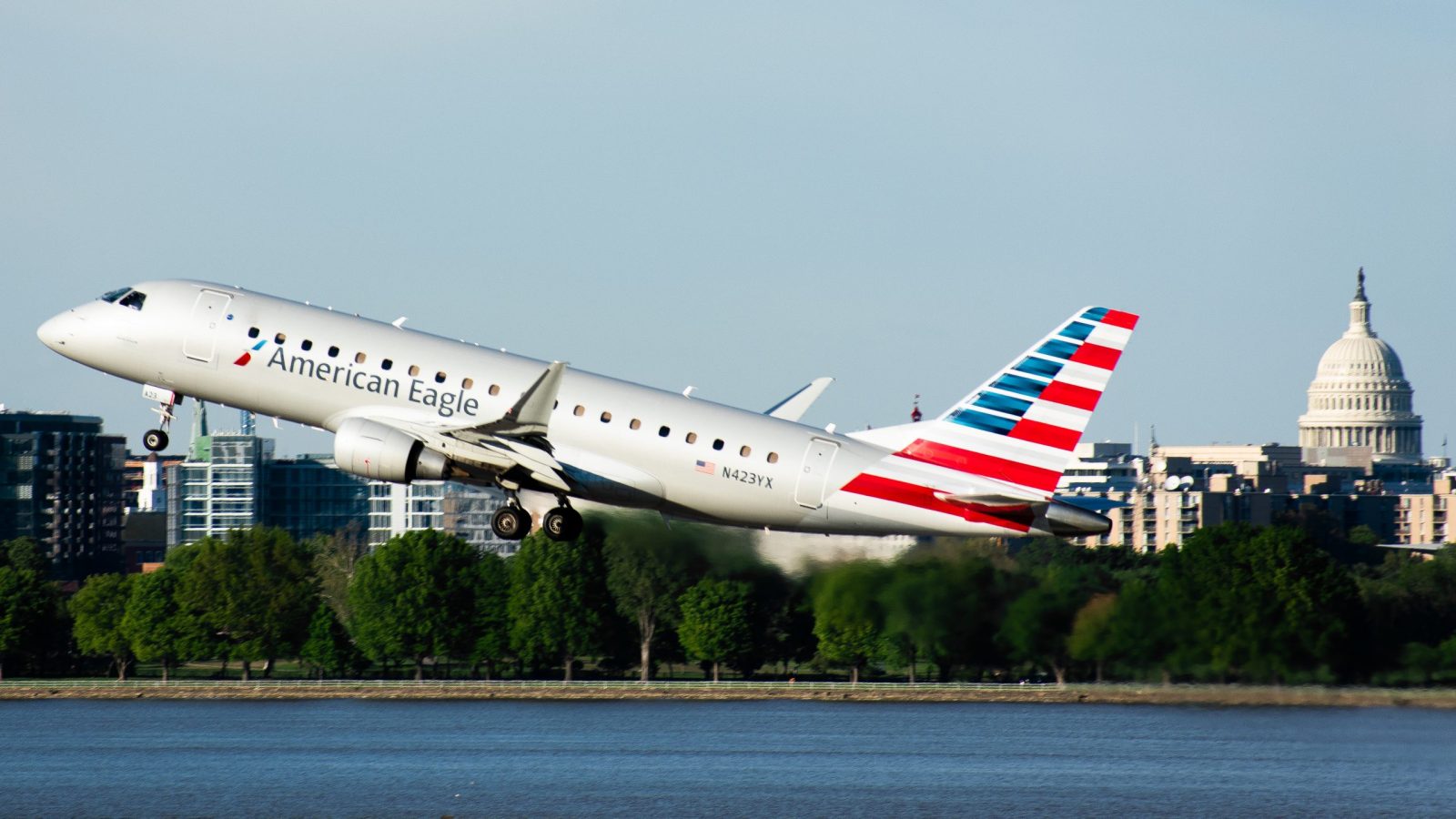
An American Eagle E175. (Photo: AirlineGeeks | Peter Weiland)
Members of the U.S. House of Representatives have sent a letter to FAA Administrator Michael Whitaker expressing concern over the agency’s “approach to ensuring aviation professionals can obtain mental healthcare in a timely and efficient manner.”
The letter calls on the FAA to develop and implement policies, protocols, and screening methods that allow professionals, such as pilots and air traffic controllers, to seek care without the “fear that medical evaluation, diagnosis, or treatment, could potentially prolong their return to work, or even prevent them from pursuing their aviation careers.” Led by subcommittee on aviation chairman Garret Graves (R-La.) and ranking member Steve Cohen (D-Tenn.), a total of 45 congressional members signed the bipartisan letter.
“The agency’s backlog of decisions and reviews for aviation professionals that have sought mental healthcare persists and continues to strain the agency’s resources,” the legislators wrote in the letter. “Long medical clearance wait times are not only severely disruptive to an individual’s career but may also be a contributing factor discouraging other aviation professionals from self-disclosing mental health conditions. Such issues have led to distrust, frustration, and uncertainty between the agency and the aviation community and present formidable challenges to the future of United States aviation.”
The letter noted that FAA reauthorization legislation the House passed in July would require the agency to establish an Aeromedical Innovation and Modernization Working Group. That group would be tasked with improving the agency’s aeromedical decision-making and aligning it with current medical practices.
The FAA announced in November—following an incident where an off-duty airline pilot traveling via the flight deck jumpseat attempted to cut the fuel to both engines of an E175 in flight—that it would be appointing an aviation rulemaking committee (ARC) to “provide recommendations on breaking down the barriers that prevent pilots from reporting mental health issues to the agency.” The ARC is due to present its findings in March. While the representatives’ letter praised the agency for forming the committee, it emphasized the need for “concrete and actionable solutions.”
“We urge the FAA to take decisive actions to reduce the stigma around mental healthcare in aviation, make meaningful changes to remove barriers without jeopardizing safety standards, reduce aeromedical decision wait times, and ultimately strengthen trust with our aviation workforce,” the letter read.
AirlineGeeks.com was founded in February 2013 as a one-person blog in Washington D.C. Since then, we’ve grown to have 25+ active team members scattered across the globe. We are all here for the same reason: we love deep-diving into the fascinating realm of the airline industry.
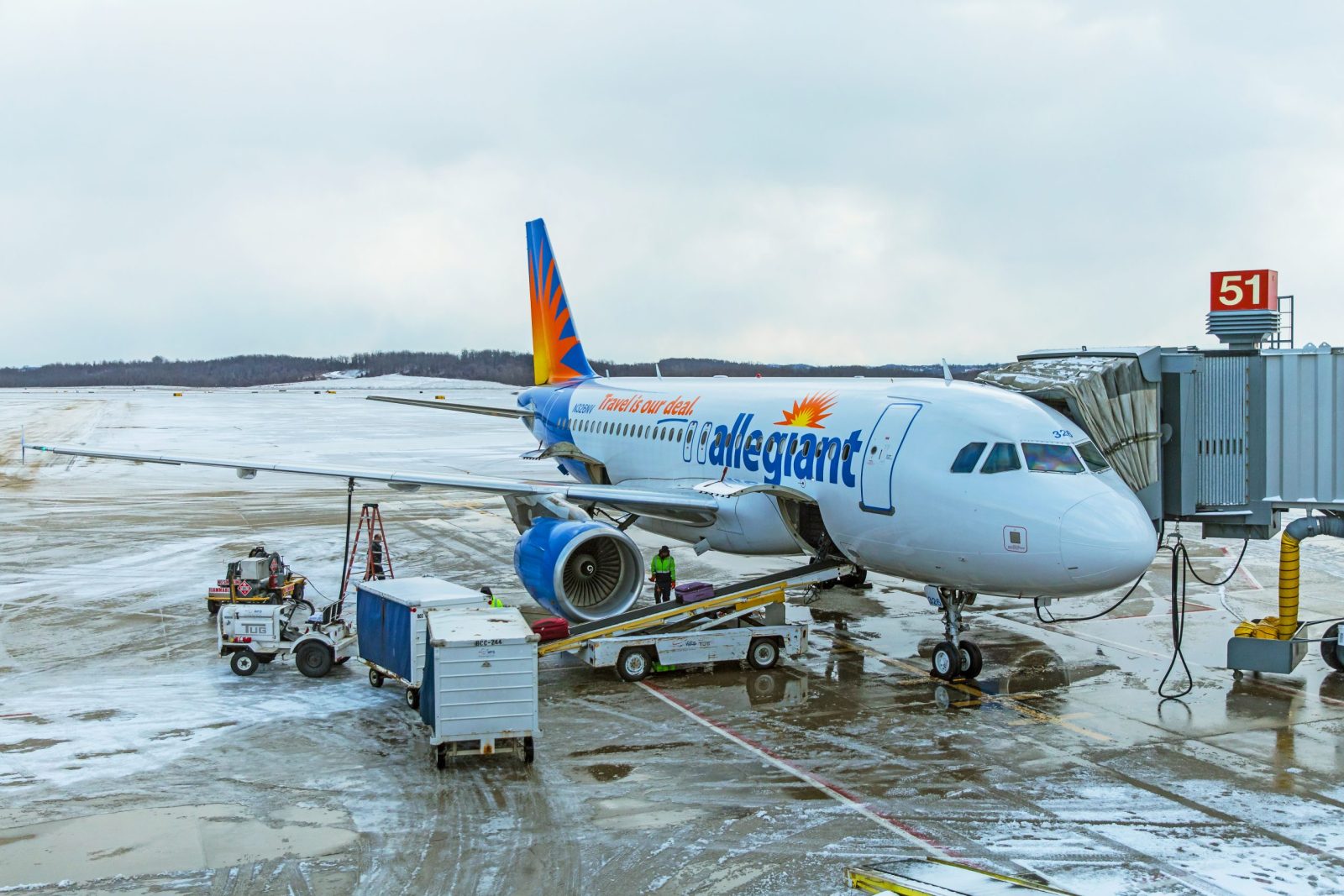
An Allegiant A319 in Pittsburgh.
(Photo: AirlineGeeks | William Derrickson)
On Monday, ultra-low-cost carrier (ULCC) Allegiant announced the expansion of its route network with 10 new nonstop routes connecting 14 cities across the United States. Scheduled to begin in June 2024, the new routes will provide the only nonstop service between these specific city pairs.
According to Drew Wells, Allegiant’s Chief Revenue Officer, this expansion caters to underserved markets by connecting smaller cities directly to popular vacation destinations and major airports. “This expansion caters to passengers and communities we feel have been overlooked by other carriers,” he said in a press release.
New Routes
Los Angeles International Airport (LAX) to:
Laredo, Texas (LRD) – starting June 12
Rockford, Ill. (RFD) – starting June 12
Rapid City, S.D. (RAP) – starting June 14
Sarasota Bradenton International Airport (SRQ) to:
Plattsburgh, N.Y. (PBG) – starting June 12
St. Pete-Clearwater International Airport (PIE) to:
Evansville, Ind. (EVV) – starting June 13
McAllen, Texas (MFE) – starting June 14
McGhee Tyson Airport (TYS) to:
St. Louis, Mo. (BLV) – starting June 13
Jacksonville, Fla. (JAX) – starting June 14
South Bend, Ind. (SBN) – starting June 14
Jacksonville International Airport (JAX) to:
Harrisburg, Penn. (MDT) – starting June 14
Knoxville, Tenn. (TYS) – starting June 14
A Focus on Underserved Markets
Allegiant often touts its unique point-to-point structure as a competitive advantage among its peers. “Today, 75% of our routes do not have any direct competition,” said Allegiant Executive Chairman and CEO Maurice Gallagher during a fourth-quarter 2023 earnings call.
“This approach is paying substantial dividends in today’s more confrontational environment. With most of our routes operating just 2 to 3 — 2 times per week, we can support a much larger network of cities and routes,” Gallagher continued.
Before this week’s network additions, Allegiant served 124 cities with 555 routes. The airline says 450 of which do not have any direct competition.
Ryan founded AirlineGeeks.com in February 2013 and has spent more than a decade covering the airline business. His work has been featured by CNN, WJLA, CNET, and Business Insider. His aviation experience spans airport operations, Part 135 regulatory compliance, and airline crew workforce planning, along with time behind the yoke of a Cessna 172 and interviews with airline executives. Ryan now serves as Group President of Firecrown Media’s Aviation Group. He holds a B.S. in Air Transportation Management and an MBA from Arizona State University and teaches Airline Management at Embry-Riddle Aeronautical University.
A SpiceJet 737 (Photo: Jane Mejdahl [CC BY-SA 2.0 (https://creativecommons.org/licenses/by-sa/2.0)])
Troubled Indian low-cost carrier (LCC) SpiceJet has announced a company-wide layoff of 1,400 employees.
The airline has been dealing with issues across fronts like leases, lawsuits, and financial crunches. CEO Ajay Singh has been beating all odds by keeping the airline flying and infusing funds through multiple channels and investors.
This entire round of layoffs has been assumed to be because of an apparent infusion of INR 2,200 crore ($265,080), the investors of which are suffering from a case of “cold feet.” The airline has approximately INR 60 crores in unpaid salaries to its workforce. The layoff of 1,400 employees will reduce the salary commitments the airline will have, in the hopes of increasing investor confidence.
The airline has been flying against headwinds since pre-Covid times. When Jet Airways went belly up in 2019, SpiceJet was able to capitalize by plugging the massive vacuum left behind. It took over Jet Airways’ aircraft and slots across the country and cemented itself further in the Indian market.
Regardless of this positive turn of events, the airline’s finances were in limbo, something which isn’t unexpected in the Indian aviation industry. In the months and years following the COVID-19 pandemic, the airline has been facing a continuous stream of issues which has led to lawsuits, distrust among consumers, loss of morale in employees, and financials in the red.
Ongoing Lawsuits
Owing to issues with payments to lessors, the airline faced a slew of lawsuits filed by multiple creditors in the High Courts and the Supreme Court of India. Lessors threatened to have aircraft and engines seized owing to non-payment of dues. At one point, the Madras High Court had officially asked SpiceJet to wrap up operations and pay its creditors, a decision stayed by the Supreme Court of India.
There are also ongoing complications vis-a-vis an arbitrary award from 2018 about a share transfer dispute with SpiceJet’s previous promoter Kalanithi Maran.
On top of all the aforementioned issues, the public image and the reputation of the airline in the minds of its customers have hit new lows. Cancellations, long delays, poor communication, etc., have led to the airline’s lower popularity and reliance.
At the end of the day, this development has again brought to light that things are not going well over at one of India’s oldest surviving LCCs.
Two New Pacific Airways airplanes at Ontario. (Photo: New Pacific Airways)
New Pacific Airlines, or more specifically known as Ravn Alaska, has proposed service to two Essential Air Service (EAS) communities in the Midwest.
Back in 2022, Sun Country bid for and won its first EAS contract in Eau Claire, Wis., which AirlineGeeks flew onboard. This set a new tone in the EAS world, with ultra-low-cost carriers (ULCC) now winning contracts with communities that before only saw conventional hub and spoke airlines. Now, multiple airlines in the lower 48, outside of the typical major and commuter carriers, are beginning to place bids as well, including airlines like Sun Country and Breeze.
However, these new carriers’ bidding doesn’t necessarily mean they’ll win every time. Sun Country proposed EAS flights to several communities in Minnesota and Wisconsin back in the Fall of 2023, all of which they lost. In addition, there are other small commuter operators seldom heard of such as ‘Cool Air’ which never gained any steam.
Enter Ravn, an Alaska-based airline that serves 11 destinations within the state with its Dash 8 under the Ravn brand. In addition, the airline operates two routes out of Ontario, Calif. using its Boeing 757 under the New Pacific Airlines brand.
New Pacific’s first Boeing 757-200 at an unveiling event in Southern California (Photo: AirlineGeeks | Katie Zera)
North Dakota Routes
New Pacific, under the Ravn name, proposed service on multiple routes out of Denver to communities in Kansas and Nebraska, all of which the carrier lost. But that hasn’t deterred it as the company is trying again; this time for Jamestown and Devils Lake, both of which are located in North Dakota. The airline is proposing service to Minneapolis/St. Paul 14 times a week from Jamestown and 12 times a week from Devils Lake.
Currently, both communities see service with SkyWest under the United Express brand and are part of a tag routing to Denver. The aircraft starts in Denver and flies to Jamestown, where it will then load up and drop off passengers before continuing to Devils Lake and finally back to Denver. The routing also occurs in reverse with Devils Lake acting as the first stop.
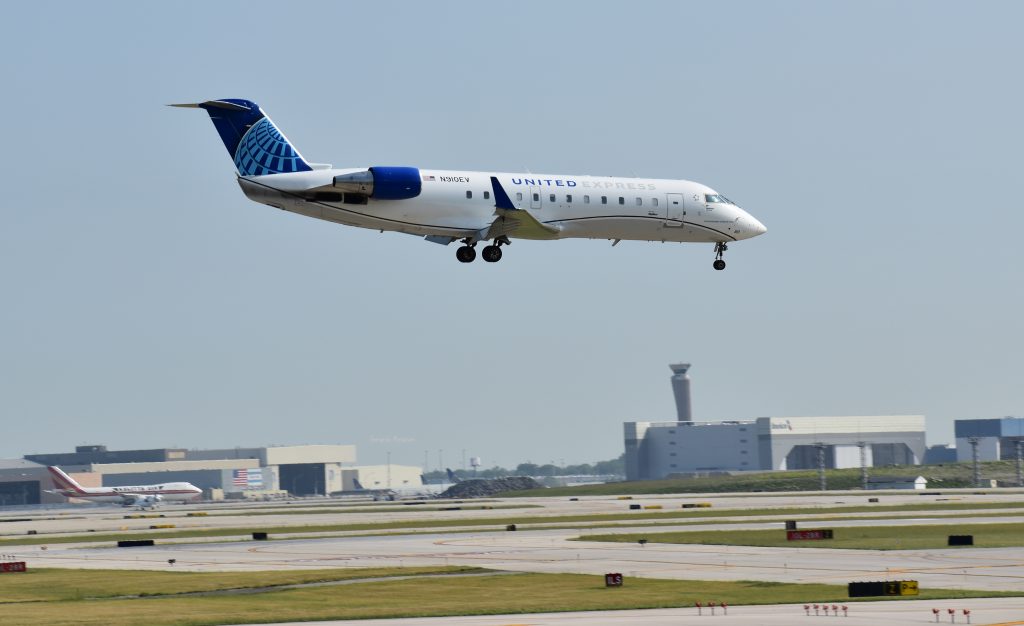
A United Express CRJ-200 arriving into Chicago O’Hare (Photo: AirlineGeeks | Joey Gerardi)
With Ravn, each city would get its own nonstop flights, but they would be downgrading from a 50-seat CRJ-200 to a 37-seat Dash 8. Ravn also mentioned that it has interline agreements with five airlines: Alaska Airlines, American Airlines, United Airlines, Delta Air Lines, and Sun Country, the latter of the two both having hubs in Minneapolis.
If the airline does win the contract, it would be the re-entry of Dash 8 service into the lower 48 states since Alaska ended Q400 service a couple of years ago. The current contract doesn’t expire in either community until June 30, 2024, so there is still some time for this to all play out.
In both communities, they also have two other applicants; Boutique Air, which is proposing service to Minneapolis on its eight-seat Pilatus PC-12s, and current carrier SkyWest which is proposing what it currently operates.
Joey has always been interested in planes for as long as he can remember. He grew up in Central New York during the early 2000s when US Airways Express turboprops ruled the skies. Being from a non-aviation family made it harder for him to be around planes and would only spend about three hours a month at the airport. He was so excited when he could drive by himself, the first thing he did with his driver's license was get ice cream and go plane spotting for the entire day. He graduated from Western Michigan University in 2022 with a B.S. in Aviation Management & Operations and a Minor in Business, and currently works for a major airline in his hometown.
Sign-up for newsletters & special offers!
Get the latest stories & special offers delivered directly to your inbox