









Stories

Ongoing Aviation Labor Disputes Could Put White House in a Bind

President Biden will be walking a tightrope as he attempts to balance national economic interests with union solidarity in an upcoming election year.

U.s.,President,Joseph,Biden,Speaks,As,He,Kicks,Off,The
U.S. President Joseph Biden speaks as he kicks off the AFL-CIO’s annual Tri-State Labor Day Parade in Philadelphia, Penn. (Photo: Shutterstock | OogImages)

In September, Joe Biden made history by being the first sitting U.S. president to join a picket line of auto workers who were on strike in Michigan. “You’ve heard me say it many times. Wall Street didn’t build the country. The middle class built the country, and unions built the middle class. And that’s a fact. So, let’s keep going,” Biden said while speaking to United Auto Workers (UAW) in September.

As contract negotiations intensify at major U.S. airlines amid the looming specter of a possible strike – one that could significantly disrupt interstate commerce – the commitment of President Biden to his rallying cry of “keep going” will be put to the test, especially in an election year when every decision is magnified and its repercussions are felt far and wide.

U.S. airlines and the labor unions on their property are governed by a complex 1920s piece of legislation, called the Railway Labor Act (RLA), which–at a very high level–regulates their contract bargaining process. Unlike other industries, Section 6 of the RLA denies unions an easy path to strike.

The NMB’s Relationship

Overseeing this often lengthy process is an independent federal agency called the National Mediation Board (NMB) – a relatively small body, consisting of three appointed board members and a handful of mediators. The current NMB chair was appointed by Biden and later confirmed by the Senate in 2021.

In late November, the NMB denied the request of American’s flight attendants, who are represented by the Association of Professional Flight Attendants (APFA), to be released from federal mediation. Had this request been approved, the union and company would have entered into a 30-day cooling-off period, after which the American flight attendants would have been allowed to strike.

An American Eagle E175 (Photo: AirlineGeeks | Peter Weiland)

Prior to a strike or lock-out action, however, the president has broad discretion to establish a Presidential Emergency Board (PEB) when the labor dispute threatens “substantially to interrupt interstate commerce to a degree such as to deprive any section of the country of essential transportation service.”

The PEB has 30 days from the date of its creation to conduct hearings and investigations on the dispute at issue as well as to render a recommendation to settle the dispute. During this process, the union is prohibited from striking.

Biden’s Bind

Flight attendants at American, Alaska, Southwest, and United, among other airlines and workgroups, have made incremental progress toward new contracts but have largely taken a backseat to the high-profile pilot deals. Moving into 2024, it is becoming increasingly possible that the NMB may find itself with little option but to release a union from the mediation process if no progress is made.

Once released, the union will be free to strike as early as 30 days later. Even a short strike by tens of thousands of union members across the country could wreak havoc on the national economy. If President Biden interjects by establishing a PEB, not only will this executive action delay access to a strike, but it may also prevent one altogether if the parties agree to the PEB’s recommendation.

Still, an unfavorable interjection by Biden could cost him union support – a crucial voting bloc for Democrats – several months ahead of the presidential election. On the other hand, allowing a large union to strike exposes the economy to significant risks.

Americans are already uneasy about Biden’s performance on the economy. Only 36% of U.S. adults approve of Biden’s handling of the economy, according to a recent poll from The Associated Press-NORC Center for Public Affairs Research. In addition, the economy remains a top issue for voters in 2024 with 83% deeming it a ‘very important’ issue in the presidential election, according to Bloomberg.

Ultimately, the buck in these labor disputes stops with Biden. Whether it is himself or someone that he delegates, President Biden will be walking a tightrope as he attempts to balance national economic interests with union solidarity in an election year where the state of the economy will be foremost on voters’ minds.

Ryan Ewing

Ryan founded AirlineGeeks.com in February 2013 and has spent more than a decade covering the airline business. His work has been featured by CNN, WJLA, CNET, and Business Insider. His aviation experience spans airport operations, Part 135 regulatory compliance, and airline crew workforce planning, along with time behind the yoke of a Cessna 172 and interviews with airline executives. Ryan now serves as Group President of Firecrown Media’s Aviation Group. He holds a B.S. in Air Transportation Management and an MBA from Arizona State University and teaches Airline Management at Embry-Riddle Aeronautical University.

Finnair Reports Increase in November Passenger Traffic

Finnair's traffic data for November 2023 show improvement despite the lingering effects of Russian airspace closures on the carrier's Helsinki hub.

A Finnair A350-900XWB arriving in London.
A Finnair A350-900XWB arriving in London. (Photo: AirlineGeeks | William Derrickson)

Finnair demonstrated a significant performance in passenger traffic during November 2023, carrying 811,900 passengers, an 8.1% increase compared to the same month in 2022. In early 2022, Finnair invested 200 million euros in the cabins of all long-haul aircraft in its fleet, renovating the business, premium economy, and economy class cabins.

This rise is partly due to the easing of COVID-19 pandemic effects and the ongoing closure of Russian airspace. However, compared to October 2023, there was an 11.8% decrease in passenger numbers, a drop attributed to November being a shorter month and typical seasonal variations.

Primarily affecting Asian routes, the ongoing closure of Russian airspace remains challenging for Finnair. Despite improvements in passenger numbers, the figures for November 2023 still fall short of pre-pandemic levels. Finnair’s distance-based traffic reports, calculated using Great-Circle distance, do not reflect the longer routes required due to this airspace closure.

Finnair’s capacity, measured in Available Seat Kilometers (ASK), increased by 14.4% year-over-year in November but saw a 7.4% decrease from October. Revenue Passenger Kilometers (RPKs) rose by 13.6% compared to the previous year but fell by 14.9% month-over-month. The Passenger Load Factor (PLF) experienced a minor decline of 0.5 percentage points year-over-year and a more significant drop of 6.3 percentage points from October, settling at 71.0%.

Region-wise, Finnair’s ASK in Asian traffic grew by 20.5% year-over-year, thanks to added capacity to Japan and South Korea. Conversely, North Atlantic capacity decreased by 3.2%. European traffic saw an 11.9% rise in ASKs, while Middle Eastern capacity, boosted by Helsinki-Doha flights in partnership with Qatar Airways, surged by 27.8%. Domestic traffic ASKs also increased by 5.6%.

26% Increase in Asia Traffic

Regarding RPKs, Asian traffic saw a notable 25.9% increase year-over-year, while North Atlantic traffic decreased by 7.0%. European traffic RPKs rose by 6.1%, Middle Eastern traffic by 35.4%, and domestic traffic by 1.7%.

PLF stood at 71.2% for Asian traffic, 63.8% for North Atlantic, 73.8% for European, 68.7% for Middle Eastern, and 65.6% for domestic flights. Passenger numbers reflected these trends, with Asian traffic increasing by 22.3% and European traffic by 7.3%. However, North Atlantic traffic saw a 6.5% decline, while Middle Eastern traffic rose 32.2%, and domestic traffic remained stable.

Finnair’s cargo operations also reported growth in November, driven by the collaboration with Qatar Airways and increased capacity on Asian routes. Available cargo tonne kilometers grew by 24.8%, revenue cargo tonne kilometers by 21.0%, and total cargo tonnes by 20.5% year-over-year. However, there was a 3.2% month-over-month decline.

In punctuality, 79.3% of Finnair flights arrived on time in November, a slight decrease from the 86.8% on-time performance in previous reports.

As the end of the year approaches, the 2023 results will be published soon. Finnair is set to release its December 2023 traffic statistics on Friday, Jan. 5, 2024. The Helsinki-based carrier celebrated its centenary on November 1.

Vincenzo Claudio Piscopo

Vincenzo graduated in 2019 in Mechanical Engineering with an aeronautical curriculum, focusing his thesis on Human Factors in aircraft maintenance. In 2022 he pursued his master's degree in Aerospace Engineering at the University of Palermo, Italy. He combines his journalistic activities with his work as a Reliability Engineer at Zetalab.

Southwest Flight Attendants Reject New Contract

Late last week, Southwest Airlines' flight attendants overwhelming rejected a proposed contract which had 36% cumulative pay raises.

Southwest 737s
Southwest Boeing 737s at Paine Field. (Photo: AirlineGeeks | Katie Zera)

Southwest Airlines flight attendants have rejected a potential new contract reached between the union and the airline. Only 36% of flight attendants voted in favor of the contract, the highlight of which was a 20% pay raise and additional 3% pay raises each year.

“We will go back to the table to achieve the collective bargaining agreement that meets the needs of the hardest-working flight attendants in the industry,” said union president Lyn Montgomery in a statement. She adds that the union has been fighting for five years for pay raises the company has yet to provide.

“We are disappointed the industry-leading agreement reached between the negotiating committees was not ratified,” Southwest said. It will wait to hear from the union and the National Mediation Board.

“Our flight attendants will continue to be covered under their current contract and we’ll await next steps from the National Mediation Board and TWU 556,” said Adam Carlisle, Vice President of Labor Relations at Southwest Airlines.

The flight attendant union said this vote will not impact holiday travel. Its leadership encouraged flight attendants to relax during the holidays.

Southwest’s flight attendants are operating on a contract that became amendable in 2018, meaning it went into effect in 2014, nearly ten years ago.

Flight Attendants Rejoin Pilots

Southwest has been in the thick of negotiations with its pilot union, whose calls for a new contract were strengthened by the company’s operational issues last December. Officials report that an announcement for a contract proposal is imminent, according to CNBC.

Southwest’s flight attendants and pilots have said they are ready to strike, though the process for actually doing so would take time to put into action. American Airlines’ flight attendant union was recently denied a request to be released from the federal mediation process.

“We pushed out our negotiations, which were supposed to be this week, to next week,” said Julie Hedrick, the president of the Association of Professional Flight Attendants, which represents 28,000 American Airlines flight attendants. “We were waiting for the outcome. Now it’s been rejected. Flight attendants are letting managements know that they are not going to take what management could have gotten away with in the past.”

John McDermott

John McDermott is a commercial pilot pursuing a career in professional flight. His passion for aviation began in an Ann Arbor bookstore with a tale of enemy pilots during World War 2, and he hasn't looked back. Besides flying and writing for AirlineGeeks, John volunteers with Professional Pilots of Tomorrow and travels whenever he gets the chance.

Cathay Cargo Orders Six A350Fs

Cathay Pacific orders six A350Fs with 20 more options and will enjoy fleet commonality with its existing fleet of 47 A350s.

A Cathay Pacific A350F rendering. (Photo: Airbus)

Hong Kong-based Cathay Pacific has placed orders for six Airbus A350Fs, the cargo variant of the popular long-haul passenger jet A350XWB, as a part of its fleet renewal process. The carrier also holds options for 20 more aircraft.

The A350 Freighter is marketed as the replacement of the carrier’s Boeing 747Fs, with similar volumes and capabilities but superior performance and efficiency. Cathay Cargo is an operator of the 747 Freighters, operating 14 of the newer 747-8F and six 747-400ERFs. The fleet of 747s is the only cargo aircraft Cathay operates, complementing its passenger network and serving destinations around the world.

Fleet Commonality

Cathay operates the third largest A350 fleet in the world, with 47 in its fleet. It is also one of the just four carriers to operate both the A350-900 and -1000 variants. With the new order, it will have a combined fleet of 54, with the option of 20 more freighters. One more A350-900 has yet to be delivered out of Cathay’s original order of 46. Another two units are leased.

A Cathay Pacific A350 (Photo: AirlineGeeks | Ben Suskind)

With the A350 freighters, Cathay is able to achieve commonality in various aspects of its operation. The cargo jet uses the same engine, the Trent 97-XWB, as the A350-1000s which are already in service in Cathay’s fleet. According to Airbus, the A350s and A350Fs have 100% commonality when it comes to engines and 99% in terms of spare parts. The same crews and technicians can be used on both types as well. Hong Kong-based HAECO, owned by Swire, the parent company of Cathay, is one of the few designated MRO providers for the Trent XWB engines.

Performance

The A350F has a greater payload than its primary competitor, the Boeing 777 Freighters. With a range of 4,700 nautical miles, the aircraft will also have a greater range than other players in the field, including 747F, MD11F, and the upcoming B777-8F. If all goes as planned, the aircraft is expected to be a leader in the freighter market.

Cathay 747F and A350 at Singapore Changi (Photo: AirlineGeeks | Anthony An)

For airlines looking for newer cargo jets, however, the options are plenty. Passenger jets converted into freighters are often proven to be the more economical option. In the last few years, the 777-300ER and 777-200LR are both being converted into freighters, and other long-haul jets, including older A330s, can be converted with a much lower cost than a brand-new freighter.

Airbus also puts emphasis on the efficiency of the A350F and its low emissions. It is set to be the only freighter capable of meeting the ICAO emission target with its reduced fuel consumption and emission. The type will also have improved Sustainable Aviation Fuel (SAF) capabilities.

Recent Orders

Since its launch in 2021, the A350F has received orders from several major airlines, most of which are existing or future operators of A350 passenger jets. Singapore Airlines is expected to become its launch customer with its order for seven A350Fs. More recently in 2023, the Air France-KLM group ordered four A350Fs for its subsidiary Martinair Holland, aiming to replace aging 747 freighters.

Air France is also set to get four A350Fs, Air France-KLM will have a total of 8 A350Fs. The remaining orders of the jet come from Etihad with 7, lessor ALC with seven, French cargo airline CMA CGM with 4, and Silk Way West with two.

Anthony Bang An

Anthony is an aviation enthusiast who grew up around the world from St. Louis to Singapore, and now lives in Amsterdam. He loves long-haul flying and finds peace in the sound of engine cruising. He aspires to share his passion for the sky though writing and providing another angle on the stories.

Etihad Airways, TAP Air Portugal Ink New ‘Strategic’ Codeshare

Etihad Airways is continuing its post-pandemic expansion strategy with the announcement this week of a codeshare agreement with TAP Air Portugal.

Etihad Airways' new A350-1000 aircraft.
Etihad Airways' new A350-1000 aircraft. (Photo: Etihad Airways)

Etihad Airways is continuing its post-pandemic expansion strategy with the announcement this week of a codeshare agreement with TAP Air Portugal. Arik De, Etihad’s Chief Revenue Officer said in a press release: “This collaboration provides our guests with convenient one-stop access to 26 of TAP’s fantastic leisure and business destinations.” These destinations encompass major North and South American, European and African cities in TAP’s network including Miami, Rio de Janeiro, Seville, and Marrakech.

TAP’s Chief Revenue Officer, Mario Cruz, said: “The codeshare agreement between TAP Air Portugal and Etihad adds diversity and quality to the travelling experience that both companies offer their customers. The destination networks of the two airlines complement each other through this agreement, which is part of TAP’s growth and expansion strategy. We are very pleased to have reached this partnership with Etihad.”

As a national carrier of the United Arab Emirates (UAE), Etihad Airways commenced a service earlier this year from the airline’s Abu Dhabi hub to the Portuguese capital of Lisbon. Passengers from both airlines will also be able to connect to Etihad and TAP’s networks via London Heathrow and Frankfurt airports.

De noted that the ‘strategic codeshare’ “expands the choices available to TAP customers traveling from Europe to Abu Dhabi, offering them the opportunity to explore the inviting hospitality and rich culture of our home, and seamlessly connect to a selection of our destinations in the GCC (The Cooperation Council for the Arab States of the Gulf) and Seychelles.” In addition to the UAE, the GCC comprises Bahrain, Kuwait, Oman, Qatar, and the Kingdom of Saudi Arabia.

De added: “Widening our network reach, allowing more guests to visit Abu Dhabi, is an important part of our strategic growth. It allows us to further reinforce Abu Dhabi’s cultural and economic development, extending a warm welcome to more guests and offering them heightened travel privileges and unforgettable experiences.”

New Frequent Flyer Programs

This week’s announcement follows Etihad’s confirmation last week of a new partnership between its frequent flyer program Etihad Guest and Flying Blue, Air France and KLM’s loyalty program. The ability for passengers to earn and redeem miles between the three airlines followed a Memorandum of Understanding signed by the airlines in September. According to both companies, Etihad Guest has over nine million members and Flying Blue has over 20 million.

For Etihad customers, the partnership will give access to over 60 new routes and for Flying Blue members access to Etihad’s Southeast Asian and Australian network. This network expanded further this week with Etihad announcing the commencement of a four-time weekly service to Ngurah Rai International Airport (DPS) in Bali scheduled to take off from April 23, 2024.

John Flett

John has always had a passion for aviation and through a career with Air New Zealand has gained a strong understanding of aviation operations and the strategic nature of the industry. During his career with the airline, John held multiple leadership roles and was involved in projects such as the introduction of both the 777-200 and -300 type aircraft and the development of the IFE for the 777-300. He was also part of a small team who created and published the internal communications magazines for Air New Zealand’s pilots, cabin crew and ground staff balancing a mix of corporate and social content. John is educated to postgraduate level achieving a masters degree with Distinction in Airline and Airport Management. John has held the positions of course director of an undergraduate commercial pilot training programme at a leading London university. In addition he is contracted as an external instructor for IATA (International Air Transport Association) and has been a member of the Heathrow Community Fund’s ‘Communities for Tomorrow’ panel.

How the Game of Blackjack Saved FedEx

FedEx CEO Fred Smith took the last $5,000 that the company had to Vegas and won enough money to pay its upcoming fuel bill, ultimately saving it.

A Fedex 767 in Las Vegas (Photo: AirlineGeeks | William Derrickson)

The story of FedEx is an incredible one. The founder of the company, Frederick Smith, revolutionized package transport with a paper he had written during his undergraduate days at Yale. The idea was to carry small consumer packages by airplane across the country with a central sorting facility to make the process faster.

These dedicated airplanes would travel primarily at night to take advantage of less congestion. The professor grading his paper didn’t think it was a great idea but ultimately history has proven this professor wrong many times over.

Challenges From Day One

Smith founded the company, known back then as Federal Express, in 1971 and commenced operations in 1973. If one were to say the business had a rocky start, it would be an understatement. It’s said that FedEx had all of 186 packages on its first night in business. The company had burned through a third of its initial cash within a couple of months and was struggling. The Arab Oil Embargo of 1973 further compounded the challenges Smith faced due to massive rises in aviation fuel prices.

The company was straddled with nearly $30 million in debt and had $5,000 in cash. The end was near so in a last-ditch attempt Smith took that $5,000 to Las Vegas with the hopes to win big.

He certainly did win big; he used those $5,000 to win $27,000 at the blackjack tables. The winnings were then used to pay a fuel bill which kept the company running another week. More importantly, this gave Smith the motivation to continue aggressively seeking new capital, eventually landing over $11 million in new funding.

It wasn’t the last challenge the company faced. but since then it’s grown into the standard bearer for package delivery branching out beyond just express delivery to logistics, ground transportation, mail, and more. FedEx Express, the core business, is the world’s largest cargo airline both in terms of fleet size and freight flown.

A Fedex MD-10F in Las Vegas (Photo: AirlineGeeks | William Derrickson)

Smith’s last-ditch gamble with the final $5,000 of the company’s money has paid off immensely with FedEx now having a net worth of around $65 billion and Smith having a personal net worth in excess of $5 billion.

Unusual Luck Gambling

This story of an underdog winning it big and saving his company sounds great but it seems unusual.

Nearly every casino game is structured to give the house an advantage. If one were to play perfect basic strategy the house edge could be minimized. Beyond that, if one were to count cards, it is possible that a person playing blackjack could make the same amount of money that Smith did.

These days card counters are often noticed by pit bosses relatively quickly. It is possible that back in the 1970s Smith managed to escape detection and used card counting techniques relatively undetected to make his winnings. Card counting was a relatively new strategy back then, it only emerged in the early to mid-1970s with Ken Uston who allegedly earned millions of dollars from his methods.

The other plausible explanation could be that it was simply a mob loan. In the 1970s mob control over Las Vegas was loosening with the passing of new Nevada state laws allowing public corporations to own casinos but it was still present. It was a quick way to get money, albeit a dangerous one.

All of this is simply speculation, we will likely never know the full story behind Smith’s incredible luck at the blackjack tables when he needed it most.

Hemal Gosai

Hemal took his first flight at four years old and has been an avgeek since then. When he isn't working as an analyst he's frequently found outside watching planes fly overhead or flying in them. His favorite plane is the 747-8i which Lufthansa thankfully flies to EWR allowing for some great spotting. He firmly believes that the best way to fly between JFK and BOS is via DFW and is always willing to go for that extra elite qualifying mile. Hemal's opinions are his own and do not reflect those of his employer.

Livery of the Week: SWISS’s Red-Nosed Christmas Jets

As part of LXmas, SWISS International Airlines has painted two aircraft with red noses as a nod to the popular fictional reindeer.

A Swiss International Air Lines Airbus A320-214 with a red nose cone during the holiday season in 2019 (Photo: AirlineGeeks | William Derrickson)

Editor’s Note: AirlineGeeks is excited to launch our ‘Livery of the Week’ series. Every Friday, a team member will share an airline livery, which can be from the past, present, or even a special scheme. Some airline liveries are works of art. The complexity associated with painting around critical flight components and the added weight requires outside-the-box thinking from designers. The average airliner can cost upwards of $200,000 to repaint, creating a separate aircraft repainting industry as a result. 

Have an idea for a livery that we should highlight? Drop us a line

To celebrate the holiday season, SWISS International Air Lines has launched its annual Christmas campaign. Cleverly titled LXmas – with LX being SWISS’s International Air Transport Association (IATA) code – the celebration consists of special activities and contests. As part of LXmas, SWISS has painted two aircraft with red noses as a nod to the popular fictional reindeer.

Rudolph the Red-Nosed Airbuses

For this year’s LXmas, SWISS has given red nose cones to two aircraft: a 20-year-old Airbus A340-300 registered as HB-JMA and a 28-year-old Airbus A320-200 registered as HB-IJJ. The subtle yet elegant addition consists simply of a red nose – a reference to Rudolph the red-nosed reindeer. Accordingly, the airline has nicknamed the aircraft “LXAirDeer.”

A SWISS Airbus A340-300 HB-JMA with a red nose cone for the 2023 iteration of its annual Christmas celebration, LXmas (Photo: Swiss International Air Lines)

The SWISS livery is uniquely well-suited for the addition of a red tip. Consisting of the Swiss flag on the tail – a white cross on a red field – and red “SWISS” lettering on a white fuselage, the minimalist livery only has two colors: red and white. The red nose cone is therefore an addition that is noticeable without seeming out of place.

A SWISS Airbus A320neo decked out with a red nose for its LXmas 2022 holiday campaign (Photo: AirlineGeeks | William Derrickson)

LXmas: Celebrating the Holiday Season

The Swiss flag carrier has held its LXmas Christmas campaign since 2017, with a two-year pause for the COVID-19 pandemic. Before the pandemic, LXmas was centered around a special flight that took families to Lapland in Finland, a region that has been connected to Santa Claus’ North Pole residence. After arriving in the winter wonderland, the lucky families would experience a few days of holiday festivities before returning to Switzerland.

Since the pandemic, the LXmas campaign has consisted of special activities and contests. For example, passengers traveling on a pair of flights between Zurich and Palma de Mallorca earlier this week on December 6 were accompanied on board by Santa Claus. While flying on the red-nosed A320, Santa handed out chocolates to passengers. Other LXmas festivities this year include airport gate events and social media contests. The red-nosed LXAirDeer first made an appearance in 2019 and returned in 2022.

Santa and the flight crew in pose in front of SWISS’s red-nosed holiday livery to celebrate a special flight on December 6, 2023 where Santa joined passengers on board (Photo: Swiss International Air Lines)

“We’re really looking forward to celebrating this Christmas with our guests well beyond Switzerland’s borders,” said SWISS Head of Marketing Stefan Vasic in a press release announcing the launch of this year’s holiday campaign. “Through ‘LXmas With You’ we don’t just aim to spread the festive spirit: we want to mark this special time of the year when we all come together and truly appreciate one another. Christmas is always best when it’s shared, we feel, and when we can experience all the magic of Advent together.”

Looking for a new airplane model? Head over to our friends at the Midwest Model Store for a wide selection of airlines and liveries. 

Andrew Chen

Andrew is a lifelong lover of aviation and travel. He has flown all over the world and is fascinated by the workings of the air travel industry. As a private pilot and glider pilot who has worked with airlines, airports and other industry stakeholders, he is always excited to share his passion for aviation with others. In addition to being a writer, he also hosts Flying Smarter, an educational travel podcast that explores the complex world of air travel to help listeners become better-informed and savvier travelers.

American Reaches Tentative Agreement with Passenger Service Agents

American Airlines and CWA-IBT have come to a tentative agreement for the carrier's passenger service agents with a vote set to take place in the coming weeks.

An American Airlines 737-800 landing at Dallas Fort Worth International Airport. (Photo: AirlineGeeks | William Derrickson)

Over the past two years, airline labor groups have seen several new contracts boosting pay rates and benefits across working groups. Most notably, regional carriers across the United States increased pilot pay significantly, with the three major carriers following suit quickly after the increase.

Amidst the significant changes for pilot groups, working groups such as aircraft mechanics, passenger service agents and flight attendants have been working towards new contracts with their respective companies. On December 6, American Airlines reached a tentative deal with passenger service agents such as reservations personnel, ticketing staff, gate agents and other frontline airport employees for a new contract. 

The Fort Worth, Texas-based carrier employs over 15,000, union-represented passenger service representatives. Represented by Communication Workers of America (CWA-IBT), the negotiations have been in progress since October 2022. The full tentative agreement has not been released but is slated to be soon, according to the union’s website. The next step is for the union members to review the agreement and vote in favor or not in favor of the tentative agreement. 

According to a statement published by The Dallas Morning News, the carrier is “pleased to have reached a tentative agreement with the CWA-IBT and appreciate the union’s commitment to negotiating a contract our team has earned,” as stated by Lindsey Martin, spokeswoman for American Airlines. 

Flight Attendants

American has now reached agreements with unions representing the carrier’s mechanics, pilots and now passenger service agents. The carrier’s flight attendant group is still in negotiations with the Fort Worth-based carrier for a new contract. 

The Association of Professional Flight Attendants (APFA) is the union representing American Airlines flight attendants. This past August, the union held a vote to strike with the workgroup, passing with a 99.47% yes vote, according to the union’s website. The over 26,000-strong work group had the request for a cooling-down period denied by the National Mediation Board last month.

A meditation session is scheduled with the company for next week to continue negotiations. According to the union, a counter-proposal was submitted to the company in September of this year, but the carrier has yet to respond. 

Zach Cooke

Zach’s love for aviation began when he was in elementary school with a flight sim and model planes. This passion for being in the air only intensified throughout high school when he earned his Private Pilot Certificate. He then attended Embry-Riddle Aeronautical University, earning his certificates and ratings to later flight instruct and share his passion for aviation with others. He now resides in the North East living out his dream as an airline pilot.

Trip Report: Flying on Air Canada’s Newly Retrofitted A321

Back in October, Air Canada revealed that it was retrofitting its A320 and A321 fleet, which features a tail-cam among other new amenities.

20231129_044220 - Edited
On board Air Canada's first newly retrofitted Airbus A321-200, registered as C-GITU (Photo: AirlineGeeks | Andrew Chen)

During my recent trip to Houston to cover United Airlines’ new Airbus A321neo, I ended up on Air Canada’s newly retrofitted Airbus A321. With free WiFi, large overhead bins and exterior cameras that are sure to mesmerize aviation enthusiasts and non-AvGeeks alike, Air Canada’s latest onboard product has much to offer.

Background: Air Canada’s A320 Family Retrofit Project

For many years, the Airbus A320 family was the backbone of Air Canada’s mainline narrowbody fleet. Although these aircraft have taken a backseat role in the fleet to the airline’s newer Boeing 737 MAX 8 and Airbus A220 aircraft, they remain an integral part of the carrier’s operations. Air Canada currently has approximately 30 mainline Airbus A320 family jets and is expected to take delivery of an additional used A320 and three used A321s in 2024.

Back in October, Air Canada revealed that it was retrofitting its A320 and A321 fleet. The existing cabins were cutting-edge when they were introduced in the late 2000s, with personal touch screens, on-demand entertainment and in-seat power. However, more than a decade later, the aircraft are plagued with dated interiors, slow touch screens and unreliable charging ports.

Only one aircraft has been retrofitted so far: an Airbus A321-200 registered as C-GITU and wearing the airline’s Star Alliance livery. After passing through security on my recent trip, I looked out the window at the aircraft parked at my gate and saw an A321 in the distinctive Star Alliance livery.

With the knowledge that there was only one Air Canada A321 in that livery, I knew that I had beaten the odds – currently one in fifteen – and would be flying on the newly retrofitted aircraft.

A Quick and Simple Airport Experience

The first flight of my journey took me on the short hop from Ottawa Macdonald-Cartier International Airport to Toronto Pearson International Airport on board the newly retrofitted A321. Having checked in online, I briefly stopped at a check-in kiosk to print paper boarding passes as a backup to the mobile version on the Air Canada app.

I then breezed through security and proceeded down the wide walkway that brought travelers to the escalators that lead down to the main gate area. It was during this time that I looked out the floor-to-ceiling windows and saw C-GITU.

Air Canada Airbus A321-200 in the Star Alliance livery (C-GITU), the first Airbus narrowbody to be retrofitted in the airline’s fleet (Photo: AirlineGeeks | Andrew Chen)

The airport has been revamping its concessions as part of its multi-year YOW+ airport improvement project. While many of the stores were closed at 4:30 a.m., a number of food outlets were open.

An early morning view of some of the concessions at Ottawa Macdonald-Cartier International Airport (Photo: AirlineGeeks | Andrew Chen)

My flight was leaving from Gate 17, a gate that is regularly used for Toronto flights. It is conveniently located right beside the escalators from security as well as the Air Canada customer service desk.

The gate area for my flight from Ottawa to Toronto Pearson (Photo: AirlineGeeks | Andrew Chen)


Onboard: A Beautiful New Cabin

I stepped on board to find a beautifully lit cabin. Air Canada’s retrofit will bring the interiors of its A320s and A321s in line with those found on its newer Boeing 737 MAX and Airbus A220 aircraft.

Business Class cabin on board Air Canada’s first retrofitted A321 (Photo: AirlineGeeks | Andrew Chen)

The Business Class cabin has 16 seats, which is consistent with the old cabins. The new seats allow Air Canada to offer a consistent seating product across its narrowbody fleet.

Air Canada’s new Airbus narrowbody Business Class (Photo: AirlineGeeks | Andrew Chen)

All Business Class seats have a high-definition seatback entertainment touch screen, a foldable footrest and three charging options: power outlets, USB-A and USB-C.

Business Class seats on Air Canada’s newly retrofitted Airbus A321 (Photo: AirlineGeeks | Andrew Chen)

Further back in the aircraft, the Economy Class cabin has brand-new seats with dark grey upholstery and red accents. Air Canada added an additional row in the Economy Class cabin during the retrofit, bringing the seat count from 174 to 180.

Air Canada’s new A321 Economy Class (Photo: AirlineGeeks | Andrew Chen)

In Economy Class, all seats have USB-A and USB-C charging. There are also two power outlets for each set of three seats.

Power outlet in Economy Class on Air Canada’s retrofitted Airbus A321-200 (Photo: AirlineGeeks | Andrew Chen)

Although the new cabin is a massive upgrade overall, I found that the seats had less padding and the tray tables seemed smaller than the ones in the older cabins.

Air Canada’s new Airbus narrowbody Economy Class (Photo: AirlineGeeks | Andrew Chen)

To add the extra row of Economy Class seats, the airline moved the location of the two rear lavatories. In the old configuration, the lavatories were located between the last row and the rear galley area. On the newly retrofitted aircraft, the two rear lavatories are located inside the rear galley area. There is also a lavatory at the front of the aircraft as well as a mid-cabin Economy Class lavatory at Row 28.

Large overhead cabins are installed throughout the cabin, which allow bags to be stowed vertically on their sides.

Large overhead bins on Air Canada’s first retrofitted Airbus A321-200 (Photo: AirlineGeeks | Andrew Chen)

The new Airbus cabins are fitted with beautiful full-color LED mood lighting. The crew was kind enough to demonstrate some of the lighting options.

Departure from Ottawa: Discovering My Favorite Feature On Board

As I settled into my Economy Class window seat, I noted that the overhead panels had individual reading lights and air nozzles.

Overhead panel on Air Canada’s retrofitted A321 (Photo: AirlineGeeks | Andrew Chen)

While I would normally take photos out the window, I quickly located what I knew would be my favorite feature on board: the exterior cameras. Exterior cameras are rare on narrowbody aircraft, and Air Canada describes its feature as “first-in-class.”

Tail camera view at the gate in Ottawa on board Air Canada’s first retrofitted A321 (Photo: AirlineGeeks | Andrew Chen)

Our flight boarded and pushed back on time, and the crew began playing the safety video. I am a big fan of Air Canada’s safety video, which showcases different parts of the beautiful country.

I continued to watch the tail camera as we taxied towards the runway. Typically, I would look out the window during takeoff, but I instead watched the unique view from the tail camera. The camera was a bit grainy – likely in part because it was dark outside – and would occasionally lag/pause for about a second, but the new feature still kept my eyes glued to the screen as we took off from Runway 25. After we were in the air, I switched the view to the belly camera and could see the lights of the Ottawa suburbs below.

Belly camera view climbing out of Ottawa (Photo: AirlineGeeks | Andrew Chen) 

Modern Entertainment and Connectivity Offerings

Air Canada’s newest entertainment system is a major improvement from what is found on the older cabins. While the 2000s-era system often lags, offers limited options and requires passengers to press down on the screens to activate the touch, the new system has large responsive touch screens and offers a wide range of entertainment options. In addition to movies and television shows, there were also music and podcast options as well as some games. A nice touch was a nifty feature that allowed passengers to have the moving map or exterior camera view as a picture-in-picture while they used the rest of the entertainment system.


The system also has an interactive moving map and information on connecting flights. I also enjoyed exploring the interactive Air Canada route map, which would even show the flight schedule for select routes.

The carrier has also introduced live television and Bluetooth connectivity, which allows passengers to connect their own headphones to the seatback entertainment system. There was also an AFP news app and a weather app which had five-day forecasts for various Air Canada destinations.

Air Canada’s standard WiFi offering consists of free messaging for members of its loyalty program, Aeroplan, and paid WiFi packages for general internet use. However, the newly retrofitted Airbus narrowbodies will have free WiFi for all passengers, and this was the case on my flight.

While I had no issues using the WiFi, I was unable to get the Speedtest app to work. It kept providing an error message right as the test was ending. However, I was able to test the download speed using the browser version, as shown below. When the app was running its tests, I saw upload speeds of up to 19 Mbps.

WiFi offerings on board Air Canada’s first retrofitted Airbus A321 (Photo: AirlineGeeks | Andrew Chen)

Air Canada’s Impressive Onboard Service

The flight between Ottawa and Toronto typically has less than an hour of flying time in the air. Despite the short timeframe, Air Canada does a modified beverage and snack service. The crew quickly came through the Economy Class cabin to offer passengers their choice of water, tea, coffee or orange juice.

To expedite the service, Air Canada uses bottled water and juice boxes on these short hops. A snack is also offered – in today’s case, the snack was a pack of two Lotus Biscoff cookies.

Snack and beverage service on the short flight from Ottawa to Toronto Pearson (Photo: AirlineGeeks | Andrew Chen)

Perhaps even more impressive is the fact that a full hot meal tray is served in Business Class on this route. I have flown up front on this route before and can confirm that passengers have to eat quickly due to the short flight time.

Early Morning Arrival at Toronto Pearson

We soon began our descent. Toronto Pearson International Airport has a curfew between 12:30 a.m. and 6:30 a.m. and the flight deck made an announcement saying that we would have to enter a holding pattern for ten minutes because our flight was early.

As we approached the airport, I once again watched the tail and belly camera views on my seatback screen. Our flight touched down at 6:33 a.m. on Runway 24L.

The tail camera view as my flight approached Runway 24L at Toronto Pearson International Airport (Photo: AirlineGeeks | Andrew Chen)

As we were taxiing towards the gate, I switched on my phone’s mobile network connectivity and received a text message from Air Canada welcoming me to Toronto. The message gave me the gate number for my next flight and reminded me that I would have to clear security and customs with U.S. Customs and Border Protection (CBP) pre-clearance. Our aircraft pulled into at Gate D34 for an on-time arrival around seven minutes after landing.

The arrival gate for my flight from Ottawa to Toronto Pearson (Photo: AirlineGeeks | Andrew Chen)

Final Thoughts

I would like to commend the crew for this flight, both on the ground and on board. They were very friendly and accommodating as I took photos and they seemed to share my excitement about the new cabin. I had a brief chat with some of the flight attendants and learned that it was also their first time operating the newly retrofitted aircraft.

Having flown on Air Canada’s Airbus narrowbodies for years, I have seen the interiors age over the last decade. I was therefore very pleased to see that Air Canada invested in retrofitting these aging aircraft.

The new cabins are sleek and contemporary, with large overhead bins and modern inflight entertainment offerings. It is also great to see that Air Canada is introducing new features such as Bluetooth connectivity and free WiFi.

A consistent onboard offering improves the passenger experience across different flights, and I am glad to see that Air Canada is bringing their A320 and A321 onboard product in line with what is offered on the airline’s newer narrowbodies.

Andrew Chen

Andrew is a lifelong lover of aviation and travel. He has flown all over the world and is fascinated by the workings of the air travel industry. As a private pilot and glider pilot who has worked with airlines, airports and other industry stakeholders, he is always excited to share his passion for aviation with others. In addition to being a writer, he also hosts Flying Smarter, an educational travel podcast that explores the complex world of air travel to help listeners become better-informed and savvier travelers.

Delta Adding Flights to Taiwan After Seven-Year Hiatus

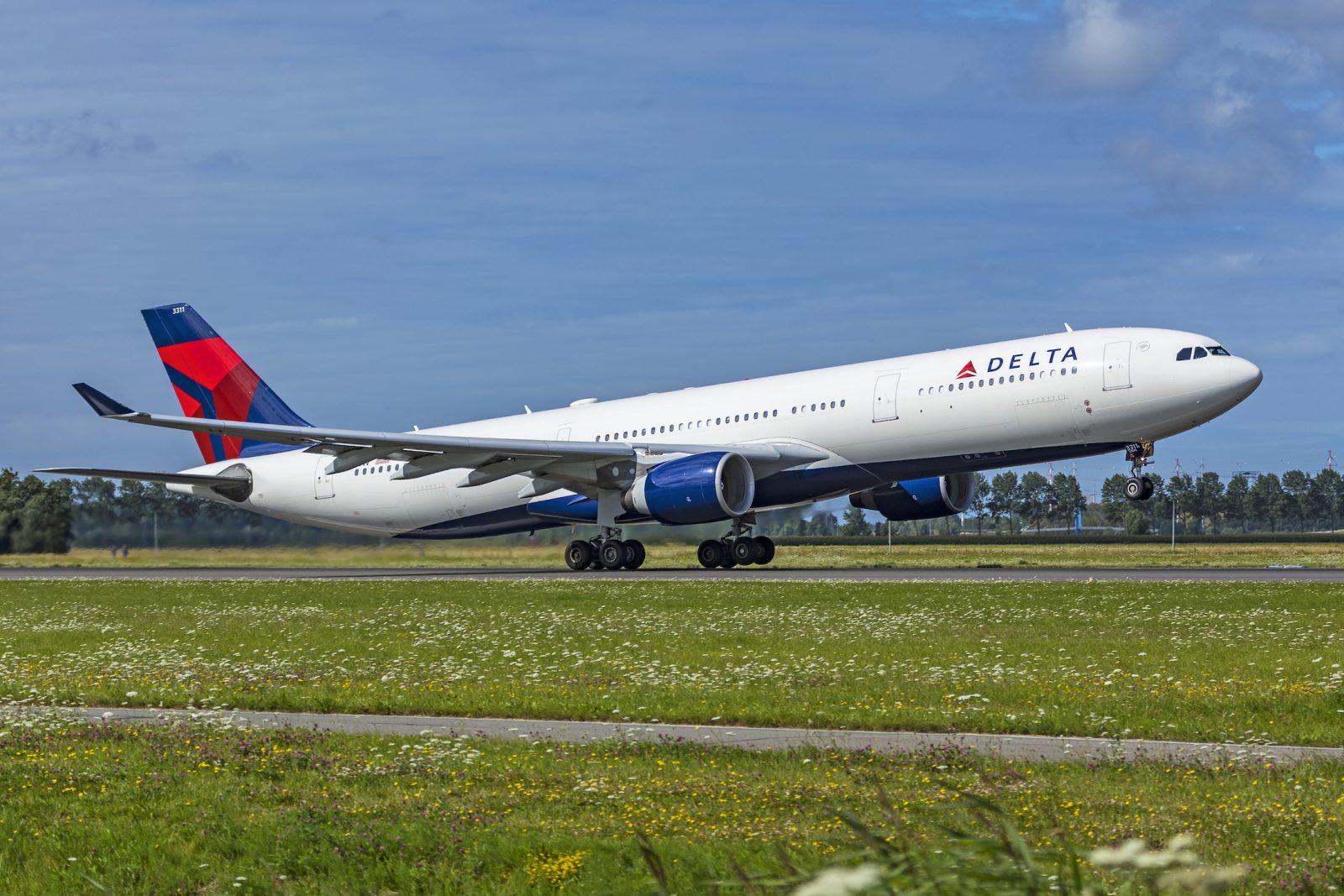
For the first time in seven years, Delta will return to Taiwan with new A330-900neo flights from the carrier's Seattle (SEA) hub.

Delta's first A330neo at the airline's TechOps hangar. (Photo: Delta)

For the first time in seven years, Delta will return to Taiwan. On Thursday, the Atlanta-based carrier announced a new route from its Seattle (SEA) hub to Taiwan Taoyuan International Airport (TPE). The route is set to begin on June 6, 2024, operated by an Airbus A330-900neo.

The airline previously served Taipei up until May 2017, according to Cirium Diio data. At the time, TPE joined a handful of other Asian destinations that the carrier served from Tokyo Narita (NRT).

“As APAC demand returns, we are excited to launch our seventh non-stop international market in the Pacific, solidifying our commitment to robust and consistent growth in the region,” said Jeff Moomaw, Vice President of APAC said in a press release.

“This strategic addition underscores Delta’s dedication to expanding our network and offering customers seamless connectivity,” he added.

According to the airline, the new route will be a year-round daily service and is subject to government approval. Delta will compete directly with EVA Air on the SEA-TPE route, which uses a Boeing 787-10. It joins the carrier’s other transpacific markets from Seattle, including Incheon (ICN), Tokyo (HND), and Shanghai (PVG).

Dominance in Seattle

Delta’s new route announcement comes on the heels of Sunday’s news of Alaska Air Group’s acquisition of Hawaiian Airlines. For several years, Delta and Alaska have been fighting it out for market dominance in Seattle with both airlines maintaining hubs at the airport.

In a press release announcing the new route, Delta again asserted its strong presence in Seattle. “Delta is marking its 90th anniversary in Seattle this December, a history that dates back to the start of operations by Northwest Airways (later Northwest Airlines) in 1933,” the airline shared.

In July 2024, Alaska has over 22,000 flights scheduled in Seattle, while Delta is the airport’s second-largest operator with over 10,000 scheduled flights, according to Cirium Diio data.

Ryan Ewing

Ryan founded AirlineGeeks.com in February 2013 and has spent more than a decade covering the airline business. His work has been featured by CNN, WJLA, CNET, and Business Insider. His aviation experience spans airport operations, Part 135 regulatory compliance, and airline crew workforce planning, along with time behind the yoke of a Cessna 172 and interviews with airline executives. Ryan now serves as Group President of Firecrown Media’s Aviation Group. He holds a B.S. in Air Transportation Management and an MBA from Arizona State University and teaches Airline Management at Embry-Riddle Aeronautical University.
Sign-up for newsletters & special offers!

Get the latest stories & special offers delivered directly to your inbox

SUBSCRIBE

Uh-oh! It looks like you're using an ad blocker.

Our website relies on ads to provide free content and sustain our operations. By turning off your ad blocker, you help support us and ensure we can continue offering valuable content without any cost to you.

We truly appreciate your understanding and support. Thank you for considering disabling your ad blocker for this website