VietJet Air, Vietnam’s budget carrier, signed a memorandum of understanding (MoU) at the Singapore Airshow on Wednesday to acquire 20 Airbus A330-900neo aircraft. When finalized, this will be Vietjet’s first-ever widebody order. This strategic move signifies a significant leap forward for the airline, modernizing its fleet, expanding its long-haul network, and driving its commitment to sustainability.
The new widebody jets will replace VietJet’s existing fleet of seven leased A330-300s, with deliveries commencing in 2026. According to Airbus, the A330-900s boast enhanced technology and deliver 25% better fuel efficiency, aligning with VietJet’s growing focus on environmental responsibility.
“We are excited to work with VietJet on the next phase of the carrier’s expansion,” said Airbus CEO Christian Scherer in a press release. “The A330neo will enable the airline to achieve the lowest possible operating costs per seat and to continue to offer its customers the best possible value wherever they fly. It will also be the perfect complement to the A321XLRs already on order with the airline, as it spreads its wings to more far-flung destinations.”
Upgrading the Game
The new A330-900s are expected to be deployed on key long-haul routes, enhancing VietJet’s reach beyond its current regional focus. The airline currently operates its A330-300s on routes connecting its hubs in Hanoi and Ho Chi Minh City to destinations like Delhi, Melbourne, and Sydney. Expanding its long-haul network aligns with VietJet’s ambitious growth plans, targeting new markets and catering to a growing demand for affordable long-distance travel.
The official order for the A330-900s is expected to be confirmed by the end of March. This deal marks a significant investment for VietJet, estimated at around $6.1 billion based on list prices.
Powered by Rolls-Royce Trent 7000 engines, the A330-900 boasts a 7,200 nautical mile (13,300 kilometers) range, allowing for non-stop journeys across vast distances. As of January 2024, the A330 Family has garnered 1,771 firm orders from over 130 customers worldwide.
Tolga is a dedicated aviation enthusiast with years of experience in the industry. From an early age, his fascination with aviation went beyond a mere passion for travel, evolving into a deliberate exploration of the complex mechanics and engineering behind aircraft. As a writer, he aims to share insights , providing readers with a view into the complex inner workings of the aviation industry.
Air Canada Launches Regional Bus Connections
Air Canada is joining the trend of airlines offering regional bus service, with a newly announced partnership with coach operator Landline.
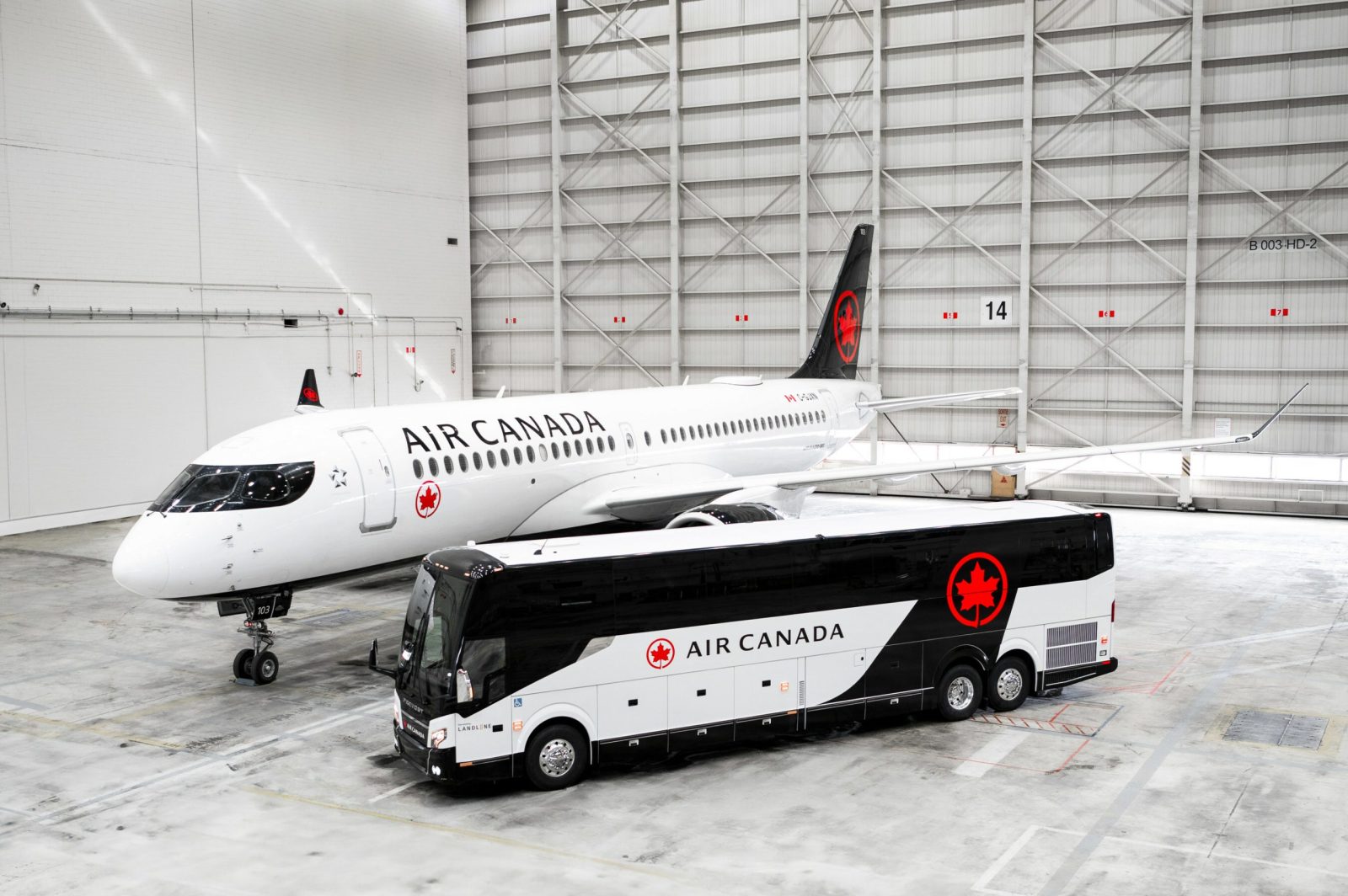
Air Canada launched bus service last year (Photo: Air Canada)
Air Canada is joining the trend of airlines offering regional bus service, with a newly announced partnership with coach operator Landline. The airline will start offering service between Toronto Pearson International Airport and two smaller airports nearby starting in May.
Air Canada and Landline’s New Bus Connections
The new bus service will connect Toronto Pearson with John C. Munro Hamilton International Airport and Region of Waterloo International Airport. Hamilton is situated just outside the Greater Toronto Area and the airport serves both the city itself and the surrounding region. Meanwhile, Region of Waterloo International Airport serves the Kitchener–Waterloo region, a metropolitan area in southern Ontario.
Both airports are approximately fifty miles away from Toronto Pearson, which translates to a driving time of under one hour without traffic. The bus service will only be offered as a connection to or from a flight at Toronto Pearson, meaning that travelers will not be able to book the bus trips as an individual segment.
Travelers departing from Hamilton or Kitchener–Waterloo can check in online or at new Air Canada check-in counters at the two airports. Bags can be checked at Hamiton or Kitchener–Waterloo and the bus will depart from the curb outside the check-in area. However, passengers connecting onto the buses after a flight arriving at Toronto Pearson will have to pick up their luggage at the baggage claim before proceeding to their bus.
The buses will be operated by Landline, an American company that specializes in air-to-ground connections. The Canadian-made coaches will have 36 reclining leather seats in a 2-1 configuration. Travelers will have in-seat power, a tray table, free Wi-Fi, and access to an onboard lavatory.
Air Canada’s new multimodal service will begin as a pilot project in May of 2024. There will initially be six daily round trips between each of the smaller airports and Toronto Pearson.
Motor coach company Landline will operate Air Canada’s new regional bus connections using Canadian-made Prevost buses (Photo: Air Canada)
Regional Connectivity and Competition
Although Landline buses have been used to replace aircraft on some regional routes in the United States, Air Canada currently does not have service to either Hamilton or Kitchener–Waterloo. Air Canada previously operated flights between Hamilton and Montreal but axed the route in 2019 due to low sales.
Air Canada will therefore be entering markets that are currently occupied by some of its smaller competitors. Flair Airlines has a strong presence in Kitchener–Waterloo, while Sunwing and WestJet – and previously Swoop – also serve both airports. Hamilton is also served by Air Transat and Icelandic low-cost carrier PLAY, which operates up to seven flights per week to Reykjavík.
It is already common for residents across southern Ontario to fly out of Toronto Pearson. However, the newfound convenience of the bus connections could stimulate new demand among potential travelers. Air Canada’s new connecting service to these two airports is also set to tap into the pool of travelers who would otherwise choose to fly out of their regional airports with a competing airline.
“Every day, thousands of customers face a stressful, time consuming journey from Hamilton and Waterloo Region to Toronto Pearson airport,” said Nick Johnson, Vice President, Commercial for Landline in a press release. “Customers will love letting Landline and Air Canada do the driving for them, enjoying a connected experience while relaxing on one of our luxury motorcoaches.”
Canadian airports have not been immune to these challenges as well. Passenger traffic at John C. Munro Hamilton International Airport was growing rapidly before the pandemic, rising from 312,839 passengers in 2016 to 955,373 passengers in 2019. The airport saw 645,789 passengers in 2022 and 2023 figures are expected to be higher when they are released.
Meanwhile, Region of Waterloo International Airport had its busiest year ever in 2023, soaring well above pre-pandemic figures. 445,312 passengers traveled through the airport in 2023, compared to 76,943 in 2019 and 127,824 in 2016. This post-pandemic growth has largely been fueled by Flair Airlines, which began service at the airport in 2021. Flair now serves over a dozen domestic and international destinations from the airport.
“Air Canada is focused on improving regional services and through this innovative partnership with The Landline Company, we are connecting communities and extending our network by offering customers a convenient, stress-free multimodal option,” Air Canada’s Vice President of Network Planning, North America, and Scheduling, Alexandre Lefevre, said in a press release.
Landline’s Steady and Ambitious Growth
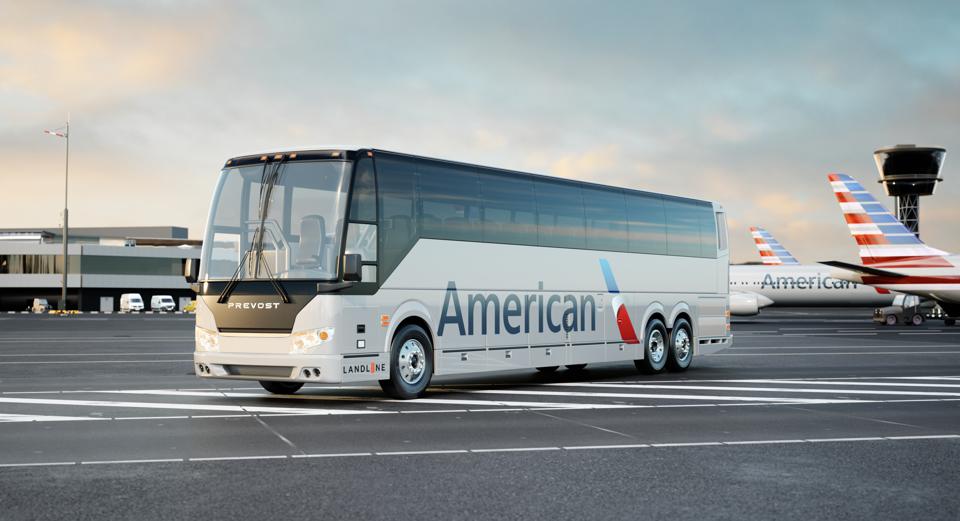
Since it began its first airline partnership with Sun Country Airlines in 2019, Landline has grown steadily over the coming years. The Colorado-based company now operates regional bus connections for United Airlines out of Denver and Newark, and for American Airlines out of Philadelphia. Air Canada will be its first international partner.
Landline’s largest partnership is with American Airlines (Photo: Landline)
The company has thrived in the post-pandemic world where airlines are seeking to balance connectivity with their staffing and regional capacity constraints. In 2023, Landline was also approved for airside-to-airside operations at certain airports in the United States, improving the connecting experience.
Andrew is a lifelong lover of aviation and travel. He has flown all over the world and is fascinated by the workings of the air travel industry. As a private pilot and glider pilot who has worked with airlines, airports and other industry stakeholders, he is always excited to share his passion for aviation with others. In addition to being a writer, he also hosts Flying Smarter, an educational travel podcast that explores the complex world of air travel to help listeners become better-informed and savvier travelers.
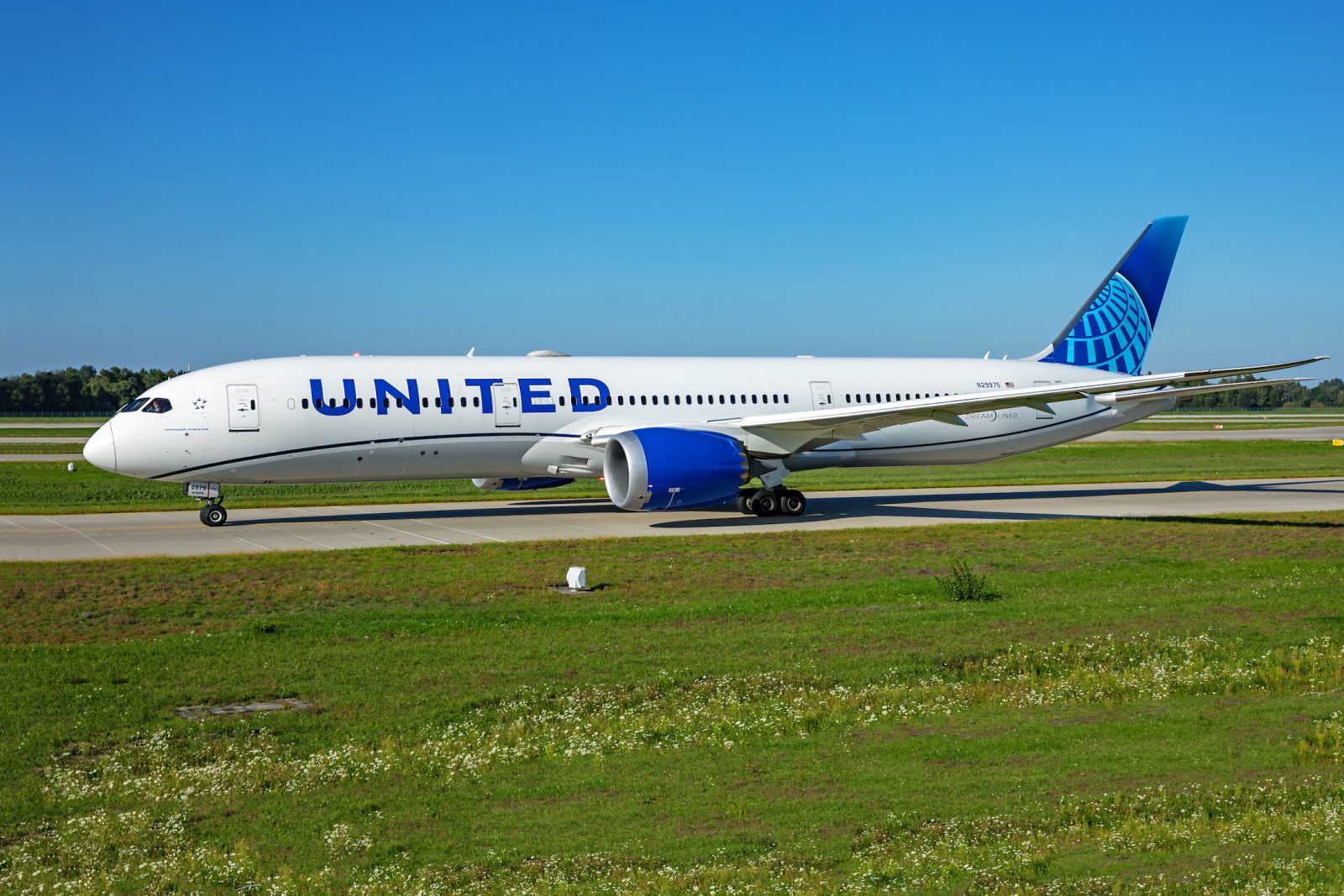
A United 787-9 Dreamliner. (Photo: AirlineGeeks | William Derrickson)
United has announced plans to resume nonstop service from the U.S. to Tel Aviv. The Chicago-based airline becomes the first U.S. carrier to announce the resumption of service to Israel following the Israel-Hamas war that broke out in October 2023.
As part of its service resumption plans, the airline will operate initial flights from its Newark hub starting on March 2 and March 4, 2024. These first flights will stop in Munich to ‘ensure all service providers are ready to support non-stop service to and from Newark/’
The airline is aiming to resume daily nonstop service from Newark to Tel Aviv on March 6. United says it conducted a ‘detailed safety analysis’ in making the decision to resume operations.
In a press release, the airline adds that it is ‘eager’ to add a second daily flight from Newark to Tel Aviv as early as May 2024. Its previous service from San Francisco, Washington Dulles, and Chicago O’Hare will be evaluated for service resumptions starting in the fall, the airline says.
Ryan founded AirlineGeeks.com in February 2013 and has spent more than a decade covering the airline business. His work has been featured by CNN, WJLA, CNET, and Business Insider. His aviation experience spans airport operations, Part 135 regulatory compliance, and airline crew workforce planning, along with time behind the yoke of a Cessna 172 and interviews with airline executives. Ryan now serves as Group President of Firecrown Media’s Aviation Group. He holds a B.S. in Air Transportation Management and an MBA from Arizona State University and teaches Airline Management at Embry-Riddle Aeronautical University.
Boarding Avelo's first ever commercial flight in Burbank. (Photo: AirlineGeeks | Taylor Rains)
Ultra-low-cost start-up Avelo plans to expand its service from the Bay Area’s Charles M. Schulz Sonoma County Airport (STS) by adding four new nonstop routes, including Boise, Idaho, Kalispell, Mont., Portland/Salem, Ore., and Pasco, Wash. This brings the total number of nonstop routes offered by the carrier from STS to eight joining Burbank, Las Vegas, and Redmond/Bend, Ore.
“Sonoma County Airport is by far the Bay Area’s best airport – its small, smooth and seamless travel experience is unmatched by any other airport in the region. Which is why we are doubling the number of nonstop destinations Avelo offers from STS. With eight popular nonstop routes spanning the West Coast, Avelo makes getting to and from the Bay Area and California Wine Country more affordable and easier than ever. These new routes are just a preview of the exciting opportunities ahead for Avelo when our new STS base opens in May,” Avelo Chairman and CEO said in a press release.
The new routes are scheduled to begin operating in May 2024 and will be flown at various frequencies.
The new routes are scheduled as follows:
Boise, Idaho: Beginning May 2, with flights on Thursdays and Sundays
Kalispell, Mont: Beginning May 1, with flights on Wednesdays and Saturdays
Portland/Salem, Ore. Beginning May 3, with flights on Mondays and Fridays
Pasco, Wash.: Beginning May 1, with flights on Wednesdays and Saturdays
Expanding From a New Base
In addition to the new routes, Avelo also announced that it will be establishing STS as its newest base effective on May 1. Two 737s will initially be based at STS along with up to 50 crew members.
“With four new destinations on the map, Avelo is really expanding the travel possibilities here at STS. This is, in the best way, going to be impactful for all of Sonoma County’s residents. This is the single largest announcement of new destinations at one time in the airport’s history,” STS airport manager Jon Stout added.
Ryan founded AirlineGeeks.com in February 2013 and has spent more than a decade covering the airline business. His work has been featured by CNN, WJLA, CNET, and Business Insider. His aviation experience spans airport operations, Part 135 regulatory compliance, and airline crew workforce planning, along with time behind the yoke of a Cessna 172 and interviews with airline executives. Ryan now serves as Group President of Firecrown Media’s Aviation Group. He holds a B.S. in Air Transportation Management and an MBA from Arizona State University and teaches Airline Management at Embry-Riddle Aeronautical University.
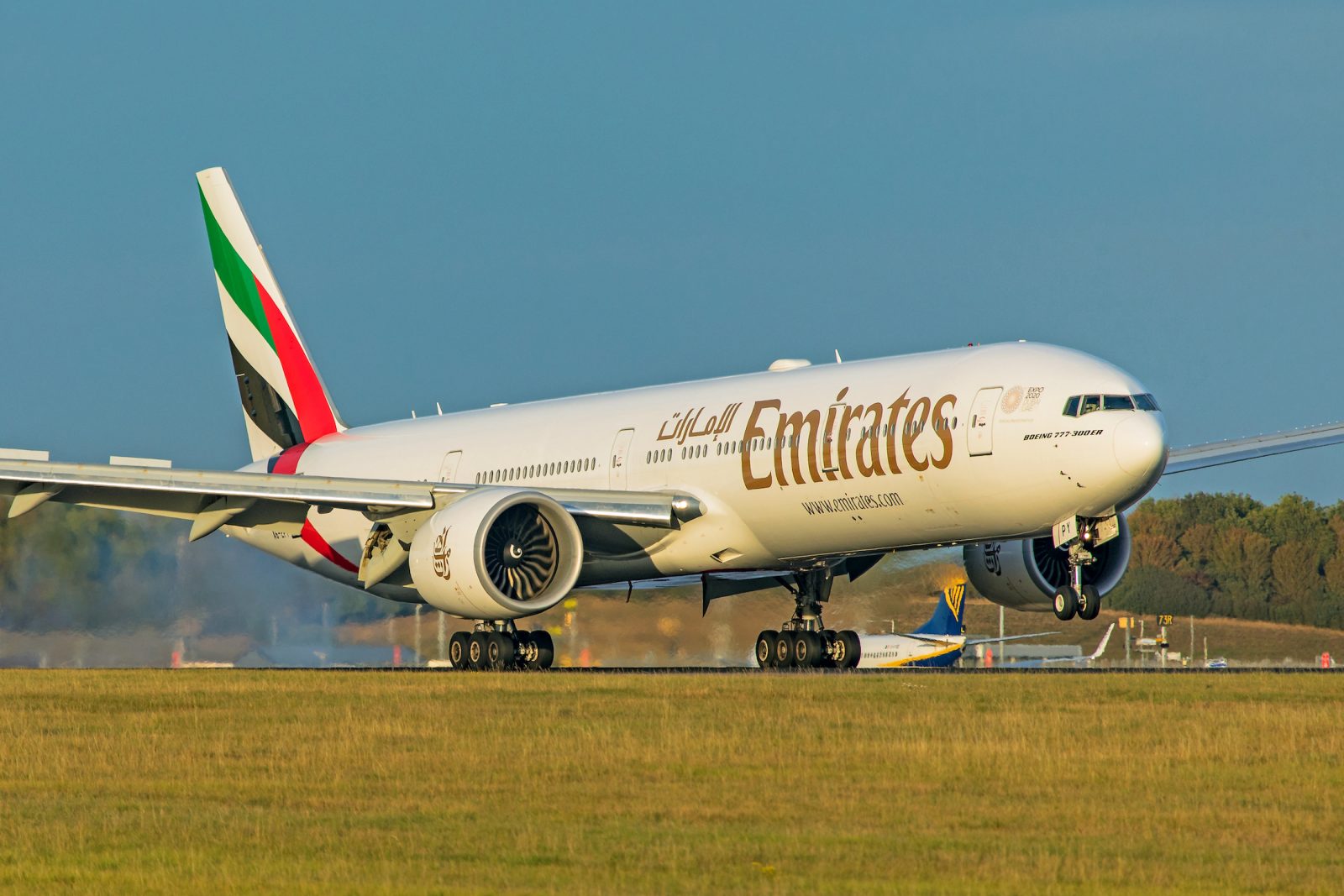
An Emirates Boeing 777-300ER aircraft. (Photo: AirlineGeeks | William Derrickson)
Emirates is expanding its Latin American network with the launch of a new daily route from Dubai to Bogota, Colombia, starting June 3, 2024. The new flight will operate via Miami.
Operating on a Boeing 777-300ER aircraft, the new route will provide a total of 354 seats per flight, including 8 First Class seats, 42 Business Class seats, and 304 Economy seats. The flight time from Dubai to Miami will be approximately 16 hours and 45 minutes, while the connecting flight from Miami to Bogota will take approximately three hours and 50 minutes.
“We’ve long wanted to serve Colombia, and the addition of Bogotá to our network is part of our strategy to deliver better connectivity, expand options and choice for travellers and provide unparalleled premium experiences on the ground and in the air,” said Emirates President Sir Tim Clark in a press release. “The launch of our daily operations to the dynamic capital of Colombia also underscores our deep commitment to South America, and is poised to foster increased business and leisure travel opportunities for customers.”
The airline says each flight will also offer up to 20 tons of cargo capacity per flight. Colombia is well-known for exports such as fresh flowers and various perishable goods.
American, Avianca, and LATAM Colombia currently serve the Miami-Bogota route. According to Cirium Diio schedule data, there are up to 18 daily flights between the two cities in June 2024.
Ryan founded AirlineGeeks.com in February 2013 and has spent more than a decade covering the airline business. His work has been featured by CNN, WJLA, CNET, and Business Insider. His aviation experience spans airport operations, Part 135 regulatory compliance, and airline crew workforce planning, along with time behind the yoke of a Cessna 172 and interviews with airline executives. Ryan now serves as Group President of Firecrown Media’s Aviation Group. He holds a B.S. in Air Transportation Management and an MBA from Arizona State University and teaches Airline Management at Embry-Riddle Aeronautical University.
A Turkish 737 MAX. (Photo: Anna Zvereva from Tallinn, Estonia - Turkish Airlines, TC-LCJ, Boeing 737-8 MAX, CC BY-SA 2.0, https://commons.wikimedia.org/w/index.php?curid=78144499)
On Monday, Feb. 19, 2024, in Tripoli, a meeting between Libyan Transport Minister Mohamed Al-Shahoubi and the Turkish Ambassador to Libya Kanan Yilmaz agreed to prepare a memorandum of understanding that will contribute to accelerating the return of Turkish Airlines to operate flights to Libyan airports.
The meeting was attended by Undersecretary for Air Transport Affairs Khaled Souissi and Head of the Civil Aviation Authority Abdulrahman bin Youssef. The discussion also focused on facilitating travel visas for Libyan citizens.
Turkish Airlines offers flights to various destinations in Africa, including Abidjan, Ivory Coast; Abuja, Nigeria; Accra, Ghana; Addis Ababa, Ethiopia and many other destinations in the continent.
Currently, Libyan Wings and Afriqiyah Airlines offer regular flights between Misurata and Istanbul, according to FlightRadar24.
Furthermore, Libya and neighboring Morocco have expressed their mutual desire to reinstate air connectivity between the two countries after a high-level meeting in Rabat on Feb. 6, 2024 that involved Mr. Mohamed Abdel Jalil, Morocco’s Minister of Transport and Logistics, Mr. Salem Al-Shahoubi, Minister of Transport of Libya, and His Excellency Mr. Abu Bakr Al-Taweel, Chargé d’Affaires of the Libyan Embassy in Morocco.
Victor Shalton's love for aviation can be traced to when he was 11-years-old. As a seasoned aviation writer, he takes pride in providing the best aviation coverage around the globe and is passionate about advancing his skills in the aviation space. In addition, he loves travelling, writing, arts and while his speaking engagements have taken him around the world, he is proud to call Nairobi home.
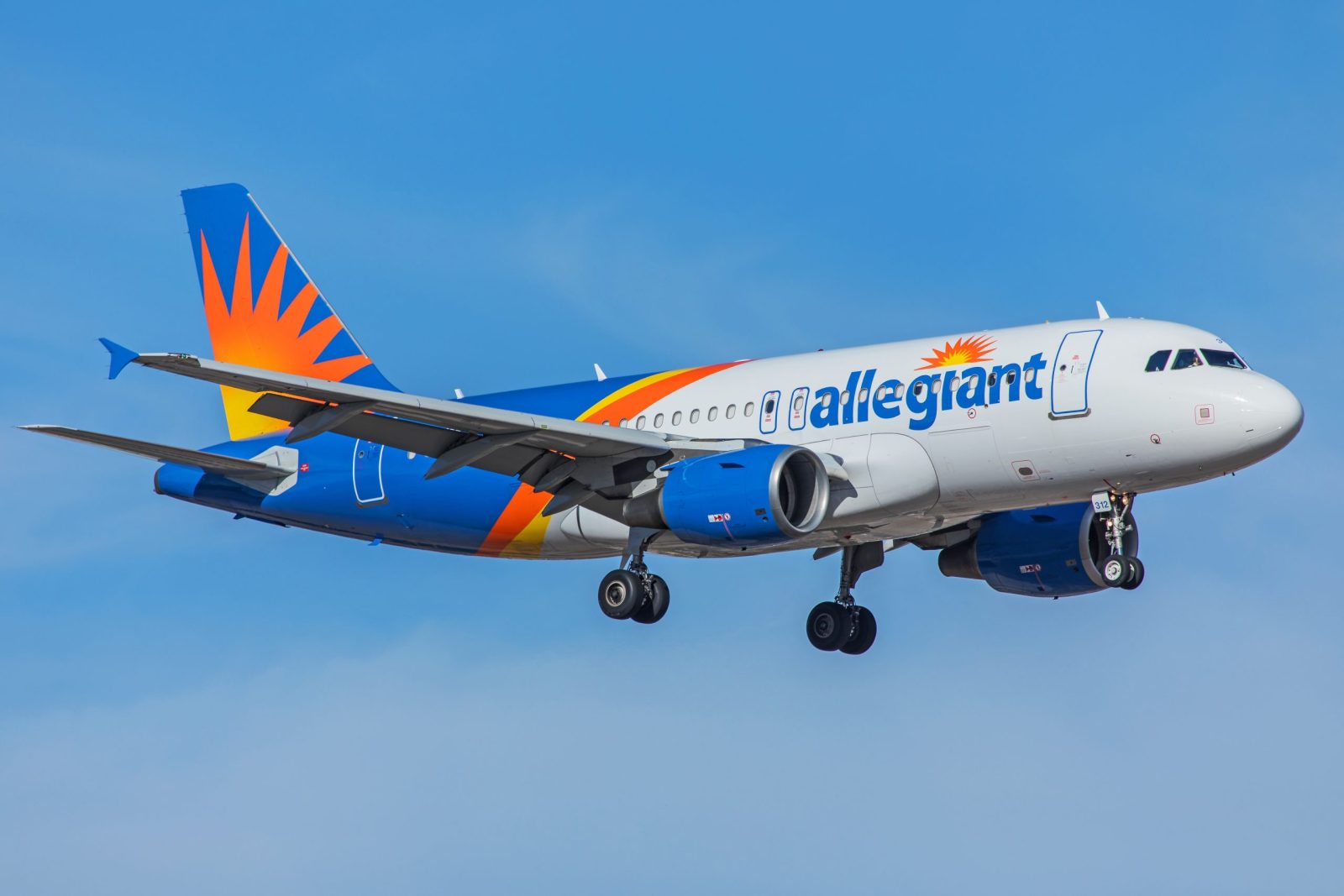
An Allegiant A319 in Las Vegas. (Photo: AirlineGeeks | William Derrickson)
Ultra-low-cost carrier Allegiant announced a new partnership with Berry Aviation to expand its pilot recruitment pipeline. Through the “Allegiant Incentive” program, Berry pilots with relevant experience will gain a streamlined path to joining Allegiant’s aviator ranks.
“We see tremendous value in our pilot pathway programs and are excited to expand with Berry Aviation,” said Allegiant President Gregory C. Anderson in a press release. “Our out-and-back business model provides flight crews with a unique balance between work and home life, making Allegiant a desirable airline for pilots at all levels of experience. We believe this partnership fits beautifully in supporting the future growth of our pilot ranks.”
With the partnership, Allegiant gains access to a pool of pre-vetted pilots trained by Berry Aviation. On the other hand, Berry Aviation – a Texas-based Part 135 charter operator – can offer its pilots a clear pathway to transition to a commercial airline career with Allegiant.
Berry Aviation often serves as a career stepping stone for pilots, requiring a minimum of 1,500 flight hours for entry. The partnership creates a smoother transition for qualified Berry pilots to enter Allegiant’s new hire training program, the airline said.
In order to join Allegiant’s ranks, Berry pilots enrolled in the program must be qualified as a Pilot in Command (PIC) for at least 18 months. In addition, they are required to meet certain criteria, including the completion of periodic check rides and working towards ATP-CTP certification.
Ryan founded AirlineGeeks.com in February 2013 and has spent more than a decade covering the airline business. His work has been featured by CNN, WJLA, CNET, and Business Insider. His aviation experience spans airport operations, Part 135 regulatory compliance, and airline crew workforce planning, along with time behind the yoke of a Cessna 172 and interviews with airline executives. Ryan now serves as Group President of Firecrown Media’s Aviation Group. He holds a B.S. in Air Transportation Management and an MBA from Arizona State University and teaches Airline Management at Embry-Riddle Aeronautical University.
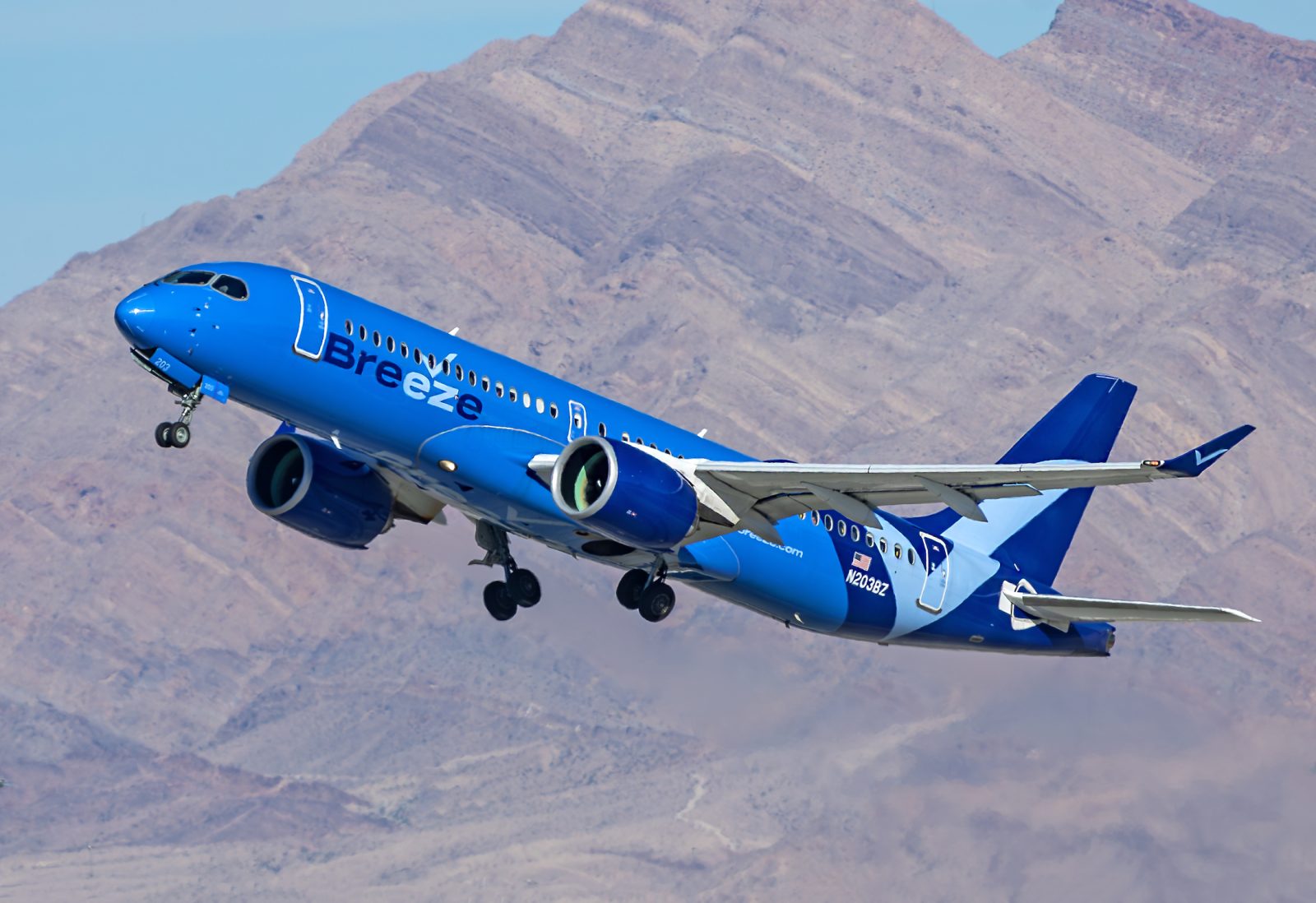
A Breeze A220 aircraft. (Photo: AirlineGeeks | William Derrickson)
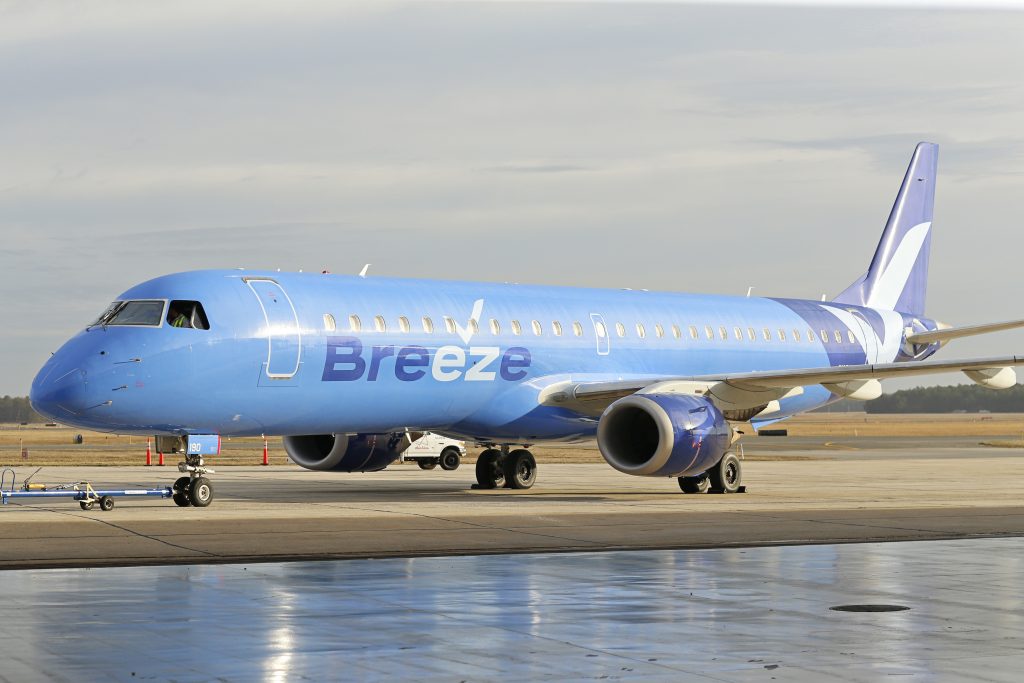
Low-cost start-up Breeze Airways announced on Tuesday it exercised purchase options for 10 additional Airbus A220 aircraft, bringing its total firm orders to 90 and solidifying the carrier’s position as one of the world’s top three A220 customers. The airline also confirmed its transition to an all-A220 fleet by the end of 2024, phasing out its remaining Embraer E190 and E195 jets to charter-only operations.
Breeze launched operations in May 2021 with Embraer aircraft, but later adopted the A220, receiving its first in December 2021. Currently operating 22 A220s, the airline expects to have 32 by year-end. The A220 boasts wider aisles, taller ceilings, and larger windows compared to similar-sized aircraft, contributing to a more comfortable passenger experience, the airline says.
“Breeze’s business model is to bring air service to underserved markets across the U.S. so the vast majority of our routes have no nonstop competition,” said David Neeleman, Breeze Airways’ Founder and CEO in a press release.
A Breeze Embraer taxies for takeoff. (Photo: Cean One Studio | Cean Orrett)
“And the economics of the A220 are integral to that success, which enables thin routes to be profitable. We’re always growing, adding new cities and routes, but we’re also seeing more of our markets mature, resulting in more frequencies there too. Also, travelers love flying the A220 which is clear from our NPS scores in the mid 70s and our high percentage of repeat Guests. What better date than 2/20 to announce the purchase of more A220s,” Neeleman continued.
The transition to an all-A220 fleet will not affect Breeze’s charter operations. The airline says the charter segment has seen significant year-over-year growth, exceeding 50% in peak months.
The airline has 30 additional A220 purchase options, which Neeleman expects to use, he said during a press conference. Breeze says it will have the youngest fleet in the U.S. with an average aircraft age of less than two years old.
Ryan founded AirlineGeeks.com in February 2013 and has spent more than a decade covering the airline business. His work has been featured by CNN, WJLA, CNET, and Business Insider. His aviation experience spans airport operations, Part 135 regulatory compliance, and airline crew workforce planning, along with time behind the yoke of a Cessna 172 and interviews with airline executives. Ryan now serves as Group President of Firecrown Media’s Aviation Group. He holds a B.S. in Air Transportation Management and an MBA from Arizona State University and teaches Airline Management at Embry-Riddle Aeronautical University.
An overview of the new nine-gate eastern expansion of Austin-Bergstrom International Airport. (Photo: AirlineGeeks | Mateen Kontoravdis)
Austin Bergstrom International Airport (AUS) had a banner year in 2023, breaking its own passenger record for the second consecutive year. Over 22 million passengers passed through the airport, surpassing the previous year’s mark by more than one million.
December 2023 also saw record-breaking numbers, with 1.8 million passengers utilizing the airport, a 4.9% increase compared to December 2022. Notably, July remains the busiest month, exceeding two million passengers, according to the airport.
Fort Worth-based American also announced that it would begin cutting flights on 21 routes from Austin. These pull-downs began taking effect in January 2024. The airline placed big bets on the Austin market in 2021 when it added 10 new routes.
Despite the schedule reductions, the Central Texas airport got new nonstop destinations, including Omaha and Montrose, along with restored service to Vancouver and Calgary. Viva Aerobus is also planning to add flights to Austin from Monterrey, Mexico beginning in March 2024.
The sun rises on a busy morning at the Barbara Jordan terminal at Austin-Bergstrom. (Photo: AirlineGeeks | Mateen Kontoravdis)
Continued Infrastructure Investments
The airport says it made significant infrastructure improvements through its “Journey With AUS” program. These include renovated restrooms in the concourse food court, ongoing construction of new midfield taxiways and the West Gate Expansion project for additional amenities, implementation of a more efficient baggage handling system, and installation of ‘state-of-the-art’ security screening equipment allowing passengers to keep electronics in their bags.
Last week, AUS announced that it had received $39.1 million in funding from the Federal Aviation Administration (FAA), which it says will go towards short and long-term improvement projects.
“Our Airport is once again in the spotlight, which is such great news for our community,” said Austin Mayor Kirk Watson in a press release. “Not only did we experience more passengers travelling through AUS in 2023 compared to any other year prior, we are now poised to help ensure much-needed funding for critical projects that will elevate our airport into a world-class hub with top-tier infrastructure. This funding enables us to continue the transformative work of our Airport Expansion and Development Program, ensuring excellence for our travelers and community for years to come.”
Beyond passenger numbers, the airport reported that air cargo volume was down nearly nine percent compared to 2022. In addition, 50 tons of Salt Lick BBQ brisket and over one million tacos were eaten at AUS’ concessions.
Ryan founded AirlineGeeks.com in February 2013 and has spent more than a decade covering the airline business. His work has been featured by CNN, WJLA, CNET, and Business Insider. His aviation experience spans airport operations, Part 135 regulatory compliance, and airline crew workforce planning, along with time behind the yoke of a Cessna 172 and interviews with airline executives. Ryan now serves as Group President of Firecrown Media’s Aviation Group. He holds a B.S. in Air Transportation Management and an MBA from Arizona State University and teaches Airline Management at Embry-Riddle Aeronautical University.
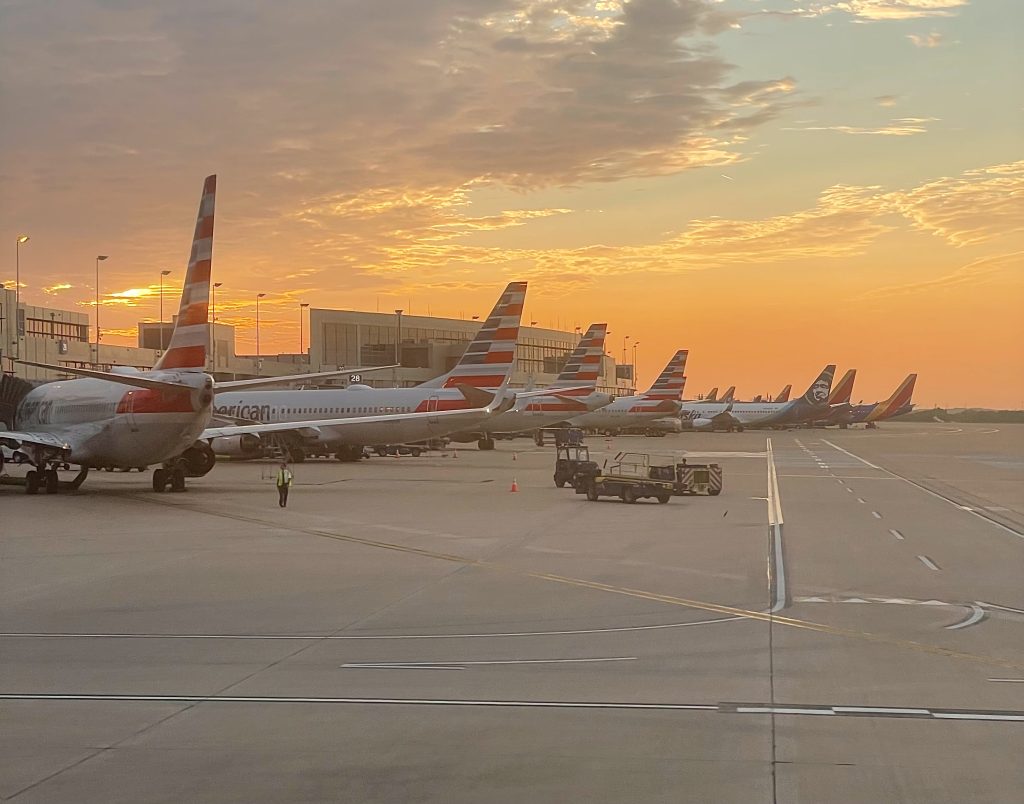
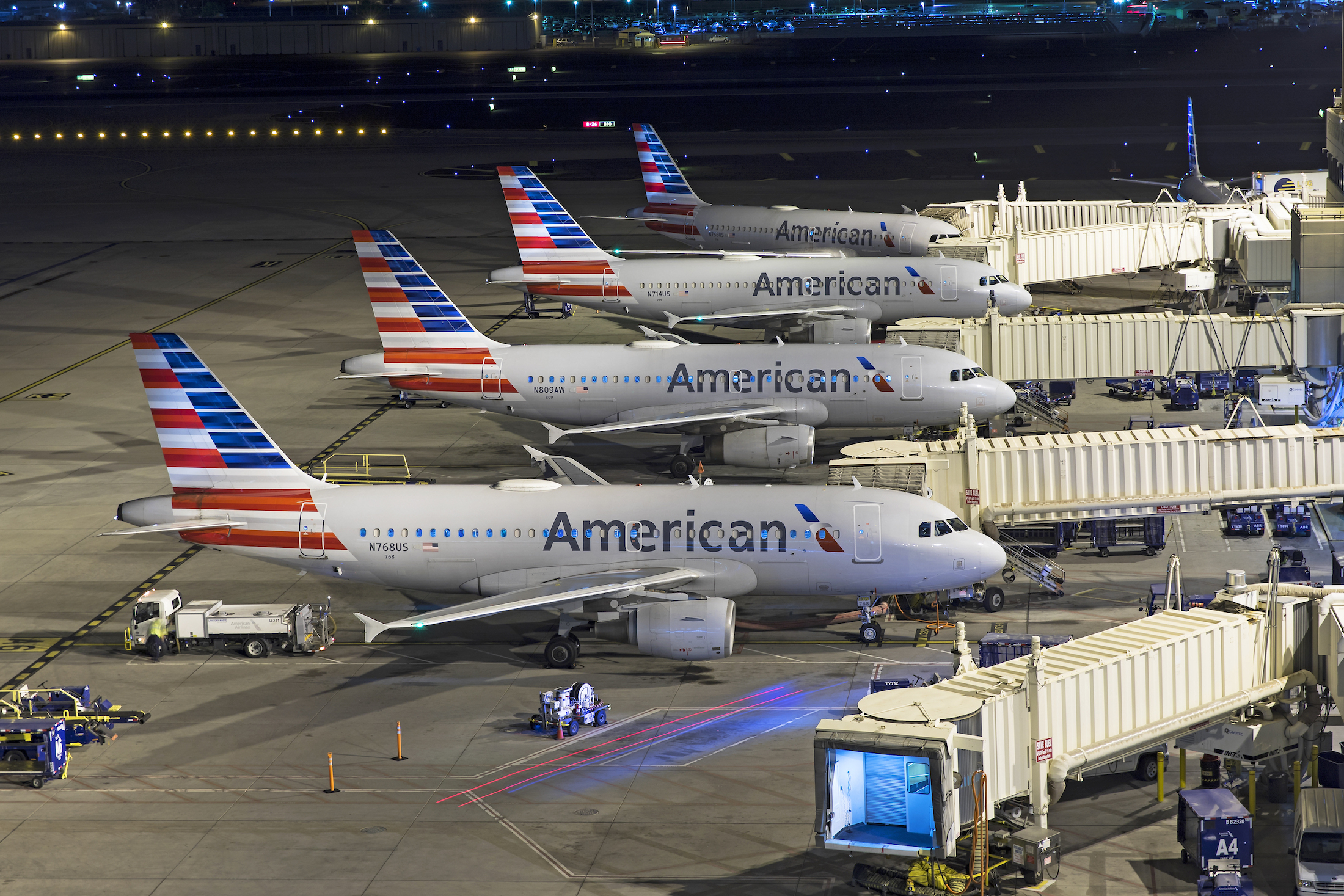
American Airbus aircraft in Phoenix (Photo: AirlineGeeks | William Derrickson)
Airlines are known to be rather territorial, especially the major three carriers when it comes to other airlines expanding from their hubs. Back in 2023, Icelandair announced service from Detroit – a Delta hub – to Reykjavik in Iceland, just days later Delta announced flights on the same route that began a week before Icelandair’s flights did. When Icelandair and now defunct WOW Air announced flights from Dallas/Fort Worth, American Airlines jumped on the bandwagon and offered the same route from its hub.
Most airline retaliation isn’t that obvious and tends to be more subtle. On Feb. 7, 2024, Frontier Airlines announced a slew of new routes around the country, 10 of which were from its now expanding base in Philadelphia which will now see Frontier serving 39 nonstop destinations.
American Adds Capacity
Now, just over ten days later, as first noticed by Ishrion Aviation on X, American has increased frequencies on eight of the 10 cities Frontier plans on starting out of Philadelphia:
Kansas City will be increasing from two to four daily flights and will go from being a mix of regional and mainline to all mainline aircraft predominantly the Airbus A319.
Milwaukee will be increasing from two to four daily, on all regional jets, mostly the Embraer E175.
Portland, Maine will be going from three daily flights on all regional jets to four daily flights with three of them being on the mainline Airbus A319 and the fourth being on the Embraer E175.
St. Louis will all be going from two daily flights on all Airbus A319s to three daily A319 flights and a fourth daily flight operated by the Embraer E175.
Indianapolis will be going from four daily flights on a mix of regional and mainline aircraft, to six daily flights with half of them being mainline Airbus A319s.
Pensacola will be going from one to daily flights and will receive an upgrade of aircraft from the Embraer E175 to the Airbus A319.
Knoxville goes from three to four daily flights, with all being operated by regional jets like the Embraer E175, CRJ-900, or the Embraer E145.
Detroit will gain a fifth daily flight and will be operated by a mix of regional and mainline A319s depending on the day of the week.
All of these American Airlines route increases and aircraft upgrades take place in the first week of June 2024, just a few weeks after Frontier begins the flights on these exact routes.
Joey has always been interested in planes for as long as he can remember. He grew up in Central New York during the early 2000s when US Airways Express turboprops ruled the skies. Being from a non-aviation family made it harder for him to be around planes and would only spend about three hours a month at the airport. He was so excited when he could drive by himself, the first thing he did with his driver's license was get ice cream and go plane spotting for the entire day. He graduated from Western Michigan University in 2022 with a B.S. in Aviation Management & Operations and a Minor in Business, and currently works for a major airline in his hometown.
Sign-up for newsletters & special offers!
Get the latest stories & special offers delivered directly to your inbox