Stories

Free Routing Airspace Takes Flight Over Africa

The new effort is set to increase collaboration and efficiency among operators in the region with more direct routings between countries.

Ethiopian 737
An Ethiopian Airlines Boeing 737. (Photo: AirlineGeeks | Parker Davis)

Following years of deliberations, the African aviation landscape witnessed a historic moment in early November as trial flights marked the commencement of Free Routing Airspace (FRA) in the region. This transformative initiative, a product of collaborative efforts among key stakeholders such as CANSO, AFRAA, IATA, ICAO, and Air Navigation Service Providers (ANSPs), promises to reshape the future of air travel across the continent. The implementation of the system is part of wider plans to deliver a more sustainable aviation future.

The inaugural Free Routing Airspace Trial kick-off workshop saw participants strategically coordinate with operational services, securing approvals for two milestone flights — Ethiopian’s ET935 and Kenya Airways’ KQ508. These flights, from Addis Ababa to Abidjan and Nairobi to Accra, respectively, soared outside traditional routes, effectively reducing flight times and opening up new possibilities for airlines operating in Africa.

A Brief Overview of FRA

Free Route Airspace (FRA) is where operators are allowed to fly direct rather than point to point. FRA is a specified airspace within which users may freely plan a route between a defined entry point and a defined exit point. The implementation of Free Routing Airspace aims to enhance efficiency, reduce flight times, and optimize airspace utilization by providing more flexibility for flight planning and routing. This concept enables airlines to choose the most direct and fuel-efficient routes, contributing to cost savings and environmental benefits.

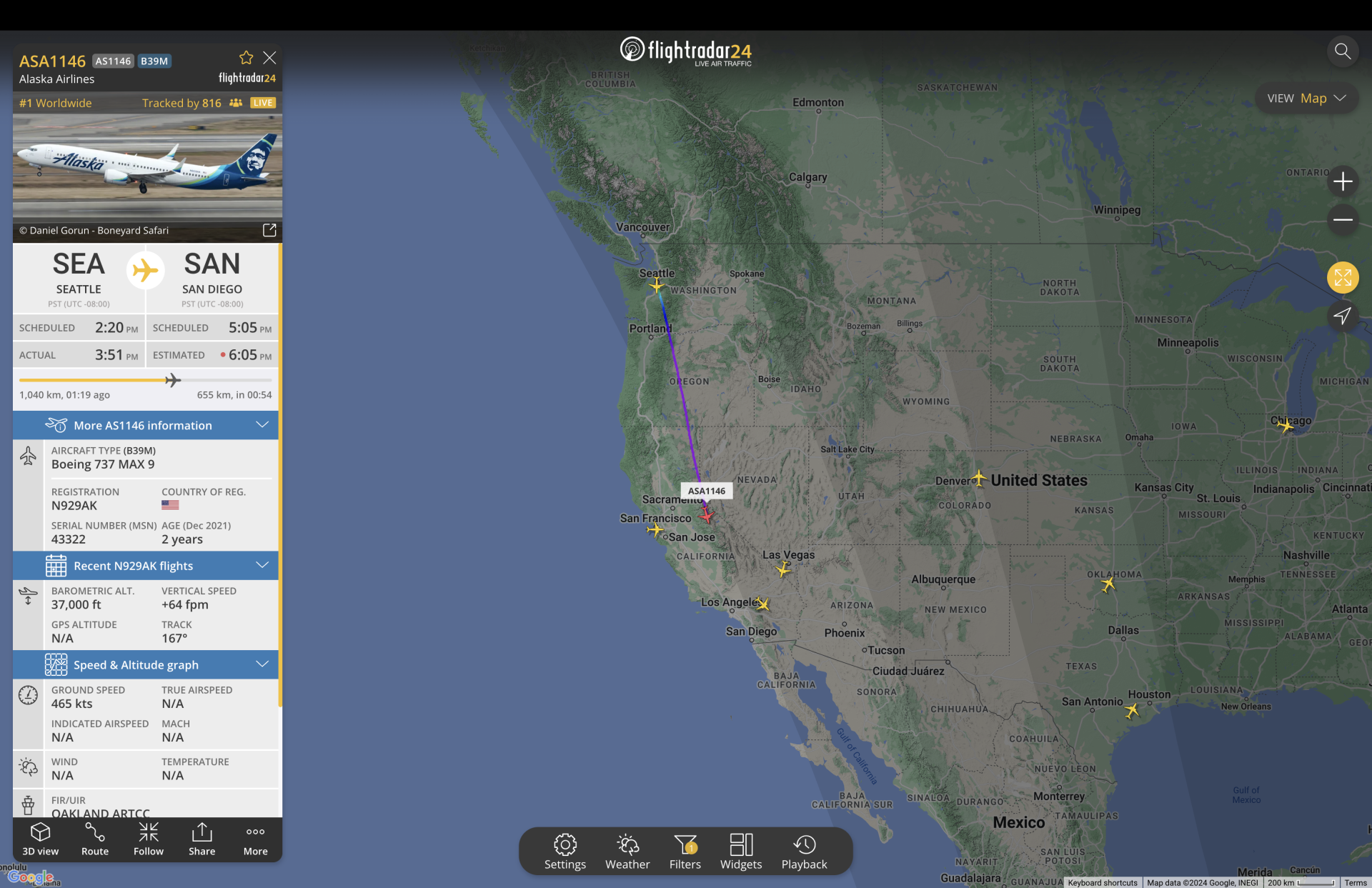
Free Routing Airspace in Africa inches closer to reality with trial flights kicking off on Nov. 2, 2023. (Photo: FlightRadar24)

Beyond the immediate gains in efficiency, the implementation of Free Routing Airspace is poised to deliver substantial cost savings and foster sustainability within the African aviation industry. Over the course of a year, the streamlined flight paths of these two trial flights alone will spare the atmosphere from 340 metric tonnes of CO2 emissions and prevent the burning of 292 metric tonnes of fuel. This translates into an estimated $310,000 in fuel cost savings for each operator.

As the project gains momentum, with AFREXIMBANK generously sponsoring the kick-off workshop, a consortium of ANSPs played a pivotal role in providing navigation services for these historic flights. Among them were Ethiopia CAA, Kenya CAA, CAA Uganda, RVA (DRC), ASECNA, NAMA (Nigeria), and Ghana CAA. The Free Routing Airspace project is part of the broader initiatives undertaken by the African Aviation Industry Group through the African Aviation Sustainability Laboratory. This ambitious undertaking aims to revamp air transport in Africa, laying the foundation for a more dynamic and environmentally conscious aviation sector.

Looking ahead, the success of these trial flights sets the stage for the next round of trials in the first quarter, propelling the vision of Free Routing Airspace closer to becoming a full-fledged reality by 2024.

Victor Shalton

Victor Shalton's love for aviation can be traced to when he was 11-years-old. As a seasoned aviation writer, he takes pride in providing the best aviation coverage around the globe and is passionate about advancing his skills in the aviation space. In addition, he loves travelling, writing, arts and while his speaking engagements have taken him around the world, he is proud to call Nairobi home.

Embraer’s E190-E2 and E195-E2 Jets Receive Singapore Type Certification

Following the type certification, Singapore-based low-cost carrier Scoot plans to start operating nine of the type in 2024.

E2
Embraer's E190-E2 at the 2022 Farnborough Airshow (Photo: AirlineGeeks | William Derrickson)

Brazilian aircraft manufacturer Embraer has recently achieved a significant step with its E190-E2 and E195-E2 aircraft receiving type certification from the Civil Aviation Authority of Singapore (CAAS). Singapore-based low-cost carrier Scoot plans to start operating nine of the type in 2024, according to Airport Technology.

The certification process entails a comprehensive evaluation of the aircraft’s design, performance, and safety features. The E190-E2 and E195-E2 had previously garnered approval from three major civil aviation authorities: the Federal Aviation Administration (FAA) in the United States, the European Union Aviation Safety Agency (EASA), and the National Civil Aviation Agency of Brazil (ANAC). The E190-E2 also has type certification in China.

“Certification of the E190-E2 and E195-E2 by the Civil Aviation Authority of Singapore marks a significant milestone for Scoot. It reinforces our commitment to operating a modern and fuel-efficient fleet and brings us a step nearer to offering more travel opportunities to our customers,” said Scoot’s CEO Leslie Thng in a press release.

“As the first Singaporean carrier to operate the E2s, we look forward to enhancing connectivity in Asia and the further development of Singapore as a hub for regional travel,” he continued.

A mock-up of a Scoot E190-E2 (Photo: Embraer)

The E190-E2 and E195-E2 aircraft are the culmination of Embraer’s extensive experience, built upon 20 million flight hours from the first generation of E-Jets. These new models blend state-of-the-art technology with the proven reliability and efficiency of their predecessors, according to the company. The first-generation E-Jets operate with over 80 airlines in 50 countries.

Building a Training Program

In a move to bolster training and operational readiness for the E2 aircraft, Embraer, in collaboration with CAE, a global leader in aviation training, announced the establishment of an E2 full flight simulator and pilot training program in Singapore. Scheduled to commence operations by the end of the year, the simulator is located at the Singapore-CAE Flight Training Center, which is housed within the SIA Training Center.

Parth Jain

Parth Jain is a dedicated aviation enthusiast with a rich background in general and commercial aviation. Over the years, Parth has consistently demonstrated a deep fascination with the aviation industry, his interests spanning from the workings of small general aviation aircraft to the complexities of large commercial jets. Parth's interest in aviation sparked at a young age when he first set foot in an airplane. Since then, he has dedicated much of his time to gaining first hand experience, achieving his private pilot license and currently working towards his instrument rating. Parth's education and experience are a testament to his dedication and commitment to this field. As a private pilot, he has navigated complex airspace, developed an understanding of the intricate details of aircraft operations, and consistently demonstrated safe and proficient flying skills.

Frontier Opening Two More Crew Bases

Frontier is adding two more crew bases as it pivots to a more 'out-and-back' network strategy. The new bases are set to open in May 2024.

A Frontier A320
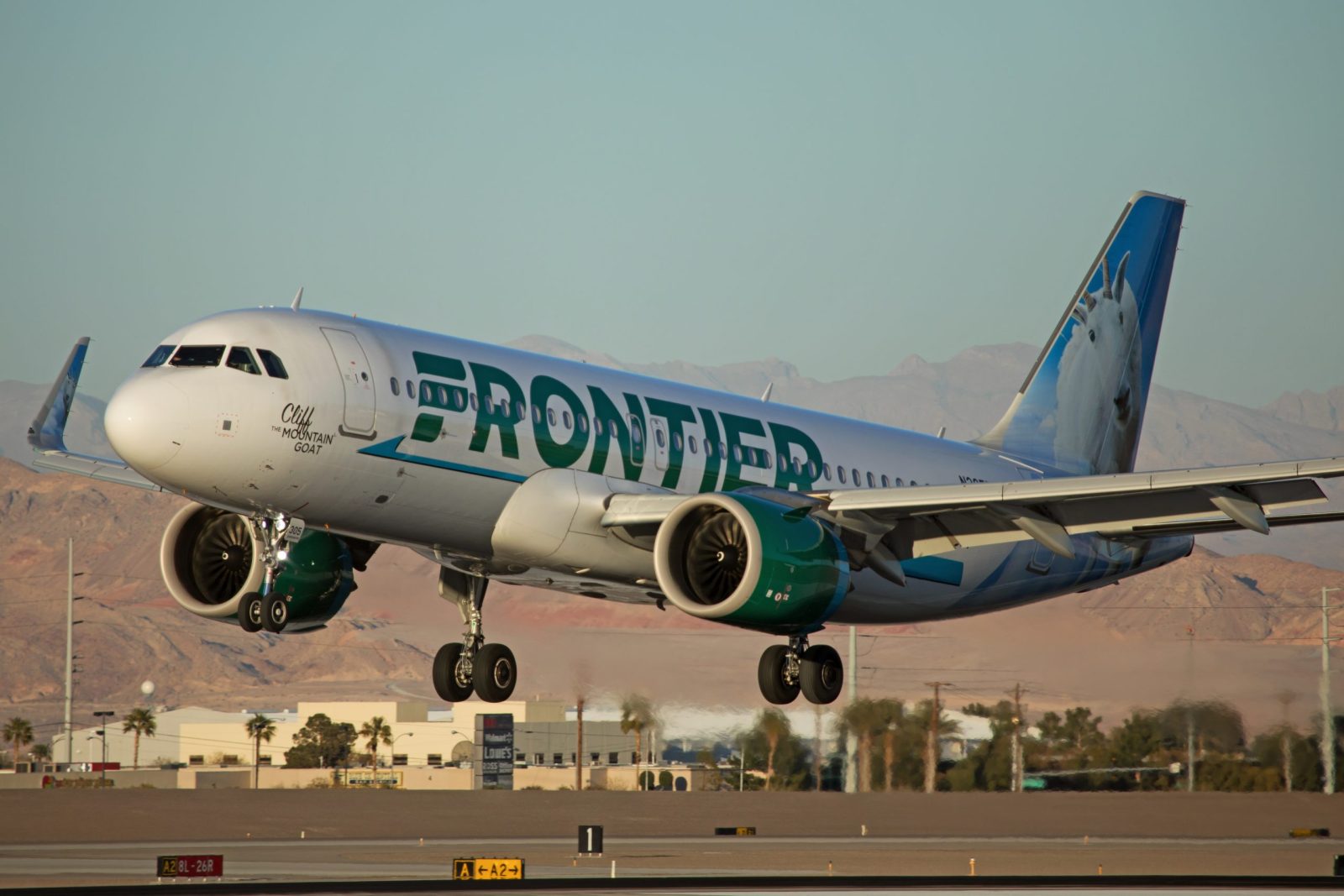
A Frontier A320 in Phoenix (Photo: AirlineGeeks | William Derrickson)

Frontier is adding two more crew bases as it pivots to a more ‘out-and-back’ network strategy. After announcing a new Cleveland (CLE) base, the Denver-based ultra-low-cost carrier (ULCC) is planning to add a new crew base at Cincinnati/Northern Kentucky International Airport (CVG) along with re-establishing the carrier’s Chicago pilot base.

New Cincinnati Base

Expected to employ approximately 80 pilots and 160 flight attendants within its first year of operation, Frontier expects to open its new Cincinnati crew base in May 2024. The airline says the new crew base could generate upwards of $27 million annually in local wages.

Frontier has 12 nonstop routes from Cincinnati, including several domestic destinations and a single international service to Cancun. In a press release, Frontier’s CEO Barry Biffle said, “Opening a crew base is also a win for customers who are able to take advantage of our ultra-low fares as we continue to grow at CVG and add new service over time.”

Reopening Chicago Pilot Base

Having previously maintained a Chicago base until April 2022, Frontier is now planning to reopen it. Also opening in May 2024, Frontier’s Chicago pilot base will serve both O’Hare and Midway airports. Within its first year of operation, the carrier expects to employ 110 pilots in Chicago.

Frontier currently maintains a flight attendant base in Chicago, which currently has 190 positions. The new combined base will have 300 crew members.

The airline has 13 nonstop routes from Midway and five nonstop routes from O’Hare, according to a press release.

After shaky Q3 earnings for some ULCCs, Frontier is rethinking its operating strategy. According to Travel Weekly, the airline’s CEO said that Frontier is hoping to improve operational reliability and reduce costs with an ‘out-and-back’ strategy. In theory, this reduces the number of complex point-to-point routings for aircraft and crew. Instead, the carrier’s aircraft and crew will start from a base, complete a turn in an out-station, and return back to the base, typically on the same day.

Ryan Ewing

Ryan founded AirlineGeeks.com in February 2013 and has spent more than a decade covering the airline business. His work has been featured by CNN, WJLA, CNET, and Business Insider. His aviation experience spans airport operations, Part 135 regulatory compliance, and airline crew workforce planning, along with time behind the yoke of a Cessna 172 and interviews with airline executives. Ryan now serves as Group President of Firecrown Media’s Aviation Group. He holds a B.S. in Air Transportation Management and an MBA from Arizona State University and teaches Airline Management at Embry-Riddle Aeronautical University.

French Air Traffic Controllers Walk Out Of Work Again

France's air traffic control system is not catching a break. Along with being slated for an early 2024 technology overhaul, its controllers are now on strike.

An Air France A321 (Photo: Air France)

In response to the new rules passed on Nov. 15 in France, France’s air traffic controllers launched an industrial action on Nov. 20. Under the new law, the air traffic controllers need to sound the alarm to their employers before starting a strike at least 48 hours in advance. Ironically, the laws have paved the way for the walkout. The controllers worried the new rules could threaten the right to strike.

The walkout has resulted in 25% of flights to and from Paris’ Orly Airport and Toulouse’s Blagnac being canceled, along with about 20% of Bordeaux’s Merignac and Marseille Provence being axed as well. Passengers have experienced an estimated one-hour delay as a result.

“Despite our preventative measures, passengers should still expect delays,” the DGAC, France’s Civil Aviation Authority, said.

“Industrial action by French Air Traffic Control staff means we’ve had to make some adjustments to our short-haul schedule,” British Airways said in a statement.

Jet2 and easyJet have warned their passengers could face the potential disruptions. Ryanair has issued a statement to its passengers that it could cancel several flights. The affected passengers could change their flights or apply for a full refund.

Ryanair has called upon the European Union Commission to take immediate action to protect overflights during the strike. The low-cost airline hasn’t shied away from venting its anger.

“It is completely unacceptable that there have been 65 days of ATC strikes this year – 13 times more than in all of 2022,” a spokesperson for Ryanair said.

Ryanair goes further in launching a campaign for the protection of overflights during strikes, more than two million signatures have been received. The no-frills carrier said 6,500 flights were forced to cancel due to the strike in France in 2023.

According to the French Senate, French air traffic controllers recorded 249 strike days from 2005 to 2016, compared with 44 in Greece and 34 in Italy.

A System Upgrade Before the Summer Olympics

The latest industrial action was undertaken by three unions, UNSA-ICNA, the USAC-CGT, and the CFDT. SNCTA, the air traffic controllers’ largest union, is in favor of the new law and said the walkout will suspend during the Summer Olympics.

According to French media, the new laws allowed the government to minimize disruptions during a strike and not limit the right to strike.

In the meantime, passengers could face a potential disruption in 2024. The air traffic control system in France will be upgraded. Airlines have been advised to scale down flights at Charles de Gaulle, Orly, and other airports. Thousands of flights are expected to be canceled between Jan. 9 and Feb. 14.  Air France confirmed 4,200 flights have been canceled. The upgrade cost an estimated one billion euros ($1.1 billion); airports are still using the same systems from the 1970s.

Money-Losing Aerolíneas Argentinas Could Soon Be Employee-Owned

With Javier Milei elected in Argentina, the loss-making national carrier Aerolíneas Argentinas could become privatized and employees will take control.

An Aerolineas Argentinas A330-200 (Photo: BriYYZ from Toronto, Canada (Aerolineas Argentinas Airbus A330-200 LV-FNL) [CC BY-SA 2.0 (https://creativecommons.org/licenses/by-sa/2.0)], via Wikimedia Commons)

After the victory of Javier Milei in the Argentina presidential election, the future of the national carrier Aerolíneas Argentinas is uncertain. The unprofitable airline, which is nationally owned, could become privatized under the new presidency and plans are to give control to the employees of the company, according to Argentinian news agency Clarín. 

An Aerolineas Argentinas A330-200 departs from JFK (Photo: AirlineGeeks | Ben Suskind)

Zero Profit Since Nationalization

Aerolíneas Argentinas has not had a single profitable year since it was nationalized in 2008. Its best financial result was posted this year, with a loss amounting to $48 million for the first half of 2023. For 2023, it is expected to lose over $100 million, which will be a significant improvement from 2022, which saw the carrier losing $246 million. 2022, in turn, was considerably better than 2021 and 2020 in terms of financial performance, largely due to COVID-19.

The airline also receives large sums of budgets from the government to support its recovery and cover its losses. According to Clarín, over $8 billion has gone to the airline to cover its operating losses since its nationalization in 2008. 

Before nationalization, the airline was private from 1990 to 2008 with multiple owners, among them Iberia and American Airlines. The years as a private airline saw several crises and the business was hardly profitable. With the airline on the brink of going out of business, the government decided to nationalize it in 2008. 

Competing on Equal Footing

The President-elect, Milei, said he wants to hand over management and essentially let Aerolíneas Argentinas compete on equal footing with other carriers including FlyBondi and JetSmart Argentina. Milei believes that employee unions and associations will have the ability to turn a profit and compete with domestic and international carriers.

The privatization could impact air services in Argentina negatively. Aerolíneas Argentinas is the only airline in Argentina to operate widebody aircraft and it provides essential links to destinations in Europe, North America, and many domestic communities. It is also a member of the SkyTeam Alliance, having a series of partnerships with airlines across the world.

Milei’s Argentina 

Milei has been described as an advocate for economic liberalism. He opposes state intervention and plans to cut government expenditure significantly. Many state-owned businesses will see privatization, including Aerolíneas Argentinas, and we can expect to see deregulation across some industries. For aviation, this could mean scraping protectionist policies benefiting the national carrier and reducing barriers to entry for new players. 

Anthony Bang An

Anthony is an aviation enthusiast who grew up around the world from St. Louis to Singapore, and now lives in Amsterdam. He loves long-haul flying and finds peace in the sound of engine cruising. He aspires to share his passion for the sky though writing and providing another angle on the stories.

United Doubles Down on Pilot Hiring, Sets New Record

The airline just had one of its highest ever months of hiring for new pilots with additional classes already being planned for 2024.

A United 777-200 in San Francisco.
A United 777-200 in San Francisco. (Photo: AirlineGeeks | Ben Suskind)

Amid a recent flurry of headlines around slowdowns in hiring among some airlines, United is keeping its foot on the gas. The Chicago-based carrier just hired a record number of pilots in October.

According to data from FAPA – a pilot career advisory group that’s been tracking hiring trends across 13 major U.S. airlines for over 30 years – United hired 270 pilots in October 2023, the carrier’s highest amount of new hires in a single month. This boils down to nearly 70 new hires each week.

Last year, the airline hired 2,500 pilots, making 2022 a record-setting year for new aviators on United’s property. The 270 new hires in October bring United’s total to 2,296 new pilots so far this year.

In a statement, United told AirlineGeeks that October 2023 was one of the biggest months for pilot hiring in its history.

“In support of our United Next plan, we set out to hire 2,300 pilots this year alone and are on track to exceed that total. We hired over 260 new pilots in October, which is one of [our] highest months ever, and are already working on filling new hire pilot classes in early 2024,” a spokesperson for the airline said.

United pilot hiring trends since January 2019. (Data: FAPA.aero)

Trending Above Other Airlines

Across the board, major U.S. airline pilot hiring trended down slightly in September and October 2023. Ultra-low-cost carrier Spirit announced it would be halting all pilot hiring indefinitely. Even for pilots already on their properties, FedEx and UPS management recently told pilots to look for jobs at regional airlines.

So far in 2023, United has been hiring an average of 227 new pilots each month, the highest of any airline in FAPA’s data. Atlanta-based Delta Air Lines is a close second at 224 new hires.

With the COVID-19 pandemic wreaking havoc on pilot training throughput, airlines have been forced to think a bit outside the box to attract and retain new aviators. United has been trying to weather this storm with its Aviate Academy in Arizona.

According to The Denver Post, the airline has also made a $100 million investment to expand its pilot training center in Denver, Colo., which is the largest of its kind worldwide. In addition, some of the carrier’s new hires have been able to bid for higher-paying Boeing 777 and 787 first officer positions after completing initial training.

Not Out of the Woods

Even with a record number of first officers entering its ranks, United and its peers still aren’t out of the woods just yet. A broader pilot shortage has pivoted to a captain shortage where retaining pilots in the left seat has become increasingly more challenging.

United CEO Scott Kirby acknowledged the issues surrounding captain hiring in the company’s Q2 2023 earnings call according to Reuters. “It’s the first time that I’ve ever known it to happen in the airline industry,” he said. “It is going to impact capacity in the fourth quarter.”

Regional carriers can hire so-called ‘direct entry captains’ with the right number of hours. Mainline airlines are restricted to hiring only first officers, but upgrade times to the left seat have become increasingly shorter in recent years. A January 2023 report in Aero Crew News showed that some Delta first officers could move to the left seat in as little as 4.5 months.

Ryan Ewing

Ryan founded AirlineGeeks.com in February 2013 and has spent more than a decade covering the airline business. His work has been featured by CNN, WJLA, CNET, and Business Insider. His aviation experience spans airport operations, Part 135 regulatory compliance, and airline crew workforce planning, along with time behind the yoke of a Cessna 172 and interviews with airline executives. Ryan now serves as Group President of Firecrown Media’s Aviation Group. He holds a B.S. in Air Transportation Management and an MBA from Arizona State University and teaches Airline Management at Embry-Riddle Aeronautical University.

FAA Fast-Tracks Training for Some Prospective Air Traffic Controllers

The FAA is allowing graduates from certain college programs to bypass the agency's academy in Oklahoma City, bolstering recruitment efforts.

American A319
An American A319 landing in Miami. (Photo: AirlineGeeks | William Derrickson)

In a significant move to address staffing shortages and expedite the recruitment of air traffic controllers, the Federal Aviation Administration (FAA) has announced that graduates of accredited college and university air traffic control programs will no longer be required to attend the FAA’s academy in Oklahoma City. Instead, these graduates will proceed directly to on-the-job training at various ATC facilities across the country, according to AvWeb.

This decision is part of a broader strategy to enhance ATC recruitment and increase staffing levels, which have been a persistent concern in recent years. The FAA’s actions are in response to a string of runway incursions and losses of separation that have raised concerns about the safety of the National Airspace System (NAS).

Under the new policy, graduates from the Air Traffic-Collegiate Training Initiative (AT-CTI) will bypass the seven-week foundation course at the FAA academy and immediately begin their one-to-three-year on-the-job training at operational ATC units. The FAA says it will collaborate with AT-CTI programs to ensure that their graduates possess the necessary skills and knowledge to seamlessly transition into on-the-job training.

A Broader Strategy

“The FAA will work with AT-CTI programs to ensure that graduates from these programs have the necessary skills to begin on-the-job training at a facility,” the agency said in an announcement. “These graduates still must pass the Air Traffic Skills Assessment (ATSA) exam and meet medical and security requirements.”

This move is expected to free up capacity at the FAA Academy, allowing it to accommodate more prospective controllers who have not completed an AT-CTI program. The FAA will continue to accept applicants from non-traditional backgrounds, provided they meet the agency’s stringent eligibility criteria.

In addition to bypassing the academy for college ATC graduates, the FAA is taking a series of other steps to bolster ATC recruitment, including expanding the ATC academy to ensure that every available seat is filled, offering year-round acceptance of already-trained military and private-sector controllers, establishing four advanced training facilities across the country by next spring, and acquiring ATC simulators and deploying them to 95 facilities by the end of 2025.

AirlineGeeks.com Staff

AirlineGeeks.com was founded in February 2013 as a one-person blog in Washington D.C. Since then, we’ve grown to have 25+ active team members scattered across the globe. We are all here for the same reason: we love deep-diving into the fascinating realm of the airline industry.

KLM Updates Orange Pride Livery

The airline made a noticeable change to one of its well-known special liveries on a Boeing 777-300ER aircraft, which was recently rolled out of the paint shop.

KLM's Orange pride livery (Photo: KLM)

Amsterdam-based KLM first unveiled its “Orange Pride” livery back in 2016 on a single Boeing 777-300ER to promote its home country, the Netherlands. The livery featured its classic KLM blue hue with a transition to orange and also had the country’s flag.

According to the carrier’s website, the livery was created with 335 liters of paint and would be deployed on routine flights within the network and, whenever possible, during events that offer opportunities to promote the Netherlands. Fast forward to now, this aircraft has been gracing the skies for just over seven years catching the eyes of aviation enthusiasts and passengers from around the world.

Refreshing an Iconic Special Livery

This past week, the airline rolled out the special livery with an updated paint job as first revealed by a JetPhotos photographer, after being in a Malta paint shop. The most notable difference between the new and old livery is that they have done away with the blue-to-orange fade on the aircraft, and it now features the Dutch flag between the blue and orange sides of the fuselage.

Although the new orange pride livery update has yet to be formally announced by the airline, the aircraft that carries the registration of PH-BVA, has since been placed back into the carrier’s operation.

Joey Gerardi

Joey has always been interested in planes for as long as he can remember. He grew up in Central New York during the early 2000s when US Airways Express turboprops ruled the skies. Being from a non-aviation family made it harder for him to be around planes and would only spend about three hours a month at the airport. He was so excited when he could drive by himself, the first thing he did with his driver's license was get ice cream and go plane spotting for the entire day. He graduated from Western Michigan University in 2022 with a B.S. in Aviation Management & Operations and a Minor in Business, and currently works for a major airline in his hometown.

Scandinavian Airlines Bids Farewell to its Boeing 737 Fleet with Special Flight

After over 30 years of flying the Boeing jet, SAS operated its last ever flight with the 737 on Sunday evening. The carrier is moving to newer narrowbody aircraft.

A SAS 737-700 aircraft (Photo: AirlineGeeks | William Derrickson)

Scandinavian Airlines (SAS) marked the end of an era as it operated its final scheduled Boeing 737 flight on Sunday evening. The special farewell flight – aptly numbered SK737 – departed Stockholm Arlanda Airport (ARN) and landed at Oslo Gardermoen Airport (OSL), with a deviation from the usual flight plan to over-fly the company’s Copenhagen base.

SAS’ last 737 flight (Photo: FlightRadar24)

The Boeing 737 has been a cornerstone of SAS’s fleet since 1989, operating the -400, -500, -600, -700, and -800 variants of the world’s most widely produced aircraft. SAS’s long history with the  Boeing jet even included a short stint of flying a 737-700 from Norway to Houston starting in 2014.

SAS’s decision to retire the Boeing 737 is part of its fleet modernization program, which aims to improve efficiency and reduce costs. The airline will transition to more fuel-efficient narrowbody aircraft, including the A320neo series.

A SAS A320 in Oslo. (Photo: AirlineGeeks | William Derrickson)

The Final Flight

The final Boeing 737 flight was operated by aircraft LN-RRB, affectionately known as “Dag Viking” by SAS employees, which is just over 16 years old.

“It’s time for our last Boeing 737 flight. ‘To move from the old to the new is the only tradition worth keeping.’ These words, written by founder Wallenberg, are as valid today as they were back in 1946 when SAS was founded. The Boeing 737 has served us well, but it’s time to say goodbye to this iconic aircraft, to make way for the next generation, more efficient aircraft, which we have been phasing in for the last few years,” the airline said in a September Instagram post announcing the retirement.

To mark the occasion, SAS offered enthusiasts an opportunity to win a seat on the last flight in early November. The retirement flight was met with fanfare from company employees and aviation enthusiasts alike.


View this post on Instagram


A post shared by Sabina (@pilotsabina)

SAS has gradually been phasing out its 737s over the last few years. According to Cirium Diio data, the airline had been operating the 737-700 from Oslo to Brussels and Paris among other routes in early November. In addition to the remaining 737-700, the airline operated a fleet of the 737-800 variant up until late October 2023.

Alongside the 737 retirement, SAS is looking at repositioning the airline within the Air France-KLM Group. As part of this move, the airline will join the SkyTeam Alliance, leaving behind its long-standing roots in the Star Alliance.

Ryan Ewing

Ryan founded AirlineGeeks.com in February 2013 and has spent more than a decade covering the airline business. His work has been featured by CNN, WJLA, CNET, and Business Insider. His aviation experience spans airport operations, Part 135 regulatory compliance, and airline crew workforce planning, along with time behind the yoke of a Cessna 172 and interviews with airline executives. Ryan now serves as Group President of Firecrown Media’s Aviation Group. He holds a B.S. in Air Transportation Management and an MBA from Arizona State University and teaches Airline Management at Embry-Riddle Aeronautical University.

Emirates Announces Massive Maintenance Base at Dubai World Central

Emirates is spending nearly $1 billion to develop a massive engineering complex at Dubai World Central Airport, which is set to open in 2027.

New Emirates Engineering Facility (Photo: Emirates)

At the Dubai Airshow, Emirates announced it would be adding a massive new engineering facility at Dubai World Central Airport, also known as Al Maktoum International Airport.

The carrier is going to invest nearly $1 billion into developing a modern engineering complex that will span just over 1 million square yards. This facility intends to let Emirates become fully self-sufficient when it comes to maintenance, repairs, overhaul, and other various engineering tasks that come from operating a large fleet of aircraft. The facility will be able to handle work like routine aircraft checks, aircraft painting, engine repairs and testing, full cabin interior retrofits, and passenger-to-cargo aircraft conversions.

Construction

The development of the facility is being built across several phases with Phase 1 starting in 2024 and wrapping up in 2027. Phase 1 will include eight maintenance hangars, a paint hangar, an engine run-up facility, 20 support workshops, storage facilities, and administration offices. All hangars that will be built will be large enough to accommodate the massive Emirates fleet of Airbus A380 aircraft.

It is also expected that there will be enough capacity to not only service the entire Emirates fleet but also provide services to other airline operators. This would allow the facility to play a key role as a center of excellence in the region becoming a key location across the aviation supply chain.

The facility is being purpose-built for the growth of the airline over the next few decades. Phase 2 of construction will take into consideration forecasted growth for the future with the potential to double capacity.

Growth is so far forecasted to be promising. The airline had kicked off the airshow with an order of 95 additional widebody aircraft in addition to the 200 it already had on order. The airline has a massive order book filled with dozens of Boeing 787 Dreamliners and over 200 Boeing 777-X aircraft.

Existing Emirates Engineering operations at Dubai International Airport will continue for the next few years as the new facility is constructed and operations ramp up. The new facility at Dubai World Central will initially handle spillover work and heavy maintenance programs that generally require longer maintenance times.

An Emirates 777-200LR on the ramp in Dubai (Photo: AirlineGeeks | Hisham Qadri)

Growth at Dubai World Central Airport

More engineering work will shift to the new facility at Dubai World Central as the airport expansion continues. The massive engineering facility is not the only major project underway at Dubai World Central. The airport is undergoing a comprehensive expansion plan that will include six runways and an entire terminal dedicated to Emirates. The airport expansion is expected to be completed in 2030 to make Al Maktoum International the world’s largest airport.

Hemal Gosai

Hemal took his first flight at four years old and has been an avgeek since then. When he isn't working as an analyst he's frequently found outside watching planes fly overhead or flying in them. His favorite plane is the 747-8i which Lufthansa thankfully flies to EWR allowing for some great spotting. He firmly believes that the best way to fly between JFK and BOS is via DFW and is always willing to go for that extra elite qualifying mile. Hemal's opinions are his own and do not reflect those of his employer.
Sign-up for newsletters & special offers!

Get the latest stories & special offers delivered directly to your inbox

SUBSCRIBE

Uh-oh! It looks like you're using an ad blocker.

Our website relies on ads to provide free content and sustain our operations. By turning off your ad blocker, you help support us and ensure we can continue offering valuable content without any cost to you.

We truly appreciate your understanding and support. Thank you for considering disabling your ad blocker for this website