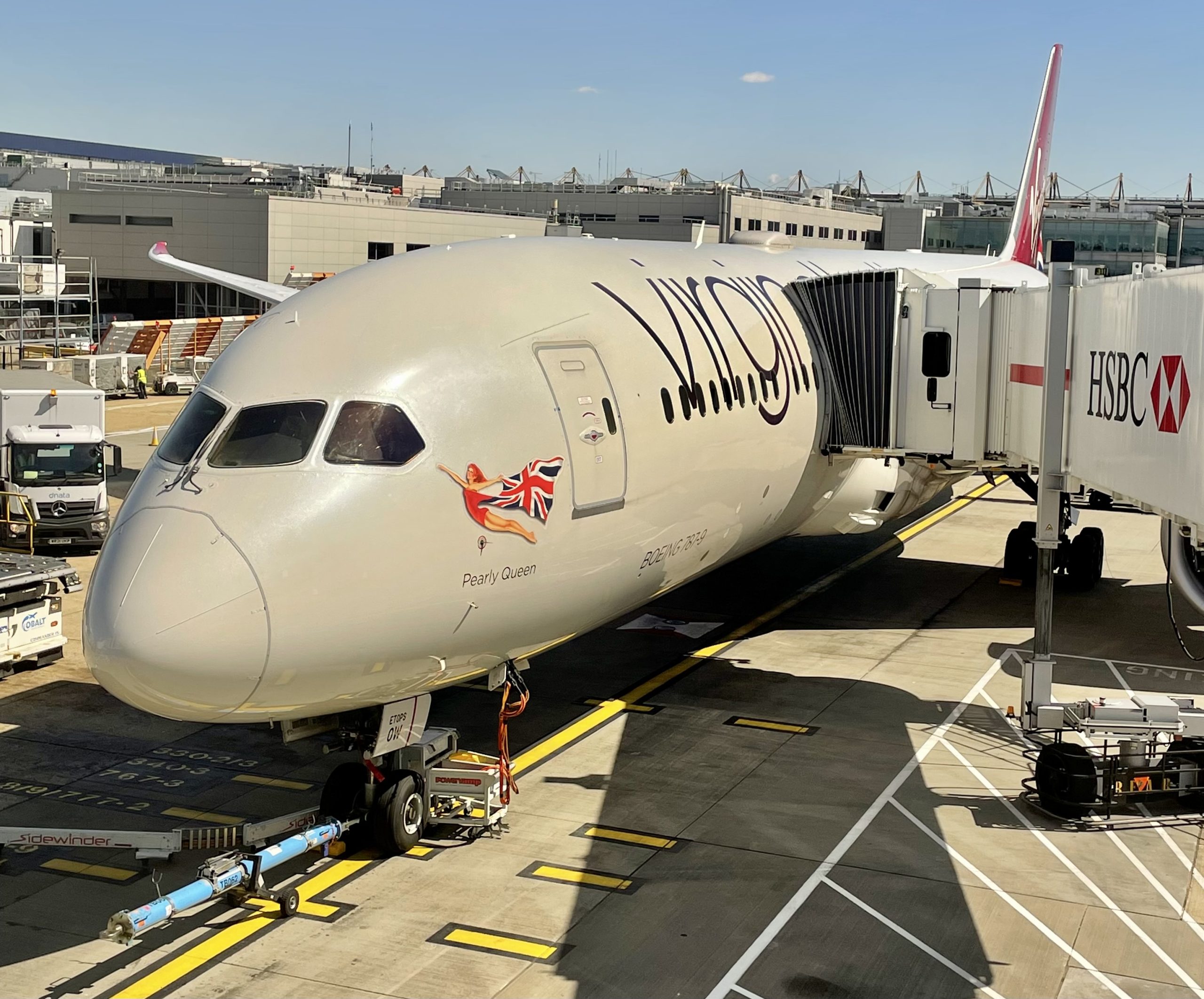
Pearly Queen, the Virgin Atlantic 787-9 that flew me from London to Austin. (Photo: Mateen Kontoravdis)
After nearly two years, Virgin Atlantic will be cutting its flight from London Heathrow to Austin. The airline confirmed the route cancellation in a statement to AirlineGeeks on Friday.
“Following a network review, Virgin Atlantic plans to suspend services between London Heathrow and Austin from the beginning of 2024. The airline’s route to and from Austin has been proudly operating since May 2022, but following a persistent softening in corporate demand, specifically the tech sector, the airline has taken this difficult decision,” the statement said.
Virgin Atlantic also added that affected customers will be provided options, including a full refund. The last flight will be Jan. 7, 2024, according to the airline.
Over the last several years, Austin has seen a surge in traffic. In 2022, the airport set another record for traffic with 21 million passengers enplanements, beating the 2019 record, according to KXAN Austin.
A handful of European airlines have launched service to Austin in recent years, including British Airways, KLM, and Lufthansa. Per Cirium Diio data, British Airways is the only international carrier to maintain daily flights in Austin.
Additional Network Changes
Virgin Atlantic is also making a handful of other network tweaks, too. For the Summer 2024 season, the U.K.-based airline will add additional frequency on its London Heathrow-Miami service, upping to 14 flights per week from 11.
The airline’s London Heathrow-Barbados flight will go from 11 to 14 weekly flights as well between Jan. 10, 2024, and March 29, 2024. Its seasonal Dubai flights will also go to a daily service.
Ryan founded AirlineGeeks.com in February 2013 and has spent more than a decade covering the airline business. His work has been featured by CNN, WJLA, CNET, and Business Insider. His aviation experience spans airport operations, Part 135 regulatory compliance, and airline crew workforce planning, along with time behind the yoke of a Cessna 172 and interviews with airline executives. Ryan now serves as Group President of Firecrown Media’s Aviation Group. He holds a B.S. in Air Transportation Management and an MBA from Arizona State University and teaches Airline Management at Embry-Riddle Aeronautical University.
When people think of Lufthansa, the first thing that comes to mind are the gleaming white airplanes with a crane on the tail taking passengers to places in Germany like Frankfurt and Munich. What many don’t realize, however, is how massive the airline is when considering all of its subsidiaries as part of the Lufthansa Group.
Lufthansa offers its own airline services and also owns many airlines across Europe such as Austrian Airlines, Swiss International Air Lines, Brussels Airlines, and Eurowings along with a handful of smaller airlines. When combined with all of its subsidiaries, Lufthansa is the second-largest airline in Europe.
A lot of this growth came through consolidation with other major airlines in Europe, such as Austrian and Swiss Air Lines. The rest of the growth has come from the establishment of subsidiaries by Lufthansa. One would think that the airline would simply expand existing Lufthansa services instead of creating entirely new subsidiaries but Lufthansa tends to prefer to create new airlines to take advantage of a major cost saving: labor.
Time and time again, we have seen Lufthansa create a new subsidiary to effectively side-step labor collective bargaining agreements with mainline Lufthansa staff. This strategy allows the Lufthansa Group to create airlines with lower cost structures than the mainline arlines to compete with low-cost carriers in Europe such as Ryanair and easyJet.
One More Subsidiary
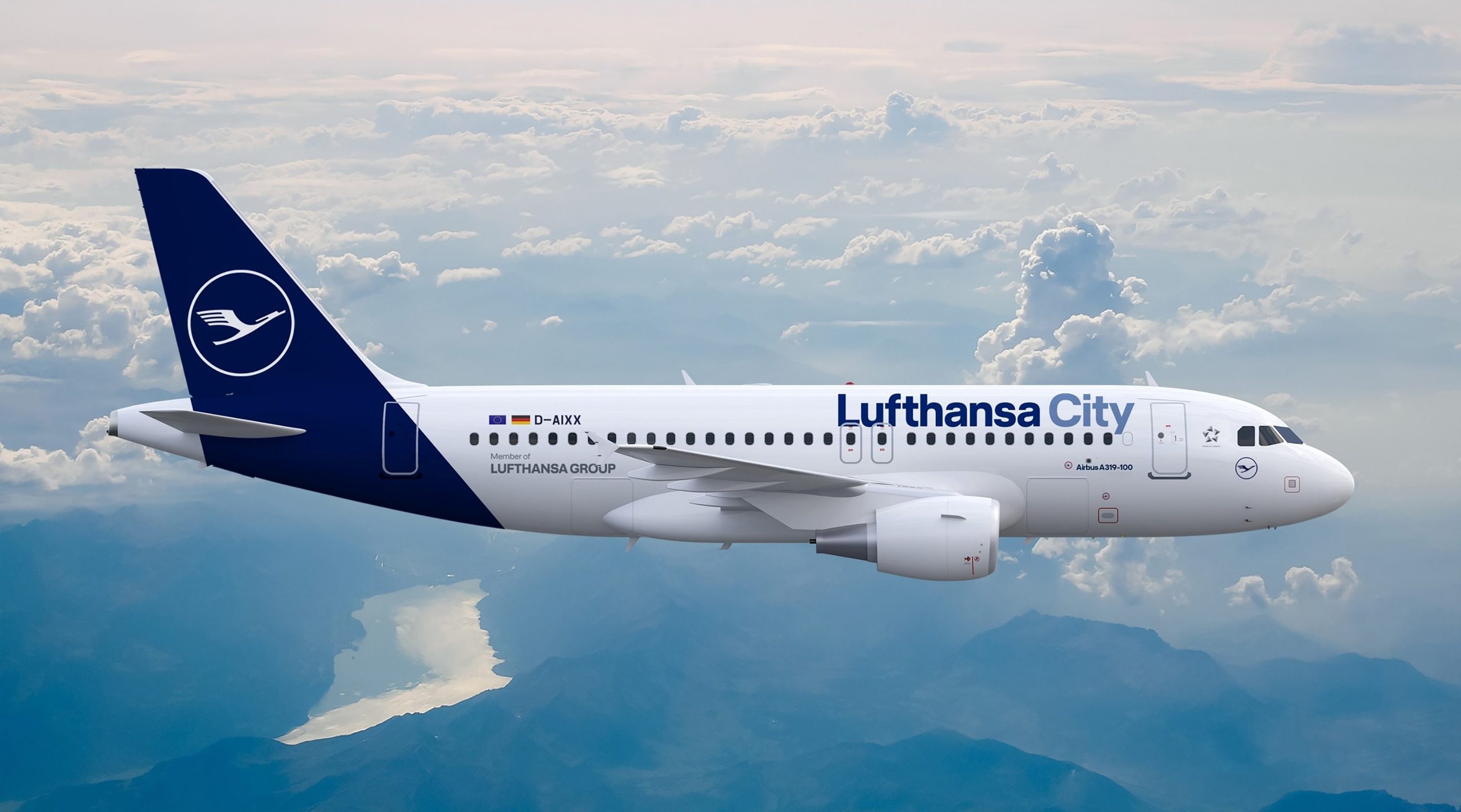
This past week Lufthansa announced yet another airline to take skirt around their labor agreements with Lufthansa staff. The new airline will be called Lufthansa City Airlines and will begin operations in the Summer of 2024.
The plan is for the airline to operate smaller Airbus jets, provided by Lufthansa, out of Frankfurt and Munich and will primarily serve as feeder flights for Lufthansa’s long-haul mainline operations. Lufthansa is very bullish on the growth of the German long-haul market.
Lufthansa City Airlines will start hiring this November and is encouraging employees of Lufthansa CityLine, and existing subsidiary, and former employees of the now defunct Lufthansa subsidiary Germanwings to apply to City Airlines.
Unhappy Unions
This move has drawn much attention from the labor unions that represent Lufthansa employees. They’re calling the creation of this airline and focus on hiring existing group employees a legal sleight of hand. The union claims this move allows Lufthansa to reduce costs by hiring employees at the new airline that are already part of Lufthansa Group under far less advantageous contracts.
Unions are likely used to this by now given all the new subsidiaries that pop up often. It’s the next thing on their plate after having obtained 17 percent pay raises for Lufthansa pilots over the summer after months of negotiations and strikes.
Lufthansa insists that future employees at the airline will have competitive contracts as recruitment kicks off next week.
Hemal took his first flight at four years old and has been an avgeek since then. When he isn't working as an analyst he's frequently found outside watching planes fly overhead or flying in them. His favorite plane is the 747-8i which Lufthansa thankfully flies to EWR allowing for some great spotting. He firmly believes that the best way to fly between JFK and BOS is via DFW and is always willing to go for that extra elite qualifying mile. Hemal's opinions are his own and do not reflect those of his employer.
U.K. CAA Approves 26% Increase in Air Traffic Services Charges
According to the authority’s calculations, the decision will increase the average cost of U.K. enroute air traffic services.
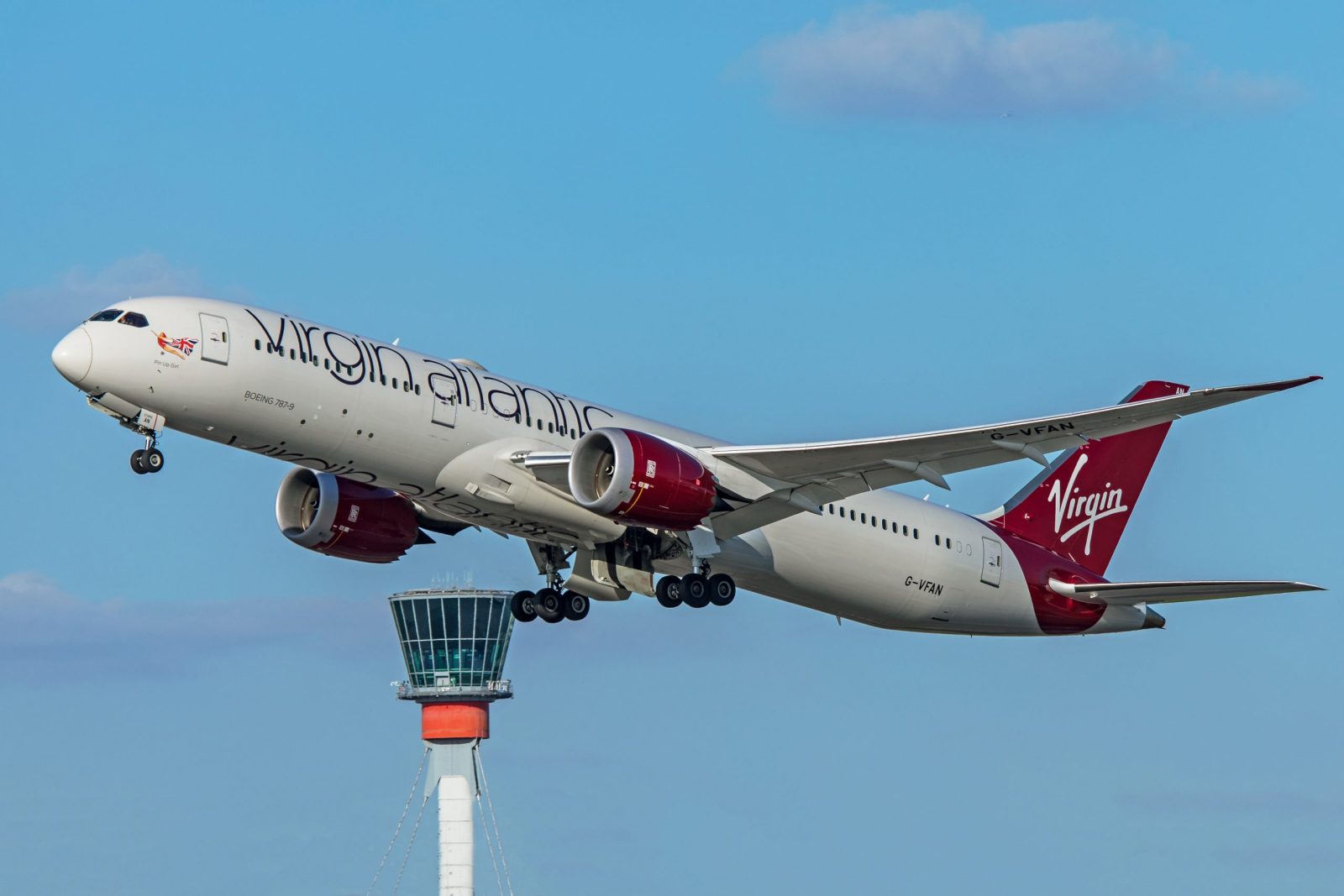
A Virgin Atlantic 787-9 departing London Heathrow. (Photo: AirlineGeeks | William Derrickson)
The provider of enroute air traffic control services in the United Kingdom has been given approval by the U.K.’s Civil Aviation Authority (CAA) to raise prices over the period from 2023 to 2027. In an announcement on Thursday, the UK’s regulatory body ‘set out its Final Decision on new price control arrangements for NATS (En Route) plc (“NERL”), the economically regulated subsidiary of NATS Holdings.’ The NATS Holdings group also has an unregulated business, NATS Services, that provides air traffic control (ATC) services to airports and aviation-related organizations.
According to the authority’s calculations, the decision ‘will increase the average cost of U.K. en route air traffic services by around £0.43 ($0.52) to around £2.08 ($2,52) per passenger per flight.’ These are the prices charged to airlines flying through the U.K. and North Atlantic airspace by the air traffic management operator.
Andrew Walker, Chief Economist at the UK Civil Aviation Authority, said: “Our decision will provide the resources and investment required for NERL to provide a resilient, high-quality service for passengers and modernise its services, while recovering costs from the pandemic, which is consistent with the traffic risk sharing arrangements in NERL’s licence at the time.”
“Overall, the price control should ensure that NERL provides an efficient service and value for money,” added Walker. “Implementing targets around performance, efficiency and environmental impact will help deliver an improved airspace system that will benefit everyone.”
Backlash from Airlines
News of the increase from £47 in 2022 to £64 in 2023 to 2027 inclusive was met with disapproval from some airlines. Jonathan Hinkles, chief executive of U.K. regional carrier Loganair, wrote in a LinkedIn post: “We’ve progressed from highway robbery in the 18th century to airway robbery in 2024, based on today’s Civil Aviation Authority decision on the UK air traffic control charges NATS can levy.”
Mr. Hinkles suggested that airlines would seek to avoid U.K. airspace even though it may increase flight times and environmental impact. “For a routine flight such as Glasgow to Faro or Tenerife, airlines will now take-off and turn right to leave expensive U.K. airspace as soon as they can, to reach cheaper Irish airspace,” he wrote. “Ireland’s ATC charges are less than a third of the U.K.’s, so even though an airline will burn more fuel flying this longer route – and generate more emissions – the saving driven to avoid these rapacious NATS charges is worth it.”
The NATS group is 49 percent owned by the U.K. Government with a further 42 percent owned by an ‘Airline Group.’ British Airways, easyJet and Virgin Atlantic together make up about a third of a share in the ‘Airline Group’ with the U.K.’s second-largest pension fund Universities Superannuation Scheme (USS) owning 49 percent.
News of the price rise comes after a meltdown of the U.K.’s air navigation system in late August resulting in the cancellation or delay of over 2000 flights. The U.K. CAA advised that the decision on the price rise is separate from the Authority’s Independent Review of NATS’ technical issue on the U.K. Bank Holiday weekend at the end of the summer holidays. A recent NATS report on the event was branded by Ryanair Group’s chief executive Michael O’Leary as “factually inaccurate and full of rubbish” with NATS making “false claims.”
As to the effect on airline operations following the CAA’s decision, Loganair’s Hinkles wrote the following: “We held out on some unprofitable regional routes which haven’t recovered from the pandemic in the hope of improvement. The CAA and NATS have today removed one of the few causes for hope. We need to carefully consider our next steps, and decide what we now have to do. At its core, this is a really bad decision with consequences for customers, the economy and our environment. Airway robbery indeed.”
John has always had a passion for aviation and through a career with Air New Zealand has gained a strong understanding of aviation operations and the strategic nature of the industry. During his career with the airline, John held multiple leadership roles and was involved in projects such as the introduction of both the 777-200 and -300 type aircraft and the development of the IFE for the 777-300. He was also part of a small team who created and published the internal communications magazines for Air New Zealand’s pilots, cabin crew and ground staff balancing a mix of corporate and social content.
John is educated to postgraduate level achieving a masters degree with Distinction in Airline and Airport Management. John has held the positions of course director of an undergraduate commercial pilot training programme at a leading London university. In addition he is contracted as an external instructor for IATA (International Air Transport Association) and has been a member of the Heathrow Community Fund’s ‘Communities for Tomorrow’ panel.
United Targets Army Reservists, Students for Maintenance Job Training
Select U.S. Army reservists and students from three aviation maintenance schools have a new path to maintenance technician jobs at United Airlines.
The airline is partnering with the U.S. Army Reserve Aviation Command, as well as the National Aviation Academy, Aviation Institute of Maintenance, and Pittsburgh Institute of Aeronautics, to train up to 300 students per year through a new Calibrate Technician Pathway Program. (Photo: United Airlines)
Select U.S. Army reservists and students from three aviation maintenance schools have a new path to maintenance technician jobs at United Airlines.
The airline is partnering with the U.S. Army Reserve Aviation Command, as well as the National Aviation Academy, Aviation Institute of Maintenance, and Pittsburgh Institute of Aeronautics, to train up to 300 students per year through a new Calibrate Technician Pathway Program. As part of its military recruitment partnership with the aviation command, the airline also plans to host career fairs and provide guidance to reservists about airframe and powerplant certification programs, which the airline said would also support hiring goals for technicians of ground service equipment and facilities.
“Investments in new aircraft and facilities require that we also increase our pipeline of maintenance technicians that will ensure our expansive fleet, facilities, and equipment are safely and efficiently maintained,” Simone Drakes, managing director of Calibrate at United, said in a statement. “Launching this new program alongside highly regarded institutions whose high-quality training and aviation education will help us to reach our United Next and maintenance technician hiring goals.”
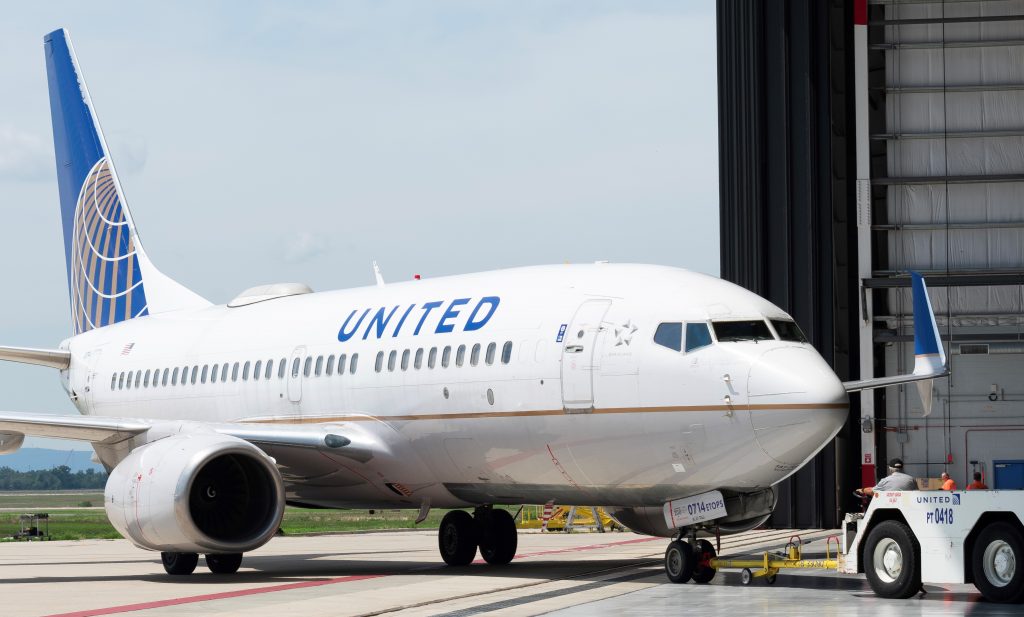
A United Airlines Boeing 737-800 being brought into the maintenance hangar at Washington Dulles International Airport. (Photo: AirlineGeeks)
The Calibrate Technician Pathway Program is separate from the airline’s apprenticeship program, which pays students while they receive on-the-job training and obtain certifications. Under the pathway program, applicants must be fully certified. After completing all necessary certifications, Army reservists and students will be invited to apply and interview at United’s Tech Ops Recruiting Center in Houston.
“Participants will have priority screening consideration and benefit from United’s large ecosystem, including access to mentorship opportunities with seasoned maintenance technicians and its 42 domestic technical operations stations,” United said.
Once accepted into the program, students must maintain a high grade-point average and attendance record to stay in consideration for hiring after graduation.
Editor’s Note: This story first appeared on FlyingMag.com.
AirlineGeeks.com was founded in February 2013 as a one-person blog in Washington D.C. Since then, we’ve grown to have 25+ active team members scattered across the globe. We are all here for the same reason: we love deep-diving into the fascinating realm of the airline industry.
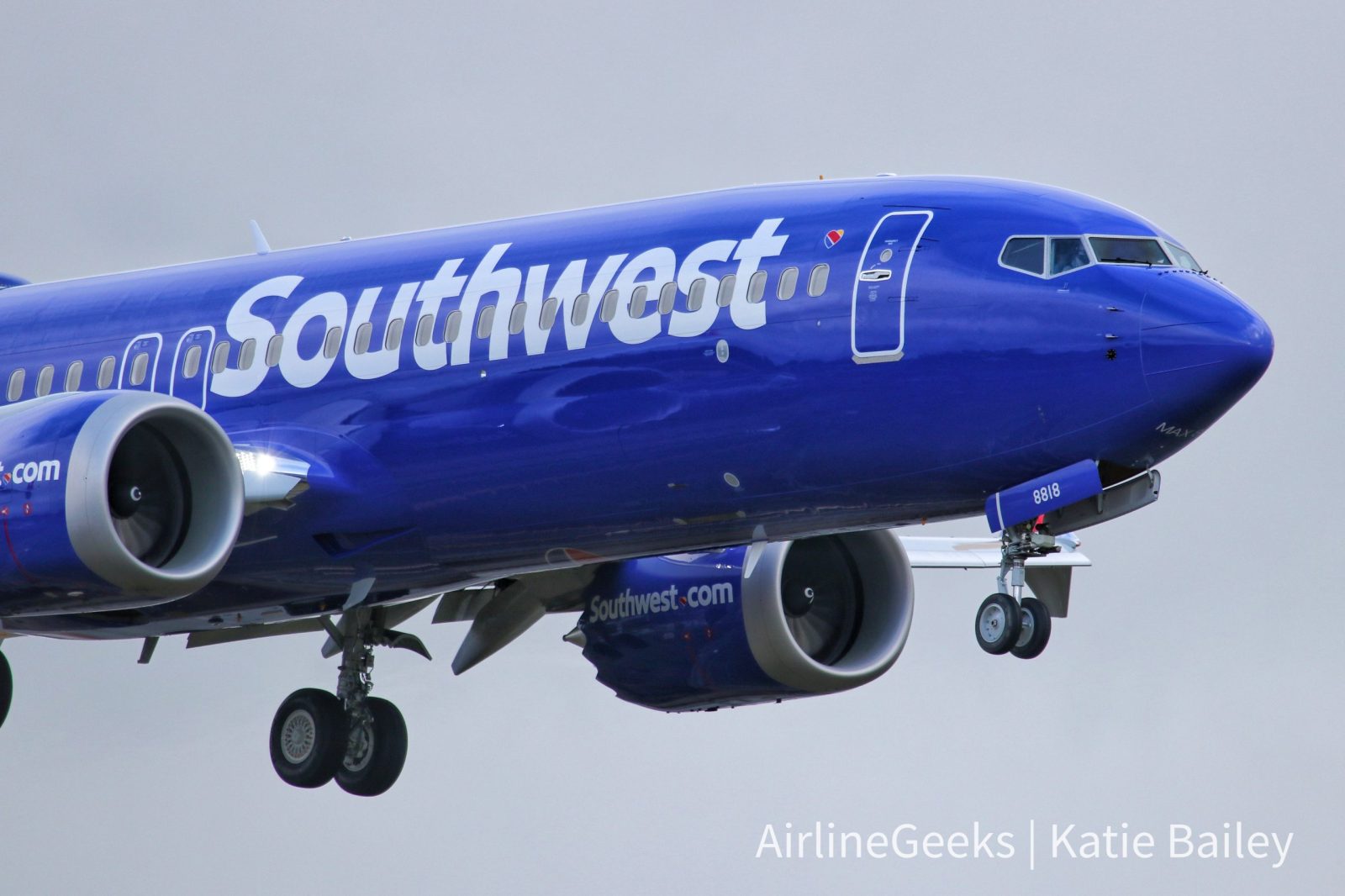
A Southwest Boeing 737 MAX 8 on approach to Paine Field.
(Photo: AirlineGeeks | Katie Zera)
With its schedule extension through early August 2024, Southwest is adding over 20 new routes across its network. The Dallas-based carrier’s expansion doesn’t come without some cuts, though. The airline confirmed that it would also be trimming its international operation from Fort Lauderdale.
New Service from Orlando
Southwest is bolstering its Orlando operation with a handful of new international routes. Starting on June 4, 2024, the airline will add daily service to Cancun (CUN), Grand Cayman (GCM), Nassau (NAS), Providenciales (PLS), Punta Cana (PUJ), and San Jose, CR (SJO).
Southwest currently serves several domestic destinations from Orlando along with Aruba (AUA) and Montego Bay (MBJ). According to Department of Transportation (DOT) data, Southwest maintains the most market share at Orlando International Airport.
The new routes don’t come without cuts. As first pointed out by Enilria, Southwest will remove most of its Caribbean routes from Fort Lauderdale. These include Cancun (CUN), Grand Cayman (GCM), Havana (HAV), Nassau (NAS). Punta Cana (PUJ), and Turks/Caicos (PLS). Most of these flights were daily.
San Juan (SJU) and Montego Bay (MBJ) flights will stay in Fort Lauderdale, although MBJ drops to a once-weekly frequency. A Southwest spokesperson confirmed these cuts in Fort Lauderdale, adding that they will take effect on June 4 as some of the routes move to Orlando.
These cuts will increase both JetBlue and Spirit’s market dominance in Fort Lauderdale. The carriers – who are planning to merge – have 30% and 18% market share in Fort Lauderdale, per DOT data.
Boosting Burbank Service
On the West Coast, Southwest is doubling down on service to Burbank. Also starting on June 4, the carrier will launch service to Boise, Kansas City, New Orleans, San Antonio, and St. Louis with daily flights.
Southwest is also adding a handful of seasonal, Saturday-only flights from both Dallas and Nashville. From Dallas, the airline will serve Buffalo/Niagara, Fresno, Providence, and Spokane.
The airline will also add flights from Nashville to Bozeman and Grand Rapids.
Other New Routes
In addition to batches of new routes from its focus cities, Southwest is adding a few one-off new routes. In June, the airline will begin daily nonstop service from Baltimore to Colorado Springs.
On Twitter, Ishrion Aviation pointed out a few additional flights that were new as part of the carrier’s schedule extension. These include Columbus to Kansas City, Columbus to San Diego, Pittsburgh to San Diego, Denver to Greenville, El Paso to Chicago Midway, and Eugene to Sacramento.
The new routes come on the heels of record third-quarter operating revenues for the airline. Southwest is expecting to slow its Available Seat Miles (ASM) growth in 2024, the company’s CEO Bob Jordan said in a press release.
Ryan founded AirlineGeeks.com in February 2013 and has spent more than a decade covering the airline business. His work has been featured by CNN, WJLA, CNET, and Business Insider. His aviation experience spans airport operations, Part 135 regulatory compliance, and airline crew workforce planning, along with time behind the yoke of a Cessna 172 and interviews with airline executives. Ryan now serves as Group President of Firecrown Media’s Aviation Group. He holds a B.S. in Air Transportation Management and an MBA from Arizona State University and teaches Airline Management at Embry-Riddle Aeronautical University.
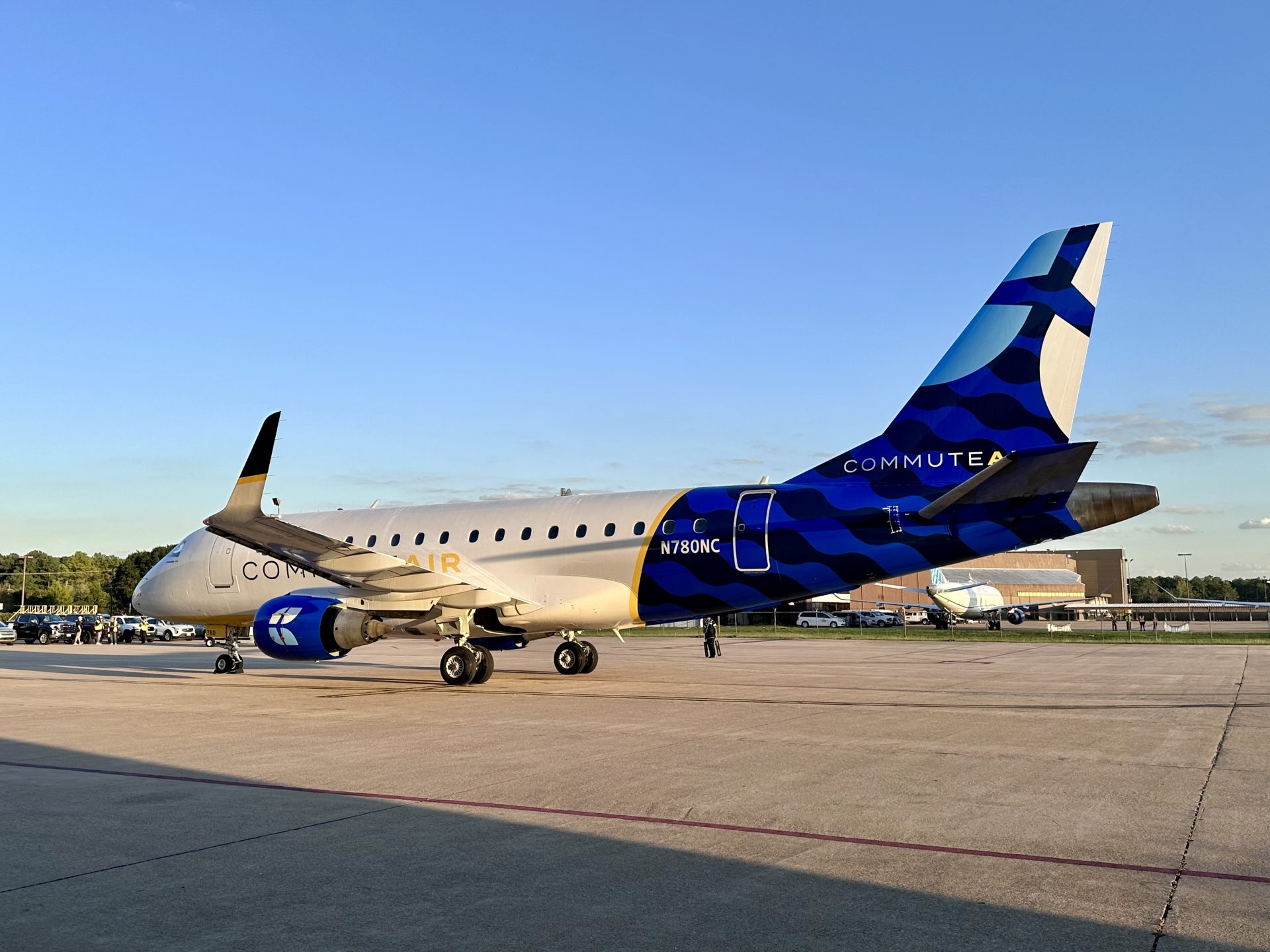
CommuteAir's first E170 arrives in Houston. (Photo: AirlineGeeks | Ryan Ewing)
A lot has changed for regional airlines in just three years. But one small U.S. airline is thinking outside the box as constraints continue to pile on the regional sector. Far from immune to labor constraints, CommuteAir is broadening its horizons, adding a single Embraer E170 to its fleet.
After beating long-time market incumbent ExpressJet in 2020, the regional carrier now exclusively flies within the United network from its bases in Houston, Denver, and Washington D.C. With a 40% ownership stake by United, CommuteAir operates to 75 destinations with 60 Embraer E145XR jets. Like many of its peers, CommuteAir is looking for new ways to attract and retain talent while preserving air service to small communities.
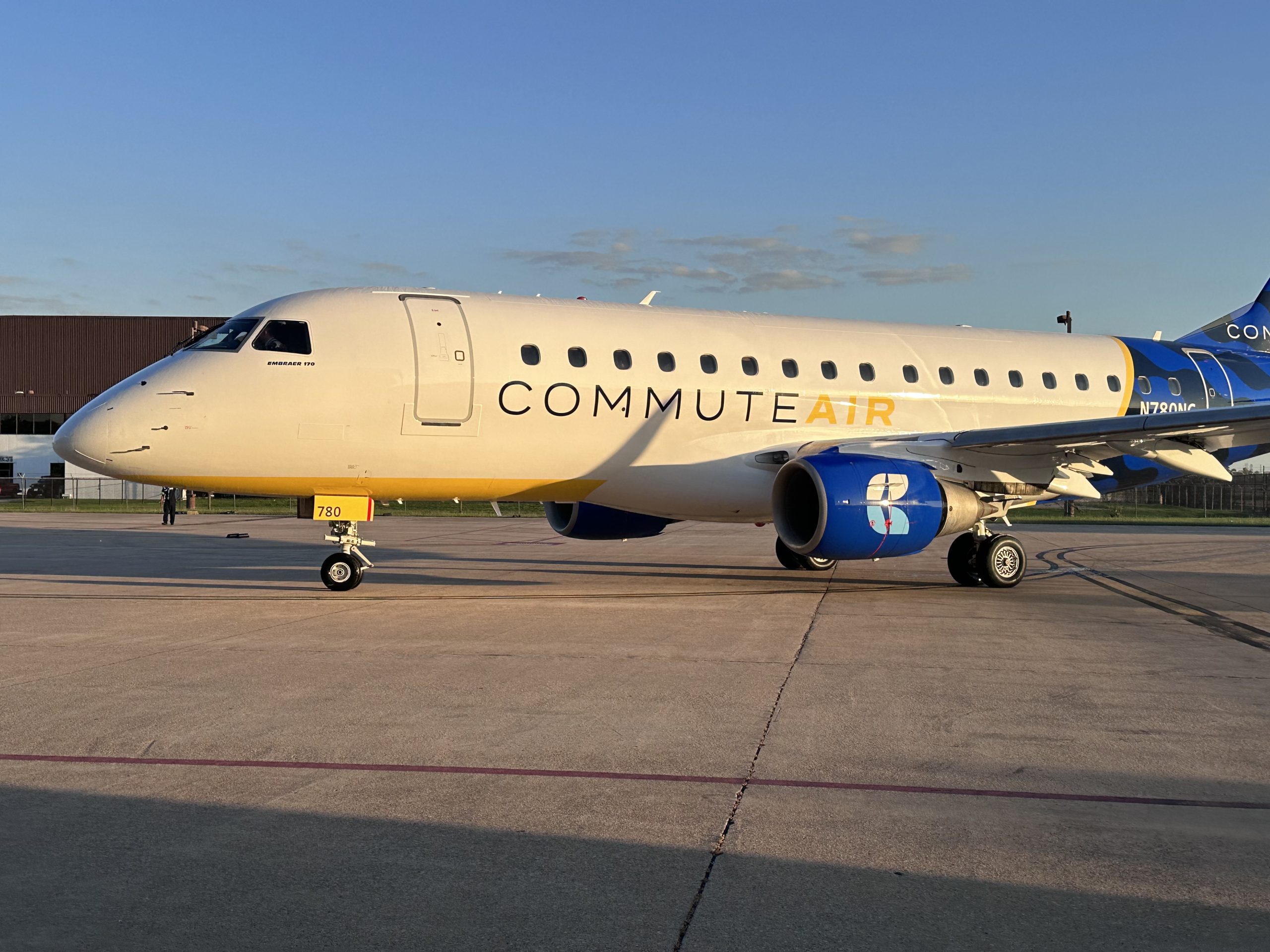
At a hangar celebration, CommuteAir showed off its first E170 in its house livery. Previously belonging to an Australian operator, CommuteAir’s new jet will not operate in United’s network. Instead, the airline has bigger plans for the 76-seat aircraft.
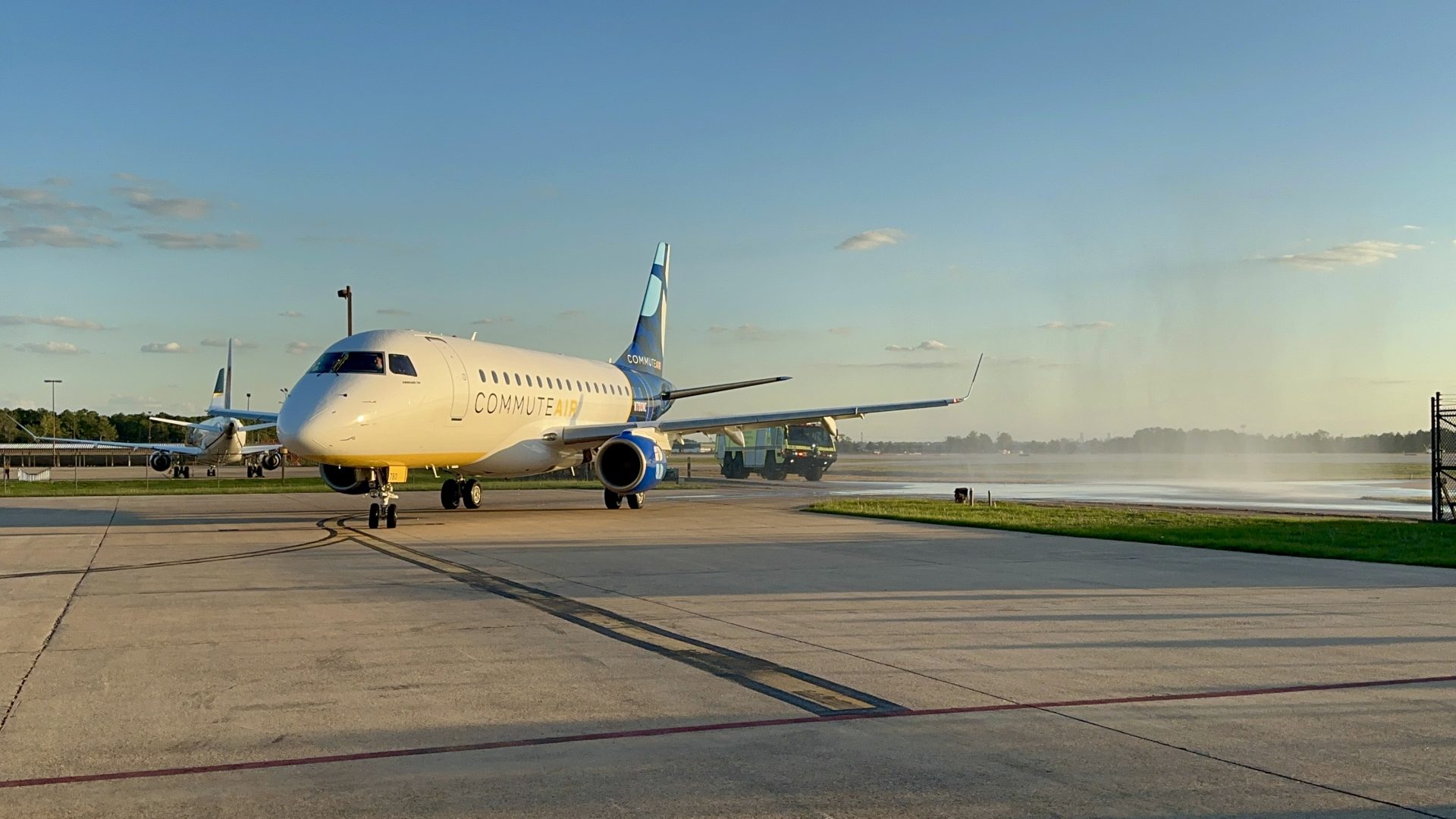
CommuteAir’s first E170 receives a water canon salute at the carrier’s Houston hangar (Photo: AirlineGeeks | Ryan Ewing)
A Reshaping 50-seat Market
The market for 50-seat regional aircraft is increasingly becoming more complex. Rising operating costs are largely to blame. Shorter routes with less seats mean fewer Available Seat Miles (ASMs) and higher unit costs. As fuel costs and pilot wages increase, airlines are pivoting to larger 76-seat aircraft, such as the Embraer 170/175 series.
According to the Regional Airline Association (RAA), the number of CRJ-200s operated by U.S. carriers decreased by over 60% between 2008 and 2020. Similarly, 50-seat Embraer jets have also seen a 60% reduction in flights between 2008 and 2022 among the major U.S. carriers. By comparison, the larger Embraer E170 series has seen a 13% increase in flight operations, per Cirium Diio data.
As an operator of only 50-seat jets, CommuteAir is thinking proactively about its positioning in the marketplace. Not only will proving to its sole mainline partner that it can successfully operate the larger E170 be key, but diversifying its business is also beneficial for the long term.
One of CommutAir’s Embraer E145XR aircraft at Washington Dulles Airport. (Photo: AirlineGeeks | Craig Fischer)
“What do people want to see from CommuteAir? What do we want to see from CommuteAir? How do you survive in this crazy industry right now where, you know, we went from a pilot shortage to a captain shortage now…,” CommuteAir’s CEO Rick Hoefling told AirlineGeeks during an interview onboard his company’s newest aircraft. “So the pendulum is starting to move. So we have to have a short-term, how do you get through these crazy times, but a longer-term view and a longer-term plan.”
Filling a Gap
It is not all too common for a regional carrier to add an aircraft to its fleet that does not operate directly for its mainline partner. With only one E170 in its fleet for the foreseeable future, CommuteAir plans to use the larger Embraer jet for ‘training purposes’ and ‘limited charter services,’ according to a 2022 application with the Department of Transportation (DOT).
“So this aircraft allows us to move from a small commuter certificate to a much larger public convenience and accessibility certificate. And that paves the way for future opportunities for CommuteAir, operating much larger gauge aircraft,” Hoefling shared.
“Right now, our plan for 2024 is to get that ops certificate…and then move forward with doing some testing [of] the charter market,” Hoefling continued. He says that the aircraft will fall under Part 121 supplemental operating requirements. CommuteAir has applied for charter certification from the DOT.
Hoefling – who spent 36 years at United before taking the helm at CommuteAir – sees an underserved charter market in the U.S. “The Embraer 170 and 175 fleet, the 76-seat market in the United States, is underserved from a charter perspective,” he said.
“If you go and look at DOT Form 41 data and you look at the number of 50 seat charters that are operated and then you look at the number of narrowbodies, larger over 100 plus seat aircraft, those things measures in the tens of thousands. In 2022, there were only 750ish charters operated with a 76-seat aircraft,” he said. “And so this fills a gap, and this is something that we’re leaning into, that is an opportunity for us to explore.”
CommuteAir is looking at a variety of methods to ‘sophisticate’ its future business strategy. This doesn’t just include larger gauge aircraft, Hoefling said. But it also could include acquiring MRO services or flight schools.
“We’re trying to get through this crisis in a longer-term view,” he added in reference to some of the post-pandemic constraints on regional operators, including an ongoing pilot shortage.
Despite some of these constraints, CommuteAir managed to out-perform Mesa and GoJet – who also exclusively operate for United – during the Summer 2023 peak. Averaged across June, July, and August, nearly 82% of the carrier’s flights were on time, per DOT On Time Performance data. This is 10 points higher than GoJet, which also had fewer flights overall.
CommuteAir’s first E170 is in the company’s new livery. (Photo: AirlineGeeks | Ryan Ewing)
Small Community Connections
Regional airlines – including CommuteAir – serve a vital role in many small communities, providing air links to larger cities and beyond. More than 14 small airports have lost air service completely since early 2020, according to Politico.
In 2021, United announced it would cut flights to 11 airports of which CommuteAir only regularly flew to three. Per Cirium Diio data, none of those routes have been resumed so far. CommuteAir did not confirm if the addition of the E170 would help restore some air service.
The interior of CommuteAir’s 50-seat E145 with its 1-2 configuration. (Photo: AirlineGeeks | Craig Fischer)
John Sullivan, who is CommuteAir’s Co-Founder and Executive Chairman, has 45 years of experience in the regional airline sector. He was also at the airline’s Houston hangar for the E170’s arrival.
“I think some 20 percent of communities have lost service in the last five years. And some of them lost all their service. Some of them have lost frequencies,” Sullivan told AirlineGeeks while discussing pilot constraints in the industry. “But nonetheless, it’s a tremendous blow to the economic engine of the country when that happens. And I think eventually it’s going to sort itself out because the people in Congress who have lost service in their communities are starting to push in the opposite direction.
With a new aircraft in tow and relatively strong operating performance compared to its peers, CommuteAir is thinking for the future as the regional airline sector navigates a presently turbulent sky.
“I couldn’t be more proud to be part of this team,” Hoefling added praising his team. “They made this moment happen and they’re the ones that are making our long-term future much brighter.”
Ryan founded AirlineGeeks.com in February 2013 and has spent more than a decade covering the airline business. His work has been featured by CNN, WJLA, CNET, and Business Insider. His aviation experience spans airport operations, Part 135 regulatory compliance, and airline crew workforce planning, along with time behind the yoke of a Cessna 172 and interviews with airline executives. Ryan now serves as Group President of Firecrown Media’s Aviation Group. He holds a B.S. in Air Transportation Management and an MBA from Arizona State University and teaches Airline Management at Embry-Riddle Aeronautical University.
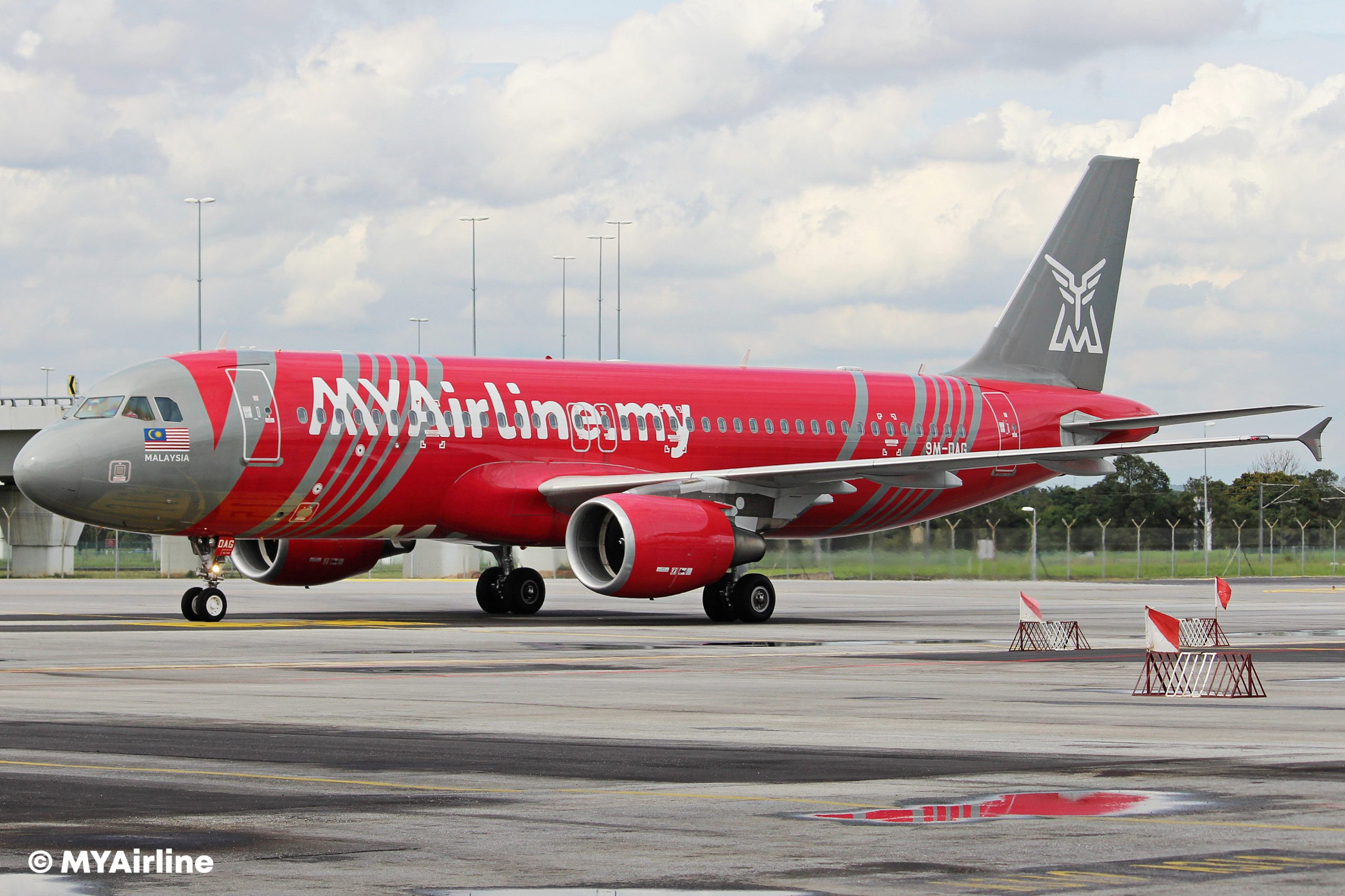
Malaysia’s MYAirline saga has no end in sight. The Transport Ministry is investigating the decision to grant the company an Air Service License (ASL) in 2022. But the chaos is far from over. Goh Hwan Hwa, the co-founder of the airline, was arrested and accused of money laundering. According to New Strait Times, Goh has been “on the authorities’ radar for the past two years for alleged dubious activities.”
“This is definitely something that Mavcom (Malaysia Aviation Commission) has to be answerable. They have to be accountable in terms of the process of granting the license (ASL),” Anthony Loke, Malaysia’s Transport Minister, said.
Mavcom was criticized for granting the Air Service License without scrutinization, mentioning it will cooperate in the Ministry of Transport’s investigation. Earlier, Loke said Mavcom was caught completely off guard.
The low-cost carrier launched its services in December 2022, operating domestic routes and to Bangkok with nine leased Airbus A320 airplanes.
The closure of the new airline is familiar in Malaysia. Rayani Air, a well-known Islamic airline, ceased operation after six months of launching in 2016.
MYAirline abruptly ceased flight services on the early morning of October 12, only 45 minutes before its first flight departure of the day. Hundreds of passengers were left stranded at Kuala Lumpur International Airport. The decision came after the airline failed to secure a new investor on October 11. The airline was accused of not providing a contingency plan to resolve a financial crisis.
The government did not sound the alarm, even the airline failed to pay its employees’ salaries and the airport’s aeronautical fees on time. Ironically, the Civil Aviation Authority of Malaysia (CAAM) has extended its Air Operator Certificate (AOC) by two years only three days before the suspension. But the AOC is now revoked for 90 days after the chaos.
The Resumption Remains Uncertain
As a result of the suspension, the tourism industry in Sabah, Eastern Malaysia is facing a huge impact and losing around 6,000 flights per week. Sabah is demanding for more direct flights to its tourist hotspots, such as Kota Kinabalu.
According to the airline, no staff “is placed on unpaid leave or been terminated to date.” MYAirline said that it will prioritize statutory payments and staff salaries. The staff were left behind, as the salaries for September were unpaid. On the other hand, unused tickets could be refunded by the end of this year. The incident has affected 125,000 passengers, and the unused tickets refund could reach RM 22 million ($4.6 million).
The stiff competition in the country put a strain on the startup. MYAirline believes that the tickets’ low price resulted in the financial circumstances. MYAirline held only 10% of domestic market share when it shut down.
Datuk Seri Azharuddin Abdul Rahman, interim accountable executive, revealed that the airline has received interest for a strategic partnership and has submitted an application to extend its ASL.
However, the cash-strapped airline is facing another challenge. The aircraft lessors consider recalling the airline’s aircraft following the incident. AirAsia could potentially enhance its fleet by leasing six of MYAirline’s aircraft.
“In regards to the aircraft lessors, we are in talks with them to retain our aircraft.” Azharuddin said.
Wisk became the first electric vertical takeoff and landing (eVTOL) air taxi company to fly in the greater Los Angeles area with the launch of test flights at Long Beach Airport. The company produces fully autonomous vehicles that do require a pilot onboard.
The test flights allowed Wisk to conduct autonomous flight operations in a complex, real-world commercial airport environment alongside other passenger airline operations. While Long Beach Airport only sees 5% worth of Los Angeles International Airport’s passenger volume, its flight operation number is about 60% of its larger sibling, which is still very busy considering its much smaller footprint.
The company concluded its flight program at the Long Beach Airport with the first public demonstration of an eVTOL air taxi flight in the Los Angeles region during Long Beach’s Festival of Flight. The multi-transition flight was conducted using Wisk’s 5th Generation (Cora) autonomous eVTOL aircraft, demonstrating the safety and reality of autonomous passenger flight. The company also recently announced that its 6th generation prototype is under construction and is on track to fly in 2024.
The test was part of the developer’s and Long Beach Economic Partnership(LBEP) partnership established in February 2022.
In addition, the company also hosted the Mayor of Long Beach and local and state officials from the Los Angeles region, including Orange County and Boeing leadership, for a discussion regarding the future of Advanced Air Mobility(AAM) within the area.
Economic Impact of a New Industry: A Long Beach Case Study
Wisk Aero also sponsored a positive economic impact study based on the Southern California region. Long Beach Economic Partnership and California State University, Long Beach, conducted the study.
The report looked at the economic impact of an Urban Air Mobility network covering the city of Long Beach, California, and the greater Los Angeles-Orange County region. It looked at the possibility of constructing a six-vertiport system initially across this region, ultimately expanding to a ten and finally a twenty-vertiport system.
According to the study, constructing a twenty-vertiport network would generate “2,133 jobs, $174.0 million in labor income, and $423.6 million in economic output.”
Once it is operational, the vertiport network would annually: generate $173.3 million in expenditures, deliver $90.3 million in labor income, and create 943 jobs.
The AAM sector has gained a lot of momentum lately. In October, China issued the world’s first type certificate for an autonomous eVTOL aircraft, the Ehang EH216-S. A week ago, Archer Aviation also reached an agreement with the Abu Dhabi Investment Office to provide an all-electric air taxi service across the UAE. It’s apparent that governments worldwide are seeing the AAM’s potential and trying to move the industry forward.
Fangzhong grew up near an OEM airport in northeastern China, where he developed his enthusiasm for aviation. Taking upon his passion, he's now working as an aircraft interior design engineer. Besides working in the aerospace industry, Fangzhong enjoys trying out different types of airplanes and seeing how airplane interiors have evolved. So far, he's flown on over 80 types of aircraft. He also planespots in his spare time. His rarest catches included the 747 Shuttle Carrier Aircraft and AN-225.
JAL Set to Retire Last Remaining 777-200ER
Japan Airlines was one of the early-adopters of Boeing's 777. The aircraft has kept one 777-200 operating, which will be retired in late 2023.
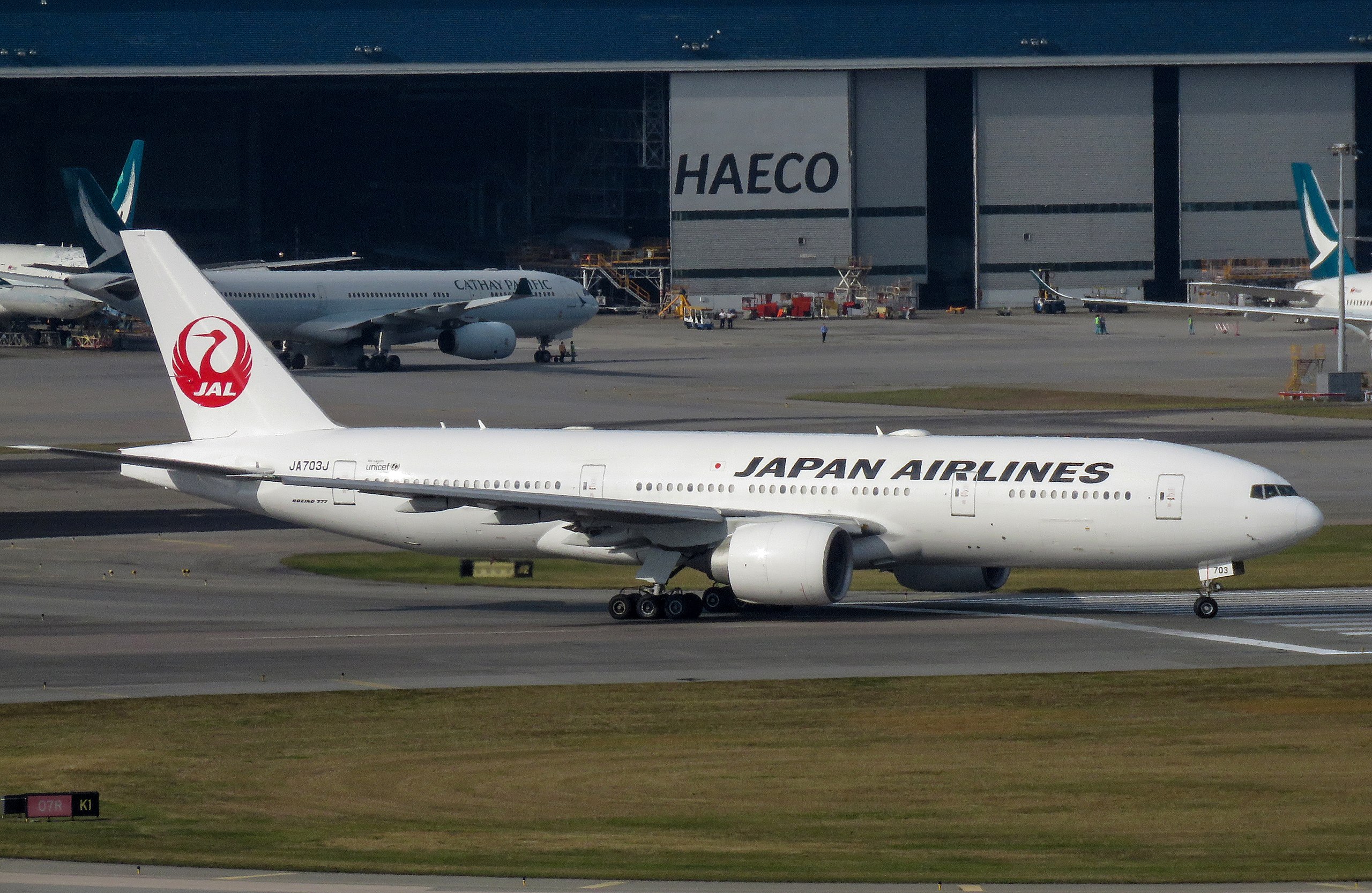
JA703J in Hong Kong (Photo: N509FZ, CC BY-SA 4.0 , via Wikimedia Commons)
Japan Airlines is planning to remove its last remaining 777-200ER aircraft from scheduled service later this year. One of the early adopters of Boeing’s 777, JAL has used the aircraft type for both short and long haul operations.
The airline has phased out its 777-200ER fleet in recent years as newer A350-900 aircraft come online to backfill the carrier’s high-capacity domestic operations. In May, the airline retired its second-to-last 777-200ER aircraft JA701J, according to AeroTime.
Data from ch-aviation shows that JAL began operating the 777-200ER variant in 2002 before phasing them out in 2020. Prior to retirement, the Japanese carrier had 26 777-200 aircraft in its fleet, most of which were over 20 years old.
JAL also has a fleet of 13 777-300ER aircraft, which serve long-haul markets. These are also set to be replaced by the airline’s new ‘flagship’ A350-1000.
The Last 777-200ER
The airline has kept one 777-200ER flying, which is registered as JA703J. The nearly 21-year-old aircraft continues to fly regular domestic flights.
According to data from Cirium Diio, JA703J’s last flight will be on Sunday, Nov. 12, 2023 from Okinawa to Tokyo (Haneda) as JL916. Throughout November, the airline will continue to operate the aircraft between Okinawa-Tokyo and Sapporo-Tokyo.
On Dec. 12, 2023, the airline’s last 777-200 is set to ferry from Tokyo to the U.S. According to the airline, those interested in participating in the ferry flight can sign up to participate here.
Editor’s Note: This story as updated on Saturday, Oct. 28, 2023 at 11:55 a.m. ET to reflect JAL’s correct 777-200 fleet count.
Ryan founded AirlineGeeks.com in February 2013 and has spent more than a decade covering the airline business. His work has been featured by CNN, WJLA, CNET, and Business Insider. His aviation experience spans airport operations, Part 135 regulatory compliance, and airline crew workforce planning, along with time behind the yoke of a Cessna 172 and interviews with airline executives. Ryan now serves as Group President of Firecrown Media’s Aviation Group. He holds a B.S. in Air Transportation Management and an MBA from Arizona State University and teaches Airline Management at Embry-Riddle Aeronautical University.
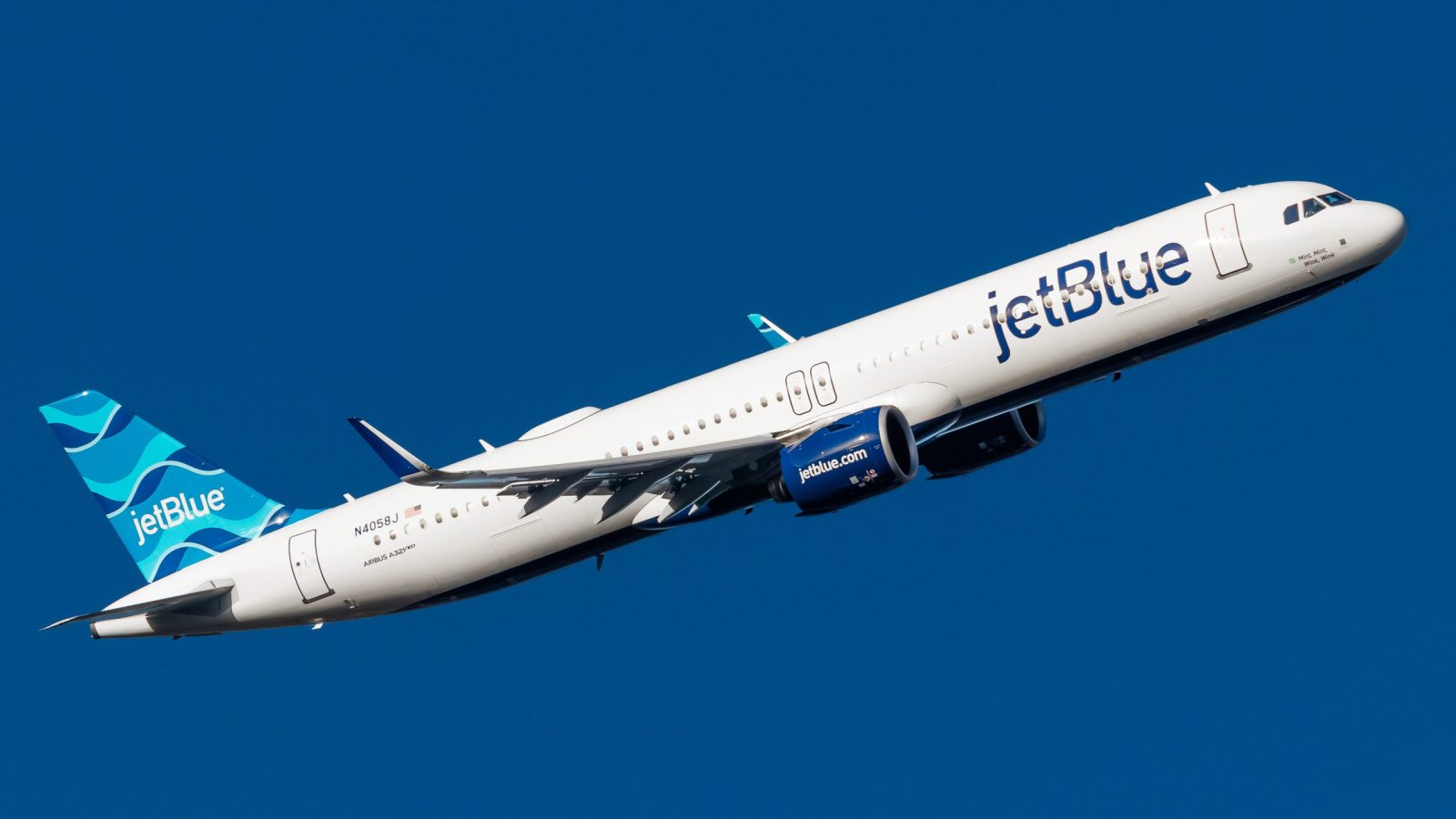
JetBlue Airbus A321 departing London Heathrow [AirlineGeeks | James Dinsdale]
JetBlue is expanding its network portfolio in Europe, adding new destinations from both Boston and New York-JFK. The New York-based airline kicked off its European service in 2021 with flights to London, before eventually adding Paris and Amsterdam.
In a press release Wednesday morning, the airline announced its plans to add Dublin and Edinburgh to its network, starting in 2024. JetBlue is also growing its current flights to Paris.
New Service to Dublin
JetBlue will start new seasonal service to Dublin from its Boston and JFK hubs. According to the airline, daily service on both routes will begin on March 13, 2024. These flights will last almost through the IATA Summer season, ending on Sept. 30, 2024.
While not mentioned in the company’s press release, United recently terminated its codesharing agreement with Aer Lingus, leaving JetBlue as one of the Irish airline’s remaining U.S. partners. JetBlue and Aer Lingus do maintain a unilateral codesharing agreement, which was recently expanded in 2021.
New Service to Edinburgh
With its new service to Edinburgh, JetBlue is adding another dot to its U.K. route map; the airline currently services both London Heathrow and Gatwick airports. Similar to Dublin, JetBlue’s Edinburgh service will also be seasonal from May 22, 2024 to Sept. 30, 2024.
The service will be daily, operating only from New York-JFK.
Unlike JetBlue’s other transatlantic routes, both Dublin and Edinburgh will be operated using the carrier’s A321neo, instead of the A321LR. The A321neo has a more dense configuration with 22 additional seats, including eight fewer premium Mint suites.
Bolstering Service to Paris
The airline launched service to Paris-CDG earlier this year with flights to JFK. Starting on June 20, 2024, JetBlue will add a second daily service from New York to Paris, which is expected to be year-round.
On April 3, 2024, JetBlue will add Boston to Paris. Also set to be year-round, the service will be daily. Both additions will be operated by the airline’s A321LR.
With these new flights, JetBlue will have more than 10 daily flights between the U.S. and Europe, according to Cirium Diio data.
Ryan founded AirlineGeeks.com in February 2013 and has spent more than a decade covering the airline business. His work has been featured by CNN, WJLA, CNET, and Business Insider. His aviation experience spans airport operations, Part 135 regulatory compliance, and airline crew workforce planning, along with time behind the yoke of a Cessna 172 and interviews with airline executives. Ryan now serves as Group President of Firecrown Media’s Aviation Group. He holds a B.S. in Air Transportation Management and an MBA from Arizona State University and teaches Airline Management at Embry-Riddle Aeronautical University.