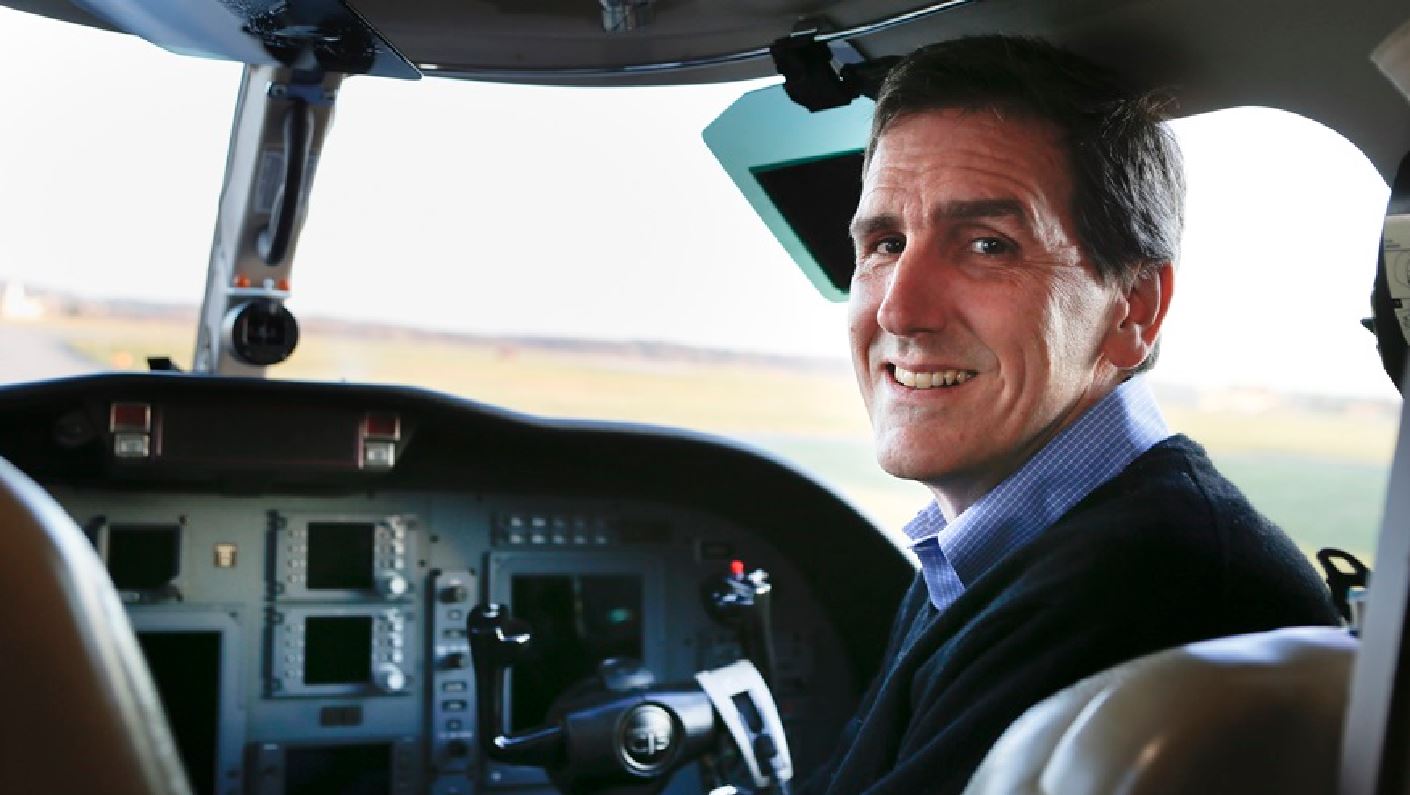
New FAA Administrator Mike Whitaker is a private pilot.(Photo: Chris Rose/AOPA)
On Tuesday evening, the Senate voted unanimously to confirm Mike Whitaker as the next Administrator of the Federal Aviation Administration (FAA). Whitaker is a former deputy administrator at the FAA, where he served from 2013 to 2016. He is also an attorney and a private pilot, previously holding various airline leadership roles, including a 15-year career at United.
“I commend the U.S. Senate for quickly confirming Mike Whitaker to lead the FAA. With his three decades of aviation experience, including his time as FAA’s Deputy Administrator, Mike has earned broad bipartisan support because it’s clear he has the expertise and disposition to successfully lead the agency from day one,” Department of Transportation (DOT) Secretary Pete Buttigieg said in a statement.
Whitaker’s confirmation was praised by aviation industry groups and lawmakers from both parties.
“NATCA congratulates Mr. Whitaker on his confirmation and looks forward to continuing our collaboration with the FAA to address the critical challenges facing the agency,” said NATCA President Rich Santa in a statement.
“The FAA now has the leadership required to thoroughly address staffing and training shortages, runway safety, and modernization of technology and infrastructure throughout the NAS,” Santa added. NATCA represents over 20,000 air traffic controllers at the FAA.
Ongoing since March 2022, the path to a new FAA Administrator has been rocky. After former Administrator, Steve Dickson departed the agency in early 2022, the position has remained vacant. In July 2022, President Biden nominated Denver Airport CEO Phil Washington, who eventually withdrew his nomination due to concerns regarding his experience in the industry. Whitaker was nominated by Biden in September 2023.
Whitaker is expected to be sworn in as FAA Administrator in the coming weeks.
Ryan founded AirlineGeeks.com in February 2013 and has spent more than a decade covering the airline business. His work has been featured by CNN, WJLA, CNET, and Business Insider. His aviation experience spans airport operations, Part 135 regulatory compliance, and airline crew workforce planning, along with time behind the yoke of a Cessna 172 and interviews with airline executives. Ryan now serves as Group President of Firecrown Media’s Aviation Group. He holds a B.S. in Air Transportation Management and an MBA from Arizona State University and teaches Airline Management at Embry-Riddle Aeronautical University.
The Concorde moving into the Bristol museum (Photo: Airbus/Neil Phillips)
“Paris is always a good idea.”
Though Audrey Hepburn didn’t actually deliver that line in her 1954 film Sabrina, it’s widely attributed to her, and having lived in Paris for three years, I couldn’t agree more. To this day, I never need an excuse to go. I’d happily hop the pond to La Ville-Lumière for the opening of an envelope.
But on one day in April 2000, Paris became a great idea, an incredible idea, une très, très bonne idée—no, that’s not hyperbolic enough. On one April day, Paris became the best idea ever, as I booked myself on Air France Flights AF001 and AF002 aboard Concorde for a round trip from New York’s John F. Kennedy International Airport (KJFK) to Paris’ Charles de Gaulle Airport (LFPG).
To say a flight on Concorde (not “the” Concorde) was unlike one on any other commercial aircraft is an understatement. The delta-winged Concorde was a truly unique airplane and an extraordinary feat of aeronautical engineering, especially for its time. Incorporating groundbreaking technologies like fly-by-wire, it was as stunning and graceful as it was swift, scorching the stratosphere at altitudes high enough to make a flat-earther blush. On my particular flights, we got up to FL580 and Mach 2.02—faster than a bullet and high enough to plainly see the curvature of the Earth.
From its first flight a few months before Neil Armstrong and Buzz Aldrin walked on the moon to its first commercial flights in 1976—G-BOAA, London to Bahrain and F-BVFA, Paris to Rio de Janeiro via Dakar, Senegal—to its final flights 27 years later, Concorde captured hearts, minds, and dreams around the world. Coincidentally, F-BVFA is also the airplane I flew on from New York City to Paris. It is now on display at the National Air and Space Museum’s Steven F. Udvar-Hazy Center.
Tuesday, October 24 marks the 20th anniversary of the final scheduled commercial flights of Concorde. On that day, British Airways Concorde G-BOAG, as BA002, took off from JFK, with chief pilot Mike Bannister at the controls, and landed at London’s Heathrow Airport (EGLL) a scant few hours later, but not before “Alpha Golf” formed up with two other Concordes for a low formation pass over London.
Alpha Golf is now on display at the Museum of Flight in Seattle. On its way to retirement—because of course it did—G-BOAG set a New York-to-Seattle speed record of 3 hours, 55 minutes, 2 seconds, flying supersonic over Canada along the way. As one would expect, Concorde holds many speed records, including the fastest Atlantic crossing and New York to London in 2 hours, 52 minutes, 59 seconds.
The final scheduled passenger flight for an Air France Concorde came earlier in 2003 on May 31. That morning, Concorde F-BTSD, as AF001, departed JFK at 8:15 a.m. and landed at 4:30 p.m. local time in Paris. That airframe is on display near Paris at the National Air and Space Museum of France, located at Paris Airport-Le Bourget (LFPB) .
There are just three Concordes on display in the U.S. In addition to the two mentioned earlier, British Airways G-BOAD is preserved at the Intrepid Sea, Air & Space Museum in New York City.
I recently caught up with both Bannister and John Tye, another British Airways Concorde captain, and asked them both what they thought about this anniversary.
“I was fortunate enough to fly that last flight from New York to London,” said Bannister. “Every time I go to Brooklands [Museum near London] and look at the stylish lines of our Concorde there, she still looks like she was designed only a few years ago, very 21st century. I also still find it difficult to get my mind around just how technically advanced she was—an aeroplane that could carry 100 passengers 1,350 miles per hour across the Atlantic in great safety. We did something then that can’t be done now.
“When we look at Concorde, there is nothing like it today. It’s amazing to think that the last flight was 20 years ago. It seems like yesterday, both literally and metaphorically.”
Tye wasn’t flying any of the final flights.
“I was at a beach bar in Barbados, rum and coke in hand and tears streaming down my face as I watched Mike land that last airplane,” Tye said. “On October 24, there will be a big crew reunion at Brooklands. All flight crew, cabin crew, ground staff, 196 people coming together. Concorde is an aluminum tube. It’s the people who brought her alive, made her so special. We were just the privileged ones who got to fly Concorde and get paid for it—absolutely astonishing.”
Look for more in 2024 from FLYING Media Group on Concorde. I will detail not only my own experiences flying on the airplane but also bring you along as we meet the pilots who flew Concorde and get into the weeds with them about what she was really like to fly.
Editor’s Note: This article first appeared on Plane & Pilot.
AirlineGeeks.com was founded in February 2013 as a one-person blog in Washington D.C. Since then, we’ve grown to have 25+ active team members scattered across the globe. We are all here for the same reason: we love deep-diving into the fascinating realm of the airline industry.
Up in the Air: Silent Discos and Disney Dreams with LIFT Airlines
Imagine boarding a plane for a routine journey and being greeted with an electrifying performance at 36,000 feet. That's what happened to some passengers.
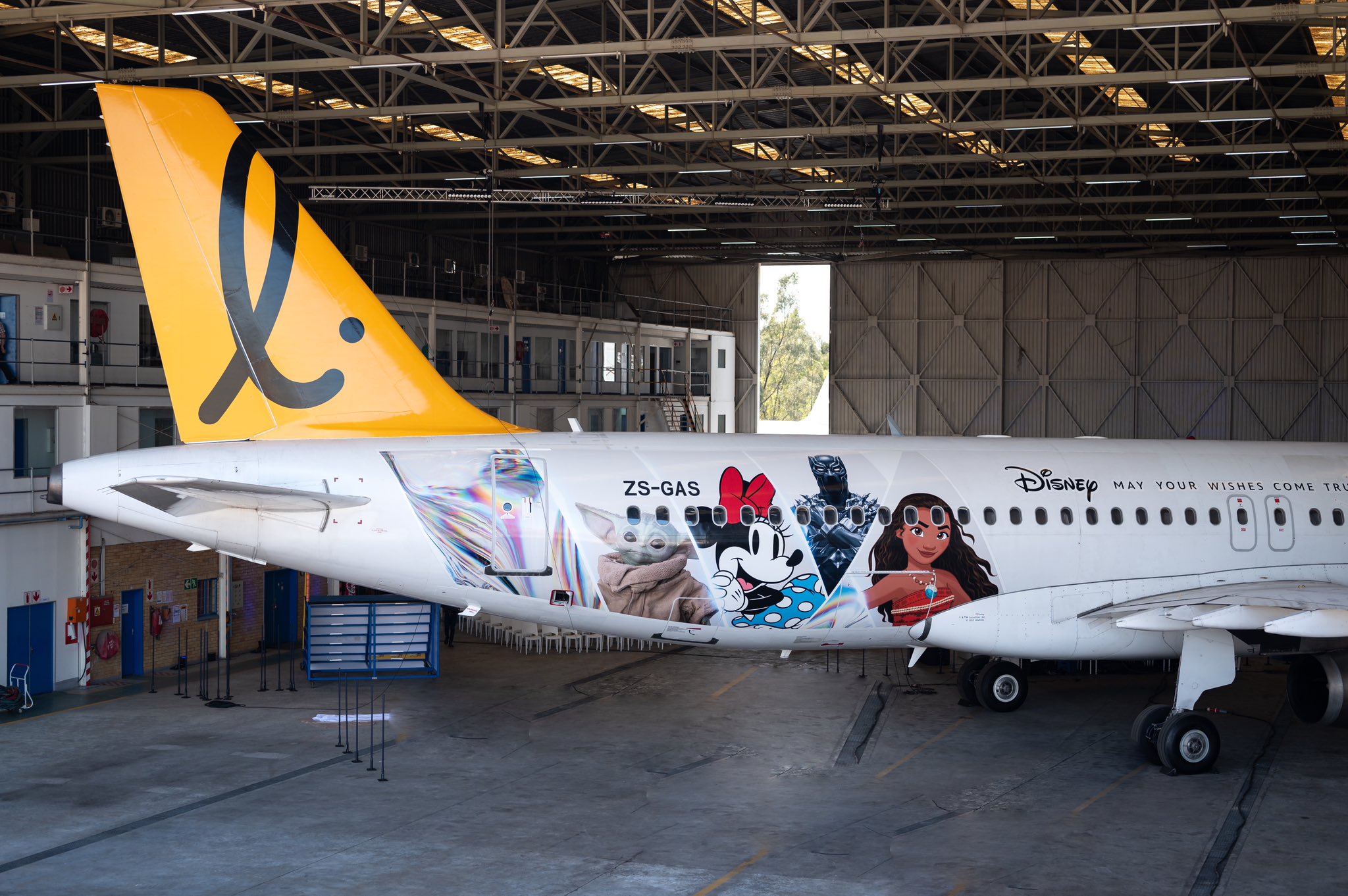
LIFT Airlines' new Disney livery (Photo: LIFT Airlines)
Imagine boarding a plane for a routine journey and being greeted with an electrifying performance at 36,000 feet. That’s precisely what happened to passengers aboard LIFT flights departing from Cape Town International Airport to Johannesburg and OR Tambo International Airport to Cape Town last week as they were treated to an extraordinary mid-air performance.
Partying at 36,000 Feet: The Silent Disco Spectacle
On October 16, LIFT Airlines elevated the concept of inflight entertainment (IFE) by hosting a live silent disco at an astonishing 36,000 feet. Passengers aboard flights GE132 and GE133 between Cape Town and Johannesburg experienced the unexpected thrill of a silent disco. Equipped with headphones, travelers could be seen dancing in their seats and even in the aisles. The energy and excitement in the air were contagious, turning the flight into a unique dance party.
Zolani Mahola, famously known as ‘The One Who Sings,’ serenaded passengers with LIFT’s official anthem as part of the company’s #upLIFTsa mission. The surprise performance created a unique and uplifting experience for travelers, continuing LIFT’s tradition of hosting inflight performances by talented artists and entertainers.
In a statement, Jonathan Ayache, CEO of LIFT, expressed their commitment to uplifting the South African artistic community, emphasizing the importance of supporting local businesses and talents. He stated, “Our dream is to let LIFT become a springboard for musicians, artists, and entertainers around the country. From here, the sky really is the limit.”
Since its launch in December 2020, LIFT Airlines has consistently surprised its passengers with extraordinary inflight performances. The Cape Town Opera, artist Divin Mahara, and comedian Schalk Bezuidenhout have all graced the skies with their talents. Zolani Mahola’s surprise silent disco performance marked her return to LIFT after collaborating on the airline’s anthem.
Disney Takes Flight: “May Your Wishes Come True”
But LIFT’s surprises don’t stop at silent discos. On October 19, LIFT Airlines joined forces with the Walt Disney Company Africa to unveil a special livery that marks the beginning of Disney’s “May Your Wishes Come True” campaign, South Africa’s biggest festive campaign. This extraordinary livery features some of Disney’s most beloved characters, including Mickey and Minnie Mouse, Moana, Black Panther, Spider-Man, Elsa from Frozen, and Grogu from Star Wars. It also showcases Asha from Disney’s upcoming animated film “Wish.”
This Disney-inspired livery is set to bring magic to the skies and can be seen on LIFT’s Airbus A320, registered as ZS-GAS. The aircraft made its debut flight on October 20 from Johannesburg to Durban, and it’s also set to enchant passengers in Cape Town.
Jonathan Ayache, the CEO of LIFT, expressed his enthusiasm for the partnership, stating, “With our new livery, together we celebrate the love, magic, and family togetherness that signals the festive season.” LIFT Airlines, in collaboration with Disney, plans to make the holiday season even more special for passengers. Expect special giveaways and kids’ activity packs to make flying with children a breeze during the holidays.
LIFT Airlines isn’t stopping here. The airline has more surprises in store for lucky travelers between December 1 and 12 on specific flights. Passengers and fans are encouraged to share their experiences by tagging LIFT_SA and DisneyAfrica with #DisneyandLIFT on social media.
In the words of Christine Service, Senior Vice President and General Manager of The Walt Disney Company Africa, “We hope that this exciting and unique collaboration with LIFT will bring delight to travelers of all ages this holiday season.” Jonathan Ayache sees this partnership with Disney as a perfect fit, as it resonates with families and brings a sense of wonder and excitement to the upcoming school holidays and family celebrations.
Victor Shalton's love for aviation can be traced to when he was 11-years-old. As a seasoned aviation writer, he takes pride in providing the best aviation coverage around the globe and is passionate about advancing his skills in the aviation space. In addition, he loves travelling, writing, arts and while his speaking engagements have taken him around the world, he is proud to call Nairobi home.
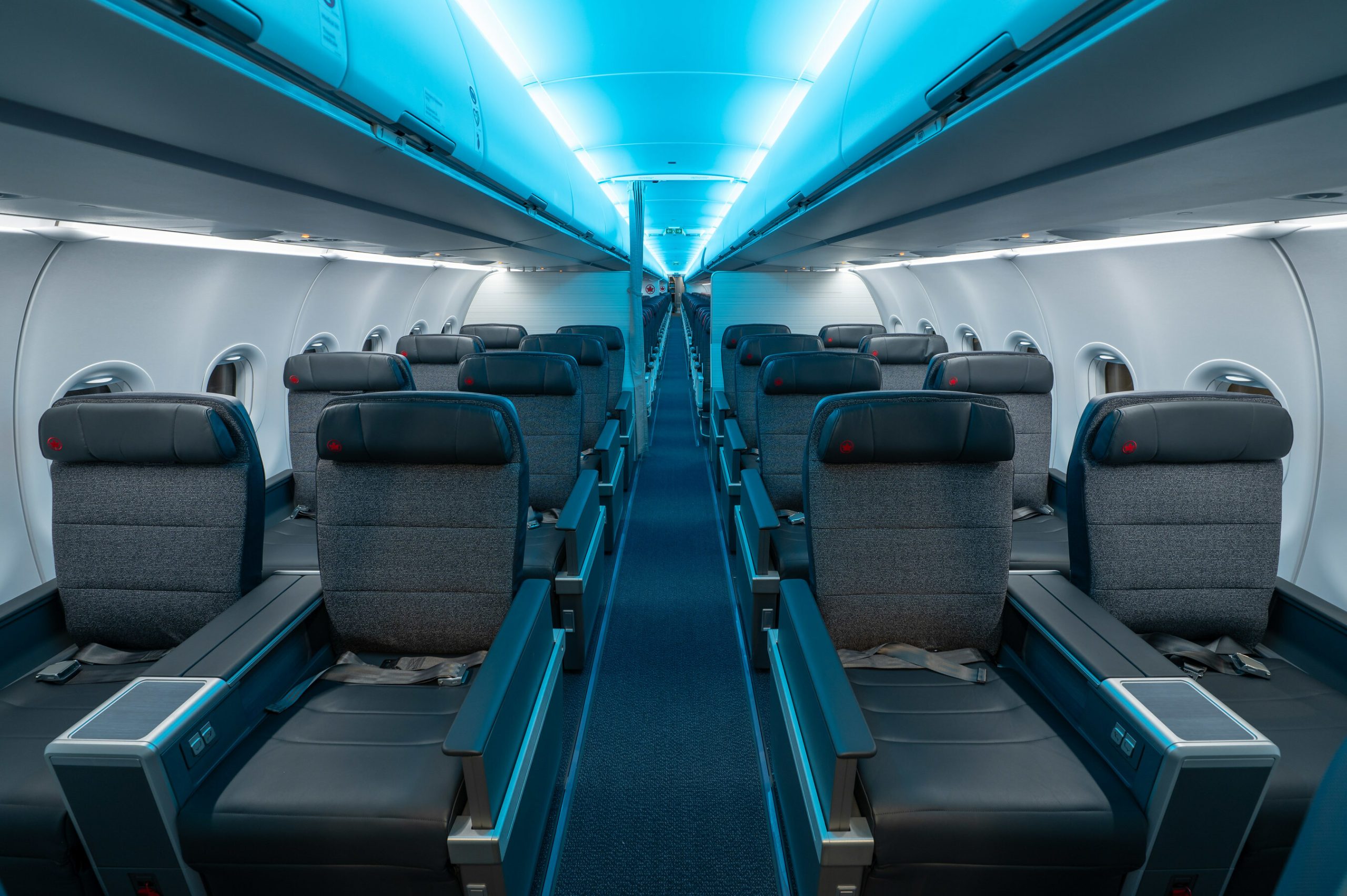
Air Canada's first retrofitted Airbus A321-200 cabin (Photo: Air Canada)
Air Canada has unveiled new cabins for its Airbus A320 and A321 fleet. The Canadian flag carrier is retrofitting these aging aircraft with modernized seats and fixtures, bringing their interiors in line with the carrier’s newer narrowbody aircraft.
New Seats and New Cabins
The new seats feature dark black and grey upholstery, consistent with those found on Air Canada’s Airbus A220-300 and Boeing 737 MAX aircraft. In installing these new seats, the airline is rolling out a standardized product across its narrowbody fleet. The seats also have increased storage space as well as in-seat power with AC, USB-A and USB-C options.
Passengers will notice the new LED mood lighting that allows the cabin ambiance to change throughout the flight. The cabins also have Airbus’ latest Airspace XL design, featuring large overhead bins that will also be installed on the airline’s future Airbus A321XLR aircraft.
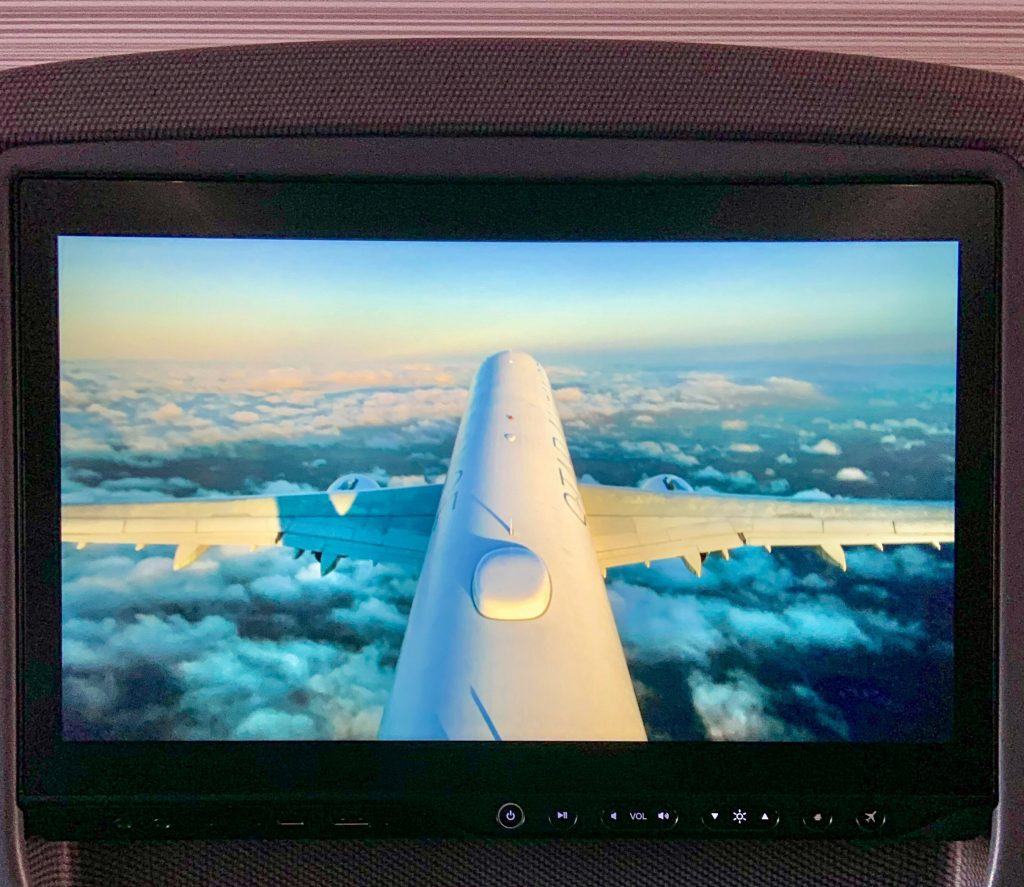
The retrofitted aircraft will also have Air Canada’s newest inflight entertainment system, which has Bluetooth connectivity that allows travelers to connect their own headphones to the seatback entertainment system. The airline is also providing live television and free Wi-Fi on these aircraft. Aviation enthusiasts will also be excited to find tail and belly cameras, which the airline describes as “first-in-class” for narrowbody aircraft.
Exterior camera view on an IFE seatback screen on Air Canada’s first retrofitted Airbus A321-200 (Photo: Air Canada)
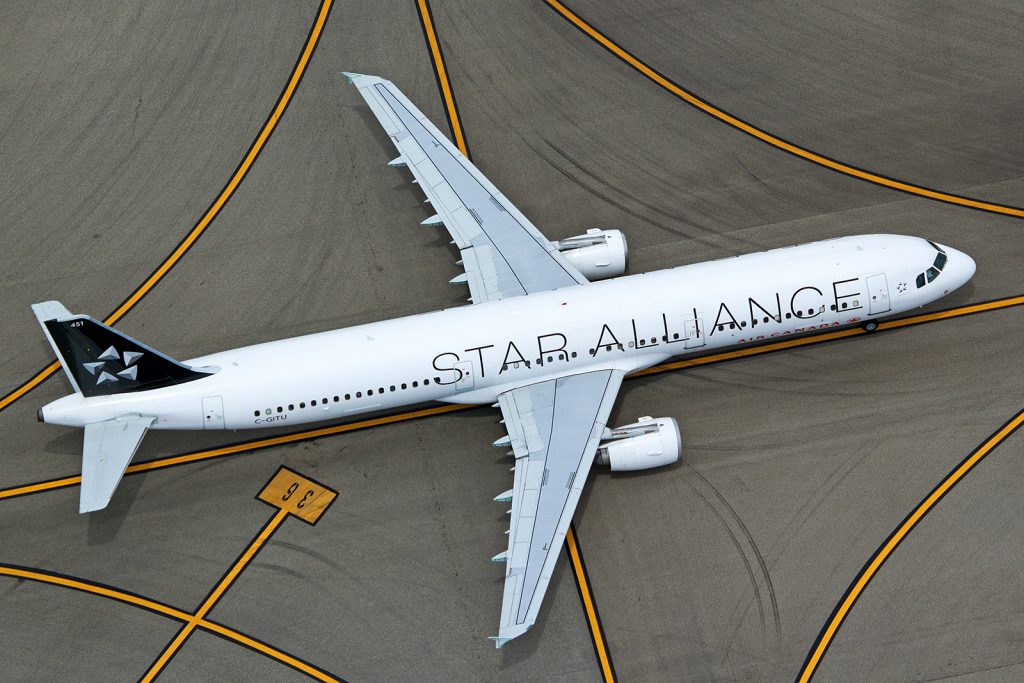
Air Canada debuted the new cabins on Saturday onboard flight 692 from Toronto Pearson International Airport to St. John’s International Airport in the eastern Canadian province of Newfoundland and Labrador. The flight was operated by a 22-year-old Airbus A321-200 registered as C-GITU. Prior to this flight, the aircraft appears to have spent time being retrofitted at Montréal-Mirabel International Airport and Birmingham Airport in the United Kingdom.
The first Air Canada Airbus A321-200 to receive the new cabin, a 22-year-old aircraft registered as C-GITU and painted in a Star Alliance livery (Photo: AirlineGeeks | William Deerrickson)
The newly retrofitted A321 also has six additional Economy Class seats when compared to the old configuration, with a total of 16 seats in Business Class and 196 seats in Economy Class. The airline expects its eight A320 and 14 A321 aircraft to have the upgraded cabins by the end of 2025.
Air Canada’s A320 Family Strategy
From the 1990s to the end of the 2010s, Air Canada’s Airbus A320 family aircraft formed the backbone of its narrowbody fleet. Airbus A319s, A320s and A321s adorned with the maple leaf tail crisscrossed the Canadian skies, bringing travelers across the country and to destinations south of the border. While many of these aircraft are still in service, they now only make up approximately a quarter of the airline’s narrowbody fleet.
Air Canada began operating A320 family aircraft in the early 1990s. The fleet grew over the next few decades, including through the addition of aircraft through its acquisition of Canadian Airlines. While the carrier has retired its oldest Airbus narrowbodies, it still operates over 30 A320 family aircraft with an average aircraft age of over two decades.
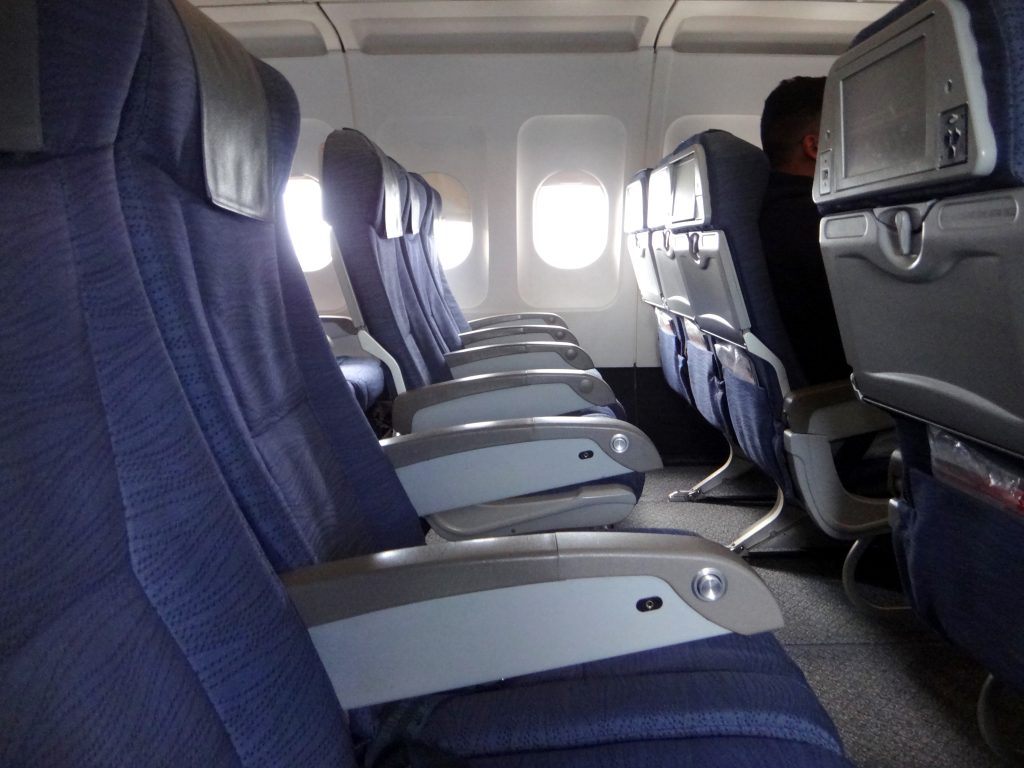
Air Canada Project XM Economy Class cabin on an Airbus A320-200 (Photo: AirlineGeeks | Andrew Chen)
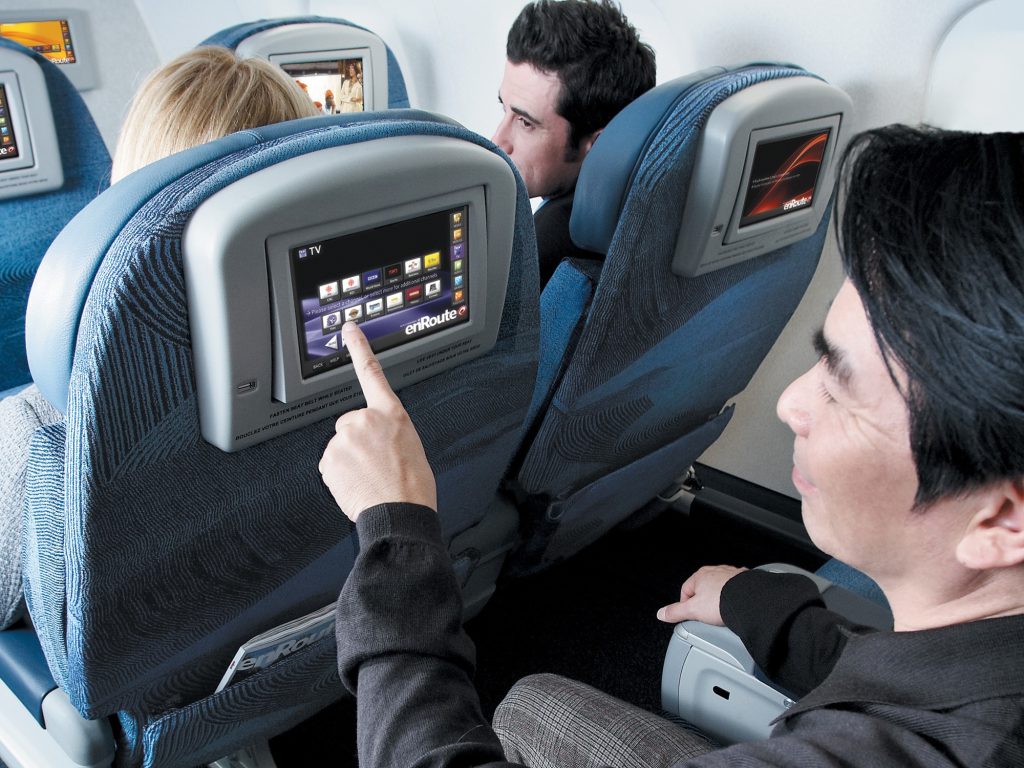
In 2006 the airline began a major interior retrofit project across its fleet, known as Project XM. The new cabins were cutting-edge at the time, featuring touchscreen personal screens with on-demand entertainment, interactive games, as well as USB and AC charging in all cabins. While these seats made Air Canada an innovative industry leader at the time, the aging interiors slowly became outdated over time. Today, the Project XM interiors can still be found across the airline’s A320 family fleet, with slow touch screens and unreliable charging ports.
Air Canada Project XM Executive Class (North America business class) seats from 2006 (Photo: Air Canada)
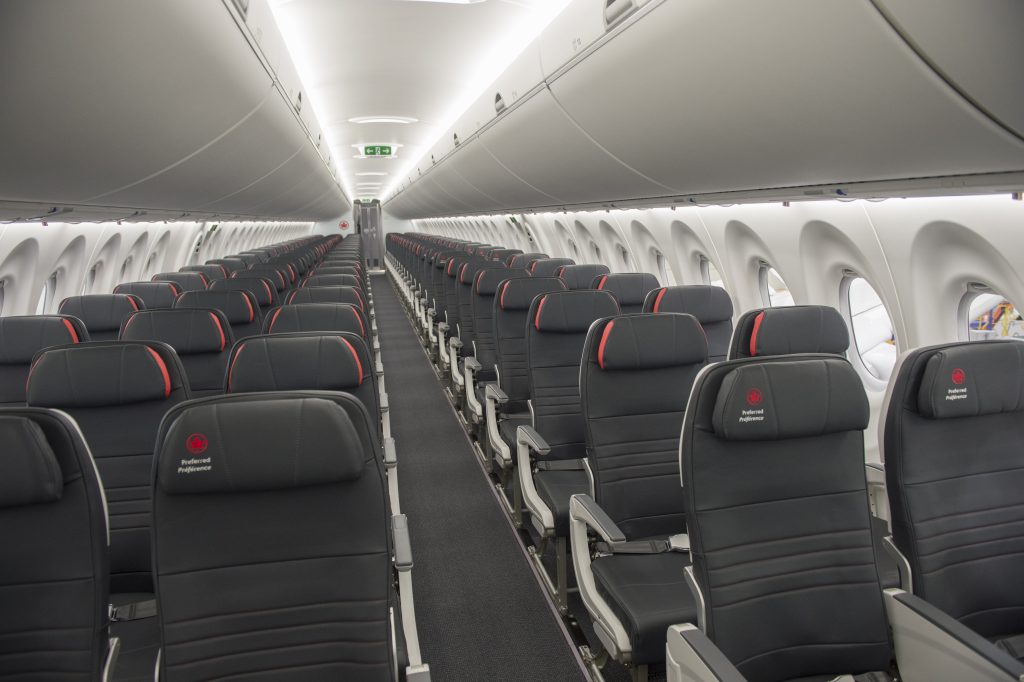
These outdated seats are contrasted sharply by Air Canada’s cabins on its A220 and Boeing 737 MAX narrowbodies, which feature sleek upholstery, modern cabin fixtures and a robust personal inflight entertainment system. It is therefore refreshing to see that Air Canada is retrofitting its older aircraft to provide a consistent passenger experience across its narrowbody fleet.
Air Canada Airbus A220-300 Economy Class cabin (Photo: Air Canada)
Air Canada’s five Airbus A319s were notably left out of the announcement. The airline retired its A319s from mainline service in 2020 during the COVID-19 pandemic but has since quietly brought a few back to the fleet, including two from its leisure brand, Air Canada Rouge.
However, it is unsurprising that these aircraft will not be retrofitted as they likely re-entered the fleet to provide temporary capacity. While the airline’s A320s and A321s are also over two decades old, the carrier’s latest announcement signals that they are expected to stay in the fleet for years to come. The airline also has 28 Airbus A321XLRs on order, with deliveries slated to begin in 2025.
Andrew is a lifelong lover of aviation and travel. He has flown all over the world and is fascinated by the workings of the air travel industry. As a private pilot and glider pilot who has worked with airlines, airports and other industry stakeholders, he is always excited to share his passion for aviation with others. In addition to being a writer, he also hosts Flying Smarter, an educational travel podcast that explores the complex world of air travel to help listeners become better-informed and savvier travelers.
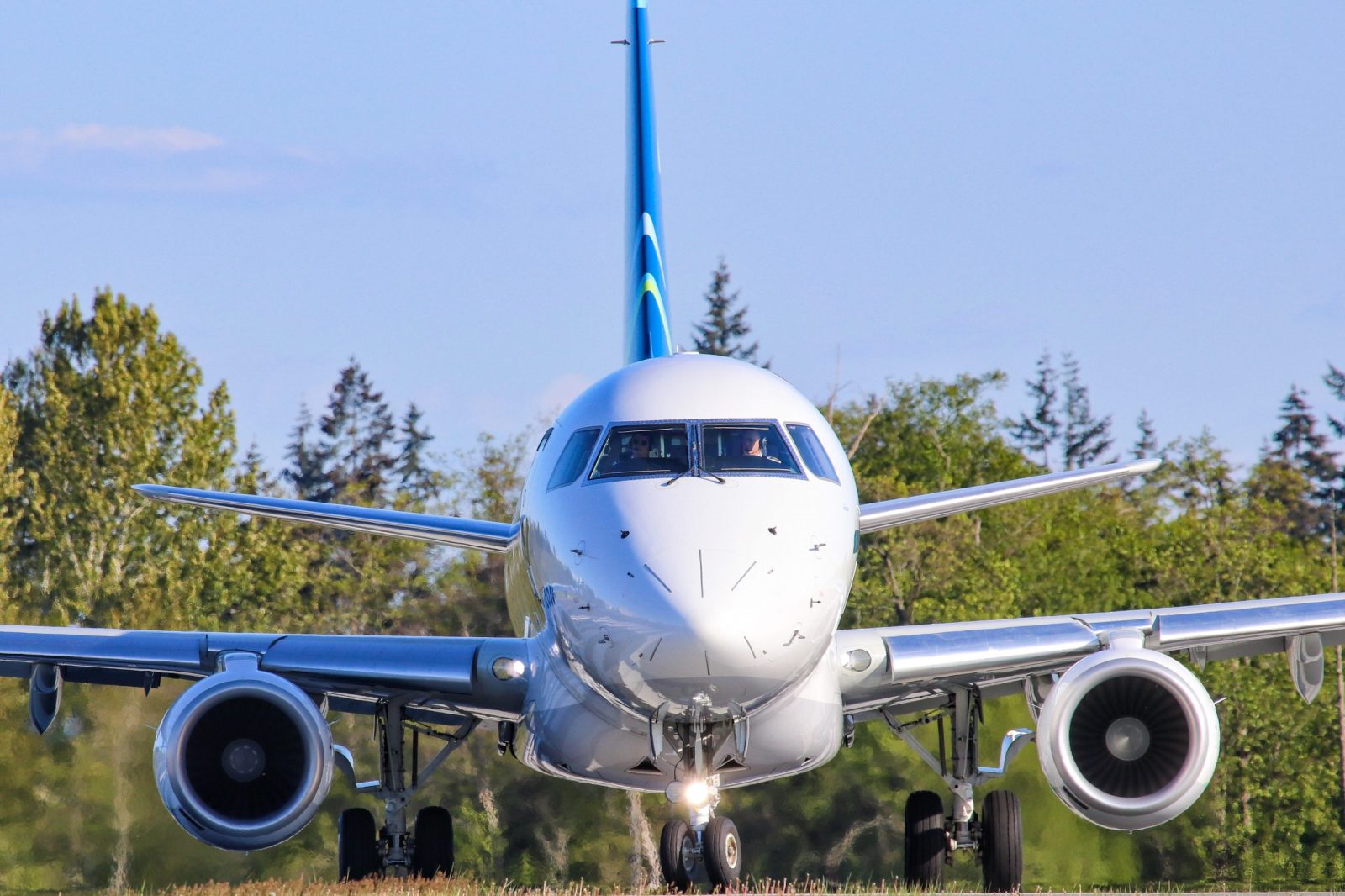
A Horizon Air Embraer E175 at Paine Field. [AirlineGeeks - Katie Zera]
The U.S. woke up on Monday to learn that a jumpseat passenger on a Horizon Air flight operating from Everett, Wash. to San Francisco attempted to shut down both of the aircraft’s engines in-flight.
Initial reports stated that an authorized jumpseat passenger onboard the Horizon Embraer jet had attempted to shut down the airplane’s engines mid-flight. The passenger was then reportedly subdued by the aircraft’s pilots, somehow removed from a cockpit, and restrained in the cabin, where he remained until the aircraft safely landed in Portland.
We now know that the jumpseat passenger, an Alaska Airlines 737 captain, had attempted to pull two handles (one for each engine) that would have closed their respective engine’s shutoff valve, thus preventing fuel from reaching the power plants.
These levers are used when there is a fire in an engine and fuel must be prevented from reaching it so as to prevent the fire from spreading further.
“The fire suppression system consists of a T-handle for each engine. If the T-handle is fully deployed, a valve in the wing closes to shut off fuel to the engine,” Alaska Airlines wrote in a statement following the incident.
“In this case, the quick reaction of our crew to reset the T-handles ensured engine power was not lost. Our crew responded without hesitation to a difficult and highly unusual situation, and we are incredibly proud and grateful for their skillful actions,” the airline’s statement continued.
As a pilot himself, this jumpseater would have been familiar with the layout of aircraft cockpits. Though the 737 and Embraer E175 have differences, the jumpseater could probably identify the fire suppression handles not only from his time in cockpits in general but also because, as an Alaska employee, he likely spent significant time in Embraer cockpits while traveling.
Who is the Perpetrator?
The jumpseat pilot has been identified as Alaska Airlines 737 captain Joseph Emerson, who was commuting to San Francisco to operate a flight. Alaska reports that Emerson flew for Horizon Air from 2001 to 2012, at which time he left Horizon to fly for Virgin America.
Significant discourse around Emerson’s mental health has been circulating since the incident. AirlineGeeks has not confirmed any information regarding Emerson’s medical status.
Alaska’s official statement says that Emerson completed the required FAA medical certifications throughout his career and never had a medical certificate denied, suspended, or revoked.
”Nothing abnormal about him, very caring…,” a neighbor of Emerson’s told CBS Bay Area. The 44-year-old was reportedly also a flight instructor at a local flying club.
What Happens Next?
The original flight safely diverted to Portland International Airport. Alaska reports that all passengers continued their trip to San Francisco with a new crew and aircraft, and the airline adds it will follow up with each passenger on their own well-being.
Emerson has been charged with 83 counts of attempted murder, one for each person onboard the aircraft, which is a Class A felony in the state of Oregon. He has also been charged with 83 counts of reckless endangerment, a misdemeanor, and one count of endangering an aircraft, a Class C felony.
Nothing has been publicly confirmed regarding Emerson’s employment status with Alaska or what action will be taken against his pilot certificate.
Emerson will appear in court on Tuesday, October 22, and more information may be available about his case at that time.
Will Aviation be Impacted?
Again, nothing is as of yet confirmed about Emerson’s mental state at the time of the incident. Nevertheless, this incident is likely to cause further discussions on how mental health is dealt with in aviation.
The FAA’s practices regarding seeking mental health treatment are often criticized by pilots and other aviation professionals, who argue that crewmembers are expected to choose between seeking treatment and maintaining the medical certificates required to fly professionally.
The FAA has made some minor changes to how they handle medical applicants with some mental disorders, and certain treatments are approved for pilots who hold valid medical certificates.
Also in question is whether there will be a change in the FAA’s rules regarding pilots riding in jets’ jumpseats. At the time of writing, the FAA has not announced any information about such a rule change.
John McDermott is a commercial pilot pursuing a career in professional flight. His passion for aviation began in an Ann Arbor bookstore with a tale of enemy pilots during World War 2, and he hasn't looked back. Besides flying and writing for AirlineGeeks, John volunteers with Professional Pilots of Tomorrow and travels whenever he gets the chance.
Global Airlines CCO Optimistic, Committed to A380
Global Airlines plans to focus on A380s to grow its fleet. What does the future look like for Global Airlines and does its strategy make sense?
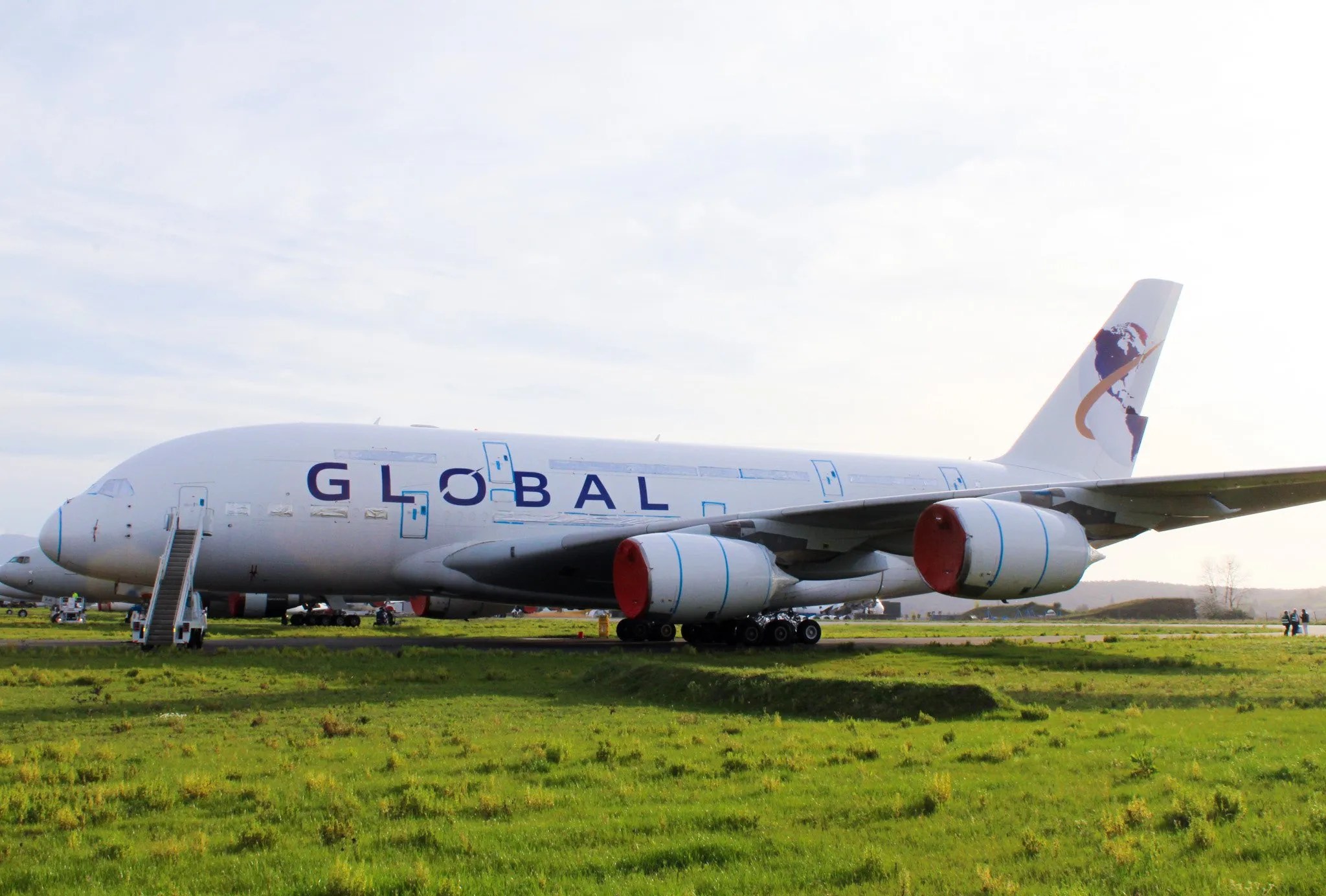
Global Airlines' first A380 (Photo: Global Airlines)
Global Airlines CCO Richard Stephenson spoke at the Routes World conference in Istanbul last week, giving a keynote on the state of Global Airlines and taking questions from the audience. Stephenson outlined the start-up airline’s bold plans.
Global Airlines’ Fleet Plan
Stephenson stated that Global Airlines is not looking to diversify its fleet in the foreseeable future and will stick to a single type, the Airbus A380-800, with four frames already being acquired. When asked about the airline’s development, Stephenson stated that the first aircraft will undergo retrofit ‘in the coming weeks.’ The airline is also looking to purchase more A380s that are already in the market to expand its fleet.
The choice of aircraft is definitely a unique one. It will be the first airline to start operation with A380s and will also become the only all-A380 airline in the world, if it does take off at all. Name recognition is important in the airline business, and purchasing four A380s in 2023 is some publicity for the airline.
The barriers to entry in the market, especially in the long-haul segment, are fairly high considering several factors, such as the cost of equipment and operations. Large capital is needed to acquire and operate aircraft, train and hire crews, and much more. Also, the market is consolidating, and no market in the world is more consolidated than the transatlantic. Recent acquisitions of SAS, ITA and Air Europa, in addition to United’s decision to terminate an agreement with Aer Lingus, are showing a market more consolidated than ever.
Network Potential
Global Airlines is set to start flying next year from London to New York and Los Angeles. It is not yet clear which airports it will be operating from in London or New York. It is likely that Gatwick will be the airport of choice, as slots are less constrained and operational costs are lower. The airport is also capable of accommodating the jumbo jet. Nothing is confirmed at this stage yet, though.
The initial frequency is said to be daily to New York City and four times weekly to LA. According to Stephenson, Global Airlines is not only looking at the transatlantic market but is also actively looking at destinations in other parts of the world.
The ‘Initial’ Markets
London to New York
There are too many titles to this route: the most profitable, the busiest, or the most frequent long haul route in the world are just some. With 35 daily flights one-way as of 2023, there is a lot of demand and a lot of money flowing back and forth.
Here is who Global will be up against:
London Heathrow to New York JFK British Airways, American, Delta, Virgin Atlantic and JetBlue
London Heathrow to Newark British Airways and United
London Gatwick to New York JFK British Airways, Norse, Delta, and JetBlue
Frequency
LHR-JFK
LHR-EWR
LGW-JFK
Total
Aircraft
British Airways
8
2
1
11
B77W & B772 & B78X
American
4
4
B77W & B772
Delta
2
1
3
B763 & A339 (1)
Virgin Atlantic
6
6
A333, A339 & A35K
United
7
7
B763 & B772 (1)
JetBlue
2
1
3
A321
Norse Atlantic
1
1
B789
Total
22
9
4
35
* Information from Flightrader24
London to Los Angeles
Again, the ‘Big Three’ dominate this busy and highly profitable route. There is no competition outside of three joint ventures from Heathrow, and from Gatwick there are only three weekly flights, which are outside of the ‘Big Three’ joint ventures.
London Heathrow to LAX United, American, British Airways, Delta, and Virgin Atlantic
London Gatwick to LAX is operated only by Norse Atlantic Airways, three times a week
Three Alliances plus Low-Cost and Hybrid: Consolidated and Saturated
There are low-cost, hybrid, traditional carriers present in this market. Norse offers the cheapest flights; JetBlue offers an innovative experience with Mint and competitive pricing; United has the product, customer base, connections at Newark, and frequency; Delta and Virgin Atlantic work together in a joint venture with established customer bases and hubs on both ends; British Airways and American are together the market leaders, with a focus on premium from JFK’s business and first class offerings and hubs on both sides as well.
Global Airlines will not be low-cost as it is set to offer a ‘new experience.’ Their code-share prospects do not look great; therefore transporting point-to-point passengers will be the focus.
Still, Stephenson is optimistic, stating that there is space for Global and it will not be a problem as the market is huge.
A380 is Unusual for London-New York
The city pair undoubtedly has the demand to support multiple A380s per day. However, airlines tend to use smaller and premium-heavy aircraft to provide more frequencies, as NYC-London is very much a business-focused market. The United 767-300ER is a prime example with less than 100 economy seats, and so is the British 777-300ER, with only 132 in economy but 76 in business and eight in first.
If Global is able to operate its aircraft efficiently and present a good product, there is a chance of success, like recent start-up successes such as Taiwan’s Starlux. Global seems to be determined to do both, as they are working with Hi Fly as their official partner, and lifestyle brands including American Express and Laurent Perrier.
Bottom Line
Global Airlines is received with mixed opinions, with aviation geeks loving the idea of more A380s flying but most industry experts expressing their doubts. They are reasonable doubts, with the strategy not making quite a whole lot of sense across the board and them entering into an increasingly consolidated transatlantic market that leaves very little room for carriers outside of the three major joint ventures.
Anthony is an aviation enthusiast who grew up around the world from St. Louis to Singapore, and now lives in Amsterdam. He loves long-haul flying and finds peace in the sound of engine cruising. He aspires to share his passion for the sky though writing and providing another angle on the stories.
Authorized Person in Horizon Air Cockpit Attempts to Shut Down Both Engines Inflight
The flight landed in Portland 51 minutes after departure, and passengers were rebooked onto other flights, the airline said.
A Horizon Air E175 at Paine Field. (Photo: AirlineGeeks | Katie Zera)
A Horizon Air flight operating from Snohomish County Airport/Paine Field near Seattle, Wash. to San Francisco diverted to Portland on Sunday evening after an authorized person in the cockpit attempted to shut down both of the airplane’s engines while in flight.
Horizon Air flight 2059 departed Paine Field around 5:30 p.m. local time and was able to reach a cruising altitude of 31,000 feet when the incident occurred.
The perpetrator was subdued, removed from the cockpit, and placed in handcuffs before landing. The pilots remained in control of the aircraft for the entire sequence. It is unclear whether a struggle ensued or how much effort the pilots needed to maintain control.
The flight, operated by an Embraer E175, was met by law enforcement upon arrival in Portland, Oregon. Horizon parent company Alaska Airlines reports that the incident is under investigation, though it did not identify the person allowed to fly in the cockpit with the crew or whether they were an Alaska Group employee.
The flight landed in Portland 51 minutes after departure, and passengers were rebooked onto other flights.
“We’ve got the guy that tried to shut the engines down out of the cockpit and he doesn’t sound like he’s causing any issue in the back right now, I think he’s subdued,” one of the flight’s pilots told ATC. “We want law enforcement as soon as we get on the ground and parked.”
“We are grateful for the professional handling of the situation by the Horizon flight crew and appreciate our guests’ calm and patience throughout this event,” Alaska said in a statement.
The cause of the incident is as of yet unclear. A preliminary report should be issued in the coming weeks.
According to The Air Current’s Jon Ostrower on Twitter (X), the FAA sent the following security notice to airlines on Monday: “Last night a significant security event occurred on a US Air Carrier involving a validated jump seat passenger attempting to disable aircraft engines while at cruise altitude by deploying the engine fire suppression system. The crew was able to subdue the suspect and was removed from the flight deck. The flight diverted and landed safely. The event remains under investigation by law enforcement, no further details will be provided at this time.”
Approved crewmembers such as pilots, flight attendants, and dispatchers can fly on a third seat called a jumpseat in an aircraft’s cockpit. When commuting between a base and their home or between different airline bases to operate a flight, crewmembers often use these jumpseats if no seats are available in the cabin. Each airline has its own rules about who gets priority to ride in the jumpseat if multiple crewmembers want to fly in a limited number of seats.
John McDermott is a commercial pilot pursuing a career in professional flight. His passion for aviation began in an Ann Arbor bookstore with a tale of enemy pilots during World War 2, and he hasn't looked back. Besides flying and writing for AirlineGeeks, John volunteers with Professional Pilots of Tomorrow and travels whenever he gets the chance.
Qatar Airways CEO Al Baker Resigns After 27 Years
Qatar Airways CEO Akbar Al Baker resigns from his role after being one of the longest-serving airline executives in recent history.
Mr. Akbar Al Baker, CEO of Qatar Airways, speaks to the media. (Photo: AirlineGeeks
CEO of Qatar Airways and Governing Board Chairman of the oneworld Alliance, Akbar Al Baker, is stepping down as CEO of Qatar Airways after leading the airline for 27 years since 1997, according to Reuters.
Al Baker is one of the longest-serving airline CEOs in the industry and he led Qatar Airways to become one of the biggest in the region, establishing the airline on the global stage with renowned service and operations.
Al Baker’s Tenure
During his over two decades of service at Qatar Airways, Al Baker lacked no media attention. He was outspoken and was frequently in the middle of spotlights. He defended Qatar Airways’ interest across the globe, from disputes with American carriers over alleged government subsidies in 2015 to an open battle with French airplane manufacturer Airbus over A350 paint issues.
The lawsuit has since been settled after Al Baker sought $600 million in damage and Airbus canceling all of Qatar’s orders unilaterally. The latest dispute? Australia. Al Baker criticized the Australian government for rejecting a request from Qatar to add flights to Australia, having supported the country all throughout the pandemic. The incident has since caused quite the stir in Australia and debates are still ongoing. However, Al Baker will not be there this time to campaign for Qatar.
Financially, he led the group out of the COVID-19 pandemic and flying as the official airline of the FIFA 2022 World Cup in Qatar. In 2023, Qatar Airways reported record revenue. During his years at Qatar, he also built strong industry partnerships around the globe. He has acquired stakes in IAG, China Southern, LATAM, Cathay Pacific and several other major international carriers, forming multiple partnerships including the latest with China’s Xiamen Airlines, and with American Airlines from 2022.
He also served as the the chairman of International Air Transport Association (IATA) from June 2018 to June 2019, before he was named the Governing Board Chairman of the oneworld alliance, succeeding Alan Joyce, in 2021. During his tenure, he also served on a number of governing boards, including the Heathrow Airport board and Qatari National Tourism Council.
A Qatar A350-1000 in Doha (Photo: AirlineGeeks | Fabian Behr)
Future
At this moment, it is not clear as to why Al Baker is stepping down. As for his replacement, Qatar Airways’ owner, the Qatari government, has indicated that it will be announced soon.
Anthony is an aviation enthusiast who grew up around the world from St. Louis to Singapore, and now lives in Amsterdam. He loves long-haul flying and finds peace in the sound of engine cruising. He aspires to share his passion for the sky though writing and providing another angle on the stories.
Why Airlines Struggle to Keep Captains
A pilot shortage has quickly pivoted more to a captain shortage as many airlines struggle to fill vacancies and upgrade first officers.
A Japan Airlines flight departs from Seattle (Photo: AirlineGeeks | Katie Zera)
When the coronavirus pandemic hit in early 2020, the travel industry was among the hardest hit. Suddenly, drastic travel restrictions meant that demand for commercial air travel, cruises, hotels, and more disappeared virtually overnight.
Original estimates predicted that it would take years for travel demand to rebound to pre-pandemic levels. In fact, in the first months of the pandemic, the most ambitious estimates indicated that demand would start in 2023. Others projected it might take an additional year or two on top of that.
Airlines responded promptly. Hundreds of airplanes were grounded per airline, amounting to thousands in the United States alone. If American Airlines, the largest airline in the world by fleet size, had grounded a number of airplanes proportional to the drop in demand, they alone would have grounded somewhere between 800 and 900 airplanes; arguably the only thing preventing such a unilateral drop was passenger airlines’ shift to operating cargo flights with their planes to meet the high demand for shipments of medical equipment.
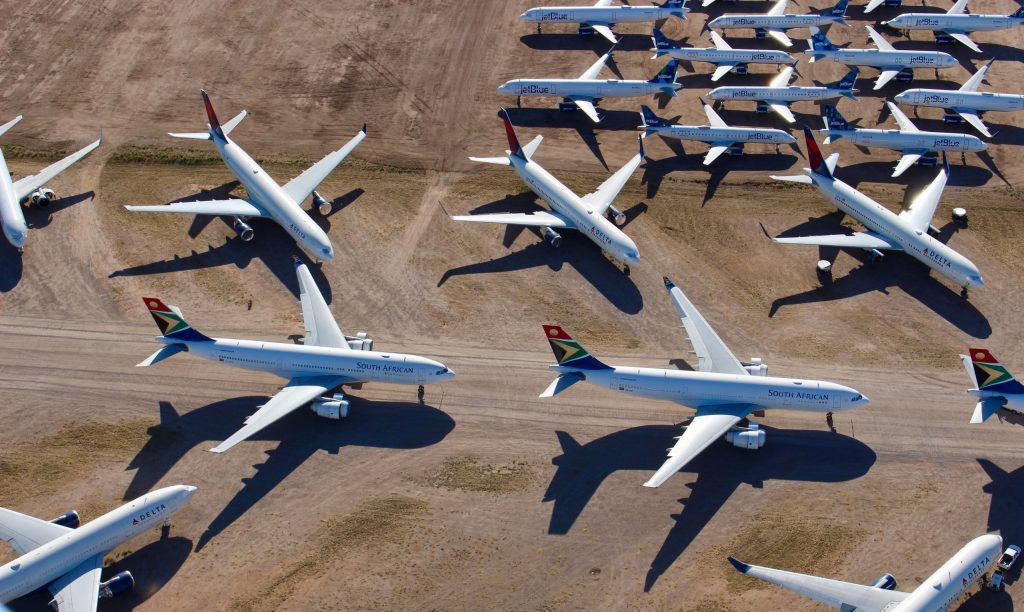
Views above a crowded Pinal Airport with stored jets due to COVID-19. (Photo: AirlineGeeks | Ryan Ewing)
Pictures soon arose of airports where dozens of planes were parked in orderly rows on what would have otherwise been active runways and taxiways, not to be used for over a year. Stories arose of commercial flights with half a dozen people flying on planes built and configured for nearly 200, and some airlines made up the difference by flying fewer flights and blocking middle seats for passenger comfort.
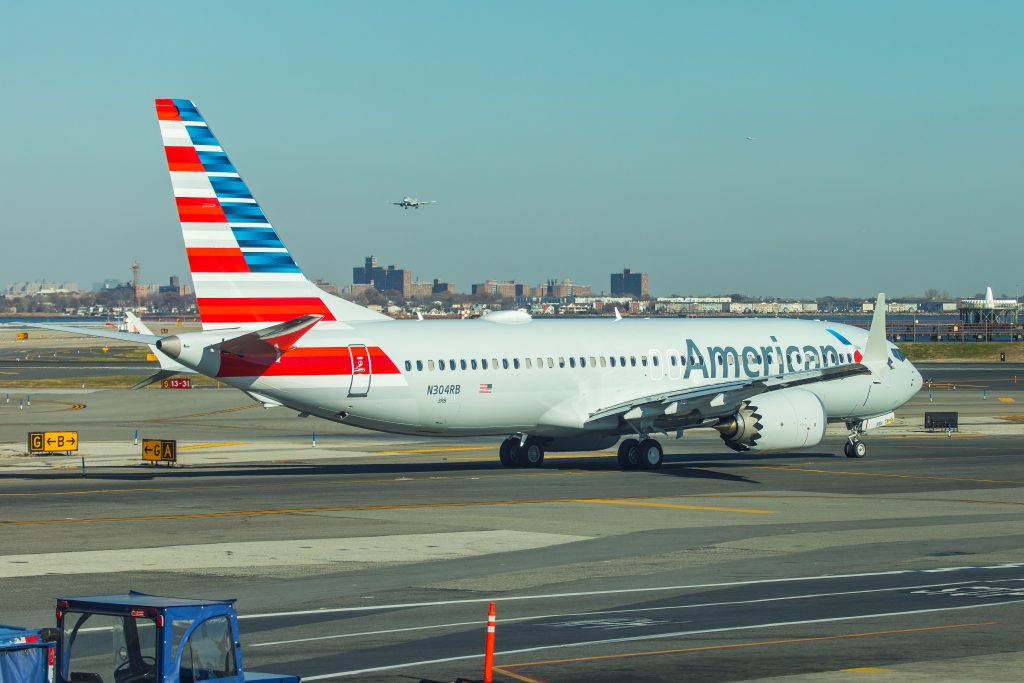
An American Airlines 737 MAX taxis at LaGuardia. (Photo: AirlineGeeks | William Derrickson)
Still, airlines did not stop trying to find ways to cut their personnel costs, and the cheapest solution they found, considering how long experts estimated the travel downturn would last, was to offer older pilots within a few years of retirement age early retirement packages. After all, some of these pilots would retire before travel would (as estimated) return, so it was beneficial for them to take extra compensation immediately and for the airlines, who would have fewer senior pilots at the top of the pay scale.
That staffing solution was a reasonable idea at the time; all things considered, it was the best thing airlines could do to protect their bottom lines as they prepared for what had all the indications of being a years-long hibernation. For a while, it worked, and, in time, airlines managed to stabilize their situations as best as possible.
Post-Pandemic Travel Rebound
However, in late 2021, something remarkable happened. About two years after the COVID-19 virus was first identified in China, passenger throughput data started trending upward. At first, it was a slow trend. In October 2021, TSA screened 1 million passengers in a day – still a far cry from the 2.5 to 3 million they’d screen every day in 2019, but also the first time more than 1 million passengers flew since US lockdowns began in March 2020.
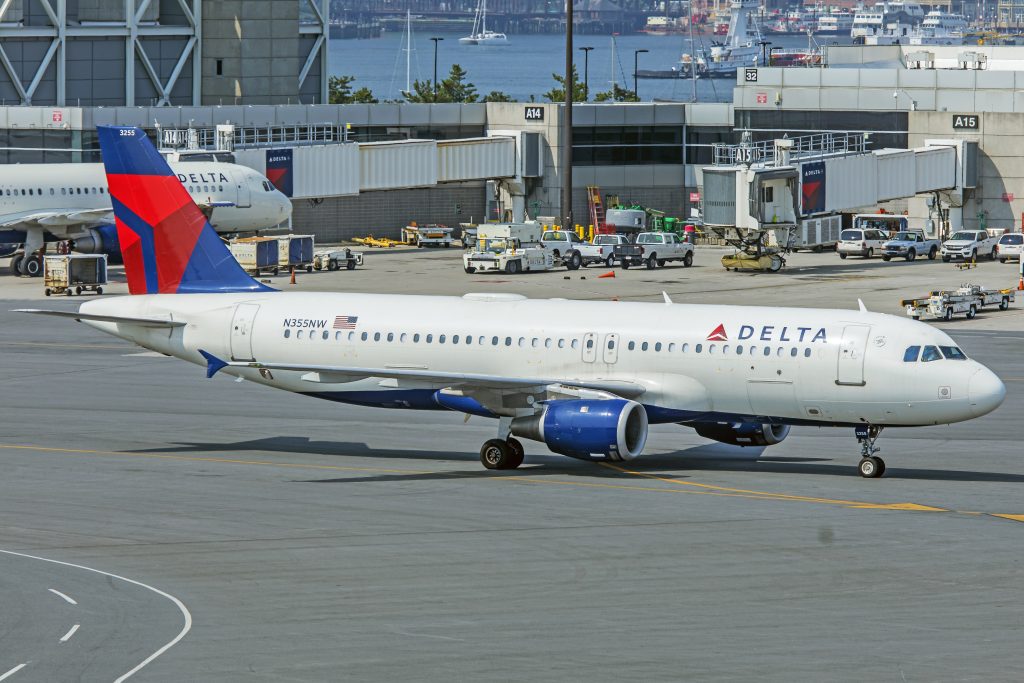
A Delta Airlines Airbus A320 in Boston. (Photo: AirliineGeeks | William Derrickson)
And, before anyone could blink, those positive trends started to snowball, and flying returned more rapidly. Soon, every parked airplane was brought back into service. More airplanes were brought out of storage in desert boneyards. But as much as the capacity for travel increased, it still felt one step behind the demand. People wanted to travel so much that airlines even brought back the jumbo jets – the Airbus A380s and Boeing 747s – that they had so recently planned to retire for good.
Airlines have been able to handle aircraft returns to service just fine. What they haven’t been able to plan for quite as well is their staffing.
The Source of Captain Shortages
Remember that the first types of pilots to receive voluntary retirement packages were older pilots. An overwhelming majority of those pilots were captains; they were people who had spent decades building their skills and had reached the epitome of seniority and experience.
Fairly obviously, flights cannot operate without captains. These captains legally serve a role known as the “pilot in command” (PIC). The PIC is responsible for and the ultimate authority on the safe operation of a particular aircraft. It is their job to oversee the flight to make sure that everything is in order. They make countless decisions to determine that the airplane is airworthy and is capable of making a particular flight safely; that any mechanical discrepancies identified on the ground or in flight are appropriately dealt with; that the routing received from air traffic control is acceptable; and so many other things to make sure that the flight is completed safely and any necessary actions are taken to ensure that safety.
Captain Eligibility
The problem for airlines is that not just anyone can be an airline captain at a major air carrier. Even after a pilot becomes eligible for the license that permits them to fly for these major airlines (which itself requires 1,500 hours and a splattering of other requirements regarding cross country, night, and instrument flight), they need over 1,000 hours as an airline pilot at a major carrier before they can even be considered for a captain position.
“You can’t fly with two first officers,” aviation consultant Robert Mann told Reuters. “You have to have a captain.”
In order to fill the captain positions that were vacated by pilots taking early retirement packages, mainline airlines such as American, Delta, and United needed thousands of captain-qualified first officers (FOs) to upgrade to captain as soon as possible. Many first officers jumped at that chance.
But not every qualified first officer jumped at the opportunity. Some first officers had spent years as second-in-command on a particular fleet type and built up incredible seniority as a first officer. As they neared the end of their careers, these pilots did not want to sacrifice the control they had over their schedules as senior FOs to spend the end of their careers at the bottom of the captain seniority list.
“If I did that, I would’ve ended up divorced and seeing my kids every other weekend,” one United pilot told Reuters, referring to upgrading to the left seat.
Mainline Captain Shortages
This created an issue for major airlines. As quickly as they could upgrade qualified and willing FOs, they still struggled to fill all of the captain vacancies they had. Not only had many captains retired during the pandemic, still more were reaching the mandatory retirement age of 65 and were forced to retire during the travel bounceback. A vicious cycle had begun to make it highly difficult for airlines to fly.
In 2022, for example, United Airlines was unable to fill 50% of its captain vacancies due to FOs’ reluctance to upgrade, amounting to nearly 1,000 captain positions that need to be filled. The same is true in 2023, as in June, the carrier reported that 96 of 198 captain vacancies were still vacant.
“It’s the first time that I’ve ever known it to happen in the airline industry. It is going to impact capacity in the fourth quarter,” CEO Scott Kirby said on an earnings call over the summer.
The airline has 5,900 captains and 7,500 first officers, per its union.
However, major airlines have one big advantage. To understand it, it’s important to understand the difference between a “mainline” airline and a regional carrier. If a route does not have enough demand to support regular flights from 150- to 200-seat jets, or if it’s worth it to an airline to fly smaller jets more often on a route to maintain competitively flexible schedules, a carrier will outsource to a regional airline to operate those smaller jets.
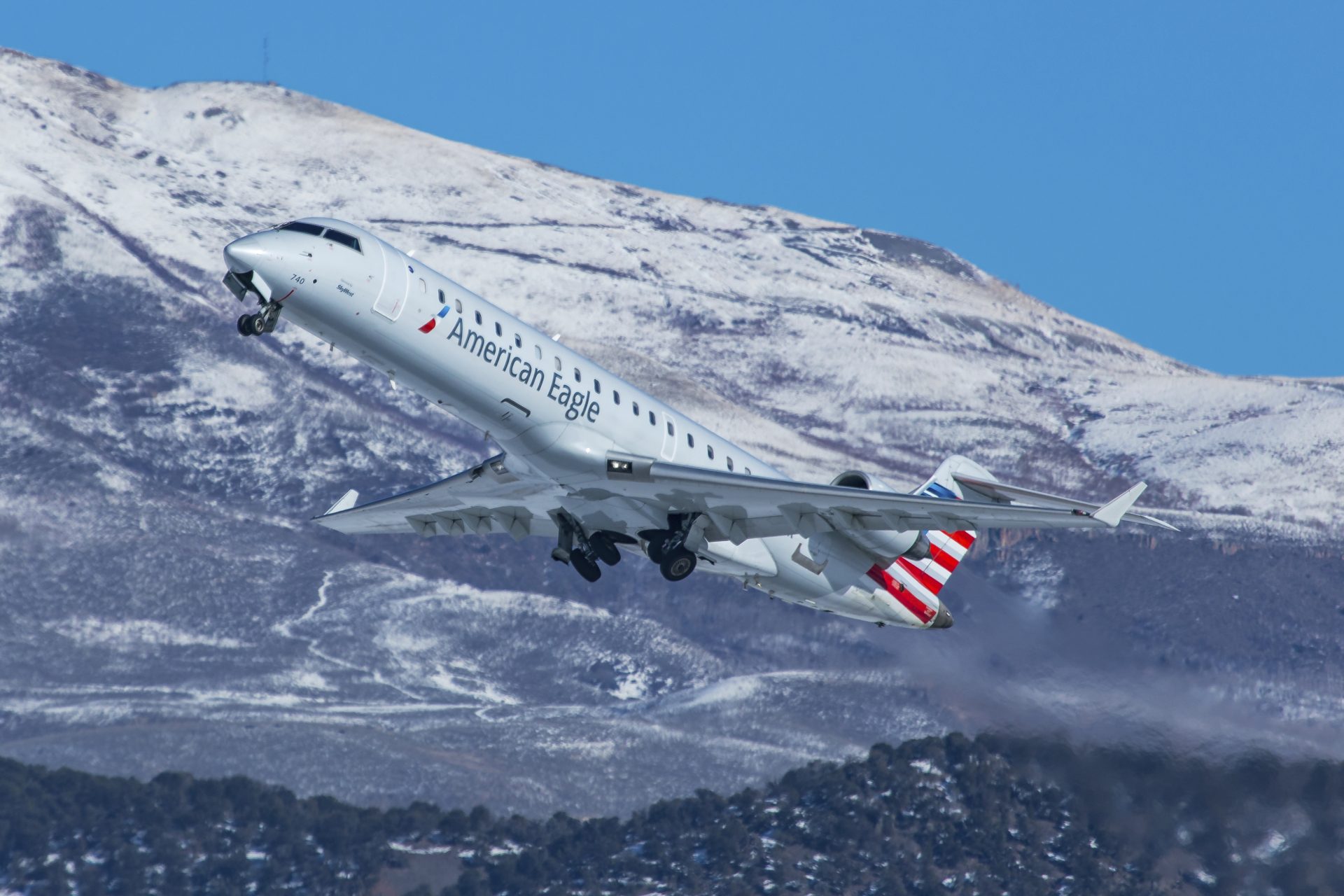
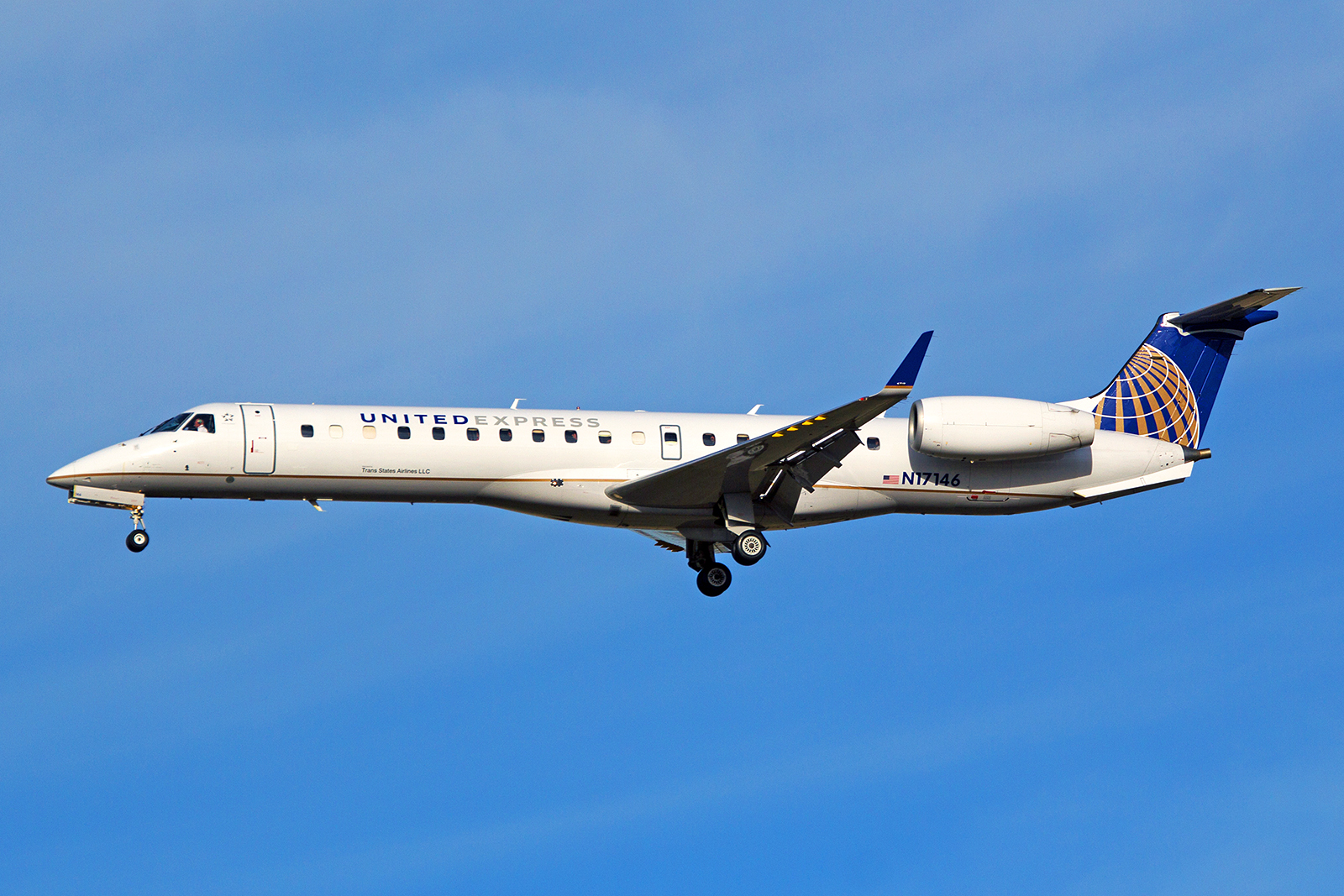
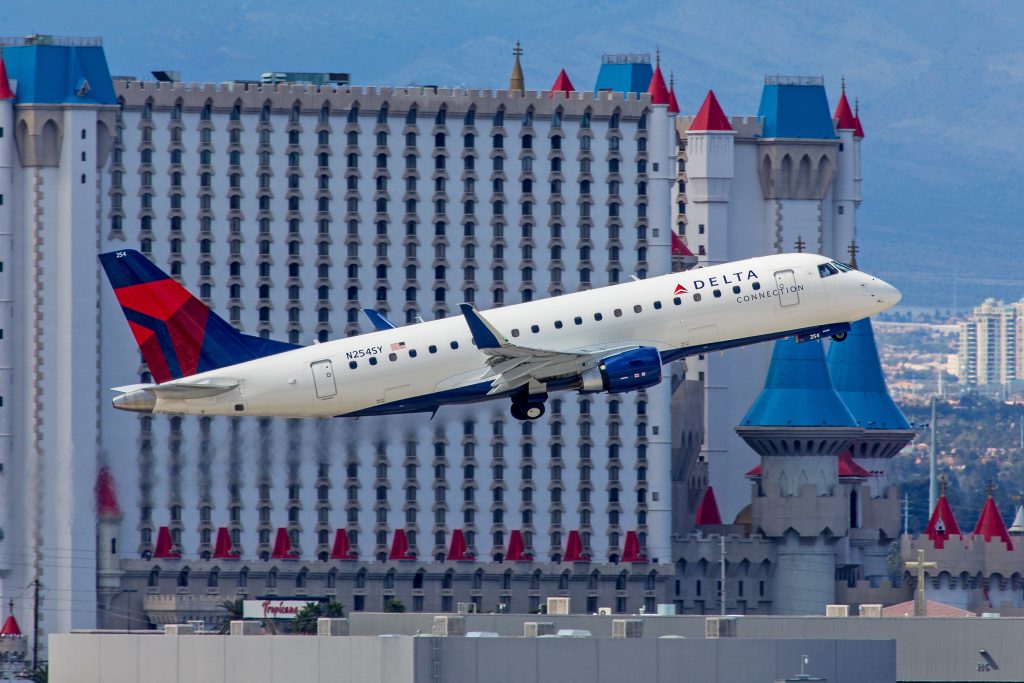
Only a certain selection of airlines in the U.S. rely on regional carriers. American, Delta, and United are the most visible. Any flight that is branded as “American Eagle,” “Delta Connection,” or “United Express” is operated by a third-party regional operator instead of the main airline. Alaska Airlines also uses regional carriers, though with slightly different brandings: its regional partners fly aircraft that bear both Alaska’s name and the regional’s, such as “Alaska Skywest” for the independent, national regional brand or “Alaska Horizon” for flights operated by wholly-owned subsidiary Horizon Airlines.
Using these regional operators allows major airlines to remain competitive without needing to pay for hundreds of extra planes. Instead, they pay regionals a certain fee per departure, and the regionals handle their own staffing and buy or lease their own aircraft.
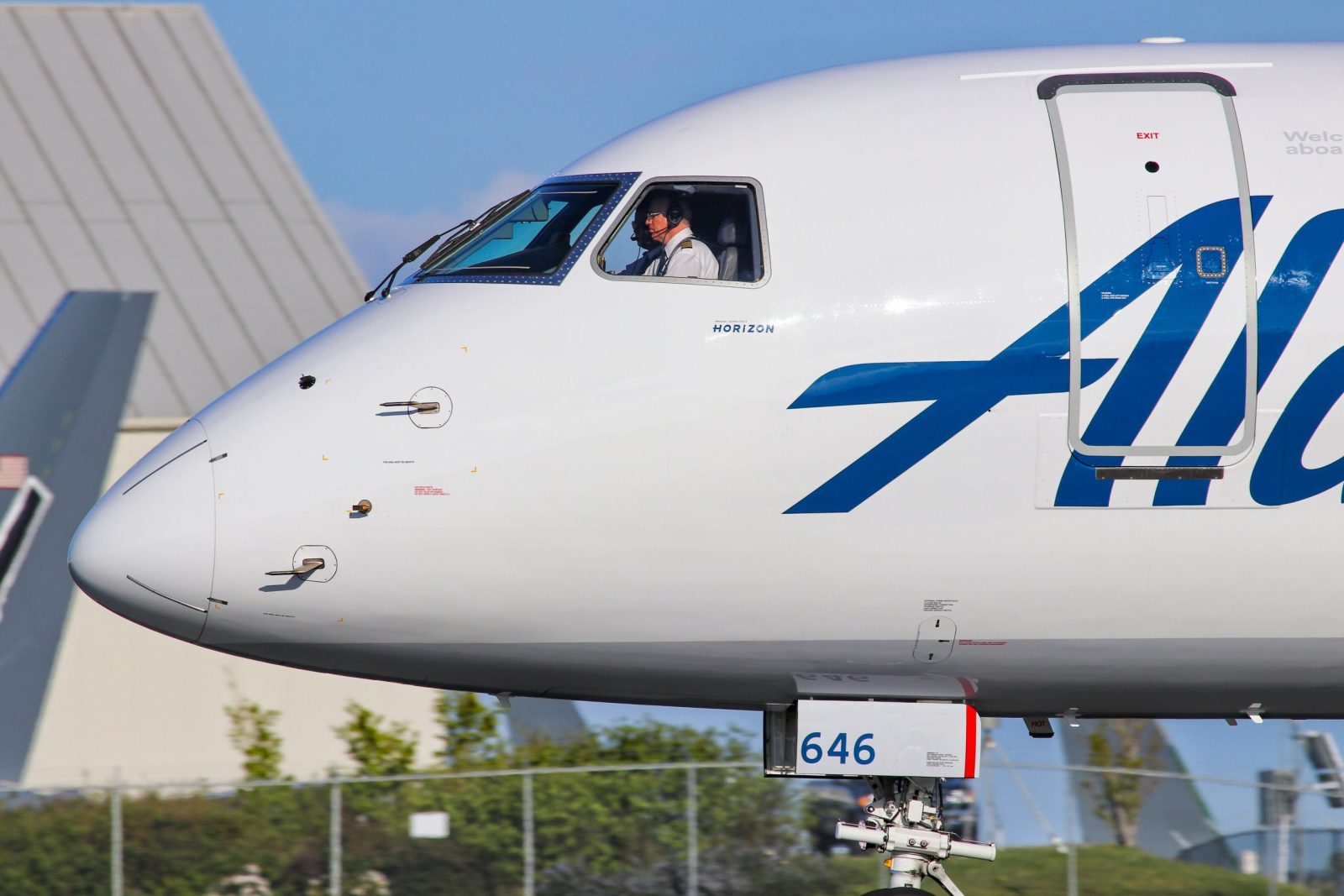
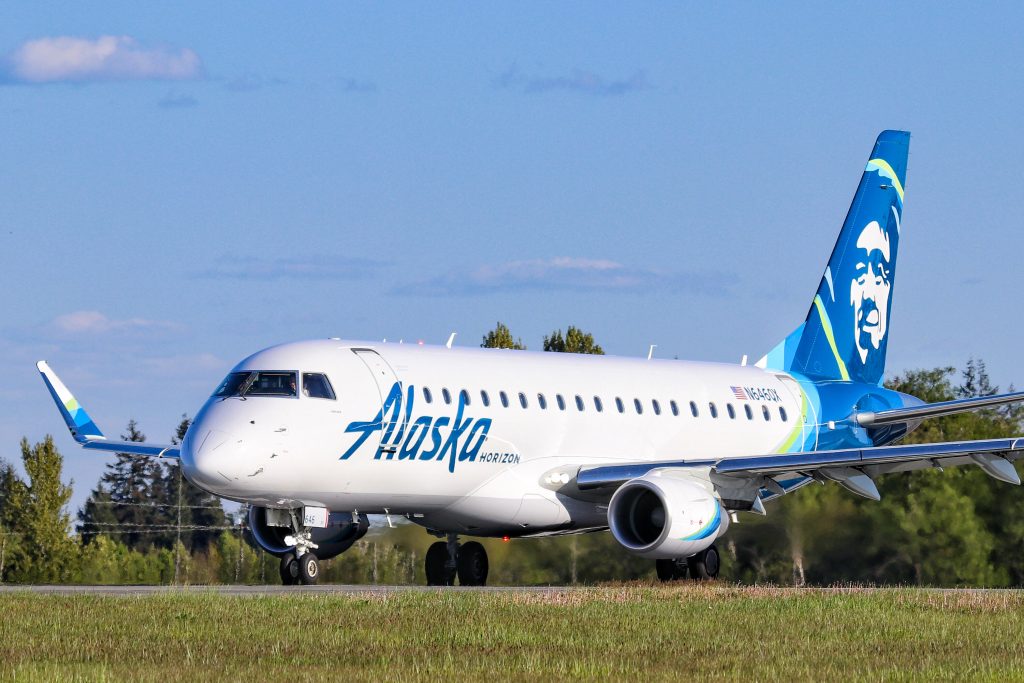
An Alaska Airlines E-175 operated by Horizon Air at Paine Field. (Photo: AirlineGeeks | Katie Bailey)
For many reasons, regional airlines are a fascinating case study in airline flying. How pilots view these regional carriers is one of those. With the exception of SkyWest, which operates in all but a handful of U.S. states, regional carriers are called such because they operate within a specific region of the country. With limited exception, Republic Airways operates almost exclusively east of the Mississippi River; CommuteAir, which beat out ExpressJet for United’s business, operates a few routes in the Midwest, Texas, eastern Canada, and the western U.S.; Horizon Air operates only on the West Coast.
A SkyWest CRJ-700 departing Vail. (Photo: AirlineGeeks | William Derrickson)
This regionality makes these carriers a great option for pilots who want to be able to stay closer to home throughout their careers. However, many more pilots use regional airlines as a stepping stone to make them attractive applicants for major airlines. With time flying multi-engine jets at big, busy airports in an airline environment, they can make themselves viable for further career opportunities at the mainline carriers.
The regionals faced the same challenges with more senior captains retiring early during the pandemic and needed first officers to upgrade to the captain position as soon as they were qualified to maintain smooth operations.
“And from a regional perspective, it’s really not a pilot supply issue at this point. It’s more of an issue of having first officers with the amount of time, the thousand hours that they need to graduate from the right seat to the left seat,” American Airlines Group CEO Robert Isom said during a Q3 2023 earnings call last week. He added that American itself isn’t seeing issues with filling captain vacancies, but noted struggles on the regional side. Unlike its competitors, American has three wholly-owned regional subsidiaries, including PSA, Piedmont, and Envoy.
The Captain Shortage at Regional Airlines
However, the regional airlines had an additional pressure. While mainline companies mainly worried about losing pilots to retirement, regionals also had to worry about losing pilots who got jobs at the mainline airlines. And these new hires were not limited only to the big three; regional pilots also leave for low-cost airlines like Southwest, Spirit, and Frontier.
As mainline companies lost first officers to captain upgrades, they suddenly found themselves in desperate need of new first officers to fill the second seat in the cockpit. These new first officers came overwhelmingly from the regional airlines, whether or not they were captains themselves.
Thus, regional airlines found themselves in the same predicament that mainline airlines did: in desperate need of captains and trying as hard as possible to convince first officers to make the switch. There is an additional challenge for them, though. Due to their experience at regionals, new pilots at mainline airlines often meet the legal experience requirements to be captains. As they build experience in a new airplane type with their new employer, they are legally eligible for a captain upgrade as soon as they are senior enough as first officers for the new airline to make the option available.
A Trans States Airlines Embraer ERJ145 approaching Denver. (Photo: AirlineGeeks | William Derrickson)
Regional airlines do not have that benefit. Many of their new hires are eligible to be airline pilots after spending years as flight instructors, aerial survey pilots, or flying for private aircraft owners. These new airline pilots need to fly 1,000 hours at their airline before the company can even think about upgrading them. As captains disappeared to new, better-paying airlines and new pilots came in with no captain-qualifying experience, regional airlines found themselves in a bit of a catch-22: they can’t fill their captain vacancies without qualified first officers, but they can’t get their first officers to be qualified because there are not enough captains to operate the flights that will get those first officers their experience.
Regional Airlines’ Response
While it is easy for mainline carriers to hire first officers that will be ready to upgrade soon – they are, after all, career-destination companies with thousands of applicants from a wide variety of regional, low-cost, and charter airlines – regionals do not have that benefit. They have such an imbalance of captains to first officers that they have been forced to cut upwards of 20% of their schedules to prevent mass flight cancellations. This has brought service losses at a significant number of smaller airports.
Regional carriers have offered signing bonuses worth tens of thousands of dollars to pilots who get hired directly as captains. This might be attractive to charter pilots looking to switch to airline flying. Certain types of charter experience meets the 1,000-hour captain experience requirement, and pilots might be attracted to an opportunity where they can build PIC time – such experience is itself very valuable – in multiengine jet aircraft, making them all the more qualified for management jobs (as a line check airman or chief pilot) or a position at a mainline carrier.
Industry-Wide Response
Steps have been taken, of course, to try to remedy these problems. Delta Air Lines announced a major update to its pilot contract in the spring, forcing United Airlines to follow suit over the summer. American Airlines introduced their own contract soon after. Officials say these deals will go a long way toward ensuring the mainline carriers are sufficiently staffed with captains moving forward, though it has yet to be seen how effective the new deals will really be.
Particularly, airlines hope that updates to work/life balance in these new contracts will be strong incentives for pilots to move to the left seat. As previously mentioned, the loss of seniority after a captain upgrade can be a significant turnoff for senior first officers who want to spend time with their families and avoid forced assignments.
“Junior captains are faced with amplified uncertainties in their flight schedules, on-call commitments, and sudden assignments, translating to reduced stability,” says Jainita Hogervorst, Director of Aerviva Aviation Consultancy, a Dubai-based aviation recruitment consultancy.
“Such uncertainty in scheduling might trickle down to other issues, such as unsatisfactory work-life balance,” Hogervorst continued. “The evolving work-life balance landscape and societal attitudes towards career encourage a shift in working people’s attitude, pilots included.”
A SkyWest Embraer E175 in Las Vegas. (Photo: AirlineGeeks | William Derrickson)
“We can hire first officers. I think almost every regional airline right now has a stack of first officers,” CommuteAir CEO Rick Hoefling told AirlineGeeks at the unveiling of the regional carrier’s first Embraer E170 jet last week. “The problem is building their time at the same time you’re attriting out captains at a pretty high rate in the industry.”
“We went from a pilot shortage to a captain shortage now in the industry. So the pendulum is starting to move,” Hoefling added.
The massive shortage has been a benefit for aspiring pilots, and there has been a significant uptick in new student pilots as well as pilot certificates issued in recent years. The FAA issued thousands of commercial pilot certificates in 2022, and while some of those pilots will return to foreign markets for jobs, the additional pilots will be able to ease some of the burdens that airlines are facing.
John McDermott is a commercial pilot pursuing a career in professional flight. His passion for aviation began in an Ann Arbor bookstore with a tale of enemy pilots during World War 2, and he hasn't looked back. Besides flying and writing for AirlineGeeks, John volunteers with Professional Pilots of Tomorrow and travels whenever he gets the chance.
Denver Air Connection Adds 17th Route
Denver Air Connection once again grows in size as they schedule their 17th route
A Denver Air Connection Dornier 328Jet (Photo: AirlineGeeks | Joey Gerardi)
Colorado-based Denver Air Connection, or DAC for short, has added a 17th route to their network. The new flight will depart from one of its existing Essential Air Service communities.
The new route departs from Pierre, South Dakota, a city the airline has been serving since SkyWest terminated its EAS contract here due to “pilot staffing.” DAC began service to Pierre on July 1, 2021, operating flights to its hub at Denver International Airport. On the same day back in July 2021, they also began services to Watertown, South Dakota, but they currently operate to Chicago O’Hare as well as Denver from Watertown.
The new route will operate between Pierre and Denver Air Connection’s hub at Minneapolis/St. Paul. Flights begin on November 30, 2023 and will initially operate twice a week on Thursdays and Sundays. All flights will operate on board 50-seat Embraer E145 jets.
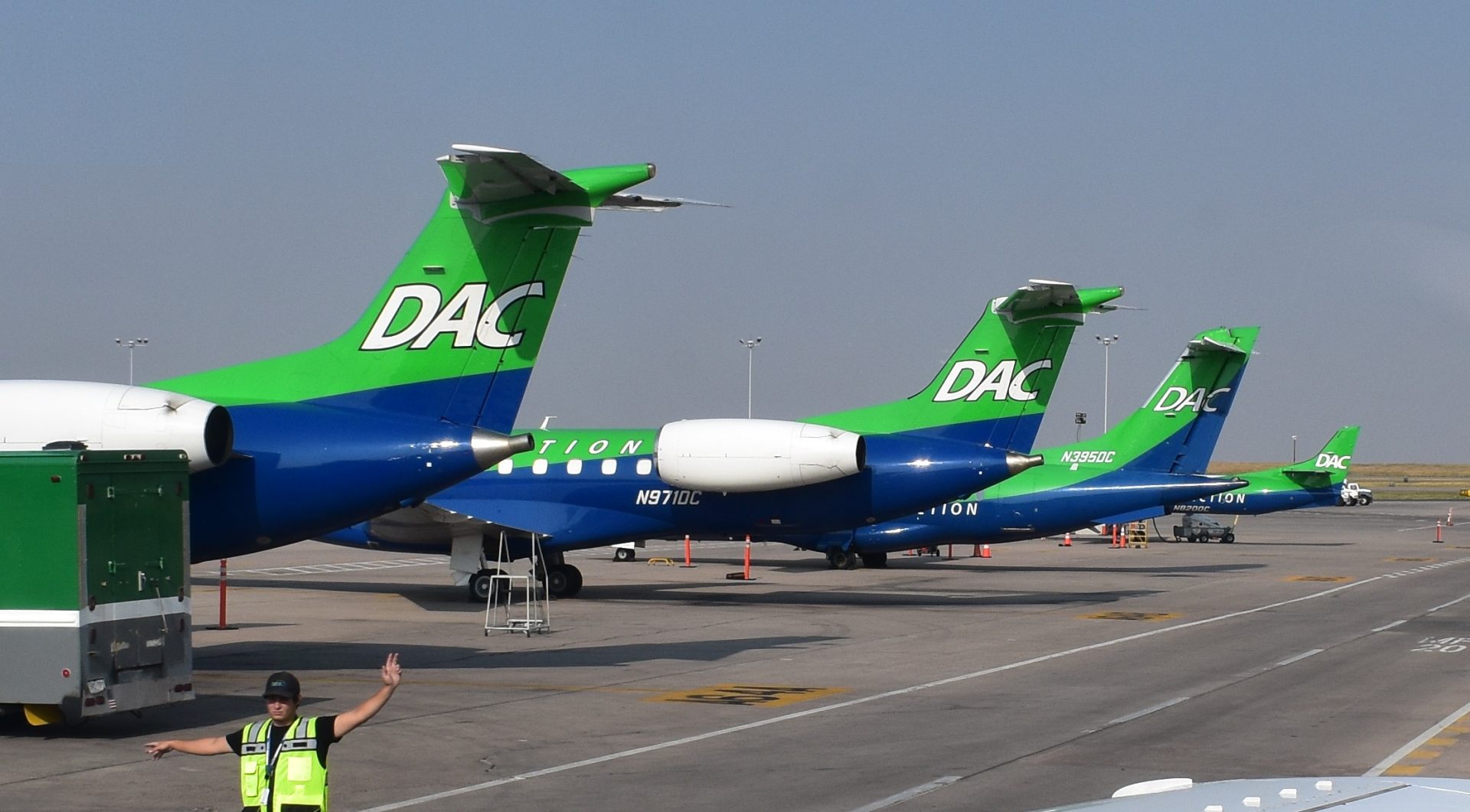
Denver Air Connection planes lined up in Denver. (Photo: AirlineGeeks | Joey Gerardi)
This will be the airline’s third route out of the Minneapolis/St. Paul hub, and it is the sixth EAS city they operate that will offer flights to two different hubs. However, this will be the first community the airline operates to that offers flights to both Denver and Minneapolis, as other destinations, such as nearby Watertown, S.D., operate Denver and Chicago flights.
Given the timing of the flights, on Thursdays and Sundays, passengers could even fly between Denver and Minneapolis with a connection in Pierre. Unfortunately, due to the times of the flights, connecting in Pierre westward doesn’t work unless you’re willing to stay overnight.
This connection is similar to DAC’s offering from nearby Watertown, S.D., as they operate Denver and Chicago flights. Connecting in Watertown is possible in one direction, which AirlineGeeks did the year it started.
All flights and schedules are subject to change, and information was found on the airline’s website.
Joey has always been interested in planes for as long as he can remember. He grew up in Central New York during the early 2000s when US Airways Express turboprops ruled the skies. Being from a non-aviation family made it harder for him to be around planes and would only spend about three hours a month at the airport. He was so excited when he could drive by himself, the first thing he did with his driver's license was get ice cream and go plane spotting for the entire day. He graduated from Western Michigan University in 2022 with a B.S. in Aviation Management & Operations and a Minor in Business, and currently works for a major airline in his hometown.
Sign-up for newsletters & special offers!
Get the latest stories & special offers delivered directly to your inbox