








Stories

Icelandair Reports Record Revenue and Profit in Q3 2023

In Q3 of 2023, Icelandair achieved notable success since the company's financial position is robust, with a solid equity base and healthy liquidity.

Icelandair Boeing 757 wearing the "Vatnajökull" livery (Photo: AirlineGeeks | Joey Gerardi)

Icelandair, Iceland’s national airline, based at Keflavík International Airport near the capital Reykjavík, has announced exceptional financial results for the third quarter of 2023, reporting a record revenue of USD $560 million. This impressive performance contributed to a substantial 46% increase in profit, totaling $26.6 million, marking a significant milestone for the airline. In addition to this remarkable financial achievement, the company received two prestigious international customer awards (APEX 2024 five-star major airline and best European airline at the Danish travel awards), further solidifying its reputation as a top-tier airline in the global aviation industry.

The key driver behind Icelandair’s success in Q3 2023 was a substantial increase in the number of passengers on the market to Iceland, a growth attributed to several contributing factors. Icelandair transported 1.5 million passengers during the third quarter, 7% more than last year.

One of the primary factors fueling Icelandair’s success in Q3 was the robust demand for travel from North America to Iceland. Iceland’s geographical location is convenient for one-stop transatlantic flights, a pillar of the airline’s business strategy, along with traffic to and from the country.

The airline experienced a 16% increase in passengers, with a significant portion of these travelers originating from North America. This heightened interest in Icelandic destinations helped boost passenger numbers and contributed to the overall revenue growth. As of 2021, Icelandair operates three aircraft with “special” liveries, one of which highlights the Northern Lights, also being part of Icelandair’s #IcelandStopover campaign.
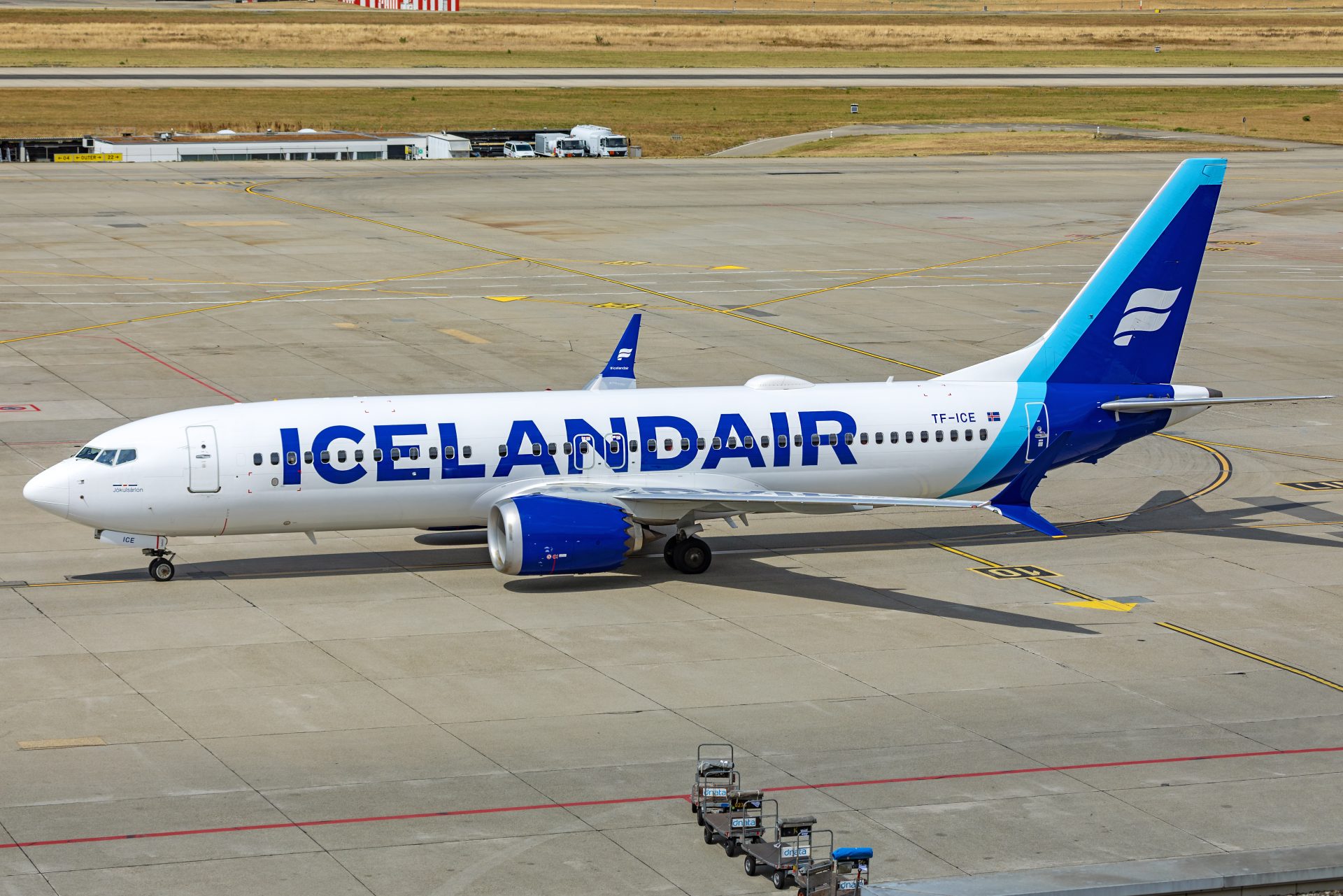
An Icelandair Boeing 737 MAX.
(Photo: AirlineGeeks)

Icelandair strategically expanded its route network, achieving approximately 10% growth in 2024. Adding new destinations and improved connectivity increased the appeal of Icelandair’s services, attracting more passengers to choose the airline for their travel needs.

The company also invested in enhancing its products and partner connectivity. These efforts aimed to provide passengers with a superior travel experience and to increase the attractiveness of Icelandair’s services.

In addition to the remarkable increase in profit and passenger numbers, several other financial highlights were noted. Icelandair saw an improvement in EBIT by $19 million. The company also bolstered its liquid funds and achieved growth in key traffic figures, including Available Seat Kilometers (ASK), Revenue Passenger Kilometers (RPK), and load factor.

The equity of Icelandair Group amounted to $337 million, with an equity ratio of 21% at the end of the period, compared to 19% at the beginning of the year. This indicates a solid equity base and financial stability. The liquidity position of the company remained robust, although the specific amount of cash and marketable securities was not provided.

The leasing operation performed well, improving financial performance in consecutive years despite similar revenue. The outlook is optimistic, with an expected profitable organic growth in 2024.

Vincenzo Claudio Piscopo

Vincenzo graduated in 2019 in Mechanical Engineering with an aeronautical curriculum, focusing his thesis on Human Factors in aircraft maintenance. In 2022 he pursued his master's degree in Aerospace Engineering at the University of Palermo, Italy. He combines his journalistic activities with his work as a Reliability Engineer at Zetalab.

LOT Polish Airlines With A 2028 Strategy

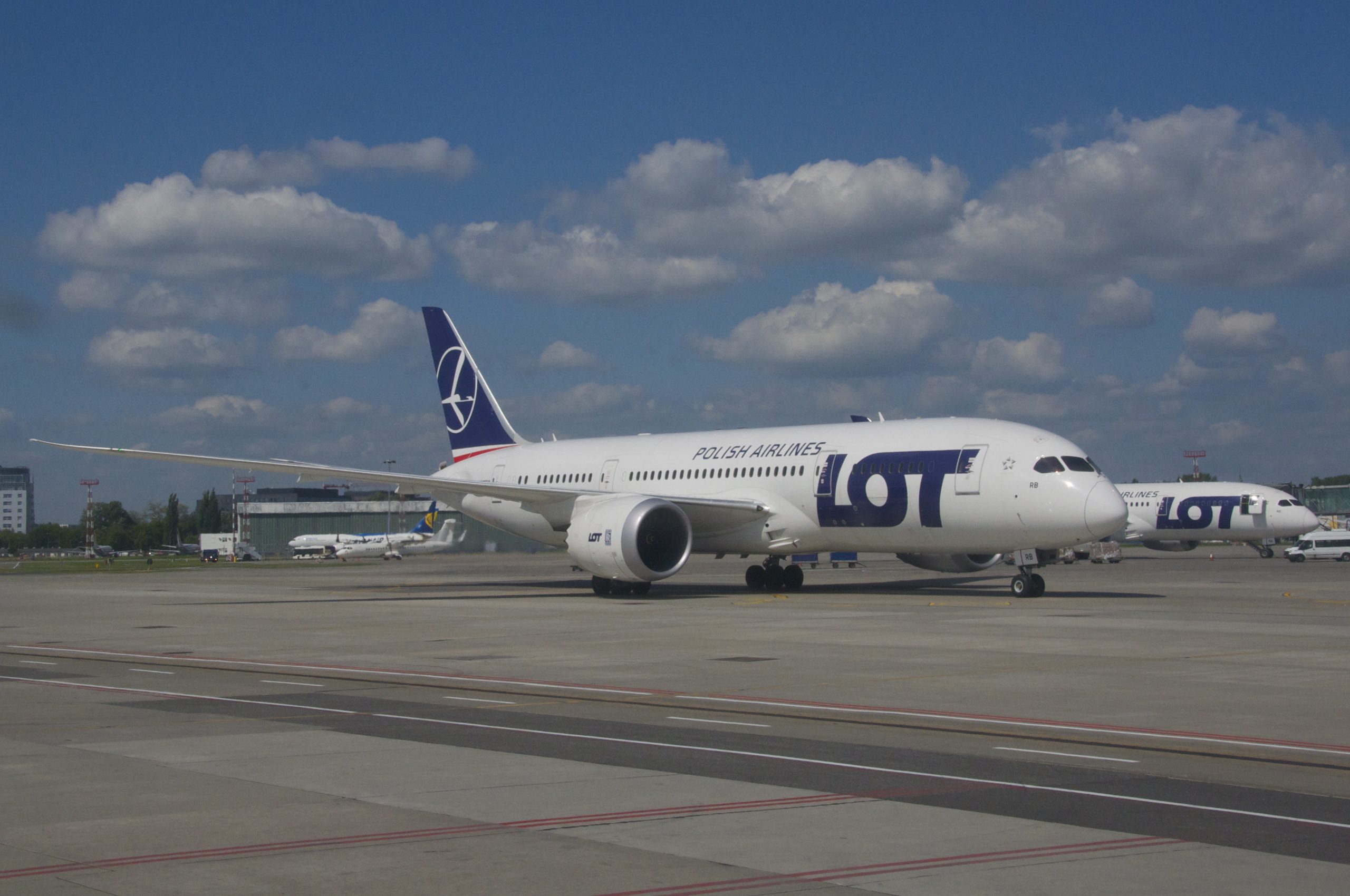
This month, Michał Fijoł, recently appointed CEO of LOT Polish Airlines presented a strategy the carrier will follow in the coming years of 2024-2028. All the boxes in the previous document, outlining the growth for the years 2016-2020, had been checked ahead of time, back in 2019. Now with air transportation not without challenges, but on the fairly predictable path, it's time for the next step forward.

LOT Polish Airlines Boeing 787-9 SP-LRB. (Photo: Aero Icarus | flickr)

This month, Michał Fijoł, the recently-appointed CEO of LOT Polish Airlines, presented a strategy the carrier will follow in the coming years of 2024-2028. All the boxes in the previous document, outlining the growth for the years 2016-2020, were checked ahead of time in 2019. With air transportation back on the fairly predictable path, it’s time for the next step forward.

The Strategy’s Four Pillars

The strategy will stand on four pillars: to be bigger, better, socially conscious, and financially stable. It is a stable and conservative base for future growth. It is worth noting that the carrier is at the center of gravity of the coming Polish airport hub, known as the Central Port of Communication. Every detail of the strategy can be perceived with this context in mind.

The carrier is profitable, with a healthy profit of 1 billion PLN ($237 mil) for the financial year 2022. This accomplishment will allow the company to pay down the due part of the 2.9 billion PLN ($688 mil) state aid granted to take it through the pandemic. The profitability is set to be carried forward, as the CEO states that the current strategy is less ambitious and more balanced than the previous one.

LOT Polish Airlines CEO Michał Fijoł (Photo: LOT Polish Airlines)

Nevertheless, the goals are still there and don’t disappoint. The target number of passengers carried is set to reach 17 million and is similar to the current capacity of the LOT’s home Warsaw Chopin Airport. The regional network development, including routes operated from Warsaw-Radom airport, could play its role, but the number probably envisions transferring the operations to the new Solidarity Hub airport mentioned above.

The Core of Any Carrier is its Fleet

LOT’s current fleet will not accommodate such growth. Two items that came with no big surprise were touching the carrier’s fleet, including both the short-haul and the long-haul components.

It was already in the air that LOT was looking for the short-haul fleet renewal. The three issues pointing towards that were the Boeing 737 MAX grounding, which resulted in LOT canceling part of their order for the type; the recent Bombardier Q-400 retirement; and finally the Embraer fleet age, where some of the aircraft are approaching 20 years of service. Therefore, it is said that the carrier should select the future vendor for its short-haul fleet soon. The choice is limited here between Airbus A220 and Embraer E-2 series.


Recaro CL6720 business class seat for LOT Polish Airlines (Photo: Recaro)

There are mention of new additions, but a retrofit instead when it comes to talking about the long-haul fleet. After years of offering the dated-yet-spacious style of business class, LOT will transition to the direct aisle access product by selecting Recaro as its partner in retrofitting the widebody fleet.

A Fairy Tale About Far East and Middle East

The Asia-oriented network plans do not leave any doubts that LOT will need more widebody planes. There are multiple destinations that are wishfully planned in the Far East that are right about the perfect candidates to be operated by a fleet of Boeing 787 Dreamliners. The shorter routes, on the other hand, including to the Middle East and Central Asia, will be probably operated with narrowbody planes, as the current routes to Dubai and Astana arer. It is surprising that this kind of broad network development plan doesn’t include more Indian routes, as currently LOT operates only Delhi and Mumbai.

LOT Polish Airlines existing eastbound network, marked white, and the intended additions, marked blue. (Photo: Filip Kopeć | airlinegeeks)

A Smart Way to Strengthen the Transatlantic

The transatlantic expansion doesn’t look as broad, but here the emphasis might be put on the quality rather than the quantity. It was already announced that, after terminating partnership with United, LOT intends to sign a codeshare agreement with JetBlue Airways, a strategic move that will finally allow the US officials to use LOT Polish Airlines operated flights to travel under “Fly America Act”. That might be a significant boost to the high-yield portion of the traffic carried by LOT. The destinations selected in the strategy are not all that surprising as some of them were already rumored or have even been announced by the carrier in the past.

LOT Polish Airlines existing transatlantic network, marked white, and the intended additions, marked blue. (Photo: Filip Kopeć | airlinegeeks)

Filip Kopeć

A passionate aviation enthusiast that started off his career as an aerospace engineer, but found his true calling on the commercial side of the airline business. Now as a finance guy among avgeeks and an avgeek among finance guys, he has experience working in the Revenue Divisions of three airlines. In his spare time he enjoys traveling, but admittedly sometimes is more about the journey than the destination.

Porter Airlines Adds Las Vegas to Expanding Toronto Pearson Network

Almost one million Canadians traveled to Las Vegas in 2022 according to H. Fletch Brunelle, the vice president of marketing for the Las Vegas Convention and Visitors Authority.

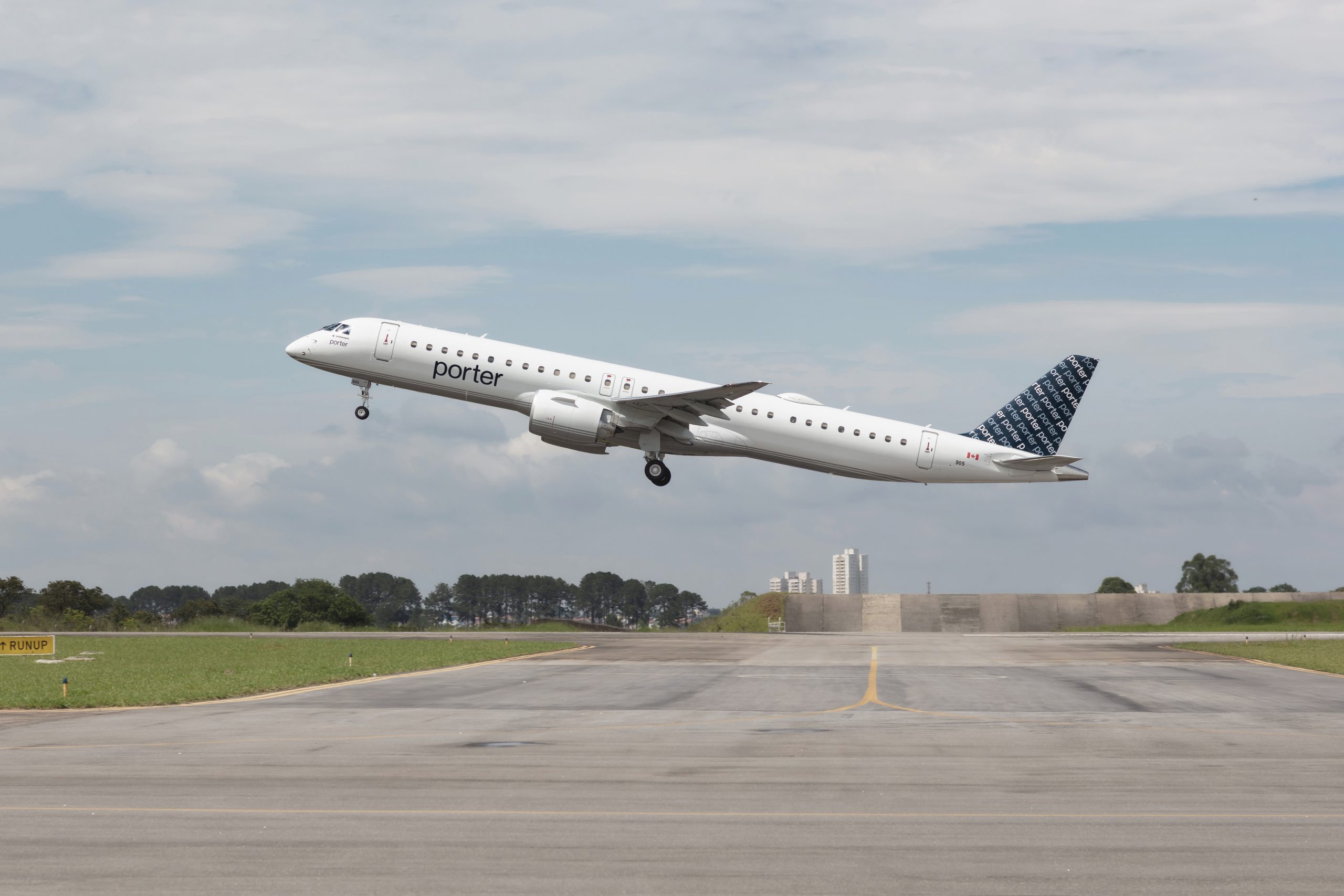
Porter Airlines' Embraer 195-E2. (Photo: Embraer)
A Porter Airlines Embraer 195-E2. (Photo: Embraer)

Canadian short-haul carrier Porter Airlines continues to expand its network from Toronto’s Pearson International (YYZ) since beginning operations from the airport in February of this year. Porter continues to operate from its traditional hub of the downtown Toronto Billy Bishop Airport (YTZ) but now touts Toronto Pearson as its ‘second hub.’

The airline announced this week that Las Vegas’ Harry Reid International Airport (LAS) would become the seventeenth route from YYZ. Porter Airlines will begin a daily service between YYZ and LAS from March 5, 2024 utilizing the airline’s new Embraer E195-E2 aircraft.

Kevin Jackson, Porter Airlines’ executive vice president and chief commercial officer, said in a press release: “It takes something exceptional to stand out in Vegas, and we intend to do just that by bringing our elevated economy experience to this popular destination. From the runway to the Strip, passengers start their special getaway the moment they board our aircraft.”

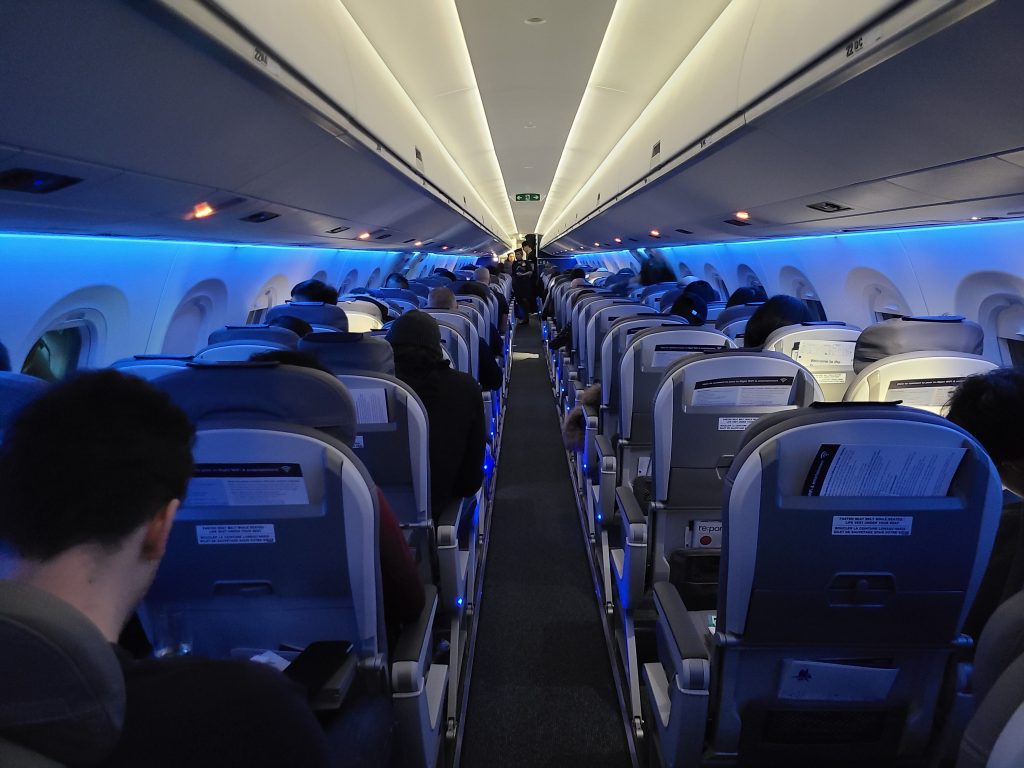
Porter’s ‘elevated economy experience’ on the 132-seat, all-economy, two-by-two configuration E195-E2 includes free wifi for all passengers along with a ‘selection of premium snacks, and free beer and wine.’ The airline also offers those customers purchasing an all-inclusive ‘PorterReserve’ fare a meal service. Those customers who purchase the ‘PorterClassic’ fare can purchase an inflight meal.

Porter E195-E2 cabin with dimmed mood lighting (Photo: AirlineGeeks | Andrew Chen)

Almost one million Canadians traveled to Las Vegas in 2022 according to H. Fletch Brunelle, the vice president of marketing for the Las Vegas Convention and Visitors Authority. “The ability to access affordable and convenient flights, like Porter Airlines’ new route from Toronto, is key to ensuring more travelers can experience everything Las Vegas has to offer,” said Brunelle.

Porter’s scheduling of the flights to and from LAS will suit those Canadians visiting the ‘entertainment capital of the world.’ The five-hour flight from YYZ to LAS will have an early afternoon departure and will arrive just after 3 p.m. local time. This will allow passengers visiting Vegas to check in to their accommodations immediately after arriving at Harry Reid International. The return flight from LAS will depart at 4 p.m. so visitors can go straight from checkout to the airport without a long delay, arriving back at Toronto Pearson a little after 11 p.m.

In addition to the Toronto Pearson-Las Vegas route, Porter Airlines also announced this week that the Embraer E195-E2 would commence service on Feb. 14, 2024 from Ottawa International Airport (YOW) to Calgary International Airport (YYC). The service from Canada’s capital to the largest city in the province of Alberta will depart late in the afternoon with a return flight departing in the morning. Porter Airlines already operates from YOW to the capital of Alberta, Edmonton, and further west to Vancouver in British Columbia.

John Flett

John has always had a passion for aviation and through a career with Air New Zealand has gained a strong understanding of aviation operations and the strategic nature of the industry. During his career with the airline, John held multiple leadership roles and was involved in projects such as the introduction of both the 777-200 and -300 type aircraft and the development of the IFE for the 777-300. He was also part of a small team who created and published the internal communications magazines for Air New Zealand’s pilots, cabin crew and ground staff balancing a mix of corporate and social content. John is educated to postgraduate level achieving a masters degree with Distinction in Airline and Airport Management. John has held the positions of course director of an undergraduate commercial pilot training programme at a leading London university. In addition he is contracted as an external instructor for IATA (International Air Transport Association) and has been a member of the Heathrow Community Fund’s ‘Communities for Tomorrow’ panel.

Livery of the Week: Qantas’ Emily Kame Kngwarreye Dreamliner

The airline’s trademark red tail was adapted to match the earthy red tones and white dotting technique of the original piece, according to Qantas.

Qantas' latest livery in its Flying Art Series (Photo: AirlineGeeks | Katie Bailey)

Editor’s Note: AirlineGeeks is excited to launch our ‘Livery of the Week’ series. Every Friday, a team member will share an airline livery, which can be from the past, present, or even a special scheme. Some airline liveries are works of art. The complexity associated with painting around critical flight components and the added weight requires outside-the-box thinking from designers. The average airliner can cost upwards of $200,000 to repaint, creating a separate aircraft repainting industry as a result.

Qantas is certainly no stranger to artfully designed aircraft liveries. Since 1994, the Australian airline has developed a series of liveries that seek to recognize indigenous works. So far, Qantas has painted five aircraft in striking liveries, all of which are designed by leading Indigenous Australian-owned design agency Balarinji, according to the airline.

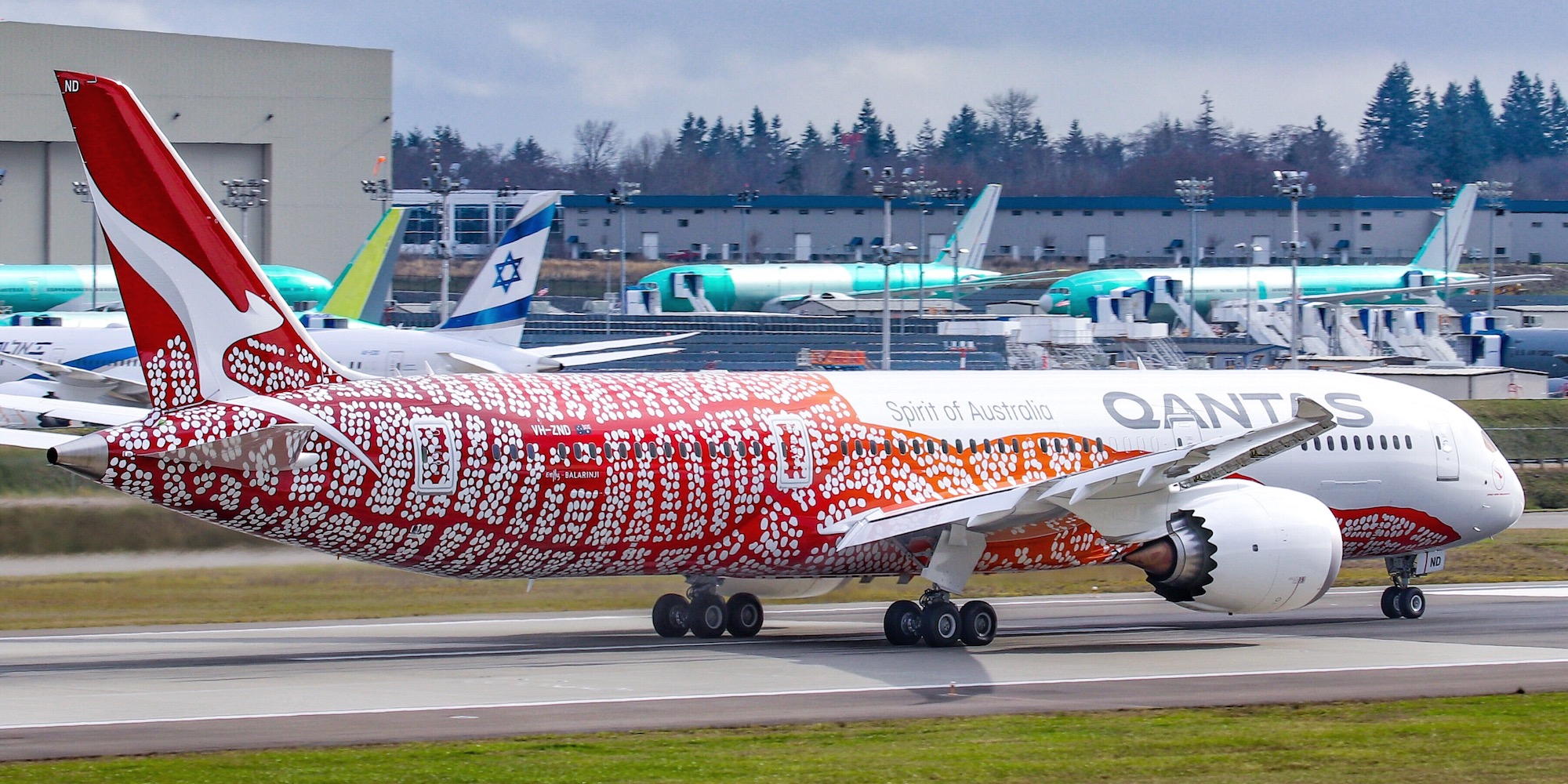
Aptly named the Flying Art Series, Qantas has painted a variety of both widebody and narrowbody aircraft in these special designs. The latest one is on a Boeing 787-9 Dreamliner, which bears the name Emily Kame Kngwarreye. The livery was inspired by the 1991 ‘Yam Dreaming’ piece, painted by Emily Kame Kngwarreye.

Registered as VH-ZND, the six-year-old 787-9 can regularly be seen across Qantas’ long-haul network.

A Qantas 787-9 Dreamliner called Yam Dreaming, the only Qantas special livery 787. (Photo: Qantas)

Honoring a Late Artist

Born in 1910, Emily Kame Kngwarreye was a prominent Aboriginal Australian artist known for her pivotal role in contemporary indigenous art. She belonged to the Utopia community in the Northern Territory. Kngwarreye commenced her artistic career later in life and gained recognition for her abstract works, often depicting landscapes, cultural narratives, and indigenous flora.

According to the National Museum of Australia, it is estimated that she created over 3,000 paintings in her eight-year-long artistic career, which started in 1988. Her signature style featured vibrant colors and intricate dot-painting techniques. Notably, her art was showcased at the Venice Biennale in 1992, marking a pivotal moment for indigenous Australian art on the world stage.

Kngwarreye’s legacy endures in the global art community, with her pieces displayed in major art institutions. Now, her artistic style graces the skies thanks to Qantas. Kngwarreye passed away in 1996 at age 86.

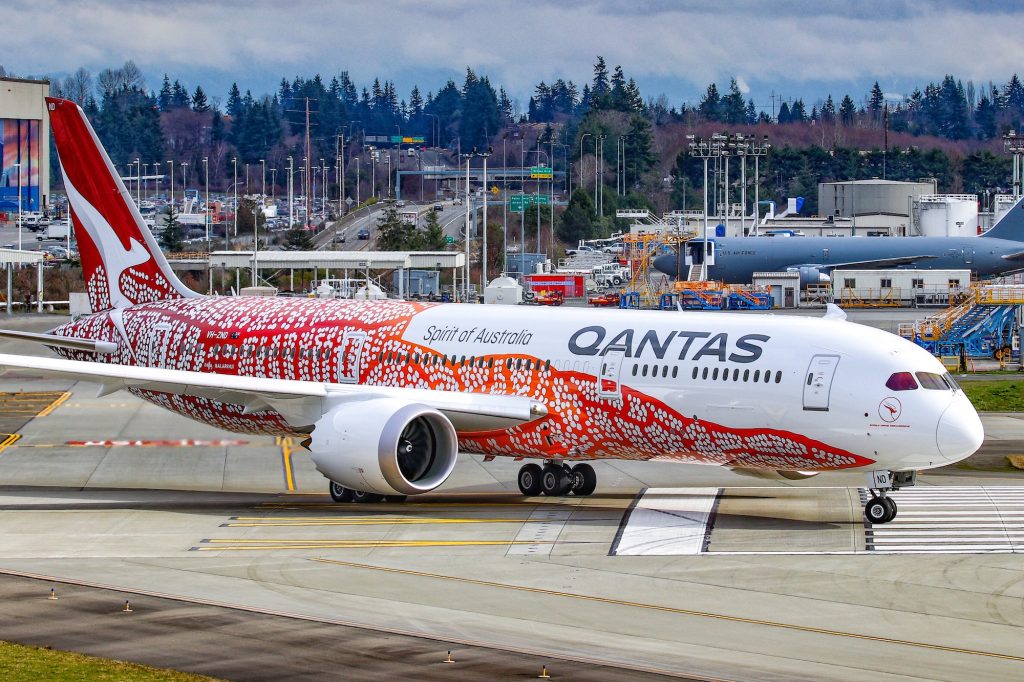
Qantas’ latest addition to its Flying Art Series (Photo: AirlineGeeks | Katie Bailey)

The Livery

While VH-ZND largely maintains Qantas’ standard livery, the fuselage and bottom portion of the tail feature the special design. The livery itself is inspired by the yam plant, which was ‘an important symbol in Emily’s Dreamtime story, and an important food source in her home region of Utopia, 230 kilometres north east of Alice Springs,’ according to Qantas.

Similar to other liveries in the airline’s Flying Art Series, this design was also brought to fruition by Balarinji. On its website, Qantas says that the tail was incorporated into the design for the second time in the series’ nearly 30-year history.

The airline’s trademark red tail was adapted to match the earthy red tones and white dotting technique of the original piece, according to Qantas.

Looking for a new airplane model? Head over to our friends at the Midwest Model Store for a wide selection of airlines and liveries. 

Ryan Ewing

Ryan founded AirlineGeeks.com in February 2013 and has spent more than a decade covering the airline business. His work has been featured by CNN, WJLA, CNET, and Business Insider. His aviation experience spans airport operations, Part 135 regulatory compliance, and airline crew workforce planning, along with time behind the yoke of a Cessna 172 and interviews with airline executives. Ryan now serves as Group President of Firecrown Media’s Aviation Group. He holds a B.S. in Air Transportation Management and an MBA from Arizona State University and teaches Airline Management at Embry-Riddle Aeronautical University.

As Airline Capacity Shrinks, Travelers Look for Other Israel Evacuation Options

The United States Department of State offered U.S. citizens evacuating from Israel an alternative way to leave the war-stricken country.

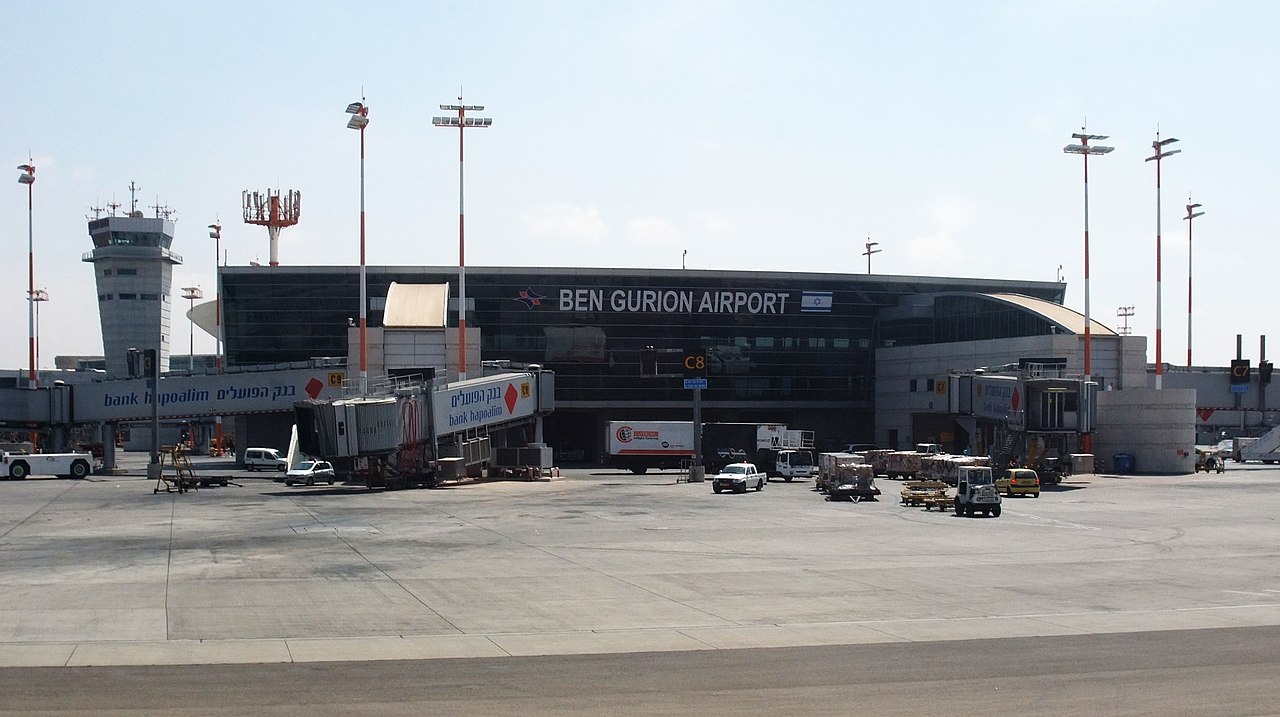
Ben Gurion airport in 2008 (Photo: Pilettes, CC BY-SA 3.0 , via Wikimedia Commons)

The Israeli-Hamas war has caused significant air traffic disruptions in the area. Since the start of the conflict, the big three United States airlines have ceased service to Israel. There is no expected resumption of service as the war continues.

This poses a challenge for the many U.S. citizens that are in Israel and wish to leave the country. While Tel Aviv’s Ben Gurion airport is operating as scheduled and open for flights for all airlines options are limited. El Al continues to operate flights along with Turkish Airlines, Etihad, and a couple of other European carriers.

The United States Department of State has been providing charter flights for the evacuation of American citizens regularly. So far over 7,000 U.S. citizens have departed Israel and the West Bank according to a State Department spokesperson. Flights and buses have been the typical mode of transportation, but earlier this week the State Department came up with a relatively unconventional evacuation method: a Royal Caribbean cruise ship.

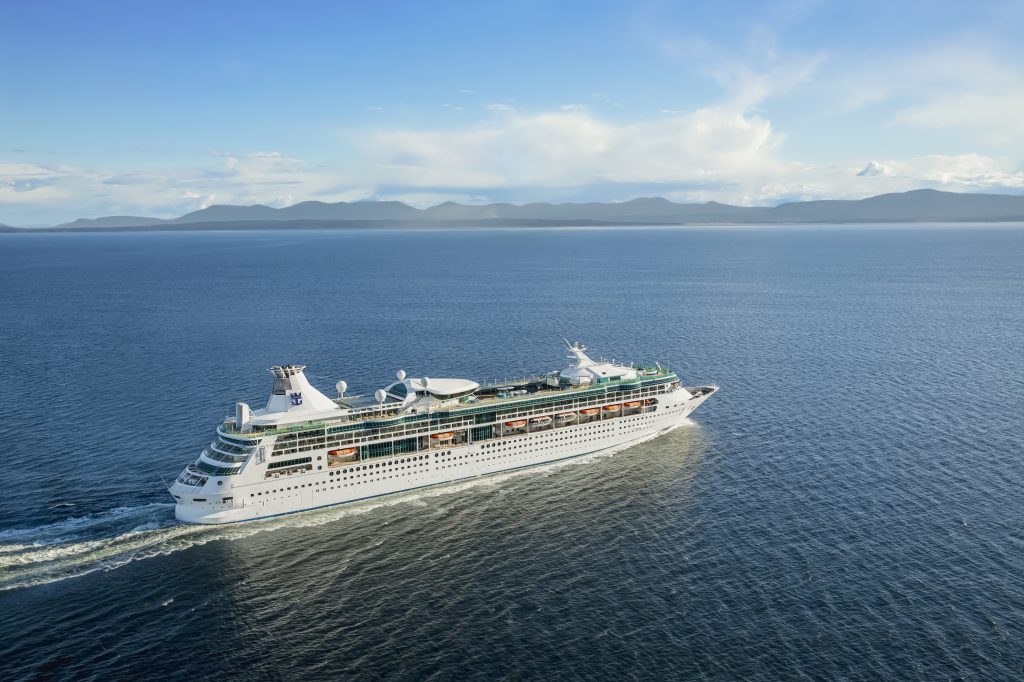
On Monday, Royal Caribbean’s Rhapsody of the Seas set sail from Israel to the island nation of Cyprus carrying U.S. nationals and their immediate family members. While the massive cruise ship can normally accommodate over 2,400 passengers, the number of passengers on this voyage was less than two hundred.

Rhapsody of the Seas (Photo: Royal Carribean)

Evacuees began lining up at Israel’s Port of Haifa, the country’s largest international seaport, as early as 6 a.m. on Monday even though the ship was not scheduled to depart the port until 5 p.m. that day. The journey was a quick overnight with the ship docking in Cyprus early on Tuesday morning with passengers disembarking by 8 a.m. They were met by local U.S. Embassy staff, military personnel, and the U.S. Ambassador to Cyprus.

From there, many were bused to the airport and some were offered a charter flight to Vienna. It’s expected that many were also offered transportation to Athens where many U.S. airlines have increased capacity in order to facilitate the return of citizens from the Middle East.

Evacuation Comes at a Cost

The evacuation, like many organized by the U.S. Department of State, was not free. All passengers had to sign a promissory note agreeing to repay the United States Government the cost of the evacuation. Something last seen in large numbers during the outbreak of the COVID-19 pandemic when the Department of State assisted over 100,000 U.S. citizens and permanent residents in returning to the U.S.

The cost of the cruise evacuation is expected to be upwards of $500. If the passengers do not pay within 30 days of receiving the bill from the government, they may face interest charges, and penalties, and be deemed ineligible to renew their passports in the future until the outstanding bill has been paid.

Hemal Gosai

Hemal took his first flight at four years old and has been an avgeek since then. When he isn't working as an analyst he's frequently found outside watching planes fly overhead or flying in them. His favorite plane is the 747-8i which Lufthansa thankfully flies to EWR allowing for some great spotting. He firmly believes that the best way to fly between JFK and BOS is via DFW and is always willing to go for that extra elite qualifying mile. Hemal's opinions are his own and do not reflect those of his employer.

U.S. Major Carriers with 865 Aircraft Ordered in Three Years

The three major U.S. carriers have placed orders for 865 new aircraft over the past three years. Boeing will deliver 74% of the market share.

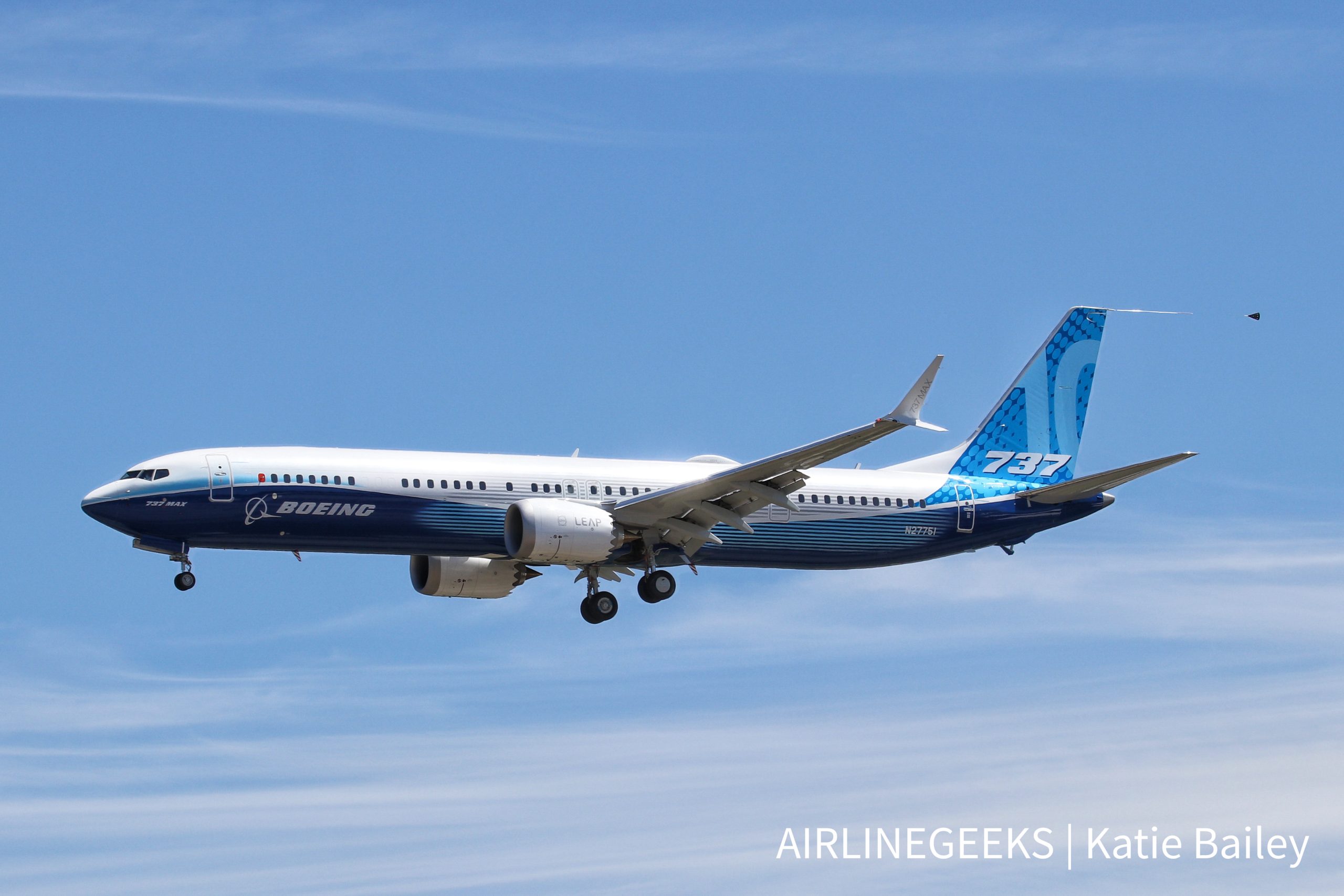
A Boeing 737 MAX 10 on a test flight. (Photo: AirlineGeeks | Katie Zera)

The past three years have brought significant changes in the airline industry. Airlines are looking towards the future for more fuel-efficient and environmentally friendly fleets. The Big Three have placed orders with both Airbus and Boeing to expand and replace existing fleets. 

United Airlines

According to UK-based aviation valuation firm, AviationValues, Boeing has won the majority of the order market share over the past three years accounting for 74% of the market share between the big three major carriers in the United States. Chicago-based United Airlines accounts for the majority of these orders, with 508 placed with Boeing alone in the past three years. The makeup is broken down between 737 and 787 aircraft. While United has shown that the carrier will operate a predominantly Boeing fleet, the Star Alliance carrier also placed orders for 130 Airbus A321 series aircraft.  

Delta Air Lines

While United currently dominates the industry in terms of aircraft orders, Delta has plans to grow its fleet with orders placed in the past three years. Since taking delivery of the carrier’s first A321NEO in 2022, Delta has continued to grow its NEO fleet. According to AV, in the past three years, the carrier has added 57 orders from Airbus to the books in addition to another 36 A220s. The Atlanta-based carrier also has 100 Boeing 737-10 aircraft on order which will enter the fleet beginning 2025. This brings the total number of aircraft ordered since 2021 for the Atlanta-based carrier to 193. These aircraft will build on and replace examples of an already existing fleet of 973 aircraft spread across Airbus and Boeing aircraft. 

American Airlines

American on the other hand has held strong with the orders the carrier had made in the past. In the past three years, the carrier has ordered just 34 new aircraft, 30 Boeing 737 MAX aircraft that were converted to firm orders in 2022, and an order for four aircraft from Airbus. Additionally, as reported in the third-quarter earnings call by Alaska Airlines, American will take delivery of ten Airbus A321neo aircraft bought from the SeaTac, Wash.-based carrier. These ten examples are not included in the number of aircraft on order directly with manufacturers. In August of this year, talks of a significant aircraft order to replace an aging narrowbody fleet were announced publicly as reported by ch-aviation. However, a solution has yet to be found and talks are still in progress to find a replacement. 

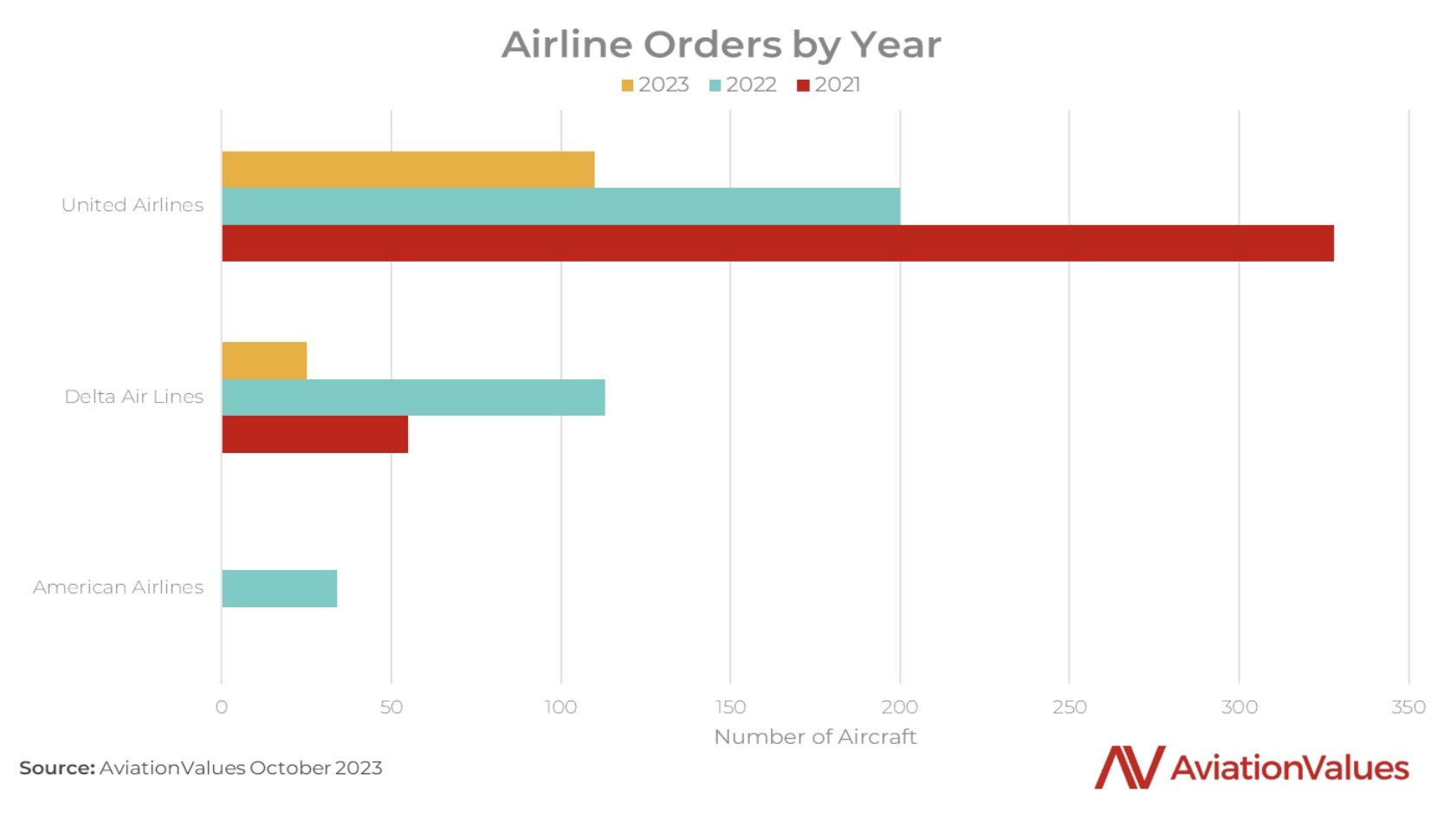
Orders by the three major U.S. carriers between 2021 and 2023. (Graphic: AviationValues)

Airbus currently has a backlog of 975 aircraft for North America alone. As for Boeing, in December of 2022, the Arlington, VA-based manufacturer had a back order of 4,758 jets. This is of significance because it determines how long an airline will have to wait before receiving an aircraft from the manufacturer. The larger the backlog, the longer the period of time from order to delivery is. 

Looking into the fleet future of the U.S. Big Three based on orders from 2021 to the present, United has an order book three times the size of Delta and nearly 20 times that of American. While all three have had orders placed prior to this time frame, United will see more jets arrive than America and Delta.

Zach Cooke

Zach’s love for aviation began when he was in elementary school with a flight sim and model planes. This passion for being in the air only intensified throughout high school when he earned his Private Pilot Certificate. He then attended Embry-Riddle Aeronautical University, earning his certificates and ratings to later flight instruct and share his passion for aviation with others. He now resides in the North East living out his dream as an airline pilot.

Biden Nominee For FAA Administrator Notches Bipartisan Senate Support

With more than a year and a half since there was a Senate-confirmed head of the Federal Aviation Administration (FAA), it looks like the streak is about to end.

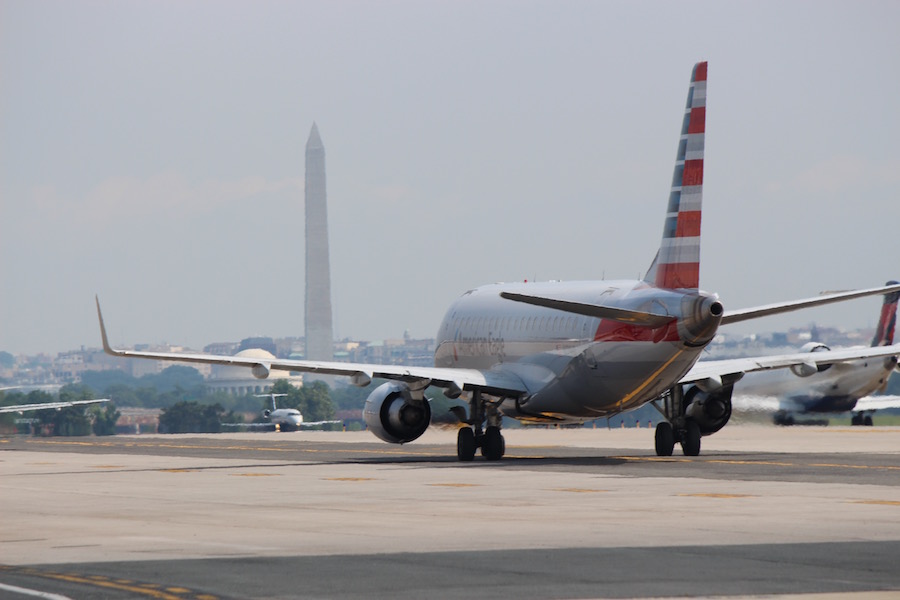
An American Eagle E175 taxis at Reagan National with a "monumental" backdrop. (Photo: AirlineGeeks | Ryan Ewing)

With more than a year and a half since there was a Senate-confirmed head of the Federal Aviation Administration (FAA), it looks like the streak is about to end. On Wednesday, the uniquely bipartisan U.S. Senate Committee on Commerce, Science, and Transportation unanimously agreed that Michael Whitaker is the right person for the job. The rare consensus means that full Senate approval is likely.

Words of praise for Whitaker came from both sides of the aisle. Even though Whitaker served under the Democratic Obama Administration as Deputy FAA Administrator under Administrator Michael Huerta, Senator Ted Cruz, R-Texas, lauded Whitaker’s “extensive aviation experience.”

At a confirmation hearing earlier this month, Whitaker, who holds private pilot and BasicMed certificates, voiced his opinion that bringing quality candidates into the FAA and the aviation industry, overall, will be a top priority. He said, “I would view my role as administrator, as chief recruitment officer, certainly for FAA, but also for the industry.”

But a high-profile string of “close calls” in the preceding months—despite an exemplary safety record, overall—have placed aviation safety front-and-center in the public’s attention. “If confirmed,” Whitaker said, “my priority will be the safety of the flying public. They have put their trust in the FAA to keep aviation the safest way to travel. And the world has looked to us for decades as the gold standard.”

Editor’s Note: This story was originally published on AvWeb

AirlineGeeks.com Staff

AirlineGeeks.com was founded in February 2013 as a one-person blog in Washington D.C. Since then, we’ve grown to have 25+ active team members scattered across the globe. We are all here for the same reason: we love deep-diving into the fascinating realm of the airline industry.

Alaska to Begin 737 MAX 8 Service in Early 2024

The Seattle-based airline plans to add the smaller 737 MAX variant to its fleet by the end of 2023, a spokesperson confirmed.

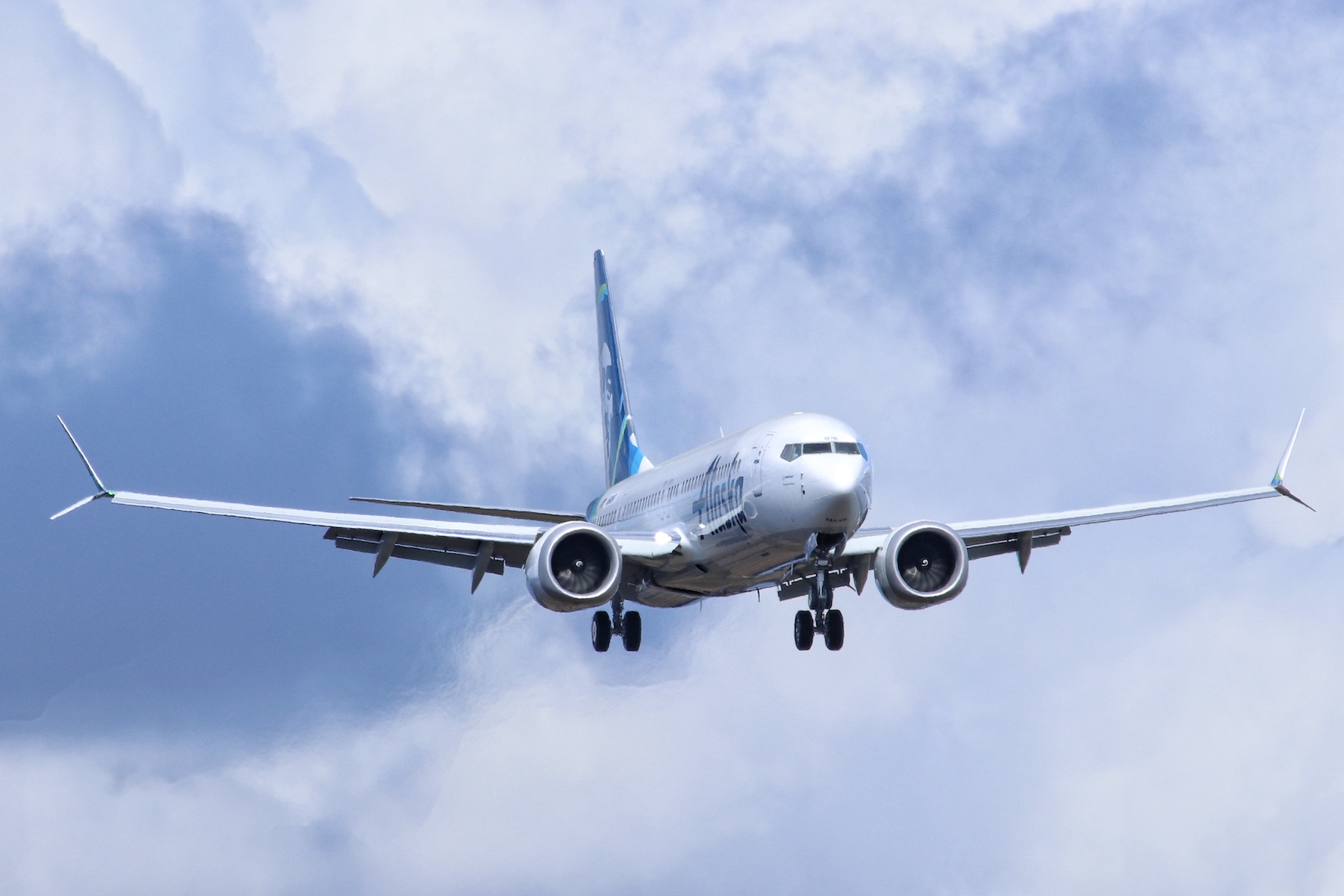
An Alaska Boeing 737 MAX 9 approaches Paine Field. (Photo: AirlineGeeks | Katie Bailey)

Now an all-Boeing operator, Alaska is on track to begin service with Boeing’s smaller 737 MAX variant in Q1 of 2024. The Seattle-based carrier phased out its last remaining Airbus aircraft – relics of the 2016 Virgin America acquisition – on Sept. 30, 2023.

According to ch-aviation, the airline has ordered 146 total 737 MAX jets, holding an additional 105 purchase rights. Since taking delivery of its first 737 MAX in January 2021, Alaska has only operated the larger 737 MAX 9 variant. The carrier has 56 737 MAX 9s in service.

Alaska has 737 MAX deliveries planned through 2030, including ten 737 MAX 8s, 737 MAX 9s, and 48 737 MAX 10s. The airline expects to receive its first 737 MAX 8 by year-end, a company spokesperson confirmed.

The airline’s first 737 MAX 8 flight is slated for Feb. 15, 2024 from Los Angeles to Portland with two daily flights, according to Cirium schedule data. At the time of writing, there are no additional flights available in the schedule.

Nearly a year ago, Alaska made its largest-ever order. The October 2022 announcement added 52 737 MAX aircraft for delivery between 2024 and 2027.

The airline’s 737 MAX 8 will seat 159 passengers with 12 premium seats and 147 in economy, per Cirium equipment data. The type will seat 19 fewer passengers than the larger 737 MAX 9.

Ryan Ewing

Ryan founded AirlineGeeks.com in February 2013 and has spent more than a decade covering the airline business. His work has been featured by CNN, WJLA, CNET, and Business Insider. His aviation experience spans airport operations, Part 135 regulatory compliance, and airline crew workforce planning, along with time behind the yoke of a Cessna 172 and interviews with airline executives. Ryan now serves as Group President of Firecrown Media’s Aviation Group. He holds a B.S. in Air Transportation Management and an MBA from Arizona State University and teaches Airline Management at Embry-Riddle Aeronautical University.

Enjoy a Beer Inside an Old Air Traffic Control Tower

Would you climb eleven flights of stairs to tour an old air traffic control tower? One brewery is opening the door to a once abandoned tower.

Flyteco has repurposes the Stapleton tower space (Photo: Flyteco)

Not too often can you tour an air traffic control tower, let alone enjoy an adult beverage in one. Even if no longer active, towers are notoriously difficult to repurpose as venues. Municipal fire codes and the like create challenges about crowding the cab area and lack of egress.

Nevertheless, a Denver-based brewery is opening the doors to a now-retired air traffic control tower, according to Westword. Located at 3120 Uinta Street, the 164-foot-tall structure once belonged to Denver Stapleton Airport, which preceded Denver International Airport. The entire space has been closed since 2020, but the actual tower has always been off-limits.

FlyteCo Brewing started occupying the space in 2022. The aviation-themed brewing company previously only occupied the first three floors of the building, but will now also offer tours of the tower space.

How to Visit

Starting on November 15, those interested can tour the tower for only $10. The brewery says that tours will be available every Wednesday. Given that the facility lacks a working elevator, patrons will need to climb eleven flights of stairs. And of course, some brews will be available upon reaching the top for those over 21 years old. Attendees must be at least ten years old to attend.

“Our knowledgeable guides will provide fascinating insights into the role of air traffic control in the world of aviation. Learn about the critical work that happens within the tower, ensuring the safe and efficient movement of aircraft in and out of the airport,” the brewery’s Eventbrite page says. While there are no airplanes anymore, the tower offers panoramic views of the region.

Originally opened in 1929 as Denver Municipal Airport, Stapleton served the Mile High City until 1995. Boasting six runways and five terminal concourses, most of Stapleton’s remnants have been removed and turned into a local park. The tower is a largely standalone reminder of the well-known airport.

Several abandoned air traffic control towers exist across the U.S. Just to name a few, both Austin’s Robert Mueller Municipal Airport and Washington’s Dulles International Airport original towers still stand tall, but are no longer functioning.

Ryan Ewing

Ryan founded AirlineGeeks.com in February 2013 and has spent more than a decade covering the airline business. His work has been featured by CNN, WJLA, CNET, and Business Insider. His aviation experience spans airport operations, Part 135 regulatory compliance, and airline crew workforce planning, along with time behind the yoke of a Cessna 172 and interviews with airline executives. Ryan now serves as Group President of Firecrown Media’s Aviation Group. He holds a B.S. in Air Transportation Management and an MBA from Arizona State University and teaches Airline Management at Embry-Riddle Aeronautical University.

Air France Plans To Cut All Flights From Paris Orly by 2026

By Summer 2026, eleven of the 14 routes currently operated by Air France from Orly will be terminated, but a few exceptions might be made.

An Air France 777-300 landing (Photo: AirlineGeeks | William Derrickson)

In a move consistent with the direction taken by French lawmakers wanting to cut carbon emissions by 40% by the end of this decade, flag carrier Air France has announced it is planning to terminate almost all services from Paris-Orly (ORY) airport, relocating all routes to its main hub at Paris-Charles de Gaulle (CDG).

By Summer 2026, eleven of the 14 routes currently operated by Air France from Orly will be terminated, with the possible exception of the three services operated to Bastia (BIA), Calvi (CLY), and Figari (FSC), which are currently operated under a Public Service Order (PSO). These three airports are located in the island of Corsica and the connection to Paris is considered vital to local communities. Air France has renewed its bid for the essential service for 2024 together with Air Corsica and has confirmed it would maintain its commitment to these routes should the bid be successful.

All other Air France services from Orly will be taken over by Air France’s low-cost counterpart Transavia that will operate a fleet of Airbus A320neo aircraft that “offer a 15% reduction in fuel consumption and CO2 emissions, as well as a 50% reduction of the noise footprint,” Air France said in a press release.

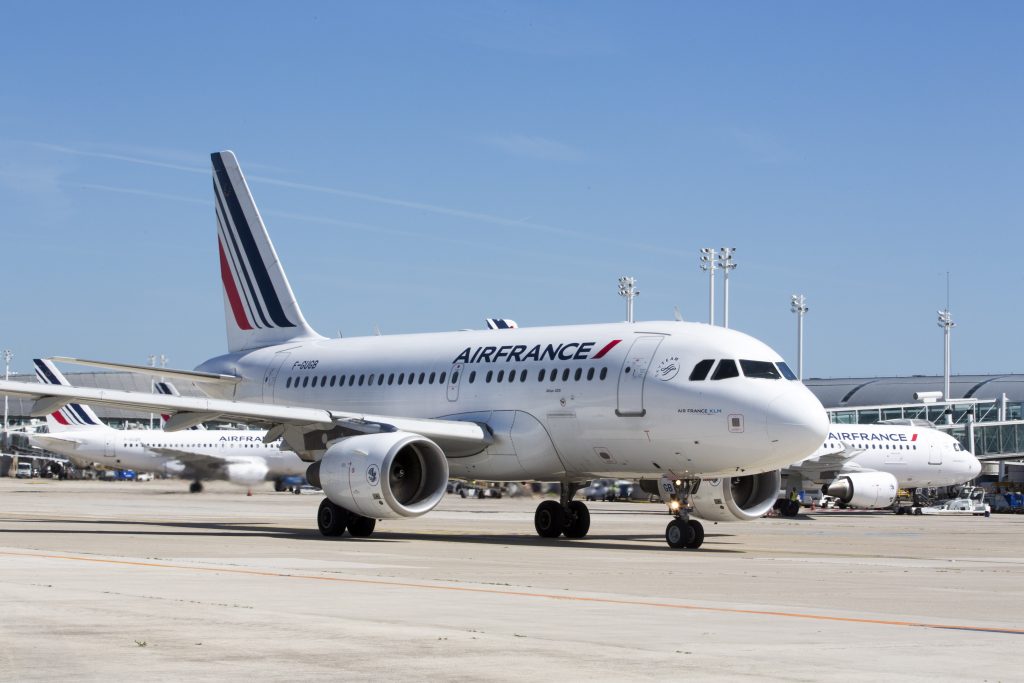
An Air France aircraft in Paris. The airline and its pilot union have agreed to amendments that will allow Transavia, Air France’s low-cost subsidiary, to take over certain domestic routes. (Photo: Air France)

Competition from high-speed trains

The French flag carriers currently operates three domestic routes to mainline France: Marseille (MRS), Nice (NCE) and Toulouse (TLS). These routes are under intense competition from high-speed trains (TGV, Train à Grande Vitesse) operated by state-owned SNCF. These trains can operate at up to 200 mph (320 km/h) and have caused a 40% reduction of passengers on those routes from Orly, which increases to 60% if only day-return trips are considered.

Air France does not operate an extensive network from Orly, therefore those services cater almost exclusively to point-to-point traffic that is attracted by travel times by train that, on a door-to-door basis, can be competitive with air transport. In 2021 the French Government approved a law aimed at eliminating all point-to-point domestic services that could be replaced by a train trip shorter than two and a half hours, but traveling by train from Paris to Marseille requires more than three hours, while Toulouse and Nice are more than four hours away.

Other short-haul services from Orly see connections to main cities in Northern Africa (Algiers, Algeria; Tunis, Tunisia; Casablanca, Morocco) operated by a mix of Airbus A319 and A320 aircraft. Air France also operates some long-haul services to the French overseas territories (DROM-COM, Départements et Régions d’Outre-Mer et Collectivités d’Outre-Mer) of Guadeloupe and Saint Martin in the Caribbean Sea, to French Guyana in South America, as well as to the Island of Reunion in the Indian Ocean.

All these long-haul services, currently operated by a fleet of specially configured high-density Boeing 777-300ER aircraft, have been operated from both Orly and Charles de Gaulle since 2020, and therefore will not be deprived of the vital link with Paris.

Vanni Gibertini

Vanni fell in love with commercial aviation during his undergraduate studies in Statistics at the University of Bologna, when he prepared his thesis on the effects of deregulation on the U.S. and European aviation markets. Then he pursued his passion further by obtaining a Master’s Degree in Air Transport Management at Cranfield University in the U.K. followed by holding several management positions at various start-up carriers in Europe (Jet2, SkyEurope, Silverjet). After moving to Canada, he was Business Development Manager for IATA for nine years before turning to his other passion: sports writing.
Sign-up for newsletters & special offers!

Get the latest stories & special offers delivered directly to your inbox

SUBSCRIBE

Uh-oh! It looks like you're using an ad blocker.

Our website relies on ads to provide free content and sustain our operations. By turning off your ad blocker, you help support us and ensure we can continue offering valuable content without any cost to you.

We truly appreciate your understanding and support. Thank you for considering disabling your ad blocker for this website