Stories

Air India Express Debuts First 737 MAX

The much-anticipated merger of Air India Express with AirAsia India entered a new phase, with the airline revealing its striking new brand identity.

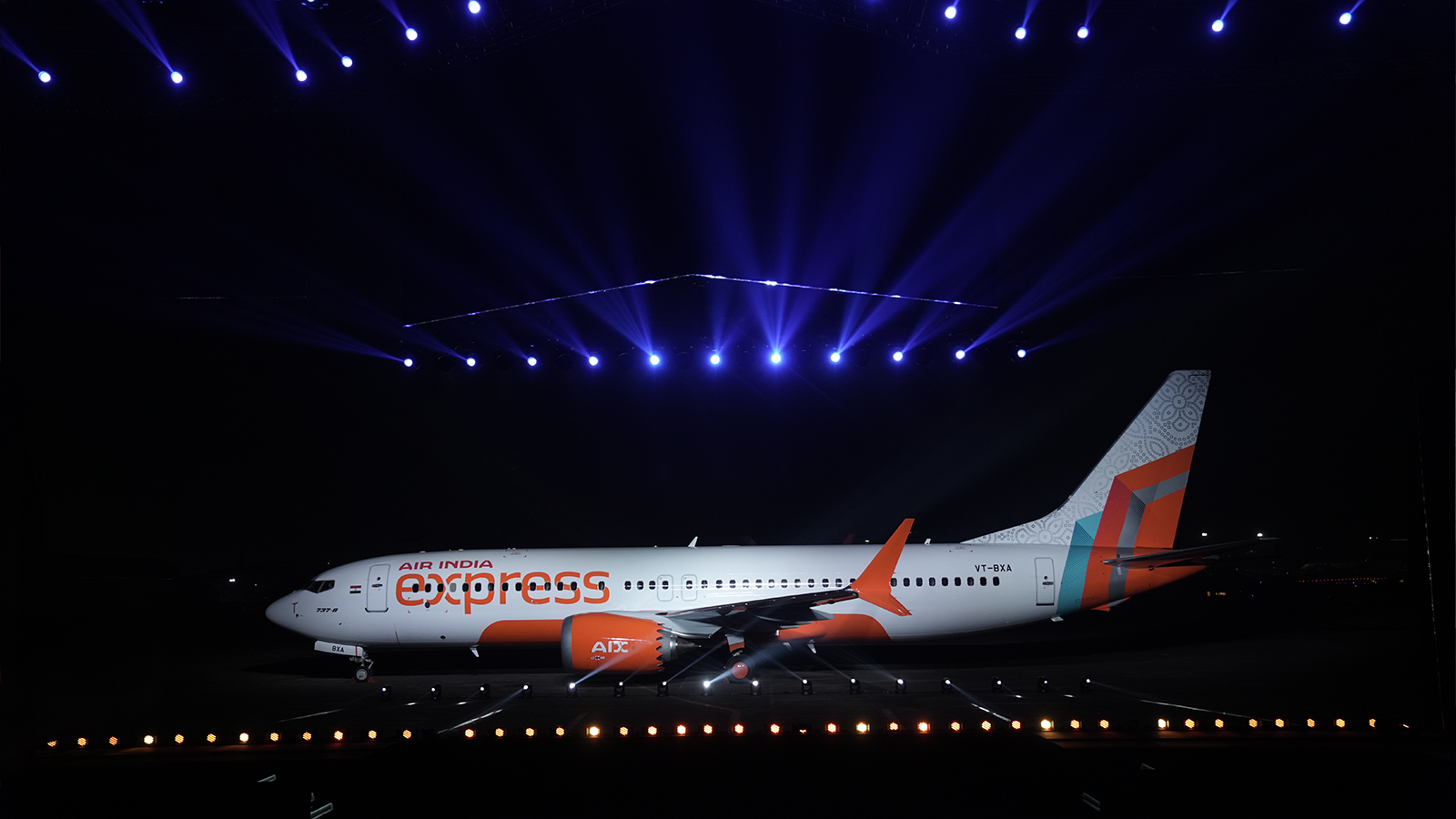
The first 737 MAX 8 for Air India Express (Photo: Air India Express)

Air India Express has unveiled a fresh new livery and brand identity in a dynamic move to transform the airline, following Air India. On Wednesday, Tata Group held a grand event to reveal the new identity at Chhatrapati Shivaji International Airport, Mumbai.

The much-anticipated merger of Air India Express with AirAsia India entered a new phase, with the airline revealing its striking new brand identity. The airline’s branding debuted on a brand new aircraft in the fleet – the Boeing 737 MAX. It is a bold and significant transformation that will undoubtedly catch the eye of travelers at the airport.

New Livery and Tail Art

Labeled as ‘India’s New Smart Connector,’ Air India Express revealed Express Orange and Express Turquoise as the primary colors and Express Tangerine and Express Ice Blue as secondary colors for the airline’s new color palette.

One of the most captivating features of the new Air India Express brand is the striking artwork displayed on the aircraft tail.

Air India Express’ first 737 MAX (Photo: Air India Express)

The livery was unveiled with a new Boeing 737 MAX 8 aircraft flown from Hyderabad to Mumbai for the launch. The airline will maintain the popular tail art on the aircraft’s tail and portray ‘patterns of India’ inspired by the art and crafts heritage of the country.

To start with, the design of the first Boeing 737 MAX aircraft draws inspiration from the well-loved Indian textile artistry of Bandhani. As Air India Express expands its fleet, passengers can anticipate seeing a rich tapestry of traditional textile patterns like Ajrakh, Patola, Kanjeevaram, Kalamkari, and more adorning the tail art of their aircraft.

Future Plans

As the Air India Express and AIX Connect (AirAsia India) merger takes visible shape, the airline’s chairman highlighted that Air India will now, on average, receive deliveries of a new aircraft every six days till the end of 2024. The airline has about 50 Boeing 737 MAX 8s on order, which will be delivered through the next 15 months.

Air India Express also aims to expand its footprint in the Indian aviation market with new domestic destinations in the Gulf, Middle East, Southeast Asia, and CIS Countries.

Vihaan Kushwaha

It all started at the age of five when Vihaan got a Qantas 747 model from Sydney Airport. Since then, he has been an AvGeek, collecting aircraft models, safety cards, and even magazines! He has flown over 120 flights to more than 25 countries worldwide. Vihaan shares his passion for photography and aviation by spotting at New Delhi's Indira Gandhi International Airport and wherever flights take him. Apart from being an AvGeek, Vihaan is currently an undergraduate business management student and aims to pursue a career in aviation consulting and analysis. You can check out some of his spotting work at @aviation.del on Instagram.

Global Crossing Airlines One of Few to Make Israel Cargo Flights

Two freighter aircraft operated by Global Crossing Airlines, a startup charter airline based in Florida, are on their way to Israel.

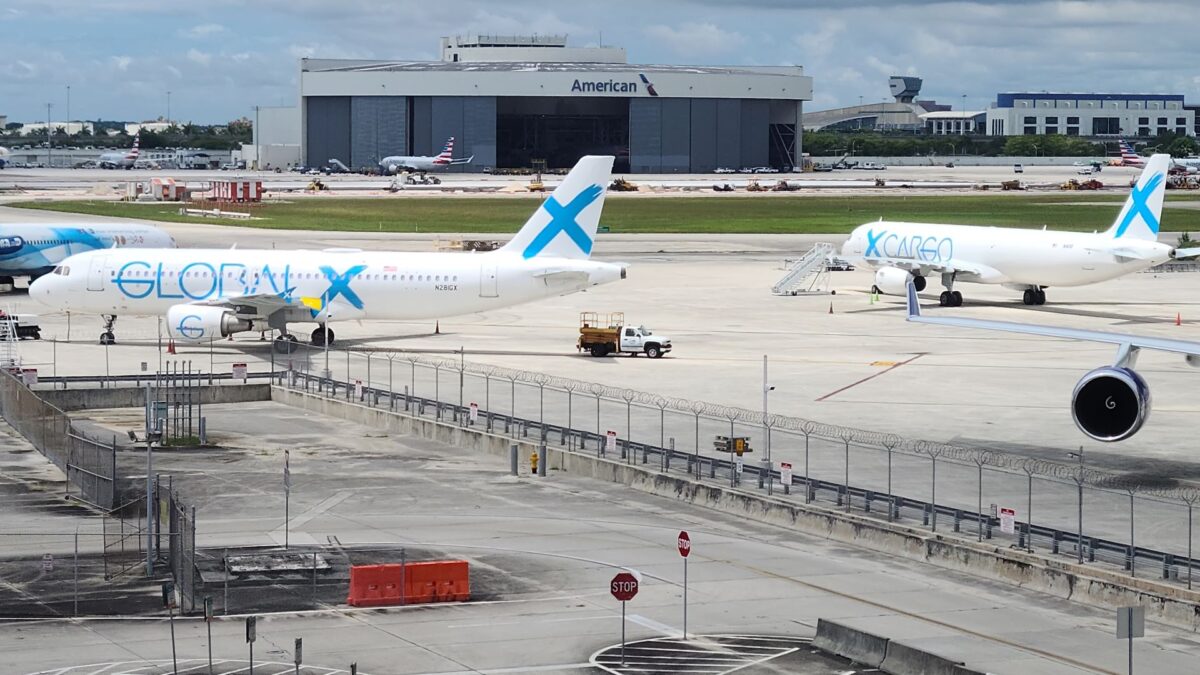
Two Airbus A321 passenger-to-freighter aircraft sit on the tarmac at Miami International Airport
Two Airbus A321 passenger-to-freighter aircraft sit on the tarmac at Miami International Airport. (Photo: FreightWaves/Eric Kulisch)

Two freighter aircraft operated by Global Crossing Airlines, a startup charter airline based in Florida, are on their way to Israel with more than 50 tons of relief supplies as the country prepares for war. Global X, in shorthand, is the only known U.S. all-cargo operator and one of only a handful worldwide still operating to the Middle East war zone, where even FedEx and UPS have suspended flights.

The two Airbus A321 converted freighters are hopscotching their way to Tel Aviv, currently en route to Frankfurt, Germany, according to aircraft tracking site Flightradar24. The flights originated in Tampa and stopped at Portsmouth International Airport in New Hampshire and in Reykjavik, Iceland. The A321 is a narrowbody plane typically used for short-to-medium-haul routes and needs to stop for fuel on a transcontinental flight.

Global Crossing Airlines (USOTC: JETMF) Chairman and CEO Ed Wegel announced the aid flights on LinkedIn Monday evening, and that the two aircraft will carry medical supplies and gear for first responders. A third freighter will soon be dispatched with more supplies for Israel, he said.

“Today, we stand with Israel,” he said.

Company officials declined to provide further details about the mission to Israel, including the customer.

Miami-based Global Crossing entered revenue service two years ago with A320-family passenger jets providing charter flights for airlines, cruise lines, casinos, and hotel and resort destinations. The carrier earlier this year received its first two A321 leased freighters, which spent more than two decades ferrying passengers before being converted for dedicated cargo operations. The planes typically operate in the Caribbean (Miami – Kingston, Jamaica – Port-au-Prince, Haiti) and the Texas-Ohio corridor in the United States.

Global X is the only U.S. airline so far to operate the A321 converted freighter. It’s third aircraft, leased from Air Transport Services Group in Wilmington, Ohio, was delivered a week ago. The cargo jet has not had its operating specifications — the set of rules that an airline agrees to operate by — approved yet by the Federal Aviation Administration and isn’t authorized to fly yet.

Global X participates in the Defense Department’s commercial airlift program and deployed passenger aircraft to evacuate 1,500 refugees from Afghanistan in August 2021, shortly after receiving its aircraft operating certificate from the Federal Aviation Administration.

Tel Aviv’s Ben Gurion airport is less than 40 miles from the front lines of Israel’s war with Gaza, and a large majority of international airlines have canceled flights to the city while the country is still under rocket attack. United Airlines, Delta Air LInes and American Airlines have all temporarily paused direct flights to Tel Aviv. The State Department has sponsored charter flights with other carriers to repatriate American citizens who want to leave the country.

Only a handful of cargo airlines are still operating to Tel Aviv. Of the three global express carriers, only DHL is operating once or twice a day to the city from its hub in Leipzig, Germany. FedEx and UPS have suspended flights with their own aircraft, although they are still offering international parcel service by booking shipments on commercial passenger planes and other third-party carriers.

Israel-domiciled airline CAL Cargo Airlines, part of the Challenge Group, is flying regularly to Ben Gurion airport from its European hub in Liege, Belgium, according to the company and flight data.

Other all-cargo operations identified in recent days flying into Tel Aviv include Azerbaijan’s Silk Way West Airlines (Boeing 747-400), Lufthansa Cargo, Poland’s SkyTaxi and Turkey’s MNG Airlines (Airbus A300).

Also identified on the ground at Tel Aviv was a Boeing 777 freighter operated by Michigan-based Kalitta Air. Kalitta Air operates 25 Boeing 747-400 freighters, as well as four 777s.

But the aircraft in Israel was not part of the regular fleet. It’s a used passenger aircraft that was converted by Israel Aerospace Industries (IAI) to a main-deck cargo configuration and returned for more testing, said Heath Nicholl, Kalitta’s deputy chief operating officer.

IAI is starting its second series of post-conversion evaluation flights as the company works to get its aircraft modification approved by Israeli and U.S. civil aviation authorities so the plane can be certified for commercial flying. IAI has previously indicated it expects to receive the supplemental certificate for changing the original design of the aircraft type later this year.

Kalitta is leasing the aircraft from AerCap, which acquired GE Capital Aviation Services and the 777 freighter program in November 2021. GECAS opted to repurpose older feedstock for cargo and is the launch customer for IAI’s conversion program. Kalitta Air will be the first operator of the 777 converted freighter. The only 777 freighters currently in operation around the world are factory-built by Boeing.

Last month, IAI reached an agreement with Ascent Aviation Services in Marana, Arizona, to set up a conversion site for the 777-300. Ascent is building two widebody hangers to support production, which is expected to start next year.

Safety Risk

One of the steps Israeli authorities have taken to protect aircraft is to change the direction of approach to Ben Gurion airport so they avoid the conflict area near Gaza. Libby Bahat, head of aerial infrastructure for the Israel Civil Aviation Authority, said in a Wall Street Journal video report, that aircraft now take a more northern route than usual, bypassing Haifa. Military and civil air traffic controllers work closely together to ensure that missiles from the country’s Iron Dome defense system don’t impact civilian aircraft when they are intercepting Hamas missiles.

The government has also limited the number of passenger aircraft at the gate loaded with fuel and passengers. And when aircraft are ready to depart they are cleared immediately, with no waiting in line on the runway, according to the WSJ explainer.

Israeli officials insist their airspace is safe to operate in despite concerns from some experts that conditions for an accidental shootdown exist, including from nonstate actors on Israel’s northern border. Air traffic controllers have over 90 seconds to maneuver aircraft when a missile is fired, during which time the aircraft can cover about 10 miles, according to the officials. And Israeli interceptors are technically incapable of mistaking an aircraft, they add.

Other aviation experts have also raised concerns about Hamas using GPS jamming technology to interfere with military communications network, which has the potential to disrupt commercial traffic.

Editor’s Note: This story originally appeared on AirlineGeeks’ partner publication FreightWaves

AirlineGeeks.com Staff

AirlineGeeks.com was founded in February 2013 as a one-person blog in Washington D.C. Since then, we’ve grown to have 25+ active team members scattered across the globe. We are all here for the same reason: we love deep-diving into the fascinating realm of the airline industry.

Archer Plans to Launch Electric Air Taxi Flights Across the UAE

American-made electric vertical takeoff and landing (eVTOL) aircraft are coming to the Middle East in just a few years. Service will launch in Dubai.

Archer chief commercial officer Nikhil Goel (left) poses with leaders of the UAE’s General Civil Aviation Authority at the company’s global headquarters in San Jose, Calif. [Photo: Archer Aviation]

American-made electric vertical takeoff and landing (eVTOL) aircraft are coming to the Middle East.

San Jose, Calif.-based eVTOL manufacturer Archer Aviation on Monday announced its plan to initiate electric air taxi services across the United Arab Emirates, which is expected to be the company’s first international launch market. Partnering with the Abu Dhabi Investment Office (ADIO), Archer plans to launch nationwide in 2026.

The agreement was finalized during a signing ceremony this week, where ADIO and regional aviation leaders entered into a memorandum of understanding (MOU) to support Archer’s UAE launch. ADIO will provide incentives for the firm to build its first international headquarters and establish manufacturing capabilities in Abu Dhabi.

Archer is partially backed by Mubadala Capital, the asset management subsidiary of Abu Dhabi-based sovereign wealth fund Mubadala Investment Co.

“Archer plans to partner closely with ADIO and the [UAE’s] Department of Economic Development to bring manufacturing and operations for our air taxis to the region,” said Archer CEO Adam Goldstein. “Together, we are positioned to be a driving force in making all-electric air taxis a reality in the skies of the UAE and beyond in the coming years.”

The Details

The ADIO partnership calls for Archer to build an engineering “Center of Excellence,” which will focus on the development and implementation of advanced air mobility (AAM) technology to support the UAE’s growing AAM industry. The firm will work with Stellantis—with which it signed an exclusive manufacturing partnership in January—and local partners to support its construction, as well as that of its manufacturing plant.

“We are excited to be working with Archer to begin establishing a high-volume manufacturing facility for the Midnight aircraft in the United States over the last couple of years,” said Stellantis CEO Carlos Tavares. “We hope this first production site will be a blueprint for future Archer manufacturing facilities as it expands operations to serve new regions, starting with the Middle East, where we see extraordinary potential for urban air mobility.”

The facilities will be located within the UAE’s Smart and Autonomous Vehicle Industry (SAVI) cluster. Designed to speed the development of new vehicles across air, land, and sea, SAVI is backed by Sheikh Hamdan bin Mohamed bin Zayed Al Nahyan, the crown prince of Abu Dhabi and chairman of the city’s executive council. The urban hub launched last week and is centered in Masdar City, an urban community within the nation’s capital.

In a separate announcement, ADIO on Sunday revealed that Santa Cruz, California-based Joby Aviation—Archer’s main U.S. rival—will also participate in SAVI. Like Archer, it plans to establish a significant footprint in the region.

Archer also agreed to collaborate with local eVTOL manufacturers and maintenance and repair organization (MRO) providers to spearhead the country’s production and support SAVI’s expansion. In exchange, it will receive support from passenger helicopter operator Falcon Aviation, which agreed to operate its flagship Midnight air taxi across Abu Dhabi and Dubai.

It signed another MOU with Global Aerospace Logistics and the Advanced Military Maintenance, Repair and Overhaul Center (GAL-AMMROC) to add eVTOL MRO services to the region.

Next month, Archer will showcase Midnight in the Middle East for the first time at the Dubai Airshow. The following week, the eVTOL will make an appearance at the Conference on Aviation and Alternative Fuel (CAAF), hosted by ICAO and the UAE’s General Civil Aviation Authority (GCAA).

Archer in a press release said it is in discussions with “numerous other industry participants” and plans to announce more MOUs as Midnight tours the UAE.

“We are thrilled to work with Archer to host their first international operations in Abu Dhabi,” said Badr Al-Olama, acting director general of ADIO. “Bringing electric aviation to the UAE will help unlock congestion with zero emissions and, in turn, bring millions in foreign direct investment and thousands of jobs to the region over the next decade.”

Recently, GCAA leaders—including director general Saif Mohammed Al Suwaidi—visited Archer’s California headquarters to inspect Midnight and get an update on its FAA certification progress. Al Suwaidi said the regulator’s goal is to approve Midnight flights in the UAE as soon as the aircraft is type certified in the U.S.

The five-seat eVTOL, designed for four passengers and a pilot, features a pair of fixed wings and 12 propellers—a half dozen on each wing, with the front propellers tilting forward during cruise—powered by lithium-ion batteries. The propulsion system gives it a range of about 52 sm (45 nm) at a cruise speed of 130 knots.

Midnight is meant to replace hour to hour-and-a-half commutes by car with estimated 10- to 20-minute flights. Designed for rapid, back-to-back short hops with as little as 10 minutes of charge time in between, Archer claims it will be cost-competitive with rideshare services such as Uber and Lyft.

In the U.S., the company hopes to launch air taxi routes in 2025, beginning with Chicago and the New York City metro area, in partnership with United Airlines. United is one of Archer’s largest investors and has already paid the firm $10 million as part of a deal to purchase 100 Midnight aircraft.

AAM In the UAE

Archer’s planned entry into the UAE makes it the first U.S. eVTOL manufacturer to commit to operations in the country. But it probably won’t be the only player.

In December, GCAA and the Mohammed bin Rashid Aerospace Hub announced a partnership with vertiport firm VPorts to build a 9-acre AAM integrator center, which is expected to begin operating next year. The center will support flight testing and development of eVTOL designs and other emerging aircraft types.

The project received an initial investment of $40 million over three years, and construction is already underway. It’s expected to generate some $7 billion in revenue for Abu Dhabi and Dubai over the next 25 years.

Also in December, UAE leaders published the country’s first national vertiport regulations. VPorts plans to build the first vertiport at Ras Al Khaimah International Airport (OMRK) north of Dubai.

More commitments were made in February at Dubai’s annual World Government Summit, where Sheikh Mohammed bin Rashid Al Maktoum (the city’s crown prince) approved plans to develop a nationwide network of vertiports. Working with the U.K.’s Skyports, the goal is to develop infrastructure in time for widespread eVTOL air taxi services in 2026.

The plan includes a vertiport at Dubai International Airport (OMDB), the concept for which was unveiled in April by Skyports and British architecture firm Foster + Partners. The design is backed by Al Maktoum.

A promotional video posted to X (formerly Twitter) following the announcement featured eVTOL air taxis made by Joby, Archer’s main U.S. competitor. A Joby spokesperson told the Associated Press the manufacturer is “actively exploring the possibility” of flying in the UAE, but did not commit to operations in the region.

However, with the news that Joby will join Archer as an early SAVI participant, the implication is that the company’s air taxi won’t just be used for marketing purposes.

“Autonomous flight has the potential to unlock important benefits for our customers over the long term,” said JoeBen Bevirt, founder and CEO of Joby. “We welcome the opportunity to participate in the SAVI cluster and look forward to collaborating with the team at ADIO as we work toward our mission of delivering fast, quiet, and convenient air taxi service in cities around the world.”

Another California-based eVTOL manufacturer, Odys Aviation, is building a headquarters in Abu Dhabi that will include a production facility. China’s EHang, which also plans to build a manufacturing plant in the capital, has conducted flight testing in the country since 2017. Last week, the firm earned the world’s first eVTOL type certificate from China’s aviation authority.

The UAE has also hosted test flights from Germany’s Volocopter, China’s XPeng, and Vermont-based Beta Technologies, which recently partnered with UPS to begin demonstrations.

In June 2022, Falcon Aviation and Embraer subsidiary Eve Air Mobility announced plans to launch eVTOL tourism flights in Dubai starting in 2026. The agreement included a letter of intent for Falcon to purchase 35 Eve air taxis, which will likely join Midnight as some of the first eVTOL designs to fly commercially in the Middle East.

Editor’s Note: This story was originally published on FlyingMag.com.

AirlineGeeks.com Staff

AirlineGeeks.com was founded in February 2013 as a one-person blog in Washington D.C. Since then, we’ve grown to have 25+ active team members scattered across the globe. We are all here for the same reason: we love deep-diving into the fascinating realm of the airline industry.

New Routes and Increased Connectivity in African Markets

In the next quarter, the skies over Africa will become even more accessible, as carriers seek to connect regions, nations, and the world.

Uganda A330neo
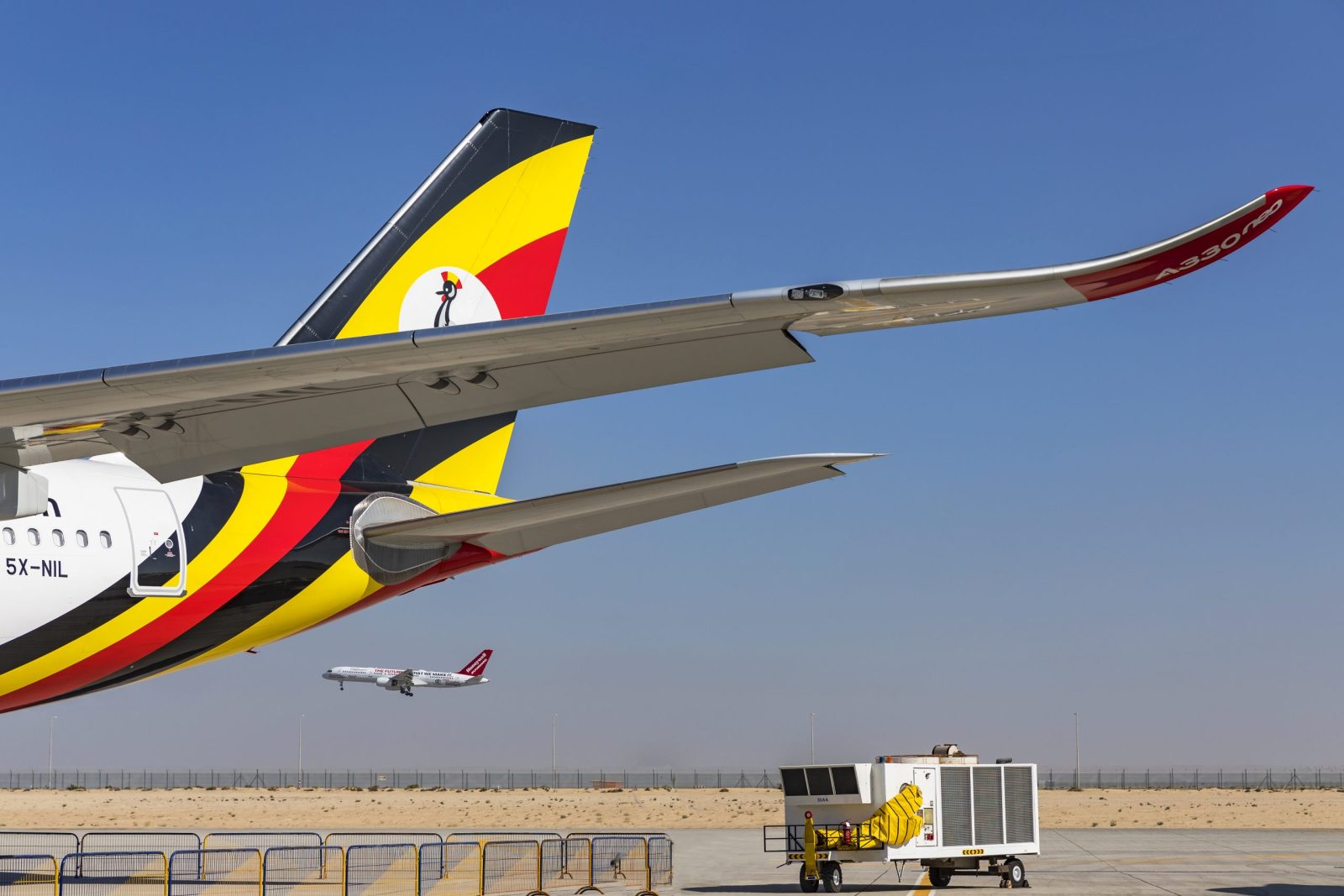
A Uganda Airlines Airbus A330neo. (Photo: AirlineGeeks | William Derrickson)

The African continent, with its vast landscapes, cultural diversity, and economic potential, is witnessing an aviation renaissance. Airlines are unveiling ambitious plans for new flight routes and enhanced connectivity, opening doors for travelers and businesses alike.

In the next quarter, the skies over Africa will become even more accessible, as carriers seek to connect regions, nations, and the world. Here’s a glimpse of the upcoming routes and recent announcements:

Safair’s Ambitious Expansion

South African airline Safair is spreading its wings with an array of exciting new routes. In early October, it plans to introduce flights to Maputo, Livingstone, Harare, and Victoria Falls. These routes will provide travelers with greater accessibility to the wonders of southern Africa. Operating an entire Boeing 737 fleet, Safair will connect travelers with four flights a week to Maputo and Livingstone, a daily connection to Harare, and three flights per week to Victoria Falls. These new routes exemplify Safair’s determination to bolster regional connectivity.

ASKY’s East African Ventures

ASKY, a West African carrier, is venturing into East Africa. On October 1, the airline commenced operating three weekly flights to Nairobi serviced by Boeing 737-800 aircraft.

ASKY has also recently extended its reach by launching flights to Luanda 3 times weekly, bridging West and Southern Africa more effectively than ever before.

Uganda Airlines’ Ambitious Routes

One of Africa’s newest carriers, Uganda Airlines, is on the move, adding two vibrant destinations to its growing network. Commencing on October 7, travelers will have the opportunity to fly to Mumbai three times a week, fostering economic and cultural ties between Uganda and India. The service was initially promised two years ago and is the second off the African peninsula and Uganda Airlines’ 12th destination.

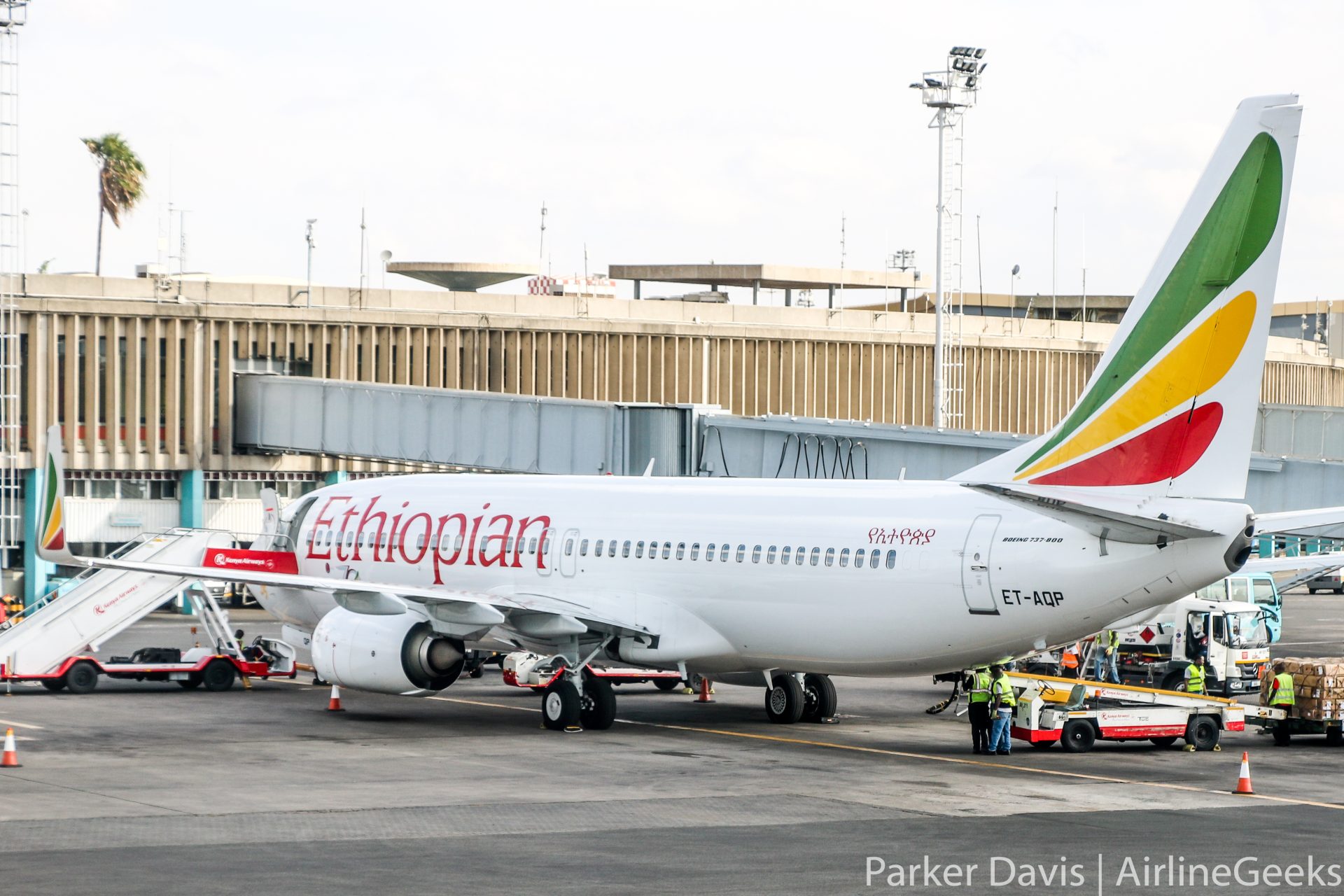
The airline will compete with Air Tanzania, Kenya Airways, RwandAir, and Ethiopian Airlines, who have been connecting customers from Uganda to India through their various hubs.

An Ethiopian Airlines Boeing 737. (Photo: AirlineGeeks | Parker Davis)

Still on the Pearl of Africa, the airline will inaugurate a new route to Lagos beginning Oct. 19 which will operate three times a week further amplify regional connectivity, offering travelers an exciting gateway to Nigeria. These new routes will be serviced by the carrier’s Airbus A330 Neo aircraft.

Air Peace’s Link to Jeddah

Air Peace, Nigeria’s largest airline, is expanding its network with a new route to Jeddah, featuring a stopover in Kano. This connection, beginning in October, signifies the airline’s commitment to bridging economic and cultural ties between Nigeria and Saudi Arabia.

Flydubai’s Mombasa Connection

In January, Flydubai will inaugurate four weekly flights to Mombasa, Kenya. The Dubai-based low-cost airline is set to break new ground, as it becomes the first Emirati airline to operate direct flights from Dubai and the United Arab Emirates to Mombasa. Starting on January 17, 2024, the carrier will offer four weekly flights operated by the Boeing 737 MAX 8 to Mombasa’s Moi International Airport.

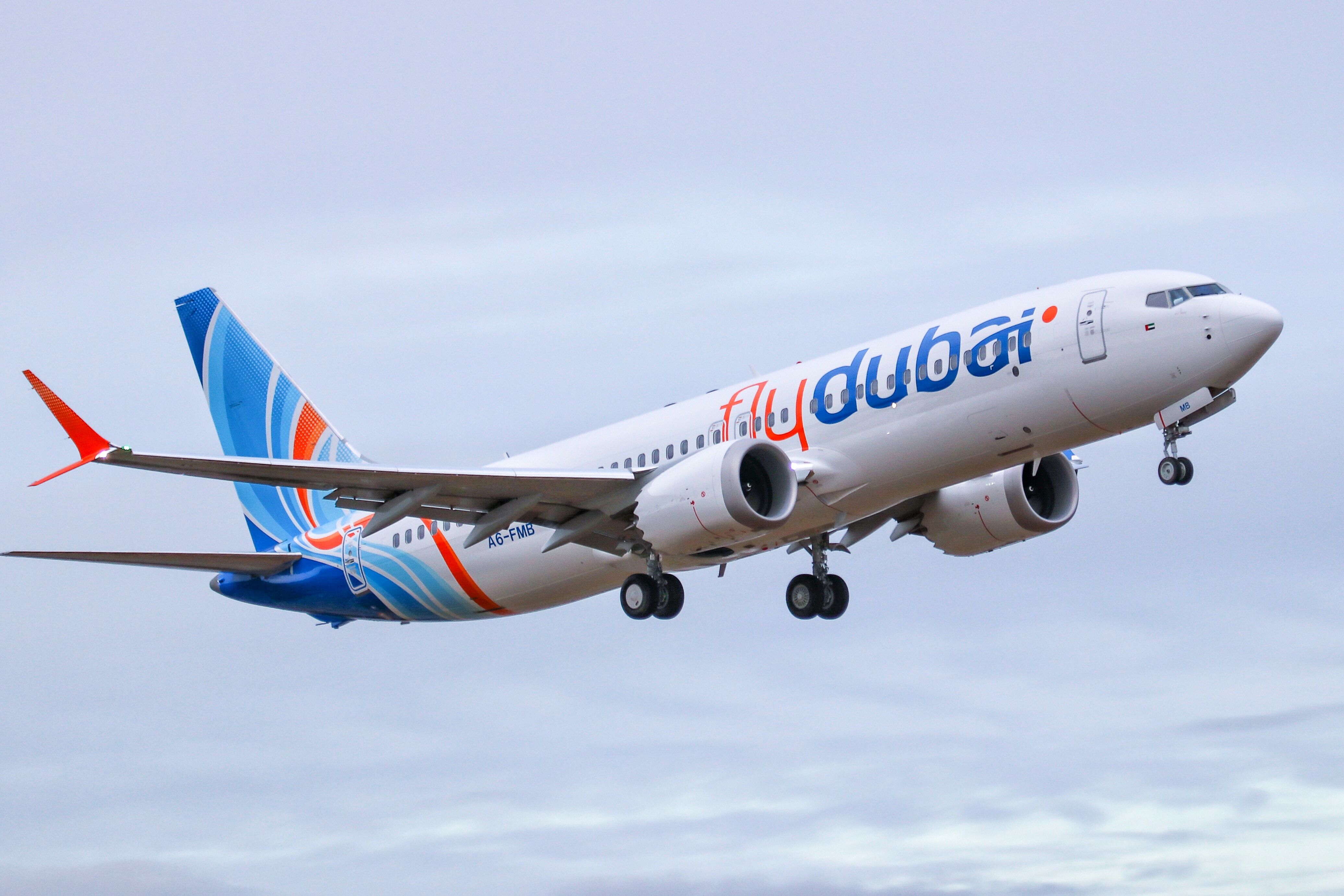
A Flydubai 737 MAX 8 performing a test flight at Paine Field. (Photo: AirlineGeeks | Katie Bailey)

Brussels Airlines Expands East African Presence

The Belgian Lufthansa subsidiary is expanding in its focus market of Africa. Next summer, Brussels Airlines plans to operate six weekly flights to Nairobi and daily flights to Kigali. Commencing in June 2024, direct flights will connect Brussels to Nairobi, with the Kenyan capital city set to once again grace their route map.

Emirates’ Potential Return to Nigeria

Emirates, the UAE’s flagship carrier, is considering a return to Nigeria. This is after Nigeria and the United Arab Emirates (UAE) reached an agreement to put an end to their diplomatic spat, which saw the UAE impose a visa ban on Nigerian travelers and the suspension of flights by Emirates Airline. This breakthrough comes after a meeting between Nigerian President Bola Ahmed Tinubu and UAE President Mohamed bin Zayed Al Nahyan in Abu Dhabi.

Victor Shalton

Victor Shalton's love for aviation can be traced to when he was 11-years-old. As a seasoned aviation writer, he takes pride in providing the best aviation coverage around the globe and is passionate about advancing his skills in the aviation space. In addition, he loves travelling, writing, arts and while his speaking engagements have taken him around the world, he is proud to call Nairobi home.

United’s First A321neo Arrives in the U.S.

After an over 5,000-mile jaunt from Airbus' manufacturing facility in Hamburg, Germany, United's first A321neo landed in Houston on Monday.

United A321neo
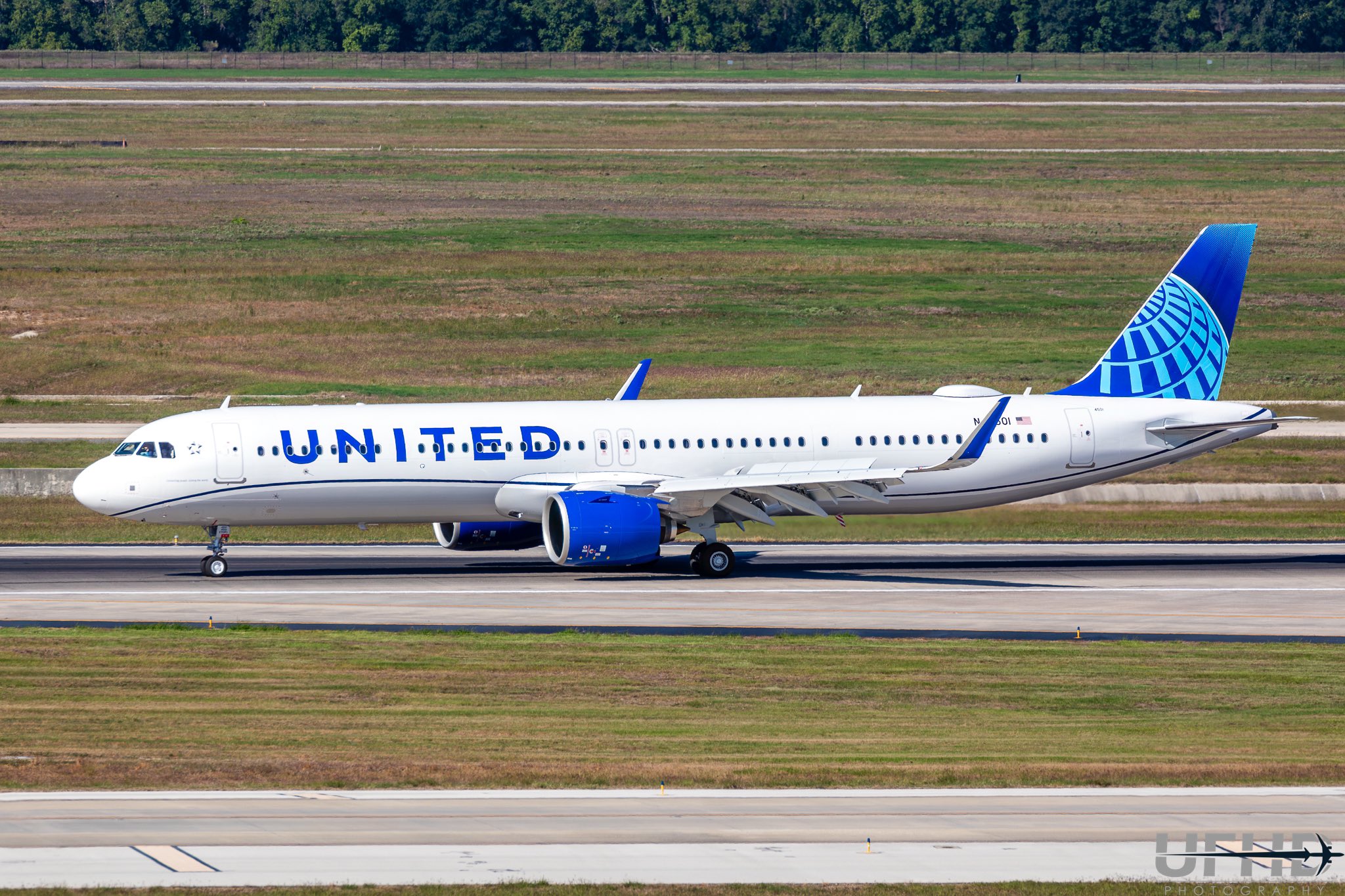
United's first A321neo arrives in Houston (Photo: @unitedflyerhd)

After ferrying from Airbus’ Hamburg, Germany manufacturing facility, United’s first A321neo arrived in the U.S. on Monday. The Chicago-based airline is gearing up to begin service with the new aircraft in December.

After announcing an order for more aircraft in early October, United now has 180 A321neo series aircraft planned for its fleet, including the longer-range A321XLR variant. Registered as N44501, the carrier’s first A321neo was officially delivered on Thursday, according to a post by Airbus. The factory-fresh aircraft flew from Hamburg to Houston on Monday, via Reykjavik and Cleveland.

After completing the over 5,000-mile journey, N44501 is set to go through induction at the carrier’s Houston maintenance base. The new jet was met with a water canon salute upon arrival at Houston’s George Bush Intercontinental Airport.

United plans to launch service with the A321neo on Dec. 14, 2023 from Chicago O’Hare to Phoenix and Fort Lauderdale. The inaugural A321neo flight aptly bears the flight number UA321.

Where Will United’s A321neos Fly in 2024

According to Cirium data, United will broaden the fleet type’s network in January 2024, adding flights to Fort Myers, Las Vegas, and Orlando, all from its Chicago hub. United’s A321neos are expected to have 200 total seats with 20 in First Class and 180 in Economy.

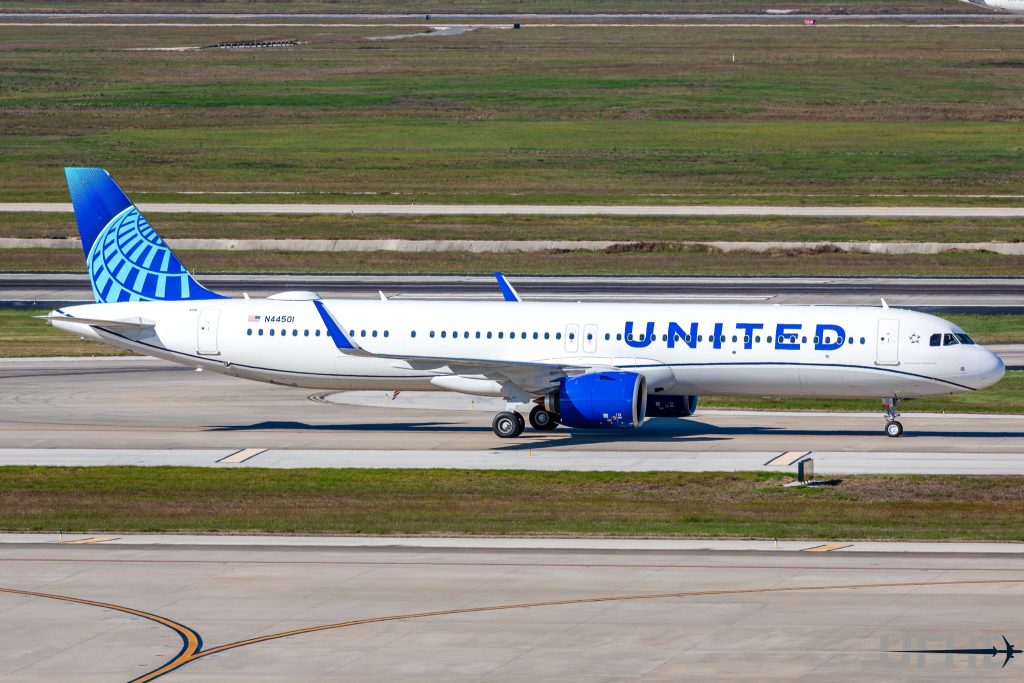
United’s first A321neo arrives in Houston (Photo: @unitedflyerhd)

United has recently been investing heavily in modernizing its fleet of aging aircraft. In 2024, the airline expects to receive over 140 new aircraft. However, recent supply chain woes at both Airbus and Boeing have delayed some delivery timelines, per Reuters.

Ryan Ewing

Ryan founded AirlineGeeks.com in February 2013 and has spent more than a decade covering the airline business. His work has been featured by CNN, WJLA, CNET, and Business Insider. His aviation experience spans airport operations, Part 135 regulatory compliance, and airline crew workforce planning, along with time behind the yoke of a Cessna 172 and interviews with airline executives. Ryan now serves as Group President of Firecrown Media’s Aviation Group. He holds a B.S. in Air Transportation Management and an MBA from Arizona State University and teaches Airline Management at Embry-Riddle Aeronautical University.

Sun Country Expands International Footprint, Adds 10 New Routes

Starting in 2024, the ultra-low-cost airline will begin nonstop service to several new U.S. destinations along with two in Canada.

Sun Country Boeing 737s sitting at its main base in Minneapolis/St. Paul (Photo: AirlineGeeks | Joey Gerardi)

Sun Country Airlines is adding 10 new routes to its network as it plans for the Summer 2024 season. The Minneapolis-based ultra-low-cost carrier is slated to begin service to eight U.S. markets and two in Canada.

According to the airline, the carrier will begin service to the following destinations:

  • MSP-ABQ – Starting June 19, 2024
  • MSP-BIL – Starting June 19, 2024
  • MSP-BOI – Starting June 19, 2024
  • MSP-GRR – Starting June 13, 2024
  • MSP-IAD – Starting April 18, 2024
  • MSP-MSO – Starting June 26, 2024
  • MSP-OAK – Starting May 23, 2024
  • MSP-SYR – Starting June 6, 2024

In addition to the eight domestic routes, Sun Country plans to grow its portfolio in Canada with service to Montreal and Toronto set to begin in June 2024. The airline currently serves Vancouver.

While most of the network adds are completely new, Washington Dulles is a resumption as the airline previously served the airport until September 2019. The airline says that most of the new routes will be served twice weekly, while Washington Dulles sees four times weekly service.

Starting in late April, Sun Country also plans to shift its Houston flights from George Bush Intercontinental Airport to the city’s Hobby airport. The airline says it will have 98 distinct destinations from its MSP hub in 2024.

“Sun Country prides itself on being the leisure airline of choice for MSP customers,” said Grant Whitney, senior vice president and chief revenue officer for Sun Country in a press release. “We have more than doubled our nonstop destinations for customers flying out of MSP in the last five years and we are thrilled to offer these unique new offerings spanning the continent from Quebec to New Mexico.”

New Aircraft Support Network Growth

In April, Sun Country announced that it is acquiring five 737-900ER aircraft. Joining a fleet of nearly 54 aircraft, the carrier plans to take delivery of one 737-900ER in late 2024 and the other four throughout 2025. The aircraft are currently on lease to Oman Air.

The airline’s Tuesday announcement adds to its budding network portfolio. Sun Country has recently expanded service not only from its MSP hub, but also on point-to-point routes, including some Essential Air Service (EAS) markets.

Ryan Ewing

Ryan founded AirlineGeeks.com in February 2013 and has spent more than a decade covering the airline business. His work has been featured by CNN, WJLA, CNET, and Business Insider. His aviation experience spans airport operations, Part 135 regulatory compliance, and airline crew workforce planning, along with time behind the yoke of a Cessna 172 and interviews with airline executives. Ryan now serves as Group President of Firecrown Media’s Aviation Group. He holds a B.S. in Air Transportation Management and an MBA from Arizona State University and teaches Airline Management at Embry-Riddle Aeronautical University.

Rolls Royce Set to Announce 2,500 Job Cuts

Rolls-Royce is to cut up to 2,500 jobs across its business, as its chief executive prepares to reveal his long-term strategy for the company.

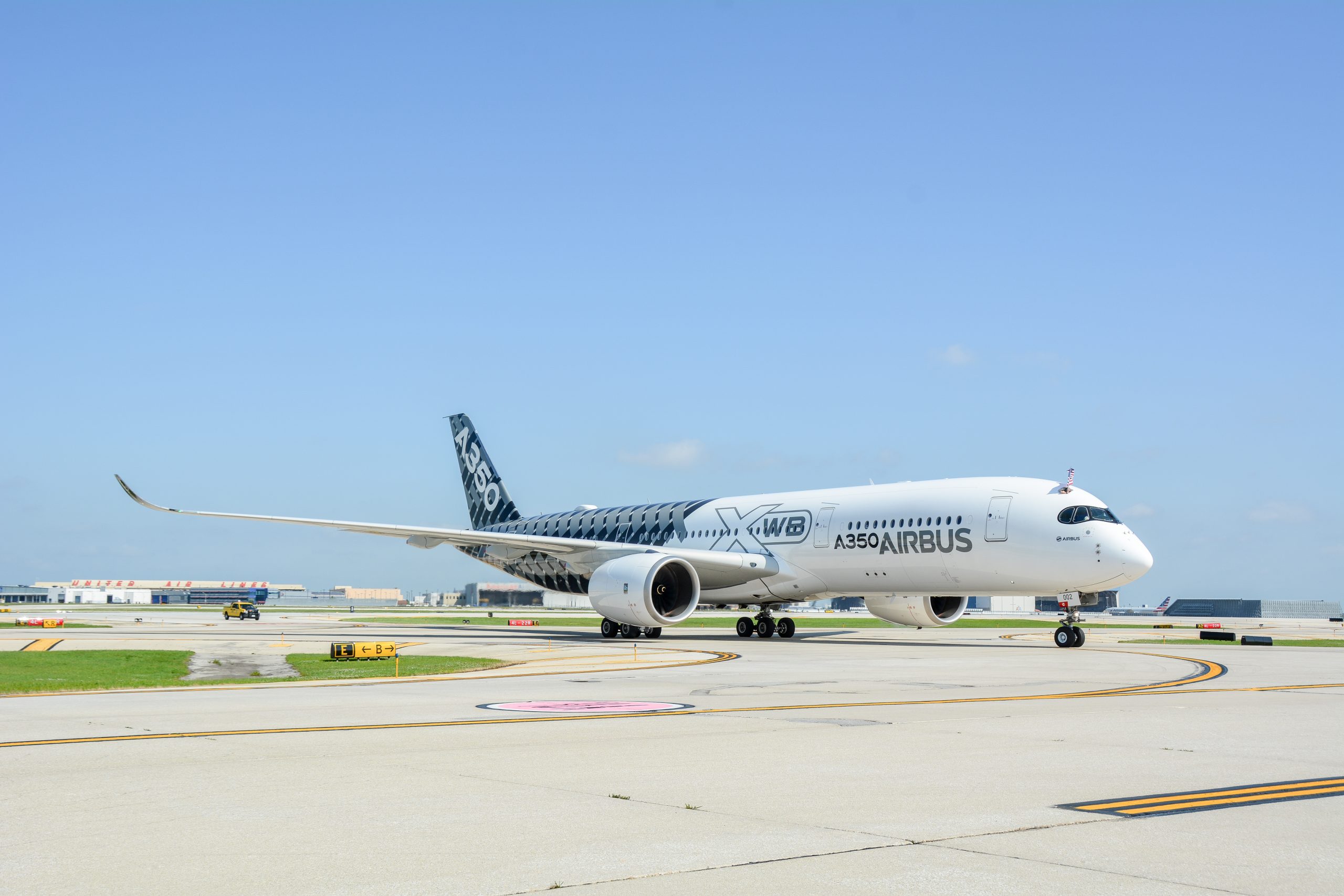
A Rolls Royce powered Airbus A350 in Chicago. (Photo: AirlineGeeks | Greg Linton)

British jet engine maker Rolls Royce has drawn up plans to cut a significant number of non-engineering jobs in a restructuring as early as Tuesday, per Sky News.

Scope of The Job Cut

Rolls Royce is set to cut 2,000 to 2,500 jobs, or about 6% of its global staff, which measures 50,000 people. The company has around 24,800 employees in the UK; more than 10,000 employees in Germany; and over 6,000 in the US. The cuts will be distributed across its global operations and likely affect hundreds of UK staff. Sky News reports that the company has briefed UK officials on the prospective job reduction.

The cut is expected to cut costs and reduce duplication within the company. The plan sounded familiar to what Airbus did in 2016, where it restructured itself and reduced duplication of management roles to significantly lower costs.

The New CEO’s Push for Efficiency

The move will be among the most significant steps taken by Tufan Erginbilgic, who took over as Rolls Royce’s Chief Executive in January 2023. Tufan has said Rolls, which provides engines for Airbus A350 and Boeing 787 planes, is a “burning platform” that needs to improve its cash generation, cut debt, and invest for the future. 

The Boeing 787 can be powered by Rolls Royce engines.
(Photo: AirlineGeeks | Katie Bailey)

Since his inauguration, he’s closed the company’s AI start-up, The R2 Factory venture, though the company stated it would “endeavor to find redeployment opportunities for our people within Rolls-Royce.” The company’s leadership team has also seen shake-ups by the new CEO, with newly appointed CFO and president of Civil Aviation. Shares of the company have risen 120% since the start of the year, driven by the strong air travel recovery and Erginbilgic’s turnaround plans.

Focus of the Engine Maker

“I am honored to be joining Rolls-Royce at a time of significant commercial opportunity and strategic evolution as its customers embrace the energy transition,” Tufan Erginbilgic said in his first public address to the company.

During the Paris Airshow this year, the CEO said that the engine maker did not rule out future partnerships in the narrowbody market. However, it has a sufficient runway for growth in its large engine business. While it does not have an active narrowbody program yet, the company indicated that its new UltraFan technology is scalable and offers the potential to power new narrowbody and widebody aircraft anticipated in the 2030s.

Rolls-Royce’s UltraFan technology will be scalable for narrowbody aircraft. (Photo: Rolls-Royce)

Rolls Royce is a lot more active on the energy transition front, where it partnered with Airbus and EasyJet to launch the Hydrogen in Aviation (HIA) alliance in September to ensure that infrastructure, policy, regulatory, and safety frameworks are ready for when the first hydrogen-powered aircraft takes to the skies. Two weeks ago, it completed the first fuel burn of a new small gas turbine developed for the Advanced Air Mobility (AAM) market. 

Rolls-Royce performed first fuel burn on a small gas turbine for hybrid electric flight. (Photo: Rolls-Royce)

The non-engineering job cut should free up more capital for the company to focus on its engineering and deliver on its strategic visions.

Fangzhong Guo

Fangzhong grew up near an OEM airport in northeastern China, where he developed his enthusiasm for aviation. Taking upon his passion, he's now working as an aircraft interior design engineer. Besides working in the aerospace industry, Fangzhong enjoys trying out different types of airplanes and seeing how airplane interiors have evolved. So far, he's flown on over 80 types of aircraft. He also planespots in his spare time. His rarest catches included the 747 Shuttle Carrier Aircraft and AN-225.

Chinese Aviation Market Cools Down After Record-Breaking Holiday

The record-breaking holiday demand did not sustain, according to some data points. The Chinese aviation market is still rebuilding post-pandemic.

Air China and Shenzhen Airlines aircrafts in Guangzhou's Baiyun Airport (Photo: Lei Yan)

During the first week of October, China entered into an eight-day National Day Holiday. This holiday was the longest public holiday in China during 2023. Many Chinese people travel during this holiday, and they have experienced the busiest national day holiday ever in this country. However, the traffic quickly dialed down after the holiday.

For air travel, over 15 million passengers traveled by air during the holiday season. The average fares for economy class climbed to RMB 1,095 ($150), a 45% increase compared to the 2022 national holiday, and a 15% increase versus the average price during the 2019 pre-pandemic national day holiday. The statistics demonstrate that, despite the recent sluggish economic performance of China, people in the country were still willing to spend.

All sectors of the transportation industry were striving during the Chinese National Day holiday. On the rail side, nearly 200 million passengers were transported during the 8-day holiday, equivalent to more than half of the population in the United States. China has the biggest high-speed rail network in the world, constituting more than 60% of the world’s total high-speed rail in milage.

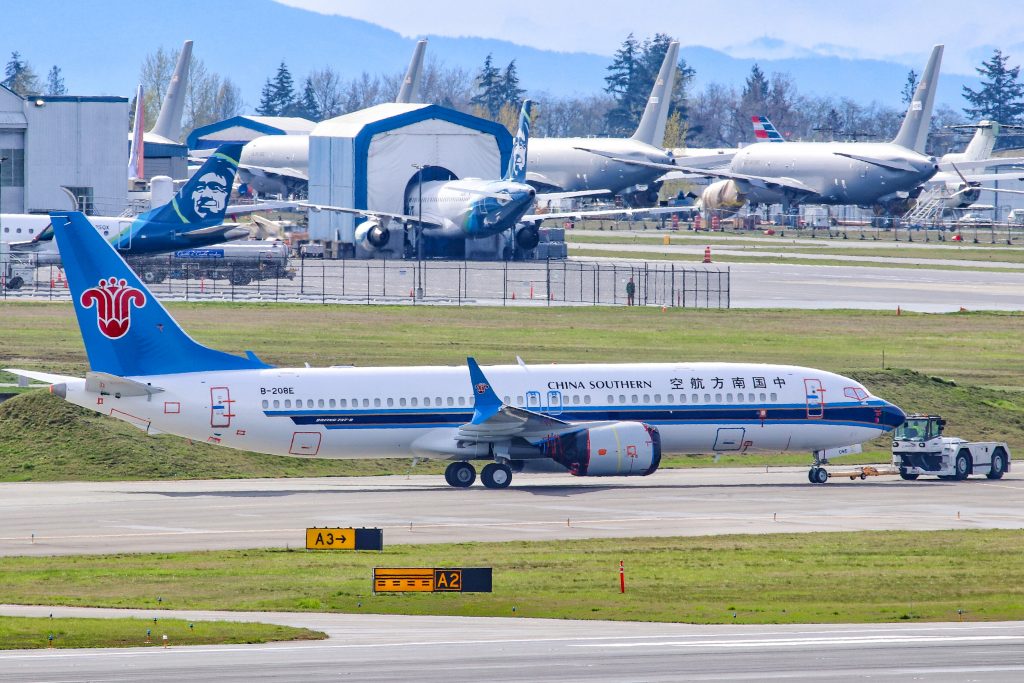
A China Southern 737MAX being towed while in storage at Paine Field.
(Photo: AirlineGeeks | Katie Bailey)

During the holiday, the new trend reveals reasons that drive the market to modesty. Short-range and mid-range travels take the highest portion among all travels, and previously atypical destinations, such as a handful of small cities and townships, have seen significant growth in tourist traffic, due to their relatively low price compared to hit tourist destinations. Adding a layer of data that suggests residents’ saving has also seen a record-high increase in 2023, those phenomena demonstrate that the public was still price-sensitive, and unwilling to indulge in unessential spending.

A Swift Decrease

After the holiday, many airports saw their traffic decrease quickly. Take Urumqi, China as an example. The airport has seen its busiest year ever in 2023, surpassing 20 million throughput 11 days earlier than in 2019. The airport processes over 560 lights a day during the summer season with only one runway, and most of them are wide-body jets carrying tourists from all around China. After the national day holiday, the daily flights dropped over 10% to around 500 flights per day. Furthermore, most of the widebody jets are pulled out of Urumqi to more profitable business routes such as flights between Beijing and Shanghai. Such a situation has been seen across the nation’s airports, and the flight reduction is expected after the spring-summer schedule ends on October 29.

Expanding the horizon to the end of 2023, the aviation market in China is expected to recover to 70% to 80% of 2019 level. In some regions of the country, the recovery may be more expeditious than in others. There is still a long way to go for the country’s aviation market to fully retain the momentum of growth it had back in 2019.

Lei Yan

Lei is from Inner Mongolia, China, and now lives in Guangzhou. He grew up in an aviation family, where his passion began. During his time at Penn State University, he studied Industrial Engineering specializing in operations research, and he graduated with an honor’s thesis on airport gate assignment optimization. Now, he is a Purchasing Manager with Procter & Gamble. In his free time, he enjoys flying, reading, and wandering around the city.

Spirit Adds Nine New Routes in Network Shake-up

Spirit is adding several new routes across the U.S., but is also removing a handful of flights in its 2024 schedule. Most notably, the carrier is expanding its presence in Boston.

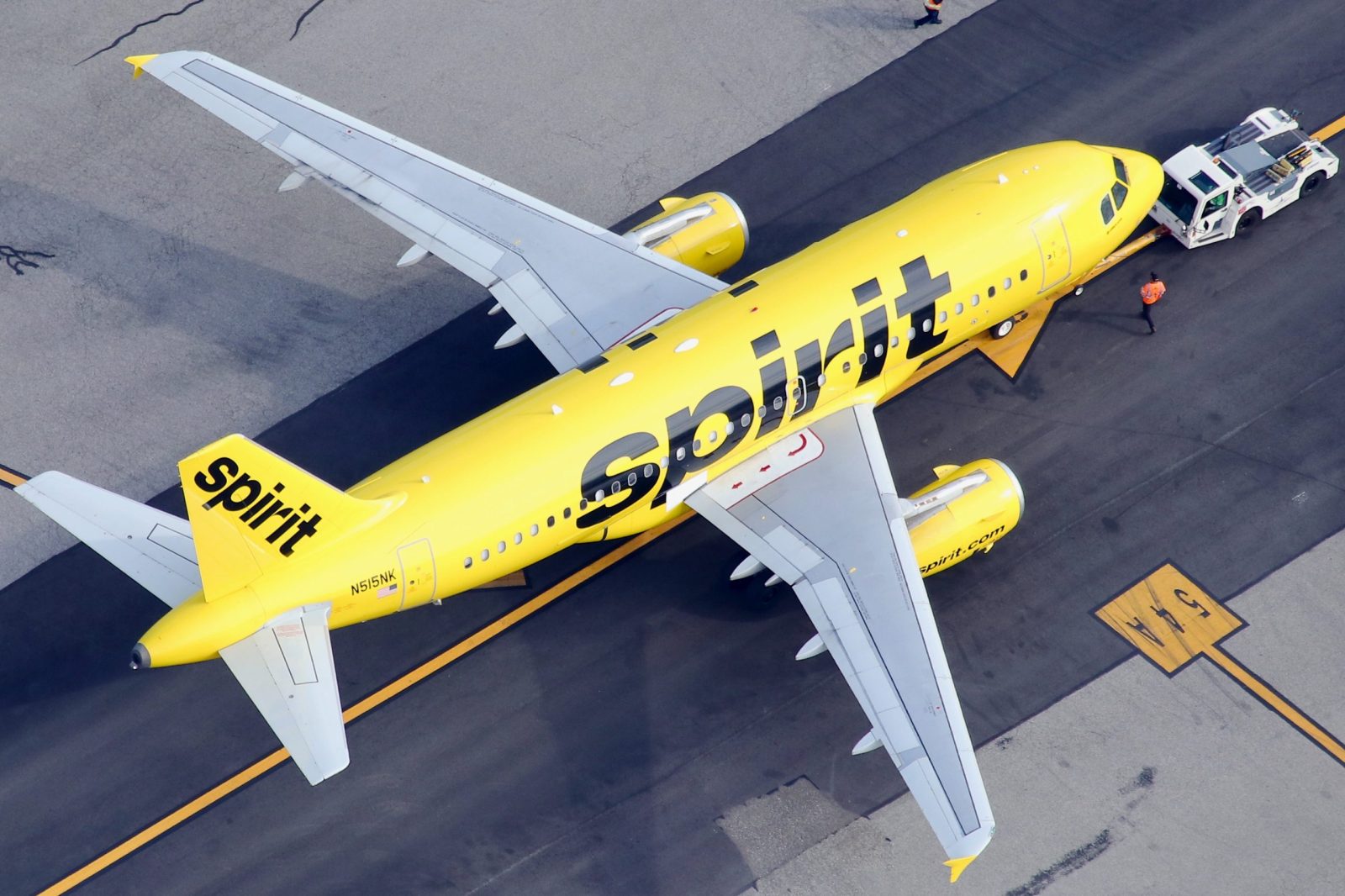
Spirit Airlines A319
A Spirit Airbus A319 pushing back at LAX. (Photo: AirlineGeeks | James Dinsdale)

Spirit Airlines has made a dozen network changes for the coming winter and summer seasons, according to Cirium schedule data. The largest expansion will be out of Boston, with additional routes out of Newark. Also included in the expansion are two routes on the West Coast and a couple of routes in the southeastern U.S.

Spirit is also planning to cut four routes. Three routes between Puerto Rico and Florida will be cut, as will a route between Florida and Cleveland, Ohio.

Two routes starting in December 2023 include a service between Miami and Minneapolis, which the airline previously served in 2022, as well as a new route between Fort Myers’ Southwest Florida International Airport and San Juan, Puerto Rico.

The airline is starting a wider collection of routes in April 2024 for the summer season. Three will be out of Boston, and two more will depart from Newark. Additional routes will fly out of Burbank and San Diego. Those routes include:

  • Boston to Charleston, S.C.
  • Boston to Houston, Texas
  • Boston to Norfolk, Va.
  • Newark to Charlotte, N.C.
  • Newark to San Antonio, Texas
  • Burbank to Oakland, Calif.
  • San Diego to Sacramento, Calif.
  • Myrtle Beach to Pittsburgh

It is curious to note Spirit’s focus on expanding in Boston. JetBlue, which is in a bid to buy Spirit and currently preparing to battle an anti-trust lawsuit that could block the sale, has a significant presence in Boston, as does JetBlue partner Cape Air. JetBlue already operates two of the three routes that Spirit is launching, with Norfolk being the only destination that JetBlue does not fly to from Boston. Spirit has not been shy to expand in Boston this year, meaning that JetBlue may be able to use Spirit’s gates and slots to significantly expand if the merger goes through.

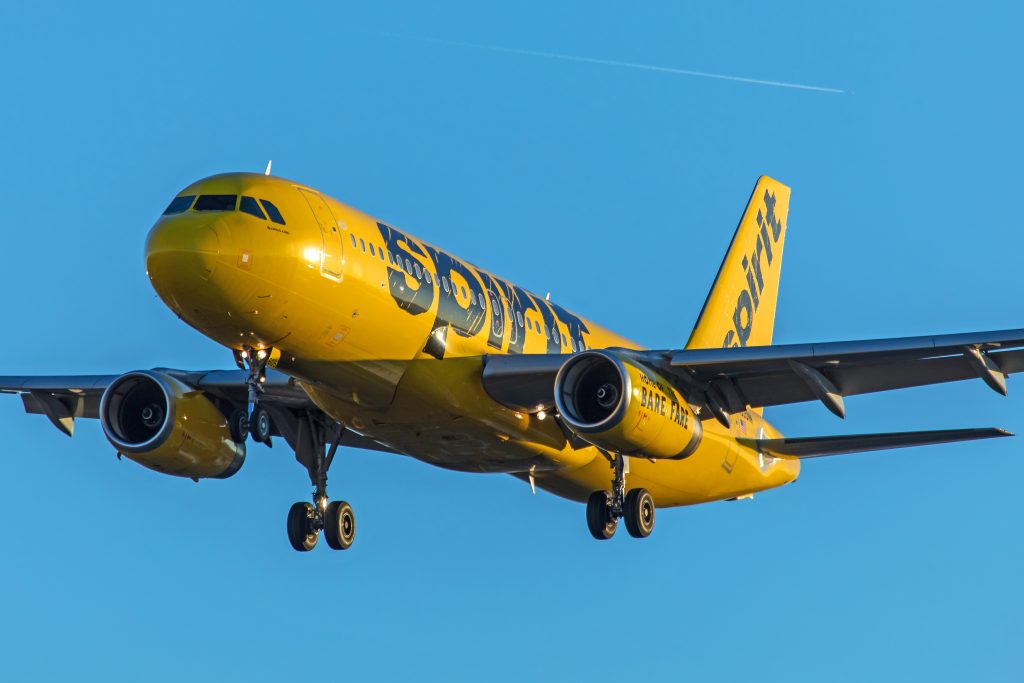
A Spirit Airlines A320 landing in Las Vegas. (Photo: AirlineGeeks | William Derrickson)

It is unclear whether Spirit’s move has anything to do with their potential deal with JetBlue or what role these routes will have on the deal. More important may be the two new routes Spirit is launching on the West Coast, as JetBlue has struggled to gain a significant presence there. Having extra slots in airports like Burbank, which is confined within the Los Angeles area, and San Diego may give JetBlue more ability to grow in that area.

The two airlines’ merger is currently facing lawsuits from the U.S. Department of Justice and several consumers.

Spirit’s route announcement also includes a few routes to be discontinued in 2024. All centered around the southeastern United States, and three of the four connect Florida with Puerto Rico. The dropped routes will include:

  • Aguadilla, Puerto Rico to Fort Lauderdale, Fla.
  • Aguadilla, Puerto Rico to Orlando, Fla.
  • Ponce, Puerto Rico to Orlando Fla.

The routes cut from Aguadilla and Ponce are the only ones that Spirit operates out of each respective destination. Spirit’s San Juan route network remains untouched. It is again important to consider JetBlue’s route network in Aguadilla and Ponce, as the airline serves every destination Spirit flies to in each destination at least seasonally. While it is again unclear whether this has any significance, it also cannot be ignored that Spirit may be adjusting its route network ahead of an anticipated merger.

Spirit has been quietly adding routes since the summer in addition to new flights being announced just in September.

Editor’s Note: This story was updated on Oct. 18, 2023 at 2:20 p.m. ET to remove Cleveland, Ohio to Fort Lauderdale, Fla. from the list of routes Spirit is dropping. Myrtle Beach to Pittsburgh was also added to the list of new routes per the airline’s confirmation.

John McDermott

John McDermott is a commercial pilot pursuing a career in professional flight. His passion for aviation began in an Ann Arbor bookstore with a tale of enemy pilots during World War 2, and he hasn't looked back. Besides flying and writing for AirlineGeeks, John volunteers with Professional Pilots of Tomorrow and travels whenever he gets the chance.

Delta Adds Flight to Brand-New Airport

Services will be offered daily and year-round onboard a Boeing 737-800 aircraft from Delta's Atlanta hub. So far, Delta is the only U.S. airline to announce service.

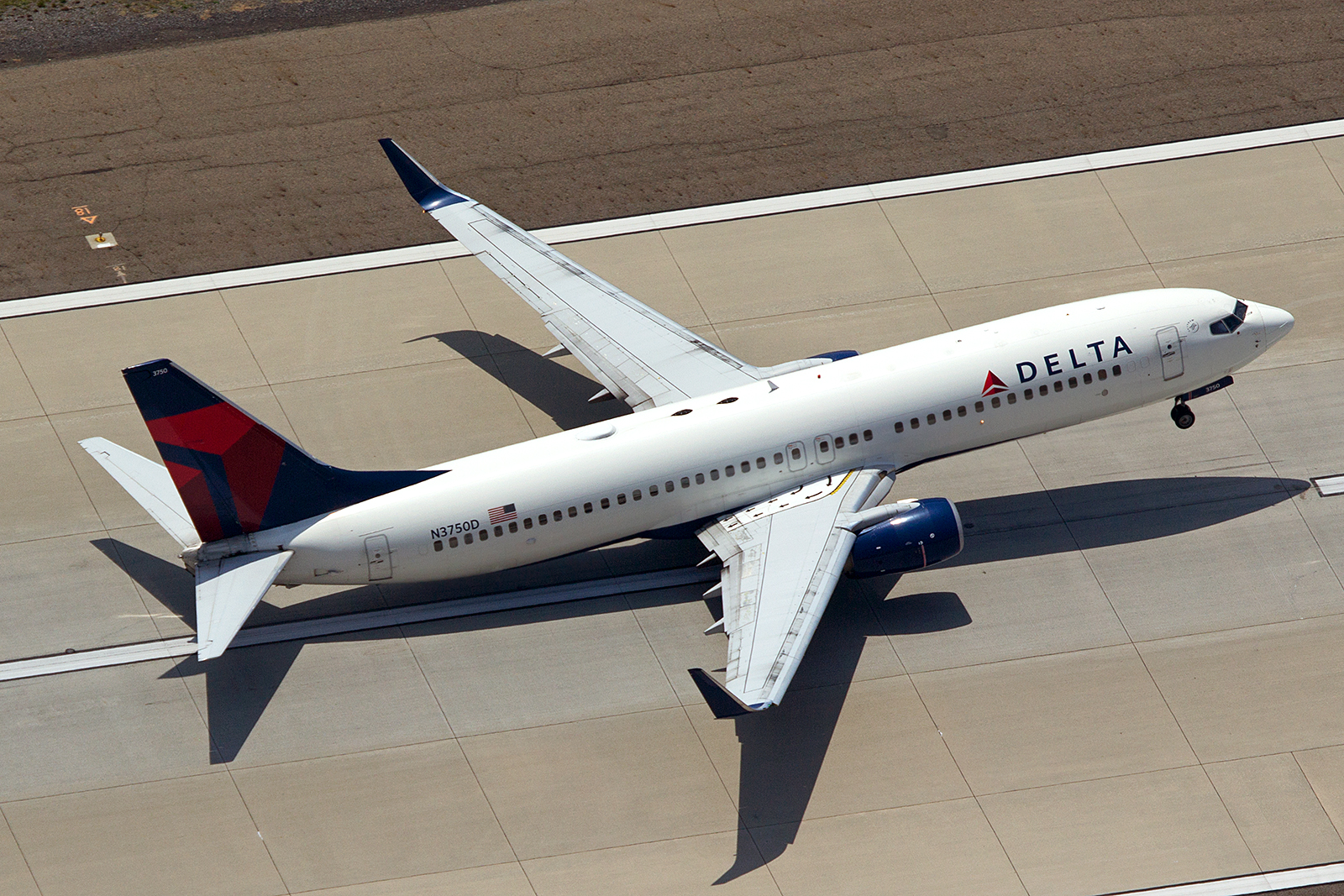
DL_Delta_738_SkyTeam_N3761R_737_800_SEA_katie_bailey
A Delta 737-800 in Seattle. (Photo: AirlineGeeks | Katie Zera)

Mexico is among the top vacation destinations among Americans. Cancún is arguably the most popular, with Cabo San Lucas and Puerto Vallarta close behind.

However, one particular vacation spot has been notably hard to get to despite its popularity. Tulum, a city on Mexico’s southeastern Atlantic coast, boasts beaches, parks, forests, and ancient ruins like many other tourist hotspots in the region. But it is only now getting its first nonstop flight on an American carrier, as Delta Air Lines has announced it will launch a new route from Atlanta to Tulum in March 2024.

Services will be offered daily and year-round onboard a Boeing 737-800 aircraft. The aircraft used on this route will feature 16 first-class recliners, 36 Comfort+ seats with extra legroom, and an additional 108 normal economy seats, for a total of 160 seats.

Current Flight Options to Tulum

Nonstop flights are an improvement from the current option. Today, many travelers fly to Cancún, which is nearby, and drive 90 minutes south to Tulum. While safety might not be an issue between major tourist hubs, cost and time are. A private transfer can run $100 and add 90 minutes to the overall travel journey, per The Points Guy.

A Delta 737 (Photo: AirlineGeeks | William Derrickson)

This hassle wasn’t due to airlines’ resistance to flying into Tulum. Instead, the city is only getting an airport for the first time this winter. Tulum’s Felipe Carrillo Puerto International Airport is set to open in December 2023. At the time of writing, the airport’s website reports that preparations are 65% complete.

Planned Services to Tulum

Though the airport is brand new, there is already a selection of airlines preparing to operate into the vacation hub. Aeromexico and Viva Aerobus have been selling flights into Tulum since September, both from Mexico City.

Viva Aerobus will have the privilege of operating the very first flight into the airport. It will fly in from Felipe Ángeles International Airport, Mexico City’s secondary airport. Aeromexico will fly in from Mexico City International about 30 minutes later and add a second service later that day.

Viva Aerobus will also start flights from Mexico City International as well as Monterrey, Guadalajara, and Tijuana to Tulum later in December. It will surely not be the only Mexican low-cost airline to fly into Tulum.

Tulum Airport’s Future Potential

There is, of course, the question of whether flights to Tulum might cannibalize demand on flights to Cancún. While some demand might be transferred over, it is likely that a large majority of flights to Cancún will remain, if not all of them. Adding flights to Tulum will likely do nothing but increase demand to both destinations by freeing up space on flights to Cancún. More people will be able to fly nonstop and will either switch over to these nonstop flights or choose to take flights to Cancún with connections through Mexico City, as these flights will also likely have extra room.

The real question is how many other U.S.  airlines will add flights to Tulum. There is certainly demand for the other major carriers to add at least one daily flight. Low-cost airlines will also certainly enter the market as a cheap alternative. Tulum will probably not have the same number of daily flights or destinations that Cancún does, but passengers will certainly be willing to transfer the $100 they spend on hours of driving to a nonstop flight that lengthens their vacation time.

One might even ask whether there will be room for connecting flights from Cancún to Tulum. The chances of this are slimmer. Viva Aerobus and Volaris both operate large networks out of Cancún. If they can find a way to make a connecting flight to Tulum through Cancún cheaper than flying nonstop, passengers may be equally attracted: they lose nothing by paying less money to stop in the airport they always go to and board on a faster ride on to Tulum.

Tulum’s airport has a lot of potential for expansion. It is somewhat surprising that more airlines have yet to launch flights there, but the airline did recently shorten its timeline to open from April 2024 to December 2023. This may incentivize many airlines to launch flights when the official summer season begins, just in time for universities to go on break in April.

John McDermott

John McDermott is a commercial pilot pursuing a career in professional flight. His passion for aviation began in an Ann Arbor bookstore with a tale of enemy pilots during World War 2, and he hasn't looked back. Besides flying and writing for AirlineGeeks, John volunteers with Professional Pilots of Tomorrow and travels whenever he gets the chance.
Sign-up for newsletters & special offers!

Get the latest stories & special offers delivered directly to your inbox

SUBSCRIBE

Uh-oh! It looks like you're using an ad blocker.

Our website relies on ads to provide free content and sustain our operations. By turning off your ad blocker, you help support us and ensure we can continue offering valuable content without any cost to you.

We truly appreciate your understanding and support. Thank you for considering disabling your ad blocker for this website