Stories

Boom Supersonic Embarks on Military Application Projects

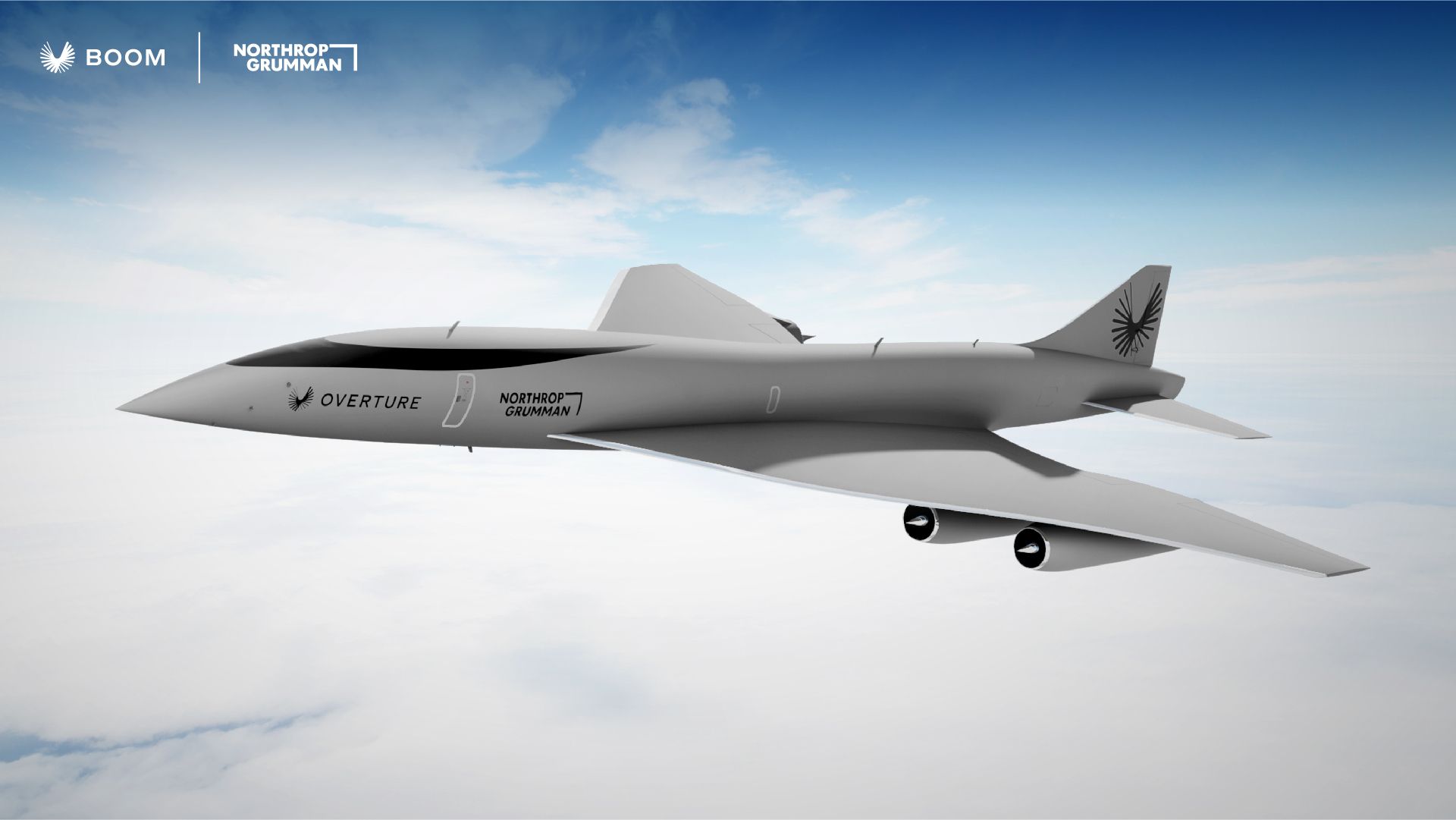
Special mission variant of Overture. (Rendering: Boom Supersonic)

Boom Supersonic, the US-based supersonic aircraft manufacturer, is actively working on adapting its supersonic aircraft for defense purposes and advancing its technology for commercial and military applications. The special mission variant of Overture could support various tasks such as quick-reaction surveillance, reconnaissance, command, and control, as well as mobility and logistics missions, such as emergency medical evacuation and troop transport.

Overture will be twice as fast as current airliners and operate on 100% sustainable aviation fuel (SAF) and take-off; it will use the world’s first automated noise reduction system. The aircraft will fly without the use of afterburners and will meet the same strict regulatory noise levels as the latest subsonic airplanes.

Boom Supersonic has introduced a Defense Advisory Group to evaluate its Overture aircraft for national security purposes. This independent council comprises military and defense experts with expertise in various defense-related areas: three former USAF Generals, one retired USAF Lieutenant General, a former Senior Executive Service for the Air Force Rapid Capabilities Office, and two retired USAF Major Generals.

This move builds on Boom’s previous collaboration with Northrop Grumman and aims to identify valuable and critical use cases for supersonic transport in military missions. The council’s goal is to advance the development of defense versions of the Overture, a sustainable supersonic aircraft capable of flying twice as fast as current airliners with a range of 4,250 nautical miles. The group aims to optimize the Overture for government customers, focusing on the Department of Defense.

Additionally, Boom has announced its support for Northrop Grumman on a NASA contract related to commercial supersonic flight efficiency for the High-Speed Endo-atmospheric Commercial Vehicle Conceptual Design Study and Technology Roadmaps Development program. Northrop Grumman and Boom Supersonic entered a partnership in July 2022 at the Farnborough International Airshow to develop a supersonic special-mission aircraft for the US government and allies.

The company has progressed in its Overture program over the last months, securing agreements with structural suppliers and expanding its partnership for the propulsion system Symphony™. Key partners in the Overture program include Aernnova, Leonardo, Aciturri, Safran Landing Systems, Eaton, Collins Aerospace, and the United States Air Force. The propulsion system, Symphony™, collaborates with partners like Florida Turbine Technologies, GE Additive, and StandardAero.

Boom Supersonic has also secured 10 million gallons of SAF annually for Overture’s net-zero carbon flight test program through agreements with Dimensional Energy and AIR COMPANY.

Designed to carry up to 80 passengers at twice the speed of today’s subsonic airliners, the Overture aircraft is set to enter commercial production in 2024, with flight tests in 2026 and passenger service in 2029. Boom Supersonic has 130 aircraft in its order book, including American Airlines, United Airlines, and Japan Airlines orders.

Vincenzo Claudio Piscopo

Vincenzo graduated in 2019 in Mechanical Engineering with an aeronautical curriculum, focusing his thesis on Human Factors in aircraft maintenance. In 2022 he pursued his master's degree in Aerospace Engineering at the University of Palermo, Italy. He combines his journalistic activities with his work as a Reliability Engineer at Zetalab.

WestJet and Air France More Than Double Codeshare Destinations

WestJet Paine Field
A WestJet Boeing 787 enters the runway at Paine Field in Washington. (Photo: AirlineGeeks | Katie Bailey)

Canadian airline WestJet has announced a significant expansion of the carrier’s codeshare agreement with Air France to take effect from Sept. 25. The airlines have had a partnership for over 10 years that currently gives WestJet passengers the ability to access 22 destinations across Europe. With the announced expansion the number of destinations will expand by 31 in 11 countries through Paris’ Charles De Gaulle airport.

Chris Avery, WestJet Vice-President, Commercial Development, said: “WestJet is thrilled to more than double our current destination offerings through our Air France codeshare agreement, significantly expanding opportunities for Canadians to turn their dream European getaways into a reality.”

In addition to the codeshare expansion, WestJet has confirmed that the service between the airline’s Calgary base and Paris will become year-round. Previously the Boeing 787 Dreamliner operation was seasonal but due to demand will be scheduled daily at peak times and continue beyond the Northern Summer.

“As we prepare for our first year of winter flying to Paris, today’s announcement marks an important milestone in our partnership with Air France, that will bolster seamless connectivity between Canada and desirable destinations such as Nice in the south of France, Helsinki in Finland and sunny Valencia in Spain,” said Avery.

The codeshare agreement will allow passengers to travel on one ticket with a combination of airlines and earn loyalty points across the whole journey. Fahmi Mahjoub, Air France KLM Senior Vice-President, Alliances, added: “Air France and WestJet have a long-standing and extensive relationship with already more than 23 destinations offered across Canada under Air France code. With this development we are expanding the cooperation further and are honored to welcome WestJet’s guests onboard our European network.”

WestJet has undertaken a number of strategic initiatives of late with the purchase of leisure carrier Sunwing and the cessation of operations for ultra-low-cost (ULCC) subsidiary Swoop. Sunwing will be integrated into the main WestJet business and Swoop is scheduled to operate its last flight on Oct. 28.  At the time of the announcement Alexis von Hoensbroech, WestJet Group, Chief Executive Officer said: “The integration of all jets from Sunwing Airlines, Swoop and WestJet into one fleet will provide us with the scale to enhance our collective operational resilience while offering more affordable fares and vacation opportunities across our entire network.”

Earlier this month the airline announced an increase in services from Calgary International Airport (YYC) to key destinations Ottawa and Los Angeles. Frequency to the Canadian capital will increase to 14 flights per week with flights to LAX reaching a winter peak of 21 per week.

Jane McCurdy, WestJet Director, Network Planning and Alliances stated at the time of the announcement: “With increased demand for these two popular routes from Calgary, we are able to provide enhanced capacity and more seats for our valued guests this winter.” This winter season WestJet will operate almost 900 flights from YYC during peak travel periods.

John Flett

John has always had a passion for aviation and through a career with Air New Zealand has gained a strong understanding of aviation operations and the strategic nature of the industry. During his career with the airline, John held multiple leadership roles and was involved in projects such as the introduction of both the 777-200 and -300 type aircraft and the development of the IFE for the 777-300. He was also part of a small team who created and published the internal communications magazines for Air New Zealand’s pilots, cabin crew and ground staff balancing a mix of corporate and social content. John is educated to postgraduate level achieving a masters degree with Distinction in Airline and Airport Management. John has held the positions of course director of an undergraduate commercial pilot training programme at a leading London university. In addition he is contracted as an external instructor for IATA (International Air Transport Association) and has been a member of the Heathrow Community Fund’s ‘Communities for Tomorrow’ panel.

Three and a Half First Class Seats? SWISS Airbus A350-900

SWISS International Airlines has just presented the seat configuration of their incoming Airbus A350-900. The blueprint gives an interesting insight into the carriers strategy for the coming years.

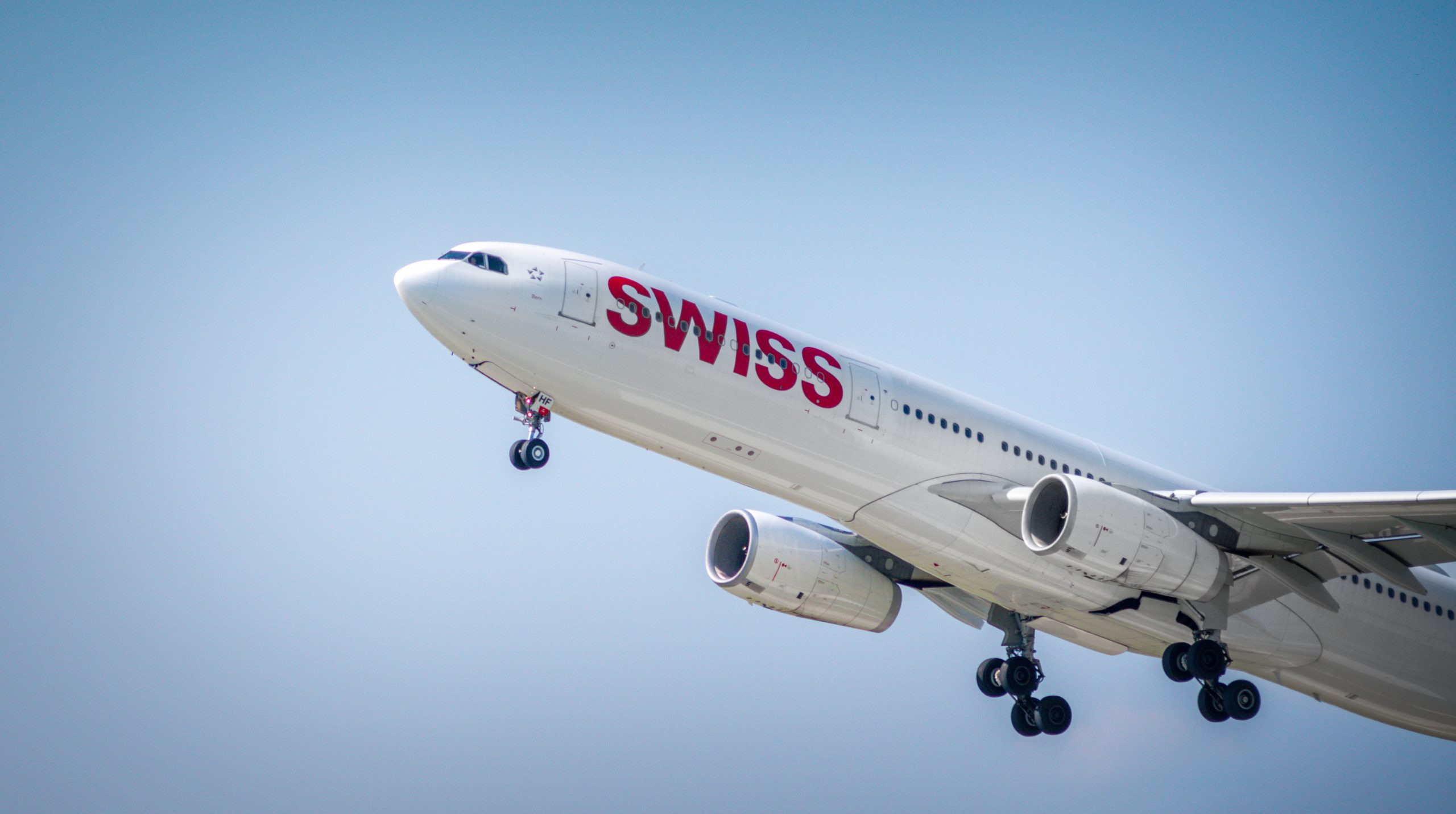
SWISS International Airlines plane on takeoff. (Photo: Chad Davis | flickr)

A new aircraft joining the fleet of a favorite airline is always a thrill. Every bit of information along the way is exciting. That is why the announcement made by SWISS International Airlines about the seat configuration of their incoming Airbus A350-900 made the news recently.

The carrier posted a blueprint of the floor plan of the aircraft on their Twitter. The picture does reveal the entire spacing and includes the precise number of seats allocated to each service cabin.

SWISS International Airlines Airbus A350-900 planned seatmap (Photo: SWISS)

First Thoughts

A four-class layout is nothing strange with SWISS. The carrier is proud to have first class seats present on each of its widebody aircraft types. One interesting fact about the cabin this time is that it got downsized – from the usual eight seats to… three and a half! Yes, you read that right. Apart from the two suites with window view there is one in the middle which could seat either one passenger traveling alone or two passengers traveling together. The personal space should not be an issue though, given the 1-(1/2)-1 configuration.

The recent addition is the premium economy cabin introduced already with the carrier’s 777-300ER fleet. Gauging by the number of seats allocated, the product must have been a hit. SWISS will offer 38 premium economy class seats, a staggering 58% increase over the cabin offered on its 777-300ER with 24. What’s more, this time, instead of a crowded 2-4-2 configuration, the carrier will offer a 2-3-2 configuration.

Looking at the blueprint, the economy class cabin seems like a mere addition to the rest. There is one interesting detail here for the aircraft connoisseurs though. Since the SWISS’ A350-900 deliveries will start only in 2025, the aircraft will be already including the latest Airbus’ cabin innovations. Thanks to the wider cabin interior, the new A350s will be able to comfortably seat 10 passengers abreast with the industry standard size of the seat. Having that in mind, passengers choosing SWISS might appreciate the carrier sticking to the 3-3-3 configuration, which should technically allow for more spacious travels.

The Most Premium Aircraft In Lufthansa Group?

Together with 45 business class seats the carrier will offer 86 premium seats in a 242-seater plane. That is nearly 36% of all the seats offered onboard the upcoming A350-900. No other widebody plane in the entire Lufthansa Group has such a high proportion of premium allocation onboard. The usual premium cabins allocation stands between 20% and 30%.

The trend for SWISS is set though. The 777-300ER fleet refurbishment left the type with a much heavier premium focus as well, reaching 29% overall. The introduction of the premium class on the type had been performed directly at the expense of the regular economy seats. This way it is easy to calculate that, in such an example,  the cost of one premium economy seat means for the carrier 1,8 regular economy seat.

Lufthansa Group widebody aircraft configurations (Photo: Filip Kopec | AirlineGeeks)

All the changes put together should not be called downsizing nor upsizing, but rather “rightsizing”. The carrier is said to be confident that the smaller first-class cabin will be sufficient to serve the demand for such a product. This might very well be true as it is quite common to see the first class reviews, where the passenger has the whole cabin to their own.

Simultaneously, the post-pandemic recovery is in full strength and a premium market such as connecting Zurich to the world calls for the premium-heavy product. It is worth keeping in mind that with more and more revenue management and merchandising techniques the airlines have more options to fill the premium cabins. Not only by selling the tickets outright but also through various options of upgrades and the loyalty scheme.

Filip Kopeć

A passionate aviation enthusiast that started off his career as an aerospace engineer, but found his true calling on the commercial side of the airline business. Now as a finance guy among avgeeks and an avgeek among finance guys, he has experience working in the Revenue Divisions of three airlines. In his spare time he enjoys traveling, but admittedly sometimes is more about the journey than the destination.

Pratt and Whitney Engine Woes Continue

An A321neo undergoes flight test preparation (Photo: Airbus)

Earlier this past week, engine manufacturer Pratt and Whitney announced an extension to the period of time it would take to inspect turboshaft engines on the Airbus A320neo series aircraft. In July, it was announced that a period of approximately 60 days would be needed to inspect engines for contaminants in the engine core. However, the organization announced on September 11th that the new time frame for inspections will be closer to 300 days due to cracking in metal powder found in compressor and turbine disks. 

The latest development involves a quality control issue with powder metal used to make engine components inside the core. The geared turboshaft PW1100G-JM engine was initially certified by the FAA in December 2014. In a combustion engine, air is combusted in the turbine section housed in the core of the engine. The turbine in turn spins the fan, the most visible part of the engine from the front, along with compressor stages, also inside the core.

The fan pushes air around the outside of the core as well as into the compressor section. Air from the fan bypassing the core of the engine is thrust, propelling the aircraft through the atmosphere. The air passing through the core of the engine is compressed through the compressor stages and then combusted, driving the turbine. The gearing of the engine relates to a gearbox allowing the fan and turbine to rotate at different speeds, increasing fuel efficiency. 

In a press release produced by RTX, Pratt and Whitney’s parent company, an estimated 600 to 700 engines will need to be inspected for cracks in high-pressure turbine disks and high-pressure compressor disks. Last month, the company sent a notice to operators of the A320 powered by the engine to make additional inspections, which needed to be completed by September 15 of this year.

The Connecticut-based manufacturer is developing a fleet management plan for airlines to inspect the high-pressure turbine disks and high-pressure compressor disks in engines at additional cycle intervals. While Pratt and Whitney believe that the majority of inspections will be completed throughout the remainder of 2023 and 2024, the thorough process will take until 2026 to be fully completed for all affected engines. 

Industry-Wide Effects

Aircraft utilization rates for airlines operating A320neo series aircraft, equipped with the PW1100G-JM, across the globe will decline significantly throughout the next 3 years. Hawaiian Airlines, for instance, has already incurred significant disruption in schedule due to grounding aircraft from previous issues.

At times in the past year, the carrier has had five out of 16 active aircraft in the fleet parked, initially reported by aviationweek.com. In July, Brent Overbeek, the carrier’s chief revenue officer, hypothesized that it would not be until mid-2024 that Hawaiian would have a full Airbus A321 fleet operating.

However, with the latest development in quality issues, the previous time frame is likely to be pushed back. July’s announcement had Hawaiian pause routes to be operated by A321 aircraft, such as Lihue to Oakland, Calif.  

Delta Air Lines believes their Airbus  A321neo aircraft will not see as significant of disruption as other operators, although is waiting for the full estimated impact from Pratt and Whitney at the end of the month. During a recent conference, Dan Janki, Chief Financial Officer for Delta, stated with the delivery of new, low-cycle aircraft, the impact should be less for the carrier. Delta anticipates ending 2023 with 50 A321neo aircraft, awaiting over 100 additional examples to be delivered through 2027.

Zach Cooke

Zach’s love for aviation began when he was in elementary school with a flight sim and model planes. This passion for being in the air only intensified throughout high school when he earned his Private Pilot Certificate. He then attended Embry-Riddle Aeronautical University, earning his certificates and ratings to later flight instruct and share his passion for aviation with others. He now resides in the North East living out his dream as an airline pilot.

United Opens Massive New Lounge as Part of $1 Billion Airport Investment

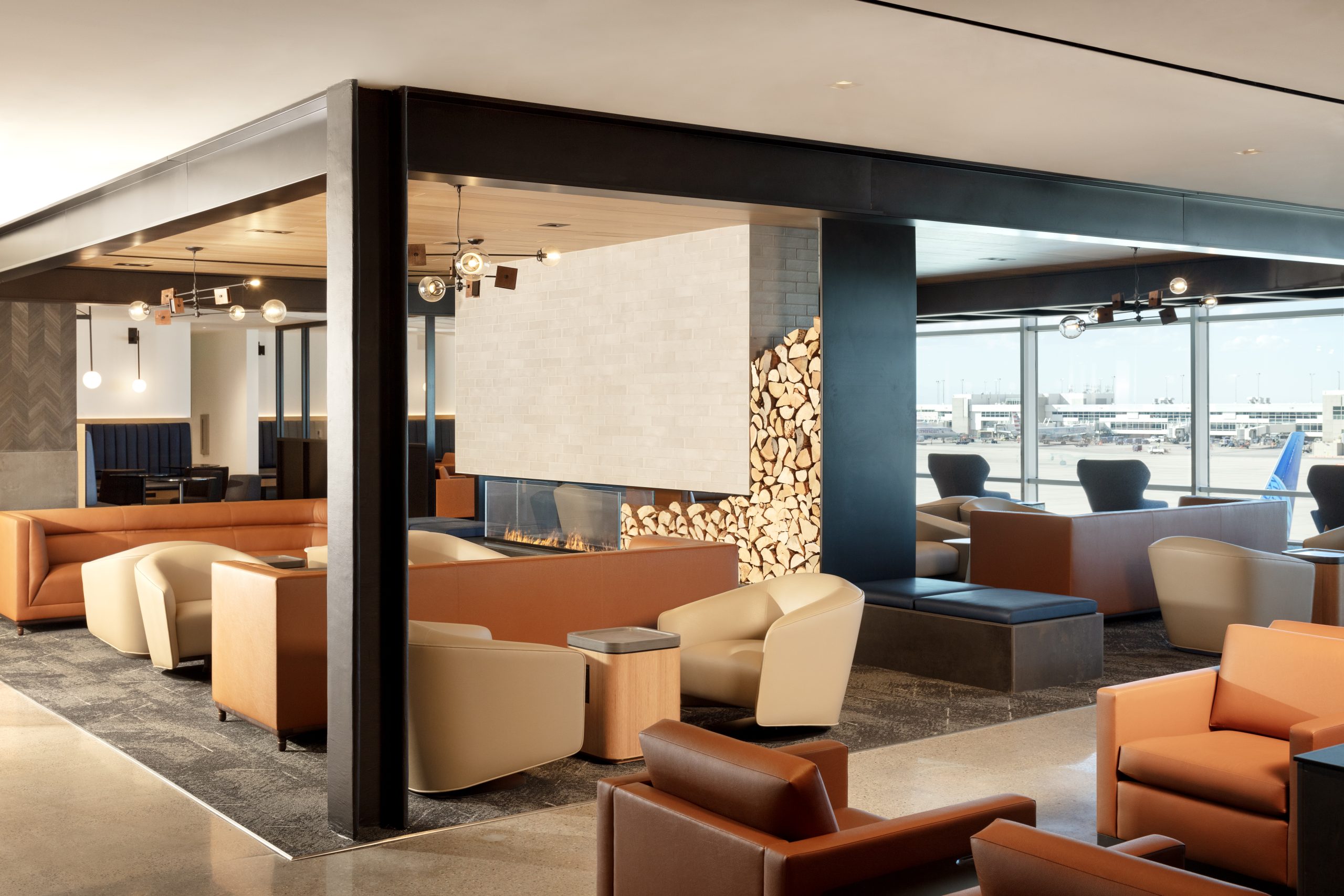
The largest United Club in the world is inspired by Denver’s beer scene and urban areas (Photo: United Airlines)

United Airlines has opened two new lounges at its hub at Denver International Airport, including its largest lounge in the world. The two new United Clubs are part of the airline’s nearly $1 billion investment in the passenger experience in Denver.

A Brewery-Themed Space

The newest lounge in United’s network opened on Wednesday and features 35,000 square feet of space, making it the airline’s largest United Club. The space is inspired by Denver’s beer scene and includes brewery-style design elements and a beer tasing experience. A feature bar on the mezzanine level allows passengers to choose from a seasonal rotation of ten local and craft beers.


A mural by local artists in United’s new Concourse B lounge at Denver International Airport (Photo: United Airlines)

According to the airline, the lounge also features inspiration from Denver’s urban areas, with concrete flooring and exposed ceilings as well as hand-crafted decorations. The lounge is located near gate B44 and has three levels with more than 600 seats.

The new Concourse B United Club in Denver has a beer tasting experience and feature bar (Photo: United Airlines)

 A Rocky Mountain Experience

United opened its new A Concourse lounge last month and it is described as being influenced by the Colorado Rocky Mountains. Located near gate A26, it has 24,000 square feet of space and 400 seats across two levels.

The new Concourse A United Club in Denver features design elements inspired by the Colorado Rocky Mountains (Photo: United Airlines)

According to the airline, it is designed to feel like a ski lodge. Travelers will find two fireplace lounges, stacked wood, vintage ski décor and a shuffleboard table. The space features a variety of custom handcrafted artwork from local artists.

United’s new Concourse A lounge at Denver International Airport has a ski lodge aesthetic (Photo: United Airlines)

Adding Capacity Amid Lounge Crowding Issues

Lounge crowding has been a growing issue at airports across the United States. American Express introduced changes to its Centurion Lounge access policies earlier this year and Delta Air Lines announced new lounge access restrictions on Wednesday as well.

The two new United Clubs at Denver International Airport are expected to double the carrier’s lounge capacity at the airport. The airline notes that more than two thirds of its customers using the airport are connecting passengers. As United expands its operations at the airport, the need for additional lounge space will only increase. The airline is expected to open an additional revamped lounge at the airport in 2025, which will bring the total amount of lounge space at the airport to over 100,000 square feet.

Airline’s Ongoing Commitment to Denver

United has stated that both new lounges in Denver feature self-scan entry gates and agent on demand kiosks for travel planning assistance. Each lounge also has a wellness room and food and beverage options inspired by local cuisines and ingredients. The new lounges are part of the airline’s nearly $1 billion investment in the passenger experience for its travelers at Denver International Airport. In addition to its two new lounges, United introduced United Club Fly, a grab-and-go concept for passengers in Denver last December.

“The new United Club locations are designed and operated to reflect feedback from our customers and match the way their travel has evolved in recent years,” said Alexander Dorow, United’s Head of Clubs & Lounges in a press release. “We’re growing our hub in the Mile High City, and the expansion and renovation of United Club locations represents our commitment to Colorado and our customers’ experience.”

Earlier this year, United also announced six new routes from Denver International Airport that are not served by any other airline. These destinations include Asheville, N.C.; Greensboro, N.C.; Dayton, Ohio; Lexington, K.y.; San Juan, Puerto Rico; and Montego Bay, Jamaica. The airline also announced that it would be building 12 new gates at the airport. United has also recently purchased 113 acres of land near Denver International Airport. The airline stated that it will be using part of this land to expand its pilot training facility, but there is also speculation that the carrier is considering moving its headquarters to Denver from Chicago.

Andrew Chen

Andrew is a lifelong lover of aviation and travel. He has flown all over the world and is fascinated by the workings of the air travel industry. As a private pilot and glider pilot who has worked with airlines, airports and other industry stakeholders, he is always excited to share his passion for aviation with others. In addition to being a writer, he also hosts Flying Smarter, an educational travel podcast that explores the complex world of air travel to help listeners become better-informed and savvier travelers.

Xiamen Airlines Becomes First Chinese Carrier to Fly to Qatar

A Xiamen 787 taxis in Amsterdam. (Photo: AirlineGeeks | Fabian Behr)

Chinese full-service carrier Xiamen Airlines is set to launch flights to Doha from both its hub in Xiamen and Beijing Daxing starting October 2023. The flights from Beijing Daxing, the smaller of the two major International airports of the Chinese capital, will be operated daily, while the Xiamen route will run twice weekly. Both flights will be operated by Boeing B787 Dreamliner aircraft. 

Xiamen Airlines will become to very first airline in the Greater China area to fly between Qatar and China, despite there being over 30 weekly flights scheduled between mainland China and Qatar and additionally two daily flights from Doha to Hong Kong. All of the flights are currently operated by Qatar Airways, which is not too unusual as the vast majority of flights out of Doha are operated by the airline. 

Xiamen Airlines B737 taxiing in Singapore Changi Airport (Photo: AirlineGeeks | Anthony An)

For Qatar Airway

Qatar Airways aims to strengthen its position in the Chinese market with the new partnership. Its Chairman CEO, Mr Akbar Al Baker, has long stressed the value Qatar Airways places on the Chinese market and has voiced support for reopening during COVID. Prior to the pandemic, Qatar operated flights to Beijing, Guangzhou, Shanghai, Hangzhou, Chengdu and Chongqing. The airline also operated its A380s to Guangzhou. 

Mr. Akbar Al Baker, CEO of Qatar Airways, speaks to the media. (Photo: AirlineGeeks)

Qatar Airways will enter a codeshare agreement with Xiamen Airlines on these routes. Qatar already operates a daily flight to Beijing Daxing on their Boeing 777-300ER. Qatar Airways has recently announced the resumption of its services to the Chinese cities of Chongqing and Chengdu in September, which will grow its network in China Mainland to 6 destinations. 

Qatar is a member of OneWorld alliance and cooperates with Hong Kong-based Cathay Pacific. It also has a very tight relationship with China Southern, who owns Xiamen Airlines. Qatar Airways owns a 5 percent stake in China Southern and has agreements with the carrier to codeshare and cooperate in various areas. It is also worth noting that China Southern left the SkyTeam alliance in 2019, while Xiamen Airlines, its subsidiary, remained a member. 

A Qatar Airways 777-300ER lands at Dallas-Fort Worth International Airport. (Photo: AirlineGeeks | Parker Davis)

The move is in line with Qatar Airways’ efforts to bring more foreign carriers into Doha. In past years, American Airlines, British Airways, Finnair, and many other airlines have launched routes to Doha. This is in part due to the aircraft shortage Qatar faces due to supply chain issues, which are expected to last for another few years. 

For Xiamen Airlines: 

Xiamen Airlines is a growing player in Chinese Aviation scene. Its services were limited to domestic and regional until they acquired the Dreamliners in 2014, which enabled them to fly to North America, Australia, and Europe. The airline had a straight forward strategy up until the Covid-19 pandemic, growing around its central hub of Xiamen and connect passengers to domestic and international destinations though the hubs. The airline flew to Los Angeles, Sydney, Amsterdam, Paris, Vancouver and several other major international destinations around the world, focusing on cities with large demand from Chinese and East Asian travelers.

A Xiamen 787 taxis in Amsterdam. (Photo: AirlineGeeks | Fabian Behr)

The airline collaborated closely with its SkyTeam partners though the process of transforming Xiamen into a global hub. Launching a partnership with KLM when both airlines operated on the Xiamen to Amsterdam route. 

The move to launch Doha, however, is not in line with the airline’s strategy. Possible reasons could be a product of the close relationship between its parent company China Southern and Qatar Airways or serve to better utilize the free wide body aircraft Xiamen has due to China’s slow recovery of international routes, specifically to North America. 

Xiamen has 12 Dreamliners, with six of them being -9 variant and the other six being -8. These aircrafts were fairly busy in supporting Xiamen’s intercontinental network and also flew on popular domestic and regional routes. However, the pandemic brought disruptions, and these aircraft are mostly flying on domestic and regional routes. Xiamen has still yet to resume flying to Seattle and New York and offers reduced frequency to Vancouver and Los Angeles. Placing these aircraft on flights to Doha and using Qatar Airways to market them seems to be the strategy to attain a higher utility rate of these aircrafts. 

Anthony Bang An

Anthony is an aviation enthusiast who grew up around the world from St. Louis to Singapore, and now lives in Amsterdam. He loves long-haul flying and finds peace in the sound of engine cruising. He aspires to share his passion for the sky though writing and providing another angle on the stories.

African Airlines Soar: A Comprehensive Look at Performance and Industry Dynamics in August 2023

A South African Airways A340 pushing back at Washington Dulles
A South African Airways A340 pushing back at Washington Dulles International Airport. (Photo: AirlineGeeks | Ben Suskind)

In August 2023, the African aviation industry is demonstrating remarkable resilience and growth, with traffic carried by African airlines reaching an impressive 98.4% of the 2019 levels. This resurgence is underpinned by various factors and industry dynamics that highlight the promising prospects for African aviation.

Recovery Trends: Almost Back to Pre-Pandemic Levels

One of the most encouraging trends in the African aviation industry is the near-complete recovery to 2019 traffic levels. This signifies a significant milestone, with domestic, intra-Africa, and intercontinental market shares estimated at 34%, 29%, and 37%, respectively. It’s a testament to the industry’s resilience and adaptability in the face of unprecedented challenges.

African airlines have not only rebounded but are also expanding their horizons. The total number of intercontinental routes operated by African airlines has surpassed pre-COVID levels since October 2022. In major airports like Johannesburg, Nairobi, Addis Ababa, Lusaka, Cairo, Casablanca, Abidjan, and Lomé, intra-Africa connectivity reached or exceeded pre-COVID levels since December 2022. This expansion showcases the industry’s determination to provide extensive connectivity across the continent and beyond.

Financial Outlook: Narrowing the Revenue Gap

The financial outlook for African airlines in 2023 is looking brighter. In the first three months of the year, African airlines missed 2019 revenue levels by just $0.3 billion. According to AFRAA data, this gap is expected to further narrow in the second quarter to $0.2 billion for the quarter. While the full-year estimated revenue gap is yet to be computed, it appears that 2023 will be a significantly better year compared to the challenging year of 2022, when the cumulative revenue gap was $3.5 billion for all African airlines compared to 2019.

Despite the positive performance, African airlines are grappling with rising Jet A1 fuel prices. The global weekly average jet fuel price during the week ending August 25 surged by 2.9%, reaching $126.37 per barrel. This steep increase, up from an average of $103.64 per barrel in July, presents a new challenge for airlines in maintaining profitability.

A persistent issue faced by the industry is blocked funds, which reduced slightly in July to $2.200 billion compared to $2.274 billion in June. A significant portion of these blocked funds are in Africa, with 14 countries accounting for about 70% of the total. AFRAA is actively engaging with central bank Governors to find a solution to this problem and have the funds released, ensuring that airlines can access the capital they need to operate effectively.

Full recovery to pre-pandemic levels for passenger traffic is now expected to occur in 2024, but economic performance in the region will continue to suffer as long as Africa’s internal market remains constrained.

Even before the pandemic, airlines in the region struggled to make a profit due to structural impediments.

COVID-19 has not made these better, although African states are starting to come around to the benefits of air services liberalization and improving flows of passengers and cargo.

Air transport has an important role to play in the wider recovery of African economies in the post-COVID-19 period. However, the continent’s fractured skies will remain a brake on recovery and a challenge to industry growth

Victor Shalton

Victor Shalton's love for aviation can be traced to when he was 11-years-old. As a seasoned aviation writer, he takes pride in providing the best aviation coverage around the globe and is passionate about advancing his skills in the aviation space. In addition, he loves travelling, writing, arts and while his speaking engagements have taken him around the world, he is proud to call Nairobi home.

Malaysia Airlines Scraps Partnership With Cathay Pacific Amid Inflight Catering Glitch

A Malaysia Airlines A350. (Photo: AirlineGeeks | Ben Suskind)

Malaysia Airlines and Cathay Pacific Airways have fallen short of deepening their cooperation after scrapping the plan to share revenue and costs as well as pricing and schedules for flight operations between Malaysia and Hong Kong. Both airlines have gotten into gear and recorded a profit after the pandemic.

The potential agreement was first revealed in May 2022. The pair originally requested to receive an exception from Malaysia’s competition law. The agreement concerned Hong Kong’s Competition Commission, who worried it would reduce competition and make it difficult to lower air fares or improve services industry-wide.

Cathay Pacific said the plan was scrapped due to “commercial considerations” in July.

“Cathay Pacific has fully complied and cooperated with the authorities in Hong Kong and Malaysia throughout this process,” Hong Kong’s carrier said.

The pair currently operate Kuala Lumpur – Hong Kong with three to four times a day and Penang – Hong Kong with five times a week. In addition, AirAsia and Batik Air Malaysia offer flights between Malaysia and Hong Kong as well.

Inflight Catering Chaos

Meanwhile, Malaysia Airlines is currently facing inflight catering problems. The flag carrier terminated its agreement with Brahim’s Food Services (BFS) on Aug. 31, but the airline hasn’t inked a new deal with another catering company afterward. As a result of the suspension, special meals, pre-booked meals, and the Chef-on-Call services are halted.

Earlier, the airline said that it will activate its Business Continuity Plan for inflight meal services on selected routes, including the sourcing of pre-packed meal and F&B supplies from multiple providers. The airline emphasized that the meal will meet the standard set by Civil Aviation Authority of Malaysia and the Ministry of Health.

During the transition, passengers are allowed to bring their own food and drinks on board. Malaysia Airlines has made a contingency plan with POS Aviation. The carrier admits 20% of its flights delaying due to the catering. The delivery of the food becomes a challenge, the Kuala Lumpur International Airport facing a shortage of high-lift truck to deliver the catering.

According to local media, short-haul passengers will be provided baked foods, candy, biscuits, and beverage as a “revised menu” will be given to the long-haul passengers. However, the contingency plan left some passengers frustrated. The dissatisfied passengers have vented their disappointments on social media.

Brahim’s Holding Bhd (BHB), BFS’ parent company, has invested heavily in the past years and is looking forward to negotiating with the flag carrier again. BHB holds 70% stake in BFS, and Malaysia Airlines holds the remaining 30%. The carrier demands a new termination for convenience clause in the contract extension between both parties. But BHB denied the new terms and emphasized a party could terminate the contract at least 30 days in advance.

Brahim currently provides catering services to 35 airlines, including Qatar Airways, Emirates and Japan Airlines. Malaysia Airlines contributed 50% of BFS’s income.

New Zealand Hydrogen Aviation Consortium Unveils Latest Report

Airbus' ZEROe Concept Aircraft Formation Flight. (Rendering: Airbus)

A new report entitled ‘Launching Green Hydrogen Powered Aviation in Aotearoa New Zealand’ outlines the collaborative effort, started in February 2023, by the New Zealand Hydrogen Aviation Consortium, comprised of six international entities: Airbus, Air New Zealand, Christchurch Airport, Fortescue, Hiringa Energy, and Fabrum. This comprehensive study delves into the potential for hydrogen-fueled aircraft to reduce up to 900,000 tonnes of carbon emissions annually by 2050 on New Zealand’s domestic flight routes.

Over six months of research, the consortium explored the hydrogen supply chain, assessed the local aviation market’s hydrogen demands, and formulated recommendations for regulations and incentives crucial to supporting the shift toward a green hydrogen aviation system.

Why New Zealand?

New Zealand’s suitability for transitioning to hydrogen-powered aviation can be attributed to several key factors. Firstly, limited alternatives like intercity trains and modest road infrastructure make air travel essential, with New Zealanders ranking 15th globally in flights per capita. The country’s domestic flight routes align well with electric and hydrogen-powered aircraft, offering zero-carbon solutions. New Zealand benefits from abundant renewable energy resources, allowing for increased electricity generation to support future carbon-zero and carbon-neutral fuels.

Moreover, New Zealand’s remote location necessitates heavy reliance on aviation, emphasizing the need to reduce emissions for international trade competitiveness. This transition requires a mix of bio-sustainable aviation fuels (bioSAF) and electronic sustainable aviation fuels (eSAF) for long-haul flights.

According to the consortium’s modeling, New Zealand could consume up to 100,000 tonnes of green hydrogen annually for hydrogen-fueled aircraft by 2050, primarily at major airports like Auckland, Wellington, and Christchurch. To generate this green hydrogen, an estimated 6,700 gigawatt hours of renewable energy, equivalent to about 16% of New Zealand’s current electricity supply will be required.

Airbus is actively developing the world’s first commercial hydrogen aircraft. Karine Guenan, Vice President of Airbus’ ZEROe Ecosystem, emphasized New Zealand’s unique potential to lead in testing and deploying low-carbon aircraft due to its abundant renewable energy resources, water availability, and the compatibility of its aircraft fleet and route lengths with hydrogen-powered aircraft.

The fuel options to reduce emissions

The report outlined several critical requirements for enabling green hydrogen aviation in New Zealand, including scaling up renewable energy generation, developing transmission and distribution infrastructure, ensuring safe hydrogen production, and enhancing cost-effectiveness.

The New Zealand Hydrogen Aviation Consortium aims to pave the way for adopting green hydrogen in aviation and transform New Zealand’s airports into hydrogen hubs, producing green hydrogen locally through water electrolysis using renewable electricity.

The global aviation sector is increasingly considering three fuel options to reduce emissions: green hydrogen, battery-electric technology, and sustainable aviation fuel. New Zealand’s commercial aviation sector is likely to employ all three options. Green hydrogen-powered aircraft are suitable for short distances and can complement small battery-electric aircraft. Larger aircraft flying longer distances will rely on sustainable aviation fuel.

You can find the report here.

Vincenzo Claudio Piscopo

Vincenzo graduated in 2019 in Mechanical Engineering with an aeronautical curriculum, focusing his thesis on Human Factors in aircraft maintenance. In 2022 he pursued his master's degree in Aerospace Engineering at the University of Palermo, Italy. He combines his journalistic activities with his work as a Reliability Engineer at Zetalab.

JSX Moves Out of Larger Airports

Dallas-based air carrier JSX has started moving out of some of the larger airports it serves, specifically in two of the cities it currently serves.

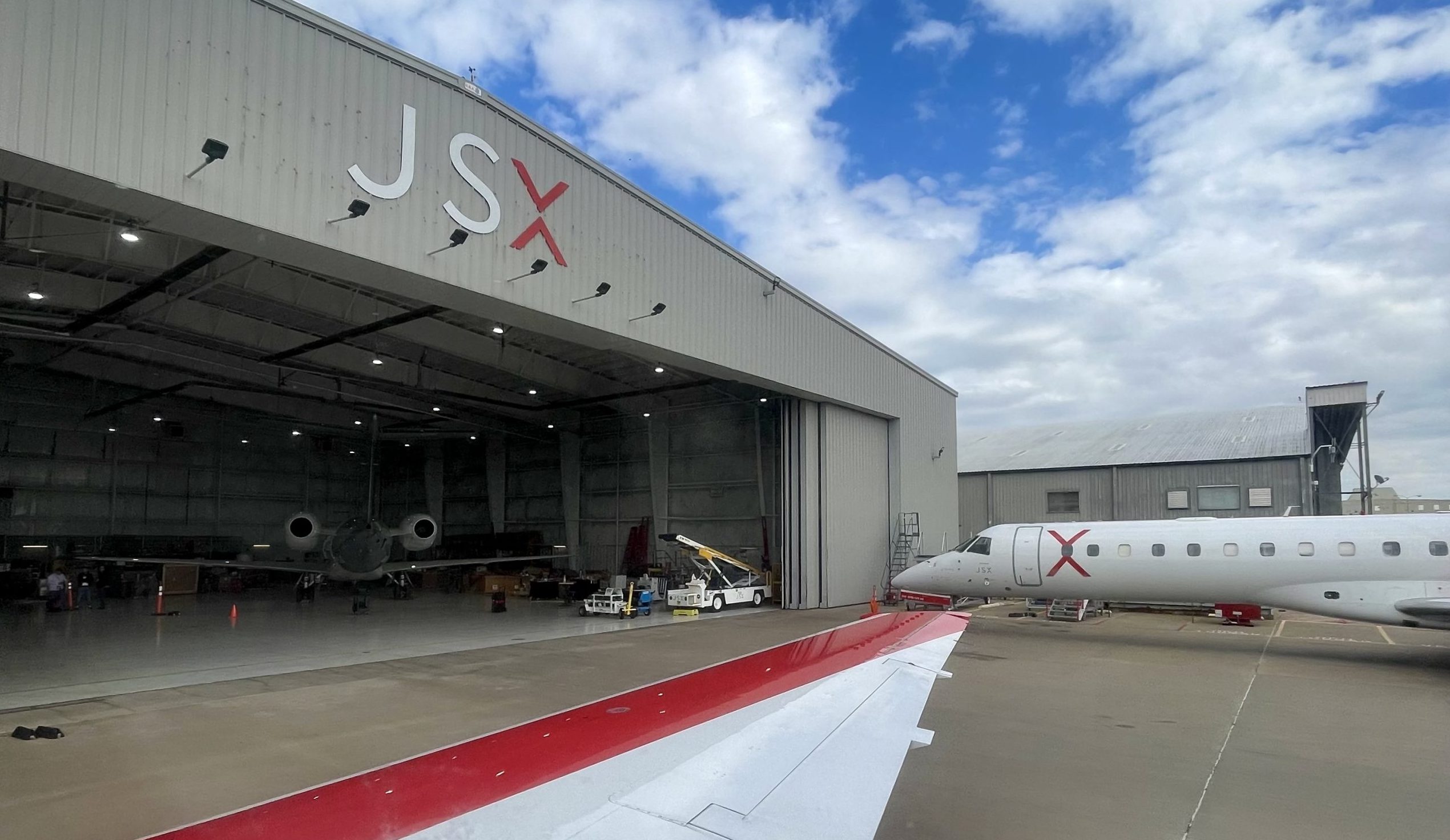
One of JSX's Embraer E145s (Photo: AirlineGeeks | Joey Gerardi)

Dallas-based air carrier JSX has started moving out of some of the larger airports it serves, specifically in two specific cities.

In Miami, the carrier currently operates from Miami International to Dallas Love Field and Westchester, N.Y., along with new winter seasonal flights that operate to Marsh Harbour in the Bahamas. But, starting on Sept. 26, 2023, the carrier will be moving all of its Miami area flights eight miles north to nearby Opa-Locka Airport.

JSX operates from private terminals and hangars at the various airports it serves. (Photo: AirlineGeeks | Mateen Kontoravdis)

Shifting on the West Coast

This was only the start, as this week the carrier just announced its second move out of a large international airport: San Diego, which has service to Las Vegas and Taos, N.M., the latter of the two is served in conjunction with Taos Air.

Starting Oct. 5, 2023, JSX will be moving nearly 30 miles north to Carlsbad, Calif., which the carrier calls “San Diego/Carlsbad” despite being nearly a 40-minute drive from Downtown San Diego during non-rush hour traffic, and will usually be over an hour in California rush hour traffic.

Moving from larger international airports to smaller more convenient secondary airports does fit the JSX brand. But, unlike Opa-Locka and Miami, which are around 20-minutes apart by car on a single road and isn’t much of a change for travelers, moving airports in Southern California makes less sense, as it’s away from the major population center and takes much longer for those that do have a final destination in or around downtown San Diego.

This will give Carlsbad Airport its first regular service to Las Vegas since California Pacific Airlines collapsed in the winter of 2019 after many years of trying to solidify air service. JSX will be the second carrier at Carlsbad after Advanced Air, which serves Mammoth Lakes on a seasonal basis with King Air 350s and Dornier 328 jets.

One of the Advanced Airlines operated Dornier 328Jets at McClellan-Palomar Airport in Carlsbad, Calif. (Photo: AirlineGeeks | Joey Gerard)

As far as Opa-Locka, this could possibly be the first time the airport has received regular air carrier service.

Joey Gerardi

Joey has always been interested in planes for as long as he can remember. He grew up in Central New York during the early 2000s when US Airways Express turboprops ruled the skies. Being from a non-aviation family made it harder for him to be around planes and would only spend about three hours a month at the airport. He was so excited when he could drive by himself, the first thing he did with his driver's license was get ice cream and go plane spotting for the entire day. He graduated from Western Michigan University in 2022 with a B.S. in Aviation Management & Operations and a Minor in Business, and currently works for a major airline in his hometown.
Sign-up for newsletters & special offers!

Get the latest stories & special offers delivered directly to your inbox

SUBSCRIBE

Uh-oh! It looks like you're using an ad blocker.

Our website relies on ads to provide free content and sustain our operations. By turning off your ad blocker, you help support us and ensure we can continue offering valuable content without any cost to you.

We truly appreciate your understanding and support. Thank you for considering disabling your ad blocker for this website