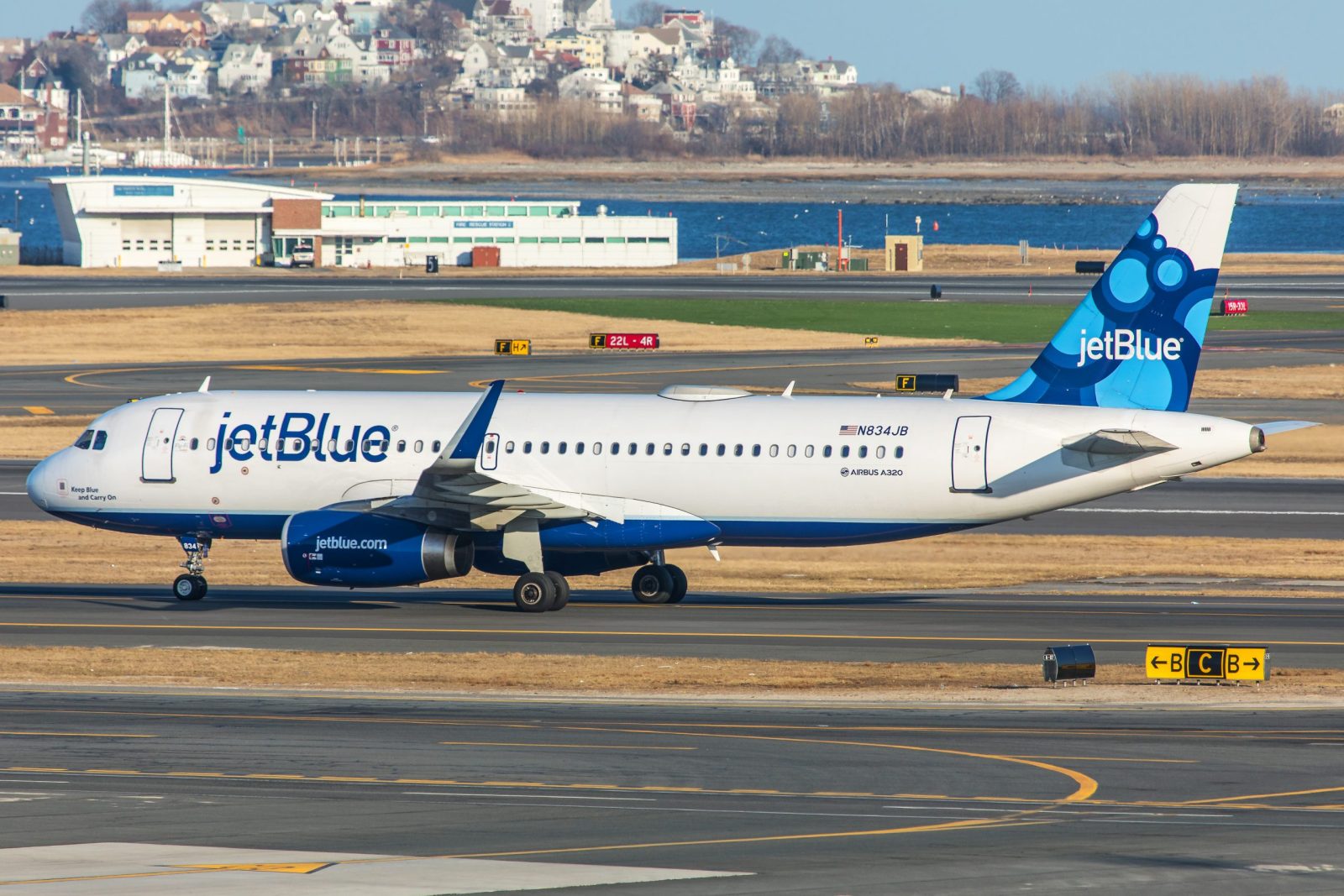
A JetBlue A320 in Boston. (Photo: AirlineGeeks | William Derrickson)
The aviation community is currently grappling with a series of perplexing and potentially hazardous events that have unfolded near Boston. Over a short period of 24 hours, commercial flights from Alaska, JetBlue, and Delta reported incidents where green lasers were shined into the cockpit. The Federal Aviation Administration (FAA) has taken notice, according to a report.
It began with Alaska flight 536 from Seattle, which reported being targeted by a green laser shortly after 5:10 a.m. on Tuesday, November 14. Other flights such as JetBlue flight 988 and Delta flight 803 reported similar and alarming occurrences earlier on Monday morning.
A Continuing Issue
Lasers, particularly those of high power, can pose a significant threat when directed at aircraft. Pilots, during critical phases such as takeoff and landing, can be blinded or disoriented by the sudden glare. The law is unequivocal about the gravity of such actions, prescribing hefty fines and even imprisonment for offenders. However, despite these strict regulations, the U.S. continues to witness a steady stream of laser strike reports.
In 2022, the FAA shared that pilots reported 9,457 encounters with lasers, down slightly from 2021. Reported incidents jumped from 6,852 in 2020 to 9,723 in 2021. According to data from the agency, 12 laser encounters were reported in Boston last year. Topping the list for the most laser incidents in 2022 was Houston, Texas at 360 reports.
Parth Jain is a dedicated aviation enthusiast with a rich background in general and commercial aviation. Over the years, Parth has consistently demonstrated a deep fascination with the aviation industry, his interests spanning from the workings of small general aviation aircraft to the complexities of large commercial jets. Parth's interest in aviation sparked at a young age when he first set foot in an airplane. Since then, he has dedicated much of his time to gaining first hand experience, achieving his private pilot license and currently working towards his instrument rating. Parth's education and experience are a testament to his dedication and commitment to this field. As a private pilot, he has navigated complex airspace, developed an understanding of the intricate details of aircraft operations, and consistently demonstrated safe and proficient flying skills.
First Look: Qantas Debuts New Flying Art Livery on First A220
Qantas has unveiled the latest special livery in its Flying Art series with the rollout of its first ever Airbus A220 aircraft.
Qantas' first Airbus A220-300 sits in a hangar at Airbus' Mirabel facility. It features the airline's latest special livery in its Flying Art series (Photo: Qantas)
Qantas has unveiled the latest special livery in its Flying Art series with the rollout of its first Airbus A220. The new paint job features an intricate design inspired by a traditional indigenous story.
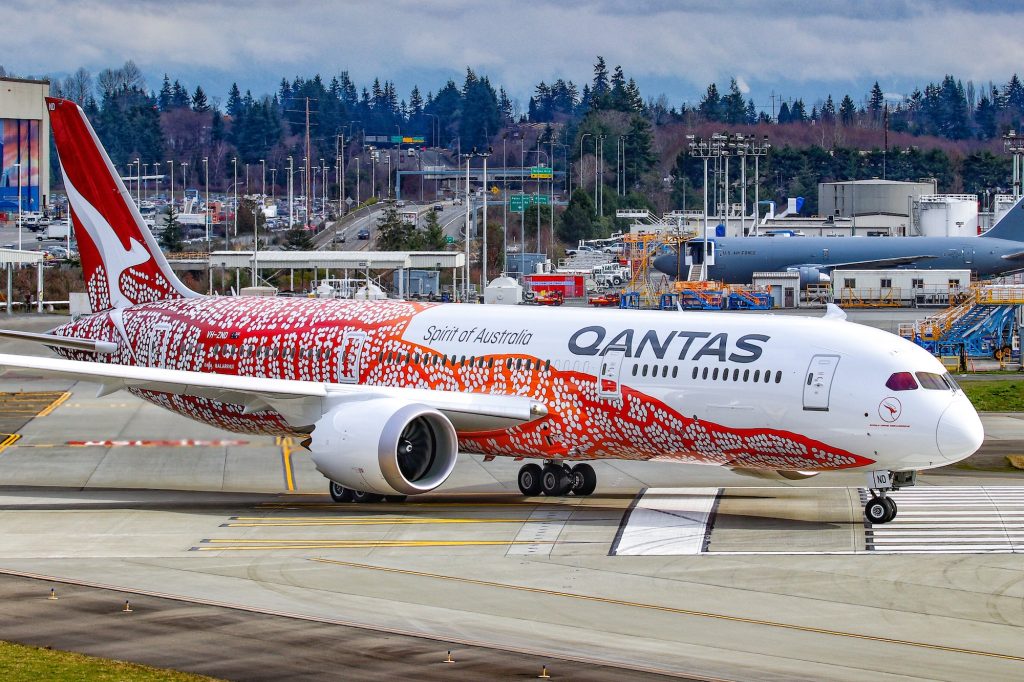
Qantas’ Latest Special Livery: “Minyma Kutjara Tjukurpa”
The new livery is named after a piece of indigenous artwork named “Minyma Kutjara Tjukurpa” or “The Two Sisters Creation Story.” The artwork tells the story of two sisters who cover vast distances through remote Australia to find their way home, stopping along the way to perform sacred singing and dancing.
Like other designs in Qantas’ Flying Art series, the livery was designed by the Australian First Nation design agency Balarinji. The artwork was created by Maringka Baker, a senior Pitjantjatjara artist from the remote community of Kanpi in South Australia. She is recognized as one of the country’s most accomplished artists and is known for inspiring a new generation of First Nations artists.
Qantas’ latest special livery features a piece of art called “Minyma Kutjara Tjukurpa” by leading indigenous artist Maringka Baker (Photo: Qantas)
The livery features more than 20,000 dots across the back half of the aircraft, forming an elaborate design that creeps onto the tail. The tail still bears Qantas’ signature kangaroo icon, but the standard red background has been replaced with a natural green.
According to the airline, it is the most complex livery that has ever been painted on an Airbus A220, requiring around 100 painters and over 130 stencils.
“Minyma Kutjara Tjukurpa” features more than 20,000 dots in an elaborate design that required over 130 stencils (Photo: Qantas)
The Flying Art Series
“Minyma Kutjara Tjukurpa” will be the sixth special livery in Qantas’ Flying Art series. The series first launched in 1995 with a Boeing 747-300 named “Nalanji Dreaming” and has since brought five other pieces of Aboriginal Australian artwork to the skies.
The latest livery will join two other aircraft that are currently part of the Flying Art series. A Boeing 787-9 Dreamliner features a livery inspired by the 1991 “Yam Dreaming” piece by the late Australian Aboriginal artist Emily Kame Kngwarreye. Meanwhile, a Boeing 737-800 named “Mendoowoorrji” is painted with an interpretation of indigenous painter Paddy Bedford’s 2005 painting “Medicine Pocket.”
Qantas’ latest addition to its Flying Art Series (Photo: AirlineGeeks | Katie Bailey)
Qantas’ Narrowbody Fleet Renewal
The aircraft will be the Qantas Group’s first Airbus A220 and will be operated by the group’s regional brand, QantasLink. The Airbus A220-300 will be registered as VH-X4A and will be delivered to the airline before the end of the year. It is currently at Airbus’ facility at Montréal-Mirabel International Airport and will complete post-production flight testing and equipment installation prior to delivery.
Qantas has 29 A220-300s on order, with deliveries scheduled throughout the next few years. The carrier has stated that the A220s will replace the airline’s aging fleet of Boeing 717-200s and will enter service on flights between Melbourne Airport and Canberra Airport.
Andrew is a lifelong lover of aviation and travel. He has flown all over the world and is fascinated by the workings of the air travel industry. As a private pilot and glider pilot who has worked with airlines, airports and other industry stakeholders, he is always excited to share his passion for aviation with others. In addition to being a writer, he also hosts Flying Smarter, an educational travel podcast that explores the complex world of air travel to help listeners become better-informed and savvier travelers.
All Current Rolls Royce Engines Can Now Run on SAF
SAF shows great promise for driving aviation’s continued improvement in fuel efficiency and emissions reduction, in part because it can be used as a simple “drop-in” alternative to conventional jet fuel.
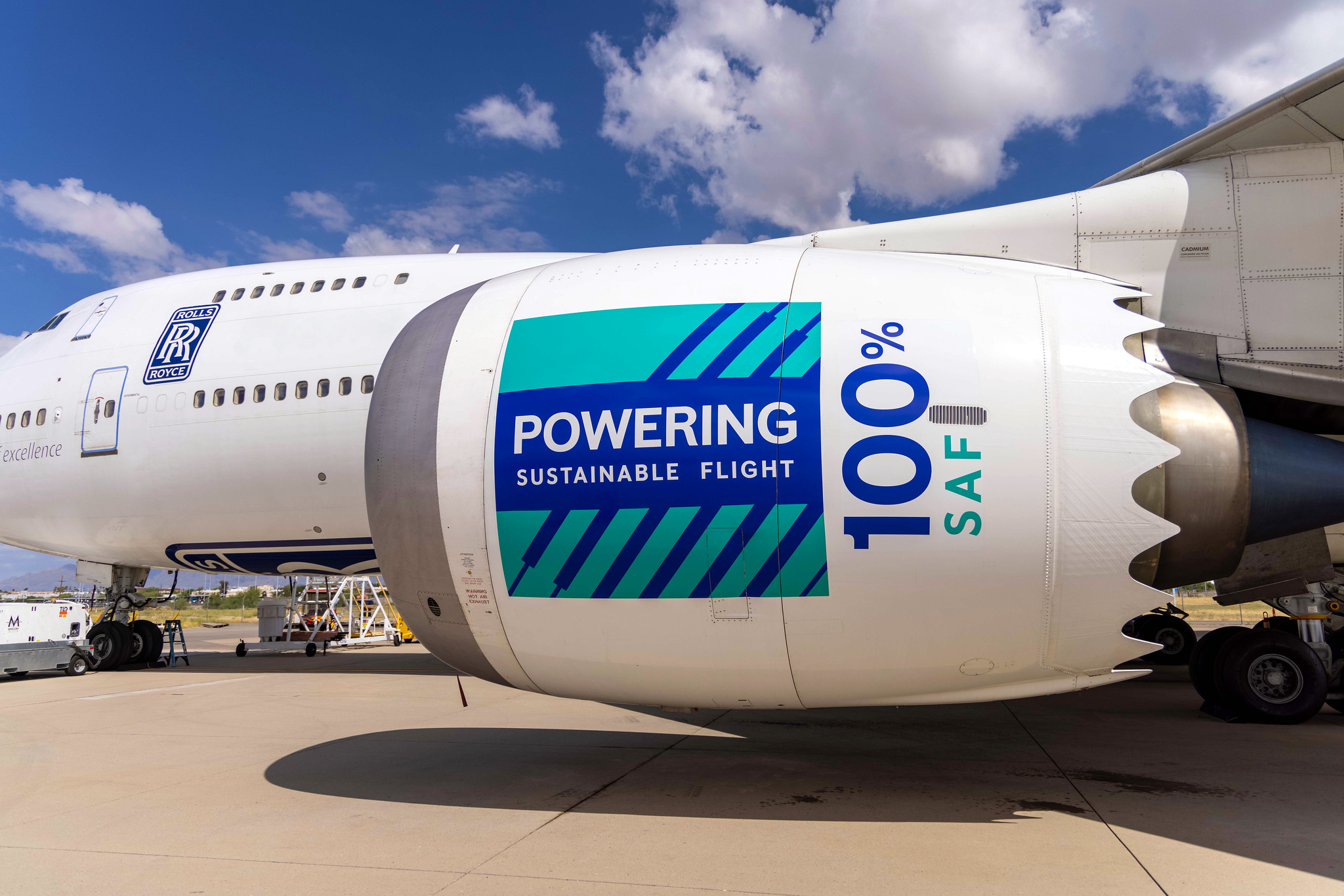
Rolls-Royce unveils a 100% SAF engine. [Photo - Rolls-Royce]
Rolls-Royce recently announced that it has completed compatibility testing of 100 percent sustainable aviation fuel (SAF) on all its civil aircraft engine types in production.
The company said the completion of testing fulfills a commitment it made in 2021 to show that engine technology is not a barrier to the use of 100 percent SAF. Rolls-Royce conducted a range of ground and flight tests designed to replicate operating conditions, and in each case they showed the use of 100 percent SAF does not affect the engines’ performance.
A ground test of Rolls-Royce’s BR710 business jet engine at its facility in Canada marked the end of the test program. Other engines that underwent testing include the Trent 700, 800, 900, 1000, XWB-84, XWB-97, 7000, BR725, and Pearl 700, 15 and 10X.
“Becoming the first jet engine manufacturer to publicly confirm all our in-production engines for long-haul aircraft and business jets are compatible with 100 percent SAF is an important milestone for both Rolls-Royce and the wider aviation industry,” said Tufan Erginbilgic, CEO of Rolls-Royce. “It’s also further evidence of our commitment to becoming a net-zero company by 2050 and supporting our customers to do the same.”
Rolls-Royce said it has also ensured the sustainable operation of its new UltraFan engine demonstrator, which made its first test run earlier this year using 100 percent SAF. Later this month Virgin Atlantic plans to make the first transatlantic flight using 100 percent SAF, with a Boeing 787 equipped with Rolls-Royce Trent 1000 engines.
“The world’s journey to decarbonizing flight is powered by British innovation and backed by the U.K. government, meaning people can continue to travel how they want, in a way that’s fit for the future,” said U.K. Transport Secretary Mark Harper. “[This] news demonstrates that Rolls-Royce and the U.K. are global leaders in decarbonizing transport, taking us one step closer to Jet Zero.”
Sustainable Aviation Fuel Gains Traction
SAF shows great promise for driving aviation’s continued improvement in fuel efficiency and emissions reduction, in part because it can be used as a simple “drop-in” alternative to conventional jet fuel. Rolls-Royce estimates that a combination of the latest, most-efficient gas turbines operating on 100 percent SAF could contribute about 80 percent of the “total solution” for reaching net-zero flying by 2050.
Editor’s Note: This story first appeared on FlyingMag.com.
AirlineGeeks.com was founded in February 2013 as a one-person blog in Washington D.C. Since then, we’ve grown to have 25+ active team members scattered across the globe. We are all here for the same reason: we love deep-diving into the fascinating realm of the airline industry.
A Lufthansa 747-8i in the carrier's new livery (Photo: AirlineGeeks | Fabian Behr)
Are you one of those people, who were always looking at the glamorous Boeing 747 taxing, wishing that one day you would fly it? Say no more, there is quite a few of us. If you still have that experience left to be checked off your aviation bucket list you should consider planning it for 2024.
Even though some Boeing 747 frames were manufactured quite recently, especially the 747-8 variant, featuring four engines goes against the grain with the current cost-cutting trends in the airline industry. With that, airlines like Air India or Thai Airways put their 747s in storage and it doesn’t seem likely for them to ever come back.
For others, the 747 retirement decision was just bringing the already approved fleet renewal plans forward. KLM Royal Dutch Airlines and Virgin Atlantic both had it scheduled for 2021, so making this kind of adjustment was probably a no-brainer.
Boeing 747 deliveries over the years according to Boeing (Image: Filip Kopeć)
A Proper Farewell
Qantas and British Airways waved goodbye to their classic Boeing 747s with the earned respect. Qantas wrapped up nearly five decades of service with a special flight named “Longreach” over Australia in July of 2020.
Meanwhile, British Airways, facing pandemic troubles, sped up the retirement of its remaining 747s. The last flight, named “Negus,” took a sentimental route over the U.K. It marked the end of a great era for both airlines, signaling a move toward newer, more eco-friendly airplanes. These farewells were a mix of sadness and an important shift in the ever-evolving world of aviation.
British Airways crew members posing with the Negus retro scheme (Photo: AirlineGeeks | William Derrickson)
Where Do 747s Still Fly?
The best chance to fly a 747 is undeniably at Lufthansa, at Frankfurt airport specifically. That’s where most of the still airworthy 747s are based. Lufthansa is flying the type across multiple destinations in all parts of the globe, including North and South Americas, Africa, and Asia.
Lufthansa Boeing 747 destinations according to flightconnections.com (Image: Filip Kopeć)
Thanks to the wide network and still a significant number of 747s in the fleet the selection is quite broad. The prices will not be cheap though, as the routes are all long-haul.
The second best chance is offered by Korean Air, soon to be merged with Asiana Airlines. The airlines both still fly a few of their 747s. The aircraft makes a frequent appearance on the Seoul-Tokyo route of Korean Air. This could be a way to snag a cheap ticket given the route is a short one. The carrier puts the Queen of the Skies to work on a few intercontinental routes as well, like Sydney, New York, and Paris.
A Korean Air 747-8i in Seoul (Photo: AirlineGeeks | Ben Suskind)
It is also possible to fly Air China’s 747-400. The aircraft makes a daily service to Frankfurt as well as a few short-haul ones as well, including selected services to Guangzhou.
Until quite recently, Korean Air was also operating periodically to Frankfurt with a 747. Wouldn’t that be an amazing view: to see three of the last few 747s, from three different airlines, parked at Frankfurt airport?
Editor’s Note: The above piece includes airlines with broader 747 operations and may not be all-encompassing (i.e. regional or more localized airlines). It also does not include cargo operators.
A passionate aviation enthusiast that started off his career as an aerospace engineer, but found his true calling on the commercial side of the airline business. Now as a finance guy among avgeeks and an avgeek among finance guys, he has experience working in the Revenue Divisions of three airlines. In his spare time he enjoys traveling, but admittedly sometimes is more about the journey than the destination.
EgyptAir Orders A350s, 737 MAX at Dubai Airshow
EgyptAir's current fleet comprises 66 active aircraft, with the Boeing 737-800 dominating at 27 jets and are on average eleven and a half years old.
The Dubai Airshow 2023 has proven to be a stage for historic announcements, and EgyptAir has taken center stage with not one but two major revelations. After introducing its inaugural 737 MAX aircraft, EgyptAir has now positioned itself as the latest Airbus A350-900 customer, underscoring its commitment to a modernized and diversified fleet.
On the first day of the Dubai Airshow 2023, EgyptAir announced a groundbreaking agreement with Air Lease Corporation (ALC) for the acquisition of 18 Boeing 737 MAX 8 aircraft. Set for delivery between 2025 and 2026, these aircraft mark a significant stride in EgyptAir’s pledge to revitalize its fleet, particularly the aging A320 series with an average age of 18 years.
Steven F. Udvar-Hazy, CEO of Air Lease Corporation, highlighted the transformative impact of the agreement, stating, “As the leading airline in North Africa, EGYPTAIR will continue to stand out in the market with these 18 new generation Boeing 737-8 aircraft. This move aligns with our commitment to providing the most advanced and fuel-efficient Boeing aircraft, significantly improving airline fleet operations and competitiveness.”
Yehia Zakaria, President and CEO of Egyptair Holding, echoed this sentiment, stating, “This important agreement with ALC for the acquisition of 18 new Boeing 737-8s demonstrates Egyptair’s commitment to the modernization of its fleet, environmental sustainability, and its future growth plans. The 737-8 will greatly benefit Egyptair’s operational efficiency and our passenger experience in the future.”
Adding A350s
Building on this momentum, EgyptAir unveiled a second major announcement on the airshow’s second day — an order for ten A350-900 widebodies configured with 340 seats. This order will position the A350s as the airline’s flagship aircraft, signaling a shift from the current operation of six Boeing 777-300ERs. However, the delivery timeline for the A350s has not been disclosed.
Yehia Zakaria, Chairman and CEO of EgyptAir, emphasized the airline’s strategic partnership with Airbus, stating in a press release, “EgyptAir is a key partner of Airbus in the Middle East and Africa. Our focus lies in the enhancement of our fleet to embrace some of the most contemporary aircraft available.”
Christian Scherer, Chief Commercial Officer and Head of Airbus International highlighted the significance of the A350-900 in EgyptAir’s expansion plans. He stated, “Once delivered, the A350-900 will be EgyptAir’s flagship aircraft, adding the world’s most modern and efficient widebody aircraft to the airline’s fleet. This move opens new opportunities, particularly in Western US and the far East.”
The A350-900, with its 340-seat configuration, will complement EgyptAir’s existing Boeing 787-9 fleet, currently consisting of seven aircraft with 300 seats.
EgyptAir’s current fleet comprises 66 active aircraft, with the Boeing 737-800 dominating at 27 jets and are on average eleven and a half years old. The now-leased 737 MAX aircraft are likely to replace the older models. In the long-haul fleet, the four A330-200s are on average over 18 years old, the four A330-300s are twelve and a half years old, and the six Boeing 777-300ERs are just over 13 years old.
Victor Shalton's love for aviation can be traced to when he was 11-years-old. As a seasoned aviation writer, he takes pride in providing the best aviation coverage around the globe and is passionate about advancing his skills in the aviation space. In addition, he loves travelling, writing, arts and while his speaking engagements have taken him around the world, he is proud to call Nairobi home.
A mockup of Flydubai's 787 Dreamliner (Photo: Boeing)
The Dubai Airshow kicked off on Monday with some high-profile orders for Boeing’s 787 Dreamliner. The Arlington, Va.-based aircraft manufacturer secured a series of new orders from existing customers while also adding a new operator of the type.
Leading the headlines on the airshow’s first day, Boeing added over 40 aircraft to its 787 order book. In addition, the manufacturer also received an order from Emirates for 55 777-9 and 35 777-8 aircraft.
Flydubai: A New 787 Operator
Flydubai made a major boost to the 787 program by placing a firm order for 30 787-9 Dreamliners. This marks the first time that Flydubai has chosen widebody aircraft, allowing the airline to expand its fleet and offer a broader network.
Right now, Flydubai only operates 737 aircraft on short and medium-haul routes. First Squawk reports that Flydubai’s 787 order is part of a broader deal with Emirates to transfer planned orders in favor of the 777.
A Flydubai 737 MAX 8 performing a test flight at Paine Field. (Photo: AirlineGeeks | Katie Bailey)
Royal Jordanian Adds to its 787 Order Book
Royal Jordanian, the national flag carrier of Jordan, added four more 787-9s to its existing order, bringing the total number of Dreamliners on order to six. With seven 787s in its fleet, Royal Jordanian was the first Middle East airline to receive the aircraft in 2014.
“This order for additional 787s is a testament to Royal Jordanian’s longstanding commitment to the market-leading capabilities of the Dreamliner,” said Stan Deal, president and CEO of Boeing Commercial Airplanes in a press release. “We are confident Royal Jordanian will profitably expand its network and operate a more sustainable fleet with these new fuel-efficient jets.”
Royal Air Maroc Positions for Casablanca Expansion
As reported by AirlineGeeks last week, Royal Air Maroc is looking to turn its hub in Casablanca into a global connection point. Going along with this strategy, the airline is also expanding its fleet.
The national flag carrier of Morocco reaffirmed its growth plans by placing a repeat order for two 787-9 Dreamliners. Having received its first 787 in 2014, the North African carrier currently has nine 787-8 and 787-9 aircraft.
Emirates Still Committing to 787
In addition to these individual orders, Dubai-based Emirates announced an update to its previous order for the 787. The airline modified its Dreamliner order book, reflecting a purchase of five more 787 jets while also converting 30 787-9s to 20 787-8 and 10 787-10 aircraft. This puts Emirates’ backlog for 787s at 35 frames.
Ryan founded AirlineGeeks.com in February 2013 and has spent more than a decade covering the airline business. His work has been featured by CNN, WJLA, CNET, and Business Insider. His aviation experience spans airport operations, Part 135 regulatory compliance, and airline crew workforce planning, along with time behind the yoke of a Cessna 172 and interviews with airline executives. Ryan now serves as Group President of Firecrown Media’s Aviation Group. He holds a B.S. in Air Transportation Management and an MBA from Arizona State University and teaches Airline Management at Embry-Riddle Aeronautical University.
Italy's national airline is celebrating the arrival of its first Savoy Blue-painted Airbus A321neo, named after Italian Olympic athlete Massimiliano Rosolino.
On November 10, ITA Airways took delivery of its first Airbus A321neo, leased from Air Lease Corporation, at the Airbus plant in Hamburg, reinforcing ITA Airways’ strategy to operate an all-Airbus fleet. The current fleet consists of over 80 Airbus aircraft, including new-generation aircraft like the A220, A320neo, A330neo, and A350.
The A321neo occupies a sweet spot between a single-aisle and a long-range aircraft, offering a similar comfort level as widebody aircraft such as the A330neo or A350-900. The Airbus A321neo can operate on slightly longer routes than the A320, particularly in regions such as the Middle East and sub-Saharan Africa.
Business class seat on ITA’s A321neo (Photo: ITA Airways)
The A321neo is configured with three classes, featuring 12 lie-flat business class seats, 12 premium economy seats, and 141 economy seats, with 12 dedicated to Comfort Economy. The Italian Designer Walter de Silva designed the company’s A321neo interiors.
Premium economy seating on ITA Airways’ first A321neo (Photo: ITA Airways)
Equipped with Airbus’ Airspace cabin design, XL overhead bins, and advanced in-flight entertainment, the A321neo offers an improved passenger experience, according to the airline. This aircraft, the largest in Airbus’ A320neo family, boasts exceptional range, performance, and environmental efficiency, with a 50% noise reduction and over 20% fuel savings and CO₂ reduction compared to previous models. Over 5,500 A321neos have been ordered globally to date.
Economy seating on ITA’s A321neo (Photo: ITA Airways)
Following the ceremony, the A321neo, named after the 2000 Olympic champion Italian swimmer Massimiliano Rosolino, flew to Fiumicino airport for pre-flight tests and inspections. This aircraft is slated to enter revenue service on Dec. 4, 2023 from Rome to London Heathrow, according to Cirium Diio data.
Vincenzo graduated in 2019 in Mechanical Engineering with an aeronautical curriculum, focusing his thesis on Human Factors in aircraft maintenance. In 2022 he pursued his master's degree in Aerospace Engineering at the University of Palermo, Italy. He combines his journalistic activities with his work as a Reliability Engineer at Zetalab.
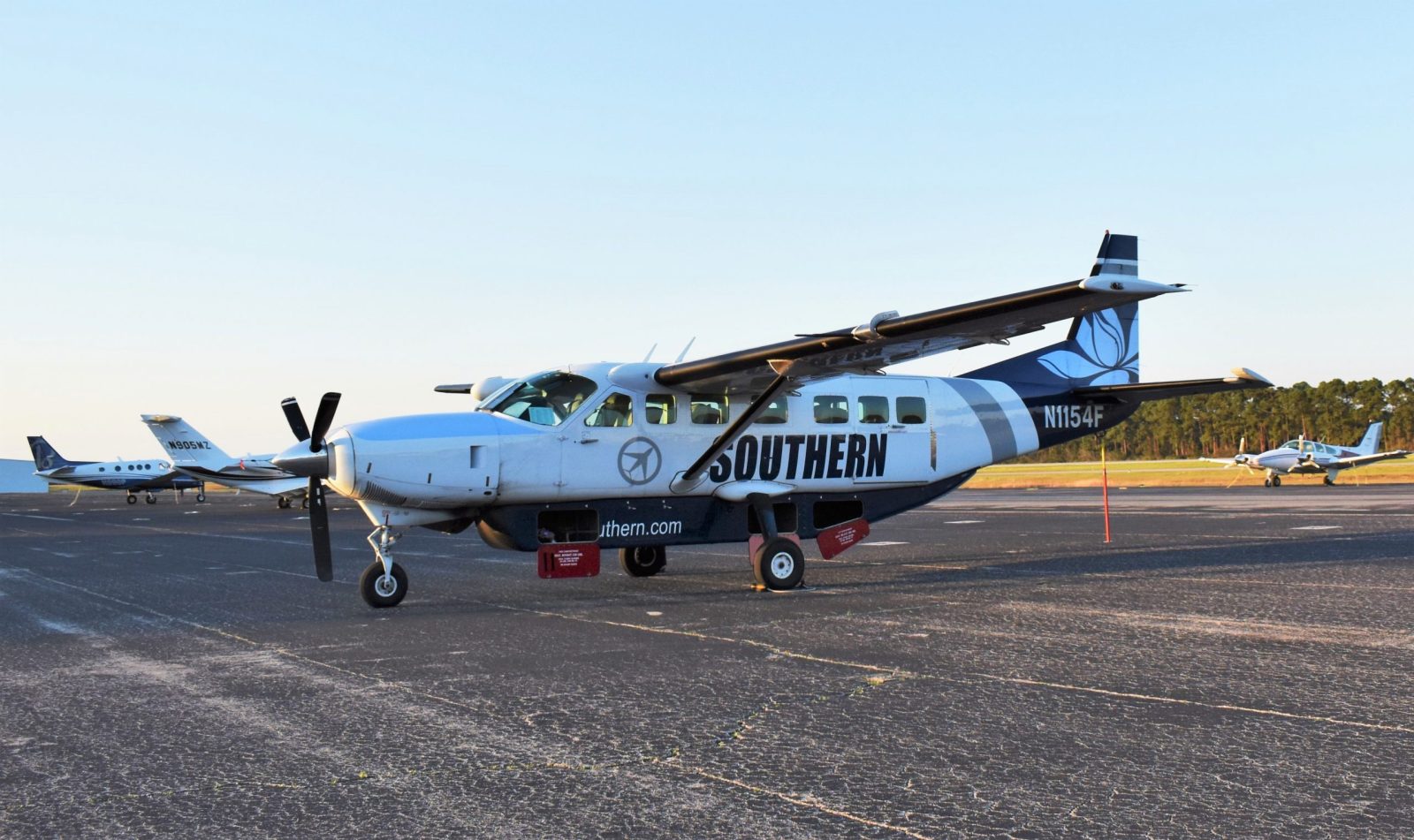
Southern Airways Express, a Part 135 operator based in Palm Beach, Fla., is looking for new ways to bring pilots on board with the company. News this past July broke that the carrier was suing previous pilots who left the company for breaking contracts they had signed with the airline for training. The decision to come after former pilots has seen a string of backlash from those in the industry and the federal government. However, amidst a shortage in workforce for Southern, the carrier has just announced a new partnership with another 135 operator: Wheels Up.
The recent agreement will see Wheels Up, who recently gained funding from Delta Air Lines, sending pilots to Southern to fly as captains for a year before returning to Wheels Up. Southern Airways CEO, Stan Little, mentioned the primary issue for the carrier is pilot attrition instead of hiring.
On a phone call first reported by The Courrier Express, Little expressed his opinion on attrition with the analogy of using sticks and carrots to keep pilots from leaving prematurely. He believes that additional programs, like the one the company had previously established with SkyWest, will retain pilots who upgrade to captain for a longer period of time.
Inside Southern Airways Express’ new KingAir200 (Photo: Southern Airways Express)
Wheels Up
Wheels Up operates a large fleet consisting of multi-engine turbine aircraft such as Beechcraft King Airs and Cessna Citations. The New York-based 135 operator has more stringent hiring requirements for first officers than Southern. Wheels Up requires 1,200 total hours to apply while Southern requires 250 total hours, based on the minimum posted requirements. Thus, under the partnership, it is believed that pilots would start with Southern, gain Part 135 operating experience, fly the required time set forth by the company and then have the ability to move on to fly for Wheels Up.
The partnership also benefits Wheels Up. Pilots with less experience will start at Southern before gaining time and experience as a first officer and then captain before transitioning to Wheels Up. While Southern will be a partner, they won’t be the only ones. Wheels Up has also announced a similar partnership with Tropic Ocean Airways, a seaplane operator also based in Florida, as reported by Private Jet Card Comparisons.
Southern has also announced a change to their pilot training program. In an effort to save money and give pilots the tools they need to operate safely and efficiently on the line, the carrier opened a new training center featuring a simulator in DuBois, Penn. The airline has started making classes smaller, working closer with pilots, and will be revamping their training program in 2024.
AirlineGeeks.com was founded in February 2013 as a one-person blog in Washington D.C. Since then, we’ve grown to have 25+ active team members scattered across the globe. We are all here for the same reason: we love deep-diving into the fascinating realm of the airline industry.
A Look at the 2023 Dubai Air Show Amid Geopolitical Tensions
Amid the conflict in Israel, the Dubai Airshow is expected to face increased demand for weapons, but long-planned aircraft orders are still likely to be maintained, making it the most significant event in its history.
An Emirates Airbus A380 welcoming visitors to the Dubai Airshow. (Photo: AirlineGeeks | William Derrickson)
The Dubai Air Show, scheduled from November 13-17, is expected to be the largest in its history, with over 100,000 visitors, 1,400 exhibitors from 95 countries, and 80 start-ups. The event will feature 180+ aircraft, 20 country pavilions, and a week-long conference with 300+ speakers. Notable exhibitors include Airbus, Boeing, Lockheed Martin, and new participants like Reaction Engines. The show will showcase military aircraft, commercial jets, eVTOLs, and helicopters.
With global air travel rebounding, the focus may shift from traditional sales rivalry to competition between Saudi Arabia and the UAE for aviation and transport dominance. The event will also spotlight innovations in advanced air mobility, military technology, business aviation, and spaceflight, with a dedicated space pavilion. Over 300 speakers will participate in conferences covering sustainability, passenger experience, flight safety, and space exploration.
Geopolitical Tension and Long-Haul Jet Recovery
The Dubai Airshow will take place amid the growing conflict in Israel. The war has increased demand for weapons, impacting airspace closures and lengthening flights for some airlines. Despite travel disruptions, over 1,000 companies from 95 countries, including four from Israel, plan to participate in the event.
The Dubai Airshow is anticipated to reflect a recovery in demand for long-haul jets, with Emirates considering additional orders for the Airbus A350, Boeing 787, or Boeing 777X aircraft. The show may witness new orders, potentially boosting the delayed Boeing 777X, with expectations for a significant demand from Emirates.
A Boeing 777X at the Dubai Airshow. (Photo: AirlineGeeks | William Derrickson)
Challenges in the supply chain or certification processes may impact manufacturers’ capacity to deliver the latest models, particularly the 777X, which is already facing delays. Riyadh Air from Saudi Arabia could announce a substantial order for narrowbody planes, with Boeing currently having an edge in the competition with Airbus. Other carriers like Flydubai, Etihad, and India’s IndiGo are reportedly pursuing deals ahead of the event.
Emirates will showcase its aircraft lineup, including the retrofitted A380 and Boeing 777-300ER, along with training aircraft at the Dubai Airshow. The displayed A380 features the airline’s premium economy cabin and refreshed interiors.
The Emirates Flight Training Academy will exhibit its advanced training aircraft, and the Future Customer Journey will be featured, focusing on a barrier-free airport experience.
Vincenzo graduated in 2019 in Mechanical Engineering with an aeronautical curriculum, focusing his thesis on Human Factors in aircraft maintenance. In 2022 he pursued his master's degree in Aerospace Engineering at the University of Palermo, Italy. He combines his journalistic activities with his work as a Reliability Engineer at Zetalab.
Azores Airlines to Double Services from Canada in 2024
The airline recently released its Q3 2023 results detailing a positive operating result before interest, taxes, depreciation, and amortization (EBITDA) of €21.8 million ($23.3 million).
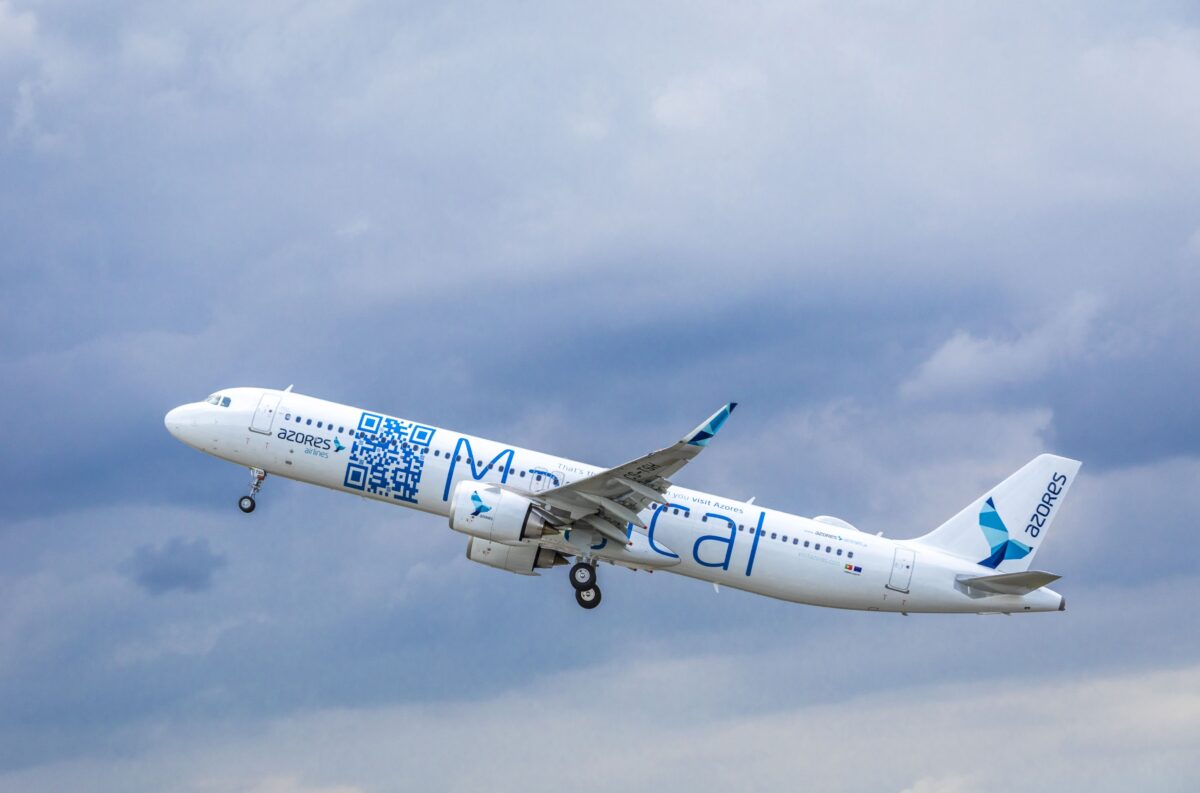
Azores' first A321LR lifts off from the Airbus factory. (Photo: Airbus)
Azores Airlines will be more than doubling its non-stop services from Canada for the Summer 2024 season, according to Travel Week Canada. The airline currently serves Toronto Pearson International (YYZ) five times a week to Ponta Delgada’s Aeroporto João Paulo II (PDL) in the Portuguese archipelago. Beginning April 3, the carrier will add a seasonal service from YYZ to Lajes airport (TER) on the island of Terceira. From June 1, Montreal’s Pierre Trudeau International (YUL) will gain a seasonal service to PDL on São Miguel Island, the largest and most populous in the Azores archipelago.
The Toronto to Terceira route will initially begin as a weekly service departing YYZ on Wednesdays from April 3 to May 30. Beginning 02 June, the route will increase to a twice-weekly service with departures on Thursdays and Sundays until 29 September. Between October 2 – October 24 the service will then revert back to a single weekly operation on Wednesdays.
Non-stop from YUL to PDL will commence on June 1 through September 30 with four services per week departing on Mondays, Tuesdays, Thursdays, and Saturdays. Currently, passengers choosing to fly from Montreal can book with Azores Airlines and connect through YYZ with the airline’s partner Porter Airlines. From other airports in Canada, the airline works in conjunction with both Porter Airlines and WestJet to connect via Toronto and this will continue with the addition of YYZ-TER and YUL-PDL to Azore Airlines’ network.
Expanding in the Azores
The geographic location of the Azores in the Atlantic Ocean gives Azores Airlines the ability to provide a network strategy allowing connections between North America and Europe. Flights from Toronto and Montreal do not just give travelers the opportunity to visit the Azores but also to continue onto other Portuguese destinations including Lisbon, Faro, and Porto. Other mainland European destinations are also served including Barcelona and Bilbao in Spain; as well as Paris, France; Milan, Italy (from 2024); and Frankfurt, Germany. Nonstop services between PDL and London will resume in June 2024 with a twice-weekly operation.
Azores Airlines operates a fleet of A320 family aircraft including the A321LR and A320neo, as well as Bombardier Q400 Nextgen and Bombardier Q200 aircraft. In 2021 the airline operated the longest commercial flight at that time by an A321LR with a 9 hour 49 minute service between Lisbon Humberto Delgado Airport in Portugal, and Bogotá El Dorado International Airport in Colombia.
The airline recently released its Q3 2023 results detailing a positive operating result before interest, taxes, depreciation, and amortization (EBITDA) of €21.8 million ($23.3 million). The growth of the airline since 2019 was shown in passenger figures reaching 534.000 carried in Q3 2023, an increase of 27 percent over the same period in 2022 and a 59 percent increase over Q3 2019’s numbers.
John has always had a passion for aviation and through a career with Air New Zealand has gained a strong understanding of aviation operations and the strategic nature of the industry. During his career with the airline, John held multiple leadership roles and was involved in projects such as the introduction of both the 777-200 and -300 type aircraft and the development of the IFE for the 777-300. He was also part of a small team who created and published the internal communications magazines for Air New Zealand’s pilots, cabin crew and ground staff balancing a mix of corporate and social content.
John is educated to postgraduate level achieving a masters degree with Distinction in Airline and Airport Management. John has held the positions of course director of an undergraduate commercial pilot training programme at a leading London university. In addition he is contracted as an external instructor for IATA (International Air Transport Association) and has been a member of the Heathrow Community Fund’s ‘Communities for Tomorrow’ panel.
Sign-up for newsletters & special offers!
Get the latest stories & special offers delivered directly to your inbox