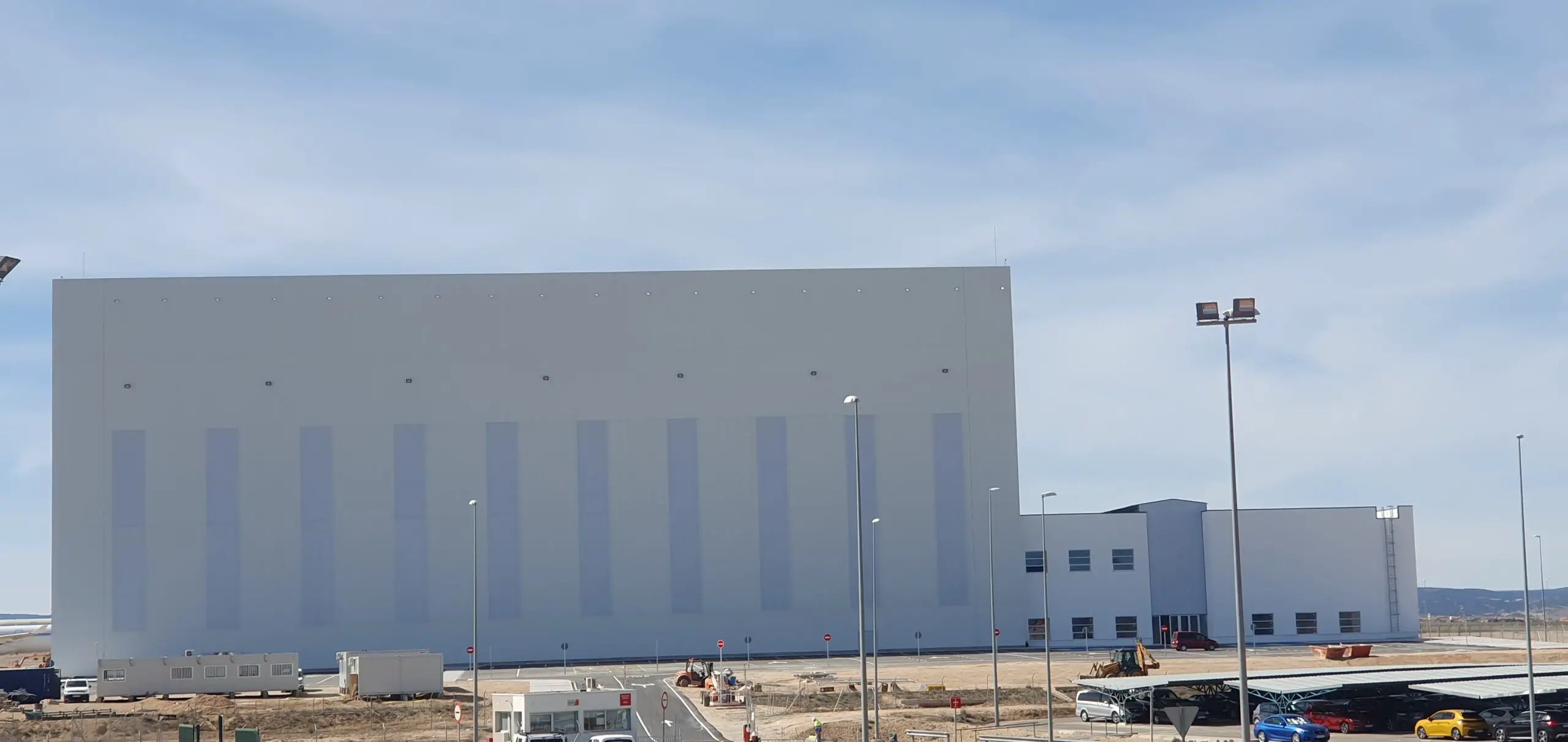
The Consortium of the Airport of Teruel inaugurated on Monday a gigantic hangar that can contain up to two Airbus A380, the largest commercial passenger plane today.
The works, which began in August 2020, required an investment of 23 million euros. It is expected that the new hangar will enhance the role of the Teruel airport platform as a leader in aeronautical services in the region. Inside the hangar, maintenance tasks can be carried out for up to two A380 simultaneously, or up to six Airbus A321.
The hangar measures 656.17 feet in width, nearly 328.08 feet in depth, and 127.95 feet in height, which is comparable to a 13-story building and makes it the tallest in Spain. Additionally, the adjacent platform spans 269,097 square feet.
The main modular door is 603.68 feet wide and 88.58 feet high, while the total area of the new installation is 193,750 square feet, with more than 172,222 square feet being useful. The office space is 26,909.78 square feet, and the workshop sector occupies 38,750.19 square feet. In terms of its structure, it consists of 36,256.56 medium-length bars of 14.76 feet and approximately 11,811.02 junction spheres up to 17.72 inches in diameter.
The Aragon government highlighted that the new hangar “will serve to increase business figures and create 150 jobs.” The tender for the concession of the use of the hangar is open until March 31, and the specifications establish an annual fee of 1.4 million euros per year (without VAT) with a duration of 25 years renewable for 10 more years.
The consortium indicated that considering the time until the activity is implemented, the implementation of the fee will be progressive, paying 20% the first year, 30% the second year, 40% the third year, 60% the fourth year, and 80% the fifth year, starting to pay 100% of the fee from the sixth year until the end of the concession.
The numbers of Teruel airport
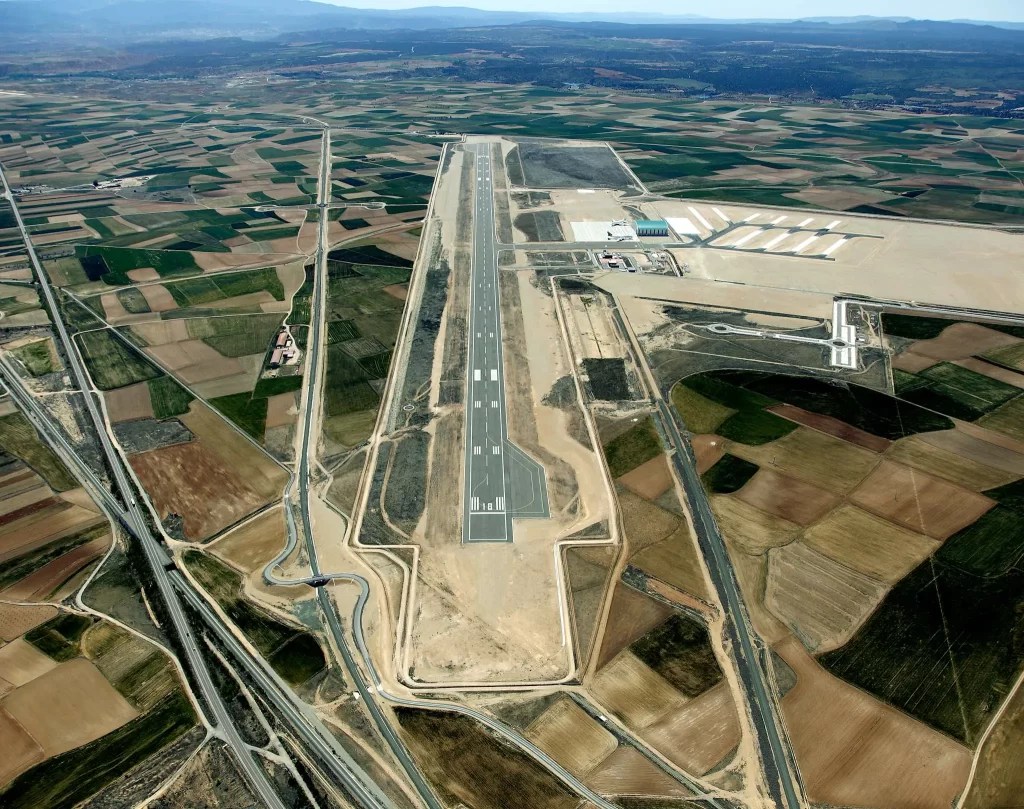
Inaugurated in 2013, Teruel airport is deployed on a land of 540 hectares, having since then registered more than 18,000 operations, 82 million euros of investment, and more than 350 jobs.
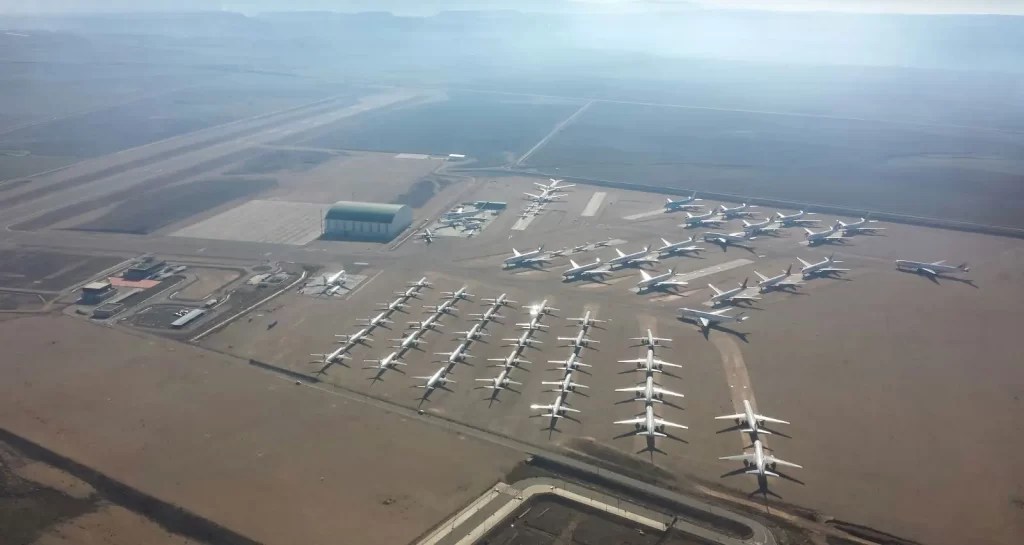
Known as PLATA (Plataforma Aeroportuaria de Teruel), it belongs to the consortium formed by the Government of Aragon and the Teruel City Council. It is in the center of the main Spanish cities, which concentrate 60% of Spain’s GDP and more than 20 million inhabitants within a radius of four hundred kilometers. Its runway is 2,825 meters long and 45 meters wide, and the aircraft apron is 108,800 square meters. It also has an aircraft storage area of 120 hectares with capacity for up to 250 aircraft.
Mexican carrier Transportes Aéreos Regionales (TAR Aerolíneas) is looking to fill the void left by Aeromar’s cease of operations in the country’s regional market.
According to a report by Expansión, the Querétaro-based company plans to add up to eight new aircraft that would allow it to recover routes that are no longer part of its network, as well as cover others that its competitor has left.
The loss of connectivity caused by the withdrawal of Aeromar
Aeromar’s closure on 15 February particularly affected regional connectivity: although during that month it represented only 0.8% of the total number of domestic seats in Mexico, the suspension of its activity was felt most strongly in communities that had no other scheduled air services. Since then, these localities have relied exclusively on ground transport.
Ciudad Victoria (CVM), Ixtepec (IZT) and Piedras Negras (PDS) airports ceased to have scheduled flights, according to information obtained through the Cirium platform. Aeromar used to operate five weekly flights between these cities and Mexico City’s Benito Juárez International Airport (MEX).
In addition, its demise led to the cancellation of four domestic routes that no other operator offered: Aguascalientes (AGU) – Mexico City (MEX), Colima (CLQ) – Mexico City (MEX) and Tepic (TPQ) – Mexico City (MEX). TAR Airlines became the sole operator on the Aguascalientes (AGU) – Puerto Vallarta (PVR) route, therefore Aeromar’s closure represents an opportunity for airlines that can capitalise on the reduced supply on these regional routes.
For TAR Aerolíneas, the departure of Aeromar means an opportunity to go where no one else provides the service. Moreover, the possibility comes in the context of a recovery plan implemented to finally retrieve the capacity it had before the start of the pandemic.
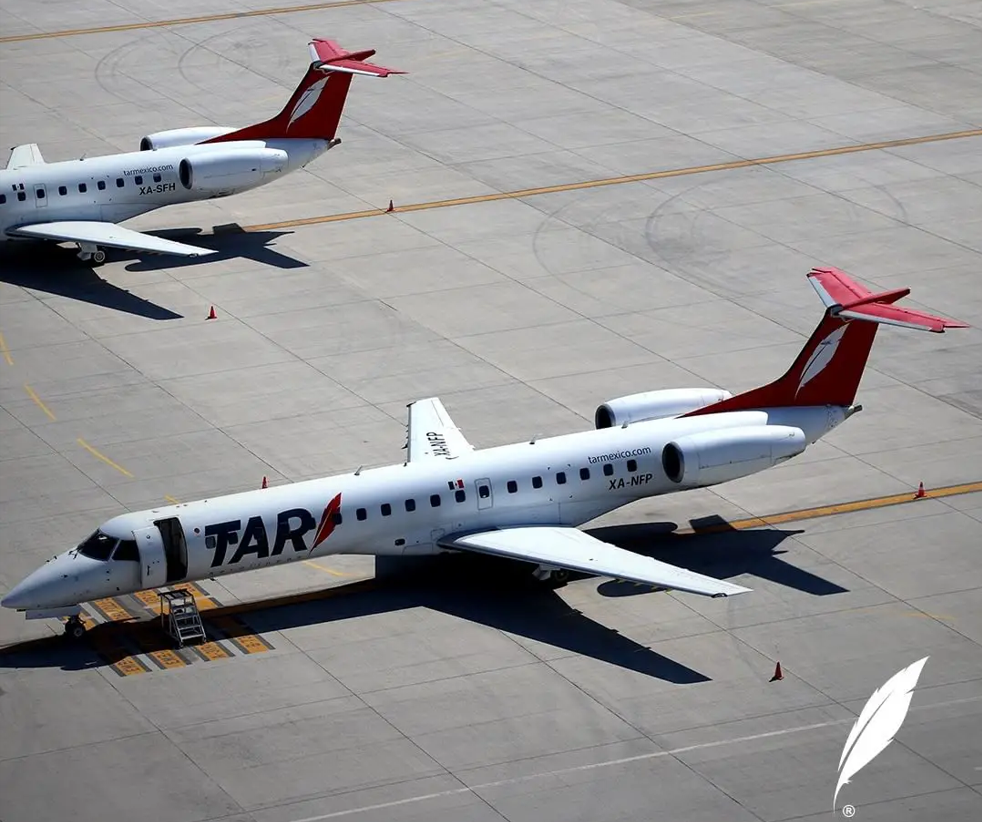
According to statements to Expansión by Ricardo Bastón, the company’s CEO, the strategy consists of “attacking regional market demand” with an increase in capacity. TAR plans to add up to eight new Embraer 145. Currently, the company operates a fleet made up entirely of this model from the Brazilian manufacturer.
TAR Aerolíneas plans to expand its network from Querétaro International Airport (QRO) and increase its offer at Chihuahua (CUU), Culiacán (CUL), Hermosillo (HMO) and Monterrey (MTY) airports. In addition, it aims at offering scheduled services in Mexico City, probably at Felipe Ángeles International Airport (NLU).
An Air Mauritius A340 in London (Photo: AirlineGeeks | William Derrickson)
Air Mauritius, the national airline of Mauritius, has announced that it will be moving its operations from London’s Heathrow Airport to Gatwick Airport starting Oct. 29. The airline will offer daily flights using its latest generation aircraft, the Airbus A350-900 and Airbus A330-900neo.
The move is part of the airline’s strategy to meet the growing demand for flights between London and Mauritius. By switching to Gatwick, Air Mauritius will be able to offer a more convenient and efficient service for passengers, with the airport being closer to central London and offering better transport links.
Air Mauritius will also be increasing its frequency of flights from Mauritius to London, from five per week to a daily service. The new flights will offer refreshed cabins and fully flat business suites in a 1-2-1 configuration, as well as a range of other features designed to enhance the passenger experience.
Krešimir Kučko, CEO of Air Mauritius, said: “London has always been a high-priority destination for us, and as part of the commemoration of Air Mauritius’ 50 years of operations to the United Kingdom in November 2023, we are proud to announce daily operations to London Gatwick as from Oct. 29 this year. This strategic move allows Air Mauritius to meet increasing demand on this historical route while using its most environmentally friendly types of aircraft.”
The move to Gatwick is part of Air Mauritius’ broader strategy to expand its network and enhance the passenger experience. The airline currently operates six weekly flights to Chhatrapati Shivaji Maharaj International Airport in Mumbai, as well as seasonal flights to Geneva.
In addition to the move to Gatwick, Air Mauritius has also announced the resumption of its direct operations to Indira Gandhi International Airport in New Delhi from May 3rd, with two weekly flights using newly leased Airbus A330-200 aircraft. These aircraft will feature 18 business and 236 economy class seats, with lie-flat seats in business class and a standard 2-4-2 layout in economy class.
Kučko added: “We are pleased to restart our operations to New Delhi after three years of absence. Mauritius and India share a special relationship that is built on the foundation of people-to-people ties. Both countries are united by culture, ancestry, language, and geography. New avenues are being explored with Air India in order to offer seamless connectivity via both Mumbai and New Delhi to/from a number of destinations in India.”
Air Mauritius’ move to Gatwick is a significant development for the airline and is expected to be warmly received by passengers. With daily flights, enhanced cabins, and a more convenient location, Air Mauritius is well positioned to meet the growing demand for flights between London and Mauritius.
Victor Shalton's love for aviation can be traced to when he was 11-years-old. As a seasoned aviation writer, he takes pride in providing the best aviation coverage around the globe and is passionate about advancing his skills in the aviation space. In addition, he loves travelling, writing, arts and while his speaking engagements have taken him around the world, he is proud to call Nairobi home.
Flair Airlines Boeing 737 MAX 8 in Halifax, Nova Scotia, Canada (Photo: AirlineGeeks | Vanni Gibertini)
Canadian carrier Flair Airlines is following up on the seizure of four of its aircraft by filing a $50 million lawsuit against Airborne Capital and several affiliated companies. As reported by Airline Geeks the airline’s passengers were subjected to cancellations during the spring break holidays by the seizure of the aircraft.
In a statement issued this week, Flair Airlines stated, “Airborne Capital’s unlawful and immeasurably destructive actions were taken on the first weekend of many of our customers’ school breaks. This is profiteering on the backs of Canadians and was entirely unexpected and unwarranted.”
According to Global News, the statement of claim alleges the seizures were ‘non-compliant with the leases’ agreements.’ The claim for $50 million in damages is “for breach of contract, breach of duty of good faith in contractual performance, negligent and/or fraudulent misrepresentation, wrongful seizure, conversion, and conspiracy.”
The conspiracy claim appears to relate to a belief by Flair that one of its main rivals was conspiring with Airborne Capital to lease the aircraft in an attempt to impede the Edmonton-based airline which is Canada’s third largest carrier. “We’ve come in and upset the cozy duopoly, and as a consequence, people want us out of business,” said Flair chief executive officer Stephen Jones in a press conference on Monday. “We do believe that there were negotiations going on behind the scenes between one of the majors and the lessor to hurt Flair by them offering probably above-market rates for the aircraft we’ve been leasing.”
“While I’m not going to name names or cite evidence,” Jones said, “I believe that there is much more to this picture than the surface that you see.” Global News sought comment from Canada’s two largest airlines Air Canada and WestJet. A spokesperson for Air Canada is reported as saying the airline had not been in contact with ‘any of Flair’s lessors, “nor have they come to us offering their aircraft.”’ WestJet did not respond immediately to the news organization.
Jones did acknowledge on Monday that payments for the aircraft leases were ‘“only a few days in arrears” with about $1 million owing.’ Airborne Capital has disputed this in a statement to Global News saying that the carrier was “regularly in default” with missed payments adding up to millions of dollars. “Terminating an aircraft lease is always a last resort, and such a decision is never taken lightly. In this case, following numerous notices to Flair, it again failed to make payments when due and Airborne took steps to terminate the leasing of the aircraft.”
Flair is continuing operations with its 19 remaining aircraft which Jones said is “100% caught up” on payments. There was an acknowledgment by Jones that reacquiring the seized aircraft “would be tough.”
John has always had a passion for aviation and through a career with Air New Zealand has gained a strong understanding of aviation operations and the strategic nature of the industry. During his career with the airline, John held multiple leadership roles and was involved in projects such as the introduction of both the 777-200 and -300 type aircraft and the development of the IFE for the 777-300. He was also part of a small team who created and published the internal communications magazines for Air New Zealand’s pilots, cabin crew and ground staff balancing a mix of corporate and social content.
John is educated to postgraduate level achieving a masters degree with Distinction in Airline and Airport Management. John has held the positions of course director of an undergraduate commercial pilot training programme at a leading London university. In addition he is contracted as an external instructor for IATA (International Air Transport Association) and has been a member of the Heathrow Community Fund’s ‘Communities for Tomorrow’ panel.
Vertical Aerospace Announces Opening of New 15000 Sq.ft Facility in Bristol
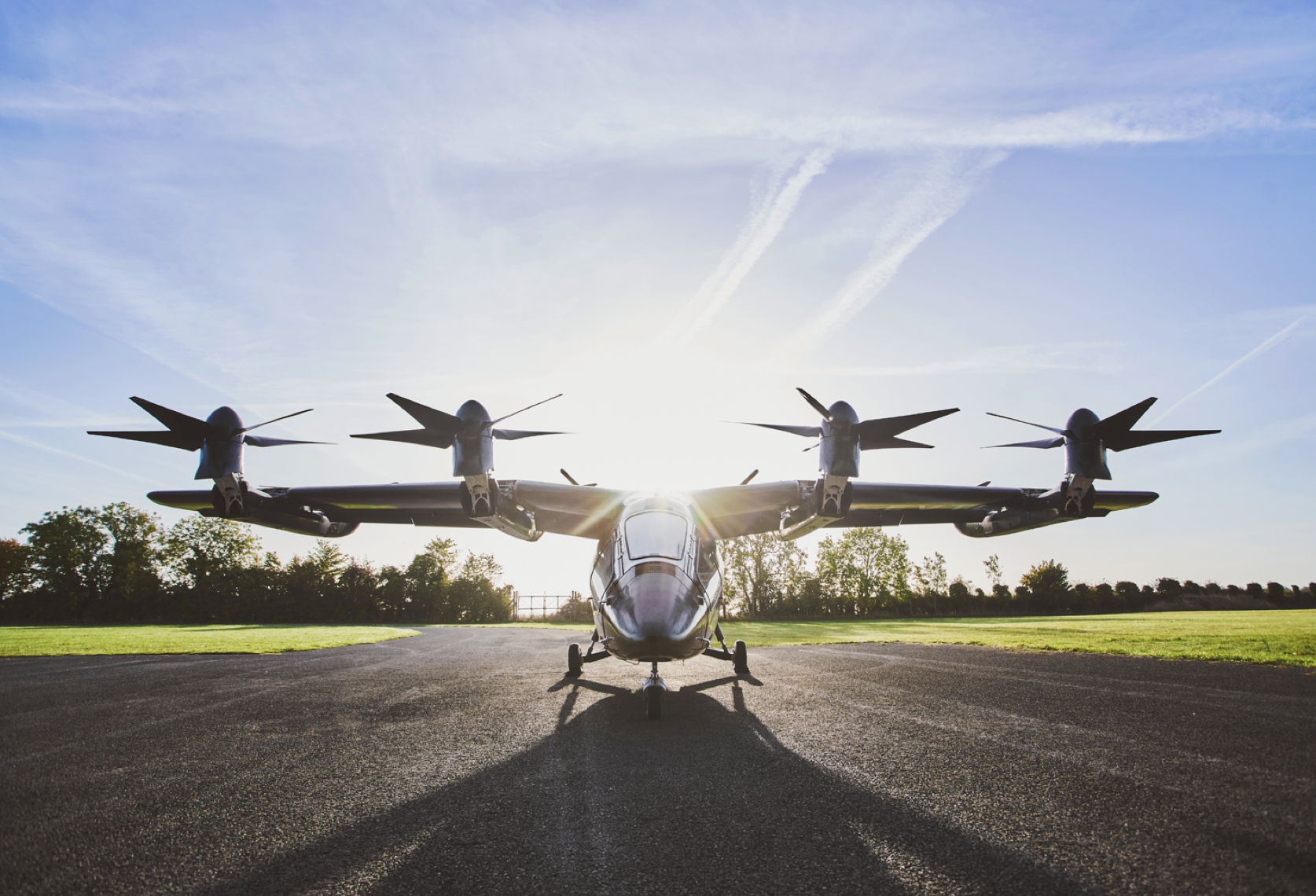
Vertical Aerospace, a UK aerospace company founded in 2016 by Stephen Fitzpatrick to design and build zero-emission electric vertical take-off and landing aircraft (eVTOLs), has announced a significant investment in the UK with the opening of the Vertical Energy Centre (VEC) in Bristol. This new 15,000 ft facility will produce advanced technology electric batteries for the aerospace industry.
Bristol is home to Vertical Aerospace’s current 50-person battery team, which is developing proprietary battery technology to achieve a higher power-to-weight ratio for eVTOL aircraft flight. Vertical Aerospace announced last year its strategic partnership with Molicel, a company that has been producing high-performance rechargeable lithium-ion cells for over 20 years. Vertical Aerospace has already conducted extensive cell testing at the VEC and has commissioned the battery production equipment with the first prototype battery modules developed in-house at the facility.
Vertical Aerospace has already made significant strides in battery testing, conducting crash, thermal runaway, vibration, durability and thermal characterization, propagation and drop tests under the supervision of the European Union Aviation Safety Agency and the UK Civil Aviation Authority, and setting battery standards for electric aviation with EASA.
The Bristol-based company has developed significant intellectual property in battery design, including cell packaging, cooling and electronic battery management systems, to deliver high-power, high-performance battery packs capable of powering eVTOL aircraft. Vertical aims to enter service with a 220Wh/kg battery system that will enable its VX4 aircraft to fly missions with rapid recharge cycles, minimizing the impact on battery pack life.
Vertical’s VX4 eVTOL is expected to be able to carry a pilot and up to four passengers, travel distances up to 100 miles, and achieve a cruising speed of 150 mph. Vertical’s VX4 prototype has successfully commenced piloted flight testing following the receipt of an airworthiness certificate from the UK Civil Aviation Authority in September 2022. The flight test program will continue in the coming months, reaching higher altitudes and speeds.
Vertical Aerospace has recently secured a £14 million grant from the Aerospace Technology Institute (ATI) as part of a joint initiative with the UK government to further develop its battery technology. The project, in collaboration with University College London (UCL), will increase the core capacity of the UK company’s battery system, improve recycling efficiency and expand its use in other markets.
Lord Johnson, UK Minister for Investment, said the investment in Vertical Aerospace to develop electric battery technology brings us closer to achieving zero-emission flights, a key objective of the Jet Zero Council. The Jet Zero Council (JZC) is a partnership between industry and the UK government that brings together ministers and company CEOs with the aim of achieving at least 10% sustainable aviation fuel (SAF) in the UK fuel mix by 2030 and zero-emission transatlantic flights within a generation.
Vertical Aerospace is part of an ecosystem of high-level partnerships, including Rolls-Royce, Honeywell Aerospace, Leonardo and GKN Aerospace, working together to facilitate operational execution and the path to certification, enabling a lean cost structure and production at scale.
The Bristol-based company has a portfolio of more than 1,400 aircraft on pre-order from airlines, aircraft lessors, helicopter operators and tour groups, including American Airlines, Virgin Atlantic, Avolon, Bristow, Marubeni, Iberojet and FLYINGGROUP, as well as Japan Airlines (JAL), Gol, Air Greenland, Gozen Holding and AirAsia.
Vincenzo graduated in 2019 in Mechanical Engineering with an aeronautical curriculum, focusing his thesis on Human Factors in aircraft maintenance. In 2022 he pursued his master's degree in Aerospace Engineering at the University of Palermo, Italy. He combines his journalistic activities with his work as a Reliability Engineer at Zetalab.
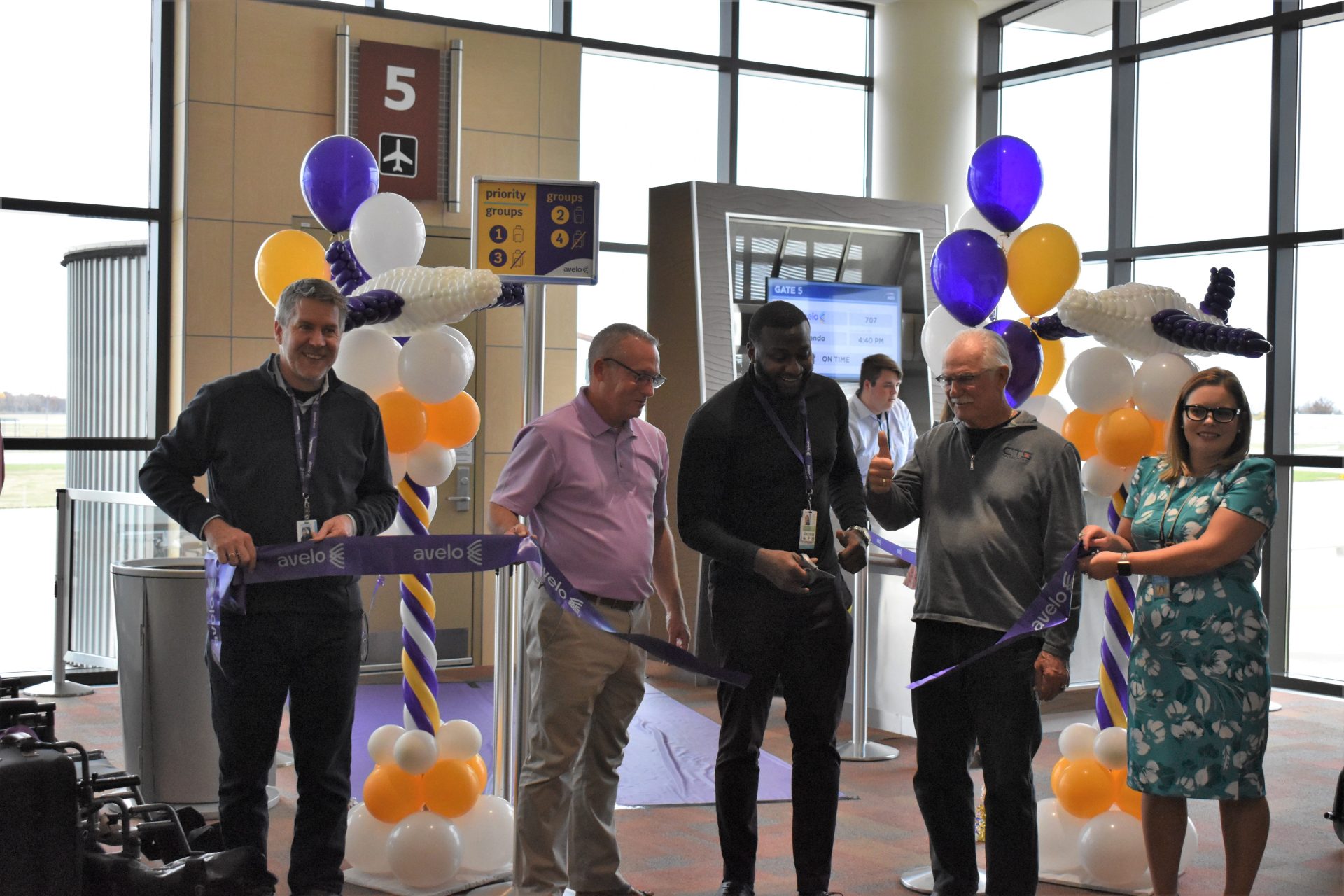
The Avelo Air crew and members of airport staff at the inaugural party in Kalamazoo, Mich. (Photo: AirlineGeeks | Joey Gerardi)
Avelo Airlines has been growing consistently since the airline began scheduled services back in April 2021. Despite being in the middle of the pandemic, the airline has continued to grow, and with the carrier about to complete its second full year of operations, they haven’t slowed down growth and have even picked up the pace.
Ribbon cutting for the Avelo inaugural in Kalamazoo, Mich. (Photo: AirlineGeeks | Joey Gerardi)
In the past couple of weeks, the airline has announced multiple new destinations including Nashville, Tenn.; Mobile, Ala.; and Brownsville/South Padre Island, Texas. Well, the airline has announced three more new destinations, all from their fifth and latest base in Raleigh, N.C.
New destinations in this round of announcements will include Memphis, Tenn.; Rochester, N.Y. and Manchester, N.H., the latter of which will become its first destination in New Hampshire. Flights to Memphis and Rochester will begin on June 14, 2023, whereas flights to Manchester will begin on June 21, 2023, and all of the new flights will operate on a twice-weekly basis.
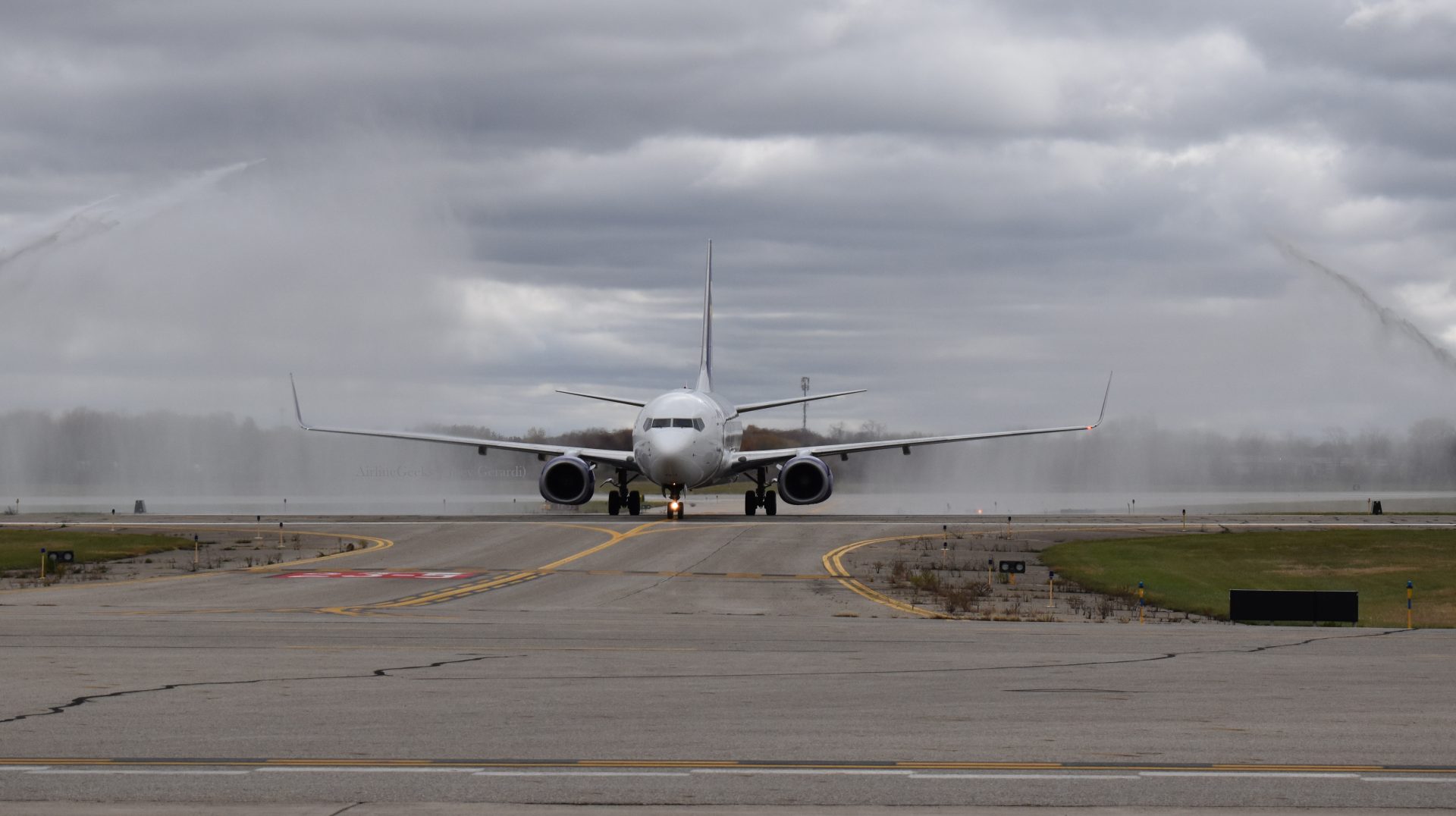
Avelo Air’s first flight to Kalamazoo taxiing in (Photo: AirlineGeeks | Joey Gerardi)
The competition among carriers in Raleigh is tough as many airlines operate a hub or focus city in the city including American, Delta, Breeze, Frontier and now Avelo. This will bring Avelo up to 41 total destinations and five bases spread across the country: Burbank, Calif.; New Haven, Conn.; Orlando, Wilmington, Del. and Raleigh, N.C.
AirlineGeeks had the opportunity to go on two inaugural flights of this airline. First was the airline’s very first flight back in April of 2021 HERE, and second was the inaugural flight from Kalamazoo, Mich. which can be found HERE.
Joey has always been interested in planes for as long as he can remember. He grew up in Central New York during the early 2000s when US Airways Express turboprops ruled the skies. Being from a non-aviation family made it harder for him to be around planes and would only spend about three hours a month at the airport. He was so excited when he could drive by himself, the first thing he did with his driver's license was get ice cream and go plane spotting for the entire day. He graduated from Western Michigan University in 2022 with a B.S. in Aviation Management & Operations and a Minor in Business, and currently works for a major airline in his hometown.
Onboard the Successful Hawaiian Airlines Texas Flight
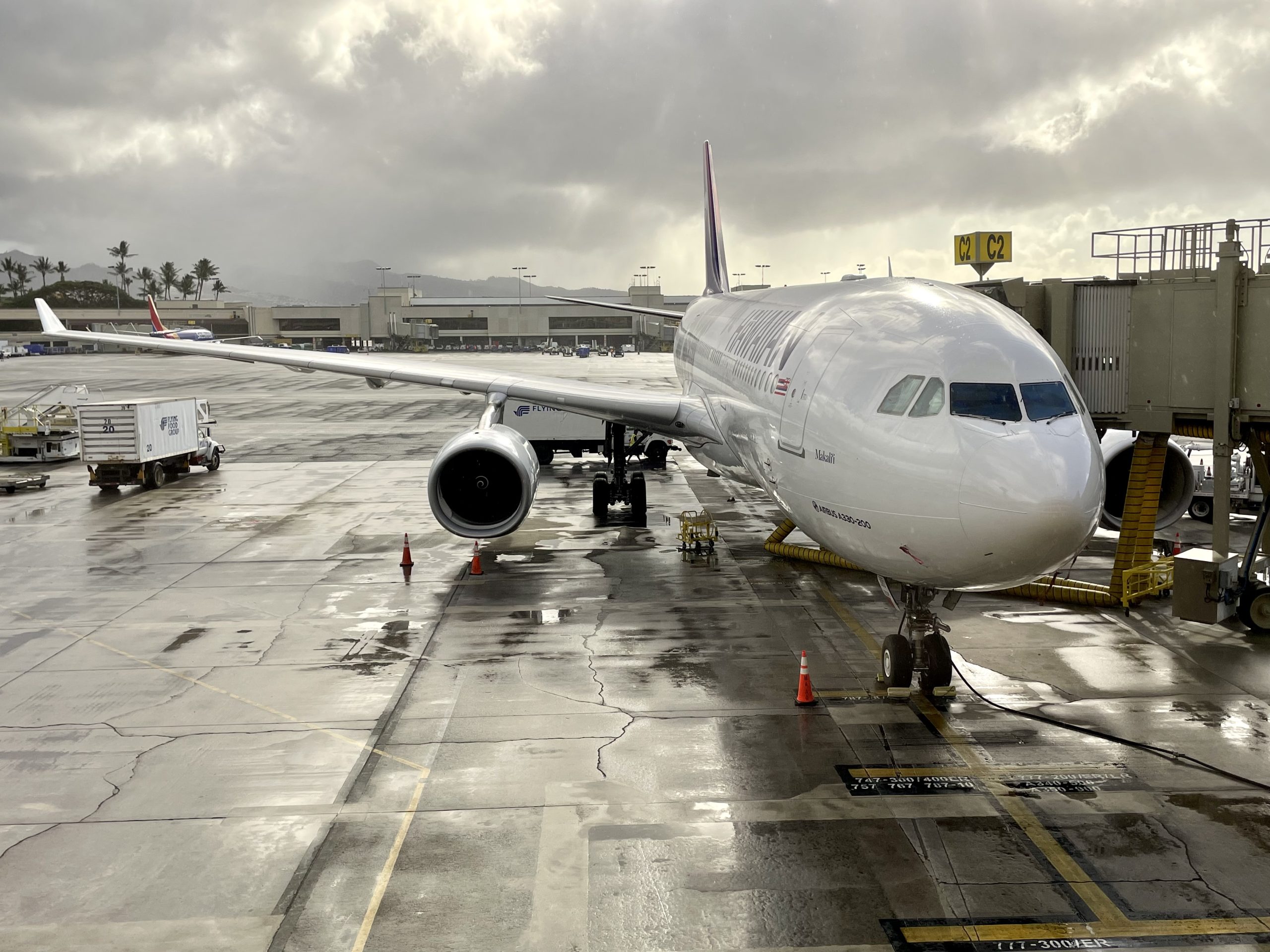
A Hawaiian Airlines A330-200 taxiing after landing in Honolulu. (Photo: Mateen Kontoravdis | AirlineGeeks)
Hawaiian Airlines touched down in Texas for the first time in April 2021, connecting Austin with the Aloha state. The new service offered fresh demand for the Honolulu-based airline as it looked to reallocate resources at a time when the demand for core markets such as Australia and Asia was heavily suppressed due to global Covid-19 restrictions.
Just a little less than two years later, the route continues to prove successful for Hawaiian Airlines. Within the first year of service, the airline increased its Austin frequency from two flights to three weekly trips. As demand continues to grow, Hawaiian recently announced a fourth weekly Austin flight on Sundays for summer 2023. The airline will ramp up flights just in time for Labor Day weekend with the fourth weekly frequency flying until Sept. 5. Flights will operate on Mondays, Wednesdays, Fridays, and Sundays.
As Hawaiian grows in Austin, the airline will offer over 1,100 seats to Honolulu each week. This represents 12% of all seats between Texas and Hawaii each week this summer according to Cirium. Starting in May, flights will depart Honolulu at 6:45 p.m. and arrive in Austin the next morning at 7:35 a.m. local time. The carrier’s A330 will spend just two hours on the ground in Austin before departing at 9:35 a.m. and arriving in Honolulu at 12:45 p.m. local time.
The airline is re-timing its Austin flight times to improve aircraft utilization and offers additional inter-island and international connectivity to cities such as Auckland, Tokyo, and Pago Pago. Passengers can also take advantage of the airline’s new interline agreement with Southern Airways and Mokulele Airlines which expands passenger access to the islands of Moloka’i, Lāna’i, and Kapalua.
Flying the only Hawaiian Airlines flight to Texas
After a recent visit to Honolulu, I had a chance to try out Hawaiian’s service on its new Austin route. I began my journey back to Texas on a beautiful Monday morning at Honolulu Airport’s Terminal One. This terminal is exclusively used by Hawaiian Airlines and was not crowded at around 7:00 a.m.
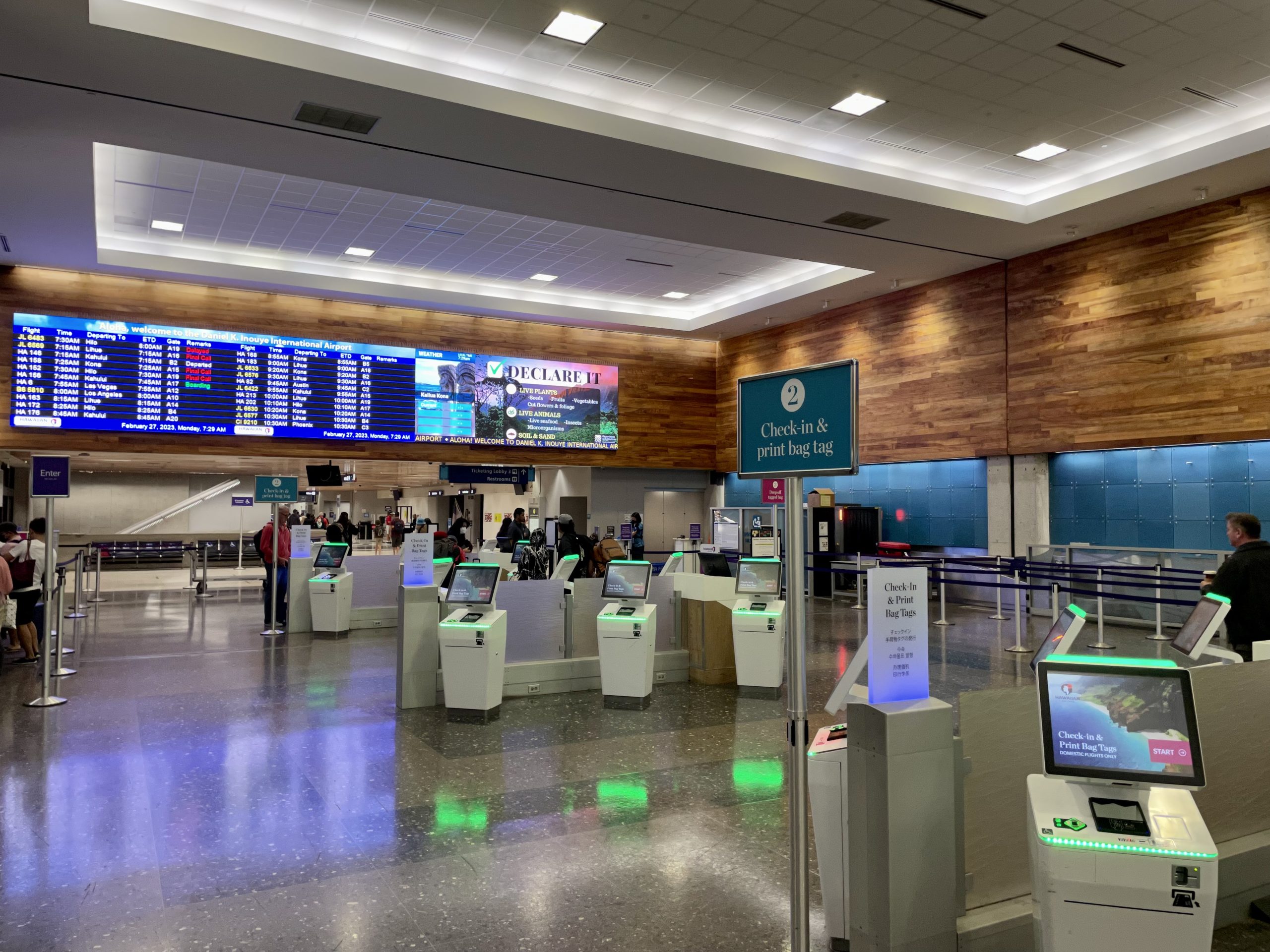
Hawaiian’s modern and spacious check-in space at Terminal One. (Photo: Mateen Kontoravdis | AirlineGeeks)
There were plenty of self-check-in kiosks available and agents to assist with baggage drop off. With no bags to check, I headed straight to the TSA PreCheck lanes to clear security. With an average of 22,000 passengers traveling through the airport each day, Hawaiian Airlines recently spent $14 million on a new four-lane checkpoint at the makai end of Terminal 1. With no lines, I was able to breeze through security in less than five minutes.
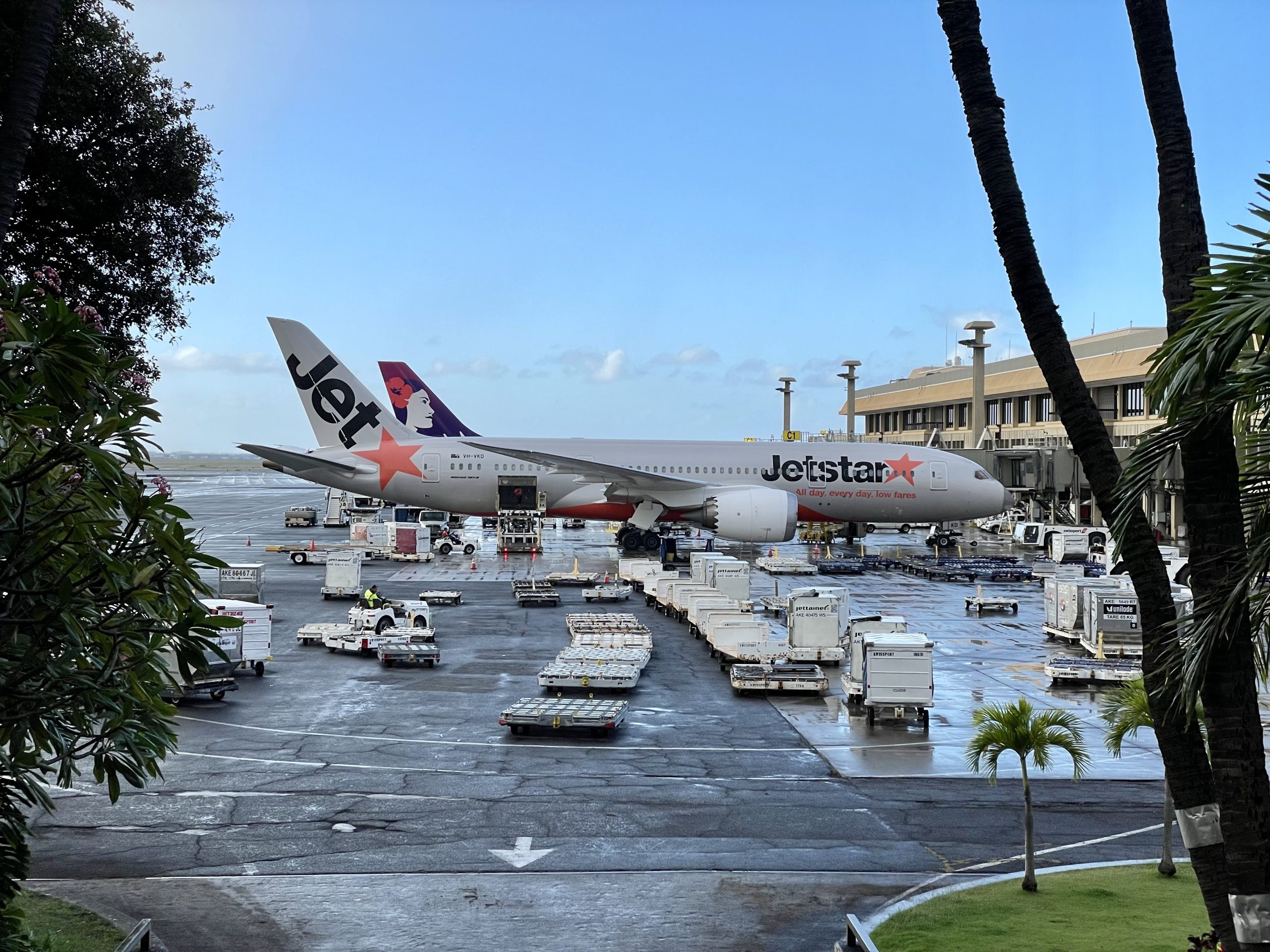
Honolulu’s airport is an avgeek paradise. Terminals are connected to each other with open-air walkways that provide phenomenal views of the ramp activity. There is also an airside park located in Terminal 2 that makes a perfect hangout spot on a long layover.
There’s a beautiful outdoor park accessible to all passengers within the airport. (Photo: Mateen Kontoravdis | AirlineGeeks)
Honolulu’s airport offers fantastic avgeek views throughout each terminal. (Photo: Mateen Kontoravdis | AirlineGeeks)
My flight departed from the C gates which are used for U.S. mainland and international flights. Prior to entering the gate area, I had to go through the state’s agriculture inspection station. With no lines early in the morning, this took less than a minute to complete.
Boarding for flight HA82 to Austin began promptly at 9:15 a.m. Hawaiian’s long-haul fleet includes 24 A330-200s. Each aircraft features 278 seats, including 18 lie-flat seats in business class, 68 extra comfort economy seats, and 192 economy seats. The airline is currently awaiting delivery of 12 Boeing 787-9s, with the first aircraft expected later this year. Once in the fleet, the 787 will offer 89% more premium cabin seats compared to the A330 jets.
The Airbus A330-200 operated my flight to Austin. (Photo: Mateen Kontoravdis | AirlineGeeks)
Each A330 in the fleet is named after Polynesian constellations that were used to navigate the Hawaiian islands. I was flying onboard N830HA, named “Makali’i,” after the Pleiades star group found within the constellation Taurus.
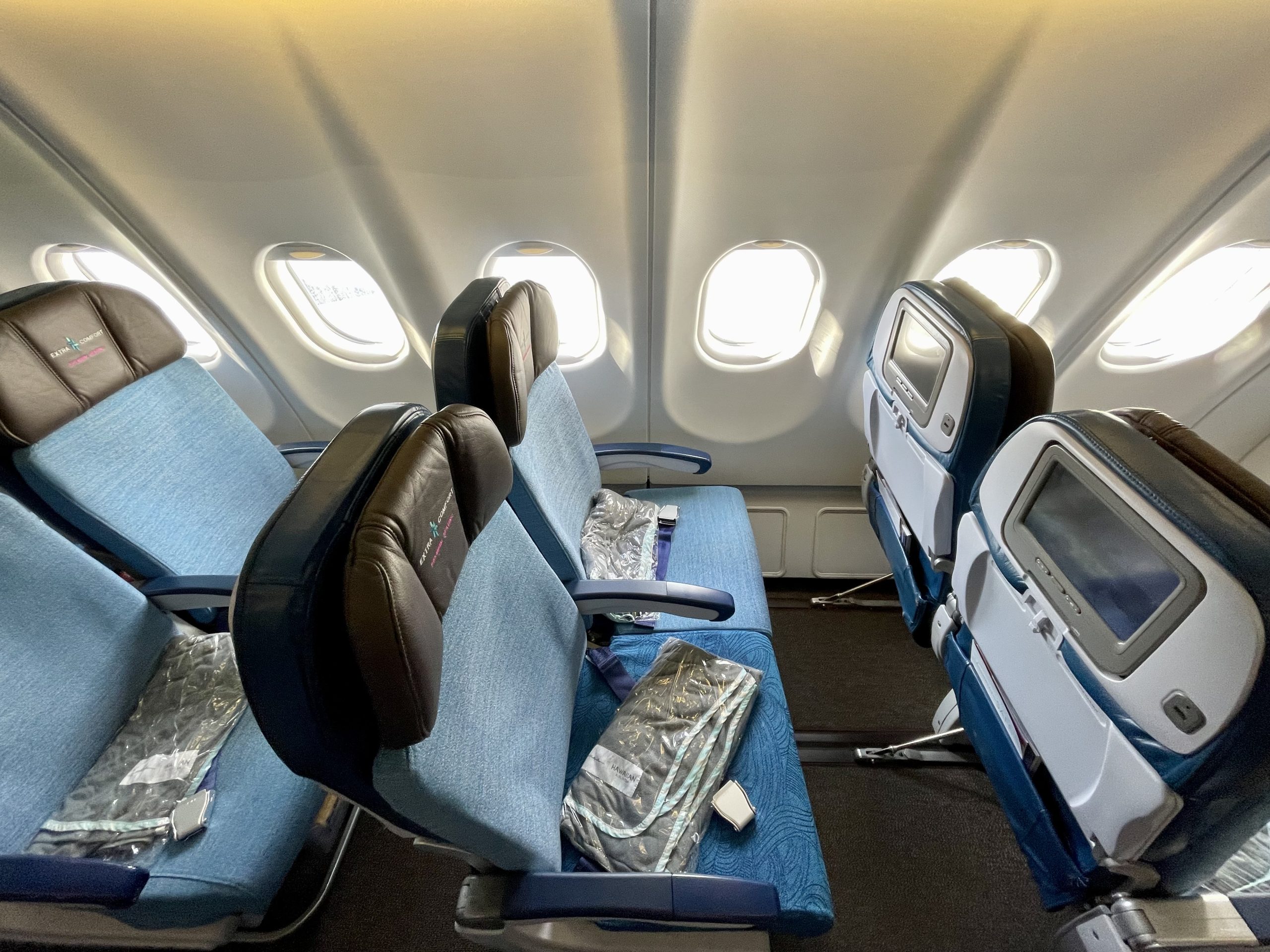
As I boarded, I made a right turn toward the Extra Comfort economy cabin. I was sitting in seat 20A, a window seat. Each Extra Comfort seat has an 18-inch width and a 36-inch pitch. The seats have five additional inches of legroom compared to the regular economy cabin. Each seat had a comfortable blanket available for use.
Each Economy Comfort seat offers 5 additional inches of legroom. (Photo: Mateen Kontoravdis | AirlineGeeks)
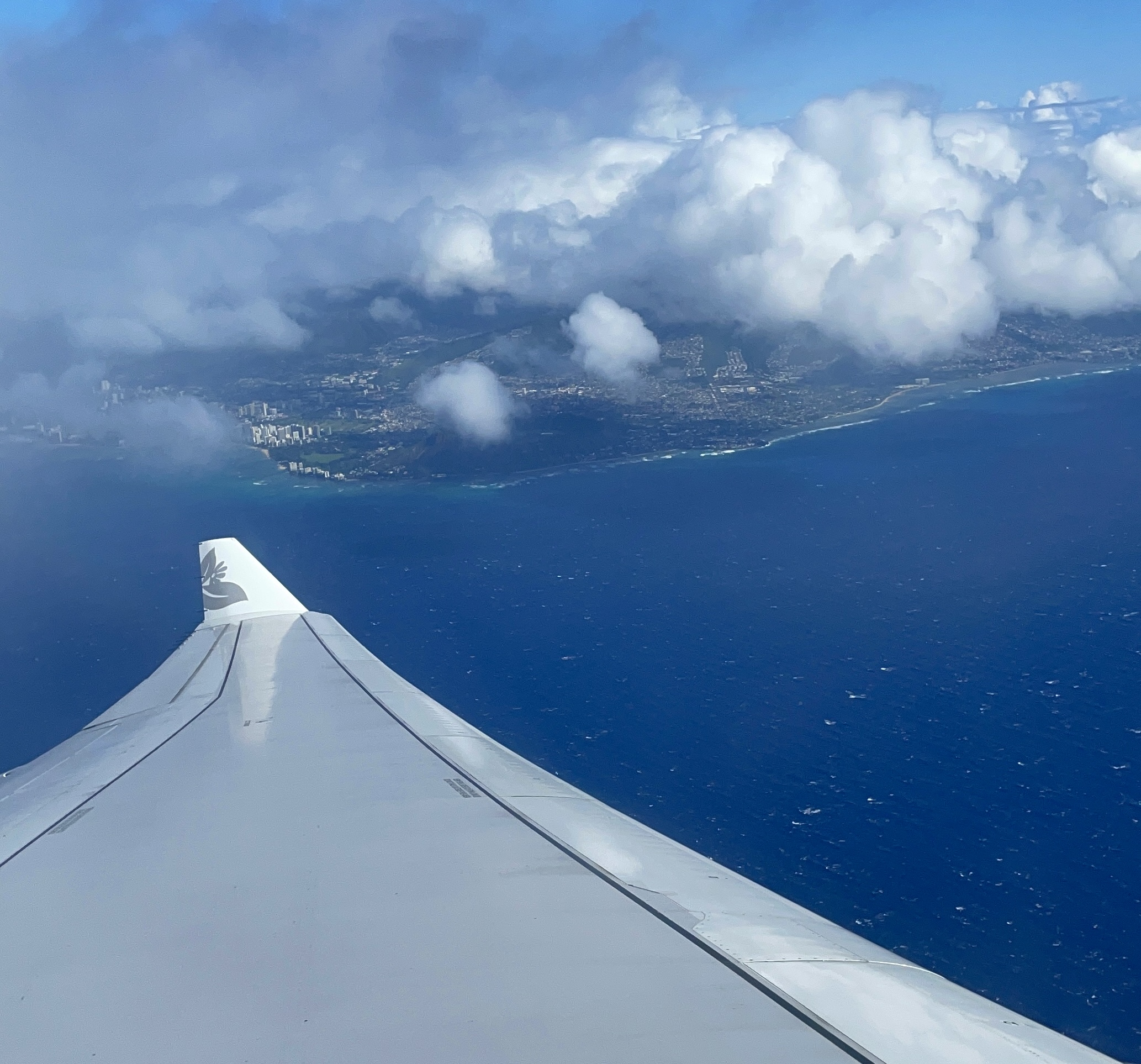
We pushed back right on time, lined up on Honolulu’s famous reef runway, and were airborne to Austin before 10:00 a.m. We were treated to beautiful views of O’ahu as we climbed towards 36,000 feet.
Beautiful departure views after takeoff from Honolulu. (Photo: Mateen Kontoravdis | AirlineGeeks)
Once we began our Pacific crossing, flight attendants jumped to begin their service. The airline recently committed to replacing 50% of onboard single-use plastics by 2025 and plans to expand local sourcing of food and beverages to 40% for its Hawaii-based catering operations by 2025.
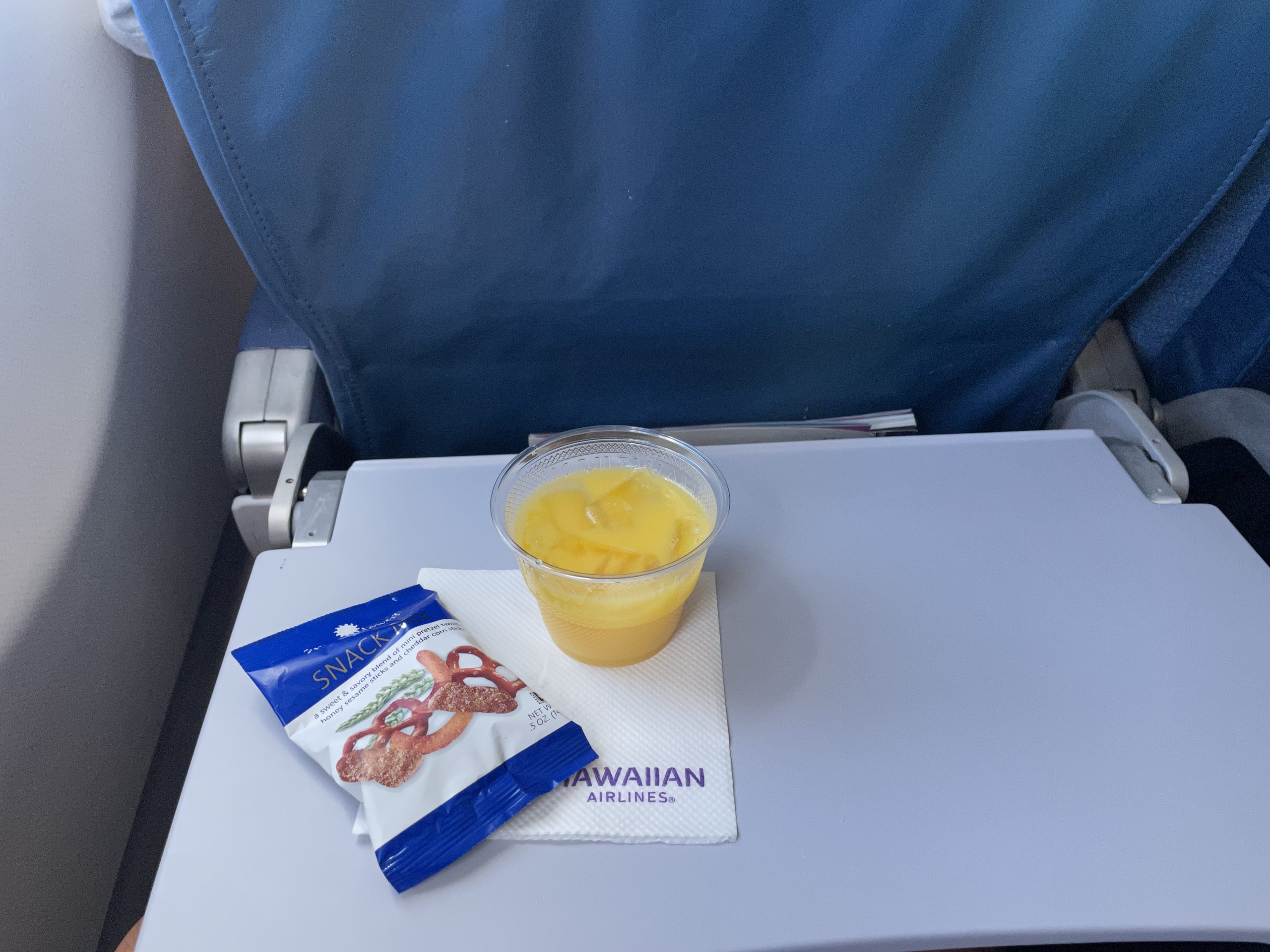
A small snack and drink service was offered just after departure. (Photo: Mateen Kontoravdis | AirlineGeeks)
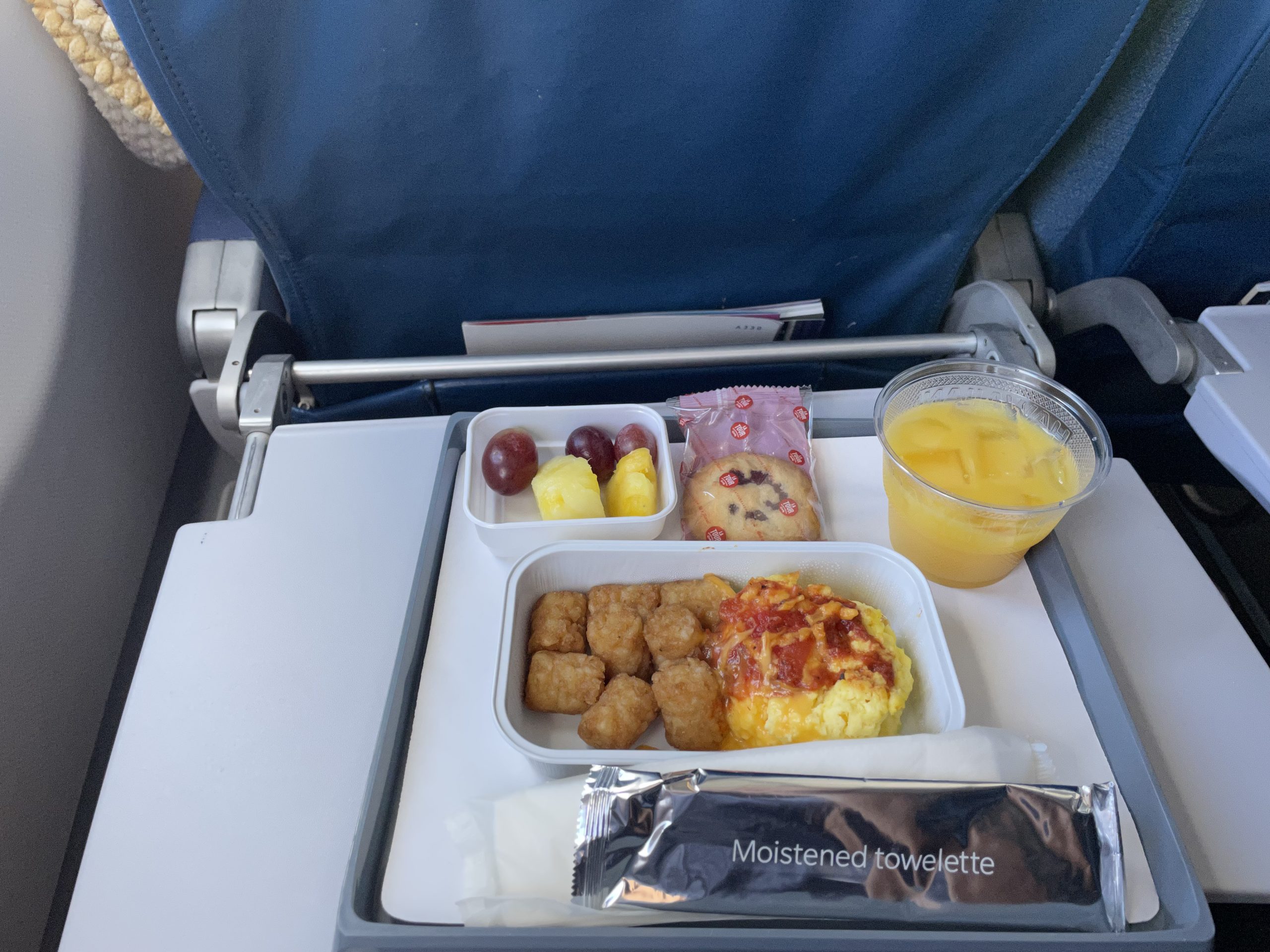
Breakfast was served about 30 minutes after departing Honolulu. (Photo: Mateen Kontoravdis | AirlineGeeks)
The service began with a drink service and snack mix accompaniment. This was immediately followed by breakfast which included scrambled eggs with mushrooms, marinara sauce, and tater tots. There was also fresh fruit and a sweet cookie. Interestingly, Hawaiian Airlines has committed to only using cage-free eggs on all flights departing Hawaii by 2025. The food quality seemed to be higher than the meal quality on a long-haul U.S. airline transatlantic flight.
Each seat offers an inflight entertainment screen with over 100 hours of movies and TV shows. Notably, over 30% of the content highlights the state of Hawaii, so there’s a lot to learn as well if you’re interested in the state’s history and culture. There’s also a USB charging port available on all seats. Economy Comfort seats also have a power outlet, offering an additional source of power to stay charged in flight.
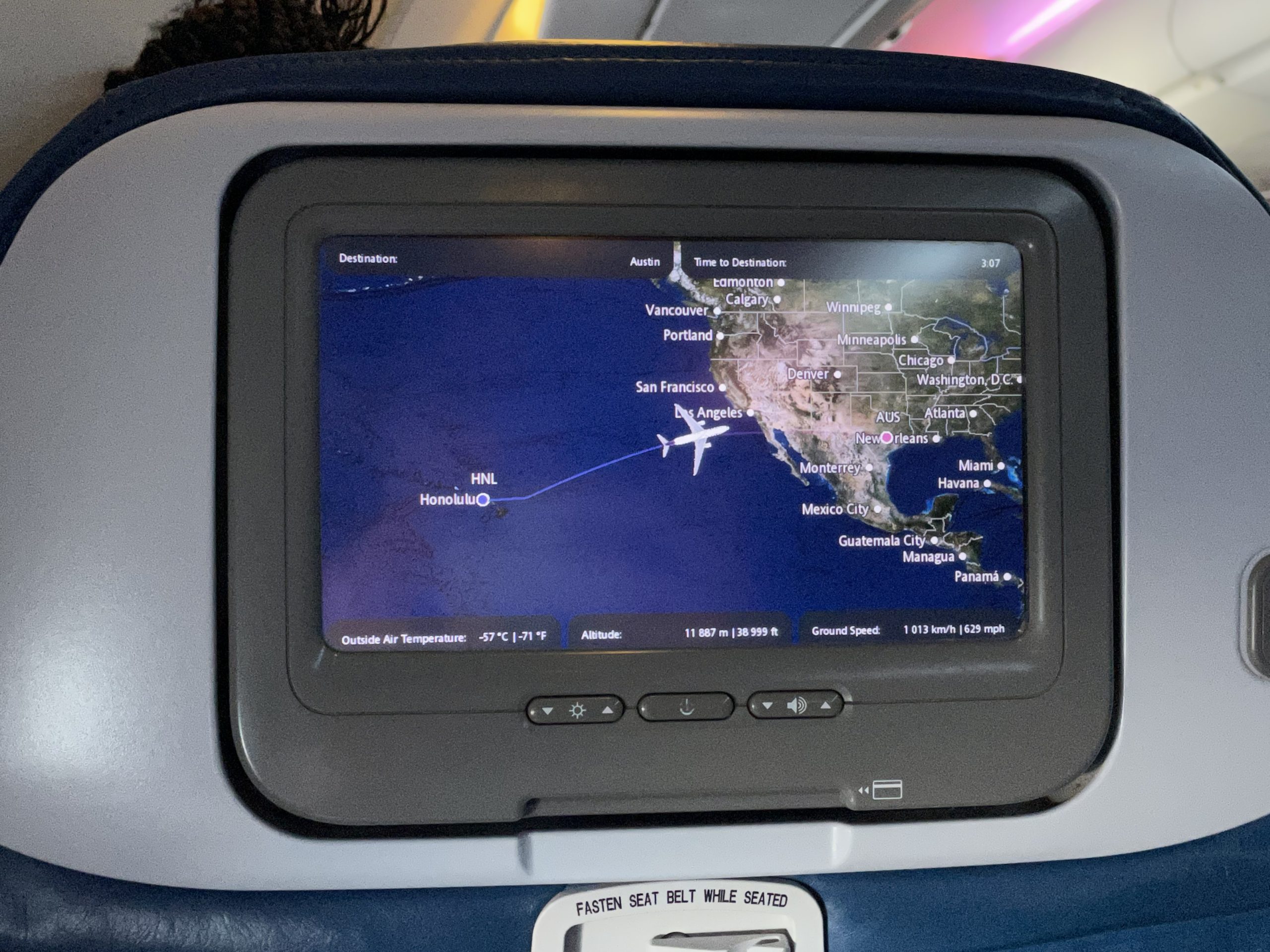
Instead of a movie, I opted to enjoy the flight tracker. (Photo: Mateen Kontoravdis | AirlineGeeks)
While there are plenty of movies onboard to keep you entertained, Hawaiian does not offer wifi on any of its flights. This, however, is set to change later this year when the airline begins offering free Starlink wifi from SpaceX on its A321neo and A330 planes. The new 787s are also expected to offer new wifi.
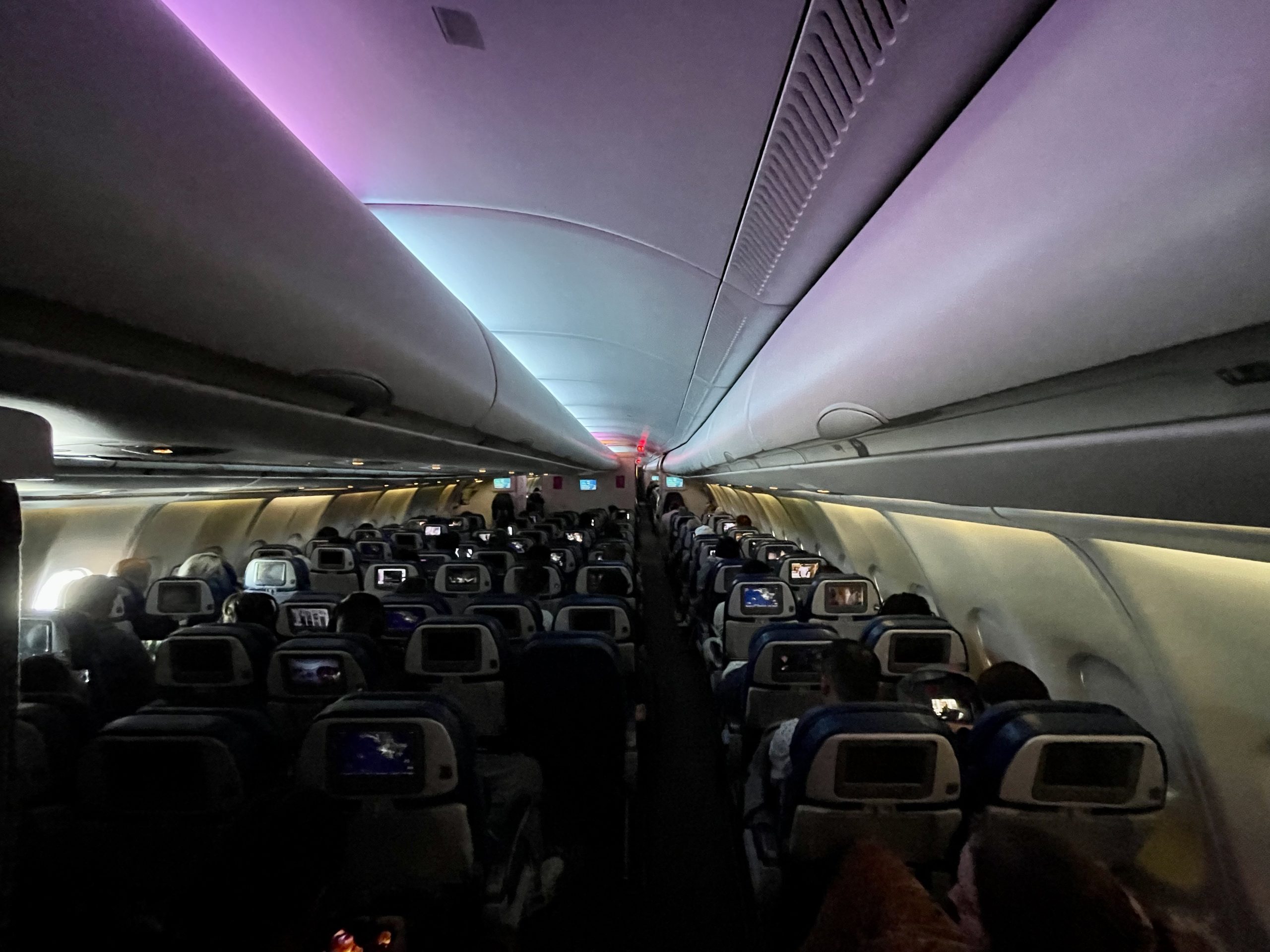
The A330 fleet offers seat-back screens at every seat and beautiful mood lighting to give the cabin a cozy feeling. (Photo: Mateen Kontoravdis | AirlineGeeks)
About halfway through the flight, I walked to the back of the plane to purchase a snack from the buy-on-board menu. I bought an Island Princess snack box for $10 which featured a sweet assortment of nuts and chocolates.
I purchased this sweet snack box for $10 about halfway into the flight. (Photo: Mateen Kontoravdis | AirlineGeeks)
The cabin crew created a welcoming atmosphere and were very hospitable. They came up and down the aisle throughout the flight offering water and other drinks to passengers.
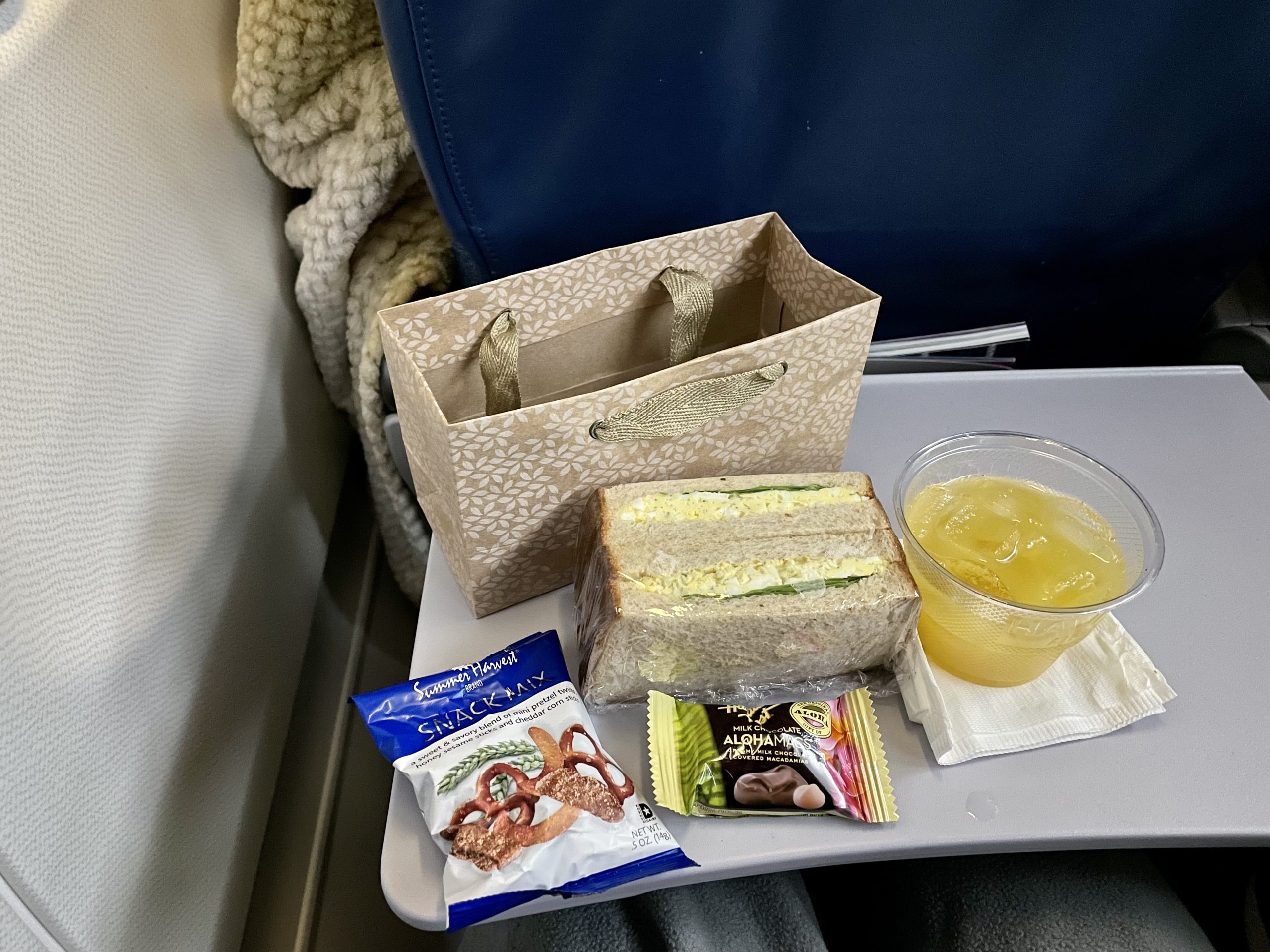
The pre-arrival snack bag included a sandwich and several snacks. (Photo: Mateen Kontoravdis | AirlineGeeks)
There was yet another meal service one hour prior to landing in Austin. The flight attendants handed each passenger a snack bag with an egg salad sandwich, snack mix, and chocolate-covered macadamia nuts. Despite the dull look, the sandwich was delicious and a great touch. Many other U.S. airlines flying between the U.S. and Hawaii barely offer even one proper meal on flights over five hours.
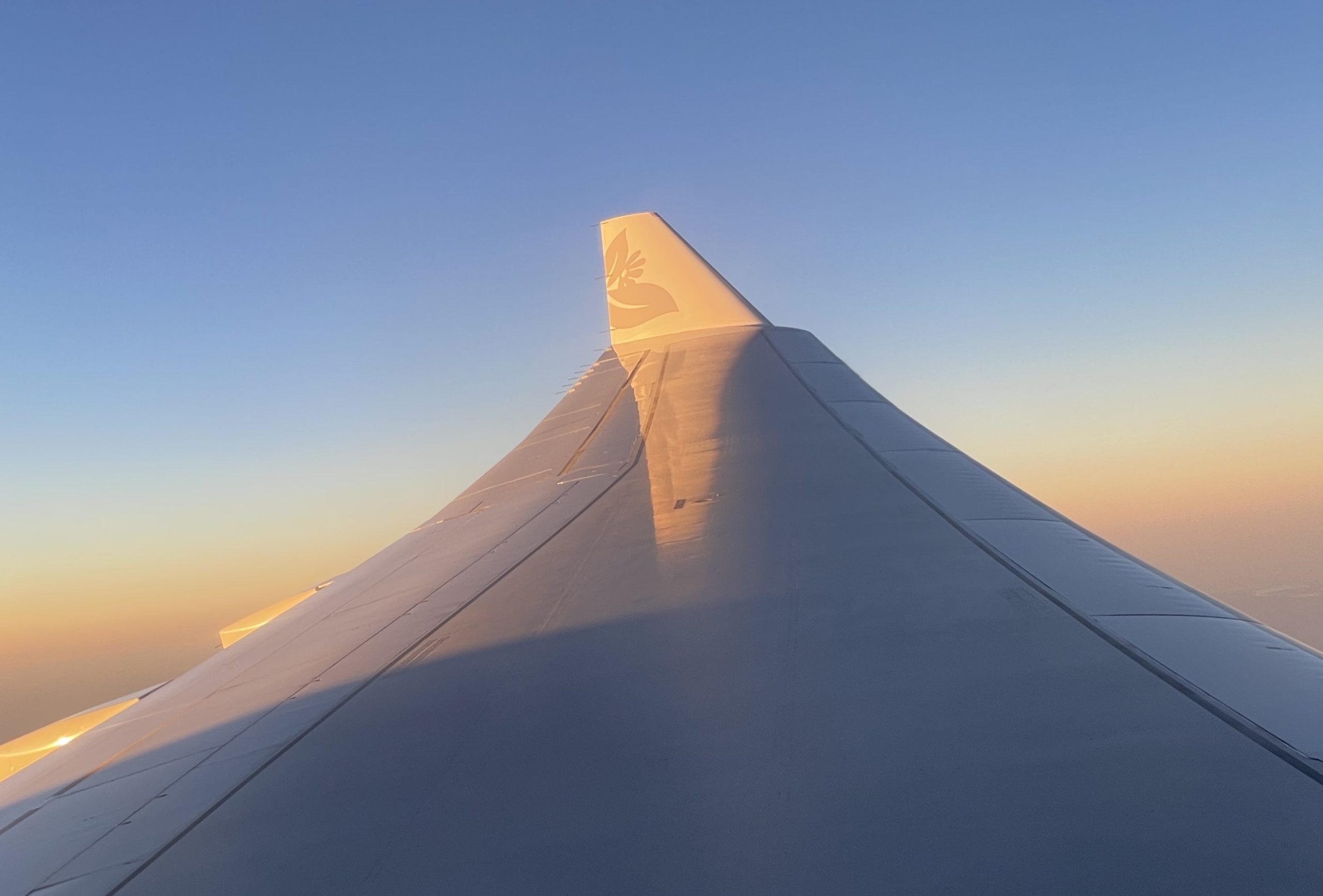
Flying into the sunset while en route to Austin. (Photo: Mateen Kontoravdis | AirlineGeeks)
We touched down in Austin at 8:40 p.m. local time after a very pleasant 3,762 mile journey from Honolulu. Within a few minutes, we had arrived at our gate and the journey came to a conclusion.
During a 2021 interview with AirlineGeeks, Peter Ingram, CEO of Hawaiian Airlines said, “Austin is a market that just keeps getting better and better in terms of the growth in the community. It really fits in the wheelhouse of what works for us in terms of a growing population with disposable income that is in an age demographic interested in traveling.”
Despite flying in February, my flight was over 80% full. The airline flew over 32,000 passengers on the Austin route in 2022, with the load factor averaging 88% during the peak summer season. Even though American and United offer daily one-stop connectivity to Hawaii from their Dallas and Houston hubs, Hawaiian has found success in Austin and continues to develop the route as demand grows each year. It’ll be exciting to see how the airline continues to grow in Texas and beyond over the next several years as it takes delivery of its forthcoming Dreamliner fleet.
Mateen has been interested in aviation from a very young age. He loves learning about different aspects of the industry. Mateen has been an editor for the website since early 2017. Most recently, Mateen is additionally the website’s overall strategist. In addition to writing for AirlineGeeks, Mateen is a sophomore at the University of Texas studying Human Dimensions of Organizations. You can also find him on Instagram (@Plane.Photos) where he enjoys sharing his aviation photography with thousands of people on a daily basis.
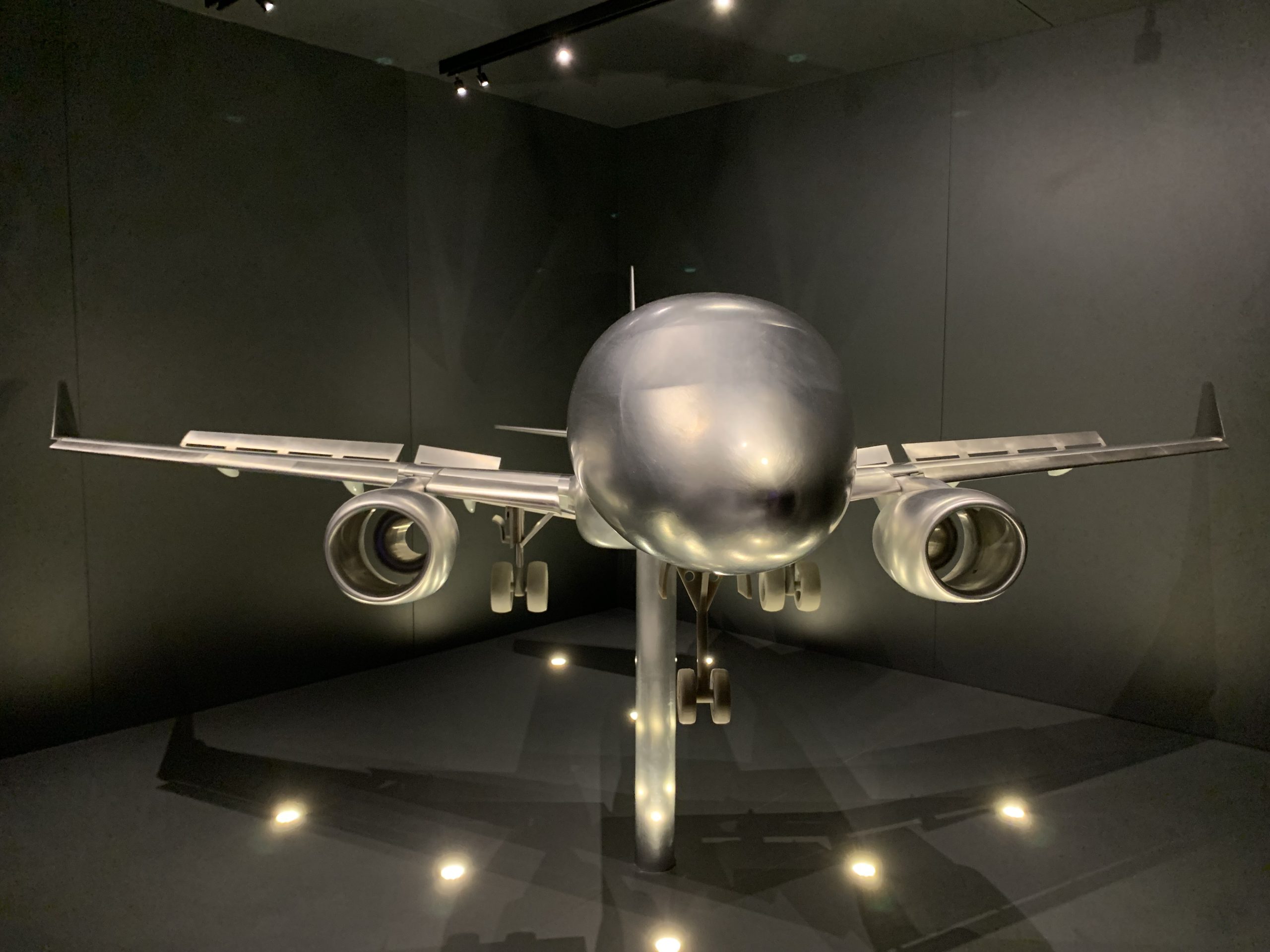
Scale model of a Bombardier C Series wind-tunnel test aircraft (Photo | John Flett)
The Bombardier brand is one of the most familiar names in the global aviation industry and has its origins in Quebec, Canada. The Museum of Ingenuity J. Armand Bombardier (Musée de l’ingéniosité J. Armand Bombardier) in Valcourt, Quebec — ninety minutes east of Montréal, Canada’s Pierre Elliott Trudeau International Airport — charts the history of Bombardier and its founder Joseph-Armand Bombardier.
What may not be commonly known is Bombardier’s beginnings and its role in the design and manufacture of snowmobiles. Bombardier launched a seven-passenger snowmobile in 1937 and founded his company L’Auto-Neige Bombardier Limitée in 1942.
Following the invention of the Ski-Doo in the late 1950s and its phenomenal success, the company was listed publicly in 1969 and diversified into the railway industry in 1970. In addition to supplying cars for the new Montreal subway system in the 1970s, Bombardier successfully bid for a contract with the New York City Transit Authority in 1982 to provide 825 subway cars.
Bombardier’s foray into aerospace followed in 1986, when the company purchased Canadian aircraft manufacturer Canadair. At the time, Canadair was manufacturing the iconic Challenger widebody business jets and the CL-215 amphibious firefighting aircraft. Bombardier continues to develop and manufacture enhanced Challenger aircraft and has superseded the CL-215 with the Bombardier 415 amphibian.
With its purchase of Canadair, Bombardier began a revolution in regional jet development with the Canadair Regional Jet (CRJ) program and subsequent series of aircraft. Further acquisitions in the 1990s included Learjet with its luxury private jets and Boeing’s de Havilland with the iconic Dash 8.
This placed Bombardier as the only manufacturer of both turboprop and jet 50-seat regional aircraft. In recent years the development of the C series of aircraft and the initial partnership and subsequent sale to Airbus resulted in the rebranded A220 regional aircraft.
The layout of the museum has a chronological order with an introduction to J. Armand Bombardier’s first inventions in a reconstructed reproduction of his workshop, a 270-degree short film of the company’s history and an exhibition space of the evolution of the company. Though relatively small, the museum also has an impressive collection (or reserve) of Bombardier snowmobiles that can be accessed with an enhanced ticket.
Aviation buffs may be disappointed by the limited space accorded to the company’s aerospace history and may wish to also include Ottawa’s Canada Aviation and Space Museum on their itinerary. Though within the Museum of Ingenuity J. Armand Bombardier, there is a free flight simulator and an 8.6 percent scale model used for wind tunnel testing of the C Series family of aircraft. One of only twenty used as part of the 4,500 hours of wind tunnel testing undertaken for the development of the aircraft.
For those who wish to enhance their visit to the Museum of Ingenuity J. Armand Bombardier further, you can pre-book a 90-minute guided tour of the Bombardier Recreational Products (BRP) factory situated across the road from the museum. BRP manufactures a range of brands including Ski-Doo snowmobiles, Sea-Doo watercraft and Can-Am Off-Road vehicles.
John has always had a passion for aviation and through a career with Air New Zealand has gained a strong understanding of aviation operations and the strategic nature of the industry. During his career with the airline, John held multiple leadership roles and was involved in projects such as the introduction of both the 777-200 and -300 type aircraft and the development of the IFE for the 777-300. He was also part of a small team who created and published the internal communications magazines for Air New Zealand’s pilots, cabin crew and ground staff balancing a mix of corporate and social content.
John is educated to postgraduate level achieving a masters degree with Distinction in Airline and Airport Management. John has held the positions of course director of an undergraduate commercial pilot training programme at a leading London university. In addition he is contracted as an external instructor for IATA (International Air Transport Association) and has been a member of the Heathrow Community Fund’s ‘Communities for Tomorrow’ panel.
An Emirates Airbus A380-800 in the airline's new livery (Photo: Emirates)
The world’s largest Airbus A380 fleet is getting a new look, as Emirates recently revealed a new livery. The Dubai, United Arab Emirates-based carrier — which is also the world’s largest Boeing 777 operator — announced that its aircraft will sport a new signature, distinctive livery.
A Refreshed Look
While the livery’s overall colors and branding largely remain the same, Emirates has modernized several aspects of its livery. Perhaps the most notable change can be seen in the flag of the United Arab Emirates (UAE) on the tail, which now has a 3D artwork effect to give the appearance that it is flowing.
Winglets on the Airbus A380-800s will now be painted red on the outside with the Emirates logo on it in white. From a passenger’s perspective, the insides of the winglets will feature the colors of the UAE flag.
The “Emirates” lettering across the fuselage is now more prominent, with the airline noting that it is bolder and 32.5% larger. The airline’s website URL has also been dropped from the design. On the underside of the fuselage, Emirates has retained the red branding that allows its aircraft to be easily identified from the ground.
First Livery Change in Over Two Decades
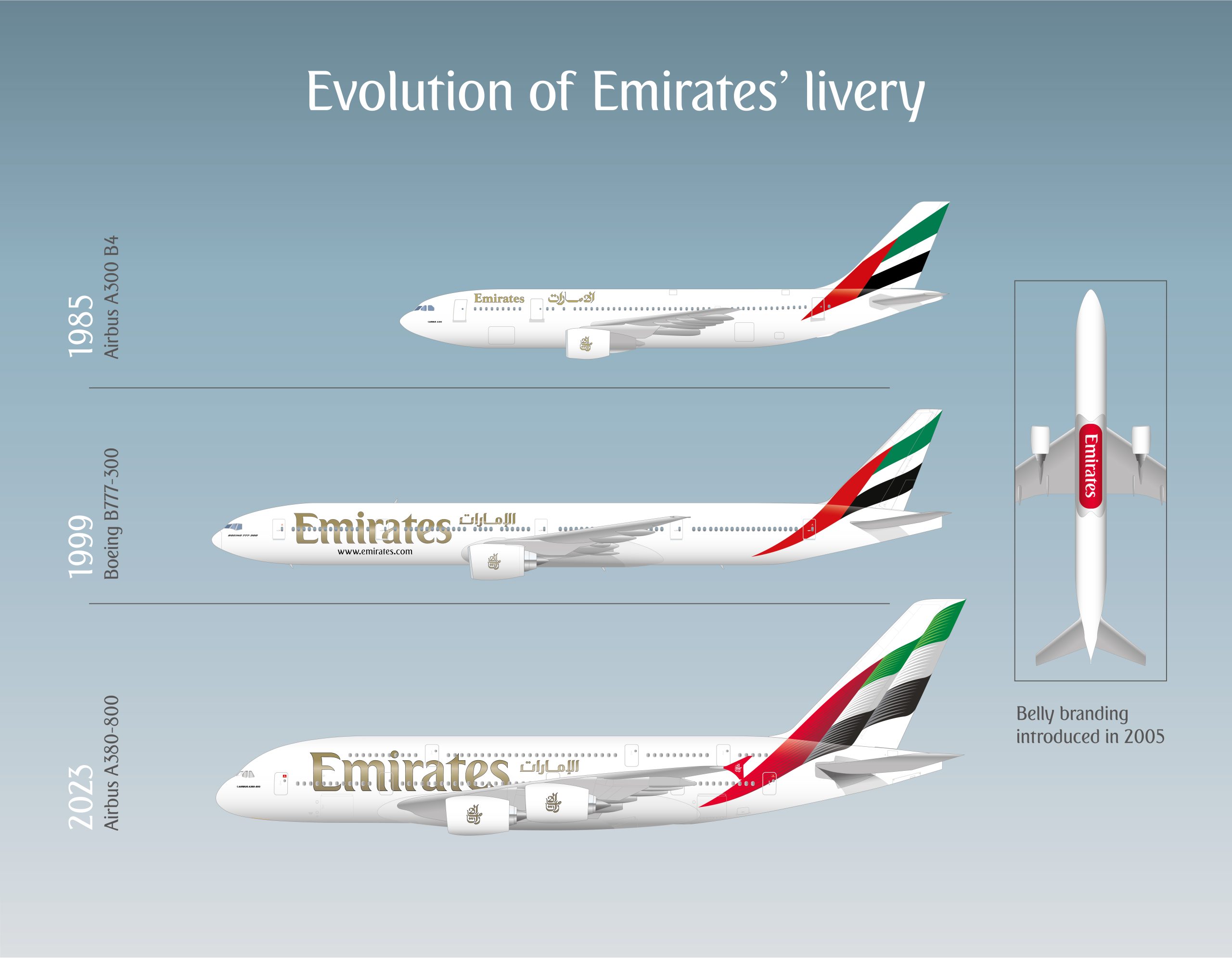
This is the third livery that Emirates aircraft have worn since the airline’s founding in 1985. The overall theme of the livery has remained constant throughout the years, but the look has evolved with each iteration of the livery. The carrier’s original livery debuted with its launch in 1985 and was designed by British design company Negus & Negus. The livery had its first refresh in 1999 with the delivery of Emirates’ first Boeing 777-300 at that year’s Dubai Airshow.
The evolution of Emirates’ livery (Photo: Emirates)
Emirates rolled out its latest livery update on an Airbus A380-800 registered as A6-EOE. The aircraft’s first flight in the new livery took place on March 17, 2023 when it operated flight EK51 from Dubai International Airport to Munich Airport. The airline plans to apply the new livery to 24 aircraft this year, which will be followed by a gradual rollout to the rest of its fleet of approximately 250 aircraft in the coming years.
“Aircraft livery is the most instantly recognisable brand real estate for any airline. It’s a visual representation of our unique identity, something we wear proudly, and display in all the cities we fly to around the world,” Emirates President Sir Tim Clark said in a press release. “We’re refreshing our livery to keep it modern, without losing the key elements of our identity such as the UAE flag on our tailfin and the Arabic calligraphy.”
Andrew is a lifelong lover of aviation and travel. He has flown all over the world and is fascinated by the workings of the air travel industry. As a private pilot and glider pilot who has worked with airlines, airports and other industry stakeholders, he is always excited to share his passion for aviation with others. In addition to being a writer, he also hosts Flying Smarter, an educational travel podcast that explores the complex world of air travel to help listeners become better-informed and savvier travelers.
A 787-9 Dreamliner destined for Air France during its checks at Paine Field.
(Photo: AirlineGeeks | Katie Zera)
Air France is strengthening its summer 2023 schedule by bringing back multiple destinations that were suspended due to the pandemic and restoring capacity to 2019 levels. The French airline will operate up to 835 daily flights to 191 destinations in 89 countries.
Asia
With the reopening and easing of health restrictions in Greater China, the carrier will fly daily to Beijing – Capital (PEK), Shanghai (PVG), and Hong Kong (HKG) from July 1. Air France will have a schedule of 21 weekly operations between Paris – Charles de Gaulle (CDG) and Greater China.
The company will also be increasing its operations to Japan, where it will fly twice daily to Tokyo, operating from the two main airports. The airline will have 11 weekly flights to Haneda (HND) and three weekly operations to Narita (NRT).
North America
Air France is scheduled to operate 180 weekly flights in the United States to 14 destinations, including high-demand markets such as New York, Los Angeles, Miami, San Francisco, Boston, among others.
For the summer season, the airline will have 50 weekly flights between France and Canada. The airline will resume its seasonal service between Paris (CDG) and Quebec (YQB) from May 2, operated by a Boeing 787-9 Dreamliner.
It will also inaugurate a new route between the French capital and Ottawa (YOW) with five weekly operations on Airbus A330-200s and will be the only airline to connect the Canadian capital with Europe on non-stop flights. Air France will be the carrier with the largest capacity between Europe and Canada this summer.
Africa
In this region, Air France remained very present during the COVID-19 crisis and will maintain higher capacity at 2019 levels. As of June 12, 2023, the carrier will add a new service to Dar Es Salaam (DAR), operated three times a week on Boeing 787-9 Dreamliner via Zanzibar (ZNZ), thus expanding its offering in Tanzania.
In its Kenya schedule, the airline will have non-stop operations between Paris (CDG) and Nairobi (NBO) with daily flights on Boeing 787-9 Dreamliner.
South America
In French Guiana, the carrier will fly from May 5 between Cayenne (CAY) and Belem, Brazil (BEL) with a weekly frequency operated by Airbus A320.
Europe
Air France’s short/medium-haul network will offer up to 650 daily flights and 106 destinations between France and Europe for the summer season.
The airline will have 66 seasonal services in France and Europe this summer, with operations from Paris and French regional airports.
These routes will connect to Corsica from Paris (ORY), Bordeaux (BOD), Caen (CFR), Rennes (RNS), Lille (LIL), Lyon (LYS) and Nantes (NTE); Greece from Paris (CDG), Marseille (MRS), Nice (NCE) and Toulouse (TLS); Algeria from Paris (CDG/ORY), Marseille (MRS), Nice (NCE) and Toulouse (TLS); Morocco from Paris (CDG/ORY) and Nice (NCE); and Tunisia from Paris (CDG/ORY), Marseille (MRS) and Nice (NCE).
Transavia France, a low-cost subsidiary of Air France – KLM Group for its summer operation will have 200 short/medium haul connections on 120 destinations, including 100 to/from Orly Airport (ORY). The airline positions itself as the first low-cost operator in the Paris metropolitan area.
New destination with Air France’s new Boeing 777-300ER cabins
Johannesburg (JNB) will be the next destination served by Boeing 777-300ERs with new cabins as of March 27. The South African city joins New York (JFK), Dakar (DSS) and Rio de Janeiro (GIG) where these aircraft currently operate.
Air France will gradually be refurbishing the cabins of 12 Boeing 777-300ERs with a configuration of 48 seats in Business Class, 48 in Premium Economy and 273 in Economy.