A Brussels Airlines Airbus A330-300 departing Toronto. (Photo: Martin Kulcsar [CC BY-SA 4.0 (https://creativecommons.org/licenses/by-sa/4.0)])
Brussels Airlines, Belgium’s national carrier and a member of the Lufthansa Group, recently announced a wet-lease agreement with CityJet, an airline operating a fleet of CRJ regional jets out of Copenhagen and Stockholm. Under the agreement with Brussels Airlines, two of CityJet’s 88-seat CRJ-900 aircraft will join the Belgian carrier’s fleet from March 26 to October 28, 2023, providing daily flights from Brussels and Munich to European destinations including Bordeaux, Milan, Lyon, Geneva and Vienna. This agreement will also serve to strengthen regional (business) routes such as Hamburg and Birmingham, served in cooperation with CityJet, nine destinations.
In addition, 2 more Airbus A320s will be added to the Belgian fleet to support network growth and fleet expansion. These aircraft will become permanent members of the fleet and will be deployed throughout the medium-haul network, with a focus on new leisure destinations such as Djerba and Monastir.
With these changes, Brussels Airlines’ European operations will grow by 10 percent this summer. The fleet will soon increase from 40 to 45 aircraft (36 medium-haul and 9 long-haul). The Belgian airline already connects Brussels with more than 85 destinations, including 17 in sub-Saharan Africa.
Jan Derycke, Head of Strategy and Network Planning, said that with this fleet and network expansion, Brussels Airlines is achieving its growth target three years ahead of schedule. In 2023, Brussels Airlines will acquire three Airbus A320neo aircraft to significantly reduce CO2 and noise emissions on its medium-haul network. The airline also plans to operate its first Sustainable Aviation Fuel (SAF) flight in 2023. By 2030, Brussels Airlines aims to emit 50 percent less CO2 than in 2019 and plans to be carbon neutral by 2050.
Appointment of new Chief Executive Officer
Dorothea von Boxberg will be the new CEO of Brussels Airlines. Pending a decision by the Board of Directors of SN Airholding, Dorothea von Boxberg, currently Chairman of the Board of Lufthansa Cargo AG, will assume the position in Belgium on April 15, 2023. She will replace the current interim CEO Christina Foerster on February 1, 2023, after Peter Gerber, who has been in office since March 2021, leaves both Brussels Airlines and the Lufthansa Group after more than 30 years.
In addition to her role as CEO of Brussels Airlines, Dorothea von Boxberg will also assume the function of “Representative of the Board of Directors to the European Commission”. Dorothea von Boxberg’s successor at Lufthansa Cargo will be announced shortly.
Dorothea von Boxberg (1974) began her career in 1999 at the Boston Consulting Group. In 2007, Dorothea von Boxberg moved to the Lufthansa Group, where she held various management positions. Since 2012, she has been responsible for Customer Experience Design at Lufthansa. During this time, she and her team introduced a new generation of business-class seats. In 2015, Dorothea von Boxberg moved to Lufthansa Cargo AG, where she headed the Global Sales Management department. In 2018, she was appointed to the Executive Board of Lufthansa Cargo AG. Initially responsible for global sales, network planning, network management and product development, she will lead Lufthansa Cargo AG as Chairman of the Executive Board from 2021.
Vincenzo graduated in 2019 in Mechanical Engineering with an aeronautical curriculum, focusing his thesis on Human Factors in aircraft maintenance. In 2022 he pursued his master's degree in Aerospace Engineering at the University of Palermo, Italy. He combines his journalistic activities with his work as a Reliability Engineer at Zetalab.
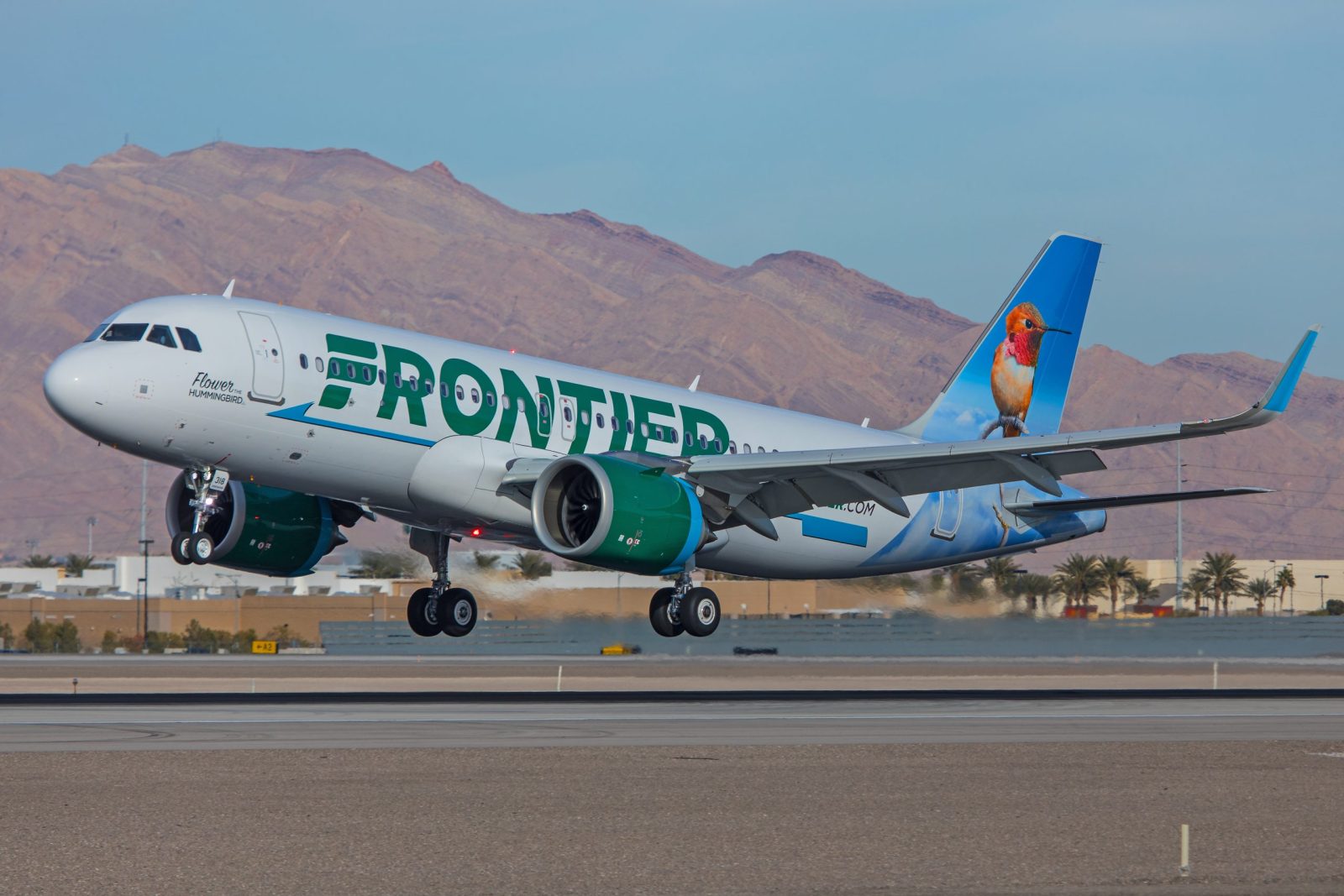
A Frontier Airbus A320neo in Las Vegas. (Photo: AirlineGeeks | William Derrickson)
Denver-based Ultra-Low-Cost Carrier Frontier Airlines has silently decided to end just over a dozen routes around the country, and along with that the termination of flights to Rochester, N.Y. The airline started flying there roughly two years ago in 2021, whilst the world was still in the midst of a pandemic.
They operate flights from Rochester to Orlando year-round but have also offered Denver and Tampa on a brief seasonal basis. It would be good to point out that they do compete heavily on two of the three routes they operated out of the city.
Orlando flights directly compete with Southwest and Spirit flights and indirectly with Allegiant which operates flights to Orlando/Sanford. Tampa flights competed with Southwest; however, they had no competitors on the Denver flights, and the carrier’s exit will mean the airport doesn’t serve any destinations west of Chicago.
While Frontier’s exit is a blow for the city, that is cushioned by the announcement of Avelo Air starting flights to Rochester in June of 2023, although their flights will go to Raleigh and only twice a week. For those in the area wanting to fly Frontier out of Upstate NY, they can continue to do so as they fly to Buffalo two hours west of Rochester, and Syracuse located just about two hours east of Rochester.
Joey has always been interested in planes for as long as he can remember. He grew up in Central New York during the early 2000s when US Airways Express turboprops ruled the skies. Being from a non-aviation family made it harder for him to be around planes and would only spend about three hours a month at the airport. He was so excited when he could drive by himself, the first thing he did with his driver's license was get ice cream and go plane spotting for the entire day. He graduated from Western Michigan University in 2022 with a B.S. in Aviation Management & Operations and a Minor in Business, and currently works for a major airline in his hometown.
Bill Raising Pilot Retirement Age to 67 Reintroduced in U.S.
Inside the cockpit of the Embraer E145. (Photo: AirlineGeeks | Craig Fischer)
A bill seeking to address flight cancellations, delays and service disruptions attributed to pilot shortages was reintroduced onto the United States Senate and House floors this week. The Let Experienced Pilots Fly Act ‘raises the mandatory retirement age for commercial pilots from 65 to 67 while maintaining the requirements for first-class medical and training certifications.’ No changes to the qualifications required to become a pilot are included in the bill but it does require those pilots over the age of 65 to renew their first-class medical certifications every six months.
Senator Joe Manchin from West Virginia introduced the bipartisan act in the Senate stating: “Our country continues to face a severe pilot shortage that has led to recent spikes in flight cancellations and delays, disrupting travel plans for millions of Americans. In West Virginia, our airports are our gateways to the rest of the world, and unfortunately, we have lost a number of flights over the last year due to these shortages.”
“I’m proud to introduce this bipartisan legislation to raise the mandatory retirement age for commercial pilots from 65 to 67, while maintaining the current requirements for first-class medical and training certifications,” said Senator Manchin. “This commonsense reform will help ensure air service is safe, reliable and efficient while addressing the pilot shortage.”
Introducing the Let Experienced Pilots Fly Act of 2023 onto the House floor Republican Congressman Troy E. Nehls said: “I’m proud to reintroduce this bill in the 118th Congress to address the glaring pilot shortage affecting Americans and airlines nationwide. We must prioritize the safety and effectiveness of airline travel to ensure that no travel disasters happen and that every person flying makes it home to their families.”
A Republican-sponsored bill had previously been introduced into congress in the summer of 2022 but had stalled. The current retirement age of 65 was set in 2007 when the age was raised from 60, an age that had been set back in 1960. The Air Line Pilots Association (ALPA) had initially opposed the proposed change that came into effect in 2007 but, according to ABC News, ALPA reversed its position in 2007 and urged then-President George W. Bush to sign the bill when approved.
Labor Groups React to Bill
ALPA is opposing the Let Experienced Pilots Fly Act of 2023 issuing a statement on Friday. ALPA President Capt. Jason Ambrosi stated: “This legislation is a solution in search of a problem. Raising the retirement age would only increase costs for airlines, worsen the post-COVID training backlog by using much-needed training cycles to train pilots over 65 who would be limited to domestic operations, and introduce unnecessary risks to passengers and crew alike. That’s why major airlines and a significant majority of pilots and passengers oppose this move. We are disappointed by the introduction of this misbegotten bill that betrays an understanding of how the airline industry works and will create more problems for air travel.”
Support for the bill has been forthcoming from the Regional Airline Association (RAA). “Raising the pilot retirement age keeps experienced pilots—particularly captains—in place and will have an immediate, positive impact on the pilot shortage,” said RAA President Faye Malarkey Black. AINOnline reported Black as saying: “Already, 324 airports have lost an average of one-third of their air service and 53 airports have lost more than half of their air service. Fourteen airports have lost all flights.”
The National Air Carrier Association (NACA) which represents ‘a diverse group of air carriers, providing passenger and cargo, scheduled and charter services’ also came out in support of the legislation. NACA stated that ‘with more than 3,000 pilots taking early retirement packages during the COVID-19 pandemic, and an additional 12,000 pilots expected to retire over the next five years, this timely legislation will provide some near-term relief.’
NACA also cited ‘an expected shortfall of 28,000 pilots by the end of the decade, Congress should take significant steps to boost the pipeline of commercial pilots. Specifically, we urge Congress to enact the “Let Experienced Pilots Fly” Act as part of the upcoming FAA reauthorization legislation, along with modernizing flight training requirements to provide additional credit for time spent on the most advanced, state-of-the-art flight simulators, and making FAA-certified flight education and training expenses eligible for federal student loans.’
John has always had a passion for aviation and through a career with Air New Zealand has gained a strong understanding of aviation operations and the strategic nature of the industry. During his career with the airline, John held multiple leadership roles and was involved in projects such as the introduction of both the 777-200 and -300 type aircraft and the development of the IFE for the 777-300. He was also part of a small team who created and published the internal communications magazines for Air New Zealand’s pilots, cabin crew and ground staff balancing a mix of corporate and social content.
John is educated to postgraduate level achieving a masters degree with Distinction in Airline and Airport Management. John has held the positions of course director of an undergraduate commercial pilot training programme at a leading London university. In addition he is contracted as an external instructor for IATA (International Air Transport Association) and has been a member of the Heathrow Community Fund’s ‘Communities for Tomorrow’ panel.
A Delta A220-100 on final approach. (Photo: AirlineGeeks | William Derrickson)
This past Tuesday, Delta Air Lines announced a new pathway to the flight deck via the Delta Propel Flight Academy. In partnership with Skyborne Aviation Academy, who is located in Vero Beach, Fla., the carrier will offer a route for aviators to progress from student pilots to a commercial pilot for the airline. The program is currently accepting applications with a slated start in June of this year.
Students wishing to participate in the pathway program will be eligible to apply to Propel after completing their first certificate or rating with Skyborne. If accepted into the Propel Pathway, applicants will receive a conditional job offer and follow the progression path of the program.
Similar to United Aviate Acadamy in Arizona, the Atlanta-based carrier will have student pilots trained from student to flight instructor, and then offered employment with Skyborne to work as a flight instructor until they reach their required flight time of 1500 hours to progress to flying an airliner. Participants will then have the option to fly for one of Delta’s regional affiliates: Endeavor Air, Republic Airways or SkyWest Airlines. After completing the required service requirements at a connection partner, participants will flow to Delta in 42 months or less.
Flight Training Expenses
ATP flight school estimates the cost to start from zero hours to a commercial pilot with flight instructor certificates to be just under $97,000 — a large sum of money to commit at the start of a career. Skyborne breaks down the cost for Porpel academy to be $83,955, plus housing and required extras, bringing the total to $92,064.
Delta understands the hardship faced by the large cost upfront, so the major carrier is offering $20,000 in financial support to eligible student pilots. Additionally, the airline will cover the cost of interest on student loans from select lenders, helping students cover the investment in their careers. The program is expected to take students from zero hours to flight instructors in one year.
Skyborne’s facility is in Vero Beach, Fla. where weather is conducive to flight training year-round. The flight school operates a fleet of 50 aircraft consisting of Piper Warriors, Arrows and Seminoles. The school boasts a newly renovated 12,000-square-foot training facility on its campus. By establishing this partnership, Skyborne will see an uptick in students flowing through their program and an influx of flight instructors who will be working for the school after completing their training. The partnership also affords Delta the opportunity to have pilots trained at an already well-established school beginning in a mere couple of months.
Delta Propel
The Propel Pathway was established in 2018 by Delta to, as the company states, “select and develop the next generation of pilots.” The program has now four established pathways through Company, College, Community and most recently Propel Flight Academy. So far, the program has generated 100 pilots to Delta flight decks, with another 700 in the program flying for regional partners or at other stages in the program. Along with flying for Delta’s regional partners, participants of the program also have career progression options of flying for Wheels Up or flying military aircraft for the Air National Guard or Reserves.
Delta is the most recent major U.S. airline to announce a flight program affiliated with their company. United Airlines operates its own in-house Aviate Academy in Arizona, and American Airlines has Cadet Academy in partnership with flight schools like CAE and other partners in Arizona, California, Oklahoma and Texas.
Zach’s love for aviation began when he was in elementary school with a flight sim and model planes. This passion for being in the air only intensified throughout high school when he earned his Private Pilot Certificate. He then attended Embry-Riddle Aeronautical University, earning his certificates and ratings to later flight instruct and share his passion for aviation with others. He now resides in the North East living out his dream as an airline pilot.
JSX Elevates Flying Experience with Starlink and Rapid Growth
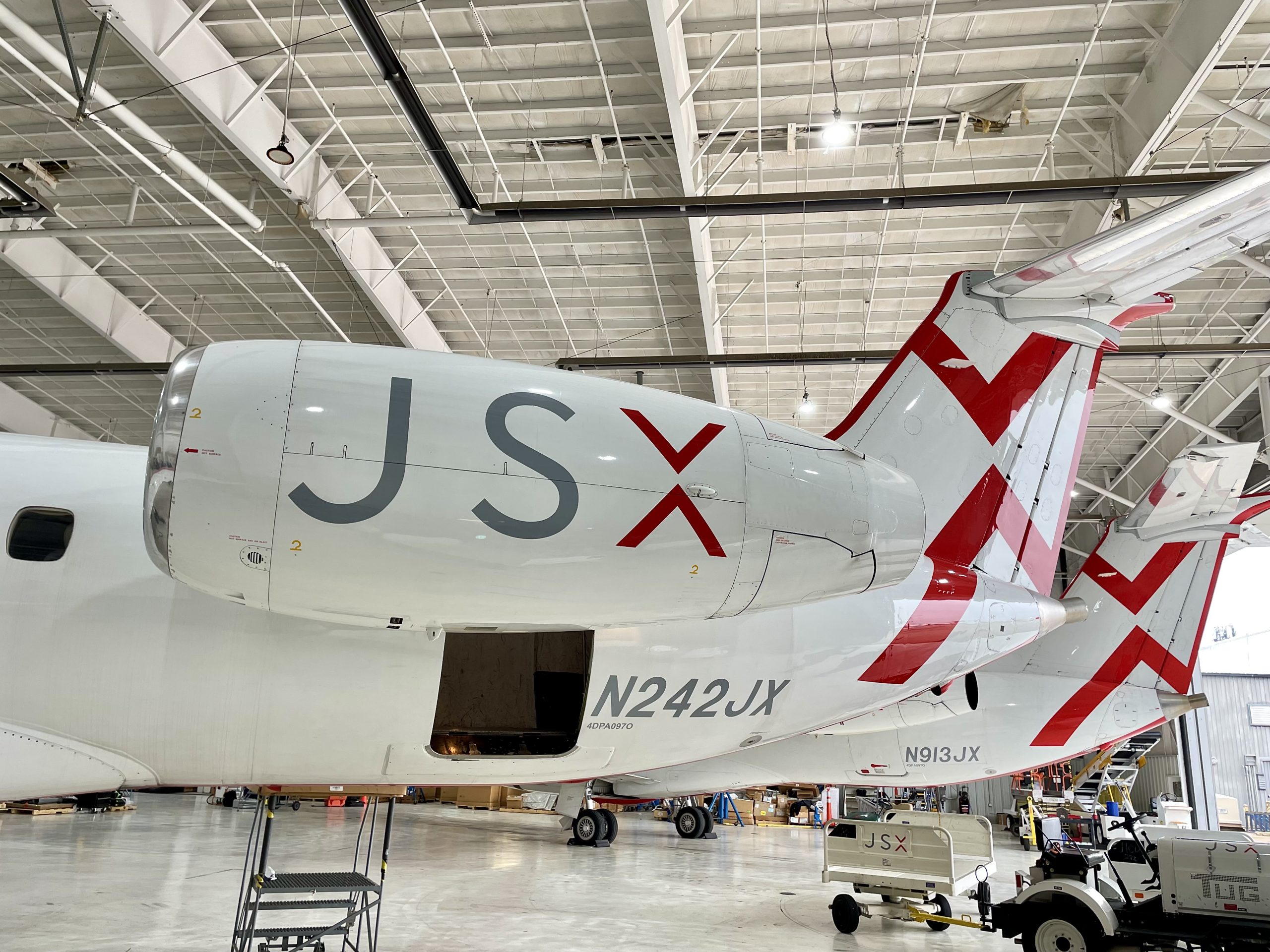
Inside the JSX hangar at Dallas Love Field. (Photo: Mateen Kontoravdis | AirlineGeeks)
It’s been a year of constant growth and development for JSX. After moving its corporate headquarters from California to Dallas almost five years ago, the air carrier has been hard at work refining its product and growing its network across the country. While Las Vegas to Los Angeles may have been JSX’s original bread and butter, the semi-private flights are gaining momentum across the country with unique route opportunities popping up everywhere.
Over the past few years, JSX has proven to offer a fresh experience to air travel, sprinkling in unique services and offerings throughout a passenger’s journey. Passengers seem to want more as the air carrier experiences nonstop year-over-year growth.
From 2019 through today, JSX has grown its annual enplanements by 118%. While 2022 was the air carrier’s busiest year with over 30,000 revenue flights flown, this number is expected to grow by over 65% in 2023. This year, JSX expects to record about $500 million in revenue and the air carrier’s CEO predicts that this number will grow to over $1 billion in the next five years.
More Airports, More Airplanes, More Opportunities
All regularly scheduled U.S. airlines operate as Part 121 carriers and have access to just 517 airports across the country. JSX, however, operates as a Part 135 carrier, allowing the air carrier to access over 1,500 airports nationwide. As long as the airport has at least 5,000 feet of runway pavement, JSX can land its jets there.
Throughout the industry, legacy carriers such as American, Delta, and United have been affected by a pilot shortage and have shifted focus to newer, larger jets such as the A321neo and 737 MAX 10 that allow for more seat capacity per flight. As a result, these carriers continue to pull out of smaller, regional markets. Between 2019 and 2022, regional airlines in the U.S. saw a 34% dip in flight traffic, over 18% more than medium and large airports across the nation.
Despite a significant nationwide rebound in air travel over the last two years, JSX CEO Alex Wilcox is confident that the major airlines will likely not return to the small airports that they have pulled out of, leaving thousands of seats out of smaller markets that have proven demand. Wilson believes that this will provide a significant opportunity for JSX as it expands its point-to-point route network. Since its inception, the air carrier has found it relatively easy to stimulate demand at airports with competition versus airports where JSX is the only carrier providing flights.
JSX operates from private terminals and hangars at the various airports it serves. (Photo: Mateen Kontoravdis | AirlineGeeks)
While the thesis of the air carrier’s network began in California on routes less than 500 miles, JSX has slowly embraced longer flights and expanded eastward. Since 2018, the air carrier has been adding flights from its new home in Dallas as well, connecting the state to its West Coast network as well as Austin and Houston. Despite heavy intra-Texas competition, the air carrier is expecting to launch a new city within the state over the next 12 months. JSX also recently began operating flights to New Mexico as well, flying all Taos Air flights.
The air carrier has also found success along the East Coast since the first flight touched down in Miami in November 2021. New flights to Martha’s Vineyard and Portland, ME are being added from White Plains and additional growth along the East Coast is expected over the next few years. The air carrier is also actively looking at opening a base in Florida to complement its Dallas and West Coast bases.
As an exclusive Embraer E-135 and E-145 operator, you would expect JSX to be flying older, worn out aircraft. And while the jets may be over 20 years old, each JSX aircraft goes through the air carrier’s signature “Planecycling” program prior to entering service. This sustainable reconfiguration breathes new life into the old cabins of each jet the air carrier acquires.
The E-145 can accommodate up to 50 passengers, but JSX has just 30 seats onboard each aircraft in a 1-1 configuration. Each seat has at least 34-inches of legroom and a power outlet. The air carrier also removed the overhead bins and added bright lighting to give the cabin a spacious, airy feeling.
With no overhead bins and new lighting, the JSX cabin feels spacious and modern. (Photo: Mateen Kontoravdis | AirlineGeeks)
Seats on the right side of the aircraft have an additional side table for passengers to use. (Photo: Mateen Kontoravdis | AirlineGeeks)
There are currently 16 E-135s in the fleet. These jets exclusively operate short, California routes. JSX also has 21 E-145s in its premium 1-1 configuration. The air carrier recently acquired over 40 additional E-145s and plans to retrofit and add one more jet to its fleet every six weeks over the next few years.
JSX is refurbishing an old, larger hangar at Dallas Love Field and plans to begin using it by October 2023. The new hangar has room for over four jets. (Photo: Mateen Kontoravdis | AirlineGeeks)
The air carrier also purchased all ExpressJet Airlines Embraer parts after that airline went bankrupt in 2022 to support its growing fleet. (Photo: Mateen Kontoravdis | AirlineGeeks)
Additionally, JSX recently signed a lease in a vacant hangar next door to the Frontiers of Flight Museum at Dallas Love Field. This will serve as its headquarters, maintenance facility, and future passenger lounge. The space is expected to open in October 2023 and will offer an upgraded experience for passengers traveling with from Dallas. A new Operations Control Center is also being built near the hangar.
The airline has ambitious expansion plans over the next 10 years. (Photo: Mateen Kontoravdis | AirlineGeeks)
With over 1,000 employees, additional aircraft joining the fleet, and operations spreading across the country, JSX is ascending to new heights. While certain routes are profitable, the air carrier is not yet collectively profitable. Executives at JSX expect profitability soon, though they didn’t mention a timeline. The air carrier is privately owned with high profile backers including JetBlue and Qatar Airways.
An Unmatched Experience with Starlink WiFi
As the air carrier grows and welcomes new customers, it has heavily focused on refining the passenger experience. Customers flying JSX will always depart or arrive at a private terminal, away from the busy crowds in the cities the air carrier serves. In fact, JSX customers are advised to arrive for the flight just 20 to 30 minutes before departure.
JSX is the world’s first carrier to feature a Starlink antenna on its aircraft. (Photo: Mateen Kontoravdis | AirlineGeeks)
Once onboard, passengers have access to SpaceX’s Starlink wifi from takeoff to touchdown. Connecting to Starlink is extremely easy. All you have to do is turn on the WiFi signal after switching to airplane mode and select the “Free JSX Starlink WiFi” network. There are no pop up menus or other requirements and the wifi is completely free throughout the trip.
Wifi speeds onboard were very fast and allow you to easily stream content while onboard. (Photo: Mateen Kontoravdis | AirlineGeeks)
Joining the Starlink network is very easy and there are no pop ups or other hurddles. (Photo: Mateen Kontoravdis | AirlineGeeks)
During a recent demo flight, I experienced the fastest internet connection I’ve ever had while inflight. The download speeds were faster than the typical speeds I experience on the ground. Starlink wifi allows passengers to easily stream their favorite services such as YouTube, Netflix, and Hulu, eliminating the need for the air carrier to offer pre-selected content. You can quickly
Wilcox also teased that the air carrier is in the process of becoming the first to be certified by the FAA for inflight videoconferencing on applications such as FaceTime and Zoom.
JSX is the only air carrier in the world to offer Starlink, though more airlines such as Hawaiian Airlines and AirBaltic are expected to adopt the technology in the future. Each aircraft in the fleet will feature Starlink wifi. The installation process is done in house by JSX and takes approximately eight hors per aircraft.
There’s fresh food on all flights over 500 miles. From my previous experiences, the crew on JSX is always very welcoming and friendly. (Photo: Mateen Kontoravdis | AirlineGeeks)
All flights feature a beverage and snack service with snack choices rotating throughout the day. (Photo: Mateen Kontoravdis | AirlineGeeks)
While the wifi works at stellar speeds, the onboard service is also an impressive feat of flying with JSX. Once airborne, passengers on all flights are offered free alcoholic and non-alcoholic beverages as well as a wide range of snacks. Drink choices include local and trendy picks from the various regions that the air carrier serves
Passengers traveling on flights over 500 miles are treated to the JSX long-haul experience. This includes hot towels and fresh cold food for all. Some choices include a Mediterranean Mezze, Thai Noodles, and a Chicken Wrap. Upon landing, passengers can collect their baggage airside as they deboard. While customers can earn United and JetBlue points when flying on JSX, the air carrier is also planning to launch its own unique loyalty program in the near future.
Every seat is a window seat on JSX with beautiful avgeek views for all! The airline has ambitious expansion plans over the next 10 years. (Photo: Mateen Kontoravdis | AirlineGeeks)
From convenient private terminals, industry leading wifi, and enhanced onboard offerings, JSX is working to innovate and set a new standard for the air travel experience. The air carrier continues to grow and offer a unique alternative to the traveling public as leisure demand reaches new records.
Mateen has been interested in aviation from a very young age. He loves learning about different aspects of the industry. Mateen has been an editor for the website since early 2017. Most recently, Mateen is additionally the website’s overall strategist. In addition to writing for AirlineGeeks, Mateen is a sophomore at the University of Texas studying Human Dimensions of Organizations. You can also find him on Instagram (@Plane.Photos) where he enjoys sharing his aviation photography with thousands of people on a daily basis.
RwandAir Continues Fleet Expansion with New Airbus A330-200
RwandAir, the national flag carrier of Rwanda, has recently received its third long-haul aircraft, an Airbus A330-200, which will allow the airline to further expand its long-haul operation between Europe, Middle East and Africa. The aircraft, registered 9XR-WX, is based at the carrier’s hub in Kigali and offers customers a leading experience in the skies with 30 seats in business class and 222 seats in economy class.
Connecting the Unconnected
RwandAir has a mix of regional and long-haul routes, with a focus on connecting underserved markets and driving economic growth in the region.
This acquisition is part of RwandAir’s ambitious expansion plans to strengthen its presence in the global aviation market. The airline has been rapidly growing its fleet size and route network over the past few years, with a focus on connecting Rwanda to the rest of Africa and beyond. With the addition of the new Airbus A330-200, RwandAir’s fleet size will now stand at 13 aircraft, consisting of three long-haul, one freighter, and nine short-haul aircraft.
“We are delighted to welcome another Airbus A330 to our young and expanding fleet,” RwandAir CEO Yvonne Manzi Makolo said in a statement. “Our customers can expect the best service from us and we look forward to offering a new level of comfort and connectivity on board our new aircraft as we continue to expand our reach across the globe.”
The airline is set to operate the new wide-body aircraft to its key destinations in Europe, Africa, and the Middle East, including London, Brussels, Lagos, and Dubai. This will provide customers with greater flexibility and more travel options. RwandAir has been building a strong reputation for its quality of service, reliability, and efficiency, and is expected to continue growing in popularity among travelers.
As the airline continues to grow and expand, it will be interesting to see how it continues to innovate and adapt to the changing needs of the aviation industry.
Growth in Cargo
In addition to the new aircraft, RwandAir also received its first dedicated freighter aircraft in November 2022. The carrier has been expanding its cargo services to meet the growing demand for air freight in Rwanda and the rest of Africa.
The freighter aircraft will enhance RwandAir’s cargo capacity and support the country’s economic growth by improving its connectivity with global markets.
RwandAir’s expansion plans are in line with the Rwandan government’s vision to transform the country into a regional hub for business, tourism, and trade.
The airline’s growth strategy is expected to create new job opportunities, increase tourism, and improve Rwanda’s connectivity with the rest of the world. With the acquisition of the new Airbus A330-200 and other recent developments, RwandAir is well-positioned to become a major player in the global aviation industry.
Victor Shalton's love for aviation can be traced to when he was 11-years-old. As a seasoned aviation writer, he takes pride in providing the best aviation coverage around the globe and is passionate about advancing his skills in the aviation space. In addition, he loves travelling, writing, arts and while his speaking engagements have taken him around the world, he is proud to call Nairobi home.
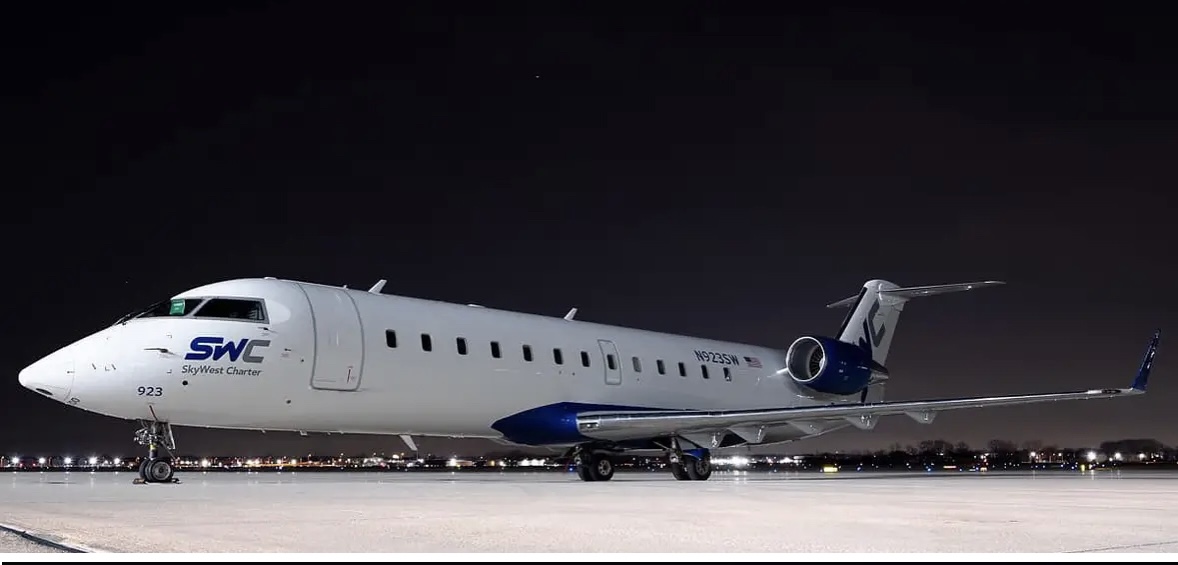
SkyWest Charters this week rolled out the first aircraft in a livery differentiating it from other aircraft in its parent company’s fleet.
Two aircraft registered N923SW and N877AS are confirmed as airframes that will operate for SWC. There is a third plane wearing the SWC livery but the registration of it is unknown and more will be added as time goes on. The current three planes have been painted for at least a month but have been kept under wraps by the airline while doing proving flights and getting certified for operations. SkyWest did not respond to a request for comment regarding SWC.
SkyWest has been having a rough time over the last year. They requested to terminate over 30 communities served by the Essential Air Service — a government subsidy-based program intended to provide small communities with regular air connectivity — around the country in March 2022. Their reasoning behind the massive termination was the pilot shortage airlines in the U.S. are currently facing.
Now, just over a year later, the company’s answer to this shortage is reaching its final stages before being able to fly passengers. The answer: take out 20-seats from its Bombardier CRJ-200s, leaving them with only 30 seats so they can operate under different regulations under Federal Aviation Administration rules and operate them as “public charters” rather than “scheduled passenger flights.” As a result, the company can hire crew with fewer hours to fly these planes. It’s not unheard of as JSX, Contour and other airlines already operate under the “public charter” certification.
Service components such as aircraft, ticket counters and other fixed services will operate under SWC branding and will not be associated with any one major legacy carrier on board or in the airports at which the airline will operate. SWC cited a “codeshare with United and Delta” in these communities on the EAS proposals, but then later went back and made a revision to the proposals making it an interline partnership rather than codeshare.
SWC has submitted multiple of proposals with the Department of Transportation to fly these planes on EAS routes. These include the communities of Jamestown and Devils Lake both of which are in North Dakota, as well as Vernal and Moab, Utah. And it is likely that they will propose SWC flights to more cities in the coming months.
The communities in Utah weren’t in the original 31 cities they requested to terminate, meaning that no city in the SkyWest system or otherwise is safe from the 30-seat CRJ. As of yet the DOT has not yet awarded a contract with the EAS option due to no active or approved certificate, meaning the process is still ongoing.
Joey has always been interested in planes for as long as he can remember. He grew up in Central New York during the early 2000s when US Airways Express turboprops ruled the skies. Being from a non-aviation family made it harder for him to be around planes and would only spend about three hours a month at the airport. He was so excited when he could drive by himself, the first thing he did with his driver's license was get ice cream and go plane spotting for the entire day. He graduated from Western Michigan University in 2022 with a B.S. in Aviation Management & Operations and a Minor in Business, and currently works for a major airline in his hometown.
Auckland Airport Commences Integration for Domestic and International Terminals
Air New Zealand Boeing 787 Dreamliner (Photo: Air New Zealand)
After twelve years of consulting with the airlines, Auckland, New Zealand’s Airport will start the biggest redevelopment project of combining its domestic and international terminal. Auckland Airport — the main gateway to New Zealand — has struggled to combine two terminals for years. The pandemic has paused the integration program as a result. The scheme is a significant investment for the airport since the opening of the airport.
According to the airport, the 57-year-old terminal is near its capacity and “hasn’t been for some time.” Auckland said the aeronautical fees of the current domestic terminal are 40 – 50% less than other airports in Australia and New Zealand in response to the aging facilities. The scheme could employ up to 2,000 workers at the height of constructions.
“A new domestic terminal integrated into the international terminal will make Auckland Airport fit for the future, providing a much-improved experience for travellers – something they’ve clearly and repeatedly told us they want,” Carrie Hurihanganui Auckland Airport’s Chief Executive said.
The combined terminal is set to complete between 2028 and 2029 with a 3.9 billion New Zealand Dollars ($2.44 billion) price tag. Auckland said the new combined terminal would add floor space across two levels to the existing international terminal, including upgrade to airfield pavement. The new facilities could save passenger’s time, decreasing the domestic flight to international transfer times to a five minutes indoor walk.
Auckland emphasised the importance of the sustainability and the new investment could make the airport more sustainable.
According to Airports Council International, the airports around the global are going to spend $2.4 trillion on airport infrastructure over the next two decades, of which more than half of the investment will take place in the Asia Pacific Region. The airport handled 9.6 million passengers at the domestic terminal and 11.5 million international passengers before Covid.
Return to Profitability
After two and half years, Auckland has made a recovery from the pandemic, turning in the black in the first half of the financial year of 2023. Earlier, New Zealand rolled out the red carpet for the Chinese visitors. The Chinese government has given a green light to the travel agency to organize the sightseeing tours to New Zealand in the early phase of reopening its border.
The travellers from China have arrived in Auckland at the right time as the number of North American visitors has been seen decreasing after the peak season. The Chinese visitors fill the gap and provide a late summer boost.
China is New Zealand’s second largest visitor market before the pandemic. In the wake of the surge of travel demand, Air New Zealand, China Eastern Airlines and Southern Airlines are going to enhance their services to Auckland by adding flight frequencies to seven-times-a-week.
A Jazeera Airways aircraft (Photo: Anna Zvereva from Tallinn, Estonia - Jazeera Airways, 9K-CAP, Airbus A320-214, CC BY-SA 2.0, https://commons.wikimedia.org/w/index.php?curid=73594057)
Kuwaiti low-cost carrier Jazeera Airways will offer flights to five new destinations in Europe during the 2023 summer season. With the launch of the new routes, the airline will have a network of 62 destinations in the Middle East, Europe, Africa, Central and South Asia.
Jazeera Airways said yesterday that, for the first time, it will operate from its base at Kuwait International Airport (KWI) to Belgrade (BEG), Munich (MUC) and Tirana (TIA). It will also resume flights to Prague (PRG) and Sarajevo (SJJ). The services are already being marketed through the airline’s official sales channels.
“We we always endeavor to expand our network and offer passengers more affordable choices for direct flights from Kuwait”, said Rohit Ramachandran, the airline’s CEO. “This summer, we have these great destinations in Europe on offer for the leisure market in Kuwait, as well as connecting passengers from around our network”, he added.
New Jazeera Airways routes in Europe during the summer of 2023.
Jazeera Airways new destinations in Europe
Prague (PRG): will restart on 8 June. Two weekly flights (Thursdays and Sundays).
Sarajevo (SJJ): will restart on 20 April. Two weekly flights (Thursdays and Saturdays). The schedule will change from 13 June, according to the carrier.
Belgrade (BEG): two weekly flights (departures from Kuwait on Wednesdays and Saturdays; departures from Belgrade on Thursdays and Sundays).
Munich (MUC): two weekly flights (Wednesdays and Saturdays).
Tirana (TIA): three weekly flights (Mondays, Wednesdays and Saturdays).
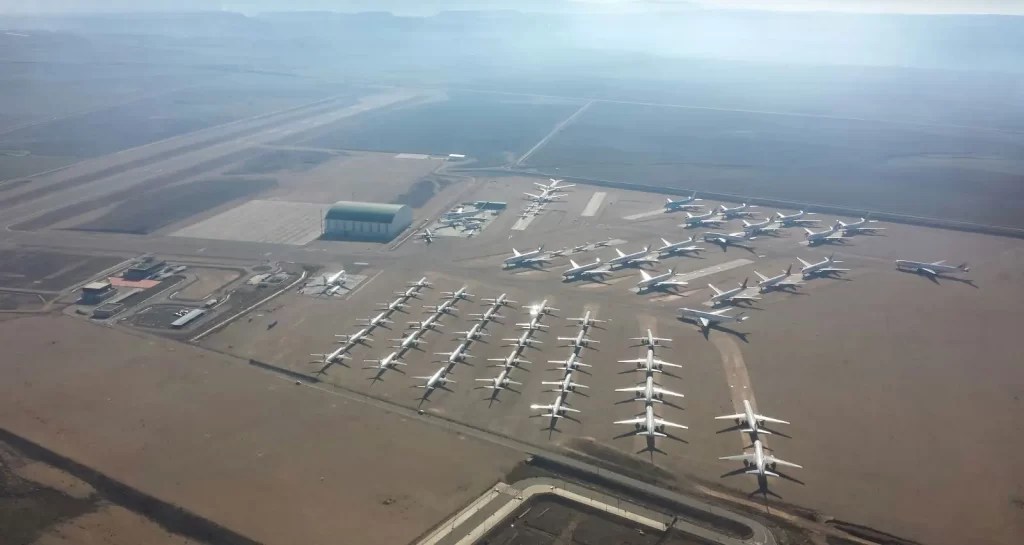
The Consortium of the Airport of Teruel inaugurated on Monday a gigantic hangar that can contain up to two Airbus A380, the largest commercial passenger plane today.
The works, which began in August 2020, required an investment of 23 million euros. It is expected that the new hangar will enhance the role of the Teruel airport platform as a leader in aeronautical services in the region. Inside the hangar, maintenance tasks can be carried out for up to two A380 simultaneously, or up to six Airbus A321.
The hangar measures 656.17 feet in width, nearly 328.08 feet in depth, and 127.95 feet in height, which is comparable to a 13-story building and makes it the tallest in Spain. Additionally, the adjacent platform spans 269,097 square feet.
The main modular door is 603.68 feet wide and 88.58 feet high, while the total area of the new installation is 193,750 square feet, with more than 172,222 square feet being useful. The office space is 26,909.78 square feet, and the workshop sector occupies 38,750.19 square feet. In terms of its structure, it consists of 36,256.56 medium-length bars of 14.76 feet and approximately 11,811.02 junction spheres up to 17.72 inches in diameter.
The Aragon government highlighted that the new hangar “will serve to increase business figures and create 150 jobs.” The tender for the concession of the use of the hangar is open until March 31, and the specifications establish an annual fee of 1.4 million euros per year (without VAT) with a duration of 25 years renewable for 10 more years.
The consortium indicated that considering the time until the activity is implemented, the implementation of the fee will be progressive, paying 20% the first year, 30% the second year, 40% the third year, 60% the fourth year, and 80% the fifth year, starting to pay 100% of the fee from the sixth year until the end of the concession.
The numbers of Teruel airport
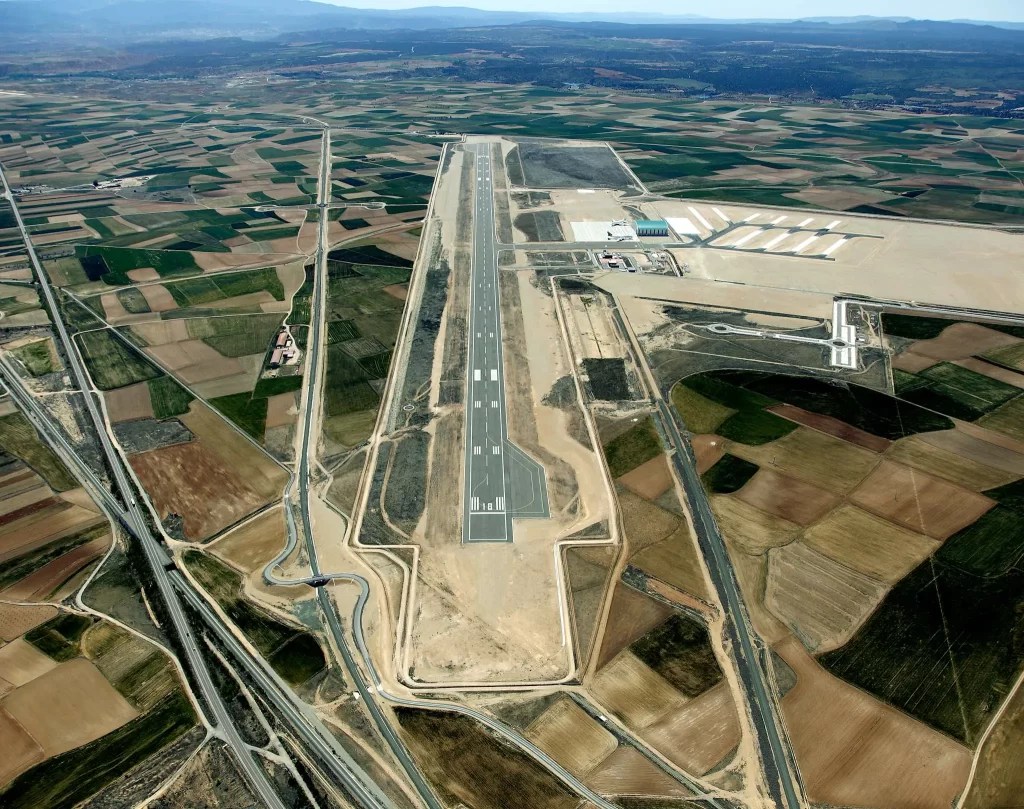
Inaugurated in 2013, Teruel airport is deployed on a land of 540 hectares, having since then registered more than 18,000 operations, 82 million euros of investment, and more than 350 jobs.
Known as PLATA (Plataforma Aeroportuaria de Teruel), it belongs to the consortium formed by the Government of Aragon and the Teruel City Council. It is in the center of the main Spanish cities, which concentrate 60% of Spain’s GDP and more than 20 million inhabitants within a radius of four hundred kilometers. Its runway is 2,825 meters long and 45 meters wide, and the aircraft apron is 108,800 square meters. It also has an aircraft storage area of 120 hectares with capacity for up to 250 aircraft.