








Stories

Mexico: Aeromar Confirms Shutdown After Facing Financial Difficulties

An Aeromar ATR 72-600 at Toulouse-Blagnac Airport in France, 2013 (Photo: Laurent ERRERA licensed under WikiCommons - https://en.wikipedia.org/wiki/Aeromar#/media/File:ATR_72-600_Aeromar_(TAO)_F-WWEI_-_MSN_1096_-_Will_be_XA-MKH_(9276777613).jpg)

Aeromar, a Mexican regional airline, has announced the cessation of its operations in a statement released on social media. The company cited “a series of financial problems” and “difficulty in closing viable agreements for its long-term operation” as the reasons behind the decision to discontinue its services.

Earlier on February 15, Mexico City International Airport (AICM) concessionaire had stated that it would not allow the airline to operate there unless it paid the more than 500 million pesos (about 26.7 million dollars) it owed, in line with the decision of Airports and Auxiliary Services (ASA), which had set the same date as the deadline for the debt that Aeromar owes for the supply of fuel.

With the decision, nearly 700 employees will be left without jobs. The company indicated that, except for some concepts related to the salary, Aeromar employees had received their base salaries normally.

Passengers affected by the abrupt cessation of operations will receive information “once alternatives are available in agreement with the competent authorities.”

Financial Struggles

The debts that Aeromar owes to social security services and savings funds of its workers affiliated with ASPA, to AICM, to ASA, and to the lessors of its airplanes have finally led to its downfall.

Although the company continued to provide commercial services until this week, its schedule had significantly decreased due to economic difficulties and the lesser number of available aircraft. The financial situation was critical, and its debts are theoretically unpayable without the intervention of an external investor.

The hope is placed on Nella, an American company presided over by a Brazilian entrepreneur, which is trying to acquire Aeromar. It is unknown what the holding company’s action will be in response to the operational cessation, but until last week, it was expected that the company’s representatives would hold a meeting with the government to propose a debt restructuring plan for the airline.

This article was originally published by Pablo Diaz on Aviacionline in syndication with AirlineGeeks.

Peru: Lima’s Airport Sees Important Recovery in 2022 Passenger Traffic

Inside Lima's airport terminal. (Photo: VasenkaPhotography - https://www.flickr.com/photos/vasenka/8722356428/, CC BY 2.0, https://commons.wikimedia.org/w/index.php?curid=26698429)

Lima’s Jorge Chávez International Airport welcomed 18.6 million passengers in 2022, showing a significant recovery of 78.96% when compared to pre-pandemic levels in 2019. However, the recovery was hindered by health restrictions in the first quarter and domestic flight cancellations due to a social crisis in December.

Domestic traffic saw a 53% increase, while international traffic showed a growth of 119% compared to the previous year. Lima Airport Partners’ Commercial Strategy and Marketing Manager, Emilio Parada, remains optimistic about the airport’s future, estimating more than 23 million passengers in 2023. The airport has also witnessed an increase in commercial airlines, promoting healthy competition and a better offering for passengers.

North America, Central America, and South America have all shown impressive growth, with Air Canada resuming operations from Toronto and Montreal, United reactivating its route between Newark and the Peruvian capital, and SKY Peru becoming the only Peruvian low-cost airline to operate between Peru and the United States. The Central American market has also shown promising growth, with Costa Rica and Volaris Costa Rica increasing operations between Lima and San José.

“Despite the conjuncture, in 2022 we managed to reach 79% of the pre-pandemic passenger traffic (2019), and for 2023 we estimate more than 23 million passengers, a level very close to the 2019 traffic. Jorge Chávez International Airport, in Lima, continues to be an attractive hub for international connections” said Emilio Parada, Commercial Strategy and Marketing Manager of Lima Airport Partners. “We have been able to recover the number of commercial airlines that operated before the pandemic, thus encouraging competition and giving our passengers a better offer according to their needs,” Parada added.

Meanwhile, Colombia, Ecuador, Chile, Argentina, Brazil, and Bolivia have also witnessed steady growth. Europe has also shown signs of recovery, with Air France-KLM resuming daily flights between Lima and Amsterdam and increasing the service between the Peruvian capital and Paris.

This article was originally published by Rainer Nieves Dolande on Aviacionline in syndication with AirlineGeeks.

Canadian Airline WestJet to Expand Domestic and Cross-Border Operations from Calgary

A WestJet 737 at LAX.
A WestJet 737 at LAX. (Photo: AirlineGeeks | Ben Suskind)

WestJet, a Canadian airline, is set to expand its domestic and cross-border operations from its main hub in Calgary (YYC) for the 2023 summer season. This expansion will include new routes, resumed multiple destinations, and increased flights on key services. The airline is committed to meeting the diverse needs of Canadian travelers by providing more domestic options and expanding regional and cross-border connectivity across Western Canada.

With these changes, WestJet will increase its Calgary (YYC) operations by 30% compared to 2022 levels. The airline’s growth in the United States is due in part to its partnership with Delta Air Lines, which will operate from Delta’s major hubs and offer customers access to over 150 US destinations.

WestJet’s new services will include non-stop flights to Washington – Dulles (IAD) and Detroit (DTW), and it will increase operations to Houston – Intercontinental (IAH), Las Vegas (LAS), and Palm Springs (PSP). The airline will also have new domestic routes to Moncton (YQM), Thunder Bay (YQT), and Quebec City (YQB).

Expanding Connectivity

“We are thrilled to expand our network and provide our guests with the substantial opportunity to explore the U.S. and Canada from coast to coast this summer,” said Alexis von Hoensbroech, WestJet Group’s CEO. “From increased domestic options to expanded regional and cross-border connectivity across Western Canada, our summer program demonstrates our unwavering commitment to meeting the diverse needs of Canadian travelers and ensuring we are the friendly, reliable and affordable airline they love,” von Hoensbroech added.

In addition to these new services, the carrier will increase its operations to Abbotsford (YXX), Cranbrook (YXC), Hamilton (YHM), Lethbridge (YQL), London – Ontario (YXU), Medicine Hat (YXM), Winnipeg (YWG), Vancouver (YVR) and Toronto – Pearson (YYZ).

This article was originally published by Rainer Nieves Dolande on Aviacionline in syndication with AirlineGeeks.
 

Emirates SkyCargo and Air Canada Cargo Sign MoU to Expand Air Cargo Options Internationally

Emirates SkyCargo and Air Canada Cargo have signed a Memorandum of Understanding (MoU) to provide additional benefits to air cargo customers worldwide. The agreement builds on the strategic commercial partnership announced by both airlines in 2022. Nabil Sultan, Senior Vice President of Emirates Cargo Division, and Matty Casey, Chief Commercial Officer of Air Canada Cargo, signed the MoU at Emirates’ headquarters in Dubai, United Arab Emirates.

The MoU outlines several initiatives, including expanded interline cargo options and block space agreements, designed to provide more capacity on an integrated global network for both airlines’ cargo customers. The enhancements are subject to regulatory approvals. SkyCargo will have access to over 60 Canadian destinations and more than 150 cities through Air Canada Cargo’s network. In turn, Air Canada Cargo can access Emirates SkyCargo’s high-frequency distribution network through scheduled passenger air operations to more than 140 international destinations.

“Emirates SkyCargo is committed to being a leading player in the global air cargo industry, providing our customers with the highest standards of products and services. Cooperating with Air Canada Cargo will offer added value to our customers through faster reach to new destinations in Canada through our Toronto and U.S. gateways,” said Naid Nabil Sultan, Senior Vice President, Emirates Cargo Division.

“This agreement allows both carriers to work more closely together to optimize our respective freighter and vessel capabilities on each of our extensive and complementary global networks. Customers will benefit from these additional synergies by having access to an even greater range of options, destinations and simplified handling when shipping globally,” said Matthieu Casey, Air Canada Cargo’s chief commercial officer.

The Canadian cargo airline will use Air Canada’s passenger flights’ hold capacity and a fleet of Boeing 767Fs, while Emirates SkyCargo will provide additional capacity with 11 Boeing 777Fs from its fleet. Both airlines specialize in handling special cargo, including oil and gas drilling rigs, auto parts, and pharmaceuticals.

Emirates and Air Canada also recently introduced a passenger codeshare agreement covering 46 destinations and launched a loyalty program partnership.


This article was originally published by Rainer Nieves Dolande on Aviacionline in syndication with AirlineGeeks.

Air India’s Modernization Set in Stone After Inking Deal with Boeing

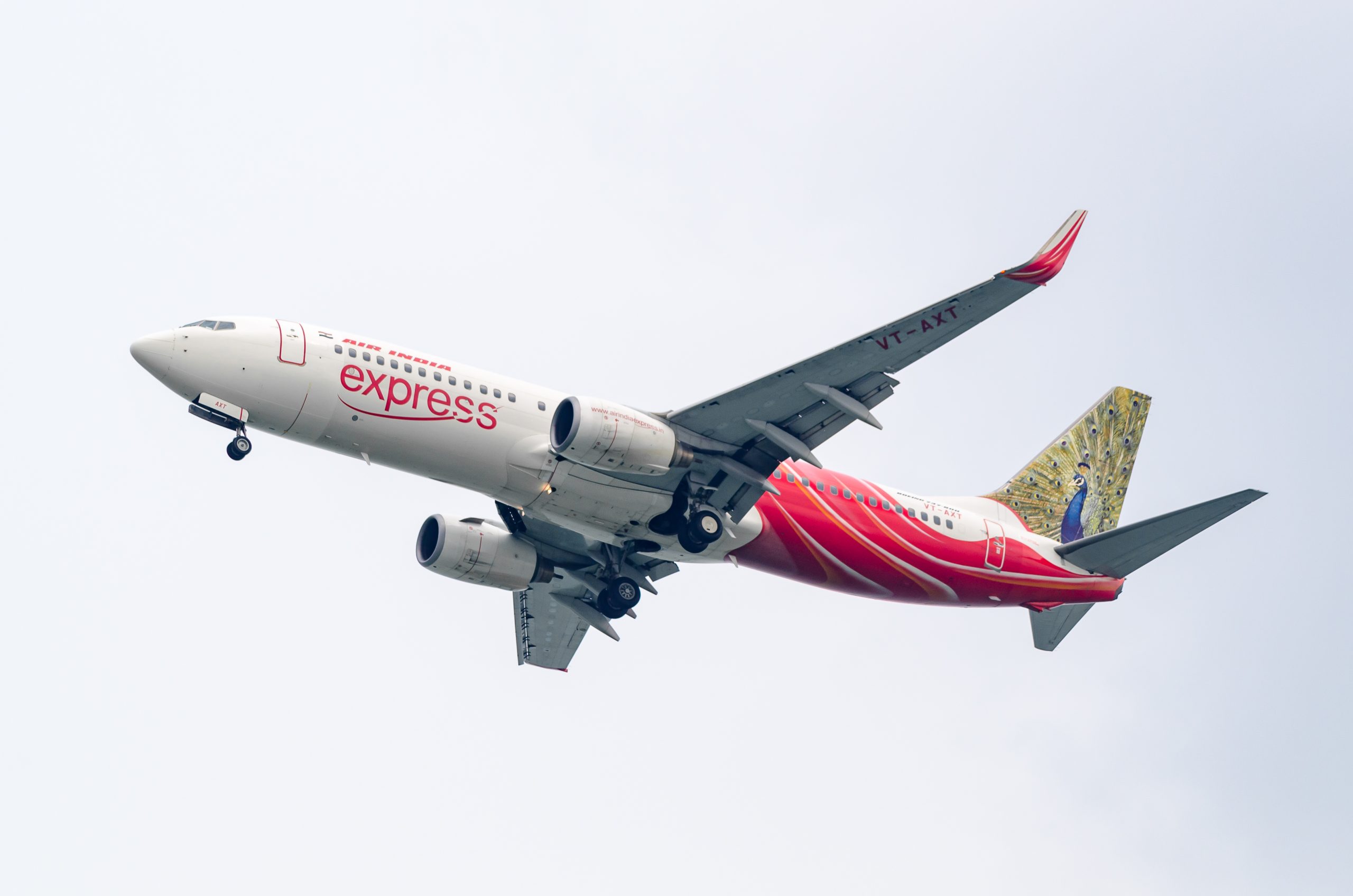
An Air India Express Boeing 737 landing at Singapore Changi Airport. (Photo: AirlineGeeks | Fangzhong Guo)

It has not even been a few hours since the Indian airline’s deal with Airbus was officially announced and another deal, albeit known and expected, with Boeing has also been announced. U.S. President Joe Biden has applauded the deal, the sticker price for the same being $34 billion.

According to sources, the American manufacturer will supply a total of 220 aircraft. The deal means that the total outstanding orders of Air India stand at 470 aircraft. Two hundred fifty of those orders are to the French aircraft manufacturer, Airbus.

Boeing is no stranger to the Indian skies. It currently holds a 100% share of widebody aircraft in the country. Several airlines in the country are loyal and regular customers of the Boeing 737 family aircraft including the ill-reputed Boeing 737 MAX.

The fact that the Indian carrier has placed significant orders with both manufacturers has a certain thinking and logic behind it.

Air India is owned by the privately owned global conglomerate, the Tata Group of India. The airline was a loss-making government venture, and hence the process for privatization was started in 2017. The same ended with the Tata Group gaining control of two airlines- Air India and a subsidiary called Air India Express. Additionally, the Tata Group owns majority stakes in full-cost carrier Vistara and the low-cost carrier Air Asia India.

The mega deal with Airbus and Boeing enables upgradation and fleet modernization as and where required.

Ever since the Tata Group had all four airlines under its belt, speculation and professional opinion point to the fact that at some point or other, the number of airlines will be reduced through a consolidation of operations.

Air India has a mixed fleet of both manufacturers. Vistara also has aircraft from both manufacturers. Air India Express operates 737s exclusively. Air Asia India operates A320s exclusively.

Which aircraft will be placed where or with which airline depends on the requirements of the airline and the judgment of the management. Nevertheless, this entire deal could be called a masterstroke since by signing both deals, the needs of multiple airlines under the parent group will be able to solve.

Aircraft distribution by manufacturer:

Airbus Boeing
Narrowbody Widebody Narrowbody Widebody
140 x A320NEO 40 x A350 XWB 190 x 737MAX 20 x 787
70 x A321NEO 10 x 777-9
Total: 210 Total: 40 Total: 190 Total: 30


Air India Inks Massive Order for 250 Aircraft from Airbus

Air India departure to Delhi from Dulles.
Air India departure to Delhi from Dulles. [J David Buerk Photography]

The flag carrier of India, Air India has officially announced its deal to purchase 250 aircraft from Airbus of France. After much speculation and rumors, this deal was considered finalized by most people awaiting just an official announcement from all the involved parties.

This deal is in line with the policy of the TATA Group, the new owners of Air India. They are renewing and breathing life into the dilapidated and loss-making airline.

In a live stream, the deal was announced in the presence of Narendra Modi, Prime Minister of India; Emmanuel Macron, President of France; N Chandrasekaran, the Chairman of Tata Sons; Guillame Faury, the CEO of Airbus and Ratan Tata.

As mentioned, the deal involves the purchase of 250 aircraft, a combination of widebody and narrowbody aircraft. Airbus has the A350 and the A330NEO as available options for widebody aircraft. The Indian carrier has opted for 40 A350s. It is not yet known which variant of the same has been ordered.

The France-based aircraft manufacturer has the A320 family and the A220 family on offer for narrowbody aircraft. The oldest Indian airline already has 68 planes of the A320 family [Source: Planespotters.net]. It is yet to be announced as to which narrowbody aircraft will be selected. However, logically speaking, the chances of more A320 family aircraft entering service are highly probable.

However, this is not all.

Air India was a government-owned entity, which was sold to the TATA Group in 2022. Incidentally, the airline was started by J.R.D. Tata. The same person started to build a business that has today spread across the globe and the name “TATA” is now known around the world across several sectors.

The 250 aircraft deal is just part of a massive modernization and upgradation plan in the works. Another 220 aircraft will be ordered, speculatively from the American aircraft maker, Boeing.

This brings the sum total of this massive fleet upgradation entailing 470 aircraft orders, which is absolutely enormous.

Additionally, the Tata Group has already invested a good amount of money to upgrade the interiors of its current widebody fleet in order to provide customers an experience with the best comforts and in-flight entertainment. Rumors flying around also state that the airline’s livery might also be updated if not changed.

This deal with Airbus is a massive win for the aerospace giant in India. Some might ask, “India is already filled with Airbus aircraft, how is this a win?” The answer that the French company has won orders for 40 widebody aircraft, ending the monopoly of widebody aircraft being enjoyed by Boeing. The last time an Airbus widebody was in regular use in India was by Jet Airways when it had the A330 in its fleet. However, Jet Airways went belly up in 2019. Since then no Indian airline has operated an Airbus widebody.

This order for 40 A350s beckons a new era of competition among the two aerospace juggernauts, Airbus and Boeing.

India is going through a paradigm shift in its aviation industry across all fronts. Both Airbus and Boeing already had their binoculars trained on the country since before the pandemic because of the massive boom in travel and aviation being predicted.

Each day airlines report figures which have crossed the pre-pandemic levels, an indication that the psyche of Indian travelers has been changed to the extent that they can freely traverse the country by air without irrational fear of Covid-19.

Southwest Airlines Expands Its Networks, Grows At Long Beach Airport

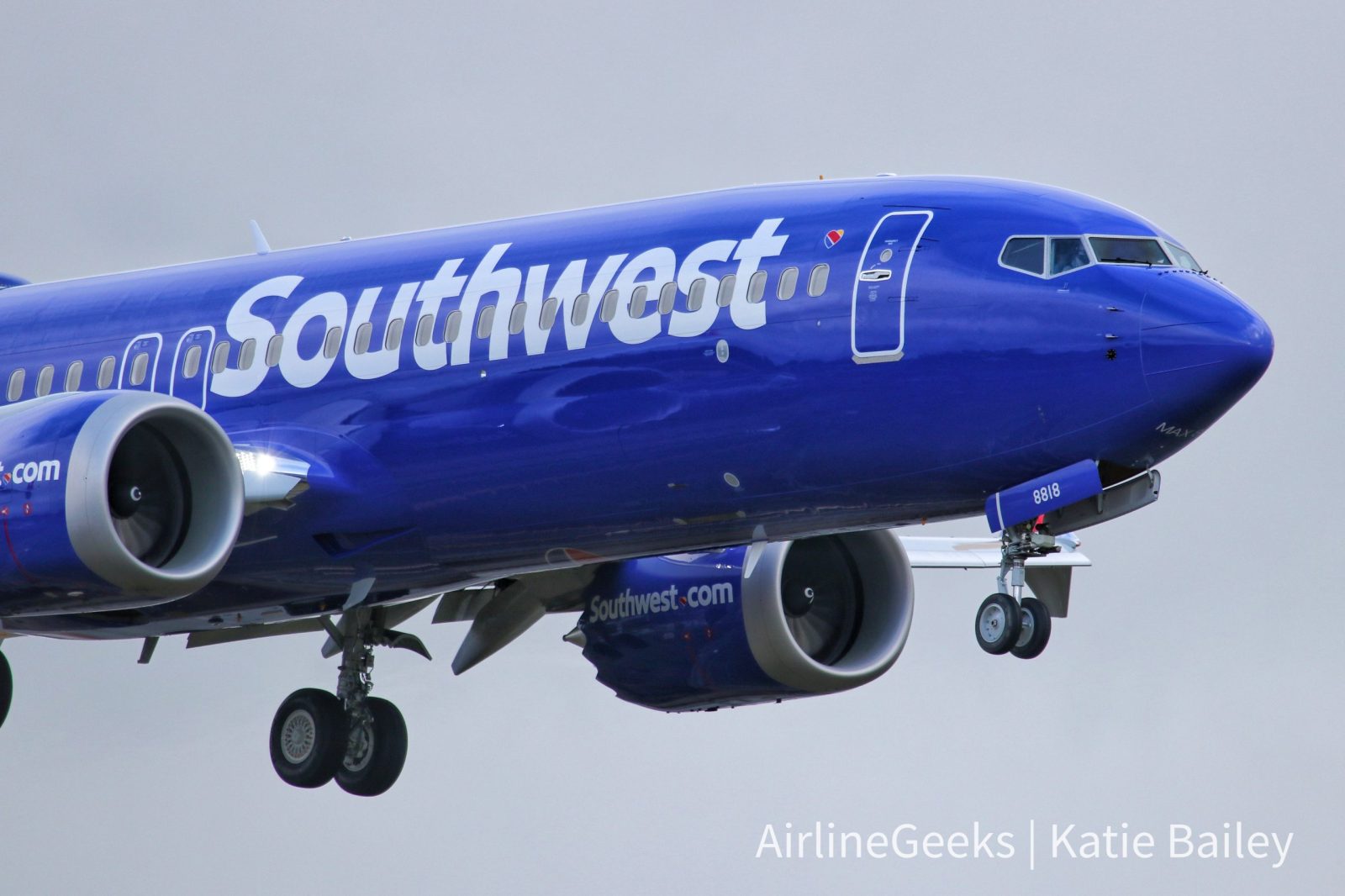
A Southwest Boeing 737 MAX 8 on approach to Paine Field. (Photo: AirlineGeeks | Katie Zera)

After the devastating operational meltdown that left hundreds of thousands of passengers stranded across the United States during last year’s holiday season, Southwest Airlines has resumed its “business as usual” mode doing what it has been doing best for over 50 years: flying customers and delivering results for its investors.

Despite the cost of the heavy disruptions that almost brought its network to a standstill towards the end of December, Southwest was able to deliver a profit during the last quarter announcing a dividend of $0.18 per share that will be paid on Mar. 29.

Three New Services At Long Beach Airport

In addition to that the Texas-based carrier also announced an expansion of its domestic network adding 21 new routes that will start between July and September 2023. Three of these routes will launch from Long Beach Airport (LGB), the third airport in the Los Angeles area served by Southwest after Los Angeles International (LAX) and Burbank.

On Jul. 11 daily flights will commence to Colorado Springs, CO and El Paso, TX, while on Sept. 5 there will be a new daily service to Albuquerque, NM.

Long Beach Airport used to be the main base of low-cost airline JetBlue in Southern California before the New York-based carrier progressively moved the focus of its West Coast operations to Los Angeles International and eventually decided to stop serving the airport in October 2020. After the departure of JetBlue, Southwest Airlines spotted an opportunity and opened a base at Long Beach. With these new services just announced, now Southwest serves 22 destinations as far east as Orlando, FL and as far west as Honolulu.

Other routes to be launched include a mix of services restarted after the pandemic-induced hiatus and brand-new routes, as well as seasonal and year-round connections.

One of those is the flight from Baltimore International (BWI) to Oakland International (OAK), one of the very first transcontinental routes that were started by Southwest Airlines to connect two of the main hubs in their network.

Here is the complete list:

  • Baltimore (BWI) to Oakland (OAK)
  • Denver (DEN) to Richmond (RIC)
  • Houston (HOU) to Raleigh (RDU)
  • Dallas (DAL) to Philadelphia (PHL)
  • Las Vegas (LAS) to Minneapolis (MSP)
  • Los Angeles (LAX) to Portland (PDX)
  • Austin (AUS) to Pittsburgh (PIT)
  • Charlotte (CLT) to Houston (HOU)
  • Houston (HOU) to Lubbock (LBB)
  • Houston (HOU) to Ontario, Calif. (ONT)
  • Houston (HOU) to Philadelphia (PHL)
  • Houston Intercontinental (IAH) to Phoenix (PHX)
  • Las Vegas (LAS) to Little Rock (LIT)
  • Long Beach (LGB) to New Orleans (MSY)
  • Nashville (BNA) to Islip/Long Island (ISP)
  • Nashville (BNA) to Omaha (OMA)
  • Austin (AUS) to Jacksonville (JAX)
  • El Paso (ELP) to Orlando (MCO)

Vanni Gibertini

Vanni fell in love with commercial aviation during his undergraduate studies in Statistics at the University of Bologna, when he prepared his thesis on the effects of deregulation on the U.S. and European aviation markets. Then he pursued his passion further by obtaining a Master’s Degree in Air Transport Management at Cranfield University in the U.K. followed by holding several management positions at various start-up carriers in Europe (Jet2, SkyEurope, Silverjet). After moving to Canada, he was Business Development Manager for IATA for nine years before turning to his other passion: sports writing.

Zero Emission Aviation Consortium Launched in New Zealand

An Air New Zealand 787 Dreamliner at Paine Field. (Photo: AirlineGeeks | Katie Bailey)

A new Zero Emissions Aviation Consortium was recently launched in New Zealand to help the country become a pioneer in the commercial use of environmentally friendly hydrogen-powered aircraft.

Although hydrogen is a difficult gas to handle, it has a high energy density. It must be remembered that on Earth hydrogen is mainly found in combined form (with oxygen in water or with carbon), and in gaseous form in very small quantities in the Earth’s atmosphere. Therefore, unlike fossil fuels, hydrogen cannot be extracted but must be produced.

There are three kinds of hydrogen:

  • Brown hydrogen is produced from hydrocarbon-rich feedstocks such as fossil fuels, including methane and coal. It produces as much CO2 as the combustion of the fuel.
  • Blue hydrogen is basically brown hydrogen, but the CO2 produced is captured and stored permanently.
  • Green hydrogen is hydrogen, but produced from renewable sources (such as solar and wind) through the process of electrolysis, from which hydrogen can be produced, the subsequent conversion of which produces energy and water vapor, without producing any pollutants.

The consortium will focus exclusively on green hydrogen.

The Consortium

The six consortium partners, Airbus, Fortescue Future Industries (FFI), Air New Zealand, Hiringa Energy, Fabrum and Christchurch Airport, will work together to develop the necessary solutions to meet the targets and to develop policies, regulations and incentives to support the development of hydrogen aviation in New Zealand.

Airbus is already very active in this field and has been working for several years to develop and deliver the world’s first hydrogen-powered commercial airliner (the ZEROe project) with a target date of 2035.

Fortescue Future Industries (FFI) is a Western Australian green energy company committed to the production of environmentally friendly, carbon-neutral hydrogen from 100% renewable sources.

Air New Zealand is an airline with a fleet of 104 operational aircraft ranging from Boeing 787-9 Dreamliners and Airbus A320s to ATRs and Q300s. Air New Zealand aims to make its first hydrogen-powered commercial demonstration flight in 2026 and begin replacing its Q300 turboprop fleet with low-emission aircraft from 2030.

Hiringa Energy is a New Zealand-based company that has been developing high-capacity green hydrogen production and refueling infrastructure across New Zealand since 2017, with the first four stations already under construction in Hamilton, Palmerston North, Auckland and Tauranga, and plans to expand to 100 stations across New Zealand by 2030.

Fabrum is a New Zealand company that manufactures green hydrogen systems for ground infrastructure at airports, as well as onboard tanks to transport liquid hydrogen for zero-emission flights. It co-developed the world’s first electric aircraft engine for Magnix and built superconducting electric motors/rotors for SAFFRAN/Airbus. The New Zealand company recently developed lightweight liquid hydrogen tank technology for Emirates Team New Zealand’s Chase Zero boat, which is sure to be useful in aviation.

Christchurch Airport, on the east coast of New Zealand’s South Island, is currently developing a 400-hectare renewable energy zone called Kōwhai Park.

The creation of a consortium demonstrates once again that it is not enough for a single company or airport to ‘solve’ the problem of aviation emissions, but that collective and joint action is needed to create a system involving all the different players in the strategic sectors: design, logistics and infrastructure.

New Zealand already has green hydrogen buses, trucks, trains and boats, some of which are supplied by the country’s infrastructure. Through this consortium, it will be possible to define and develop the existing infrastructure to supply aircraft.

In the first phase, to be completed by the end of 2023, the hydrogen supply chain will be studied and the projected needs of the local aviation market up to 2050 will be assessed. This will be followed by an investigation into the feasibility of test flights of hydrogen-powered aircraft in New Zealand.

Vincenzo Claudio Piscopo

Vincenzo graduated in 2019 in Mechanical Engineering with an aeronautical curriculum, focusing his thesis on Human Factors in aircraft maintenance. In 2022 he pursued his master's degree in Aerospace Engineering at the University of Palermo, Italy. He combines his journalistic activities with his work as a Reliability Engineer at Zetalab.

EgyptAir Takes Delivery of First 737-800SF Freighter, Aims to Expand Cargo Operations

Photo provided by Boeing

EgyptAir has received its first dedicated narrow-body freighter, a Boeing 737-800SF, as part of the airline’s modernization plan.

The aircraft, which was sent for conversion work to Florida-based Aeronautical Engineers Inc. (AEI) in September 2022, arrived in Cairo International Airport on Feb. 4.

The 737-800SF offers a main deck payload of up to 52,700 lbs and includes 11 full height 88” x 125” container positions, along with a large 86- by 137-inch main cargo door and a single vent door system.

The aircraft will join EgyptAir’s cargo subsidiary, EgyptAir Cargo, which already operates three Airbus A330-P2Fs with a capacity of 60 tons per aircraft.

EgyptAir is seeking to expand in the cargo market and modernize its cargo and passenger fleet. The airline aims to increase its fleet size and open new freighter markets in the coming years, leveraging its strategic location near the intersection of Africa and the Middle East.

In addition to the 737-800SF, EgyptAir is expecting to receive the first two of seven Airbus A321neos in March, which will be leased from AerCap. The airline operates a total of 28 737-800 passenger aircraft, one Airbus A320, and eight Airbus A320neos.

AEI specializes in passenger-to-freighter conversions and has received approvals from several aviation authorities, including the FAA, EASA, TCCA, UK CAA, and ANAC. The company is committed to obtaining additional foreign approvals to assist its leasing customers in placing their aircraft around the world. The 737-800SF is the only aircraft in AEI’s conversion fleet that has been approved for ETOPS 180.

The AEI converted 737-800SF freighter also includes a flexible Ancra Cargo Loading System, a rigid 9g barrier, five supernumerary seats as standard, a galley, and full lavatory. The forward-thinking design allows for containers to be loaded into the aircraft a full 16.5” aft of the forward door jamb, ensuring ground operators have sufficient maneuvering room, which minimizes potential door and aircraft strikes.

EgyptAir’s MRO arm, EgyptAir Maintenance and Engineering, is reportedly considering performing its own 737 freighter conversions in the future. The airline’s cargo operations have grown during the COVID-19 period, with the company starting new routes to accommodate the need to transport medical items and agricultural crops.

EgyptAir’s acquisition of its first converted narrow-body freighter, the 737-800SF, marks a significant milestone in the airline’s modernization plan. The aircraft will join EgyptAir Cargo’s fleet and help the airline expand its presence in the cargo market, especially given its strategic location near the intersection of Africa and the Middle East.

With a focus on modernizing its cargo and passenger fleet and increasing its fleet size, EgyptAir is poised to meet the growing needs of the local market in terms of exporting goods abroad.

Victor Shalton

Victor Shalton's love for aviation can be traced to when he was 11-years-old. As a seasoned aviation writer, he takes pride in providing the best aviation coverage around the globe and is passionate about advancing his skills in the aviation space. In addition, he loves travelling, writing, arts and while his speaking engagements have taken him around the world, he is proud to call Nairobi home.

Vietnam Airlines a Step Closer to Increasing Flights to Singapore and China

A Vietnam Airlines A350-900 in Seoul
A Vietnam Airlines A350-900 in Seoul. (Photo: AirlineGeeks | Ben Suskind)

Vietnam Airlines and Singapore Airlines are on the way to providing a better service to their customers. The two Asian carriers have signed a Memorandum of Understanding (MOU) to explore the codeshare arrangements to facilitate better connectivity between the two countries.

The pair have a long-standing partnership for over two decades and keep seeking opportunities to expand their cooperation since travel restrictions were lifted.

“Over many years, Singapore remains one of the most important markets for Vietnam Airlines. We hope to leverage our joint capabilities throughout many commercial fields of our business and therefore provide seamless experience to our valued customers,” Le Hong Ha, Chief Executive Officer of Vietnam Airlines said.

“These win-win arrangement will offer more options and greater value for our customers, support economic growth, and bolster initiatives that facilitate tourism activities,” Goh Choon Phong, Chief Executive Officer of Singapore Airline responded to the MOU.

Increasing flights to China

Meanwhile, Vietnam Airline will bolster its services by resuming flight services to China in the coming months. China hasn’t fully reopened its market to Vietnam at the moment.

The flag carrier will resume three-times-a-week services between Hanoi and Beijing in March. Meanwhile, it will ramp up its flight frequencies from Hanoi and Ho Chi Minh City to Guangzhou and Shanghai to four times a week. Also, Vietnam Airlines is going to relaunch the route from Da Nang to Guangzhou, Shanghai and Chengdu, and Hanoi to Chengdu in April with two weekly flights on each route.

The flag carrier plans to operate Airbus A350 and Boeing 787 Dreamliners on specific routes to China starting in September.

China reopened its border in January. However, Vietnam hasn’t made a fortune from the policies thus far as China hasn’t approved Vietnam sightseeing tours.

Earlier, China has allowed its travel agencies to organize tours to 20 countries, such as Malaysia, Singapore and Philippines. Thailand and Indonesia started rolling out the red carpet for tourists from China last week, but Vietnam is a different kettle of fish. The travel sectors in the country are looking forward to welcoming Chinese tourists at any time soon.

The Civil Aviation Authority of Vietnam is optimistic about the future, expecting a full recovery from the pandemic by the end of 2023. The country recorded strong growth in the domestic aviation market in the last year.

However, Covid-19 is the perfect storm for the airlines. After three years of the pandemic, Vietnam Airlines is at risk of delisting from securities trading. Under the regulations, a company in the red for three consecutive years could be delisted. By the end of 2022, the airline recorded a loss of $1.46 billion.

Sign-up for newsletters & special offers!

Get the latest stories & special offers delivered directly to your inbox

SUBSCRIBE

Uh-oh! It looks like you're using an ad blocker.

Our website relies on ads to provide free content and sustain our operations. By turning off your ad blocker, you help support us and ensure we can continue offering valuable content without any cost to you.

We truly appreciate your understanding and support. Thank you for considering disabling your ad blocker for this website