








Stories

IATA Responds to Reintroduction of COVID-19 Testing

Air China's A350 Star Alliance Livery approaching at Singapore's Changi International Airport. | (Photo: Lei Yan)

Chinese authorities are now allowing citizens to travel internationally again after almost three years of strict bans due to the pandemic. However, as a result, airlines are again facing the prospect of managing passenger testing in several countries. Since the lifting of the Chinese government’s COVID-19 elimination policy last month, a number of countries have reintroduced testing requirements for airline travelers from China.

Airline advocacy organization IATA (International Air Transport Association) has expressed ‘disappointment’ at the imposition of travel restrictions for passengers from China. In a statement issued on Wednesday, IATA Director General Willie Walsh said, “It is extremely disappointing to see this knee-jerk reinstatement of measures that have proven ineffective over the last three years.”

Walsh cited that countries should employ “tools to manage COVID-19 without resorting to ineffective measures that cut off international connectivity, damage economies and destroy jobs. Governments must base their decisions on ‘science facts’ rather than ‘science politics’.” He also urged the Chinese government “to remove the need for pre-departure COVID-19 testing for those traveling to China.”

The U.S., India, Italy, Japan and Australia are among those countries imposing measures on travelers from China. As with the management of testing requirements at the various peaks of the pandemic over the last three years countries are implementing various types of controls and approaches that could be considered ‘inconsistent’. For example, the U.S. require travelers from China to undertake a COVID-19 test prior to departure. Authorities in Japan will require passengers arriving from China to undertake a test upon arrival with those testing positive subject to quarantine.

The English government initially advised that pre-arrival testing would be required but reversed that decision. Reuters reported that the approach now is that testing will be voluntary and any passenger who may test positive after arriving in the country would not need to quarantine. With several European countries imposing their own measures the European Union (EU) issued a statement on Wednesday seeking ‘a coordinated precautionary approach in the light of Covid-19 developments in China’ by all member states. CNBC reported that health policy is determined by each EU member state hence some countries such as Italy, France and Sweden initiating testing measures whilst other countries within the EU have no restrictions.

This week, Morocco took a more extreme approach and banned all travel from China of citizens from any country. In a statement announcing the measures, the Moroccan Ministry of Foreign Affairs said the restrictions had been initiated after closely following events within China over recent weeks. The Ministry also advised, ‘ This exceptional measure in no way affects the sincere friendship between the two peoples nor the strategic partnership between the two countries, to which the Kingdom remains firmly attached.’

Given the dynamic nature of the current situation and with past knowledge of travel restrictions, travelers should check on the requirements for travel close to the dates of travel.

John Flett

John has always had a passion for aviation and through a career with Air New Zealand has gained a strong understanding of aviation operations and the strategic nature of the industry. During his career with the airline, John held multiple leadership roles and was involved in projects such as the introduction of both the 777-200 and -300 type aircraft and the development of the IFE for the 777-300. He was also part of a small team who created and published the internal communications magazines for Air New Zealand’s pilots, cabin crew and ground staff balancing a mix of corporate and social content. John is educated to postgraduate level achieving a masters degree with Distinction in Airline and Airport Management. John has held the positions of course director of an undergraduate commercial pilot training programme at a leading London university. In addition he is contracted as an external instructor for IATA (International Air Transport Association) and has been a member of the Heathrow Community Fund’s ‘Communities for Tomorrow’ panel.

British Airways’ BA Euroflyer Expands Route Offering from London Gatwick

A BA Euroflyrt Airbus A320 (Photo: British Airways)

British Airways announced that it will add five routes to and from London Gatwick Airport. The new connections will begin in March, May, June and December, according to a press release sent by the airline. The flights to Greek, French and Austrian cities are set to be operated by BA Euroflyer.

Schedule to and from London Gatwick – British Airways

Salzburg (SZG): 2 flights weekly starting March 28th
Montpellier (MPL): 3 weekly flights starting May 27th
Corfu (CFU): 3 weekly flights starting May 30th
Mykonos (JMK): 1 flight a week starting June 10th
Innsbruck (INN): 8 weekly flights starting December 8th

Tom Stoddart, Acting CEO of BA Euroflyer, said: “It is exciting to see our short-haul schedule at Gatwick grow. These additional routes are to a broad range of destinations that will suit all manner of travellers from beach lovers and skiers to explorers and adventurers. We have something for everyone departing from London Gatwick.”

The airline has also put its short-haul Gatwick winter schedule on sale on January 4, offering 21 destinations to customers. Ski hotspots include Geneva and Turin, while winter sun destinations include Tenerife and Lanzarote.

The announcement of new routes follows latest news that BA Euroflyer received its Air Operator’s Certificate (AOC) and Operating Licence from the UK Civil Aviation Authority (CAA). This allows it to operate as a subsidiary airline in an equivalent manner to the company’s existing subsidiary, BA Cityflyer, flying under the British Airways brand and delivering the premium British Airways service.

This article was originally published by Sebastián Polito on Aviacionline in syndication with AirlineGeeks.

Argentina is the First Destination for Iberia’s New Airbus A350 Next

Iberia's first A350-900XWB named Placido Domingo. (Photo: Iberia)

Iberia has chosen Argentina as the first intercontinental market to debut the new A350 Next aircraft, which include its new cabin products, on the Madrid (MAD) – Buenos Aires (EZE) route. Gradually, these aircraft will be incorporated on the company’s other Latin American services.

On January 3, flight IB 6845 was operated by the A350-900 with registration EC-NXE and christened “Ciudad de Quito”, which took off with 352 passengers from Adolfo Suarez International Airport (MAD) at 12:53 local time and landed at Ezeiza International Airport (EZE) at 20:49, after 11 hours and 57 minutes.

As part of the celebration of the A350 Next’s entry into service, passengers were presented with a Panasonic state-of-the-art headset, an amenity kit designed for all classes, and a cocktail include in the onboard service.

Iberia continues to strengthen its presence in the Argentine market, where it has increased its operations to two daily flights. According to data obtained by Aviacionline through Aena Estadísticas, in the period January – November 2022, 691,007 passengers and 14,094 tons of cargo were mobilized between Madrid (MAD) and Buenos Aires (EZE) in 2,466 operations.

The company’s new A350s feature aerodynamic improvements, a one-ton reduction in aircraft weight for improved efficiency at Hot & High airports, as well as new flap positions and a faster retracting landing gear.

Cabin improvements and new products

The Airbus A350-900s have a new configuration for 352 passengers in three classes (31 Business Class/28 Premium Economy/293 Economy Class) and offer the company’s new cabin products. It also incorporates an innovative new-generation in-flight entertainment system that Iberia has developed with Panasonic, called IFE Next.

The cabin has a new lighting system with six lighting moods -wake up, meal, relax, sleep, boarding, take-off, and landing-. In the bathrooms the faucets are touch-free, and the linings are made of antibacterial materials.

This article was originally published by Rainer Nieves Dolande on Aviacionline in syndication with AirlineGeeks

Boliviana de Aviación Receives a New Boeing 737-800

A Boliviana de Aviación Boeing 737-800 (Photo: Boliviana de Aviación)

Boliviana de Aviación (BoA) took delivery of its ninth Boeing 737-800 on January 2. In less than a year, the company has incorporated five aircraft of the same model.

The aircraft in question is registered CP-3206, and like the other new aircraft, it has a capacity for 168 passengers in a single class and will operate on domestic and medium-range international flights. The CP-3206 is owned by lessor SMBC Aviation Capital and the contract is worth USD 146,000 per month. The aircraft is 13.1 years old and previously belonged to Air Berlin, Pegasus, Jet Airways and GOL Transportes Aéreos.

The Ministry of Public Works and BoA executives presented the new aircraft at Jorge Wilsterman International Airport in Cochabamba. They also announced that in May 2023 they will complete the construction of a new maintenance hangar. In the domestic segment, BoA uses its Boeing 737-800 on these routes:

Santa Cruz de la Sierra (VVI) to Cochabamba (CBB), La Paz (LPB), Tarija (TJA)
La Paz (LPB) to Cobija (CIJ), Cochabamba (CBB), Sucre (SRE) and Trinidad (TDD).
Cochabamba to Oruro (ORU), Sucre (SRE), Tarija (TJA) and Trinidad (TDD).

In the international market, they operate from Santa Cruz de la Sierra to Buenos Aires/Ezeiza (EZE), Argentina; Lima (LIM), Peru; and São Paulo (GRU), Brazil.

As it continues to receive more Boeing 737-800s, the company plans to add new destinations in 2023. On target are Cancun (CUN), Mexico; Punta Cana (PUJ), Dominican Republic; Asuncion (ASU), Paraguay; and Santiago (SCL), Chile. Boliviana seeks to make Santa Cruz de la Sierra (VVI) a hub for South America.

BoA’s current fleet totals 26 units:

5 Boeing 737-300
4 Boeing 737-700
9 Boeing 737-800
4 Boeing 767-300ER
2 Mitsubishi CRJ 200

More aircraft in 2023

The company is carrying out a fleet modernization phase, with which it would replace all its Boeing 737-300 and Boeing 767 aircraft. As part of its renewal program, the state-owned company plans to add three Airbus A330-200 aircraft to its fleet, ordered at FIDAE 2022. However, there are delays in the delivery of the A330s due to problems in MRO services and the supply chain, an issue that affects the industry globally.

Ronald Casso, General Manager of Boliviana de Aviación, had told Aviacionline during the ALTA Forum last October that the three Airbus A330-200s are in Europe (Birmingham, Italy and Germany) and previously operated for Virgin Australia. The aircraft will maintain the former company’s interior, featuring a better business and economy class than its former Boeing 767s. They will have a revamped livery, in-flight entertainment, and new catering. BoA also plans to add a third CRJ 200 to improve the network of domestic destinations, adding cities such as Rurrenabaque, Riberalta and Guayaramerín.

Casso has urged the Bolivian government to improve existing airports for Boliviana de Aviación to operate. In recent years, airports such as Chimoré, Monteagudo, Ixiamas and San Ignacio have been opened in Bolivia, but have not had sufficient demand to sustain regular flights.

This article was originally published by Gastón Sena on Aviacionline in syndication with AirlineGeeks.

Florida Ground Stop Causes Widespread Delays

Orlando's Mitsubishi Crystal Mover (Photo: Ian McMurtry | AirlineGeeks)

In yet another twist to what has been a wild week of travel in the United States following the holiday season, the FAA issued a ground stop at every Florida airport on Monday. 

The Federal Aviation Administration (FAA) told WESH 2, an Orlando based network that “The FAA has slowed the volume of traffic into Florida airspace due to an air traffic computer issue that is being resolved…The ERAM system is a modern computer system at the air traffic centers that handle en route traffic.”

The ground stop was quickly resolved but by then the damage had been done. Flights are now reported to be slowly trickling out of Florida airports but the lingering effects from the stop that lasted more than 2 hours will likely be felt across the country especially on the East coast where hundreds of aircraft make their way up and down every day. 

Airlines said little about the issue given that it is largely out of their control but American Airlines, Miami’s biggest carrier said on Twitter that “The ground stop for all Florida airports is affecting all carriers in and out of the area due to an issue at the MIA ATC control center.” There was no further explanation from the FAA or Miami Airport, seemingly the center point of the stoppage on what exactly went wrong though an investigation will likely be done once things have settled. 

FlightRadar24 is reporting flights having an average delay of about 40 minutes at Miami International as of 4 PM EST with the same going for Orlando International Airport. Flights departing the two hubs are experiencing very little delays as of now likely as a result of arriving flights being held in their origin airport during the stop or required to enter holding patterns depending on location. 

The delays were certainly not received well on social media by many passengers who had experienced unprecedented delays and cancellations by Southwest Airlines last week as a result of a technical infrastructure breakdown that sent the airlines’ entire operation into a complete tailspin.

Today’s malfunction in Florida could be a combination of both a high density of private aircraft following the holiday season along with air traffic control systems that could be in need of a refresh in order to accommodate ever-growing demand. Further information will likely be released in the coming weeks with hopes of being able to avoid such a delay but for the time being things look to be returning to normal with decreasing delays. It is recommended that passengers always check with their airline for the latest up to date information.

Ezra Gollan

Ezra Gollan is a student, photographer and aviation enthusiast based in New York, New York. He has spent over half a decade around New York City’s airports as a photographer.

NATO Pipeline Supplying Brussels Airport To Be Used To Transport SAF

Brussels aircraft (Photo: Brussels Airlines)

As of Jan. 1, Brussels Airport became the first Belgian airport to be fully supplied with kerosene through the NATO pipeline. The NATO Pipeline System (NPS or CEPS – Central Europe Pipeline System) was created during the Cold War to supply NATO forces with fuel and to meet the needs demanded by the Western security environment. The NPS consists of ten separate fuel and lubricant storage and distribution systems. In total, it is about 10,000 kilometers long, runs through 12 NATO countries, and has a storage capacity of 4.1 million cubic meters.

From now on, sustainable aviation fuels can also be supplied quickly and ecologically through this system to the Belgian airport. This is an important step to increase the use of sustainable fuels in the coming years and reduce CO2 emissions.

The first batch of sustainable aviation fuel transported through the NPS was transported by Brussels Airlines to Brussels Airport, and loaded into the first symbolic SAF flight from Brussels to Malaga on the first day of 2023. Thanks to NATO’s cooperation, Brussels Airlines is the first airline to fly with SAF transported through the pipeline system.

“To meet our climate goals, we will need to dramatically increase the use of alternatives to fossil fuels in the coming years. In addition to fleet renewal, sustainable aviation fuel is the most effective tool currently available to reduce aviation emissions. Together with the Lufthansa Group, we have been investing in the production and use of SAF for several years now. The fact that we can now transport sustainable aviation fuel from the blending plant to our aircraft at Brussels Airport quickly and in an environmentally friendly way is an important step toward increasing its use in the near future,” said Peter Gerber, CEO of Brussels Airlines.

The use of SAF reduces greenhouse gas emissions by up to 80 percent (when used in pure, unblended form) compared to using fossil aviation fuel. The Neste MY sustainable aviation fuel used by Brussels Airlines is produced from waste and residual feedstock from 100% sustainable and renewable sources, including used cooking oil and animal fat waste. Brussels Airlines purchased 2,000 barrels of 1,000 liters each with a 38% SAF blend for this pilot project. The sustainable aviation fuel was transported by Brussels Airlines from Neste blending facilities in Ghent via the CEPS pipeline to the fuel storage facility at Brussels Airport on January 1 just after midnight, allowing Brussels Airlines to operate its first flights with SAF on January 1.

The European Commission is working on imposing an SAF use requirement of 2 percent from 2025 and 5 percent from 2030. Brussels Airport is aiming for a target of 5 percent SAF by 2026 as part of the Stargate project. To promote the collection of raw materials for SAF, an awareness campaign will also be carried out to inform and sensitize the public to collect more used frying oil for SAF production.

Vincenzo Claudio Piscopo

Vincenzo graduated in 2019 in Mechanical Engineering with an aeronautical curriculum, focusing his thesis on Human Factors in aircraft maintenance. In 2022 he pursued his master's degree in Aerospace Engineering at the University of Palermo, Italy. He combines his journalistic activities with his work as a Reliability Engineer at Zetalab.

Venezuela: After Failing to Get Authorization, Estelar Airlines Cancels Scheduled Flights to Colombia

An Estelar Boeing 737 in Caracas. (Photo: Aviacionline)

On December 27, 2022, the Venezuelan Aviation Authority issued a statement confirming that Estelar Airlines was not authorized to fly to Bogota. In September last year, the National Institute of Civil Aeronautics (INAC) added Colombia on its list of countries authorized for regular passenger operations to Venezuela.

The Venezuelan airline had placed the Caracas (CCS) – Bogota (BOG) route for sale through its website and regular channels. After the announcement of the Colombian authority, the company was forced to transfer its operations to Turpial Airlines, to temporarily cover its operations in the Colombian capital.

Estelar issued a statement regarding the status of its services to Colombia:

“According to a series of meetings held between the Government of Venezuela and Colombia, where points of the reactivation of the air travel between both nations were discussed and it was agreed that Estelar would be the second airline to operate the route Caracas (CCS) – Bogota (BOG) – Caracas (CCS).

Aerolineas Estelar S.A. According to this information requested non-scheduled flights in the mentioned route with the due documentation before the National Institute of Civil Aeronautics (INAC) and the Civil Aeronautics of Colombia. The airline received approval from INAC, however on December 21 the company submitted its request to the Colombian authorities, which is currently under evaluation and analysis.

For this reason, the airline has decided to cancel its operations to the Colombian capital as from January 4 and all tickets issued will be cancelled. Once approval has been obtained from the Colombian regulator, it will resume services on the route.”

Currently, the airlines authorized by Aerocivil to fly between Colombia and Venezuela are Wingo, LATAM, Avianca, Laser, Avior, Turpial Airlines and Satena. The uncertainty regarding Caracas-Bogota operations has become a comedy act since the restart of the aerial link was first announced.

This article was originally published by Rainer Nieves Dolande on Aviacionline in syndication with AirlineGeeks.

Manila Airport Hit by Power Outage

Philippine Airlines
A Philippine Airlines aircraft. (Photo: AirlineGeeks | William Derrickson)

Manila’s Ninoy Aquino International Airport (NAIA), the gateway to Philippines, has fallen at the first hurdle in 2023. Thousands of passengers were left stranded in the airport on the New Year’s day due to a power outage.

According to Cesar Chiong, General Manager of the Manila International Airport Authority (MIAA), the failure of primary and secondary power supply resulted in the outage at the airport. The own power system was introduced in 2018. The cause of the incident is being determined but the government has ruled out sabotage.

Jaime Bautista, Philippine Transportation Secretary, has apologized for the inconvenience caused to the affected passengers. During the power outage, the air traffic control center has lost communication.

“If you will compare (our airport) with Singapore’s, for one, there is a big difference – they are at least 10 years ahead of us., Bautista said.

As a result of the incident, some flights have cancelled, diverted and delayed. Qantas is among the affected airline as the QF 19, from Sydney to Manila, forced to return to Sydney. The passengers have suffered a 10 and half hours delay.

“All airlines were prevented from arriving into Manila on Sunday afternoon as local authorities closed the local airspace,” Qantas said in a statement.

MIAA said an estimated 65,000 passengers were affected by the incident and need to take around 72 hours for the airlines to normalize their operations.

Philippine Airlines said the power failure created a domino effect, delaying the flights scheduled on the following day, it will take some time to fully restore normal schedule. In the wake of NAIA set a maximum of 15 arrivals per hour instead of 20, the flag carrier could not restart its full operation.

Cebu Pacific Airways, the budget airline in the country, has cancelled 259 flights, affecting 26,253 passengers. The glitch led to a cancellation of 75 flights on the following day.

In response to the power failure, Bureau of Immigration have deployed sufficient personnel at the airports across the country.

New Airport Launch in 2027

The technical issue has raised concerned about the facility of Ninoy Aquino International Airport. The airport is best known for its overcrowded, delays and reach its capacity before the pandemic. The new airport could be the only solution to the country. Philippine started building a new airport in 2019. Earlier, the Department of Transportation (DOTr) announced that the New Manila International Airport is aimed to be launched by 2027.

The new airport is located at 35 kilometers north of Manila and design the capacity up to 100 million passengers annually.  The current airport is maximum with 31 million passengers but handled 45 million in 2018. San Miguel Corp. invested in the new airport on its own and will be granted a 50-year concession period.

Ecuador: LATAM Starts to Offer Flights from Cuenca to Miami through Quito

A LATAM A319 aircraft (Photo: LATAM)

LATAM Ecuador modified its schedule on January 2, an action that will allow the airline to connect the south of Ecuador with the recently inaugurated flights to Miami (MIA).

“It is an important step to start with this connection, in this way we internationalize the air service of Cuenca with the different cities of the world and also the possibility of increasing frequencies and routes,” said Boris Palacios, General Coordinator of Mobility of the Municipality of Cuenca.

The necessary adjustments were made to cover 100% of air operations at Cuenca’s Mariscal La Mar airport, both in infrastructure and operating personnel, and the General Directorate of Civil Aviation (DGAC) was requested to extend the aerodrome’s schedule from 06:00 to 22:00 (local time) starting November 5, 2022.

Flight Itinerary

Cuenca (CUE) to Quito (UIO) flight LA 1400/1401/1406 CUE 06:10 – 06:58 UIO.
Quito (UIO) to Miami (MIA) flight LA 1454 UIO 08:30 – 12:45 MIA.
Miami (MIA) to Quito (UIO) flight LA 1453 MIA 14:35 – 18:55 UIO.
Quito (UIO) to Cuenca (CUE) flight LA 1405/1407/1409 UIO 20:25 – 21:20 UIO.

The operations between Cuenca and Quito are operated daily by Airbus A319 aircraft, with capacity for 144 passengers, for an offer of 1,008 seats per leg.

On the other hand, Miami and Quito are connected by Airbus A320 aircraft with capacity for 174 passengers, offering 1,218 seats per leg.

Passengers will complete immigration formalities in the city of Quito, while they will deliver and receive their luggage directly at the Cuenca terminal.

LATAM Ecuador operations

LATAM is the largest airline in Ecuador, with 5 international and 9 domestic routes to 12 destinations, with a fleet of Airbus A319 and A320 aircraft.

According to information obtained by Cirium, by January 2023, the company represents 44% of the share in terms of seat supply in the country.

To and from Quito (UIO):

Coca (OCC); 7 weekly flights.
Cuenca (CUE); 26 weekly flights.
Guayaquil (GYE); 67 weekly flights.
Loja (LOH); 2 weekly flights.
Manta (MEC); 10 weekly flights.
Bogotá (BOG), Colombia; 9 weekly flights.
Lima (LIM), Peru; 14 weekly flights.
Miami (MIA), United States; 7 weekly flights.

To and from Guayaquil (GYE):

Cuenca (CUE); 5 weekly flights.
Baltra (GPS); 9 weekly flights.
San Cristobal (SCY); 20 weekly flights.
Buenos Aires/Ezeiza (EZE), Argentina; 7 flights weekly via Lima (LIM), Peru.
Lima (LIM), Peru; 3 weekly flights operated by LATAM Peru.
Santiago (SCL), Chile; 7 weekly flights.

This article was originally published by Gastón Sena on Aviacionline in syndication with AirlineGeeks.


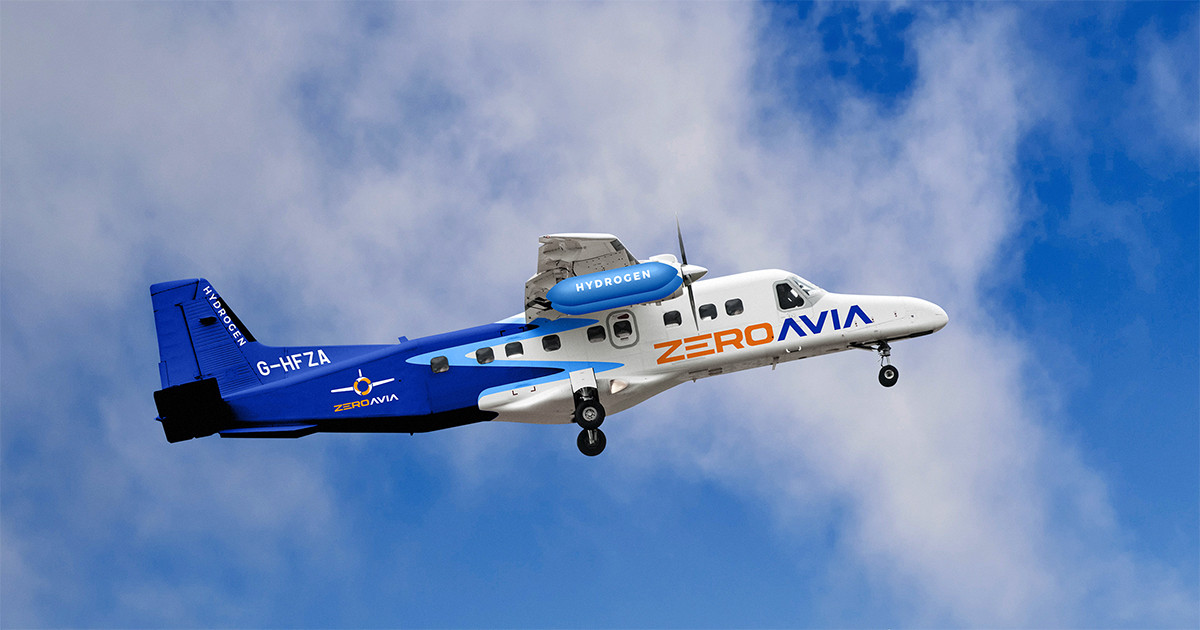
ZeroAvia get UK Approval To Begin Testing Hydrogen Powered Engines

ZeroAvia's Retrofitted Dornier 228 (Photo Courtsey ZeroAvia

The United Kingdom’s Civil Aviation Authority granted ZeroAvia permission to start testing its retrofitted Dornier 228 aircraft. The plane is now equipped with prototype hydrogen-powered engines.

“Earning our full Part 21 permit to fly with the CAA is a critical milestone as we develop a zero-emission aviation propulsion system that will be the most environmental and economical solution to the industry’s climate impact. We’re going to be starting 2023 in the best way possible, by demonstrating through flight that true zero-emission commercial flight is much closer than many think.” Founder and CEO of ZeroAvia Val Mifthakov said in a company statement.

The company will begin test flights with their Dornier 228 as early as January and it will be the largest aircraft ever to fly using hydrogen-electric power. If successful, according to ZeroAvia

“It will pave the way for a commercially certifiable configuration for ZA600 to be submitted by the end of 2023, ahead of delivering powertrains for the first commercial routes for 9-19 seat aircraft to commence by 2025. With 1,500 engines under pre-order, partnerships with seven aircraft manufacturers and multiple fuel and airport partnerships, ZeroAvia is well positioned to lead the industry’s transformation to a clean future.”

ZeroAvia claims to be the leader in zero-emission aviation and is hoping to bring 9-19 seat commercial airliners to market by 2025 with further goals to follow.

According to ZeroAvia’s website the so-called “HyFlyer II Project” will see “ZeroAvia develop a certifiable hydrogen-electric powertrain that can power airframes carrying up to 19 passengers. To do this, it will collaborate with two partners, the European Marine Energy Centre and Aeristech. The HyFlyer II project will conclude with another world’s first hydrogen-electric flight by ZeroAvia in a 19-seat aircraft, with a 300-nautical mile flight in 2023. The HyFlyer II project is part-funded by the UK Government’s Aerospace Technology Institute’s (ATI) programme, supported by the Department for Business, Energy and Industrial Strategy and Innovate UK”

Hydrogen electric flight is still very much in its infancy but if ZeroAvia can pull off a scalable hydrogen engine they could very much revolutionize the aviation industry. Their hopes don’t seem to involve larger aircraft in the short to mid-term but rather they are attempting to employ short-haul prop planes

Sign-up for newsletters & special offers!

Get the latest stories & special offers delivered directly to your inbox

SUBSCRIBE

Uh-oh! It looks like you're using an ad blocker.

Our website relies on ads to provide free content and sustain our operations. By turning off your ad blocker, you help support us and ensure we can continue offering valuable content without any cost to you.

We truly appreciate your understanding and support. Thank you for considering disabling your ad blocker for this website