Conviasa will resume operations to Brazil in February with a service between Puerto Ordaz (PZO) and Manaus (MAO). Tickets sale will open in the next days. The last scheduled flights between Venezuela and Brazil were operated in March 2020.
Flight Itinerary
Puerto Ordaz (PZO) 12:30 – Manaus (MAO) 14:40 Thursday.
Manaus (MAO) 15:40 – Puerto Ordaz (PZO) 17:50 Thursday.
This service will offer connections to Caracas (CCS) and Porlamar (PMV).
Currently, Conviasa’s international network includes Mexico, Cuba, Bolivia, St. Vincent and the Grenadines, Russia, and Spain. The state-owned airline is also offering special flights to Peru.
Puerto Ordaz (PZO) will be the fourth international destination from Manaus (MAO) after Panama – Tocumen (PTY), Fort Lauderdale (FLL), Miami (MIA) and from March 26 there will be a connection with Bogota (BOG). Currently, the airlines offering international services at Eduardo Gomes International Airport (MAO) are GOL, Azul, Copa Airlines and soon Avianca and Conviasa.
«Margarita is a destination that has been the subject of great advances in the air sector and for the first quarter of this year we would already be projecting, including connecting Brazil with Margarita, » said Ramón Velásquez, Venezuelan Minister of Transportation, when the first talks for the route resumption emerged.
The recovery of this route is due to the reestablishment of diplomatic relations between Venezuela and Brazil and Conviasa expects to expand its international operations with new services in 2023. The last service between both nations was in March 2020 on a non-regular route between Caracas (CCS) and Manaus (MAO) operated by Avior Airlines in Boeing 737-200.
Brazilian operators abandoned the link before, as the last brazilian-registered carriers to operate in Venezuela wereLATAM Airlines, which suspended operations on May 28, 2016, and GOL, which ended its services on January 26, 2016. Both companies offered flights between Caracas (CCS) and Sao Paulo – Guarulhos (GRU).
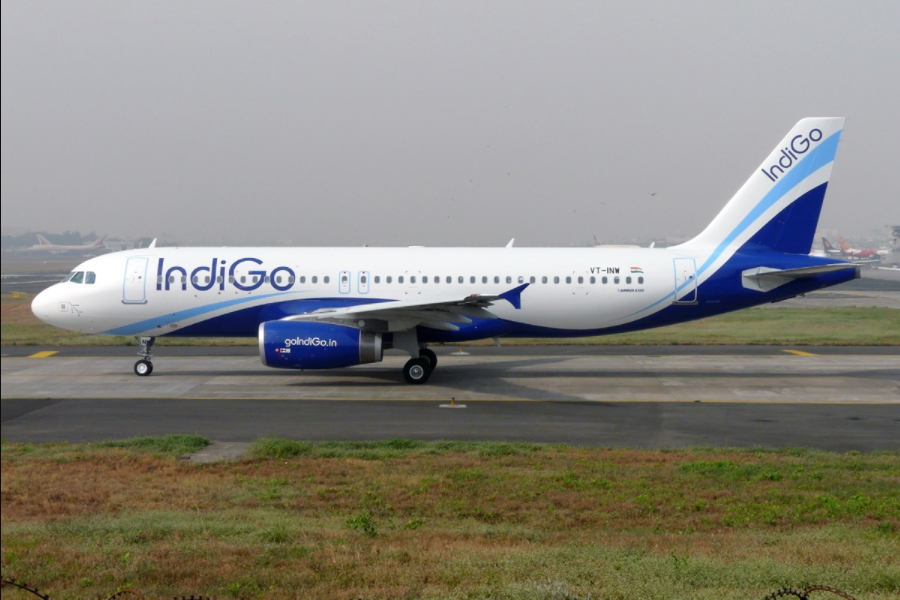
An IndiGo A320 in Mumbai. (Photo: Sean D. Silva via Wikimedia Commons - https://commons.wikimedia.org/wiki/File:Airbus_A320-232,_IndiGo_Airlines_JP7457952.jpg)
India’s largest airline, IndiGo has received the go-ahead from the aviation watchdog of India, the Directorate General of Civil Aviation (DGCA) to wet lease two Boeing 777-300ERs from Turkish Airlines for a period of six months, with the option to extend for another six months.
The pilots and the crew will be from Turkish Airlines, however, there are talks that the cabin crew will be split between both airlines. IndiGo is utilizing the aircraft for flights to Istanbul from Mumbai and New Delhi.
It is important to note that the airline will continue to operate its New Delhi to Istanbul flights using its A320s and/or A321s. However, the addition of flights using the 777s will increase the number of seats available.
The airline is the leader in India in terms of passengers carried and the number of aircraft operated. This leading airline as of January 2023 has 302 aircraft. The carrier operates the Airbus A320ceo, A320neo, A321neo and ATR-72.
The 17-year-old airline has both international and domestic operations. It is necessary to note that international operations are limited to the range of the equipment being used. Therefore, long-haul flights are not possible at the moment.
A Longtime Goal
From its very onset, the carrier has had its sights set on long-haul international flights. Such operation can soon be successful, owing to the Airbus A321XLR and its highly extended range.
The low-cost carrier already has a substantial advance order for the model. The range offered by such aircraft would enable the airline to carry passengers directly from New Delhi to London.
However, the A321XLR is still some time away from entering service.
In order to accustom itself and expedite its timeline for regular international long-haul operations, the airline has entered this wet-leasing deal. The highly successful carrier also has codeshare agreements with Turkish Airlines, Qantas, American Airlines, Air France – KLM, Qatar Airways and Virgin Atlantic.
This entire wet-leasing venture between both airlines is a win-win situation. IndiGo can keep increasing its footprint on the global platform and Turkish Airlines will be able to carry more passengers from India, which is capped due to bilateral agreements between both countries.
The above arrangement is separate from the codeshare agreement already in place.
AirlineGeeks.com was founded in February 2013 as a one-person blog in Washington D.C. Since then, we’ve grown to have 25+ active team members scattered across the globe. We are all here for the same reason: we love deep-diving into the fascinating realm of the airline industry.
Uganda Airlines takes delivery of its first Airbus A330neo
(Photo: Airbus)
Uganda Airlines is aiming for a summer launch for its long-anticipated service to London’s Heathrow Airport, after the UK Civil Aviation Authority (CAA) offered the carrier the option to operate flights through intermediate airports in Algeria, Egypt, Kenya, Morocco, Tunisia, or Turkey.
These airports already have existing security ratings from the UK CAA, while delays in commencing a security audit of Entebbe International Airport have been a major hindrance to commence this service.
“We had already set up at the airport, what is left is for us to set up a marketing office and reactivate the slots we had been previously allocated,” the CEO Jenifer Bamuturaki said speaking to the East African.
Uganda Airlines’ Available Options
According to the CEO, the Ugandan flag carrier has two options: waiting for Entebbe International Airport to go through a security audit by the UK CAA which is estimated to take about two years, or using a third-country airport with the necessary clearances.
Of the seven options, Ghana has already been eliminated because its requirements are similar to the UK’s and the Ghana CAA would have to audit the security status at Entebbe International.
“Kenya is a good option but, like Morocco, Turkey and Tunisia, it would involve some deviation off the regular flying track,” Ms Bamuturaki said.
Barring unlikely concessions, the intermediate stop will be purely technical with the Ugandan carrier not allowed to pick up onward traffic. All passengers and crew on the flight will have to disembark and go through the passenger screening process at the intermediate before getting back on board.
The airline is now examining the suitability of Algeria and Egypt because they align best with Entebbe from an operational perspective.
Delays and Challenges They’re Facing
Officials at Entebbe International Airport have argued that Uganda’s main gateway is suitable for flights to the UK, as KLM Royal Dutch Airlines and Brussels Airlines both operate departures to Europe from there.
British Airways also ran four flights a week between Entebbe and Heathrow until it suspended flights to Uganda in 2015.
Entebbe last underwent the International Civil Aviation Organisation’s Universal Safety Audit Program in 2017, but hasn’t had the Universal Safety Oversight Audit Programme (USOAP) since 2014.
An audit of the airport was scheduled for 2020 but was postponed due to the Covid-19 pandemic and another audit is now scheduled for October 2023.
The airport also needs time to address gaps identified in the earlier audit, mainly concerning skills and personnel.
Uganda Airlines has encountered several challenges in its bid to launch services to London, including securing a type certificate for its Airbus A330s in August 2021.
Victor Shalton's love for aviation can be traced to when he was 11-years-old. As a seasoned aviation writer, he takes pride in providing the best aviation coverage around the globe and is passionate about advancing his skills in the aviation space. In addition, he loves travelling, writing, arts and while his speaking engagements have taken him around the world, he is proud to call Nairobi home.
A Volaris Airbus A320 taxiing at the carrier’s hub at Tijuana International Airport in Mexico. (Photo: AirlineGeeks | Albert Kuan)
Volaris, the ultra-low-cost airline operating in Mexico, the United States, and Central and South America, released its preliminary traffic results for December 2022.
Volaris carried 2.9 million passengers during the month, an increase of 13.9% compared to December 2021. Breaking down demand into the domestic and international markets, the former increased by 13.3% and the latter by 26.1%. This shows that the Mexican domestic market had almost recovered its pre-pandemic levels before the end of last year, while the international market still had a lot of growth ahead of it.
According to the company, in December 2022, its capacity (measured in ASMs) increased 18.5% year-on-year, while demand rose 16.9%. As a result, the airline’s load factor declined by 1.2 percentage points to 84.7%. For the full year, Volaris’ capacity increased by 25.6% and its load factor grew 0.9 percentage points to 85.6%.
Commenting on these results, Enrique Beltranena, Volaris’ President and CEO, said: “Traffic in December was solid and booking curves remain firm. We continue to expect passenger growth to be in line with our capacity growth plan. At the end of the month, we were impacted by winter storm Elliott, which disrupted our operations for three days. However, as a result of our team’s hard work, the company was able to quickly regain full operations and respond promptly to our affected customers.”
A brand new American Airlines A321neo parked in Pittsburgh (Photo:AirlineGeeks | William Derrickson)
Chile’s National Economic Prosecutor’s Office (FNE) approved American Airlines’ acquisition of a minority stake in JetSMART. In 2021, both companies signed a letter of intent (LOI) to move forward with a codeshare agreement between the United States and South America.
Previously, Indigo Partners and the Dallas-based airline submitted to the FNE a request for a “concentration operation consisting of the acquisition by American Airlines of a minority stake in JetSMART.” Both companies complied with all the requirements established by the prosecutor’s office.
In the FNE’s report, the following considerations were considered:
American Airlines currently offers services to Chile from its main hubs, allowing passengers to connect to other destinations. The U.S. airline offers daily flights from Miami (MIA) and Dallas/Fort Worth (DFW) to Santiago (SCL).
JetSMART operates in Chile and offers domestic services, as well as international operations to Peru, Argentina, Uruguay, Brazil and Colombia.
American will hold a minority stake in the shares issued by JetSMART. In addition, the two airlines entered into a codeshare agreement, a frequent flyer program agreement and other commercial agreements.
American and JetSMART do not operate the same origin-destination (O&D) routes.
Both airlines are in the process of entering into bilateral interline and codeshare cooperation agreements as part of the alliance.
JetSMART has not entered any cooperation with other air carriers.
American and the Indigo Partners group airline do not have any third-party agreements aimed at marketing flights in Chile.
Regarding cargo transportation, American has an interline agreement with an economic agent that does not transport cargo on routes within Chile.
The prosecution concludes that if this association materializes, it is not apt to substantially reduce competition in the markets analyzed.
A Singular Cooperation
American Airlines is currently the North American airline that offers the largest number of connections with Latin America, from its hubs in Dallas, Miami and New York. JetSMART is in full growth, and already has bases in Chile Argentina, and Peru, as it continues its development in Latin America.
A particularly important Latin American market for American is Colombia, where it offers flights to 6 destinations. JetSMART has operations to Bogota and Cali, and in August will add the Medellin connection, reaching three routes to and from Chile, the low-cost carrier’s main base. American Airlines has a significant presence in these markets, with operations to the capitals of both Chile and Argentina from Dallas, Miami and New York.
An Aeroflot 777-300ER landing at Paine Field after a test flight. (Photo: AirlineGeeks | Katie Bailey)
Aeroflot — Russia’s largest carrier — announced on Dec. 30, that it had bought 10 Boeing 777-300ER aircraft, which have been under financial lease from an Irish leasing company since 2013 and 2014. The airline will continue to work on further aircraft buyback deals.
“Aeroflot has bought and received ownership rights to 10 long-haul Boeing 777-300ER aircraft, which have been under financial lease from an Irish leasing company since 2013 and 2014,” the statement said.
According to the airline, it would continue to work on further implementation of aircraft buyback transactions in order to maintain the current fleet of foreign-made aircraft in its own operation and expand the possibility of their operation.
Sellers
According to the Aeroflot’s 2014 annual report, all 10 777-300ERs received in this period were on finance lease. (Photo: Aeroflot)
The latest agreement covers ten 777s Aeroflot leased from VEB Leasing’s Ireland branch. VEB Leasing is one of the largest leasing companies in Russia, which likely set up the Irish office to benefit from the country’s regulations regarding leasing.
Similar to the previous A330 deal,the airline made with another foreign lessor, the sub-fleet is also on finance lease. A finance lease means Aeroflot is the legal owner and is paying a mortgage on the plane rather than renting the plane from the lessors.
While the Russian-based carrier has already restarted 777 long-haul operations, all the planes on this list have been solely domestic. This limitation contrasts with some of the other 777s owned by other lessors, such as GTLK, the Russian State Transport Leasing Company. Despite having the entire fleet on US Commerce Department’s sanction list, Aeroflot had sent GTLK-owned 777s out of the country.
Since May, Aeroflot has expanded its long-haul international destinations to Turkey, India, China and Thailand. The company is serving more than a dozen destinations with only seven airplanes. AirlineGeeks will continue to monitor when and if this latest fleet is deployed internationally.
Airline’s Next Options
An Aeroflot A321 in London (Photo: AirlineGeeks | William Derrickson)
According to a recent report by Reuters, the Russian carrier is exploring options to use the national fund for purchasing some of the airplanes from western lessors.
SMBC, which took an impairment of $1.6 billion for 34 jets, said in the letter that on September 2, AlfaStrakhovanie offered it $644.2 million for 17 aircraft leased to Aeroflot, minus $82 million already paid in deposits and reserves.
However, that was “considerably less than the aggregate Agreed Values” for the aircraft, SMBC said in the letter. Adding the challenges with current EU sanctions, it’ll take a little longer for any agreement to materialize.
All Aeroflot Airbus A321s delivered before 2013 were on finance lease according to the company’s 2012 annual report.(Photo: Aeroflot)
Given the success of buying out airplanes off financial leases, it’s possible airplanes on financial leases are the prime candidate for the sanctioned carrier’s next transaction. According to their 2012 annual report, all the airline’s A321s received prior were on finance lease. As of today, three of those A321s still remain in the fleet and all are actively flying.
Alternatively, Sberbank’s leasing arm also operated a small Irish office that shut down at the start of the invasion. Given the substantial Russian financial background, planes currently owned by the bank of its leasing company SB Leasing may have an easier path to Russian domestication.
Fangzhong grew up near an OEM airport in northeastern China, where he developed his enthusiasm for aviation. Taking upon his passion, he's now working as an aircraft interior design engineer. Besides working in the aerospace industry, Fangzhong enjoys trying out different types of airplanes and seeing how airplane interiors have evolved. So far, he's flown on over 80 types of aircraft. He also planespots in his spare time. His rarest catches included the 747 Shuttle Carrier Aircraft and AN-225.
All Nippon Airways, Japan Airlines and Singapore Airlines at Tokyo Haneda Airport's Terminal 3 (International Terminal) (Photo: AirlineGeeks | Andrew Chen)
Global aviation analytics firm Cirium has released the results of its worldwide 2022 On-Time Performance Review. The company looks at punctuality among airlines and airports around the world and publishes an annual report highlighting the top performers.
Azul Brazilian Airlines took the top spot among airlines, followed closely by Japanese carriers All Nippon Airways and Japan Airlines. Cirium considers an on-time arrival one that that arrives within 15 minutes of its scheduled gate arrival time. The top five global airlines for on-time performance were as follows:
Rank
Airline
Total Flights
On-Time Arrival
1
Azul Brazilian Airlines
279,722
88.93%
2
All Nippon Airways
162,370
88.61%
3
Japan Airlines
165,981
88.00%
4
LATAM Airlines
451,651
86.31%
5
Delta Air Lines
1,004,684
83.63%
To be classified as a global airline, Cirium requires that a carrier be within the top 10% of passenger airlines by capacity and volume and that it serve at least three worldwide regions out of the five defined by the company: Asia Pacific, Europe, Middle East & Africa, Latin America and North America. AirlineGeeks has previously reported on the firm’s North America on-time rankings.
The review also lists top performers among low-cost carriers:
Rank
Airline
Total Flights
On-Time Arrival
1
StarFlyer
21,894
95.23%
2
Solaseed Air
27,486
94.53%
3
Thai AirAsia
66,043
91.56%
4
Azul Brazilian Airlines
279,722
88.93%
5
Sky Airline
27,161
88.74%
The global airport category requires airports to be within the top 10% of airports worldwide by flights served in a month and for the airport to serve at least three regions. The top performers for global airports were as follows:
Rank
Airport
Total Flights
On-Time Arrival
1
Tokyo Haneda Airport
373,264
90.33%
2
Kempegowda International Airport (Bangalore, India)
201,897
84.08%
3
Salt Lake City International Airport
226,545
83.87%
4
Detroit Metropolitan Wayne County Airport
271,963
82.62%
5
Philadelphia International Airport
233,777
82.54%
Cirium further categorizes airports by size into large, medium and small airports. The winners in these categories were Osaka International Airport, Chubu Centrair International Airport and Miyazaki Airport, respectively. All three of these airports are located in Japan.
Overall, Japanese airports have once again dominated the airport rankings, earning the top spot in all four categories. Japanese airlines have similarly performed very well in their categories, further reflecting the country’s reputation for punctuality. The report notes these trends, pointing out that, “Japanese airlines and airports continue to deliver passengers to their arrival gates on time – pandemic or no pandemic.”
The year brought significant challenges to the air travel industry and global on-time performance was down by approximately two percent in 2022, according to the analytics firm. The report cites global staffing shortages across the air travel sector as a major contributor to decreased on-time performance, stating that, “although the aviation industry collectively worked hard to keep pace with recovering demand, they fell short in many cases due to staffing issues worldwide necessitating reducing flights to work within staffing constraints.”
“Staffing shortages will continue to challenge the global air travel industry and could have long-term impacts affecting on-time performance and reliability throughout 2023 and beyond.”
Andrew is a lifelong lover of aviation and travel. He has flown all over the world and is fascinated by the workings of the air travel industry. As a private pilot and glider pilot who has worked with airlines, airports and other industry stakeholders, he is always excited to share his passion for aviation with others. In addition to being a writer, he also hosts Flying Smarter, an educational travel podcast that explores the complex world of air travel to help listeners become better-informed and savvier travelers.
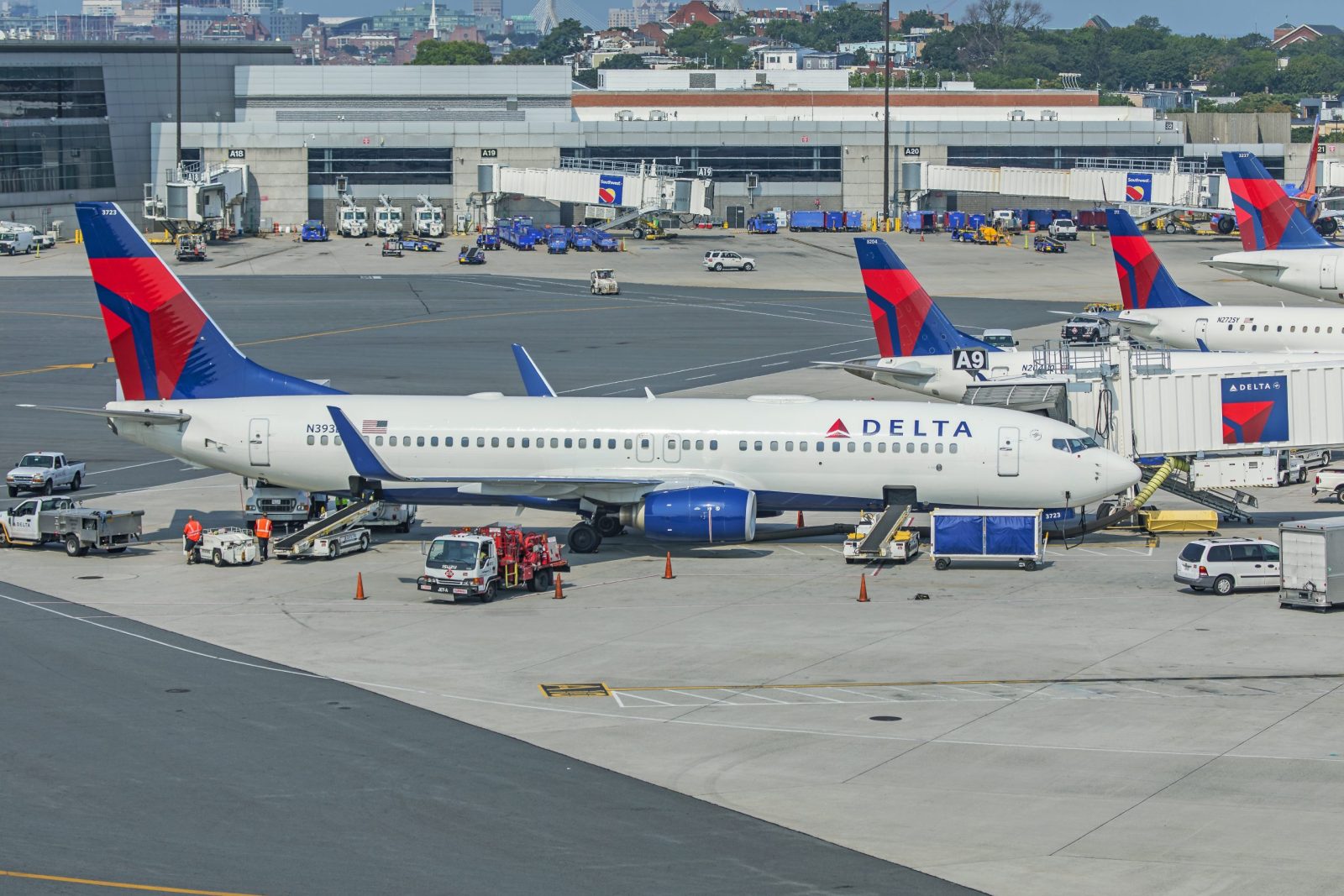
Delta aircraft parked on the ramp in Boston.
(Photo: AirlineGeeks | William Derrickson)
Atlanta-based Delta Air Lines made headlines at CES 2023 last week when it announced free WiFi for all passengers, as well as innovative new in-flight digital experiences.
Delta announced that it would be rolling out free WiFi on board most domestic mainline flights beginning Feb. 1, 2023, with a goal of expanding free WiFi to all aircraft by the end of 2024.
The airline also revealed Delta Sync, its vision for an interconnected and personalized digital experience. Delta Sync will roll out later this year, bringing together in-flight entertainment (IFE), connectivity and other technological features.
Free WiFi: The Details
As of Feb. 1, 2023, Delta will be offering free WiFi on Viasat-equipped aircraft. Delta currently has two in-flight WiFi providers: Viasat and Intelsat, which was formerly known as GoGo. Around 500 of the carrier’s over 700 narrowbody mainline jets are currently equipped with Viasat. Free WiFi has already been launched on all Boeing 757-200 and Boeing 737-900 aircraft, with other narrowbody aircraft beginning free WiFi offerings throughout the rest of January. Delta plans on offering free WiFi on over 700 aircraft by the end of 2023 and on international and regional jets as well by the end of 2024.
According to the airline, the following aircraft are currently equipped with Viasat and will therefore offer free WiFi: All Airbus A321-200s and Airbus A321neos, select Boeing 737-800s, select Boeing 737-900s, select Boeing 757-200s, select Airbus A319-100s and select Airbus A320-200s. The current free WiFi offerings will not cover Delta’s Boeing 717 or Airbus A220 aircraft, which are not equipped with Viasat. Paid Wi-Fi options will continue to be offered on these aircraft. Widebody jets operating domestic flights also will not feature free WiFi until 2024.
Passengers will have to be a member of Delta’s frequent flyer program, SkyMiles, to log in to the free WiFi but membership is free and travelers will be able to join while in-flight. There is no device limit and Delta says that the Viasat system offers streaming-quality connections.
“Connectivity is essential to daily life, and your journey on Delta should be no different,” Delta Chief Executive Officer Ed Bastian said at CES. “Our vision has long been to deliver an experience at 30,000 feet that feel similar to what our customers have available on the ground.”
In the United States, Delta is the second airline to widely offer free WiFi after JetBlue, which has provided passengers with free WiFi for years. Internationally, an increasing number of airlines have also been offering free in-flight WiFi, including Qantas, Emirates and Porter Airlines.
Delta has long been talking about providing free WiFi to its passengers. In 2019, the carrier conducted a free WiFi trial on 50 domestic routes. However, the GoGo/Intelsat system was unable to handle the heavy usage at the time. In 2022, Delta began a more successful trial of offering free WiFi that set the stage for the airline’s latest announcement.
Delta CEO Ed Bastian presents at CES 2023 in Las Vegas (Photo: Delta Air Lines)
Delta Sync: A New In-Flight Entertainment and Connectivity Experience
The second major Delta announcement at CES revealed a new in-flight digital experience called Delta Sync. Delta Sync brings together traditional aspects of in-flight entertainment and connectivity, while also debuting innovative new features. Delta Sync will be supported by free WiFi and will be available to SkyMiles members.
The airline states that Delta Sync will bring together an ecosystem of digital services to deliver a personalized travel experience. It will roll out later in 2023 and consists of a variety of offerings, both on personal devices and on seatback screens. Delta Sync consists of two sets of offerings: Delta Sync on Demand for seatback screens and Delta Sync Exclusives Hub for personal devices.
Delta has seatback screens on a large majority of its mainline aircraft and the carrier working on a new in-flight entertainment system called Delta Sync on Demand. Debuting this summer, new features will include food and beverage ordering for First Class passengers and the ability for all passengers to log into their SkyMiles account to receive curated content recommendations and seatback flight notifications. Passengers who are not SkyMiles members and those who choose not to log in will continue to have access to Delta’s existing seatback entertainment offerings.
Delta Sync Exclusives Hub will offer content and access to features with major brands on travelers’ personal devices. SkyMiles members will be able to unlock personalized American Express offers as part of Delta’s partnership with the credit card company. In addition to seatback entertainment, Delta will offer Paramount+ streaming on passengers’ personal devices. Delta has also partnered with the restaurant booking platform Resy to provide dining guides and restaurant bookings while on board. Similarly, Delta will offer travel recommendations and content from Atlas Obscura and games from the New York Times.
Looking forward, Bastian highlighted the vision for Delta’s in-flight digital offerings at CES. “The future of travel is one where your digital and physical experiences come together in a seamless, warm and personal way, making those human travel connections even more meaningful.”
Andrew is a lifelong lover of aviation and travel. He has flown all over the world and is fascinated by the workings of the air travel industry. As a private pilot and glider pilot who has worked with airlines, airports and other industry stakeholders, he is always excited to share his passion for aviation with others. In addition to being a writer, he also hosts Flying Smarter, an educational travel podcast that explores the complex world of air travel to help listeners become better-informed and savvier travelers.
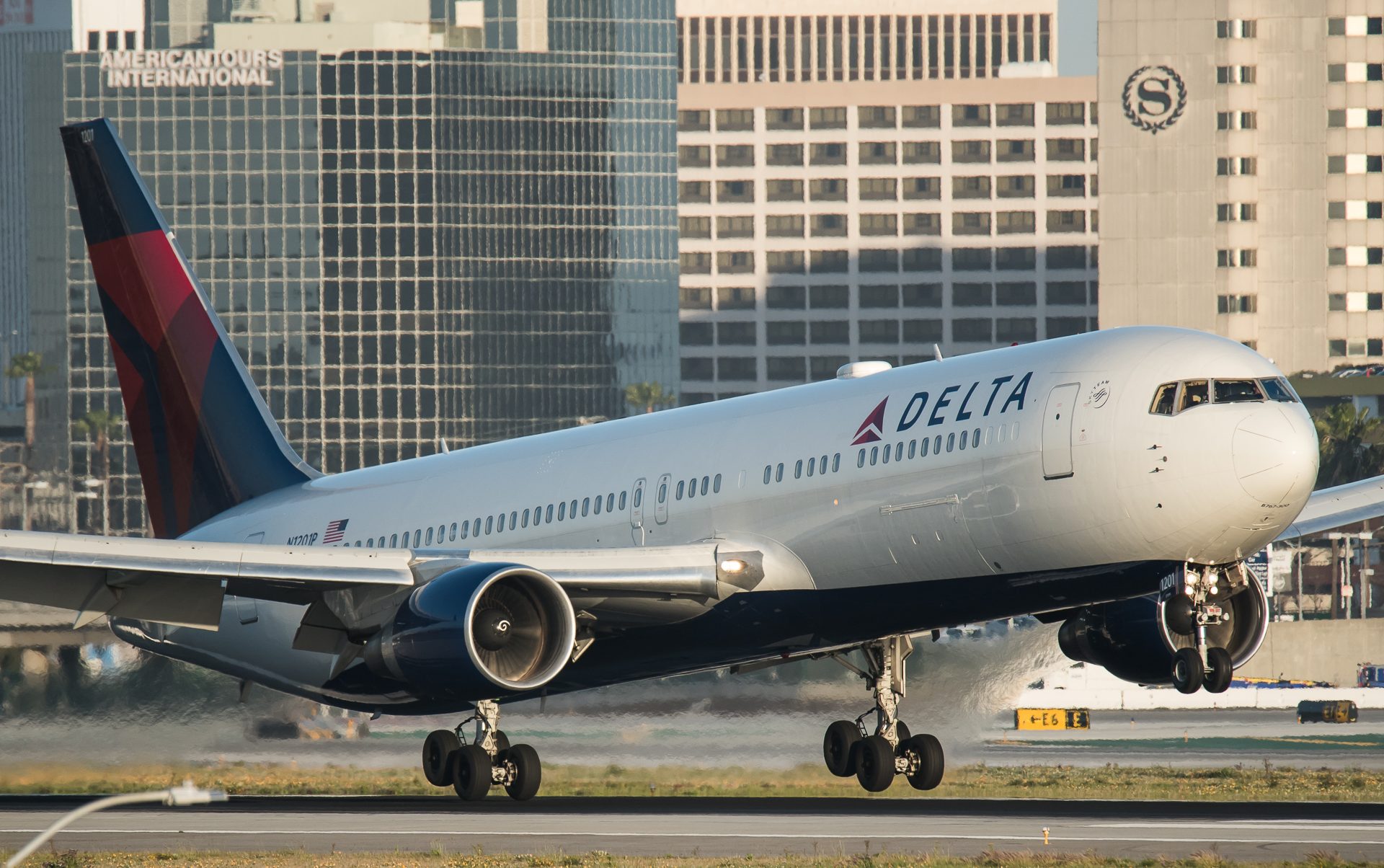
A Delta Boeing 767-300 lands in Los Angeles. (Photo: AirlineGeeks | Ben Suskind)
For the second year in a row, Delta Air Lines been deemed North America’s most punctual airline by aviation analytics firm Cirium. The company publishes an annual On-Time Performance Review, in which it measures on-time performance for airlines and airports. In North America, the firm tracked more than five million flights between January 1 and December 15, 2022, capturing over 99% of flights across the continent.
The company’s threshold for an on-time flight is one that arrives within 15 minutes of its scheduled gate arrival time. Approximately 72% of flights tracked in North America during the year were considered on-time.
A total of ten North American airlines were included in the rankings:
1. Delta Air Lines: Cirium tracked over a million Delta flights and over 83% of them arrived on time. This gave Delta the top spot among North American airlines. The Atlanta-based carrier has won this title every year since 2017, though the firm did not hand out awards in 2020 due to the COVID-19 pandemic. After seeing widespread cancellations and delays throughout its network during Memorial Day weekend, Delta reduced its flying schedule to help improve its performance.
2. United Airlines: In third place is United, with 80.46% of its nearly 790,000 flights being marked as on-time by Cirium.
3. Alaska Airlines: The Seattle-based airline took a close third place in this year’s rankings, despite some operational hiccups during the summer due to staffing issues. 80.36% of the carrier’s more than 240,000 flights arrived on time. Before Delta won the top spot in 2017, Alaska was named as North America’s most punctual airline from 2011 to 2016.
4. American Airlines: The worst-performing of the “big three” is American. Over 78% of the approximately 1 million flights tracked arrived on time.
5. Southwest Airlines: With over 1.3 million flights, Southwest had the highest number of flights tracked in the North American review. Slightly over 74% of these flights arrived on time. Unlike most major carriers, the Dallas-based airline’s network is based on a point-to-point model rather than a hub-and-spoke model. Prior to Southwest Airlines’ recent holiday season operational meltdown, its on-time performance had been closer to 75%.
6. Frontier Airlines: The ultra-low-cost carrier flew over 170,000 flights in 2022 and a little over 68% of them arrived on time.
7. JetBlue: Of the airline’s more than 340,000 flights during the year, over 66% of them arrived on time.
8. Allegiant Air: The low-cost carrier flew almost 117,500 flights this year and a little under 66% of them were marked as on-time by Cirium.
9. WestJet: In ninth place is Canada’s second largest airline. Cirium measured around 90,000 flights flown by WestJet and saw an on-time performance for approximately 59% of them.
10. Air Canada: Canadian flag carrier Air Canada flew over 140,000 flights in 2022. 54.51% of them arrived on time.
It is unsurprising to see that WestJet and Air Canada did not perform very well. Airlines and airports across Canada suffered from staffing shortages throughout the year. Toronto Pearson International Airport, Canada’s busiest airport and home to large Air Canada and WestJet operations, was consistently ranked as one of the world’s worst airports for delays during the summer months.
Despite holding the top spot for punctuality, Delta’s on-time performance has decreased from previous years. In 2021, the airline saw 87.7% of its flights arrive on time and in 2019 this figure was 85.69% (again, Cirium did not publish a review in 2020). This decline is also unsurprising. 2022 was a challenging year for airline operations in North America, with a major resurgence in air travel demand following the end of pandemic restrictions combined with staffing shortages at airlines and airports across the continent.
Andrew is a lifelong lover of aviation and travel. He has flown all over the world and is fascinated by the workings of the air travel industry. As a private pilot and glider pilot who has worked with airlines, airports and other industry stakeholders, he is always excited to share his passion for aviation with others. In addition to being a writer, he also hosts Flying Smarter, an educational travel podcast that explores the complex world of air travel to help listeners become better-informed and savvier travelers.
Rendition of Skykraft's Block II Air Traffic Management Satellites deployed in Low Earth Orbit. Image: Skykraft
Australian space-services company Skykraft has launched its first stack of air traffic management satellites, with the 300kg payload reaching low earth orbit on Jan. 4 (AEDT). Riding aboard a SpaceX Falcon 9 launch vehicle, the five Skykraft Block II satellites are part of a larger constellation amounting to over 200 in the next two years.
The satellites — which weigh more than the total mass of all Australian-built space objects ever launched — are part of a three-month proof of concept operational test. The test will seek to validate Skykraft’s space-based Air Traffic Management service which it aims to commence in 2025. According to Skykraft, the global system will increase air traffic management efficiency, reduce carbon dioxide emissions, and fill gaps in both surveillance and communications in remote locations.
Filling the Communication Gap
Skykraft’s Air Traffic Management (ATM) services aim to deliver seamless communication to remote locations that standard air traffic control cannot. Currently, ground-based infrastructure is limited to approximately 400km from land which makes it difficult to accurately track aircraft and ensure their safety over oceanic and remote areas.
Addressing these limitations, the Australian company’s space-based ATM utilizes ADS-B signals for independently verifying aircraft anywhere in the world, while also providing a VHF communications capability for both data and voice. Operating in Low Earth Orbit across seven orbital planes, the satellites will have a five-year life cycle, with each powered by solar arrays generating a total power output of 2.6 kW and are equipped with an S-Band antenna, UHF antennas and VHF antennas. Although relatively small in size when launched, the satellites will open up to the size of a small car when all antennas and solar panels are deployed.
Skykraft’s Block II ATM Satellite. | (Photo: Skykraft)
In a statement, Dr. Michael Frater, CEO of Skykraft, said that air traffic controllers will be able to “talk directly with the pilot anywhere in the world,” adding that “(if) your aircraft hits turbulence, the pilot will now be able to get a clearance to change altitude much more quickly. For passengers, this means they won’t need to be seated for long periods of time, and for airlines savings on fuels savings and a reduction in the environmental impact.”
Expanding Australia’s Space Industry
With a goal of launching over 200 satellites into orbit by 2025 and a five-year replenishment cycle, Skykraft has set the ambitious target of producing 40-50 satellites per year. Assembled wholly in the Australian capital of Canberra, the satellites are manufactured from parts supplied across regional Australia, expanding Australia’s rejuvenated space industry.
In a statement, Enrico Palermo, Head of the Australian Space Agency, said that the launch “is another signal that Australia’s space industry is scaling, while also being a milestone in our history as the largest Australian-made payload launched into space.” Palermo further said that “this is what a future made in Australia looks like. Skykraft’s Block II Satellite represents the homegrown space technology we can offer the world and what Australian ingenuity and know-how can achieve.”
Mike’s love affair with flight and mechanical objects in the sky began at an early age, fascinated by space documentaries and the vintage Flight Simulator ’95. He currently works as an instructor for UAVs and is training to receive his Private Pilot Licence with the goal of working in manned flight instruction. An avid reader of all things aviation and manned space flight, Mike stays close to developments in aerospace while reminiscing and sharing the rich history of flight with others. He loves writing, engineering and science.